Syria: Another Regime Change Operation by the U.S. & Israel

I’m always disappointed with Democracy Now’s (DN) coverage of Syria. Its reporting on the fall of the country’s president, Bashar al-Assad was no exception. It described Assad’s deposition as primarily a triumph of freedom and the will of a brutally repressed people.

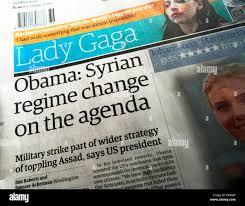
Absent from DN’s narrative was the straightforward truth that the fall of Assad was the fruit of another regime change operation. It was part of the U.S. plan announced in 2001 to depose seven governments in five years, viz., Iraq, Afghanistan, Libya, Somalia, Sudan, Syria, and Iran.

Though the American timetable was overly optimistic, with the change of regime in Syria, the U.S. has succeeded in hitting six of its seven targets. Only Iran’s government remains in place.

Let me show you what I mean by summarizing DN’s account, contrasting it with its counter narrative, and sketching the way U.S. regime change operations work.

The Official Syrian Story

For years DN’s usually critical founder, Amy Goodman, has for some reason sided with the United States and Israel by uncritically repeating their official story about the Zionists’ neighbor to the north. It tells us that:

  • Bashar al Assad is a brutal dictator who succeeded his dictator father to rule Syria with an iron fist for the last half century and more.
  • He has not only claimed absolute power in Syria,
  • But has run an extensive secret prison system there (a “human slaughterhouse”) where captives are systematically mistreated, tortured, and held without charge.
  • His use of chemical weapons against those objecting to his rule is well documented by independent witnesses such as the Syrian Civil Defense Organization,  the “White Helmets.”
  • For all these reasons, the U.S. and Israel have long held that “Assad must go.”
  • Moderate rebels” have recently transformed that imperative into facts on the ground. Thankfully, they have successfully overthrown the hated dictator.
  • Since his removal from office, his brutality and consequent unpopularity have received ample testimony and denunciation by ordinary Syrians who are universally celebrating his fall from power.
  • Thus the U.S. and Israel (as champions of democracy, just war, and humane incarceration, and as opponents of torture and the killing of innocent civilians) have triumphed once again in yet another mid-east country.
  • The triumph mirrors what they have accomplished so idealistically and benevolently in Iraq, Afghanistan,  Libya, Lebanon, Sudan, Somalia and other countries benefitting from their wars fought for democracy and peace.

That’s the official line DN’s Amy Goodman consistently presents and/or implies.

A More Complete Picture

However, what Goodman’s account fails to explore are its following contradictions that would have us forget that:

  • The foreign powers advocating and celebrating the end of Assad’s cruelty (i.e., Israel and the U.S.) are the current perpetrators of genocide in Palestine. Arguably, that deprives them of ability to convincingly champion human rights in any forum. It demonstrates that they have no concern about civilian deaths, secret prisons, unjust torture, democracy, freedom, or peace.
  • In fact (according to George Galloway) during its war on terror, the U.S. used Syrian prisons as black sites to which they rendered “terrorists” for torturous interrogation.  
  • Moreover, the “moderate” agents fulfilling the U.S. and Israel’s imperative to remove Asad from power are successors to the very “terrorists” responsible for al-Qaeda’s 9/11 attacks 23 years ago).
  • That is, while designating Syria as a “state sponsor of terrorism,” the U.S. has once again allied itself with al-Qaeda as it had in Afghanistan during Russia’s war there (1979-1989).
  • Additionally, the U.S. has crippled the Syrian economy by illegally occupying its eastern oil fields since 2014 effectively stealing its oil revenue since then.
  • While Israel has similarly occupied its neighbor’s Golan Heights.
  • Syria’s economy and population have suffered severe hardships under a U.S. sanctions regime that started in 2011 and whose effects worsened following a massive earthquake in February of 2023. For years they’ve had to function on the provision of a single hour of electricity each day.  

Civil Discontent in Syria

As for the testimony of Syrians applauding and celebrating the fall of Asad . . ..  It too demonstrates the effectiveness of standard American policy against designated enemies whose political “regimes” the U.S. wishes to change. That policy never deviates from the following procedure:

  1. Vilify the regime leader as the latest incarnation of Hitler.
  2. Under the pretext of punishing him, use sanctions, economic blockades, bombing, propaganda, bribery, election interference, terrorism, and internal subversion whose real purpose is to make the lives of locals so miserable
  3. That they will arise,
  4. Overthrow the regime in question,
  5. And celebrate the victory as the triumph of democracy.

This is the standard policy followed not only against Syria, but against official enemies such as Cuba, Nicaragua, and Venezuela.

The subversion invariably causes the threatened governments to adopt their own counter-policies that the U.S. and its allies then describe as authoritarian, oppressive, and brutal. The policies include imprisonment of compromised political opponents, jailing and mistreatment of terrorists (no harsher btw than the mistreatment of prisoners in Israel and the U.S.), and restrictions on (usually foreign allied) press along with fifth column civil and religious organizations. All these government actions provide further evidence of the illegitimacy of the regimes in question.

They also provide well-meaning news sources like Democracy Now with reasons to uncritically repeat imperialist talking points.

Conclusion

Listening to Democracy Now’s account of a people’s triumph in Syria after more than a half century of dictatorship made me think of Cuba. As a friend of the revolution there and as a frequent visitor to the island, I couldn’t help thinking how in the case of a successful uprising there (God forbid!), a similar sort of account might be concocted.

There’d be the same people dancing for joy in Havana’s streets and the same people saying on camera how relieved they are that the hated regime had been deposed. There’d also be the same ex-pat Cuban professors from prestigious U.S. universities sharing the joy and supplying historical details about the brutalities of Castro’s legacy.

Misinformed viewers would be led to conclude “Thank Goodness Cubans are finally free!”

But if the current Syrian template were followed, those viewers would never be stimulated to question the official story. They’d never be reminded of the disastrous effects of 60 years of sanctions, blockade, and acts of terrorism against the state. They’d never know about attempted assassinations of the country’s president. Neither would they think critically about the effect of anti-Cuban propaganda on their own psyches.

The point I’m trying to make here is that questions should always be raised about official stories concerning designated enemies of discredited imperialist countries like the United States and Israel.

They should be asked as well when perpetrators of genocide decry the human rights record “dictators” carefully selected from a long list of tyrants routinely supported by the complaining parties and when the black sites and “slaughterhouses” of the offending dictators have been used by their accusers themselves.

Yes, critical reporters should be able to identify such contradictions.

Simply repeating “the official story” helps no one.

Democracy Now is usually better than that.

At 80, Still Wondering Who I Am

Just yesterday, I had two experiences that made me wonder about myself. Even at the age of 80, I’m still questioning how I should present myself in this world that by all appearances is rushing headlong into terminal disaster? Am I being too outspoken? Should I temper what I say about politics and religion?

For me, those are constant questions. They arise not only in family conversations, but more publicly – e.g., in the context of a men’s group I’m part of in our new hometown, Westport Connecticut. My self-interrogations surface as well in the church that Peggy and are aspiring to enter. It’s the Talmadge Hill Community Church located in nearby Darien. In all three instances – family, the men’s group, and in church – I find myself wondering about transgressing the boundaries of polite discourse.

Today, let me first of all tell you about what happened yesterday with the men’s group. In a subsequent posting, I’ll share my questionable behavior in church – and then in my family.

The Y’s Men

In Westport, I’m a member of The Y’s Men. It’s a group of about 200 retired men, mostly Jewish and with backgrounds in international business, law, local government, and other administrative posts. The organization gets its cleverly ambiguous name from some distant association with the YMCA, which I can’t recall.

In any case, the Y’s Men meet every week and sponsor a myriad of activities that include (among other items) hiking, golf, sailing, a book club, and (before Covid) theater in New York City. I’m enjoying all of that. The Y’s Men are typically very bright and firm I their opinions.

That firmness takes center stage every other week, when a gathering of about 50 of us meet to discuss world issues. There, as we talk about matters such as China, 5G, the Middle East, and the Great Global Reset. In those contexts, the Y’s Men reveal themselves as basically patriotic, respectful of the military, and as “Americans” who understand their country as a splendid model honoring human rights, democracy and the rule of law.

I, of course, share none of those characteristics. Informed by social analysis reflected in liberation theology, my own tendencies have me looking at international affairs from the viewpoint of the world’s majority who are poor and under the jackboot of western imperialism led by the United States of America. As a result, I often find myself at odds with my fellow discussants.

U.S. Policy in the Middle East

This week was no exception. The announced topic is “Recalibrating US Policy with respect to Afghanistan, Iran and Saudi Arabia.” As usual, the conversation reflected the official position of the United States, viz. that “our” interests in recalibration are democracy and the protection of Israel from unreasonably hostile undemocratic forces represented principally by Iran, Islam, the Taliban, and Islamic terrorists.

For me, that position overlooked the provocative hostility of the U.S., Israel and Saudi Arabia towards Iran which is a major power in the area and whose interpretation of Islam has good reason for being defensively hostile towards foreign control of the Middle East. Consider the following:

  • Between 2010 and 2012, the intelligence agency (Mossad) of U.S. client Israel, assassinated four of Iran’s top nuclear scientists.
  • On January 3rd of 2020, the Trump administration itself assassinated Iran’s revered general, Qassim Soleimani, a national hero.
  • On November 11th, 2020, the Mossad also assassinated Mohsen Fakhrizadeh, yet another of the country’s leading nuclear scientists.
  • On May 8th, 2018, President Donald Trump unilaterally withdrew the United States from the internationally supported Joint Comprehensive Plan of Action (JCPOA) by which Iran had renounced alleged efforts to develop nuclear weapons. By all accounts, Iran had not violated the agreement.
  • Instead, the United States intensified economic sanctions on the country which increased Iran’s poverty rate by 11%.
  • The strengthening of sanctions persisted even during the Covid-19 global pandemic.

Despite such provocations, Iran has taken virtually no retaliatory measures either against Israel or the United States.

In the light of these facts, here’s what said at this week’s meeting:

What we’re calling a “reset” in the Middle East is really a recommitment to traditional U.S. anti-democratic policy there. It has us supporting not democracy, but client kings and potentates throughout the region particularly in Saudi Arabia as well as an apartheid regime in Israel. U.S. enemies here are Islamic nations who understand their religion as an affirmation of independence from outside control – independence from western imperialism and neo-colonialism. (For their part, the United States and its puppets call Islamic striving for independence “terrorism.”)  Of course, the point of that imperial control is what it’s always been, viz. transfer of resources. And in the middle east, the resource in question is oil. Nothing has changed. Nothing will change as long as our economy remains petroleum dependent.

My intervention was largely ignored. So, using other words, I reiterated the sentiment about three times more.

Too Insistent?

And that’s my point of self-questioning here.  Am I saying too much? Are my positions too radical? If so, are my efforts counterproductive in that they turn people against the very viewpoint I’m trying to share (that of the world’s poor, imperialized and silenced). Should I just shut up and listen?

Family members often caution me in the direction of such judicious silence.

Truthfully however, I find such restraint a species of self-betrayal. My role models – the people I find most admirable in the world – never bit their tongues in similar circumstances and even on the world stage. Their list is long and includes Gandhi, King, Rosa Parks, Fannie Lou Hamer, Malcolm X, Dorothy Day, William Barber II, Liz Theoharis, Naomi Klein, Cornel West, Jeremiah Wright, Chris Hedges, the Berrigan brothers, and the liberation theologians I’ve spent more than 50 years studying.    

Most of all, the list of such truth-tellers is headed by the great prophets of the Bible and by the one who has grasped and held my attention my entire life. I’m talking about Jesus the Christ.

I’ll explore that dimension of my outspokenness and self-doubt in my next posting.   

In Defense of ISIS

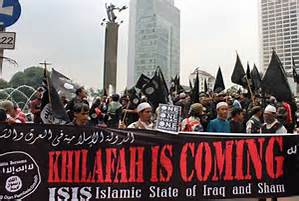
ISIS Defense

Imagine where America’s wealth would be if at the beginning of the 20th century Mexico had seized control Texas/Oklahoma, Japan had grabbed up California, England the northeast, Spain the south, and the rest of the country was divided into small emirates.

What would the response of Americans have been? Certainly there’d be resistance and rebellion. There would be attacks on occupying forces and/or collaborators with the colonial process by proud, well-armed Americans willing to resist external control “by any means necessary.” There would be bloody battles and excesses of brutal violence where both foreigners and their U.S. collaborators would be killed. The response would surely be called “terrorism” by Mexico, Japan and England.

This impossible scenario puts into perspective the confusing rise of ISIS which most commentators simply write off as a mob of pathological killers motivated to act because “they hate our freedom.”

In the historical perspective supplied by the U.S. analogy, they are much more than that.

In fact ISIS is a sophisticated resistance organization that is well funded and administered.  It not only resists foreign domination by any means necessary, it also provides day-to-day assistance for those impoverished by colonial process. In so doing it secures allegiance from many of those under its sway. These often prefer ISIS’ ministries to that of the U.S.-backed government, for instance, of Iraq. In many places ISIS provides health care, food subsidies, schooling and care for the elderly that is unattainable in Bagdad. These are just some of the reasons why thousands of Europeans flock to the ranks of the “Islamic State.”

More particularly ISIS might be seen as the militant wing of the Arab Spring that began throughout Arabia at the end of 2010. That movement in turn was Arabia’s latest response to the European balkanization of the region that took place with the end of the Ottoman Empire following the First Inter-Capitalist War (aka World War I) which concluded in 1918.

It was then that the European powers in a major act of “divide and rule” carved up Ottoman Arabia, renaming it the Middle East. The Europeans hewed out from a region previously governed by caliphs, sultans, and kings, modern “states” that in most cases never existed before.

In this way, the French colonized what they called Morocco, Algeria, Syria, Tunisia, Cyprus, and Lebanon. The British controlled Egypt, Palestine, Sudan, Iraq, Kuwait, Yemen, Jordan, and Oman. Italy governed Libya.

After the Second Inter-Capitalist War (aka World War II), the U.S. took over as the stabilizer of the colonial New Arab Order. It maintained in power obedient feudal clients resistant to democratic movements. They ruled on condition that they grant access to oil, trade and seaports. If not, they would be removed. The result was enrichment for both the colonial powers and their royal clients, but impoverishment for the vast majority of local populations.

In this perspective ISIS represents today’s impoverished Muslim Arabs seeking the autonomy of the Middle East. Their goal is Arabia for the Arabs. ISIS is struggling to wrest its control from Europeans and Americans who have dominated the area since the dissolution of the Ottoman Empire.

So it is a shallow mistake to write off ISIS forces as a mob of pathological killers with whom negotiation is impossible. To do so is to take one faction of a highly disparate group and universalize it as though it were the entire body. It’s like identifying Christianity with its most extreme faction, the Ku Klux Klan or the Tea Party for that matter.

In other words, there are sane ISIS factions with whom negotiations are possible. It is the task of diplomacy to identify them and to isolate the Klan and Tea Party elements depriving them of support. Bombing is futile.

The problem is: such observations presume a willingness on the part of neo-colonial westerners to cede colonial control and allow Arabia to belong to Arabs. And that in turn means weening western economies from dependence on Middle East oil.

For the arrival of that willingness and weening we should not hold our breath.