In Memoriam Rev. John Rausch (1945-2020)

Peggy and I were shocked Sunday night when we received the stunning news that Fr. John Rausch, a very dear friend of ours, had died suddenly earlier in the day. John was a Glenmary priest whom we had known for years. He was 75 years old.

At one point, John lived in a log cabin below our property in Berea, Kentucky. So, we often found ourselves having supper with him there or up at our place. John was a gourmet cook. And part of having meals with him always involved watching his kitchen wizardry while imbibing Manhattans and catching up on news – personal, local, national, and international. Everything was always interspersed with jokes and laughter.

That’s the kind of man John was. He was a citizen of the world, an economist, environmentalist, prolific author, raconteur, and social justice warrior. But above all, John was a great priest and an even better human being full of joy, love, hope, fun, and optimism.

Yes, it was as a priest that John excelled. Everyone who knew him, especially in the progressive wing of the Catholic Church, would agree to that. Ordained in 1972 [just seven years after the closure Vatican II (1962-’65)] John never wavered in his embrace of the Church’s change of direction represented by the Council’s reforms.

According to the spirit of Vatican II, the Church was to open its windows to the world, to adopt a servant’s position, and to recognize Jesus’ preferential option for the poor.  John loved that. He was especially fervent in endorsing Pope Francis’ extension of the option for the poor to include defense of the natural environment as explained in the pope’s eco-encyclical, Laudato Si’. (To get a sense of John’s concept of priesthood and care for the earth, watch this al-Jazeera interview that appeared on cable TV five years ago.)

His progressive theology delighted John’s audiences who accepted the fact that Vatican II remains the official teaching of the Roman Catholic Church. So, as two successive reactionary popes (John Paul II and Benedict XVI) subtly attempted to reverse conciliar reforms, and as the restorationist priests and bishops they cultivated tried mightily to turn back the clock, John’s insistence on the new orthodoxy was entirely refreshing.

I remember greatly admiring the shape of John’s homilies that (in the spirit of Pope Francis’ Evangelii Gaudium) were always well-prepared and followed the same pattern:

  1. He’d begin with two or three seemingly unrelated vignettes involving ordinary people with names and usually living in impoverished Appalachian contexts.
  2. For the moment, he’d leave those word-pictures hanging in the air. (We were left wondering: “What does all that have to do with today’s readings?”)
  3. Then, on their own terms, John would explain the day’s liturgical readings inevitably related to the vignettes, since Jesus always addressed his teachings to the poor like those in John’s little stories.
  4. Finally, John would relieve his audience’s anxiety about connections by perfectly bringing the vignettes and the readings together – always ending with a pointed challenge to everyone present.

The result was invariably riveting, thought-provoking and inspiring. It was always a special day whenever Fr. John Rausch celebrated Mass in our church in Berea, Kentucky.

Nevertheless, John’s social justice orientation often did not resonate with those Catholics out-of-step with official church teaching. These often included the already mentioned restorationist priests and bishops who harkened back to the good old days before the 1960s. Restorationist parishioners sometimes reported Fr. Rausch to church authorities as “too political.”

But Fr. Rausch’s defense was impregnable. He was always able to appeal to what he called “the best-kept secret of the Catholic Church.” That was the way he described the radical social encyclicals of popes from Leo XIII’s Rerum Novarum (1891) through Pius XII’s Quadragesima Anno (1931), Vatican II’s Gaudium et Spes (1965), and Pope Francis’ Laudato Si’ (2015).

John was fond of pointing out that all of those documents plus a host of others were consistently critical of capitalism. They favored the demands of working classes, including living wages, the right to form labor unions, and to go out on strike. Other documents were critical of arms races, nuclear weapons, and modern warfare in general. “You can’t get more political than that!” John would say with his broad smile.

All that perseverance on John’s part finally paid off when his local very conservative bishop was at length replaced by a Franciscan friar whom I’ve described elsewhere as “channeling Pope Francis.” I’m referring to John Stowe whose brown-robe heritage had evidently shielded him from the counter-reforms of the two reactionary popes previously mentioned.

When Bishop Stowe assumed office, he evidently recognized John as a kindred spirit. He respected his knowledge of Appalachia and his desire to connect Church social teachings with that context.  So, the new bishop asked John to take him on an introductory tour of the area. John was delighted to oblige. He gave Bishop Stowe the tour John himself had annually led for years. It included coal mines, the Red River Gorge, local businesses, co-ops, social service agencies, local churches, and much more. John became Bishop Stowe’s go-to man on issues involving those represented by the experience.

But none of that – not John’s firm grounding in church social teaching, not his success as a liturgist and homilist, not his acclaimed workshops on economics and social justice, not his long list of publications, nor his advisory position with Bishop Stowe – went to John’s head.

He never took himself that seriously. He was always quick with the self-deprecating joke or story.

In fact, he loved to tell the one about his short-lived movie career. (I’m not kidding.)  It included what he described as his “bedroom scene” with actress Ashley Judd. It occurred in the film, “Big Stone Gap.” I don’t remember how, but in some way, the film’s director needed a priest for a scene where Ms. Judd was so deathly ill that they needed to summon a member of the clergy. John was somehow handy. So, he fulfilled the cameo role playing himself at the bedside of Ashley Judd. (See for yourself here. You’ll find John credited as playing himself.) Right now, I find myself grinning as I recall John’s telling the tale. It always got a big laugh.

Other recollections of John Rausch include the facts that:

  • For a time, he directed the Catholic Committee on Appalachia.
  • He also worked with Appalachian Ministries Educational Resource Center (AMERC) introducing seminarians to the Appalachian context and its unique culture.
  • He published frequently in Catholic magazines and authored many editorials in the Lexington Herald-Leader. John’s regular syndicated columns reached more than a million people across the country. 
  • He had a strong hand in the authorship of the Appalachian bishops’ pastoral letter “At Home in the Web of Life.”
  • He led annual pilgrimages to what he called “the holy land” of Appalachia as well as similar experiences exploring the culture and history of the Cherokee Nation.
  • He was working on his autobiography when he died. (I was so looking forward to reading it!)

More Personally:

  • He graciously read, advised, and encouraged me on my own book about Pope Francis’ Laudato Si’.
  • I have fond memories of one Sunday afternoon when he invited me to a meeting in his living room with other local writers. We were to read a favorite selection from something each of us was working on.
  • John often came to my social justice related classes at Berea College to speak to students about Appalachia its problems, heroines and heroes. (Of course, to my mind, John ranked prominently among them.)
  • He gave a memorable presentation along those lines in the last class I taught in 2014. John was a splendid engaging teacher.

Peggy and I are still reeling from the unexpected news of this wonderful human being’s death. For the last day we’ve been sharing memories of John that are full of admiration, reverence, sadness – and smiles. It’s all a reminder of our own mortality and of the blessing of a quick, even sudden demise.

Along those lines, one strange thought that, for some reason, keeps recurring to me is that John’s passing (along with that of another dear friend last month) somehow gives me (and John’s other friends) permission to die.

I don’t know what to make of that. It might simply be that the two men in question (like Jesus himself) have gone before us and shown the way leading to a new fuller form of life. Somehow, that very fact makes the prospect of leaving easier. Don’t ask me to explain why or how.

Thank you, John.   

Pope Francis Calls Possession of Nuclear Weapons Sinful

Readings for First Sunday of Advent: IS 2:1-5; PS 122:1-9; ROM 13: 11-14; PS 85:8; MT 24: 37-44

Last weekend, Pope Francis outright condemned the manufacture and possession of nuclear weapons. (I’ll bet you didn’t notice that in the mainstream media.)

The pope did so during his visit to Hiroshima and Nagasaki, where he met with survivors of the two Japanese cities which were virtually wiped off the map when atomic bombs were dropped on them in 1945. The weapons of unprecedented mass destruction killed more than 200,000 people in matters of minutes.

During his remarks, Pope Francis said, “A world without nuclear weapons is possible and necessary. . .  The use of atomic energy for the purpose of war is immoral, just as the possessing of nuclear weapons is immoral . . .”

The pope’s visit and sharp condemnation could not come at a more opportune time either historically or liturgically (on this First Sunday of Advent). Historically, they follow hard upon the conviction of the Kings Bay Plowshares 7, a group of seven Catholic peace activists who in April of last year entered the Kings Bay Naval Submarine Base in Georgia to symbolically destroy the nuclear weapons housed there. (Kings Bay harbors at least six nuclear ballistic missile submarines. Each of them carries 20 Trident missiles.)

The Seven included Liz McAlister, the wife of deceased peace activist Phil Berrigan, as well as Martha Hennesy, the granddaughter of Dorothy Day, the legendary co-founder of the Catholic Worker Movement.  

As I pointed out a couple of weeks ago, the group’s own “weapons” for accomplishing their task were hammers, crime scene tape, and baby bottles containing their own blood. Once inside, they splashed their blood on the walls of the base’s administration building. They used their hammers to “destroy” the nosecone of one of the Trident missiles. They also posted a formal indictment of the U.S. government charging it with crimes against peace.

At their trial the activists had planned to mount a “necessity defense.”  However, the presiding judge forbade them to cite their religious motivations. That nullified their planned argument that their “crime” was morally necessary to prevent the far greater catastrophe of a nuclear war.

The Seven had also planned to present Daniel Ellsberg as an expert witness to articulate that defense. All of us recall Ellsberg as the most famous whistle blower in U.S. history. In 1971, he risked a lifetime behind bars when he leaked the famous Pentagon Papers that revealed Washington’s hidden strategy behind the Vietnam War. His recent book The Doomsday Machine: confessions of a nuclear war planner details his work as a Defense Department analyst and nuclear weapons strategist.

However, Ellsberg too was forbidden to testify. Had he done so, he would have argued that the Seven were faithfully following the prophet Isaiah’s command to “beat swords into plowshares” (IS 2:4).

(By the way, with the judge’s restrictions in place, the Plowshares 7 were convicted of conspiracy. On their sentencing within 90 days, the activists will face more than 20 years in prison.)

All of this – Pope Francis’ words about the sinfulness of nuclear weapons manufacture and possession as well as the conviction of the Plowshares 7 – is relevant to this Sunday’s liturgy of the word and historically relevant in the way just explained. That’s because today’s first reading contains those words from the prophet Isaiah.

Contradicting his people’s earlier understanding of God as a “Man of War,” Isaiah’s words describe divine opposition to all war and a fortiori, of course, to nuclear war. They envision a precisely enlightened human future when the people of the world will “beat their swords into plowshares and their spears into pruning hooks,” and where “one nation shall not raise the sword against another.”

Then in today’s Gospel reading from the 24th chapter of Matthew’s Gospel, Jesus (like the Buddha before him) calls his followers to simply wake up rather than prepare for war against their Roman occupiers led by a violent “Son of Man.” As Matthew’s readers will discover in his 25th chapter, “waking up” means recognizing Christ’s presence in the “least of the brethren.” Jesus implies that such recognition precludes war of any kind and (again a fortiori) nuclear war.

To get what I mean, please read for yourself today’s biblical selections. You can find them here. Despite their obscurity (especially in today’s apocalyptic Gospel passage), you’ll see that they’re about waking up and renunciation of war. At least that’s what I see in them, as you can tell from my “translations” immediately below:  

IS 2:1-5

For the prophet Isaiah,
Jerusalem and its Temple
Called people everywhere
To lift their gaze
Above the world’s
Hills and highest mountains
To the realm of peace and light
He believed possible.
To get there, he said,
Disarm and demilitarize.
Transform all
Weapons of mass destruction
Until they look like
Hoes and shovels,
Tractors and cultivators.
 
PS 122: 1-9
 
Yes, it’s possible to turn this world
Into a house of worship –
A City of Peace –
Where all human beings
Enjoy the prosperity
That disarmament makes possible.
That’s the key to reconciliation and happiness.
 
ROM 13: 11-14
 
St. Paul calls us to wake up!
Only our selfishness,
He says,
Prevents the advent
Of that other peaceful world.
So, don’t be deceived, he said,
By the world’s empty promises
Of fulfillment by (Christmas) consumption
And militarization.
Instead, seek that other world first
And everything else you need
Will follow automatically.
 
PS 85:8
 
Lord, please show us
How to get from here to there!
 
MT 24: 37-44
 
Jesus warned his friends
About using violence
To achieve peace.
They hoped that
Daniel’s “Son of Man”
Would dethrone imperial Rome
By force of arms.
“Be careful what you wish for,”
Jesus cautioned.
“Your hoped-for apocalypse
Will recall the devastation
Of Noah’s Flood.
Civilian casualties
Will run at 50% —
Killing innocent
Men and women alike
(Just as at Hiroshima
And Nagasaki).
True change however
Comes from disarmament
(as Isaiah taught)
And from extreme wakefulness
(as the Buddha instructed).
Pray then for blessed insomnia!
Wake up
To the signs of the time!”

Don’t you agree that Pope Francis is wonderful? His faithful following of Jesus and of St. Francis of Assisi has led him to call things by their right names. Nuclear war is sinful, he has said unmistakably. Possessing nuclear weapons is immoral. Catholics and the entire world need to take those words to heart and act upon them.

The Plowshares Seven show us what such open-hearted action means. The Seven are willing to go to prison for enacting the logical consequence of the words of Pope Francis and of Jesus in a world cursed by nuclear weapons.

But few are paying attention. Few take notice. Since Francis’ words weren’t about abortion, homosexuality, or refusing communion to politicians, the pope’s words of condemnation received little attention in the mainstream media. Moreover, those words seemed pointed sharply at the U.S. which alone has ever used nuclear weapons and possesses more of them than any nation on earth. And who among us (much less, among the corporate media) is willing to endure such condemnation?

Fewest of all among us are willing to take seriously the challenge of the Plowshares 7. Who among us is willing to do prison time for the sake of following the prophetic ones who identified disarmament, wakefulness and enlightenment as the only effective path to happiness and peace?

Advent is the time for entertaining those questions. What are your answers? What are mine?

(Discussion follows)   

“Mary Magdalene” Saves My Lent

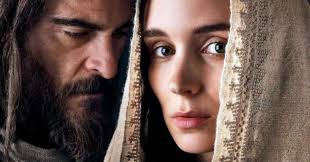
I didn’t feel good about my Lent this year – until Holy Week. I don’t know why, but my heart just wasn’t in it till then. However, beginning on what used to be called Holy Week’s “Spy Wednesday,” a whole series of events unfolded that returned me to the spirit that should have characterized the previous 40 days. Its highlight was experiencing an extraordinary film that I want to recommend here. It’s called simply “Mary Magdalene.” It raises questions about women’s leadership in today’s Catholic Church.

What I did just before seeing the film prepared me. It began on Wednesday when I watched an Italian production of “Jesus Christ, Superstar.” The next night brought a brief celebration of Maundy Thursday at our new non- denominational Talmadge Hill Community Church. The following morning, I took part in a two hour “way of the cross” through the town of nearby Darien. Immediately afterwards, came a “Tre Ore” observance at the town’s Episcopal Church. The recollection of Jesus’ three-hours on the cross was marked by long periods of silence broken by seven sermons delivered by ministers from a whole variety of area churches. (At times the latter seemed like a sermon slam, with the clear winner the entry delivered jointly in dialog by our own two pastors from Talmadge Hill.)

Then on Holy Saturday, Peggy and I took in “Mary Magdalene,” directed by Australian, Garth Davis. For me, it was Holy Week’s capstone. To begin with, Joaquin Phoenix embodied the best Jesus-representation that I’ve seen so far. It was understated, believable, sensitive, compassionate, and challenging. Phoenix’s mien and demeanor reminded me of the Jesus forensic archeologists have estimated looked like this:

But it is Mary Magdalene (played by an unglamorous, but beautiful Rooney Mara) who supplies the eyes through which viewers finally see the peasant from Galilee. She’s a midwife, we learn. Far from the one defined as a prostitute by Pope Gregory the Great in the late 6th century, she rejects intimate relationships with men. “I’m not made for marriage,” Mary explains to the shock of her scandalized father, brothers and suitor. “Then, what are you made for?” they demand. All of them join together and nearly drown her as they attempt to exorcise the demons responsible for her refusal to submit to marital patriarchy.

Nevertheless, Mary persists and eventually tags along with those following Jesus – the only woman among the band of men called apostles. She herself is baptized by Jesus. She also pays closer and more perceptive attention to Jesus’ words than the others. She even gently corrects her male companions, suggesting that their interpretation of the Kingdom of God entailing violent revolution might be mistaken. Peter’s comment about such impertinence is “You weaken us.” But in the end, Mary quietly retorts, “I will not be silenced.”

Soon Jesus commissions Magdalene to baptize women.  As a result, they end up following the Master in droves. From then on, we see Mary habitually walking next to Jesus as he treks across Palestine’s barren landscape from Galilee through Cana and Samaria on his way to Jerusalem. At the last supper, after washing Jesus’ feet, she sits at his right hand. Clearly, she’s in charge and a leader of men nonpareil.

At one point in the journey to the Holy City, Mary unmistakably demonstrates her unique leadership. She implicitly reminds viewers of the words John the Evangelist attributes to Jesus, “The one who believes in me, the works that I do shall (s)he do also; and greater works than these shall (s)he do . . . (JN 14:12) For after witnessing Jesus restore a dead man to life, Mary herself emulates the healer’s ritual and restores to life a score of people left for dead by the brutal Roman occupation forces. None of the males among Jesus’ followers even dares such close imitation of Christ.

Then there is Magdalene’s relationship with a young smiling, cheerful, and very sympathetic Judas. He came to follow Jesus after his wife and child had been brutally killed by the Romans. So, he hears Jesus’ words about God’s Kingdom as a promise that Jesus will inspire and lead a retributive rebellion against Rome. But after Jesus’ participation in a direct-action demonstration in Jerusalem’s temple, Judas appears worried that Jesus is losing resolve and direction. So, in an evident effort to force Jesus’ hand, the apostle cooperates in Jesus’ arrest and collects the reward on his head. Judas fully expects that his teacher’s plight will mobilize his followers to the uprising Judas confidently anticipates. When that doesn’t happen, Judas is filled with despair. He returns home. The next we know, he’s hanging from the lintel of his hovel’s doorway.

Of course, there is no uprising. Jesus is arrested, tortured, and crucified. Afterwards, his limp body is placed in the lap of his mother. He’s then buried. While the other apostles flee, distancing themselves from the corpse, Magdalene faithfully sleeps on the ground outside the tomb. In the morning, she’s awakened by Jesus’ voice. He’s clothed in martyr’s white. Without uttering a word, she quietly sits on the ground next to him, convinced that he has come back to life.

So, she returns to the site of the last supper and tells Peter and the others her good news. They refuse to believe her. It’s at this point that Mary says those words, “I will not be silenced.”

According to Pope Francis, that refusal and her bringing of Good News to the apostolic leadership has merited for her the title of “apostle of apostles.” She is more important than any of them.

As you can see, I’m grateful to “Mary Magdalene” for salvaging my Lent. However, her story makes me wonder about the absence of female leadership in Francis’ church.

How about you? See the film and decide for yourself.

Billionaires Threaten a Hostile Takeover of the Catholic Church

Readings for 6th Sunday in Ordinary Time: JER 17:5-8; PS 1: 1-5; I COR 15: 12, 16-20; LK 6: 17, 20-21;

There’s a plot going on to neutralize Pope Francis. Even worse, it’s about neutralizing Jesus and his “preferential option for the poor” that has dominated our liturgical readings for the past several weeks.

This week’s readings are no exception. In fact, in today’s Gospel selection, that option for the poor receives its starkest expression so far. There, Luke the evangelist has Jesus say clearly that the poor are the object of God’s special favor, while the rich are not. In Luke’s version of the Sermon on the Mount, Jesus speaks frankly: “You poor are blessed.” He tells the rich just as clearly, “you are cursed.” And he does so for no other apparent reason than that the objects of Jesus’ blessing and cursing are poor and rich respectively.

Before I get to that, let me say a word about the plot I just mentioned.

What I’m talking about was reported in January’s Sojourner’s Magazine – the progressive Christian Evangelical monthly published by Jim Wallis. It all appeared there in a piece authored by Tom Roberts, the executive editor of the National Catholic Reporter. The article was entitled “How Right-Wing Billionaires Are Attempting a Hostile Takeover of the Catholic Church.”

There, Roberts described an aggressive project to establish what I would call an ecclesiastical “shadow administration” bent on usurping the authority of the church’s U.S. Conference of Catholic Bishops (USCCB). The undertaking is “financed by the Koch brothers, by Domino Pizza founder Thomas Monaghan, and a slew of other billionaires linked to the Knights of Columbus and conservative Catholic Cardinals – all of whom enjoy favor with Breitbart’s Steve Bannon and the Trump administration.

Seeking to replicate the rise of the Evangelical right in the 1980s, the group advocates a Catholic version of the prosperity gospel described by Roberts as “a hybrid of traditional pieties wrapped in American-style excess and positioned most conspicuously in service of free-market capitalism.” It is “. . . ‘in your face Catholicism’ . . . often expressed amid multi-course meals followed by wine and cigar receptions, private cocktail parties for the especially privileged, traditional Catholic devotionals, Mass said in Latin for those so inclined, ‘patriotic rosary’ sessions that include readings from George Washington and Robert E. Lee, and the occasional break for a round of golf.”

Doctrinally, the goal is to bury more deeply than ever what many have called “the best kept secret of the Catholic Church,” viz. its progressive social teachings. Since Pope Leo XIII’s 1891 encyclical, Rerum Novarum, those teachings have repeatedly criticized the abuses of both capitalism and socialism while advocating workers’ rights, labor unions, fair wages, social security, and (especially with Pope Francis) care for the earth in the face of human-caused climate chaos.

The billionaire cabal in question finds especially offensive not just Francis’ emphasis on social justice themes, but the 1983 pastoral by the USCCB questioning the morality of modern warfare and of nuclear weapons. They resent above all the bishops’ 1986 letter entitled “Economic Justice for All” which disagreed specifically with the economic policies of the group’s great hero, Ronald Reagan.

In place of such teachings, the billionaires in question think that the Catholic social narrative should focus exclusively on sexual issues: abortion, contraception, gay rights, and the rights of divorced and remarried people within the Catholic Church. They want the church to be more celebratory of individualism, entrepreneurship, and of free market fixes for society’s problems. Their goal is to shrink government in general and diminish its services to the poor and marginalized in particular.

Doesn’t that sound completely like the Republican agenda?

And with the Catholic Church currently weakened and reeling from its sex-abuse scandals, the billionaire conspirators are convinced that the time is completely ripe for their hostile takeover.

But could anything be further from the teachings of Jesus which a few weeks ago, our Gospel reading summarized as “good news to the poor?”

There, Jesus announced his program with the following words: “The Spirit of the Lord is upon me, because he has anointed me to bring glad tidings to the poor. He has sent me to proclaim liberty to captives and recovery of sight to the blind, to let the oppressed go free, and to proclaim a year acceptable to the Lord.”

This was a proclamation of a new order (what Jesus called “the Kingdom of God”) directed towards improving the lot of the poor, the imprisoned, the ill and oppressed. It was the proclamation of the Jewish “Jubilee Year,” where debts would be forgiven, slaves freed, and wealth redistributed.

Now in today’s Gospel reading, the Master expresses the same sentiment, only this time in even a more in-your-face manner. Here, it’s worth quoting the words Luke attributes to Jesus.

“Blessed are you who are poor,
for the kingdom of God is yours.
Blessed are you who are now hungry,
for you will be satisfied.
Blessed are you who are now weeping,
for you will laugh.
Blessed are you when people hate you,
and when they exclude and insult you,
and denounce your name as evil
on account of the Son of Man . . .
But woe to you who are rich,
for you have received your consolation.
Woe to you who are filled now,
for you will be hungry.
Woe to you who laugh now,
for you will grieve and weep.
Woe to you when all speak well of you,
for their ancestors treated the false
prophets in this way.”

Shocking words – all of them, don’t you agree? They are part of the great reversal in the new order proclaimed by Jesus. There, the values of the world will be turned on their heads. The poor will be in charge. They will have food to eat. Laughter will replace their tears.

But the rich will experience great misery (woe).  That’s because they have been led astray by false prophets like those cardinals participating in the billionaire hostile takeover of the Catholic Church. Those fake prophets console the super-rich with honeyed words about their specialness

But according to Luke’s Jesus, the rich may be enjoying those multi-course meals, private cocktail parties, cigar receptions and rounds of golf now. But when the Kingdom’s new order comes, they will find themselves hungry. They may be laughing now, but then they will weep and cry. Their false prophets may praise them now but come the new order, the wealthy will be cursed as the most wretched of men.

Obviously, Jesus’ teaching contradicts our culture’s worship of the rich. We think of the rich as heroic entrepreneurs. Jesus sees them as worthless wretches. We see the poor as losers. Jesus sees them as objects of God’s special favor.

In other words, Jesus turns our thinking upside down. As Marianne Williamson puts it: Jesus’ truth (God’s truth) is 180 degrees opposed to what our culture values and teaches.

That realization should be Christians’ fundamental guide in reading the news and thinking about world events. It should be the confident guide of our activist efforts.

Everything is the opposite of what our culture claims!

It’s Time for Catholics to Employ the Shock Doctrine: Set Up Alternative Storefront Churches Everywhere

Storefront

“Never let a good crisis go to waste.”

As described by Naomi Kline, that’s been the motto of reactionary politicians forever. In her book by the same title, she calls it “the shock doctrine.” It highlights the fact that when disasters occur, it becomes possible for politicians to ram through policies that otherwise wouldn’t have a snowball’s chance in hell of gaining approval.

9/11 provides the most obvious case in point. Its aftermath saw Congress gain quick endorsement of policies that its neo-fascist members have impotently lusted after for decades. I’m referring to the institution of a police state, to widespread surveillance of U.S. citizens, to the use of torture, to wars against oil and mineral-rich Muslims in Iraq, Libya, and elsewhere, and to the mass expulsions of foreigners from U.S. soil.

It was similar with Hurricane Katrina. Following its devastation, public schools were privatized, government programs of aid to the impoverished were shredded, and black neighborhoods were gentrified on behalf of wealthy real estate moguls and their clients. All of those were prominent among the “impossible” desiderata of Washington’s elite.

And without 9/11 and Katrina, they would have forever languished beyond the pale of prospect.

The argument here is that the mega-crisis of clerical pedophilia has opened the way for ordinary Catholics to apply Klein’s shock doctrine to an institution that has otherwise remained immobile even in the face of the urgent call of Pope Francis (in “The Joy of the Gospel”) for radical change at almost all ecclesiastical levels.

I say “almost all,” because even in his otherwise brilliant Apostolic Exhortation, the pope specifically ruled out the ordination of women. (He did not even mention abolishing the requirement of priestly celibacy.)

However, my point here is that the horrendous pedophilic crisis has cardinals, bishops, priests, and even the pope himself on the run. Consequently, the door has swung wide for those outside the clerical establishment to take matters in their own hands. It’s time for us to demand changes that would otherwise remain unthinkable for the fossilized ecclesiastical establishment.

First on the list should be the re-examination of all church teachings about sex from masturbation to abortion. And here the laity should be in charge. For it has become evident that a celibate clergy has NOTHING at all to teach us about sex. In the light of clerical pedophilia and its coverup, they should forever remain silent on the subject.

Put otherwise: precisely as celibates, the Catholic clergy’s knowledge of sex can only be either entirely theoretical (usually based on a medieval understanding of the topic) or gathered from illicit, guilt-ridden practice. As such it is invalid and should be ignored on principle.

Second on the list should be the elimination of mandatory clerical celibacy itself. Common sense tells us that it is connected with the perversions of sex-starved priests.

Thirdly, it’s time to admit the obvious, viz. that pedophilia would never have flourished under the leadership of women. In other words, the door has swung open to the otherwise unthinkable for the clerical boys’ club – to the ordination of women.

With all of this in mind, Catholics should take advantage of this crisis by:

• Refusing to let the pope and others to get away with mere apologies and discussions about what to do with pedophilic offenders.
• Insisting instead that as a good faith measure, the pope immediately declare his intention to phase out mandatory celibacy and to open the way for women to serve the church at all levels from priest to pope.
• Demanding the convocation of a General Council (under lay leadership) to re-examine the entire corpus of church teaching on human sexuality.

But how apply pressure to bring about such changes? (And it’s here that the Shock Doctrine applies to a heretofore immobile laity as well as the clergy.)

Let me put it in terms of my own experience.

For years, it has been evident to me and other progressives within my local church in Kentucky that restorationist priests coming out of the reactionary papacies of Pope John Paul II and Benedict XVI were not meeting the needs of local parishioners shaped by the teachings of the Second Vatican Council (1962-65). Those teachings, I reminded my friends, remain the official doctrine of the Catholic Church.

With that in mind, I counseled repeatedly that without abandoning our identity as Catholics, we should leave the local church building and open a storefront, lay-led Catholic Church down the street. We would become a “shadow church” with its own lay pastor, its Eucharistic celebrations, its on-going education programs, and its outreach programs to the local poor. I recommended that we publicly invite our entire congregation to join us, and that we notify the local bishop of our intentions. We would continue meeting in this way, I recommended, until changes were instituted that met our needs.

Our model would be the Jesus, Mary, and Joseph (JMJ) Catholic Church centralized in James Patterson’s novel, Woman of God (which I reviewed here).

No one in our group of 20-25 proved ready to do any of that.

What I’m suggesting here is that the pedophilia crisis may have so shocked my sisters and brothers within my own community that they may now be open to follow the example of Brigid Fitzgerald, the priest hero of Patterson’s novel. She and her ex-priest husband opened a storefront church of the type I’m suggesting here.

I’m betting that following that example across the country and world would move local bishops, Pope Francis and the Catholic establishment to adopt something like the reforms I’ve suggested here.

So, let’s form our own JMJ churches. What have we got to lose?

This Just in: Both U.S. Government & Catholic Church Confirmed as Crime Syndicates

Wafer

Readings for 20th Sunday in Ordinary Time: PRV 9:1-6; PS 34:2-7; EPH 5: 15-20; JN 6:56

Ironically, I felt some relief at last week’s horrendous revelations about the 300 Pennsylvania priests who sexually victimized more than 1000 children and young people over the last 70 years. The relief was similar to what I feel each day now as President Trump spews his venomous lies and implements his cruel policies to restore “America” to its good old days before the post-World II achievements of blacks, women, gays, immigrants, and social justice advocates.

I mean, the veils have finally been pulled back in both politics and religion. In this Sunday homily, though, it’s the latter that will be my focus, since I want to connect today’s Gospel reading with the priesthood and pedophilia.

Let me begin, however, with politics and its scandals that mirror and illuminate those of the church.

Politically, the deceits of Donald Trump have done us all a huge favor. They’ve forced us to face undeniably what our presidents, teachers, and media enablers have been doing for centuries. The revelations cannot be denied. What Mr. Trump is doing, they all have done. The only difference is that Trump’s predecessors didn’t admit it all so openly. But they’ve all lied to us about wars, elections, American ideals, and about their personal lives.

For instance, in the light of Mr. Trump, it’s now indisputable that the entire Republican Party is corrupt just like him. (The Democrats are not far behind.) By endorsing his racism, they reveal their own racism. They all routinely lie; they enrich themselves at public expense; they practice nepotism; they break laws, dishonor the Constitution, care only about their rich donors, and don’t give a damn about the rest of us.

The voting system is rigged against us. Republicans don’t even want everyone to vote. Mitch McConnell’s refusal to follow the Constitution after the death of Antonin Scalia, illegally stacked the Supreme Court in favor of corporations. For that reason, the Court’s decisions should all be considered invalid.

In other words, every branch of government – including the Fourth Estate – has been corrupted. As a result, we’re living in something like the Soviet Union, where NOTHING the government or media says can be taken at face value. (In fact, it never should have been.) Thank you, Donald Trump, for making all of that indisputable! It frees us up to work for outright revolution.

It’s the same with the Catholic Church, with Protestants not far behind. The widespread pedophilia among the clergy reveals that the faithful have been duped by the very people we were taught to trust as God’s representatives. (If there were at least 300 pedophilic priests in one state, how many have there been in the other 49?) All priests and former priests are now under suspicion.

And the hell of it is that these were the very teachers whose principal moral obsessions centered on sexual morality! They worried us about impure thoughts, pornography, masturbation, homosexuality, petting, fornication, adultery, birth control, abortion, and divorce. Since Augustine, they made us all feel guilty about the second strongest drive (after self-preservation) that humans possess (i.e. propagation of the species). In the confessional, we told them of our most intimate failings in that area. And they shared their sage advice on how to overcome them. These sex-obsessed “celibates” even advised couples about their married lives.

Could we have been more deceived? And what made all of that possible?

Those questions bring me to today’s Gospel whose content has traditionally be used by the Catholic Church to persuade the faithful that priests have quasi-magical powers. According to Catholic teaching, priests can change little wafers into the actual body of Christ. They can change wine into his blood. Similarly, in the confessional, their words can remove sin and open the gates of heavenly after-life to those who would otherwise be condemned to eternity in hell.

Can you imagine anything more powerful than that? No wonder priests were revered, and their faults, sins, and crimes overlooked!

More specifically, in today’s third reading, John the Evangelist has Jesus say

“Amen, amen, I say to you . . my flesh is true food, and my blood is true drink. Whoever eats my flesh and drinks my blood remains in me and I in him.”

However, as I noted in last week’s reflections, the words John invents about eating Jesus’ flesh and drinking his blood could not possibly have been spoken by the Jewish Jesus to a Jewish audience. After all, drinking any kind of blood – not to mention human blood – was expressly forbidden by the Mosaic Law.

Nonetheless, by the time John wrote his Gospel (anywhere between about 90 C.E. and 110) the evangelist’s audience (predominantly non-Jews) was highly influenced by Gnostic beliefs. Gnostics – and John’s audience – were all quite familiar with “dying and rising Gods” and with the ritual practice of metaphorically eating the Gods’ flesh and drinking the Gods’ blood by sharing bread and wine. So, to them, Jesus could be explained in precisely those terms, even if it meant putting into the mouth of Jesus words that he could never have spoken.

Yet, the “real presence” that even John was concerned about had nothing to do with the containment of an infinite God within a wafer or sip of wine. John’s audience was worried about connecting with the long-dead Master from Galilee. How might they do this? That was their question. John’s response was “Do what Jesus did: share food and drink.” And he wasn’t talking about “the Mass.” Sharing of bread with the hungry is what makes Jesus present. In fact, “bread” and Jesus’ “flesh,” “wine” and Jesus’ “blood” are all interchangeable terms. It’s the breaking of the bread and the sharing of the cup with the poor that makes Jesus present.

Catholic fundamentalism and literalist reading of scripture denied such understandings as heresy. And that enabled priests to masquerade as magicians and eventually gave them the power to determine the eternal destinies of their charges. It gave them immunity in their own eyes and even in the eyes of their victims.

After the pedophilia revelations, who can believe any of that?

However, we shouldn’t be discouraged. I mean, realizing our deception frees us up, doesn’t it? Just as in the field of politics, it can help liberate us from the childish beliefs that ignorant, hypocritical liars have foisted upon us. I mean, what can we believe that either our politicians or our clergy have told us about ANYTHING?

What I’m suggesting is that it’s all up for grabs now. We have to think for ourselves, not only about our presidents, but even about God.

And that’s true freedom.

So, what should Catholics who still care do about the latest expositions of duplicity? For starters, here are some suggestions:

• Admit that the Catholic Church has been generally corrupted by the pedophilic scandal; like the U.S. government, it is a crime syndicate
• More specifically, recognize that the priesthood along with bishops, cardinals, and the papacy itself have been perverted
• In that light, boycott the church until it calls a General Council to institute reforms from the top-down
• Realizing that the pedophilic scandal would not have occurred under the aegis of women, demand not only their ordination, but their empowerment to replace men in roles of church leadership including at the highest level
• Similarly, demand the abolition of required clerical celibacy for Catholic priests

Yes: It is undeniable that the lies of Mr. Trump and the sins of our clergy have initiated a new era in our country and in the world. That shouldn’t depress us. Rather, it should inspire us to completely throw off the old and embrace new possibilities both politically and in the realm of faith.

Three Unspeakable Descriptors of California’s Omni-Fire

FIRE

California is on fire. Its 17 unprecedented conflagrations are predicted to rage out-of-control till at least the end of this month.

Despite such disaster, there are three terms Americans will scarcely hear mentioned in media reporting of the catastrophe. The first two are “climate change” and “profit.” The third is a person, “Pope Francis.”

Begin by considering the silence of our leaders and media about “climate change.” The term hardly crosses the lips of commentators covering the wild fires across an area larger than the sprawling city of L.A.

That’s because virtually alone in the world, the United States (and its media enablers) stand in aggressive denial of the obvious fact that the “American” economy and way of life remain the major causes of such disasters. (Even the Chinese contribution to climate chaos is largely induced by U.S. factories relocated there.) So, you don’t hear much these days connecting wild fires and climate change.

And that brings me to the second culturally unpronounceable word: “profit.” In fact, as Noam Chomsky points out, that word is so unspeakable that it must now be pronounced and spelled as j-o-b-s.

Nevertheless, we all know, the real reason for climate denial is not jobs, but money. It’s greed that drives corporations such as Exxon to accept destruction of the planet over appropriate response to the climate impacts of their products that their own research uncovered decades ago.

Pope Francis has recognized the hypocrisy of it all. And that’s why his name is unmentionable in connection with California’s omni-fire. In fact, more than three years ago, Francis wrote an entire encyclical addressing the problem. (Encyclicals are the most solemn form of official teaching a pope can produce.)

Yet, Francis’ dire warnings in Laudato Si’ (LS) remain largely ignored even by “devout Catholic” leaders like Paul Ryan.

Worse still, the pope’s words generally go unreferenced by pastors in their Sunday homilies.

Yet, the pope’s words are powerfully relevant to not only to wild fires, but to the record temperatures, droughts and increasingly violent hurricanes now happening in real time. For instance, in section 161 of Laudato Si’ Francis says:

“Doomsday predictions can no longer be met with irony or disdain . . . The pace of consumption, waste, and environmental change has so stretched the planet’s capacity that our contemporary lifestyle, unsustainable as it is, can only . . . be reduced by our decisive action here and now”

And what are the “here and now” “decisive actions” the pope called for? Chief among them is the necessity for all nations of the world to submit to international bodies with binding legislative powers to protect rainforests, oceans and endangered species, as well as to promote sustainable agriculture (LS 53, 173-175). That, of course, is exactly what the Exxons of the world fear most. Their rationale? Such submission threatens profits.

But realities much more important than unspeakable profits are at stake here. We’re talking about the survival of human life as we know it.

This is a matter of faith and morality.

In fact, the California fires and the other climate disasters I’ve just mentioned remind us of the most dreadful papal observation of all. “God always forgives,” Pope Francis said. “Human beings sometimes forgive. But nature never forgives.”

The California omni-fires demonstrate that truth.

The question is: why aren’t people of faith listening? Why are we not electing public servants who will simply recognize and respond appropriately to the disasters unfolding before our very eyes?

Only God Can Save Us from Nature’s 2025 Deadline: Listen to Pope Francis on Climate Change

Last batter

I recently came across a powerful but profoundly misleading video about climate change. In the name of progressiveness, compassion and love, it waves a white flag before anthropogenic climate change and invites its viewers to blissfully coast through to their inevitable evolutionary demise.

The film’s resigned surrender contrasts sharply with the more hopeful, clear-eyed vision of Pope Francis and the faith-inspired program he suggests in his all-but-ignored eco-encyclical, Laudato Si’.

The stark difference between the two approaches illustrates the impotence of the secularized left before the world’s most pressing problems. It also shows the potential power of Francis’ faith perspective, which progressives ignore at their own (and the planet’s) peril.

First of all, consider the film in question. The eight-minute piece is called “Edge of Extinction.” It was produced and narrated by Guy McPherson, an evolutionary biologist whose webpage slogan is “Nature bats last. Passionately pursue a life of excellence.”

McPherson’s thesis is that “humanity is behaving exactly in accordance with its evolved genetic imperatives to survive, thrive and multiply today, regardless of the consequences tomorrow.”

In other words, humanity is like other animal species. Its evolutionary short-sightedness has it rushing headlong towards its own inevitable extinction whose ultimate cause is “industrial civilization, the most violent set of living arrangements ever devised.”

According to McPherson, this preordained inevitability means that we should all set aside anger and bitterness about human-caused climate change, replacing such unproductive emotions with “compassion and tolerance” presumably for climate change deniers. This, in turn, will confer peace of mind and a resultant “general happiness” as we glide towards extinction which, Mr. McPherson says will occur in 2025.

None of this is to say that it will be easy, the film continues. We’ll witness the cataclysmic death of 7.5 million people. We’ll run out of food, water, and fuel. The soil will become completely unproductive. The world’s abandoned nuclear facilities will melt down catastrophically. Hospitals will be shuttered; disease will run rampant. There will be no first responders to rescue us. Many will commit suicide. Others will be murdered by the last remnants of the privileged still hanging on to their dwindling resources in their sweltering radiated bunkers.

Is that pessimistic enough for you?

It needn’t be for three reasons: First of all, “humanity” has not actually made the decision in question. Secondly, as signaled by Pope Francis, there are clear alternatives. Third, while climate change deniers might deserve our compassion, they emphatically do not merit tolerance.

To begin with, “humanity” has certainly not decided “to survive, thrive and multiply today, regardless of the consequences tomorrow.” In fact, only a sliver of the human race has done so; the rest are in complete resistance.

The sliver in question is a small part of the planet’s richest 1% most of whom happen to live in the United States whose population comprises only 5% of the world’s inhabitants. To put a finer point on it: the criminals in question have coalesced in the United States and in the Republican Party, identified by Noam Chomsky as the most dangerous organization in the history of the world. Republicans can be removed from office. (Remember that next November!)

Meanwhile, the rest of the world has other ideas as signaled in the nascent reforms of the Paris Climate Accord endorsed by nearly everyone in the world excluding the Republican leadership. Moreover, polls show that 61% of Americans—including 43 percent of Republicans—say climate change is a problem the government needs to tackle.

Secondly, there are simple, common-sense alternatives to the looming catastrophe. They have been outlined most compellingly by Pope Francis in Laudato Si’ (LS). They include on the one hand, acts on the parts of individuals such as “avoiding the use of plastic and paper, reducing water consumption, separating refuse, cooking only what can reasonably be consumed, showing care for other living beings, using public transport or carpooling, planting trees, turning off unnecessary lights. . .” as well as reducing the use of air conditioning (LS 55, 212).

On the other hand, Francis says that dealing with climate chaos requires action which national governments alone are capable of performing (38, 129). These include weening national populations from dependence on fossil fuels (165) as well as investment in high-speed railways, and renewable energy sources. National governments must also strictly regulate transnational corporate activity (38).

According to Laudato Si’, changing paradigms additionally includes the submission of national governments to an international body with legislative authority to protect rainforests, oceans and endangered species, as well as to promote sustainable agriculture (53, 173, 174, 175). (BTW, the U.S. already submits to international legislative authorities such as, for instance, the World Trade Organization which has the power of overturning United States law.)

So, all of this is doable. And, as Francis insists, the Judeo-Christian tradition about stewardship and care for God’s creation can be invoked to persuade the 83% of Americans who identify themselves as Christian to save the planet.

Ironically, Republicans have effectively invoked the biblical tradition to support their ecocide. Few on the left have followed Pope Francis in the opposite direction. Progressive church leaders need to make climate change the absolute center of their ministries. 2025 is fast approaching.

Finally, like other criminals, Donald Trump and his Republican cohorts in the Congress certainly deserve our compassion. Perhaps, they’ve been corrupted by gilded childhoods, limited experience of the life’s hardships, and by an overriding love of money, profit, pleasure, power, and prestige.

But no matter how sorry we might feel for them, we must recognize that they are criminals. This sliver of 1% have taken it upon themselves to condemn all of us, our children and grandchildren to the fate so accurately described in “The Edge of Extinction.”

We cannot allow them to do that. Citizens’ arrests are in order, not to mention non-violent revolution – stimulated by recognition of shared humanity and even faith.

That’s the path Pope Francis’ Laudato Si’ suggests.

Easter Sunday: Pope Francis & the Deep Meaning of Jesus’ Resurrection

Pope Francis
Readings for Easter Sunday: ACTS 10: 34A, 37-43; PS 118 1-2, 16-17, 22-23, ICOR 3L 1-4; JN 20: 1-9.

On this Easter Sunday, it’s appropriate to address the reality of Jesus’ resurrection. Did he really rise from the dead? Or is that doctrine simply a remnant of childhood like belief in the Easter Bunny or Santa Claus? And for those of us concerned with social justice, what can the Bible’s resurrection stories possibly mean?

This reflection tries to address those questions from the viewpoint of Pope Francis.

In response to the question about the factuality of Jesus’ resurrection, let’s look at what the Christian tradition itself tells us. It indicates that the resurrection accounts are not based on the physical resuscitation of a corpse. The experiences portrayed in tradition were more visionary and likely metaphorical.

As for the sociopolitical meaning of Jesus’ rising from the dead, Pope Francis addresses that question quite meaningfully in his Apostolic Exhortation, Evangelii Gaudium. Life is stronger than death, he reminds us. Despite appearances, vital forces will always triumph in the end. But we’ll get to that presently.

First however consider the nature of the resurrection traditions themselves. They were inspired by women and emerged from the bleakest depths of despair not unlike what many progressives might be feeling today as our fondest hopes appear further than ever from fulfillment – as a rogue U.S. empire wreaks havoc and its savage economy destroys the planet.

Think about it.

Following Jesus’ death, his disciples returned to business as usual – fishing most prominently. It was their darkest hour. Yeshua, the one on whom they had pinned their hopes for the liberation of Israel from Roman domination was dead. Their world had ended.

But then unexpectedly, women among them reported an experience which effectively raised Jesus back to life (MT 28:1-10; MK 16: 1-8; LK 24:1-11). He was more intensely present, they said, than before his execution. Their tales changed everything.

But what was the exact nature of the resurrection? Did it involve a resuscitated corpse? Or was it something more spiritual, visionary and prophetic?

In Paul (the only 1st person report we have – written around 50 C.E.) the experience of resurrection is clearly visionary. Paul sees a light and hears a voice, but for him there is no embodiment of the risen Jesus. When Paul reports his experience (I COR 15: 3-8) he equates his vision with the resurrection manifestations to others claiming to have encountered the risen Christ. Paul writes “Last of all, as to one untimely born, he appeared also to me.” In fact, even though Paul never met the historical Jesus, he claims that he too is an “apostle” specifically because he shared the same resurrection experience as the companions of Jesus who were known by that name. This implies that at best the other resurrection appearances might also be accurately described as visionary rather than as physical.

The earliest Gospel account of a “resurrection” is found in Mark, Ch. 16. There a “young man” (not an angel) announces Jesus’ resurrection to a group of women (!) who had come to Jesus’ tomb to anoint his body (16: 5-8). But there is no encounter with the risen Jesus. In fact, Mark’s account actually ends without any narrations of resurrection appearances at all. (According to virtually all scholarly analysis, the “appearances” found in chapter 16 were added by a later editor.)

In Mark’s original ending, the women are told by the young man to go back to Jerusalem and tell Peter and the others. But they fail to do so, because of their great fear (16: 8). This means that in Mark not only are there no resurrection appearances, but the resurrection itself goes un-proclaimed. This in turn indicates either that Mark didn’t know about such appearances or did not think them important enough to include!

Resurrection appearances make their own appearance in Matthew (writing about 80) and in Luke (about 85) with increasing detail. But always there is some initial difficulty in recognizing Jesus. For instance, Matthew 28: 11-20 says, “Now the eleven disciples went to Galilee, to the mountain to which Jesus had directed them. And when they saw him they worshipped him; but some doubted.” So, the disciples saw Jesus, but not everyone present was sure they did. In Luke 24: 13-53, two disciples walk seven miles with the risen Jesus without recognizing him until the three break bread together.

Even in John’s gospel (published about 90) Mary Magdalene (the woman with the most intimate relationship to Jesus) thinks she’s talking to a gardener when the risen Jesus appears to her (20: 11-18). In the same gospel, the apostle Thomas does not recognize the risen Jesus until he touches the wounds on Jesus’ body (JN 26-29). When Jesus appears to disciples at the Sea of Tiberius, they at first think he is a fishing kibitzer giving them instructions about where to find the most fish (JN 21: 4-8).

All of this raises questions about the nature of the “resurrection.” Once again, it doesn’t seem to have been resuscitation of a corpse. What then was it? Was it the community coming to realize the truth of Jesus’ words, “Whatever you do to the least of my brethren, you do to me” (MT 25:45) or “Wherever two or three are gathered together in my name, I am there in their midst” (MT 18:20)? Do the resurrection stories reveal a Lord’s Supper phenomenon where Jesus’ early followers experienced his intense presence “in the breaking of the bread” (LK 24:30-32)?

Regardless of whether one believes in resurrection as resuscitation of Jesus’ dead body or as a metaphor about the spiritual presence of God in communities resisting empire and serving the poor, the question must be answered, “What does resurrection mean?”

It’s here that Pope Francis helps us. In The Joy of the Gospel (JG), he relates the resurrection accounts, (whatever their factual basis) to our own despair – just as real and hopeless as that of Jesus’ bereft disciples. Francis writes to encourage us who might be worn down and hopeless in the face of a world:

  • Pervaded by consumerism and pleasure-seeking without conscience (JG 2)
  • Governed by merciless competition and social Darwinism (53)
  • Economically organized by failed “trickle-down” ideologies that idolize money (54, 55)
  • Controlled by murderers (53) and thieves (57, 189)
  • Torn apart by wars and violence (99)
  • Rooted in growing income inequality which is the root of all social ills (202), including destruction of the environment and its defenseless non-human animate life (215)

In the face of all that, here’s what Francis says:

“Christ’s resurrection is not an event of the past; it contains a vital power which has permeated this world. Where all seems to be dead, signs of the resurrection suddenly spring up. It is an irresistible force. Often it seems that God does not exist: all around us we see persistent injustice, evil, indifference and cruelty. But it is also true that in the midst of darkness something new always springs to life and sooner or later produces fruit. On razed land life breaks through, stubbornly yet invincibly. However dark things are, goodness always re-emerges and spreads. Each day in our world beauty is born anew, it rises transformed through the storms of history. Values always tend to reappear under new guises, and human beings have arisen time after time from situations that seemed doomed. Christ’s resurrection everywhere calls forth seeds of that new world; even if they are cut back, they grow again, for the resurrection is already secretly woven into the fabric of this history . . . May we never remain on the sidelines of this march of living hope! (276, 277)

Here the pope says that the power and meaning of Jesus’ resurrection is not found in the past. Neither is there reference here to the resuscitation of the Lord’s body. Instead, the pope explains the resurrection in terms of a story that calls attention to the persistent power of Life itself:

* Of nature and spring after a long cold winter

* Of goodness in a world that seems governed by evil

* Of light where darkness reigns unabated

* Of justice where injustice is simply taken for granted

* Of beauty where ugliness is worshipped as its opposite

* Of hope over despair

* And of activists who refuse to stand on the sidelines

No need for despondency, the pope says. Despite appearances, Life and its irresistible forces are on our side! They will not – they cannot – be controlled even by imperial agents of death as powerful as the Rome that assassinated Jesus or the United States whose economic and military policies are butchering the planet.

Even post moderns, skeptics and agnostics can embrace a story with a message like that.

After all, it’s spring! Life goes on! Jesus has indeed risen!

The Salvation of Our Country and Church Comes from Iranians and Mexican Immigrants (Sunday Homily)

Readings for 4th Sunday in Lent: 2CHR 36:14-16, 19-24; PS 137:1-6; EPH 2:4-10; JN 3: 14-21

NAFTA

Today’s liturgy of the word reminds us to look for salvation in unexpected places. In fact, it strongly suggests that the very ones our culture despises, and our church relegates to second class status have been chosen by God to save us. Specifically, I’m talking about Iranians relative to our country and Latin Americans in relation to the church.

Take Iranians first. (They are called “Persians” in today’s first reading.) There, one of them (King Cyrus) is identified in Chronicles as Judah’s “messiah” or anointed. The identification is given even though Cyrus was not a Jew, but an adherent of Zoroastrianism, a religion even more foreign to Judaism than Islam. Yet according to Chronicles, this Iranian king was God’s servant chosen to end Judah’s long exile in Babylon (modern day Iraq). That’s what I mean by salvation coming from an unexpected place.

Then in the second reading from Ephesians, Paul refers to Jesus of Nazareth in those same Cyrusian terms. Jesus is the Christ, God’s anointed, Paul says – and an unlikely “Christ” at that. After all, the Nazarene was the son of an unwed teenage mother; an refugee-immigrant in Egypt at the beginning of his life; a working stiff rather than a priest or scholar; possessed by the devil (according to the religious establishment); a drunkard and whore-monger according to those same sources; an enemy of the temple and state; and a victim of torture and of capital punishment in the form reserved for terrorists. Nevertheless, just as Cyrus brought Judah back from their 70 year-long exile in Babylon, Paul says, Jesus, the executed criminal, brought all of us back from the metaphorical death caused by living according to the deathly standards of the world. In Paul’s eyes, those standards obscure the gifts of God by convincing us that we have to earn life rather than accepting everything as God’s gift. Or as Paul puts it: “salvation is not the result of works,” but of God’s graciousness.

That graciousness (John the evangelist reminds us in today’s Gospel reading) is unending; it covers all the bases, has no exceptions and lasts forever. It turns each of us into Christs – into God’s only son (or daughter) – into saviors of the world. In other words, each one of us is the unlikeliest Christ of all.

O.K. each of today’s readings tell us to look for salvation in unexpected places – even within ourselves. But what are we post-moderns to understand by “salvation” itself? Think about it. The answer should be clear both in terms of country and church. In both spheres our condition can only be described as absolutely desperate and in need of deliverance.

Politically, we’re currently like lemmings rushing headlong towards the final precipice. Under the aegis of the organization Noam Chomsky calls “the most dangerous in the history of the world,” our Republican “leaders” are in denial about the greatest peril the human race has ever faced. Here I’m referring to climate chaos that threatens to deprive our grandchildren and even us and our children of the most basic necessities of life.

Besides that, our rulers insist on developing nuclear arsenals whose destructive power boggles the mind. And they seem extremely anxious to unleash them. The U.S. commander in chief has gone so far as to wonder aloud, “If we have nuclear weapons, why can’t we use them?” If we’re not looking for salvation from all of that, we must be asleep entirely.

And as for faith . . . My own Christian community, the Catholic Church, it is in dire need of salvation too. It is crumbling before our eyes.

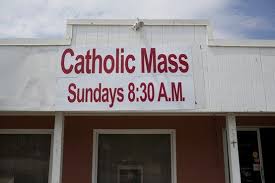
My parish in Berea, Kentucky is a case in point. There we’ve had a series of restorationist pastors hell-bent on reinstating the pre-Vatican II order I grew up in during the 1940s and ’50s.
Clericalism is their watchword and guiding vision. Outside the sanctuary, they wear birettas and cassocks. While celebrating Mass they seem rule-bound, uncreative, unthoughtful, and totally oblivious not only to the reforms of the Second Vatican Council, but to Pope Francis’ more recent summons to radical change as described in his Apostolic Exhortation, The Joy of the Gospel (JG), and in his eco-encyclical, Laudato Si’ (LS).

As a result of such backwardness, church numbers are dwindling drastically. Parishioners I’ve seen at Mass every Sunday over my 46 years at St. Clare’s have gone missing. Alternatively, and like my own children, they have joined the ranks of the second largest denomination in the country – Former Catholics. Loyal progressives in my parish are at their wits’ end wondering how to cope with leadership tone-deaf to their desperate voices.

My own response has been to recognize what theologian and church historian, Figueroa Deck has identified as the “sleeping giant” of Latino Catholicism. That has me attending our parish’s Hispanic Mass at 11:00, rather than the increasingly reactionary and Euro-centric Anglo Mass at 9:00. I “go to the eleven o’clock” not only to escape the deadly retrogression of 9:00 a.m. antiquarianism, but in subconscious recognition, I think, of the fact that our Hispanic parishioners represent the cutting, salvific edge of the Catholic Church.

For decades now, the Latin American Church has embodied Catholicism’s most vital element.That’s personified in Pope Francis himself, our first Latin American pontiff, who I’m told is rejected by our current parish leadership – the same way Washington rejects Latin American immigrants.

Francis, of course, comes from Argentina. He’s followed the lead of Latin American theologians of liberation with his adoption of Jesus’ own “preferential option for the poor.” That entails recognition that the poor (including, most prominently, our immigrant population) know more about the world than our rich leaders – or even than us in more comfortable classes.

I mean, immigrants possess a version of what W.E.B. Dubois called “double consciousness,” while the rest of us see only one side of what’s occurring before our eyes. On the one hand, the daily observation of the undocumented (as our motel cleaners, nannies, gardeners, construction workers, and fellow parishioners) tells them what it means to be a white American. On the other, they know intimately the experience of exclusion by those same whites.

Immigrants know how the economy works for whites, and how it excludes browns and blacks. They know that rich capitalists and their money enjoy absolute freedom to cross borders, regardless of the negative impacts such mobility might (and does!) have on Global South economies. At least subconsciously, migrant workers recognize the simultaneous contradiction of their being excluded from such mobility, despite the fact that labor is an even more important part of the economic equation than capital. So even though the law (created by the rich) forbids them, immigrants vote with their feet to claim the rights the system unjustly denies them. Our “immigration problems” are the result.

The double consciousness of immigrants can be salvific for the church. If its expressions are heeded, they can save the church. As expressed by our Hispanic Pope Francis, the undocumented in our midst call us to a church where (in the words of The Joy of the Gospel) we cannot leave things as they presently are” (JG 25), but must include new ways of relating to God, new narratives and new paradigms (74).

Similarly, in the world of politics, Iranians (the descendants of Chronicles’ Cyrus the Great) inspired this time by Islam are calling us to changes in foreign policy. They implore us to just leave them (and their oil) alone. Ironically, their desire is that they be liberated from a kind of Babylonian captivity that places them under the jackboot of the United States and (still more ironically) Israel.

What I’m suggesting is that the descendants of Cyrus are still God’s instrument of our salvation. So in our present desperate context, are marginalized Catholic immigrants whose presence reminds us of Pope Francis’ wisdom and of the penetrating understanding of life that comes from refugees and the immigrants our government’s free trade policies create on the one hand, while refusing them sanctuary on the other.

Both bring us the new ways of relating to God, the new narratives and the new paradigms salvation requires.