
The Great Gustavo Gutierrez died this week. He transitioned as a 96-year-old giant whose A Theology of Liberation: History, Politics, and Salvation (1971) popularized and spurred the most important theological movement of the last 1700 years (i.e. since Constantine in the 4th century). In fact, liberation theology (LT) might well be described as responsible for the West’s most influential intellectual and social developments of the last 175 years (i.e. since the publication of the Communist Manifesto in 1848). United States and Vatican fierce opposition to LT testifies to its impact.
Think about it. Without liberation theology it is impossible to account for Salvador Allende’s rise to power in 1973 or the triumph of Nicaragua’s Sandinistas in 1979, or the power the FMLN in El Salvador had and continues to enjoy today. The Zapatista movement in Mexico is also intimately connected with liberation theology. Even more, without reference to liberation theology, it’s impossible to fully understand the rise of new left governments throughout Latin America. All of them are indebted to liberation theology and its power to motivate the grassroots.
Perhaps more surprisingly: apart from LT, one cannot fully understand the prominence of conservative evangelicals in the United States. That’s because (as we’ll see below) political support for their movement was part of the Reagan administration’s strategy to defeat liberation theology which the White House and the Pentagon termed a national security threat. Their fear of LT mirrored that of the Vatican which ended up cooperating with Washington’s war against it.
Many are convinced that Washington’s and Rome’s anti-LT war was successful. That’s because the U.S. systematically assassinated its prophets along with hundreds of thousands of its adherents in a massive conflict that Noam Chomsky called “the first religious war of the 21st century.” The sheer terrorism of the U.S. response plus an equally systematic offensive against LT within the Catholic Church itself deprived liberation theology of its best leaders, misinformed and intimidated the grassroots, and silenced many more. Nonetheless LT has changed the world. It has changed the church and Christianity in general.
But what is liberation theology? And why was it so threatening to the powers-that-be, both political and ecclesiastical? What steps were taken to defeat it? And why should believers be so grateful to theologians like Gustavo Gutierrez?
Liberation Theology Defined
Simply put, liberation theology is reflection on the following of Jesus of Nazareth from the viewpoint of the poor and oppressed. More accurately, it is reflection on the following of Jesus the Christ from the viewpoint of those among the poor who are committed to their own liberation. That is, LT begins from a place of commitment – to a world with room for everyone. In itself, it represents a popular movement, a solidarity movement for social justice.
Liberation from what? In a word, from colonialism and from the neo-colonialism represented today by the forces of corporate globalization. Those forces have nearly half the world living on $2 a day or less. They’ve concentrated the world’s wealth in the hands of a sliver of 1% of the world’s population. According to UN statistics, eight billionaires own as much as 50% or humanity. As a result, at least 25,000 people including 10,000 children die of preventable starvation each day. In the eyes of liberation theology’s protagonists, that’s sinful and runs entirely contrary to the teachings of Jesus of Nazareth.
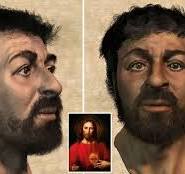
And what were those teachings? (This is the heart of liberation theology.) They were first of all those of a man recognized by the impoverished protagonists of liberation theology as someone like themselves. He looked like them. According to experts in the field of forensic archeology, he resembled poor mestizos everywhere in Latin America. He probably stood about 5’1’’ and weighed about 110 pounds. His skin was brown. He was a laborer, not a scholar; his hands were calloused.
Ironically, Jesus also possessed characteristics that mainstream Christians often find repulsive and ungodly. He was the son of an unwed teenage mother (Mt. 118-22; Lk. 1:26-38). He was homeless at birth (Lk.2:7). If we are to believe Matthew’s account, Jesus became an immigrant in Egypt (Mt. 2:13-15). The good people of his day called him a drunkard and the companion of prostitutes. They expelled him from his synagogue because he didn’t seem to care about the 10 Commandments, especially the most important one – the Sabbath law. (For a Jew such excommunication and the shunning it entailed were like a death sentence.) The religious authorities said he was a heretic and possessed by the devil. The occupying Roman authorities identified him as a terrorist. They arrested him. And he ended up a victim of torture and of capital punishment carried out by crucifixion – a means of execution the Romans reserved specifically for insurgents. He was not the kind of person mainstream Christians usually admire. He was far too liberal to merit their approval.
Jesus was clearly a feminist. Many of his disciples were women. He spoke with them in isolated places. He actually forgave a woman caught in adultery, while implicitly criticizing the hypocrisy of patriarchal law which punished women for adultery and not men. And Jesus refused to recognize his contemporaries’ taboos around segregations. He crossed boundaries not only dividing men from women, but Jew from gentile, lepers from non-lepers, and rich from poor.
He couldn’t have been more liberal. In a sense he was an anarchist. He honored no law that failed to represent the loving thing to do. His attitude towards the law is best summarized in his pronouncement about the Sabbath. “The Sabbath was instituted for human beings,” he said, “human beings weren’t made for the Sabbath.” This was pure humanism placing human beings above even God’s holiest law. Again, it was anarchistic.
Jesus’ teachings were politically radical as well. They centered on what today is called social justice. As such they infuriated his opponents but were wildly inspiring to the poor and oppressed. His proclamation was not about himself, but about what he called “The Kingdom of God.” That was the highly charged political image he used to refer to what the world would be like if God were king instead of Caesar. In that kingdom everything would be turned upside-down. The first would be last; the last would be first. The rich would be poor; the poor would be rich.
Subsequent reflection by followers of Jesus in the Book of Revelation teased all of that out and drew the conclusion that with the dawning of God’s kingdom, the Roman Empire would be destroyed and replaced by a new heaven and a new earth entirely unlike empire. There (as indicated in the Acts of the Apostles) wealth would be distributed from each according to his ability to each according to his need. There would be room for everyone. If that sounds like communism, it’s because, as the Mexican exegete Jose Miranda points out, the idea of communism originated with Christians, not with Marx and Engels.
U.S. Opposition to LT
Those connections with Marxist analysis go a long way towards explaining resistance to LT by the U.S. government as well as within the Catholic Church.
That liberation theology dared to enter the mythological arena the right had long dominated virtually without rival astounded and infuriated the empire. Peasants throughout the subjugated world found the new explanations of God, Jesus and the gospels entirely empowering. Everywhere throughout Latin America they formed biblical circles, and those circles issued in social movements for justice.
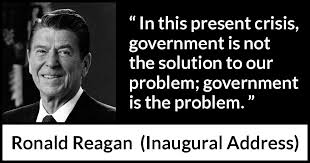
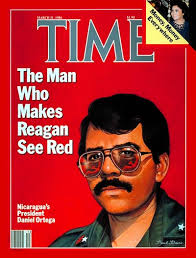
In response, the Rockefeller Report of 1969 already identified liberation theology as a threat to the national security of the United States. By 1987, the Latin American Military Chiefs of Staff meeting in conference in Mar del Plata, Argentina, devoted several pages of their final report to liberation theology and the threat it posed to regional stability. In between, in 1979 the first Santa Fe Document advised the incoming Reagan administration that it had to do something decisive about the threat posed by liberation theology. The administration heeded the advice, and responded both militarily and ideologically.
Reagan’s military strategy against liberation theology issued in a bloody war pitting the United States against the Catholic Church in Latin America whose bishops meeting in conference in Medellin Colombia had together dared to affirm a “preferential option for the poor” as their official position. To combat that commitment, the U.S. did exactly what Rome had done in the first three centuries of our era – and for the same reason: faithfully following Jesus who called empire into question and motivated the poor to assert their rights in this world as children of the God of life.
And both the Roman response and the U.S. response to Jesus and his followers resulted in blood baths. Many of us are well acquainted with the best-known martyrs: Camilo Torres, Archbishop Romero, the Salvadoran team of liberation theologians killed at San Salvador’s Central American University in 1989, the U.S. women religious murdered years earlier in that same country, and Che Guevara. (Yes, Che. His spirituality was secular, but it was no less spiritual or liberationist than any of the others.) And then the unending list of martyrs in this war against the Catholic Church – 200,000 in Guatemala, more than 100,000 in Nicaragua, 90,000 in El Salvador, and literally untold killings and disappearances in Honduras.
In every case, the carnage was a response to social movements inspired by liberation theology. Again, as Chomsky points out, official U.S. military documents show that liberation theology was a major target of those wars. In fact within those same official documents, the Army boasts specifically about defeating LT.
As for Reagan’s ideological response to liberation theology . . . . On his accession to power, CIA psyops began funding conservative alternatives to liberation theology in Latin America and in the U.S. So did business concerns that saw the leftward drift of Latin America as a threat to their presence there. Domino’s Pizza and Coors Brewery were prominent among the cases in point. As a result, evangelicals throughout the region grew rapidly in number, and the recipients of those funds in the United States increasingly identified with Republicans, the “hand that fed them.”
So, the television programs of Jerry Falwell, Pat Robertson, Jim and Tammy Baker, Jimmy Swaggart, and others were beamed into every poor barrio, población, and favela. Right wing churches sprang up everywhere feeding and expanding an already robust evangelical presence in areas once completely dominated by the Catholic Church. The reactionary message was always the same – a depoliticized version of Christianity whose central commitment involved accepting Jesus as one’s personal savior and rejecting communism including the type allegedly represented by the theology of liberation.
All this points up the extreme importance of LT. including being indirectly responsible for the rise of the religious right in the United States.
On the other hand however, and on the other side of the aisle, so to speak, the Obama presidency represented the first U.S. president directly influenced by liberation theology. For 20 years, Barack Obama was part of the congregation of Jeremiah Wright – identified by James Cone, the father of black liberation theology, as the latter’s foremost contemporary embodiment.
Nevertheless, Reagan’s two-front strategy (military and ideological) worked. Revolutionary gains in El Salvador, Guatemala, and most prominently, in Nicaragua were halted and reversed. Militarily, the “Guatemala Solution” was the template. It entailed using military and paramilitary death squads to kill everyone remotely connected with guerrilla movements. According to the Reagan strategy, that included priests, nuns, lay catechists and ministers of the word influenced by liberation theology. The theological strategy worked as well. The slogan promulgated by the Salvadoran military said it all, “Be a patriot; kill a priest.”
Our Debt to Gustavo Gutierrez
Gustavo Gutierrez was by no means the founder of liberation theology. However, he is said to have coined the term in 1968 after the bishops of Latin America adopted as their own LT’s understanding of the Christ event as expressing God’s “preferential option for the poor.” The poor are God’s chosen people, liberationists explained, as testified by the divine choice to incarnate as the poor peasant earlier described.
In a sense then, Gutierrez and the movement he popularized represents a kind of “Critical Faith Theory” comparable to contemporary academia’s “Critical Race Theory.” Like the latter in relation to race, liberation theology seeks to reverse the traditional employment of religion and the Judeo-Christian tradition as tools of oppression meant to drug, pacify, infantilize, and depoliticize their adherents.
In that sense, LT is a kind of anti-theology.
Thank you Saint Gustavo Gutierrez for your life and work.


 About Things That Matter