Today is Good Friday. This morning’s New York Times (NYT) correctly identified the day as “part of the holiest week in the Christian calendar.”
It also recalled President Trump’s campaign promise to “bring back Christianity.” According to him and his first lady that means following “the living Son of God who conquered death, freed us from sin, and unlocked the gates of Heaven for all of humanity.” The pair wants this to be “one of the great Easters ever.”
The article went on to recall how Mr. Trump’s aspirations were following and expanding the lead of George W. Bush who established the first White House Office of Faith Based and Community Initiatives in the early 2000s.
Mr. Trump’s “personal pastor,” Paula White-Cain who heads the Office affirms its ability “to weigh in on any issue it deems appropriate.” Chief among them, she said, were the desire to “eradicate anti-Christian bias” including deviation from the position that there are two sexes, male and female. Such concerns have afforded the Faith Office “unprecedented access” for faith leaders to “officials in intelligence, domestic policy and national security.”
Accordingly, Mr. Trump has often met with pastors from states like Colorado and Pennsylvania. On returning home, those reverends have shared photos taken with the president sometimes with heads bowed in prayer, imposing hands of blessing on the president’s head, or with Mr. Trump joining them in singing hymns.
All of this led the NYT article and accompanying video to identify the White House as “one of the safest places in the world to be a Christian.” In fact, one of the Christian pastors interviewed for the piece said that “he doesn’t see any rails on the limits of the faith office.”
Good Friday Perspective
As a Jesus scholar and theologian, I found all this quite ironic, false, and heretical. In my view it is reminiscent of Germany of the 1930s, when Christian pastors and Catholic bishops routinely endorsed the leader of the Third Reich, who also affirmed allegiance to the Jesus reflected in Mr. and Ms. Trump’s profession of faith.
The reality was, however, that Hitler’s Germany and the policies supported by Trump’s MAGA crowd reveal an actual hatred for Jesus mourned and celebrated this Good Friday. After all he was the son of an impoverished unwed teenage mother who was houseless at birth. He was an immigrant in Egypt. He was an unemployed construction worker. He was a harsh critic of the Jewish political and religious establishment, of the Roman Empire, and of the rich in general. He said that the future belonged to the poor, the non-violent, and those persecuted for justice sake. He ended his life as a victim of imperial torture and capital punishment.
Conclusion
So, if there are no rails, no limits, on Mr. Trump’s faith office how about lowering them for pastors like Episcopal Bishop Mariann Edgar Budde? (Remember how she infuriated Donald Trump and JD Vance at Trump’s inaugural prayer service at the National Cathedral in Washington. She did so merely by pleading with Mr. Trump to “have mercy” on LGBTQ people and immigrants targeted by his policies.)
If there are no rails, how about lowering them for rabbis, ministers, priests, and faithful demanding that Mr. Trump stop the Hitlerian genocide he’s committing in Zionist Israel?
If there are no rails, how about implementing policies that recognize and honor Jesus in the children of poor unwed teenage mothers, in the houseless, in immigrants, in the working class, in opponents of the rich and powerful, in those protesting the hypocrisy of Jewish Zionists, in U.S.-supported torture facilities, and on death row.
Only changes like those can convince followers of the historical Jesus that the White House is “one of the safest places in the world to be a Christian.” Only changes like those can make this “one of the great Easters ever.”
Readings for the Third Sunday in Ordinary Time:Nehemiah 8:2-4a, 5-6, 8-10; Psalm 19: 8,9, 10, 15; I Corinthians 12: 12-14, 27; Luke 1: 1-4, 4: 14-21
Last Tuesday Episcopal Bishop Mariann Edgar Budde infuriated Donald Trump and JD Vance at Trump’s inaugural prayer service at the National Cathedral in Washington. She did so by echoing in her sermon the Spirit of Yeshua of Nazareth whom this Sunday’s Gospel reading depicts as delivering his own inaugural address to his former neighbors in his hometown of Nazareth.
Bishop Budde’s words asked Mr. Trump “in the name of our God” to “have mercy” on LGBTQ people and immigrants targeted by his policies. Her words chimed with those of her Master who in his programmatic words proclaimed his work as directed towards outsiders – the poor, the blind, the imprisoned, oppressed, and indebted.
Evidently, Messrs. Trump and Vance prefer their version of God and a Jesus who puts America first. They seem to consider Americans (and Zionists) as somehow “chosen” by a God who joins them in despising those with non-binary sexual orientations. Instead of welcoming strangers (as Bishop Budde put it in tune with oft-repeated biblical injunctions) their God would build walls and evict them from our midst.
Ironically, the Trump/Vance position is not far from that articulated by Ezra, Israel’s 6th century BCE priest and scribe who invented the concept of a genocidal Israel as God’s chosen one. (You can read a summary of Ezra’s words immediately below.)
So, predictably, Mr. Trump and his followers (like Yeshua’s contemporaries rejecting him) wasted no time in vilifying Bishop Budde.
Instead, she deserves our admiration and imitation as a woman of vast integrity and courage. Let me show you what I mean.
Today’s Readings
Nehemiah 8:2-4a, 5-6, 8-10
Following the Jews’ return from the Babylonian exile (586-538), the Jewish priest and scribe, Ezra rewrote the Hebrew’s largely oral traditions that eventually became their Bible. He unified those narratives about mysterious beings called “Elohim.” These were human or perhaps extraterrestrial “Powerful Ones,” some good-willed, some malevolent, who had never been universally considered divine. In Hebrew oral tradition, they had variously been called by names such as “Elohim,” “El,” “El Shaddai,” “Ruach,” Baal, and Yahweh. Ezra unified and rewrote those traditions as if all of them were about Israel’s now “divine” Powerful One (Yahweh). The tales included divinely authorized genocides of Palestinians (identified in biblical texts as Canaanites, Hittites, Amorites, Perizzites, Hivites, Jebusites, Geshurites, Maacaathites, and Philistines). All of them had lived in the “Holy Land” long before the arrival of the ex-slave invaders from Egypt who ruthlessly decimated their numbers in the name of their Powerful One. In Nehemiah chapter 8, Ezra is depicted as spending half a day reading his conflated narrative [now called “The Law” (Torah)] to Israel’s “men, women, and those children old enough to understand.” The new narrative brings everyone to tears as a nationalistic and exclusive consciousness dawns that Yahweh-God had chosen them as his special people.
Psalm 19: 8,9, 10, 15
Despite the genocides, the people praised Yahweh’s words as simple, perfect, refreshing, trustworthy, wise, illuminating, pure, eternal, true, and completely just. They identified Ezra’s words as Spirit and Life.
I Corinthians 12: 12-14, 27
Yeshua, however, never called his Heavenly Father “Yahweh.” Instead, he (and his principal prophet Paul) understood God as a Divine Parent, the Creator of all things, the “One in whom we live and move and have our being” (Acts 17:28). Yeshua (and Paul) rejected the idea of “Special People” in favor of all humanity as comprising One Human Body. For both men, no part of that Body (even the least presentable) was better or more important than any other. For Paul and Yeshua, Jews and non-Jews were the same. So were slaves and free persons. In fact, for Yeshua’s followers, those the world considers less honorable should be treated “with greater propriety.”
Luke 1: 1-4, 4: 14-21
In the first sermon of his public life, Yeshua addressed his former neighbors. He was asked to read from the scroll of the prophet Isaiah (a contemporary of Ezra) who dissented from genocides and mistreatment of captives. Here’s what Yeshua read:
“The Spirit of the Lord is upon me, because he has anointed me to bring glad tidings to the poor. He has sent me to proclaim liberty to captives and recovery of sight to the blind, to let the oppressed go free, and to proclaim a year acceptable to the Lord.“ Rolling up the scroll, he handed it back to the attendant and sat down, and the eyes of all in the synagogue looked intently at him. He said to them, “Today this Scripture passage is fulfilled in your hearing.”
When his neighbors heard his words, they wanted to kill him. Who did he think he was?! Everyone knows God favors the rich, not the poor. Just look at the Great Ones’ gaudy lifestyles and possessions. And those people in prison deserved to be there. Once freed, they’d threaten us all. And besides, the blind were sightless because of some sin they or their parents had committed. They deserved their lot in life. As for “the oppressed . . . There are no “victims.” Everyone knows that. Victimology is a hoax. Who did this Yeshua think he was?! Let’s kill him.
Conclusion
Yes, Yeshua, like Bishop Budde confronted his contemporaries to champion the One in whom we live and move and have our being.” For Yeshua that Divine One considers all humankind a single indivisible body. For him this meant incorporating those his world wanted to amputate as outsiders, invaders, criminals, and as official enemies like Samaritans, tax collectors, street walkers, the poor, imprisoned, the sightless, oppressed and indebted.
In Yeshua’s spirit, Bishop Budde urges incorporation of immigrants, LGBT outcasts, and official enemies such as the Palestinians, Russians, Chinese, Iranians, North Koreans, Venezuelans, Nicaraguans, Cubans, Syrians, Iraqis, Afghans, Somalis, Sudanese, Libyans, etc. etc. None of them is our enemy. All of them, she says with Yeshua and Paul, are closer to us than our brothers and sisters. They are parts of our own bodies. None can be amputated.
Such universalism, such wakefulness always infuriates those who would divide and rule over us. It angers as well ordinary people (like Yeshua’s neighbors) who have been brainwashed into accepting prevailing nationalistic understandings of the Bible’s often genocidal “God.”
Today’s readings call us to wake up! Bishop Budde’s got it right. Trump and Vance are heretics.
Bread & Puppet’s rendition of El Salvador’s martyred archbishop, Oscar Romero
Readings for the 19th Sunday in Ordinary Time: I Kgs. 19:4-8; Eph. 4:30-5:2; Jn. 6:41-51
This Sunday’s readings are about prophets and bread.
They remind me of a recent visit my wife Peggy and I made to Glover Vermont’s Bread and Puppet Museum along with two of our eight grandchildren, Eva (age 15) and Orlando (12). The Museum presented the work of true prophets, Elka and Peter Schumann who, like today’s readings consistently connected prophecy with hard-to-chew bread. (Elka died two years ago at the age of 85).
The Schumann’sProphetic Puppets
I’m sure many of you have heard of Bread and Puppet. The Schumanns founded that theater in 1963 as an act of political protest. Originally their issue was poor housing conditions in New York City. Since then, their giant puppets – some more than 20 feet high – have made spectacular appearances at protests, parades, and demonstrations everywhere.
Over the years, Bread and Puppet’s focus expanded beyond housing concerns to include the Vietnam War, climate change, Nicaragua and the Contras, El Salvador, Archbishop Romero, liberation theology, Israel’s crimes in Palestine, and the general failure of capitalism. Every summer hundreds of volunteers have participated in the theater’s elaborate outdoor pageants highlighting those issues.
As a result, touring the museum last month and seeing hundreds of the Schumanns’ puppets represented a painful review of U.S. crimes over the past half century. Despite those sad reminders, the puppets also embodied an inspiring display of insight, creativity, commitment, joy, and courage. The Schumanns’ giant puppets have provided a truly prophetic deepening our collective consciousness.
The Schumann’sNourishing Bread
However, the mammoth puppets were so stunning and arresting that it’s easy to forget the part that bread played in the Schumanns’ work. After all, the name of their company is Bread and Puppet.” (And homemade bread was served at all Theater performances.)
Elka Schumann herself made the connection in a 2001 film about her work. The documentary was produced by her daughter Tamar and DeeDee Halleck. Elka said:
“We have a grinder over there, and we grind the grain ourselves. And the bread is not at all like your supermarket bread. You really have to chew it. You really have to put some work into it. But then you get something very good for that. And when our theater is successful, we feel it’s the same way. You’ve got to think. It doesn’t like tell you everything. It’s not like Wonder Bread: It’s just like there it is, here’s the story, this is what it means. You’ve got to do some figuring yourself in the theater, in our theater. And if the play is successful, then at the end you probably feel it was worth the work.”
Elka’s words underline the essentials of good theater, good art, good religion. They don’t tell you everything. You must put in some work trying to figure out the message, to unpack it all. Good theater, good religion is not like eating white bread from Piggly Wiggly.
Jesus’ Bread
As mentioned earlier, that aspect of theater and faith is important to note this particular Sunday, since the day’s readings highlight the connections between bread, prophets, and the teachings of Yeshua, the construction worker from Nazareth who like the Schumanns’ puppets was truly larger than life.
What Jesus taught in his illustrative parables – in fact, what’s found throughout the Bible – challenges us to think and question our own lives, the values of our culture, and our too easy “understandings” of life and “God.” That’s what the Schumanns were doing too.
Think about the prodigal son, Jesus’ response to the woman about to be stoned for adultery, his dialog with Pontius Pilate about the nature of truth, and the issues raised by the fact that Jesus was executed as a rebel against Rome. Think about the prophet’s dying prayer for his enemies, his injunction to treat others as we would like to be treated, his “beatitudes'” centralizing purity of intention, poverty, gentleness, bereavement, imprisonment, mercy, peacemaking, and passion for justice. At every turn his words and deeds are challenging and (if you puzzle over them) difficult but rewarding to digest.
Understood in terms of rejecting Wonder Bread’s superficiality, all those elements in the accounts of Jesus’ words and deeds should give “Americans” pause. They should call into question the very notion of patriarchy, our worship of the rich, our wars against the world’s poor, our attitudes towards empire and capital punishment, as well as our very denial of truth’s possibility (which Gandhi boldly identified with God).
That sort of hard-to-chew bread forms the backdrop implied in today’s readings. See for yourself. Here are my “translations.” You could find the originals here to tell if I got them right.
I Kings 19: 4-8

Prophets are lonely people
Living on the edge of
Death and despair.
Elijah was no different.
He even prayed for death
On his way to Mt. Sinai.
Instead, generous Spirits
Fed him with bread and water
Twice!
He didn't have to eat again
For the remaining 40 days
Of his journey
To God's holy mountain.

Psalm 34: 2-9

Elijah's miraculous bread
Gave him a taste of
Life's Supreme Goodness
Directed especially
Towards the threatened
And afflicted poor.
The taste of bread
Replaces their shame
And distress
With joy and confidence
In Life's protective Source.

Ephesians 4: 30-5:2

So, Elijah
Should never have been sad.
In fact,
For those filled with God's Spirit
(And bread!)
There can be no room for sadness
Bitterness, fury, anger,
Shouting, reviling or malice.
There is space only for
Kindness, compassion,
Forgiveness and love
That mirror
Life's own abundance
And inherent generosity.

John 6: 42-51

John's community of faith
Identified Jesus' teaching
With the bread
That fed Elijah.
In fact,
They called Jesus himself
"The Bread of Heaven."
Consuming his teachings
Would strengthen them
For "the journey without distance"
(From heart to head).
This still upsets outsiders
Unable to overcome
Fundamentalist literalism
That yet confuses
The Bread of Life
With Wonder Bread,
And fairy tales
And spiritual nourishment
With gross cannibalism
Conclusion
When I was a kid, I actually liked Wonder Bread. In fact, I still kind of do. Don’t you? I mean it’s a bit sweet; it’s easy to chew; it’s a nice base for peanut butter and jelly, and it goes down easy. It’s comfort food. My well-intentioned mother fed it to me and my three siblings without a second thought. I ate it the same way.
But then most of us got more conscientious about what we put into our bodies. With Elka Schumann, we realized that Wonder Bread didn’t really nourish us. So, we turned to bread that (initially at least) was less familiar and that required more chewing and changing of taste-preferences – a bit more work – maybe not as strong as Elka’s bread, but more substantial nonetheless.
For many of us who have stuck with faith as a source of meaning, it’s been the same. We outgrew the beliefs that no longer nourished. We woke up to the fact that Jesus’ teachings need adult interpretation that demands thought and decision about those issues I mentioned earlier — patriarchy, grossly unequal wealth distribution, perpetual wars precisely against the world’s poor, empire, capital punishment, and about agnosticism concerning the Truth that parallels our denial of what we know to be genuine relative to the great issues of our day.
Instead, we’ve reduced “faith” to childish fairy tales that none of us can believe. We’ve made it into Wonder Bread. And this at a time in history when acceptance of life’s essential unity – proclaimed not only by Elijah and Jesus, but by all the world’s great religious traditions – is necessary for our species’ very survival.
In the words of John, the Evangelist, I’m trying to say we need the Bread of Heaven, the Bread of Life now more than ever. We don’t need comfort food.
Thank you, Elka and Peter Schumann for using your puppets and bread to drive that truth home.
Readings for 13th Sunday in Ordinary Time: Wisdom 1:13-16, 2:23-24; Ps. 30:2, 4-6, 11-13; 2Cor. 8:7, 9, 13-16; Mk. 5:21-43
Last month my brilliant 15-year-old granddaughter shocked students in her high school freshman class by giving a speech about menstruation. Yes, menstruation! She called her talk “Bleeding in Silence: The Hidden Epidemic of Period Poverty.” (For those interested, I’ve pasted Eva’s words to the bottom of this posting.)
Eva’s speech was about how the patriarchal system fundamentally misunderstands how women’s bodies function. And in our man’s world, it’s women who pay the price for such ignorance. For instance, it influences the cost of “feminine hygiene products” and their availability while imposing unspoken prohibitions about even mentioning menstrual periods much less openly discussing and coping with them.
Eva’s presentation began with a video of interviews of male family members during a party over her school’s Easter break. On camera, she simply asked us “What do you understand by the word ‘menstruation?” It was surprising how quickly inarticulate, seemingly embarrassed, and (let’s face it) ignorant our responses were, even by those who (like me) should know better.
A principal conclusion of Eva’s speech was that lamentably, men know very little about how female bodies work. Women, of course know much more. Moreover, this disparity has major social repercussions when overwhelmingly male state administrators in a completely patriarchal system impose legislation about what they barely understand. e.g., about abortion, contraception sex education, and easy and cheap access to those hygiene products.
For instance, relative to abortion, the legislation ignores the fact that 70-75% of fertilized eggs end up aborting spontaneously. They’re unceremoniously flushed down toilets across the world in the menstrual period immediately following fertilization. Yet, a recent decision by the Alabama Supreme Court holds that all those unknown and unrecognized embryos are somehow “children.” At least that’s the implication of the court’s determination that frozen embryos are babies. How offensive to common sense is that? How contrary to what every woman implicitly knows.
I bring all of that up on this Thirteenth Sunday in Ordinary Time because today’s selection from the Gospel of Mark centralizes a woman with a menstrual problem. It implies criticism of ignorant patriarchal laws regulating it, while strongly affirming a particular woman’s courageous decision to transgress those restrictions in favor of her own faith and common sense.
Jesus & Menstruation
In short, today’s reading uses the issue of menstruation to show how Jesus favored women who spoke for themselves and courageously exercised their own initiative even in the face of specific patriarchal legislation forbidding such agency. It has him even curing and praising a woman who disobeys precisely misogynistic laws. He ends up prioritizing her needs over those of a young female who was a passive captive to the religious patriarchy.
To make those points, Mark the evangelist creates what might be termed a “literary sandwich” – a “story within a story.” The device focuses on two kinds of females within the Jewish faith of Jesus’ day. In fact, Mark’s gospel is liberally sprinkled with doublets like the one just described. When they appear, both stories are meant to play off one another and illuminate each other.
In today’s doublet, we find two women. One is just entering puberty at the age of 12; the other has had a menstrual problem for the entire life span of the adolescent girl. (Today we’d call her condition a kind of menorrhagia.)
So, to begin with the number 12 is centralized. It’s a literary “marker” suggesting that the narrative has something to do with the twelve tribes of Israel – and in the early church, with the apostolic leadership of “the twelve.” The connection with Israel is confirmed by the fact that the 12-year-old in the story is the daughter of a synagogue official. As a man in a patriarchal culture, he can approach Jesus directly and speak for his daughter.
The other woman in the doublet has no man to speak for her; she must approach Jesus covertly and on her own. She comes from the opposite end of the socio-economic spectrum from the 12-year- old daughter of the synagogue leader.
The older woman is without honor. She is poor and penniless. Her menstrual problem has rendered her sterile, and so she’s considered technically dead by her faith community. Her condition has also excluded her from the synagogue. In the eyes of community leaders like Jairus (the petitioning father in the story) she is “unclean.” (Remember that according to Jewish law, all women were considered unclean during their monthly period. So, the woman in today’s drama is exceedingly unclean. She and all menstruating women were not to be touched.)
All that means that Jairus as a synagogue leader is in effect the oppressor of the second woman. On top of that the older woman in the story has been humiliated and exploited by the male medical profession which has been ineffective in addressing her condition. In other words, the second woman is the victim of a misogynist religious system which saw the sacrificial blood of animals as valuable and pleasing in God’s eyes, but the blood of women as repulsively unclean.
Nonetheless, it is the bleeding woman who turns out to be the hero of the story. Her confidence in Jesus is so strong that she believes a mere touch of his garment will suffice to restore her to health, and that her action won’t even be noticed.
So, she reaches out and touches the Master. Doing so was extremely bold and highly disobedient to Jewish law, since her touch would have rendered Jesus himself unclean. She refuses to believe that.
So instead of being made unclean by the woman’s touch, Jesus’ being responds by exuding healing power, apparently without his even being aware. The woman is cured. Jesus asks, “Who touched me?” The disciples object, “What do you mean? Everybody’s touching you,” they say.
Finally, the unclean woman is identified. Jesus praises her faith and (significantly!) calls her “daughter.” So, what we end up finding in this literary doublet are two Jewish “daughters” – yet another point of comparison.
While Jesus is attending to the bleeding woman, the first daughter in the story apparently dies. Jesus insists on seeing her anyhow. When he observes that she is merely asleep, the bystanders laugh him to scorn. But Jesus is right. When he speaks to her in Aramaic, the girl awakens and is hungry. Everyone is astonished, and Jesus must remind them to feed her.
Mark’s Message for Us
What does all the comparison mean? The doublet represented in today’s Gospel addresses issues that couldn’t be more female – more feminist. The message here is that bold and active women unafraid of disobeying the religious or civil patriarchy in matters that women understand better than men. “Prioritize and act like the bleeding woman” is the message of today’s Gospel.
Could today’s gospel be telling us that bold and specifically feminist faith that sides with the poor and oppressed (like the hero of today’s Gospel) will be the salvation of us all who are moribund? Are women precisely as women today’s real faith leaders, rather than the elderly, white, out-of-touch men who overwhelmingly claim to lead in every sphere even those where women know far more.
Conclusion
Today’s Gospel suggests that it’s time for men to stop telling women how to be women – to stop pronouncing on issues of female sexuality whether it be menstruation, abortion, contraception, same-sex attractions, or whether women are called by God to the priesthood. Correspondingly, it’s time for women to disobey such male pronouncements, and to exercise leadership in accord with their common sense – in accord with women’s ways of knowing. Only that will save our national community which is currently sick unto death.
_______
Bleeding in Silence: The Hidden Epidemic of Period Poverty
By Eva Lehnerd Reilly
Whether they know the term or not, all women are necessarily aware of the realities of “Period Poverty.” Nonetheless, the concept remains completely foreign and even incomprehensible to most men. As a result, little is done to eliminate the problems the phrase represents. The phrase “Period Poverty” is defined as the lack of access to safe and hygienic menstrual products during monthly periods and accessibility to basic sanitation services or facilities as well as menstrual hygiene education.
Additionally, period poverty has social dimensions that include the stigmas surrounding this natural female process. To explain the problem, what follows will explore international dimensions of this issue, connect the phrase with patriarchy, misogyny and human rights and make recommendations for its elimination. This essay is arguing “Period Poverty” is a world health issue thus by refusing to acknowledge it we are proving that we still live in a society that is patriarchal, misogynist, and locked in an aggressive denial of the rights of women.
An International Problem
This issue affects billions of people worldwide in ways including stigma, dependence on transnational companies producing the necessary hygienic products, and the lack of understanding and acknowledgement of the problem. Stigma is one of the largest problems surrounding period poverty. Many countries and people believe wildly untrue period-related information. According to the Korean Journal of Family Medicine, Nepal “continues to believe in dangerous, incorrect ideas, for example, using tampons causes women to lose their virginity, or handling food while menstruating causes it to spoil the food.
Social stigma on menstruation remains even in more advanced nations: in the United States, 58% of women are ashamed of having a period, and 51% of men believe that it is improper to discuss periods at work.” (Jaafar, Hafiz, et al., 2023). The fact that stigma is so present in all different circles around the world shows how grand an issue this is and how many people are affected by it.
This is also an economic issue because women are dependent on transnational companies. Global Research and Consulting Group Insights explains that: “Multiple countries in the world impose the ‘tampon tax’ on menstrual products, frequently targeted as ‘luxury goods.’ This categorization enhances the chances that economic disparities, limit access to period products, and perpetuates the view that they are not a ‘necessity.’”(Ricardo da Costa, 2023). This tax is implemented often in particularly lower-income, less developed countries but it is far from unique to developing countries. In fact, GRC found that the elimination of the “tampon tax” in California would likely reduce government revenue by 55 million dollars. This shows how women’s reliance on companies to provide basic hygiene products is problematic because the government is trying to make financial gains by providing resources that should never be charged for in the first place.
Probably the largest problem of them all is the lack of awareness and understanding surrounding period poverty and the menstrual cycle in general. A Plan International study found that one in five boys and young men think that periods should be kept a secret. Furthermore, they associate this term with words like ‘messy,’ ‘gross,’ and ‘embarrassing.’ This tells us that the taboos set in place by society are greatly affecting young people and discouraging them from learning and understanding this issue. This is leading to the rise of a new wave of sexism.
Periods and Patriarchy
The term “patriarchy” refers to social conditions ruled by fathers–or more generally by men. In
The Creation of Patriarchy, Gerda Lerner determines that this comes from lessons taught in childhood. She says that the “absolute authority of a father over his children provided men with a conceptual dominance of dependency, due to the helplessness of youth.” (Lerner, 90). Relative to period poverty, this fundamental condition has led some women to joke that if male biology included menstruation, they would likely be excused from work days before and during the entire menses process, plus they would be given a week off to recover. Additionally, menstrual hygiene products would be low or no cost, not subject to taxation, and as available as toilet paper and paper hand towels in every washroom.
In our patriarchal society no such accommodations are available for more than half our nation’s population. That’s period poverty. However, this goes farther than just the patriarchy. The issue is also affected greatly by misogyny, a term meaning hatred of women. This is revealed in attitudes surrounding mood swings, jokes about periods and even dates back to religious texts calling women ‘unclean’ during this time.
Particularly, in the third Book of the Pentateuch or Torah, known as Leviticus, it states that a woman undergoing menstruation is perceived as unclean for seven days and whoever touches her shall be unclean until evening (Leviticus 15:19). This is simply outrageous and goes to show how our society is so deeply rooted in these feelings of hatred towards women and disgust towards natural occurrences.
Finally, access to period products is a human right. A human right is what belongs to human beings simply because of being human; it does not have to be earned, it is an entitlement. All women, simply because of being women, have menstrual periods. They therefore have rights connected with their inevitable circumstances. These include rights to free or very low-cost feminine hygiene products, widespread availability of such products and freedom from blame, ridicule, or penalty for time off for personal care during their periods. Now that we have established this, how can we fix this?
Practical Recommendations
The Journal of Global Health Reports found that 500 million people lack access to menstrual products and hygiene facilities and since half the population is female and over half of university students are female, this issue can no longer be ignored. Men need to be part of the solution. We need to all work together to ensure a positive and supportive environment that allows menstruating people to participate in all aspects of life (e.g., going to school/work, and sport). In a Plan International study of over 300 men, 49% said their education on periods was poor or non-existent and just under one third (32%) said that talking about periods made them feel uncomfortable, increasing to 53% in the youngest respondents aged 16-18 years. This shows that many people (men in particular) are not receiving adequate education leading to misinformation and increased stigma associated with menstruation.
The takeaway is that we are in desperate need of a far greater and earlier education about periods in schools. There are three things to note surrounding this being a world health issue: 1) Poor menstrual hygiene often causes physical health risks, 2) globally, 1.7 billion people live without basic sanitation services, 3) girls with disabilities disproportionately do not have access to the facilities and resources they need for proper menstrual hygiene. The former Chief of Water, Sanitation and Hygiene at UNICEF said it best: “Meeting the hygiene needs of all adolescent girls is a fundamental issue of human rights, dignity, and public health.” (Rodriguez, Global Citizen). With all that in mind, allow me to conclude my argument.
Believe it or not, even though I’m a Catholic liberation theologian, I’ve also become Tarot card reader. And this despite the teachings of my beloved meditation mentor, Eknath Easwaran, who always characterized Tarot as “Terror Cards.”
In fact (pace Sri Easwaran), it’s much more focused than that. I’m now using my ability to read Tarot as a fund-raising project for an impoverished women’s cooperative in Guanacaste, Costa Rica.
Let me address all that by first explaining my understanding of Tarot cards. Then I’ll show you how Tarot fits in with Catholic theology and my fund-raising project. Finally, I’ll issue an invitation to read your cards.
My Introduction to Tarot
To begin with, I was introduced to Tarot during a year-long sabbatical that my family spent in Spain. There in Andalusia, I unexpectedly fell in with a group of street musicians and gypsies. Most of them made only five or ten dollars a day as buskers. As self-described troglodytes, they lived in caves without running water or electricity. They explained the cards and their interpretations to me in ways that made me drop my preconceptions and defensiveness. If you’re interested, you can read about all that here, here, here, here, here, and here.
In any case, I learned that Tarot cards represent a divinatory tool usually understood as helping “querents” (seekers) answer existential questions connected with work, relationships, anxieties, and what the future might hold. As expressed by Tarot master Joe Monteleone, those consulting the cards typically want to know about getting paid, getting laid, and staying unafraid, so they might reach a happy conclusion of their parade through life.
But as Monteleone insists, Tarot cards are about much more than getting paid, laid, overcoming what makes us afraid. In fact, the 78 cards of the Tarot deck represent a dynamic book about you, me, and anyone who opens the “book.” Tarot cards are dynamic because as packets of the universal energy filling the universe, they meld, tap into and blend with the energy packets of those reading and seeking guidance from the Tarot cards. Put otherwise, like the cards themselves, each of us is a bundle of energy that can select from the deck individual cards addressing our true identities and the granular circumstances of our lives.
Accordingly, the Tarot book is divided into chapters addressing the archetypes just mentioned, as well as spirit, relationships, thoughts, and our physical circumstances such as work, money, and health. All those elements come to light in suits of wands (for spirit and creativity), cups (for relationships), swords (for ideas), and coins (for physical circumstances). Additionally, a final chapter (called “court cards”) explores relationships with important others in our lives under images of pages, knights, kings, and queens.
As those images indicate, the relevant cards are replete with references to history, mythologies, sacred scriptures, astrology, and akashic records.
Relative to all that, I’ve discovered that my background in the classics, history, poetry, and theology has prepared me well for reading Tarot cards. So, I’ve done it for family members and friends who have recognized (and have helped me see) my ability to interpret card meanings.
In fact, while still in Spain, I did so for two professional readers, who subsequently encouraged me to “go professional.” Since returning home, I’ve even read for my therapist (whom I consider my spiritual director), and she has very generously sent my way several “clients” for whom I’ve read on ZOOM and SKYPE.
[Oh, and recently during a three-month stay in Florida I read for many absolute strangers poolside at the Regatta Beach Club in Clearwater Beach. (Subsequently, however, I was informed by the Club’s authorities that such activity “for monetary gain” was forbidden.)]
As the flyer indicates, our (very poor) Costa Rican friends manufacture simple solar ovens and instruct their neighbors how to make them. They also maintain a large organic garden that provides food for themselves and their neighbors. (By the way, our friends in the co-op find themselves amused that I as a deinstitutionalized priest and theologian should be delving into the occult on their behalf.)
Theological Connections
It turns out, however, that no one should see any contradiction between Tarot cards, priesthood, and/or theology. That was brought home to me several months ago when I came across a book called Meditations on the Tarot: a journey into Christian Hermeticism. The book was published anonymously in 1985.
[By the way, the word “Hermeticism” refers to the teachings of Hermes Trismegistus, a reputed contemporary of Moses who lived 1600 years before Christ. Hermes explored the relations between human experience and the divine. Many have seen him as the wisest man who ever lived. It turns out that ancient Fathers (and Mothers) of the Christian Church have long explored connections between Hermes and the Judeo-Christian tradition. They are the Christian Hermeticists referred to in the title of Meditations on the Tarot.]
In any case, I found the enthusiastic endorsements on the book’s cover to be astounding.
They came from the Trappist abbot Thomas Keating (the colleague of Ken Wilber of Spiral Dynamics fame), from another Trappist Basil Pennington, as well as from the mystic and leader of the Christian ashram movement, Bede Griffiths. Even more surprisingly, the book’s afterword was penned by the great Catholic theologian and cardinal of the church, Hans Urs Von Balthasar.
The endorsements from all four men contained superlatives such as “the most extraordinary work I have ever read” (Pennington); “simply astonishing” (Griffiths), and “the greatest contribution to date toward the rediscovery and renewal of the Christian contemplative tradition of the Fathers of the Church and the High Middle Ages” (Keating). Cardinal Von Balthasar’s afterword praises the “formidable power of his (i.e. the anonymous author’s) spiritual vision.”
What surprised me about such testimony was not only that monks, mystics, theologians, and even a cardinal knew anything about Tarot cards at all, but that they knew them well and saw them as tools for spiritual growth. My interest in reading cards had put me in good company indeed.
My Work as a Tarotista
So, I decided to become a card reader — a Tarotista. Here’s how I do it:
I receive a reading request in which the querent identifies the session’s focus (e.g., a relationship, a question about work, income, children, about a fork in life’s road, etc.)
We set a time to meet on SKYPE.
I ask the querent to hold her hand to her heart, while I press the tarot cards against my own heart and pray something like this: “O, Great Mother-Father let my sister’s energy and light (channeled through me) meld with the energy and light of these cards. Let the cards chosen reveal her current life’s situation, the deep unconscious source of her circumstances, the more proximate and probably conscious source, her present motivation, her immediate future, the image that she has of herself, the external influences on her life, her hopes and fears, and finally her destiny if she continues on her present path.”
I typically do a 10-card reading and we discuss it for an hour.
As suggested above and depending on the “spread” I use, the 10 cards in question usually identify (1) the querent’s present situation, (2) the challenges to that situation, (3) the situation’s deep (usually unconscious) roots, (4) it’s more proximate origins, (5) the querent’s true motivations for presenting the question, (6) what the immediate future holds, (7) the querent’s present image of herself, (8) the context influencing her question, (9) the querent’s hopes and fears, and (10) the outcome to be expected if the querent stays on her present path.
Finally, I write up a detailed summary and email it to the querent.
With good success, I’ve also simply:
Received a request with identification of the area of inquiry.
Done the prayerful reading ahead of time.
Emailed the reading to the querent.
Met with the querent online for a one-hour discussion.
Wrote up a summary of the entire process.
Conclusion
The summaries I’ve just mentioned are important, so that the querent might recall, review, and meditate upon the outcome of the Tarot reading.
The amount of time I invest in the process just described is approximately three hours. For this, I ask a donation of $100 for that women’s co-op. So far, I’ve been able to help them substantially.
So that’s my new endeavor. In future postings here. Next time I’ll give an example of my reading style by imagining that Joe Biden asked for a reading about Gaza.
Readings for Palm Sunday: John 12: 12-16; Isaiah 50: 4-7; Psalm 22: 17-24; Philippians 2: 6-11; Mark 14: 15-47
Today is Palm Sunday. For Christians, it begins “Holy Week” which recalls Jesus’ triumphant entry into Jerusalem (Palm Sunday), his Last Supper (Holy Thursday), his torture and execution (Good Friday), and his resurrection from the dead as the culmination of a long history that began with the liberation of Hebrew slaves from Egypt (Holy Saturday).
As just noted, the saga begins today by recalling what the Christian Testament remembers as the day when Jesus was greeted by chanting throngs as he entered the city seated on a donkey while the crowds waved palm branches and shouted “Hosanna.” They spread their cloaks before the animal that bore him to the temple precincts where he famously evicted money changers and vendors of sacrificial animals.
The event is full of political significance for those of us whose government has proudly inherited the mantle of the Roman Empire. That’s because the supposed events of Palm Sunday were probably part of a much larger general demonstration of faithful Jews including Jesus against the oppression that is part and parcel of all imperial systems including our own. As such, today’s narrative calls us to resistance of U.S. Empire as Rome’s contemporary successor.
To understand what I mean, consider (1) the significance of the Jerusalem demonstration itself and the role that palms played in its unfolding, (2) the demonstration’s chant “Hosanna, Son of David” and (3) the meaning of all this for our own lives.
Jerusalem Direct Action
For starters, think about what actually happened in Jerusalem during that first Demonstration of Palms.
Note at the outset that if the event wasn’t a whole-cloth invention of the early church, it’s highly unlikely that Jesus would have entered Jerusalem as a universally acclaimed figure. That’s because the gospels make it clear that all during his “public life,” Jesus confined his activities of healing and speaking to small villages where his audiences were poor illiterate peasants.
Given their small numbers, poverty and the expenses of travel and lodging, their massive presence in Jerusalem would have been highly unlikely. This meant that Jesus’ profile would have remained exceedingly low in larger cities and nearly non-existent in his nation’s capital city, Jerusalem. He would have been largely unknown there.
Again, if the event happened at all, it is more likely that the part Jesus and his disciples played in it was marginal and supportive of a larger parade and demonstration supported by well-organized revolutionaries such as Judah’s Zealot cadres whose raison d’etre was the expulsion of the occupying forces from Rome.
This also means that the demonstration’s climax with its “cleansing of the temple” would probably have represented a much larger assault on the sacred precincts where only large numbers of protestors would have stood any hope of impact rather than an individual construction worker supported by 12 fishermen.
(Remember, the residence of the Roman procurator, Pontius Pilate, was actually attached to the temple itself. So were the barracks of Jerusalem’s occupying force. The annex was called the Fortress Antonia. During the Passover holidays, everyone there would have been on high alert rendering any small demonstration – and probably any large one — virtually impossible. If the temple itself were not crawling with Roman soldiers, they would have been surveilling the whole scene.)
But even if Jesus were welcomed by the frantic crowds as depicted in the gospels, the event would have been precisely intended to be seen by the Romans as highly political and perhaps even decisive in defeating their hated occupation and bringing on in its place what Jesus described as the Kingdom of God.
(Jesus’ high hopes surrounding the incidents of this final week in his life are suggested by the words Mark records at the Last Supper in today’s gospel reading: “I shall not drink again the fruit of the vine until the day when I drink it new in the kingdom of God.” In other words, Jesus evidently thought that the events of this first “holy week” would signify a political turning point for Jews in their struggle against Rome. Their uprising would finally bring in God’s kingdom.)
Jesus’ Anti-Imperialism
In any case and whatever its historical merits, Jesus’ entry into Jerusalem is presented as anti-imperial. The waving of palms, the chanting of the crowd, and Jesus’ mount all tell us that. In Jesus’ time, the waving palms on patriotic occasions (like Passover) was like waving a national or revolutionary flag. That had been the case ever since the successful rebellion led by the Jewish revolutionary Maccabee family against the Seleucid tyranny of Antiochus IV Epiphanes 150 years earlier.
So, crowds greeting Jesus with palms raised high while chanting “Hosanna, Son of David” (save us!) would have meant “Hail to the Son of David, who will lead us to regain our freedom from the Romans, the way the Maccabees led the revolution against the Seleucid tyrant!” Jesus’ choice of a traditionally royal donkey as his mount would only have underscored that message. Only kings rode donkeys in processions.
All of this means that the story of “Palm Sunday” as presented in today’s reading depicts an overt threat to the imperial system of Rome supported by Jerusalem’s Temple establishment.
Anti-Imperialism Today
So, what’s my point in emphasizing the political dimensions of Palm Sunday? Simply put, it’s to call attention to the fact that followers of Jesus must be anti-imperial too.
That’s because imperialism as such runs contrary to the Hebrew covenant that protected the poor and oppressed, the widows, orphans, and resident non-Jews from the depredations of local elites and outside military powers.
And that’s what empire represents in every case. It’s a system of robbery by which militarily powerful nations victimize the less powerful for purposes of resource transfer from the poor to the already wealthy.
Such upward redistribution of wealth runs absolutely contrary to the profound social reform promised in Jesus’ notion of the Kingdom of God. There, everything would be reversed downward. The first would be last; the last would be first (Matthew 20:16). The hungry would be fed and the rich would suffer famine (Luke 1: 53). The rich would become poor, and the poor would be rich. The joyful would be saddened and those in tears would laugh (Luke 6: 24-25).
Contradicting those grassroots aspirations is the very purpose of U.S. empire today with its endless wars, nuclear arms, bloated Pentagon budgets, and glorification of the military. All of that is about supporting the status quo and preventing Jesus’ Great Reversal.
That’s why American armed forces maintain more than 800 military bases throughout the world. All of them are engines of stability in a world of huge inequalities. (Btw, do you know how many foreign bases China maintains? One!!) Maintaining stability in a world crying out for change is why the U.S. is currently fighting seven wars (Afghanistan, Iraq, Libya, Syria, Somalia, Yemen, Niger – and who knows where else) with no end in sight. (Today’s designated enemy, China, is fond of pointing out that it hasn’t dropped a single bomb on foreign soil for 40 years.)
Conclusion
Recently, a conservative church friend of mine told me that his primary identity is as a follower of Jesus. I found that wonderfully inspiring.
On second thought however, I wondered which Jesus he was referring to. Was it to the revolutionary Jesus of Palm Sunday? Or did his Jesus support U.S. empire? Did he promise individualized prosperity as the result of following him? Was his Jesus politically involved? Or did he simply ignore politics in favor of internal peace and a promised heaven after death?
The questions are crucial. There are so many Jesuses of faith. And, of course, we’re all free to choose our favorite. By the same token however, we have to explain how an “other-worldly” Jesus would have appealed to his impoverished audiences like those depicted in today’s gospel. My guess is that an other-worldly guru would have had zero appeal to them.
Why would such a Jesus have been seen as threatening to Rome? Again, he would not have been.
Yes, there are many Jesuses of faith. However, there was only one historical Jesus. And it seems logical to me that the historical Jesus must be the criterion for judging which Jesus of faith we accept — if any.
Today’s recollection of the parade down Jerusalem’s main street, with crowds waving revolutionary symbols, and its assault on the sacred temple precincts (including Roman barracks) remind us that the historical Jesus stood against empire. Like every good Jew of his time, Jesus not only hoped for empire’s overthrow, but worked to that end with its promised Great Reversal.
No wonder Jesus was so popular with his poor and oppressed neighbors. No wonder Rome executed him as an insurgent. No wonder that particular Jesus seems so foreign to us who now live in the belly of empire’s beast. No wonder he remains so despicable to our religious and political mainstream.
Readings for the Third Sunday of Advent:Isaiah 61: 1-2A, 10-11; Luke 1: 46-48, 49-50, 53-54; 1 Thessalonians 5: 16-24; John 1: 6-8, 19-28.
Last week, Americans were treated to a high-level display of hypocrisy, double standards, and pure ignorance regarding higher learning. The spectacle occurred during a House Education Committee hearing about on-campus demonstrations supporting Palestinians in Gaza.
The procedure raised questions not only about alleged anti-Semitism and Islamophobia, but also about the very purpose of higher education.
For me in the context of biblical readings for this third Sunday of Advent, the hearing also touched issues of faith and its dictates regarding the conflict in Gaza. As we’ll see, today’s readings suggest that Christians should stand with Palestinians in their conflict with an Apartheid state turned genocidal – and against the United States now unquestionably revealed (in the words of Scott Ritter) as “the world’s bad guy.”
Let me deal with each of those points successively.
The Hearing & Anti-Semitism
During the hearing just referenced, rightwing congress member Elise Stefanik (R NY) grilled Harvard president Claudine Gay, her MIT counterpart Sally Kornbluth, and University of Pennsylvania president Liz Magill about allowing pro-Palestinian demonstrations on their campuses.
According to Ms. Stefanik, the demonstrations ran the danger of threatening pro-Zionist students.
Ignoring her own history of alleged anti-Semitic positions as well as her votes funding the Zionist genocide of Gazans, the congresswoman’s questioning deceptively linked the term “intifada” to advocacy of extermination of Jews.
Similarly ignoring Zionist claims to “Greater Israel” extending from the Jordan River to the Mediterranean Sea, the congresswoman’s questioning implied that any use of the phrase “from the River to the Sea” uniquely threatened Jewish students. Clearly, Congresswoman Stefanik, along with many Democrats, was anxious to restrict pro-Palestinian speech on Campus.
For their part, the university presidents at last week’s hearing were correspondingly anxious to protect first amendment guarantees on their campuses in today’s context where any talk of Palestinian rights is interpreted as anti-Semitic.
The whole affair had commentators like Omer Bartov, a professor of Holocaust and genocide studies at Brown University, viewing the presidents’ grilling and its fallout as an attempt by champions of Zionism to distract from actual genocide (of Palestinians in Gaza) while centralizing highly marginal hypothetical speech about repeating Hitler’s horrendous genocide of Jews.
Meanwhile, right-wing commentators on Fox News offered outright condemnation of the three women presidents’ unwillingness to give a simple “yes” or “no” answer to loaded questions about a complex constitutional issue of free speech.
According to Bill Bennett, the former Secretary of Education under Ronald Reagan, the whole affair illustrated, how American education at all levels has declined into what some have called “cesspools of liberal propaganda.”
Education’s Purpose
All this raises questions about the purpose of education in general and of higher education in particular. What is it for?
What do you think?
The relatively new prevailing answer equates the university’s function with pre-professional training. If courses don’t directly prepare students for “the world of work,” they’re a waste of time.
That approach, of course, discards traditional approaches to learning in general as preparation for living meaningful lives that transcend considerations of jobs and income in favor of free discussion and representation of all points of view – even those advocating genocide.
This more traditional approach unabashedly believes that free speech and debate will broaden students’ horizons. And doing so will inevitably challenge students to move from positions of egocentrism and ethnocentrism, from narrow tribalism and patriotism to something like world-centrism and even to cosmic consciousness.
In fact, many educators (like me) would say that’s the whole purpose of education – to help students and professors grow beyond egocentrism and ethnocentrism towards world centrism (where all humans are seen as brothers and sisters) and even to the mystical viewpoint that concludes “there is really only one of us here.”
In fact, reaching that cosmic vision is arguably the whole purpose of life. At least that seemed to be the position of all the world’s great religious traditions including their Judeo-Christian branch. Reaching that point of course would automatically exclude wars of any kind on the grounds that they are all suicidal.
Today’s Readings
And that brings me to the biblical selections for this third Sunday of Advent. Transcending even academic “objectivity,” today’s passages call us to take sides. They call us to side with the Palestinians against their apartheid colonial butchers.
For the readings reveal what scripture scholars call our Great Mother-Father God’s “preferential option for the poor.” They reveal that the Great Spirits themselves take sides. They demand justice for the poor (like the children of Gaza and their mothers) in their struggle against the rich [like the Apartheid Zionists and their genocidal IDF with its (U.S.-supplied) planes, bombs, missiles, and tanks].
Let me show you what I mean by “translating” today’s liturgical selections. Please read the originals here to see if I got them right.
Isaiah 61: 1-2A, 10-11
If you’re possessed by the Holy Spirit, if you have Christ consciousness, you must imitate the Great Mother herself. You must make a “preferential option for the poor.” It prioritizes healing hearts broken by imperial powers. Begin by recognizing the fact that poverty and debt render the poor hostages and prisoners of the rich. However, just like the wealthy, poor husbands and their brides deserve their own sparkling jewels. Put otherwise, wealth redistribution is a simple matter of divine justice which imitates the abundance and generosity of Nature herself.
Luke 1: 46-48, 49-50, 53-54
Yeshua’s mother recognized all this. Myriam was a poor peasant herself. And yet she, rather than some rich woman, was chosen as the mother of the long-awaited Messiah. So, she militantly praised the Divine One for feeding the hungry while specifically rejecting the rich. She glorified the Great Source for standing with Myriam’s people when they were unjustly occupied by imperial Rome.
1 Thessalonians 5: 16-24
Paul of Tarsus experienced Myriam’s consciousness as well. It expressed, he said, the Spirit of Yeshua himself whose prophetic program was identical with Isaiah’s (Luke 4:18). Yes, Paul said, Yeshua’s “preferential option for the poor” represents the criterion separating authentic interpretations of the Lord’s message from those of deceptive charlatans. The latter “solve” problems by war, rather than by peace which respects soul, body, spirit, and the absolute integrity of human community.
Isaiah 61:1
Lest you forget, we repeat: Christ’s Good News is addressed primarily to the poor, not the rich.
John 1: 6-8, 19-28
That’s what John the Baptizer recognized too. He was poor people’s alternative High Priest. His Temple was the Jordan’s wilderness, not Herod’s urban Temple. Yet, neither John, nor Elijah before him, nor any of the great prophets was anywhere near as radical as Yeshua. John merely baptized with water; Yeshua, his disciple, would administer a baptism that conferred the very Spirit of God – the fiery Spirit that preferred the poor to the rich.
Conclusion
Like secular universities, religious people within the Judeo-Christian tradition should never censor free speech. That’s because good-willed people hold all kinds of opinions. Even advocates of genocide deserve places at the table, in congressional hearings, at teach-ins, discussion groups, and bull sessions. Our Constitution’s First Amendment (every bit as important as the Second) demands that.
But today’s readings invite subscribers to the Judeo-Christian tradition to go further still. They summon followers of Isaiah, Myriam, Paul, and Yeshua to stand with the poor and powerless – with victims of empire and colonialism. The readings urge adoption of the divine “preferential option for the poor” by imagining what today is impossible, but as our aspirational North Star. And that means standing with Gazans against their genocidal oppressors.
To me at least, that further means:
Getting informed about the tragedy unfolding before our eyes.
Recognizing and naming the crime of genocide even when its perpetrators were once victims of genocide themselves.
Denouncing all violations of international law as such including indiscriminate attacks upon and wholesale slaughter of children, women, and the elderly.
Also including policies of collective punishment, carpet bombing, destructions of medical facilities, use of chemical weapons (such as white phosphorous) and assassinations of teachers, doctors, and members of the press.
Identifying “national leaders” like Israel’s Netanyahu and U.S. “Genocide Joe Biden” as international criminals.
Calling for the latter’s arrest and trial by the international court. (If that can be done for Russia’s President Putin for much lesser crimes, why not for Netanyahu and “Genocide Joe?”)
Similarly identifying Apartheid Israel and its enabler the United States of America as criminal nations.
Calling for their expulsion from a restructured United Nations that strips a nation representing 4.2% of the world’s population from overriding the will of the overwhelming majority of the U.N.’s membership.
Readings for the 33rd Sunday in Ordinary Time: Proverbs 31: 10-13, 19-20, 30-31; Psalms 128: 1-5; 1st Thessalonians 5: 1-6; Matthew 25: 14-3
What do you do about an economic system you no longer believe in? What if it’s just interested in the monetary bottom line – making money without doing any real work. What if it shows no concern for women and their children?
Do you simply go along with something like that?
The readings for this Sunday show that it’s an age-old question.
Last week’s meeting between Joe Biden and China’s president, Xi Jinping raised it again.
Let me show you what I mean.
Biden Meets Xi
So, they finally met. Xi Jinping and old man Biden in San Francisco. That happened last Thursday at the insistent request of U.S. president’s team.
According to Alexander Mercouris, Xi showed up on his own terms predetermining where the summit would take place, making sure the streets would be cleaned up, and that there would be no anti-China demonstrations. China also set the meeting’s agenda.
Before that, however, the Chinese president gave two speeches to high level representatives of the U.S. business community, including Elon Musk and Bridgewater CEO, Ray Dalio. At both, he received standing ovations for saying that China’s doors are open for mutually beneficial business deals.
And the point of those agreements would not be to advance “America First,” or “China First” agendas, but to benefit everyone on the planet – prioritizing women and children.
China’s system, Xi implied, is not about favoring the wealthy according to some trickle-down theory. It’s about improving the lives of everyone, beginning with the least – as shown by China’s elimination of extreme poverty in its own context.
Perhaps despite all that, the U.S. business community liked what it heard. Again, those standing ovations. It likes Xi. It knows which side its own bread is buttered on.
But then came Xi’s meeting with Biden. What happened there?
Well, according to the Chinese readout as summarized by Mercouris, President Xi gave our old man a stern lecture.
America and China are at an unprecedented crossroads, Xi said. The U.S. can either take the path of cooperation or of opposition. The choice is up to America since it’s responsible for most of the world’s turmoil. Its response to virtually every problem is military.
According to Xi, choosing cooperation will help both countries prosper and the entire world as well. The path of opposition promises to end in tragedy for everyone.
China has its own problems, Xi went on. It has no desire to replace America as world hegemon. However, in our planet’s new multi-polar context, it will not abide U.S. interference in China’s internal affairs.
For instance, tensions between China and Taiwan will inevitably be resolved according to their shared timetable. The U.S. should therefore stop arms shipments to Taiwan. The latter is, after all, recognized as part of China by the State Department itself. Trying to further widen any gap between Taiwan and China promises those tragic consequences that Xi had referenced earlier.
And what was old man Biden’s response?
Platitudes and false smiles. Nothing about lifting sanctions or cancelling plans for more arms shipments to Taiwan. Just something about American and Chinese military officials maintaining communication and vague references to cooperation on climate change.
Then, after marveling at the luxurious design of Xi’s Chinese-made limousine, Biden bid his counterpart adieu smiling broadly. As Xi’s car drove away, the old man gave a triumphant fist pump as if he had accomplished something significant.
Subsequently, “our leader” convened a brief press conference where he promptly dismissed Xi as a “dictator.”
So much for diplomacy, not to mention maturity – from an octogenarian!
Today’s Readings
To repeat: I bring all of that up because today’s readings centralize something like the choice Xi Jinping described – between on the one hand something like the American hard, unfeeling exploitative economic system where the rich reap where they did not sow and on the other hand, a system like China’s that takes care of women and children.
That is, according to today’s liturgy of the word, prioritizing human need entails centralizing the role of women. Meanwhile, systems that primarily serve the rich are condemned in Jesus’ famous Parable of the Talents.
See for yourself. Here are my “translations” of today’s readings. You can find the originals here.
Proverbs 31: 10-13, 19-20, 30-31
Deeply centered women are the anchors of the world – far more than the superficially beautiful and apparently charming. The value of virtuous women is beyond precious jewels. They not only benefit their own families with food and clothing; they also recognize and share what they have with the marginalized and poor. In fact, homemakers should be paid for housework and given high positions in government.
Psalms 128: 1-5
Whether they know it or not, such women and those they care for are blessed. They are following the Divine Mother’s path. The gardens they cultivate (actual and metaphorical) overflow with rich foods. Face it: they are responsible for the very continuance and prosperity of humanity. The men in their lives should honor them accordingly.
I Thessalonians 5: 1-6
In fact, women’s pregnancy processes provide an apt image for the Divine Mother’s New World that we all anticipate. The enlightened among us (as opposed to those living in darkness) can already feel that the labor pangs are about to begin. Alert and clear-headed, the light-bearers stand ready like midwives to assist in the birthing.
Matthew 25: 14-30
Such assistance in service of our Mother’s New Reality calls for departure from business as usual – from a system that rewards the 1% who do no actual work, but who rely on investments that end up enriching the already affluent while further impoverishing and punishing the poor and exploited.
Parable of the Talents
As I was saying, the readings just reviewed are about economic systems – one that treats its beneficiaries like the family they are, the other that prioritizes money and profit. The first three readings from Proverbs, Psalms and 1st Thessalonians reflect the values of a tribal culture where women’s productive capacity was still highly valued.
On the other hand, Jesus’ Parable of the Talents centers on the male world of investment and profit-taking without real work. In the end, the story celebrates dropping out and refusing to cooperate with the dynamics of finance, interest, and exploitation of the working class.
Taken together, the readings put one in mind of the contrast between China’s more people-oriented economy over against the U.S. exclusively profit-oriented system.
More specifically, Jesus’ parable contrasts obedient conformists with counter-cultural rebellion like the one embodied in Xi Jinping’s “Socialism with Chinese Characteristics.” The former invest in an economic system embodied in their boss – “a demanding person” the parable laments, “harvesting where he did not plant and gathering where he did not scatter.”
In other words, like neo-liberal capitalism itself, the boss is a hard-ass S.O.B. who lives off the work of poor women farmers like those celebrated in the Proverbs selection. The conformists go along with that system to which they can imagine no acceptable alternative.
Accordingly, the servant who is entrusted with five talents (more than 2 million dollars!) gains 2 million more and the one given two talents doubles his money as well.
Meanwhile, the non-conformist hero of the parable (like China) refuses to adopt a system where, as Jesus puts it, “everyone who has is given more so that they grow rich, while the have-nots are robbed even of what they have.”
Because of his decision to drop out, the rebel suffers predictable consequences. Like Jesus and his mentor, John the Baptist, the non-conformist is marginalized into an exterior darkness which the rich see as bleak and tearful (a place of “weeping and grinding of teeth”).
However, Jesus promises that exile from the system of oppression represents a first step towards the inauguration of the very Kingdom of God. It is filled with light and joy.
Conclusion
China has taken more than that first step. It has rejected the U.S. model of world hegemony in favor of a multi-polar world.
If you don’t believe that, just think of China’s elimination of extreme poverty for almost a billion human souls. Its Belt and Road Initiative (now enrolling at least 150 countries) is a model of what the U.S. used to celebrate as “foreign aid,” but without strings attached or connection to regime change.
And all of this as well without juvenile fist pumps, name-calling, or sanctions that expel the disobedient into that darkness outside with its wailing and grinding of teeth.
Yes, we need a change of economic systems – and of leadership that shows the maturity, patience, and diplomacy of Xi Jinping.
Readings for the 31st Sunday in Ordinary Time: Malachi 1: 14b-2: 2b, 8-10; Psalm 131: 1-3; 1 Thessalonians 2: 7b-9, 13; Matthew 23: 1-12
The liturgical readings for this 31st Sunday in Ordinary Time are about the hypocrisy of national “leaders” who bring disgrace to their office and who become for their people a curse rather than a blessing.
They pretend to know more than the ones they “serve.” As a result, though they might say the right words about freedom, peace, and even “God,” every action they perform contradicts the basic divine imperative (found in all the world’s Great Religions) to treat others as we would like to be treated.
Consequently, the only policy these hypocrites know is war. In Israel-Palestine, they supply weapons to kill women and children (centralized in today’s readings) and they prefer continued slaughter to cease-fires.
Religious pretenders all, they disgrace themselves before the world’s poor majorities who know exactly what lawless settler-colonialists (and their facilitators) are always about. As Haitian film maker, Raul Peck has shown, they’re always about ethnic cleansing, concentration camps, and outright extermination. Always!
Today, the whole world is watching the script unfold once again in Apartheid-Israel.
A Pro-Palestinian Demonstration
All of that was brought home to me two weeks ago when I attended a pro-Palestinian rally in New Haven, Connecticut near the Yale campus.
By my estimate the highly enthusiastic crowd that gathered there numbered between 2000 and 3000 people. We marched from the New Haven Green through the town’s center chanting slogans like “Free, free, free. . . free Palestine!” The whole experience was highly inspiring.
The signs people carried were inspiring too and very thought-provoking. One caught my eye more than others. It made me think more deeply about Hamas. It caused me to realize that contrary to acceptable opinion in the United States, Hamas is not “pure unadulterated evil” (as our confused president’s handlers made him say). Neither is it simply a “terrorist organization.”
The sign I’m referring to read “OCT. 7 IS AN OUTCOME NOT A TRIGGER.”
I took that to mean “IF YOU PUT HAMAS’ ‘TERRORIST’ ATTACKS IN HISTORICAL CONTEXT, THEY BECOME FAR MORE UNDERSTANDABLE THAN THE MUCH WORSE APARTHEID-ISRAELI RESPONSE TO THE HORRIFIC EVENTS OF OCT. 7TH.”
So, before we get to this Sunday’s readings, let’s once again think more deeply about Hamas. This time, my guide will be Scott Ritter, the former weapons inspector in Iraq who tried to tell our government that Saddam Hussein had no weapons of mass destruction. He was relieved of his post as a result. As usual, the White House and Congress preferred lie to truth.
Hamas
According to Ritter, Hamas is not a terrorist organization. Recep Tayyip Erdogan, the President of Turkey, a NATO member, agrees.
For Ritter, Hamas is no more terroristic than were Americans like Samuel Adams and the Sons of Liberty whom the British called “terrorists” during the Revolutionary War.
Hamas, he says, is also no more terroristic than was Menachem Begin, the future Israeli Prime Minister. Back in 1946, Begin headed the Zionist Irgun gang which set off explosives in the King David Hotel, killing 91 people and injuring 45 including women and children. (Later, invading Israeli settlers ended up killing 15,000 Palestinians whose homes and other property they stole outright.) Begin’s goal in that strike against Great Britain was to bring international attention to the Zionist campaign for a Jewish homeland.
Seeking similar international attention for the largely ignored Palestinian cause, Hamas has at succeeded in putting Palestinian statehood back on the table. According to Ritter, its bold action has shaken up a calcified, Zionist-and-American-dominated Middle East.
In that sense, October 7th was highly successful and a game changer. In fact, it eliminated the principal obstacle to peace in the Middle East – Israel’s opposition to the creation of a Palestinian state. Simultaneously, by provoking a predictable overreaction by Apartheid-Israel, Hamas has succeeded in turning a global majority against the Zionists.
In Ritter’s eyes, rather than an act of terrorism, October 7th was a brilliantly planned military assault carried out with far more precision and far less collateral damage than what we witness Israel doing now.
The former U.S. Marine analyst points out that such observations are supported by the testimony of Kibbutzim survivors of the Oct. 7th Hamas attacks. The survivors claimed that it the Israeli Defense Forces (IDF) were responsible for most of the casualties falsely attributed to Hamas. The IDF’s indiscriminate fire killed large numbers caught in crossfire between the Hamas cadres and the IDF.
Ritter concludes with a probing question. If you’re against Hamas’ tactics, he asks, tell me what you would do as an alternative. Gazan resisters have tried non-violent approaches with the First Intifada (1987-1993) and Second Intifada (2000) and in the Great March of Return in 2018. The demonstrations achieved virtually nothing for the Palestinians on Israel-Palestine’s West Bank and in the Gaza Strip. Instead, direct action by Palestinians saw hundreds of peaceful protestors killed and maimed by Israeli snipers. Very few in the West remember that, even if they were aware of their implementation at the time.
Such failures have heightened despair, desperation, and anger in the Gazan concentration camp. Every Gazan man, Ritter claims, wakes up each morning with one thought in mind. Perhaps like Jews in Auschwitz, he thinks of the Israeli concentration camp guards and wonders, “How can I hurt them today?”
Such desperation led to the desperate acts of October 7th.
If any of us were forced to live under similar circumstances, Ritter concludes, we’d likely be thinking the same way. With Patrick Henry’s famous words in mind, he speculates that if you asked Gazans if they would give their lives to free their people, most of them would probably reply affirmatively. For this reason, Hamas communiques refer to the thousands and thousands of victims of Apartheid-Israel’s terrorism as “martyrs.”
Today’s Readings
Please keep all of that in mind as you read this Sunday’s liturgical selections. I’ve “translated” them below. You can read the originals here to see if I got them right.
Malachi 1: 14b-2: 2b, 8-10
The Great Goddess promised Jewish priests that they and their people will be cursed if they forgot the nature of Mosaic Covenant. It was forged to protect slaves escaped from Egypt – to protect the poor and powerless. Priestly hypocrisy, She promised, transforms into curses any “holy words” uttered to bless Israel. The whole people suffers when official decisions favor the rich instead of God’s impoverished and oppressed. After all, everyone without exception has dignity in the eyes of the One Creator. Ignoring that simple fact violates the essence of God’s Law.
Psalm 131: 1-3
Favoring the poor is the key to peace. That however is something the rich cannot see as they concern themselves with their “great things” and their “sublime” matters which they deem beyond the ken of the poor majority. But even a still and quiet child on its mothers lap exhibits more wisdom than the haughty. What children embody gives hope for peace.
1 Thessalonians 2: 7b-9, 13
The apostle Paul understood that truth. He went even further. For him nursing mothers offered lessons about generosity and self-giving. They embodied the love of our Great Mother. Accepting that helped Paul see everyone as a sister or brother worthy of his service and hard work. His vision enabled him to communicate the very word of the Great Goddess to any who cared to listen.
Matthew 23: 1-12
That’s what Yeshua did too. He understood the power of the Mosaic tradition about the liberation of the oppressed. However, he also saw that the politico-religious “leaders” of his day were hypocrites. They said the right words, but never lived them. Rather than bringing the “Good News” of God’s peace and love, their laws and policies made matters worse for the poor. Their concern was not that of the Great Mother, but with retaining personal power, profit, pleasure, and prestige. “Don’t be like that,” Yeshua said. Consider no one your Master, no one your Father. Instead, be humble and serve. Think for yourselves!
Conclusion
Those words speak for themselves. Like the ancient Jews, we’re led by hypocrites and liars. They should not be our masters. Though old and feeble, they are not our fathers. They are worthy of contempt and curses.
Far from embodying the Golden Rule, their guideline seems to be lawlessness, revenge, extermination, ethnic cleansing, and genocide. Don’t be like them, Yeshua says. Their actions speak louder than their lying words.
Readings for 29th Sunday in Ordinary Time:Isaiah 45: 1, 4-6; Psalm 96: 1-10; 1st Thessalonians 1: 1-5b; Matthew 22: 15-21
During Apartheid-Israel’s genocidal assault on Palestine, we’re privileged to be confronted each week with readings from the “holy books” of the Judeo-Christian tradition. Muslims of course also consider those sources as divinely revealed.
Since Apartheid-Zionists invoke that shared tradition to justify their policies, let’s examine them closely.
This week’s selections are particularly relevant to the current ongoing slaughter inflicted by Apartheid-Israel because they raise questions concerning God’s so-called “chosen,” and of their relation to imperialism and colonialism – all concepts that figure prominently in what’s unfolding today in Palestine.
The central idea in today’s readings is that those who side with empire cannot pretend to belong to Israel’s God. There can be no dual citizenship simultaneously in empire and God’s Kingdom.
That simple idea applies both to Apartheid-Zionists and their American supporters whose imperial identity and unconditional support for Zionism makes them Apartheid-Americans.
Instead, today’s readings reveal that it is non-Jews who because they liberate captives from empire, qualify as God’s “chosen” – even as messianic.
They are the ones who belong to the Kingdom proclaimed by the Jewish Prophet Yeshua whose program (as he put it) was to bring good news to the poor, sight to the blind, liberty to captives, and a Jubilee Year centralizing debt forgiveness (Luke 4: 18).. Being “chosen” was not a question of ethnicity, he said, but of doing the right thing in favor of the oppressed and poor.
Today’s Gospel selection from the Jewish Matthew is also strongly anti-imperial as well as anti-hypocritical. It deals with the question of paying taxes to Caesar.
Let me show you what I mean by (1) recounting the most relevant shocking facts unfolding in the Middle East while the whole world is watching; then (2) sharing my “translations” of the readings for this 29th Sunday in Ordinary Time; (3) pointing out their relevance for Apartheid-Israelis and their U.S. enablers as together they ethnically cleanse the Gaza Strip, and finally (4) drawing some conclusions about the entire situation.
Israel-Palestine Today
Thursday night U.S. President Joe Biden pledged unwavering, unconditional support of Apartheid-Israel.
Assuming his leadership of NATO colonial powers (against the rest of world opinion) he proclaimed that Apartheid-America is:
What holds the world together,
Is universally loved,
Exceptional,
Indispensable,
All-powerful,
And unconditionally allied with Apartheid-Israelis,
Who in the face of Hamas’ pure evil,
Are admirably strong and resilient.
The president made these claims just after having:
Claimed (without any investigation or citing any evidence) that Hamas (“the other team” as he put it) not Apartheid-Israel was the one responsible for the war crime of destroying a large Gazan hospital at the cost of at least 600 Palestinian lives, not to mention the seriously injured,
Rejected (according to Alexander Mercouris) proposals to empower an independent investigation into that claim,
Been slapped in the face by Arab leaders who refused to meet with a U.S. president.
Vetoed a UN Security Council proposal calling for a humanitarian pause in Apartheid-Israel’s bombing campaign which had already claimed 3000 Palestinian victims, more than half of whom were women and children.
In the face of such hypocrisy, Mr. Biden’s claims about Apartheid-America appear pathetic, out-of-touch, and almost laughable. The aging president appeared to “protest too much.”
But over-protest is what declining empires have always done. Before their fall, they routinely divinize themselves, claim omnipotence, and pretend to be interested in peace.
That’s what the Roman Empire did. Or as Tacitus put it: “They create a wasteland and call it peace.” Romans even minted coins identifying the counterpart of Mr. Biden – Mr. Caesar – as God himself.
Imperial subjects have always seen right through such idolatry, drivel, and tired slogans. In response, they laugh, or cry, or like Hamas kill those who sympathize with or cooperate with apartheidism and its imperial supporters.
In today’s Gospel selection, Yeshua takes the humorous approach. He tricks his opponents into admitting their own hypocrisy. Going against their own rules, they’re exposed as bearers of idolatrous images on the occupiers’ coins.
Let’s look at the readings. What follows are my “translations” in the light of the remarks I’ve just made. Check out the originals here to see if I got them right.
Today’s Readings
Isaiah 45: 1, 4-6

600 years before Jesus, the Christ,
The LORD chose a non-Israelite,
Cyrus, king of Persia,
As His Anointed!

Yes, He tapped Cyrus,
As his “Christ,”
Because that non-believer liberated
Israeli captives
From their Babylonian Captivity.

And this
Though Cyrus
Knew nothing of “The LORD,”
But merely did the right thing,
By freeing the enslaved.

This means that
The all-powerful
Divine Parent
Doesn’t care
About “nationalities”
Or nation states
About “Israel” or “Persia,”
But only about justice and liberation
Of the downtrodden!

Psalm 96: 1-10

For such holy Carelessness
Because the Divine One
Loves us all,
Regardless of our origins
Or intellectual beliefs,
We are all grateful and happy!

1st Thessalonians 1: 1-5b

For instance,
Paul’s community in Thessalonica
Found location in Greece,
Not Israel.
It housed both Jews and Gentiles.
Their identity was based
On commitment to peace,
And on faith expressed
By sharing solidarity
With the poor
Identified by Yeshua
As God’s favorites
And liberating them
As the whole point
Of his prophetic work.

Matthew 22: 15-21

Jeshua's opponents
The populist Pharisees
And Roman puppet Herodians
Knew nothing of
God’s universal love.
While denouncing idolatry,
They hypocritically
(And against their own law)
Carried Roman coins,
Identifying Caesar
(Not the Divine One)
As God.

So, the trickster Yeshua
Turned the tables on them all,
Charging
That such hypocrisy
Meant that they
Belonged to Caesar,
Not to God!

For Yeshua,
Paying taxes wasn’t the issue.
Religious hypocrisy was.

The irreverent
Construction worker
From nowheresville Nazareth
Was so funny,
And such a smart debater!
Conclusion
The title of this homily is meant to highlight what I’ve just said. It underlines the fact that no nation – not Israel, not our own, not anybody’s – deserves “unconditional support.”
That’s because nation states are just fictions. Think about it. They are devices used by the rich and powerful (who often have stolen “their” land from indigenous people) to artificially separate a single people for purposes of dividing, ruling, and self-enrichment by way of practices like the taxation Jesus refused to endorse. Here by “single people,” I’m talking about humanity itself.
As for the indigenous themselves, every tribe believes it was divinely chosen (and in some sense, I guess they are). All indigenous people believe that the land their ancestors originally inhabited is exceptional and directly given to them by some Divinity.
And of course, in the case of Israel-Palestine, Apartheid-Israelis are not “the indigenous” and never were. They arrived in Palestine in 1948. They were European colonizers from places like Poland, Romania, Hungary, Russia (and lately) from the United States. And as Chomsky points out, any ownership claims based on 2000-year-old religious mythology can have no serious political standing in the modern world. To claim otherwise borders on the superstitious and ridiculous.
Moreover, even Zionists’ Exodus traditions admit that more than 3000 years ago, invading Hebrews from Egypt took part of Palestine from indigenous Canaanites and others by force of arms. I’m referring to Hittites, Amorites, Perizzites, Hivites, Jebusites, Geshurites, Maacaathites, and Philistines. All of those represent the indigenous ancestors of the Palestinians whose presence in the Holy Land long predated the arrival of Hebrews.
The bottom line is, however, that In the end, God or Source, the Ground of Being, the Divine Mother, Truth, or Life Itself (however you understand Ultimate Reality) doesn’t give a damn about ethnicity or race or national identity – except when they are used by imperial agents to divide and rule.
In fact, the Holy Books of the Judeo -Christian tradition make that point again and again. Most of the Bible’s books record the infidelities of Israel’s leadership and God’s punishment for their routine infidelity. This morning’s readings are no different. Neither are the events unfolding in Apartheid-Israel today.
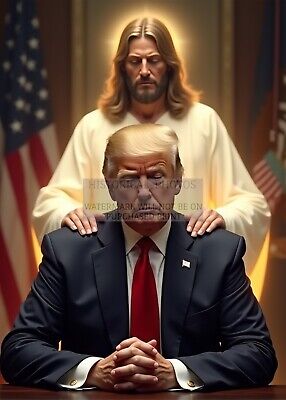


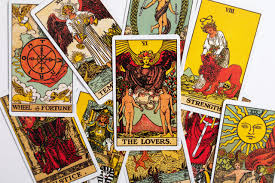


 About Things That Matter