Alexander Being Here Now

OLYMPUS DIGITAL CAMERA

Alexander Kinne-Coyle

This morning’s post is the one I promised last Saturday. This meditation comes from Declan Coyle, a former colleague of mine in the Society of St. Columban, who was ordained in 1969. He later left the priesthood after living for years in slums and poor barrios in the Philippines and Taiwan. Here he reflects on what he and his family have learned from his youngest child, Alexander. Thank you, Declan, for allowing me to share this with my friends.

Alexander
Alexander has Mowat Wilson Syndronme. He cannot eat, walk or speak, and he is doubly incontinent but boy can he communicate.
He is unconditional Love … as near as we’ll ever get to it.
He doesn’t do the past. He doesn’t do the future.
He only does the present.
Here.
Now.
His simple message is always the same:
Be Here Now!
The essence of Zen.

You are only doing what you are doing.
“Chopping wood, drawing water!”

Not the mental noise of the thinking mind goaded into the future by the Ego that cannot live in the now with its victim stories: “how many more years will I have to chop this wood? Why do I always have to draw the water?” “Why is it always me?”

Alexander always invites us to be here now. Fully present. Fully alive. Awake. Aware. Alert.

As Rumi said, “the future and the past veil God from you. Burn both of them with fire.”

He brings all that “be fully present and live with joy in the now” stuff from the gospels alive.
“Take no thought for tomorrow …”
“Look at the flowers of the field how they bloom …”
“Don’t put your hand on the plough and look back … the negative past is a backpack full of manure … learn the life lessons and cut the backpack straps and live fully in the present …”
“Enter through the narrow gate of the now, the present moment …”
“By waiting and calm you will be saved, in quiet and trust your strength lies.” (Isaiah 30:15)
“Be still and know that I am God!”
“Come to me all you who labour and are overburdened and I will give you rest.” Mt. 11.28
“Unless you become like little children …”

Like the poet Rumi he says to us,
“Sell your cleverness and purchase bewilderment, awe and wonder!”

He is God’s gift to us, God, who as St John of the Cross said, hears “the silent language of love.”

Reminding us like Moby Dick author Herman Melville that, “silence is the one and only voice of God!”

Alexander shows us the pearl of great price right there in the centre of our being telling us not to try so hard.
Be one with life.
Go with the flow of life. Let go and let God.
A flower doesn’t work hard or try to bloom. It just does. The sun shines. No effort.

He is all about being here now.
Like the sun, all he wants to do is shine love into our lives even though the clouds of pain often cover his face.
Even then he’s reminding us that we are all children of the resurrection not the crucifixion.

When his laughter returns his constant reminder is to look at the crucifixion, that energy pattern of fear, but not to dwell on it. Not to make the victim-story our home. To look at the darkness, but to proclaim the light.

While we may look at the hands or the side on the Galilean carpenter and victim of abuse, the message is never the victim-story but rather the radical message of new life: “peace be with you, joy be with you!” Not the finger-pointing blaming, “will you look at what they did to me!”

Apart from the times Alexander is in pain, he is almost always smiling, waving and clapping his hands.

P.J. Cunningham saw him at the seafront in Bray one time waving at every single passerby and he said “he’s like a little pontiff!” That little royal or pontifical wave. He is not hard or tough. He is soft. But there is a huge strength in his softness.

Like the Tao Te Ching, Ch. 43:
“The softest thing in the universe overcomes the hardest thing in the universe.”

The ‘softest thing’ referred to is water. We see how, in the course of time, water can erode rock; how, without trouble, it disappears into the earth. Water looks soft, but really is very strong. Because it is silent and unpretentious, seems to have ‘no substance’, it achieves its purpose.

It is not worried about efficiency and profit. But eventually it is more successful than frantic work, because it is based on being.

Non-action tries to imitate this approach. It aims at being, not at producing immediate results. It does not make claims.

Chuang Tzu (300 BC) explains the same idea with reference to the art of target shooting.

“When an archer is shooting for nothing he has all his skill. If he shoots for a brass buckle he is already nervous.

If he shoots for a prize of gold he goes blind or sees two targets – he is out of his mind!

His skill has not changed. But the prize divides him. He cares now about winning.

He thinks more of winning than of shooting and the need to win drains him of power.”

His attachment to the outcome caused him to lose the present, the now, the moment. Process is lost in outcome addiction. The future fear-fuelled focus destroys the now. Fear replaces freedom and fun. Then the action in the now withers and shrivels and loses its free flowing power.

The poet T.S. Eliot captures the doing/being challenge in his poem “The Rock.”
“The endless cycle of idea and action,
Endless invention, endless experiment,
Brings knowledge of motion, but not stillness;
Knowledge of speech, but not silence;
Knowledge of words, but ignorance of the Word!”

Anthony De Mello says that despair is always five minutes ahead, never now. These great thinkers encourage us to “enjoy the precious present!”
D. H. Laurence said: “One’s actions ought to come out of an achieved stillness, not out of a mere rushing on.”
Alexander introduces us to the Being behind the Doing. The God of life behind all the action.

His presence invites us to slow down and step out from the fast pace of this world and reflect. To go receptive. To once again be here now. To allow ourselves to be guided, to be healed and to be loved by God. To dissolve resistance into an aware allowing.

Alexander is not under time pressure. He’s not working on his Ph.D. He teaches us what real love is all about. He shows us that we are not what we do (our work, our job, our title,) nor are we what we have, or even what other people think of us, our reputation. Rather than what we do, it’s who we are and who we become in his presence that matters.

The Chinese word for busy-ness or persistence is “knife” or “killing” and “heart!” When we’re busy we kill what the heart wants to achieve.
The heart wants to connect, to observe, to drink in, and to be aware and awake. But we’re too busy. We rush on past. Maybe tomorrow? We’re asleep.
“It is only with the heart that one sees rightly,” said the Little Prince.
“What is essential to the heart is invisible to the eye.”


Alexander is our “now” teacher. “Am I living well now? What is life teaching me now? What’s the best use of my time right now?”


Now is my gift.
The present has three meanings:
1. A gift.
2. Here.
3. Now.
Wisdom is knowing how to maximise the enjoyment of each moment. Being fully present enables people to give of their best and also to be able to receive the best that is on offer. Every day is a gift for those who really believe that every day is a gift.
When he looks at you, when he smiles, it’s as if he’s saying, “just fuel every moment with the best that’s in you now, and let fear and doubt go. Live out of love and freedom.”
There’s a story in the Orient about a monk who had a little bird on his shoulder who could see and foretell the future. Each morning the monk would ask the little bird, “Is today the day?” Meaning is today the day that I am going to die.
The bird would always reply, “no, but live as if it were.”
When Steve Jobs has his close encounter with life-threatening illness he resolved to live each day as if it were his last.
Being fully present answering the two great mystical questions:
“Where am I?”
“Here!”
“What time is it?”
“Now!”
If we cannot live in the now or discover Zen meditation washing the dishes or changing a dirty nappy there’s no way we’ll find in a cave on a mountain in Nepal or Tibet.
Alexander is our guru of “Being!” He is our master of power of now, the precious present. He is the ultimate cure for destination addiction or outcome addiction. He instinctively knows that the mountain of success is going to be very lonely if we don’t enjoy the climb, the view and the companionship on the way up.

It’s always the journey, never the destination.

He doesn’t label. He doesn’t judge. He doesn’t evaluate you and then decide how he’ll respond to you.
He lives in the unconditional love zone.
He has opened a portal to another world for us.
The world of ‘Being.’ So radically different from the world of doing, but also so root connected with the power of doing.

With Genevieve and Fionn, his brother and sister, when they were growing up, it was often the world of action and doing.
“Brush your teeth.”
“Do your homework.”
“Tidy your room.”
“Hurry up! Get ready!”
“Put away the dishes.”
“Come on! Let’s go … now!”

The doing is fine, but if that’s all there is then life is so so diminished.

With Alexander, when you touch him, hold him, cuddle him, smell him, put his cheek to your cheek, scratch his legs and get him laughing you enter the other portal into the world of Being.

He takes his mother Annette, and Genevieve, Fionn and Mary his friend and godmother, Hugh his godfather into this world of Being. Through that portal. That door. And they are always at their best in that space. Fully alive … here … now … in the moment with him.

As you look at, listen, touch or help him with this or that you are alert, still, completely present not wanting anything other than the moment as it is.

You are the Alertness, the Stillness, the Presence that is listening, looking touching … the Being behind the Doing.

The Loving Living God.
The kingdom inside.
Life to the full.
Joy pressed down, overflowing.
Holy Communion on a weekday.
Eucharistic thanksgiving.

Down in St Catherine’s in Newcastle where angels disguised as nurses and helpers look after him every morning and give him therapy sessions.

The children in his class are getting ready for Holy Communion next May. I asked him how he felt about that. He gave me that look as if to say, “Why should I take a bus to Bray when I’m already in Bray!”

When St. Francis said, “we must preach the gospel, but only if absolutely necessary use words,” he could have been talking about Alexander.

A slice of an apple pie has to be like the apple pie, like the source. Not like a slice of rhubarb pie. Exactly like the source.

Alexander is like a little slice of God. Just like the Source.

Blessing us with his presence all the time.
Reminding us of who we really are.
With him, you’ve entered another portal of life.

He lives what the monk Thick Nhat Hanh wrote about:

“Waking up in the morning, I smile
Twenty-four brand new hours before me
I vow to live fully in each moment
and look at all beings with the eyes of compassion.”

Alexander looks at us all with the eyes of compassion, with the eyes of joy, with the eyes of unconditional love. Never with the eyes of judgement. Never with the eyes of misery.

That’s how he enriches Annette, Genevieve, Fionn and Mary and all who come into his presence.

Last words to Dr Roisin Mulcahy from Bantry: “Children with special needs like Alexander … they soften the hard edges of society.”
Magic!
Here’s how Genevieve captured that magic in a poem she wrote about Alexander some years ago or as she playfully calls him Alexie Balexie Boo:
My Alex

At three minutes to midnight on December the 10th,
You were new to the world and took your first breath,
A gentle baby boy with wide-set eyes,
They sparkle when you’re happy and shine when you cry.
People often comment on your beautiful eyes,
their expressive colour, ever trusting, never shy.

You achieve what you do, you do what you can,
It’s hard to perform with Mowat Wilson syndrome.
Yet the ability to love, to “live in the now,” that’s pretty rare, but you know how.

Your happiness is special, the tint of your hair,
you’ve been sick a lot, and I’ll always be there.

The sounds of your chuckles are laughed with great taste,
It’s something I can’t describe,
it’s nothing I could paint.
Strangers are your friends, you stop, smile and wave,
What a beautiful little boy in that little walking frame.

My baby brother, Alexander,
I love you in every single way,
If it weren’t for you, would I still be the same person I am today?

I love to hug you and keep you very close,
It’s one of the things I love to do the most.

I’m proud to be your sister and also Fionn’s too,
Our beautiful baby brother, Alexie Balexie Boo.

Meet Declan Coyle, a Real Liberation Theologian (Sunday Homily)

Declan

My Easter homily two weeks ago evoked a wonderful response from one of my former priest-colleagues from the Society of St. Columban – the missionary community of priests I belonged to before I left in 1976. The colleague is Declan Coyle (pictured above).

Declan, it turns out, is a wonderful and witty writer. In a future blog I’ll share his moving piece on his son, Alexander who has Mowat Wilson Syndrome. It’s a truly inspiring essay on the meaning of living in the present moment.

When I asked for permission to share his Easter thoughts, here’s how Declan responded.

Of course Mike you can share it with you audience.

I soldiered (how easily the old militaristic verb crops up, “Who has a blade for a splendid cause … our horses are red to the hocks with the blood of the heathen”) with the Columbans for 27 years from seminary to moving on to marry Annette, an Australian in 1990.

I studied Liberation Theology in St Paul’s Ottawa after ordination, and then I asked the Superior General for five years in a slum in Latin America or Asia. After nine years of post-high school academic study I felt I was not fit to teach in Boston. But I knew that if I got some years in a slum where the slum dwellers who had survived and graduated from the University of Life taught me some life lessons, and I got these in my blood and my guts and my bones and my being, then I could teach Liberation Theology with passion and enthusiasm.

I got five years in the Philippines and six in Taiwan.

I got married to Annette, my wife in 1990. We have three children, Genevieve (19), Fionn (16) and little Alexander who is eight. He is a very special child. He has Mowat Wilson Syndrome. It was only discovered in 1997 and he was the first child in Ireland to be diagnosed with it. I’ll attach a reflection I wrote recently about him. He’s the epitome of the idea that he’s not a human being having the odd spiritual experience, he’s a spiritual being having a human experience.

The last 90 days I was in the Philippines I buried 65 children under two years old … all who died from hunger or hunger related diseases. In the slums we lived Jesus’ Synagogue Speech and Matthew 25 and life to the full and joy overflowing.

From where I’ve lived my so called Christian life, you’ve got your hand on the heart and the soul of the gospel and what the carpenter poet of Galilee was all about. I’m still baffled as to why John Paul II didn’t jump on a plane and go out and finish that Mass that stopped when Romero was shot. Would that not have been a symbolic gesture to lift the hearts of the poor and baffle Reagan?

Every blessing in your great work. You are real good news for the poor. You are real liberation for those oppressed by the historical accretions of the empire and real new sight for those of us who have been blind to the real meaning of the gospels for our world today. You remind me of the great prophet Micah whose words you live: To act justly, to love tenderly with kindness and to walk humbly with your God.

All the lovely things of the Holy Spirit on this Easter Week.

Declan

And now Declan Coyle’s Easter Reflection:

Years ago here at home our eldest two children Genevieve and Fionn were playing hide and seek all over the house. All I could hear all day was, “ready or not, here I come!”

That evening Genevieve asked me how did Jesus rise from the dead. I told her that on Easter Sunday morning the soldiers were outside the tomb, cooking their Easter eggs in a pot on the fire. Then suddenly from the tomb came this thunderous voice, “Ready or not here I come!” Then the rock rolled away and out came Jesus.

The two soldiers fainted with the fright.

The following week, the teacher asked the children to explain how the resurrection happened. Genevieve told her how. The teacher was not impressed.

I asked Genevieve which story she preferred. She said yours Daddy. In one fell swoop, she turned me into the fifth evangelist – a storyteller with a myth, a story, a lie that tells the truth. She understood hermeneutics.

In our recent discussions I told her that if ever she is tempted to go literal, she’ll lose the meaning. Always go symbolic. If you go literal, then you’re wondering at Christmas was Jesus born in a stable, or a cave or was it a kindergarten for the Essenes?

Literal is a dead end. But when you go symbolic you realize that the Christmas story simply means that great power comes in humble packages.

Keep up the great work Mike.

And send your material to Pope Francis.

Happy Easter. Declan

Doubting Thomas: Our Twin (Jesus’ Twin!) in Denial (Sunday Homily)

jesus-black-love

Readings for 1st Sunday after Easter: Acts 5:12-16; Ps. 118: 2-4, 13-15, 22-24; Rev. 1: 9-11A, 12-13, 17-19; Jn. 20: 19-31. http://www.usccb.org/bible/readings/040713.cfm

The picture painted in today’s gospel story should be familiar to all of us. I say that not only because we have heard it again and again, but because it’s our story. It’s about a man in denial, the original doubting Thomas. Thomas’ nickname was “the twin.”

Whatever that meant originally, Thomas is undoubtedly our fraternal double in that he depicts our condition as would-be followers of Yeshua. Like Thomas we live in practical denial concerning the reality of Yeshua’s resurrection – about the possibility of a radically transformed life. Recall our twin’s story. Pray that it can be ours as well.

The disciples are there in the Upper Room where they had so recently broken bread with Yeshua the night before he died. And they are all afraid. John says they are afraid of “the Jews.” However it seems they fear death more than anything else. They dread it because they are convinced that death spells the end of everything they hold dear – their ego-selves, families, friends, culture, and their small pleasures. Besides that, they are afraid of the pain that will accompany arrest – the isolation cells, the beatings, torture, the unending pain, and the final blow that will bring it all to a close. Surely they were questioning their stupidity in following that failed radical from Galilee.

So they lock the doors, huddle together and turn in on themselves.

Nevertheless, the very fears of the disciples and recent experience make them rehearse the events of their past few days. They recall the details: how Yeshua so bravely faced up to death and refused to divulge their names even after undergoing “the third degree” – beatings followed by the dreaded thorn crown, and finally by crucifixion. All the while, he remained silent refusing to name the names his Roman interrogators were looking for. He died protecting his friends. Yeshua was brave and loyal.

His students are overwhelmingly grateful for such a Teacher. . . .

Then suddenly, the tortured one materializes there in their midst. Locks and fears were powerless to keep him out. They all see him. They speak with him. He addresses their fears directly. “Peace be with you,” he repeats three times. Yeshua eats with them just as he had the previous week. Suddenly his friends realize that death was not the end for the Teacher. He makes them understand that it is not the end for them either – nor for anyone else who risks life and limb for the kingdom of God. No doubt everyone present is overwhelmed with relief and intense joy.

“Too bad Thomas is missing this,” they must have said to one another.

Later on, Thomas arrives – our fraternal double in unfaith. His absence remains unexplained. Something had evidently called him away when the others evoked Jesus’ presence by their prayer, recollections, and sharing of bread and wine. Like us he hasn’t met the risen Lord.

“Jesus is alive,” they tell the Twin. “He’s alive in the realm of God. He took us all with him to that space for just a moment, and it was wonderful. Too bad you missed it, Thomas. None of the rules of this world apply where Yeshua took us. It was just like it was before he died. Don’t you remember? Yeshua brought us to a realm full of life and joy. Fear no longer seems as reasonable as it once did. He was here with us!”

However, Thomas remains unmoved. Like so many of us, he’s is a literalist, a downer. He’s an empiricist looking for the certainty of physical proof. Thomas is also a fatalist; he evidently believes that what you see is what you get. And for him there has been no indication that life can be any different from what his senses have always told him. Life is tragic. Death is stronger than life; it ends everything. And that means that Yeshua is gone forever. Who could be so naïve as to deny that?

Our twin in unfaith protests, “In the absence of physical proof to the contrary, I simply cannot bring myself to share your faith that another life is possible. And make no mistake: Yeshua’s enemies haven’t yet completed their bloody work. They’re after us too.”

Can’t you see Thomas glancing nervously behind him? “Are you sure those doors are locked?”

Then lightning strikes again. Yeshua suddenly materializes a second time in the same place. Locks and bolts, fear and terror – death itself – again prove powerless before him.

Yeshua is smiling. “Thomas, I missed you,” he says. “Look at my wounds. It’s me!”

Thomas’ face is bright red. Everyone’s looking at him. “My God, it is you,” he blurts out. “I’m so sorry I doubted.”

“Don’t worry about it,” Yeshua assures. “You’re only human, and I know what that’s like, believe me. I too knew overwhelming doubt. Faith is hard. On death row, my senses told me that my Abba had abandoned me too. I almost gave up hope. It’s like I’m your twin.

“But then I decided to surrender. And I’m happy I did. My heart goes out to you, Thomas. My heart goes out to all doubters. I’ve been there.

“However, it’s those who can commit themselves to God’s promised future in the absence of physical proof that truly amaze and delight me. Imagine trusting life’s goodness and an unseen future with room for everyone when all the evidence tells you you’re wrong! Imagine trusting my word that much, when I almost caved in myself? That’s what I really admire!

“My prayer for you, Thomas, and for everyone else is that you’ll someday experience the joy that kind of faith brings.

Working for God’s Kingdom – for fullness of life for everyone – even in the face of contrary evidence – that’s what faith is all about. May it be yours.”

May it be ours!

Did Jesus Really Rise from the Dead?

resurrection

Did Jesus really rise from the dead? Or is belief in his physical resurrection childish and equivalent to belief in the Easter Bunny or Santa Claus?

I suppose the answer to those questions depends on what you mean by “really.” Let’s look at what our tradition tells us.

Following Jesus’ death, his disciples gave up hope and went back to fishing and their other pre-Jesus pursuits. Then, according to the synoptic tradition, some women in the community reported an experience that came to be called Jesus’ “resurrection” (Mt. 28:1-10; Mk. 16: 1-8; Lk. 24:1-11). That is, the rabbi from Nazareth was somehow experienced as alive and as more intensely present among them than he was before his crucifixion.

That women were the first witnesses to the resurrection seems certain. According to Jewish law, female testimony was without value. It therefore seems unlikely that Jesus’ followers, anxious to convince others of the reality of Jesus’ resurrection, would have concocted a story dependent on women as primary witnesses. Ironically then, the story’s “incredible” origin itself lends credence to the authenticity of early belief in Jesus return to life in some way.

But what was the exact nature of the resurrection? Did it involve a resuscitated corpse? Or was it something more spiritual, psychic, metaphorical or visionary?

In Paul (the only 1st person report we have – written around 50 C.E.) the experience of resurrection is clearly visionary. Paul sees a light and hears a voice, but for him there is no embodiment of the risen Jesus. When Paul reports his experience (I Cor. 15: 3-8) he equates his vision with the resurrection manifestations to others claiming to have encountered the risen Christ. Paul writes “Last of all, as to one untimely born, he appeared also to me.” In fact, even though Paul never met the historical Jesus, he claims that he too is an “apostle” specifically because he shared the same resurrection experience as the companions of Jesus who were known by that name. This implies that the other resurrection appearances might also be accurately described as visionary rather than physical.

The earliest Gospel account of a “resurrection” is found in Mark, Ch. 16. There a “young man” (not an angel) announces Jesus’ resurrection to a group of women (!) who had come to Jesus’ tomb to anoint him (16: 5-8). But there is no encounter with the risen Jesus. In fact, Mark’s account actually ends without any narrations of resurrection appearances at all. (According to virtually all scholarly analysis, the “appearances” found in chapter 16 were added by a later editor.) In Mark’s original ending, the women are told by the young man to go back to Jerusalem and tell Peter and the others. But they fail to do so, because of their great fear (16: 8). This means that in Mark there are not only no resurrection appearances, but the resurrection itself goes unproclaimed. This makes one wonder: was Mark unacquainted with the appearance stories? Or did he simply not think them important enough to include?

Resurrection appearances finally make their own appearance in Matthew (writing about 80) and in Luke (about 85) with increasing detail. Always however there is some initial difficulty in recognizing Jesus. For instance Matthew 28: 11-20 says, “Now the eleven disciples went to Galilee, to the mountain to which Jesus had directed them. And when they saw him they worshipped him; but some doubted.” So the disciples saw Jesus, but not everyone was sure they did. In Luke 24: 13-53, two disciples walk seven miles with the risen Jesus without recognizing him until the three break bread together.

Even in John’s gospel (published about 90) Mary Magdalene (the woman with the most intimate relationship to Jesus) thinks she’s talking to a gardener when the risen Jesus appears to her (20: 11-18). In the same gospel, the apostle Thomas does not recognize the risen Jesus until he touches the wounds on Jesus’ body (Jn. 26-29). When Jesus appears to disciples at the Sea of Tiberius, they at first think he is a fishing kibitzer giving them instructions about where to find the most fish (Jn. 21: 4-8).

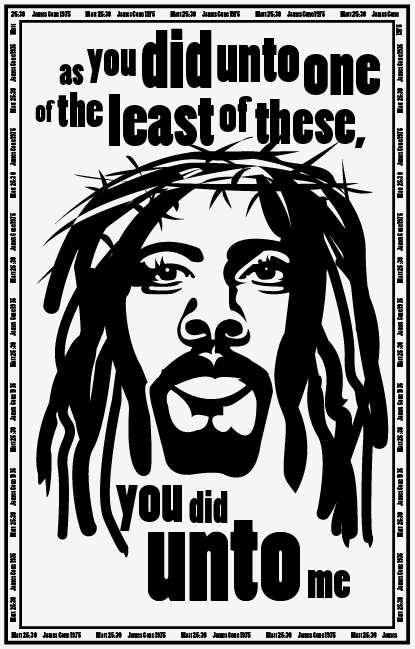
All of this raises questions about the nature of the “resurrection.” It doesn’t seem to have been resuscitation of a corpse. What then was it? Was it the community coming to realize the truth of Jesus’ words, “Whatever you do to the least of my brethren, you do to me” (Mt. 25:45) or “Wherever two or three are gathered together in my name, I am there in their midst” (Mt. 18:20)? Do the resurrection stories reveal a Lord’s Supper phenomenon where Jesus’ early followers experienced his intense presence “in the breaking of the bread” (Lk. 24:30-32)?

Some would say that this “more spiritual” interpretation of the resurrection threatens to destroy faith.
However, doesn’t such perception of threat reveal a quasi-magical understanding of faith? Does it risk limiting faith to belief in a God who operates outside the laws of nature and performs extraordinary physical feats that amaze and mystify? Doesn’t it reduce the significance of resurrection belief to simply another “proof” of Jesus’ divinity?

But faith doesn’t seem to be principally about amazement, mystification and proof analogous to the scientific. It is about meaning.

And regardless of whether one believes in resurrection as resuscitation of a corpse or as a metaphor about the spiritual presence of God in communities serving the poor, the question must be answered, “What does resurrection mean?”

Surely it meant that Jesus’ original followers experienced a powerful continuity in their relationship Jesus even after his shameful execution. Their realm of experience had expanded. Both Jesus and his followers had entered broadened dimensions of time and space. They had crossed the threshold of another world where life was fuller and where physical and practical laws governing bodies and limiting spirits no longer applied. In other words, the resurrection was not originally about belief or dogma. It was about a realm of experience that had at the very least opened in the context of sharing bread – in an experience of worship and prayer.

Resurrection meant that another world is possible — in the here and now! Yes, that other world was entered through baptism. But baptism meant participation in a community (another realm) where all things were held in common, and where the laws of market and “normal” society did not apply (Acts 2:44-45).

In order to talk about that realm, Jesus’ followers told exciting stories of encounters with a revivified being who possessed a spiritual body, that was difficult to recognize, needed food and drink, suddenly appeared in their midst, and which just as quickly disappeared. This body could sometimes be touched (Jn. 20:27); at others touching was forbidden (Jn. 20:17).

Resurrection and Easter represent an invitation offered each of us to enter the realm opened by the risen Lord however we understand the word “risen.” We enter that realm through a deepened life of prayer, worship, community and sharing.

I for one feel a need to think together about practical responses to an Easter invitation understood in this way.

Easter and Drone Warfare: Religious Leaders Deliver an Easter Message to President Obama

Happy Easter! Yes, today is Easter Sunday. Spring is here. We celebrate nature returned to life after a long dark winter. This is a time of physical rebirth that fills us with hope and optimism. It’s a time for planting gardens, cleaning house and just generally starting over.

But today is not just (or even principally) about celebrating spring. Today’s focus is Yeshua returned to life after the tragic events of his arrest, rigged trials, torture, and execution. This is a time to celebrate spiritual rebirth and the fact that a new transformed life is possible not only for Yeshua of Nazareth, but for all of us as individuals, and as members of communities and nations.

Easter promises that all of us can enter God’s sphere and live new lives there as though we believed Yeshua’s words about treating others as we would like to be treated ourselves.

Resurrection in that sense means overcoming our fears of death. As Americans supposedly living in the “home of the brave,” we appear to be an especially timorous people. So we arm ourselves to the teeth and pass “Stand Your Ground” laws allowing us to shoot one another if we feel threatened by them. And these days we seem to be threatened by everyone – especially if they’re different in color, nationality, religion (especially Muslim), or sexual orientation. Truth be told: our lack of bravery borders on shameful cowardice.

In foreign policy our monumental American terror in the face of death has brought our “leaders” to implement a policy of remotely controlled death squads (drones). This means that from the comfort of air-conditioned “theaters” our brave drone “pilots” prowl about the world looking for suspected terrorists and “signature” targets. They patrol Iraq, Afghanistan, Pakistan, Ethiopia, and who knows where else looking for impoverished young men who meet the target profile. The victims are young, poor, and probably Muslim. They are carrying the very weapons we claim the right to bear; they are associates of or nearby others merely suspected of being terrorists.

So we bomb them – and any others who happen to be at hand including women, young children, the elderly and babies. We classify the casualties as “collateral damage.” Better that they die, we think, than that we endure the remote possibility of someday being attacked and deprived of life.

All of that seems terribly out-of-sync with the Christian faith 70-75% of us claim as our own. Yeshua had no fear of death. Or rather, he overcame his fear and endured torture and death on behalf of others. Saving his own life in favor of sacrificing others was not Yeshua’s Way. Quite the opposite.

Imagine if 70-75% of U.S. citizens refused to fight our unending wars simply because we claim to follow Yeshua’s Way. Imagine if we called upon our faith to demand that President Obama and CIA chief John Brennan stop the cowardly drone death squads. A faith like that would be worth embracing; it would make a difference.

In the film clip at the top of this post, religious leaders use the occasion of Easter to express such faith. Their words contrast sharply with the cowardly justifications fearfully mouthed by Obama and Brennan also centralized in the clip. As you watch our officials speak, see them as the fearful, timorous, cowardly bullies their words attempt to disguise.

How might we as believers add our voices to the call of our true leaders in this Easter invitation to rise with Yeshua to a new truly transformed way of life?

(Discussion follows)

Christianity is the Enemy of Humankind (Reflections on the Historical Jesus)

To the least

Last night I concluded a Lenten series of classes on the historical Jesus. As always, the course had its ups and downs. But it was faithfully attended by about 25 soul mates who, like me, remain fascinated by and somehow in love with Jesus of Nazareth.

At last evening’s final meeting, one of the participants – a fierce unflinching seeker of truth, asked the question in the back of everyone’s mind. “So what?” she asked. “If, as we have learned here, Jesus has been distorted beyond recognition by the early church (and especially by Paul and Constantine) why should we believe any of it?”

What a good question! It has forced me to pull together (for myself!) what I have learned from this latest round of studies of the historical Jesus. Let me express them in as clear an unvarnished a way as possible both positively and critically.

First of all, my positive learnings . . . . The study forced me to face the fact that the historical Jesus, un-obscured by later developments is the touchstone for authentic Christian faith. That is, the Jesus of history (vs. the Jesus of later doctrines) trumps all other conceptualizations in terms of being normative for Christian faith. The teachings of the historical Jesus were extremely simple: God is love. God is bread. Salvation consists in sharing food – bread and wine. A world with room for everyone (the Kingdom of God) is entirely possible. Empire is the anti-thesis of love and sharing. It uses religion to enslave. It finds Jesus message of liberation abhorrent. Empire is the enemy.

Second of all, my critical learnings . . . . If anything the Christian Testament makes it extremely difficult to locate the normative historical Jesus. In fact, the canonical gospels often contradict the basic revelations of Jesus. When this happens, those contradictions have to be faced, learned from, and set aside as merely illustrative of the way history and religion are routinely distorted by the rich and powerful. It is evidence of what people either used to believe before Jesus’ revelation, or what they came to believe when the faith of Jesus subsequently interacted with and was domesticated by other cultures and times.

More particularly, examination of the gospels makes it abundantly clear that following the destruction of Jerusalem in the Jewish-Roman War (66-73), the Jesus of history increasingly receded from Christian perception. In his place a Jesus of faith came to prominence. The two are at odds with each other. The Jesus of history strove to liberate the poor. The Jesus of faith became the servant of empire and the rich who run it.

The Jesus of history was a mystic, prophet, teacher, healer, and movement founder. He was intent on reforming Judaism whose leaders had sold Judaism’s soul to the Roman Empire transforming it into a religion of laws, rituals and obedience to the powerful. This Jesus called himself the “Son of Man,” not the “Son of God.” He was perceived by the poor as a “messiah” who would deliver his people from Roman domination. He proclaimed a new social order which he referred to as the “Kingdom of God.” There Rome’s domination model of social organization would be replaced by a sharing model. In God’s kingdom everything would be reversed: the rich would be poor; the poor would be rich; the first would be last; the last would be first; prostitutes and “the unclean” would enter the new order before priests, the rich and the famous.

And although he shied away from accepting the conventional messianic identity associated with “The War” (against the Romans), Jesus’ program of “Good News for the poor” along with his healings and exorcisms confirmed that identification in the eyes of the marginalized and oppressed. It did the same for the Romans and their collaborators to such an extent that they ended up executing him as an insurgent.

The memory of this Jesus of history was preserved and celebrated by the Jerusalem community called “The Way” before its eradication in the horrendous Roman-Jewish War of 66 to 73CE. In obedience to Jesus, they adopted a communal life where food, drink, and material possessions were shared and held in common. Following Jesus’ death, some were even hoping for his “second coming” in their own lifetimes to complete the task of empire-destruction his execution had prevented him from fulfilling.

This prophetic Jesus was replaced by the Jesus of faith who emerged in the post-war world after the Jerusalem church and its leadership had been slaughtered by Rome. At this point, “The Way” (Jesus’ version of reformed Judaism) was replaced by “Christianity.” This religious movement was non-Jewish. It derived from the teaching of Paul of Tarsus (in Turkey) who never met the historical Jesus, and who thought of him in terms of God’s unique and only Son. Paul was a thoroughly Romanized Jewish rabbi intent on acquainting non-Jews with the Jesus he experienced in the visionary psychic experience recorded as his conversion on the Damascus Road.

By ignoring the Jesus of history, Paul’s experience and subsequent preaching laid the foundation for an understanding that centralized a Jesus understood as God’s only Son – a divine being who would have been (and was!) completely unacceptable to the fiercely monotheistic Jews. At the same time, this domesticated Jesus was not threatening to Rome. In fact, he was completely familiar to Romans resembling the “dying and rising gods” of Roman-Greco culture who offered “eternal life” beyond the grave rather than an anti-imperial Kingdom of God in the here and now. In other words, the Jesus of history was co-opted beyond recognition by the Roman Empire.

So what’s the take-away from the study of the historical Jesus? I think the following extremely important lessons:

1. History is unreliable. It has been distorted and manipulated by the powerful to suit their own needs. (If taken seriously, this in itself is an invaluable lesson.)

2. Hard work is required to find historical truth – not just about Jesus but about what happened yesterday!

3. Empire is the enemy. It is a system of robbery whereby the rich and powerful steal resources from the poor they oppress. It is entirely contrary to the will of God (the Principle of Life). It represents a “preferential option” for the rich and powerful. It is absolutely ruthless in its eternal war against the world’s poor and in falsifying history for its own benefit.

4. Those who resist empire can expect to be tortured and assassinated. Nonetheless, from time to time courageous and insightful prophets arise from the non-rich and non-powerful with Good News for the poor. Their very simple message: fullness of life is to be found not in empire, but among the poor and simple of the world (God’s people). Salvation, these prophets teach, consists in sharing the simple realities of bread and wine. In effect: God is Bread.

5. Among the west’s best known prophets of Jesus’ God are Moses, Jesus himself, Gandhi, Bartolommeo de las Casas, Karl Marx, Martin Luther King, Malcolm X, Dorothy Day, and the nameless martyrs (so many of them women!) inspired over the last fifty years by liberation theology.

6. Most people are in denial about these simple facts. They are powerfully assisted in their denial by politicians, scholars, priests, and the media who make the teachings of the prophets extremely complicated. They have transformed the prophets’ message about sharing bread and fullness of life in the here and now into “religion” and a promise of life after death. As such, religion is the enemy of humankind. Christianity is the enemy!

7. Those who accept these learnings should leave institutionalized “religion,” band together, internalize the teachings of the historical Jesus and change the world!

Anniversary of St. Oscar Romero’s Assassination: Imagine if He Had Been Elected Pope!

A lot has been written in these pages about liberation theology. I’ve defined it as “Reflection on the following of Jesus of Nazareth from the viewpoint of those committed to the liberation of the world’s poor and oppressed.” I’ve called it the most important theological development in 1700 years and perhaps the most important intellectual development since the publication of the Communist Manifesto. (See my blog posts by clicking the “liberation theology” button just under the masthead of this blog site.)

Well, today is the feast day of liberation theology’s patron saint, Oscar Romero. On this day, March 24th in 1980, St. Oscar was gunned down by the U.S. – supported military of El Salvador. He was shot while celebrating the Eucharist in a convent chapel.

His killing was part of what Noam Chomsky calls “the first religious war of the 21st century.” It was fought by the U.S.-Vatican axis against the Catholic Church in Central America. That church had committed the unpardonable sin of taking seriously the call of the Second Vatican Council to live out what the Council called Jesus’ own “preferential option for the poor.” Such doctrinal consistency was unacceptable to the U.S. government and to the pope of Rome.

St. Oscar had been a conservative priest who was appointed archbishop of San Salvador by Pope John Paul II precisely because of Romero’s conservative leanings in both politics and theology. In a country heavily influenced by liberation theology, he could be counted on to continue the Catholic Church’s war against that movement, as well as its support for the Salvadoran oligarchy, the butchery of its military, and the U.S. policy that sponsored it all.

That particular troika brought about in 1977 the killing of Rutilio Grande, a Salvadoran Jesuit priest and close friend of St. Oscar. Their friendship had flourished even though Grande was an advocate of liberation theology.

Following Grande’s assassination, Romero underwent a profound conversion. He passed from being the enemy of liberation theology like John Paul II, his lieutenant Joseph Ratzinger (the future Benedict XVI), and Jorge Bergoglio (the future Francis I) to being its ardent promoter like Grande himself.

As U.S.-sponsored “White Hand” assassination squads did their bloody work throughout El Salvador, St. Oscar denounced the bloodbath in no uncertain terms. Each Sunday his sermons were broadcast throughout the country denouncing the military and reading the unending lists of people tortured, garroted, executed, burned, buried alive, drowned, smothered, shot and raped the previous week.

That is, while Bergoglio was giving at least “silent consent” to those same crimes by the military in Argentina, and while John Paul II worked hand in glove with Ronald Reagan against liberation theology, Romero fulfilled the role of courageous prophet in El Salvador.

For his troubles, St. Oscar received threats daily from the White Hand. He could see that his own days were numbered. “Yes, they will kill a bishop,” he had said, “but may my blood may be the seed of freedom for the Salvadoran people.” Those words and others spoken by the sainted archbishop are centralized in the song featured at the top of today’s blog post. (See the sponsoring website: TheMartyrsProject.com/)

True to his premonitions, on this day 33 years ago, he was shot at the altar.

But what if he had survived? What if (impossibly) he had been created Cardinal? What if he had been elected pope? How different then the church would be. How different the world.

Conversions are possible. St. Oscar changed profoundly.

Can something similar happen for Francis I?

St. Oscar, pray for us!

Pray for Francis I!

Reading the Passion Narrative again for the First Time: The Origins of Submission to Authority and Anti-Semitism

no-jews-allowed

Readings for Palm Sunday: http://www.usccb.org/bible/readings/032413.cfm

Since the beginning of Lent, I’ve been teaching a seminar on the historical Jesus. About twenty-five of us have come together each week to get closer to the Jesus who taught and served the poor in Palestine two millennia ago.

In that context, it’s nearly impossible for me not to read this Sunday’s Passion Narrative from Luke without applying what we’ve been learning at our group’s Wednesday night meetings. Doing so provides a fresh set of ears for understanding a familiar story as if hearing it for the first time. The result can in turn cause us to re-vision and re-conceptualize our lives as Jesus’ followers living under the sway of U.S. Empire.

As part of our seminar’s study, we’ve been watching excerpts the PBS video series “From Jesus to Christ.” It has helped us see that Jesus and his audiences were first and foremost Jews whose lives were shaped more than anything else by the Roman occupation of their homeland. As such, they weren’t waiting for a Roman-Greco “messiah” who, like the Sun God Mithra, would die and lead them to heaven. They were awaiting a Davidic messiah who would liberate them from the Romans.

Roman rule was especially odious for Jews. After all, they believed they had been given the land of Palestine by their God, Yahweh, whom Jews regarded as their land’s rightful sovereign. And yet, at the time of Jesus, Roman occupiers claimed that their emperor was god. In other words, the Palestine of Jesus’ day was blasphemously controlled by a foreign god. That was intolerable for Jews in general and for Jesus of Nazareth in particular.

So on this Palm Sunday, what do you think was on the minds of the crowds who Luke tells us lined the streets of Jerusalem to acclaim Jesus the Nazarene? Were they shouting “Hosanna! Hosanna!” (Save us! Save us!) because they thought Jesus was about to die and by his sacrificial death open the gates of heaven closed since Adam’s sin by a petulant God? Of course not. They were shouting for Jesus to save them from the Romans. They looked to him to play a key role in the Great Rebellion everyone knew about to take place against the hated Roman occupiers.

And what do you suppose was on Jesus’ mind? He was probably intending to take part in the rebellion just mentioned. It had been plotted by the Jews’ Zealot insurgency. Jesus words at the “Last Supper” show his anticipation that the events planned for Jerusalem might cause God’s Kingdom to dawn that very weekend.

At least Jesus’ Passover words show that something big was brewing for him – something on a par with the liberation from Egypt that had occurred more than 1000 years earlier. So over bread and wine he speaks of a “new covenant” to replace the old one the rebel Moses had mediated from Yahweh. After spending three years preaching about it, God’s Reign seemed so immediate to Jesus that he evidently thought it might dawn even before their next meal. He says “I will not drink wine with you again before the kingdom comes.”

So Jesus issues new and mysterious tactical orders. The advocate of simple living says “Whereas once I sent you out without money or a change of clothes, I’m telling you now to fill your wallet and pack a suitcase.” The non-violent one tells his friends to arm themselves. The courageous teacher of “the Twelve” warns darkly about intrigue, betrayal and denial by members of his innermost circle. Anticipation of all that causes such stress that Jesus eventually sweats blood over it.

Clearly Jesus had his differences with the Zealots. They were nationalists; he was inter-nationalist who was open to gentiles. The Zealots were violent; Jesus was not. And yet the Zealots and Jesus came together on their abhorrence of Roman presence in the Holy Land. They found common ground on the issues of debt forgiveness, non-payment of taxes to the occupiers, and of land reform. Within Jesus’ inner circle there was at least one Zealot (Simon). Indications might also implicate Peter, Judas, James, and John. And Jesus’ friends were armed when he is arrested. Whoever cut off the right ear of the high priest’s servant was used to wielding a sword – perhaps as a “sicarius” (the violent wing of the Zealots who specialized in knifing Roman soldiers).

But we’re getting ahead of our story. . . Following his triumphant entry into Jerusalem, Jesus soon found himself and his disciples inside the temple participating in what we’d call a “direct action” protest. They were demonstrating against the collaborative role the temple and its priesthood were fulfilling on behalf of the Romans.

As collaborators, the temple priests were serving a foreign god within the temple precincts. For Jesus that delegitimized the entire system. So, as John Dominic Crossan puts it, Jesus’ direct action was not so much a “cleansing” of the temple as the symbolic destruction of an institution that had completely lost its way.
It was this demonstration that represented the immediate cause of Jesus’ arrest and execution described so poignantly in today’s long gospel reading.

Following the temple demonstration, Jesus and his disciples became “wanted” men (Lk. 19:47). At first Jesus’ popularity affords him protection from the authorities (19:47-48). The people constantly surround him eager to hear Jesus’ words denouncing their treasonous “leaders” (20:9-19), about the issue of Roman taxation (20:20-25), the destruction of the temple (21:1-6), the coming war (21:20-24) and the imminence of God’s Kingdom (21:29-33). By night Jesus and his friends repair to their Garden of Olives hideout (21:37).

Eventually however, Jesus has to go underground. On Passover eve he sends out Peter and John to arrange for a safe-house to celebrate the feast I described earlier. The two disciples are to locate the “upper room.” They do so by exchanging a set of secret signs and passwords with a local comrade.

Then comes Jesus’ arrest. Judas has betrayed Jesus to collect the reward on Jesus’ head – 30 pieces of silver. The arrest is followed by a series of “trials” before the Jewish Council (the Sanhedrin), before Pilate and Herod. Eventually, Jesus is brought back to Pilate. There he’s tortured, condemned and executed between two other insurgents.

The trials point up an interesting and important difference between the Jesus of history and the political project of the author of Luke’s Gospel. In the past, we’ve been told the real charge against Jesus was blasphemy; the Jewish authorities were offended because Jesus claimed to be God. However, under Roman law, the Jewish leaders lacked authority to execute criminals. So they were forced to trump up political charges and involve the Romans who alone had the power to inflict capital punishment.

Clearly, however, this was not the case. As we saw last week with the woman taken in adultery, the Jews had the authority to execute people for religious crimes such as adultery or (in Jesus’ case, blasphemy). If Jesus had committed blasphemy, they could have stoned him using the Jewish form of execution.

Instead, Luke presents Jesus as hauled off to Pilate. And completely out-of-character, and after the presentation of clear-cut evidence that the Nazarene rabbi was “stirring up the people,” and despite Jesus’ own admission to crimes against the state (claiming to be a rival king), Pilate insists three times that the carpenter is innocent of capital crime. Such tolerance of rebellion contradicts what we know of Pilate as described for example by the Jewish historian Josephus.

Contradicting all of this as well, Crossan insists that Pilate had standing orders to execute anyone associated with lower class rebellion during the extremely volatile Passover festivities. In other words, there would have been no drawn-out trial.

What’s going on here? Two things.

First of all, like everyone else, Luke knew that Jesus had been crucified by the Romans. That was an inconvenient truth for Luke’s audience who around the year 85 CE (when Luke was writing) was desperately trying to reconcile with the Roman Empire which lumped the emerging Christian community with the Jews whom the Romans despised.

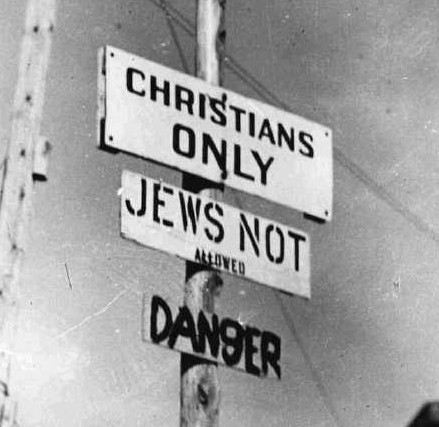
Luke’s account represents an attempt to create distance between Christians and Jews. So he creates an account that exonerates Pilate (and the Romans) from guilt for Jesus’ execution. Simultaneously, he lays the burden of blame for Jesus’ execution at the doorstep of Jewish authorities.

In this way, Luke made overtures of friendship towards Rome. He wasn’t worried about the Jews, since by the year 70 the Romans had destroyed Jerusalem and its temple along with more than a million of its inhabitants. After 70 Jewish Christians no longer represented the important factor they once were. Their leadership had been decapitated with the destruction of Jerusalem.

Relatedly, Jesus’ crucifixion would have meant that Rome perceived him as a rebel against the Empire. Luke is anxious to make the case that such perception was false. Rome had nothing to fear from Christians.
As we have seen in today’s readings, that assurance itself was untrue. It domesticated the Jesus of history who shines through even in Luke’s account when it is viewed contextually. That’s the vision we’ve been attempting grasp in the Historical Jesus Seminar.

And so what?

Well, if you wonder why Christians have lost their edge . . . if you wonder why they so easily succumb to empires (Roman, Nazi, U.S.) you’ve got your answer. It all starts here – in the gospels themselves – with the great cover-up of the rebel Jesus.

And if you wonder where the West’s and Hitler’s anti-Semitism came from . . .

Thug Pope?

Cia Argentina

Last Friday I published a blog calling for the resignation of the newly elected Pope. Of course, I had no expectation that the pope would resign. We can even hope that as Francis I, Jorge Bergoglio will undergo or has undergone a conversion since the days when his silence gave consent to the brutal military regime of Jorge Videla during Argentina’s infamous “Dirty War.”

Nonetheless Bergoglio’s election forces us to face up to the role of religion under imperialism. The ascendancy of Francis I trains focus on the way both the fundamentalist Catholic Church and its Protestant counterparts habitually lie comfortably in bed with the forces of politico-economic exploitation, war, kidnapping, torture, and murder. As bed fellows they share the guilt of their thug partners.

Put otherwise, religious fundamentalism can easily be seen as the most conservative force in the world. Exhibit #1 is Roman Catholicism. The vast majority of its leaders have always lain supine not merely for Constantine, but for a whole host of dictators who followed including Hitler and with Mussolini. On the whole, Protestant fundamentalists have been no better. To reiterate: fundamentalist religionists are the problem, not just their embodiment in an unrepentant Francis I. If their partners are thugs, where does that leave them?

You see, the pope’s defenders are wrong when they say that archbishop Bergoglio was merely another Argentinian cowed by the military and lacking in the heroic courage of a few bishops and many liberation theology priests during Argentina’s “Dirty War” (1976-’83). At the hierarchical level, I’m thinking of heroes whose faith moved them to defy the military governments the U.S. established throughout Latin America from the early 1960s till the fall of the Soviet Union.

I’m thinking of Brazil’s Cardinal Paulo Evaristo Arns, Dom Helder Camara, or Bishop Pedro Casaldaliga — or of El Salvador’s Oscar Romero, or of Mexico’s Samuel Ruiz. All of them recognized that their status provided them with a literal “bully pulpit” for denouncing the oppression of their impoverished flocks which did not enjoy the relative invulnerability their own ecclesiastical status provided for themselves.

Put simply, Bergoglio didn’t have the courage of those men.

Granted, you can’t fault someone for not being a hero. However lacking heroism was not Bergoglio’s problem as his apologists imply. Even if he was merely silent, he lacked the moral responsibility absolutely required for the Christ-like fulfillment of his office. After all, muted and/or compliant churchmen represent an essential ideological cog in the system of oppression. Since the time of Constantine, they have been used to persuade ordinary Christians that God endorses the policies of their oppressors however brutal.

The hell of it is that many priests and preachers, especially at lower levels, are completely unaware of their role in the system. They think of themselves as good pastors, patriotic citizens, supporters of a brave military, and opponents of Godless Communism. This may have been the case even with archbishop Bergoglio. He may simply have been an unconscious, naive pawn. Nonetheless, he was part of the gang, and so are all religious leaders who end up underwriting oppression.

Like Bergoglio, they should know better because Jesus had to deal with the alliance between religion and colonialism too. The priests, scribes, and Sadducees of his day were an essential part of the Roman system of exploitation. In fact, it’s common to refer to the Temple’s “con-dominium” with Rome. The priests and scribes on the one hand along with the emperor and Pilate on the other, all ruled together. To attack one was to attack the other. And Jesus attacked them both.

Opposing imperialism goes beyond simply firing one’s chauffer or taking the bus to work. It goes beyond saying we’re on the side of the poor. (Even Rick Santorum says that!) Instead popes and bishops have to understand critique and oppose the structures that cause and sustain oppression – economic and political systems along with laws, customs, and institutions like those of church, government, and the military. All of those structures transcend the short reigns of popes, presidents and generals. Those occupants of office come and go, but the systems and laws they serve and enforce remain.

The sainted archbishop of Recife in Brazil, Dom Helder Camara understood that. He once said, “When I feed the poor, they called me a saint. When I ask why the poor have no food, they call me a communist.”

Let’s hope that Pope Francis will not only ask that latter question – the why of poverty and hunger. Let’s hope he will answer it strongly and unmistakably. The poor have no food because keeping them hungry is in the interests of the economic and political system that runs the world – international capitalism.

At the moment, hasty hagiographers are saying that Francis I’s concern for the poor makes him a saint. My prayer is that they will soon be calling him a communist. The alternative appellation is “thug.”

Will the Next Pope Continue the War on Liberation Theology?

jesus on cross

With the resignation of Benedict XVI and the papal conclave in process, friends have asked me to say something about it all. My thought is simple. The success of any new papacy and the prospect of the Catholic Church rebounding from its worst crisis since the Reformation hinges on one thing more than any other: the attitude of the new pope and of church leadership in general to liberation theology.

Let me be clear on what I’m talking about. I understand liberation theology as “reflection on the following of Jesus of Nazareth from the viewpoint of those committed to the emancipation of the poor and oppressed.” The commitment in question brings to light social implications of the Judeo-Christian tradition – for creating a world with room for everyone, beginning with the poor – that remain opaque for those without such commitment.

Liberation theology in the sense just defined represents the most important theological development of the last nearly 1700 years. More than that, it is arguably the most important intellectual development of the last 150 years – dating back to the publication of the Communist Manifesto.

Popes and presidents have implicitly recognized that importance and power over the last 40 years and more. In fact that reaction has given form to the Roman Catholic Church itself under the last two popes. More than anything else liberation theology has also influenced U.S. politics for the last 30 years. It has literally shaped our world. Liberation theology is the reason behind the current spate of unending wars against the poor people of the world.

When I express such judgment to friends, they remain dubious and unbelieving. Their response not only reflects tone-deafness to the power of religious mythology, it also illustrates how short our memories are. We have trouble recalling what Chomsky calls the “first religious war of the 21st century” – less than forty years ago. That war was fought not against Islam, but against the Catholic Church in Latin America, precisely because of its adoption of liberation theology’s “preferential option for the poor.”

In Latin America, the Reagan administration and its successors correctly perceived the grassroots social power of liberation theology. In Central America they saw a threat to control of its “backyard.” So U.S. officials allied themselves with a conservative Polish pope in the Vatican, with reactionary Evangelicals in the United States to strangle the revolutions of the poor who found great hope in powerful liberationist interpretations of their religious traditions which had been traditionally used to keep them in their places.

The threat of liberation theology was perceived well before Reagan. Already in 1969, the Rockefeller Report had identified liberation theology as a threat to the national security of the United States. By 1987, the Latin American Military Chiefs of Staff meeting in conference in Mar del Plata, Argentina, devoted several pages of their final report to liberation theology and the threat it posed to regional stability. In between, in 1979 the first Santa Fe Document advised the incoming Reagan administration that it had to do something decisive about the threat posed by liberation theology. The administration heeded the advice, and responded both militarily and ideologically.

Reagan’s military strategy against liberation theology issued in that religious war Chomsky referenced. It was perceived as necessary because in 1969, the Conference of Latin American Bishops had together dared to affirm a “preferential option for the poor” as their official position.

To combat that commitment, the U.S. sponsored blood baths throughout Latin America. Many of us are well acquainted with the best-known martyrs: Camilo Torres, Archbishop Romero, the Salvadoran team of liberation theologians killed at San Salvador’s Central American University in 1989, and with the U.S. women religious murdered years earlier in that same country. And then the unending list of martyrs in this war against the Catholic Church – 200,000 in Guatemala, more than 100,000 in Nicaragua, 90,000 in El Salvador, and literally untold killings and disappearances in Honduras. In every case, the carnage was a response to social movements inspired by liberation theology. Again, as Chomsky points out, official U.S. military documents show that liberation theology was a major target of those wars. In fact within those same official documents, the Army boasts specifically about defeating liberation theology.

As for Reagan’s ideological response to liberation theology . . . . On his accession to power, CIA Psy-ops began funding conservative alternatives to liberation theology in Latin America and in the U.S. So did business concerns that saw the leftward drift of Latin America as a threat to their presence there. Domino’s Pizza and Coors Brewery were prominent among the cases in point.

As a result, evangelicals throughout the region grew rapidly in number, and the recipients of those funds in the United States increasingly identified with Republicans, the “hand that fed them.” So the television programs of Jerry Falwell, Pat Robertson, Jim and Tammy Baker, Jimmy Swaggart, and others were beamed into every poor barrio, población, and favela. Right wing churches sprang up everywhere feeding and expanding an already robust evangelical presence in areas once completely dominated by the Catholic Church. The message was always the same – a depoliticized version of Christianity whose central commitment involved accepting Jesus as one’s personal savior and rejecting communism including the type allegedly represented by the theology of liberation.

All of this points up the extreme importance of LT. In effect liberation theology was not only responsible for spiritual and political awakening throughout Latin America, it was also indirectly responsible for the rise of the religious right in the United States, and ultimately for the Tea Party. On the other side of the aisle, so to speak, we currently have in the White House the first U.S. president directly influenced by liberation theology. For 20 years, Barack Obama was part of the congregation of Jeremiah Wright – identified by James Cone, the father of black liberation theology, as the latter’s foremost contemporary embodiment.
This is why it is possible to identify liberation theology not only as the most important theological development of the last 1700 years, but as the West’s most important ideological development in the past 50 – perhaps the past 150 – years.

As for liberation theology’s contemporary importance, today’s religious right and the Tea Party would probably not exist today were it not for liberation theology. And the 2008 debate about liberation theology (i.e. about Jeremiah Wright) nearly derailed Obama’s run for the presidency. That is, liberation theology has been far more influential than most are willing to recognize. In a sense, it has shaped U.S.-Latin American relations for a half-century. It has changed the face of Protestantism in the United States.

Reagan’s ideological strategy against liberation theology also changed the Catholic Church. As indicated earlier, it involved allying himself with a conservative anti-communist Polish pope, John Paul II, who proved to be an inveterate enemy of liberation theology. The apparent agreement between the two was that John Paul would be silent about the war against Latin American Catholics, if Reagan would help him in the pope’s campaign against communism in Poland. Over his reign of over 20 years, John Paul was to gradually replace Latin America’s pro-liberation theology bishops with conservative pre-Vatican II types. He did this throughout the world – mostly in direct response to liberation theology.

Even more virulently set against liberation theology was John Paul’s lieutenant, Joseph Ratzinger, whom the pope appointed head of the Sacred Congregation for the Faith (formerly the Office of the Holy Inquisition). In that capacity, Ratzinger penned an official warning about liberation theology in 1985. Basically, it rejected the movement because of its association with Marxist analysis of third world poverty. Of course, Ratzinger succeeded John Paul II in the papacy. He’s the recently resigned Pope Benedict XVI. So the onslaught against liberation theology continues with no end in sight.

Sadly, Reagan’s two-front strategy worked. Revolutionary gains in El Salvador, Guatemala, and most prominently, in Nicaragua were halted and reversed. Militarily, the “Guatemala Solution” was the template. It entailed using military and paramilitary death squads to kill everyone remotely connected with guerrilla movements. According to the Reagan strategy, that included priests, nuns, lay catechists and ministers of the word influenced by liberation theology. The theological strategy worked as well. The slogan promulgated by the Salvadoran military said it all, “Be a patriot; kill a priest.”

But despite the carnage, and despite the claims of victory by the U.S. military, liberation theology remains alive and well in grass-roots movements for solidarity. And in general, social movements inspired by liberation theology bore fruit in the ‘70s and ‘80s. They continue to bear fruit today. More specifically, one can credibly say that apart from the theology of liberation it’s impossible to explicate Allende’s rise to power in 1973 or the triumph of the Sandinistas in 1979, or the power the FMLN in El Salvador had and continues to enjoy today. The Zapatista movement in Mexico is also intimately connected with liberation theology. Even more, without reference to liberation theology, it’s impossible to fully understand the rise of new left governments throughout Latin America. All of them are indebted to liberation theology and its power to motivate the grassroots.

That same power to motivate is evident in the ongoing “Arab spring.” There the power derives from the liberation currents undeniably present in Islam. In fact, as Gandhi saw in changing the face of India, similar currents are found in Hinduism. All of this indicates that liberation theology has at its roots elements found at the center of all the religions of the world. In this light, the world-wide offensive against Islam represents the latest phase of the now Thirty Years War against liberation theology under wherever form it may appear.

To be on the right side of history and to move the world towards God’s Kingdom, any new pope must call off the war against liberation theology and embrace it fully in word and action. Imagine how the world would change if he did!