Locked Doors: Faith After Iran, After Epstein

Readings for Second Sunday of Easter: Acts 2: 42-47; Psalm 118: 2-4, 13-15, 22-24; 1 Peter 1: 3-9; John 20: 19-31

What if life can be no different from what our senses relentlessly report? Turn on the news. Cities in Iran and beyond reduced to rubble. Children buried beneath concrete. Leaders speaking of “security” while entire populations live in fear.

And at the same time, the slow, unsettling revelations surrounding the Epstein files continue to expose networks of wealth, privilege, and exploitation that reach into the highest levels of our political and economic life. Taken together, such realities make it difficult to sustain even the most basic trust in the goodness of the world or the integrity of those who govern it.

In such a moment, it is not hard to recognize ourselves in doubting Thomas centralized in this morning’s gospel. His voice is not foreign to us. It speaks from deep within: life is tragic, death wins, power protects itself, and truth is buried along with its victims. Yeshua is gone, and anyone who imagines otherwise is clinging to illusion.

More than that, Thomas’s fear feels painfully contemporary. The forces that executed Jesus have not disappeared; they persist in new forms. They still silence, still threaten, still destroy. One can almost see him glancing toward the door: Are you sure it’s locked?

Today’s Gospel reading does not dismiss that voice or treat it with contempt. It takes Thomas seriously precisely because his doubt is grounded in what appears self-evident. Dead bodies do not return. Empires crush resistance. Those who challenge entrenched power rarely prevail. In that sense, Thomas is simply being realistic. And yet, in the midst of that closed and fearful space, something happens that exceeds every expectation.

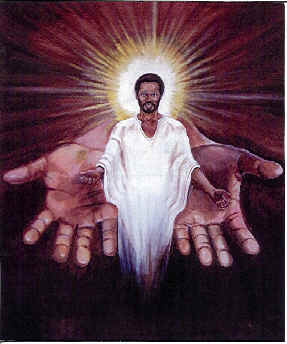
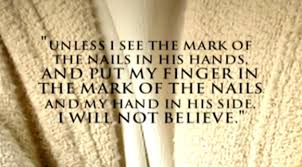
Yeshua appears again among his fearful friends. Not as a denial of crucifixion, but bearing its marks. The wounds remain visible. Violence is neither erased nor explained away; it is exposed and, somehow, rendered powerless. He turns to Thomas not with reproach, but with warmth. “Look at my hands,” he says in effect. “It’s really me.” Thomas’s response is immediate and unguarded: “My Lord and my God.”

But what is striking is not Thomas’s confession so much as Yeshua’s response to it.

There is no rebuke. No shaming. Instead, one can almost hear an acknowledgment born of shared experience. You are only human, he seems to say, and I know what that means. On the cross, my own senses told me that I had been abandoned. I too felt the darkness closing in. I too knew what it was to stand at the edge of despair. Faith, in that moment, was anything but easy.

That recognition changes everything. It tells us that faith is not the absence of doubt, nor the refusal to see what is plainly before us. It is what emerges in spite of misgivings. And from there, the Gospel moves to its most challenging point.

What truly astonishes, what truly delights, is not simply that Thomas eventually believes, but that there are those who commit themselves to God’s future without the reassurance of seeing. Those who trust life’s ultimate goodness when the evidence points in the opposite direction.

Imagine that kind of trust in a world such as ours. Imagine holding fast to the conviction that another future is possible, a future with room for everyone, when war and exploitation seem to define the present. That is the faith Yeshua blesses. It is not credulity; it is courage.

At this point, the first reading from Acts takes on a new and unsettling clarity. The description of the early Christian community is not a sentimental aside. It is a direct social and economic alternative to the world Thomas fears and we recognize all too well. They held everything in common. No one claimed private ownership. There was not a needy person among them. In other words, they organized their life together around the conviction that God’s future had already begun to take shape in their midst.

Set that alongside what we see in our own time. A world where wealth is concentrated, where the vulnerable are exploited, where violence protects privilege, and where even the exposure of wrongdoing seems unable to bring about accountability. Against that backdrop, the Acts community stands as a quiet but radical contradiction. It embodies a different logic, one rooted not in fear or accumulation, but in shared life and mutual care.

This is what resurrection faith looks like when it takes flesh in history. Not an escape from the world’s suffering, but a refusal to let that suffering have the final word. Not a denial of death, but a commitment to life that persists even in death’s shadow. The doors may still be locked; the threats are real enough. But within those very conditions, another way of living becomes possible.

That is the invitation extended to Thomas, and to us. Not simply to believe a proposition about life after death, but to participate in a way of life that anticipates and embodies God’s promised future. A way of life that insists there can, and must, be a world where no one is left in need.

Working for that world, for fullness of life for everyone even when the evidence seems to deny its possibility, that is what faith finally means. May it be ours.
Doubting Thomas: Our Twin (Jesus’ Twin!) in Denial

Readings for 1st Sunday after Easter: Acts 5:12-16; Ps. 118: 2-4, 13-15, 22-24; Rev. 1: 9-11A, 12-13, 17-19; Jn. 20: 19-31.

The picture painted in today’s gospel story should be familiar to all of us. I say that not only because we have heard it again and again, but because it’s our story. It’s about a man in denial, the original doubting Thomas. Thomas’ nickname was “the twin.”

Whatever that meant originally, Thomas is undoubtedly our fraternal double in that he depicts our condition as would-be followers of Yeshua. Like Thomas we live in practical denial concerning the reality of Yeshua’s resurrection – about the possibility of a radically transformed life. Recall our twin’s story. Pray that it can be ours as well.

The disciples are there in the Upper Room where they had so recently broken bread with Yeshua the night before he died.  And they are all afraid. John says they are afraid of “the Jews.” However it seems they fear death more than anything else. They dread it because they are convinced that death spells the end of everything they hold dear – their ego-selves, families, friends, culture, and their small pleasures. Besides that, they are afraid of the pain that will accompany arrest – the isolation cells, the beatings, torture, the unending pain, and the final blow that will bring it all to a close. Surely they were questioning their stupidity in following that failed radical from Galilee.

So they lock the doors, huddle together and turn in on themselves.

Nevertheless, the very fears of the disciples and recent experience make them rehearse the events of their past few days. They recall the details: how Yeshua so bravely faced up to death and refused to divulge their names even after undergoing “the third degree” – beatings followed by the dreaded thorn crown, and finally by crucifixion. All the while, he remained silent refusing to name the names his Roman interrogators were looking for. He died protecting his friends. Yeshua was brave and loyal.

His students are overwhelmingly grateful for such a Teacher. . . .

Then suddenly, the tortured one materializes there in their midst. Locks and fears were powerless to keep him out. They all see him. They speak with him. He addresses their fears directly. “Peace be with you,” he repeats three times. Yeshua eats with them just as he had the previous week. Suddenly his friends realize that death was not the end for the Teacher. He makes them understand that it is not the end for them either – nor for anyone else who risks life and limb for the kingdom of God. No doubt everyone present is overwhelmed with relief and intense joy.

“Too bad Thomas is missing this,” they must have said to one another.

Later on, Thomas arrives – our fraternal double in unfaith. His absence remains unexplained. Something had evidently called him away when the others evoked Jesus’ presence by their prayer, recollections, and sharing of bread and wine. Like us he hasn’t met the risen Lord.

“Jesus is alive,” they tell the Twin. “He’s alive in the realm of God. He took us all with him to that space for just a moment, and it was wonderful. Too bad you missed it, Thomas. None of the rules of this world apply where Yeshua took us. It was just like it was before he died. Don’t you remember? Yeshua brought us to a realm full of life and joy. Fear no longer seems as reasonable as it once did. He was here with us!”

However, Thomas remains unmoved. Like so many of us, he’s is a literalist, a downer. He’s an empiricist looking for the certainty of physical proof. Thomas is also a fatalist; he evidently believes that what you see is what you get. And for him there has been no indication that life can be any different from what his senses have always told him. Life is tragic. Death is stronger than life; it ends everything. And that means that Yeshua is gone forever. Who could be so naïve as to deny that?

Our twin in unfaith protests, “In the absence of physical proof to the contrary, I simply cannot bring myself to share your faith that another life is possible. And make no mistake: Yeshua’s enemies haven’t yet completed their bloody work. They’re after us too.”

Can’t you see Thomas glancing nervously behind him? “Are you sure those doors are locked?”

Then lightning strikes again. Yeshua suddenly materializes a second time in the same place. Locks and bolts, fear and terror – death itself – again prove powerless before him.

Yeshua is smiling. “Thomas, I missed you,” he says. “Look at my wounds. It’s me!”

Thomas’ face is bright red. Everyone’s looking at him. “My God, it is you,” he blurts out. “I’m so sorry I doubted.”

“Don’t worry about it,” Yeshua assures. “You’re only human, and I know what that’s like, believe me. I too knew overwhelming doubt. Faith is hard. On death row, my senses told me that my Abba had abandoned me too. I almost gave up hope. It’s like I’m your twin.

“But then I decided to surrender. And I’m happy I did. My heart goes out to you, Thomas. My heart goes out to all doubters. I’ve been there.

“However, it’s those who can commit themselves to God’s promised future in the absence of physical proof that truly amaze and delight me. Imagine trusting life’s goodness and an unseen future with room for everyone when all the evidence tells you you’re wrong! Imagine trusting my word that much, when I almost caved in myself? That’s what I really admire!

“My prayer for you, Thomas, and for everyone else is that you’ll someday experience the joy that kind of faith brings.

Working for God’s Kingdom – for fullness of life for everyone – even in the face of contrary evidence – that’s what faith is all about. May it be yours.”

May it be ours!

Scrap Thomas’ Denialism Before It’s Too Late: We’re in a Situation Worse than Nazi Germany

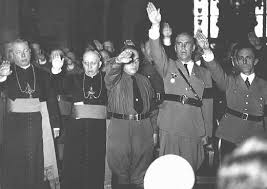
Hitler bishops

Readings for 1st Sunday after Easter: ACTS 4:32-35; PS 118L 2-4, 13-15, 22-24; 1JN 5: 1-6; JN 20: 19-31

Last Sunday, which was both Easter and April Fools’ Day, I published my monthly column in the Lexington Herald-Leader. It pulled no punches. As a matter of fact, I was surprised that the Leader’s editors decided to print it.

My column contrasted the fact that fully 70-75% of Americans claim to be followers of Christ. They say they believe in Jesus’ resurrection – in the triumph of life over death. And yet, as a culture, we remain necrophobic, necrophilic, and entirely denying the direction of history announced in Jesus’ resurrection.

On the one hand, we’re overwhelmingly afraid of death. Despite the words of our national anthem, ours is not the home of the brave. Quite the opposite. Even our police officers are granted unrestricted license to kill if they simply allege, “I feared for my life.” Evidently, they’re all dreadful necrophobes.

On the other hand, we Americans love death and killing. The movies we patronize are about almost nothing else. Our constant solution to almost any problem you care to name is “Arm them!” “Fight them!” “Kill them!” “Nuke ’em!”

Yet, face it: Jesus could endorse none of that. He was completely non-violent and courageous in facing death. Along with every spiritual genius I can think of, he said we should treat others exactly the way we would want to be treated – because they are us. In effect, he taught that killing another person amounts to suicide.

So, Jesus refused to take up arms to save himself, his friends, or his family. If you live by the sword, he promised, you will die by that same instrument. Jesus prayed for his executioners. He said we should love our enemies, not kill them.

As a collective faith community, Christians are sadly in denial about the clear political meaning of those facts. No follower of Jesus should ever take up arms. The irony is that accepting that reality alone has the power to save our species and planet.

My column went further. Echoing Noam Chomsky, it alleged that the U.S. has been taken over by the most dangerous organization in the history of the world – viz. by the Republican Party. Despite its Christian pretensions, its positions on climate change and nuclear war make it worse, I said, than the forces of Attila the Hun, worse than ISIS, the Taliban, or Hitler’s Nazis.

The Republicans and supporting conservative Democrats place greed for money over the lives of our children and grandchildren. How dare they! Who gave those greedy few the authority to decide for 7 billion people? Why aren’t we all up in arms – precisely in Jesus’ name?

Usually when I publish such thoughts in the Leader, readers’ responses are quite vehemently negative. But do you know what happened this time? Not a single negative comment. Instead I received a whole series of supportive e-mails and word-of-mouth comments completely agreeing with my sentiments.

“You really let it all hang out there, Mike,” was a typical remark, “but I agree with every word you wrote.”

What can that mean, I wonder. If so many of us believe that our country has been taken over by forces more insidious than Hitler’s, and if Jesus is who his words and actions say he is, how can we stand by idly and watch it happen? Are we, the people, about to rebel? Are we approaching a tipping point? Have we gone beyond the denial that is no longer tenable?

Such questions are relevant in the light of the Gospel reading for this First Sunday after Easter. It’s about a man in denial about Jesus’ identity. The man meets the risen Christ (the champion of life over death), recognizes God in him, and changes profoundly as a result.

Of course, I’m referring to the original doubting Thomas. His nickname was “the twin” perhaps because he’s our twin in cowardice and hopefully in faith. Recall his story. Pray that it can be ours as well. If not, our “Christian”-dominated culture is beyond redemption.

The disciples are there in the Upper Room where they had so recently broken bread with Yeshua the night before he died. And they are all afraid. John says they are afraid of “the Jews.” However, it seems, like us, they fear death more than anything else. They dread it because they are convinced that death spells the end of everything they hold dear – their ego-selves, families, friends, culture, and their small pleasures. Besides that, they are afraid of the pain that will accompany arrest – the isolation cells, the beatings, torture, the unending pain, and the final blow that will bring it all to a close. Surely, they were questioning their stupidity in following that failed radical from Galilee.

So, they lock the doors, huddle together and turn in on themselves.

Nevertheless, the very fears of the disciples and recent experience make them rehearse the events of their past few days. They recall the details: how Yeshua so bravely faced up to death and refused to divulge their names even after undergoing “the third degree” – beatings followed by the dreaded thorn crown, and finally by crucifixion. All the while, he remained silent refusing to name the names his Roman interrogators were looking for. He died protecting his friends. Yeshua was brave and loyal.

His students are overwhelmingly grateful for such a Teacher. . .

Then suddenly, the tortured one materializes there in their midst. Locks and fears were powerless to keep him out. They all see him. They speak with him. He addresses their fears directly. “Peace be with you,” he repeats three times. Yeshua eats with them just as he had the previous week. Suddenly his friends realize that death was not the end for the Teacher. He makes them understand that it is not the end for them either – nor for anyone else who risks life and limb for the kingdom of God. No doubt everyone present is overwhelmed with relief and intense joy.

“Too bad Thomas is missing this,” they must have said to one another.

Later on, Thomas arrives – our fraternal double in fear and disbelief. His absence remains unexplained. Something had evidently called him away when the others evoked Jesus’ presence by their prayer, recollections, and sharing of bread and wine. Like us, he hasn’t met the risen Lord.

“Jesus is alive,” they tell our twin. “He’s alive in the realm of God. He took us all with him to that space for just a moment, and it was wonderful. Too bad you missed it, Thomas. None of the rules of this world apply where Yeshua took us. It was just like it was before he died. Don’t you remember? Yeshua brought us to a realm full of life and joy. Fear no longer seems as reasonable as it once did. He was here with us!”

However, Thomas remains unmoved. Like so many of us, he’s is a literalist, a downer. He’s an empiricist looking for the certainty of physical proof. Thomas is also a fatalist; he evidently believes that what you see is what you get. And for him there has been no indication that life can be any different from what his senses have always told him. Life is tragic. Death is stronger than life; it ends everything. And that means that Yeshua is gone forever. Who could be so naïve as to deny that?

Our twin in unfaith protests, “In the absence of physical proof to the contrary, I simply cannot bring myself to share your faith that another way of life is possible. And make no mistake: Yeshua’s enemies haven’t yet completed their bloody work. They’re after us too.”

Can’t you see Thomas glancing nervously behind him? “Are you sure those doors are locked?”

Then lightning strikes again. Yeshua suddenly materializes a second time in the same place. Locks and bolts, fear and terror – death itself – again prove powerless before him.

Yeshua is smiling. “Thomas, I missed you,” he says. “Look at my wounds. It’s me!”

Thomas’ face is bright red. Everyone’s looking at him. “My God, it is you,” he blurts out. “I’m so sorry I doubted.”

“Don’t worry about it,” Yeshua assures. “You’re only human, and I know what that’s like, believe me. I too knew overwhelming doubt. Faith is hard. On death row, my senses told me that my Abba had abandoned me too. I almost gave up hope. It’s like I’m your twin.

“But then I decided to surrender. And I’m happy I did. My heart goes out to you, Thomas. My heart goes out to all doubters. I’ve been there.

“However, it’s those who can commit themselves to God’s promised future in the absence of physical proof that truly amaze and delight me. Imagine trusting life’s goodness and an unseen future characterized by non-violence! Imagine trusting my word that much, when I almost caved in myself? That’s what I really admire!

“My prayer for you, Thomas, and for everyone else is that you’ll someday experience the joy that kind of faith brings. Working for God’s peace – for fullness of life for everyone – even in the face of contrary evidence – that’s what faith is all about. May it be yours.”

My point in writing that Easter Sunday article was something similar.

If 70-75% of us truly followed Jesus and left behind both our necrophobia and necrophilia, we’d get out in the streets and bring down the arrogant impostors who have seized power in this country. None of them would be able to resist such numbers in revolt.

Pray that Thomas’ transformation and faith might be ours as well, and that a tipping point has been reached or is on the way. The future of our world literally depends on it.

We need to overcome the faithless denial our love of violence and death suggests. That’s the call of today’s Gospel.

(Sunday Homily) Doubting Thomas: Our Twin (Jesus’ Twin!) in Denial

doubting thomas

Readings for 1st Sunday after Easter: Acts 5:12-16; Ps. 118: 2-4, 13-15, 22-24; Rev. 1: 9-11A, 12-13, 17-19; Jn. 20: 19-31.

The picture painted in today’s gospel story should be familiar to all of us. I say that not only because we have heard it again and again, but because it’s our story. It’s about a man in denial, the original doubting Thomas. Thomas’ nickname was “the twin.”

Whatever that meant originally, Thomas is undoubtedly our fraternal double in that he depicts our condition as would-be followers of Yeshua. Like Thomas we live in practical denial concerning the reality of Yeshua’s resurrection – about the possibility of a radically transformed life. Recall our twin’s story. Pray that it can be ours as well.

The disciples are there in the Upper Room where they had so recently broken bread with Yeshua the night before he died.  And they are all afraid. John says they are afraid of “the Jews.” However it seems they fear death more than anything else. They dread it because they are convinced that death spells the end of everything they hold dear – their ego-selves, families, friends, culture, and their small pleasures. Besides that, they are afraid of the pain that will accompany arrest – the isolation cells, the beatings, torture, the unending pain, and the final blow that will bring it all to a close. Surely they were questioning their stupidity in following that failed radical from Galilee.

So they lock the doors, huddle together and turn in on themselves.

Nevertheless, the very fears of the disciples and recent experience make them rehearse the events of their past few days. They recall the details: how Yeshua so bravely faced up to death and refused to divulge their names even after undergoing “the third degree” – beatings followed by the dreaded thorn crown, and finally by crucifixion. All the while, he remained silent refusing to name the names his Roman interrogators were looking for. He died protecting his friends. Yeshua was brave and loyal.

His students are overwhelmingly grateful for such a Teacher. . . .

Then suddenly, the tortured one materializes there in their midst. Locks and fears were powerless to keep him out. They all see him. They speak with him. He addresses their fears directly. “Peace be with you,” he repeats three times. Yeshua eats with them just as he had the previous week. Suddenly his friends realize that death was not the end for the Teacher. He makes them understand that it is not the end for them either – nor for anyone else who risks life and limb for the kingdom of God. No doubt everyone present is overwhelmed with relief and intense joy.

“Too bad Thomas is missing this,” they must have said to one another.

Later on, Thomas arrives – our fraternal double in unfaith. His absence remains unexplained. Something had evidently called him away when the others evoked Jesus’ presence by their prayer, recollections, and sharing of bread and wine. Like us he hasn’t met the risen Lord.

“Jesus is alive,” they tell the Twin. “He’s alive in the realm of God. He took us all with him to that space for just a moment, and it was wonderful. Too bad you missed it, Thomas. None of the rules of this world apply where Yeshua took us. It was just like it was before he died. Don’t you remember? Yeshua brought us to a realm full of life and joy. Fear no longer seems as reasonable as it once did. He was here with us!”

However, Thomas remains unmoved. Like so many of us, he’s is a literalist, a downer. He’s an empiricist looking for the certainty of physical proof. Thomas is also a fatalist; he evidently believes that what you see is what you get. And for him there has been no indication that life can be any different from what his senses have always told him. Life is tragic. Death is stronger than life; it ends everything. And that means that Yeshua is gone forever. Who could be so naïve as to deny that?

Our twin in unfaith protests, “In the absence of physical proof to the contrary, I simply cannot bring myself to share your faith that another life is possible. And make no mistake: Yeshua’s enemies haven’t yet completed their bloody work. They’re after us too.”

Can’t you see Thomas glancing nervously behind him? “Are you sure those doors are locked?”

Then lightning strikes again. Yeshua suddenly materializes a second time in the same place. Locks and bolts, fear and terror – death itself – again prove powerless before him.

Yeshua is smiling. “Thomas, I missed you,” he says. “Look at my wounds. It’s me!”

Thomas’ face is bright red. Everyone’s looking at him. “My God, it is you,” he blurts out. “I’m so sorry I doubted.”

“Don’t worry about it,” Yeshua assures. “You’re only human, and I know what that’s like, believe me. I too knew overwhelming doubt. Faith is hard. On death row, my senses told me that my Abba had abandoned me too. I almost gave up hope. It’s like I’m your twin.

“But then I decided to surrender. And I’m happy I did. My heart goes out to you, Thomas. My heart goes out to all doubters. I’ve been there.

“However, it’s those who can commit themselves to God’s promised future in the absence of physical proof that truly amaze and delight me. Imagine trusting life’s goodness and an unseen future with room for everyone when all the evidence tells you you’re wrong! Imagine trusting my word that much, when I almost caved in myself? That’s what I really admire!

“My prayer for you, Thomas, and for everyone else is that you’ll someday experience the joy that kind of faith brings.

Working for God’s Kingdom – for fullness of life for everyone – even in the face of contrary evidence – that’s what faith is all about. May it be yours.”

May it be ours!

Doubting Thomas: Our Twin (Jesus’ Twin!) in Denial (Sunday Homily)

jesus-black-love

Readings for 1st Sunday after Easter: Acts 5:12-16; Ps. 118: 2-4, 13-15, 22-24; Rev. 1: 9-11A, 12-13, 17-19; Jn. 20: 19-31. http://www.usccb.org/bible/readings/040713.cfm

The picture painted in today’s gospel story should be familiar to all of us. I say that not only because we have heard it again and again, but because it’s our story. It’s about a man in denial, the original doubting Thomas. Thomas’ nickname was “the twin.”

Whatever that meant originally, Thomas is undoubtedly our fraternal double in that he depicts our condition as would-be followers of Yeshua. Like Thomas we live in practical denial concerning the reality of Yeshua’s resurrection – about the possibility of a radically transformed life. Recall our twin’s story. Pray that it can be ours as well.

The disciples are there in the Upper Room where they had so recently broken bread with Yeshua the night before he died. And they are all afraid. John says they are afraid of “the Jews.” However it seems they fear death more than anything else. They dread it because they are convinced that death spells the end of everything they hold dear – their ego-selves, families, friends, culture, and their small pleasures. Besides that, they are afraid of the pain that will accompany arrest – the isolation cells, the beatings, torture, the unending pain, and the final blow that will bring it all to a close. Surely they were questioning their stupidity in following that failed radical from Galilee.

So they lock the doors, huddle together and turn in on themselves.

Nevertheless, the very fears of the disciples and recent experience make them rehearse the events of their past few days. They recall the details: how Yeshua so bravely faced up to death and refused to divulge their names even after undergoing “the third degree” – beatings followed by the dreaded thorn crown, and finally by crucifixion. All the while, he remained silent refusing to name the names his Roman interrogators were looking for. He died protecting his friends. Yeshua was brave and loyal.

His students are overwhelmingly grateful for such a Teacher. . . .

Then suddenly, the tortured one materializes there in their midst. Locks and fears were powerless to keep him out. They all see him. They speak with him. He addresses their fears directly. “Peace be with you,” he repeats three times. Yeshua eats with them just as he had the previous week. Suddenly his friends realize that death was not the end for the Teacher. He makes them understand that it is not the end for them either – nor for anyone else who risks life and limb for the kingdom of God. No doubt everyone present is overwhelmed with relief and intense joy.

“Too bad Thomas is missing this,” they must have said to one another.

Later on, Thomas arrives – our fraternal double in unfaith. His absence remains unexplained. Something had evidently called him away when the others evoked Jesus’ presence by their prayer, recollections, and sharing of bread and wine. Like us he hasn’t met the risen Lord.

“Jesus is alive,” they tell the Twin. “He’s alive in the realm of God. He took us all with him to that space for just a moment, and it was wonderful. Too bad you missed it, Thomas. None of the rules of this world apply where Yeshua took us. It was just like it was before he died. Don’t you remember? Yeshua brought us to a realm full of life and joy. Fear no longer seems as reasonable as it once did. He was here with us!”

However, Thomas remains unmoved. Like so many of us, he’s is a literalist, a downer. He’s an empiricist looking for the certainty of physical proof. Thomas is also a fatalist; he evidently believes that what you see is what you get. And for him there has been no indication that life can be any different from what his senses have always told him. Life is tragic. Death is stronger than life; it ends everything. And that means that Yeshua is gone forever. Who could be so naïve as to deny that?

Our twin in unfaith protests, “In the absence of physical proof to the contrary, I simply cannot bring myself to share your faith that another life is possible. And make no mistake: Yeshua’s enemies haven’t yet completed their bloody work. They’re after us too.”

Can’t you see Thomas glancing nervously behind him? “Are you sure those doors are locked?”

Then lightning strikes again. Yeshua suddenly materializes a second time in the same place. Locks and bolts, fear and terror – death itself – again prove powerless before him.

Yeshua is smiling. “Thomas, I missed you,” he says. “Look at my wounds. It’s me!”

Thomas’ face is bright red. Everyone’s looking at him. “My God, it is you,” he blurts out. “I’m so sorry I doubted.”

“Don’t worry about it,” Yeshua assures. “You’re only human, and I know what that’s like, believe me. I too knew overwhelming doubt. Faith is hard. On death row, my senses told me that my Abba had abandoned me too. I almost gave up hope. It’s like I’m your twin.

“But then I decided to surrender. And I’m happy I did. My heart goes out to you, Thomas. My heart goes out to all doubters. I’ve been there.

“However, it’s those who can commit themselves to God’s promised future in the absence of physical proof that truly amaze and delight me. Imagine trusting life’s goodness and an unseen future with room for everyone when all the evidence tells you you’re wrong! Imagine trusting my word that much, when I almost caved in myself? That’s what I really admire!

“My prayer for you, Thomas, and for everyone else is that you’ll someday experience the joy that kind of faith brings.

Working for God’s Kingdom – for fullness of life for everyone – even in the face of contrary evidence – that’s what faith is all about. May it be yours.”

May it be ours!