What If Mumia Abu-Jamal Were President: Communism in the Bible

Readings for 2nd Sunday of Easter: ACTS 2: 42-47; PSALMS 118: 2-4, 13-15, 22-24; 1st PETER: 1: 3-9; JOHN 20: 19-31

Last week, on Easter Sunday, I presented Jose Mujica as a model president. Mujica, I pointed out, was the president of Uruguay from 2010 to 2015. He had been a Marxist Tupamaros (Robinhood) guerrilla since his student days. He was arrested, imprisoned and tortured for 12 years – 3 of them spent in solitary confinement at the bottom of a well. As president, he introduced profound changes in Uruguayan politics. As I noted, he took steps towards the legalization of all drugs in an effort to defeat the country’s drug gangs.

But perhaps Mujica’s most impactful step came in the example he offered national chief executives everywhere in his rejection of the typical presidential lifestyle. He gave away 90% of his yearly salary to the poor and dedicated that money to providing housing for the country’s homeless. He sold the presidential limousine in favor of retaining his old Volkswagen beetle. He continued living with his wife in his run-down peasant farmhouse.

In my frustration over this year’s Hobson’s choice between Trump and Biden, I couldn’t help thinking: what if we chose a U.S. president who did something like that? What if, instead of looking for leadership to billionaires like Trump or lifelong politicians like Biden, we elected someone like Jose Mujica – a peasant, a worker, a radical thinker? How would that change American politics? How would that change the world?

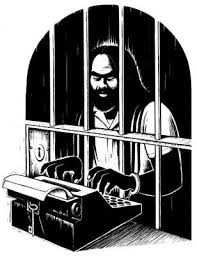
What if we elected someone like Mumia Abu-Jamal? Abu-Jamal, of course, is the Marxist Black Panther journalist who had spent years as a political prisoner on death row. Allegedly he killed a Philadelphia police officer in 1981 – a charge he has always vehemently denied. In any case, he regularly publishes insightful, edgy comment from prison and is often interviewed on NPR and programs like “Democracy Now.” What if Mumia were our president?    

I raise those questions because they’re suggested by the readings for this second Sunday of Easter. They expose us to the shocking fact that resurrection for the first Christians turned everything completely upside-down. They actually embraced communism and recognized as their leader a worker, a victim of capital punishment from death row. Yes, they embraced the communist ideal that inspired both Mujica and Mumia Abu-Jamal.

Today’s Readings

The readings are brilliant and timely in that they not only give us an insight into the primitive Christian community. They also urge us to turn our politics upside-down. They do so first by offering an abstract description of the original Christian community, and then by fleshing out that description with narrative about a key encounter of a skeptic with the risen Christ who embodies the basis of the communist vision – identification with society’s victims and despised.

Here are my “translations” of those readings. You can find the originals here to see if I’ve got them right:  

ACTS 2: 42-47: The first Christians were communists. Following the teachings of Jesus, they prayerfully shared meals each day and all their possessions – from each according to ability to each according to need. Their example was so awe-inspiring that everyone loved them, and their numbers grew rapidly.

PSALMS 118: 2-4, 13-15, 22-24: Christian communalism was a dim reflection of the benevolence of Life Itself as demonstrated in nature and throughout human history. No one truly owns anything; it’s all GIFT. Though unrecognized by the world, renouncing private property is the rejected cornerstone of human community – the key to surmounting every human problem. Accepting this truth, even in the worst of times, those committed to justice manifest super-human strength, courage, and joy.

FIRST PETER: 1: 3-9: It’s as if they were all born again into a new creation filled with hope that is stronger than death itself. Talk about inheritance! Communal sharing has made us richer than kings and their vast storehouses of gold. We’ve experienced the very goal of history – even though the world’s opposition to our sharing obscures the fact that we are on the right path – the one blazed by Jesus himself (and the other great divine incarnations). There is no other portal to human happiness.  

JOHN 20: 19-31: Fear of the world, its violence and opposition to Jesus’ communalism has intimidated us into denying his way. Yes, we’re all denialists like the one they called “The Twin” (Didymus). He is our double in rejecting in absentia Jesus’ Holy Spirit of peace and forgiveness, of sharing and community that make peace possible. Correcting false perception means recognizing Christ himself in those the world has wounded and assassinated for daring to follow him.

Christian Communism

Please do read for yourselves today’s first reading, ACTS: 2: 42-47. It’s significant that on this week after Easter, the passage immediately directs us not to “spiritual” concern with heaven and the afterlife, but to material property, land and the primacy of the marginalized in organizing community life. Here’s a fuller description of the way the early Christians lived. You’ll find it in ACTS, Chapter 4:

“Now the whole group of those who believed were of one heart and soul, and no one claimed private ownership of any possessions, but everything they owned was held in common. With great power the apostles gave their testimony to the resurrection of the Lord Jesus, and great grace was upon them all. There was not a needy person among them, for as many as owned lands or houses sold them and brought the proceeds of what was sold. They laid it at the apostles’ feet, and it was distributed to each as any had need.” (Acts 4:32-35).

Note that the description immediately connects the interior lives of believers (heart and soul unity) with communizing the group’s possessions. They sold their land and houses, pooled the resulting resources and redistributed wealth on the basis of need. All of this was an expression, the passage says, of early Christian belief in the new way of life expressed in the term “resurrection.” Communism was the logical, practical expression of following Jesus’ teaching. Doing so brought the community grace, i.e. favor with God and with those outside their community.

How different that understanding is from what, in effect, we’ve been taught since infancy about capitalism as somehow God’s way. It’s as if the above passage read:

“Now the whole group of those who believed entered into competition with one another. They fiercely guarded their possessions and considered private property as sacred. With great power the apostles gave their testimony to the dog-eat-dog world Jesus described as God’s Kingdom. So, they all viewed the “needy” as lazy and unproductive. They evicted them when they defaulted on rent and then tore down their hovels to enrich themselves and develop gentrified neighborhoods. In this way, Jesus’ early followers became rich and prosperous, while the poor got their just deserts – poverty and misery.” 

I’m not exaggerating. That emphasis on private property, on the law of the jungle, and justifying a resulting gap between rich and poor is embraced by many Christians as if the godly life Jesus endorsed could be described exactly as above.

Jesus’ Place in Communism

Now switch your attention to the Gospel reading for today. It brings us inside the first Christian house church whose communism was described abstractly in the reading from the Acts of the Apostles. It shows Jesus’ closest followers affirming the enduring relevance of their hero as a leader remarkably like Mumia Abu-Jamal. He’s dark-skinned and condemned under false charges by the state. He not only comes from death row; he was actually a victim of torture and capital punishment. And yet, he somehow lives and continues to teach his way to community happiness!

Recall the scene. Jesus’ closest friends are in hiding, imprisoned by fear of the Romans who had just executed their great teacher and of their traitorous fellow countrymen – the Temple priests and scribal establishment – who cooperated with the foreign occupiers.

So, the doors are locked and bolted. Jesus’ inner circle feels threatened, lost and betrayed by their own naivete in following a quixotic revolutionary who had filled them with such hope for the arrival of the Kingdom of God.

Inevitably, however, conversation must have turned to Jesus, his teachings and to rehearsal of the tragic events of the Passover weekend just completed. And those memories evoke Jesus’ presence, even for the iconic skeptic, Thomas called Twin (Didymus) and “Doubting.”

Thomas is really our Twin in his reluctance to believe that salvation can come from an executed criminal – or, perhaps more accurately, that life is stronger than death. And yet, like Karl Marx, he discovers that the deliverance of the human race comes from below, from a despised member of the working class, not from above and the royal or priestly classes so admired by the mainstream.

Conclusion

Thomas’ reluctant faith and that of his community as presented in today’s readings, call us to a twofold realization. The first is that our entire way of life is on the wrong track. Happiness and the good life (escape from out profound unhappiness) are not found in individual pursuit of wealth as the capitalist story of Jesus would have it.

No, it’s found in radical sharing that has us orienting community life towards the welfare of the least among us – as was the practice of the first Christian community. (That is, as I’ve shown elsewhere, mixed economies are all we have. But they should be mixed in favor of the poor in percolate-up ways rather than in favor of the rich with trickle-down policies.)

The second Thomistic (and Marxist) realization is similar. It’s that we’ve been looking for community leadership in all the wrong places. Our leaders need to come not from David’s palaces, not from Temple priests, but from the streets, from carpenters’ workshops, and even from death row.

Imagine, if we embraced the communism exemplified in today’s readings as our guiding North Star. Imagine if instead of Trump or Biden, Jose Mujica or Mumia were our president. Imagine if we could overcome the denialism of our twin, Thomas the Doubter. That’s the kind of radicality followers of Jesus are called to.

From the Beatification of Pontius Pilate to the Sanctification of Donald Trump: Two Peas in a Pod

Readings for Palm Sunday: LK 19:28-40; IS 50: 4-7, PS 22: 8-9, 12-20, 23=24, PHIL 2:6-11, LK 22: 14-23:58.

It’s puzzling to see white Evangelicals rallying around Donald Trump. He’s the one who owns casinos and strip clubs, who has been married three times and brags about sexually assaulting women. 

How is it possible for white evangelicals to support such a person whose policies favor the rich and punish the poor, who despises immigrants, advocates torture, and whose appetite for profit seems insatiable.

After all, Jesus was a poor laborer who criticized the rich in the harshest of terms. He and his family knew what it was like to be unwelcome immigrants (in Egypt). He himself was a victim of torture, not its administrator. Far from a champion of empire, he was executed as a terrorist and enemy of Rome.  His followers were not about accumulating wealth but shared what they had according to ability and need.

When you think of it, all of this seems antithetical to not only to Trumpism, but to the declared positions of virtually the entire Republican Party. They’re all imperialists. All of them are friends of the one percent. They all want to increase military spending — apparently without question or limit.

How did all of that happen?

Today’s Palm Sunday readings provide some clues. Luke’s Passion Narratives reveal a first century Christian community already depoliticizing Jesus in order to please Roman imperialists. The stories turn Jesus against his own people as though they were foreign enemies of God.

Think about the context of today’s Palm Sunday readings.

Note that Jesus and his audiences were first and foremost anti-imperialist Jews whose lives were shaped more than anything else by the Roman occupation of their homeland. As such, they weren’t waiting for a Roman-Greco “messiah” who, like the Sun God Mithra, would die and lead them to heaven. They were awaiting a Davidic messiah who would liberate them from the Romans.

So, on this Palm Sunday, what do you think was on the minds of the crowds who Luke tells us lined the streets of Jerusalem to acclaim Jesus the Nazarene? Were they shouting “Hosanna! Hosanna!” (Save us! Save us!) because they thought Jesus was about to die and by his sacrificial death open the gates of heaven closed since Adam’s sin by a petulant God? Of course not. They were shouting for Jesus to save them from the Romans.

The palm branches in their hands were (since the time of the Maccabees) the symbols of resistance to empire. Those acclaiming Jesus looked to him to play a key role in the Great Rebellion everyone knew about to take place against the hated Roman occupiers.

And what do you suppose was on Jesus’ mind? He was probably intending to take part in the rebellion just mentioned. It had been plotted by the Jews’ Zealot insurgency. Jesus words at the “Last Supper” show his anticipation that the events planned for Jerusalem might cause God’s Kingdom to dawn that very weekend.

Clearly Jesus had his differences with the Zealots. They were nationalists; he was inter-nationalist who was open to gentiles. The Zealots were violent; Jesus was not.

And yet the Zealots and Jesus came together on their abhorrence of Roman presence in the Holy Land. They found common ground on the issues of debt forgiveness, non-payment of taxes to the occupiers, and of land reform. Within Jesus’ inner circle there was at least one Zealot (Simon). Indications might also implicate Peter, Judas, James, and John. And Jesus’ friends were armed when he was arrested. Whoever cut off the right ear of the high priest’s servant was used to wielding a sword – perhaps as a “sicarius” (the violent wing of the Zealots who specialized in knifing Jews collaborating with the Romans).

But we’re getting ahead of our story. . . Following his triumphant entry into Jerusalem, Jesus soon found himself and his disciples inside the temple participating in what we’d call a “direct action” protest. They were demonstrating against the collaborative role the temple and its priesthood were fulfilling on behalf of the Romans.

As collaborators, the temple priests were serving a foreign god (the Roman emperor) within the temple precincts. For Jesus that delegitimized the entire system. So, as John Dominic Crossan puts it, Jesus’ direct action was not so much a “cleansing” of the temple as the symbolic destruction of an institution that had completely lost its way. It was this demonstration that represented the immediate cause of Jesus’ arrest and execution described so poignantly in today’s long gospel reading.

Following the temple demonstration, Jesus and his disciples became “wanted” men (Lk. 19:47). At first Jesus’ popularity affords him protection from the authorities (19:47-48). The people constantly surround him eager to hear Jesus’ words denouncing their treasonous “leaders” (20:9-19), about the issue of Roman taxation (20:20-25), the destruction of the temple (21:1-6), the coming war (21:20-24) and the imminence of God’s Kingdom (21:29-33).

Eventually however, Jesus has to go underground. On Passover eve he sends out Peter and John to arrange for a safehouse to celebrate the feast I mentioned earlier. The two disciples are to locate the “upper room.” They do so by exchanging a set of secret signs and passwords with a local comrade.

Then comes Jesus’ arrest. Judas has betrayed Jesus to collect the reward on Jesus’ head – 30 pieces of silver. The arrest is followed by a series of “trials” before the Jewish Council (the Sanhedrin), before Pilate and Herod. Eventually, Jesus is brought back to Pilate. There he’s tortured, condemned and executed between two other insurgents.

Note that Luke presents Pilate in way completely at odds with what we know of the procurator as described for example by the Jewish historian Josephus. After the presentation of clear-cut evidence that the Nazarene rabbi was “stirring up the people,” and despite Jesus’ own admission to crimes against the state (claiming to be a rival king), Pilate insists three times that the carpenter is innocent of capital crime.

Such tolerance of rebellion contradicts Crossan’s insistence that Pilate had standing orders to execute anyone associated with lower class rebellion during the extremely volatile Passover festivities. In other words, there would have been no drawn-out trial.

What’s going on here? Two things.

First of all, like everyone else, Luke knew that Jesus had been crucified by the Romans. That was an inconvenient truth for Luke’s audience which around the year 85 CE (when Luke wrote) was desperately trying to reconcile with the Roman Empire which lumped the emerging Christian community with the Jews whom the Romans despised.

Luke’s account represents an attempt to create distance between Christians and Jews. So, he makes up an account that exonerates Pilate (and the Romans) from guilt for Jesus’ execution. Simultaneously, he lays the burden of blame for Jesus’ execution at the doorstep of Jewish authorities.

In this way, Luke made overtures of friendship towards Rome. He wasn’t worried about the Jews, since by the year 70 the Romans had destroyed Jerusalem and its temple along with more than a million of its inhabitants. After 70 Jewish Christians no longer represented the important factor they once were. Their leadership had been decapitated with the destruction of Jerusalem.

Relatedly, Jesus’ crucifixion would have meant that Rome perceived him as a rebel against the Empire. Luke is anxious to make the case that such perception was false. Rome had nothing to fear from Christians.

I’m suggesting that such assurance was unfaithful to the Jesus of history. It domesticated the rebel who shines through even in Luke’s account when it is viewed contextually.

And so, what?

Well, if you wonder why Christians can support Donald Trump . . . if you wonder why they so easily succumb to empires (Roman, Nazi, U.S.) you’ve got your answer. It all starts here – in the gospels themselves – with the great cover-up of the insurgent Jesus.

And if you wonder where the West’s and Hitler’s comfort with xenophobia in general and anti-Semitism in particular come from, you have that answer as well.

The point here is that only by recovering the obscured rebel Jesus can Christians avoid the mistake they made 87 years ago in Germany. Then instead of singing “Hosanna” to Jesus, they shouted “Heil Hitler!” to another imperialist torturer, xenophobe, and hypocrite.

The readings for Palm Sunday present us with a cautionary tale about these sad realities and the trend among white evangelicals that impossibly transforms Donald Trump into a Christian hero. The imperialists Pontius Pilate, Adolf Hitler, and Mr. Trump all belong in the same anti-Christ category.

Forget Despair (If you can): Neither Betrayal by Our “Leaders” nor Personal Death Is Final

Readings for the Fifth Sunday of Lent: Ezekiel 37: 12-14; Psalms 130: 1-8; Romans 8:8-11; John 11: 1-45 

On this fifth Sunday of Lent our readings prepare for Easter by directing us to consider death and resurrection both politically and personally.

The readings are especially poignant and relevant at a time when as a people we appear to be in a cruel political captivity not unlike that of Israel more than 2500 years ago. Besides that, the loss of loved ones to the Coronavirus has brought into so many families the experience of Martha and Mary bereft of their beloved brother Lazarus who was so dear to their family’s close friend, Jesus the Christ.

Our Own Babylonian Captivity

Today’s first reading reminds us that we’re like Israel during its Babylonian Captivity. The prophet Ezekiel addresses that latter situation right off the bat. His sixth century was the saddest of times for his people – the era of his nation’s Great Exile. The Hebrews had been defeated and humiliated by Babylon (modern day Iraq). Judah’s leaders and a large portion of its populace had been abducted to that enemy state. Jerusalem lay in ruins. The exiles felt as if they had been slaughtered culturally. They were far from home, controlled by foreign masters, and apparently abandoned by God.

Like his audience, we’re undeniably in the grip of cruel masters. During the COVOD-19 crisis, our version of captivity has our “public servants” treating us as if we were aliens in a Babylon that belongs to them and their rich donors. It’s as if we were powerless defeated foreigners under their power rather than their employers. That’s shown by the fact that they’ve dealt with the Coronavirus problem not by improving the people’s healthcare system. Instead they’ve used the crisis to take care of the bank accounts of their sponsors who end up being our captors! In other words, we’re the victims of a coup by the corporate elite and their congressional minions. There seems no way out.

That’s the way Matt Stoller, research director at the American Economic Liberties Project, has described the bailout. His recent column for the Guardian is entitled “The coronavirus relief bill could turn into a corporate coup if we aren’t careful.”

According to Stoller, suddenly, under the pressure of COVID-19 congressional representatives on retainer from corporations like Boeing and Citibank found the very money they claimed wasn’t there when it came to providing for us the same healthcare that every other industrialized nation offers taxpayers. Suddenly that money materialized out of nowhere, but not to cure the failed “healthcare market,” but to heal instead their failed stock market and to save a moribund capitalism.

Predictably, they’ll use that money not principally to address COVID-19, but to eventually buy up distressed businesses and taxpayers’ homes. (Stoller warns that we may end up with just three retailers in this country: Amazon, Walmart, and Costco.) In the process, they’ll gift dividends to their investors and bonuses to their CEOs. They’ll also further consolidate their control of the nation’s and world’s economy. It’s pure Disaster Capitalism as described so well by Naomi Klein. Absolutely no one asked legislators, “How are you going to pay for the generosity you’ve just extended to your corporate sponsors?”

Meanwhile, “our” representatives have given highly conditioned, means-tested crumbs to the rest of us. It’s what the Mafia does. As Jimmy Dore says, they rip off the ones who pay them protection money all year. Then give their proteges a turkey at Thanksgiving – and expect gratitude in return.

I mean, none of what the Congress passed showed any awareness of dealing directly with the actual problems facing our nation in the face of COVID-19. They’ve done nothing to immediately address the lack or face masks, hospital beds, or respirators, — much less that universal healthcare insurance which our situation absolutely cries out for.

No, healthcare and all the rest have been left to the mechanisms of trickle-down economics and private insurance companies. The implication is that if we take care of Wall Street first, our immediate healthcare needs will somehow be met one day when private enterprise finally decides to produce what we so desperately need right now. We’ve seen this horror movie before.

And just watch the dead bodies pile up while we wait. It’s already happening. And the crisis hasn’t nearly peaked.

We are captives. We are enslaved in this New Babylon by resuscitated Robber Barons!

Biblical Analogs

Nonetheless, in the face of all this, today’s readings urge us not to give up hope either in the face of seemingly inescapable exploitation nor in that of premature death. As such the readings are not just happy talk. They’re seriously calling us instead to face the undeniable fact that this too will pass. It will. And (hard as it might be to believe) what we’re promised instead is God’s Kingdom. The Robber Baron system is on its last legs.

Babylon’s empire fell; so did Rome’s. And genuine tears, compassion, and words of comfort like those Jesus shared with Martha and Mary can somehow restore life that seemed hopelessly lost. Both Ezekiel and Jesus believed in resurrection. In the present crisis, their followers are urged to do the same.

Review the readings for yourself here. What follows are my own “translations” of their content.

Ezekiel 37: 12-14 Death as a Metaphor for Political Captivity: Five hundred years before Jesus, while God’s people were imprisoned in what we now call Iraq, the Prophet Ezekiel predicted their release from captivity and return to Judah. It would be, he promised, like a resurrection from the dead. God’s people would once again experience her goodness and feel Life’s Spirit rushing through their veins.

Psalm 130: 1-8: The Spirit of God Favors Such Release: This is because when people cry out to their Great Mother, God always hears. She is completely trustworthy, kind, and above all, forgiving.

Romans 8: 8-11: And This Despite the World’s Denial: No one ever enjoys fullness of life living by the values of the world. That’s because we are not merely bodies as the world teaches. No, we are Divine Spirits who enjoy our bodies to serve the world, just as Jesus did. So, don’t worry. What the world calls defeat and death can never be final. The Divine Spirit we share will always return to life.   

John 11: 5A, 26: So, those who follow the path trod by our Enlightened Master are never afraid of death. They never give up.

John 11: 1-45: A Living Parable Showing that Death Does Not Have the Final Word: Lazarus along with his sisters Mary and Martha were among Jesus’ best friends. So, the Master was heartbroken when word reached his hideout that Lazarus was deathly ill. However, his careful measures to avoid the police kept Jesus from getting to Lazarus’ home before it was too late. When he finally arrived, a distraught Martha gently scolded him for his delay. Mary was softer in her expression of disappointment. “I’m sorry,” Jesus said through his own tears, “but don’t you see that nothing in this world – not even death – is final. Life always has the last word. That’s true for Lazarus; it will be true for our suffering people.” Unconvincingly, both Martha and Mary nodded agreement. He embraced both sisters fondly and asked to be taken to Lazarus’ tomb. Once there, from his profound heartache, Jesus shouted, “I’m so sorry, Lazarus. I loved you so much, my dear brother!” And true to his words, Jesus’ grief and evident love somehow made everyone realize that he was right: death is not the end. Everyone’s sorrow turned instantly to joy. It was miraculous!

Conclusion

Once again, I know that in our present crisis, it’s almost impossible to take those hopeful readings to heart. It’s hard to believe that one day we’ll be released from the captivity of the rich and powerful who are using the COVID-19 crisis to even further consolidate their power over us. It’s hard in such circumstances to believe that Life and History are on our side.

But that’s what our readings today call us to. Improbably it seems, they ask us to believe that Life and Justice will eventually triumph over the ways of the world that seem so overwhelming and powerful — that seem to be winning.

The hammerlock the rich have on all of us is painful and seems absolutely inescapable. They don’t care about us and neither do most of our elected officials.

Meanwhile as we sweep up our crumbs, as we await our Thanksgiving turkey, we have to watch our loved ones die for lack of testing kits, face masks, hospital beds, protective clothing for heroic healthcare workers, and universal healthcare coverage for the rest of us. It’s all so sad. As with Ezekiel’s people in Babylon, as with tearful Martha and Mary – and Jesus – we’re hard put to believe in resurrection. But Easter is on the horizon. . .

Cuba’s Response to the Coronavirus Is Far More Enlightened Than Ours

Readings for 4th Sunday of Lent: 1 Samuel 16: 6-7, 10-13A; Psalm 23: 1-6; Ephesians 5: 8-14; John 9: 1-41

This week’s liturgy of the word centralizes the concepts of blindness and darkness on the one hand and vision and light on the other. The constellation of readings is extremely relevant to our situation during this election season and time of Coronavirus.

Taken together, they claim that in the end, the processes of the Loving Universe (aka God) differ sharply from the choices of “the world.”  While the world chooses the rich and powerful to lead, God chooses the least. What the world calls “seeing” is really blindness enshrouded in darkness.  What it calls blindness is deeply perceptive and surrounded in light.

I’ll get to those readings in a minute. But before I do, consider their relevance to our culture’s own highly cultivated blindness.

On Our Blindness

Yes: from birth we’re taught to deny what’s staring us all in the face. We’re actually trained to be blind by our parents, culture, teachers and holy men. That imposed condition is exhibited today as we confront the world’s current pandemic crisis brought on by the Coronavirus.

Think of how our politicians both Republican and Democrat want us to deny what we’ve all seen with our own eyes.

Begin with the Republicans and Mr. Trump. (This is quite amusing.) Mr. Trump actually wants us to believe that he deserves a grade of “A” for dealing with the crisis that surfaced last December and which he ridiculed, belittled, and mocked all the way up until last week. Despite that clear record, the man’s dared to say, “This is a pandemic. I felt it was a pandemic long before it was called a pandemic.”

What?

Then there was Joe Biden’s admonition last week that we all close our eyes to the achievements of the Cuban revolution. This man was shocked and appalled by Bernie Sanders recognition regarding Cuba that “. . . (I)t’s simply unfair to say everything is bad.”

“No,” Biden insisted, since Cuba is a “brutal dictatorship,” it’s somehow wrong to recognize the truth acknowledged even by the vice president’s own mentor (Barack Obama). Obama said, “The United States recognizes progress that Cuba has made as a nation, its enormous achievements in education and in health care.” Biden doesn’t want us to see any of that.

But there’s more – even apart from the arguable fact that for nearly 20 years, the most brutal human rights violations in Cuba have been carried out by the United States in its heinous hellhole known as Guantanamo Bay.

Cuba’s Enlightened Humanity

The “more” is that Cuba is exhibiting much greater humanity and skill in dealing with the Coronavirus than is the United States. That is, even in this time of pandemic, “we” not only refuse to lift sanctions on Cuba, Iran, Venezuela, and the other countries we’re punishing for crimes very similar to our own and even surpassed by “friends” such as Israel, Saudi Arabia, Brazil and the Philippines. We’re actually intensifying the sanctions in the case of Iran while it’s an epicenter of the coronavirus pandemic. Evidently, for our leaders, there’s no recognition of human solidarity that transcends political considerations. They want us to forget that we’re all in this together – to be blind.

Meanwhile, Cuba has given docking privileges to a British cruise ship (and medical treatment to its passengers and crew) after those same privileges were refused elsewhere – even by Great Britain’s former colonies. Cuban authorities gave permission, they said, out of “humanitarian concerns” and the need for “a shared effort to confront and stop the spread of the pandemic.”

But Cuba’s response to the Coronavirus goes far beyond a one-off act of compassion. The country’s entire healthcare system is better equipped than ours for dealing with recurring epidemics like COVID-19, SARS, MERS, Ebola, Zika, and flu. And it’s not just a question of a Caribbean version of Medicare for All.

No, Cuba has a whole army of doctors to care not only for its own people, but also stands ready to respond to crises outside its borders. And it has done so repeatedly – even during the COVID-19 pandemic. The country also offers free medical education to students from the United States, provided they pledge themselves to serve their local communities on their return home. Moreover, every barrio in the country has a doctor known by name, because she makes house calls!

Add to this Cuba’s highly developed system of urban and community gardens, its use of animal-intensive rather than carbon-intensive plowing, and its generally low-carbon economy, and you’ll see why it’s better equipped than we are to deal with food shortages caused by a breakdown of the commercial supply chain during emergencies like the one we’re now experiencing.

Then there’s the Cuban education system vilified here as propagandistic – as though ours were not. Besides the exemplary literacy program implemented at their revolution’s outset, Cubans study colonialism, imperialism, and the way capitalism works to cause, profit from and exacerbate inevitable human disasters like pandemics, hurricanes, world hunger, and climate change. The 60-year blockade and quarantine imposed on the island along with the presence of the Guantanamo Bay prison camp provide teachers with close-to-home illustrations of capitalism’s brutality. Meanwhile, our version of schooling (even at doctoral levels) never touches such matters. So, whose system is propagandistic?

The bottom line here is that far from being a brutal dictatorship, Cuba presents us with a model of response not only to COVID-19, but to healthcare in general, climate change, and education. It’s just that we’ve been made so blind by our political “leaders,” teachers, and priests that we cannot see it.   

Today’s Readings

With all of that in mind, consider today’s liturgical readings and what they have to say about seeing, insight, and light on the one hand blindness, superficiality and darkness on the other. Again, the selections could hardly be more relevant in this election season and time of COVID-19. Here are my “translations” of the texts. Once again, I urge you to read them for yourself here.

1 Samuel 16: 1B, 6-7, 10-13A

The Spirit of Life chooses national leadership from the least in the working class: The prophet Samuel was a great seer gifted with divine insight. Sent to the home of Jesse in Bethlehem, he sought Israel’s new King not from among the wealthy, but from a herdsman’s seven sons. However, his sharp prophetic perception found none of them worthy. “Have you no other son?” the prophet asked. “Well,” Jesse said, “David, my youngest is out in the field tending the sheep. But surely, he can’t be . . .” “Bring him to me,” the prophet growled. So, the youngest entered, red-faced and handsome. Seeing with God’s eyes, Samuel proclaimed, “This indeed is God’s chosen.” He then anointed David’s head with oil. And God’s Spirit rushed in upon the unsuspecting youth.   

Psalm 23: 1-6

We can trust such choices by the Great Spirit: This is true because ultimately the Holy Spirit is humanity’s shepherd; there is nothing, then, to fear. She has created for us peaceful pastures near gentle refreshing waters. She is our guide and encouragement even in moments of darkness when we are overwhelmed by threatening circumstances. Her spirit nourishes us and protects us from all enemies and has done so throughout our entire lives. Who could ask for more?

Ephesians 5: 8-14

Trusting the insights of seers like Jesus confers salvific vision: Thanks to the enlightened Jesus (and other seers), our once darkened lives are now filled with light, goodness, justice and truth. We can finally see! In fact, we can become light itself. So, when shameful evil comes into our presence, it is exposed as such; it is transformed into light and quite disappears. Seeing with enlightened eyes is like awaking from a deep sleep or even rising from the dead.  

John 9: 1-41

An illustration of how Jesus, his example and teaching can cure our blindness: As Light of the World, Jesus demonstrated the very meaning of enlightenment, when he met a beggar who was blind from birth (a metaphor for each of us). Living in blind darkness, Jesus said, is not the result of sin, but is part and parcel of the human condition. Escaping such shared handicap means overcoming the “wisdom” of the crowd, parental formation and religion itself. It means making choices based on personal experience of divine insight and then following Jesus (or some other enlightened avatar).

Conclusion

Wow! What clear direction at this crucial time! Seeing with God’s eyes reveals a world 180 degrees opposite the one endorsed by our culture, politicians, and even most church leaders. One hundred-eighty degrees!! If they say white, think black. If they say true, think lie. If they say peace, think war. We will not go far wrong adopting the working principle that our leaders lie whenever they move their lips. And that’s the truth.

Specifically, at this time of national choice and raging pandemic, the readings suggest that all of us are blind and zombie-like; we’re the walking dead. We can’t see what’s staring us in the face.

  • Contradicting today’s first reading, we reject worker-friendly leadership in favor of billionaires and corporate lackeys.
  • Blind as we are, we’re easily convinced by serial liars like Trump and Biden that up is down and that greed is good.
  • We actually still believe that even after Vietnam, Iraq, Fallujah, Abu Ghraib, Guantanamo, Yemen, prison camps and baby jails on our southern border – after alliances with the likes of Bolsonaro, Duterte, MBS, Netanyahu . . . — we can still lecture the world about our need to combat “brutal dictatorships.”
  • We still believe that our election system – even after retention of the Electoral College, Citizens United, gerrymandering, voter suppression, hackable voting machines, and mile-long lines on election days – is still somehow the world’s gold standard for democracy.
  •  Above all, we still impossibly believe that capitalism is at all capable of functioning effectively at times of crisis like the ones we’re facing now. (Here in mid-March, it can’t even produce Coronavirus test kits equivalent to what China’s been using since December!) Somehow the belief in capitalism’s superiority persists even when the record shows that in time of war, natural disaster, and predictable systemic failures, we always resort to socialism. In fact, the rich demand it! That’s because socialism is less rigid and more efficient!
  • In the case of Cuba, we can’t even recognize that a poor socialist country, oppressed and impoverished by 60 years of U.S. quarantine and blockade has shown itself more flexible, generous and humane than its uber-rich capitalist neighbor to the north.

Could we be more blind?  

“Going for Broke”: The Maximalism of Jesus, Bernie Sanders & the Green New Deal

Readings for the Second Sunday of Lent: Genesis 12: 1-4A; Psalms 33: 4-5, 18-22; 2nd Timothy 1: 8b-10; Matthew 17: 1-9

The sudden revival of Joe Biden’s candidacy on Super Tuesday represents a victory for cautious centrists in the Democratic Party. They’re afraid of Bernie Sanders and his self-proclaimed revolution on behalf of the working class, low income earners, and the environment threatened by the devastations of climate change. They fear Sanders strategy of “Going for Broke.”

That strategy came in for criticism a few days ago from Paul Krugman in his New York Times op-ed called precisely that: “Bernie Sanders Is Going for Broke: Is maximalism the best political strategy?”

In the light of today’s liturgical readings for this Second Sunday of Lent, the phrase “going for broke” has special meaning. The day’s Gospel selection recounts the familiar story of Jesus’ “Transfiguration,” where on a high mountain, the Master’s appearance is transformed (enlightened) before three of his apostles as he dialogs there with Moses and Elijah. Today, I’d like to give that dramatic parable a unique spin and explain it in historical context — as liberation theologians might. I’ll retell the story in terms of Jesus establishing a go for broke strategy for himself and his followers on their paths of faith.

Before I get to that, however, consider Krugman’s rejection of that approach.

Krugman’ Rejection of Maximalism

The jumping off point for his criticism of “maximalism” was a Sanders ad centralizing Barack Obama’s praise for the Vermont senator over the years. Krugman argued that such association is disingenuous since (in Krugman’s words) Sanders’ approach is a “go for broke maximalism” as opposed to Obamism which the columnist described as accepting “incremental, half-a-loaf-is-better-than-none politics.”

Echoing traditionalist appeals for gradualism in the face of the Civil Rights and Women’s Suffragist movements (not to mention Republican talking points), Krugman alleged, that Sanders’ maximalism is unrealistic. After all, it includes “complete elimination of private health insurance and a vast expansion of government programs that would require major tax increases on the middle class as well as the wealthy.” And Sanders would do all of this, the columnist argued, on the theory that it would win over white working-class constituents and bring a surge of new voters.

Krugman concluded “unfortunately, no evidence supports this political theory.”

Apart from the fact that Sanders’ strategy actually does find historical precedent in Roosevelt’s New Deal in the 1930s (as Krugman himself argued on “Democracy Now” a week earlier), the columnist’s words ignore the fact that only a “go for broke” strategy can save the planet at this moment of climate emergency.

Simply put, the planet cannot endure another four years of Bidenesque gradualism (much less of Trumpian denial). Instead, the required strategy is what Sanders and progressive Democrats have proposed as the Green New Deal, which Biden, Krugman, and establishment incrementalists studiously ignore.

Jesus’ Embrace of Maximalism

This Sunday’s Gospel reading announces Jesus’ strategy of maximalism in the face of his people’s unprecedented crisis in the early years of the first century. (Actually, however, Jesus’ crisis is dwarfed by the one the entire human race faces today.)

Be that as it may, consider Jesus’ maximalism. Today’s reading finds the young carpenter from Nazareth on his way to Jerusalem, where he knows something extremely risky is about to happen. Yet he’s determined to be part of it. The risky action has to do with the temple and the collaboration of its leaders with the Roman Empire.

The temple has become worse than irrelevant to the situation of Jesus’ people living under Roman oppression. What happens there not only ignores Jewish political reality. The temple leadership has become the most important Jewish ally of the oppressing power. And Jesus has decided to address that intolerable situation despite inevitable risks of failure.

Everyone knows that a big demonstration against the Romans is planned in Jerusalem for the weekend of Passover. There’ll be chanting mobs. The slogans are already set. “Hosanna, hosanna, in the highest” will be one chant. Another will be “Hosanna to the Son of David!” “Hosanna” is the key word here. It means “save us!” (The Romans won’t notice that the real meaning is “Save us from the Romans.” “Restore an independent Israel – like David’s kingdom!”) It was all very political.

Jesus has heard that one of the main organizers of the demonstration is the guerrilla Zealot called Barabbas. Barabbas doesn’t call what’s planned a “demonstration.” He prefers the term “The Uprising” or “the Insurrection” (Mk. 15:6-8).

Barabbas has a following as enthusiastic as that of Jesus. After all, Barabbas is a “sicarius” – a guerrilla whose solemn mission is to assassinate Roman soldiers and their Jewish collaborators. His courage has made him a hero to the crowds. (Scripture scholar, John Dominic Crossan compares him to the Mel Gibson character in “The Patriot.”)

Jesus’ assigned part in the demonstration will be to attack the Temple and symbolically destroy it. He plans to enter the temple with his friends and disrupt business as usual. They’ll all loudly denounce the moneychangers whose business exploits the poor. They’ll turn over their tables.

As a proponent of non-violence, Jesus and his band are thinking not in Barabbas’ terms of “uprising,” but of forcing God’s hand to bring in the Lord’s “Kingdom” to replace Roman domination. Passover, the Jewish holiday of national independence could not be a more appropriate time for the planned demonstration. Jesus is thinking in terms of “Exodus,” Israel’s founding act of rebellion.

And yet, this peasant from Galilee (even like Paul Krugman and establishment Democrats) is troubled by it all. What if the plan doesn’t work and God’s Kingdom doesn’t dawn this Passover? What if the Romans succeed in doing what they’ve always done in response to uprisings and demonstrations? Pilate’s standing order to deal with lower class disturbances is simply to arrest everyone involved and crucify them all as terrorists. Why would it be different this time?

So before setting out for Jerusalem, Jesus takes his three closest friends and ascends a mountain for a long night of prayer. He’s seeking reassurance before the single most important act of his life. As usual, Peter, James and John soon fall fast asleep. True to form they are uncomprehending and dull.

However, while the lazy fall into unconsciousness, the ever alert and thoughtful Jesus has a vision. Moses appears to him, and so does Elijah. (Together they represent the entire Jewish scriptural testament – the law and the prophets.) This means that on this mountain of prayer, Jesus considers his contemplated path in the light of his people’s entire tradition.

According to the Jews’ credal summary in Deuteronomy 26, their whole national story centered on the Exodus. Fittingly then, Jesus, Moses, and Elijah “discuss” what is about to take place in Jerusalem. Or as Luke puts it, “And behold, two men were conversing with him, Moses and Elijah, who appeared in glory and spoke of his exodus that he was going to accomplish in Jerusalem.” Jesus’ Exodus!!

It is easy to imagine Moses’ part in the conversation. That would be to remind Jesus of the chances Moses took when he led the original Exodus from Egypt. That might have failed too. Nevertheless . . .

Elijah’s part was likely to recall for Jesus the “prophet script” that all prophets must follow. That script has God’s spokespersons speaking truth to power and suffering the inevitable consequences.

Elijah reminds Jesus: So what if Barabbas and those following the path of violence are defeated again? So what if Jesus’ non-violent direct action in the temple fails to bring in the Kingdom? So what if Jesus is arrested and crucified? That’s just the cost of doing prophetic business. Despite appearances to the contrary, Jesus’ faithful God will somehow triumph in the end.

Conclusion

Is there a message for us here as Bernie Sanders (the most honest politician our country has produced in generations) calls us towards a maximalist response to a world-wide crisis so much worse than the one that faced Jesus’ people under Roman domination?

I think there is.

Today’s readings tell us that God’s People are not to be led by frightened little men who place security and their own careers above compassion for the poor, the oppressed, and Mother Nature Herself. Faith is not primarily about cooperating with denialists, settling for half-a-loaf or about gradualism advocated by the rich and their comfortable allies. The crisis facing the human race is unprecedented. It calls for maximalism far beyond what Krugman criticizes in Sanders. At the very least, it calls for a Green New Deal, which Krugman could not even bring himself to mention.

No: faith is not at all about gradualism. It’s about risk on behalf of God’s creation and the poor, who will suffer most from the ravages of climate change.

Yes, Mr. Krugman, there are people like you and Mrs. Biden who say they are concerned, but who cancel out such claims by fearful, self-defeating caution and cowardly willingness to sacrifice even the lives of their children and grandchildren for a near-term, more-of-the-same future. There, Mr. Biden has promised his corporate supporters, “Nothing fundamental will change.”

Such people cannot claim to be followers of the prophetic Jesus of Nazareth. In our present crisis, those of us who do are called to adopt nothing short of the maximalism Paul Krugman fears.

Border Reality in Tijuana: Horror, Heartbreak – and Heroism

Readings for 3rd Sunday in Ordinary Time: Isaiah 8:23-9:3; Psalm 27: 1, 4, 13-14; I Corinthians 1: 10-13, 17; Matthew 4:23; Matthew 4: 12-23

In recent weeks, I’ve been trying to report on my rich but heartrending experiences in Tijuana Mexico where I’m volunteering for a legal services group, Al Otro Lado (AOL). We offer professional counseling and support to refugees at our country’s heaviest border crossing here in Baja California. For someone in his 80th year, workdays here have been incredibly busy, very exhausting, but also extremely rewarding.

I mean, who wouldn’t be edified to witness the example of heroic but impoverished fathers and mothers AOL counsels each day. Their love for their children is so powerful that it has driven them to leave the homes and countries they love and actually walk hundreds of miles to what they imagine will be safer conditions for their little ones? (How desperate do you have to be to do that?!) It’s like the mythic journeys celebrated in some of the greatest stories human beings have ever produced.  

And yet, whose heart wouldn’t be broken to realize that helping these heroines and heroes fill out reams and reams of invasive forms and questionnaires will in most case lead nowhere but back to their original unbearable circumstances? That’s because the heartless Trump administration is doing everything in its power to thwart the dreams of these mythic champions.

Refugee Testimony

To be more specific, here’s what I’ve been told over the past two weeks while taking testimony from refugees seeking asylum in the U.S. (What follows is virtually in the refugees own words.) See if you find them as distressing as I have:

  • My country (e.g. Mexico, Honduras, El Salvador, or Haiti) is controlled by drug cartels created by the U.S. so-called “war on drugs.”
  • Small business owners in my barrio must offer the gangs protection money or otherwise cooperate with them – either that or suffer horrific consequences.
  • They try to get the rest of us to pay “war taxes” and/or to transport or distribute drugs.
  • For refusing to do so, my father (and/or a brother, or uncle) has been murdered. They’ve beat me up too. They almost stabbed me to death. They’ve burnt down our family’s house.
  • And the gangs are currently threatening to kill me and remaining members of my family if we don’t give in.
  • I can’t move elsewhere in my country to escape all of this, because the gangs are everywhere. They’ve followed me to the border, made threatening phone calls, parked prominently outside my place of work. They always seem to know where I live.
  • Moreover, it doesn’t help to go to the police. They either fear the gangs or cooperate with them. We’re all afraid of the police; they are so corrupt and unhelpful.
  • I’m desperate, so I and my family have walked across three countries to get here.

Women hovering over young children, clinging infants, and adorable babies report:

  • I’ve been a victim of domestic violence for years.
  • My husband who’s alcoholic regularly beats me and my children.
  • Since I left him, there’s been no escape; he stalks me wherever I go.
  • I can’t live like this anymore.
  • I’ve got to get as far away from this man as possible.

To repeat: those are the stories all us volunteers for AOL hear each day. I bring them up today because they turn out to be intimately connected with the liturgical readings for this third Sunday in Ordinary Time. Those selections offer encouragement to our mythic heroes, because their stories are quite like those of 6th century (BCE) Jews reflected in today’s first reading as well as of Jesus of Nazareth in today’s gospel selection. In fact, heroes’ journeys, exile, and refugeeism turn out to be prominent recurring biblical themes. Think about it.

Biblical Parallels

Consider for example today’s first selection from the prophet Isaiah. It celebrates Israel’s homecoming after a 50-year exile in Babylon (modern Iraq). It was then that their leaders had been forced to emigrate from Israel to Babylon. In other words, they were victims of wholesale kidnapping when Babylon’s rulers desired to prevent uprisings in the land they had just conquered and occupied. So, like our clients here in Tijuana, the removed ones became victims of heartless force and violence back home.

And then in the Gospel (500 years later), we find John the Baptist and Jesus similarly victimized by regimes almost as ruthless as the Trump administration. Today’s gospel reading focuses on Jesus himself becoming a political refugee for the second time. [Remember that first time in Matthew’s “infancy narratives,” when he and his parents sought expatriate status in Egypt to escape wholesale state infanticide (MT 2:13-23)?]

This time, that same King Herod has arrested Jesus’ mentor, the outspoken John the Baptizer. (The king would shortly have him beheaded.) And that in turn forces Jesus, as John’s protege, to go underground. So, the young teacher flees for refuge specifically among non-Jews in the Gentile region of Zebulon and Naphtali in eastern Galilee.

Significantly, that entire territory constituted a rebellious district and a hotbed of revolution. As such, it was largely out of Herod’s control. (To some extent, the king had only himself to blame for that, because it was in Zebulon and Naphtali that he had forcefully resettled migrants, non-Jews, and the poor.) In any case, Jesus finds comparative safety in that mixed context of foreigners, rebels and refugees.

Nevertheless, Matthew’s gospel makes it clear that Jesus’ semi-clandestine status didn’t silence him. Instead, he simply took up where John had left off proclaiming their shared conviction that another non-imperialized world is possible. As a world without Caesars – as a world with room for everyone – Jesus called it the “Kingdom of God.” It’s what refugees and immigrants have always wanted.

What I’m trying to say is that here in Tijuana, AOL deals every day with refugees from violence pretty much like what’s portrayed in today’s biblical selections. Circumstances have forced most of them into exile every bit as effectively as 6th century (BCE) Jews were forced into Babylon. They are just as frightened as Jesus must have been when he fled to eastern Galilee to hide out in a district virtually ungovernable by the reigning King Herod.

Calling attention to the similarities between the stories of heroes at our southern border and those of Israel in general and of Jesus in particular should offer encouragement to both today’s refugees and those who work with them (like the AOL permanent volunteers I’ve found so inspiring). The message for everyone is “this too will pass.” In any case, here are my “translations” of the readings in question. You can find them here in their original form.

Today’s Readings (in Translation)

Isaiah 8:23-9:
Our long, alienated exile
Is finally over.
Anguish, darkness
Gloom and distress
Have been replaced                                       
By light, joy and merriment.
The burdens                                                   
Of foreign taskmasters
Have been lifted
Their instruments of torture,
Smashed.
It is time to celebrate.
 
Psalm 27: 1, 4, 13-14
Indeed, fear is gone
Removed by the Divine One
Who is Light, Salvation,
Refuge and Loveliness
The Source of
Bounty, courage, strength,
And life.
 
I Corinthians 1: 10-13, 17
For us, Yeshua
Is the wellspring
Of such delight
Despite Empire’s
Divide-and-conquer strategy.                        
So, as his followers
We should never
Split into petty factions
But stay united instead.
 
Matthew 4:23
Yes, embracing 
God’s Kingdom
Where disease                                               
Is banished –
Has us rejecting
The World’s division
Its insanity –
Its fundamental sickness.
 
Matthew 4: 12-23
That World even
Imprisoned John the Baptizer
And caused
Yeshua himself
To hide underground
Among anarchists.
Yet he never stopped
Insisting that                                      
Another world is possible
With room for everyone                    
Even persuading
Working class people
To leave behind
Job security
For its sake
With the added bonus
Of free health care
For everyone!

Conclusion

A key foundational principle of liberation theology is the “hermeneutical privilege of the poor.”

It means that since poor people stand on the same ground as the ones whose experience is centralized in the Bible, their interpretations of texts (hermeneutics) are probably more accurate than the readings of the non-poor and even of academics trained in biblical science. The poor and oppressed see elements of historical accounts, parables, and other literary forms that remain opaque to the rest of us.

The truth of that privilege has come home to me strongly since I began my stint two weeks ago here in Baja California. It has forced me to see the world through the eyes of the refugees our group accompanies each morning at the el Chaparral crossing.

So, when I considered this week’s liturgical readings from Isaiah and Matthew, I saw what I never saw before, though I was previously quite familiar with both passages. Today’s readings, I realized, are about escapees from persecution similar to what our refugees from Mexico and Central America have experienced.

In summary, Tijuana’s refugees are more authentically God’s people – God’s favorites – than the rest of us.

I thank the heroes I’ve met here in Baja California for teaching me that lesson. They are mythic giants indeed.

On Joining John the Baptist in Rebellion against the Religious Establishment – and the Republican Party

dangerous

Readings for Second Sunday of Advent: IS 11: 1-10; PS 72: 1-2, 7-8, 12-13; ROM 15: 4-9; MT 3: 1-12

“The meaning of the Incarnation is this: In Jesus Christ, God hits the streets. And preparing for that is the meaning of Advent.” (Jim Wallis. “Advent in 2016: Not Normal, Not Now, Not to Come.”)

__________

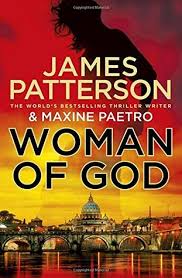
Three years ago I published a review of James Patterson’s novel, Woman of God. It continues to get clicks – perhaps more than anything I’ve published on my blog.  I think that’s because so many of us find ourselves searching for a richer, more relevant church experience that connects with the extraordinarily dangerous times we’re living in. They have in fact been shaped by “the most dangerous organization in the history of the world.”

Woman of God is the story of Brigid Fitzgerald, a medical doctor who though female, becomes a priest and candidate for the papacy.

Brigid and her husband (also a dissident priest) decide to form their own Catholic parish. They do so because of the studied irrelevance of the Catholic Church to pressing problems of the real world. The two call their congregation the “Jesus, Mary and Joseph (JMJ) Church.” They insist on remaining Catholics not allowing their opponents to drum them out of the church as just another break-away Protestant sect.

The JMJ Church spreads rapidly, largely because it connects Jesus’ Gospel with issues of peace and social justice. And though vilified by her local bishop and physically threatened by right wing Catholics, Brigid eventually becomes widely celebrated and is summoned to Rome not for condemnation, but papal approval.

I couldn’t help thinking of Woman of God as I read today’s liturgy of the word this Second Sunday of Advent. Like the JMJ Church, the first two readings along with the responsorial psalm emphasize the connection between faith and social justice.

Then in today’s Gospel, the prophet, John the Baptist, like Brigid Fitzgerald, initiates an alternative community of faith far from the temple in the desert wilderness. John’s credibility leads “all Jerusalem and Judea” to see him as a prophet. In fact, (as John Dominic Crossan has pointed out) John becomes for the Jewish grassroots their de facto alternative “High Priest.”

To see what I mean, consider that first selection from the prophet Isaiah. It directly links faith with justice for the poor, oppressed and marginalized. In Isaiah’s day (like our own) they were typically ignored. By way of contrast, Isaiah’s concept of justice consists precisely in judging the poor and oppressed fairly and not according to anti-poor prejudice – in Isaiah’s words, not by “appearance or hearsay.”  (A clearer statement against contemporary police and/or government profiling can hardly be imagined.)

Not only that, but according to the prophet, treating the poor justly is the key to peace between humans and with nature. Centralizing their needs rather than those of the rich produces a utopian wonderland where all of us live in complete harmony with nature and with other human beings. In Isaiah’s poetic reality, lions, lambs, and calves play together. Leopards and goats, cows and bears, little babies and deadly snakes experience no threat from each other. (This is the prophetic vision of the relationship between humans and nature – not exploitation and destruction, but harmony and mutual respect.)

Most surprising of all, even believers (Jews) and non-believers (gentiles) are at peace. Today’s excerpt from Paul’s Letter to the Romans seconds this point. He tells his correspondents to “welcome one another” – including gentiles – i.e. those the Jewish community normally considered enemies. (That would be like telling us today to welcome Muslims as brothers and sisters whom God loves as much as any of us.)

Today’s responsorial psalm reinforces the idea of peace flowing from justice meted out to the “least.” As Psalm 72 was sung, we all responded, “Justice shall flourish in his time, and fullness of peace forever.” And again, the justice in question has the poor as its object. The psalmist praises a God and a government (king) who “rescue the poor and afflicted when they cry out” – who “save the lives of the poor.”

In his own time, the lack of the justice celebrated in today’s first three readings infuriates Jesus’ cousin, John the Baptist. His disgust forces him out of the temple and into the desert. It has him excoriating the religious leaders of his day as a “brood of vipers.”

Unmistakably clothed as a prophet – in garments that absolutely repudiate the “sacred garb” of his effete opponents – John lambasts the Scribal Establishment which had normalized relationships with the brutal occupation forces of Rome. As opposition high priest, John promises a religious renewal that will lead to a new Exodus – this time from the power of Rome and its religious collaborators.

I hope you can see as I do the parallels between the context of John’s preaching and our own. We live in a culture where those in charge contravene our faith by openly slandering the poor and marginalized celebrated in today’s readings as especially dear to God.

I mean, following the elections of 2016, all the levers of power (the presidency, the Supreme Court, the House and Senate) found themselves in the hands of billionaires and their friends – the 1% that the Occupy Movement identified so accurately eight years ago. Ironically that richest 1% has succeeded in scapegoating the country’s poorest 1% (immigrants) as a major cause of our country’s problems. Moreover, they equally vilify other poor and marginalized people: the impoverished in general, brown and black-skinned people, women, the LGBTQ community, environmentalists, protestors and anyone who exposes the crimes of the billionaire class.

As a result, we entered a period of unprecedented national darkness that still promises to rival that of Germany, 1933-1945. Until the mid-term elections of last year, virtually everything was controlled by the single organization Noam Chomsky calls “the most dangerous in the history of the world.”

More dangerous than the Nazis? Yes, Chomsky insists. Hitler did not have the power to destroy the planet by nuclear war. Hitler ruled Germany before climate change threatened innumerable species, Mother Earth herself, and continued human existence. And yet the entire Republican Party denies that the problem even exists! Yes, it is the most dangerous organization in the history of the world.

And despite all of that, there’s not a peep about it from the pulpit. People keep going to Mass as though the most important upcoming event is the arrival of St. Nicholas at the parish potluck – or the Christmas bazaar.

So, what should we do in the face of such disconnect?

How about following the example of John the Baptist, Brigid Fitzgerald and her husband?

This would entail:

  • Admitting that present forms of church are hopelessly disconnected from the unprecedented tragedy and threat represented by the accession to power of anti-poor climate change deniers.
  • Publicly moving out of our local church building.
  • Perhaps, opening a store front JMJ Catholic church on the Main Street Jim Wallis referred to in his article referenced above.
  • Empowering faithful women in the JMJ community to preach and celebrate the Eucharist.

Objectors will say:

  • We have no authority to do this.
  • It’s better to continue our reform efforts from within.
  • This will only cause division in our church.
  • The status quo really doesn’t bother me, because I use the quiet provided by Sunday Mass to facilitate my own prayer life.
  • (If, like me, you’re of a certain age) I’m too old for such radical disruption of my life.

To such objections John the Baptist might reply:

  • “I had no official authority to start my desert community of resistance and reform. In fact, I was identified by the authorities as an enemy of the state. Eventually they cut off my head. So don’t expect approval.”
  • Reform from within? “I gave up on that early on. So did my cousin, Jesus. Both of us operated outside the temple system which we criticized harshly.”
  • Division in our faith communities? “That didn’t bother me either. Can you get much more divisive or polarizing than calling religious leaders a ‘brood of vipers’?”
  • Withdrawing into personal prayer? “The spiritual masters in my Essene community convinced me that prayer and meditation are essential elements undergirding prophetic action. However, pietism is useless unless it leads to the kind of witness I gave and risk I took on the banks of the Jordan.”
  • Too old? “Again, my Essene mysticism would not permit me to identify with the physical as if I were primarily a body with a soul. The truth is that we are first of all ageless spirits who happen to inhabit temporary bodies. The imperative for action is no less incumbent on older people than on the young. Hell, the elders criticized me for being too young to oppose them. I was barely 30 when they killed me.”

As Jim Wallis has intimated, the specter of John the Baptist should haunt us this second Sunday of Advent and drive our faith communities onto Main Street. These unprecedented times call for radical response outside the sacred precincts and independent of the sleepwalkers awaiting the arrival of St. Nicholas.

Support for “Terrorist” Heroes Is Part of the Judeo-Christian Tradition

Readings for 32nd Sunday in Ordinary Time: 2 MC 7: 1-12, 9-14; PS 17:1, 5-6, 3, 15; 2 THES 2:11-3:5; LK 20: 27-38. 

One of the wonderful aspects of the Judeo-Christian tradition is how so much of it reflects the consciousness of the poor and oppressed, while at the same time giving expression to a “preferential option for the poor.” That’s a gift for us in a culture that generally despises poor people, oppresses the world’s impoverished majority, and spins the news in ways that ignore the poor and reflect a decided “preferential option for the rich.”

This morning’s first reading is especially valuable for us who live in under the torture regime of American Empire. It actually invites us inside the heads of tortured “terrorists.” It raises the question, who are the real terrorists – the forces of empire or those who resist them? In doing so, the reading from Second Maccabees sheds light on the contemporary debate about torture in service of empire. It also highlights parallels between the mentalities of “terrorists” then and now. The reading calls us to question our support for the entire War on Terror.

For starters, consider torture itself. Our culture actually debates torture’s use, its effectiveness and morality! It does!

Previously, that would have been unthinkable. Torture used to be considered one of those intrinsic evils about which there simply could be no debate.

However, ever since Abu Ghraib gave the lie to George W. Bush’s famous prevarication, “The United States doesn’t do torture” – ever since our government’s redefinition of the word to exclude even waterboarding – it has become apparent that Bush (and so many others of our “thought-leaders”) was lying. So today, many prominent “court intellectuals” have been pushed to actually defend torture’s permissibility.

But what do tortured terrorists actually think about having limbs removed and tongues cut out? Read today’s selection about the Maccabee brothers and find out.

The Maccabees were members of a heroic family of guerrilla fighters who in the mid- 2nd century BCE terrorized the invading Greek forces of Antiochus IV Epiphanes. (Actually, “Maccabee” wasn’t the family’s name; it was more a nom de guerre for an entire resistance movement. The word meant “Hammer” – the Hammer Gang – so-called because of its delight in pounding to mincemeat the invaders of their beloved homeland. The term “Maccabee” was similar to “al Qaeda,” when it simply meant “the list” – a reference to the Rolodex of assets the CIA used when it employed al Qaeda back when they were “freedom fighters” against the Russians in Afghanistan.)

For his part, the Seleucid king, Antiochus, was anti-Semitic in the extreme. He considered the Jews historically and culturally backward. For him and his empire’s advancement, Jews had to be brought into the 2nd century BCE even if it meant their kicking and screaming the whole way.

Today we might understand Antiochus’ project as “modernizing” the Jews – as Hellenizing them for purposes of imperial control. Evidently the Seleucid king subscribed to the position that if empire can persuade conquered peoples to adopt its patterns of thinking and especially of imagining God, the task of imperial administrators is made that much easier.

Many Jews agreed with the program of Antiochus. After all, the Greeks’ empire seemed invincible. If the empire couldn’t be beat, it was better to join it willingly. So, these “Hellenized Jews” stopped circumcising their sons, and changed their diets even to include eating pork. They became more Greek than the Greeks.

They also became the targets of Maccabee “terrorist” attacks. In today’s terms, such Hellenized Jews would be the targets blown up by Maccabee suicide bombers in marketplaces located in Jewish but Greek-loving neighborhoods. (Even if the Maccabee targeting may have been more selective than that, it is certain that Hellenized Jews were as much the objects of Maccabee terror as were the Seleucid forces themselves.)

In countering such extremism, Antiochus IV proscribed the Jewish religion as itself criminal and illegitimate. This was very similar to the way many “Americans” consider Islam. So Greek troops burnt and otherwise desecrated copies of the Torah in much the same way as our “Christian” troops have frequently been caught burning or urinating on the Holy Koran and on corpses of Muslim resistance fighters.

Though the Greeks considered the Maccabean forces to be terrorist, faithful Jews admired them as national heroes and servants of God. They understood that the Maccabees were fighting a Holy War against the much more powerful Seleucids. It was David against Goliath all over again.

In any case, according to today’s selection from Second Maccabees, seven brothers of the gang’s leadership were finally arrested (along with their mother) by the Greek invaders. (This would have been reported to Greeks “back home” as a great triumph – “Senior Leaders” captured making “our troops” and “our world” much safer.)

Then the torture and the screaming start.

To begin with all eight are beaten with whips and instruments designed to tear open their flesh. Then following standard operating procedures still practiced today, other enhanced interrogation techniques were used to torture the brothers one after the other in the presence of their blood-drenched mother, herself near death. The purpose here, of course, was to induce the woman to divulge names, places, and plans that she was privy to as the wife of the one who started the Jewish resistance to the Seleucids.

But what does she do? And what about her sons?

In a word, they are all – mother as well as her sons – completely defiant.

“What do you expect to achieve by questioning us” one of the brothers shouts? “We are ready to die rather than transgress the laws of our ancestors.”

Even at the point of death he spits out the words: “You accursed fiend” (I wonder what expletive he really used!), “you are depriving us of this present life, but the King of the world will raise us up to live again forever. It is for his laws that we are dying.”

Another of the brothers sees that his torturers are actually enjoying their work. (The text refers to cutting out his tongue and amputating his hands as “cruel sport.” Does that remind you of Abu Ghraib?) So, he sticks out his tongue and stretches out his hands inviting them to do their work. “It was from Heaven that I received these,” he says. “I’d rather lose them than offend Yahweh” (read Allah).

“Even the king and his attendants marveled at the young man’s courage,” the text says. Far from being intimidated, the freedom-fighter “regarded his suffering as nothing.”

Just before dying, another of the tortured brothers undergoing the very same cruelties says: “It is my choice to die at the hands of men with the hope God gives of being raised up by him; but for you, there will be no resurrection to life.” As indicated by those words, conviction of a happy eternity moved these guerrilla fighters to embrace death willingly. (Seventy-two virgins, anyone?)

So, what goes on in the heads of the tortured? Disdain for their torturers. Defiance. Show of courage. Love for the motherland. Hope.

And what goes on for the people they die for? Admiration. Elevation of martyrs and the tortured to sainthood. Motivation to follow their example.

And ultimately victory for the tortured and assassinated. . . . I mean, against all odds, the Jewish resistance – the Hammer Terrorists – did succeed in evicting the Greeks from their homeland.

As I was saying, this reading should cause us to reevaluate our attitude towards terrorism, terrorists, and the scandal of debating the pros and cons of torture.

Marianne Williamson, Reparations & Restorative Justice

Readings for 31st Sunday in Ordinary Time: WIS 11:22-12:2; PS 145:1-2, 8-9, 10-11, 13, 14; 2 THES 1:11-2:2; JN 3:16; LK 1:1-10

Today’s readings for the 31st Sunday in Ordinary Time bring up questions of restorative justice and reparations for the harm we may have caused others as individuals and as Americans.

The day’s main focus is the familiar story of the tax collector Zacchaeus.  This very wealthy man was inspired by Jesus to give half of his possessions to the poor and to restore to those he had defrauded four times as much as he had embezzled.

Zacchaeus’ example makes me think of Marianne Williamson’s campaign for president which has made reparations a central plank in her platform.  

Of course, Marianne’s reparations focus is the African American community. But her rationale for it suggests something far beyond race relations within the United States.  It intimates as well reparations to victims of U.S. foreign policy and to Mother Nature herself.

Let me explain and then show how the explanation is related to this day’s readings.

To begin with, yes, I’m still supporting Marianne Williamson for president.  She is the only candidate who confronts us with the undeniable truth that Americans need a fundamental change in consciousness if we are to address the unprecedented problems currently facing humankind.

That’s what Marianne means by “miracles” — changes in fundamental perceptions. That was also central to Jesus’ proclamation about the Kingdom of God. We must think differently about the world and act accordingly.

So, it’s not a question of merely tweaking the reigning economic system or of reviving Roosevelt’s New Deal. What we need is an entirely new world vision that operates from the premise that everything we see is completely upside down. Reality stands 180 degrees away from what our culture tells us. All of it. If our culture says “black,” we should think “white.” If it says “good,” we should think “bad.” If it says “peace,” we should know they’re getting us ready for another war.

Instead, we are all one – women, men, children, immigrants, refugees, animals, plants, and the very air we breathe. That’s the basis of Marianne Williamson’s candidacy. There are no foreigners, no sacrosanct borders – no America First. In fact, the United States must take 100% responsibility for the world’s ills.  

My decision to continue my support of Marianne Williamson was reinforced by listening to a campaign speech she gave at Yale University last week.

There she made the following points that she has always centralized in her approach to politics and to simply living as an evolved human being in our troubled world. Notice how they echo today’s Gospel themes, reparations and restorative justice:

  1. We all know that until we identify and address the root of our problems in our personal, family, and community relationships, we’ll never truly solve those problems.
  2. However, what is true in our personal lives also applies to our nation, because nations are simply groups of individuals.
  3. As Americans, we have been unwilling to face up to the harm caused by slavery, Jim Crow, and segregation on the one hand and to the resulting wealth accumulation in the white community on the other.
  4. The same holds true for U.S. foreign policy which has been based on colonialism and neocolonialism which are simply euphemisms for forcefully transferring wealth from the Global South to the Global North.
  5. Such transfer-by-force has been destructive not only to people but to the natural environment destroyed by industrialized agriculture, rainforest destruction, overfishing, and massive waste disposal in what’s been called the Third World.
  6. We thus owe reparations to African Americans, to the Global South, and to Mother Nature.
  7. Marianne’s presidency would have us directly confront those problems as the sine qua non for solving our national dilemmas, world poverty, and impending climate catastrophe.

Now, those are truly radical positions (in the etymological sense of that term). No other candidate – not even Bernie or Elizabeth Warren – addresses them at the level of consciousness emphasized by Marianne Williamson.

So, think about that and Marianne’s position on reparations and restorative justice as you read the selections included in this Sunday’s liturgy of the word. You’ll find them here. They all invite us to radically transformed ideas of God, ourselves and of those we live with – particularly on the other side of the street, on the other side of the tracks and on the other side of the world.  (Note that the first reading is from the Book of Wisdom which imagines God’s Spirit as female.) What follows are my reading’s “translations.” Please check for yourself to see if I’ve got them right:

 WIS 11:22-12:2

The Real Master
Of the Universe
Is immense
And intense
In her presence
In everything
And everyone.
To her
Our “sins” and addictions
Are trivial.
They mean nothing
In her vast
Scheme of things
Where all people
Are loved and cherished
Just as they are –
As God created them.
“Repentance”
Means rejecting
False guilt
And “wickedness”
While repairing
The hurts
We’ve inevitably inflicted
On others.
 
PS 145:1-2, 8-9, 10-11, 13, 14
 
Where God is recognized
As Love
Her name
Is constantly extolled.
She is lovely herself
And merciful
Never angry
But kind and compassionate
Always.
So, set aside
“Fear of the Lord”
And embrace your Queen
Who keeps her word,
Does nothing harmful
And favors her
Heavily burdened
And (necessarily) fallen
Children.
 
2 THES 1:11-2:2
 
Rabbi Paul’s
Constant prayer for us
Is that we might be
Like his teacher, Jesus
Who recognized
Everyone and everything
As lovable
And full of grace.
In fact,
Jesus is among us
Each day
Whenever we gather
Together
And not merely in some
Far distant future
As false teachers say.
 
JN 3:16
 
Yes, our wise Queen
Has given us Jesus
Who showed us Life
In its fullest form
That we might live
Happily ever after
 
LK 1:1-10
 
Zacchaeus,
The rich exploiter
Of his own people,
Was a tiny man
In more ways than one,
But as an example
Of repentance and reparation.
He rose above the crowd
To see Jesus differently.
Imagine his surprise
(And the anger
Of his victims)
When Jesus
Saw him differently
And invited himself for dinner.
The result?
Zacchaeus grew
Into a giant
On the spot
Giving half his possessions
To the poor
And paying
Four times
His extortions!
Four times!!
How’s that
For reparations?

I hope you can see the connection between those readings and Marianne Williamson’s emphasis on reparations for slavery and restorative justice for resources stolen in a system of unequal trades identified in the Global South as neocolonialism. The readings (and especially the example of Zacchaeus) show that such policies based on a clear moral sense of justice should represent the twin pillars of domestic and foreign policy.

No other candidate has identified those pillars with the clarity and conviction of Marianne Williamson. In the end, no other candidate — and very few spiritual leaders of any stripe — challenge us to rethink our entire understanding of life.

According to Williamson and Jesus, life, truth, and our health as a nation are to be found in exactly the opposite direction from that indicated by the reigning ideology.

How We Rich Exclude Ourselves from the Kingdom of God

Readings for 30th Sunday in Ordinary Time: SIR 35: 12-14, 11-18; PS 34: 2-3, 17-18, 19, 28; 2 TM 4: 6-8, 16-18; LK 18: 9-14. 

“A pope and a pimp went into St. Peter’s to Pray.” That’s the way scripture scholar, John Dominic Crossan, conveys the shock that must have been felt by Jesus’ audience when he opened today’s familiar gospel parable with the words “A pharisee and a tax collector went up to the temple to pray.” Even joining the words “Pharisee” and “tax collector” in the same sentence was like putting “pope” and “pimp” together. It jars the ear. And why would a pimp be praying at all? Why would a tax collector?

Despite its shocking overtones, homilists generally domesticate this parable to make it reinforce conventional wisdom about pride and humility. The Pharisee was proud, they say. The tax collector was humble. Be like the tax collector.

Crossan however says that there’s something much more challenging and fundamental going on in this parable. The focus of Jesus’ story is not pride vs. humility. It’s about rejecting the Pharisee’s conventional morality. The parable even calls us to scrap conventional wisdom about pride and humility.

More positively, the story is a summons to enter God’s Kingdom by identifying with the poor and despised who are celebrated throughout today’s liturgy of the word. The parable and its supporting readings also explain why the conventionally good simply cannot enter the Kingdom of God, which in Jesus’ understanding is never about life after death, but a this-worldly reality where God is king instead of Caesar.

Please give a listen to the readings. You can find them here. My “translations” run as follows:

 SIR 35: 1-14, 16-18
 
God’ justice reverses
The world’s preferential option
For the rich.
It is instead
Duly prejudiced
In favor of
The poor, oppressed,
The orphan, and the widow.
God listens to them
And affirms
Their rights
To speedy justice.


PS 34: 2-3, 17-18, 19, 23
 
Yes, be thankful and glad
That God hears
The cry of the poor
The brokenhearted
And those whose spirits
Have been crushed
By oppressors
Whose names
Will soon
Be forgotten.
 
2 TM 4: 6-8, 16-18
 
The apostle Paul was
One of the oppressed.
He kept faith
In God’s justice
Even during
His rigged
Imperial trial
When his friends
Abandoned him.
Though exhausted
Like a long-distance runner
Or a gladiator
Before a lion,
He nonetheless
Felt God’s presence
As his source
Of strength and courage
Enabling him
To proclaim
God’s Kingdom
To everyone.
.
 
2 COR 5:19
 
God’s preferential
Option for the poor
Is the very message
Of Jesus, the Christ.
It can save the world.
 
LK 18: 9-14
 
Jesus’ parable
Of the Pharisee and Tax Collector
Taught that
Self-justifying
Conventional morality
Is not pleasing to God –
Not even when supported
By long prayers,
Generous tithes,
Sexual purity,
And frequent fasting.
(Yes, the Pharisee
Did all of that!)
Instead,
Entrance into God’s Kingdom
Requires nothing
But membership
In the group
Considered sinful
By us pharisees and
Our conventional morality.

To unpack those readings, first of all, think of the last one in terms of popes and pimps. Popes are generally respected people. They’re religious leaders. Wherever they go, crowds flock around them just to get a glimpse, a blessing, or possibly even a smile or touch.

Pharisees in Jesus’ time enjoyed similar respect with the common people. Pharisees were religious teachers and textbook examples of conventional morality. They usually did what the one in today’s gospel said he did. They kept the law. The Pharisee in today’s reading was probably right; chances are he wasn’t like most people.

Generally, Pharisees were not greedy, dishonest, or adulterers. Or as their exemplar in Luke put it, he was not like the tax collector alongside him in the Temple. Pharisees gave tithes on all they possessed – to help with Temple upkeep.

On the other hand, tax collectors in Jesus’ day were notorious crooks. Like pimps, they were usually despised. Tax collectors were typically dishonest and greedy. They were adulterers too. They took advantage of their power by extorting widows unable to pay in money into paying in kind.

In other words, the Pharisee’s prayer was correct on all counts.

But we might ask, what about the tax collector’s prayer: “O God, be merciful to me, a sinner?” A beautiful prayer, no?

Don’t be so quick to say “yes.”

Notice that this tax collector doesn’t repent. He doesn’t say, like the tax collector Zacchaeus in Luke’s very next chapter, “Look, half of my possessions, Lord, I will give to the poor; and if I have defrauded anyone of anything, I will pay back four times as much (LK 19:8). There is no sign of repentance or of willingness to change his profession on the part of this particular crook.

And yet Jesus concludes his parable by saying: “I tell you, the latter (i.e. the tax collector) went home justified, not the former. . .” Why?

I think the rest of today’s liturgy of the word supplies an answer. Each reading is about God’s partiality towards the poor, oppressed, orphans, widows and the lowly – those who need God’s special protection, because the culture at large tends to write them off or ignore them. Typically, they’re the ones conventionality classifies as deviant. The Jewish morality of Jesus time called them all “unclean.”

However, all of them – even the worst – were especially dear to Jesus’ heart. And this not because they were “virtuous,” but simply because of their social location. Elsewhere, Jesus specifically includes tax collectors (and prostitutes) in that group. In MT 21: 38-42, he tells the Pharisees, “Prostitutes and tax collectors will enter God’s Kingdom before you religious professionals.”

But why would a good person like the Pharisee be excluded from God’s Kingdom? Does God somehow bar his entry? I don’t think so. God’s Kingdom is for everyone.

Rather it was because men like the Pharisee in the temple don’t really want to enter that place of GREAT REVERSAL, where the first are last, the rich are poor, the poor are rich, and where (as I said) prostitutes and tax collectors are rewarded.

The Pharisee excludes himself! In fact, the temple’s holy people wanted nothing to do with the people they considered “unclean.” In other words, it was impossible for Pharisees and the Temple Establishment to conceive of a Kingdom open to the unclean. And even if there was such a Kingdom, these purists didn’t want to be there.

Let’s put that in terms we can understand in our culture.

Usually rich white people don’t want to live next door to poor people or in the same neighborhood with people of color – especially if those in question aren’t rich like them.

Imagine God’s Kingdom in terms of the ghetto, the barrio or favela. Rich white people don’t want to be there.

Yes, according to this morning’s readings – according to Jesus – the “undesirables” among us are the ones to whom the Kingdom of God belongs. They are the favorites of the God who Sirach says is “not unduly partial to the weak.” Rather God is fittingly partial to them as the Sirach reading itself and the rest of today’s liturgy of the word make perfectly clear!

This means that any separation from God’s chosen poor amounts to excluding oneself from the Kingdom white Christians spend so much time obsessing about.

So, today’s readings are much more radical than usually understood. The parable of the Pharisee and the tax collector – of the pope and the pimp in St. Peter’s – is not an affirmation of conventional morality. It’s not even a celebration of imagined virtue on the part of the poor or about repentance. It rejects all such ethnocentric hypocrisy! Jesus’ parable is not even about approving conventional wisdom concerning pride and humility.

As always with Jesus’ teachings, it is about the Kingdom of God, about those who belong and about us who exclude ourselves.