Jesus Would Have Supported al Qaeda Sooner than the U.S.! (Sunday Homily)

jesus  terrorist

Readings for 23rd Sunday in Ordinary Time: WIS 9:13-18B; PS 90: 3-6, 12-14, 17; PHMN 9-10, 12-17; LK 14: 25-33. http://usccb.org/bible/readings/090813.cfm

Did you have trouble with today’s gospel reading? I did. Frankly, it makes me wonder about Jesus’ attitude towards violence and armed attempts to overthrow foreign occupation forces like the Roman legions in Palestine – or American armed forces in Afghanistan or their authoritarian clients in Israel, Egypt, Bahrain, Yemen and elsewhere.

I wonder: whose side would Jesus be on in today’s War on Terrorism? I doubt it would be “ours.” Certainly, Jesus was not on the side of Rome. Instead, he was clearly sympathetic to Rome’s armed opponents. That makes me suspect that he would also have sided with those our own government deems “terrorists.”

What do you suppose that means for us and our politics?

Before answering, think about Jesus’ words in today’s selection from Luke. There Jesus is not telling us to love our enemies. He’s saying that we must hate! Yes he is. And the objects of our hatred must be our family members, down to our spouses and children. According to Jesus, we must even hate our own lives!

That’s pretty outspoken, hyperbolic, radical and edgy. In fact, his words make clear why the Romans and their Jewish collaborators in the Temple would have seen Jesus as an insurgent and terrorist. In any case, he was surely not the apolitical, domesticated preacher tradition later made him. He was not blissfully unaware of or uncaring about the searing resentment his people shared about Rome’s occupation of the land whose only sovereign in their eyes was Yahweh.

Yet Jesus’ words today also make it clear that he was not a violent revolutionary like the many other “messiahs” who sprang up in his 1st century context. As Reza Aslan points out, Jesus was not like Theudas, Hezekiah the bandit chief, Judas the Galilean, Menahem, Simon son of Giora, Simon son of Kochba and the rest.

Still today’s gospel makes it clear that there was genuine cause for concern about Jesus and his followers among the Romans and their Jewish clients in the Temple.

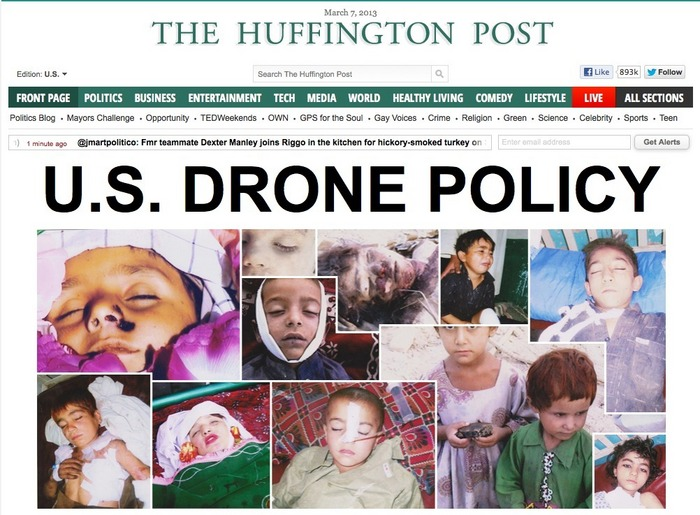
To begin with there were those “great crowds” Luke describes as following Jesus everywhere. In revolutionary situations, masses of people thronging about a charismatic troublemaker are reason for serious concern. According to U.S. standards under American Empire, it’s enough for local armed men in suspect locations to merely assemble to justify their being droned. And, of course, we know that at least some of Jesus’ disciples were armed (MK 14:43-52). Presumably others in the “large crowds” carried weapons as well. They would not have been viewed any more kindly by Roman occupation forces than their U.S. equivalents.

Then, listen to Jesus’ rhetoric as recorded by Luke. There’s all that talk about hating everyone near and dear to us that I already mentioned. That’s the second time we’ve encountered such language from the Prince of Peace in the last few weeks. Remember what we read a month ago about his coming not as a peacemaker, but to create division between children, their parents and in-laws? In MT 10:34 Jesus even said specifically that he had come to bring the sword. “I come not to bring peace” he said, “but to bring a sword.” If he actually said those words, how do you think they would have been understood by Roman and Temple authorities?

However, Jesus’ most dangerous statement this morning is the one about willingness to be crucified in order to qualify as his disciple. In occupied Palestine, those words had nothing to do with patiently bearing life’s inconveniences. No, in Jesus’ context, they could only be about opposing Rome and its Jewish collaborators.

Again, it is Aslan who reminds us that crucifixion was the mode of torture and execution the Romans reserved for insurgents. So in a Palestine where rebels were crucified almost every day (sometimes hundreds at a time), Jesus’ words could mean only one thing: his followers must join him in opposing Roman occupation of their Holy Land and in doing so virtually seal their fates.

But then comes the non-violent “catch.” Opposition to imperial occupation of the homeland might be the duty of every patriotic Jew, Jesus implies. But that doesn’t necessarily mean violent opposition. Calculate well, Jesus says – like a man building a tower. Realize whom we are opposing. We’re talking about Rome. Its legions can mobilize 20,000 well trained and heavily armed troops on a moment’s notice. At best we have less than half that number. To avoid suicide, we must “sue for peace” like a wise king threatened by a superior force. In other words Jesus counsels a prudent non-violence to avoid a bloodbath.

Bishop Oscar Romero made a similar recommendation to the revolutionary forces of El Salvador (the FMLN) in the 1970s. He said he could surely sympathize with the anger of the FMLN towards the United States and its puppet regime in El Salvador. He could understand why peasant farmers might see violent revolution as their only option in fighting brutal forces of “order” which wantonly tortured and murdered women, children, and the elderly, along with teachers, social workers, union organizers, priests, nuns, and other resisters.

No doubt Romero would say the same today about young Egyptians opposing the U.S.-supported military dictators in their own country, or about similar insurgents in the U.S.-controlled countries I’ve already mentioned.

But, Romero said, such violence is suicidal in the face of the billions in arms supplied such forces of oppression by the United States. Better to resist non-violently. At least then, the inevitable ensuing bloodbath (the modern equivalent of crucifixion) will be smaller in scope.

In 1st century Palestine, Jesus was not the only one employing such non-violent reasoning. According to John Dominic Crossan in his book, The Power of Parable, strong non-violent movements of resistance to Rome characterized Jesus’ context.

These movements were sandwiched between two epochs of extremely bloody opposition to Rome. The first occurred exactly in the year of Jesus’ birth, 4 BCE. That was the year the Roman client, Herod the Great, died. Jewish freedom fighters seized upon the resulting leadership vacuum as an opportunity to rise up against Herod’s Roman patrons. Jewish insurgents captured the city of Sephoris, the capital of Galilee. In response, the Romans razed the city to the ground and killed everyone who might be associated with the rebellion. Jesus’ family in nearby Nazareth was lucky to escape.

The second period of extremely violent resistance to Rome occurred about 40 years after Jesus’ crucifixion – just before the gospels of Mark, Matthew and Luke were composed. This time the Jews rose up against the Roman occupiers throughout Palestine. The Roman response? They utterly sacked Jerusalem itself, destroying its temple, and killing virtually all those who had heard Jesus’ words and witnessed his deeds.

In between those fierce chapters, Crossan says, there was a period of non-violent resistance to Rome. That’s when Jesus traversed Palestine and spoke so memorably about God’s Kingdom. According to Crossan, Jesus’ era represented a period of “massive, well-organized, unarmed, nonviolent resistance against Rome.”

That’s the probable context for Jesus’ shocking words this morning.

There’s so much more that could be said about all of this. To fill in the blanks, read Crossan’s book, along with Aslan’s Zealot, which recently topped the New York Times Best Seller list.

For today it’s sufficient to note the implications of Jesus’ shocking words. Personally, I’m so glad the church makes us face them. They show that Jesus was far more complex regarding violence than he’s usually made out to be. These difficult readings open a conversation that would otherwise be unthinkable.

Going forward, the conversation might well address the following questions:

• What difficulties do we have with realizing that Jesus situation vis-à-vis Rome was extremely similar to that of today’s “terrorists” vis-à-vis the United States and that Jesus himself was considered a terrorist?
• Is the “War on Terror” a real war or merely empire once again defending its right to plunder, torture, and kill with impunity?
• How is it that U.S. citizens end up supporting massive U.S. violence against “terrorists,” but that we find the latter’s much less injurious response (like the “Boston Marathon Massacre”) so horrendous?
• Put otherwise, how is it that U.S. citizens generally support the wars of their country which Martin Luther King described as “the greatest purveyor of violence in the world today,” while demanding pacifism on the parts of those whom the U.S. attacks.
• Do the ones our government calls “terrorists” have the right to defend themselves against what Edward Herman has termed the “wholesale terror” of the U.S. and its allies? (See his book, The Real Terror Network.)
• Which terrorists do we support – our government and its brutal military or their victims?

What other questions do the readings raise – for you?

How about my reflections?

(Discussion follows)

Syria: The Snowden, Manning (and Godfather) Connections

Godfather

Well, we’re coming up for another vote about attacking a far off country over weapons of mass destruction. This time the target is not Iraq, but Syria. This time the “new Hitler” is not Saddam Hussein but Bashar al-Assad. This time it’s not Colin Powell, but John Kerry who assures the world that it can “trust us” and the secret evidence that can’t be fully shared for reasons of National Security.

Remember the last time a vote like this was taken? It was three days after 9/11. Then Congress passed a resolution for the Authorization for Use of Military Force. It sailed through with only one dissenting vote – that of Congresswoman Barbara Lee.

Before registering her brave dissent, the Congresswoman spoke on the House floor. “As we act,” she said, “let us not become the evil that we deplore.”

President Obama would do well to heed those words this time around. However I’m not merely referring to the fact that we already are the evil we ostensibly deplore. After all, we supported Saddam Hussein in his deployment of chemical weapons against Iran in 1988. We have repeatedly used chemical weapons ourselves – for example, Agent Orange in Vietnam and white phosphorus in Fallujah. (I’m not sure how to classify depleted uranium.)

Instead, I’m referring to the Chelsea Manning and Edward Snowden cases and the Obama administration’s position that the former Army, CIA and NSA employees deplorably (1) revealed state secrets, (2) violated their constitutional oaths, (3) failed to go through the proper channels, (4) aided the enemy, (5) endangered American lives, and (6) did all of this for reasons of personal advancement.

Ironically, these are the very “crimes” the Obama administration is committing relative to Syria. In effect, Obama is a more deplorable whistle-blower than he considers Edward Snowden and Chelsea Manning to be. That is, by confirming the Manning and Snowden revelations, he’s unwittingly blowing the whistle on himself.

Consider the Manning and Snowden parallels one-by-one. In the run-up to the Syria bombing:

• Obama has revealed state secrets: The big “state secret” in question is the most devastating one disclosed by Manning and Snowden. It is that the U.S. is a completely out-of-control rogue state. Its army is not only routinely guilty of “collateral murder.” Its CIA and NSA act like a world police force spying on and attempting to control not only designated enemies but even “friends.” The embarrassment caused by Manning and Snowden’s irrefutable revelations on those scores is what has so enraged the Nobel Peace laureate who resides in the White House. Nevertheless, Obama’s own posturing as World Policeman and Mad Bomber relative to Syria confirm what Manning and Snowden have told us so clearly. Our president and Congress are completely out-of-control.

• Obama is violating his constitutional oath: The State Department has repeatedly accused Chelsea Manning and Edward Snowden of violating their constitutional oaths to defend the Constitution against all enemies foreign and domestic. But the president, of course, and his congressional enablers are doing the same. According to the Constitution, treaties have the same force as domestic law. As a signatory of the United Nations treaty, the U.S. is bound to get Security Council approval before attacking another nation. Yet it refuses to go that route, because it knows that Russia and China will support world opinion which stands overwhelmingly against U.S. intervention in Syria (as does U.S. opinion).

• President Obama declines to “go through the proper channels”: In prosecuting Chelsea Manning and going after Edward Snowden, a constant accusation of the Obama administration has been that the two have failed to go through the proper channels and procedures which the administration claims are adequate and necessary to avoid catastrophe. Yet nowhere is international law clearer than in defining the proper channels that must honored before launching acts of war. Once again, those channels centralize the United Nations and its Security Council. The Obama administration ignores U.N. procedures because they would inevitably determine U.S. intentions to be criminal.

• President Obama is aiding the enemy: In its prosecution of Chelsea Manning and pursuit of Edward Snowden, the State Department has insisted that the two have “aided the enemy.” Even people giving donations to charitable causes perhaps tangentially connected to al-Qaeda run the risk of having similar accusations (and prosecutions). Yet, by all accounts the opposition to Syria’s Bashar al-Assad includes forces tightly allied with al-Qaeda. So by siding with the rebels, President Obama is directly aiding the enemy in ways that absolutely dwarf anything Manning and Snowden (and charitable donors) could even think of doing.

• President Obama is endangering American lives: Iran and Syria correctly claim the right to self-defense recognized by the U.N. Charter. As allies, they promise retaliation against the United States and its principal regional ally, Israel. Will Israel or the U.S. stand aside in the case of such retaliation? Of course not. As Obama himself has said, once the bombs start flying all bets are off. Events simply take on a life of their own. Will Israel itself retaliate using its atomic weapons? How irresponsible can our “leaders” be?

• President Obama is pursuing this insanity for reasons of personal gain: Obama clearly made a mistake in drawing a “red line” and promising “action” in the case of using chemical weapons in Syria. He made another mistake by jumping to the conclusion that the al-Assad government was responsible for their use before all the data was in. Now it fears appearing weak should it follow the lead of British Prime Minister David Cameron who in effect admitted his mistake in not honoring the will of the British people and its Parliament. So like a Mafia Don, in order to maintain “credibility” and save face, Obama feels compelled to break some legs and spray some restaurants with machine gun fire. Otherwise who knows how many congressional seats might be lost next year? Make no mistake: this round of blood-letting will be done for political gain and to save the president’s reputation as a credible “Godfather.”

So the substance of the Manning and Snowden revelations has been confirmed from the highest possible source. The U.S. is indeed a rogue state. It not only spies on the world, it has set itself up as its lone judge, jury, and executioner. It is a supporter of al-Qaeda. It cares not a bit for American lives or anyone else’s for that matter. In fact it is willing to risk a World War to avoid losing face. As such “America” is an outlaw state with “leaders” who routinely violate not only their oaths of office, but the U.N. Charter, world opinion, and the most elementary moral principles.

Not only that, but the procedures used by Manning and Snowden have been validated by Obama’s intentions towards Syria. Evidently he agrees with the whistle-blowers he deplores that the channels and protocols the world has established to avoid catastrophe are not adequate or workable. Like Bush before him, his will alone determines what is right and wrong.

The only thing left to do is award Manning and Snowden the Nobel Peace Prize – not as worthy successors of Barack Obama, but to atone for the mistake of previously giving it to a Mafia Don.

We Are Called to Atheism by Abraham and Jesus! (Sunday Homily)

drone victims

Readings for the 17th Sunday in Ordinary Time: Gn. 18:20-32; Ps. 138:1-3, 608; Col. 2:12-14; Lk. Ll:1-13. http://www.usccb.org/bible/readings/072813.cfmhttp://www.usccb.org/bible/readings/072813.cfm

Today’s readings about Abraham bargaining with God and about Jesus teaching his followers to pray raise some vital questions about God’s personality and existence. Abraham’s compassionate God seems to conflict with the warlike God who appears elsewhere in the Bible.

So who’s right? Should we be afraid of God? Or can we trust him? Is God warlike and punitive or kind and forgiving? If he’s our “Daddy” (that’s what “Abba” means in Jesus’ prayer: “Our Daddy who transcends everything”) does our experience show him to be abusive or loving? Today’s readings help us wrestle with those questions. In fact, they call us to a holy atheism.

But before I get to that, let me frame my thoughts.

Last week the government of Pakistan released a classified document revealing that scores of civilians had been killed in dozens of CIA drone strikes between late 2006 and 2009. That period mostly covered the final years of the Bush administration. However as we all know, such strikes have increased under the presidency of Barrack Obama.

Citing the leaked report, the London Bureau of Investigative Journalism said “Of 746 people listed as killed in the drone strikes outlined in the document, at least 147 of the dead are clearly stated to be civilian victims, 94 of those are said to be children.”

Meanwhile, the United States has consistently denied that significant numbers of civilians have been killed in drone strikes. It claims that “no more than 50 to 60 ‘non-combatants’ have been killed during the entire, nine-year-long drone campaign.” Our government argues that such numbers are tolerable because the strikes protect Americans from the terrorists actually killed in the drone operations.

That’s the logic our government has adopted as it represents our country where 78-85% of the population claims to follow the one who refused to defend himself and gave his life that others might live. The logic of most American Christians says that killing innocents – even children – is acceptable if it saves American lives. Apparently, that’s the American notion of salvation: better them than us.

However that way of thinking is not what’s endorsed in today’s liturgy of the word. (And here I come back to those questions I raised earlier about God’s personality and existence.) There in Sodom and Gomorrah, Yahweh refuses to punish the wicked even if it means that as few as 10 innocents would lose their lives in the process.

Better-us-than-them is not the logic of Jesus who in teaching his disciples to pray tells them that God is better than us. God gives bread to anyone who asks. Yahweh acts like a loving father. He forgives sin and gives his children what they ask for. In fact, God shares his Spirit of love and forgiveness – he shares Jesus’ spirit of self-sacrifice – with anyone who requests it.

Elsewhere, Jesus says something even more shocking. Yahweh doesn’t even prefer the good over the wicked, he says. He showers his blessings (not bombs!) on everyone. Or as Jesus himself put it, God makes the sun rise on the virtuous and the criminal; his rain benefits those we consider evil as well as those we classify as good (Mt. 5:45). We should learn from that God, Jesus says, and be as perfect like him (Mt. 5:48). In fact, we should consider no one “the enemy” not even those who threaten us and kill us even as Jesus was threatened and killed (Lk. 6: 27-36).

How different is that from the way most of us think and act? How different is that from the God we’ve been taught to believe in?

Yes, you might say, but what about those other passages in the Bible where God is fierce and genocidal? After all, the Great Flood must have killed many good people and even children. And God did that, didn’t he? What about his instructions (more than once) to kill everyone without distinction. For example the Book of Joshua records: “Thus Joshua struck all the land, the hill country and the Negev and the lowland and the slopes and all their kings. He left no survivor, but he utterly destroyed all who breathed, just as the LORD, the God of Israel, had commanded (Joshua 10:40). What about the Book of Revelation, which many Christians argue predicts God’s total destruction of the world? What about that violent, pitiless, threatening God? Is that the “Abba” of Jesus?

Good questions. They’re good because they make us face up to the fact that the Bible is ambiguous about God. No, let me put it more strongly. The Bible isn’t just ambiguous about God. It’s often plain wrong – at least If we adopt the perspective of Jesus and Abraham in today’s readings.

After all, Abraham’s God is not genocidal; Joshua’s is. Jesus’ God is not genocidal; Joshua’s is. Those Gods are not compatible. One of them must be false. Or as Jack Nelson Pallmeyer writes in his book Is Religion Killing Us? “Either God is a pathological killer or the Bible is sometimes wrong about God.”

Today’s readings show us that both Abraham and Jesus agree.

The Abraham story is about a man gradually rejecting Nelson’s Psychopath in the sky. Israel’s furthest back ancestor comes to realize that God is merciful, not punitive or cruel. Or as the psalmist puts it in today’s responsorial, God is kind, true, and responsive to prayer. God protects the weak and lowly and is distant from the powerful and haughty. In today’s reading from Genesis, we witness Abraham plodding slowly but surely towards that conclusion.

It’s the realization eventually adopted by Jesus: God is a kind father, not a war God. If Abraham’s God won’t tolerate killing 50 innocent people, nor 45, 40, 30, 20, or even 10, Jesus’ God is gentler still. That God won’t tolerate killing anybody – not even those threatening Jesus’ own life.

All of that should be highly comforting to us. It has implications for us, politically, personally and liturgically.

Politically it means that followers of Jesus should be outraged by anyone connecting Jesus with our country’s perpetual war since 9/11, 2001. A drone program that kills the innocent with the targeted flies in the face of Abraham’s gradually-dawning insight about a merciful God. The war itself makes a complete mockery of Jesus’ total non-violence and the words of the prayer he taught us. Those supporting “America’s” “better them than us” attitude are atheists before Jesus’ God and the one depicted in the Abraham story.

Personally, what we’ve heard this morning should drive us towards an atheism of our own. It should cause us to review and renew our understandings of God. Impelled by today’s readings, we should cast as far from us as we can any inherited notions of a pathological, punishing, cruel, threatening and vindictive God. We need that holy atheism. Let’s pray for that gift together.

And that brings us to today’s liturgy. In effect, we’ve gathered around this table to hear God’s clarifying word, and symbolically act out the peaceful world that Jesus called “God’s Kingdom.” We’ve gathered around this table to break bread not only with each other, but emblematically with everyone in the world including those our culture considers enemies.

I mean if God is “Our Father,” everyone is our sister, everyone, our brother. It’s just that some couldn’t make it to our family’s table today. But they’re here in spirit; they’re present around this altar. They are Taliban and al-Qaeda; they are Iraqis, Afghanis, Yemenis, and Somalis; they are Muslims and Jews; they include Edward Snowden and Trayvon Martin. They include those children killed in U.S. drone strikes. They are you and I!

All of us are children of a loving God. Jesus’ “Lord’s Prayer” says that.

Now that’s something worth celebrating.

When the Government Turns Criminal: Edward Snowden and the Good Samaritan (Sunday Homily)

Snowden

Readings for 15th Sunday in Ordinary Time: DT. 30: 10-14; Ps. 69: 14, 17, 30-31, 34, 36-37; Col. 1: 15-20; Lk. 10: 25-37. http://www.usccb.org/bible/readings/071413.cfm

In his recent book about the parables of Jesus (The Power of Parable: How Fiction by Jesus Became Fiction about Jesus), John Dominic Crossan poses the question: What happens to your world when the “best” people act badly and only the “worst” do what is right?

That scenario seems to be playing itself out in the case of Edward Snowden.

Snowden, you recall, is the NSA contractor and CIA employee who last month disclosed a vast secret program of U.S. government spying on its own citizens and on individuals, corporations, and governments throughout the world.

The program (Prism by name) seems to violate the Fourth Amendment of the U.S. Constitution which reads: “The right of the people to be secure in their persons, houses, papers, and effects, against unreasonable searches and seizures, shall not be violated, and no Warrants shall issue, but upon probable cause, supported by Oath or affirmation, and particularly describing the place to be searched, and the persons or things to be seized.”

Snowden made his disclosures three months after James Clapper, the Director of U.S. intelligence had denied its existence in testimony (under oath) before the Senate Committee overseeing the U.S. intelligence program. Snowden’s disclosures also followed hot on the heels of President Obama’s publically expressed concern that China was illegally spying on the U.S. in exactly the same way (though on a smaller scale) that the U.S. turns out to have been spying on China and its own allies.

For his troubles in exposing such lies, hypocrisy, and violations of the Constitution, Snowden himself has been designated a spy, traitor, and enemy of the United States – categories applied to its worst enemies. As a pariah in his own country, he has fled the United States and sought asylum in various countries including China, Russia, Cuba, Nicaragua, Venezuela, Ecuador, and Bolivia. Snowden (and human rights organizations such as Amnesty International) alleges that if extradited to the U.S. he is unlikely to receive a fair trial, but instead to be tortured and indefinitely imprisoned like other whistleblowers such as Bradley Manning.

All of the countries just mentioned have histories less-than-friendly to U.S. interests, which they have each described as criminally imperialistic. Other “good” countries such as France and Germany have (under great pressure from the United States) refused Snowden asylum.

Meanwhile, James Clapper has not been charged with perjury, and President Obama has managed to deflect attention away from constitutional violations to the search for the fugitive Snowden.

In other words, the Snowden Affair presents us with a “Spy,” “Traitor,” and “Terrorist Sympathizer” obeying his conscience in his exposure of government crime. He has done the right thing. Meanwhile, the President of the United States, himself a constitutional lawyer, has been caught violating the Constitution, and the Director of Intelligence has been exposed as a perjurer. And on top of that, friendly countries often lauded by the United States as models of democracy refuse to respect International Law governing asylum seekers. Only the “bad countries” are willing to honor that law.

In this situation, the question Crossan posed earlier finds uncomfortable relevance: “What happens to your world if a story records that your “best” people act badly and only your “worst” person acts well?”

As I said, Crossan asks that question in the section of his book commenting on “The Good Samaritan” which is the focus of the gospel selection in today’s Liturgy of the Word.

The parable, of course, is very familiar. Almost all of us know it nearly by heart. Typically sermons find its point in simply calling us to be “follow the Samaritan’s example, treat everyone as your neighbor, and help those you find in trouble.”

That’s a good point, of course. But Jesus’ own intention went beyond simply providing an example of a good neighbor. More profoundly, it focused on the hypocrisy of “the good” and the virtues of designated enemies. As such, the story calls us to transcend those socially prescribed categories and look at actions rather than words of both the “good” and “bad.”

More specifically, the hero of Jesus’ story is a Samaritan. According hero status to such a person would be unthinkable for Jesus’ listeners. After all, Samaritans were social outcasts belonging to a group of renegade Jews who (by Jesus’ time) had been separated from the Jewish community for nearly 1000 years. They had also polluted the Jewish bloodline by intermarrying with the country’s Assyrian conquerors about 700 years earlier.

Jews considered Samaritans “unclean;” they were traitors, enemy-sympathizers, heretics and even atheists. They rejected Jewish understandings of Yahweh and the Temple worship that went along with it.

And yet in the story, Jesus finds the Samaritan to be more worthy, more pleasing in God’s eyes than the priest or Levite. That’s because the Samaritan’s actions speak much louder than the word “Samaritan” would allow. He is compassionate; so Jesus approves.

In the meantime, the priest and the Levite lack compassion. Their actions condemn them.

They say that slightly more than 50% of the American people think Edward Snowden is a traitor and spy. And this despite the fact that his accusers have advanced no evidence to that effect – and despite polls that indicate a solid majority believing that the government’s surveillance program is objectionable if not clearly unconstitutional.

Today’s parable invites us to reconsider – not just Snowden, but our very understanding of the world and its categories of “good” and “evil.”

Perhaps we’re looking for the real criminals, traitors, spies, and terrorists in exactly the wrong places.

Critical Thinking: Mixed Economies Are All We Have

Mixed Economy

[This is the fourth blog entry in a series on critical thinking which lays out ten guidelines for critical thought. My previous two entries addressed the first rule of critical thought, “Think Systemically.” That rule holds that we can’t really remove our culture’s blinders unless (without prejudice) we’re clear about the meaning of the key systemic terms: capitalism, Marxism, socialism, communism, mixed economy, and fascism. So having already dealt with capitalism, the last installment tried to explain Marxism, socialism and communism in fewer than 1000 words. This week’s episode finishes Rule One by explaining mixed economy and fascism in just three points each. Next time we’ll move on to the second rule of critical thinking, “Expect Challenge.”]

MIXED ECONOMY

Following the Great Depression of the 1930s, the world as a whole has moved away from attempts to implement either pure capitalism or pure socialism. Instead, the trend virtually everywhere has been towards selecting the best elements from each system in a “mixed economy.” As the phrase implies, this involves (1) some private ownership of the means of production and some public ownership, (2) some free and open markets and some controlled markets, and (3) earnings typically limited by a progressive income tax.

Of course what we have in the United States is a highly mixed economy. The U.S. government is, after all, the largest land owner in the nation. Drug, alcohol, food, and medical care markets (and many others) are highly regulated. Following World War II, Americans earning more than $400,000 were taxed at a rate of 91%. Currently, the top income tax bracket is 34%. None of that would be possible under pure free market capitalism.

Similarly, countries claiming to be “socialist” (like Venezuela) or “communist” (like Cuba) have mixed economies. Private enterprise is a key part of both.

Does this mean that the economic systems of the United States and Cuba for example are the same? Not at all. True, both economies are “mixed.” But they differ in terms of whom they are mixed in favor of. The United States economy is mixed in favor of the wealthy and corporations. This is illustrated by consideration of the recipients of recent government bailouts – basically large corporations and Wall Street firms rather than middle or lower class people. The theory at work here is “trickle down.” That is, it is believed that if the wealthy prosper, they won’t hide their money under their mattresses. Instead they’ll invest. Investment will create jobs. Everyone will benefit. So mixing an economy in favor of the wealthy is not sinister; it’s done for the benefit of all.

Cuba, for instance, has a different approach. Its theoreticians observe that historically the wealth hasn’t trickled down – at least not to people living in the Third World (the former colonies). So, (the theory goes) the economy must be mixed directly in favor of the poor majority. The government must adopt a proactive posture and interfere directly in the market to make sure that everyone has free education (even through the university level), free health care, and retirement pensions. Food is subsidized to ensure that everyone eats. And the government is the employer of last resort to provide dignified employment for everyone, so that Cubans are not simply on the dole.

In summary, then, all we have in the world are “mixed economies.” Today, most of them are mixed in favor of the wealthy (once again, on the “trickle-down” theory). Some, like Cuba’s, prioritize the needs of the poor.

FASCISM

What about fascism then? Today the word is thrown around on all sides, and seems to mean “people I disagree with,” or “mean people,” or “those who force their will on the rest of us.” There’s talk of Islamo-fascists. President George W. Bush was accused of being a fascist. Recently President Obama has been similarly labeled.
None of those really capture the essence of fascism. Benito Mussolini, who claimed fascism as a badge of honor in the 1930s (along with Adolph Hitler in Germany, Antonio Salazar in Portugal, and Francisco Franco in Spain), called fascism “corporatism.” By that he meant an alliance between government and large business concerns or corporations.

In terms of Rule One of Critical Thinking, then, we might understand fascism as “capitalism in crisis” or “police state capitalism.” That is fascism is the form capitalism has historically taken in situations of extreme crisis, as occurred in the 1930s following the Great Stock Market Crash of 1929.

More accurately however (in the light of our previous section on mixed economies), we might call fascism police state economy mixed in favor of the wealthy. Fascists are always anti-socialist and anti-communist.

The three elements of fascism then include: (1) A police state (2) enforcing an economy mixed in favor of large corporations, (3) characterized by extreme anti-socialism and anti-communism, and by scapegoating “socialists,” “communists” and minorities (like Jews, blacks, gypsies, homosexuals . . .) for society’s problems.

HUMAN RIGHTS

Both economies mixed in favor of the rich and those mixed in favor of the poor claim to respect human rights. They also blame their opponents for not following suit. The truth is, however, that both types of economies both respect and disrespect human rights. That is, despite claims to the contrary, no system of political-economy has shown consistent respect for all human rights. Instead all systems prioritize them according to what they consider the most basic. This means that capitalism respects some human rights more than others. So does socialism.

Capitalism puts at the top of its list the rights to private property, the right to enter binding contracts and have them fulfilled, as well as the right to maximize earnings. These rights even belong to corporations which under capitalism are considered persons.

On the other hand, capitalism’s tendency is to deny the legitimacy of specifically human rights as recognized, for example, by the U.N. Declaration of Human Rights. For this reason, the United States has never ratified key protocols implementing the Declaration, or other key documents asserting rights beyond the corporate. Moreover, if capitalism’s prioritized rights are threatened, all others are subject to disregard, including the rights to free elections, speech, press, assembly, religion, and freedom from torture. Historical references in the blog entries which follow this one will support that observation.

Similarly, socialism heads its own list with the rights to food, shelter, clothing, healthcare and education. In the name of those rights, socialism relativizes rights to private ownership and the rights to enter binding contracts, and to maximize earnings. If the rights socialism considers basic are threatened, history has shown that it too, like capitalism, will disregard all others.

CONCLUSION

What’s the “take-away” from all of this? Simply this: capitalism is both a simple and complicated system; so is socialism. Both can be summarized quite simply, as can mixed economies, Marxism, communism, and fascism. Capitalism respects some human rights, while disregarding others. The same can be said of socialism and systems that call themselves “communist.”

Critical thinkers should remember those simple summaries and truths about human rights. Doing so will help cut through many of the misunderstandings and distortions that characterize discussion of today’s key issues.

“You Lose; You Lose; You Lose; You Lose, and then You Win”: The Difference between Knowledge and Wisdom (Sunday Homily)

motherjones_gr

Readings for Trinity Sunday: Prv. 8: 22-31; Ps. 8: 4-9; Rom. 5: 1-5; Jn. 16: 12-15. http://www.usccb.org/bible/readings/052613.cfm

As I was preparing this week’s homily, I thought I would focus on a piece of good news for people of faith. For me, that would be a change of pace, because the pages of our newspapers are daily filled with such bad news. At last, I thought, there was something good to report – and related to this morning’s liturgy of the word and its surprisingly indigenous and tribal themes about Wisdom, the Great Spirit and their manifestations in God’s creation. Unfortunately my piece of good news did not stand up to history’s harshness to indigenous people and to the rest of us who are not rich and powerful.

I’m referring to the recent conviction of Guatemala’s ex-president, Rios Montt on charges of genocide. As a frequent visitor to Guatemala along with my students, I’ve followed closely efforts by Guatemala’s Mayan population to bring Montt to justice.

General Efrain Rios Montt was the U.S.-supported dictator who took power by a coup d’état in 1982. On May 10th (just a couple of weeks ago) he was held responsible for the deaths of more than 1700 Guatemalan Mayans in a 40 year-long war that killed more than 200,000 “Indians,” and disappeared more than 30,000 others.

It was the first time a modern head of state has been convicted of genocide in his own country. The octogenarian president, who had been trained at Washington’s Kennedy School, was a vocal born-again Christian, and supported by President Reagan and the Washington establishment was sentenced to more than 80 years in prison.

Montt’s conviction represented a huge victory for Guatemalan priests, religious, catechists who served Guatemala’s poor. Thousands of them had been butchered by the brutal Guatemalan military. It was a victory for peasants, workers, union leaders, social workers, teachers, students and others without public power. They had been working on this case for more than two decades despite threats and violence coming from the Guatemalan oligarchy and the U.S.-trained military that supports it. Above all, Montt’s conviction was a victory for Guatemalan Mayans whose various tribes compose 70% of the country’s population.

I was going to say that the Montt conviction showed that the Forces of Life and Justice coupled with hard work and dedication of ordinary people can achieve miracles even in the face of seemingly insurmountable odds. I intended to point out how the patient indigenous understanding of the unity of all creation, the long arc of history, and the Great Spirit’s powerful Wisdom finally received improbable confirmation.

But then last Tuesday, Guatemala’s Supreme Court overturned the lower court’s decision on a technicality. As a result, the 86 year old genocide is (at least for the moment) a free man.

The reversal raises the question about the direction of history, who’s really in charge, and what forces (good or evil) will ultimately triumph. An answer to that question, I think, is implied in today’s readings, which, as I said reflect a peculiarly indigenous, tribal point of view about the direction of history and its Sovereign.

That shouldn’t surprise us because the Jewish Testament is a tribal document, isn’t it? Jesus himself was a tribal person – not a product of bourgeois society like us. Once again, according to tribal beliefs the world over, the earth and its history ultimately belong to God. The planet has been given as gift to earthly creatures and to humans as a trust. If it “belongs” to anyone, it belongs to ordinary people – to the poor and not to those whose only claim to ownership resides in their bank accounts.

Today’s liturgy of the word celebrates that viewpoint in terms of the Wisdom of Jesus and his Holy Spirit. In effect, the readings tell us not to worry whether good or evil will triumph in history. From time’s beginning that issue has already been settled, because in the long run God’s Wisdom is in charge not only of human history, but of the entire cosmos. Far from asking us to worry, God’s Wisdom requires us to know one thing only – what every tribal person knows.

You see, wisdom is different from knowledge. Knowledge is the intellectual grasp of data and so-called “reality.” The knowledgeable person knows many things. And that knowledge often tells us that the world is hopeless; the cards are stacked against ordinary people – like the Mayans of Guatemala – and their thirst for justice and hope. The powerful have insured the maintenance of the status quo, for instance by retaining power to annul unfavorable court rulings.

The tribal wise people on the other hand need to know one thing only. In theological terms, they know (and act on the knowledge) that the Lord is present in every human being and in all of the earth and that in the big scheme of things, God’s Wisdom will triumph. Hinduism’s Shveshvatara Upanishad puts it this way: “Know that the Lord is enshrined in your heart always. Indeed there is nothing more to know in life. Meditate and realize the presence of God in all the universe.”

The first reading from the Book of Proverbs seconds that insight from the Upanishads. Proverbs portrays Wisdom as God’s guiding principle for the creation of the entire universe. Wisdom is embedded in the very laws of creation. The author pictures it as playing before God as the Creator pours God’s Self into the earth, its oceans, skies, and mountains – and into the human race.

Today’s responsorial psalm also agrees. It praises wise human beings. In God’s creative order, they are almost angels. They are crowned with honor and glory, the psalmist says; they rule the earth. This is because they realize (as the Mayan indigenous of Guatemala do) that they are sisters and brothers with the beasts of the field, the birds of the air, and with the creatures of the deep.

In the Beatitudes, Jesus said something similar; he saw the wise as “gentle” (meek); he promised that they would have the earth for their possession. They are princesses and princes, kings and queens in disguise whatever their earthly social status and wherever they find themselves.

Finally, the Gospel reading from John concurs with the understanding of the wise which sees them as single-minded – as knowing only that one necessary thing (God’s presence in each and every creature). John says that the wise who (like Jesus) know that one thing, ultimately receive everything from God, the origin of all things good and wise. So John has Jesus again tell his friends not to worry about anything – not even about remembering the many things he might tell them.

Instead, they should rely on God’s Spirit of Truth who will remind them of the one thing necessary. That Spirit will remind them that Jesus, the Gentle and Incomparable One embodied conscious awareness of God’s presence in everything. Consequently (like all the gentle) he has been given everything that belongs to God. “Everything that the Father has is mine,” says the crucified and apparently defeated one.

Living in accord with Jesus’ spirit of conscious unity with God brings peace even in the face of ostensible failure. That’s what Paul says in today’s second reading. Even though we might be otherwise afflicted, those very afflictions will strengthen our character, Paul writes. The love which Jesus’ Spirit pours into our hearts will produce great hope when those around us are mired in and depressed by their despair.

Can you imagine the despair of the Mayans during the genocide – and now by the reversal of the Montt decision? Can you imagine their temptations to discouragement before the overwhelming odds they face in pursuing God’s justice against the brutal killers of their relatives and friends?

The message of today’s readings: Don’t be discouraged. Instead be mindful of God’s Wisdom. It is present in your heart and in the very fabric of the cosmos. Despite appearances to the contrary, and despite the best-laid plans of the powerful, the Forces of Life and Justice will prevail in the end.

Or as the great community and labor organizer, Mother Jones said “You lose; you lose; you lose; you lose, and then you win.”

That final, improbable victory of God’s wisdom and justice is what’s promised in our readings today.

Fascism Is “Capitalism in Crisis”

Princess Bride

This is the third installment in a series on “How Hitler Saved Capitalism and Won the War.”

[Last Monday this series on the Second Coming of Adolf Hitler tried to connect Hitler and the response to the tragedies of September 11th, 2001. In the aftermath of those events, the U.S. Vice President’s wife, Lynne Cheney and her American Council of Trustees and Alumni identified university and college professors as “the weak link in the fight against terrorism.” They found it particularly offensive that some of the latter had identified the September 11th attacks as “blowback” for “American” Hitler-like policies in the Third World. Such response inspired me to do some research on the question paying particular attention to data found in a standard Western Traditions textbook used in many institutions of higher learning, Jackson Spielvogel’s “Western Civilization.” This third installment attempts to clear up some common misconceptions about fascism which many see as threatening to take over the U.S. today just as it did Germany in the early 1930s. (Unless otherwise indicated, all references are to Spielvogel’s text.)]

The thesis here is that privatized globalization is a continuation of Hitler’s system of fascism which is understood here as “capitalism in crisis.” To understand that position, it is first of all necessary to clear up prevailing confusions about fascism itself. Not surprisingly, misunderstandings abound concerning its nature. Most correctly identify fascism with a police state, with institutionalized racism, anti-Semitism, and totalitarianism (though they typically remain unclear about the term’s meaning). Most too are familiar with concentration camps, the Holocaust, and, of course, with Adolf Hitler. Some can even associate the Nazi form of fascism with homophobia and persecution of Gypsies. However, rarely, if ever will anyone connect fascism with capitalism. For instance, here is Jackson Spielvogel’s (Western Civilization) textbook description of Hitler’s thought:

“In Vienna, then, Hitler established the basic ideas of an ideology from which he never deviated for the rest of his life. At the core of Hitler’s ideas was racism, especially anti-Semitism. His hatred of the Jews lasted to the very end of his life. Hitler had also become an extreme German nationalist who had learned from the mass politics of Vienna how political parties could effectively use propaganda and terror. Finally, in his Viennese years, Hitler also came to a firm belief in the need for struggle, which he saw as the “granite foundation of the world.” Hitler emphasized a crude Social Darwinism; the world was a brutal place filled with constant struggle in which only the fit survived” (794).

Here it is interesting to note that racism, especially anti-Semitism, nationalism, propaganda, terror and Darwinian struggle are signaled as defining attributes of the Hitlerian system. Capitalism is not mentioned, though “struggle” is. Perhaps, had the term “competition” been used instead of “struggle,” the basically capitalist nature of “Social Darwinism,” and fascism might have been clearer.

Fascism and Communism

Textbooks typically add to the confusion by closely connecting fascist Nazism and Communism. For instance, Spielvogel’s Western Civilization deals with Hitler’s fascism and Josef Stalin’s socialism back-to-back, linking the two with the term “totalitarianism.” Spielvogel’s transition from one to the other illustrates how the merely mildly interested (i.e. most college students) might come away confused. He writes, “Yet another example of totalitarianism was to be found in Soviet Russia” (801). Spielvogel defines totalitarianism in the following terms:

“Totalitarianism is an abstract term, and no state followed all its theoretical implications. The fascist states – Italy and Nazi Germany – as well as Stalin’s Communist Russia have all been labeled totalitarian, although their regimes exhibited significant differences and met with varying degrees of success. Totalitarianism transcended traditional political labels. Fascism in Italy and Nazism in Germany grew out of extreme rightist preoccupations with nationalism and, in the case of Germany, with racism. Communism in Soviet Russia emerged out of Marxian socialism, a radical leftist program. Thus, totalitarianism could and did exist in what were perceived as extreme right-wing and left-wing regimes. This fact helped bring about a new concept of the political spectrum in which the extremes were no longer seen as opposites on a linear scale, but came to be viewed as being similar to each other in at least some respects” (Spielvogel 789).

Here Spielvogel correctly points out “significant differences between fascism and communism. One is radically right, the other radically left. Nazism is identified with nationalism and racism (not, it should be noted, with capitalism). Communism is associated with Marxism and socialism. In the end, however, the two are viewed as “similar to each other in at least some respects.” Thus, clarity of distinction given with one hand seems to be erased with the other. Confusion is the typical result. Such fogginess might have been cleared had Spielvogel employed greater parallelism in his expression – i.e. had he identified Stalinist communism with police-state socialism and Hitler’s Nazism with police-state capitalism.

National Socialism

Nonetheless, history books and teachers are not solely at fault for student confusion. There are other understandable reasons for the distancing of fascism from capitalism. For one, Hitler’s Party called itself the National Socialist German Workers’ Party (NSDAP). As a result, it is quite natural for students who reflect on the question at all, to conclude that Hitler and his party were “socialist,” or even “communist,” since the two terms are almost synonymous for most Americans. After all, well-indoctrinated students would be justified in reasoning that Hitler did such terrible things he must have been a communist.

Lost in such analysis is the historical realization that during the 1930s, all sorts of approaches to political-economy called themselves “socialist.” This is because they supported state intervention to save the market system that was in crisis during the Great Depression. Thus, there were socialisms of the left as found in Soviet Russia. But there were also socialisms of the right, such as Hitler’s in Germany, Mussolini’s in Italy, and Franco’s in Spain. In other words, interventionist economies easily adopted the “socialist” identification to distinguish themselves from laissez-faire capitalism, which in the aftermath of the Great Stock Market Crash of 1929, had been completely discredited. As we shall see below, in such context (were it politically possible) Franklin Roosevelt’s interventionist program to save capitalism could easily have been called National Socialism instead of the “New Deal.”

However, analysis of fascism’s approach to socialism must recognize the national character of the socialism advocated. [Yet even here, according to Spielvogel, Hitler’s program had a distinctly international dimension eerily evocative of promises associated with the current global economy. Spielvogel recalls, “After the German victories between 1939 and 1941, Nazi propagandists painted glowing images of a new European order based on “equal chances” for all nations and an integrated economic community.” (829)] The critical adjective (nationalist) was intended precisely to distinguish the right wing brand of socialism from its left wing international antagonist. In this connection Hagen Schulze writes in Germany: a New History (2001):

“The catch-phrase “national socialism” itself had been created before the First World War as a means to unite a variety of nationalistic organizations in the battle against “international socialism.” The term was designated to appeal to the working class, but it also proved attractive to young people from the middle and upper classes with romantic notions of Volksgemeinschaft, a “popular” or “national” community” (231)

The implication here is that right wing zealots “co-opted” a popular term to confuse the young – a strategy employed to this day with great success. Here as well one should note that “national socialism” is signaled as a direct opponent of “international socialism.”

Fascism as Mixed Economy

Yet another reason disjoining fascism from capitalism is that fascism was not capitalism pure and simple. (The same might be said of Roosevelt’s New Deal – and even today’s U.S. economy.) Both systems were “mixed economies.” That is, if capitalism’s essential components are private ownership of the means of production, free and open markets and unlimited earnings, socialism’s corresponding elements are public ownership of the means of production, controlled markets and restricted earnings. Both Roosevelt and Hitler combined the two approaches to economy.

Once again, in a period when free market capitalism had been widely discredited, both Hitler and Roosevelt performed a kind of “perestroika.” Soviet Premier, Mikhail Gorbachev would later use the term to refer to the restructuring of socialism, in order to save it by incorporating elements of capitalism. The suggestion here is that more than a half-century earlier, Roosevelt and Hitler had done the opposite; they had incorporated elements of socialism into the capitalist system in order to resurrect it. So, while the means of production most often remained in private hands, others (such as the railroads, the postal system, telephones and highways) were nationalized.

Similarly, while the free market was allowed to continue in many ways, its freedom was restricted by measures socialists had long advocated (e.g. rationing, legalized unions, social security, wage and price controls). Finally, high income taxes were used to restrict earnings and garner income for the state to finance its interventionist programs. [Few recall, for instance, that during the 1940s, U.S. federal income tax rates assessed incomes over $400,000 at a rate of 91% (See Howard Zinn’s A People’s History of the United States, 567-8). Government revenue collected in this way paid for populist programs that modestly redistributed income to the American working class and unemployed. Such redistribution found its way into workers’ pay envelopes, but also took the form of “social wage.”]

None of this is to say that Roosevelt’s and Hitler’s interventionist economies were the same. Mixed economies, after all, are not the identical. The key question for distinguishing between them is, “Mixed in favor of whom?” Some mixed economies are mixed in favor of the working class, others, in favor of their employers. As the product of a liberal capitalist, Roosevelt’s mixture successfully sold itself as the former. That is, while keeping most means of production securely in the hands of capitalists, Roosevelt gained the support of the working classes through his populist programs aimed at gingerly redistributing income downward towards those unable to fend for themselves. In other words, Roosevelt’s “mixed economy” was blended so as to facilitate its defense in populist terms – that is, as mixed in favor of the working class. And the defense achieved plausibility with the American people. Despite objections from more overtly pro-business Republicans, Roosevelt was elected four times in succession. His party remained in control of the U.S. Congress for nearly a half-century.

Hitler had another approach. Influenced by Herbert Spencer and (indirectly) by Friedrich Nietszche (see below), der Fuhrer was an extreme social Darwinist whose programs unabashedly favored elite Aryans and despised “the others,” particularly socialists, Jews, trade unionists, non-whites, Gypsies, homosexuals, the disabled and other “deviants.” On the other hand, Hitler despised “liberal” politicians like Roosevelt, with their programs of social welfare. On those grounds, he vilified the Weimar government which preceded his own. During the early years of the Great Depression, Weimar politicians had attempted to gain the favor of the working class, and to sidestep civil war by implementing wealth distribution programs (233). Funding the programs necessitated tax increases, unpopular with middle and upper classes. It meant strengthening unions along with socialists and communists.

The point here is that is it with good reason that few make the connection between fascism and capitalism. A student of Spielvogel, for instance, would have to be quasi-heroic to do so. After all, he or she would be not only resisting the confusion fostered by the text itself, but would also be swimming against the stream of American propaganda, which treats Hitler’s system as the product of an evil individual, and unconnected with any specific economic system (other than, mistakenly, socialism or communism).

Despite such ambiguity, next week’s blog entry will attempt to demonstrate more specifically that even a closer reading of a text like Spielvogel’s makes unmistakable the connection between fascism and capitalism.

Easter and Drone Warfare: Religious Leaders Deliver an Easter Message to President Obama

Happy Easter! Yes, today is Easter Sunday. Spring is here. We celebrate nature returned to life after a long dark winter. This is a time of physical rebirth that fills us with hope and optimism. It’s a time for planting gardens, cleaning house and just generally starting over.

But today is not just (or even principally) about celebrating spring. Today’s focus is Yeshua returned to life after the tragic events of his arrest, rigged trials, torture, and execution. This is a time to celebrate spiritual rebirth and the fact that a new transformed life is possible not only for Yeshua of Nazareth, but for all of us as individuals, and as members of communities and nations.

Easter promises that all of us can enter God’s sphere and live new lives there as though we believed Yeshua’s words about treating others as we would like to be treated ourselves.

Resurrection in that sense means overcoming our fears of death. As Americans supposedly living in the “home of the brave,” we appear to be an especially timorous people. So we arm ourselves to the teeth and pass “Stand Your Ground” laws allowing us to shoot one another if we feel threatened by them. And these days we seem to be threatened by everyone – especially if they’re different in color, nationality, religion (especially Muslim), or sexual orientation. Truth be told: our lack of bravery borders on shameful cowardice.

In foreign policy our monumental American terror in the face of death has brought our “leaders” to implement a policy of remotely controlled death squads (drones). This means that from the comfort of air-conditioned “theaters” our brave drone “pilots” prowl about the world looking for suspected terrorists and “signature” targets. They patrol Iraq, Afghanistan, Pakistan, Ethiopia, and who knows where else looking for impoverished young men who meet the target profile. The victims are young, poor, and probably Muslim. They are carrying the very weapons we claim the right to bear; they are associates of or nearby others merely suspected of being terrorists.

So we bomb them – and any others who happen to be at hand including women, young children, the elderly and babies. We classify the casualties as “collateral damage.” Better that they die, we think, than that we endure the remote possibility of someday being attacked and deprived of life.

All of that seems terribly out-of-sync with the Christian faith 70-75% of us claim as our own. Yeshua had no fear of death. Or rather, he overcame his fear and endured torture and death on behalf of others. Saving his own life in favor of sacrificing others was not Yeshua’s Way. Quite the opposite.

Imagine if 70-75% of U.S. citizens refused to fight our unending wars simply because we claim to follow Yeshua’s Way. Imagine if we called upon our faith to demand that President Obama and CIA chief John Brennan stop the cowardly drone death squads. A faith like that would be worth embracing; it would make a difference.

In the film clip at the top of this post, religious leaders use the occasion of Easter to express such faith. Their words contrast sharply with the cowardly justifications fearfully mouthed by Obama and Brennan also centralized in the clip. As you watch our officials speak, see them as the fearful, timorous, cowardly bullies their words attempt to disguise.

How might we as believers add our voices to the call of our true leaders in this Easter invitation to rise with Yeshua to a new truly transformed way of life?

(Discussion follows)

Marx and Jesus: The Trouble with Prophets

00-art-young-jesus-wanted-poster-he-stirreth-up-the-people-1913

Readings for 4th Sunday in Ordinary Time: Jer. 1: 4-5, 17-19; Ps. 71: 1-6, 15-17; I Cor. 12: 31-13; Lk. 4: 21-30 http://www.usccb.org/bible/readings/020313.cfm

I remember when my ideas about prophecy changed – when I really began to understand the term’s implications. I was a graduate student in Rome – already a priest – and completing my doctoral studies at the Academia Alfonsiana on the Via Merulana there in the “Holy City.” I was taking a class in I’ve forgotten what. But my professor (a German Redemptorist as I recall) got my attention during one of his lectures by referring to Karl Marx as “the last of the great Jewish prophets.” That was in 1970 at the height of the Cold War, and I had been reading Marx and about the then-flourishing Marxist-Christian dialog. I realized that my professor was right.

Marx of course was a Jew like Jesus, and Jeremiah who are centralized in today’s liturgy of the word. Like them, Marx was totally absorbed by questions of social justice for the poor and exploited. He was pretty much penniless, like most prophets, and spent his time thinking, writing, speaking, and organizing workers against exploitive employers. He was also highly critical of organized religion and its idols.

Marx’s insight (shared with the biblical prophets) was to realize that both Judaism and Christianity worshipped idols more often than the God of Israel. And by that he meant “gods” who not only justified an oppressive status quo, but who anesthetized the workers and unemployed to the fact that they were indeed oppressed by the capitalist system. Marx called such idols “the gods of heaven.”

We’re all familiar with what he meant. These idols are worshipped each Sunday – usually from 11:00 to 12:00 in what a theologian friend of mine used to call the “be kind to God hour.” You can encounter the “gods of heaven” any day at any hour on Cable television’s Channel 3 or in most Catholic Churches any Sunday morning. “God” there is concerned with correct worship, with bows, genuflections, and with correct terms such as “consubstantial,” “chalice,” “with thy spirit,” “under my roof” and so on. The stories or mythology upholding such idols have to do with “Jesus as your personal savior,” with “going to heaven,” and with avoiding hell.

Marx was also critical of what he called the “gods of earth.” They’re what people worship all those days and hours when they’re not in church. They include Capitalism, “America,” Nationalism, National Defense, Homeland Security, the Military, Money, and Profit. The issues of this God focus on sexuality: contraception, abortion, and same-sex marriage. This God is a War God – always on the side of “America.” He’s celebrated in songs like “The Battle Hymn of the Republic” and “Proud to Be an American.” He is the protector of “religious freedom” understood as privileging Christianity over other faiths while preserving tax exemptions worth billions each year. He blesses the bishops’ “Fortnight for Freedom” concerned as it is with protecting such benefits.

Marx’s prophetic work made him extremely popular with working classes. It was not uncommon for a worker to request that he be buried with a copy of “The Communist Manifesto” placed on his chest.

At the same time, Marx was vilified as the devil himself by factory owners, businessmen, bankers, and the professors and politicians representing their interests. Defenseless against such “education,” most of us have accepted such defamation of this last of the great Jewish prophets.

You see, that’s the trouble with prophets like Marx, Jesus and Jeremiah. They have to take on the “powers and principalities” of their cultures. They must swim against the torrential stream of public opinion.

In today’s first reading, Jeremiah is informed of his lot. But he must “man-up,” he’s told. He must steel himself to confront the “whole land,” along with kings and princes, priests and people. All of these, he’s warned, will fight against him. Nevertheless, God will make of Jeremiah a ‘fortified city,” a “pillar of iron,” and a “wall of brass.”

I suppose God followed through on those promises. But that didn’t prevent Jeremiah from being imprisoned, tortured, and left for dead.

Of course, the same thing happened to Jesus from the beginning to the end of his public ministry. He was vilified, demonized (literally!) and defamed.

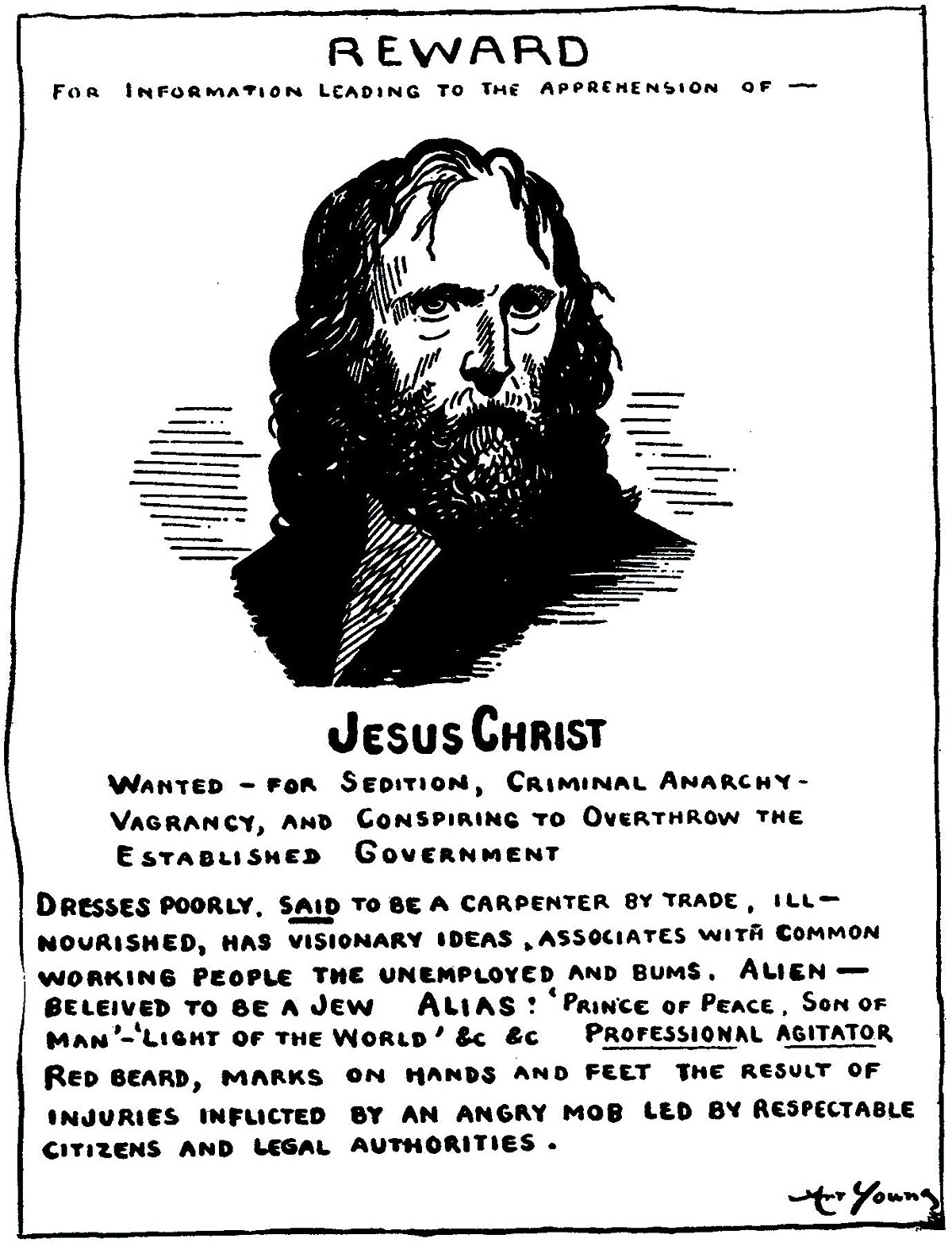
That process begins for Jesus in today’s selection from Chapter 4 of Luke’s gospel. As we saw last week, he returns to his hometown of Nazareth and criticizes his neighbors’ narrow nationalism. In today’s episode his neighbors try to kill him. Later on, of course, Jesus goes more public. Like Jeremiah, he takes on his nation’s priests and scribes, princes and king. Ultimately his words and deeds threaten the Roman Empire itself which classifies him as a terrorist. Together those powers and principalities (national and international) not only defame Jesus the way Jeremiah and Marx were defamed; they actually kill him just as so many prophets have been killed from John the Baptist and Paul to Martin Luther King and Gandhi.

All of them – Jesus, Jeremiah, Gandhi, King, Paul and Marx – followed the same “prophetic script” whose inevitable directive prescribes that no prophet is accepted in her or his native place. It’s easy to see why. It’s because their “native place” bears the brunt of their prophetic words.

Meanwhile, it’s easier for outsiders to recognize prophets. The “outsiders” who concerned Jesus were the uneducated, poor, and unclean. However, even those seem to turn against him this morning. It’s unlikely that there were any rich or powerful resident in Nazareth – a place scripture scholar Ched Myers describes as “Nowheresville.”

Few of us are rich and powerful. Yet we’ve been schooled by those entities to reject prophets who speak in our name and defend our interests – those belonging to our “native land” to use the words of this morning’s gospel. It’s as though we’re looking at reality in that “darkened mirror” Paul wrote about in today’s excerpt from his letter to Corinth. The darkened mirror not only turns things backward, but it’s smudged with the fingerprints and dirt of ignorant and/or perverse propagandists.

The trouble – the trouble with prophets – is that most of us have bought into all that anti-prophet propaganda. So we hate Karl Marx without realizing that he’s on our side and speaks for us. We honor the Martin Luther King who has been reduced to a “dreamer,” but not the MLK who described the United States as the most violent and destructive country in the world. We don’t remember the King who was slandered as a communist and encouraged to commit suicide by the FBI and the COINTELPRO program.

We’re willing to stand by while Wikileaks journalist Julian Assange is persecuted by the governments of Great Britain and the United States. We presume that Bradley Manning is guilty of treason because our government, (despite its record of lies and heinous crimes) says so. We wonder what all the fuss is about Aaron Swartz.

These are the prophets of our time who, like Jesus, do not find a sympathetic hearing in their native place. It might be time to embrace them as our own and see what difference that makes in the way we look at the world and our country. The examples of Jeremiah, Jesus, and Paul — and the hopes of the world’s poor and victims of U.S. wars — beg us to do so.

Nikki Giovanni: Thug Poet!

Nikki Giovanni came through Berea two weeks ago. She’s the great African-American poet who began brightening our world in the 1960s with her poetry and social criticism. At 69 years of age she continues spreading her light. She did it again at a Berea College convocation and in at least two other Berea venues.

When I saw her she dispensed advice on all manner of topics:

Cancer: Nikki is a cancer survivor. She’s had a lung removed, and has learned to make cancer her neighbor. You don’t “battle” cancer, she said. If you do, you know who’s going win that one – cancer every time. Instead, you make friends with the disease and learn to live with it, and try not to make it angry with you. Men can get breast cancer too, she reminded us. Get any lump checked out immediately. Act immediately too on any cancer diagnosis. Don’t delay treatment.

Second opinions: If you’re diagnosed with cancer, be sure to seek a second opinion. But do so far away from the location of the first diagnosis. If your second opinion comes from the same location as the first, the diagnosis is sure to be the same as well.

Obama’s Re-election: So you’re unhappy that a black man is the President. He won! Get over it!

Raising children: I’ve done my work as a mother. I don’t need to hear about my children’s problems. That’s what their best friends are for. I’m not my child’s best friend; I’m his mother. Don’t phone me with complaints or bad news. If it’s not good news, I don’t want to hear about it.

Education: It should be free for everyone — as it is at Berea College. Nikki loves her University of Virginia, and is proud to be associated with it. It has lots of money, and sometimes uses it well.

Phone calls in the middle of the night: Phone calls after midnight never bring good news. Don’t answer the phone then. The bad news will still be bad in the morning.

Taxing the rich: Why do billionaires resist taxes? They don’t need any more money. Take away 30% of what they have, and they’ll still be billionaires – or at least multi-millionaires. Take away 30% of millionaires’ wealth, and they’ll still be rich. Take away 30% of what those making $100,000, and they’ll be quite well off too. But take away 30% of what those making $30,000 earn, and you’ve sunk them into poverty.

Male Violence: “Men,” she said, “It’s not a good idea to hit women.” If you do, you’re not only mistreating your woman, you’re teaching lessons to your children. You’re son will conclude, “Oh, that’s the way men treat the women they love.” Your daughter will conclude, “Oh, that’s the treatment I can expect from the men I love and who say they love me.” And the cycle will continue.

Tupac Shakur: Nikki sees him as one of the great poets of our time. He stood for something. Yes, he was a “thug.” “I love thugs,” she said; “they’re always the victims of pursuit by the police. And on principle I’d always rather stand with the ones being chased than with the chasers.”

Nikki Giovanni also read her poetry about yellow jacket bees, her son Thomas, her “Mommy” who died five years ago, her first acclaimed poem, “Nikki-Rosa,” and phone calls after midnight. She spoke of the “Thug Life” tattoo she wears on her left forearm. She put it there in honor of Tupac Shakur, the great African-American rapper and social critic who was shot dead in 1996. Tupac, she reminded us was one of the great men of our era.

I loved Nikki’s talk. My eyes welled up more than once while she was  speaking. That always happens to me (and continues to embarrass me) whenever I recognize something as true.

Nikki Giovanni is true.