July 4th: What Made Me Stop Loving “America”

Every Fourth of July Americans are invited to celebrate freedom, democracy, and the birth of the republic. This year, on the nation’s 250th anniversary, I find myself unable to join the celebration.

A few days ago, listening to Amy Goodman’s Democracy Now!, I heard Princeton historian Eddie Glaude utter words that startled me by expressing exactly what I had been struggling to admit to myself: “I do not love America, and never have, especially now.” Those words open his new book, America, U.S.A.: How Race Shadows the Nation’s Anniversaries, which examines what our official commemorations leave out as much as what they include.

Unlike Professor Glaude, however, I cannot say that I never loved America. Quite the contrary. I was raised to love it instinctively. My journey has not been one from radicalism to disillusionment. It has been the reverse: from unquestioning patriotism to reluctant dissent. It was a conversion I resisted almost every step of the way.

I grew up in what I would call a quietly Republican family. My parents usually described themselves as independents, but I suspect they voted otherwise. I admired my Uncle Ben because, unlike my other uncles, he worked downtown in Chicago at the First National Bank. Success, respectability, and patriotism all seemed to fit naturally together.

My education reinforced those assumptions. I spent nine years in Catholic elementary school, thirteen more in Catholic seminaries, and another five years studying theology in Rome as a young priest. When Martin Luther King Jr. publicly opposed the Vietnam War, I remember wondering why he had wandered into foreign affairs. As far as I was concerned, civil rights were one thing; Vietnam was another.

When Senator Joseph McCarthy died, one of my favorite seminary professors remarked, “A great man died today.” That simple sentence reveals how conservative my early formation really was.

My first presidential vote was cast for Barry Goldwater.

Reality, however, has a way of intruding on ideology.

The Vietnam War was my first great awakening. I remember reading in Time magazine—of all places—that American leaders opposed internationally supervised elections in Vietnam because Ho Chi Minh would almost certainly have won. I can still remember arguing with my father about what that implied. If democracy was our highest value, why were we preventing democratic elections?

At almost the same time Pope John XXIII convened the Second Vatican Council and announced his intention to “open the windows” of the Church to the modern world. I resisted that as well. I defended traditional Catholicism against classmates who seemed eager to dismantle it. I even found myself defending Thomas à KempisThe Imitation of Christ against criticism.

Yet resistance gradually gave way to curiosity.

I immersed myself in the documents of Vatican II. I read theologians like Edward Schillebeeckx, Karl Rahner, and even the young Josef Ratzinger, then one of the Council’s progressive voices. Even more important were the scripture courses taught by our remarkable professor Eamonn O’Doherty. Under his guidance I learned that the Bible is not a single literary form but a library containing myth, poetry, legend, law, debate, parable, apocalypse, and theological reflection. To read every passage as straightforward history is to misunderstand Scripture itself.

That realization liberated me from biblical literalism. More surprisingly, it also taught me to read secular history differently. If biblical texts required careful attention to genre, perspective, and purpose, why should national histories be treated as transparent accounts of objective fact?

That question changed everything.

History came first. Howard Zinn‘s A People’s History of the United States, Oliver Stone and Peter Kuznick’s The Untold History of the United States, Walter Rodney‘s How Europe Underdeveloped Africa, and Frantz Fanon‘s The Wretched of the Earth revealed an America I had never encountered in classrooms. Economics followed. Frances Moore Lappé‘s Food First and Jack Nelson-Pallmeyer‘s The Politics of Compassion exposed structures of hunger and inequality that conventional economics preferred to ignore. Then years of teaching Great Books at Berea College required me to wrestle seriously with Marx alongside Adam Smith, David Ricardo, Thomas Malthus, and Charles Dickens. Little by little, assumptions I had once regarded as self-evident dissolved under the weight of evidence.

But books alone did not transform me.

Liberation theology did.

After earning my doctorate in moral theology, I became fascinated by a movement that insisted theology must begin not from the perspective of the powerful but from that of the poor. Faith, it argued, should be judged by whether it liberates those who suffer, not by whether it justifies existing institutions.

That conviction took me far beyond libraries.

My wife Peggy and I studied and worked throughout Latin America and the Global South—in Brazil, Nicaragua, Cuba, Costa Rica, Mexico, Honduras, Zimbabwe, South Africa, India, and Israel-Palestine. We became friends with Paulo Freire, whose understanding of education as liberation profoundly influenced both of us. In Costa Rica we joined the Departamento Ecuménico de Investigaciones, where Franz Hinkelammert and Helio Gallardo became two of my most important teachers.

Neither man simply gave me new information. They taught me something much more valuable: how to see.

They invited me to view history from below—from the perspective of those who bear the consequences of imperial decisions made thousands of miles away. Peasants, workers, indigenous communities, political prisoners, refugees, and theologians throughout Latin America repeatedly described the United States in ways that initially seemed exaggerated to me. Gradually I realized they understood my country’s history far better than I did.

Liberation theology completed what Vatican II had begun. It taught me that the decisive question is never whether a nation calls itself democratic, Christian, or free. The question is always: What happens to the poor? Everything else is secondary.

Seen from that perspective, a different America emerged.

It was a republic built upon slavery and the dispossession of Native peoples. It repeatedly overthrew governments that threatened American corporate interests. It armed dictators while speaking eloquently about democracy. As Martin Luther King Jr. concluded near the end of his life, it had become “the greatest purveyor of violence in the world today.”

Eventually I encountered an admission even more startling than King’s. In 1948, George Kennan—the architect of America’s Cold War strategy—explained privately what U.S. foreign policy actually sought:

“. . . we have about 50% of the world’s wealth, but only 6.3% of its population…. Our real task…is to devise a pattern of relationships which will permit us to maintain this position of disparity…. We should cease to talk about vague…objectives such as human rights…and democratization…. The less we are then hampered by idealistic slogans, the better.”

For me, that memo confirmed what liberation theologians had already been teaching for years.

So today I find myself agreeing, though for reasons different from Professor Glaude’s opening declaration.

No, I no longer love what is commonly called “America”—if by that we mean an empire built upon military supremacy, economic domination, and stories that conceal as much as they reveal.

But neither have I become cynical.

I still love the American people. I love those who organize, protest, teach, tell the truth, and refuse to surrender the country’s unrealized promise. I love the constitutional ideals that have so often been betrayed. And I love the generations of Americans who have struggled to redeem the republic from its own mythology.

Perhaps that is what Jesus would have understood as well. He loved neither the Roman Empire nor the religious establishment that collaborated with it. His loyalty belonged instead to what he called the Kingdom of God—a social order measured not by wealth or military power but by the well-being of the poor, the hungry, the imprisoned, and the stranger. Liberation theology taught me to ask of every nation, including my own, not whether it proclaims itself exceptional, but whether it stands with those people.

If my understanding of America changed, it was not because I became more cynical. It changed because teachers, colleagues, friends, and ordinary people throughout Latin America, Africa, Asia, and the Middle East patiently taught me to see history through the eyes of those who pay the price for empire.

For that gift—and especially for the friendships that made it possible—I remain profoundly grateful.

On this Fourth of July, perhaps genuine patriotism begins not with celebration, but with truth.

Reimagining Religion — with the Help of Dietrich Bonhoeffer & Dan McGinn

Here in Connecticut, where we’ve been living these last three years, the non-denominational church that Peggy and I are aspiring to join is sponsoring a six-month “mindfulness dialog” on “Reimagining Religion.” About a dozen people are participating under the leadership of Danny Martin, a former Catholic priest and Thomas Berry scholar.

So far, I’ve found the whole experience both inspiring and a bit troubling.  As I’ll explain below, the inspiration comes from a very thoughtful mindfulness dialog process itself. The trouble comes from the tendency of the process to overlook the proverbial elephant in the room in terms of contemporary political realities. Those realities have an imperial United States of America assuming exactly the international dominance to which Adolph Hitler aspired almost a century ago. In the prophetic spirit of the Judeo-Christian tradition, such development cannot be ignored or given second place by those wrestling with religion’s significance.

The Mindfulness Approach

To begin with, our approach to reimagining religion has three phases, connecting, exploring, and discovering:

  • Connecting involves our trying to pinpoint the human experiences that give rise to the religious impulse.
  • Exploring has us discussing that experience in the light of relevant texts such as poetry, essays or sacred scripture drawn from various traditions.
  • Discovering means answering the question, “What then must we do?”

In the connecting phase, we’re combing through our lives in terms of experiences of mystery, beauty, love, and oneness with nature. These, we’re finding, put many in the presence of the “mysterium tremendum” that evokes awe, reverence, adoration – and religious responses involving story and ritual.

The exploring stage has most turning to poetry and non-Christian texts in search of meaningful story. Participants seem to share the conviction that we need a “new story” to replace the one most of us have rejected. The latter was based on belief in an old white man in the sky. He evicted our first parents from their original paradise. He then sent his divine son to redeem sinful humankind so we might gain heaven and avoid hell. We need a better story; we all seem to agree.

As for discovery. . . Our whole experience has us thinking more deeply about changes in our lives based on loving family members and neighbors precisely as ourselves (because in some real sense they truly are us) and on reverence for nature.

That Troubling Elephant

My reservations about our approach so far concern our apparent reluctance to address what strikes me as the main God-related experience facing humankind today (at least in terms of the Judeo-Christian tradition).

That experience involves the worldwide oppression of the former colonies and their resulting experience of poverty, hunger, environmental destruction and war. That entire syndrome directly involves people like us, since our country, the United States of America, is principally responsible for the oppression just referenced. In the words of Martin Luther King, we are the “greatest purveyor of violence in the world.”

To ignore such realities is analogous to German Christians in the 1930s overlooking the rise of fascism with its imperial ambitions and immediate persecution of communists, socialists, Jews, people of color, Roma, homosexuals, the disabled and immigrants. I can imagine the irrelevance of German Christians in 1933 gathering in a church basement to discuss reimagining religion. How would we judge them in that context if they focused primarily on their interior and interpersonal lives while Germany was ablaze and about to set the world itself on fire?  

Of course, not all German Christians did that. In fact, in the face of fascism’s rise and Hitler’s establishment of his Third Reich, Dietrich Bonhoeffer’s Confessing Church took on a project very like our own. As a result, just before his execution by the Nazis (for participating in a plot to assassinate der Fuhrer) Bonhoeffer in his Letters and Papers from Prison, advocated imagining “Christianity without religion.” That is, he wanted to reappropriate the faith of Moses and Jesus without the traditional trappings, rituals and language that narcoticized and blinded believers to the socio-political reality staring them square in the face.

The New Old Story

To my mind and in our analogous context, “connecting” should mean coming to grips with America’s role in creating the world that our system of political economy, neo-colonial ambitions, environmental devastation and militarism has set on fire. That in itself requires deep and serious study and discussion. It’s time to revisit official and competing stories of American history.

Then, “exploring” means linking the resulting new understandings with the authentic biblical narrative as revealed by modern scripture scholarship. Its relevance to the global circumstances I’m describing here is exceedingly clear. That’s because modern scholarship shows that the essence of the Judeo-Christian tradition does not centralize increasingly inapt Genesis mythologies. Instead, it tells a story of oppression and liberation that runs as follows:

  • Israel’s God first revealed himself by liberating slaves from Egypt.
  • He gave them a covenant to form a just community where widows, orphans, slaves and foreigners would be especially welcome.
  • Israel’s leaders often broke the covenant.
  • They were confronted by prophets who called them to task.
  • Repeatedly, Israel itself was victimized by surrounding empires – Assyria, Babylon, Persia, Greece, and Rome.
  • In such circumstances, they were promised a new future by prophets who denounced mistreatment of the poor and announced a new future of deliverance from imperialism.
  • Jesus appeared in the tradition of the prophets.
  • He proclaimed a future kingdom where a new covenant would be in force.
  • His teachings on God’s Kingdom described a world where God would be king instead of Caesar.
  • He thus raised the hopes of the poor and the ire of the Jewish and Roman authorities.
  • So, they executed him.
  • His followers became convinced that he was somehow raised from the dead.
  • They formed a Kingdom community of faith, sharing all things in common.
  • Questions of the afterlife were left in God’s hands.

In the light of this narrative, answering the question “What then must we do?” takes on highly political and threateningly controversial features that few outside the former colonies are willing to address. That’s because most even there who drew the obvious political conclusions about opposing empire have been assassinated by the current imperial power that is absolutely intolerant of anti-imperial faith.

A Reimagined Creed

In the light of truths like the foregoing, in Jesus against Christianity, Jack Nelson-Pallmeyer calls for reimagining fundamental Christian professions of faith such as the Apostles Creed. In concentrating on Jesus’ birth and resurrection, he says, they fail to honor the thrust of Jesus’ life towards resistance to domination systems, and identification with the poor and outcast. 

But what forms would a reimagined creed take?  Below are printed two responses to that question – the familiar Apostles Creed on the one hand and a reimagined form on the other. Personally, I find that the latter contributes mightily to our task of reimagining religion.

 The Apostles'Creed

 I believe in God, the Father almighty,
 Creator of heaven and earth, and in Jesus
 Christ, His only Son, Our Lord, who was
 conceived by the Holy Ghost, born of the
 Virgin Mary, suffer under Pontius Pilate,
 was crucified, died and was buried.  He descended
 into hell; the third day he arose again from
 the dead.  He ascended into heaven, sits at the
 right hand of God, the Father almighty; from
 thence he will come to judge the living and the
 dead. I believe in the Holy Ghost, the holy
 Catholic church, the communion of saints, the
 forgiveness of sin, the resurrection of the
 body, and in life everlasting.  Amen.

 A Reimagined Creed

 We believe in humankind
 and in a world in which
 it is good to live for all people
 in love, justice, brotherhood and peace.
 We must continually act out these beliefs.
 We are inspired to do so, because we believe
 in Jesus of Nazareth
 and we wish to orient our lives to him.
 In so doing, we believe that we
 are drawn into the mysterious relationship
 with the One, whom he called his father.
 Because of our belief in Jesus
 we make no claims to exclusivity.
 We shall work together with others
 for a better world.
 We believe in the community of the faithful,
 and in our task to be the salt of the earth
 and the light of the world.
 But all of this in humility
 Carrying our cross every day.
 And we believe in the resurrection
 whatever it may mean. Amen. 

Conclusion

Whenever I think of it, I’m drawn to the conclusion that my entire adult life has been devoted to reimagining religion. I was encouraged in that endeavor by my study and teaching of Dietrich Bonhoeffer’s life and works. Whether we’re aware of it or not, Bonhoeffer’s represents the kind of prophetic faith our CT church group is trying to reimagine.

At the same time, I bear in mind the words and example of an outspoken mentor of mine during my graduate studies in Rome so many years ago. His name was Dan McGinn. Dan was about 15 years older than me. By his example, he taught me how to celebrate the Eucharist spontaneously and without written text.      

In any case, Dan always said that if he were ever made bishop (There was absolutely no chance of that!) his episcopal motto under his coat of arms would read “No more bullshit.”

I’m tempted to recommend adopting Dan’s motto for ourselves as our church group tries to reimagine religion. While not exactly B.S., our traditional forms of belief (even the Apostles’ Creed) have been rejected as such by much of our world. Hence the relevance of our task.

What I’m suggesting here is that reappropriating the biblical story cited above and reformulating our creed accordingly would go a long way towards the culturally imperative assignment of making our faith relevant to the undeniable resurgence of fascism in our contemporary context.

We Are Called to Atheism by Abraham and Jesus! (Sunday Homily)

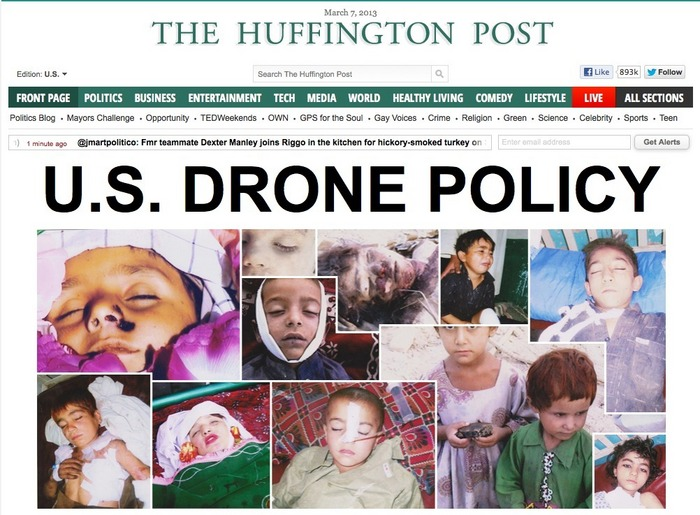
drone victims

Readings for the 17th Sunday in Ordinary Time: Gn. 18:20-32; Ps. 138:1-3, 608; Col. 2:12-14; Lk. Ll:1-13. http://www.usccb.org/bible/readings/072813.cfmhttp://www.usccb.org/bible/readings/072813.cfm

Today’s readings about Abraham bargaining with God and about Jesus teaching his followers to pray raise some vital questions about God’s personality and existence. Abraham’s compassionate God seems to conflict with the warlike God who appears elsewhere in the Bible.

So who’s right? Should we be afraid of God? Or can we trust him? Is God warlike and punitive or kind and forgiving? If he’s our “Daddy” (that’s what “Abba” means in Jesus’ prayer: “Our Daddy who transcends everything”) does our experience show him to be abusive or loving? Today’s readings help us wrestle with those questions. In fact, they call us to a holy atheism.

But before I get to that, let me frame my thoughts.

Last week the government of Pakistan released a classified document revealing that scores of civilians had been killed in dozens of CIA drone strikes between late 2006 and 2009. That period mostly covered the final years of the Bush administration. However as we all know, such strikes have increased under the presidency of Barrack Obama.

Citing the leaked report, the London Bureau of Investigative Journalism said “Of 746 people listed as killed in the drone strikes outlined in the document, at least 147 of the dead are clearly stated to be civilian victims, 94 of those are said to be children.”

Meanwhile, the United States has consistently denied that significant numbers of civilians have been killed in drone strikes. It claims that “no more than 50 to 60 ‘non-combatants’ have been killed during the entire, nine-year-long drone campaign.” Our government argues that such numbers are tolerable because the strikes protect Americans from the terrorists actually killed in the drone operations.

That’s the logic our government has adopted as it represents our country where 78-85% of the population claims to follow the one who refused to defend himself and gave his life that others might live. The logic of most American Christians says that killing innocents – even children – is acceptable if it saves American lives. Apparently, that’s the American notion of salvation: better them than us.

However that way of thinking is not what’s endorsed in today’s liturgy of the word. (And here I come back to those questions I raised earlier about God’s personality and existence.) There in Sodom and Gomorrah, Yahweh refuses to punish the wicked even if it means that as few as 10 innocents would lose their lives in the process.

Better-us-than-them is not the logic of Jesus who in teaching his disciples to pray tells them that God is better than us. God gives bread to anyone who asks. Yahweh acts like a loving father. He forgives sin and gives his children what they ask for. In fact, God shares his Spirit of love and forgiveness – he shares Jesus’ spirit of self-sacrifice – with anyone who requests it.

Elsewhere, Jesus says something even more shocking. Yahweh doesn’t even prefer the good over the wicked, he says. He showers his blessings (not bombs!) on everyone. Or as Jesus himself put it, God makes the sun rise on the virtuous and the criminal; his rain benefits those we consider evil as well as those we classify as good (Mt. 5:45). We should learn from that God, Jesus says, and be as perfect like him (Mt. 5:48). In fact, we should consider no one “the enemy” not even those who threaten us and kill us even as Jesus was threatened and killed (Lk. 6: 27-36).

How different is that from the way most of us think and act? How different is that from the God we’ve been taught to believe in?

Yes, you might say, but what about those other passages in the Bible where God is fierce and genocidal? After all, the Great Flood must have killed many good people and even children. And God did that, didn’t he? What about his instructions (more than once) to kill everyone without distinction. For example the Book of Joshua records: “Thus Joshua struck all the land, the hill country and the Negev and the lowland and the slopes and all their kings. He left no survivor, but he utterly destroyed all who breathed, just as the LORD, the God of Israel, had commanded (Joshua 10:40). What about the Book of Revelation, which many Christians argue predicts God’s total destruction of the world? What about that violent, pitiless, threatening God? Is that the “Abba” of Jesus?

Good questions. They’re good because they make us face up to the fact that the Bible is ambiguous about God. No, let me put it more strongly. The Bible isn’t just ambiguous about God. It’s often plain wrong – at least If we adopt the perspective of Jesus and Abraham in today’s readings.

After all, Abraham’s God is not genocidal; Joshua’s is. Jesus’ God is not genocidal; Joshua’s is. Those Gods are not compatible. One of them must be false. Or as Jack Nelson Pallmeyer writes in his book Is Religion Killing Us? “Either God is a pathological killer or the Bible is sometimes wrong about God.”

Today’s readings show us that both Abraham and Jesus agree.

The Abraham story is about a man gradually rejecting Nelson’s Psychopath in the sky. Israel’s furthest back ancestor comes to realize that God is merciful, not punitive or cruel. Or as the psalmist puts it in today’s responsorial, God is kind, true, and responsive to prayer. God protects the weak and lowly and is distant from the powerful and haughty. In today’s reading from Genesis, we witness Abraham plodding slowly but surely towards that conclusion.

It’s the realization eventually adopted by Jesus: God is a kind father, not a war God. If Abraham’s God won’t tolerate killing 50 innocent people, nor 45, 40, 30, 20, or even 10, Jesus’ God is gentler still. That God won’t tolerate killing anybody – not even those threatening Jesus’ own life.

All of that should be highly comforting to us. It has implications for us, politically, personally and liturgically.

Politically it means that followers of Jesus should be outraged by anyone connecting Jesus with our country’s perpetual war since 9/11, 2001. A drone program that kills the innocent with the targeted flies in the face of Abraham’s gradually-dawning insight about a merciful God. The war itself makes a complete mockery of Jesus’ total non-violence and the words of the prayer he taught us. Those supporting “America’s” “better them than us” attitude are atheists before Jesus’ God and the one depicted in the Abraham story.

Personally, what we’ve heard this morning should drive us towards an atheism of our own. It should cause us to review and renew our understandings of God. Impelled by today’s readings, we should cast as far from us as we can any inherited notions of a pathological, punishing, cruel, threatening and vindictive God. We need that holy atheism. Let’s pray for that gift together.

And that brings us to today’s liturgy. In effect, we’ve gathered around this table to hear God’s clarifying word, and symbolically act out the peaceful world that Jesus called “God’s Kingdom.” We’ve gathered around this table to break bread not only with each other, but emblematically with everyone in the world including those our culture considers enemies.

I mean if God is “Our Father,” everyone is our sister, everyone, our brother. It’s just that some couldn’t make it to our family’s table today. But they’re here in spirit; they’re present around this altar. They are Taliban and al-Qaeda; they are Iraqis, Afghanis, Yemenis, and Somalis; they are Muslims and Jews; they include Edward Snowden and Trayvon Martin. They include those children killed in U.S. drone strikes. They are you and I!

All of us are children of a loving God. Jesus’ “Lord’s Prayer” says that.

Now that’s something worth celebrating.