What the Gospel of the Man Born Blind Says About War, Empire, and Biblical Illiteracy

Readings for Fourth Sunday of Lent: 1st Samuel 16: 1b, 6-7, 10-13a; Psalm 23: 1-6; Ephesians 5: 8-14; John 9: 1-41

If you have been following the news the past couple of weeks, you know that the world seems once again to be sliding toward catastrophe. The bombing of Iran by the United States and Israel represents a case in point.

Reports describe cities under bombardment and civilians trapped beneath collapsing buildings. On the first day of the conflict alone, a missile strike destroyed a girls’ elementary school, killing scores of children.

Yet amid such horrors, political leaders insist that these acts defend freedom, protect civilization, and even fulfill God’s purposes. Meanwhile a powerful current within contemporary Christianity—especially among right-wing interpreters of the Bible—assures us that geopolitical violence somehow fits within the divine plan.

None of this is new. For centuries religion has been used to sanctify empire and to bless the ambitions of the powerful. The prophets of Israel knew this. Jesus knew it.

And the readings for this Fourth Sunday of Lent expose the pattern with remarkable clarity. Taken together, they ask and answer a disturbing question: who actually sees the truth of history—the powerful who claim to interpret God’s will, or the people pushed to the margins of society?

The answer in today’s readings is that the marginalized see more clearly than the powerful.

Unlikely Choice of David

The first reading from First Samuel tells the familiar story of the prophet Samuel searching for Israel’s next king. Samuel arrives at the house of Jesse and begins inspecting the man’s sons. The eldest looks strong and impressive. Surely this must be the Lord’s anointed. But God interrupts Samuel’s expectations with a startling correction: “Not as man sees does God see. Man looks at appearances, but the Lord looks into the heart.” One after another the impressive candidates pass before Samuel and are rejected. Finally, Samuel asks whether there are any more sons. Jesse answers almost as an afterthought: “There is still the youngest, who is tending the sheep.” In other words, the boy so insignificant that no one even thought to invite him. Yet it is precisely this overlooked shepherd—David—whom God chooses.

Biblical scholars have long recognized something profoundly political in this story. Again and again the biblical narrative reveals a God who acts from below rather than from the centers of power. The decisive figures in salvation history are rarely kings or priests or generals.

Instead, they are slaves in Egypt, shepherds in Bethlehem, fishermen in Galilee, a construction worker from Nazareth. The logic of empire assumes that leadership belongs naturally to those who are wealthy, impressive, and already powerful. The Bible insists on the opposite: God’s future consistently begins among those whom society overlooks.

Lord & Shepherds

Psalm 23 deepens this theme. “The Lord is my shepherd; there is nothing I shall want.” We often hear those words as gentle religious poetry. Yet in the ancient world they carried a quiet political edge.

Kings throughout the Near East loved to describe themselves as shepherds of their people. Pharaoh was a shepherd. Babylon’s emperor was a shepherd. Caesar claimed to shepherd the Roman world. But the psalm rejects that claim. The psalmist does not say that the king is my shepherd or that the empire guarantees my security. Instead, he says that the Lord alone is shepherd. The source of life, protection, and abundance is not the machinery of power.

The psalm imagines something very different: green pastures, quiet waters, and a table prepared in the presence of enemies where cups overflow. It is an image of a world organized around care rather than domination.

Paul’s Wokeness

Paul’s words to the Ephesians introduce another theme running through today’s readings: the contrast between light and darkness. “You were once darkness,” Paul says, “but now you are light in the Lord. Live as children of light.” Notice how Paul defines that light. It is not merely personal piety or private virtue.

“Take no part in the fruitless works of darkness,” he writes, “but rather expose them.” In other words, light reveals what systems of power try to hide. Unjust structures survive only by persuading people that their violence is necessary and their privileges natural. But when those illusions are exposed—when reality becomes visible—the system itself begins to tremble.

What the Poor See

That insight prepares us for the extraordinary drama in today’s Gospel from John. Jesus encounters a man blind from birth. The disciples immediately ask a question reflecting the dominant ideology of their time: “Who sinned, this man or his parents, that he was born blind?”

It is the ancient version of a familiar argument: suffering must be someone’s fault. Victims must somehow deserve their fate. Jesus rejects that entire framework. The man’s blindness is not the result of personal guilt. Instead, it becomes the occasion through which God’s work will be revealed.

Jesus then performs a strangely earthy action. He spits on the ground, makes clay, and spreads the mud across the man’s eyes. The gesture echoes the creation story in Genesis where humanity is formed from the dust of the earth. It is as if Jesus is re-creating the man, giving him new sight. But the real miracle unfolds afterward.

Once the man can see, he becomes the center of a storm of controversy. Neighbors question him. Religious authorities interrogate him. Even his own parents become frightened and refuse to defend him.

Why such anxiety? Because the healing threatens the authority of those who claim to interpret God’s will. If Jesus truly comes from God, the leaders who oppose him might be wrong. So the authorities attempt to discredit the miracle. They accuse Jesus of breaking the Sabbath. They pressure the healed man to denounce him. When he refuses, they ridicule him and eventually throw him out of the synagogue.

Meanwhile something remarkable happens within the man himself. His understanding of Jesus gradually deepens. At first, he knows only that “the man called Jesus” healed him. Later he declares that Jesus must be a prophet. Finally, he encounters Jesus again and proclaims, “Lord, I believe.” The man who began the story blind ends it with the clearest vision of all.

The irony is unmistakable. Those who claimed to see—the religious experts—become increasingly blind. Those who were supposedly ignorant perceive the truth. Jesus summarizes the entire episode in a single unsettling sentence: “I came into this world so that those who do not see may see, and those who see may become blind.”

Conclusion

The pattern repeats itself throughout history. Empires convince themselves they are bringing peace even as they spread destruction. Religious authorities persuade themselves they are defending God even while they silence prophets. And ordinary people—the ones dismissed as insignificant—very often see the truth far more clearly than those who wield power.

That is why Paul’s words sound less like poetry and more like a summons: “Awake, O sleeper, and arise from the dead, and Christ will give you light.”

Lent is not simply a season for private self-examination. It is a call to wake up—to recognize how easily faith can be manipulated to justify violence, to question the narratives that normalize suffering, and to listen to voices that systems of power would prefer us never to hear.

Again and again, Scripture insists that God’s work in history begins in unexpected places: among shepherd boys forgotten in the fields, among beggars sitting at the roadside, among those cast out by respectable society.

Those who appear powerless often become the clearest witnesses to truth. And that may be the most unsettling lesson of today’s readings. The future of God’s kingdom does not depend on the calculations of the powerful. It emerges from the courage of those who have learned to see.

Which brings us back to Jesus’ words at the end of the Gospel: “I came so that those who do not see may see, and those who see may become blind.” The question these readings place before us is simple but disturbing.

Are we willing to let the light of the Gospel open our eyes—even when it forces us to see realities we might prefer to ignore? Even when it forces us to see from the viewpoint of immigrants, the homeless, the impoverished, Venezuelans, Nicaraguans, Cubans, Iranians, Palestinians, the LGBTQ+ community, the addicted, the imprisoned . . .?

What Yet Another U.S. Surrender Looks Like — This Time in Ukraine

Since February 2022, Americans have been fed a fairy tale about the war in Ukraine — a story so uniform across NPR, PBS, the New York Times, the Washington Post, Time, CNN, MSNBC, and even Democracy Now that it reveals less about Russian aggression and more about the collapse of critical journalism in the United States.

In that fairy tale, Russia “unprovoked” invaded an innocent neighbor. Ukraine, noble and outgunned, somehow fought the Russian behemoth to a heroic standstill while inflicting catastrophic losses on Moscow. The United States, we are told, has been the grown-up in the room — always seeking peace — while a stubborn, irrational Vladimir Putin refuses compromise.

None of that matches what has actually happened.

I don’t come to that conclusion lightly. Since the start of Russia’s “Special Military Operation,” I’ve written more than a dozen articles on Ukraine — most of them here and for OpEdNews. (See below.) Across those pieces, I’ve argued five things:

  1. By long-established U.S. standards and precedents, Russia had ample cause to defend itself against NATO’s relentless march to its borders.
  2. The war has never been simply Russia vs. Ukraine; it has always been a proxy war between Moscow and the United States/NATO.
  3. Despite the vast imbalance in money, weaponry, and propaganda, Russia has prevailed militarily and strategically at nearly every turn.
  4. Moscow has largely refrained from U.S.-style “Shock and Awe” tactics that deliberately terrorize civilian populations.
  5. Whether one admires him or not, Putin has been the most restrained and predictable major leader in this war.

Those are strong claims. So let me explain how I arrived at them — and what they mean now that Washington and NATO are quietly negotiating terms of capitulation they once declared impossible.


Rejecting Scripted Narratives

From day one, I made a conscious decision to eschew mainstream narratives about Ukraine. I’ve watched this movie too many times: Vietnam, Iraq, Afghanistan, Libya, Syria. In each case, official “experts” and prestige media gave us a clean story of good intentions and necessary wars — until reality, corpses, and classified documents told another story.

Instead of relying on that machinery, I turned to analysts with actual experience and memory:

  • Realist scholars like John Mearsheimer and Jeffrey Sachs,
  • Former intelligence and security professionals like Ray McGovern and Scott Ritter,
  • Military strategists like Col. Douglas MacGregor,
  • Independent geopolitical commentators like Alexander Mercouris, Alex Christoforou, Brian Berletic, Garland Nixon, Jimmy Dore, and Robert Barnes.

These aren’t saints. They disagree with one another. But they share three qualities utterly missing from mainstream coverage:

  • They know how wars actually work.
  • They remember U.S. foreign-policy history.
  • They are willing to analyze “designated enemies” rather than demonize them.

In particular, I’ve followed Alexander Mercouris’ daily 90-minute briefings, where he methodically tracks changes along the 1,000-kilometer line of contact. Through that lens I watched:

  • The slow, grinding fall of key Ukrainian strongholds,
  • The complete failure of Ukraine’s much-hyped 2023 “summer offensive,”
  • The steady Russian advance westward in an attrition campaign the mainstream never honestly described.

On paper, NATO’s side had nearly everything: money, high-tech weapons, satellites, intelligence, media power. Russia had geography, industrial capacity, and patience. Patience won.


NATO Expansion: The Forgotten Red Line

To understand why this war happened and why Russia was prepared to fight it, we have to step back.

For decades, Russian leaders of every stripe — including those favored in the West — warned that NATO expansion to Russia’s border was a red line. This wasn’t just Putin’s obsession. It was echoed by George Kennan (the architect of containment), Henry Kissinger, Jack Matlock (Reagan’s ambassador to Moscow), and even CIA Director William Burns.

From the 1990s onward, successive U.S. administrations broke informal and formal assurances, pushed NATO eastward, armed and trained Ukrainian forces, and treated Russia as a defeated colony rather than a major power. The 2014 Maidan coup, the subsequent civil war in the Donbass, and eight years of Ukrainian shelling of Russian-speaking regions only deepened the crisis.

By the time Moscow launched its operation in 2022, Russia believed — rightly or wrongly — that it was fighting not for “land,” but for survival as a sovereign state.

That doesn’t make everything Russia has done morally pure. But it does make the word “unprovoked” dishonest.


De-Nazification: Propaganda or Inconvenient Fact?

One of Moscow’s stated objectives was “de-Nazification.” Western commentators mocked this as propaganda. Yet the facts are not really in dispute.

Units like the Azov Battalion, Aidar Battalion, and Right Sector have been documented — by Western journalists, Israeli media, and human rights organizations — as harboring neo-Nazi symbols, ideologies, and networks. After 2014, these formations were incorporated into Ukraine’s security structures and presented to the West as heroic defenders.

To acknowledge this is not to demonize all Ukrainians or deny their suffering. It is simply to say that Russia’s reference to Nazi influence was not conjured from thin air. It was rooted in something Western media chose to minimize or forget.


What Surrender Looks Like in a Suit

Today, the battlefield reality is grim for Kyiv:

  • Ukraine’s pre-war army has been largely destroyed.
  • Manpower is so depleted that men well into their 50s and 60s are being conscripted.
  • Western arsenals are drained.
  • Russia controls key logistical hubs and enjoys overwhelming artillery superiority.

In such a context, the word “stalemate” is a euphemism. Ukraine is no longer capable of decisive offensive action. NATO has no credible conventional path to “defeating” Russia in Ukraine.

So we hear whispers of “peace plans,” “ceasefires,” and “negotiations” — often framed as Donald Trump inexplicably “giving in” to Putin, as though Putin “has something on him.” That story continues the tired Russiagate myth and saves face for a Washington establishment that promised victory.

The truth is less dramatic and more humiliating: Washington and NATO lost their proxy war. The winner, as always, sets conditions.

And here is the irony: those “outrageous” conditions widely described as Putin’s “maximalist demands” are essentially the same objectives Russia articulated before the war began:

  1. Ukrainian neutrality — no NATO membership.
  2. Demilitarization — no NATO missile systems on Russia’s border.
  3. De-Nazification — removal of Nazi-linked formations from state structures.
  4. Recognition of Crimea and breakaway regions as Russian.
  5. Security guarantees that NATO expansion stops.

In April 2022, at Istanbul, Russian and Ukrainian negotiators initialed a draft agreement along those lines. The war could have ended then. Instead, British Prime Minister Boris Johnson rushed to Kyiv and reportedly urged Zelensky to abandon the deal and “fight on” with Western backing.

Tens of thousands of Ukrainian lives were sacrificed on the altar of that decision.

Now, after two and a half years of bloodshed, we are back to those same basic terms — except Russia controls more territory, Ukraine is weaker, and NATO is more divided.

This is what surrender looks like in a suit: euphemisms in press conferences, face-saving language in communiqués, and the quiet acceptance of terms from a side the West swore it would defeat.


The fairy tale said Russia was isolated, collapsing, and on the brink of defeat.
Reality shows something else: NATO marched to Russia’s border, lit a proxy war in Ukraine, and lost.


The Pattern: Who’s Been Right All Along?

Ukraine is not a one-off mistake. It is part of a pattern.

Time and again, the voices that proved right were not the Pentagon spokespersons or network generals. They were the dissidents, the whistleblowers, the realists, the people willing to challenge the mythology of American innocence:

  • On Vietnam, they were right.
  • On Iraq’s non-existent WMD, they were right.
  • On Afghanistan as an unwinnable quagmire, they were right.
  • On Libya and Syria, they were right.
  • On Gaza today, they are right again.

And on Ukraine, the “alternative” analysts I’ve followed — Sachs, Mearsheimer, McGovern, Ritter, MacGregor, Mercouris, and others — have been consistently correct where mainstream pundits have repeatedly failed.

That doesn’t make them infallible. It does mean that those who analyze “designated enemies” instead of demonizing them gain access to reality sooner.


Conclusion: A Chance for Humility

The war in Ukraine is ending as sober observers said it would: not with a triumphant Ukrainian flag over Crimea, but with Washington and Brussels quietly negotiating limits they once called unimaginable.

Ukraine did not “stand up” to Russia and win.
NATO did not “stop Putin.”
The West lost its proxy war and is searching for a way to disguise capitulation as diplomacy.

The deeper question now is not whether Russia learns humility, but whether we do. Will we continue to wage unwinnable wars, believe narratives nobody questions, and call that “defending democracy”? Or will we finally listen to the voices who have been right all along — not because they are smarter, but because they refused to confuse propaganda with truth?

For my part, I know where I stand. I stand with those who insist on seeing clearly, even — especially — when it’s our own leaders and our own narratives that must be questioned.


My Previous OpEdNews Articles on Ukraine (Chronological Order)

(2/26/22)
“20 Reasons Why The United States and Europe Bear Ultimate Responsibility for the Ukrainian Crisis”

(3/4/22)
“12 Potentially Good Outcomes of the Ukraine War”

(3/7/22)
“20 Principles for Making Sense of the Ukraine War”

(3/26/22)
“In Ukraine the ‘Gangsters of Capitalism’ Have Gone to the Matrasses Again”

(5/8/22)
“O.K. I’m A Putin Apologist: Here’s Why”

(7/15/22)
“Russia in Ukraine: Champion and Proxy for the World’s Oppressed”

(2/26/23)
“About Ukraine Even Marianne Williamson Has Sold Out to Imperialism and Conventional Thinking”

(4/23/23)
“Are We Meeting the Risen Christ in Russia and China?”

(8/24/23)
“Putin’s a Killer Who’s Guilty Until (Impossibly) Proven Innocent”

(3/26/24)
“Even for ‘Democracy Now,’ Putin’s to Blame for the Rock Concert Massacre”

(12/5/24)
“Neocons Quake as Trump Threatens Peace in Ukraine”

Western Neocons Quake as Trump Threatens Peace in Ukraine

Donald Trump’s landslide victory last month and his repeated promise to end war in Ukraine has Washington neocons quaking in their boots. How can they save their beloved Project Ukraine and prevent peace from breaking out on Russia’s border?

That’s the question Foreign Affairs (FA) tackled this week in an article by Elie Tenenbaum and Leo Litra. It’s entitled “Ukraine’s Security Now Depends on Europe.” The piece was marked by significant departure from the familiar “official story” on Ukraine. Yet it retained enough of that story’s elements to virtually render impossible reasoned discussion about ending the Ukrainian debacle.

The Official Story

To begin with, the FA article tells the story that aficionados of Foreign Affairs, the New York Times, and Washington Post have been programmed to accept. Taking its cue from the White House, the story holds that Putin is the aggressor in Ukraine. He cannot be trusted, lies habitually, routinely breaks promises, and remains unconstrained by international law.

Accordingly, everyone knows that his attack on Ukraine was unprovoked, and that Russia had been raining missiles on terrorized Ukrainian armed forces in the Donbas since 2014. It was Putin who backed out of the Minsk Accords as well as voiding the Istanbul peace framework in March of 2022. Putin also obstinately refuses to consider peace negotiations even though his army has suffered casualties by the hundreds of thousands – far more than his Ukrainian opponents. Moreover, Russia’s economy is crumbling while its citizens generally do not support the war effort.

That’s the Official Story. It’s the one largely repeated by Tenenbaum and Litra.

A Competing Narrative   

However, the story’s elements are contradicted point by point by highly credible scholars, diplomats, ex-military and CIA officials and independent journalists. A short list of the latter includes John Mearsheimer, Jeffrey Sachs, Colonel Douglass MacGregor, Scott Ritter, Ray McGovern, Alexander Mercouris, Brian Berletic, and Chris Hedges.

All these maintain that a U.S.-led NATO provoked the war in Ukraine after completely ignoring Vladimir Putin’s peace proposal advanced in December of 2021. Moreover, Russia’s invasion mirrors what the United States would do – in fact what it has done – in similar circumstances. Recall the 1962 Cuban Missile Crisis. Remember America’s many violent invocations of the Monroe Doctrine to protect its interests in its Latin American “backyard” by direct invasion, proxy wars, and bloody regime changes.

According to the analysts just mentioned, it is the U.S. and NATO that lie habitually and cannot be trusted. In fact, the whole Ukrainian conflict is based on a broken promise by U.S. Secretary of State, James Baker, to Soviet President Mikhail Gorbachev in 1990. It said that NATO would not expand even “one inch” towards Russia.

Then (as admitted by German ex-prime minister Angela Merkel) NATO further tricked Russia into signing the Minsk Accords to provide time for Ukraine to build up its military for confrontation with its neighbor. According to Merkel, NATO had no intention of observing either Minsk I or Minsk II.  

Additionally, in December of 2021, when Russia offered NATO those terms to prevent the Kremlin’s invasion of Ukraine, the U.S. refused to even consider the proposal. Two months later, after only one month of Russia’s “Special Military Operation,” and after Ukraine and Russia had initialed accords to ensure the former’s territorial integrity in exchange for neutrality on Ukraine’s part, NATO persuaded its protégé to fight on rather than finalize the accord.

The result of such deceptions has been complete catastrophe for Ukraine. Russia’s strategy of attrition has claimed more than 600,000 lives and seriously wounded 100,000 more. As a result, Ukraine is running out of men, its economy is in freefall, and Russian troops are moving relentlessly westward by kilometers every day. Meanwhile, Russia’s economy is flourishing despite the war generally supported by its citizens. There is no way Ukraine can bring Project Ukraine to a successful conclusion.

Cracks in the Official Story

Up until recently, NATO’s official story held unmovable sway. However, the FA article considered here exhibits important concessions to the unofficial account. For instance, Tenenbaum and Litra admit that: by all accounts Ukraine is losing the war as Russian troops rapidly move towards Kyiv. In fact, it seems nearly impossible to reverse this desperate situation since Ukraine and its allies have not only run short of weapons but also, of soldiers who are getting killed and wounded at unsustainable rates. Additionally, the Russian air force and air defense mechanisms are unmatched by Ukraine. Kremlin’s troops also far outnumber the Ukrainians while using and replacing their weapons at a scale Ukrainian allies cannot match.

In this dire situation, it is time for negotiations on terms NATO (not Russia) must dictate to possibly include: (1) vastly increased and decades-long economic and military aid to Ukraine, (2) a ceasefire that temporarily freezes current positions of both the Russian and Ukrainian front lines, (3) granting Ukraine NATO membership before hostilities cease or postponing the country’s entry into NATO for 10 to 20 years, (4) the deployment of a NATO peacekeeping force to ensure the frozen hostilities, and/or (5) more extensive intervention by multinational NATO land, sea, and air forces to act as a Security Shield or Guarantor Force against future Russian threats.    

The problem is however (even for Tanenbaum and Litra) that absent a “significant military defeat or internal political change,” Moscow will never accept such terms, but is likely to insist instead on settling the war on the battlefield.

Nonetheless the authors hold that the Russian president may come to the negotiation table because: his Special Military Operation is unpopular at home. His army has suffered tremendous battlefield losses. His stockpile of Soviet Era weapons is rapidly diminishing. The Russian economy is overheating while public spending, inflation, and interest rates are exploding.

Conclusion

Do you see how the Official Story is weakening and now finds itself on the shakiest of grounds? It has finally made important concessions to its unofficial counterpart. It admits that Ukraine is losing the war, that it is getting weaker, and Russia is getting stronger.  

On the other hand, FA’s insistence on the remnants of the Official Story render virtually impossible intelligent discussion of Ukraine’s future. Depending on one’s source of information – mainstream or alternative – it becomes a kind of “he said, she said” debate over details that are becoming increasingly irrelevant. Practically speaking, it matters little now who started the war, who backed out of agreements first, who’s lying, and who’s telling the truth. What matters now are facts on the ground. And all of them favor Russia.

So, given new agreement on the conflict’s inevitable direction, and given the promises of Mr. Trump, it remains unclear why Ukraine would continue sacrificing its soldiers for no good end.

After all, Ukraine lacks leverage in any negotiations that include proposals for Ukrainian inclusion in NATO. Membership now or ten years from now is a non-starter as far as the more powerful Russians are concerned. Russians are in the driver’s seat now and it must be remembered that a major purpose of their SMO was to prevent Ukraine from joining NATO.

Also, it is unclear why Tanenbaum and Litra think that a NATO peacekeeping force would be acceptable to Mr. Putin. Why not China and North Korea?

An Objection to Yesterday’s Post: My Response

Yesterday’s posting evoked a very thoughtful response from a faithful and highly valued reader of this blog. He apparently read my remarks as endorsing the use of nuclear weapons by Russia in response to attacks against that country — attacks supported and directed by the U.S.

I sincerely apologize for giving that impression.

To clarify, let me say the following:

  1. Nuclear weapons are categorically immoral.
  2. No human being (Not Biden, Trump, Jake Sullivan, Antony Blinken, Rob Bauer, Vladimir Putin, or Xi Jing Ping) has the right to use (or threaten the use of) nuclear weapons that will cause the end of humanity.
  3. This means that the reigning deterrence agreement between nuclear powers involving “mutually assured destruction” (MAD) is also unquestionably immoral.
  4. Yet unbelievably, many academicians, politicians, moralists, and military leaders praise such deterrence (coupled with disarmament agreements and pacts limiting the number and explosive force of nuclear weapons) as the most effective way of avoiding nuclear war.
  5. As a result (and quite irrationally), MAD represents the status quo that politicians of all the world’s nuclear powers have endorsed. It embodies the tragically accepted “rules of the game.”
  6. Shamefully, NO ONE among world “leaders” speaks (or apparently thinks) beyond the parameters of MAD.
  7. Nor do they evidence a willingness to engage in nuclear disarmament talks or to sign pacts limiting weapons design or deployment. (In fact, the U.S. has unilaterally withdrawn from several previously signed pacts.)
  8. This means that provocations of one nuclear power against another are completely reckless, irresponsible, and insane, since (according to the “rules” of the MAD game) such provocations can easily lead to nuclear response.
  9. More specifically, though the present conflict in Ukraine ostensibly involves a war between Russia and Ukraine, it is clearly a proxy war between the United States and Russia.
  10. Yet U.S. insistence on provoking the nuclear power, Russia, with missile attacks that are impossible without direct logistical, targeting, and ordnance supplied by the United States and other NATO members exposes a level of insanity that would be unprecedented  
  11. If it weren’t for the fact that the United States is the only country in the history of the world that has ever actually used nuclear weapons (twice).
  12. In these circumstances, it is Russia led by Vladimir Putin that has shown restraint.
  13. And it is the Biden administration that is engaged in irresponsible escalation.
  14. It is the world’s acceptance of its MAD “leaders” that makes it all (im)possible.  

Waiting for Trump with Bated Breath

I never ever thought I’d write these words. But I find myself desperately wishing for the arrival of the Donald Trump presidency. My driving force here is my love for my children and grandchildren. For their sake, Trump’s advent can’t come soon enough. I don’t want them to die in nuclear war.

As I’ve written elsewhere, my hope is not founded in admiration for Mr. Trump. Far from it. I consider the man a moron unfit for the U.S. presidency.

But he seems to be our only hope of avoiding World War III and the end of humanity – an agenda recklessly pursued by the lame duck Biden administration so recently and so decisively rejected by the American electorate.

Have you seen what that old fool is doing? Do you realize the threat his utter stupidity poses to our children and grandchildren?

He’s trying to “Trump-proof” his insane and ill-fated Project Ukraine.

After having repeatedly rejected Russian attempts to resolve the project’s underlying issues (even before Mr. Putin’s invasion), and after more than a million casualties resulting from such obstinacy, Genocide Joe is trying to transform his failed project into World War III.

His “reasoning” seems to be that such transformation would tie Donald Trump’s hands. That is, despite his repeated promises to end the Ukraine War 24 hours after assuming office, the new old fool would find himself obliged to see it through to its suicidal end, thus dooming ourselves, our children and grandchildren.

That’s the problem. The “End” of World War III will be THE END of us all!

For Ukraine!!

It’s all so insane.

To implement the insanity, the senile old man with one foot already in the grave has:

  • Allowed Ukraine to invade Russia’s Kursk Region
  • Given Zelensky “permission” to attack targets deep within Russia.
  • Directly involved the U.S. and its NATO allies in targeting those attacks.
  • Permitted U.S. military brass to speak of the possibility of direct U.S. “preemptive” strikes against Russian targets.
  •  Allows NATO “allies” to threaten fielding “boots on the ground” in Ukraine which remains the most corrupt government in Europe.

None of this is even remotely necessary.

Imagine U.S. reaction to similar events on our border. Imagine if Russia or China struck an alliance with Mexico or Canada, poured in arms and trained their allies specifically for conflict with the United States. Would the U.S. stand by idly?

Of course it wouldn’t. Of course it didn’t during the 1962 Cuban Missile Crisis.

This is not complicated. It’s simply crazy. It represents complete insanity on the part of “leaders” who should be put in jail for even considering such hypocrisy and mass murder. I can’t wait for January 20th.

Hell, I’m hoping we’ll make it to Christmas!

Chemical Weapons Victims — Theirs and Ours: The Power of Photos

takeoverworld.info

It is extremely interesting to compare the Trump administration’s response to the use of chemical weapons in Syria and its apparent ignorance of similar weapons use by the U.S. and U.K. in Fallujah in March and November of 2004 under the leadership of Mad Dog Mattis, our current Secretary of Defense.

We all know about Mr. Trump’s reaction a few days ago to the deployment of chemical weapons in Syria.

In the face of denials by the Syrian government, and on evidence that remains undisclosed, the Trump crowd was determined to “punish” the al-Assad government for the heinous crime of using chemical weapons.

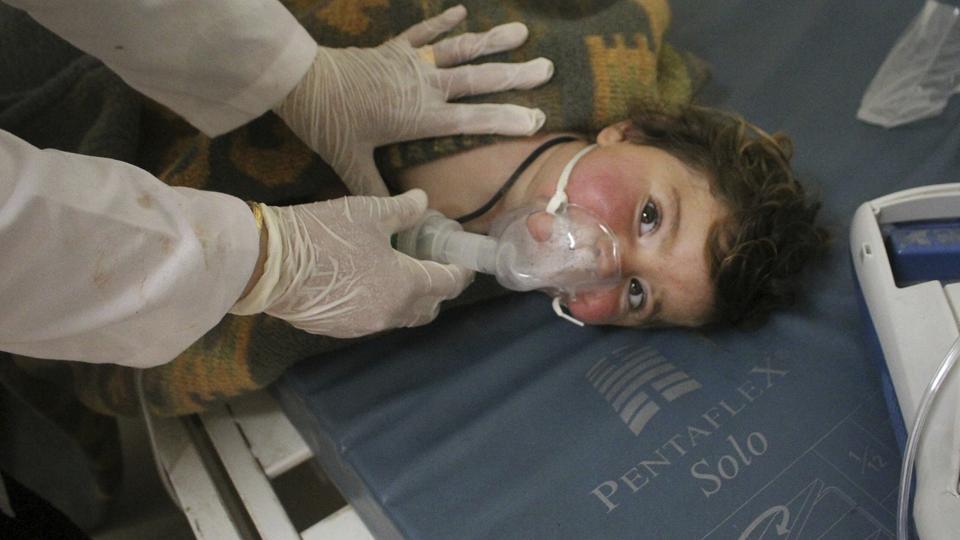
In his justification for “punitive measures” on April 6th, President Trump paid particular attention to the photographic evidence of chemical weapons use by the al-Assad government. Specifically, he reminded us of the child victims involved.

The pictures Mr. Trump was referring to included these:

Haley Gas Victims

And this one:

Gas Victims

And this one:

Baby Victims

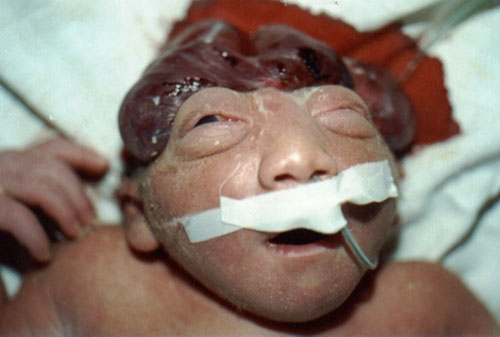
But what about the U.S.-inflicted atrocities behind photos like this one?:

Fallujah 1

Or this one?:

Fallujah 2

Or this one?:

Fallujah 3

According to a study published in 2010,”Beyond Hiroshima – The Non-Reporting Of Fallujah’s Cancer Catastrophe,” those are pictures of the deaths and birth defects directly resulting from “American” use of depleted uranium and chemical weapons including white phosphorous in Fallujah in 2004.

And it’s not simply a question of birth defects.

According to the same study infant mortality, cancer, and leukemia rates in Fallujah have surpassed the rates recorded among survivors of the U.S. atomic bombing of Hiroshima and Nagasaki in 1945. Following the Fallujah offensives, the rates in question rose by 60%. Dr Mushin Sabbak of the Basra Maternity Hospital explained the rises as resulting from weapons used by the U.S. and U.K. “We have no other explanation than this,” he said.

And the problem extends far beyond Fallujah. Increased cancer rates and astronomical rises in birth defects have been recorded in Mosul, Najaf, Basra, Hawijah, Nineveh, and Baghdad. As documented by Mozhgan Savabieasfahani, an environmental toxicologist at the University of Michigan, there is “an epidemic of birth defects in Iraq.” She writes,

“Sterility, repeated miscarriages, stillbirths and severe birth defects – some never described in any medical books – are weighing heavily on Iraqi families.”

Australian anti-war activist, Donna Mulhearn, who has travelled repeatedly to Fallujah, talking with Iraqi doctors as well as affected families, added to the list:

“babies born with parts of their skulls missing, various tumors, missing genitalia, limbs and eyes, severe brain damage, unusual rates of paralyzing spina bifida (marked by the gruesome holes found in the tiny infants’ backs), Encephalocele (a neural tube defect marked by swollen sac-like protrusions from the head), and more.”

Several highly remarkable aspects of the situation just described immediately present themselves. For one there is the almost total silence of the media about the crimes of the U.S. and U.K. Then there is the lack of outrage (or even awareness?)  on the parts of President Trump and U.N. ambassador, Nikki Haley.

And what about those members of Congress so concerned about damage and pain to unborn fetuses? (I mean, what we have here in effect is a massive abortion operation by the United States in an entirely illegal war which has already claimed more than a million mostly civilian casualties.)

However, what is most remarkable about the contrast between responses to Syria and Iraq is the continued surprise of “Americans” by reprisal attacks by Muslims, which continue to be identified by our media as irrational and evil “terrorist attacks.”

That is, on the one hand, the U.S. feels free to self-righteously rush to judgment and “punish” the suspected perpetrators of the Syrian attacks. But on the other, it downplays, classifies, or otherwise suppresses photographs and scientific reports testifying to its own much worse crimes. Once again, those outrages are carried out against unborn fetuses, living children, women, the elderly and male adults – the very same population cohorts that so concern our “leaders” when they are attacked by designated enemies.

The logic is inescapable. What’s good for the goose is good for the gander. If the U.S. is outraged by the killing of innocents and feels the need to “punish” the suspected perpetrators, someone else the right to treat the United States in the same way. (We might not know of the crimes of our government and military, but the whole Arab world knows!)

So we shouldn’t be surprised by any “terrorist” attacks that mimic on a comparatively small scale the U.S. response to the killing of the “beautiful little babies” that so concern Mr. Trump.

That’s the cost of hypocrisy, double standards, wars of aggression, and the use of outlawed weapons of mass destruction. In war ghastly offensives elicit ghastly counter-offensives.

THE PARIS ATROCITIES: SOME HOME TRUTHS ABOUT WAR

Paris Blood

The entire world was shocked by the horrendous atrocities of last weekend. Appropriately, they were followed by tears, laying of wreaths, moments of silence, prayer vigils, and singing of La Marseillaise before football games and other public events.

France’s President Hollande evoked sympathy when he correctly declared the attacks “an act of war.” No one disagreed.

However, Mr. Hollande was not correct in his implication that the killings in Paris somehow began a war that France and its partners have now self-righteously resolved to “finish.” Rather, the Paris massacre is part of a much bigger picture that includes conflicts the West has been part of since 2001.

To fill out that picture, consider the following “home truths” about war. Uncomfortable as they are, allowing them to sink in might help uncover alternatives to the violence that stupefies everyone.

Begin here:

  • War is hell.
  • In modern warfare, 90% of casualties are civilian.
  • The casualties include refugee migrations.

_____

  • The West’s response to 9/11/01 was to declare war.
  • It began a campaign of bombing and extra-judicial assassination in Afghanistan, Iraq, Libya, Somalia, and elsewhere.

_____

  • According to a study by Lancet (one of the oldest scientific medical journals in the world), since 2003 the U.S. war in Iraq has caused more than one million deaths – again, most of them civilian.
  • Meanwhile, the U.S. has supplied weapons to Israel and Saudi Arabia for their own bombing campaigns in Gaza and Yemen.
  • In Gaza alone (with complete U.S. support) the Israeli Defense Force fired 50,000 shells, carried out 6000 airstrikes, destroyed 3,500 buildings, killed 2250 Gazans, including 551 children.

_____

  • In wars there are always at least two sides.
  • All have the right to attack and counter-attack.
  • It is insane to be shocked when counter-attacks occur.
  • Counter-attacks often mimic attacks.
  • So if one side is perceived as attacking defenseless civilians, the other side will likely respond in kind.

_____

  • France itself is at war.
  • President Hollande is a founding member of the U.S.-led coalition that has recently dropped 175,000 bombs on Iraq and Syria killing at least 600 civilians in the process.
  • Therefore no one should be surprised when “in kind” counter-attacks occur. (To repeat: that’s the way war works.)

In view of such home truths, instead of responding to the Paris massacre with more bombings, the U.S., France and their allies should:

  • Realize that the West’s enemies experience many “Paris Massacres” each day at western hands.
  • Accordingly and on principle reject the atrocities of war that on both sides justly horrify everyone.
  • Announce a cessation of all bombing campaigns.
  • With allies including the United States, France, Russia, Iran, and others, call a Summit (appropriately) in Paris to meet with the leaders of the Islamic State to seek a negotiated settlement to the conflicts the West has initiated.
  • Open western borders to the refugees inevitably produced by the U.S.-led wars over the last 14 years.
  • In churches and other principled fora, specifically condemn all Islamophobic statements of politicians and other public figures.

Only actions like these can release the world from massacres that are the unavoidable consequences of the wars we rightly recognize as hell.