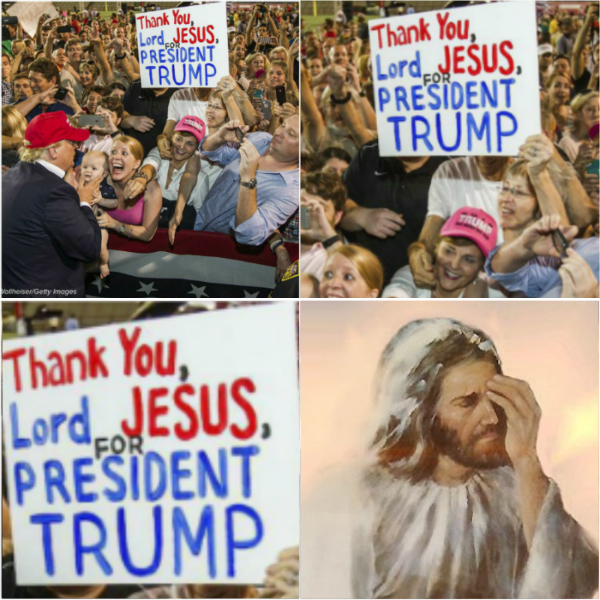
Palm Sunday Reflection: The Revolutionary Jesus

Readings for Palm Sunday: John 12: 12-16; Isaiah 50: 4-7; Psalm 22: 17-24; Philippians 2: 6-11; Mark 14: 15-47

Today is Palm Sunday. For Christians, it begins “Holy Week” which recalls Jesus’ triumphant entry into Jerusalem (Palm Sunday), his Last Supper (Holy Thursday), his torture and execution (Good Friday), and his resurrection from the dead as the culmination of a long history that began with the liberation of Hebrew slaves from Egypt (Holy Saturday).

As just noted, the saga begins today by recalling what the Christian Testament remembers as the day when Jesus was greeted by chanting throngs as he entered the city seated on a donkey while the crowds waved palm branches and shouted “Hosanna.” They spread their cloaks before the animal that bore him to the temple precincts where he famously evicted money changers and vendors of sacrificial animals.

The event is full of political significance for those of us whose government has proudly inherited the mantle of the Roman Empire. That’s because the supposed events of Palm Sunday were probably part of a much larger general demonstration of faithful Jews including Jesus against the oppression that is part and parcel of all imperial systems including our own. As such, today’s narrative calls us to resistance of U.S. Empire as Rome’s contemporary successor.

To understand what I mean, consider (1) the significance of the Jerusalem demonstration itself and the role that palms played in its unfolding, (2) the demonstration’s chant “Hosanna, Son of David” and (3) the meaning of all this for our own lives.

Jerusalem Direct Action  

For starters, think about what actually happened in Jerusalem during that first Demonstration of Palms.

Note at the outset that if the event wasn’t a whole-cloth invention of the early church, it’s highly unlikely that Jesus would have entered Jerusalem as a universally acclaimed figure. That’s because the gospels make it clear that all during his “public life,” Jesus confined his activities of healing and speaking to small villages where his audiences were poor illiterate peasants.

Given their small numbers, poverty and the expenses of travel and lodging, their massive presence in Jerusalem would have been highly unlikely. This meant that Jesus’ profile would have remained exceedingly low in larger cities and nearly non-existent in his nation’s capital city, Jerusalem. He would have been largely unknown there.

Again, if the event happened at all, it is more likely that the part Jesus and his disciples played in it was marginal and supportive of a larger parade and demonstration supported by well-organized revolutionaries such as Judah’s Zealot cadres whose raison d’etre was the expulsion of the occupying forces from Rome.

This also means that the demonstration’s climax with its “cleansing of the temple” would probably have represented a much larger assault on the sacred precincts where only large numbers of protestors would have stood any hope of impact rather than an individual construction worker supported by 12 fishermen.

(Remember, the residence of the Roman procurator, Pontius Pilate, was actually attached to the temple itself. So were the barracks of Jerusalem’s occupying force. The annex was called the Fortress Antonia. During the Passover holidays, everyone there would have been on high alert rendering any small demonstration – and probably any large one — virtually impossible. If the temple itself were not crawling with Roman soldiers, they would have been surveilling the whole scene.)

But even if Jesus were welcomed by the frantic crowds as depicted in the gospels, the event would have been precisely intended to be seen by the Romans as highly political and perhaps even decisive in defeating their hated occupation and bringing on in its place what Jesus described as the Kingdom of God.

(Jesus’ high hopes surrounding the incidents of this final week in his life are suggested by the words Mark records at the Last Supper in today’s gospel reading: “I shall not drink again the fruit of the vine until the day when I drink it new in the kingdom of God.” In other words, Jesus evidently thought that the events of this first “holy week” would signify a political turning point for Jews in their struggle against Rome. Their uprising would finally bring in God’s kingdom.)

Jesus’ Anti-Imperialism

In any case and whatever its historical merits, Jesus’ entry into Jerusalem is presented as anti-imperial. The waving of palms, the chanting of the crowd, and Jesus’ mount all tell us that. In Jesus’ time, the waving palms on patriotic occasions (like Passover) was like waving a national or revolutionary flag. That had been the case ever since the successful rebellion led by the Jewish revolutionary Maccabee family against the Seleucid tyranny of Antiochus IV Epiphanes 150 years earlier.

So, crowds greeting Jesus with palms raised high while chanting “Hosanna, Son of David” (save us!) would have meant “Hail to the Son of David, who will lead us to regain our freedom from the Romans, the way the Maccabees led the revolution against the Seleucid tyrant!” Jesus’ choice of a traditionally royal donkey as his mount would only have underscored that message. Only kings rode donkeys in processions.    

All of this means that the story of “Palm Sunday” as presented in today’s reading depicts an overt threat to the imperial system of Rome supported by Jerusalem’s Temple establishment.

Anti-Imperialism Today

So, what’s my point in emphasizing the political dimensions of Palm Sunday? Simply put, it’s to call attention to the fact that followers of Jesus must be anti-imperial too.

That’s because imperialism as such runs contrary to the Hebrew covenant that protected the poor and oppressed, the widows, orphans, and resident non-Jews from the depredations of local elites and outside military powers.

And that’s what empire represents in every case. It’s a system of robbery by which militarily powerful nations victimize the less powerful for purposes of resource transfer from the poor to the already wealthy.

Such upward redistribution of wealth runs absolutely contrary to the profound social reform promised in Jesus’ notion of the Kingdom of God. There, everything would be reversed downward. The first would be last; the last would be first (Matthew 20:16). The hungry would be fed and the rich would suffer famine (Luke 1: 53). The rich would become poor, and the poor would be rich. The joyful would be saddened and those in tears would laugh (Luke 6: 24-25).

Contradicting those grassroots aspirations is the very purpose of U.S. empire today with its endless wars, nuclear arms, bloated Pentagon budgets, and glorification of the military. All of that is about supporting the status quo and preventing Jesus’ Great Reversal.

That’s why American armed forces maintain more than 800 military bases throughout the world. All of them are engines of stability in a world of huge inequalities. (Btw, do you know how many foreign bases China maintains? One!!) Maintaining stability in a world crying out for change is why the U.S. is currently fighting seven wars (Afghanistan, Iraq, Libya, Syria, Somalia, Yemen, Niger – and who knows where else) with no end in sight. (Today’s designated enemy, China, is fond of pointing out that it hasn’t dropped a single bomb on foreign soil for 40 years.)

Conclusion

Recently, a conservative church friend of mine told me that his primary identity is as a follower of Jesus. I found that wonderfully inspiring.

On second thought however, I wondered which Jesus he was referring to. Was it to the revolutionary Jesus of Palm Sunday? Or did his Jesus support U.S. empire? Did he promise individualized prosperity as the result of following him? Was his Jesus politically involved? Or did he simply ignore politics in favor of internal peace and a promised heaven after death?

The questions are crucial. There are so many Jesuses of faith. And, of course, we’re all free to choose our favorite. By the same token however, we have to explain how an “other-worldly” Jesus would have appealed to his impoverished audiences like those depicted in today’s gospel. My guess is that an other-worldly guru would have had zero appeal to them.

Why would such a Jesus have been seen as threatening to Rome? Again, he would not have been.

Yes, there are many Jesuses of faith. However, there was only one historical Jesus. And it seems logical to me that the historical Jesus must be the criterion for judging which Jesus of faith we accept — if any.

Today’s recollection of the parade down Jerusalem’s main street, with crowds waving revolutionary symbols, and its assault on the sacred temple precincts (including Roman barracks) remind us that the historical Jesus stood against empire. Like every good Jew of his time, Jesus not only hoped for empire’s overthrow, but worked to that end with its promised Great Reversal.

No wonder Jesus was so popular with his poor and oppressed neighbors. No wonder Rome executed him as an insurgent. No wonder that particular Jesus seems so foreign to us who now live in the belly of empire’s beast. No wonder he remains so despicable to our religious and political mainstream.
Imperialism, Israel, Hamas, and “Life of Brian”

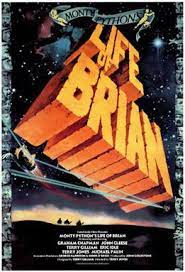
Over the Thanksgiving holiday, our family watched together one of our favorite films, “Life of Brian.”

It’s the comic story of Brian Cohen, a Jewish man born on the same night as Jesus of Nazareth in an adjoining stable. Like the historical Jesus (described for instance in books like Reza Aslan’s Zealot), Brian becomes part of a political resistance movement intent on expelling Roman occupiers from the Jewish homeland.

Setting comedy aside, what struck me this time while watching the film were its undeniable and highly ironic echoes of the current struggle in Palestine between Jewish colonial settlers there and resistance movements such as Hamas, Hezbollah, and al Fatah. That’s because the movie successfully portrays the overbearing nature of Roman imperialism itself, the consequent resistance of Israel’s people, and the power of Rome’s “divide and rule” tactics bolstered by highly effective imperial propaganda.

I find the same techniques employed today in Israel’s struggle with Hamas. Like the Romans in the first century, the settler-colonial regime in Israel seeks to impose its will on indigenous Palestinians by overwhelming force of arms. The Zionists employ imperialism’s traditional “divide and rule” strategy. They also disseminate powerful propaganda that to this day convinces many of the benign nature of colonial robbery and oppression.

Let me show you what I mean.

The Life of Brian 

As already indicated, “Life of Brian” portrays a biography that parallels in many ways the life of the prophet, Jesus of Nazareth. Both along with thousands of other Jewish insurgents suffered crucifixion under Rome’s cruel imperialism. (Remember, crucifixion was a form of capital punishment reserved for insurgents, revolutionaries, and related “terrorists.”)

Despite that threat, Brian decides to join one of the many Jewish resistance movements that characterized early first century Israel. Young and naïve, he seems unsure of his exact motivation. But it’s somehow connected with trying to impress a girl in the movement called Judith.

Because of his “success” in covering Jerusalem’s walls with anti-Roman graffiti, Brian soon finds himself gradually moving up in the ranks of The Jewish Resistance Front. He also becomes associated with resistance preachers who, like Jesus, find anti-Roman inspiration in Judaism’s religious traditions. People gradually come to regard him as a prophet.  

Somewhat reluctantly fulfilling that role and after many narrow escapes from the pursuing Roman occupiers, Brian is finally arrested. In the end, he’s crucified like Jesus who, of course, found himself identified as a prophet as well.

Divide and Rule

In terms of understanding Roman and today’s Zionist imperialism, “Life of Brian” places high emphasis on Rome’s infamous tactics of “divide and rule.” This means setting resistance groups against one another, so that they end up identifying comrades in arms as enemies rather than their real oppressors, the foreign occupiers themselves. To the bemusement of the Roman occupiers, “The Jewish Resistance Front” finds itself at odds with “The People’s Front of Judea,” “The Front for Jewish Resistance,” and with “Jews against Roman Occupation.”

The effectiveness of “divide and rule” is portrayed in a key scene in “Life of Brian” where members of two opposition movements meet on their way to a kidnapping (a traditional resistance tactic employed even today by Hamas). In any case, the two groups end up fighting each other over whose idea it was to employ the tactic. Meanwhile the Roman military observes the encounter from afar– as if they were unaware of Rome’s deliberate complicity in sowing discord among resistance movements.

Similarly, “Life of Brian” portrays the complete effectiveness of propaganda both in our contemporary world and even among those suffering directly under foreign occupation. In the contemporary world, our schools portray Rome as somehow benign and beneficial to the occupied. In doing so, our teachers forget the telling words of the Briton insurgent, Calgacus (as recorded by Tacitus). Calgacus reportedly said “ubi solitudinem faciunt pacem appellant.” (They create a desert and call it peace.) The Romans were brutal.

According to “Life of Brian,” that propaganda’s effectiveness was accepted even by those directly experiencing the brutality. In one memorable scene, a resistance leader gives a speech whose central question asks, “What have the Romans ever done for us?”

In response the leader’s audience end up listing one after another, benefits such as sanitation, the aqueducts, education, safe streets, wine, and peace. In so doing, they put the leader to shame. He must admit such benefits of the Roman Empire.

Forgotten in all of this is that the benefits listed overwhelmingly belonged to the imperial center, Rome itself, and typically not to remote and “backward” provinces. The Romans weren’t interested in educating Jewish provincials. Any roads they built were meant to ensure quick passage by Roman Legions responding to outbreaks of Jewish rebellion.

Above all, Jews could hardly consider streets patrolled by Roman occupiers as somehow “safe.” Nor could they consider their occupiers as bringers of peace. Again, the Romans had no respect for Jewish life. Recall that in the end (70 CE) the Romans absolutely wiped Jerusalem and its temple off the map. They killed more than a million Jews and enslaved 97,000 more. Safe streets for Jews was not high on their list of priorities. What the Romans called peace was the tranquility of the graveyard.   

Imperialism in Contemporary Israel

Figures like the ones just cited remind one of the brutalities of today’s Zionist occupiers of Palestinian territory. In a few short weeks since October 7, 2023, the settler-colonialists have slaughtered more than 14,000 Palestinians – half of them children, women, and the elderly.

At the same time, forgotten in all of this is the history of Israel’s “creation” of Hamas as a force against other Palestinian resistance movements such as Hezbollah and al Fatah. Yes, by all accounts, Hamas is a Zionist product. It represents their implementation of Rome’s infamous “divide and rule” strategy.

Similarly, Zionist propaganda has persuaded many beyond Palestine of the following absurdities, viz., that:

  • Zionists illegally occupying Palestinian territories have the right to self-defense. As illegal occupiers, they do not.
  • Meanwhile, those illegally occupied do not have the right to self-defense. UN Charter Article 51 says they do.
  • We should unquestioningly believe Zionist accounts of Hamas’ attacks on Jewish settlements on October 7th, 2023, even if the only sources of those accounts are Israeli officials who have repeatedly lied to us before.
  • The alleged brutalities of Hamas attacks nullify the application of international law forbidding population transfer, collective punishment, the bombing of hospitals, schools, and United Nations facilities.
  • Cutting off food, water, and electricity are legitimate military tactics.
  • All Palestinians (including babies and children) are somehow legitimate targets of Zionist bombs and artillery fire.

Conclusion

After watching Monty Python’s “Life of Brian,” the conclusion I’ve reached is that imperialism is imperialism. On the one hand, it is a system of robbery intended to transfer resources from resource-rich provinces to a resource-poor imperial centers such as Rome. As such, imperialism has no humanitarian intent.

On the other hand, imperialism (like Zionists in Palestine) establishes location in an area rich in resources (like the Middle East floating on its ocean of oil). In the latter case, the purpose is to protect the resource in question from control by those to whom the resource belongs (viz., the Arab nations).

The imperial tactics that ensure such resource transfer and control are those depicted in “Life of Brian.” They involve setting resistance movements against one another and spreading propaganda that has the rest of us (and even some of the colonized) believing that the oppressors are world benefactors, and that their indigenous opponents are somehow terrorists.

As I see it, “Life of Brian” should awaken viewers to such absurdities.

Simply put, empire is empire. Robbery is robbery. Propaganda is propaganda.

The film warns us: open your eyes; identify your real enemies; don’t believe the lies.

Christmas Reflection: “Oh, Come Let Us Ignore Him”

Every year at this time, the entire Christian world of more than 2.5 billion people pauses to observe the birth of a martyred Jewish construction worker about 2000 years ago. In America, we tirelessly observe this winter festival with increasing intensity from about Halloween, through Thanksgiving, and the entire month of December – for two solid months.

All during that time, our radio airwaves, and every shop we enter repeat the familiar songs and hymns we’ve come to associate with Christmas. Many of the carols celebrate “the newborn king.” Some even issue the invitation, “Oh, come let us adore him” – as God. Only occasionally (as in the “Little Drummer Boy”) is there the slightest hint that Jesus was “a poor boy too.” But that insight is quickly obscured by that same song’s four references to Jesus as “king.”

However, Jesus’ unmistakable poverty, his conception out of wedlock, his homelessness at birth, his status as asylum-seeker and immigrant in Egypt (MT 2:13-18), his social location in the working class, his association with Zealot insurrectionists (MT 10:4; MK 3:18; LK 6:15; ACTS 1:13), and the fact that he ended up a victim of torture and capital punishment at the hands of empire reveal far more about Yeshua than those popular sentimental Christmas jungles and hymns about a “newborn king.”

But even if we take those latter glorifications seriously, they unwittingly communicate a revolutionary message that the Christmas season completely ignores – one that finds important application to our troubled times.

I’m referring to the fact that calling the impoverished Yeshua “king” turns upside down reigning conceptions about the One some call “God,” and about the people divinely designated to rule the world.

Such references unconsciously point to the truth of Jesus’ words that the “meek” or (better put), the lowly, the humble, the unpretentious, those without public power, the despised and discarded, the gentle and non-violent, are (in God’s eyes) the ones divinely destined to “have the earth for their possession” (Psalm 37: 11; Matthew 5:5). History belongs to them. Despite appearances, it is on their side.

What else can it mean that we call “king” a brown or black homeless child born in a barn and who will remain poor, deep in political trouble all his life and will finish on death row? What else can it mean that such a one was selected to be (according to Christian faith) the ultimate revelation of life’s meaning.

On this Christmas Day 2021, all such considerations should send us to look for God in today’s people and places Yeshua was so deeply a part of. Christmas reflections on the historical Yeshua should find him living in those tents that now dot all our big cities. He’s sleeping under some bridge in DC or NYC. He’s dodging drive-by bullets on Chicago’s South Side and shivering in the cold on the Tijuana border. He’s walking his last mile after his appeal for a stay of execution has been ignored by Trump’s SCOTUS packed with “pro-life” Catholics. His appeal is ignored by governors opening gifts with their lily-white children and filling their bellies with turkey and all the trimmings, after singing “Silent Night” with misty eyes in their heretical megachurch based on prosperity gospel lies.

In the face of all that, the proper hymn to sing is “Oh, come let us ignore him.” Yes, ignore that white supremacist, Jesus. And instead, let us adore the real Yeshua in that filthy, stinking barn. He’s there sharing a roof with the rats and beasts with whom our police forces equate those whose neighborhoods and barrios their militarized platoons occupy as enemy terrain.

If we were to find Yeshua in those unlikely places, how different our interminable Christmas season would be. Yes, suppose Americans (and the world’s other two billion Christians) spent two months each year giving serious reflection to Jesus’ social circumstances as presented in the biblical texts that scholars call “the infancy narratives.”

Doing so would change “the season” to one of national repentance, instead of the orgy of “Christmas shopping” for those who already have more than they need. We’d double down on support for Rev. Barber’s Poor People’s Campaign. We’d organize to spend the season (any beyond) doing everything possible to eliminate the specific elements that plagued the life of Yeshua — namely:

  • Identification of “God” with scepters, armies, priests, and “power over”
  • Royalty of all kinds
  • Poverty
  • Homelessness
  • Persecution of asylum seekers
  • And immigrants
  • Imperialism in all its expressions
  • Honoring imperial military service as though it were heroic (It’s not!)
  • Infanticide (today by drone instead of sword)
  • Wars invariably waged against the world’s poor
  • Torture of those same impoverished souls
  • Capital punishment of the poor [never (please note) the rich]
  • Etc.

In other words, historical reflection would cause us to embrace the one whose life and rejection by organized religion and the imperial state reveal the true social location of divine incarnation.

As for the Jesus of our hymns, carols, and Christmas jingles, “Oh (please!), come let us ignore him.”

P.S. We might replace the ignored one’s hymns with Woody Guthrie’s “Jesus Christ:”

“Christ the King”: How Jesus Became Donald Trump

Readings for the feast of “Our Lord Jesus Christ, King of the Universe”: 2 SM 5: 1-3, PS 122: 1-5; COL 1: 12-20; LK 23: 35-43.

Do you ever wonder how U.S. Christians were able to elect a man like Donald Trump?

After all, Trump represents the polar opposite of the values embodied in Jesus of Nazareth. In fact, Jesus was the kind of person Donald Trump and his supporters actually hate.

I mean, the Nazarene was poor, dark skinned, the son of an unwed teenage mother, and an immigrant in Egypt. Jesus was viscerally opposed to an empire very like the United States. And that empire (Rome) executed him as a terrorist. Jesus ended up on death row and finished as a victim of torture and capital punishment. To repeat, Trump and the Republicans hate people like that. They want Middle Easterners like Jesus out of their country at best, and dead at worst.

Again, how could followers of Jesus elect his sworn enemy?

The readings for today’s feast of “Our Lord Jesus Christ, King of the Universe” provide the answer. They explain what might be termed the great “makeover” of Jesus of Nazareth changing him from the leader of an anti-imperial revolutionary movement into a pillar supporting the very institutions that assassinated him.

In other words: through 4th century sleight of hand, the Jesus who sided with the poor and those oppressed by empire was made to switch sides. He was co-opted and domesticated – kicked upstairs into the royal class. He became not only a patron of the Roman Empire, but a “king” complete with crown, purple robes, scepter and fawning courtiers.

Reza Aslan’s best-seller, Zealot, explains the process in detail. The book centralizes today’s account of Jesus’ crucifixion in Luke, Chapter 23. There Aslan pays particular attention to:

  • Jesus’ cross,
  • To the Roman inscription identifying Jesus as “King of the Jews,”
  • To the dialog between Jesus and the two “thieves” presented as sharing his fate.

Take the cross first. It was the mode of execution reserved primarily for insurrectionists against the Roman occupation of Palestine. The fact that Jesus was crucified indicates that the Romans believed him to be a revolutionary terrorist. Aslan asks, how could it have been otherwise?  After all, Jesus was widely considered the “messiah” – i.e. as the one, like David in today’s first reading, expected to lead “The War” against Israel’s oppressors.

Moreover, Jesus proclaimed the “Kingdom of God,” a highly politicized metaphor which could only be understood as an alternative to Roman rule. It would return Israel, Jesus himself promised, to Yahweh’s governance and accord primacy to the poor and marginalized. The Romans drew logical conclusions. Put otherwise, the Roman cross itself provides bloody testimony to the radical threat the empire saw personified in Jesus.

That threat was made specific in the inscription the Romans placed over the head of the crucified Jesus. It read, “King of the Jews.”

Typically, those words are interpreted as a cruel joke by the Roman procurator, Pontius Pilate – as if he were simply poking fun at those who saw Jesus as the worthy successor of Israel’s beloved King David.

However, according to Reza Aslan, nothing humorous was intended by the inscription. Instead it was a titulus. Every victim of crucifixion had one – a statement of the reason for his execution. The motive for Jesus’ crucifixion was the same as for the many others among his contemporaries who were executed for the same crime: aspiring to replace Roman rule with home rule – with an Israel governed by Jews instead of Romans. The titulus on Jesus’ cross, along with the cross itself identify him as the antithesis of what he eventually became, a Roman tool.

And then there are those two thieves. Aslan says they weren’t “thieves” at all. That’s a mistranslation, he points out. A better translation of the Greek word, lestai , would be “bandits” – the common designation in the first century for insurrectionists. And there probably weren’t just two others crucified the day Jesus was assassinated. There may have been a dozen or more.

In this context the dialog between Jesus and two of the terrorists crucified with him takes on great significance. Actually, it documents the beginning of the process I described of changing Jesus’ image from insurrectionist to depoliticized teacher.

Think about it. Luke’s account of Jesus’ words and deeds was first penned about the year 85 or 90 – 20 years or so after the Roman-Jewish War (66-70 C.E.) that utterly destroyed Jerusalem and its temple. In the war’s aftermath, defeated Christians became anxious to show the Roman world that it had nothing to fear from their presence in empire.

One way of doing that was to distance the dying Jesus from the Jewish insurgents and their terrorist actions against their oppressors. So in Luke’s death-bed dialog among three crucified revolutionaries, one of the terrorists admits that Jesus is “under the same sentence” as he and his comrade in arms. Given what Aslan said about crucifixion, that fact was undeniable. All three had been sentenced as insurrectionists.

But now comes the distancing between Jesus and Israel’s liberation movements. Luke has the “good thief” (read good terrorist) say, “. . . indeed we have been condemned justly, for the sentence we received corresponds to our crimes, but this man has done nothing criminal.”

In other words, Luke (writing for a post-war Roman audience) dismisses insurrection as “criminal,” and removes Jesus from association with such crime – a fact endorsed, Luke asserts, by insiders like the honest lestai crucified with Jesus. Luke’s message to Rome: the killing of Jesus was a terrible mistake; he meant no harm to Rome. And neither do we, his followers.

After the 4th century, Luke’s message became the official position of the Catholic Church – adopted subsequently by Protestantism. The message transformed the poor, brown, bastard, revolutionary martyr from a tortured and executed criminal into “Our Lord Jesus Christ, King of the Universe.”

So, by now in 2019 Jesus has changed color and class. He is the white, rich, bigoted “American” champion of U.S. empire. Those pretending to follow the one-time immigrant from the Middle East show they want to keep riffraff like Jesus, Mary and Joseph out of their land of the free and home of the brave. They want enemies of empire like the Nazarene tortured and executed the way Rome tortured and killed the historical Jesus. Their president even wants to go after Jesus’ parents while he’s at it.

We’ve come a long way, baby! Or have we?

The truth is that only by rescuing the historical Jesus – the antithesis of his radically domesticated version – can we be saved from Jesus-hating Trumpism.

Donald Trump and His Christian Supporters Hate Jesus (Sunday Homily)

trump-jesus

Readings for the feast of “Our Lord Jesus Christ, King of the Universe”: 2 SM 5: 1-3, PS 122: 1-5; COL 1: 12-20; LK 23: 35-43.

How on earth were USian Christians able to elect a man like Donald Trump?

After all, Trump represents the polar opposite of the values embodied in Jesus of Nazareth. In fact, Jesus was the kind of person Donald Trump and his supporters actually hate.

I mean, the Nazarene was poor, dark skinned, the son of an unwed teenage mother, and an immigrant in Egypt. Jesus was viscerally opposed to an empire very like the United States. And that empire (Rome) executed him as a terrorist. Jesus ended up on death row and finished as a victim of torture and capital punishment. To repeat, Trump and the Republicans hate people like that. They want Middle Easterners like Jesus out of their country at best, and dead at worst.

Again, how could followers of Jesus elect his sworn enemy?

The readings for today’s feast of “Our Lord Jesus Christ, King of the Universe” provide the answer. They explain what might be termed the great “makeover” of Jesus of Nazareth changing him from the leader of an anti-imperial revolutionary movement into a pillar supporting the very institutions that assassinated him.

In other words: through 4th century sleight of hand, the Jesus who sided with the poor and those oppressed by empire was made to switch sides. He was co-opted and domesticated – kicked upstairs into the royal class. He became not only a patron of the Roman Empire, but a “king” complete with crown, purple robes, scepter and fawning courtiers.

Reza Aslan’s best-seller, Zealot, explains the process in detail. The book centralizes today’s account of Jesus’ crucifixion in Luke, Chapter 23. There Aslan pays particular attention to:

  • Jesus’ cross,
  • to the Roman inscription identifying Jesus as “King of the Jews,”
  • and to the dialog between Jesus and the two “thieves” presented as sharing his fate.

Take the cross first. It was the mode of execution reserved primarily for insurrectionists against the Roman occupation of Palestine. The fact that Jesus was crucified indicates that the Romans believed him to be a revolutionary terrorist. Aslan asks, how could it have been otherwise?  After all, Jesus was widely considered the “messiah” – i.e. as the one, like David in today’s first reading, expected to lead “The War” against Israel’s oppressors.

Moreover, Jesus proclaimed the “Kingdom of God,” a highly politicized metaphor which could only be understood as an alternative to Roman rule. It would return Israel, Jesus himself promised, to Yahweh’s governance and accord primacy to the poor and marginalized. The Romans drew logical conclusions. Put otherwise, the Roman cross itself provides bloody testimony to the radical threat the empire saw personified in Jesus.

That threat was made specific in the inscription the Romans placed over the head of the crucified Jesus. It read, “King of the Jews.”

Typically, those words are interpreted as a cruel joke by the Roman procurator, Pontius Pilate – as if he were simply poking fun at those who saw Jesus as the worthy successor of Israel’s beloved King David.

However, according to Reza Aslan, nothing humorous was intended by the inscription. Instead it was a titulus. Every victim of crucifixion had one – a statement of the reason for his execution. The motive for Jesus’ crucifixion was the same as for the many others among his contemporaries who were executed for the same crime: aspiring to replace Roman rule with home rule – with an Israel governed by Jews instead of Romans. The titulus on Jesus’ cross, along with the cross itself identify him as the antithesis of what he eventually became, a Roman tool.

And then there are those two thieves. Aslan says they weren’t “thieves” at all. That’s a mistranslation, he points out. A better translation of the Greek word, lestai , would be “bandits” – the common designation in the first century for insurrectionists. And there probably weren’t just two others crucified the day Jesus was assassinated. There may have been a dozen or more.

In this context the dialog between Jesus and two of the terrorists crucified with him takes on great significance. Actually, it documents the beginning of the process I described of changing Jesus’ image from insurrectionist to depoliticized teacher.

Think about it. Luke’s account of Jesus’ words and deeds was first penned about the year 85 or 90 – 20 years or so after the Roman-Jewish War (66-70 C.E.) that utterly destroyed Jerusalem and its temple. In the war’s aftermath, defeated Christians became anxious to show the Roman world that it had nothing to fear from their presence in empire.

One way of doing that was to distance the dying Jesus from the Jewish insurgents and their terrorist actions against their oppressors. So in Luke’s death-bed dialog among three crucified revolutionaries, one of the terrorists admits that Jesus is “under the same sentence” as he and his comrade in arms. Given what Aslan said about crucifixion, that fact was undeniable. All three had been sentenced as insurrectionists.

But now comes the distancing between Jesus and Israel’s liberation movements. Luke has the “good thief” (read good terrorist) say, “. . . indeed we have been condemned justly, for the sentence we received corresponds to our crimes, but this man has done nothing criminal.”

In other words, Luke (writing for a post-war Roman audience) dismisses insurrection as “criminal,” and removes Jesus from association with such crime – a fact endorsed, Luke asserts, by insiders like the honest lestai crucified with Jesus. Luke’s message to Rome: the killing of Jesus was a terrible mistake; he meant no harm to Rome. And neither do we, his followers.

After the 4th century, Luke’s message became the official position of the Catholic Church – adopted subsequently by Protestantism. The message transformed the poor, brown, bastard, revolutionary martyr from a tortured and executed criminal into “Our Lord Jesus Christ, King of the Universe.”

So by now in 2016 Jesus has changed color and class. He is the white, rich, bigoted “American” champion of U.S. empire. Those pretending to follow the one-time immigrant from the Middle East show they want to keep riffraff like Jesus, Mary and Joseph out of their land of the free and home of the brave. They want enemies of empire like the Nazarene tortured and executed the way Rome tortured and killed the historical Jesus. Their president-elect even wants to go after Jesus’ parents while he’s at it.

We’ve come a long way, baby! Or have we?

The truth is that only by rescuing the historical Jesus – the antithesis of his Republican version – can we be saved from Jesus-hating Trumpism.

Did Jesus Justify Armed Resistance to Roman Imperialism? What about Insurgent Resistance to U.S. Imperialism? (Sunday Homily)

Jesus-Said-Video-Preview.jpg

Readings for the 20th Sunday in Ordinary Time: JER 38: 4-10; PS 40: 2-4, 18; HEB 12:1-4; L 12: 49-53

Today’s gospel excerpt presents problems for any serious homilist. That’s because it introduces us to an apparently violent Jesus. It makes one wonder; why does the Church select such problematic passages for Sunday reading? What’s a pastor to make of them?

On the other hand, perhaps it’s all providential. That is, today’s gospel might unwittingly help us understand that even the best of imperialism’s victims (perhaps even Jesus) are drawn towards reactive, revolutionary, or self-defensive violence. After all, Jesus and his audiences were impoverished victims of Roman plunder. By the standards most Christians today accept, they had the right to defend themselves “by any means necessary.”

Here’s what I mean. Without apology, today’s reading from Luke has the ‘Prince of Peace” saying, “I have come to set the earth on fire, and how I wish it were already blazing . . . Do you think that I have come to establish peace on the earth?  No, I tell you, but rather division.”

In a parallel passage, Matthew’s version is even more direct. He has Jesus saying, “Do not suppose that I have come to bring peace to the earth. I did not come to bring peace, but a sword.”

Is that provocative enough for you?

What’s going on here? What happened to “Turn the other cheek,” and “Love your enemy?”

There are two main answers to the question. One is offered by Muslim New Testament scholar, Resa Aslan, the other by Jesus researcher, John Dominic Crossan. Aslan associates the shocking words attributed to Jesus in this morning’s gospel directly with Jesus himself. Crossan connects them with the evangelists, Luke and Matthew who evidently found Jesus’ nonviolent resistance (loving enemies, turning the other cheek) too difficult to swallow for people living under the jackboot of Roman imperialism.

For his part, Aslan points out that the only God Jesus knew and the sole God he worshipped was the God of Jewish scripture. That God was a “man of war” (Exodus 15:3). He repeatedly commands the wholesale slaughter of every foreign man, woman, and child who occupies the land of the Jews. He’s the “blood-spattered God of Abraham, and Moses, and Jacob, and Joshua (Isaiah 63:3). He is the God who “shatters the heads of his enemies” and who bids his warriors to bathe their feet in their blood and leave their corpses to be eaten by dogs (Psalms 68: 21-23). This is a God every bit as violent as any the Holy Koran has to offer.

For Aslan, Jesus’ words about turning the other cheek and loving enemies pertained only to members of the Jewish community. They had nothing to do with the presence of hated foreigners occupying and laying claim to ownership of Israel, which in Jewish eyes belonged only to God. Accordingly, Jesus words about his commitment to “the sword” expressed the hatred he shared with his compatriots for the Roman occupiers.

In other words, when it came to Roman imperialists, Jesus was not a pacifist. He issued no call for nonviolence or nonresistance. Quite the opposite.

John Dominic Crossan disagrees. For him the earliest layers of tradition (even the “Q” source in Matthew and Luke) reveal a champion of non-violent resistance. In fact, the Master’s earliest instructions to his disciples tell them to travel freely from town to town. But in doing so, they are to wear no sandals, carry no backpack, and no staff. He instructs: “Take nothing for the journey–no staff, no bag, no bread, no money, no extra shirt” (LK 9:3).

Crossan finds the prohibition against carrying a staff highly significant. The staff, of course, was a walking stick. However, it was also a defensive weapon against wild animals – and robbers.

So with this proscription Jesus seems to prohibit carrying any weapon – even a purely defensive one like the staff all travelers used.

Apparently, that was too much for the evangelist, Mark. Recall that he wrote the earliest of the canonical gospels we have – during or slightly before the Great Jewish Rebellion against Rome (66-70 CE). Matthew and Luke later copied and adapted his text for their own audiences – one Jewish (in the case of Matthew), the other gentile (in the case of Luke). Mark remembers Jesus’ directions like this: “He instructed them to take nothing but a staff for the journey–no bread, no bag, no money in their belts” (MK 6:8).

Notice that Mark differs from what Crossan identifies as the earliest Jesus traditions upon which Matthew and Luke depended. Instead of prohibiting carrying a staff, Mark’s Jesus identifies the staff as the only thing Jesus’ disciples are allowed to carry. Evidently, that seemed more sensible to a pragmatic Mark than the words Jesus probably spoke. I mean, everyone needs to at least protect themselves from violent others.

Matthew and Luke prove even more pragmatic. By the time we get to them (almost two generations after Jesus’ death and fifteen or twenty years after Mark), we find their Jesus commanding that his disciples carry, not just a staff, but a sword – an offensive, lethal weapon. Matthew even portrays Jesus’ right-hand-man, Peter, actually armed with a sword the night Jesus was arrested. Jesus has to tell him: “Put away your sword. Those who live by the sword will perish by the sword” (MT 26:52). (It makes one wonder if Peter was absent the day Jesus gave instruction about turning the other cheek and loving one’s enemies. Or is Aslan correct about Jesus’ militancy?)

In other words, on Crossan’s reading, it is the gospel authors, not Jesus himself, who subscribe to belief in the blood-spattered God of the Jewish Testament. Jesus’ God was the Forgiving One who recognized no one as enemy, and who (as his later actions showed) refused to defend himself. His dying words were about forgiving his executioners.

Crossan reasons that this more pacifist Jesus is probably the authentic one, precisely because his words (and actions) contradict so radically the Jewish tradition’s violent God.

So whose words do we encounter in today’s gospel? Can we attribute them to the historical Jesus or to his disciples who found themselves unable to accept the Master’s radical non-violence?

Whatever our answer, the shocking words we encounter today remind us that even people of great faith (Mark, Matthew, Luke – or perhaps even Jesus himself) despise imperial invaders. Their arming themselves and fighting revolutionary wars (like the 66-70 Uprising) are completely understandable.

In any case, by gospel (and Koranic?) standards such rebellion is more justified than the entirely unacceptable violence of imperial invasion.

Does any of this shed light on ISIS response to U.S. Middle Eastern invasions, bombings, torture centers and dronings? As a Christian, what would be your response if foreigners did in our country what U.S. soldiers and pilots are doing in Arabia? Would you be a non-violent resister as Crossan says Jesus was? Or would you take up arms – the way violent insurgents have done in Iraq, Afghanistan, Libya, Yemen, Ethiopia, and elsewhere?

Which Jesus do you follow? Can you understand religious people who in the face of United States imperialism say: “I have come to set the earth on fire, and how I wish it were already blazing . . . Do you think that I have come to establish peace on the earth?  No, I tell you, but rather division.”

Jesus Would Have Supported al Qaeda Sooner than the U.S.! (Sunday Homily)

jesus  terrorist

Readings for 23rd Sunday in Ordinary Time: WIS 9:13-18B; PS 90: 3-6, 12-14, 17; PHMN 9-10, 12-17; LK 14: 25-33. http://usccb.org/bible/readings/090813.cfm

Did you have trouble with today’s gospel reading? I did. Frankly, it makes me wonder about Jesus’ attitude towards violence and armed attempts to overthrow foreign occupation forces like the Roman legions in Palestine – or American armed forces in Afghanistan or their authoritarian clients in Israel, Egypt, Bahrain, Yemen and elsewhere.

I wonder: whose side would Jesus be on in today’s War on Terrorism? I doubt it would be “ours.” Certainly, Jesus was not on the side of Rome. Instead, he was clearly sympathetic to Rome’s armed opponents. That makes me suspect that he would also have sided with those our own government deems “terrorists.”

What do you suppose that means for us and our politics?

Before answering, think about Jesus’ words in today’s selection from Luke. There Jesus is not telling us to love our enemies. He’s saying that we must hate! Yes he is. And the objects of our hatred must be our family members, down to our spouses and children. According to Jesus, we must even hate our own lives!

That’s pretty outspoken, hyperbolic, radical and edgy. In fact, his words make clear why the Romans and their Jewish collaborators in the Temple would have seen Jesus as an insurgent and terrorist. In any case, he was surely not the apolitical, domesticated preacher tradition later made him. He was not blissfully unaware of or uncaring about the searing resentment his people shared about Rome’s occupation of the land whose only sovereign in their eyes was Yahweh.

Yet Jesus’ words today also make it clear that he was not a violent revolutionary like the many other “messiahs” who sprang up in his 1st century context. As Reza Aslan points out, Jesus was not like Theudas, Hezekiah the bandit chief, Judas the Galilean, Menahem, Simon son of Giora, Simon son of Kochba and the rest.

Still today’s gospel makes it clear that there was genuine cause for concern about Jesus and his followers among the Romans and their Jewish clients in the Temple.

To begin with there were those “great crowds” Luke describes as following Jesus everywhere. In revolutionary situations, masses of people thronging about a charismatic troublemaker are reason for serious concern. According to U.S. standards under American Empire, it’s enough for local armed men in suspect locations to merely assemble to justify their being droned. And, of course, we know that at least some of Jesus’ disciples were armed (MK 14:43-52). Presumably others in the “large crowds” carried weapons as well. They would not have been viewed any more kindly by Roman occupation forces than their U.S. equivalents.

Then, listen to Jesus’ rhetoric as recorded by Luke. There’s all that talk about hating everyone near and dear to us that I already mentioned. That’s the second time we’ve encountered such language from the Prince of Peace in the last few weeks. Remember what we read a month ago about his coming not as a peacemaker, but to create division between children, their parents and in-laws? In MT 10:34 Jesus even said specifically that he had come to bring the sword. “I come not to bring peace” he said, “but to bring a sword.” If he actually said those words, how do you think they would have been understood by Roman and Temple authorities?

However, Jesus’ most dangerous statement this morning is the one about willingness to be crucified in order to qualify as his disciple. In occupied Palestine, those words had nothing to do with patiently bearing life’s inconveniences. No, in Jesus’ context, they could only be about opposing Rome and its Jewish collaborators.

Again, it is Aslan who reminds us that crucifixion was the mode of torture and execution the Romans reserved for insurgents. So in a Palestine where rebels were crucified almost every day (sometimes hundreds at a time), Jesus’ words could mean only one thing: his followers must join him in opposing Roman occupation of their Holy Land and in doing so virtually seal their fates.

But then comes the non-violent “catch.” Opposition to imperial occupation of the homeland might be the duty of every patriotic Jew, Jesus implies. But that doesn’t necessarily mean violent opposition. Calculate well, Jesus says – like a man building a tower. Realize whom we are opposing. We’re talking about Rome. Its legions can mobilize 20,000 well trained and heavily armed troops on a moment’s notice. At best we have less than half that number. To avoid suicide, we must “sue for peace” like a wise king threatened by a superior force. In other words Jesus counsels a prudent non-violence to avoid a bloodbath.

Bishop Oscar Romero made a similar recommendation to the revolutionary forces of El Salvador (the FMLN) in the 1970s. He said he could surely sympathize with the anger of the FMLN towards the United States and its puppet regime in El Salvador. He could understand why peasant farmers might see violent revolution as their only option in fighting brutal forces of “order” which wantonly tortured and murdered women, children, and the elderly, along with teachers, social workers, union organizers, priests, nuns, and other resisters.

No doubt Romero would say the same today about young Egyptians opposing the U.S.-supported military dictators in their own country, or about similar insurgents in the U.S.-controlled countries I’ve already mentioned.

But, Romero said, such violence is suicidal in the face of the billions in arms supplied such forces of oppression by the United States. Better to resist non-violently. At least then, the inevitable ensuing bloodbath (the modern equivalent of crucifixion) will be smaller in scope.

In 1st century Palestine, Jesus was not the only one employing such non-violent reasoning. According to John Dominic Crossan in his book, The Power of Parable, strong non-violent movements of resistance to Rome characterized Jesus’ context.

These movements were sandwiched between two epochs of extremely bloody opposition to Rome. The first occurred exactly in the year of Jesus’ birth, 4 BCE. That was the year the Roman client, Herod the Great, died. Jewish freedom fighters seized upon the resulting leadership vacuum as an opportunity to rise up against Herod’s Roman patrons. Jewish insurgents captured the city of Sephoris, the capital of Galilee. In response, the Romans razed the city to the ground and killed everyone who might be associated with the rebellion. Jesus’ family in nearby Nazareth was lucky to escape.

The second period of extremely violent resistance to Rome occurred about 40 years after Jesus’ crucifixion – just before the gospels of Mark, Matthew and Luke were composed. This time the Jews rose up against the Roman occupiers throughout Palestine. The Roman response? They utterly sacked Jerusalem itself, destroying its temple, and killing virtually all those who had heard Jesus’ words and witnessed his deeds.

In between those fierce chapters, Crossan says, there was a period of non-violent resistance to Rome. That’s when Jesus traversed Palestine and spoke so memorably about God’s Kingdom. According to Crossan, Jesus’ era represented a period of “massive, well-organized, unarmed, nonviolent resistance against Rome.”

That’s the probable context for Jesus’ shocking words this morning.

There’s so much more that could be said about all of this. To fill in the blanks, read Crossan’s book, along with Aslan’s Zealot, which recently topped the New York Times Best Seller list.

For today it’s sufficient to note the implications of Jesus’ shocking words. Personally, I’m so glad the church makes us face them. They show that Jesus was far more complex regarding violence than he’s usually made out to be. These difficult readings open a conversation that would otherwise be unthinkable.

Going forward, the conversation might well address the following questions:

• What difficulties do we have with realizing that Jesus situation vis-à-vis Rome was extremely similar to that of today’s “terrorists” vis-à-vis the United States and that Jesus himself was considered a terrorist?
• Is the “War on Terror” a real war or merely empire once again defending its right to plunder, torture, and kill with impunity?
• How is it that U.S. citizens end up supporting massive U.S. violence against “terrorists,” but that we find the latter’s much less injurious response (like the “Boston Marathon Massacre”) so horrendous?
• Put otherwise, how is it that U.S. citizens generally support the wars of their country which Martin Luther King described as “the greatest purveyor of violence in the world today,” while demanding pacifism on the parts of those whom the U.S. attacks.
• Do the ones our government calls “terrorists” have the right to defend themselves against what Edward Herman has termed the “wholesale terror” of the U.S. and its allies? (See his book, The Real Terror Network.)
• Which terrorists do we support – our government and its brutal military or their victims?

What other questions do the readings raise – for you?

How about my reflections?

(Discussion follows)