“Magic Glasses:” The Marginalized Know Better (Pt. 3 in a series on critical thinking)

magic glasses March

These past two weeks (see here and here), I’ve been addressing the question of critical thinking in a post-fact age of “fake news.”

So far, my argument has invited readers to recognize a hierarchy of truths, viz. that ethnocentrism is superior to egocentrism, world-centrism is superior to ethnocentrism, and cosmic-centrism ranks above world-centrism. Most academics are reluctant to recognize that hierarchy. As thorough post-moderns, they advocate what Ken Wilber calls “aperspectival madness.” It holds that every perspective is as good as any other.

By rejecting such insanity, the task of critical education becomes helping people move from one stage of awareness to a higher one – specifically from ethnocentrism and its invalid dominator hierarchies to world-centrism with its more valid growth hierarchy, and to (at least) acquaintance with the notion of cosmic-centrism.

And it’s here that I find the concept of “magic glasses” (which will figure in the title of my book) relevant to the task at hand. Baba Dick Gregory uses the phrase to refer to the perspective conferred by movement from ethnocentrism to world-centrism. According to Gregory, such advance is like donning special eyewear that enables one to perceive what is invisible or absurd to those without them.

Magic glasses, the Baba warns, are both a blessing and a curse. The blessing is that eyesight through magic glasses is fuller, and more evolved – more worthy of human beings. The curse is that those without the glasses will consider their wearers insane or worse. The hell of it is that glassless folk cannot be persuaded unless their independent growth cycle enables them to do so.

So, Gregory points out, the magic glasses come with three inviolable rules: (1) once you put them on, you may never take them off, (2) afterwards, you can never see things as your tribe says they’re supposed to be, but only as they truly are, and (3) you can never force anyone else to wear them.

My own experience confirms Gregory’s insight. It suggests that our lives’ journeys, our lived experiences, achieving critical distance from families and cultures, along with our encounters with great teachers, can all help us gain higher levels of consciousness better able to grasp more evolved levels of critical thinking.

In my own case, exposure to critical thought as explained, practiced and stimulated outside the U.S. during my graduate studies in Rome and across Europe helped me gain distance from U.S.-fostered ethnocentrism.

But so did what I learned in former European colonies like Brazil, Nicaragua, Guatemala, Costa Rica, Honduras, Zimbabwe, South Africa, Israel, and India. Thinkers and activists there gradually raised my critical awareness that the Global South’s “alternative facts” about economics and history underpin any critical thought worthy of the name. I was actually privileged to meet directly with people like  Paulo Freire, Desmond Tutu, Maria Lopez Vigil, Dom Helder Camara, Miguel D’Escoto, bell hooks, Franz Hinkelammert, Helio Gallardo, and Enrique Dussel, and Rubem Alvez.

All of them taught me that the Global South and impoverished perspective tends to be fuller than its developed world counterpart.

Think about that for a moment. Those of us who are rich and/or comfortable actually have very limited experience and awareness.  Our communities are pretty much siloed and gated. As a result, we can live without consciousness of the poor at all. Wall Street executives rarely really see them. The poor are located in other parts of town. Most even in the middle class never enter their homes or schools. The comfortable have no immediate experience of hunger, coping with rats, imminent street crime, living on minimum wage, or cashing in Food Stamps. Even if they notice the poor occasionally, the comfortable can quickly dismiss them from their minds. If they never considered the poor again, the rich and middle class would continue their lives without much change. In sum, they have very little idea of the lived experience of the world’s majority.

That becomes more evident still by thinking of the poor outside the confines of the developed world who live on two dollars a day or less. Most in the industrialized West know nothing of such people’s languages, cultures, history, or living conditions, whose numbers include designated “enemies” living in Syria, Iraq, Somalia or Yemen.  Even though our governments drop bombs on the latter every day, they can remain mere abstractions. None of us knows what it really means to live under threat of Hellfire missiles, phosphorous bombs or drones. Similarly, we know little of the actual motives for “their terrorism.” Syria could drop off the map tomorrow and nothing for most of us would change.

None of this can be said for the poor and the victims of bombing. They have to be aware not only of their own life’s circumstances, but of the mostly white people who employ them, shape their lives, or drop bombs on their homes. The poor serve the rich in restaurants. They clean their homes. They cut their lawns. They beg from them on the streets. The police arrest, beat, torture and murder their children.

If the U.S., for example, dropped off the planet tomorrow, the lives of the poor would be drastically altered – mostly for the better. In other words, the poor and oppressed must have dual awareness. For survival’s sake, they must know what the rich minority values, how it thinks and operates. They must know more about the world than the rich and/or comfortable.

Even in practical spheres of daily living, the marginalized and poor know more. They typically can grow their own food, repair their machines, take care of animals, and just “make do” and survive in ways that would soon become apparent to all of us if the electricity stopped working for a few days.

That’s why when the poor develop “critical consciousness,” their analysis is typically more comprehensive, inclusive, credible, and full. They have vivid awareness not only of life circumstances that “make no difference” to their comfortable counterparts; they also have lived experience of life on the other side of the tracks.

For me, benefitting from the perspective of the world’s conscientized majority, and reading their philosophers, theologians, activists, and social analysts has turned my own perspective upside-down. It has changed my understanding of history, economics, politics – and especially of theology and God-talk.

Such upside-down vision will be the heart of my book on critical thinking. It has suggested the following truth criteria: (1) Reflect Systemically, (2) Expect Challenge, (3) Reject Neutrality, (4) Suspect Ideology, (5) Respect History, (6) Inspect Scientifically, (7) Quadra-sect Violence, (8) Connect with your deepest self, (9) Detect Silences, and (10) Collect Conclusions.

Over the next weeks, I’ll try and develop each of those “rules for critical thinking.” But before I get there, I want to tell you more about “fake news” and my own journey.

(Next week: Plato’s Fake World)

There Really Are Alternative Facts (2nd in a Series on Critical Thinking)

wilbers-stages

Clearly our culture and the world have entered uncharted territory with the announcement from multiple sources that we’ve entered a post-fact world of fake news. Nowadays, it seems, one person’s truth is another’s propaganda. In such a world, critical thinking is either essential or irrelevant.

I hold for the former.

I believe that truth is relevant, that facts exist, and that the facts of some are truer than those of others. At the same time, however, I recognize that my own understanding of “fact” has changed drastically over the course of my life. What I once fervently embraced as truth, I no longer accept. Something similar, I think, is true for all of us. As Paul of Tarsus put it in his letter to Christians in Corinth 2000 years ago: “When I was a child, I talked like a child, I thought like a child, I reasoned like a child. When I became a man, I put the ways of childhood behind me.” (ICOR 13:11)

Paul’s insight holds for western culture as well, including the scientific community. It readily admits that facts change. For instance, scientists once universally accepted as absolute fact that the earth was the center of the universe. Galileo changed all of that.

And that brings me to what I wrote last week about those essential elements of critical thinking: world-centrism, evidence, comprehensiveness, and commitment.

As for world-centrism, the argument here begins by noting that truth is largely relative. Our perception of it often depends on our stage of personal development – on the degree of evolution we’ve attained. What’s true for children (think Santa Claus and the Tooth Fairy) is not true for adults. This by no means invalidates what children think. Their insights are often more acute than grownups’.

On the other hand, however, there are hierarchies of truth. While honoring children’s perceptions, adults cannot generally operate on the basis of what youngsters believe about the world. Neither do all (even very sincere) adults enjoy the same credibility. Some of them are more mature than others – more highly evolved at least in their chosen fields. Einstein, for instance, enjoyed high credibility in the field of physics. He also played the violin. However, his credibility in the field of music didn’t begin to approach that of Jascha Heifetz. It’s the same with other endeavors. Expertise matters.

Recognizing such relativity makes us realize that we do actually inhabit a world of “alternative facts.” But not all fact-claims have the same value. To separate true from less true and truth from falsehood, we must exercise extreme care. Recognizing the previously mentioned truth-hierarchies associated with universal stages of personal development is part of that process.

Philosopher Ken Wilber identifies four major stages of personal development or evolution. The perceptions of higher stages are superior to their lower-stage counterparts. Children, Wilber notes, tend to be egocentric. As such, their world and judgments tend to revolve around themselves, their feelings, needs and naïve beliefs.

In early adolescence or sooner, their scope of concern begins to widen towards group identification or ethnocentrism. They identify with their family, church, school, town, teams, and country. Relative to nation, the attitude here can be as narrow as “My country, right or wrong.” Many people never move beyond ethnocentrism. And in practice, their tribal superiority complex often leads to what Wilber calls “dominator hierarchies,” where control extends beyond the abstract realm of “truth” and “facts” to the politics of imperialism, war, and even slavery.

Those who move beyond ethnocentrism advance to the next evolutionary stage, world-centrism. Here allegiance shifts from my tribe and country to the world and human race. At this stage it becomes possible to criticize even habitually one’s tribe and country from the viewpoint of outsiders, “foreigners,” and independently verifiable data. Dominator hierarchies become less acceptable.

A final (as far as we can tell) stage of development is cosmic-centrism or what Wilber terms “integral thinking.” The cosmic-centric thinker is a mystic, who realizes the unity of all reality, animate and inanimate. (S)he holds that separation between human beings and their environment is only apparent. As many of them put it, “There is really only one of us here.”

The crucial point to note in this context, is that each of these developmental stages has its set of “alternative facts.”

Take the question of Donald Trump’s inauguration audience. According to many observers, Mr. Trump has largely been fixated at the stage of egocentrism (with, no doubt, ethnocentrism rising). Accordingly, he evidently thinks that because of his exceptionality, brilliance, and importance, his crowd must have been larger than that of President Obama, because the latter isn’t nearly as important or smart as Mr. Trump. At Trump’s stage of development, his perception constitutes a fact, pure and simple. Those who disagree are disseminating fake news.

For their parts, the dissenters – reporters, for instance – are usually ethnocentric. In the United States, they typically report from an “American” point of view. They regard Mr. Trump’s statements about crowd size as lies, since his assertions do not agree with readily available independent data information. As previously noted, the D.C. police, for instance, say that Mr. Obama’s crowd was four times larger than Mr. Trump’s. Moreover, ethnocentric reporters regard Mr. Trump’s lies as particularly egregious, because the falsehoods bring discredit and shame on the United States, which they consider the greatest and most virtuous country in the world.

Those with world-centric consciousness subscribe to yet another set of alternative facts. While agreeing that independent data is important for “fact checking,” they emphatically disagree with the premise that the United States is exceptional in its greatness or virtue. Simply put, it is not the greatest country in the world. Instead, for many (especially in the Global South with its history of U.S.-supported regime changes, wars, and dictatorships), fact-checked data show that the United States is the cause of most of the world’s problems. In the words of world-centric Martin Luther King, it is the planet’s “greatest purveyor of violence.” That recognition shapes and relativizes every other judgment of fact.

Cosmic-centered thinkers profoundly disagree with the so-called “facts” of all three previous stages of development. Nonetheless, they recognize that all human beings – and they themselves – must pass through the stages of egocentrism, ethnocentrism, and world-centrism before arriving at cosmic-centrism. That is, though most humans do not surpass ethnocentrism, no stage can be skipped. One cannot become world-centric without having previously been ethnocentric. One cannot adopt a cosmic-centered viewpoint, without first having traversed the world-centric stage. So, instead of anger, those with cosmic consciousness experience great compassion, for instance, towards Donald Trump and his critics both patriotic and more cosmopolitan.

Nonetheless, mystics approaching “facts” from their particular altitude insist that antecedent stages of awareness, though true in ways appropriate for those phases, are at best incomplete. All of them are incapable of discerning the Universe’s single most important truth that renders all else highly misleading. And that’s the fact is that all consciousness of separation is itself an illusion. Hence the size of Donald Trump’s inauguration audience is completely irrelevant. But so are questions about “the greatest country in the world.” No country is greater than any other. In the end, the only truth is God and divine love. Nationalist separation, fear, war, hatred, and associated attitudes are all false. They remain without factual support.

What I’m saying here is that ethnocentrism is superior to egocentrism, world-centrism is superior to ethnocentrism, and cosmic-centrism ranks above world-centrism. In that light, the ultimate task of critical thinking is to help practitioners move from one stage of awareness to a higher one – specifically from ethnocentrism and its invalid dominator hierarchies to world-centrism with its more valid growth hierarchy, and to at least acquaint them with the notion of cosmic-centrism.

In the terms just explained, what stage of evolutionary development are you?  Where do you think most of your friends are located?

(Next week: Why the world’s impoverished know more than Americans)

Biblical Study Helps Me Develop Critical Consciousness (Personal Reflections Pt. XII)

,


Biblical Criticism

Here are the first dozen of the twenty-four conclusions I’ve drawn after my years of biblical study. As the cartoon above indicates, what I gained from Eamonn O’Doherty at St. Columban’s  Major Seminary in Milton, MA was an introduction to the historical/critical approach to the Judeo-Christian tradition. It provided a foundation that was deepened and developed by the scholars I mentioned in my last posting.in this series.

The historical/critical approach acts as a corrective to misreadings that emerge from the naive literary/confessional approach that had previously been mine. I learned that the latter is too open to ideological manipulation at the hands of the dominant culture anxious to secure divine support for a status quo favoring the rich and powerful ruling classes..

Accordingly, those more conventional approaches must be treated, I realized, with “ideological suspicion” which methodically doubts the veracity of conventional interpretations.

Such doubt made me suspect of any interpretation issuing from the United States and Europe. There analysis tended to remain largely apolitical and by that very fact ended up supporting the socio-economic status quo.

That was not the case in the underdeveloped world. (I use that term deliberately. Latin America, Africa, and South Asia, I found, have been deliberately under-developed –robbed of their resources by over-developed nations.)

Scholars in the Global South saw clearly and articulated connections between the biblical texts and imperial exploitation. The texts of both the Jewish Testament and its Christian counterpart are unique in the ancient world in that they were largely produced by victims of imperialism at the hands of Egyptians, Assyrians, Babylonians, Persians, Greeks and Romans. To ignore that fact and to interpret them apolitically is to impoverish them and rob them of their critical power vis-a-vis contemporary imperialist situations.

I’m sure such remarks make it clear how the biblical studies I’ve pursued have sensitized me to the dark realities of empires and the intolerable situations they have produced in the past and continue to produce in the present.

In any case, the twelve conclusions I share here unveil my gradual progression towards critical consciousness engendered by biblical studies. As you’ll see, they inexorably become less general and more sharply political. Judge for yourself:

  1. For the Christian Bible reading is extremely important. In some sense, the Bible is the word of God. However its many separate texts were produced by very human authors concerned with addressing highly politicized situations.
  1. But living is more important still. After all, even in the Bible itself, life and history constitute the primary vehicle of God’s revelation. In fact, it was out of reflection on these basic elements that the sacred texts themselves arose.  In other words, the main purpose of the Bible is not preservation or study of tradition for its own sake, but to help believers make faith-full sense out of the lives they are actually living.
  1. Therefore, as important as it is, Bible reading for the believer is a secondary activity, carried on “after the sun goes down.” It illumines life’s primary activity and vocation, living itself.

Continue reading Biblical Study Helps Me Develop Critical Consciousness (Personal Reflections Pt. XII)

Go Ahead: Blame My Crazy Thinking on Poetry! (Personal Reflections, Pt. VIII)

Golden Treasury

I skipped this “personal reflections” blog entry last week, because of a delightful visit by our four grandchildren over their spring break from Montessori School. So I was out scootering on Berea’s campus, eating ice cream, making breakfast pancakes, playing “Candyland,” and generally horsing around  for a week with Eva (age 7), Oscar (5), Orlando (3), and Markandeya (1 ½).  It was all great fun – unforgettable moments to treasure now and anticipate in the future.

It was all much more rewarding even than fashioning a blog entry, which I also love to do – though not nearly as much as being “Baba” for those four.

In the meantime, I heard from friends who could relate personally to what I had written about my best college professor, Fr. James Griffin. More than one former classmate had similar reminiscences of “Tiffer” (as we used to call him). Others with different backgrounds recalled professors like him who were  demanding, uncompromising , and (above all) eye-opening about literature, images, metaphors, similes, that (in the Tiff’s words) “capture, contain, and communicate” the reality they symbolize.

Many of us were also blessed with teachers of rhetoric who demanded short sentences confined as much as possible to subject-verb-object constraints (SVO! SVO!).

Such exchanges with friends made me realize that I could blame Fr. Griffin for the “Hamilton” fiasco I recounted at the beginning of this series.

Remember that Fr. Griffin had us wearing out our paperback Palgrave’s Golden Treasury of Poetry. We had to read and reread those metaphysical poets, keeping track of the images they used and finding new meaning in those word-pictures each time. Similarly we combed through Shakespeare, Dickens, Jane Austen and others. We learned to interact with their characters and talk about their thoughts, actions and motives as though those fictional women, children, and men were agents of flesh and blood. (I remember falling in love with Elizabeth in Pride and Prejudice and Nancy in Oliver Twist.)

Such readings had us constantly looking below the surface for hidden meanings and feeling triumphant and increasingly confident when we discovered them.

And there’s the “Hamilton” connection. My response to the play wasn’t the first time my children objected to my diving below the surface to reach some “outlandish” conclusion. For instance, I remember us arguing about my take on Tom Hanks’ “Captain Philips.” I saw it as a typical self-congratulatory “cavalry to the rescue” story that demeans indigenous people while exalting the U.S. military. (You can read my review here.)

Such “readings” of literature – and life – are guided by questions like these:

  • What’s really being said here?
  • What’s not being said?
  • What’s apparent?
  • What’s not?
  • Whose class interests are being served here – the oppressors’ or that of the oppressed?
  • What’s the ideology behind this presentation?
  • Does it support the status quo or subvert it?
  • How does this relate to history as told by Howard Zinn’s A People’s History of the United States, or by Eduardo Galeano’s The Open Veins of Latin America, or by Walter Rodney’s How Europe Underdeveloped Africa, or of Monica Sjoo’s The Great Cosmic Mother?
  • What can I learn from this about my own life?

That’s the sort of thing I began to learn from Fr. Griffin during my freshman and sophomore years at our seminary in Milton, Massachusetts. Later on, people called it “critical thinking.”  And (to be truthful), the approach sunk in only gradually over the years. I mean it’s not like I suddenly became a critical thinker as a college freshman or sophomore. On the contrary, I was mostly reluctant to challenge received wisdom. Remember I was trying to be an obedient model seminarian who followed all the rules.

(Next week: Learning to Read Even the Bible with Critical Perspective)

Pope Francis Beatifies Oscar Romero: No More Bullsh*t!

bullshit

I’ve been agonizing about this little talk I’m to make tomorrow evening at the beatification celebration of Oscar Romero of El Salvador. Everybody will be there: parish members, guests from other churches (Protestant and Catholic), former pastors, and John Stowe, our brand new bishop.

So I’ve been boring my friends (and readers of this blog) with draft after draft. To begin with, my worries have centered on the writing concerns I’ve inflicted on my students over the years. You know, the ones about having a sharp thesis, a clear preview of the points to be made, good follow-through on those points, and a strong conclusion.

More than that, however, I’ve fretted about possibly offending my audience. I mean, if I really articulated what I think must be said about Oscar Romero, many listeners might just turn me off. “Too political,” they’d say, “inappropriate,” “polarizing,” “ranting.” I’ve been warned against all those things. (In any case, I’ve been told by a prominent member of my church that “90% of the people are offended by what you write in the Lexington Herald-Leader every month!”)

Yes, I’m worried.

But then I thought of Dan McGinn, a mentor of mine during my doctoral studies in Rome. Like me, he was (but Dan still is) a priest in the Society of St. Columban. He was always refreshingly outspoken and unfailingly called things by their names.

Dan was fond of saying that if he ever “made bishop,” he’d put a special motto on his coat of arms. [Every bishop has a coat of arms with his motto at the bottom. For instance, the motto of the new bishop (John Stowe) heading our diocese of Lexington, Kentucky is “Annunciamus verbum vitae” (We proclaim the word of life.)] Well, Dan said that if ever made bishop, the motto under his coat of arms would be “No more bullshit!”

Bottom line is: I’ve decided to follow Dan’s implicit advice and throw caution to the winds. I no longer know exactly how my talk will come out. But I intend to say something like the following:

Oscar Romero

Good evening.

I’ve been asked by the parish Peace and Social Justice Committee and by the Lenten “Joy of the Gospel” Study Group to say a few words reminding us of why we are here.

Of course, we’re here to celebrate the beatification of Blessed Oscar Romero, the martyred archbishop of San Salvador in El Salvador. But why should we care?

We should care, I think, because Romero’s beatification personifies and embodies Pope Francis’ basic call in “The Joy of the Gospel.” There the pope summons the entire church to reform, to be converted, to repent, and be transformed. Nothing can remain as it has been, the pope says. The church must become relevant to the problems of poverty, inequality, and war that afflict our world.

So I suggest that the pope’s decision to beatify Oscar Romero dramatizes the pontiff’s exhortation.

But which side should we take in a politically polarized world? Which side are we on?

The side of the poor, the pope says. And by that he doesn’t mean greater generosity in making up our Christmas baskets or giving an extra dollar in Sunday’s second collection. He means doing what Oscar Romero did – what Jesus of Nazareth did.  He means identifying with the poor, their ways of seeing the world. He means refusing to support our culture’s favorite way of dealing with them – treating them with “tough love,” depriving them of life’s basics, waiting for wealth to “trickle down,” and when push comes to shove, killing them (whether that’s in Ferguson, Baltimore, Bagdad or Palestine).

In other words, Oscar Romero provides a case study of the kind of conversion and relevance the Holy Father urges us to embrace.

Like most of us – I speak for myself – Oscar Romero started out uncritical and unquestioningly patriotic. Until he was 60 he supported a system that had 1% of El Salvador’s population controlling 90% of its wealth. He sided with his county’s police and military which were at war with its own people to keep things that way.

He bought the line that those opposing the system were communists. So while his country was on fire, his sermons addressed the usual banalities: the afterlife, heaven, hell, and individual salvation.

The United States supported El Salvador’s government too. All during the 1980s, it gave its military more than one million dollars a day to fund what was called “the El Salvador option” for defeating the country’s insurgency. It was a “death squad” solution which killed everyone who might be connected with the insurgency – teachers, union organizers, social workers, priests and nuns. The slogan of the military’s “White Hand” death squad was, “Be a patriot; kill a priest.”

That slogan took on new meaning for Archbishop Romero when his good friend, the Jesuit, Rutilio Grande, was martyred by the White Hand. Grande was killed because El Salvador’s government saw how he lived among and served peasants and slum dwellers sympathetic to the insurgents. So they considered him a terrorist.

In reality, Father Grande was entirely motivated by the Gospel. He had come to see the world from the viewpoint of the poor. That was the essence of Jesus’ message, he said – good news for the poor. In the gospels, Grande found, Jesus not only saw the world from the viewpoint of the poor, he identified with them becoming one of them. He shared the values and characteristics of the poor that El Salvador’s rich despised.

For instance, Jesus’ skin was black or brown, not white like the elite of El Salvador. Jesus was dirt poor. He was conceived out-of-wedlock by a teenage mother. He was an immigrant in Egypt for a while. He belonged to the working class. His hands were calloused; his clothes were sweat-stained. Jesus liked fiestas and was accused of being a drunkard, possessed by the devil, and friend of sex workers. He was harassed constantly by the police and died a victim of torture and capital punishment, because the occupation forces of Rome considered him a terrorist.

That was the Jesus Rutilio Grande worshipped and preached – a Jesus completely like the people he served.

And so the “White Hand” or “The Secret Anti-Communist Army” (or one of those death squads) killed him – along with 75,000 other El Salvadorans. (Imagine the impact of those deaths in a country of just 6 million people!)

Grande’s death profoundly changed Oscar Romero. He said, “When I saw Rutilio lying there dead, I knew I had to follow his path.” And he did.

Archbishop Romero began speaking out against the government, army and police. He saw that the soldiers fighting against peasants and poor people weren’t heroes, but misled and brainwashed victims. Just before his death, he fairly shouted at them in a final homily: “No soldier is bound to follow orders that contradict the law of God. Don’t you see; you are killing your own brothers and sisters? . . . I beg you; I implore you; I order you: stop the repression!”

Those words sealed San Romero’s fate. The next evening while celebrating Mass for nuns in a hospital chapel, a sniper got him too. He became the first bishop to be murdered at the altar since Thomas Beckett at the beginning of the 12th century.

That’s the Romero story. It’s the story of a churchman converted late in life to centralizing peace and social justice concerns. And that’s the “Joy of the Gospel” connection. In that Apostolic Exhortation, the pope calls us to a similar centralization. The beatification of Oscar Romero reinforces that message.

To understand all of that, you have to grasp one shocking fact: Oscar Romero was killed by Catholics. And when he was murdered, there were fireworks and celebrations in the neighborhoods of El Salvador’s elite. These people were friends of the Vatican.

As a result, Pope Francis’ predecessors (John Paul II and Benedict XVI) were not anxious to canonize the archbishop. He was too polarizing, they thought. He too clearly took the side of the poor in their struggle with the rich. They even wondered if he had been duped by the communists.

And besides, how could Romero be classified as a martyr? After all, martyrs, by definition are defenders of the “true faith” against non-believers. But (again) Romero was killed by Catholics and hated by people who went to Mass each Sunday and believed all the right things about abortion, contraception, gay marriage, and divorce.

So John Paul II and Benedict XVI blocked Romero’s canonization and put the process on hold.

Francis has removed the block. Do you see what that implies?

It implies that “the true faith” is Romero’s faith. Its hallmark is identification with the poor in their struggle for justice — not those other narrow “moral” concerns. The true faith addresses issues like the justice of our economic system, wide disparities between the rich and the poor, and an economy based on war. It addresses climate change as a moral problem. All of these are themes central to “The Joy of the Gospel.”

Can you imagine what would happen to our state if the diocese of Lexington followed Romero’s example and became famous and distinguished as “that little peacemaking diocese in Central Kentucky” that everyone’s talking about?

Can you imagine what would happen in Berea if St. Clare’s worked closely with Union Church and cooperated to become as outspoken as Oscar Romero about issues of economic justice, racial and gender equality, war and peace?

Can you imagine what would happen in the world if 1.2 billion Catholics adopted Archbishop Romero’s spirit? What if Catholics on principle decided to absolutely reject war as a solution to the world’s problems and adopt economic justice instead? What if (in effect) we decided to drop books, hospitals, and schools on our perceived enemies instead of bombs and drone “hell fire”?

This evening, as you listen to the words of Oscar Romero during our celebration, please keep those questions in mind. They are vital to our faith.

What I’m saying is that all of us should care about Oscar Romero. He remains relevant to us; he challenges us today.

Archbishop Romero, Pope Francis, and Jesus Himself call us to radical change – to take sides. In effect, Oscar Romero’s beatification raises that old question: “Which side are you on?”

What’s your answer?

My Secret Thirteen Years in Prison

Silver Creek

Recently my wife, Peggy, and I listened with rapt attention to a CD recording of the John Grisham novel, The Racketeer.  The 2012 Doubleday publication was a page turner from the very start. It caused us to miss a turn on the highway on our way to our Michigan lake house.

The Racketeer is the story of an African-American attorney, Malcolm Bannister, unjustly disbarred and jailed for an alleged and complicated money laundering scheme. It’s about his escape from a federal prison near Frostburg Maryland by means of an equally complicated and fascinating scheme of his own.

Such an interesting novel deserves a separate review. My point here however is different. It’s autobiographical and theological. It’s about the reflections on my own life and on God that The Racketeer stimulated.

You see, Malcolm Bannister’s life in his prison reminded me of my own time served in a similar institution under an infinitely worse warden. It caused me to remember my own escape and the way I finally told the warden off.

From the age of 14 to 27, my life featured the same restrictions as Bannister’s. There was the same dull prison food, interactions with a self-absorbed overseer and redeeming friendships with fellow prisoners. Only, since I was so young, life in prison meant minimal contact with women – nothing at all romantic, much less sexual. The warden had this weird attitude towards sex.  He didn’t care for it at all, and didn’t want us to either.

Like my own, Malcolm Bannister’s prison was minimum security. It had no walls or razor wire. There were no gun towers or barred prison cells. Inmates lived large dormitories or in single rooms with a cot, desk, chair and window. Everyone wore the same uniform. But prisoners were free to roam about the paths winding across the institution’s wooded acres. Escape would be easy, but few “walked off,” because capture would bring reassignment to a real hell-hole. That was my experience too.

The similarities between Bannister’s warden, Robert Earl Wade, and my own were uncanny. As mentioned, both were self-absorbed. But mine was far crueller – the most sadistic person I’ve ever met.

Offending the warden in my prison wouldn’t merely bring reprimands, punitive labor assignments or restrictions on free time. Ultimately, it would result in real torture that was almost unspeakable. We quaked in the warden’s presence. And, no more than children ourselves (at least at the beginning), we had to mouth his praises unceasingly. He was to be our first thought on waking in the morning, and the last before retiring at night.

The warden thought he was God; and so did we. He had ways of knowing everything. We were convinced he could read our minds. And just in case he couldn’t, we were forced to declare forbidden thoughts and deeds to him once a week. (That’s where the warden’s sexual hang-ups played a central part. Yes, we were required to fess up to entertaining sexual thoughts.) As a result, we prisoners were entirely self-regulated in an extremely repressive way.

Almost nothing we did (apart from the prison’s compulsory athletic events) displayed the freedom and spontaneity of the children we were and the young men we became.  For those not athletically inclined, even the requisite “play” was torturous, I’m sure.

As for me (apart from the sports), what saved it all were friendships with fellow internees. That was Bannister’s experience in Frostburg as well. The inmates I lived with were uniformly smart and unusually witty. As a result, they lightened the sameness of our daily life with unrelenting humor – mostly of the inside gallows variety.

Finally, I had enough. I did the forbidden thing. I just walked off. But before leaving, I told the warden what I thought of him.  Who did he think he was . . . God? “You’re not God,” I told him. “You have nothing to do with God. You’re just a projection of a system of absolute control that keeps young people from growing up. It keeps us all children! And once those you have ‘schooled’ in your prison are released, they inflict your hang-ups on others. That’s a big reason our world is in such a mess.”

_____

Of course, the system I’ve been describing is the one that trained priests for the Roman Catholic Church. It’s the seminary I experienced from my early teens till ordination at the age of 27. And its warden (the one we thought was God) is a fraud. Unfortunately, he’s still at work in the world – still torturing people.

No, I don’t regret the time I spent in the seminary. Moreover, I’m sure others would see life on the inside much more positively than I’m expressing here. Sometimes I do too. After all, life there gave me discipline and some valuable academic training – absolutely free through my doctoral studies. Without those gifts, my subsequent life as a professor of Peace and Social Justice Studies would have been impossible. For all of that, I’m eternally grateful. Who wouldn’t be?

And I haven’t lost faith. It’s just that my idea of God has changed radically.  No more Prison Warden. Only the Supreme Self in whom we live and move and have our being. Only the God of love. Only the God embodied in his prophet, Yeshua. Yeshua’s God breaks down separation walls of all types. That’s the one who liberated me from prison.

I just wouldn’t want to experience that jail time again. It was the dullest, most restrictive and spiritually wounding period of my life – formative years that (apart from the goodness of my fellow inmates) were little different from Malcolm Bannister’s prison camp. (The picture at the top of this post shows the high school seminary I attended in Silver Creek, New York from 1954 through 1958.)

Those dark years [and (ironically) the academic legacy they gave me] have always stimulated my resolve to help others escape from the confines erected by the false idea of God-as-prison-warden.

That’s been the thrust of my life as a college teacher. It’s what I’m attempting to do on this blog site.

School-Is-Prison-63787456510


A Zapatista Prophet Comes to Berea Pointing the Way to a New World

Gustavo

Last month Peggy and I had a prophet in our home: Gustavo Esteva.

No doubt, the seer would be shocked by my characterization. After all, Gustavo says he’s an atheist. He’s a harsh critic of the Catholic Church — and all religions for that matter.

Gustavo was once an IBM executive, and an official high-up in the Mexican government. At one time he was also a revolutionary guerrilla. Now he calls himself a de-professionalized intellectual and itinerant story-teller. He’s the founder of an alternative university (Unitierra). He has authored more than 30 books, among them Grassroots Postmodernism and Escaping Education.

But I stick with my assertion: he’s a prophet.

In the presence of someone like that, you can imagine the transcendent conversations we had around our dinner table each evening during his ten-day stopover in our home. Sometimes dear friends were there with us. At others, it was just Peggy and I.  We talked of almost nothing else but politics, literature, spirituality and the direction of history.

Gustavo is from Oaxaca in Mexico.

Among his outstanding qualifications is his position as advisor to the Zapatista revolutionaries. Perhaps you remember them. They’re the Native Americans who on January 1, 1994 captured the imagination of Mexico (and many of us outside) when their lightly armed military forces occupied five Mexican towns around San Cristobal in the state of Chiapas.

They were protesting the implementation of the North American Free Trade Agreement (NAFTA), which they said spelled the death of their culture and way of life. Their courageous Indian Uprising made them instant international heroes. So did their eventual abandonment of armed struggle in favor of non-violent resistance.

On more than one occasion, Peggy and I have led students into Zapatista communities to experience their radically counter-cultural lives first hand.

According to the Zapatistas, women are leading the way they have embarked upon.  In fact, 60% of their army commanders are women.

The importance of women’s leadership was the heart of the extraordinary convocation Gustavo gave at the beginning of his “scholar-in-residence” stint at Berea College. It was a theme to which he returned often during his many classes and lectures there. Women are leading the way, he said, into the “other world” that is not only possible but required if our planet is to survive.

Our threatened survival is where Gustavo started. He said our world stands in a position of unprecedented danger. It is threatened by climate chaos, oligarchical governments, tremendous wealth disparities, an economic system that simply doesn’t work, schools and communications media that propagandize rather than inform, and by an emerging and universal police state with its system of perpetual war that (suicidally) defends the status quo. Under the present world order, the line between governments, the military, the police and the judiciary on the one hand and the criminals and thugs on the other has completely disappeared. Not a pretty picture.

During his general convocation, Gustavo held us all spell-bound as he outlined the seven principles to guide us out of the morass just described. They represent the North Star that guides the Zapatista movement as Native Americans once again mark out the path to planetary survival. The Zapatista principles call into question our entire way of life.

Here they are as Gustavo explained them:

    1. To serve others, not self. For Zapatistas, the goal of life is the common good, not the accumulation of money or power.
    2. To represent, not supplant. The Zapatista model of revolution is not the seizure of power (supplanting one government with its mirror image), but the representation of the majority without reproducing old relationships of domination.
    3. To construct, not destroy. The new order cannot be built upon violence.
    4. To obey, not command. However, the Zapatista model of obedience is not that of servant to master or of soldier to comandante, but of mother to her infant child.
    5. To convince, not to win. The Zapatista way centralizes respectful dialog based not primarily on logical argument, but supplementing logic with intuition derived from the experience of life.
    6. To propose, not impose. Imposition represents the violence rejected by Zapatismo.
    7. To go down, not up. For Zapatistas the geography of social discourse and action has changed. Old categories of left and right, conservative and liberal are no longer applicable. The new more relevant topography directs our gaze up and down, north and south – to recognize the gap between the one-percent and the rest of us.

Not surprisingly, not everyone welcomed that message of coöperation, non-violence, care and acceptance. During the Q&A following Gustavo’s principal address, a particularly articulate young man posed a question that must have been on the minds of many “exceptionalist Americans” in the audience.

“You’ve described a rather bleak world, Gustavo,” the young man said. “But surely you’re talking about a reality outside the United States. After all, here we enjoy extraordinary freedom and prosperity. That’s shown by the fact that so many foreigners are anxious to come here. Isn’t that true?”

Gustavo responded, “I have bad news for you, my friend. The United States you describe is fast disappearing, and is harder and harder to find. Your country with its pot-holed highways, homeless beggars, and falling bridges increasingly resembles what you call the Third World.

“And that’s the purpose of your politicians’ New World Order – to create a reality where we’re all racing to the bottom, while they enjoy the cream on top. Unfortunately, that cream is also fast evaporating. Soon the system benefitting the 1% will collapse entirely. (In fact it’s happening before our eyes.)  There is simply no exception to the collapse I’ve described. To save ourselves we have no alternative to a complete change of guiding principles. The Zapatista principles I’ve just described and which centralize women’s ways of knowing show us the way.”

That’s the way real prophets talk. They’re usually right. This time however the warning is planetary and universal.

Will we listen and adopt the Zapatista way?

Critical Thinking: Where I’m Coming From

[This is the fifth blog entry in a series on critical thinking which lays out ten guidelines for critical thought. My previous entries addressed the first rule of critical thought, “Think Systemically.” That rule holds that we can’t really remove our culture’s blinders unless (without prejudice) we’re clear about the meaning of the key systemic terms: capitalism, Marxism, socialism, communism, mixed economy, and fascism. Today’s blog post begins explaining my second rule for critical thought, “Expect Challenge: Questioning the ‘Ruling Group Mind’” I open the topic with an autobiographical explanation of why I approach critical thought the way I do.]

Let me tell you where I’m coming from when it comes to critical thinking.

I am a field researcher whose travels have been inspired by concerns about Peace and Justice Studies – a program which I helped found and direct at Berea College in Kentucky. My research “digs” began in Rome where many years ago I spent half a decade doing graduate work, and where I first encountered Third World colleagues who raised deep questions about my own perceptions of reality.

Subsequently, my pursuit of intellectual archeology took me all over Europe – most notably to Soviet Poland – and then to Brazil, Nicaragua, Guatemala, Honduras, Mexico, Zimbabwe, India, Palestine-Israel, and Cuba. Over the years, I’ve taught as well in a Latin American Studies Program in Costa Rica, where I’ve also worked with a think tank, the Ecumenical Research Institute (DEI), in San Jose.

In all those places I’ve found that developing world thinkers are far ahead of would-be progressives in the United States. Third World scholars know all about colonialism, neo-colonialism, the CIA and its coups, as well as its support of dictators and right-wing counter revolutions around the world.

In the Third World, university students also know about the IMF and its disastrous Structural Adjustment Policies – terms which often raise nothing more than quizzical looks from U.S. audiences. So there’s no need in most Third World settings to argue about the pros and cons of corporate globalization and its effects on the world’s majority. For them the argument was long ago settled.

None of that is true in the United States. Here higher education largely ignores the Third World, where most people live. Most college classes overlook its rich traditions, indigenous scholarship, and progressive thinking. (I even once had a well-meaning colleague respond to similar observations on my part by admitting, “I didn’t know there were any Third World scholars.”) In the United States, the so-called “developing world” is seen as a center of self-induced misery, population problems, food-shortages, and inexplicable revolutions and genocides. Alternatively, the Third World is seen as the undeserving recipient of largesse on the part of the United States understood as the Santa Claus of the world

In the light of history and political realism, I’ve concluded that clearing up such misunderstandings should be Job #1 for post-secondary educators concerned with critical thinking. Doing so entails questioning the unquestionable and broadening students’ horizons to embrace what most thinkers in the Third World recognize as simply given.

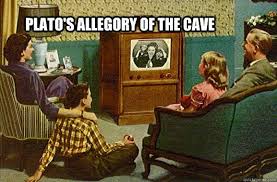
To begin with, critical thinking must question the “of course” convictions that belong to American culture – to any culture. As noted earlier, Plato referred to such unquestioned beliefs with the Greek word, doxa. Its power is conveyed by his familiar “Allegory of the Cave.” There the human condition is portrayed in terms of prisoners chained in a cavern where their only experience of reality (including themselves) is conveyed by shadows produced by their manipulative captors.

Plato’s allegory finds its counterpart in American culture, including the prevailing system of education. Typically what happens in the classroom predisposes students to accept what John McMurtry of the University of Guelph (in Canada) calls “Ruling Group Mind” which is largely set by the parameters of generally admissible political opinion. Within such confines, the United States is seen as the best country in the world. Its overriding concern is with democracy, peace, justice and human rights. Its wars are fought in the interests of peace. God is on its side. “Of course!” we all agree.

Such naiveté is revealed in the second episode of the HBO series, “Newsroom.” Its highlight had lead actor, Jeff Daniels, delivering a speech about our country that has been viewed widely on the web. As a news anchorman of the stature and credibility of Walter Cronkite, Daniels’ character is badgered into answering a question posed by a bright American college student: “What makes America the greatest country in the world?” Here’s how he answered.

Daniels’ answer captures the realism of what I consider a major goal of critical thinking.

(Next week: Unveiling the uniquely narrow U.S. spectrum of debate)

Critical Thinking: Mixed Economies Are All We Have

Mixed Economy

[This is the fourth blog entry in a series on critical thinking which lays out ten guidelines for critical thought. My previous two entries addressed the first rule of critical thought, “Think Systemically.” That rule holds that we can’t really remove our culture’s blinders unless (without prejudice) we’re clear about the meaning of the key systemic terms: capitalism, Marxism, socialism, communism, mixed economy, and fascism. So having already dealt with capitalism, the last installment tried to explain Marxism, socialism and communism in fewer than 1000 words. This week’s episode finishes Rule One by explaining mixed economy and fascism in just three points each. Next time we’ll move on to the second rule of critical thinking, “Expect Challenge.”]

MIXED ECONOMY

Following the Great Depression of the 1930s, the world as a whole has moved away from attempts to implement either pure capitalism or pure socialism. Instead, the trend virtually everywhere has been towards selecting the best elements from each system in a “mixed economy.” As the phrase implies, this involves (1) some private ownership of the means of production and some public ownership, (2) some free and open markets and some controlled markets, and (3) earnings typically limited by a progressive income tax.

Of course what we have in the United States is a highly mixed economy. The U.S. government is, after all, the largest land owner in the nation. Drug, alcohol, food, and medical care markets (and many others) are highly regulated. Following World War II, Americans earning more than $400,000 were taxed at a rate of 91%. Currently, the top income tax bracket is 34%. None of that would be possible under pure free market capitalism.

Similarly, countries claiming to be “socialist” (like Venezuela) or “communist” (like Cuba) have mixed economies. Private enterprise is a key part of both.

Does this mean that the economic systems of the United States and Cuba for example are the same? Not at all. True, both economies are “mixed.” But they differ in terms of whom they are mixed in favor of. The United States economy is mixed in favor of the wealthy and corporations. This is illustrated by consideration of the recipients of recent government bailouts – basically large corporations and Wall Street firms rather than middle or lower class people. The theory at work here is “trickle down.” That is, it is believed that if the wealthy prosper, they won’t hide their money under their mattresses. Instead they’ll invest. Investment will create jobs. Everyone will benefit. So mixing an economy in favor of the wealthy is not sinister; it’s done for the benefit of all.

Cuba, for instance, has a different approach. Its theoreticians observe that historically the wealth hasn’t trickled down – at least not to people living in the Third World (the former colonies). So, (the theory goes) the economy must be mixed directly in favor of the poor majority. The government must adopt a proactive posture and interfere directly in the market to make sure that everyone has free education (even through the university level), free health care, and retirement pensions. Food is subsidized to ensure that everyone eats. And the government is the employer of last resort to provide dignified employment for everyone, so that Cubans are not simply on the dole.

In summary, then, all we have in the world are “mixed economies.” Today, most of them are mixed in favor of the wealthy (once again, on the “trickle-down” theory). Some, like Cuba’s, prioritize the needs of the poor.

FASCISM

What about fascism then? Today the word is thrown around on all sides, and seems to mean “people I disagree with,” or “mean people,” or “those who force their will on the rest of us.” There’s talk of Islamo-fascists. President George W. Bush was accused of being a fascist. Recently President Obama has been similarly labeled.
None of those really capture the essence of fascism. Benito Mussolini, who claimed fascism as a badge of honor in the 1930s (along with Adolph Hitler in Germany, Antonio Salazar in Portugal, and Francisco Franco in Spain), called fascism “corporatism.” By that he meant an alliance between government and large business concerns or corporations.

In terms of Rule One of Critical Thinking, then, we might understand fascism as “capitalism in crisis” or “police state capitalism.” That is fascism is the form capitalism has historically taken in situations of extreme crisis, as occurred in the 1930s following the Great Stock Market Crash of 1929.

More accurately however (in the light of our previous section on mixed economies), we might call fascism police state economy mixed in favor of the wealthy. Fascists are always anti-socialist and anti-communist.

The three elements of fascism then include: (1) A police state (2) enforcing an economy mixed in favor of large corporations, (3) characterized by extreme anti-socialism and anti-communism, and by scapegoating “socialists,” “communists” and minorities (like Jews, blacks, gypsies, homosexuals . . .) for society’s problems.

HUMAN RIGHTS

Both economies mixed in favor of the rich and those mixed in favor of the poor claim to respect human rights. They also blame their opponents for not following suit. The truth is, however, that both types of economies both respect and disrespect human rights. That is, despite claims to the contrary, no system of political-economy has shown consistent respect for all human rights. Instead all systems prioritize them according to what they consider the most basic. This means that capitalism respects some human rights more than others. So does socialism.

Capitalism puts at the top of its list the rights to private property, the right to enter binding contracts and have them fulfilled, as well as the right to maximize earnings. These rights even belong to corporations which under capitalism are considered persons.

On the other hand, capitalism’s tendency is to deny the legitimacy of specifically human rights as recognized, for example, by the U.N. Declaration of Human Rights. For this reason, the United States has never ratified key protocols implementing the Declaration, or other key documents asserting rights beyond the corporate. Moreover, if capitalism’s prioritized rights are threatened, all others are subject to disregard, including the rights to free elections, speech, press, assembly, religion, and freedom from torture. Historical references in the blog entries which follow this one will support that observation.

Similarly, socialism heads its own list with the rights to food, shelter, clothing, healthcare and education. In the name of those rights, socialism relativizes rights to private ownership and the rights to enter binding contracts, and to maximize earnings. If the rights socialism considers basic are threatened, history has shown that it too, like capitalism, will disregard all others.

CONCLUSION

What’s the “take-away” from all of this? Simply this: capitalism is both a simple and complicated system; so is socialism. Both can be summarized quite simply, as can mixed economies, Marxism, communism, and fascism. Capitalism respects some human rights, while disregarding others. The same can be said of socialism and systems that call themselves “communist.”

Critical thinkers should remember those simple summaries and truths about human rights. Doing so will help cut through many of the misunderstandings and distortions that characterize discussion of today’s key issues.

Thinking Critically about Marxism, Socialism and Communism (All in fewer than 1000 words!)

cominternposter

[This is the third blog entry in a series on critical thinking which lays out ten guidelines for critical thought. Last week started a sub-series on the first rule of critical thought, “Think Systemically.” That rule holds that we can’t really escape Plato’s Cave unless (without prejudice) we’re clear about the meaning of the key systemic terms: capitalism, Marxism, socialism, communism, mixed economy, and fascism. Last week’s blog entry tried to explain capitalism in three simple phrases: (1) private ownership of the means of production, (2) free and open markets, and (3) unlimited earnings. This week’s episode turns to the main critique of capitalism (Marxism) and to the nature of its alternatives, socialism and communism. Again without judging, it will clearly explain these terms using just three points each and in fewer than 1000 words. I promise.]

MARXISM

Marxism represents the Western tradition’s most trenchant critique of capitalism. Marxism’s three points are as follows: (1) capitalism necessarily exploits workers and the environment, (2) workers will eventually rise up against such exploitation and replace capitalism with socialism, and (3) socialism will eventually evolve into communism. Let’s consider those points one-by-one.

First of all, Marxism’s critique of capitalism holds that the system necessarily exploits workers (and by extension, as we shall see, the environment). The adverb “necessarily” is emphasized here to show that, on Marx’s analysis, the destructive nature of capitalism is not dependent on the personal qualities of individual capitalists. Regardless of their personal virtue or lack thereof, the market mechanism itself forces capitalists to exploit workers (and the environment). This is because, for one thing, workers are forced to enter a labor market whose wage level is set by competition with similar workers seeking the same job. As a result, each prospective employee will bid his competitors down until what economists have called the “natural” wage level is attained. Marx found this “natural” level below what workers and their families need to sustain themselves in ways worthy of human beings.

For Marxists, the capitalist system does not merely exploit workers of necessity. It also necessarily exploits the environment. That is, the market’s supply and demand guidance dynamic punishes the presence of environmental conscience on the part of producers. Thus, for example, a conscientious entrepreneur might be moved to put scrubbers on the smokestacks of his factory and filters to purify liquid effluents from his plant entering a nearby river. In doing so, he will, of course, raise his costs of production. Meanwhile, his competitors who lack environmental conscience will continue spewing unmitigated smoke into the atmosphere and pouring toxins into the river. Their lowered costs will enable them to undersell the conscientious producer, and eventually drive him out of business. In this way, the market rewards absence of environmental conscience.

Marx’s second point is that the exploitation which the capitalist system necessarily fosters will cause rebellion on the part of workers. They will rise up against their employers and overthrow the capitalist system.

Marx’s third point is that the workers will replace capitalism with socialism. Socialism will eventually evolve into communism. So what do those terms mean?

SOCIALISM

For Marx capitalism’s replacement at the hands of workers is socialism. This economic system is capitalism’s opposite on each of the three points indicated earlier. First of all, whereas capitalism espouses private ownership of the means of production, socialism advocates public ownership. According to this theory, the workers themselves take over the factories and administer them, not for the profit of the few, but for the benefit of workers and their families.

Secondly, whereas capitalism demands free and open markets, socialism mandates controlled markets. Since socialism has the interests of the working majority at center, its pure theory will not allow, for instance, production of luxury crops (such as roses or coffee) if that production deprives workers of the food they need for subsistence.

Thirdly, whereas capitalism idealizes unlimited income, socialism calls for redistribution of income – for instance, through a progressive income tax. For socialism, greed is definitely not good. So it might also limit income by establishing ceilings beyond which personal incomes are not permitted to rise. Taxes and surplus earnings are then used for the common good, for example to fund schools, clinics, food subsidies, affordable housing, rents and health care.

COMMUNISM

As for Communism, it is a “vision of the future” which some, though not by any means all, socialists entertain as history’s end point. That is, while all communists are socialists, not all socialists are communists. This is because some socialists (along with all capitalists, of course) consider the communist vision of the future as unrealistic and unattainable. That vision, overly idealistic or not, is of a future where there will be (1) abundance for all, (2) no classes, as a result of such plenty, and (3) no need for a state.

To begin with, the vision of virtually unlimited abundance marks communists such as Marx and Engels as convinced industrialists. They were highly impressed by the unprecedented output of the factory system of the late nineteenth and early twentieth centuries. Shirts, for example, that would take a skilled seamstress days to produce, were turned out in minutes, once an assembly line based on “division of labor” was set in motion. Soon, communists theorized, the world would be filled with consumer goods. And in a context of such abundance “yours” and “mine” would cease to have meaning. Neither would it make sense for some to hoard goods to themselves at the expense of others. The result would be the disappearance of classes. There would be no rich and no poor. Everyone would have more than enough of what they need.

With the disappearance of classes would come the gradual “withering away” of the state. This is because “the state,” by communist definition is simply armed administrator of the affairs of society’s dominant class. As Marx and Engels put it in their Manifesto, “Political power, properly so called, is merely the organized power of one class for oppressing another.”

Thus the state’s job is to impose the will of a ruling class on others. Under capitalism, the state’s function is to oblige the working class to accept conditions profitable to the bourgeoisie (wealthy property owners). In other words, under capitalism, the state imposes the “dictatorship of the bourgeoisie.”

Meanwhile, under socialism, the function of the state is to impose the will of the working class on the bourgeoisie. It enforces the “dictatorship of the proletariat.” By way of contrast, under communism, in the absence of classes (eliminated by a condition of abundance) there remains no group whose will needs to be imposed on others. The state’s function thus ceases. It gradually disappears.

[Next week: Conclusion of Critical Thinking’s first rule (Think Systemically): Mixed Economy and Fascism]