Paul of Tarsus: Christianity’s First Liberation Theologian

 (This is the 2nd in a series on liberation theology)

                It is very difficult for 21st century Christians to understand Paul of Tarsus. This is because (as Evangelical theologian, Brian McLaren puts it) we read Paul backwards – just as we understand Jesus backwards. By that McLaren means we usually begin our understanding with someone like Billy Graham (or with Benedict XVI for Catholics). From there we progress to John Calvin (or Vatican II), to Martin Luther (or the Council of Trent), to Thomas Aquinas, to Augustine, to Paul and then to Jesus. That progression yields a perception of Paul who was misogynist and homophobic, who supported slavery, who taught obedience to all governmental authority, and who was concerned the priority of faith over works the way Luther was. In other words, understanding Paul backwards projects back onto him controversies and consciousness that emerged decades, centuries and even millennia after his death.

                There is another way to understand Paul (and Jesus) however. And that is the way employed by liberation theology. This “other” way begins understanding with Adam, progresses on to Abraham, Moses, David, the Prophets, John the Baptist, Jesus, and finally Paul. This Paul is interpreted in the light of Jesus and not vice-versa. He knows nothing of the controversies that will distort his message over the centuries to come. Instead, we find in the man from Tarsus a follower of Jesus of Nazareth. Paul is above all Jewish, and a working man besides. Paul is an intellectual, world-traveler, Jewish mystic, radical thinker, and martyr at the hands of empire. His overriding concern is spreading Good News about Jesus and his message which centralized the welfare of the poor and oppressed.

As everyone knows, Paul’s letters represent the earliest entries we find in the Christian Testament. Written beginning around the year 50, they pre-date the gospels by 20 years or more. They are the documents closest in time to the life of Jesus of Nazareth. This makes it very significant that Paul’s letters (especially Romans and I Corinthians) reflect a clear liberation theology perspective whose defining character is a preferential option for the poor.

To perceive this reflection, it is helpful to consider Paul’s life’s circumstances in relation to Jesus. Such consideration reveals both continuities and discontinuities. To begin with, like Jesus, Paul belonged to the working class. He was a tent-maker. He was also, like Jesus, a Jewish mystic. This means he was aware that divine revelation did not belong to a single people, but was available to everyone by virtue of a common human experience.  Even more, Paul recognized a Divine Spark, i.e. a divine presence within every human being. He called it the Spirit of God. Both recognitions (of the commonality of revelation and of the Divine Spark) made Paul a universalist who saw that in God’s order national and class distinctions were meaningless. Finally, Paul, like Jesus, finished as a victim of capital punishment at the hands of the Roman Empire, though he was not executed by crucifixion, which suggests that unlike Jesus, he was not considered an insurgent or terrorist.

In addition to the similarities, Paul’s life circumstances also made him unlike Jesus in several important ways. For one, Paul was formally schooled as a Jewish rabbi, so he had more formal education than Jesus; Paul was an intellectual. Unlike Jesus too, Paul was a world traveler, and may even have been a Roman citizen. This not only helps account for Paul’s daring universalism, but for his opportunities and willingness to engage Roman philosophers on their own turf – geographically and intellectually.

Such considerations shed a bright light on Paul’s theology. There in key arguments he did not typically begin from a place of divine revelation, but from experience from which he drew rational conclusions. This made him like the Greco-Roman philosophers he was so interested in engaging.  Like the Stoics among them, he recognized the earlier referenced Divine Spark within each person. Paul, however, differed from the Stoics (and the Christian Gnostics who came later) in that he did not interpret the Divine Spark or logos as the presence of a changeless Spirit continuous with an eternal natural order. Nor did recognition of a divine indwelling spirit confirm the Stoic view that saw Rome’s political order as divinely established with the Emperor embodying the fullest expression of the divine “Word.”  

Rather, for Paul, the divine spark was identical with the Spirit of God, which Paul saw the same as what he termed the wisdom of God. That wisdom selected the poor and despised as God’s chosen people. This selection made Paul’s critical truth criterion vastly different from his Greco-Roman debate adversaries. For whereas the Greek’s criterion of truth was “what is” – the given natural and political orders – Paul’s fundamental criterion of “the judgment of God,” and “the Wisdom of God” prioritized the needs of the poor, humiliated, rejected, and despised. As liberation theologian, Franz Hinkelammert puts it, Paul’s argumentation was structured not by what is, but by what is not, i.e. by those “the wisdom of the world” excludes from consideration, viz. the poor just referenced. Seeing them as God’s chosen calls entirely into question discourse that the given world takes as normal.

To reiterate, all of this is difficult to perceive, since the liberation theology thrust of Paul’s thinking has been obscured by post-fourth century imperialized interpretations to be described in a later posting. (This also happened with the gospel accounts of the words and deeds of Jesus.) Thus on the one hand, Paul is commonly understood as pro-imperial, anti-feminist, and pro-slavery – as though the heart of Paul’s teaching were cultural rather than focusing on the counter-cultural “Wisdom of God.” Emphasis on Paul’s apparent sexism and his pragmatic approach to slavery ignores the apostle’s specific and substantive teachings about the invalidity of distinctions regarding nationality, gender, and social status. Interpretations of Romans 13 as endorsement of empire similarly ignore the center of his teaching about law and his contrast of the wisdom of the world vs. the Wisdom of God. If all authority comes from God as Romans 13 claims, then only those authorities whose legislation expresses the Wisdom of God (and its preferential option for the poor) must be obeyed.  

What Paul’s radicality means is that far from being the real founder of the Christian church (as is often alleged) Paul professed a theology that was quite foreign to his successors. In fact, it might be more accurate to say that the church was not founded by Paul, but against him. His teachings were far too radical for the digestive tracts of church leaders in the Constantinian institution that emerged in the 4th century. At that point, it became necessary to domesticate and tame Paul’s radicality and to make him like the rest of the church, a faithful servant of the status quo with its imperial oppression, misogyny, homophobia, racism, and eventual internecine squabbles about faith and works.

Until the emergence of modern scripture scholarship and interpretations like liberation theology’s we hadn’t heard from the real Paul of Tarsus since the first century.

Next Friday:  Jesus, Paul, Liberation Theology and Critical Thinking

What Is Liberation Theology? (First in a series published on Fridays)

Jesus as pictured by Nicaraguan peasant artists. Undeniably human. His most faithful disciples, women. His executioners, the U.S-supported Nicaraguan National Guard.

What is liberation theology? In a single sentence: liberation theology is reflection on the following of Jesus of Nazareth from the viewpoint of the poor and oppressed like the women in the painting above. More accurately, it is reflection on the following of Jesus of Nazareth from the viewpoint of those among the poor who are committed to their own liberation. Liberation theology comes from a place of commitment to social change.

Change, liberation from what? In a word, from colonialism and from the neo-colonialism represented today by contemporary forces of corporate globalization whose leading champion is the United States of America. As we all know, those forces have half the world living on $2 a day or less. They’ve concentrated the world’s wealth in the hands of a sliver of 1% of the world’s population. Three men own as much wealth as the 48 poorest nations. Two hundred and twenty-five people own as much as today’s 3 billion living on $2 a day. According to the U.N., an annual 4% tax on those 225 would provide enough resources to feed, clothe, cure and educate the entire Third World. To the wealthy (often supported by Christians who present themselves a pro-life), such taxation is unthinkable. As a result, 30,000 children die of absolutely preventable starvation each day. In the eyes of liberation theology’s protagonists, that’s sinful and runs entirely contrary to the teachings of Jesus of Nazareth.

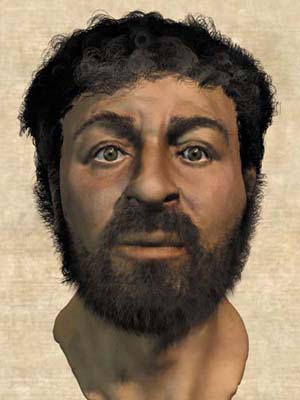
And what were those teachings? (This is the heart of liberation theology.) They were first of all those of a man recognized by the impoverished as someone like themselves. He looked like them — not like me or other white people. If we are to believe forensic history experts (see posting of April 26th below), he resembled the poor majority we see everywhere in our globalized world. He probably stood about 5’1’’ and weighed about 110 pounds. His skin was brown. He was a laborer, not a scholar. His hands were calloused.

Jesus also exhibited the characteristics that good Christians among us often find repulsive and ungodly. He was the son of an unwed teenage mother. According to Matthew’s account, he was an immigrant in Egypt for a while. The good people of his day called him a drunkard and the companion of prostitutes. They expelled him from his synagogue because he didn’t seem to care about the most important of the 10 commandments – the Sabbath law. The religious authorities said he was a heretic and possessed by the devil. The occupying Roman authorities identified him as a terrorist. They arrested him. And he ended up a victim of torture and of capital punishment carried out by crucifixion which was a means of execution the Romans reserved for insurgents. He was not the kind of person Christians usually admire. He was far too liberal to merit their approval.

In fact, the gospels give the impression that Jesus spent his public life roaming from one party, one banquet to another. At one point, he is said to have enlivened a wedding feast by producing more than 175 gallons of wine for partiers who had been drinking plentifully for days. And he was always finding excuses to break the law. In fact, he made a point of violating Sabbath restrictions whenever doing so might help someone who in most cases might have equally been helped any other day of the week. He was clearly a feminist. Many of his disciples were women. He spoke with them in isolated places. He actually forgave a woman caught in adultery, while implicitly criticizing the hypocrisy of patriarchal law which punished women for adultery and not men. And Jesus refused to recognize his contemporaries’ taboos around segregations. He crossed boundaries not only dividing men from women, but Jew from gentile, lepers from non-lepers, and rich from poor. . . .    Jesus actually touched and ate with lepers and others considered contaminated and unclean. He couldn’t have been more liberal. In a sense he was an anarchist. He honored no law that failed to represent the loving thing to do. His attitude towards the law is best summarized in his pronouncement about the Sabbath. “The Sabbath was instituted for human beings,” he said, “human beings weren’t made for the Sabbath.” This was pure humanism placing human beings above even God’s holiest law. Again, it was anarchistic.

Jesus’ teachings were politically liberal too. They centered on social justice. As such they infuriated his opponents but were wildly inspiring to the poor and oppressed. His proclamation was not about himself, but about what he called “The Kingdom of God.” That was the highly charged political image he used to refer to what the world would be like if God were king instead of Caesar. In that kingdom everything would be turned upside-down. The first would be last; the last would be first. The rich would be poor; the poor would be rich. Subsequent reflection by followers of Jesus in the Book of Revelation teased all of that out and drew the conclusion that with the dawning of God’s kingdom, the Roman Empire would be destroyed and replaced by a new heaven and a new earth entirely unlike empire. There (as indicated in the Acts of the Apostles) wealth would be distributed from each according to his ability to each according to his need. There would be room for everyone. If that sounds like communism, it’s because, as the Mexican exegete Jose Miranda points out, the idea of communism originated with Christians, not with Marx and Engels.

Once again, most of this is not the kind of thing  Christians are usually thought of as endorsing. But that’s the vision of God, Jesus, and his message that liberation theology presents. And it’s all supported by the research of 90% of contemporary biblical scholars, even those who know little or nothing of liberation theology.

Questions for Reflection:

1. What questions do you have about liberation theology as defined in this post?

2. Why do you suppose the U.S. government was so alarmed by the rise of liberation theology in the 1960s?

3. Would the U.S. government have been similarly alarmed by Jesus himself? Why? Why not?

4. Are you upset by the idea of liberation theology as described above? Why?

Next Friday: “St. Paul: Christianity’s First Liberation Theologian”

Chomsky on U.S. War vs. Liberation Theology

My first public post on this blog site (the video immediately below) begins my series on Liberation Theology (LT) — certainly a “thing that matters” in our post-modern world. In fact, I consider LT the most important theological development  of the last 1500 years. More than that, I see it as the most significant intellectual and activist movement in the last 150 years (or roughly since the publication of The Communist Manifesto). After all, it was a type of liberation theology that fueled the Civil Rights Movement. And today, an Islamic form of LT energizes the Arab Spring. Moreover, we have in the White House the first President to have been formed spiritually in a liberation theology congregation (that  of Jeremiah Wright). The video below presents the comments of Noam Chomsky on the U.S. campaign against LT during the 1980s, when U.S. leadership panicked at the form it took in Central America.  Years ago The New Yorker Magazine called Chomsky perhaps the leading intellectual of our era. Here he speaks specifically of the U.S. interventions in Central America during the 1980s as a war against LT. Elsewhere Chomsky termed those conflicts “the first religious war of the 21st century.” Please click on the YouTube film clip below. Then post your comments and questions in the space provided. Also include any suggestions for making this blog site better. My series on Liberation Theology will start next Friday (May 4th). In the meantime, there will be posts on other topics.

“Forensic Jesus”

This is what forensic archeologists say the Jesus of history probably looked like. He was a working man who stood about 5’1″ and weighed about 110 pounds. His skin was dark; his hands were calloused. His message was not about himself, but about the Kingdom of God — what the world would be like if God rather than Caesar were king. This web site is dedicated to exploring the relevance of that Jesus to our post-modern times.