Skip to content

About Things That Matter

For my students and other friends

  • Home
  • A Course in Miracles
  • Asian Journal
  • Book Reviews
  • Critical Thinking
  • Cuba
  • Current Issues
  • Pope Francis
  • Film Reviews
  • Hitler and Christianity
  • Islam
  • Liberation Theology
  • Personal
  • Retirement Reflections
  • Songs
  • Sunday Homilies
  • The Historical Jesus
  • Podcasts
  • Video
Follow About Things That Matter on WordPress.com

Enter your email address to follow this blog and receive notifications of new posts by email.

Join 291 other subscribers

Recent Posts

  • Thirteen Necessary Reforms Dictated By Pope Leo’s Magnifica Humanitas
  • Pope Leo, AI, and the New God Question
  • Pentecost and the Sin of Christian Nationalism
  • Human Rights for Enemies Only? Amnesty International, Iran, and the Blind Spots of “Democracy Now!”
  • China’s Example and the Need to Rethink Democracy Itself

OpEdNews Interview

https://youtu.be/18t705B0y9A

Mike’s Most Recent Books

Click to buy
Mike's Most Recent Book
Click to buy

Other Books by MIke

Understanding Laudato Si': A Discussion Guide
Click to buy
Click to buy
Click to buy
Click for more information

Archives

  • June 2026
  • May 2026
  • April 2026
  • March 2026
  • February 2026
  • January 2026
  • December 2025
  • November 2025
  • October 2025
  • September 2025
  • August 2025
  • July 2025
  • June 2025
  • May 2025
  • April 2025
  • March 2025
  • February 2025
  • January 2025
  • December 2024
  • November 2024
  • October 2024
  • August 2024
  • July 2024
  • June 2024
  • May 2024
  • April 2024
  • March 2024
  • February 2024
  • January 2024
  • December 2023
  • November 2023
  • October 2023
  • September 2023
  • August 2023
  • July 2023
  • June 2023
  • May 2023
  • April 2023
  • March 2023
  • February 2023
  • January 2023
  • December 2022
  • November 2022
  • October 2022
  • September 2022
  • August 2022
  • July 2022
  • June 2022
  • May 2022
  • April 2022
  • March 2022
  • February 2022
  • January 2022
  • December 2021
  • November 2021
  • October 2021
  • September 2021
  • August 2021
  • July 2021
  • June 2021
  • May 2021
  • April 2021
  • March 2021
  • February 2021
  • January 2021
  • December 2020
  • November 2020
  • October 2020
  • September 2020
  • August 2020
  • July 2020
  • June 2020
  • May 2020
  • April 2020
  • March 2020
  • February 2020
  • January 2020
  • December 2019
  • November 2019
  • October 2019
  • September 2019
  • August 2019
  • July 2019
  • June 2019
  • May 2019
  • April 2019
  • March 2019
  • February 2019
  • January 2019
  • December 2018
  • November 2018
  • October 2018
  • September 2018
  • August 2018
  • July 2018
  • June 2018
  • May 2018
  • April 2018
  • March 2018
  • February 2018
  • January 2018
  • December 2017
  • November 2017
  • October 2017
  • September 2017
  • August 2017
  • July 2017
  • June 2017
  • May 2017
  • April 2017
  • March 2017
  • February 2017
  • January 2017
  • December 2016
  • November 2016
  • October 2016
  • September 2016
  • August 2016
  • July 2016
  • June 2016
  • May 2016
  • April 2016
  • March 2016
  • February 2016
  • January 2016
  • December 2015
  • November 2015
  • October 2015
  • September 2015
  • August 2015
  • July 2015
  • June 2015
  • May 2015
  • April 2015
  • March 2015
  • February 2015
  • January 2015
  • December 2014
  • November 2014
  • October 2014
  • September 2014
  • August 2014
  • July 2014
  • June 2014
  • May 2014
  • April 2014
  • March 2014
  • February 2014
  • January 2014
  • December 2013
  • November 2013
  • October 2013
  • September 2013
  • August 2013
  • July 2013
  • June 2013
  • May 2013
  • April 2013
  • March 2013
  • February 2013
  • January 2013
  • December 2012
  • November 2012
  • October 2012
  • September 2012
  • August 2012
  • July 2012
  • June 2012
  • May 2012
  • April 2012

Meta

  • Create account
  • Log in
  • Entries feed
  • Comments feed
  • WordPress.com

Month: June 2026

Thirteen Necessary Reforms Dictated By Pope Leo’s Magnifica Humanitas

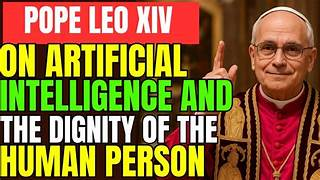
Pope Leo XIV’s Magnifica Humanitas (MH) may well prove to be one of the most important moral documents of the twenty-first century. At a moment when artificial intelligence is being celebrated as humanity’s next great leap forward—or feared as its greatest threat—the pope offers something largely absent from public discussion: a coherent moral framework.

Most political leaders approach AI in terms of profits, national competition, military advantage, or technological inevitability. Leo approaches it differently. He asks what AI means for human dignity, for the poor, for workers, for peace, for the environment, and for the future of the human family.

In doing so, he reminds us that technology is never neutral. It always serves some vision of humanity. The question is whether that vision promotes what the pope calls our magnifica humanitas—our magnificent humanity—or undermines it.

A careful reading of Leo’s document suggests not only moral principles but also practical reforms. Before considering those reforms, however, we must understand the context in which AI has emerged.

The Context of Artificial Intelligence

Artificial intelligence did not descend from heaven. It emerged within a specific economic and political system. That system has allowed a handful of corporations and investors to appropriate what is, in reality, humanity’s common intellectual inheritance. AI depends upon generations of publicly funded research, the collective labor of millions of workers, and vast quantities of information created by society as a whole. Yet its profits are increasingly concentrated in the hands of a tiny elite (MH ¶67, ¶108-109).

As the Monthly Review editor John Bellamy Foster argues in his essay, “The Fetishism of AI,” public discussion often treats artificial intelligence as if it were an independent force acting on history. In reality, AI is produced, owned, and directed by specific corporations and billionaires pursuing specific interests. The technology itself becomes fetishized. Attention is focused on the machine while the human beings controlling it disappear from view. The result is a staggering concentration of wealth and power.

Today, according to numerous economic studies, the richest fractions of one percent possess wealth exceeding that owned by billions of people combined. Some have referred to this elite as the “Epstein Class”—not because all its members participated in Jeffrey Epstein’s crimes, but because Epstein’s network exposed the degree to which wealth can place individuals beyond accountability.

Many among this elite openly support forms of transhumanism. They dream of transcending ordinary human limitations through technology while expressing contempt for those rendered economically unnecessary by automation. Terms such as “surplus populations” and “useless eaters” increasingly appear at the margins of elite discourse.

Meanwhile, perpetual warfare continues across the globe. The victims are overwhelmingly the poor. AI increasingly guides surveillance systems, targeting systems, drone warfare, and battlefield decision-making. Human judgment is steadily displaced by algorithmic processes whose operations remain hidden from public scrutiny (MH ¶109).

At the same time, those displaced by wars, climate disasters, and economic disruption are often denied the right to migrate. Wealthy nations that benefit most from the global economic order increasingly close their borders against the refugees produced by that order. They become disposable bodies.

Nor are environmental consequences taken seriously enough. Massive AI data centers consume enormous quantities of electricity and water. They generate noise pollution, strain local infrastructure, and are often located in areas lacking the political power to resist them. Once again, the burdens fall disproportionately upon the vulnerable (MH ¶67).

It is precisely this context that makes Pope Leo’s intervention so important.

Leo’s Moral Principles

Rather than beginning with technological capability, Leo begins with moral responsibility.

The first principle is the Common Good. Society exists not principally to maximize profits or technological advancement but to ensure that every person has access to the conditions necessary for a fully human life. Economic systems, political institutions, and technologies must be evaluated according to whether they promote human flourishing for all (MH ¶63-64).

Closely related is the principle of the Universal Destination of Goods. Catholic social teaching has long insisted that while private property can be legitimate, the earth and its resources ultimately belong to everyone. Property rights are therefore not absolute. They remain subordinate to the needs of the human family as a whole (MH ¶65-67).

Third is Subsidiarity. Decisions should be made at the lowest level capable of addressing a problem effectively. Those most directly affected by policies should have a meaningful voice in shaping them. This principle challenges the tendency of distant corporations and centralized bureaucracies to impose decisions upon communities without consultation (MH ¶68-70).

Fourth is Solidarity. Human beings are bound together in a single moral community. National borders do not erase obligations to others. Neither do differences of race, religion, nationality, or economic status. The suffering of one part of the human family ultimately concerns us all (MH ¶71-77).

Finally, there is Social Justice. Every human being possesses inherent dignity. The measure of a society is not how it treats the wealthy and powerful but how it treats the poor, immigrants, refugees, workers, the disabled, and those pushed to the margins (MH ¶78-81).

These principles provide a moral compass for addressing the challenges posed by AI.

Thirteen Necessary Reforms

If we take Leo’s teaching seriously, at least thirteen reforms follow.

1. Begin a Worldwide Democratic Conversation About AI

The future of artificial intelligence is too important to be determined solely by corporations, military planners, and technical experts. Citizens everywhere must participate in discussions about AI’s benefits, risks, and regulation (MH ¶64, ¶96).

2. Include AI Itself as a Participant in Democratic Deliberation

Artificial intelligence should not merely be the object of public discussion. It should also become one of the participants in that discussion. Citizens, scientists, workers, labor unions, environmentalists, religious leaders, public officials, and AI systems themselves should be invited to contribute their insights regarding the benefits, dangers, and regulation of artificial intelligence. AI should not be granted decision-making authority over human affairs. Nevertheless, its capacity to process information, identify patterns, and generate alternative perspectives may enrich democratic deliberation and help humanity avoid blind spots that would otherwise remain invisible.

3. Declare AI a Public Utility

Artificial intelligence increasingly functions like electricity, transportation, or communication infrastructure. It has become too important to leave entirely in private hands. Public ownership or strong public control should ensure that its benefits are widely shared (MH ¶65-67, ¶108-109).

4. Break Up AI Monopolies

The concentration of AI development in a few corporations threatens democracy itself. Existing anti-trust laws, including the Sherman Anti-Trust Act, should be vigorously enforced. No corporation should possess unchecked control over technologies that affect billions of lives (MH ¶67, ¶108-109).

5. Establish a United Nations AI Regulatory Authority

AI governance requires international coordination. A global regulatory body should include scientists, workers, environmental advocates, religious leaders, government officials, community representatives, and citizens affected by AI development. Special weight should be given to communities bearing the greatest burdens (MH ¶64, ¶68-70).

6. Limit Extreme Wealth Concentration

The greatest danger posed by AI may not be the technology itself but the power accumulated by those who control it. Following Franklin Roosevelt’s example, extremely high incomes should face steep taxation. No individual requires billions of dollars while millions lack basic necessities.

7. Tax AI Profits to Repair Social and Environmental Damage

Relatedly, corporations benefiting from AI should help pay for the consequences of its deployment. Revenue generated through progressive taxation should fund environmental remediation, worker retraining, community development, public services, and a universal basic income available to all (see below). Such measures are consistent with Leo’s insistence that economic activity and private property remain subordinate to the common good and the universal destination of goods (MH ¶63-67).

8. Make Government the Employer of Last Resort

As artificial intelligence eliminates jobs across entire sectors of the economy, governments must guarantee meaningful employment for all who seek it. Following proposals advanced by Jeremy Rifkin in The End of Work, public employment programs could address urgent unmet needs in environmental restoration, renewable energy development, elder care, childcare, education, public health, infrastructure repair, cultural preservation, and community development. Human beings should never be discarded merely because machines can perform certain tasks more cheaply. [While Leo does not explicitly endorse an Employer of Last Resort policy, his commitment to the dignity of work and the common good points strongly in this direction (MH ¶63–64, ¶78–81)].

9. Nationalize Arms Production

The integration of AI into warfare creates extraordinary dangers (MH ¶109). Nationalizing weapons production would reduce costs as well as incentives to promote conflict for profit and subject military technologies to greater democratic oversight.

10. Establish a Guaranteed Universal Income

Workers displaced by artificial intelligence should receive a guaranteed universal income sufficient to ensure a dignified life. Such income must be truly guaranteed. It should not depend upon political loyalty, ideological conformity, or bureaucratic discretion. Governments should not possess the power to punish dissent by threatening a person’s livelihood. Economic security is a prerequisite for authentic freedom of speech and democratic participation.

[Again: While Leo does not explicitly advocate a universal income, the proposal follows naturally from his insistence that economic arrangements must serve human dignity and social justice (MH ¶63–67, ¶78–81).]

11. Transform Schools into Palaces of Learning

As artificial intelligence increasingly assumes many tasks once performed by human beings, education must recover its original purpose. Schools should become what Marianne Williamson calls “Palaces of Learning”—places devoted not merely to job preparation but to human formation. Students should be introduced, at age-appropriate levels, to the Good, the True, and the Beautiful, as well as to the ethical principles underlying a just society. Education should help them move beyond egocentrism and ethnocentrism toward world-centrism and a sense of responsibility for the entire human family. While Pope Leo does not explicitly call for such educational reform, the proposal follows naturally from his insistence that technology remain subordinate to human dignity and integral human development (MH ¶63-64, ¶71-81, ¶96).

12. Create a Secretary of Peace

Every cabinet contains officials devoted to war preparation. Few governments possess equivalent institutions devoted to peace. A Secretary of Peace could evaluate conflicts, promote diplomatic solutions, and ensure that ethical considerations receive attention before military action is taken (MH ¶96, ¶109).

13. Learn from Other Nations

The United States often assumes it has little to learn from others. That assumption is increasingly untenable. Nations such as China have experimented with forms of long-term planning and regulation that deserve serious study. We need not imitate any system wholesale. But intellectual humility requires examining successful practices wherever they are found (MH ¶64).

Conclusion

One of the most striking aspects of contemporary American politics is the number of public officials who identify themselves as Catholics while rarely engaging the substance of Catholic social teaching. Vice President J.D. Vance identifies as Catholic. Several members of the Supreme Court identify as Catholic. Many elected officials invoke their faith when discussing abortion, religious liberty, or personal morality.

Magnifica Humanitas raises a broader set of moral questions. What obligations do governments have toward workers displaced by automation? What responsibilities do corporations have toward communities harmed by data centers? How should nations treat migrants fleeing wars and climate disasters? What limits should be placed on wealth accumulation? How should AI be regulated when it threatens peace, privacy, and democratic accountability?

These are not peripheral questions. They go to the heart of the pope’s teaching.

Every Catholic public official should therefore be asked a simple question whenever major decisions about AI, economics, immigration, warfare, or environmental policy arise: How does this decision reflect the principles of Magnifica Humanitas?

If the answer is clear, they should explain it. If the answer is not clear, they should explain that too. For Pope Leo’s central insight is difficult to escape. Technology alone will not save us. Markets alone will not save us. Military power certainly will not save us. The introduction of AI causes us to reevaluate our basic principles.

Only a renewed commitment to human dignity, solidarity, justice, and the common good can ensure that artificial intelligence serves humanity rather than humanity serving artificial intelligence (MH ¶63-81, ¶96). Leo insists that digital infrastructures, algorithms, and emerging technologies must be evaluated according to whether they serve the good of all, especially the most vulnerable, rather than the interests of a privileged few (MH ¶96, ¶108-109). That is the challenge Leo has placed before us.

Whether we accept it remains one of the defining questions of our age.

Posted on June 3, 2026June 3, 2026Categories Book Reviews, Current IssuesTags Artificial Intelligence, Catholic Social Teaching, Jeremy Rifkin, Magnifica Humanitas, Marianne Williamsn, Pope Leo XIVLeave a comment on Thirteen Necessary Reforms Dictated By Pope Leo’s Magnifica Humanitas
  • Subscribe Subscribed
    • About Things That Matter
    • Join 291 other subscribers
    • Already have a WordPress.com account? Log in now.
    • About Things That Matter
    • Subscribe Subscribed
    • Sign up
    • Log in
    • Report this content
    • View site in Reader
    • Manage subscriptions
    • Collapse this bar

Loading Comments...