Jesus’ Teaching about Paying Taxes: It’s about “Slow Money,” Not What Your Pastor Says!

Slow Money

Readings for 29th Sunday in Ordinary Time: IS 45: 1, 4-6; PS 96: 1-5, 7-10; I THES 1: 1-5B; MT 22: 15-21.

Well, it’s time for your pastor to trot out those well-worn platitudes around Jesus’ famous “Render” riddle. So after reading this morning’s gospel about payment of taxes to Caesar, your priest or minister will say something about separation of church and state. Ho-hum. Caesar’s realm is the political, he’ll say; God’s is the religious. Caesar’s is less important than God’s, of course. But be sure to vote (Republican)  anyway – just to make sure that the anti-abortionists win. Never mind that their policies are pro-war, anti-life (apart, I suppose, from their single issue) and suicidal in terms of climate change. Those are merely political concerns. See ya next week.

Problem is: all that has nothing to do with today’s reading. In fact, it entirely misses the point of Jesus outwitting his questioners in their attempt to entrap him with a question about taxation that had no good answer – except the unforeseen one that Jesus gave.

Jesus is smarter than his opponents. That’s the obvious point.

The less obvious one is that Jesus’ response attacks the Roman Empire itself. It undercuts its economic base by rejecting Rome’s “fast money” in favor of the Jewish insurgency’s “slow money.”

Have you heard of that concept – I mean slow money? It’s explained in Woody Tasch’s book, Slow Money: Investing as if food, farms, and fertility mattered (White River Junction, Vermont: Chelsea Green Publishing 2008).

Building off Carlo Petrini’s idea of Slow Food, Tasch’s book presents the case for divesting from the haste of the global economy whose lightning fast computerized operations are necessarily devoid of thought about things that really matter. “Fast money,” as Tasch calls such transactions thinks of nothing but the corporate bottom line.

The outcomes of such inattention are evident for all to see. They include climate chaos, topsoil loss, water waste and pollution, as well as loss of jobs at home in favor of low labor costs abroad. Fast money causes inequalities which give 35 men as much wealth as half the world’s population. Fast money is like “fast food” which fills bellies but destroys health.

Slow money, on the other hand, invests locally, thoughtfully, and at a pace that imitates the very leisurely processes of nature. So Tasch’s book calls for a correspondingly paced economy. The slow money approach preserves family farms, encourages the growth of organic foods, and prevents waste of soil and water, while eliminating the contradiction of widespread hunger existing alongside fast-food induced obesity.

Once again, I bring that up because Jesus’ response to his interlocutors in today’s gospel represents rejection of Rome’s fast money. At the same time, it implicitly endorses a local form of slow money that almost everyone overlooks.

Recall the story’s pivotal question. “Is it lawful to pay the census tax to Caesar or not?”

If Jesus answered the way your pastor says, the Great Teacher would have fallen into the trap set by an unlikely alliance of Herodians (pro-Rome lackeys) and Pharisees (anti-Rome populists).

Saying “Yes, pay taxes to Caesar,” would have discredited Jesus in the eyes of the poor who comprised his main audience hanging on his every word. The hated Roman tax system cost them as much as 50% of their yearly income.

On the other hand, if Jesus had said “No,” that would be reason enough to have him arrested and turned over to the imperial authorities on charges of subversion. [In fact, that did become one of the charges at Jesus’ trial: “We found this man misleading our nation and forbidding to pay taxes to Caesar, and saying that He Himself is Christ . . . (LK 23:2)] Does that sound like Jesus ever said “Pay your taxes?”

So instead of saying “yes” or “no,” Jesus turns the tables on his questioners in a way that convicts them instead of himself.

“Show me an imperial coin,” Jesus asks; “I, of course, don’t carry any.”

One of the interrogators (probably from among Rome’s collaborating Herodians) obligingly reaches into his pocket and pulls out a shiny denarius. By that very act, he’s already fallen into Jesus’ trap. All bystanders can hear the cage door slam, as the insincerity of the Pharisees and Herodians stands exposed for all to see. Jesus’ follow-up question makes clear why.

“Whose image and inscription is on that coin, he asks?

“Caesar’s” his antagonists reply.

“Then give to Caesar what is Caesar’s,” Jesus says, “and to God what is God’s.”

Case closed.

You see, no good Jew would carry Roman money. (And here comes the part about slow money.) Instead, Jewish nationalists did business using coins minted by Jerusalem’s Revolutionary Provisional Government. On its face was the image of a palm branch – the Provisionals’ “flag.” Such money was of no use to the Romans and could only be used locally to support the Jewish economy.

In fact, the insurgents forbade using Roman currency at all. That’s because doing so benefitted the Romans by giving them control over the Jewish economy.

And besides, carrying Roman coin recognized Caesar’s claim to own Judea which in Jewish eyes belonged only to God. In fact for good Jews (as today’s first reading and responsorial make clear), EVERYTHING belongs to God. That leaves absolutely NOTHING for Caesar – except his own idolatrous servants clutching his pathetic coins in their bloated hands.

Even more, the face of Roman coins displayed a forbidden image – that of Augustus himself with the inscription surrounding the image identifying the emperor as “the Son of God.” The image and inscription made carrying the coin not only unpatriotic, but an act of idolatry. That in turn meant that the bearers of the coin themselves belonged to Caesar not Israel’s God, Yahweh.

Again, case closed.

All of this should remind us that our attitude towards money and its connection with imperialism is a spiritual matter of deep concern to those wishing to follow the Way of Jesus. As today’s readings remind us, everything belongs to God who (as Isaiah puts it in today’s first reading) is concerned about the welfare of “all nations” and not about the 1% or any abstract corporate bottom line. Empire’s God (as in “in God we trust”) is the God of fast money and not the God of Jesus who stood with those resisting the wholesale robbery that empire always represents.

So how do we avoid empire’s fast money when our wallets’ contents and those of our closets and garages convict us of idolatry? Here are a few of Tasch’s suggestions:

  • Imitate Nature and her pace.
    • Slow down everything – from your thinking processes to the way you walk and wash dishes.
    • Change thinking patterns from fast money’s quarter and years to slow money’s seasons and eons.
    • Where available (as with “Ithacash” in Ithaca, New York) use local currencies instead of greenbacks for local purchases.
    • Adopt role models like poet, Wendell Berry, and Amish farmer, Scott Savage, rather than Bill Gates and Jeff Bezos.
    • Change allegiances from institutions and organizations (like “America” and members of its military-industrial complex) to land, household, community and place.
    • Grow a garden and eat its produce.
    • Stay away from fast food and out of Wal-Mart’s and Lowes’ Big Boxes.
    • If you must invest in the stock market, “create a portfolio of venture investments in early-stage sustainability-promoting food companies.”

Like Jesus’ response to the Pharisees and Herodians, such practices undercut empire and its destructive haste.

What other strategies can you think of to subvert fast money structures and practices?

Stephen King’s IT: A Halloween Parable about America and Its Orange-Haired Clown

Pennywise 2

I don’t like horror films. They’re too much like real life with its mass shootings, hurricanes, and the policies of that clown in the White House. So I demurred when friends invited me to see the film version of Stephen King’s IT.

In the end, however, I was somehow persuaded. After all, as a box office phenomenon, IT remains the highest grossing “R” rated film in history. Its subconscious cultural content, I suspected, might somehow explain that huge box office success. So I accompanied my friends to our local Miramax determined to find that content.

Before I get to that however, a word about the film itself. . . To put it succinctly, IT was quite boring. In terms of horror, it didn’t even succeed in the (otherwise quite easy) task of scaring me!

Think about the movie’s unlikely premise: a group of 7 pre-teens meet a terrifying clown who lives submerged in the sewer underworld of Derry, a small town in Maine. The kids are all outsiders; they even call their group “The Losers’ Club.” One is black, another Jewish, and the remainders a tomboy, a stutterer, a frail hypochondriac, an overweight intellectual, and a wise-cracking smart-aleck.

The Losers’ adversary appears every 27 years to maim, kill and disappear children in Derry. No one but the kids can see the motley spirit who appears all-powerful. Nonetheless, in the end, (spoiler alert) the children improbably, but only apparently kill the clown. (Readers of King’s book know Pennywise will return in 30 years or so – thus setting up the dreaded sequel.)

Oh hum!

None of this is to say that IT wasn’t terrifying. However, its truly scary characters were the story’s adults – especially the Losers’ parents. They were variously fat and lazy, sexually abusive, violent in the extreme, deceptive, authoritarian, possessive and stultifying.

What united them all was their mirror-perfect depiction of our country’s adult refusal to recognize an extreme violence threatening our own children, even when it’s staring us in the face. Nothing mobilized the adults; not disappearances, shootings, torn limbs, decapitations, bleed-outs, bullying, racism, child abuse and even a room covered with blood. They just couldn’t see any of it, and got angry when the children suggested that something was wrong.

Of course, all of this reflects our culture’s normalization of terror in a country described by that other Mr. King (Martin) as the “greatest purveyor of violence in the world.” We’re blind, for instance, to the horror of our economic system that today allows the preventable deaths of 30,000 children each day – without most of us taking any more note of the tragedy than the adults in Derry’s Maine-stream.

With the clown, we leave the terrifying adult world, and enter an ironically less threatening spirit world. But the spirit of what? The clown’s name “Pennywise” might offer a clue. (After all, Stephen King did choose to call him that?) Pennywise’s puzzling designation implies a connection between terror and money. Could he be the embodiment of an economic spirit that saves pennies, while being pound-foolish – the implied second half of the clown’s name? There’s got to be some meaning there.

In any case, and regardless of Stephen King’s intentions, our culture’s short-term focus on saving pennies (e.g. by defunding public schools, and healthcare) destroys children’s lives as surely as bites from the movie-clown’s yellowed incisors.

So, my premonitions may have been spot-on. Despite its artistic demerits, IT does hold lessons for those determined to probe its cultural context. They include:

  • Wake up!
  • Realize our pound-foolish system is destroying our children.
  • It depends on terror, fear, and violence to do so
  • Most of its older victims are in denial.
  • Younger “Losers” know better.
  • Listen to them.
  • And don’t be afraid of that violent, pennywise clown in the oversized suit.
  • Get rid of him as soon as possible.

God Throws a Party: We Americans Send Our Regrets & Build Walls

World standing idle as Palestine suffers

Readings for 28th Sunday in Ordinary Time: IS 25: 6-10A; PS 23: 1-6; PHIL 4: 12-14, 19-20; MT 22: 1-14

Of course, we’re all aware of our planet’s Great Migration Crisis. The fact is, there are more refugees roaming the earth than at any time since the Second Inter-Capitalist War (1939-’45). As everyone knows, the crisis stems from a combination of climate change, wars, and a failed economic system that concentrates wealth in the Global North and poverty in the Global South.

So the poor migrate from coastal cities threatened by rising sea levels and devastating hurricanes and wildfires. They move from poor countries (like Syria, Afghanistan, Iraq, Yemen, Ethiopia) where their simple homes have been bombed by the rich. Refugees travel at great risk from Central America and Mexico, where U.S. wars (drug and otherwise) have over a period of 40 years created graveyards, chaos and gang cultures.

Others as economic refugees, simply follow the logic of U.S.-imposed “free trade” agreements and move to where the money is. However, they must risk their lives to do so. That’s because the anti-labor agreements allow corporations to move South to make a killing where labor costs are lower. But the same agreements make it illegal for workers to move North where wages are higher.

Meanwhile, the response of the rich who have bombed and otherwise devastated the habitats of the migrants, is to intensify the bombing, build walls, and repeal laws that might bring climate chaos under control.

For me, the controversy raises questions about borders and flags. After all, borders are entirely human creations. And flags are only colored pieces of cloth.

Neither originates from God or Nature’s order. In fact, if we rid ourselves of both borders and flags, that wouldn’t only mitigate immigration problems. Most of the world’s other international problems would diminish and possibly disappear.

Though difficult for many Americans to accept, such reflections shouldn’t puzzle followers of Jesus or those who subscribe to the biblical vision of God’s Kingdom. We should take for granted that the earth belongs to everyone, and that each one of us has a right to 1/7th billionth of the earth’s produce. That would make each of us very rich indeed.

Today’s liturgy of the word supports that biblical vision. In fact, it makes five relevant points about it:

  • The People of God comprise not just a single nation or religion, but all the peoples of the earth – especially the poor and marginalized.
  • God’s arrangement for those people (eventually called the “Kingdom of God”) is abundance of food, wine, and every good thing the earth has to offer.
  • The world’s poor majority is more receptive to that vision than the rich minority.
  • In fact, the rich generally choose to exclude themselves from God’s utopian order.
  • Regrettably, their choice is self-destructive.

To get those points, begin by considering that first selection from Isaiah. There six hundred years before Jesus, the prophet describes what God holds in store for all the wretched of the earth as God’s favorites. In Isaiah’s context, God promised abundance for political prisoners then experiencing painful exile in Babylon. In Isaiah’s phrasing, God wants cornucopian plenty not only for them, but “for all peoples.”

No harps and clouds here; no abstract heaven. Instead, Isaiah envisions God’s kingdom coalescing here on earth, in a particular place – on “this Mountain” (referring to the exiles’ motherland). There God’s Kingdom will take the form of a huge celebratory picnic – an outdoor feast of incomparable affluence. On God’s mountain, all will engorge themselves, Isaiah promises, “with rich foods” and cups overflowing with “choice wines.” The prophet repeats the phrase twice for emphasis: “a feast of rich food and choice wines, juicy, rich food and pure, choice wines.”

The feast will be a celebration of Enlightenment – of revelation or removal of the “veils” or barriers that separate human beings one from another. Isaiah predicts: “On this mountain he will destroy the veil that veils all peoples, the web that is woven over all nations; he will destroy death forever. The Lord God will wipe away the tears from every face; the reproach of his people he will remove from the whole earth.”

Once again, notice this promise is inclusive. It is directed to “all peoples,” not to a single nation. It is addressed to suffering and exiled people who find themselves in a “web” of death, tears and blame caused by deceptive divisions into nation states. That sounds pretty relevant to the immigrants I was just talking about.

The theme of God’s all-inclusive, life-giving kindness is reinforced in today’s responsorial – the familiar Psalm 23, which begins, “The Lord is my shepherd.” According to the psalmist, God is the one who fulfills everyone’s desire for food and water, wine and oil for cooking. In addition, God provides rest, refreshment, and guidance. The courage God gives removes fear of evil and threat. All of that should be music to the ears of the world’s hyper-threatened poor and deprived.

In today’s second reading Paul touches a similar chord. From an imperial prison (perhaps like Abu Ghraib), he writes, “God will fully supply whatever you need in accord with his glorious riches in Christ Jesus.”

And that brings us to this Sunday’s Gospel selection. It’s a parable underlining the surprising, world-contradicting inclusiveness of God’s chosen people. The parable is addressed to the “elders and chief priests,” the political leaders of Jesus’ day who thought of themselves as God’s elect. The tale ends with the familiar tagline, “Many are called, but few are chosen.” But mystifyingly, its point seems to be the opposite: “The few are called, and the many end up being chosen.”

I mean today’s gospel is Matthew’s account of Jesus’ parable about a king inviting his rich friends (the few) to his son’s wedding feast. It’s a party characterized by abundance reminiscent of “the juicy, rich food and pure, choice wines” in today’s first reading.

In the story, that feast is already prepared. But the king’s rich friends exclude themselves from its extravagance, preferring instead the pursuit of their individualistic pleasures and profits. Some are so ungrateful that they mistreat and even kill those proffering the king’s invitation. All of this, of course, is Matthew’s thinly veiled reference to the way Jewish leaders treated God’s messengers, the prophets whose line for Matthew culminates in Jesus of Nazareth.

Thinly veiled as well is Matthew’s reference to the destruction of Jerusalem a generation earlier in the year 70. Matthew writes, “The king was enraged and sent his troops, destroyed those murderers, and burned their city.” According to Matthew, then, Jerusalem’s fate was the karmic result of the rich and powerful dishonoring prophets like Jesus and refusing to enter God’s kingdom with the poor and oppressed.

It is at this point that Matthew (and presumably Jesus) makes the point about the majority generally excluded from access to the world’s wealth. The king says, “’the feast is ready, but those who were invited were not worthy to come. Go out, therefore, into the main roads and invite to the feast whomever you find.’ The servants went out into the streets and gathered all they found, bad and good alike, and the hall was filled with guests.”

There you have it: God’s New People are the dregs of humanity – the good and bad alike.” That’s the very point Jesus’ parables have been making for the past few weeks: Prostitutes and tax collectors enter God’s kingdom before the “chief priests and elders of the people.” The earth (and God’s Kingdom) belong to everyone, national borders notwithstanding.

But wait; there’s more.

At this government-provided feast of free food, choice alcoholic beverages, and even (it seems) free festive clothing, one person insists on differentiating himself from the rest. He refuses to change his clothes – always a literary (and liturgical) marker for change of lifestyle. At bottom, it’s a refusal to identify with the street people particularly dear to God’s heart.

And that’s the parable’s point. The rich (and those who identify with them) simply don’t want to mingle with the desperate masses like the refugees and migrants we’ve been talking about. They want salvation only for themselves. And that’s suicidal.

To reiterate:

  • The People of God comprise not just a single nation or religion, but all the peoples of the earth – especially the poor and marginalized.
  • God’s arrangement for those people is abundance of food, wine, and every good thing the earth has to offer.
  • The world’s poor majority is more receptive to that vision than the rich minority.
  • In fact, the rich generally choose to exclude themselves from God’s utopian order.
  • Regrettably, their choice is self-destructive.

In other words, everyone ends up being called. The choice of accepting God’s invitation is up to us.

Given the Great Refugee Crisis, how do you think this applies to Americans and our response to the refugee crisis?

(Discussion follows)

(Sunday Homily) Ken Burns’ “Vietnam War” Is Reflected in Jesus’ Parable of the Rebellious Tenants

China

Readings for the 27th Sunday in Ordinary Time: IS 5:1-7; PS 80:9, 12-16, 19-20; PHIL 4: 6-9; MT 21: 33-43

For the past week, I’ve been watching episodes of Ken Burns’ and Lynn Novick’s PBS production “The Vietnam War.” The series has ten episodes, each about an hour and a half long. So far I’ve seen three.

I bring it up because the viewing experience has relevance to this morning’s Gospel reading which describes resistance to a landlord system similar to the one that provoked Vietnam’s peasantry to take up arms.

Such local motivations remain obscured by Burns and Novick. The official story they tell is that of a geopolitical struggle between China and Russia on the one hand and the U.S. and France on the other. So the film’s narrative is dominated by maps depicting huge swaths of geography (China and Russia) looming menacingly over Vietnam. The maps indicate that Vietnam along with the rest of French Indochina (including Laos and Cambodia) were threatened by monolithic communist takeover.

U.S. officials one after another describe their alarming “domino theory” contending that if Vietnam were “lost” to communism, so would Laos, Cambodia, Korea, Japan, the Philippines and the rest of Far East. It wouldn’t be long before Ho Chi Minh’s forces would be landing in Hawaii and then in California.

So viewers are asked to believe that in the footage showing huge numbers of Vietnamese civilians (including the elderly, women and children) moving equipment, building bridges, ferrying supplies, we are simply witnessing mindless agents of China and Russia. The Vietnamese were somehow persuaded to risk their lives (four million of them were killed in the conflict) to advance the totalitarian cause of Sino-Soviet world conquest.

As John Pilger and others have written, that simply doesn’t stand to reason. For one thing, there was no monolithic alliance between Russia and China. Any semblance of that lay in ruins between the years 1960 and 1989.

That is, for the Vietnamese, what they call “The American War” (1960-75) could not have been fought on behalf of China or Russia. Rather, the conflict represented a struggle against colonial rule by French and American forces. It was also fought against a rent system that had peasants paying predatory tribute to absentee landlords. The latter were holed up in Saigon along with other beneficiaries of deteriorating colonial arrangements including its dysfunctional army, government officials, and participants in the supporting infrastructure.

Meanwhile, outside of Saigon, the peasants’ revolutionary army (the Viet Cong) defended farmers against rent collection. They had the peasantry stop traveling to Saigon to pay their land fees. This, they said, would force representatives of the landlord class to venture out into territory controlled by the Viet Cong to collect their money or in-kind revenue. And there in the countryside they would be duly slaughtered.

In other words, patriotism and the peasants’ immediate economic interest, not geo-political considerations, provided their main motivations for resistance to a colonial rental system that had long exploited them and caused their families to starve.

All of this has relevance to this morning’s Gospel episode where Jesus tells a story that parallels the situation I’ve just described. Jesus and his audience too were living under an imperial system not unlike Vietnam’s. The Romans controlled Palestine using tactics highly similar to those of the French and Americans in Indochina. The system’s administrators, armies, police, and hangers-on were all holed up in Jerusalem protected by Roman legions.

Meanwhile, absentee administrators and landlords kept the province’s peasants impoverished by exacting rent and taxes that the farmers detested. The latter resisted accordingly – at times in Israel’s history forming armies of resistance similar to the Viet Cong. One of those militias was known as the Zealots.

In any case, the parable centralized in this morning’s gospel has Jesus problematizing a situation of violent peasant conflict over rent collection. In so doing, Jesus, no doubt, provoked a spirited discussion among his listeners about colonialism, landlordism, and about violent vs. non-violent resistance.

Jesus’ story goes that an absentee landlord has rented out his vineyard. Peasants are resisting payment. So the man in the Big House sends out no doubt well-armed rent collectors. After the first ones are murdered by the farmers, he sends out what was probably a small army of “enforcers.” But the peasants successfully defeat them too. Eventually, the landlord gets more serious. His own son heads up a collection force probably much larger and better armed than its predecessors. But surprisingly, the renters wipe them out as well. They assume ownership of the land in question presumably under some ancient version of the revolutionary slogan “Land to the tiller.”

That said, the Master’s articulates the problem that certainly provoked spirited discussion in his audience. “What will happen,” Jesus asks, “to the revolutionaries demonized as ‘wicked’ by the landowning class?”

No doubt some in Jesus audience would say they weren’t “wicked” at all, but heroic champions of the exploited. They would applaud their armed resistance. Others though joining the applause, might point out that the peasant victory would be short-lived and doomed.

These more cautious discussants would hold that the better-armed and trained forces of the landowners and their Roman sponsors would eventually prevail with disastrous results for the entire province of Palestine. Accordingly, they might advise nonviolent resistance to the system in question. (There were, by the way, at least three such forms of nonaggressive struggle in Jesus’ first century context.)

It is unlikely that any in Jesus’ audience would defend the imperial status quo the way Matthew’s allegorized retelling of the parable seems to do. Fifty years after Jesus death the anonymous Jewish author called by that name even goes so far as to imply identification of the absentee landlord with God and the landlord’s son with Jesus himself. Such identification would have been possible around the year 80 or 85 when the Gospel of “Matthew” was written following the utter defeat of Jesus’ people by the Romans in the year 70.  That same identification would, of course, have been abhorrent to Jesus listeners and thus impossible in the Master’s revolutionary context.

Considerations like these – about the similarities in revolutionary situations separated by 2000 years – might help viewers better understand the causes of the Vietnam War and other conflicts even closer to our own day. Clearly, I find those causes obscured in the Burns and Novick documentary despite its very evident artistic merits.

It’s just too simplistic to explain Vietnam in terms Sino-Soviet geopolitics and domino theories. It is similarly facile to describe ISIS in terms of abstract evil or purely religious motivation. It also represents shallow analysis to dismiss resort to violent insurrection as self-evidently unjustified – especially in a country like ours founded on such revolution.

No, all of those elements deserve deep analysis and long discussion.

Jesus’ parable in today’s reading is geared to stimulate such conversation. What is your contribution to the debate?

A Spirituality for Climate Change Activists: Al Fritsch’s New Book, “Resonance”

Al Fritsch

Climate chaos activists and theoreticians are missing the boat, because they overlook their problem’s profound spiritual dimensions. The omission is not trivial, because at heart climate change represents the most pressing spiritual problem of both our age and, no doubt, in the history of the world.

This is the basic thesis of Resonance: Promoting Harmony when Confronting Climate Change.  by Rev. Al Fritsch.

The book points out that indeed many are familiar with the scientific dimensions of climate change. The science has been trumpeted for years by virtually the entire community of climate scholars. Similarly, the problem’s moral dimensions should also be evident in a world where giant corporations make billions by producing planet-destroying fossil fuels while at the same time sponsoring well-funded campaigns to deny that human-caused climate chaos even exists.

Nevertheless, the spiritual dimensions of climate chaos remain soft-pedaled – including by climate change activists. This is true even within the confines of the Roman Catholic Church, despite the brave efforts of its own Pope Francis who tried to underline connections between faith and climate change more than two years ago, with the publication of his monumental eco-encyclical, Laudato Si’.

In making such observations, Father Fritsch knows what he’s talking about. Like Pope Francis, he is a scientist himself. Dr. Fritsch owns a PhD in chemistry. He is also a life-long activist – a colleague of Ralph Nader in the founding of Washington D.C.’s Center for Science in the Public Interest. Later on, in his native Kentucky, Fritsch extended his D.C. work to the foundation and direction of Appalachian Science in the Public Interest and most recently of Earth Healing, Inc. (For years, my family and I have benefitted from the daily, down-to-earth practical recommendations Fr. Fritsch’s organizations have publicized in their Appalachia Simple Lifestyle Calendar.)

Most importantly, however, Al Fritsch is a Jesuit priest. His Ignatian spirituality has made him a mystic whose faith in the underlying unity of all creation finds evidence on every page of his inspiring book. Mystics, of course, are convinced that (1) there is a spark of the divine in every human being, (2) that spark can be realized – i.e. made real by expression in daily action, (3) it is the purpose of life to do so, (4) every great religious tradition embodies means and methods to facilitate such activation (e.g. meditation, prayer, spiritual reading, repetition of mantras, training the sense, slowing down, one-pointed attention, putting the needs of others first, and practicing community with similarly committed others), and (5) once the realization of the divine spark within dawns, the realizer finds that same presence in every other human being and in all of creation.

Even the most casual reader of Fr. Fritsch’s masterpiece cannot avoid perceiving his internalization of such convictions. In fact, they are all embodied in the very title of his book.

“Resonance” is about the harmony present in everything that exists – a synchronizing force caused by a shared divine presence in micro-organisms, plants, animals, human beings, the earth itself, our galaxy and the entire universe.

In the first part of his book, Fr. Fritsch displays his grasp of the scientific and social dimensions of creation’s universal harmony. There resonance is evident, he argues, not only at the physical levels of time and space, but below them in creation’s chemical and biological dimensions.

Socially, such harmony is also found in human communication, and in artistic creations, especially in music. Resonance then reaches its human apex in love, compassion, and in the type of human collaboration that enhances civilization. Entire chapters are devoted to each of these topics making Resonance a kind of reference work that can be delved into where interest and personal or research needs demand.

However, it is the second part of Resonance that makes its most important contribution. For it specifically addresses the spiritual dimension whose omission, Fritsch argues, deprives climate change activists of the enthusiasm necessary for continued hope-filled struggle in the face of odds stacked against their efforts by the previously noted forces of corporate greed and deception.

“Enthusiasm,” Fr. Fritsch reminds us, is related to his essentially mystical outlook. Etymologically, the word means “in God.” It refers to the energy derived from awareness that (as St. Paul puts it) we all live and move and have our being in a profoundly divine reality (ACTS 17:28). Without that awareness enhanced by daily prayer and meditation and frequent communal celebration of life (e.g. in the Eucharist) weariness, despair, and burnout easily replace the energetic action necessary for the long-haul struggle required of those aspiring to effectively defend the earth.

Accordingly, chapters in the second half of Resonance address specifically mystical resonance as exemplified in Jesus the Christ. For many, Christ’s Spirit, Fr. Fritsch emphasizes, promises to awaken that earlier-referenced consciousness of the divinity resident at the heart of everything that exists. That consciousness in turn awakens compassion for the suffering earth and its vulnerable and wounded inhabitants.

But Fr. Fritsch’s call to spiritual awakening is by no means confined to those sharing the Christian faith or any faith at all. With homage to Karl Rahner, the author recognizes “Anonymous Christians” who can recognize the harmony of creation exposed in Part One of Resonance. Despite their lack of formal faith, they too need the spiritual centering of meditation practice that need not be Christ-centered or religious. To repeat: without such grounding, they run the risk of despair and burnout.

Resonance is a welcome complement to Pope Francis’ Laudato Si’. Activists, teachers, and discussion groups will find it an inspiration and source of practical energy fueling their efforts to save the planet for their grandchildren and generations to come.

(Sunday Homily) Was Hugh Hefner Closer to God than Popes?

Hefner

Readings for the 26th Sunday in ordinary time: EZ 18:25-28; PS 25: 4-5, 8-10, 14; PHIL 2: 1-11; MT 21: 28-32

Isn’t it amazing that Christianity has become so politically conservative? “Conservative,” of course, refers to a political attitude that is not only content with the way things are, but defends it. It’s as though God willed that the divine evolutionary process might come to a halt. It’ as though Jesus didn’t centralize the Kingdom of God and contrast it with the status quo.

Today’s liturgy of the word calls such stasis into serious question. It does so by issuing a clarion call to repentance – to a profound change of mind and attitude about what we think is important in life. It’s a demand to turn from what the readings call “wickedness” and an adoption of the attitude embodied in Jesus the Christ. That attitude, we’ll see, was not at all conservative but committed to the most radical change in perspective that one can possibly imagine.

Our readings’ call towards such change is general at first – addressed by the prophet Ezekiel to all the people of Israel. Writing in 6th century BCE, Ezekiel had previously threatened that his country’s wickedness would be met with destruction of its capital city, Jerusalem, by its arch-enemy, Babylon (modern Iraq). The wickedness in question, of course, was idolatry – the worship of something created as though it were God himself. In practice, idolatry involved the prioritization of money, power, pleasure and reputation at the expense of God’s favorites – the poor including especially the widows, orphans and immigrants in Israel – the traditional victims of the rich and powerful.

Then in the Gospel selection, the summons is directed more specifically to Israel’s religious and political leadership – to “the chief priests and elders of the people.” Jesus shocks (and no doubt delights) the impoverished standers-by when he observes that prostitutes and tax collectors are closer to God than these holy men. To Jesus’ audience, that would be like saying that Hugh Hefner, who died the other day, will get into heaven before the pope.

Seriously though, Jesus’ words indict the professionally holy while expressing scandalous approval for their opposite and despised numbers. But the readings go further still. In today’s selection from Philemon, Paul tells us that repentance involves adopting the same outlook as Christ’s. Shockingly, that involved abandoning the highest viewpoint imaginable – the position of God himself— and choosing to see and experience reality from the lowest possible – that of a crucified slave. Paul says, “For let this mind be in you, which was also in Christ Jesus: Who being in the form of God, thought it not robbery to be equal with God: But emptied himself, taking the form of a servant, being made in the likeness of men, and in habit found as a man. He humbled himself, becoming obedient unto death, even to the death of the cross.”

In other words, Jesus’ vision was shaped from history’s underside. As a humble peasant, he saw things from below, from the viewpoint of a slave who opposed empire and all it stands for – colonialism, exploitation, and the cult of pleasure, profit, power and prestige. That’s the meaning of Paul’s words about Jesus’ becoming obedient even to the point of accepting death on the cross. (Crucifixion, remember, was the punishment reserved for opponents of Rome’s empire.)

But why would the tradition have God doing such a thing? Why would it accord the poor and despised such exalted status, and invite us to imitate Jesus’ self-emptying? How does that help us repent?  Might it be that the vision “from below” yields a fuller understanding of the world, and in so doing clarifies our repentance agenda?

Think about it for a minute in contemporary terms. Those of us who are rich and/or comfortable actually have very limited experience and awareness.  Our communities are pretty much siloed and gated. As a result, we can live without any consciousness of the world’s poor majority. Wall Street executives rarely really see them. The poor are located in other parts of town. Most, even in the middle class, never enter their homes or schools. The comfortable have no immediate experience of hunger, coping with rats, imminent street crime, living on minimum wage, or cashing in Food Stamps. Even if they notice the poor occasionally, the comfortable can quickly dismiss them from their minds. If they never saw the poor again, the rich and middle class think their lives would continue without much change. In sum, they have very little idea of the lived experience of the world’s majority.

That becomes more evident still by thinking of the poor outside the confines of the developed world who live on two dollars a day or less. Most in the industrialized West know nothing of such people’s languages, cultures, history, or living conditions, whose numbers include designated “enemies” living in Syria, Iraq, Somalia or Yemen.  Even though our governments drop bombs on the latter every day, people in those places can remain mere abstractions. Few of us know what it really means to live under threat of Hellfire missiles, phosphorous bombs or drones. Similarly, we know little of the actual motives for “their terrorism.” Syria could drop off the map tomorrow and nothing for most of us would change.

None of this can be said for the poor and the victims of bombing. They have to be aware not only of their own life’s circumstances, but of the mostly white people who employ them, shape their lives, or drop bombs on their homes. The poor serve the rich in restaurants. They clean their homes. They cut their lawns. They beg from them on the streets. The police arrest, beat, torture and murder their children.

If the United States, for example, dropped off the planet tomorrow, the lives of the poor would be drastically altered (mostly for the better). In other words, the poor and oppressed must have dual awareness. For survival’s sake, they must know what the rich minority values, how it thinks and operates. They must know more about the world than the rich and/or comfortable.

That’s why when the poor develop “critical consciousness,” their analysis is typically more comprehensive, inclusive, credible, and full. They have vivid awareness not only of life circumstances that “make no difference” to their comfortable counterparts; they also have lived experience of life on the other side of the tracks.

Perhaps that’s why this week’s reading repeats the thought: Jesus feels more at home with dishonest cheaters and sex workers than with the equivalent of pastors and senators. Working girls and petty thieves know more about the way the world operates and about what needs changing – repentance. And that’s why they’re more open to the ultimate change Jesus called for – the introduction of God’s Kingdom.

For their part, the rich and comfortable don’t even want to enter the kingdom. Jesus observed that they generally prefer Caesar’s empire to the Kingdom of God. That’s because in God’s Kingdom everything is turned on its head. It’s the way the world would be if God were king instead of Caesar – if God were in charge instead of Donald Trump or Barack Obama. In that new order, as we saw in last week’s Gospel, the first are last and the last are first. Generally speaking, the rich want none of that. They are conservative in the sense that they like the way things are. They simply don’t want to enter the Kingdom.

So Ezekiel was right in today’s first reading. Exclusion of the rich from God’s kingdom is not a question of God’s unfairness, but of personal choice.

The question for us today, then, is both personal and political. Do we choose to be conservatives or to enter God’s Kingdom? Do we truly opt for the radical change  embodied in the crucified slave from Nazareth?

Do we want to enter the kingdom or not? If we do, we must do what God did – become fully human. We must identify with the lowest of the low, and adopt their causes as our own.


(Sunday Homily) Jesus’ Surprising Position on Minimum Wage: $58.00 an Hour!

Minimum Wage

Readings for 25th Sunday in Ordinary Time: IS 55: 6-9; PS 145: 2-3, 8-9; 17-18; PHIL 1: 20c-24, 27A; MT 20: 1-16A.

What will the Kingdom of Heaven be like for minimum wage workers? Ask the poor people Jesus speaks to in today’s gospel. There the Great Teacher tells them a story about a character every employee – all of us, I’m sure – encounters at some point in her or his life. He’s the skinflint boss who imagines himself a great humanitarian, despises his workers as lazy, and treats them with complete arbitrariness. He takes great delight in disappointing them – simply because he can.

The familiarity of this comic book character must have set Jesus’ audience laughing. And it probably started a long animated conversation about bosses, wages and employment.

Anyway, the story goes like this . . . It’s late in the harvest season and this big fat landowner goes to the town square to hire fruit pickers who are shaping up there. (You can imagine him coming by in his pick-up truck, smoking his cigar, pointing at the strongest workers, and shouting, “Hey, you guys, get off your lazy duffs and jump in the back. I haven’t got all day. There’s work to be done!”)

In the story, you can tell the owner’s a cheapskate because he’s careful to hire just the minimum number of workers he thinks can get the job done – if he pushes them really hard.

But he miscalculates. So he has to return at noon for more pickers. But instead of blaming his own stupidity, he blames the workers. He calls them “lazy” for “standing around idle.” He shouts at them, “Get in the truck, you lazy no-goods! You should be working!” (What does he expect? They’re waiting for someone to hire them, for God’s sake! But then coupon-clippers, like the boss in the story, always despise calloused hands.)

Now it’s almost quitting time. With only an hour’s daylight left, and with his fruit ready to rot in the fields, the skinflint owner finds himself back in the square hiring more workers. Again, he blames them for being lazy. But off they go to finish the day’s work.

Then the punch line comes. The completely capricious landowner suddenly decides to play the generous humanitarian. So with great flair he gives a full day’s wage to those last hired – my guess is: just a few workers.

Naturally, the other pickers rub their hands together, drooling with expectation that they’ll be paid more generously too. But of course old Scrooge disappoints them. (These kinds of bosses always do! They love it.) He decides instead to turn legalistic and teach these lazy good-for-nothings a lesson – about power.

“What do you mean: ‘MORE?’” he shouts like the beadle in Oliver Twist. “Have you forgotten our contract? And besides, I’m the boss. I can do what I want, and you can’t do a thing about it!”

By this time, Jesus’ audience surely had stopped laughing. They were probably grumbling and rehearsing their own similar experiences with cheap legalistic bosses who love to play the generous philanthropist.

But then Jesus gets everyone smiling again by adding with a wink: “And so it will be when the revolution comes (or as he put it – “in the Kingdom of God”) where “the first will be last and the last will be first – you know what I mean?” He winks again.

It takes a while for the message to sink in. Not everyone “gets it.” The audience scratches its collective head. Finally the penny drops.

“Oh, I see what you’re saying, Jesus,” someone says. She looks around at the others. “Don’t you get it?” she asks. “All of the workers in the story are ‘the last;’ it’s the boss who’s ‘first’.” In the final judgment, Uncle Scrooge will be last and all of us will be first!”

The audience starts to cop on.

“Yeah,” someone else says doing a quick calculation. “And do you know what that means for us, doncha?”

“What?”

“It means we’ll all be on Easy Street; that’s what it means. Think about it; in the Kingdom, workers will be paid as much for working one hour as we now do working all day. We’ll all be making a hundred grand a year!”

Everyone laughs.

“No, I mean it. Do the math: minimum wage is (equivalent to) $7.25 an hour, right? That means that those guys who worked only one hour earned $58. That’s $464 dollars a day, if they had worked all day – or $2320 per week, or $9280 per month, or $111,360 per year! Now that’s a just wage for bustin’ our butts. Whaddaya think? Talk about a workers’ paradise!”

By this time, everyone’s laughing so hard, they’re in tears.

Hmm . . . Kingdom economics. Kingdom pay for minimum wage workers: $58.00 an hour. . . . First/last; last/first . . . .

“Devout Catholic,” Paul Ryan, along with other “Christian” skinflints in Congress should take note this Sunday!

Donald Trump: International Terrorist, Lunatic & Hypocrite

Trump @ UN

On Tuesday, (September 19th), Donald Trump delivered his first address to the United Nations. As we all know, the 42-minute speech included an unprecedented denunciation of North Korea. The president’s words were clearly aimed at intimidating not only the leadership of that country, but its impoverished population as well.

Besides blatant terrorism, there are two words for such intimidation.  One of them is absolute lunacy. The other is shameless hypocrisy.

But take terrorism first and foremost. According to the Federal Bureau of Investigation’s definition terrorism is a federal crime embracing any act “calculated to influence or affect the conduct of government by intimidation or coercion, or to retaliate against government conduct.” By his own admission, that was the very raison d’etre of Mr. Trump’s threats: to get North Korea to stop its nuclear weapons program and to retaliate for its weapons’ testing.

In his terroristic diatribe, the president claimed the right to “completely destroy” North Korea, a tiny country of 25 million on the edge of starvation. Such genocide would accomplish in an instant a holocaust at least four times as great as that perpetrated by Adolf Hitler.

Imagine being a citizen of North Korea and hearing the U.S. president’s bombast. Would you be terrified? Imagine if you were living in South Korea, as 35,000 U.S. military personnel do. Imagine if you were living in nearby Japan, where more than 40,000 U.S troops and their families are stationed. You’d be terrified.

And none of this is to mention Japanese and South Korean populations themselves, who happen to live in a region that is home to half the world’s population as well as to its largest militaries and most prosperous economies. The entire world should be petrified.

However, from the North Korean perspective, the speech represents only the latest in an endless line of such provocations long resisted by Pyongyang. The first, of course, was the Korean War itself which between 1950 and 1953 flattened the country and took nearly two million Korean lives. After that, North Korea has been the subject of endless sanctions and the target of annual war games that rehearse the country’s invasion, the decapitation of its leadership, and that actually drop dummy nuclear bombs.

Nevertheless, the Kim Jong Un regime has gone through the process of non-violent resistance. It has repeatedly presented its case to the U.N., but to no avail. Moreover, the country’s leadership has expressed a willingness to consider freezing its nuclear weapons program in exchange for a freeze on such military maneuvers on its border. The response of the United States has been complete rebuff.

No wonder Mr. Kim has defaulted to developing his nuclear weapons program. He needs no reminder of the fate of Saddam Hussein and Muammar Gaddafi who terminated their similar projects under U.S. threat.

In other words, though claiming that “all options are on the table,” dialog about Mr. Kim’s non-violent alternatives to nuclear war apparently is not. Rather than talk, Mr. Trump evidently prefers bombing – even nuclear bombing – in an area of the world that hosts 83 U.S. bases, and where authorities estimate that even a conventional artillery barrage from the North would kill 64,000 in the first three hours.

Besides terrorism, there are only those other two words for describing such violence –absolute lunacy and shameless hypocrisy. The lunacy is easy to see, and needs no elaboration. The evidence increasingly shows that we are currently governed by a madman. There is no other description for someone willing to kill 25 million people rather than dialog or compromise.

As for the hypocrisy . . . how can the only country ever to use nuclear weapons, and which is in the process of completely modernizing its nuclear arsenal demand that another country discontinue its nuclear program? Even a child can understand the contradiction of demanding that others do what the demanders themselves refuse to accomplish.

(Sunday Homily) Matthew’s God as Mafia Don: The Religion That’s Killing Us

Mafia Don

Readings for 24th Sunday in Ordinary Time: SIR 27: 30-28:7; PS 102: 1-4, 9-12; ROM 14: 7-9; JN 13:34; MT 18: 21-35

Today’s gospel is a confusing one. For me, it’s troubling. In fact, I’d go so far as to say that it illustrates what’s wrong with religion.

What’s wrong is that too often religion is made to justify violence, guilt, fear and economic exploitation. Its God is like a Mafia Don who intimidates, punishes, tortures, and never forgives. For the sake of money (!), He even engages in child trafficking and leg-breaking extortion.

That’s ironic, isn’t it? I mean, the gospel reading begins with Jesus’ comforting and challenging logion about forgiveness. How often should we forgive, he is asked? Jesus’ answer: “Always! In fact, you can’t put a number on it. But, if you insist, how about 490 times – 70 X 7?”

Jesus would surely say something like that. Seven times is not enough. Seventy times seven is more like it. That formula probably represents an authentic saying of the Master whose followers eventually saw as divine. His teaching: always forgive; that’s God’s way.

But then comes the confusing illustration that seems to contradict those comforting and challenging words. Matthew presents Jesus as identifying the God whom the Master embodied with a cruel king. The ruler’s actions contradict not only Jesus’ teaching about forgiveness, but everything the rest of today’s liturgy of the word says about Jesus’ compassionate God.

Think about it. In the first reading, Sirach says that anger and vengeance are hateful. Don’t cherish wrath or refuse mercy, we are told. Instead overlook the faults of others and heal, rather than punish.

In that respect be like God, the Responsorial Psalm tells us. God is always kind, merciful, slow to anger, and rich in compassion. The Divine One heals rather than punishes. In fact, in God’s eyes, we are for all practical purposes guiltless. He doesn’t even see our sins. As the psalmist puts it, the gap between us and guilt is infinite – as wide as that between east and west. That’s the way we should see each other too – entirely guiltless.

The alleluia verse continues in the same vein. It reminds us of Jesus’s words: “Love one another as I have loved you.” That means, as Paul says in the reading from Romans, living and dying as Jesus did – with a prayer of forgiveness for his executioners on his lips: “Father forgive them. They don’t know what they’re doing.” Jesus pardoned even his assassins and executioners.

But then comes that troubling illustration. Matthew presents Jesus as identifying his Father with a money lender – with a king whose first impulse towards his debtor is to sell him and his entire family – including his children – into slavery. That’s human trafficking. That’s trafficking in children.

Put otherwise, for the sake of recovering his money (!), no cruelty seems excessive. That’s evidently why the money lender employs torturers on retainer. Their job, as we see in the parable’s conclusion, is to squeeze blood from a turnip. If a debtor can’t pay with money, he’ll pay with pain. Here torture’s purpose is to intimidate – to send a message to others who might be tempted renege on their debts. Does that remind you of Mafia leg-breakers?

Nonetheless, at the end of the parable, Matthew has Jesus saying: “So will my heavenly Father do to you unless each of you forgives your brothers from your heart.” Contradictions, anyone? Silliness? Intimidation?

Yes!

In fact, Jesus could never have spoken these words because, as I said, they run counter to the instructions that precede them. They also contradict the descriptions of God exemplified in biblical teachings as found in today’s reading from Sirach, Psalms, Romans, and the Gospel of John.

Not only that. Jesus’ audience was filled with debtors whose lives were imiserated by Shylocks like the king in this morning’s story. They would never have listened to a teacher who identified God with such oppressors.

So what’s up with Matthew? Why does he insist on a punishing God who seems to support economic exploitation and Mafia ethics?

Fact is: right from the beginning it was difficult for Jesus’ followers (especially those like Matthew who never met him) to leave behind their religion’s overwhelming concept of a violent, punishing God. Moreover, despite Jesus’ teaching about the entirely new order represented by God’s Kingdom, they found it nearly impossible to distance themselves from the contradictory normality of economic exploitation, human trafficking, slavery, torture, war and violence.

So early on, all those elements crept back into Christianity – again, despite Jesus’ teaching and example. And those elements covered with a veneer of faith are precisely what is killing us today. Or, as Jack Nelson-Pallmeyer has put it: that’s why Religion is Killing Us:Violence in the Bible and Quran.

Christians have no trouble seeing that with Islam. But as Nelson-Pallmeyer has explained, it’s just as true of Christianity.

So, as I just said, Christianity like that presented in today’s gospel has been made to support everything Jesus stood against.

In the face of such contradictions, what are believers to do? My answer:

  • Be discerning.
  • Realize that Christianity is just as threatening to the world as we imagine religions like Islam to be.
  • Accordingly, embrace atheism before violent, exploitative images of God like the Mafia Don Matthew presents.
  • At the same time, embrace Jesus’ forgiving Father.
  • After the usual sermon today, question your priest or minister about the king in this morning’s gospel.
  • Most importantly, strive to act like that God as embodied in Jesus practice on the cross.

Seventy times seven is only the beginning!

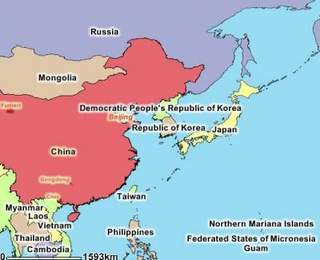
(Sunday Homily) North Korea: Jesus’ Plan for De-escalation

Kim Jong-un

Readings for 23rd Sunday in Ordinary Time: EZ 33: 7-9; PS 95: 1-2, 6-9; ROM 13: 8-10; MT 18: 15-20 http://usccb.org/bible/readings/091017.cfm.

“Meet the Press” and other news programs were abuzz last Sunday over the apparent testing of a hydrogen bomb by North Korea. In the aftermath, President Trump not only threatened nuclear war with North Korea (again!). He also harshly criticized South Korea for proposing to engage its neighbor in diplomatic talks. The president tweeted that such proposals would be fruitless, since North Korea “understands only one thing.”

So rather than talk, the president evidently prefers bombing – nuclear bombing – in an area of the world that is home to half the world’s population as well as to its largest militaries and most prosperous economies. He’s threatening nuclear war in a region that hosts 83 U.S. bases, and where authorities estimate that even a conventional artillery barrage from the North would kill 64,000 (including South Koreans and U.S. military personnel) in the first three hours.

Meanwhile, Kim Jong-un, of North Korea (like Trumps admired “friends,” for example General Sisi of Egypt, the Saudi princes, and Rodrigo Duterte of the Philippines) is, no doubt a repressive dictator who cares little for human rights. However, his development of nuclear weapons and repeated shows of force are not unreasonable. After all, he is exquisitely aware of what happened to Saddam Hussein and Muamar Gaddafi after they stopped similar programs. Like all North Koreans, he recalls his people’s history that saw his country invaded and flattened by the United States during the Korean War which cost 1,316,579 North Korean lives.

Even now, President Kim also feels that his country is encircled and under severe U.S. threat and provocation. Consider how we would feel if North Korea (or Russia or China) had 83 bases in Mexico, if its ships were constantly patrolling in the Gulf of Mexico, or if it were regularly dropping mock nuclear weapons on D.C. What would Washington do under such circumstances? Yet, mutatis mutandis, the United States has been provoking North Korea in exactly these ways for years.

What then would be a proper response to North Korea’s counter-threats?

Today’s liturgy of the word gives specific directions. There, Matthew the Evangelist addresses the problem of conflict resolution. He emphasizes dialog not revenge and violence. In fact, he outlines four alternatives towards resolving disputes even like the one between the United States and North Korea. He has Jesus say that if step one doesn’t work, move on to the subsequent strategies. The four alternatives include (1) healing conversation with one’s adversary, (2) arbitration with a mediator or two, (3) consultation with the entire community, and (4) shunning the offending party.

More specifically, Matthew has Jesus say, “If your brother sins against you, go and tell him his fault between you and him alone . . . If he does not listen, take one or two others along with you, so that ‘every fact may be established on the testimony of two or three witnesses.’ If he refuses to listen to them, tell the church. If he refuses to listen even to the church, then treat him as you would a Gentile or a tax collector.”

Obviously, these words did not come from Jesus himself. To begin with, there was no “church” at Jesus’ time. Jesus was thoroughly Jewish and a reformer of Judaism rather than the founder of some new religion or “church.”

It was different for Matthew who was writing for a community of specifically Jewish Christians some fifty years after Jesus’ death. By then, questions of community order within the emerging church had become prominent. So Matthew invents this saying of Jesus to deal with them.

Another reason for reaching this conclusion is the reference to treating a recalcitrant individual “as you would a Gentile or a tax collector.” This phrase reflects traditional Jewish avoidance of Gentiles and hatred of Roman collaborators. It runs counter to the practice of Jesus who time and again in the Gospels causes scandal by practicing table fellowship and community with the very people Matthew’s instruction indicates are outsiders to be shunned by believers.

Were Matthew following the Spirit of Jesus, the evangelist’s instructions for addressing conflict resolution might involve the following process: (1) private dialog with one’s adversary, (2) arbitration with a mediator or two, (3) consultation with the entire community, and (4) moving in with the offending party – or at least taking them out for dinner regularly.

In any case, the emphasis in Jesus’ own approach is communion, not shunning or refusal to talk. Nowhere does Jesus’ approach say that one should refuse meeting until the offending party stops offending. Much less does the process outlined include “if he refuses to listen, kill him and his entire people.”

“But,” you object, “The words attributed to Jesus in today’s gospel selection are about church order, not about international politics, much less the irrationality embodied in Kim Jong-un. Jesus’ instruction, you might say, is about private disputes among Christians and are laughably impractical in the political sphere.

And that’s just my point. To repeat: Matthew’s account does not reflect the teaching or practice of Jesus. Jesus’ actual teaching was not confined to the private realm. His practice was highly political.

Eating with tax collectors, street walkers, lepers, Pharisees, Gentiles (including members of the Roman army) represented doing the unthinkable, the unexpected, the forbidden. . .  It meant crossing boundaries, breaking taboos, acting counter-culturally, and offending people on all sides of sizzling debates.

This is what the example of Jesus calls us to do even in the case of North Korea. Its emergence calls for departure from business as usual. It requires admission of guilt and responsibility on the part of the United States. It demands a complete reversal of “American” policy.

Today’s second reading from Paul’s letter to the Christian community at Rome puts a finer point on the reasons for such response on the part of those pretending to follow the teachings of Jesus.

Paul reminds us of Jesus’ summary of God’s law. He writes:

“Brothers and sisters: Owe nothing to anyone, except to love one another; for the one who loves another has fulfilled the law. The commandments, ‘You shall not commit adultery; you shall not kill; you shall not steal; you shall not covet,’ and whatever other commandment there may be, are summed up in this saying, namely, ‘You shall love your neighbor as yourself.’ Love does no evil to the neighbor; hence, love is the fulfillment of the law.”

Emmanuel Levinas helps us understand that Jesus’ teaching on neighbor love is much more radical than commonly accepted. Loving your neighbor as yourself, Levinas says, does not mean “Love your neighbor because s/he is like you.” No, according to Levinas, it means, “Love your neighbor as yourself, because s/he is you.”

In other words, there is no meaningful distinction between you and any other human being you care to name – even if we call them “communists” or “terrorists.” Moreover, if you shared the same history as your “enemy,” you would be doing exactly the same thing that currently enrages you. As a result, no killing can be justified. It is suicide. That’s the thrust of Jesus’ words: to kill the other is to kill yourself. Killing of any kind is suicide.

What does that mean for followers of Jesus’ way in relation to North Korea? At least the following, I think:

  • Recognize and publicize North Korea’s willingness to enter dialog about a “freeze for a freeze.” That’s a reference to Kim Jong-un’s apparent willingness to halt development of his nuclear weapons program in exchange for the U.S. halting its war games off the North Korean coast and for stopping deployment of the THADD (terminal high-altitude area defense) anti-missile system in South Korea.
  • Actually enter into such dialog.
  • Freeze the U.S. nuclear weapons modernization program.
  • Discourage our children from serving in our country’s armed force that threatens the world with nuclear destruction.
  • Imagine what would happen if even a quarter of our country’s 160 million people who claim to be Christian refused the self-destruction the words of Jesus and Paul imply.

For Christ’s sake, Mr. Trump, do the unthinkable. Hard as it might be: repent. Listen to North Korea. Reverse course. How dare you threaten collective suicide!