My Journey towards World-Centric Consciousness Continues (9th in a series on critical thinking)

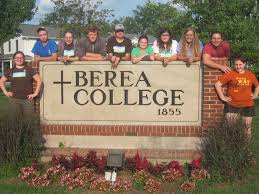
Berea College

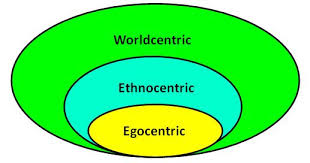
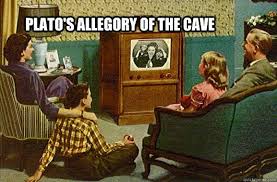
 (In this series, I’ve been trying to explain my approach to “critical thinking” in a world of “fake news” and “alternative facts.” I addressed the fake news first, showing how it’s really an old problem well-addressed by Chomsky in the mid-80s in his “Necessary Illusions.” The question of alternative facts was suggested even longer ago by Plato in his “Allegory of the Cave.” Currently, I’m tracing my own experience with alternative facts, showing how my own set of convictions has changed from childhood, through my education in preparation for entry into the priesthood, and later during my graduate studies in Rome. This week, let me tell you about changes in consciousness that took place after I left the priesthood, working first for the Christian Appalachian Project, then teaching my first few years at Berea College, and via my first sabbatical in Brazil in 1984.The changes, I’m alleging, brought me through development stages identified by Ken Wilber as egocentrism, ethnocentrism, and world-centrism. This week I continue my description of my evolving world-centric understanding. The hope is that my story might help you reflect on your own similar development as a critical thinker.)

After returning to the United States, with my doctoral degree in hand, I spent a “year of discernment” to decide whether or not to remain a Columban priest. Working as a priest for The Christian Appalachian Project in the foothills of Kentucky’s Cumberland mountains gave me first-hand experience of the poverty I had read about in Michael Harrington’s The Other America. It also introduced me to Berea College, where I would eventually spend the next 40 years teaching. Berea had been founded by Christian abolitionists in 1855. It retained its commitment to inter-racial justice, to the Appalachian region, and gradually accepted a revised and remarkably open understanding of Christian faith.

Those commitments required me to teach a first-year General Studies course called “Issues and Values.” And that meant learning about black history, women’s liberation, world religions, the environmental crisis, and the issue of world hunger. Faculty development seminars helped prepare us to teach texts including The Autobiography of Malcolm X, “The Seneca Falls Resolutions,” the Club of Rome’s Limits to Growth, The World’s Religions by Huston Smith, and Food First by Frances Moore Lappe and Joseph Collins. The course was life-changing for my students – and for me.

Even more so was a two semester Great Books course, “Religious and Historical Perspectives” (RH&P) which I began teaching my third year at Berea. Required of all sophomores, the course had a dozen or so sections staffed by professors recruited from across the curriculum. The unspoken rule among them seemed to be “Never admit that you don’t know everything.” This put me at a considerable disadvantage. For the truth is, though I had taken innumerable courses in (mostly Church) history, I still didn’t really understand it. I couldn’t see the pattern. To me, history was quite boring; it seemed like one damn thing after another – most of which I couldn’t remember.

All of that changed with RH&P. Like “Issues and Values,” the course centralized faculty development seminars in which colleagues from the fields of history, English, sociology, economics, biology, physics, religion, and political science spent the first three weeks of our summer vacations reading, studying, and discussing topics like the medieval period, the scientific revolution, Marxism, apocalyptic literature, and evolution. That prepared us to teach our students primary sources including the Bible and authors like Hesiod, Homer, Tacitus, Cicero, Augustine, Luther, Calvin, Dante, Copernicus, Galileo, Newton, Locke, Jefferson, Kant, Adam Smith, Ricardo, Marx, Swift, Mary Shelly, Einstein, and Dietrich Bonhoeffer. It was the best educational experience of my life. For the first time, I found myself understanding history and its patterns. In particular, my study of Marx and “The Communist Manifesto” made even clearer to me the ethnocentrism of my previous education. I began to realize that I had spent my life studying the rationalizers and defenders of the elite capitalist establishment. I had been taught to despise the philosophers and historians of the working class like Marx himself. My long years in the classroom had given me an understanding of the world alien to my own class roots.

I was gaining distance from my ethnocentrism. As I later would put it in my Ten Rules of Critical Thinking, I finally saw the value of respecting history. I was already nearly 30.

Brazil

My insights from R&HP were deepened when in 1983-84 (at the age of 43) I took my first sabbatical and traveled to Brazil. My studies there did wonders for my personal growth and unfolding understanding of facts, truth and critical thinking as essentially relative to one’s stage of personal development.

My chosen task in Brazil had been to pursue post-doctoral studies in the field of liberation theology, which had become a central interest of mine. In Rome I had been introduced to the topic. It was part of what had begun broadening my horizons there.  I discovered it to be a strain of discourse about God as imagined by impoverished Christians in the former European colonies especially in Latin America, but also in Africa and South Asia. Liberation theology emerged from peasants, factory workers, students and housewives who found in the Bible a reflection of their own lives and an inspiration to work for social change. In the stories of the ancient Hebrews they saw people enslaved and colonized as they had been. They discovered in the Book of Exodus a God whose concern was to liberate such slaves and install them in a land “flowing with milk and honey.”

Similarly, in Jesus the exploited found a champion who promised them a place in this-worldly Kingdom of God, where everything would be turned upside-down. The poor would become solvent, while the rich would be dethroned; the first would be last, while the last would be first. For liberation theologians, the Kingdom of God is what the world would be like if God were king instead of Caesar. Moreover, in Jesus Latin America’s beggars, street people, women, peasants, factory workers, and students recognized a kindred spirit. Like them, he was poor and born under a cruel colonizing power. He was the son of an unwed teenage mother, brown-skinned and a friend of prostitutes and sinners. He was homeless at birth and an immigrant in Egypt in his early years. Later he became an enemy of the state. He experienced constant surveillance, and was considered a terrorist. Jesus finished, like so many of Brazil’s poor during the ‘60s, ‘70s and ‘80s, a victim of torture and capital punishment.

As we’ll see next week, liberation theology profoundly changed the “facts” of my spirituality. Joined with what I had learned about Appalachia and western history, it readied for even more profound transformations in consciousness that yet awaited me. My Third World travels had just begun. They would provide the catalyst.

(Next week: I sit at the feet of the liberation theologians I had been reading for years.)

(Sunday Homily) As Our Bombs Fly, I Can’t Say “Happy Easter!” Can You?

MOAB

It’s Easter. But I can hardly bring myself to say “Happy Easter.” That’s because the world is once again rushing towards war – the antithesis of the holiday’s celebration of life. And it’s being led in that direction by a nation where 70-75% claim somehow to follow the risen Christ.

[BTW did you notice that just last Thursday Christian fundamentalists dropped (on Afghanistan tribal lands) the largest Weapon of Mass Destruction (WMD) since Hiroshima and Nagasaki?]

What hypocrisy!

But why the bombing in Syria? Get ready . . .  It’s because of our “enemy’s” deployment of weapons of mass destruction! In Syria, it’s about chemical weapons! It’s about a leader who absolutely must be removed from office because he so resembles Adolph Hitler.

Sound familiar?

What’s his name again?

Wrong if you say Saddam Hussein or Slobodan Milosevic, or Manuel Noriega. This time it’s Bashar al-Assad. What a beast! He’s killed so many children!

But what about the victims of their WMDs, you ask – the children poisoned?

What about the poisoned children in Flint Michigan, I might ask? We stand by silent as they’re allowed to drink water contaminated by lead. Oh, but I forgot; those are American children – and they’re mostly black. And as we all know, black lives don’t matter. They’re on their own. We obviously have greater responsibility for poisoned Syrian kids. (Imagine the unborn fetuses that were killed!) We simply must protect them all from death at the hands of the dictator du jour.

Apparently we’ve forgotten about the 500,000 children our sanctions killed in Iraq during the 1990s. That was o.k. It must have been. Madeleine Albright said so.

Apparently we’ve forgotten about the millions (!) of children in Yemen currently threatened by famine directly induced by the U.S.-Saudi coalition which has been bombing that country non-stop for more than two years. We do nothing for them except continue the mayhem.

But that’s o.k. too. After all, our leaders tell us bombing is the solution to any problem you might care to name. It’s all justified. And besides Yemen is the poorest country in the Middle East. Poor people (especially so far away) don’t really matter either. It’s the arms manufacturers Raytheon, Motorola, Boeing, and their billionaire owners who really count. They’re our neighbors – on Wall Street.

Have you noticed; the stock market is soaring?

And, of course, the record shows that our leaders have been right – in Iraq, Afghanistan, Libya, Somalia. Aren’t we proud of the freedom, democracy, and peace our own WMDs have brought those benighted lands?

And (once again!) the press is cheerleading it all. Check the newspapers. Look at CNN. Hardly a single editorial has criticized the rush to war. Brian Williams finds our Cruise Missiles “beautiful.”

On Easter Sunday, doesn’t all of this seem ironic – and infuriating?

That’s because everything I’ve just described is terribly out-of-sync with the Christian faith so many Americans claim as their own. Jesus was non-violent. He refused to take up arms to defend himself or his friends. He had no fear of death. Or rather, he overcame his fear and endured torture and death on behalf of others. Protecting himself by sacrificing others was not Jesus’ Way. Quite the opposite.

Imagine if 70-75% of U.S. citizens refused to succumb to today’s war fever because of our faith in Jesus’ Way. Imagine if we called upon that faith to demand that President Trump sober up, stop the bombing, and abjure permanent war that is the cause (not the solution) of the Mid-East’s problems.

A faith like that would be worth embracing; it would make a difference. It might allow Jesus’ followers to say (and truly mean) “Happy Easter!”

My Personal Journey from Ethnocentrism towards World Centrism (8th in series on critical thinking)


worldcentrism

[In this series, I’ve been describing my personal development as a critical thinker. I’ve been using the matrix supplied by Ken Wilber who understands human growth as advance through the stages of egocentrism to ethnocentrism and (for some) to world centrism and even cosmic centrism. Each one of these stages, I’ve been arguing, recognizes its own set of “alternative facts.”]

My ethnocentrism grew alongside the first stage in personal development described here last week as “egocentrism.” Ethnocentrism meant that I was fiercely Catholic. For me, that was my primary group identification, my tribe. At this stage, in terms of critical thinking, no other denomination, and certainly no other religion had anything to do with truth that really mattered. All Protestants were simply wrong and destined for hell. For me, that was a fact.

Such conviction stuck with me and grew after I entered St. Columban’s Minor Seminary in Silver Creek, New York (40 miles west of Buffalo) at the age of 14. The seminary belonged to the Society of St. Columban – a missionary group founded in Ireland in 1918 as the Maynooth Mission to China. Its calling involved converting Chinese “pagans” who without our ministries, we all believed, would themselves be bound for hell – another fact.

At this stage, my second ethnocentric form of allegiance was to my country. I remember being confused during a “day of recollection” that our entire seminary (about 100 students) attended at a corresponding institution run by the Passionist Fathers in nearby Dunkirk, New York. That was around 1955, only 10 years after the conclusion of World War II. A rather elderly priest from the host seminary gave some kind of keynote talk. In its course, he described the dropping of atomic bombs on Hiroshima and Nagasaki as “the most immoral acts in history.” I was shocked and entirely confused. Was this man a communist or what?

My suspicions were aroused by the fact that missionaries on leave from assignments in the “Far East” often regaled us with stories of the evil communists who had by then driven our men and other foreigners from China following Mao Tse-Tung’s revolution in 1949. Communist Marxists hated the Blessed Virgin, we were told. That was enough for me. Communists were evil incarnate.

Similarly, those who opposed them at home were correspondingly virtuous. One evening in 1957 during study hall, one of my most admired professors who was proctoring the session, passed by my desk and whispered, “A great man died today.” He was referring to Senator Joseph McCarthy who died on May 2nd of that year.

In 1964, at the age of 24 I cast my first ballot for president. I voted for Barry Goldwater. That shows how ethnocentric I was. In terms of critical thinking, my proud and sincere guideline was “My country right or wrong.” My facts were those of Mr. Goldwater, the Catholic Church, Joseph McCarthy, and J. Edgar Hoover.

World Centrism Emerges

My horizons started broadening in 1962. It was then that I began accepting “alternative facts” soon after Pope John XXIII convened the Second Vatican Council (1962-’65).  

That represented the thin end of a wedge that would gradually change forever what I considered true. The Second Vatican Council seemed to call my most cherished beliefs into question. It recognized that Protestants were “Separated Brethren” rather than enemies surely destined for hell. The notion of priesthood was widened to include their notion of priesthood of the faithful. Council theologians also problematized conceptions of church as the “perfect society” as well as papal infallibility. That in turn led to conclusions about an “ecclesia semper reformanda” (i.e. a church in need of continual reformation). Mandatory celibacy was criticized as an impediment to personal growth among the clergy. Seminary curricula like the one I was following in St. Columban’s Major Seminary were disparaged for their narrowness and tendencies to indoctrinate rather than educate.

Initially I resisted all of that in the name of my faith and tradition. But my ethnocentrism was under assault.

Rome

My resistance though couldn’t last. Following ordination, I was sent to Rome to secure my doctoral degree in moral theology. So I left the seminary hot house, where I had spent my formative teen age and early adult years. Suddenly, I found myself in an international atmosphere that in every dimension was so much more sophisticated than anything I had previously experienced. Rome’s context was still electric in the immediate aftermath of Vatican II. And the Council’s spirit was reflected in the courses I took at the Athenaeum Anselmianum and Academia Alfonsiana. In their light, my secure notions of theological truth underwent continual challenge.

Gradually I found it all quite liberating.

However, on the political front, it was shocking and embarrassing. Remember, these were the late ‘60s. The anti-war movement was in full swing, along with the struggle for Civil Rights and women’s liberation. It was the era of “Troubles” in Ireland. Martin Luther King and Bobby Kennedy were both assassinated in 1968. My last year in Rome (1972), George Wallace was shot, and the Palestinian group, Black September, terrorized the Olympic games in Munich.

Meanwhile, I was living in the Columban residence on Corso Trieste with about 15 other young priests all pursuing graduate work. Two of us were American. The others came from Ireland, England, Scotland, and Australia. Our conversations over meals revealed to me my narrowness of perspective. All my colleagues were better informed than me. They even had a superior grasp of U.S. history.

I resolved to remedy that and gave myself a crash course in current events courtesy of Time Magazine. I even ended up winning our small community’s annual political literacy contest. However, that sort of knowledge turned out to be quite superficial.

Gradually, especially because of my theological studies, I was drifting more and more leftward.  In the field of theology, I frequently challenged my colleagues about the humanity of Jesus, the faults of the church, and the whole idea of trying to convert “pagans” from Buddhism, Hinduism and Islam to Christianity.

None of that sat well with superiors in the Society of St. Columban. Towards the end of my stay in Rome, I was informed that plans had changed. Whereas the whole purpose of sending me to Rome had been to prepare me to teach in our major seminary, I was now considered too “dangerous” for that. I would be sent to Mindanao in the Philippines instead.

For the first time, I considered leaving the priesthood.

Politically, I became similarly alienated. It stemmed from my thought that if what I had been taught about God, the Church and even Jesus were untrue, if I could question the pope, whom I had always considered infallible, why not the U.S. government? Daniel Ellsberg’s publication of The Pentagon Papers in 1971 sealed the deal. Now I strongly opposed the War in Vietnam. I became a McGovern Democrat.

My journey towards world-centrism advanced. In terms of my evolving criteria for critical thought, I could already see that leaving ethnocentrism behind would mean expecting challenge.

Chemical Weapons Victims — Theirs and Ours: The Power of Photos

takeoverworld.info

It is extremely interesting to compare the Trump administration’s response to the use of chemical weapons in Syria and its apparent ignorance of similar weapons use by the U.S. and U.K. in Fallujah in March and November of 2004 under the leadership of Mad Dog Mattis, our current Secretary of Defense.

We all know about Mr. Trump’s reaction a few days ago to the deployment of chemical weapons in Syria.

In the face of denials by the Syrian government, and on evidence that remains undisclosed, the Trump crowd was determined to “punish” the al-Assad government for the heinous crime of using chemical weapons.

In his justification for “punitive measures” on April 6th, President Trump paid particular attention to the photographic evidence of chemical weapons use by the al-Assad government. Specifically, he reminded us of the child victims involved.

The pictures Mr. Trump was referring to included these:

Haley Gas Victims

And this one:

Gas Victims

And this one:

Baby Victims

But what about the U.S.-inflicted atrocities behind photos like this one?:

Fallujah 1

Or this one?:

Fallujah 2

Or this one?:

Fallujah 3

According to a study published in 2010,”Beyond Hiroshima – The Non-Reporting Of Fallujah’s Cancer Catastrophe,” those are pictures of the deaths and birth defects directly resulting from “American” use of depleted uranium and chemical weapons including white phosphorous in Fallujah in 2004.

And it’s not simply a question of birth defects.

According to the same study infant mortality, cancer, and leukemia rates in Fallujah have surpassed the rates recorded among survivors of the U.S. atomic bombing of Hiroshima and Nagasaki in 1945. Following the Fallujah offensives, the rates in question rose by 60%. Dr Mushin Sabbak of the Basra Maternity Hospital explained the rises as resulting from weapons used by the U.S. and U.K. “We have no other explanation than this,” he said.

And the problem extends far beyond Fallujah. Increased cancer rates and astronomical rises in birth defects have been recorded in Mosul, Najaf, Basra, Hawijah, Nineveh, and Baghdad. As documented by Mozhgan Savabieasfahani, an environmental toxicologist at the University of Michigan, there is “an epidemic of birth defects in Iraq.” She writes,

“Sterility, repeated miscarriages, stillbirths and severe birth defects – some never described in any medical books – are weighing heavily on Iraqi families.”

Australian anti-war activist, Donna Mulhearn, who has travelled repeatedly to Fallujah, talking with Iraqi doctors as well as affected families, added to the list:

“babies born with parts of their skulls missing, various tumors, missing genitalia, limbs and eyes, severe brain damage, unusual rates of paralyzing spina bifida (marked by the gruesome holes found in the tiny infants’ backs), Encephalocele (a neural tube defect marked by swollen sac-like protrusions from the head), and more.”

Several highly remarkable aspects of the situation just described immediately present themselves. For one there is the almost total silence of the media about the crimes of the U.S. and U.K. Then there is the lack of outrage (or even awareness?)  on the parts of President Trump and U.N. ambassador, Nikki Haley.

And what about those members of Congress so concerned about damage and pain to unborn fetuses? (I mean, what we have here in effect is a massive abortion operation by the United States in an entirely illegal war which has already claimed more than a million mostly civilian casualties.)

However, what is most remarkable about the contrast between responses to Syria and Iraq is the continued surprise of “Americans” by reprisal attacks by Muslims, which continue to be identified by our media as irrational and evil “terrorist attacks.”

That is, on the one hand, the U.S. feels free to self-righteously rush to judgment and “punish” the suspected perpetrators of the Syrian attacks. But on the other, it downplays, classifies, or otherwise suppresses photographs and scientific reports testifying to its own much worse crimes. Once again, those outrages are carried out against unborn fetuses, living children, women, the elderly and male adults – the very same population cohorts that so concern our “leaders” when they are attacked by designated enemies.

The logic is inescapable. What’s good for the goose is good for the gander. If the U.S. is outraged by the killing of innocents and feels the need to “punish” the suspected perpetrators, someone else the right to treat the United States in the same way. (We might not know of the crimes of our government and military, but the whole Arab world knows!)

So we shouldn’t be surprised by any “terrorist” attacks that mimic on a comparatively small scale the U.S. response to the killing of the “beautiful little babies” that so concern Mr. Trump.

That’s the cost of hypocrisy, double standards, wars of aggression, and the use of outlawed weapons of mass destruction. In war ghastly offensives elicit ghastly counter-offensives.

Once Again We’re Asked to Fall for the WMD Gambit

cluster bombs

Minutes ago I learned that the U.S. has done it again. On mere allegations of WMD use, without public debate or serious investigation, it has launched a barrage of missiles – this time on Syria.

The justification? The Syrian government allegedly used poison gas that killed women and children – “Babies, beautiful innocent babies” as our president put it.

Meanwhile, the United States itself:

  • Is killing women and children every day in Iraq’s Mosul, where it bombs hospitals and mosques.
  • It is supporting and directly participating in a war on the Middle East’s poorest country, Yemen, There, incessant bombings over the past two years have killed 10,000 civilians.
  • In Yemen 17 million people (!) including innumerable “beautiful babies” are under threat of famine directly caused by the rich United States and its super-rich ally, Saudi Arabia. No word of reversing policy. We shed not a tear.
  • None of this even takes into account the 30,000 children who die each day from absolutely preventable hunger. They will be as predictably dead tomorrow as if President Trump shot them one by one in their beautiful little heads.

What does all of this mean?

It means that on principle, the United States doesn’t care about killing civilians or “beautiful babies.” Somehow, it’s the manner of killing them that is objectionable. If civilians starve to death, that’s apparently O.K. If they are slaughtered by bombing, that’s O.K. too.  It’s acceptable even if women and children are killed by the banned chemical weapon, white phosphorous (as they were in Iraq’s Fallujah under Mad Dog Mattis – our current Secretary of Defense) or by banned cluster bombs which end up killing and maiming children because unexploded, brightly-colored ordnance looks like toys.

But poison gas is somehow different. Decapitation is somehow different. Barrel bombs are somehow different – even though its civilian victims are just as numerous and dead as those killed by phosphorous or cluster bombs, or by Cruise Missiles.

And where does all the bombing get us? Absolutely NOWHERE! NOTHING positive has been accomplished by these incessant acts of war committed by the country Dr. King described as the greatest purveyor of violence in the world. NOTHING positive has been served by the wars-without=end waged by our Amerika identified by most of the world as the greatest threat to its peace and security.

How long can we endure the hypocrisy before we all rise up against the warmongers who pretend to lead us?

This is absolutely intolerable!

Step One in My Own Escape from Plato’s Cave (7th in a series on critical thinking)

altar boys

Let me put some flesh on the abstractions I’ve shared so far in this series on critical thinking. I include this autobiographical material to explain the origins of the conclusions and principles I intend to share later on. They all came to me quite gradually and despite my sometimes fierce resistance.

I also present this segment to raise questions for the reader about issues connected with the Global South and its relationship to the United States and its policies. Questions similar to your own, I’m guessing, arose for me in the course of my travels. Hopefully, the rules for critical thinking to be elaborated later on will suggest answers about colonialism, capitalism and socialism, poverty, U.S. policy itself, violence, terrorism, and war. In the contemporary world, those, after all, constitute the topics worthiest of critical thought.

The odyssey I’ll describe has taken me across five continents – from Chicago to Delhi. My journeys had me gathering wisdom from my earliest school teachers, and later from world-renowned philosophers and theologians, as well as from revolutionary fighters, community organizers, gurus, teachers of meditation, and as-yet-to-be-canonized saints. As the story unfolds, I hope you can witness my horizons expand. There is nothing like language study, travel, and challenges from outside one’s cultural cave to stimulate critical thinking. Watching my process may make you aware of your own.

Like everyone else’s, my horizons were highly constricted at first. To be perfectly honest, I did not start thinking in truly critical ways till perhaps the age of 25. Yet before then, I was extremely concerned with thinking and truth. As a candidate for the Catholic priesthood from the age of 14, I studied Catholic “apologetics” and took it all quite seriously. Apologetics meant rational, logical “defense of the faith.” Later as a philosophy major in the Catholic seminary, my whole academic orientation dealt with rational approaches to subjects such as metaphysics, cosmology, and logic itself.

Yet despite such emphasis on rationality, I was not really thinking critically. Instead, my thought processes remained limited by what philosopher, Ken Wilber and others describe as those early stages of consciousness through which every human being must pass. As previously noted, they begin with ego-centrism, pass through ethnocentrism, and finally (for some) arrive at global and possibly even cosmic-centrism.[1]

Reflection has shown me how each stage of my own growth along those lines suggested to me one or more of the ten rules for critical thinking that I mentioned in previous postings.

Egocentrism

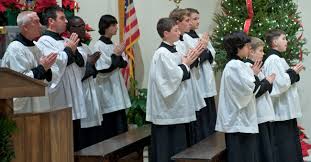
I was always a very religious boy. Living on Chicago’s northwest side, my working class parents (my father was a truck driver) had sent me to St. Viator’s Catholic Grammar School from kindergarten through 8th grade. Every grade there was taught by a Sister of St. Joseph of Carondelet. I have nothing but fond memories of them. They enhanced my spiritual sensitivities. Under their tutelage, I attended Mass every day, went to confession each Saturday, and became a “Knight of the Altar” (altar boy) advancing to the rank of “Vice Supreme Grand Knight.” I prided myself in learning the associated and complex Latin prayers perfectly. I loved all of that and wanted to be like Father Burke, the young but strict disciplinarian who was in charge St. Viator’s School.

With that sort of background, it comes as no surprise that my first worries in life were about the salvation of my eternal soul. That’s the form my egocentrism took. I needed to secure heaven and avoid hell at all costs. Nothing else mattered.

So seriously did I take the task that I found myself afflicted early on with a case of scruples that recurred for me periodically till my early 20s. Scruples meant that I worried about and feared as sinful what other saner people would not – especially anything that might be associated with sex.

So I became obsessed with confessing my “sins,” lest I die in mortal sin and lose my eternal soul forever. That form of obsessive-compulsive behavior was very painful for me. But with help from various spiritual directors, I gradually gained the courage to think for myself (even about God and sin). I remember thinking: “I can’t go on like this. If I’m going to hell, I’m going to hell. But I’m trusting that God is not that fearful Being “up there” looking for the least excuse to condemn me. I’ll take my chances.”

That in itself was a step away from ego-centrism and a nascent expression of critical thinking, at least in the religious sphere. I was somehow unconsciously employing the principle, “Connect with your deepest self.”

(Next week: Ethnocentrism expands my egocentric concerns)

[1] It should be noted that I am about to describe my development of intellectual, spiritual, and political awareness. Wilber refers to such dimensions as “lines” of development. Other lines include physical=kinetic, psychological, artistic, emotional, etc. One might be well-developed in some of these lines, and less advanced in others. For example, a person might be quite advanced intellectually, but less so emotionally and artistically.

(Sunday Homily) Marianne Williamson Raises Jesus from the Dead!

Marianne

Readings for the Fifth Sunday of Lent: EZ 37: 12-14; PS 130: 1-8; ROM 8:8-11; JN 11: 1-45

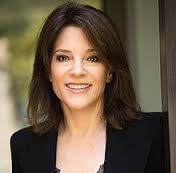
Last week, the great spiritual teacher and social justice advocate, Marianne Williamson came through Berea like a Pentecost whirlwind. The message she brought connects intimately with today’s Liturgy of the Word that centralizes the political realities of resurrection from the dead in hopeless circumstances like those we’re currently experiencing in the United States.

Marianne Williamson had been invited to Berea College by my wife, Peggy, who heads the Women and Gender Studies program there. It was a real coup. Peggy worked for months trying to make it happen. In the realm of spiritual leadership, she (Marianne and my wife too) is a rock star.

Ms. Williamson not only presented an inspiring hour and a half convocation lecture with Q&A, she did the same thing for an hour at Peggy’s “Peanut Butter & Gender” luncheon series at noon. Afterwards, Peggy and I along with Berea’s president and seven of the college’s feminist leaders shared supper with Marianne at Berea’s famous Boone Tavern. To top it all off, Peggy and I drove Marianne and her secretary back to Cincinnati – a two-hour trip that was filled with wonderful conversation about (as my blog site puts it, “Things that Matter”). The whole experience was for me unforgettable.

Here are a few nuggets of Marianne’s wisdom:

  • In the Trump phenomenon, we’ve witnessed a kind of Stockholm Syndrome that has poor and middle class people identifying with and seeming to love their captors and oppressors.
  • Our country and the world are in unprecedented crisis. Our Titanic is headed towards huge icebergs represented by nuclear weapons, climate change, and chemical poisoning.
  • In such context, citizens, not politicians, are captains of our ship. There is nothing more important than our seizing control before it’s too late. Working to do so should fill our waking hours.
  • Young people, no doubt, have much to offer in helping our ship to reverse course. However, as community elders, others of us are Keepers of the Story. We remember the invaluable lessons of Malcolm, MLK, Dorothy Day, JFK, Bobby Kennedy, Gandhi, and Eleanor Roosevelt. We experienced the resistance of the Civil Rights Movement and opposition to the Vietnam War. We must share that experience and the understanding it generated.
  • If in doing so, you find everyone agreeing with you, you’re probably not speaking the truth.
  • On the other hand, when you hear the truth spoken (even if others are rolling their eyes), it’s incumbent on you to say, “Actually I agree with her,” if that’s the case. Studies show that speaking up like that encourages others to overcome inhibitions in advancing the conversation and speaking more truthfully.
  • In its attempts to speak truth, the left is making a huge mistake by not owning the power of faith. It was no accident that abolitionists and women suffragists were Quakers. It’s no accident that Martin Luther King was a Baptist preacher or that Mohandas Gandhi was a Hindu prophet.
  • Imitate those people of faith. It’s no use waiting for the others to “come around.” The majority didn’t support abolition of slavery, women getting the vote, the Civil Rights Movement, gay marriage – or the American Revolution, for that matter. Such changes were effected by relatively small groups of highly committed idealists.
  • In fact, people are hungering for spiritual nourishment; and if they’re not offered authentic spirituality, they’ll accept its ersatz version.
  • That’s a reality that the political right has exploited. It has substituted a Prosperity Gospel that worships capitalism and money for authentic spirituality’s advocacy of social justice.
  • In the Christian context, the ersatz version has figuratively killed Jesus, who needs once again to be raised from the dead.

It’s that last point that especially connects with today’s liturgical readings – and with our current seemingly hopeless political reality. There to begin with, Ezekiel coins the concept of “raising from the dead” to refer to Israel’s impending liberation from its own despair during its Babylonian Captivity. Ezekiel’s metaphor reappears in today’s gospel reading where John the evangelist presents his familiar parable about Jesus raising Lazarus from the grave where Jesus’ friend lay moldering for more than three days.

Consider the hopelessness of Ezekiel’s Israel. His sixth century was the saddest of times – the era of his nation’s Great Exile. The Hebrews had been defeated and humiliated by Babylon (modern day Iraq). Its leaders and a large portion of its populace had been abducted to that enemy state. The exiles felt as if they had been slaughtered culturally. They were far from home, controlled by foreign masters, and apparently abandoned by God.

But the prophet Ezekiel did not share his people’s general despair. So in an effort to regenerate hope, he coined the idea of resurrection. Ezekiel loved that concept. [Recall his Vision of Dry Bones (EZ 7: 1-14).] For Ezekiel resurrection was a political metaphor that promised a new vital future despite appearances to the contrary. Israel, he said, would be liberated from Babylon, return home and experience rebirth. They would come back to life.

In her convocation address to Berea College students, Marianne Williamson embraced not only Ezekiel’s spirit, but that of Jesus raising Lazarus from the dead. She did so by rescuing them both from conservative forces whose version of Christianity has held center stage for the last 45 years. It’s that version, Marianne said, which has metaphorically killed the Jesus of the Gospels, who proclaimed the imminent arrival of God’s Kingdom which belongs to the poor and all of God’s creation, not to the rich whom ersatz Christians prioritize.

Like Ezekiel, Jesus made his proclamation when all appearances indicated that Israel was dead. It was entirely under the heel of Roman jackboots and there seemed no escape. Yet Jesus described a horizon of hope that enlivened the spirits of the poor who were crushed by the Romans and by their rich Jewish collaborators who headed the temple establishment.

In such dire straits, Jesus proclaimed a new future where everything would be turned upside down. He said audacious things. In God’s realm, he insisted, the poor would be in charge. The last would be first, and the first would be last. The rich would be poor and the poor would be well–fed and prosperous. The powerless and gentle would have the earth for their possession. Jesus’ unemployed and famished audiences couldn’t hear enough of that!

So he elaborated. He told parable after parable – all about the kingdom and its unstoppable power. It was like leaven in bread – unseen but universally active and transforming. It was like the mustard seed – a weed that sprouted up everywhere impervious to eradication efforts. It was like a precious pearl discovered in the ash bin – like a coin a poor woman loses and then rediscovers. His metaphors, similes and parables were powerful.

To repeat, Marianne strongly implied that socio-economic conservatism has murdered the Jesus I’ve just described. It has done so by its “preferential option for the rich.” It embraces free-market capitalism, trickle-down theory, and cut-backs in health care, education, and anti-poverty programs. Conservatives complement such horrors with huge tax-breaks for the country’s 1%. All of this is chillingly represented recently by “devout Catholic,” Paul Ryan whose budget promised to sock it to the poor and middle class, while enriching military industrialists along with his affluent friends.

As Ms. Williamson indicated, no one can support policies like Ryan’s and claim at the same time to be a follower of Jesus.

In other words, Ryan on the one hand, and Marianne, and Jesus on the other are on completely different pages. While conservatives have buried the Gospel Jesus, today’s Gospel reading calls him back to life. It’s as if the followers of the authentic Jesus were standing before his grave shouting ”Come Forth!”

And so the tomb opens. And a Jesus who has been buried more than three decades stumbles out. And in doing so, he renews our faith.

Our faith is renewed because, as Marianne reminded us last week, we recognize in Jesus the embodiment of one of life’s fundamental truths: utopian visions of the good and true and beautiful can never be killed, even though they might appear lifeless and be pronounced dead by those who once loved them.

As Marianne Williamson constantly reminds her congregations, “There is no order of difficulty in miracles.” She  reminds us that united with our neighbors, we too, the People of God, possess the power to raise the dead.

So today, as we stand before the grave of God, the church, and Jesus, let’s echo her cry: “Jesus, come forth!” And then for the rest of our lives, let our actions make that resurrection happen in our own!

Testing Chomsky’s Propaganda Model (6th in a series on critical thinking)

Propaganda Model

Last week in this series on critical thinking, I attempted to connect Plato’s Allegory of the Cave with the work of Noam Chomsky and Edward Herman in Necessary Illusions. There they alleged that the function of the mainstream media (MSM) is and has always been the dissemination of propaganda. It’s purpose is to create a shadow world far removed from reality. In other words, President Trump is largely correct: fake news is the rule, not the exception. So, for instance, is fake history, fake economics, and fake religion.

Chomsky and Herman don’t expect readers of Necessary Illusions to simply accept their allegations. Instead, they propose testing the model’s predictions (enumerated in last week’s posting).  The first step in doing so identifies “paired examples.” These involve similar controversial actions, performed by the United States or its client states on the one hand, and by “designated enemies” on the other.

In Necessary Illusions many such pairings are provided – all of them, of course, taken from the 1980s, when the book was published. Then U.S. involvement in Central American wars (especially in Nicaragua) dominated the news. While historically “dated,” the examples still communicate what the authors mean by paired examples. In addition, even dated case studies can prove useful to research in order to broaden one’s historical knowledge, while at the same time testing the model’s predictions. (More current examples will be suggested below.) Those given by Chomsky and Herman include[1]:

  • Celebration of elections in (client state) El Salvador (widely criticized for their meaninglessness in Europe) vs. media adoption of the U.S. official account that the 1984 elections in (designated enemy) Nicaragua either never occurred or were hopelessly rigged, even though the Nicaraguan elections were praised internationally for their freedom and fairness (66-67).
  • The defense and rationalization of the U.S. downing of the Iranian air bus in 1988, vs. the furor over the earlier Soviet destruction of KAL 007 (34).
  • The lack of comment on Indochinese injuries and fatalities caused by U.S. mines left behind after the Vietnam war, and on the refusal of the United States to supply minefield maps to civilian mine-deactivation squads, vs. the denunciation of the Soviet Union for the civilian casualties caused by their mines in Afghanistan, where they did provide maps to assist mine clearing units (35).
  • Media indignation aroused in 1988 over alleged plans to build chemical weapons factories in Libya, vs. the media’s lack of concern for the extensive civilian casualties in Indochina caused by U.S. chemical warfare there through its use of Agent Orange (38-39).
  • The sympathetic support given Israel for its repeated invasions and bombings in Lebanon even in the absence of immediate provocation, vs. the identification of Nicaraguan “hot pursuit” of Contras across its unmarked border with Honduras as an “invasion” of a sovereign state (54-55).
  • The press position that Soviet provision of MIG fighter planes to Nicaragua would legitimate a U.S. invasion of that country, vs. media acceptance of the threat posed to Nicaragua by U.S. shipment of F-5 fighter planes to neighboring Honduras (55-6).
  • Portrayal of the World Court as the culprit, when the United States was condemned for its support of the Nicaraguan Contras in 1986, vs. press astonishment over Iran’s lawlessness when it refused to recognize the Court’s adverse decision during the hostage crisis of 1979 (82).
  • Portrayal of the World Court as the culprit, when the United States was condemned for its support of the Nicaraguan Contras in 1986, vs. press astonishment over Saddam Hussein’s lawlessness when he refused to recognize the Court’s jurisdiction, when it ordered him to cease his occupation of Kuwait in 1990.
  • Press outcry over the genocide of the Pol Pot regime in Cambodia, vs. its silence about the proportionately larger-scale slaughter in East Timor at the hands of U.S.-backed Indonesian invaders (156).
  • Criticism of Soviet failure to pay its U.N. dues, vs. silence about U.S. debts in the world body (222).
  • Focus on Nicaragua’s alleged failures to live up to the Esquipulas II accords, vs. relative silence about the much worse records of client states, El Salvador, Honduras and Guatemala (239).
  • The extensive media coverage given the 1984 murder of Fr. Jerzy Popieluszko in (designated enemy) Poland by policemen who were quickly apprehended, tried, and jailed, vs. the comparatively little space given the murder of 100 prominent Latin American religious martyrs, including the Archbishop of San Salvador and four raped American churchwomen, victims of the U.S.-backed security forces (137, 146-47).

Paired examples with more contemporary relevance might include:

  • The San Bernardino shooting on December 2, 2015 by Muslim, Rizuan Farook and Tashfeen Malik vs. the January 29th, 2017 shooting in a Quebec City mosque by white nationalist and supporter of Donald Trump, Alexandre Bissonette.
  • The U.S. nuclear weapons modernization program announced by President Obama vs. suspicions that Iran might have initiated a program to acquire nuclear weapons.
  • Iran’s nuclear weapons program vs. Israel’s.
  • Monroe Doctrine justifications for U.S. attempts to overthrow the Sandinista government of Nicaragua during the 1980s vs. Russian justifications for its invasion of the Ukraine beginning in 2014.
  • Russian and Syrian atrocities in the Battle for Aleppo in 2016 vs. similar acts by the U.S. and Iraq in the Battle for Mosul that same year.
  • Stories on Cuban political prisoners vs. stories on U.S. political prisoners.
  • Islam as an inherently violent religion vs. Christianity as an inherently violent religion.
  • The Jewish Holocaust at the hands of Germans vs. the Native American Holocaust at the hands of European settlers.
  • Alexander Putin as a “murderer” vs. Barack Obama as a “murderer.”

Testing such paired examples involves

  • Locating news reports of both incidents in the mainstream media, e.g. The New York Times.
  • Counting the number of articles devoted to each incident.
  • Measuring the column inches devoted to each
  • Comparing the reporting of each incident, noting:
    • The source-bases of the articles in question and whether they conform to Chomsky’s predictions as earlier described.
    • Whether there are significant language differences in the reports of the “paired examples.”
    • The significance of the differences.
    • How the quality of evidence advanced or demanded in each case differs. (E.g. Is a “smoking gun” required for alleged U.S. crimes, while something less is tolerated as proving the crimes of designated enemies?)
    • Whether conclusions are drawn or implied about evil intent on the part of “designated enemy” leaders, while similar actions by the U.S. or its clients are excused or rationalized.
    • Whether conclusions are drawn or implied about the corruption and unworkability of the “designated enemy’s” system, while similar actions by the U.S. or its clients are explained in terms of exceptional crimes by officials at the lowest level possible.
    • Whether arrests, trials or convictions are accepted as indications that the system in question does work or that it doesn’t.

Conclusion:

Both Plato’s Allegory of the Cave and Chomsky’s propaganda model suggest that the problem of fake news has been with us for a long time. Even more importantly: critiquing it goes much deeper than merely analyzing what appears in the newspapers, on television or online. Instead, critical thinking often challenges its practitioners to make a 180 degree turn away from accepting what we’ve been told by beloved parents, teachers, priests, ministers, politicians, other public figures and friends.

No wonder it’s so intimidating to walk through our prison’s open cell door!

(Next week: My own journey from egocentrism towards Cosmo-centrism)

[1] Here all page references are to Chomsky, Noam. Necessary illusions. Toronto, ON: CBC Enterprises, 1990.

Sunday Homily: Our Willful Blindness (especially about 9/11)

9:11

Readings for 4th Sunday of Lent: I SAM 16: 1B, 6-7, 10-13A; PS 23: 1-6; EPH 5: 8-14; JN 9: 1-14

The Liturgy of the Word for this fourth Sunday of Lent centralizes the themes of blindness, seeing, light and darkness. For me, those topics raise questions about being sightless in our contemporary culture. With us, it’s a nearly universal condition. In fact, you might say that ours is a culture that actually rewards blindness and punishes those who can see. For instance:

  • We “Americans” can’t allow ourselves to even imagine the implications of admitting that a right-wing coup took place in our country in the year 2000 when conservative Supreme Court justices overruled the popular electoral will. So we pretend that was normal. We refuse to see what actually happened.
  • The coup continued in 2016 when the Republican Party stole control of virtually all branches of the U.S. government. Yes, they stole it through a whole series of anti-democratic measures including Citizens United, gerrymandering, voter suppression, hackable electronic voting machines, James Comey’s last-minute investigation of Hillary Clinton, and possible Russian interference in the whole process. And yet we carry on as though none of those elements made any difference.
  • Meanwhile, politicians assure their electoral futures by asking us to close our eyes to their own crimes while they highlight those of the enemy du jour. For example, they want us to wring our hands over Vladimir Putin’s annexation of Crimea and intervention in Ukraine, while ignoring routine and less warranted U.S. interventions from Grenada to Afghanistan, Iraq, Libya, Somalia, and Yemen.
  • Then there are the climate-change deniers. They refuse to recognize the human causes of climate chaos while reaping billions in profit as the world disintegrates before our sightless eyes.
  • Additionally, we allow ourselves to be more easily persuaded by explanations of the CIA and NSA (part of whose acknowledged mission is to deceive) than by whistle-blowers like Edward Snowden, Chelsea Manning and Julian Assange who simply release what government says about itself. Somehow we’ve been convinced that the official sources have authority and integrity, while the whistle-blowers are suspect.
  • Above all, our culture is blind to what our own eyes told us took place on September 11th 2001, when three World Trade Center (WTC) buildings collapsed in demolition style after a few hours of localized fires of quite ordinary intensity as far as such tragic conflagrations go.

I say “above all” because the events of 9/11/01 have truly changed our world and continue to do so. They have been used to justify “works of darkness” like those Paul alludes to in today’s second reading from Ephesians. Though Paul shrinks from even mentioning them by name, today we might say that they include the War on Terrorism itself along with Afghanistan, Iraq, Libya, racial profiling, drone warfare, torture, water boarding, rendition, Guantanamo, NSA spying, intrusive airport pat-downs . . . .

It’s all justified by 9/11. Paul implies that no one who performs such works is worthy of belief. They operate in secret and in the dark. “Expose them,” Paul urges.

And what needs to be exposed about 9/11? Clearly it’s the weakness of the “official story” we’ve all memorized so well. It says that in the case of two of the WTC buildings, fires feeding off the planes’ jet fuel caused steel girders to melt or weaken to the breaking point. Higher floors fell on top of lower ones, and the buildings pancaked smoothly to the ground. This explanation is accepted even though fires caused by jet fuel cannot even approach the temperatures necessary for such melt-down.

This is not to mention Trade Center Building # 7 that wasn’t even impacted by an airplane and whose demolition style crumbling remains unexplained to this day. Nor need we mention the testimonies of Scientists for 9/11 Truth, the “group of scientific professionals calling for a new, independent, and scientific investigation of the events of September 11, 2001.”

This is not a claim that the U.S. government was necessarily behind the events of 9/11/01. Rather, what’s called for is addressing unanswered questions posed by the scientists just mentioned as well as by scholars of the stature and theological sensibilities of David Ray Griffin.

Griffin is the Process theologian who has devoted the latest phase of his stellar career to raising consciousness about the need to 9/11’s unanswered questions because of the indisputably key role that the tragedy continues to play in “American” political life. He connects 9/11 directly with Jesus and his Kingdom values. I’m sure that, like me, he would see today’s readings as linked to 9/11 blindness.

In 9/11 context, consider today’s readings one by one. They establish principles for dealing with all official stories, explanations and denials.

The first reading tells us that political considerations like the ones just mentioned are not out-of-place in reflections like this. Samuel’s unlikely selection of David from among older and more “worthy” candidates to rule over Israel reminds us that the All Parent is deeply concerned with politics and just governance. In the political realm, Her ways cannot be dictated by what is apparent to merely human wisdom. They always involve preferential option for the least. God’s habit is to turn cultural perceptions upside-down.

The excerpt from Paul’s letter to his friends in Ephesus expands that theme. It identifies Jesus precisely as the one who gives sight to “the least” previously living in the darkness of their contemporary culture governed by falsehood, evil and injustice. Paul says that such darkness is exposed and dispelled by Jesus who brings a bright light that makes everything visible and produces all kinds of goodness, truth and justice.

Then in today’s gospel selection, Jesus shows what it means to bring light. He cures a man born blind. John tells the story through a series of seven interviews involving the poor man. In the process, the formerly sightless beggar doesn’t merely regain the physical ability to see. He also obtains an in-sight that helps him stand up to authorities whose “official” interpretations of Jesus’ healing contradict the blind man’s own senses.

The interviews involve Jesus’ disciples, a conversation with the blind man’s neighbors, three exchanges with Pharisees, interrogation of the blind man’s parents, and a final encounter Jesus himself. In the course of the interactions, the story of the blind man’s cure is recounted three times with delightful elements of magic, humor and irony. The repetition is necessary because the Pharisees, the story’s authority figures, refuse to admit that an ordinary person’s act of seeing can reveal more truth than their official theologized denials and a priori explanations.

So the Pharisees try to convince the cured blind man that he’s lying; he wasn’t really blind at all. They try to get the man’s parents to support their allegations. When that doesn’t work, the Pharisees try to discredit Jesus. He’s a sinner, they say, because he doesn’t observe the Sabbath.

But the beggar refuses to cave in. He insists on believing his own senses, especially sight. “I don’t know much about theology,” he repeats, “but I do know that I was blind and now I see.”

Be like the healed blind man, is the message here. Don’t believe the agents of darkness.

Today’s gospel story goes even further with that instruction. It presents Jesus as not merely turning Pharisaic perceptions upside down, but more generally his culture’s blind spots about truth itself. Those convictions are mirrored in the question of Jesus disciples at the beginning of the episode. Along with Jesus, they see the man born blind. So they ask, “Is this man’s condition the result of his own sin or that of his parents?”

By the end of the story Jesus answers their query with a statement worthy of a Zen master. He says that blindness is no sin at all. It’s seeing that’s sinful. To “clarify,” Jesus adds, “I came into this world for judgment, so that those who do not see might see, and those who do see might become blind.”

In other words, the story is meant to raise the question, what kind of blindness is virtuous and what kind of seeing is sinful? For Jesus, the Pharisees’ claim to clear sightedness is actually blindness. The blind man’s admission that he was formerly blind and that Jesus cured him represents clarity of vision.

With all that in mind, here are the quasi-principles for post 9/11 discernment that today’s readings suggest:

  • Sacred Scripture is indeed concerned with political realities.
  • From the faith perspective, official explanations are probably false.
  • We should not believe those who perform works of darkness.
  • Kingdom consciousness turns official “reality” upside-down.
  • Those whom dominant culture dismisses as blind probably have clearer insight than their “betters.”
  • We should believe what we see with our own eyes regardless of what the agents of darkness tell us.

In a world shaped by our dear “leaders’” entirely suspect account of 9/11, accepting those gospel principles would drive us to join David Ray Griffin and the 9/11 Truth Movement as they call for a new, independent, and scientific investigation of the events of September 11, 2001.

Curing our nation of 9/11 blindness would deprive our masters of a powerful pretext to justify their works of darkness. That deprivation would truly change everything.

Noam Chomsky & Plato’s Allegory: It’s All Fake News (5th in a series on critical thinking)

Plato TV

Last week I reviewed Plato’s Allegory of the Cave in an attempt to show that problems of “alternative fact” and “fake news” have been with us a long time.

In their book, Necessary Illusions, Noam Chomsky and Edward Herman in effect, connect Plato’s parable to contemporary controversy about truth in reporting. The authors do so by explaining what they call the Propaganda Model of information dissemination through ethnocentric political discourse, education, and especially the mainstream media.

For Chomsky and Herman, such information sources create for us an unreal shadow world that fails to take into account the realities of the world’s unseen majority whose lives are shaped by U.S. domination. Besides explaining that theory, the authors offer a way of testing its veracity. This week let me explain the propaganda model and its predictions. Next week I’ll show how to test both.

To begin with, the propaganda model holds that the mainstream media function as vehicles of propaganda intended to “manufacture consent” on the part of our culture’s majority – often described within the cave as “special interests.” The majority includes workers, labor unions, the indigenous, family farmers, women, youth, the elderly, the handicapped, ethnic minorities, environmentalists, etc. The MSM and those they represent seek to secure the latter’s consent for policies favoring what is termed “the national interest.” This, according to propagandists, is the province of corporations, financial institutions and other business elites. Such interests in turn are served not only by the media, but by elected officials, educational institutions, churches, and so on. These latter often represent resistant grassroots movements as threats, since such movements actually seek greater influence on national life.

To control such tendencies, the media in the United States defines the limits of national debate within boundaries set by a two party system of wealthy government officials, by unquestioned patriotism, support for the free market, vilification of designated enemies (e.g. ISIS, Russia, China, Cuba, Syria, Iraq, Iran, North Korea . . .) and support for official friends (e.g. Israel, Saudi Arabia, Great Britain . . .). Support for such “client states” ignores their objectionable actions that often parallel and even surpass similar acts committed by designated enemies.

None of this means that “liberal” criticism is excluded from the national media. On the contrary, such criticism of either government officials (like Donald Trump) or the corporate elite is common. However, the media never allow serious criticism of either the free enterprise system as such, nor of the American system of government.

Testing this model involves comparing its predictions with specific stories as reported, for instance, in the New York Times often referred to as the nation’s “paper of record.” The predictions include the following:

  • More articles will be devoted to the “atrocities” of designated enemies than to similar actions by the U.S. or its clients.
  • Less space (column inches) will be similarly allocated for reporting the alleged crimes of the U.S. or its clients.
  • In either case, story sources will tend to be American government officials and intellectuals (university professors, think tank experts, conservative churchmen) friendly to U.S. policy.
  • The reporting of “enemy” crimes will devote comparatively little space to the “official explanations” of the governments in question.
  • It will depend more heavily U.S. government spokespersons, on opposition groups within the offending countries concerned and on grassroots accounts.
  • The crimes and “atrocities” of designated enemies will be explained in terms of a corrupt and unworkable system.
  • On questionable evidence or with none at all, the crimes and atrocities of “designated enemies” will be attributed to the highest levels of government.
  • Meanwhile the crimes of the U.S. or its client states will be denied, rationalized or otherwise excused.
  • Incontrovertible proof (a “smoking gun”) will be demanded to prove the “crimes” of the U.S. or its friends.
  • If admitted, these crimes and atrocities will be explained as exceptional deviations by corrupt individuals (at the lowest level possible).
  • The ultimate conclusion drawn from the discovery of crimes along with any resulting trials and convictions will be that the “system works.”

This bias will be revealed not only in the ways noted above, but by differences in language (words, phrases, allusions) employed in writing the articles in question.

Again, next week I’ll show how Chomsky and Herman suggest testing this model and its predictions.