Liberation Theology as Critical Thinking: Why God Talk Still Matters

I recently found myself in conversation with a young activist—brilliant, earnest, morally serious—who made a claim that was both understandable and unsettling. Young people, he said, simply don’t want to hear from old people like me, especially old white men. We’ve had our turn. We made a mess. And whatever we call “wisdom,” grounded in our long lives and accumulated experience, feels to them less like insight and more like obstruction.

I understood immediately why he would feel that way. My generation was born during the Great Depression and its aftermath; the boomers who followed presided over imperial wars, environmental devastation, runaway capitalism, and the hollowing out of democratic institutions. Zoomers have every reason to be suspicious of elders who lecture them about patience, realism, or incremental change. The house is on fire. Who wants to hear a sermon about proper etiquette?

And yet, something about the conversation troubled me—not because I felt personally dismissed, but because of the assumptions beneath the dismissal. In particular, the identification of “young people” with young Americans struck me as dangerously parochial. Outside the United States, especially in the Global South, students and young intellectuals are often strikingly comprehensive in their critical thinking. They do not imagine that wisdom expires with age, nor that critique began with TikTok.

Across Latin America, Africa, and parts of Europe, young activists routinely engage figures who are not only old, but long dead: Marx, Engels, Gramsci; Frantz Fanon, Simone de Beauvoir, W.E.B. Du Bois, Mary Daly, and Malcolm X. They read these thinkers not out of antiquarian curiosity, but because the structures those thinkers analyzed—capital, empire, race, class—remain very much alive. Ideas endure because oppression endures.

Nowhere is this more evident than in the tradition known as liberation theology.

Liberation Theology

Liberation theology is often caricatured in the United States as a quaint Latin American experiment, a left-wing theological fad that peaked in the 1980s and was later disciplined by Rome. That caricature misses the point entirely. Liberation theology is not primarily a set of doctrines; it is a method. More precisely, it is a disciplined form of critical thinking rooted in the lived experience of the poor. (In this connection, see my book, The Magic Glasses of Critical Thinking: seeing through alternative fact and fake news.)

At its core lies a deceptively simple question: From whose point of view are we interpreting reality? Classical theology asked what God is like. Liberation theology asks where God is to be found. And its answer—radical then, still radical now—is among the poor, the exploited, the colonized, and the discarded.

This shift has enormous epistemological consequences. It means that theology is not done from the armchair, nor from the pulpit alone, but from within history’s conflicts. Truth is not neutral. Knowledge is not innocent. Every analysis reflects interests, whether acknowledged or denied.

This is why liberation theologians insist on what they call praxis: reflection and action in constant dialogue. Ideas are tested not by elegance but by their consequences. Do they liberate, or do they legitimate domination?

That is critical thinking in its most rigorous form.

Beyond the American Youth Bubble

In Latin America, thinkers such as Gustavo Gutiérrez, Elsa Tamez, Leonardo Boff, Jon Sobrino, and figures like Franz Hinkelammert, Enrique Dussel, Paulo Freire, and Helio Gallardo pushed this method far beyond church walls. They integrated history, economics, philosophy, pedagogy, and political theory into theological reflection. They read the Bible alongside dependency theory and Marxist political economy, not because Marx was a prophet (he was!), but because capitalism is a religion—and a deadly one.

Freire’s Pedagogy of the Oppressed remains one of the most influential works of critical pedagogy worldwide. Its central insight—that education is never neutral, that it either domesticates or liberates—could easily be applied to theology, media, or political discourse. What Freire called “conscientization” is nothing other than the awakening of class consciousness.

Contrast this with much of American youth culture, where “critical thinking” is often reduced to identity signaling or stylistic rebellion, easily co-opted by market logic. The phenomenon of Charlie Kirk and similar figures is instructive here. Kirk’s appeal to college students is not an aberration; it is a symptom. Young people are starving for meaning, for narrative coherence, for moral seriousness. Into that vacuum rush slick, biblically uninformed ideologues like Kirk who weaponize Scripture in service of hierarchy and exclusion.

The Bible as Popular Philosophy

For millions of Americans, the Bible remains the primary source of moral reasoning—and often of historical understanding as well. This is frequently mocked by secular intellectuals, but mockery is a luxury we can no longer afford. The Bible functions in the United States as a form of popular philosophy. People may know little about economics, geopolitics, or climate science, but they believe they know what the Bible says.

And what they believe it says shapes their views on Israel and Palestine, abortion, feminism, sexuality, immigration, and race.

The tragedy is not that the Bible matters, but that it has been systematically stripped of its prophetic core and repackaged as an ideological weapon. White, patriarchal, misogynistic, anti-gay, xenophobic, and racist forces have successfully co-opted a tradition that is, at its heart, a sustained critique of empire, wealth accumulation, and religious hypocrisy.

This is not accidental. Empires have always sought divine sanction.

Yeshua of Nazareth & Class Consciousness

What liberation theology insists upon—and what American Christianity has largely forgotten—is that the Judeo-Christian tradition is saturated with class consciousness. From the Exodus narrative to the prophets, from the Magnificat to the Beatitudes, the Bible relentlessly sides with the poor against the powerful.

Yeshua of Nazareth did not preach generic love or abstract spirituality. He announced “good news to the poor,” warned the rich, overturned tables, and was executed by the state as a political threat. His message was not “be nice,” but “another world is possible—and this one is under judgment.”

Liberation theology takes that judgment seriously. It refuses to spiritualize away material suffering or postpone justice to the afterlife. Salvation is not escape from history but transformation of it.

To say this today is not to indulge in nostalgia. It is to recover a critical tradition capable of resisting the authoritarian, nationalist, and theocratic currents now surging globally.

The Need for More God Talk, Not Less

Here is where my disagreement with my young interlocutor becomes sharpest. The problem is not that there is too much God talk. The problem is that there is too little serious God talk.

When theology abdicates the public square, it leaves moral language to demagogues. When progressives abandon religious discourse, they surrender one of the most powerful symbolic systems shaping mass consciousness. You cannot defeat biblical nationalism by ignoring the Bible.

Liberation theology offers an alternative: God talk grounded in history, class analysis, and the lived experience of the oppressed. It exposes false universals. It unmasks ideology. It insists that faith, like reason, must answer to reality.

This is not theology for clerics alone. It is a way of thinking—rigorous, suspicious of power, attentive to suffering—that belongs at the heart of any emancipatory project.

Old Voices, Living Questions

Perhaps young Americans are right to be wary of elders who speak as if experience itself confers authority. It does not. But it is equally short-sighted to assume that age disqualifies insight, or that the past has nothing left to teach us.

Outside the United States, young people know better. They read old texts because the structures those texts analyze persist. They mine ancient traditions because myths and stories carry truths that statistics alone cannot.

Liberation theology stands at precisely this intersection: ancient scripture and modern critique, myth and materialism, faith and class struggle. It reminds us that critical thinking did not begin with social media, and that wisdom does not belong to any generation.

If we are serious about liberation—real liberation, not branding—then we must reclaim every tool that helps us see clearly. Theology, done rightly, is one of them.

Not because God solves our problems.

But because the question of God forces us to ask, relentlessly: Who benefits? Who suffers? And whose side are we on?

Me and Charlie Kirk

The more I watch Charlie Kirk’s “debates” with college students, the more compassion I feel for him. He strikes me as a brilliant but frightened young man—haunted, as I once was, by a God of fear and judgment. Like Charlie, I once believed in that God until I reached roughly the same age he was when he died at just thirty-one.

That “biblical” God, as I was taught, was the almighty creator, lawgiver, judge, and punisher—the terrifying being who condemned sinners to eternal torment for disobedience. Who wouldn’t be afraid of such a deity? Certainly not me. Like Charlie, I accepted it all.

My education—spanning from kindergarten in 1945 to my doctoral studies in Rome in 1972—was entirely within the Catholic Church. Nuns and priests trained me in one of the most traditional, patriarchal institutions in the world. They taught that there was “no salvation outside the Church.” It was our duty to convert the “pagans.”

So I spent thirteen years in seminaries preparing to be a missionary in Asia—China, Korea, Burma, Japan. Then came five more years of doctoral study in theology. The indoctrination could hardly have been deeper.

Like Charlie Kirk’s brand of fundamentalism, my Catholic formation fostered a deep suspicion of science and “secular” knowledge. Pope Pius IX’s Syllabus of Errors (1864) had warned against modern thought. From it emerged the apologetic mindset that shaped both of us—a defensive “us versus them” posture toward the modern world. Apologetics gave us tidy answers to every challenge: “If they say this, you say that.” Charlie mastered it. So did I. We both found it airtight, logical, and comforting.

Our politics flowed from the same worldview. My Catholic mentors, like Charlie’s conservative allies, saw communism as evil incarnate. When Senator Joseph McCarthy died, one of my seminary teachers told me, “A great man died today.” At twenty-two, I cast my first vote for Barry Goldwater.

And yet, even in that enclosed world, the “bad ideas” we feared had a way of slipping in. Despite my resistance, studying Latin and Greek classics, French and English literature, and Church history began to unsettle my certainty. Questions emerged about morality, colonialism, the Crusades, and the value of other faiths. I fought those doubts—but they persisted.

When the Second Vatican Council (1962–65) finally opened the Church to modernity, I was among the last to let go of my conservative instincts. I loved the Latin Mass, the vestments, and the comforting clarity of dogma. Like Charlie, I thought the Bible was literally dictated by God through chosen “transcribers”—Moses, David, Solomon, Matthew, Mark, Luke, and John.

But my four years of pre-ordination Scripture study shattered that illusion. Doctoral work confirmed it: The Bible isn’t a single book. It’s a diverse library written by many flawed human beings over a thousand years. They used different names for God and often disagreed about divine commands.

The Bible contains myth, legend, poetry, law, prophecy, fiction, and coded “apocalyptic” literature—resistance writings against empire, not predictions of the end of the world. I still remember my shock learning that Matthew’s “three wise men” story was midrash, not history. To treat all of it as literal fact is to miss its deeper truth.

Even so, like Charlie, I continue to believe the Bible is true—not in every detail, but in its moral and spiritual essence. As one of my friends says, “The Bible is true, and some of it even happened.” Its central story is not Adam and Eve’s fall, but the Exodus—the liberation of slaves. That story reveals the Bible’s real heart: what scholars call “God’s preferential option for the poor.”

The Bible sides with the enslaved, the widow, the orphan, the immigrant—the victims of empire. In fact, it may be the only ancient text written almost entirely by people conquered by Egyptians, Assyrians, Persians, Greeks, and Romans. Its truth is that followers of Jesus are called to stand with the oppressed.

I wish Charlie Kirk had lived long enough to encounter that truth. I believe his integrity might have led him toward it. But he dropped out of college after one semester, calling higher education a scam and a waste of time. He thought it was too expensive and too slow—a mere credentialing machine for good jobs.

To him, studying literature, history, or biblical scholarship in college was pointless. Worse, he saw such studies as dangerous, because they exposed students to the “bad ideas” that challenge inherited faith.

That, I think, is the crux of the problem. For both Charlie and my younger self, religion was the one realm where childhood knowledge was considered complete and unchangeable. Questioning it was betrayal. It’s as if a student of arithmetic said, “I know all about addition and subtraction—don’t confuse me with algebra or calculus.”

But algebra and calculus exist. They expand mathematical truth. And in the same way, modern biblical scholarship and scientific discovery expand our understanding of faith. History, psychology, sociology, and biology all reveal new dimensions of reality. Dismissing them out of fear is not faith—it’s denial.

I know, because I lived that denial for years. So when I watch Charlie Kirk confronting the questions of college students, I feel compassion. I see a man of goodwill trapped in a theology of fear. My heart goes out to him—and to all conservative Christians whose terror of change and of God narrows their vision to biblical literalism and political reaction.

Faith can be so much larger than that.
It can liberate, not confine.
It can open hearts instead of closing them.

That’s the lesson Charlie Kirk never got the chance to learn.

When Bible Readers Like Charlie Kirk Ignore Its Class-Consciousness

The recent assassination of Charlie Kirk provoked a flurry of commentary about God, faith, and politics. Among the more thoughtful responses was David BrooksNew York Times column, “We Need to Think Straight About God and Politics.” His essay reminded me once again how central theology remains for understanding today’s world—and how dangerous it is for progressives to ignore it.

But despite Brooks’ good intentions, his article was fundamentally flawed. He missed the Bible’s class-consciousness, a theme that runs through its central narratives and prophetic voices. In doing so, he overlooked the way modern biblical scholarship interprets scripture: as a profoundly political document that consistently sides with the poor and oppressed against the wealthy and powerful. Without acknowledging this, Brooks failed to resolve the very problem he set out to explore: how God and politics relate.

Ironically, Charlie Kirk—whose white Christian nationalism has been condemned by many—grasped something Brooks did not: that the Bible is not politically neutral. But Kirk twisted that insight. Rather than recognizing God’s solidarity with the marginalized, Kirk placed the divine firmly on the side of the dominant white, patriarchal class. His theology inverted the teachings of the Jewish prophet Jesus of Nazareth, who identified God with the poor, the dispossessed, and the oppressed.

In what follows, I want to clarify this point by (1) summarizing Brooks’ argument, (2) contrasting it with Kirk’s theological vision, and (3) comparing both with the insights of modern biblical scholarship, which I’ll describe as “critical faith theory.” My thesis is simple: without acknowledging the achievements of such theory with its implied class-consciousness, we cannot understand either the Bible’s meaning or its challenge to today’s politics.


Brooks’ Confusion

Brooks began by observing that Kirk’s funeral blurred the lines between religion and politics. Speakers portrayed Kirk as a kind of martyr, invoking Jesus’ example of forgiveness, while Donald Trump and his allies used the occasion to unleash vengeance and hatred. Brooks admitted he was disturbed and confused: why such a volatile mix of faith and politics? Shouldn’t religion stay in the private sphere, separate from political life?

To make sense of it, Brooks reached for the old notion of complementarity. Religion and politics, he suggested, are distinct but mutually supportive. Politics deals with power; religion provides the moral compass reminding us that everyone, regardless of ideology, is a sinner in need of grace. On this view, the Bible does not offer a political program. It simply sets the stage for moral reflection.

In short, Brooks tried to preserve a moderate middle ground. Faith should shape moral values but not dictate political programs.

The problem is that this neat separation has little to do with the Bible itself.


Kirk’s Fundamentalist Class-Consciousness

Kirk, unlike Brooks, made no such distinction. He declared openly: “I want to talk about spiritual things, and in order to do that, I have to enter the political arena.”

Brooks responded with incredulity, but Kirk’s reasoning is clear. His fundamentalist reading of scripture led him to embrace a particular worldview that has always been political. He believed the Bible is the literal word of God, with Moses, David, Solomon, and the gospel writers transcribing divine dictation. He accepted the traditional Christian narrative—codified since the fourth century—that humanity is fallen through Adam and Eve’s sin, redeemed by Jesus’ sacrificial death, and destined for heaven or hell depending on baptism and personal acceptance of Christ.

This theology, which became the official religion of the Roman Empire in the fourth century, was weaponized to support conquest, colonization, and oppression. From the Crusades to the slave trade to European colonialism, Christian rulers used this story to justify domination of Muslims, Jews, Indigenous peoples, Africans, and other non-white, non-Christian populations. Christianity, in its imperial form, became the religion of empire.

Kirk, then, was not wrong to insist that “spiritual talk” inevitably enters politics. But he saw Christianity as legitimizing the rule of a largely white, patriarchal elite. His class-consciousness was real—but inverted.


Critical Faith Theory: A Different Story

Modern biblical scholarship tells a very different story. Beginning in the late 18th and 19th centuries, historians, linguists, archaeologists, and literary critics began examining scripture using the tools of critical analysis. They discovered that the Bible is not a single book with one author but a library of texts written and edited over centuries. These texts include myth, poetry, law codes, prophecy, letters, gospels, and apocalypses. They contain conflicting theologies: some justifying empire, others resisting it.

What emerges from this scholarship is not the story of Adam’s sin and Jesus’ death reopening heaven’s gates. Rather, it is the story of liberation from slavery and God’s solidarity with the poor.

The central narrative begins with the Exodus, the liberation of enslaved people from Egypt. Israel’s God revealed himself as a liberator, entering into a covenant with the freed slaves to form a just society where widows, orphans, foreigners, and the poor would be protected. When Israel’s leaders violated that covenant, prophets arose to denounce them and call the nation back to justice.

Over centuries, Israel itself was conquered by empires—Assyria, Babylon, Persia, Greece, Rome. Prophets promised deliverance from oppression, not heavenly rewards in a distant afterlife.

Jesus of Nazareth stood squarely in this prophetic tradition. A poor construction worker from Galilee, he proclaimed the arrival of God’s kingdom—a radically new order of justice and peace. He challenged religious elites, preached solidarity with outcasts, and raised the hopes of the oppressed. Rome executed him as a rebel through crucifixion, a punishment reserved for political insurgents.

His followers, convinced he was raised from the dead, created communities that practiced what today might be called Christian communism. The Book of Acts records that believers shared possessions in common and distributed resources “as any had need.”

This was not an abstract spirituality but a concrete economic alternative. As I’ve pointed out elsewhere, it might be called “communism with Christian characteristics.” As Luke the evangelist put it in his Book of Acts 2:44-45, “All who believed were together and had all things in common; they would sell their possessions and goods and distribute the proceeds to all, as any had need.” In Acts 4:32, the same author writes: “Now the whole group of those who believed were of one heart and soul, and no one claimed private ownership of any possessions, but everything they owned was held in common.”

This approach to scripture—often called liberation theology—describes God as having a “preferential option for the poor.” Far from being neutral, the Bible takes sides. It consistently identifies God with the marginalized, not the powerful.


Jesus as the Rejected One

The class-consciousness of the Bible is perhaps most powerfully expressed in the figure of Jesus himself who, remember, is considered the fullest revelation of God.

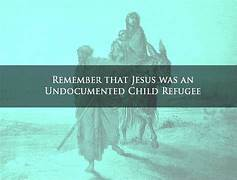
Think about who he was: the son of an unwed teenage mother, raised by a working-class father, living under imperial occupation. As a child he was a political refugee in Egypt. As an adult he befriended prostitutes, tax collectors, and drunkards. He clashed with religious authorities and was executed as a political criminal. His death—torture and crucifixion—was reserved for those considered dangerous to empire.

This is not the profile of someone embraced by elites. It is the life of someone MAGA nationalists like Kirk would reject as unworthy, threatening, or “vermin.” Yet Christians confess this despised and rejected man as the revelation of God.

Jesus himself underlined this identification when he said in Matthew 25:40, “Whatever you do to the least of my brothers and sisters—the hungry, the thirsty, the stranger, the prisoner—you do to me.” The divine is encountered not in palaces, temples, or megachurches, but among the poor and excluded.

That is the class-conscious heart of the Bible.


Why It Matters

The contrast between Brooks, Kirk, and liberation theology highlights three very different approaches to God and politics.

  • Brooks wants to keep religion in the realm of private morality, supplementing politics but never shaping it directly. The problem is that the Bible itself refuses to be apolitical.
  • Kirk recognizes the political dimension but twists it to sanctify empire, patriarchy, and white supremacy. His theology reflects the imperial Christianity that oppressed much of the world.
  • Critical faith theory insists that the Bible sides with the oppressed. Its story begins not with sin and guilt but with liberation from slavery, continues with prophetic denunciations of injustice, and culminates in Jesus’ solidarity with the poor.

For progressives, this matters enormously. Too often the left cedes the Bible to the right, assuming it is inherently conservative. But modern scholarship shows the opposite: the Bible is a revolutionary text. It challenges systems of exploitation and offers resources for building communities of justice, equality, and care.


Conclusion

The assassination of Charlie Kirk has sparked renewed debate about God and politics. Moderates like David Brooks remain confused, trying to maintain a polite separation between religion and politics. Kirk, by contrast, embraced a political theology but aligned God with the ruling class.

The Bible itself, however, tells a different story. Through the lens of critical faith theory, we see its central theme: God’s preferential option for the poor. From the Exodus to the prophets to Jesus and the early church, scripture consistently sides with the oppressed.

Progressives ignore this at their peril. To cede the Bible to the right is to abandon one of the most powerful sources of hope, resistance, and liberation in human history. If read with eyes open to its class-consciousness, the Bible remains what it has always been: not the book of empire, but the book of revolution.

A Gospel for Palestinians under Siege

Readings for the 20th Sunday in Ordinary Time: JER 38: 4-10; PS 40: 2-4, 18; HEB 12:1-4; LK 12: 49-53

Today’s gospel excerpt presents real difficulties for a thoughtful homilist. That’s because it shows us an apparently confrontational Jesus — one who sounds completely revolutionary. It raises an uncomfortable question: why would the Church choose such a passage for Sunday worship? What are we supposed to do with a Jesus who doesn’t sound like the soft-focus “Prince of Peace” in our stained-glass windows?

In the context of Zionist genocide and starvation of Palestinians, perhaps this is providential. Maybe this gospel can help us understand a truth that polite Christianity often avoids: people living under the heel of settler colonialism supported by empire — even people of deep faith — sometimes find themselves pulled toward resistance that is anything but gentle.

We forget that Jesus and his community were not free citizens in a democracy. They were impoverished, heavily taxed subjects of an occupying army. Roman power loomed over their fields, their marketplaces, their synagogues. By today’s international standards, they were an occupied people with the legal right to resist.

And in Luke’s gospel today, Jesus says, without apology:

“I have come to set the earth on fire, and how I wish it were already blazing… Do you think that I have come to bring peace on earth? No, I tell you, but rather division.”

In Matthew’s parallel account, the language sharpens:

“Do not suppose that I have come to bring peace. I did not come to bring peace, but a sword.”

These are not the soundbites that make it into Christmas cards. They make us ask: what happened to “Turn the other cheek” and “Love your enemies”?

Some scholars, like Reza Aslan, suggest that Jesus’ nonviolence applied primarily within his own oppressed community, while his stance toward the Roman occupiers was far less accommodating. Others, like John Dominic Crossan, argue that Jesus was unwaveringly committed to nonviolent resistance, and that later gospel writers softened or altered his message to make it more palatable in times of war.

Either way, the backdrop remains the same: an occupied land, a foreign military presence, a people dispossessed. In that context, fiery words about “division” and “swords” are not abstract theology. They are the language of a people under siege, the language of survival.

This is where the parallels to our world are hard to miss. Today, in the land we call Israel-Palestine, we see a modern occupation with its own walls, checkpoints, home demolitions, and armed patrols. We see Palestinian families pushed off their land in the name of “security.” We see the weight of military might pressing down on those who have little power to push back.

This is not to glorify violence but to say that this kind of daily humiliation, dispossession, and threat inevitably breeds anger, desperation, and — for some — the temptation to meet force with force. The gospel today, like the headlines from Gaza and the West Bank, confronts us with the messy, often tragic choices that emerge under occupation.

As Christians, we have to wrestle with this. Would we cling to a nonviolent ethic, like the Jesus Crossan describes? Or, living under bulldozers and armed patrols, would we find ourselves understanding — perhaps even empathizing with — those who choose other paths?

Jesus’ words today refuse to let us take the easy way out. They call us to name the real causes of conflict — not some vague “ancient hatred,” but the concrete realities of military domination, settler colonialism, and American imperialism. They challenge us to imagine what peace would require: not simply the silencing of the oppressed, but the dismantling of systems that oppress them in the first place.

Because if we only condemn the flames without questioning the spark, we miss the deeper gospel truth: that justice is the only soil in which true peace can grow.

Rescuing Faith from Capitalism: A Theological Response to Project 2025

Readings for 18th Sunday in Ordinary Time: Ecclesiastes 1:1-2, 2:21-23; Psalm 90 3-6, 13, 14, 17; Colossians 3: 1-5, 9-11; Luke 12: 13-21

I’ve recently been invited to join the Arc of Justice Alliance (AJA). It’s a new progressive think-and-action movement designed to offer a coordinated, long-term alternative to the far right’s increasingly authoritarian agenda.

No doubt you’ve heard of the Republican Project 2025. Backed by the Heritage Foundation and other major right-wing institutions, it’s a blueprint for seizing executive power, dismantling federal regulatory structures, militarizing domestic politics, and further entrenching white Christian nationalism. It is as serious as it is terrifying.

The Arc of Justice Alliance is our answer. It recognizes a hard truth: for over 50 years, the U.S. right has invested billions into building a machine—media networks, policy mills, judicial pipelines, and ideological training camps for candidates. Progressives, by contrast, have often been merely defensive, scattered and uncoordinated. That’s changing now. AJA is bringing together scholars, activists, spiritual leaders, artists, and organizers to craft a long-term vision for democratic justice, human rights, and environmental sanity.

But here’s something that may surprise you: one of the right’s most potent weapons has been theology.

The Republican machine has spent decades coopting the Judeo-Christian tradition, turning it into a moral fig leaf for capitalism, nationalism, and even genocidal violence. Faith has been hijacked—not just by televangelists, but by policy strategists who know how powerful religion can be in shaping hearts and winning votes.

The results? A public religion that celebrates guns over peace, capitalism over compassion, and settler colonialism— in Palestine and elsewhere—over human dignity.

As a liberation theologian, I’ve been invited by AJA to help reclaim the authentic Judeo-Christian tradition. To rescue the voices of the prophets—from Moses to Jesus to Paul—from those who’ve turned them into champions of empire. We’re done letting Jesus be portrayed as a flag-waving American whose top moral priorities are deregulated markets, gun rights, and misogyny.

This week’s liturgical readings couldn’t be more timely. They mock the cult of wealth accumulation and call for spiritual liberation from materialist obsession. Ecclesiastes calls it “vanity” to work endlessly, lose sleep over your earnings, and die before enjoying anything. Psalm 90 reminds us life is brief—we might not wake up tomorrow. Paul tells us to set our minds on things beyond consumerism, and Jesus, in the Gospel of Luke, outright laughs at the man who builds bigger barns while ignoring his soul.

These aren’t just pious musings. They’re indictments.

They expose what capitalism demands of us: exhaustion, anxiety, competition, disconnection. They also expose what it consistently fails to deliver: peace, community, purpose, or justice.

Here’s the deeper issue: capitalism isn’t just an economy—it’s a theology. It teaches that your worth is your wealth. That you are alone, in competition, in a world of scarcity. That power, not compassion, is what keeps you safe. That “salvation” is financial security.

But the deeper tradition—the one the AJA seeks to reclaim—teaches something radically different.

It teaches that our lives matter not for what we earn, but for how we love. That justice, not greed, is the heartbeat of the universe. That our deepest wealth is found in community. That joy is a collective act of resistance.

And crucially, it teaches that we must name and dismantle the systems—economic, political, and religious—that keep us enslaved to fear and false gods.

That’s why we’re building the Arc of Justice Alliance. Not just as an intellectual exercise, but as a spiritual and moral response to empire. We are building a machine of our own—not to mirror the right’s authoritarianism, but to match its discipline and exceed it in vision.

So let’s stop pretending the Gospel is about prosperity. Let’s stop letting capitalism wear a halo.

Let’s laugh, like Jesus did, at the absurdity of endless accumulation. Let’s build networks of joy, resistance, and solidarity. Let’s speak clearly, act boldly, and remember what freedom really looks like.

This is what the moment demands. And this is what the AJA stands for.

Please join us!

What Will You Regret When You Die?

An AI-Assisted Homily on Overwork, Jesus, and Choosing the Better Part

Readings for 16th Sunday in Ordinary Time: Genesis 18:1-10a; Psalm 15: 2-5; Colossians 1:24-28; Luke 10: 38-42


Facing the Final Question

What will you regret most when you’re dying?

Chances are, like most people, it won’t be that you didn’t work hard enough. Instead, you’ll wish you’d spent more time with your loved ones—more dinners with friends, more laughter, more life.

“Every male patient I nursed said the same thing: they missed their children’s youth and their partner’s companionship.”
Hospice Nurse

Women often expressed the same sorrow, though many—especially from older generations—hadn’t been the household breadwinners. Still, the verdict was nearly universal: we’ve built lives around the treadmill of work, and at the end, that’s what we mourn.


A Culture Addicted to Work

Let’s be honest: our culture worships overwork.

Especially in the United States, where the average worker puts in three more hours per week than their European counterparts. That’s nearly a month more labor every year.

And when it comes to vacation time? The average American takes less than six weeks off per year. The French take nearly twelve. Swedes? Over sixteen.

Into this burnout culture comes today’s Gospel reading from Luke—a bracing call to step back and reconsider our priorities. A reminder that Jesus, too, challenged the grind.


Jesus, the Counter-Cultural Radical

We often forget just how radical Jesus was.

Deepak Chopra, in The Third Jesus, reminds us that Christ actually instructed his followers not to worry about money, food, or the future.

“Do not worry about your life, what you will eat or drink; or about your body, what you will wear.”
— Jesus (Matthew 6:25)

And today’s Responsorial Psalm adds more layers. The “Just Person” is praised for refusing to lie, slander, or take bribes. That all sounds virtuous—nothing shocking there.

But then comes the line:

“They lend not money at usury.”

Wait—what? Lending at interest is considered robbery in the Bible. Imagine if Christians and Jews actually followed that commandment. Our entire debt-driven economy would have to be reimagined.


Rethinking Martha and Mary

Now let’s talk about Mary and Martha.

Most traditional sermons interpret the story spiritually: Martha represents worldly busyness, while Mary models a quiet, contemplative life devoted to prayer.

But that interpretation misses the human, grounded context of the Gospel.

In Un Tal Jesús (“A Certain Jesus”) by María and José Ignacio López Vigil—a powerful retelling of the Gospels popular across Latin America—Jesus is portrayed as joyful, deeply human, and radically present.

In their version, this story doesn’t take place in a quiet house, but in a noisy Bethany tavern run by Lazarus, with Martha and Mary hustling behind the scenes. Passover pilgrims are crowding in. It’s hot, chaotic, and full of life.

Martha is working furiously. Mary? She’s seated beside Jesus—laughing.


Jesus Tells Riddles

Jesus: “What’s as small as a mouse but guards a house like a lion?”
Mary: “A key! I guessed it!”

Jesus: “It’s as small as a nut, has no feet, but climbs mountains.”
Mary: “A snail!”

Jesus: “Okay, one more. It has no bones, is never quiet, and is sharper than scissors.”
Mary: “Hmm… I don’t know.”
Jesus: “Your tongue, Mary. It never rests!”

They’re cracking jokes, swapping riddles, enjoying one another.
Not praying. Not planning. Not “producing.” Just being.

Martha, frustrated and overworked, finally bursts out:
“Jesus, tell my sister to help me!”

And he answers gently but firmly:
“Mary has chosen the better part.”


Jesus and the Sacredness of Play

That might sound scandalous to us—Jesus dismissing work?

But it’s entirely consistent with his teachings. Jesus valued community over productivity, joy over profit, presence over anxiety.

And that should make us pause.

What if we took that seriously?

What if we reorganized our lives—and our economy—around the idea that play, rest, joy, and social connection are sacred?

What if we voted for leaders who supported:

  • Shorter workweeks
  • Guaranteed time off
  • Universal income
  • Job sharing
  • A culture centered around well-being instead of output?

In the End, What Really Matters?

Because when we reach the end, we won’t say:

“I wish I’d worked more overtime.”
“I should’ve answered more emails.”
“I’m glad I missed those birthday dinners.”

We’ll long for the laughter we didn’t share, the walks we skipped, the stories we never heard, the moments we missed with the people we loved most.


So, What Will You Choose?

Mary or Martha?

Work or presence?

Breadth of life or depth of joy?

“Mary has chosen the better part.”

We can too.

Let’s not wait until the deathbed to realize it.

Pope Leo: Please Go to Gaza; Celebrate Mass in Khan Yunis!

Readings for the Solemnity of Saints Peter and Paul, Apostles: ACTS 12:1-11; PSALM 34: 2-9; 2 TIMOTHY 4: 6-8, 17-18; MATTHEW 16; 13-19.

Every morning as I watch Amy Goodman’s “Democracy Now,” I feel sickened by the reports from Gaza. No doubt that most reading these words have similar experiences. And why not?

In Gaza as everyone knows genocidal Zionists are systematically causing the deaths of untold thousands of children and their mothers. The Zionist monsters starve, bomb, and even gun down their victims as they line up at distribution sites where food is used as bait. The brutes are causing a manmade drought intentionally aimed at depriving infants of water for the formula they cannot live without.

You know the result.

The Zionists do all that in blatant contravention not merely of all human values and international law, but of the Jewish tradition itself. Their genocidal atrocities also contradict the teachings of the one Christians identify as the greatest of the Jewish prophets and whom they worship as the incarnation of God himself.

For that reason, it’s impossible for me to understand how any of that can be squared with the teachings of Yeshua and his critical understanding of his beloved Jewish tradition. It’s impossible for me to comprehend how self-proclaimed pro-life Christians (so concerned about unborn fetuses) can stand by in silence and even applaud when tens of thousands of children along with their mothers, fathers, and grandparents are slaughtered before their very eyes.

Where’s the specifically Christian protest from Yeshua’s followers? Apart from his general calls for a ceasefire, how come the new pope isn’t showing more leadership on this question?  

Contrast their and his relative silence with the prophetic words of Episcopal bishop Mariann Edgar Budde directly confronting her president and vice president on behalf of the most vulnerable in her own country. She was vilified and dismissed by Christians and Jews as disrespectful and overly political.

However, she was only following in Yeshua’s footsteps. After all, he confronted the leaders of his day as hypocrites, whited sepulchers, snakes, and broods of vipers (MT. 23:1-39). And he in turn was only following the examples of great Jewish prophets like Amos, Isaiah, and Elijah. All of them today would be called anti-Semitic, and “self-hating Jews.”

I write such painful words because this Sunday’s “Solemnity of Saints Peter and Paul” celebrates another pair of self-hating Jews. Their following of Yeshua caused them to be seen as enemies of their people and of the Roman imperial power of their day. As a result, they were imprisoned and were ultimately victims of capital punishment.

And they in turn were only following the example of Yeshua himself as I’ve already said. He suffered ostracism, imprisonment, torture, and execution for his own unstinting opposition.

But wouldn’t outspokenness be dangerous for a new pope who’s just getting his papacy off the ground? Wouldn’t it be too polarizing and politically alienating for him to speak directly to Netanyahu, Trump and Vance the way Bishop Budde did? Even more, wouldn’t it be unthinkable for him to actually go to Gaza on papal pilgrimage?

In the context I’ve just described, the readings for the day suggest that those who claim to inherit the tradition of Peter and Paul and of Yeshua’s prophetism should never fear danger, ostracism, or political alienation. They should be the first to put their lives on the line, to risk imprisonment and even death to oppose those who prove unfaithful to the holy Jewish faith. Today’s readings assure the Divine Spirit of the universe will always have their backs.

The first reading from the Acts of the Apostles describes Peter’s harrowing escape from prison. The second reading has Paul claiming that he was “rescued from the lion’s mouth.” That was a clear reference to the famous story of Daniel in the lion’s den.

Yes, the founders of what became Christianity were the enemies of their days’ Jewish authorities – the same “leaders” who were also the sworn enemies of the One identified in today’s selection from the Gospel of Matthew as “the Christ” – i.e., as God’s anointed one.

Of course, Yeshua’s outspokenness brought him to death row too. He passed through the torture chamber where he was nearly beaten to death and crowned with thorns – afterwards only to be hung on a cross – the form of agonizing death that the Romans reserved for enemies of their emperors every bit as cruel and lacking in moral principle as Netanyahu, Trump, and Biden.

In fact, that’s the heart of the Christian tradition – identification with the poor, the oppressed, the imprisoned, tortured, and executed. That’s the meaning of the belief that God manifested the divine essence most fully among the poorest of the poor. God’s Self was maximally revealed in a construction worker, on death row, in a victim of torture, and assassination by the state. Contemporary theologians speak of such revelation in terms of God’s “preferential option for the poor.”

But there’s the difference between Peter, Paul, and Yeshua on the one hand and Pope Leo on the other. All three of the former were impoverished nobodies. They were poor Jewish workers standing up for their comrades in the face of oppression by what Romans characterized as the wealthiest, most militarily powerful empire in the history of the world. (Sound familiar?)

Unlike Yeshua, Peter, and Paul, the newly elected Pope Leo is not a nobody. Unquestionably, he potentially possesses one of the most powerful voices of moral conscience in the world.

Imagine if he used it with Yeshua’s outspokenness on behalf of those martyred children in Gaza!

Imagine if Pope Leo displayed the courage and commitment of his alleged predecessor, Peter or that of St. Paul. Imagine if he showed the fortitude of Bishop Budde or of Greta Thunberg and her colleagues who were recently turned back from bringing food and medical aid to starving Gazans. Compared to the pope, Budde and Thunberg are nobodies too.

So, imagine if Pope Leo decided that his first papal pilgrimage would be to Gaza. Imagine if he celebrated Mass in the ruins of the refugee camp in Khan Yunis? No one could ignore it. The Zionist and American perpetrators of genocide would be completely humiliated.

There’d have to be a ceasefire during his visit. Food aid would be released.

Imagine if he stayed in Gaza till hostilities finished.

That’s why I plead: Pope Leo, in the name of your predecessor, St. Peter, in the name of Paul, and above all in the name of the great Jewish prophet Yeshua, please go to Gaza! Use your power to put a stop to the monstrous slaughter!

3rd Report From Rome: Some Reservations about Leo XIV’s Papal Inauguration

[What follows is the 3rd installment describing a wonderfully synchronic event that coincided with my wife Peggy’s and my visit to Rome to spend three weeks with my son and his family there. The visit just happened to coincide with the elevation of fellow Chicagoan Robert (Fr. Bob) Prevost to the papal throne. Today’s account is about Pope Leo’s inauguration. You can find the other two installments here and here.]  

Peggy and I got up early this morning – 5:00. Our intention was to get to St. Peter’s Square in time to secure seats for Pope Leo’s inauguration which would begin at 10:00.

However, our ride to the basilica was half an hour late. That meant we didn’t get seats.

And though we were able to situate ourselves much closer to the center of action than we did a week ago for the introduction of the new pope, our late arrival left us standing in the increasingly hot sun from 7:00 till noon.

It was worth it though. It gave me plenty of time to observe and reflect on the thousands upon thousands of faithful and simply curious who filled the Square and about a mile of the Via Conciliazione – the broad avenue that extends from the basilica’s piazza towards the Castel Sant’ Angelo.)

The Ceremony

In the meantime, all of us were inspired by the St. Peter’s Basilica choir and their transcendent renditions of Catholic choral classics like “Christus Vincit” and “Salve Regina.” We also ended up praying the five Glorious Mysteries of the rosary in Latin (viz., (1) the Resurrection, (2) the Ascension, (3) the Descent of the Holy Spirit on the Apostles, (4) the Assumption of the Blessed Virgin into Heaven, and (5) Her Crowning as Queen of Heaven and Earth). I was surprised how easily the Latin came back to me.

The whole thing and what followed was made visible for everyone on perhaps 20 huge jumbotrons located strategically throughout the entire venue.

Then about 9:30 Pope Leo arrived. He was standing in the back of his popemobile smiling and giving his blessing to the adoring crowds as the vehicle drove around St. Peter’s square and down the length of the Via Conciliazione.  He passed very close to the place Peggy, our Roman host, and I were standing. The crowd’s enthusiasm, shouts, and applause made it all quite thrilling.

At 10:00 right on the dot, the ceremony began. Everyone in the crowd had been given memorial booklets with the texts of every hymn, litany, and prayer, along with brief descriptions of ceremonies like the bestowal of the papal ring and other signs of papal authority. Texts (including the pope’s homily) were also projected on those large screens. So, it was all quite easy to follow and understand.

The center of it all was the papal Mass, with Leo the celebrant, while various members of the clergy and laity handled the biblical readings and some of the prayers in Latin, Italian, Spanish, English, and Greek.

At communion time, a whole army of priests (perhaps 50 or more) dressed in black cassocks and white surplices processed to various stations throughout the crowd to distribute the “hosts” that Catholics believe are the very body of the risen Christ. I noticed how some recipients received the wafer on their tongues, others in their hands. One priest close to me refused to place the host in extended palms. He repeatedly insisted on laying the host on the recipient’s tongue. The priest who gave me communion placed the wafer reverently in my hand with the traditional words, “The body of Christ.”  

“Amen,” I replied. (I hadn’t received Catholic communion in years.)

All that describes the surface level of my experience this morning. But what did I really see and hear? Let me respond at three levels, one inspirational, one historical, and one political.

Evaluation

At the inspirational level I saw thousands of Catholics and others thirsting for a meaningful spiritual experience of transcendent, invisible dimensions of life. After all, we live in a world rendered increasingly meaningless by materialism, consumerism, war, shifts in global power, and social change almost beyond comprehension. Seeing such people praying the rosary with eyes closed and lips moving was inspiring indeed. So was their reverence in receiving Holy Communion.

At the historical level, I saw something more problematic. I witnessed:

  • An out-of-touch museum performance piece
  • Overwhelmingly led by men in pretentious medieval costume representing the most patriarchal institution in the western world
  • Now led by a nice American priest who actually believes he’s somehow the “Vicar of Christ”
  • Who founded the Catholic Church
  • Despite the evidence of even Catholic scripture scholarship that such conviction remains unsupported by credible evidence. It shows instead that Yeshua of Nazareth remained a good Jew throughout his brief life and had no apparent intention of founding the gentile “church”
  • That emerged definitively in the 4th century when (under Constantine) a powerful faction of the Christian community threw in its lot with the Roman Empire becoming in effect its Department of Religion,
  • Notwithstanding the fact that Yeshua died a victim of Roman torture and capital punishment.

However, most problematic of all were the event’s political dimensions. In that connection I saw a pope who (once again!) during a time of genocide and this time standing before its perpetrators (in the persons of J.D. Vance and Marco Rubio) spoke in generalities and empty platitudes instead of calling attention to their crime. As indicated in yesterday’s piece, I had been hoping for more – perhaps something in the vein of Episcopal Bishop Mariann Edgar Budde’s words to President Trump on behalf of Palestinians and migrants.

Conclusion

When I’ve expressed my concerns to friends and family members, I’m often told that the new pope must be careful and diplomatic. After all, he’s just starting out.

My reply however is that we’re in a state of emergency. The fact of genocide is undeniable in Gaza. Women and children are starving to death. Each morning, it seems, we’re told that as many as 150 Palestinians (mostly those women and children) were killed overnight. Such victims can’t wait.

The pope has potentially more moral power in his voice than anyone else in the world. If he truly believes himself to be the vicar of the prophetic Yeshua, he must use that voice now.

He must forget caution and diplomacy.

2nd Report From Rome: Will Leo Show The Courage of Bishop Budde?

Tomorrow morning at 6:00, Peggy and I will drive to Vatican Square with some new Roman friends to attend the inauguration of Pope Leo XIV. The ceremony will begin at 10:00. That means we’ll be there four hours ahead of time. The attempt to secure good seats promises a long morning.  

As you may recall, what Carl Jung called “synchronicity” has brought us to Rome at this precise time. Our ostensible purpose for being here was simply to spend three weeks with our son, daughter-in-law, and three small granddaughters (ages 5, 3, and 1). We wanted to spend as much time as possible getting to know the girls, whose parents’ foreign employment patterns would otherwise make that far more complicated.

However, my real synchronic purpose for being here, I’m convinced, is to reconnect me with my deep Catholic roots for purposes of final evaluation before transition into Life’s next dimension.

With that process in mind and at the age of 84, I feel overwhelmed by Rome’s beauty – its tree-lined streets, omnipresent sidewalk cafes, its lavish fountains, statuary, Renaissance paintings and churches, its operas and ballets. Today all that seems even more wonderful than it did more than half a century ago when I spent five years here (1967-’72) getting my doctoral degree in moral theology.

Those were magic years for me, when after spending my teenage and early adult years in a seminary hothouse, I finally began waking up to the real world. It all shook me to the core.

And here I’m not just thinking of personal growth experiences, but of the dawning of political awareness about the Vietnam War, the Civil Rights Movement, Women’s Liberation, and of Liberation Theology which I’ve come to understand as “critical faith theory.” (By that last phrase I mean understanding the way Christianity has been used by western colonial powers to enslave, brainwash, and justify repeated exterminations of Muslims, “witches,” Native Americans, kidnapped Africans, and colonized people across the planet.)

Along those lines, being here in Rome during the ongoing holocaust in Gaza makes me think of Pope Pius XII’s virtual silence on the Jewish Holocaust in the 1930s and ‘40s. It has me wondering if Leo XIV will follow in his shameful footsteps.

I mean, the new pope will have a golden opportunity to confront his fellow American Catholics undeniably responsible for the ongoing slaughter in Palestine. I’m referring to J.D. Vance, Marco Rubio, and possibly Joe Biden. It’s as if during the Holocaust, Pius XII had the chance to publicly confront Hitler or Goering.   

Will Leo use this golden opportunity to call them (and the absent Mr. Trump) to task the way the courageous Episcopal bishop Mariann Edgar Budde did when presented with a similar opportunity in the early days of the Trump administration? Recall that as the episcopal leader of 40,000 congregants in the D.C. area, Bishop Budde had Trump and Vance squirming in their seats as she pled for mercy on behalf of the immigrants, refugees, Palestinians, and others whom those key members of her audience show every evidence of despising.

Will the papal leader of 1.2 billion Catholics show similar courage tomorrow? Or will he take refuge in “safe” generalities, “diplomatic” bromides, and empty platitudes about “peace,” justice, and mercy?

My guess is that it will be the latter. But we’ll see.