80th Birthday Reflections Part 7: Priestly Disorder (continued)

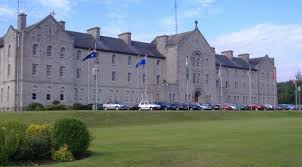
St. Columban’s Seminary, Dalgan, Ireland where in 1970 & ’71 I took part in a General Chapter of the Society of St. Columban

[Before I continue with my 80th birthday reflections about my political development, I must add a brief account of a very important event in the process that eventually led me to leave the priesthood I had prepared so long to enter. The event I describe below gave me an insight into the inner workings of the missionary organization I had joined (the Society of St. Columban) — at the highest level.]

As indicated in previous postings, the changes represented by Second Vatican Council reforms introduced into my life a certain alienation from the Society of St. Columban, from traditional ideas of the priesthood and from my vow of celibacy. My immediate superior’s unfounded accusations recounted in part 5 of these octogenarian reflections were central to the process.

The feelings I described were compounded, when the Columbans convoked their post-Vatican II “Chapter” (leadership assembly) in 1970. The idea was to gather together the group’s leaders to determine how the Society of St. Columban might change in the light of Vatican II documents such as “The Church in the Modern World.”

The leadership in question was comprised of ex officio members such as our current Superior General and his Council. At large members were also either appointed or elected by the group which at its height had about 1000 priest-members. The majority delegates to the Chapter turned out to more than 60 years of age.

With that in mind and because of the objections of younger members, a compromise was reached to allow invitation as well of one representative each from Irish, American, and Australian members of the Society 30 years of age and under. Because of their junior status, the “young” invitees, it was determined, would have voice at the Chapter, but no vote. Joined by two bright counterparts from Ireland and Australia, I was elected to represent U.S. juniors.

The voice without vote restriction had all of us feeling like outsiders from the get-go.

My own alienation was brought to the fore by the ex officio presence of my rector from Rome. Soon after my arrival at the Chapter’s venue (the Columban major seminary in Navan, Ireland about 30 miles from Dublin), I learned that he had wasted no time before conveying to others my status as suspect and “dangerous.”

And why was I considered dangerous? It was because of positions I had taken on issues hotly debated at the time. In retrospect, the positions seem quite tame. But when I wrote them up in an “Introductory Note on Youth Representation,” even my Irish and Australian youth delegate counterparts thought them “too polarizing” to share with the Chapter at large.

The paper contrasted pre-Vatican II positions with post-conciliar approaches to church, mission, sacraments, priesthood and authority. Here’ the gist of what I wrote. Now, it almost seems laughable that such tame positions were considered polarizing:

  • Church: Pre-Vatican II theology, I noted, thought of the Catholic Church as an organization to which everyone must belong in order to save their souls – i.e. to get into heaven. There was “no salvation outside the church.” By contrast, the Post-Vatican II position envisioned the church as an often-small prophetic community at the service of the world itself – helping it towards the fully human life of love exemplified in the example and teaching of Jesus the Christ. Even a very this-worldly life based on self-giving constitutes the meaning of “salvation.”
  • Mission: According to older understandings that had shaped the Society of Saint Columban, our work as missionaries meant saving pagans in China, Korea, the Philippines, and Fiji by baptizing as many as possible into the Catholic Church without which it was impossible for them to get to heaven. In the newer view, quantity of membership took a backseat to quality of witness. And witness meant replicating Jesus’ life of healing, forgiveness and self-sacrifice – for the benefit of the larger world.
  • Sacraments: In the theology imbibed by most members of the Chapter I attended, the sacraments were rituals that made human events like birth, marriage, sickness and death holy. The faithful needed sacraments to turn such secular events into acts of supernatural worth. However, the newer vision saw those human events as already holy simply in virtue of God’s creative order. On this understanding, sacraments became occasions to celebrate life itself and the transcendent dimension found in every human birth, marriage, visiting of the sick, in every act of forgiveness and sharing – whether they might be formally celebrated or not.
  • Priests: Pre-Vatican II theology understood priests as men set apart – almost of a caste different from lay people. Post Vatican II theology understood priesthood as one function or charism among many others within the Christian community – e.g. counsellor, teacher, administrator, musician or prophet. 
  • Authority: In the world of my inculturation, authority was given to administrators. Obedience was a supreme virtue for the rest of us. According to the old view, the ideal superior was a “sound man” who was safe, took no chances and “runs a tight ship.” After the Second Vatican Council, authority is earned, not conferred. Here community leaders are listeners who articulate a community’s consciousness of itself.  They enable rather than direct. They are forward-looking, innovate and take chances. When mistakes are made, they are freely admitted.

I conveyed my initial impression of the Chapter in my journal when I wrote soon after my arrival at the end of September: “Reading over the Chapter publications and talking with various people here make it awfully hard to identify with the Society and with the approaches of this Chapter. It makes me wonder what my own future in an outfit like this can possibly be. I’m estranged; I really am.”

Meanwhile, I also noticed that the Irish seminary itself seemed behind the times. True, I hit it off well with the seminarians taking part in field day competitions and playing basketball on the outside courts. They even wanted me to play on the seminary team.

However, a November (1970) letter to my constituents had me making the following observation regarding the stage of renewal in our seminary in Ireland: “As for the stage of seminary renewal here. . . It’s about up to where we in the States were in the ’64-’66 period. Or maybe even a little before that. . .The difficulty with renewal here (in the seminary and in the Irish church in general) seems to be this: here the church is more or less coextensive with the culture. . . The Irish church can go on speaking in archaic terms, it can go on doing rather meaningless things and still have the impression that it’s communicating the Good News in a meaningful way to the world. However, it’s not. And, after speaking with young people here (outside the seminary), it has become clear to me that this kind of illusion will not be long-lasting. The young are being alienated here too, sad to say.”

The break I predicted came in 1973 with Ireland’s integration into the European Union and with the pedophilia scandals of the late 1980s. Together, they changed everything. Entry into the EU brought the secularization and eventually the Thatcherism and Reaganism of the 1980s that centralized money, entrepreneurism, and consumption just as they did elsewhere in the western world. And, of course, the pedophilia crisis completely discredited the clergy and hierarchy.

The changes introduced were so profound that by 2018 – the 100th anniversary of the founding of the Society of St. Columban – the head of the Society characterized Ireland’s culture as “post-Christian.” Hearing those words from a Columban superior was shocking to me even at the age of 78.

During the two Chapter sessions I attended in Ireland (1970 and ’71 — each lasting several months) all of that was only vaguely foreshadowed. But it certainly was part of the disorder I’ve been trying to explain in these 80th birthday reflections. My highly ordered world was disintegrating at very deep levels that were intellectual, ecclesiastical, very personal, and eventually highly political.

Pope Francis: Please Write That Encyclical against War!

Just War

Readings for 6th Sunday after Easter: Acts 15:1-2, 22-29; Ps. 57: 2-3, 5, 6, 8; Rev. 21: 10-14; 22-23; Jn. 14: 23-29.

Last week, David Swanson, the author of War is a Lie shared an interview with the great Jesuit peace activist, John Dear. The latter had just returned from Rome where he participated in a conference convoked by Ghanaian Cardinal Peter Turkson. Cardinal Turkson authored first versions of Laudato Si’, Pope Francis’ landmark encyclical on the environment. He is often mentioned as a possible future pope.

Father John (who doesn’t like to be called “Father Dear”) reported the conference as “unprecedented.” That’s because activists, theoreticians, and scholars of Peace Studies ended by recommending (in a document over the signature of Cardinal Turkson) that Pope Francis publish another encyclical – this one repudiating the Church’s centuries-long endorsement of Just War Theory.

That theory, of course, lays out principles for judging whether or not a given armed conflict might be justified.

The Turkson document repudiated the idea that modern warfare might ever be justified. This is not only because of the terrible destruction caused by modern weaponry, but because, in fact, 90% of casualties of today’s wars end up being innocent civilians. For those reasons, the conference in Rome recommended that Pope Francis not only repudiate war itself, but discourage Catholics from participating in modern military forces.

Imagine what would happen if Pope Francis were to accept those recommendations – especially on top of his denunciations of capitalism-as-we-know-it, his firm embrace of environmentalism, and his statements about homosexuality (“Who am I to judge?”). Catholic radicals would love it, liberals would be inspired. Conservatives who often identify faith and the military would be shocked and scandalized.

Where would you come down?

Think about that question in the light of today’s readings. Think about what “radical,” “conservative” and “liberal” mean for us as individuals and community members in our faith tradition. How would Jesus be classified? What about Paul? What would they say about entirely rejecting the idea of just wars?

Today’s Liturgy of the Word gives us a clue. It presents us first of all with an example of a key conflict between religious conservatives and radicals within the first century infant church. Paul, Barnabas, Silas and Barnabas lead the radical-to-liberal wing. Peter and Jesus’ brother, James are the leaders of the conservatives.

Paul and his friends come from the gentile world. Their concern is to make Jesus both understandable and acceptable to non-Jews. For their audience, circumcision and dietary restrictions (like not eating pork) represent great obstacles to accepting Jesus’ “Way.”

On the other hand, Peter and Jesus’ brother, James, are Jews through and through. They remember the importance of full observance of the law within the Jewish tradition. They recalled for instance that during the second century Seleucid persecution of the Jews under Antiochus IV Epiphanes, many Jews gave their lives rather than eat forbidden foods. Faced with Paul and his colleagues, the conservative faction wondered: were those lives sacrificed in vain? And besides, circumcision was the identifying mark of Jewish manhood. What good follower of the biblical God set that all-important commandment aside?

The issue is so serious that it provoked a meeting of church leaders – what scholars call the “Council of Jerusalem.” Like Vatican II (1962-’65) it called together church leadership to discuss burning issues of the day and to make changes that responded effectively to what Gaudium et Spes called the “signs of the times.”

Today’s gospel reading implies that leaders could come together with confidence because of Jesus’ promise that his Holy Spirit would continue teaching the church even after he is gone. The Spirit would remind the church of what Jesus himself taught – and more besides.

According to today’s readings, it was the “more besides” that the Jerusalem conservatives were resisting. They didn’t deny, of course, that Jesus himself was a Jewish prophet. (It was Jesus’ prophetic radicalism that angered the Scribes and high priests.) Jesus frequently placed love and compassion above God’s most important commandment, the Sabbath law; he associated with the “unclean;” he even befriended and worked miracles for gentiles. Jesus was never bound by the letter of the law as were his conservative opponents.

At the same time however, Jesus was Jewish to the end. He had no intention of founding a new religion. He was a Jewish reformer. No one could deny that. Jesus didn’t revoke the Law. He simply gave it an enlightened, more humane interpretation. He himself had been circumcised!

It was with these understandings that the Council of Jerusalem convened. And according to Luke, the author of Acts, it was a battle royal. Luke says the meeting was filled with “dissension and debate.”

What we find in today’s first reading is the final decree of the Council of Jerusalem. Concerning circumcision, it says “never mind.” As for dietary restrictions, they could be ignored. The Council was concerned with not placing unbearable burdens on converts. In other words, it couldn’t have been less conservative. The Holy Spirit was leading them in the opposite direction.

The Council of Jerusalem is reputed to have happened no more than 30 years after the death of Jesus. But by the time John of Patmos writes his book of Revelation at the end of the first century, look where his church had come. His vision of the “New Jerusalem” which we read about in today’s second reading doesn’t even have a temple. Jerusalem without a temple?! The city is founded not on the 12 patriarchs of Israel, but on the 12 apostles. How radical is that!?

I suppose what I’m saying is that Christians shouldn’t be afraid of radical change in matters of faith. It’s our tradition – right from the beginning.

In fact, in today’s gospel, John has Jesus say specifically that we should not be agitated or fearful. Rather, our hearts should be filled with peace because of our reliance on the Holy Spirit. John’s Jesus teaches that the Spirit’s presence guarantees the community is moving in the right direction, even when the Spirit’s teachings shock and scandalize – as long as it’s moving towards Jesus’ compassion, love, and ease of burden. The guarantee remains even when the Spirit’s guidance seems to dilute what many consider essential – like circumcision, dietary laws and the Jerusalem Temple.

What “essentials” is the church being called to set aside today? Priestly celibacy? An all-male priesthood? Prohibition of contraception? Are any of these really essential?

And what about just war? Are John Dear and Cardinal Turkson right about its absolute unacceptability to followers of Jesus? Could Jesus ever endorse atomic bombs, drone strikes, cluster bombs, or any of today’s wars that end up claiming mostly civilian victims?

If we fear to say “No” to any of those questions, we should keep Jesus’ words in mind: “Don’t be afraid or agitated; the Holy Spirit guides.”

The bottom line: today’s readings teach that there is no future in timid conservatism. Instead we are called to Christian radicalism (or going to the root of things). The Holy Spirit is that root.

And so we can pray with confidence: “Holy Spirit, in our world racked by war, inspire Francis to write another encyclical. Let him surprise and shock us one more time. Wake us up as a community of faith! Move us towards compassion, love and ease of burden as you did the Jerusalem Council.

We believe that under your guidance, we can never go wrong!”

Second Thoughts about Pope Bergoglio: A Liberation Pope or Just More Blah, Blah?

Bergoglio-foot-washing

I’m still trying to figure out the new pope, Francis I. Initially, I was very skeptical and even negative about his election. After all he was carrying all that baggage from Argentina’s “dirty war.” And some incidents there made me see Francis as just another right-winger in the tradition of his immediate predecessors, Benedict XVI and John Paul II. Tongue partly planted in cheek, I called for his resignation.

Gradually however, I’ve come to question my rush to judgment. True, the new pope faltered with early missteps regarding women. He seemed to reiterate Benedict XVI’s admonition to U.S. women religious to focus more on the issues of contraception, abortion, and same-sex marriage, rather than on social justice for the poor and electoral politics. He even warned a group of sisters against becoming “spinsters” or “old maids” (depending on the translation) rather than fruitful celibates.

But then he went to that women’s prison on Holy Thursday and drew fire from conservatives for including women among those whose feet he washed that day. I concluded that the jury is still out concerning Francis and women. Like most of us males, he clearly has room to grow.

As I wait for the jury’s verdict, two recent incidents have led me towards a more positive evaluation in the court of my own mind. To begin with, Leonardo Boff, a leading liberation theologian who had been silenced by the Ratzinger-Wojtyla team, surprised me by his own positive assessment. He even identified the new pope as a “field” liberation theologian as opposed to a “desk” theologian. Despite his reservations in the past about liberation theology, Bergoglio, Boff said, was truly committed to the poor. Boff was hopeful that the Argentinian might change the direction of the Vatican policy of suspicion and rejection over the last 30 years towards the “preferential option for the poor” so central in the thought of activists committed to the welfare of the world’s poor majority.

Then a couple of weeks ago, a second occurrence made me think Boff might have a point. The pontiff made some surprisingly critical remarks about capitalism and ethics to a group of new ambassadors to the Vatican.

Here are some excerpts. They are worth quoting at length:

“. . . We must also acknowledge that the majority of the men and women of our time continue to live daily in situations of insecurity, with dire consequences. . . The financial crisis which we are experiencing makes us forget that its ultimate origin is to be found in . . . the denial of the primacy of human beings! We have created new idols. The worship of the golden calf of old (cf. Ex 32:15-34) has found a new and heartless image in the cult of money and the dictatorship of an economy which is faceless and lacking any truly humane goal.

The worldwide financial and economic crisis seems to highlight . . the gravely deficient human perspective, which reduces man to one of his needs alone, namely, consumption. Worse yet, human beings themselves are nowadays considered as consumer goods which can be used and thrown away. We have started a throw-away culture.

This tendency is . . . being promoted! In circumstances like these, solidarity, which is the treasure of the poor, is often considered counterproductive, opposed to the logic of finance and the economy. While the income of a minority is increasing exponentially, that of the majority is crumbling. This imbalance results from ideologies which uphold the absolute autonomy of markets and financial speculation, and thus deny the right of control to States, which are themselves charged with providing for the common good. A new, invisible and at times virtual, tyranny is established, one which unilaterally and irremediably imposes its own laws and rules . . . The will to power and of possession has become limitless.

Concealed behind this attitude is a rejection of ethics, a rejection of God. Ethics, like solidarity, is a nuisance! It is regarded as counterproductive: as something too human, because it relativizes money and power; as a threat, because it rejects manipulation and subjection of people: because ethics leads to God, who is situated outside the categories of the market. God is thought to be unmanageable by these financiers, economists and politicians, God is unmanageable, even dangerous, because he calls man to his full realization and to independence from any kind of slavery. . . I encourage the financial experts and the political leaders of your countries to consider the words of Saint John Chrysostom: “Not to share one’s goods with the poor is to rob them and to deprive them of life. It is not our goods that we possess, but theirs” (Homily on Lazarus, 1:6 – PG 48, 992D).

. . . There is a need for financial reform along ethical lines that would produce in its turn an economic reform to benefit everyone. . . Money has to serve, not to rule! The Pope . . . has the duty, in Christ’s name, to remind the rich to help the poor, to respect them, to promote them. . . .

The common good should not be simply an extra, simply a conceptual scheme of inferior quality tacked onto political programs. . . . In this way, a new political and economic mindset would arise that would help to transform the absolute dichotomy between the economic and social spheres into a healthy symbiosis. . . .Are you surprised by those words? Here the pope is saying that:

1. The wealth gap between the rich and poor is completely unacceptable.
2. It is caused by unfettered markets which reduce people to consumers subordinate to material production.
3. Free markets are heartless, inhumane and idolatrous.
4. Remedying that problem necessitates government interference in the marketplace.
5. . . . based on an ethics of solidarity taking its lead from the poor and prioritizing human welfare and the common good over untargeted economic growth.
6. Solidarity ethics find their origin in God who calls all humans to liberation from slaveries and idolatries of all kinds.
7. So governments must overcome their reluctance to correct the wealth-concentrating tendencies of free markets,
8. . . . and the attitude which sees ethical and theological concerns as counter-productive when they
prioritize the needs of the poor over the profits of financiers and the moneyed classes.
9. Avoidance of these responsibilities makes governments complicit with the crimes of robbery from the poor who (rather than the rich) are the true owners of the resources of God’s creation.
10. Economics and social justice should not be understood as standing in opposition to one another, but as mutually nourishing.

I find the pope’s words encouraging and quite promising. True, most popes (even J.P.II and Ratzinger) made isolated statements in tune with the comments just quoted. And taken as a body, the social teachings of the Catholic Church from Leo XIII’s Rerum Novarum (1891) to Vatican II’s “Church in the Modern World” (Gaudium et Spes, 1965) are progressive enough though they remain the church’s “best kept secret.”

Yet, the words I’ve quoted come from a new pope who (as Boff notes) has demonstrated his concern for the poor in practical ways, and has embodied a preference for simple living, And that might be sufficient reason for hope the pope’s words will define his papacy rather than simply being more papal “blah, blah.”

The jury’s still out.