Sunday Homily: The Ayatollah Was Correct: the U.S. IS “the Great Shaytan”

Ayatollah

During the 1979 Islamic revolution in Iran, the West became aware of Muslims’ profound mistrust of the United States. The Ayatollah Khomeini repeatedly referred to “America” as “the Great Satan.” Today’s liturgy of the word suggests that the Ayatollah’s reference was spot on. The United States is indeed the Great Satan leading the world astray with its beliefs for instance that limitless wealth brings happiness, that bombing can be a humanitarian act, and that “fearing for our lives” justifies killing others.

As we’ll see in today’s readings, such beliefs are ‘satanic” both in the eyes of Jesus and of the Great Prophet Mohammed. In the United States, their infernal results are on display in each morning’s headlines where:

• The rich and famous end their lives in despair
• The U.S. bombs and drones to save the Yazidis in Iraq (or Libyans in Libya, Afghans in Afghanistan, Ethiopians in Ethiopia . . .)
• Police killings are uniformly justified by the claim “I feared for my life.”

I raise the issue because the term “Satan” is prominent in today’s gospel reading. There Jesus uses it in contrast to his own beliefs about life’s divine purpose which turns out to be incompatible with dominant western beliefs. According to both Jesus and Mohammed, life’s purpose is not to accumulate riches. Nor is life rendered meaningful by killing others even to save one’s friends. Neither do Jesus’ followers have the mandate to protect their own lives at any cost. Quite the opposite!

What is life about then? Consider Jesus’ answer in this morning’s gospel reading.

There Jesus uses the epithet “Satan” to refer to the leader of his inner circle of twelve. In Jesus’ eyes, Peter merits the name because he misunderstands what life is for. That’s shown by the fisherman’s efforts to dissuade the Master from following his divine “prophetic script.” For Jesus, that pattern would require him to lose his life for speaking truth to power. As we’ll see, using such speech in an effort to change the world – to bring on God’s Kingdom – turns out to be central to Jesus’ understanding of life’s purpose.

In any case, like the prophet Jeremiah in today’s first reading, God’s spirit has put Jesus out of control. So, like Jeremiah, he feels compelled by an inner fire to speak the truth, whatever its cost. As the earlier prophet had put it, God’s truth “becomes like fire burning in my heart, imprisoned in my bones; I grow weary of holding it in; I cannot endure it.”

So in today’s reading Jesus “began to show his disciples that he must go to Jerusalem and suffer greatly from the elders, the chief priests and the scribes and be killed and on the third day be raised.”
Peter objects. “God forbid! This will never happen to you,” he says.

It’s then that Jesus replies: “Get behind me, Satan. You are an obstacle to me. You are thinking not as God does, but as human beings do.”

Hearing those words, most of us inevitably connect with images right out of Dante’s Divina Comedia – enhanced by subsequent satanic glosses to include a fire-red body, horns, cloven hooves, tail and pitchfork. But that wasn’t the image in Jesus’ mind.

Instead, Jesus was thinking in terms of the Hebrew tradition. There Satan was a member of God’s heavenly court. He was God’s prosecuting attorney who typically raised questions that Yahweh’s overwhelming goodness and generosity might otherwise obscure.

In Jewish tradition, Satan was a realist who believed that faith and prosperity go together. Take away prosperity and goodness and faith will disappear too.

That was the thrust of Satan’s bet with Yahweh that we find in the book of Job. Job is good and rich. God is proud of his servant’s devotion. Satan says, “Don’t be naïve. All of that will change if you simply remove your servant’s wealth, children, and health. Just watch and see.” The familiar story unfolds from there.

So when Jesus calls Peter “Satan,” he’s not really telling his friend to go to hell. No, he means what he says, “You are an obstacle to me. You are thinking not as God does, but as human beings do.” Human beings (like Satan) connect faith with prosperity. But in Jesus’ eyes, prosperity is not life’s overriding purpose. Neither is personal safety protected by violence.

But what does God really “think” about the purpose of life? Jesus words about saving and losing life provide a clue.

Jesus says, “Whoever wishes to come after me must deny himself, take up his cross, and follow me. For whoever wishes to save his life will lose it, but whoever loses his life for my sake will find it. What profit would there be for one to gain the whole world and forfeit his life? Or what can one give in exchange for his life?”

These are stunning words. They turn the world’s values upside down. They imply that God “thinks” that life’s purpose involves opposing empire. (Remember Rome reserved “taking up the cross” as a punishment for insurgents.) Life’s purpose entails self-denial, not self-gratification. It means holding life loosely, being prepared to surrender it “for justice’s sake” at any moment. It means preferring God’s Reign to possessing the entire world. It means returning kindness for evil, even if that means losing one’s own life as a result. Or as the psalmist puts it in today’s responsorial, “God’s kindness is a greater good than life itself.”

All such ideals run counter to the U.S. culture which Muslims find so threatening. They have become the ideals of the world which in today’s second reading Paul tells us to resist. “Do not conform yourselves to this age,” he writes, “But be transformed.” Only personal transformation, he adds, will enable your mind to discern what is good, pleasing and perfect in God’s eyes – even if it leads to the sacrifice of your own life.

As a Muslim who embraced the New Testament tradition, the Ayatollah Khomeini understood Jesus’ words. He saw that the order championed by the United States contradicts the basic values of Islam and the Judeo-Christian tradition about community, compassion and care for society’s most vulnerable.

So he viewed “America” as what Muslims call “Shaytan.” For Muslims Shaytan is not the devil either. Instead, he is “the Great Deceiver,” whose promises mislead, corrupt and immiserate those who believe them.

In fact, while promising peace, prosperity, and happiness, the West’s elevation of commercial values to a position of supremacy in the moral hierarchy could not be (in Muslim eyes) more deceptive and disastrous. Without care for society’s poor and vulnerable, commercial values lead to individualism, competition, war and unhappiness.

None of those represent God’s purposes for human beings.

Would that we Christians could embrace those teachings and stop our mindless pursuit of wealth, our belief that violence saves, and our cowardly conviction that anything is justified by “fear for our lives.”

As Paul says, the authentic teachings of Jesus challenge such conformity to “this age.” Who among us is willing to embrace such challenging truths?

(Sunday Homily) Jesus Comes Very Close to Rejecting a Palestinian Woman as a “B_tch”

Palestinian Woman

Readings for the 20th Sunday in Ordinary Time: IS 56:1, 6-7; PS 67: 2-3, 5, 6, 8; ROM 11: 13-15, 20-32; MT 15: 21-28. http://usccb.org/bible/readings/081714.cfm

“Have pity on me, Lord, Son of David! My daughter is tormented by a demon.” Those are the words that a woman remembered as “Syrophonecian” addressed to Jesus in today’s gospel reading.

Jesus responds by ignoring the woman at first and then by disrespectfully associating his petitioner with dogs – almost calling her a “b_tch.”

We’ll come back to that in a moment.

For now note that “Syrophonecian” meant the woman was not a Jew. She was a native or inhabitant of Phoenicia when it was part of the Roman province of Syria. She was living near the twin cities of Tyre and Sidon – a gentile or non-Jewish region of the Fertile Crescent where Matthew takes trouble to locate today’s episode.

That would have made Jesus’ petitioner what we call a “Palestinian” today. In other words, Matthew’s geographical note serves to remind us that the Jews never controlled all of their “Promised Land.” Instead, they always had to share it with “Palestinians” including Canaanites, Hittites, Amorites, Perizzites, Hivites, Jebusites, Geshurites, Maacaathites, and Philistines.

That in itself is significant in the light of Israel’s ongoing brutal war of extermination against Palestinians. There the State of Israel (with supporters often invoking biblical precedent) has adopted the one-state position that is bent claiming all of Palestine for itself. It relegates Palestinians to Bantustans in a particularly brutal Israeli version of apartheid and ethnic cleansing.

Were Jesus in Gaza today, millions of Palestinian parents could echo the poor mother’s petition in today’s’ gospel selection, “Have pity on me, Lord, Son of David! My daughter is tormented by a demon.” And the demon in Gaza’s case would be the State of Israel itself – the latest incarnation of the puppets of Empire whom Jesus opposed so strongly in his own day. [Recall that Palestine in Jesus day was controlled by Jewish puppets of Rome. (Jesus clashed with them again and again.) Today those who pull strings on the marionettes reside in Washington.]

The result is that in Gaza over the last five weeks, more than 2000 Palestinians have been slaughtered by the ones considering themselves God’s “chosen” – 25% of the victims being children, at least another 25%, women like the one called “Syrophoenician” and her demon-possessed daughter.

Daniel Ortega, the President of Nicaragua, recently applied the term “demon” appropriately. He said, “Prime Minister Netanyahu appears to be possessed by the devil, he needs Pope Francis to exorcise it, to become appeased.” Ortega wondered, “Why doesn’t anyone condemn or sanction the state of Israel?” In his opinion, Palestine is the victim of “madness” on the part of the Israeli leader, who seeks to “annihilate the Palestinian people.” Ortega meant that Israel is “committing genocide” in the Gaza Strip, a crime so “terrible that it is only comparable to the crimes of the Nazis,” he said.

You might have been surprised at Jesus’ response to the Syrophonecian woman. As I said, at first he gives no reply at all; he ignores the woman completely. If Matthew’s account is accurate, in his silence Jesus was showing himself to be captive to his own cultural norms. It was inconceivable in Hellenistic antiquity for a strange woman to directly approach a man the way the woman in this story did. Above all was it so for a gentile woman to directly address a Jewish man. In other words, Jesus’ silence was part of his “honor culture.”

But it gets worse. When the woman insists, Jesus implicitly calls her a “b_tch.” He says, “I have been sent for the lost children of Israel . . . it is not right to take the food of the children and throw it to the dogs.”

The reply seems out of character for Jesus, doesn’t it? In fact, such dissonance has led many to reject the saying as inauthentic. Whatever the case, Jesus’ reply only echoes the rabbinic saying of the time, “He who eats with idolaters is like one who eats with a dog.”

In other words, Jesus’ comparison stands in a long line of likening cultural outsiders to animals. Most recently, in the case of Gaza, Ayelet Shaked, a member of the Israeli Parliament, compared Palestinians like the woman in today’s gospel to snakes. She endorsed the killing of Palestinian women, like the petitioner in the story before us, calling their children not dogs, but “little snakes” worthy only of extermination.

Shaked said,

“Behind every terrorist stand dozens of men and women, without whom he could not engage in terrorism. They are all enemy combatants, and their blood shall be on all their heads. Now this also includes the mothers of the martyrs, who send them to hell with flowers and kisses. They should follow their sons, nothing would be more just. They should go, as should the physical homes in which they raised the snakes. Otherwise, more little snakes will be raised there.”

The woman in today’s gospel has a very different voice from Ayelet Shaked’s. She replies, “Please, Lord, for even the dogs eat the scraps that fall from the table of their masters.”

The witty reply astonishes Jesus. He exclaims, “O woman, great is your faith! Let it be done for you as you wish.” That is, the woman “converts” Jesus; he concedes her argument. The one the gospels present as the master of verbal riposte is vanquished by this simple Palestinian mom.

What does the interaction between Jesus and the woman called “Syrophonecian” mean for us today – in the context of Israel’s demonic attack on the Palestinian descendants of the woman in question? What does it mean for Gaza and for us who watch in helpless disgust?

I think it means that:

• The “faith” of the Syrophoenician woman was not “in Jesus” as the incarnation of God, but rather in the inclusivity of God’s love that extends beyond ethnic and religious differences.
• In that sense, she believed in the New Universal Order Jesus referred to as God’s Kingdom.
• More specifically, today’s gospel reading presents the woman as enlightening Jesus – as reminding him of the Kingdom’s complete inclusivity.
• In view of Jesus’ own “enlightenment” at the hands of this poor Palestinian woman, it is no longer possible to blindly identify “God’s People” with any particular state.
• I mean, the State of Israel as such does not represent the biblical God’s Chosen People.
• Today that honor (curse?) belongs to the Palestinians who, as good Muslims, share Jesus’ faith that God sides with the widows, orphans, immigrants and oppressed whatever nation they belong to.
• This means that in the case of Palestine, Jesus’ followers should be one the side of Palestinians rather than the Jewish State.
• Being on their side means petitioning the U.S. government to stop its demonic support of Israel which has moved even further from its identity as “People of God” than it had in Jesus’ day.

As always, this week’s readings invite us to break the chains of our cultural norms – just as Jesus was forced to by the Syrophonecian mother.

(Sunday Homily) Liberation Theology, BRICS and the Untelevised Global Revolution

BRICS 2014

Readings for Seventeenth Sunday in Ordinary Time: I KGS 3: 5, 7-12; PS 119: 57, 72, 76-77, 127-130; ROM 8: 28-30; MT 13: 44-52; http://www.usccb.org/bible/readings/072714.cfm

The whole world was surprised when the Soviet Union dissolved in 1989. The dissolution represented an earth shaking paradigm shift to say the least. However, virtually no one claims foreknowledge on that one. One wonders how such oversight was possible.

Something similar is happening today. The poor of the world are asserting themselves against U.S. hegemony. Yet, virtually no one in the mainstream seems to notice. Once again, the revolution is not being televised.

Not even followers of Jesus’ Way are commenting. And this despite the fact that before all others, we should be attuned to paradigmatic shifts in world order connected with what Jesus termed the Kingdom of God.

Such paradigm contrast is suggested by today’s liturgy of the word. It juxtaposes the dream of Solomon, Israel’s would-be empire builder, and Jesus’ words about the contrasting nature of God’s Kingdom.

Let me show you what I mean by connecting the three elements I’ve just mentioned: (1) today’s untelevised revolution, (2) Solomon’s imperial ambitions, and (3) Jesus’ contrasting Kingdom of God.

Begin by noting that the current world order is dissolving before our very eyes. That became apparent two weeks ago at the Sixth Summit of Heads of State and of Governments of BRICS which took place in Fortaleza, Brasilia. Besides leaders from the BRICS countries (Brazil, Russia, India, China and South Africa), the presidents of UNASUR, the Union of South American Nations, all participated including Kirchner (Argentina), Bachelet (Chile), Santos (Colombia), Morales (Bolivia), Correa (Ecuador), Mujica (Uruguay), Maduro (Venezuela), and Umala (Peru).

Those present at the conference represent more than half the people in the world and fully 25% of its gross domestic product. That’s more economic power than the United States which controls 20% of the world’s GDP with 5% of the planet’s population.

And what did the BRICS Conference participants discuss? Not bombings, sanctions, debt ceilings, presidential impeachments, or lawsuits against heads of state – not birth control, abortion, gay marriage or border security. Instead they actually confronted the shared problems of the world – all the situations our provincial U.S. Congress systematically avoids, denies, and/or manipulates for political purposes.

Even more importantly, BRICS Conference attendees specifically planned the de-Americanization of the global economy and the creation of a multilateral, multipolar world prioritizing the needs of the Global South. Deliberation topics included:

 * Third World development in general
 * The industrialization of Africa in particular
 * The Creation of a BRICS development bank to replace the World Bank and the IMF
 * New international currencies to supplant the U.S. dollar as the world reserve
 * Sustainable responses to climate change
 * Building a railway from the Pacific Ocean in Peru to the Atlantic in Brazil
 * Installation of an IT cable from Vladivostok to Shantou, Chennai, Cape Town and Fortaleza (bypassing the United States).
* BRICS collaboration with the Shanghai Cooperation Organization (SCO) which binds Russia and China into a common security policy with Central Asia.

Such matters are world-transforming.

In fact, they represent practical steps towards something like the global wealth tax suggested by Thomas Picketty in Capital in the 21st Century – a tax dismissed by U.S. mainstream media as excessively idealistic, impractical and never-to-be implemented.

The thing is: those willing to impose such tax for the benefit of the developing world belong to the developing nations themselves. They are going their own way free from the hegemony of the United States.

All of this is relevant to today’s liturgical readings.

The selections implicitly compare the paradigm shift heralded by Jesus and his proclamation of God’s Kingdom to replace the imperial order not only of Rome, but of Israel itself. Israel’s leaders a thousand years earlier had hijacked the Mosaic Covenant favoring God’s poor.

In today’s first reading Solomon’s court historians mask the hijacking by predictably identifying their employer as “the wisest man ever,” just as before him they had identified Solomon’s cruel and womanizing father, David, as “a man after God’s own heart.” In this royally hijacked form, the Covenant connected God and the royal family. It assured a royal dynasty that would last “forever.” It guaranteed God’s blessings on Solomon’s expansionistic policies. (That’s like the clap-trap we have to endure from American Exceptionalists and from those anticipating a New American Century.)

The covenantal truth was much different. In its original Mosaic form (as opposed to the Davidic bastardization), the Covenant joined Yahweh (Israel’s only King) and escaped slaves – poor people all – threatened by royalty and their rich cronies.

The Covenant’s laws celebrated in today’s responsorial psalm protected the poor from their perennial antagonists, Israel’s court and its cronies. For instance, “Thou shalt not steal,” was originally addressed to large landowners intent on appropriating the garden plots belonging to subsistence agriculturalists.

Despite such prohibitions, those who established Israel’s basic laws knew the power of money. The rich would inevitably absorb the holdings of the poor. So Israel’s leaders established the world’s oldest “confiscatory tax.” It was called the “Jubilee Year” which mandated that every 50 years all debts would be forgiven and land would be returned to its original (poor) owners.

Like the BRICS Conference, the Mosaic Covenant prioritized the needs of the poor.

The advent of a Jubilee Year represented the substance of Jesus’ basic proclamation. No wonder the poor loved him. No wonder the refrain we sang together this morning repeated again and again, “Lord I love your commands.” That’s the refrain of the 99% in struggle with the rich 1% represented by Solomon and his court.

In today’s Gospel selection, Jesus indicates the radical swerve necessary for establishing God’s kingdom understood in Jubilee terms. It involves “selling all you have” and buying into the Kingdom concept as if it were buried treasure or a pearl of great price.

I’m not saying that the Kingdom has arrived with the BRICS Conference. I’m not claiming that Jubilee is about to dawn. However a power has emerged which actually prioritizes benefitting the poor instead of the 1%. And followers of Jesus’ Way should buy into it. We need to celebrate it and anticipate it in our own lives.

The New World Order anticipated by BRICS is certainly not perfect. However it’s far from the imperial order which protects the given order, constantly threatens sanctions if you disobey, and whose policies inevitably target the poor and most vulnerable.

In other words the emphasis of the BRICS Conference is not on policies causing Matthew’s “weeping and gnashing of teeth.” Instead it’s on cooperation, mutual respect and common good.

Now that’s a move Jesus’ followers can endorse. It’s moving us towards global change even more significant than the unforeseen fall of the Soviet Union.

That’s reason for hope.

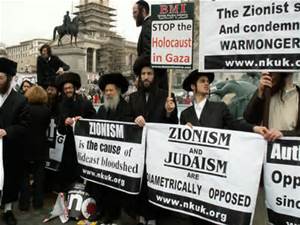
(Sunday Homily) Zionists Are Weeds in the Garden of Palestine

Zionists

The entire world stands aghast at the cruelty of Israel’s vicious and illegal collective punishment of Palestinian civilians for the perceived “crimes” of Hamas – the group of Palestinian resisters committed to the expulsion of illegal Zionist occupiers from the Palestinian homeland.

Today’s liturgy of the word implores the Zionists to abandon their butchery.

It also challenges Christians to denounce such ethnic cleansing and to withdraw the last vestiges of support for a group that more resembles their former Nazi persecutors than the “People of God” celebrated in the Hebrew Bible.

At the same time, today’s readings support rabbi Michael Lerner in cautioning Hamas against its policy of violent resistance. Though many of us would agree that Hamas’ tactics are understandable and often justified by principles of self-defense, today’s Gospel reading identifies them as counterproductive and ultimately harmful to the very people Hamas seeks to defend.

Instead, Jesus suggests that violent resistance should be replaced by greater reliance on more subtle and patient strategies. Such strategies are reflected in the three basic themes of today’s readings. They emphasize (1) the power of God expressed in leniency and forgiveness, (2) the futility of violent response to unwanted foreign presence, and (3) resistance that takes the form of patient trust that God’s forgiving power will prevail. In succession, the themes suggest challenges for Jewish Zionists, Palestinians, and Christians.

Begin with the first reading from the Jewish Testament’s Book of Wisdom. It is particularly relevant to Zionist Jews. The reading says explicitly that God’s power is not expressed in violence but in leniency to all, Jew and non-Jew alike.

That theme is repeated in today’s responsorial psalm with equal relevance to Zionists. There God is described as belonging to all nations. The divine Spirit, as Paul insists in today’s second reading, dwells within all humans regardless of nationality. It is slow to anger, good, forgiving, abounding in kindness.

From this, Jewish wisdom insists that the “People of God” must in turn be kind, lenient and forgiving to all – presumably even to their worst enemies. There is no room here for exceptions involving the indigenous tribal people of Palestine.

The second theme of today’s liturgy enjoys direct relevance to contemporary Palestinians. Whether they are Muslims or Christians (and many are Christians), they also recognize the Bible as the Word of God. I point to Palestinian relevance because this second theme addresses the question of resisting illegal occupation.

That is, Jesus’ parable of the weeds planted by an enemy in a landlord’s field can be read as addressing the Roman occupation forces encumbering Israel during Jesus’ lifetime. [According to John Dominic Crossan, Matthew’s allegorizing of Jesus’ parable – making it about the end of the world – is more reflective of the situation of the Jewish diaspora (following the destruction of Jerusalem in 70 CE) than of the actual revolutionary situation of Jesus’ own day.]

In occupied Israel, the suffocating Roman presence was as unwelcome, alien, and destructive as weeds in a garden or field. It was like the presence of basically European Zionist colonizers who have encumbered Palestinian land since their colonial invasion in 1948.

The question was how to deal with such odious foreign presence. Zealot revolutionaries had their answer: Uproot the weeds here and now. Take up arms; assassinate Romans and their collaborators; drive them out mercilessly. Be as cruel and vicious as the Romans.

Jesus’ response was different. As a non-violent revolutionary, he could surely understand the more apocalyptic strategy. After all, much of his teaching expressed sympathy to the Zealot cause which included land reform, debt forgiveness, and expulsion of the hated Roman occupation forces. Many scripture scholars even identify possibly five members of Jesus’ inner circle as Zealots themselves.

But Jesus’ Parable of the Weeds is more prudent and sensitive to civilian casualties than the strategy of the impatient Zealots – or that of Hamas.

When the landlord’s workers ask, “Should we uproot the weeds?” Jesus’ landlord answers: “No, if you pull up the weeds you might uproot the wheat along with them.”

In other words, Jesus agrees with El Salvador’s Oscar Romero and with Brazil’s Dom Helder Camara that revolutionary violence, though understandable (and justifiable on the grounds of just war theory), is imprudent at the very least.

This is because when faced with a vicious, overwhelmingly armed oppressor (like the Zionist state) resistance inevitably leads to state terrorism – to the war crime of collective punishment impacting women, children, the elderly and disabled. At the very least, that’s why Jesus eschews Zealot violence.

How then respond to illegal occupation like Rome’s in the 1st century or Israel’s over the last more than 60 years?

Jesus’ response? Be like mustard plant, he says. Be like yeast in flour. Both puzzling recommendations are relevant not only to Palestinians, but to Christians who wish to help their brothers and sisters in Palestine against the Zionists-turned-Nazis.

First of all think of the puzzlement that must have struck Jesus’ listeners. Jews didn’t have much use for yeast. They preferred unleavened bread. Neither would any farmer sow mustard seeds in her field or garden. The mustard plant was like kudzu – itself a kind of weed that eventually can take over entire fields and mountainsides while choking out other plants weeds or not. The mustard plant was unstoppable.

So Jesus is saying:

 * The Romans are weeds in your garden.
 * Don’t try to uproot them.
 * That will only lead to slaughter of the innocent.
 * Rather become weeds yourselves – like the mustard plant which is much more powerful than simple Roman (or Zionist) weeds.
 * Resist the Romans by embodying the Spirit of God that is slow to anger, good, forgiving, abounding in kindness.
 * Only imitation of Wisdom’s God can defeat the evil of imperialism.

What does that mean for Christians wishing to express solidarity with Palestinians against their cruel oppressors? At least the following:

 * Reject U.S. militarism in general as counterproductive, since fully 90% of the casualties it inflicts in war are civilians.
 * To bring about change, be instead like the yeast a homemaker puts into 60 pounds of flour, “infecting” the greater culture by non-violent resistance rather than seeking to destroy enemies.
 * Recognize the Zionists for what they are: an outlaw European “settler society” illegally occupying Palestinian land.
 * Take sides with Palestine’s indigenous tribal People.
 * Recognize them for what they are: “the Jews’ Jews” – treated by Zionists in the same way the Nazis treated Jews in Germany.
 * Petition the U.S. government to withdraw its support of Israel (more than one million dollars per day) unless the Zionists obey UN Resolution 242 and abandon the occupied territory while tearing down the odious Wall of Shame protecting the illegal Zionist settlements.
 * Support boycotts of Israel’s products by not buying them and by urging our churches and places of business to do the same.

Surely Jesus’ Way of non-violent resistance, forgiveness and love of enemies will strike many (non-believers and believers alike) as unrealistic. But according to the faith we Christians pretend to embrace, Jesus’ Way is God’s way.

But then perhaps we think we’re smarter and more realistic than Jesus — or God?

Sunday Homily: “Lazarus come forth!” Pope Francis Brings Jesus Back to Life

Lazarus

Readings for the Fifth Sunday of Lent: EZ 37: 12-14; PS 130: 1-8; ROM 8:8-11; JN 11: 1-45 http://usccb.org/bible/readings/040614.cfm

A few weeks ago, Fortune Magazine identified Pope Francis as first among the World’s “Fifty Best Leaders.” President Obama did not even make the list. Bono and President Clinton were among the top ten.

Whatever the magazine’s reasons for selecting the pope, it’s clear that the “Francis Effect,” is real. Seventy-seven percent of Catholics say they have increased their church donations since the new pope took office. Francis has brought the Catholic Church back from the dead. More importantly, he has returned to life the Jesus of the gospels whom conservatives have long since hijacked and buried – the very one our world’s poor majority needs as never before.

That’s relevant this fifth Sunday of Lent where our readings have Ezekiel coining the highly political metaphor of God’s “raising the dead” to refer to Israel’s impending liberation from its own despair during its Babylonian Captivity. Ezekiel’s metaphor reappears in today’s gospel reading where John the evangelist’s presents his familiar parable about Jesus raising Lazarus from the grave where Jesus’ friend lay moldering for more than three days.

Consider the hopelessness of Ezekiel’s Israel. His sixth century was the saddest of times – the era of his nation’s Great Exile. The Hebrews had been defeated and humiliated by Babylon (modern day Iraq). Its leaders and a large portion of its populace had been abducted to that enemy state. The exiles felt as if they had been slaughtered culturally. They were far from home, controlled by foreign masters, and apparently abandoned by God.

But the prophet Ezekiel did not share his people’s general despair. So in an effort to regenerate hope, he coined the idea of resurrection. Ezekiel loved that concept. [Recall his Vision of Dry Bones (EZ 7: 1-14).] For Ezekiel resurrection was a political metaphor that promised a new vital future despite appearances to the contrary. Israel, he said, would be liberated from Babylon, return home and experience rebirth. They would come back to life.

In his Apostolic Exhortation, The Joy of the Gospel (JG), Pope Francis embraces not only Ezekiel’s spirit, but that of Jesus raising Lazarus from the dead. To repeat, he actually revivifies Jesus and the Gospel. The pope does so by rescuing them both from conservative forces whose version of Christianity has held center stage for the last 35 years. It’s the version, the pope strongly implies, that has metaphorically killed the Jesus of the Gospels, who proclaimed the imminent arrival of God’s Kingdom which belongs to the poor, not to the rich whom the conservatives prioritize.

Like Ezekiel, Jesus made his proclamation when all appearances indicated that Israel was dead. It was entirely under the heel of Roman jackboots and there seemed no escape. Yet Jesus described a horizon of hope that enlivened the spirits of the poor who were crushed by the Romans and by their rich Jewish collaborators who headed the temple establishment.

In such dire straits, Jesus proclaimed a new future where everything would be turned upside down. He said audacious things. In God’s realm, he insisted, the poor would be in charge. The last would be first, and the first would be last. The rich would be poor and the poor would be well–fed and prosperous. The powerless and gentle would have the earth for their possession. Jesus’ unemployed and famished audiences couldn’t hear enough of that!

So he elaborated. He told parable after parable – all about the kingdom and its unstoppable power. It was like leaven in bread – unseen but universally active and transforming. It was like the mustard seed – a weed that sprouted up everywhere impervious to eradication efforts. It was like a precious pearl discovered in the ash bin – like a coin a poor woman loses and then rediscovers. His metaphors, similes and parables were powerful.

To repeat, Pope Francis strongly implies that socio-economic conservatism has murdered the Jesus I’ve just described. It has done so by its “preferential option for the rich.” It embraces free-market capitalism, trickle-down theory, and cut-backs in health care, education, and anti-poverty programs. Conservatives complement such horrors with huge tax-breaks for the country’s 1%. All of this is was chillingly represented last week by “devout Catholic,” Paul Ryan whose budget promised to sock it to the poor and middle class, while enriching military industrialists along with his affluent friends.

The Joy of the Gospel makes it clear that no one can support policies like Ryan’s and claim at the same time to be a follower of Jesus.

In other words, Ryan and the pope are on completely different pages. While conservatives have buried the Gospel Jesus, Pope Francis calls him back to life. He stands before Jesus’ grave and shouts “Come Forth!” Even Fortune Magazine recognizes the resulting miracle.

Consider the Pope’s anti-conservative incantation that brings Jesus back to life. It runs like this:

• Wealth does not belong to the rich, but to the world’s poor (JG 57, 184).

• But the world economy as now structured concentrates wealth among an ever-shrinking minority of the rich (56).

• Wealth must therefore be redistributed (189, 204,215).

• Such redistribution must take place by government intervention in the free market, which (in contradiction to failed “trickle-down” theory) cannot by itself eliminate poverty (54).

• The rich who are unwilling to redistribute wealth to its true owners (the poor) are thieves (57, 189).

• More than that, they are murderers, since the world economy as presently configured is homicidal (58).

• This is a question of being pro-life (213).

• Favoring life certainly includes concern for the unborn (213).

• But “. . . defense of the unborn is closely linked to the defense of each and every other human right” (213).

• Human rights include the right to food and shelter, education, health care, employment , and a just wage (191, 192)

• Respecting human rights involves renunciation of war and preparation for war (60).

• It also connects with environmental stewardship – defense of soil, insects, birds, fish, and the seas (215).

And so the tomb opens. And a Jesus who has been buried more than three decades stumbles out. And in doing so, he renews the faith of so many of us who had given up on the church.

Our faith is renewed because we recognize in Francis’ Jesus the embodiment of one of life’s fundamental truths: utopian visions of the good and true and beautiful can never be killed, even though they might appear lifeless and be pronounced dead by those who once loved them.

What should we do as a result of encountering the Jesus Francis has resurrected?

• Be bold in appropriating the vision of Pope Francis that is not at all idiosyncratic within the Catholic tradition. In fact, it represents the authentic teaching of the Catholic Church from Leo XIII to Vatican II and was even articulated by John Paul II and Benedict XVI.

• Accordingly and courageously incorporate into progressive political discourse the language and powerful ideas of the Judeo-Christian tradition. It can move people today just as it did in the times of Ezekiel and Jesus.

• Join Francis in refusing to cede the field of religion to the reactionary forces of neo-liberal conservatism.

• Expose that conservatism for the destructive fraud it is.

• More particularly, expose Paul Ryan and other Bible thumping Republicans as the heretics they are as they defend the interests of the rich and starve the poor in the name of the Gospel.

• Insist that our pastors get on board with Pope Francis in universalizing his pro-life vision to foreground issues of hunger, war and peace, capital punishment, full employment, universal health care, affordable housing, environmental protection. . . .

Francis reminds us that united with our neighbors, we too, the People of God, possess the power to raise the dead.

So as we stand before the grave of God, the church, and Jesus, let’s echo the pope’s cry: “Jesus, come forth!”

Sunday Homily: Academy Awards, “Gravity,” Lent, and Rebirth

gravity

Readings for First Sunday in Lent: GN 2:7-9, 3:1-7; PS 51: 3-6, 12-13, 17; ROM 5: 12-19; MT 4: 1-11. http://usccb.org/bible/readings/030914.cfm

Today is the first Sunday of Lent. A week ago, Hollywood presented its 2014 Academy Awards. Alfonso Cuaron’s “Gravity” won seven Oscars. I think his story and today’s reading about Jesus’ desert retreat are connected.

Lent actually started last Wednesday when many of us put ashes on our forehead to remind us of our approaching death. All of us, the ashes told us, come from the dirt and are rushing headlong towards the grave, whether we consider ourselves “believers” or not. Our world (at least for us as individuals) is ending. That’s simply a law of nature – as inescapable as gravity. It can’t be avoided. With time running out, Lent reminds us, the moment to change – to appropriate our basically divine nature – is now. Jesus’ vision quest in the desert shows the way.

So does “Gravity.” In fact, it’s possible to see the film as mirroring the experience of Jesus during his own “Lent” in the desert depicted in this morning’s gospel selection.

To begin with, both stories are completely symbolic. Both have their protagonists reliving the history of their people. Both show us the path to liberation. It leads from self-centeredness to God-consciousness. As such, both the account of Jesus in the desert and of Sandra Bullock’s character in “Gravity” represent summonses to either grow up here and now or suffer the consequences.

Think about “Gravity” in those terms. Here’s how the film’s publicity describes the plot:

“Director Alfonso Cuaron’s Gravity stars Sandra Bullock as Dr. Ryan Stone, a scientist on a space shuttle mission headed by astronaut Matt Kowalsky (George Clooney), a talkative, charismatic leader full of colorful stories that he shares with his crewmates as well as mission control. As the two are on a space walk, debris hits the area where they are working, and soon the pair finds themselves detached from their ship and stranded in space. While figuring out what steps they can take to save themselves, Stone grapples with a painful past that makes her consider giving up altogether.”

Without giving too much away, the film can be understood as mirroring the current plight of Mother Earth, the United States and the human species. It’s about our highly technological and artificial way of life and its inevitable destruction by the very laws of nature. It reminds unaware, “spaced out” people to “return home” and live in accordance with our true identity as earth creatures respectful of nature’s laws.

In “Gravity,” Sandra Bullock plays that spaced out American I mentioned. She’s an astronaut. As a medical engineer, she’s a trained healer whose job in NASA is to maintain a basically unsustainable way of life in outer space. To begin with, however she’s totally saddened and distracted by her personal problems. Specifically, she’s still in mourning for her lost daughter who died from an unexplained fall at the age of four. Interestingly, her daughter died conforming to the law of gravity which Dr. Stone’s “mission” requires her to defy.

The point is that Dr. Stone’s mission (like her daughter’s brief life) is doomed by inescapable natural laws. Entropy causes the systems she maintains to run down and demand periodic, extremely costly “missions” like the one she is on. At the same time inertia insures that the inevitable waste produced by the space enterprises will double back to seal the projects’ doom according to the law governing colliding bodies.

In that situation, Dr. Stone becomes the image of an alienated woman called by circumstances to wake up and accept her true divine nature as a healing goddess – as the embodiment of Mother Earth. As such she must return to the larger Divine Mother; she must return to earth and appropriate her own vocation to embody that Mother’s presence.

Think about it: the Bullock character is a “Stone” – the earthiest identification possible. She’s a doctor. She’s an astronaut. In all three identities, she’s out of her element. She’s floating in a weightless atmosphere that has caused her to deny her gravity-governed essence. In addition, like the earth itself, her oxygen supply is threatened. And that, of course, is painful and repulsive. Or as she herself puts it, “I hate space.”

“Gravity’s” story unfolds to display Dr. Stone’s healing efforts to reconnect with earth despite the obstacles working against her. In the process, like Jesus in today’s Gospel, she shows us all the way home from our own alienation and destructive way of life.

Dr. Stone’s way home involves not only using the personal tragedy of her daughter’s death to work in her favor. It also means crossing the Ganges and being blessed by the Buddha. She must also overcome her own ethnocentrism and xenophobia relative to her country’s designated “enemies” (the Russians and Chinese). Her return would have been impossible without an international space platform, a Russian Soyez module and a Chinese Shenzhou space capsule.

Finally, Dr. Stone needs to be “born again,” reliving the entire evolutionary process taking her through human astral origins to earth where she’s plunged into deep baptismal waters. With great effort, she throws off her old identity in the form of her astronaut’s survival gear. In the process, she encounters fish, amphibians and other pre-human life forms in the evolutionary chain. Finally freed of her past, on all fours, Dr. Stone emerges onto Eden’s shore. As a reborn Eve – as Mother Earth – she straightens up and walks forward into a new life. Her final words in the film are “Thank you.”

There’s a similar plot in today’s Gospel – lived out by Jesus, the carpenter from Nazareth. Like Dr. Stone in relation to “America,” Jesus reflects the experience of his Jewish compatriots. They passed forty years in the desert enduring temptation the whole time. Jesus in Matthew’s account passes forty days there. His response to temptation rescues and redeems the collective history of his similarly tempted people more than a thousand years earlier.

Jesus’ first temptation is ego-centric – to feed himself by turning stones into bread. His second temptation is ethnocentric – connected with the temple and the quasi-magical attributes accorded the structure by his Jewish contemporaries. Jesus’ final temptation is world-centric – to exercise dominion of “all the nations of the world.” By rejecting all three, Jesus symbolically achieves cosmic-consciousness. The story ends with his being ministered to by angels.

As in “Gravity,” Jesus’ vision quest in the desert maps out our Lenten path. It leads from self-centeredness to cosmic consciousness of unity with the One in whom we live and move and have our being. The path cannot be traveled without struggle. Its goal cannot be achieved without breaking free from selfishness, xenophobia, and the arrogance of life in an imperial center whose ways are unsustainable and far removed from its evolutionary roots. That’s the point of Lent’s prayerfulness, penance, fasting, and abstinence.

Practically speaking returning home during Lent – realizing our True Self being transformed like Jesus and Dr. Stone – might mean:

• Renewing our prayer life. Even unbelievers can do this. How? I recommend reading Eknath Easwaran’s Passage Meditation to find out. Yes, meditate each day during Lent. It will bring you into contact with your True Self. (And, I predict, you won’t stop at the end of 40 days – it’s that life-transforming.)
• Abstaining from fast food and reclaiming the kitchen. Leave behind for forty days the typically chemicalized, fatty, sugar-hyped American diet, and perhaps experiment with vegetarianism. That seems far more beneficial than traditional “fast and abstinence.”
• Shopping locally and refusing to set foot in any of the Big Boxes during Lent’s 40 days. Think of it as homage to Jesus’ counter-cultural resort to the desert or as Dr. Stone’s leaving behind that artificial life in outer space.
• To escape ethnocentrism and imperial sway,adopting as your news source OpEdNews and/or Al Jazzera rather than the New York Times.
• Resolving each day to actually respond to one of those many appeals we all receive to make phone calls and write letters to our “representatives” in Congress.
• In the “Comment” space below, share other suggestions.

Yes, it’s Lent once again. Like Dr. Ryan Stone, we faced up to our origins in dust last Ash Wednesday. A good Lent which leaves behind selfishness, ethnocentrism and allegiance to empire will also allow us to utter her sincere “Thank You” on Easter as we rise from our knees transformed.

Sunday Homily: Jesus Rejects Money and Work: He Embraces ‘Back to Nature’ Abundance

Gandhi Greed

Readings for 8th Sunday in Ordinary Time: IS 49:14-15; PS 62: 2-3, 6-9; I COR 4: 1-5; MT 6: 24-34. http://usccb.org/bible/readings/030214.cfm

Today’s liturgy of the word raises the question of work and money – always two difficult elements of life for those claiming to follow Jesus’ Way. They’re difficult because both occupy so much of our attention and lives that they can distract us from what’s really important – what Jesus calls “the kingdom of God.” Consequently, in this morning’s Gospel selection, Jesus tells us to back off from both money and work while opening ourselves to the abundance of God’s Kingdom.

For American workaholics, that’s surprising. It’s especially challenging for those who love to attack “the undeserving poor” – that is, workers empowered by government programs even like the Affordable Health Care Act. (I’ll get to that in a minute.)

About money Jesus directly compares the worship of God with the common attitude Americans adopt towards money – or as Jesus puts it, “Mammon” (the name for an idol). It’s impossible, Jesus says, to make money the focus of your life while claiming to serve God. In fact money can make us hate God. But that’s not the surprising part.

What is surprising is that Jesus’ claim comes very close to saying that loving God should make us hate money. That seems to be the meaning of his words recorded in today’s selection from Matthew. Jesus says, “No one can serve two masters. He will either hate one and love the other, or be devoted to one and despise the other. You cannot serve God and mammon.”

In other words, there’s a choice to be made here: serve God or money; hate and despise money or hate and despise God. No one can have it both ways. The text seems to bear that reading, don’t you think?

Of course Jesus’ pronouncement will lead many to “clarify” his words to mean don’t be attached to money. It’s the service of money – it’s making money your master – they would explain, that causes hatred of God.

Okay. But who among us (even financiers, banksters and hedge fund managers) would claim to serve money even though they spend all their waking hours scheming about it. Who would admit that they’re attached to money, or have made it their master? Even those 85 individuals proud of owning as much as half the human race would probably deny that they “serve” money or that it’s their master. (And if they’re right, we can stop our discussion right here!)

On the other hand, those wishing to have it both ways might go further. They might invoke “nature.” They might point out we obviously can’t do without money; it’s a product of nature (human nature) they might say. Some might even argue we can’t even do without capitalism and its drive to “maximize profit.” Capitalism and profit maximization simply represent the inescapable way the world works. They are reflections of the natural order. If they allow 85 people to own more than half the world, so be it. That’s simply natural. (Please hold that thought.)

Such talk about nature brings us to my second point – Jesus’ attitude towards work and those who choose not to. Here he definitely has a “back to nature” approach. And once again, it’s surprising. Jesus is not talking about the naturalness of competition or of the law of supply and demand.

In today’s reading from Matthew’s version of the Sermon on the Mount, Jesus says clearly that the natural order not only minimizes the importance of money (at the very least); it also minimizes the importance of work. “Look at the birds of the air,” Jesus says, “they don’t sow or reap or store food in barns.” Or “Consider the lilies of the field. They neither toil nor spin.” Learn from them both. Follow their example.

Say what? Is Jesus intention here to discourage work itself? (Talk about contradicting “American” values!) It’s easy to draw that conclusion, I think. After all, he seems to be saying don’t sow or reap or store products in warehouses. Don’t toil or spin. It’s a short step from there to saying, “Don’t work!”

Besides that, Jesus seems to have lived out that latter implication. I mean as an able-bodied 30-something, he left his job as a carpenter to wander from village to village in Palestine philosophizing and apparently living on hand-outs. On the road, he had no home and must have sought shelter from friends. Moreover, he got rough fishermen to leave their nets and follow his example of what appears to be idleness as far as economic productivity is concerned.

In fact, Republicans today would clearly regard Jesus and his apostles as examples of the idle undeserving poor – not to say bums – living off the donations of hard working people. I mean, does that contradict our Protestant Work Ethic, or what?

And that brings me to that Obamacare business.

Did you follow last month’s flap over the Congressional Budget Office’s Report on jobs and President Obama’s Affordable Health Care Act (ACA)? It said that the ACA would induce 2.5 million people to leave work. They’d escape “job lock” – i.e. the inability to leave employment because doing so would lose them health coverage.

All hell broke loose.

When Paul Ryan (R-Wis) heard that, hypocrisy demanded that he and his Republican cronies reverse their position on “job lock.” Formerly they were against it. In fact a couple of years ago, Ryan said,”[The] key question that ought to be addressed in any healthcare reform legislation is, are we going to continue job-lock or are we going to allow individuals more choice and portability to fit the 21st century workforce?”

Now, however, since freedom from “job lock” represented a boon of the ACA, Ryan and the Republicans had changed their tune. They quickly became opponents of “more choice and portability.” Having realized that Obamacare will not eliminate jobs, but increase worker freedom to change jobs or leave the workforce altogether, GOP spokespersons were forced to readopt their familiar tack of demonizing empowered workers and the poor.

This meant that mothers and fathers leaving coveted jobs at McDonalds or as greeters in Wal-Mart to spend more time with their families were characterized as slackers and lazy. According to Ryan, such people lose respect for “the dignity of work.” They were worthy of their traditional rank among Republicans’ favorite target, the undeserving poor. (Never mind that Ryan has done everything he can to undermine labor’s dignity – but that’s another story.)

The point is that Jesus and his sainted friends were not only among the undeserving poor, they flaunted it. They recognized that according to God’s natural order, the world belongs to all creatures including the birds and flowers. If its resources were shared according to Jesus’ Kingdom values, there’d be enough for everyone – just as there was for birds and flowers in Jesus’ day.

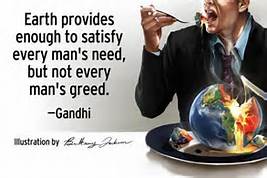
So in minimizing the importance of money and praising freedom from work, Jesus was not being unrealistic or some starry-eyed hippy. Instead (as always) he was proclaiming the Kingdom of God. In God’s order, he insisted, there is abundance for everyone – or as Gandhi said enough for everyone’s need, but not for their greed.

Realizing the reality of God’s and nature’s abundance – and not giving in to the world’s myth of scarcity, overwork, and focus on money – should give workers and those not belonging to Ryan’s 1% courage to demand what is their birthright.

That natural condition is a life without worry about making ends meet and with enough leisure to enjoy life just like the birds and flowers.

Sunday Homily: The Hypocrisy of Reagan’s “City on a Hill”

City on Hill

Readings for the 5th Sunday in Ordinary Time: IS 58: 7-10; PS 112: 4-9; I COR 2: 1-5; MT 5: 13-16. http://usccb.org/bible/readings/020914.cfm

Today’s readings are about the nature of the light emanating from a shining “City on a Hill.” Jesus introduces that imagery specifically in today’s Gospel selection. In doing so, he alludes to the words of the prophet Isaiah (today’s first reading) which describe the City’s characteristics.

However most Americans don’t primarily associate the City on a Hill image with Jesus, much less with Isaiah. In fact, most cannot hear the phrase without thinking of former U.S. President Ronald Reagan. In Reagan’s mouth, “City on a Hill” became a quintessential expression of American Exceptionalism. As such Reagan’s usage exemplifies how Republicans have hijacked and distorted Christian discourse.

Reagan however didn’t coin the City’s connection to “America.” John Winthrop, the Puritan leader of the Massachusetts Bay Colony, had already done that in 1630. Standing on the deck of the flagship Arbella Winthrop told his shipmates, “We must always consider that we shall be as a city upon a hill—the eyes of all people are upon us.”

Then in 1961 J.F. Kennedy quoted Winthrop’s words specifically as the new president addressed the General Court of Massachusetts. Kennedy added “. . . (W)e are setting out upon a voyage in 1961 no less hazardous than that undertaken by the Arbella in 1630. We are committing ourselves to tasks of statecraft no less fantastic than that of governing the Massachusetts Bay Colony, beset as it was then by terror without and disorder within.”

After Reagan, Gary Bauer, the president of the Family Research Council, attempted to borrow some of the Reagan thunder by using his idol’s words. Bauer repeatedly used the “City on a Hill” metaphor as he attempted unsuccessfully to secure the Republican presidential nomination in 1999. Before him in 1997, Reagan’s adopted son, Michael, had already written a book about his father entitled The City on a Hill: Fulfilling Ronald Reagan’s Vision for America.

As for Reagan himself, here’s what he said about the image in his farewell speech to the nation in 1989:

“…I’ve spoken of the shining city all my political life, but I don’t know if I ever quite communicated what I saw when I said it. But in my mind it was a tall proud city built on rocks stronger than oceans, wind-swept, God-blessed, and teeming with people of all kinds living in harmony and peace, a city with free ports that hummed with commerce and creativity, and if there had to be city walls, the walls had doors and the doors were open to anyone with the will and the heart to get here. That’s how I saw it and see it still . . .”

These words show that Reagan’s image of the “City on the Hill” is one of pride, strength, harmony, peace, open markets and free immigration – all of it specially blessed by God. Noble ideals all. . . .

Nonetheless President Reagan’s policies proved questionably coincident with his words and especially with the biblical ideals expressed in today’s readings.

Think about those ideals.

In the selection from Isaiah, the prophet says the City on the Hill shines because its inhabitants:
• Share bread with the hungry.
• Protect the oppressed and remove oppression from their midst.
• Shelter the homeless.
• Clothe the naked.
• Remove from their midst accusation and malicious speech.

The Responsorial psalm seconds all of that, adding that the hilltop city’s just citizens:
• Lend (without interest).
• Give lavishly to the poor.

In today’s selection from Paul’s letter to the church in Corinth, the apostle himself identifies with the weak and fearful, not those who are “wise” according to the standards of the world. Paul goes on to contrast the world’s logic with what elsewhere he calls the foolishness of Jesus’ Spirit – which chose to identify with those on death row (I COR 1:23).

Finally, today’s Gospel reading has Jesus refer specifically to the “City on a hill” and the light that causes it to shine. Once again, it’s the “light” described by Isaiah – sharing bread, shelter, clothing, and money with the hungry, homeless, naked, impoverished and oppressed.

All of this has little to do with President Reagan’s version of an exceptionally blessed America. In fact, during his term in office Reagan:

• Consistently stigmatized the poor. (Reagan often told the story of a “welfare queen” in Chicago who turned out to be a figment of his speech writers’ imaginations. According to the story, she drove a Cadillac and had cheated the government of $150,000 using 80 aliases, 30 addresses, a dozen social security cards and four fictional dead husbands. Once again, all of that was a lie.)
• Halved the budget for public housing.
• Closed shelters for the mentally ill.
• In so doing, created an epidemic of homelessness virtually unknown since the Great Depression.
• Spent the entire decade of the 1980s supporting oppressive governments Central America – specifically in Nicaragua, El Salvador, Guatemala, and Honduras.
• Oversaw the repeal of the Fairness Doctrine in 1987, thus opening the publicly owned radio airwaves to dominance by privately financed right wing programs whose bread and butter soon became the “false accusations” and “malicious speech” Isaiah saw as incongruous with the light Jesus subsequently saw as characterizing the City on the Hill.
• Inspired his self-proclaimed acolytes (in our own day) to introduce savage reductions in Food Stamp programs for the hungry, and elimination of unemployment benefits.

And that’s the short list of the horrors of the “Reagan Revolution.” None of it has anything to do with Jesus’ vision of a City on a Hill. Rather Reagan policies fly directly in the face of that vision.

The point is that the right wing in this country (personified in Ronald Reagan) has hypocritically identified itself as somehow “Christian” while turning that tradition squarely on its head.

Progressives are missing the boat by surrendering to that hijacking of Jesus’ meaning and message, when in reality that message supports their cause, not that of their reactionary opponents.

It’s high time for progressives to go on the offensive by recognizing and employing the power of myth and image so successfully manipulated by the religious right.

Sunday Homily: What Is Our Vocation: To Remain in the Church or Seek Mystical Enlightenment?

cleansing-of-the-temple

Readings for the feast of the Presentation of the Lord: MAL 3: 1-4; PS 24: 7-10; HEB 2: 14-18; LK 2: 22-48. http://usccb.org/bible/readings/020214.cfm

Today is the feast of the Presentation of the Lord. It recalls the day when the infant Jesus entered Jerusalem’s temple for the first time. Jesus’ presentation began a relationship with the temple and its priesthood that was difficult at best.

This first entrance however was dominated by the simple faith of his impoverished parents. They came offering the sacrifice of the poor – two pigeons or turtle doves.

However all was not smooth even that day. In effect, two elderly fortune tellers, Simeon and Anna, confront Jesus’ parents and predict that trouble lay ahead for Jesus and them.

But that would be long in the future – after (as today’s gospel selection concludes) Jesus matured and advanced in wisdom. Some even say he traveled to India, absorbed the sub-continent’s ancient wisdom, and came back Enlightened.

In any case, by the time of Jesus’ final visit to the temple, he was fully at odds with its priesthood and talked openly about the temple’s destruction – almost as if he relished the thought.

All of this might be reminiscent of our own relationships with the church. Many of us were baptized as infants – introduced to the faith by simple parents.

But then we too advanced in age and wisdom – even to the point where today we might find ourselves at odds with the church and its priests.

Could it be that this is the human vocation – to be loyal church members until (like Jesus) we realize our religion’s hypocrisy, its cooperation with oppression and its need of reform? Where does it leave us vis-a-vis the church? Are we called to step outside its boundaries and embrace mystical enlightenment? Or is our vocation to remain within as outspoken critics? Can the two options be combined?

I try to capture those thoughts and questions in the following attempt at poetic reflection of today’s readings from Malachi, I Corinthians, and Matthew’s Gospel.

I

The prophet Malachi said this day would come!
The Lord would send his messenger to scorch the Temple and its worthless priests.
It would hurt, Malachi warned.
In the presence of God’s anointed,
Those faithless “holy men” would feel their world was melting –
As if they were melting like gold or silver in a refiner’s cauldron,
As if caustic lye were thrown in their hypocritical faces.
Ha!
Then those unworthy priests
Would finally be forced to do
Something pleasing to God.
Let them all go to hell!

II

The prophet Malachi said this day would come!
And here it is at last.
Or so it seems.
But what’s this?
The promised messenger is a poor child
Wrapped in a blanket patched and smelling of baby urine.
His parents with simple uncomprehending faith
Offer the bored priest
Two pigeons or a pair of doves
(I forget which).
The priest hardly notices either.
But he performs his magic rite
And rattles by rote the hackneyed phrases.
He would find the notion laughable that he or his temple
Might have anything to fear from . . .
“What’s this child’s name?” he asks.
“Yeshua ben Joseph,” his father stutters
In tones of humble deference.

III

You see,
That’s the trouble with priests.
Their fulsome selves cannot see
What’s before their eyes,
And clear to everyone else:
Their days are numbered.
And so are the Temple’s – and mosques’ and churches’.
Malachi predicted it.
Yeshua would see to it.
(More below.)

IV

Nonetheless, the Elders, Simeon and Anna see.
Ah, yes!
They are Seers.
Gaunt and bony from years of prayer and long fasts
These elders, recognize in Yeshua
The one Malachi had foretold.
“Now is not the time,” the hoary Simeon intones.
“But the day will surely arrive
When this child will polarize everyone in Israel
Including these wicked priests.”
The prophet’s words startle the rough peasant woman from Nazareth.
“He’ll be a matricide,” the fortune teller warns her.
“He’ll cut you to the quick.”
Anna the widowed prophetess
Echoes Simeon’s threatening words.
Yeshua’s parents tremble with fear.

V

What kind of child have you sired?
Miryam later asks her husband
(half joking)
On the highway home from Jerusalem.
Joseph smiles.
He simply shrugs
And shakes his shaggy peasant’s head.
They walk on in silence.

But Yeshua bides his time
Learning justice from his father
And patience from Miryam.
Some say he journeyed to Egypt
Or India
To study Wakefulness
And Light.
“You have a nice boy,”
The village matrons say to Miryam,
While she ponders Simeon’s words
And waits for the other shoe to drop.

VI

And drop it does – more than a quarter century later!
Jesus returns to the Temple
This time with whip in calloused hand.
He realizes (as the psalmist says today)
That even Herod’s Magnificent Shrine
Is too small for God – or for him.
“All churches are robbers’ dens!”
Jesus shouts.
So the workman lashes out left and right
At those who exploit
Simple peasants like the pair who raised him.
Yeshua despises the priests.
“This Temple,” he says, “will be reduced to rubble.
And good riddance!
These charlatans traffic in your fear of death?
Free yourselves from their superstition
And temple!
Dare to live
With your own thoughts!”

Miryam’s spirit sinks as she hears such words.
Simeon’s sword has begun to cleave her mother’s heart.
“My son has lost his faith,”
She fears.

The priests know Yeshua has lost their faith
And corrupts the crowds
Who hang on his every word.
They conspire to destroy him
As an atheist and blasphemer.

VII

Perhaps that’s our vocation too,
Don’t you see?
As followers of Jesus
To come to the temple
(Or not !)
To present ourselves there
As fullers and refiners
As atheists, blasphemers
In the eyes of a too credulous world
Scared out of its wits
By pretentious ignorant priests and televangelists
Who (as the author of “Hebrews” says)
Traffic in our fear of death.

Instead,
Believe the psalmist’s words:
God’s bigger than that
And so is Jesus.

So must we be!

Sunday Homily: Pope Francis on Wealth Redistribution

85

Readings for 3rd Sunday in Ordinary Time: IS 8: 23-9:3; PS 27: 1, 4, 13-14; I COR 1: 10-13, 17; MT 4: 12=23 http://usccb.org/bible/readings/012614.cfm

According to an Oxfam report released last Monday (Jan. 20th), the 85 richest people in the world now have as much wealth as the world’s 3.6 billion poorest people – i.e. as much as half the planet’s entire population. Eighty-five people!

The report’s publication makes clear the importance of Pope Francis’ recent Apostolic Exhortation, “Evangelii Gaudium” (E.G.). That’s because the pope’s “Joy of the Gospel” specifically addresses the injustices of income inequalities.

The Oxfam report also reveals as fatuous a recently advanced defense of vast wealth differentials in the very terms the pope criticizes. (I’m referring to David Brooks’ New York Times column – see below.) Oxfam’s report also makes relevant the readings in today’s liturgy of the word. They address inequality by reflecting the mentality of the poor and Jesus’ commitment to the working class in first century Palestine’s social context of obscene differences in wealth between rich and poor.

Before looking at those readings, I wonder what you think of that Oxfam statistic. Once again, the richest 85 people in the world have as much wealth as the poorest 3.6 billion – the poorest half of our planet’s population.

Personally, I find that shocking and almost unfathomable. Yet the New York Times’ David Brooks says inequality is not the problem. As a powerful apologist for the rich, Brooks alleges that only those locked into a “primitive zero-sum mentality” would believe that the poor are poor because the rich have too much of the earth’s resources.

The economic pie is continually expanding, Brooks implies. So even though good jobs have been off-shored, and Wall Street bonuses are indefensible, the problem of inequality cannot be solved by wealth redistribution schemes or raises in the minimum wage. Instead, the real solution is to educate the poor – furnishing them with the cultural attitudes and job skills necessary to lift them from poverty caused by single parent families, school drop-outs, and the resulting generations-long culture of poverty.

Brooks’ argument is hackneyed. And in its familiarity, it illustrates the fallacies about poverty commonly subscribed to by the rich. Those approaches nearly always embrace a version of trickle-down theory. They find poverty’s solution in reforming the poor and educating them for the hi-tech jobs that will emancipate them from poverty. Mainstream intellectuals reject measures like minimum wage increases and higher taxes on the rich as “populist” and as introducing class-conflict themes that are dangerous and counterproductive.

It is such dodges by the rich that were specifically rejected by Pope Francis in Evangelii Gaudium. There the pope says unmistakably that extreme wealth on the one hand and abysmal poverty on the other are interconnected. In fact, he accuses the powerful of actually “feeding upon” the powerless (E.G. #53). They’re eating them up! Francis also rejects out of hand the trickle-down mentality behind Brooks’ observations. The pope classifies Brooks’ reference to a “primitive zero-sum mentality” as itself being “crude and naïve.”

In fact, what the pope actually says about trickle-down theories can’t be repeated too often. He writes: “In this context some people continue to defend trickle-down theories . . . This opinion which has never been confirmed by the facts, expresses a crude and naïve trust in the goodness of those wielding economic power . . . Meanwhile the excluded are still waiting.”

Pope Francis also scraps apologetics like those Brooks employs when he essentially blames the poor for their poverty and would save them by “education.” Here Francis’ specific words are: ”Some simply content themselves with blaming the poor and the poorer countries themselves for their troubles; indulging in unwarranted generalizations, they claim that the solution is an “education” that would tranquilize them, making them tame and harmless.”

Pope Francis’ words bring a startling reminder to would-be Christians that economic questions – considerations of social justice and equality – are central to Christian faith. Francis’ words sensitize us to a reality that presents itself to believers every Sunday if we’re attentive enough to perceive the socio-economic dimensions in each week’s readings.

Today’s readings once again offer a case in point. The first selection comes from the prophet Isaiah. It recalls a time when Israel had been released from painful exile and enslavement by ancient Babylon (modern day Iraq). According to Isaiah, exile was a time of anguish, darkness, gloom and distress – the pain inevitably experienced by the exploited then and now. Liberation from slavery’s “rod and yoke” changed all of that. Darkness and gloom were replaced by light, joy and rejoicing.

Significantly for the topic at hand (inequality and its remedies) the prophet uses two poor people’s images to describe the change. The joy of the liberated was like that of peasants reaping the fields at harvest time. Now, however, the harvested crop would belong to them, not to idle landlords. In this new situation reaping the fields presaged a time when hunger would be replaced by feasting.

Even more to the point, according to Isaiah, the joy of those liberated from Babylon was like the ecstasy of rebels dividing spoils after The Revolution – when the wealth of their oppressors was finally redistributed to those who had worked so long producing that wealth in exchange for nothing but “rod and yoke.”

In other words, the reading from Isaiah refers to a time of plenty and of wealth redistribution – always the dream of the poor and dispossessed – a dream, Pope Francis reminds us, that is also the Dream of God.

It was a dream shared by Jesus. He called his revolutionary vision the “Kingdom of God.” In today’s reading from Matthew, we see the working man from Nazareth recruiting those who would help organize the poor around that concept. Matthew presents Jesus as selecting comrades like himself – from the working class. His initial selections are the poor illiterate fishermen Simon, Andrew, James and John. They would accompany him and learn from him as he confronted his culture’s rich elite – the temple priests, rich landlords (again the temple priests), and collaborators with Roman occupation forces.

Reza Aslan tells us that Jesus did all of this in a context of extreme economic inequality. Aslan writes of “the chasm between the starving and indebted poor toiling in the countryside and the wealthy provincial class ruling in Jerusalem . . . .” He describes a Jesus who as a tekton (a Greek word meaning Jack of all trades) worked daily rebuilding the opulent city of Sepphoris, the capital of Galilee, an hour’s walk from his village of Nazareth. “Six days a week,” Aslan writes, “from sunup to sundown, Jesus would have toiled in the royal city, building palatial houses for the Jewish aristocracy during the day, returning to his crumbling mud-brick home at night. He would have witnessed for himself the rapidly expanding divide between the absurdly rich and the indebted poor.”

No doubt that experience sensitized Jesus to the plight of those who shared his social location. Like others he knew, Jesus was convinced that the situation was unsustainable. As Aslan puts it, “There was a feeling particularly among the peasants and pious poor, that the present order was coming to an end, that a new and divinely inspired order was about to reveal itself. The Kingdom of God was at hand. Everyone was talking about it.”

Jesus made it the point of his work as a community organizer par excellence to focus on the advent of God’s kingdom. In today’s Gospel, Matthew says, “Jesus went throughout Galilee, teaching in their synagogues and proclaiming the good news of the kingdom and curing every disease and every sickness among the people.”

And in proclaiming and working for the kingdom, Jesus did not shy away from statements that might be seen as engendering class conflict. “Blessed are you poor,” he said, “for yours is the Kingdom of God” (LK 6:20). “Woe to you rich, you have had your reward” (LK 6:24). “How hard it is for the rich to enter the kingdom of God” (MT 19: 16-24). All of these statements show consciousness of class struggle.

So what are we to do about income inequalities? In 1998, a UN Development Report called for a tax of 4% on the world’s richest 225 people. The report said that such a tax (6% less than the traditional tithe) would provide enough resources to feed, clothe, house, cure and educate the entire Third World.

To the wealthy, such taxation is unthinkable. As a result, 30,000 children die of absolutely preventable starvation each day.

In the eyes of Pope Francis – in the eyes of Jesus, I’m sure – tolerating such needless deaths is sinful and runs entirely contrary to any pretensions of those identifying themselves as “pro-life.”

No, Mr. Brooks, we can’t ignore the connections between extreme wealth and abysmal poverty. Wealth must somehow be redistributed. We have the word of Oxfam and the UN on that. We have the word of Pope Francis and of Jesus too.