Today near the middle of my 80th year, I’m off to Tijuana to work for a couple of weeks with refugees and immigrants at the border. I mention my age not because I feel old, but because 80 used to seem ancient to me. Yes, I’ve done lots of these fact-finding trips before beginning with our family’s six months in Brazil during the military dictatorship there back in 1984. Then there were all those trips to revolutionary Nicaragua beginning the next year, and many visits to Cuba. This time around, I find myself wondering if my age will be a factor in the eyes of my co-workers.
In any case, this is the first in a series of daily reports I plan to make on this blog site. I want to take readers with me on this particular expedition of first-hand observation and discovery.
So, I’m now seated on Delta Flight 2685, in seat 23B on my way from New York’s JFK Airport to San Diego CA. It’s a 5 hour and 45-minute flight. I’ll stay overnight in San Diego’s Gaslight District. Then, tomorrow I’ll cross over into Tijuana, and begin work on Monday at 9:00 a.m.
My plan is to join forces with Al Otro Lado (AOL), a Tijuana-based social justice and legal services organization whose task is to help asylum-seekers in their quest to find refuge in the United States. I’m not sure what my function with the group will be. I might end up sweeping, washing floors, making beds, working in the kitchen, and serving meals. That would be fine. But I’m hoping my Spanish will be of some use. (For the past six weeks or so, I’ve been burnishing my skills in hour-long Skype sessions with a wonderful Spanish teacher in Cuernavaca.)
My main task however is to learn. I want to build on what I’ve gathered throughout my professional life as a theologian, researcher, teacher and habitual traveler to Global South stress points.
More specifically, my past observations (during those long stays in Mexico, Nicaragua, Guatemala, Costa Rica, Honduras, Brazil and Cuba) as well as my study with Global South thought leaders (especially in Costa Rica’s Departamento Ecumenico de Investigaciones and during my years teaching in an on-site Latin American Studies Program) have already taught me that today’s refugees are seeking escape from:
The effects of U.S. wars during the 1980s which destroyed families, church communities, businesses, towns, and entire countries. Those wars were aimed at keeping in power brutal dictators who served U.S. business interests such as Chiquita Banana. They were intended to prevent democracy from replacing the tyranny of Latin America’s wealthy classes allied with their counterparts across the U.S. border.
Gang violence inflicted on whole communities by the now decommissioned national soldiers and paramilitaries employed 40 years ago by the United States in South and Central America in the wars just referenced. [During the years of cooperation with the CIA and U.S. Army, those terrorists (that’s what they were) supported their illegal war efforts by deep involvement in drug trafficking – with CIA facilitation. Now, with the wars over, the former U.S. assets are simply continuing the work they learned all during those years of conflict – including the associated threats, bribes, kickbacks, death squads, assassinations, rapes, and torture.]
The devastating results of free trade pacts (like the North and Central American Free Trade Agreements – NAFTA and CAFTA) that have allowed the United States to e.g. dump cheap corn on the international market thus driving millions of small farmers off their land and into unemployment in big city slums.
The effects of climate change such as rising temperatures, hurricanes, floods, droughts, and forest fires, exacerbated by the entire Republican Party which insists not only on denying scientific fact, but on doubling down on the ecocide’s causes.
Domestic violence exacerbated by rampant unemployment (caused by those free trade deals) that has made mothers and their children absolutely desperate to escape the violent men in their lives.
Virtually none of those causes are explained to the American people. Instead, the multifaceted central role of the U.S. government and CIA in creating the crisis is completely overlooked as politicians and the mainstream media (MSM) ahistorically “explain” the problem in terms of freeloaders, drug dealers, rapists, gangbangers and general criminality.
Ignored as well is the undeniable moral obligation of the United States to make reparations by rebuilding the economies and infrastructures they’ve destroyed and by giving generous and easy asylum (not to mention jobs and cash payments) to the refugees manufactured in the process. WE ABSOLUTELY OWE THESE PEOPLE SHELTER, PROTECTION, AND RESTITUTION! THIS IS NOT A QUESTION OF CHARITY. WE ARE MORALLY OBLIGED!
As you can see, my project here is to help balance our MSM-cultivated ignorance by acquainting readers with actual refugees and immigrants and their full stories.
Today’s Gospel selection, the familiar story of the Good
Samaritan, couldn’t be timelier.
It’s read at a juncture in American history, where a Christian acting specifically according to the teaching of Jesus’ parable faces 20 years in prison. His crime? He provided food, water, lodging and hospitality to people whom the Trump administration would rather see die of thirst and exposure, because the president considers them sub-human.
I’m talking about Dr. Scott Warren (pictured above), a humanitarian aid volunteer and immigration rights activist. For years, he has worked with an organization called No More Deaths (NMD). Its members leave water jugs, clothing, and medical supplies for refugees and immigrants crossing the Sonoran Desert in southern Arizona. Warren and NMD also keep track of the numerous cadavers they find there and have filmed U.S. border agents emptying more than 3000 NMD water jugs in their clear effort to create more deaths by dehydration. In fact, those border agents are the sadistic executioners who staff Mr. Trump’s concentration camp system. (Watch what they do in this film clip. Doesn’t their sadism remind you of the Nazis we’ve all seen in all those WWII movies?)
Coincidently, I guess, and soon after filming the murderers, Warren was arrested and tried for aiding two undocumented migrants. A hung jury failed to convict him. However, the Trump administration wants the man retried – again, for the crime of obeying Jesus’ mandate in today’s reading. (In fact, most reports of Warren’s case specifically invoke the imagery of “the Good Samaritan.”) His second trial will take place in November.
The sad irony is that so many of Trump’s supporters consider
themselves Christians. Their single “Christian” issue seems to be abortion
about which Jesus and the Bible in general says absolutely nothing. Nothing at
all! And yet, when someone obeys Jesus’ clear and unambiguous teaching as in today’s
Gospel, they want Jesus’ follower punished to the full extent of the law whose
essence Moses describes as Love in today’s first reading.
It’s like what happened in Germany after Hitler came to power. There, the birthplace of Luther and his Reformation, Christians not only enthusiastically approved of der Fuhrer; they worked in his concentration camps. And then (as Elie Wiesel puts it) after cremating Jews all week, they went to confession on Saturday and received communion on Sunday. They could do so, because, mirroring Trump’s attitude towards immigrants, they believed Jews were sub-human.
That’s the same attitude Jews themselves in Jesus’ day had towards Samaritans. They were considered enemies of the state, because their ancestors back in the 8th century BCE, intermarried with Assyrian occupiers of the Jewish homeland. Intermarriage rendered Samaritans unclean. They were as sub-human as Trump’s immigrants or Hitler’s Jews.
So Jesus’ making a Samaritan the hero of his challenging
parable, and contrasting the outcast’s compassion with the “couldn’t-care-less”
attitude of professional holy men – the priest and the Levite – connects directly
with the hypocrisy of Christians, the Trump administration, and those border
agents all of whom have criminalized the fundamental human right of
immigration.
No; I’m wrong: they’ve actually criminalized God’s law of love as described throughout today’s liturgical readings. Read them for yourself here. In any case, what follows is my “translation” of their main ideas:
 DT 30: 10-14

 The Great Liberator, Moses
 Exhorted the former slaves
 To return to LOVE
 The most obvious, uncomplicated
 Reality
 In the world.

 PS 69: 14, 17, 30-31, 33-34, 36, 37

 Love is all we need
 From Life Itself.
 It is always kind
 And helpful
 Overflowing with gifts
 And ready to protect
 The poor, the imprisoned,
 The exiled,
 And those in pain.
 Yes: All we need is Love.

 COL 1:15-20

 Jesus, the Christ
 Shows what Love means –
 That absolutely everything
 Was created for Love,
 The bond, the glue
 That holds us all together
 In complete at-one-ment
 Transforming the human race
 Into a single body
 Despite resistance
 And crucifixion
 By a hostile world.

 LK 10: 25-37

 For Jesus (like Moses)
 Love of God and Neighbor
 Is the only law
 Promising fullness of life.
 The two laws are one.
 Being “neighbor”
 Means rejecting
 The ignorance of
 Professional holy men
 And politicians,
 Adopting instead
 The compassion of
 The very minorities
 We’re taught to hate
 Who provide
 Health care, transportation,
 Lodging, mercy
 Follow-up,
 And money,
 For those they have every reason
 To hate.
 That’s what it means
 To love Our very Self!
Moses was right: Love is really all we need. It couldn’t be
clearer. Jesus was right: Love is God’s only law. There is no other.
Trump, his followers and agents are wrong. They are criminal.
Or as the Master put it in another place (MT 10:42) “And whoever gives one of these little ones even a cup of cold water because he is a disciple, truly, I say to you, he will by no means lose his reward.”
Readings for the 13th Sunday in Ordinary Time: I KGS 19: 16 B, 19-21; PS 16: 1, 2, 5, 7-11; GAL 5: 1, 13-18; I SM 3:9; JN 6: 68C; LK9: 51-62
So, we all watched Thursday’s debate in which Marianne Williamson finally participated and showed the country who she is. And she was magnificent. She demonstrated what her spiritual guidebook, A Course in Miracles calls a refusal to be insane. She embodied that still small voice of conscience – the voice for God – that today’s liturgy of the word distinguishes from the world’s madness.
To begin with consider the madness we witnessed Thursday night. It was a perfect reflection of our insane country, of our insane world, of our insane electoral system. There they were: ten of our presumably best and brightest aspiring to occupy what we’re told is the most powerful office in the world. They shouted, talked over their opponents, self-promoted, bragged, and put their opponents down. They offered complicated “plans” that no one (including themselves) seemed to understand. They ignored the rules of the game, recited canned talking points, and generally made fools of themselves – and of viewers vainly seeking sincerity, genuine leadership and real answers. Except for that brief exchange about busing between Kamala Harris and Joe Biden, it was mostly embarrassing.
And then there
were the so-called moderators who allowed the circus to spin so completely out
of control. They issued stern warnings about time limits, frequently set them
strictly at “thirty seconds,” but then proceeded to allow speakers to go on for
three minutes or more. The celebrity hosts were completely arbitrary in addressing
their questions unevenly. They repeatedly questioned some of the candidates and
ignored others.
Meanwhile,
there was Marianne Williamson off in the corner almost completely out of sight
and generally ignored by the hosts. When they finally deigned to notice her
polite attempts to contribute, no one seemed to know what to do with her comments.
There was never any follow-up or request for clarification. Instead, what she
said seemed completely drowned out by the evening’s “excitement,” noise, general
chaos, and imperative to change topics. It was as if she were speaking a
foreign language. I mean, how do you respond to that “still small voice of
conscience” that says:
Immigration problems should be understood in historical context; their roots are found in U.S. policy in Central America especially during the 1980s. Such comment invites further discussion. None took place.
Removing children from their parents’ arms is kidnapping; putting preschoolers in concentration camps is child abuse. Such crimes should be treated accordingly. What retribution did Marianne have in mind? The question went unasked.
Health care “solutions” should address environmental questions about chemicals in our foods, water, and air that make Americans sick. The response: “My next question for Vice-President Biden is . . .”
Government programs should be expressions of love, not fear.
As
expected, the pundits who afterwards declared “winners” and “losers,” generally
put Marianne in the latter category. Their criteria for that judgment were just
what you’d expect: Who was louder? Who was more aggressive, more interruptive? Who
spoke for more minutes? Who more effectively transgressed the debate “rules”
and thereby showed leadership and dominance?
None of this could be further from the spiritual principles Marianne Williamson has espoused for the last 40 years. That spirituality, like Elijah’s, Elisha’s, Paul’s, and Jesus’ in today’s liturgical readings holds that the problems that plague our world have simple answers that have nothing to do with bombast, filibusters, or spectacle. However, the world rejects out of hand the solutions of that still-small-voice of conscience as unrealistic and “out there” in the realm of the irrelevant and impractical. Such blind dismissal is what Paul in today’s reading calls “flesh;” it’s what Jesus elsewhere rejects as “worldly.”
So, in an
effort to put Thursday’s debate in perspective, let me begin by describing where
Marianne is coming from; then I’ll get to the relevant readings.
A
Course in Miracles
For more than forty years, the foundation of Marianne Williamson’s life and teachings has been A Course in Miracles (ACIM). It’s a three-volume work (a text, 365 daily exercises, and a manual for teachers) that was allegedly (and reluctantly) channeled by Helen Schucman, a Columbia University psychologist and atheist in the three or four years leading up to 1975, the year of the trilogy’s publication. It has since sold millions of copies. Williamson has described ACIM as “basic Christian mysticism.”
The book’s
a tough read – certainly not for everyone, though Williamson insists that
something like its daily spiritual discipline (a key term for her) is necessary
for living a fully human life bent on serving God rather than self. Its guiding
prayer is “Where would you have me go? What would you have me do? What would
you have me say, and to whom?”
Even
tougher than the cryptic text itself is putting into practice the spiritual
exercises in Volume II whose entire point is “a complete reversal of thought.” According
to ACIM’s constant reminders, we are all prisoners in a cell like Plato’s Cave,
where everything the world tells us is exactly the opposite of God’s truth.
To counter such deception, A Course in Miracles has the rare disciple (possessing the discipline to persevere) systematically deconstruct her world. It begins by identifying normal objects like a lamp or desk and helping the student realize that what s/he takes for granted is entirely questionable. Or as Lesson One puts it: “Nothing I see in this room [on this street, from this window, in this place] means anything.” The point is to liberate the ACIM practitioner from all preconceptions and from the illusory dreams the world foists upon us from birth. Those illusions, dreams and nightmares are guided by fear, which, the course teaches, is the opposite of love. In fact, ACIM teaches that fear and love are the only two energetic forces in the entire universe. “Miracles” for A Course in Miracles are changes in perception – a paradigm shift – from fear to love. For Marianne, Donald Trump’s worldview is based primarily on fear; her’s is based on love (which means action based on the recognition of creation’s unity).
According
to Williamson’s guide, time, space, and separation of humans into separate
entities are all entirely illusory. Such distinctions are dreams that cause all
the world’s nightmares, including all the topics addressed in Thursday’s debate.
For instance:
The
illusion of time has us all living in past and future while ignoring the
present – the only moment that actually exists, has ever existed, or where true
happiness can be found. This means, for example, that inspirational figures
like Jesus are literally alive NOW just as they were (according to time’s illusion)
2000 years ago. His Holy Spirit is a present reality.
The
dream of space has us taking too seriously human-made distinctions like borders
between countries. Yes, they are useful for organizing commerce and travel. But
the world as God created it belongs to everyone. It’s a complete aberration and
childish to close off borders as inviolable and to proudly proclaim that “From
now on, it’s only going to be America first, America first!”
Similarly,
the dream of separation between humans has us convinced that “we” are here in
North America, while refugees are down there at our southern border. According
to ACIM however, “There is really only one of us here.” This means that I am female,
male, white, black, brown, straight, gay, trans, old and young. And so are you.
Others are not simply our sisters and brothers; they are us! What we do to
them, we do to ourselves.
With such
clarifications in mind, the solution to the world’s problems are readily
available and far easier to understand than complicated health care systems or
carbon trading. The solutions are forgiveness and atonement. But for ACIM,
forgiveness does not mean overlooking another’s sins and generously choosing
not to punish them. It means first of all realizing that sin itself is an
illusion. It is an archery term for a human mistake – for missing the mark –
something every one of us does.
Forgiveness,
then, amounts to nothing more than realizing that truth and acting accordingly –
as though the forgiven one were our Self (because s/he is!). In a world of
complete deception, it means accepting the truth that the ones our culture
blames – like immigrants, refugees, people of color, the poor, Muslims, and members
of the LGBTQQIA community – are not only completely innocent. Accepting them as
our very Self represents the source of our personal and political salvation.
In this
light then, prisons (for particularly dangerous people) become re-education
centers for rehabilitation, not punishment. This means that even pathological
criminals like Trump, Pence, Pompeo, and Bolton can helpfully be sequestered
for a while and then returned to society as reformed, productive people. (I
know that’s hard to believe; but it could happen!)
Yes, for
Williamson, the goal of it all (of life itself!) is atonement – At-One-Ment – practical
realization of a world with room for everyone with illusory distinctions either
ignored, or played with, or celebrated in the spirit of party and game. Practically
speaking, atonement looks like reparations not only to the descendants of
African slaves, but to countries we have destroyed like those Marianne
referenced in Central America – but also like Iraq, Afghanistan, Iran, Cuba,
and a host of others. Instead of dropping bombs on them or applying sanctions,
we should, in effect, be showering them with schools, hospitals,
infrastructure, technological assistance, and money. It’s all part of the
reparations due.
Imagine
what that kind of foreign policy would accomplish and how much cheaper it would
be than the trillions we’re now wasting on weapons and war.
As her
books, Healing the Soul of America and A Politics of Love show, Williamson
stood ready to share such convictions last Thursday night. But she was never
asked. And we’re all poorer as a result.
Today’s
Readings
So how is all of that related to this Sunday’s readings? They’re about the contrast between the world’s wisdom – its way of debating, judging, condemning, and praising – and God’s way of interacting with one another and with creation itself. Check out the readings for yourself here and see what you think. My “translations” follow to clarify their cumulative point:
I KGS 19:16B, 19-21

 We are called
 To be prophets
 Like Elijah
 And his disciple-successor
 Elisha
 A wealthy farmer
 Who understood
 That God’s call
 Required renouncing
 Everything the world
 Holds dear:
 Family, possessions,
 And independence
 In order to
 Comfort the afflicted
 Afflict the comfortable
 And feed the hungry.

 PS 16: 1-2, 5, 7-8, 9-10, 11

 For what ultimately
 Belongs to us
 Is not
 The world’s
 Corruption and condemnation
 But the God
 We deeply are
 Who is our very
 Food and drink,
 The ability to see
 Even amidst
 The world’s darkness,
 The source of calm,
 Gladness, and health
 Who shows
 The path to life,
 Joy, and unending delight.


 GAL 5: 1, 13-18

 As Elisha realized:
 World and Spirit
 Are completely opposed.
 Paul terms
 Those worldly values
 “Flesh.”
 It demands
 Slavery and consumption
 Of one another!
 What God values
 Is Christ’s “Spirit.”
 Demanding
 Nothing more
 Than love
 Of the other
 Who is
 (Believe it or not)
 Our very Self.

 I SM 3:9, JN 6: 68C

 Deep down
 We know
 All of this
 Is true.

 LK 9: 51-62

 Jesus did too.
 So, on the way
 To ultimate destiny
 He rejected
 The world’s spirit
 Of xenophobia, revenge,
 Ethnocentrism –
 And Hell-Fire missiles.
 Instead, he identified with
 The homeless,
 With life, not death,
 And with the Spirit
 Of Elisha
 Who also
 Left plow and oxen
 For the sake of
 God’s reign.
Conclusion
Please think about those readings in the light of what we witnessed on the debate stage a few nights ago. The other candidates represented what Paul calls “flesh” – you know: the world’s wisdom and way of doing things involving corruption, condemnation, devouring one’s opponent, xenophobia, and addiction to those Hellfire missiles. Meanwhile Marianne seemed bemused by it all. Her few thoughtful remarks said far more than the ones filibustering, pointlessly arguing, self-promoting.
As she says herself, Ms. Williamson is not in this campaign to run against anyone. She’s there to run with her fellow Democrats and to help Americans decide which candidate is best.
I think that candidate is Marianne. She deserves better consideration and a closer hearing than she received on Thursday. Like Elijah, Elisha, Jesus, and Paul, she is a voice for our Deepest Self. She was the winner.
Over Christmas, my daughter and son-in-law took us all on a ski vacation in the French Alps followed by a full week in Paris. Since at my stage of life, skiing is no longer advisable, I decided to focus instead on looking into the country’s Gilet Jaune (GJ) protest movement that’s shaken France to the core.
So, for several months before leaving the U.S., I studied French each day trying to recover the little I retained from 7 years (!) of extended formal French study 3 in high school and 4 in college.
And then, once in France, while my sons, son-in-law, and 4 grandchildren were on the slopes, I studied up on the Gilet Jaunes themselves . I read about them in French newspapers, watched TV coverage of their demonstrations,and tried to join them in Albertville my first Saturday in the country, in the Champs Elysee on New Year’s Eve, and in front of the Hotel de Ville my final day in Paris.
As an activist and student of the left, my point was to become a kind of accidental reporter covering a phenomenon that has seen hundreds of thousands of political protestors in the streets across a country whose history since 1789 has given it quasi-ownership rights to the word “revolution.”
Dressed in the yellow safety vests that French drivers are required to wear in case of highway emergencies, the GJs are stopping traffic on busy roadways. They’re occupying toll booths to allow travelers escape from burdensome fees. Some see them as suggesting a “Frexit” that may mirror the UK’s recent Brexit withdrawal from the European Union.
Interviewing those protestors, some U.S. ex-patriots, teachers, and small businesspeople, as well as reading those newspapers and attending GJ protests have all made it clear to me that the Yellow Vests have valuable lessons to teach Americans about overcoming our current political fragmentation. The GJs suggest that it’s possible for both left and right extremes of our own political spectrum to cooperate for mutual benefit regardless of positions even on divisive issues like abortion, gun control, immigration, violence and terrorism.
The Yellow Vest Phenomenon
In the U.S. the GJ movement is typically reported by the Fox News right and even by “progressives” in terms of identity politics. It’s a rebellion, we’re told, against an “eco-tax” on diesel fuel. According to this view, the Yellow Vest rebels are part of a culture war pitting climate skeptics against a government whose vision has been captured by environmental extremists.
Such identification of the GJs with right-wing politics is adopted with good reason. French President Emmanuel Macron lent it credence in his annual New Year’s Eve address. There, he identified the Yellow Vests as “hateful” enemies of the state, of Jews, the media, homosexuals, and of law and order itself.
A more comprehensive view however, was inadvertently suggested by an American ex-pat living in Paris. At first, she described the Yellow Vests as “exactly the same as the U.S. Occupy Movement.” By the end of the interview, however, she portrayed it as mimicking the Republican Tea Party.
In my assessment, both evaluations are accurate. That is, far from being either predominantly conservative, liberal or radical, the Yellow Vest Movement is an all-sides rebellion against neo-liberal globalism itself. It has brought together forces on both the left and right extremes of the French political spectrum. Le Monde describes them as “retirees, the unemployed, poor workers, small businesspeople, and the self-employed within the gig economy.” It’s as if the Occupy Movement had united with Tea Partiers.
In terms understandable to Americans, yellow in France has become the new purple with each shade contributing from its corresponding degree of political consciousness. Right wingers like Marine Le Pen see the Yellow Vests as a protest against open borders that allow foreigners to corrupt French culture. Left wingers see it more broadly as a rejection of a globalism that accords free mobility to capital, while forbidding such movement to labor from France’s former colonies.
All sides see GJs as repudiating the status quo. And they’re working together to overthrow it. Therein lies the lesson for Americans. The lesson is that recognizing broad class interests as opposed to narrow and exclusionary identity-politics can unite normally fragmented citizens against a tyrannous plutocracy that is crushing us all.
The Real Yellow Vest Issues
Yes, a fuel tax purporting to address climate change was the precipitating “last straw.” But the tax was galling not because the French are climate-change deniers, but because it regressively impacted low-income workers living outside of the country’s big cities and dependent on auto commutes to get to work. It’s those people from the French countryside who constitute the majority within the Yellow Vest movement.
That’s because the government had persuaded commuters in France to switch to diesel cars as cheaper and more environmentally-friendly than gas guzzlers. Then, as diesel fuel became more expensive, the government reversed course on diesel cars. Suddenly, the vehicles were a major part of the climate problem.
Additionally, the revenue gathered by the fuel tax was never intended to advance the cause of alternative energy sources. Instead, it would revert to the general fund and end up in bank coffers as loan repayment. In other words, the bankers and their rich cronies who have recently been awarded huge tax reductions, would actually benefit from the fuel tax. Meanwhile, its pain would be felt by those already suffering from austerity measures imposed by the European Union following capitalism’s world-wide recession in 2008.
There’s also concern here about immigration. Open borders across the E.U. are changing the nation’s identity. Additionally, the creation of immigrants and refugees by climate chaos, poverty, and the post-2008 economic depression in France’s former colonies are all contributing to the identity-crisis syndrome decried by the French right-wing.
Nonetheless, ever class-conscious, and with their traditionally strong socialist and communist historical ties, the French (with 80% public approval) have apparently drawn conclusions about root systemic causes. And they’ve taken to the streets. To repeat, this is class struggle that transcends identity politics. Across the political spectrum, those on the left and those on the right are upset about:
· The emerging perception that the E.U. (like free-trade agreements everywhere) is geared towards disempowering the working class while enriching transnational corporations
· The rich not paying their fair share
· Resulting wealth inequality
· Wages that have not kept up with living-costs
· Austerity measures that threaten social programs like universal health care, public education, government-sponsored child care, and month-long worker vacations
· An educational system that devalues teachers, overloads their classrooms, and pays them poorly
Yellow Vest Lessons for Americans
As I said, all of this contains lessons for Americans fragmented into political siloes where the working class (those whose income is dependent on wages) are schooled to identify other workers as our enemies rather than our wealthy bosses, corporatists and financiers. Rightists tell us that our enemies are immigrants and people of color. Leftists say they are patriarchs, gun-rights advocates, and pro-lifers. Gilet Jaunes disagree. They say that the real enemy is what the Occupy Movement identified as the richest 1%; they are the corporate elite, our employers. The GJs would instruct us to get out into the streets and embrace what unifies the working class rather than what divides us on issues such as:
· Abortion: It’s time for grass-roots pro-choice and anti-abortion activists to join forces on the shared terrain of respect for human life. On that score, we are not each other’s enemies. Accordingly, the Gilets Jaunes implicitly invite us all to provisionally bracket the contentious issue on which we’ve been led to disagree so strongly. It’s time, they imply, to join forces to oppose the military-industrial concerns that spend billions to destroy human life for vaguely-defined and questionably-achievable purposes. Their bombings and drone attacks liquidate human life in the wombs of bombing victims as well as in homes, schools, churches, mosques, temples, hospitals, restaurants, and on farms where other wage-earners like the rest of us gather for peaceful domestic purposes. All of us share those purposes. In that sense, we are all pro-life.
· Gun Control: On New Year’s Eve, I attended what I thought would be a GJ protest in the Champs Elysees. The police were out in force on behalf of a government seen as coddling the rich at the expense of the working class. The heavily-armed gendarmes frisked us all before entering the Parisian equivalent of Times Square. In another demonstration (the day I left the country) the police tear gassed everyone as more than 5000 of us rallied outside the French President’s offices in the Hotel de Ville. The Robocop’s menacing presence made me wonder (along with Chris Hedges and Paul Craig Roberts) why we working-people and pensioners allow such service “dogs” (as the rich characterize their own police) to routinely beat and otherwise abuse us without response-in-kind. I found myself ruminating about the historical wisdom of gun-rights advocates. They embrace the history lesson that nothing usually changes until the battered have risen up and retaliated against police goons and strung politicians from the lampposts. Without advocating such violence, the over-the-top response of police in the Champs Elysees and before the Hotel de Ville represented for me another GJ invitation. It was to recognize common ground with those previously seen by leftists as enemies and nothing more. It may be time, the Yellow Vests imply, for gun-control advocates to enter serious and respectful dialog with those they’ve previously seen only as deplorable enemies. Perhaps there’s more wisdom than pacifists have been willing to recognize in Thomas Jefferson’s dictum that the tree of liberty must periodically watered with the blood of tyrants.
· Violence: Relatedly, I found it interesting how opponents of the Yellow Vests routinely attempt to discredit them by characterizing GJ demonstrators as “violent.” Ignored in the accusation is the critical point that any violent attacks by demonstrators on property or on the police is only one form of violence. More accurately, the GJ acts in question are often likely the work of agents provocateurs. But even if not, they certainly represent a reaction to a first act of violence in the form of the structural arrangements that precipitated the Yellow Vest movement in the first place. As described to me by a Paris university professor, those structures underpay workers and make it impossible for their children to attain the classic “French Dream” of liberty, equality, and fraternity. They impose austerity measures that deprive pensioners of a decent living and give rise to the widespread homelessness I witnessed on Paris streets and under the city’s bridges. All such inherently violent arrangements dwarf the broken store windows that the GJs are blamed for. And then there’s the third level of violence that critics routinely fail to recognize the outrageous police response to the Gilet Jaunes mentioned above. (I can still smell the tear gas.) The bottom line here is that the state, not the protestors, represents the most prominent purveyor of violence in this French context. Insisting on recognizing this habitually overlooked fact can go a long way towards defusing disagreements between leftists and their right-wing counterparts sparked by a one-dimensional approach to the divisive issue of “violence.”
· Immigration: What the left characterizes as xenophobia is really an implied, mostly unconscious, but highly accurate perception by the right that corporate globalization is totally impractical. It is founded on a fundamental contradiction. That inconsistency claims to champion “free market capitalism.” Yet such economic arrangement accords unrestricted freedom of movement across borders to only one element of the capitalist equation, viz. to capital itself. Meanwhile, labor, the other equally important factor in the system is forbidden such mobility (in the United States) and is restricted to other members of the E.U. on the continent. When the world’s labor force (in the former colonies) intuits the injustice of such double-standard when it votes with its feet to appropriate for itself the privileges routinely accorded capitalists all of us are made to recognize the unworkability of current forms of corporate globalization. The same is true of refugees caused by climate change and resource wars. Like free trade agreements, both are intimately connected with current forms of globalization. Such recognition in turn reveals a common struggle shared by both the political right and left. Following GJ partisans, our focus should correspondingly shift from villainizing fellow workers who happen to be immigrants to the corporatists who exploit both them and us by their destructive trade alliances. Invariably, those pacts benefit the 1% rather than those they (dis)employ. In other words, massive immigration should drive all of us to oppose reigning models of free trade and their destructive impact on workers everywhere as well as on human habitat.
· Terrorism: Something similar can be said of the war on terror. Those whom our leaders would have us fear as “terrorists” are arguably patriots desiring to “Make the Caliphate Great Again (MCGA). Often, they are partisans claiming ownership of their homelands. They’re Pan Arabs who envision an “Arabia for Arabs,” rather than for oil-thirsty westerners whose culture contradicts the values and monumental historical achievements of Islam in science and culture. At the very least, the so-called “terrorists” represent blowback against western aggression epitomized in the invasion of Iraq, the greatest war crime of the twenty-first century. Donald Trump’s MAGA supporters should be able to recognize such common ground both with MCGA enthusiasts and with anti-war activists in the United States. Once joined there, both the U.S. left and right could further cooperate in advocating reinvestment of what used to be called “the peace dividend” in a Green New Deal and its benefits for wage earners of every political stripe.
Conclusion
My accidental research project in France has given me hope. It’s helped me see as unnecessary the counter-productive divisions between descendants of Tea Party Activists and of their counterparts in the Occupy Movement. Actually, we have more in common than we might think. It’s the powers-that-be who want us fragmented and at each other’s throats!
If we could but recognize our points of unity, rather than the ideological fissures we’ve been schooled to cherish, we might well be as successful as today’s French Revolutionaries in making politicians more receptive to the real issues that unite wage earners across the country and throughout the world.
After all, polls across the political spectrum indicate we all want similar outcomes. We all want profound change that disempowers the world’s 1% and spreads around the wealth we’ve all produced, but that has instead been funneled upwards to the plutocrats.
Above all, adopting the cooperative spirit of the Gilet Jaunes means finding an alternative to the neo-liberal form of capitalism with its dreadful austerity measures. It’s destroying the planet and making paupers of us all.
Isn’t it interesting how the world’s richest 1% have managed to convince most among us that the world’s poorest 1% are responsible for all of our problems? These days, they have us talking about almost nothing else.
Yes, billionaires like Donald Trump and his effete allies in D.C. have pulled “the immigrant problem” completely out of the air. And they’ve done it precisely to paper over the fact that they themselves, not the poor, are the cause of our genuinely distressing economic and social problems. It’s all a familiar diversionary tactic to keep us from seeing how the rich are screwing us over every single day.
Think about it. What troubles us aren’t immigrants and refugees who are somehow alien. Hell, if we’re not Native Americans, every one of us comes from immigrant (not to say “invader”) stock or from slaves brought here against their wills by immigrants. Every one of us!
No, our problems are persistent low wages, the emergence of the gig-economy, withdrawal of worker benefits, destruction of unions, police brutality towards people of color, lack of decent health care, deteriorating infrastructure, underfunded schools, impoverishing student debt, disappearance of retirement prospects, a bloated military budget, the threat of nuclear war, climate change denial, voter suppression, mass imprisonment of non-violent offenders, and a nation-wide drug problem induced by Big Pharma.
That’s the short list of our country’s real dilemmas. They are caused by the filthy rich who give themselves the very tax breaks that rob our common treasury and necessitate the austerity measures the wealthy prescribe for the rest of us.
Nonetheless, those plutocrats want us to take our eyes off that particular ball. Instead, they’d have us believe that the very refugees whose homes and jobs, schools and hospitals have been destroyed by the one-percent’s endless wars in the Middle East are somehow attacking the rest of us. Similarly-guilty, they say, are those fleeing the chaos and gang violence produced by the illegal counter-revolutionary wars waged by “our” country in Central America throughout the 1980s. The same for simple Mexican farmers displaced by NAFTA provisions favoring U.S. corn over locally-produced maize; that’s what’s made them poor and jobless.
As a result, all of those just mentioned – victims of our unjust wars and one-sided trade policies – along with their children, have been excluded from entry to the U.S. whose borders, our “leaders” tell us are somehow sacrosanct as if created by God. So, (we are told) we must pay for a multi-billion-dollar wall to exclude the victims the billionaires have created and characterized as rapists, gang-members, drug dealers, and criminals.
Thing is: borders are completely arbitrary; they’re fictions the rich would have the rest of us worship, while they pay them no mind. That’s another thing to think about.
In historical perspective, current demarcation lines dividing countries are totally artificial and changeable. Many of them, for instance in Africa and the Middle East, were drawn up in a field tent by basically ignorant imperial generals.
The colonial outsiders’ overriding interest was accessing the resources of the areas in question. So, they formed alliances with local chiefs, called them “kings” of their new “nations,” and drew those lines I mentioned describing the area the nouveau royalty would govern.
But the colonial conquerors did so without knowledge of traditional tribal habitats, shared languages, or blood connections between families their random lines separated. As a result, from the viewpoint of the groups divided, the problem with borders is not that people cross them, but that the borders cross peoples.
Closer to home, that ironic crossing phenomenon is best illustrated in the cases of Texas, California, New Mexico, Colorado, Arizona, and Utah. Before 1848, all those states were part of Mexico. Then following the Mexican-American War (1846-’48), the U.S. border crossed Mexicans in those new states and they suddenly became foreigners in what previously had been their own country.
In 1848, ordinary Mexicans viewed the entire process as highway robbery. As a result, their descendants often speak of contemporary Mexican migration to “America” as a Reconquista – a justified re-conquest of lands stolen from their forebears.
Nevertheless, 170 years later President Trump wants to solidify America’s unlawful annexation of huge swaths of Mexico by building a wall along this relatively new line of separation. His argument is that borders are holy, and that people who cross them are “illegals” and criminal. But that just raises questions about his rich confreres’ attitude towards borders.
So, let’s consider that second point.
Fact is: The rich disrespect borders in two principal ways, one questionably “legal” and the other completely otherwise.
So-called legal border crossings are claimed as a right by international corporations. According to its free enterprise principles, Wal-Mart, for example, has the right to set up shop wherever it wishes, regardless of any resulting impact on local merchants, farmers, or suppliers. Thus, capitalists claim license to cross into Mexico in pursuit of profit. They legalize their border crossing by signing agreements like NAFTA with their rich Mexican counterparts.
Meanwhile, workers (the second equally key factor in the capitalist equation) who are impoverished by “free trade” enjoy no similar entitlements. For them, borders are supposed to be inviolable, even though the boundaries prevent them from imitating the rich by serving their own economic interests – in their case, by emigrating to wherever the availability of good wages dictates.
Workers everywhere intuitively recognize the double standard at work here. So, they defiantly cross borders without permission.
The other disrespect for borders on the part of the rich is more insidious. It takes the form of their own defiant transgression of international law by crossing borders to drop bombs on poor people wherever and whenever they wish, without formal declaration of war. (Imagine if poor countries claimed that same right vis a vis their wealthy counterparts, because they consider the wealthy’s bombing raids and drone operations as “terrorism.”) Let’s face it: in the so-called “war on terror,” borders have become completely meaningless – for the rich.
The point is that we “Americans” need to re-examine our attitudes towards borders and border walls. Borders, after all, are not sacred to the rich. Never have been. So why should rich corporatists expect workers and refugees from their destructive and illegal border-crossings to respect boundaries the elite have drawn so arbitrarily and violated so cavalierly?
I’ll say it again: in the eyes of Mr. Trump, borders are for suckers and poor working stiffs, not for people like him.
The truth is, however, that borders should be the same for everyone, regardless of wealth and power. If capital has the right to disregard borders, so should labor. If the workers cannot cross them, neither should rich investors.
Readings for 4th Sunday in Lent: 2CHR 36:14-16, 19-24; PS 137:1-6; EPH 2:4-10; JN 3: 14-21
Today’s liturgy of the word reminds us to look for salvation in unexpected places. In fact, it strongly suggests that the very ones our culture despises, and our church relegates to second class status have been chosen by God to save us. Specifically, I’m talking about Iranians relative to our country and Latin Americans in relation to the church.
Take Iranians first. (They are called “Persians” in today’s first reading.) There, one of them (King Cyrus) is identified in Chronicles as Judah’s “messiah” or anointed. The identification is given even though Cyrus was not a Jew, but an adherent of Zoroastrianism, a religion even more foreign to Judaism than Islam. Yet according to Chronicles, this Iranian king was God’s servant chosen to end Judah’s long exile in Babylon (modern day Iraq). That’s what I mean by salvation coming from an unexpected place.
Then in the second reading from Ephesians, Paul refers to Jesus of Nazareth in those same Cyrusian terms. Jesus is the Christ, God’s anointed, Paul says – and an unlikely “Christ” at that. After all, the Nazarene was the son of an unwed teenage mother; an refugee-immigrant in Egypt at the beginning of his life; a working stiff rather than a priest or scholar; possessed by the devil (according to the religious establishment); a drunkard and whore-monger according to those same sources; an enemy of the temple and state; and a victim of torture and of capital punishment in the form reserved for terrorists. Nevertheless, just as Cyrus brought Judah back from their 70 year-long exile in Babylon, Paul says, Jesus, the executed criminal, brought all of us back from the metaphorical death caused by living according to the deathly standards of the world. In Paul’s eyes, those standards obscure the gifts of God by convincing us that we have to earn life rather than accepting everything as God’s gift. Or as Paul puts it: “salvation is not the result of works,” but of God’s graciousness.
That graciousness (John the evangelist reminds us in today’s Gospel reading) is unending; it covers all the bases, has no exceptions and lasts forever. It turns each of us into Christs – into God’s only son (or daughter) – into saviors of the world. In other words, each one of us is the unlikeliest Christ of all.
O.K. each of today’s readings tell us to look for salvation in unexpected places – even within ourselves. But what are we post-moderns to understand by “salvation” itself? Think about it. The answer should be clear both in terms of country and church. In both spheres our condition can only be described as absolutely desperate and in need of deliverance.
Politically, we’re currently like lemmings rushing headlong towards the final precipice. Under the aegis of the organization Noam Chomsky calls “the most dangerous in the history of the world,” our Republican “leaders” are in denial about the greatest peril the human race has ever faced. Here I’m referring to climate chaos that threatens to deprive our grandchildren and even us and our children of the most basic necessities of life.
Besides that, our rulers insist on developing nuclear arsenals whose destructive power boggles the mind. And they seem extremely anxious to unleash them. The U.S. commander in chief has gone so far as to wonder aloud, “If we have nuclear weapons, why can’t we use them?” If we’re not looking for salvation from all of that, we must be asleep entirely.
And as for faith . . . My own Christian community, the Catholic Church, it is in dire need of salvation too. It is crumbling before our eyes.
My parish in Berea, Kentucky is a case in point. There we’ve had a series of restorationist pastors hell-bent on reinstating the pre-Vatican II order I grew up in during the 1940s and ’50s.
Clericalism is their watchword and guiding vision. Outside the sanctuary, they wear birettas and cassocks. While celebrating Mass they seem rule-bound, uncreative, unthoughtful, and totally oblivious not only to the reforms of the Second Vatican Council, but to Pope Francis’ more recent summons to radical change as described in his Apostolic Exhortation, The Joy of the Gospel (JG), and in his eco-encyclical, Laudato Si’ (LS).
As a result of such backwardness, church numbers are dwindling drastically. Parishioners I’ve seen at Mass every Sunday over my 46 years at St. Clare’s have gone missing. Alternatively, and like my own children, they have joined the ranks of the second largest denomination in the country – Former Catholics. Loyal progressives in my parish are at their wits’ end wondering how to cope with leadership tone-deaf to their desperate voices.
My own response has been to recognize what theologian and church historian, Figueroa Deck has identified as the “sleeping giant” of Latino Catholicism. That has me attending our parish’s Hispanic Mass at 11:00, rather than the increasingly reactionary and Euro-centric Anglo Mass at 9:00. I “go to the eleven o’clock” not only to escape the deadly retrogression of 9:00 a.m. antiquarianism, but in subconscious recognition, I think, of the fact that our Hispanic parishioners represent the cutting, salvific edge of the Catholic Church.
For decades now, the Latin American Church has embodied Catholicism’s most vital element.That’s personified in Pope Francis himself, our first Latin American pontiff, who I’m told is rejected by our current parish leadership – the same way Washington rejects Latin American immigrants.
Francis, of course, comes from Argentina. He’s followed the lead of Latin American theologians of liberation with his adoption of Jesus’ own “preferential option for the poor.” That entails recognition that the poor (including, most prominently, our immigrant population) know more about the world than our rich leaders – or even than us in more comfortable classes.
I mean, immigrants possess a version of what W.E.B. Dubois called “double consciousness,” while the rest of us see only one side of what’s occurring before our eyes. On the one hand, the daily observation of the undocumented (as our motel cleaners, nannies, gardeners, construction workers, and fellow parishioners) tells them what it means to be a white American. On the other, they know intimately the experience of exclusion by those same whites.
Immigrants know how the economy works for whites, and how it excludes browns and blacks. They know that rich capitalists and their money enjoy absolute freedom to cross borders, regardless of the negative impacts such mobility might (and does!) have on Global South economies. At least subconsciously, migrant workers recognize the simultaneous contradiction of their being excluded from such mobility, despite the fact that labor is an even more important part of the economic equation than capital. So even though the law (created by the rich) forbids them, immigrants vote with their feet to claim the rights the system unjustly denies them. Our “immigration problems” are the result.
The double consciousness of immigrants can be salvific for the church. If its expressions are heeded, they can save the church. As expressed by our Hispanic Pope Francis, the undocumented in our midst call us to a church where (in the words of The Joy of the Gospel) we cannot leave things as they presently are” (JG 25), but must include new ways of relating to God, new narratives and new paradigms (74).
Similarly, in the world of politics, Iranians (the descendants of Chronicles’ Cyrus the Great) inspired this time by Islam are calling us to changes in foreign policy. They implore us to just leave them (and their oil) alone. Ironically, their desire is that they be liberated from a kind of Babylonian captivity that places them under the jackboot of the United States and (still more ironically) Israel.
What I’m suggesting is that the descendants of Cyrus are still God’s instrument of our salvation. So in our present desperate context, are marginalized Catholic immigrants whose presence reminds us of Pope Francis’ wisdom and of the penetrating understanding of life that comes from refugees and the immigrants our government’s free trade policies create on the one hand, while refusing them sanctuary on the other.
Both bring us the new ways of relating to God, the new narratives and the new paradigms salvation requires.
Readings for Fifth Sunday in Ordinary Time:JB 7: 1-4, 6-7; PS 147: 1-6; I COR 9: 16=19, 22-23; MK 28-39
It was like watching a man sitting high above on a tree limb sawing away at it and bragging about the quality and sharpness of his saw. I’m talking about President Trump’s first State of the Union (SOTU) message last night. It was ridiculous in its necrophilic braggadocio.
“Look how great I am,” the braggart kept repeating one way or another. I’m promoting “clean coal” and oil that will make the planet unlivable for your grandchildren. (Applause!) I’m proposing a wall in the desert to keep poor people out (instead of dykes everywhere to protect low-lying cities against rising sea levels). I’m willing to start a nuclear war that will be the end of us all. (Even wilder applause!) In the meantime, as head of the Family Values Party I have the courage and integrity to destroy immigrant and refugee families – to tear parents away from their children and send them back to countries that our great economic system has ruined. (Wildest applause of all!)
Encouraged by the cheers, the president just kept sawing away reminding everyone with eyes to see and ears to hear that his perch will soon come crashing down.
The hell of it is, however, that we’re all sitting on that branch with him.
It was Trump’s SOTU position on immigrants and refugees that was particularly offensive in the light of this Sunday’s reading from the Gospel of Mark. There the evangelist announces a theme central to his Gospel, to the teachings of Jesus, and those of Paul of Tarsus. It is that laws that don’t serve people are invalid. They should not be obeyed.
That’s the opposite of the Republican position on immigration. It puts legalism ahead of the welfare of human beings. It says: “We’re a country of laws. Those immigrants who have crossed borders illegally don’t deserve to be here. They’re ruining our country. We must send them back even if it means depriving children of their parents. Otherwise, what will become of our great legal system? Laws are sacred, (and to repeat and repeat) we’re a country of laws.”
The insanity of that positon is illustrated by comparing the GOP attitude towards laws and people with its approach to laws relative to money and products. As Robert Reich recently pointed out so eloquently, Republicans value the latter more than people. For the GOP, money and merchandise have the right to cross any border. People do not.
That’s to forget that immigration is an economic problem. Immigrants are part of a globalized labor force. They are an essential part of an economic equation that includes capital (money, factories, offices, etc.) on the one hand and labor on the other. You can’t have one without the other. Yet, as I said, capital and merchandise are allowed to cross borders regardless of their impact on people, while labor must stay put. That’s a policy that values things over human beings.
And it’s all legal, only because moneyed people in their smoke-filled back rooms say so. They confect laws to justify the whole arrangement. And they do so over the strong objections of local peasants, for instance, in Mexico who understand that “free trade” and subsidized corn entering their country from the U.S. spells the end of their incomes and way of life. The laws in question override the concerns of environmentalists and trade unionists who recognize that the “legal” trade agreements of the rich ravage their ecosystems and destroy far more jobs than they create. However, in the name of self-serving “law” created precisely by the rich and powerful, it’s all O.K.
Jesus and Paul recognized the syndrome even in the early first century. So, they both embodied in their persons and proclaimed in their teachings that laws that fail to serve human beings need not be obeyed. In fact, they should be disobeyed!
That’s the case in this morning’s Gospel reading, where Mark sets the tone for his entire Jesus narrative by having the master’s very first public act be the transgression of the Jewish Sabbath Law – the holiest of all. The theme will become central to the conflict between the scribal establishment and Jesus which Mark will centralize.
In any event, and regardless of their motivation (inspired by faith or not), the global labor force is in practice asserting with their feet their agreement with Jesus and Paul. They are insisting on their rights as indispensable parts of the economic equation. Like capital, they are crossing borders regardless of laws, walls, ICE agents, and saw-obsessed, suicidal presidents. In the end, they will not be denied.
Keep that in mind, as you read my little reflection that follows below:
Jesus very first cure,
Mark is careful to note,
Took place on the Sabbath
Which the scribes kept by rote
Without thinking at all
Of its purpose or aim
Which was to help people
Rather than blame
Them for curing the sick
Or raising the dead.
Acting like him
Fulfills the law, Jesus said.
His act of defiance
Sets a tone for Mark’s book
And sends a strong message
If we but care to look.
It says law’s invalid
If it doesn’t serve man.
It’s a tool of oppression
It’s more worthless than
The ills and the sickness,
And sins Jesus forgave.
It’s worse than our death
It’s worse than the grave.
So, in the spirit of Jesus
We must break any law
That acts like a tooth
That looks like a claw
To bite and tear mothers
Their husbands and sons
Their daughters and grandkids.
You know the ones
I’m talking about
In this day and age:
Immigrants and refugees.
It should fill us with rage
When they’re excluded from here
For breaking a law
That only serves rich men.
(That’s what Jesus saw.)
So “devout Catholic,” Paul Ryan
Should take careful note.
He’s one of those people
Thinking only by rote
About all that money
And about Wall Street stock
About what they hold sacred
Though their laws truly mock
The teachings of Jesus
About the poor and the lame
And how meeting their needs
Is the Good News he came
To announce to us all
If we choose but to hear:
From those fleeing oppression
We have nothing to fear.
Readings for 28th Sunday in Ordinary Time: IS 25: 6-10A; PS 23: 1-6; PHIL 4: 12-14, 19-20; MT 22: 1-14
Of course, we’re all aware of our planet’s Great Migration Crisis. The fact is, there are more refugees roaming the earth than at any time since the Second Inter-Capitalist War (1939-’45). As everyone knows, the crisis stems from a combination of climate change, wars, and a failed economic system that concentrates wealth in the Global North and poverty in the Global South.
So the poor migrate from coastal cities threatened by rising sea levels and devastating hurricanes and wildfires. They move from poor countries (like Syria, Afghanistan, Iraq, Yemen, Ethiopia) where their simple homes have been bombed by the rich. Refugees travel at great risk from Central America and Mexico, where U.S. wars (drug and otherwise) have over a period of 40 years created graveyards, chaos and gang cultures.
Others as economic refugees, simply follow the logic of U.S.-imposed “free trade” agreements and move to where the money is. However, they must risk their lives to do so. That’s because the anti-labor agreements allow corporations to move South to make a killing where labor costs are lower. But the same agreements make it illegal for workers to move North where wages are higher.
Meanwhile, the response of the rich who have bombed and otherwise devastated the habitats of the migrants, is to intensify the bombing, build walls, and repeal laws that might bring climate chaos under control.
For me, the controversy raises questions about borders and flags. After all, borders are entirely human creations. And flags are only colored pieces of cloth.
Neither originates from God or Nature’s order. In fact, if we rid ourselves of both borders and flags, that wouldn’t only mitigate immigration problems. Most of the world’s other international problems would diminish and possibly disappear.
Though difficult for many Americans to accept, such reflections shouldn’t puzzle followers of Jesus or those who subscribe to the biblical vision of God’s Kingdom. We should take for granted that the earth belongs to everyone, and that each one of us has a right to 1/7th billionth of the earth’s produce. That would make each of us very rich indeed.
Today’s liturgy of the word supports that biblical vision. In fact, it makes five relevant points about it:
The People of God comprise not just a single nation or religion, but all the peoples of the earth – especially the poor and marginalized.
God’s arrangement for those people (eventually called the “Kingdom of God”) is abundance of food, wine, and every good thing the earth has to offer.
The world’s poor majority is more receptive to that vision than the rich minority.
In fact, the rich generally choose to exclude themselves from God’s utopian order.
Regrettably, their choice is self-destructive.
To get those points, begin by considering that first selection from Isaiah. There six hundred years before Jesus, the prophet describes what God holds in store for all the wretched of the earth as God’s favorites. In Isaiah’s context, God promised abundance for political prisoners then experiencing painful exile in Babylon. In Isaiah’s phrasing, God wants cornucopian plenty not only for them, but “for all peoples.”
No harps and clouds here; no abstract heaven. Instead, Isaiah envisions God’s kingdom coalescing here on earth, in a particular place – on “this Mountain” (referring to the exiles’ motherland). There God’s Kingdom will take the form of a huge celebratory picnic – an outdoor feast of incomparable affluence. On God’s mountain, all will engorge themselves, Isaiah promises, “with rich foods” and cups overflowing with “choice wines.” The prophet repeats the phrase twice for emphasis: “a feast of rich food and choice wines, juicy, rich food and pure, choice wines.”
The feast will be a celebration of Enlightenment – of revelation or removal of the “veils” or barriers that separate human beings one from another. Isaiah predicts: “On this mountain he will destroy the veil that veils all peoples, the web that is woven over all nations; he will destroy death forever. The Lord God will wipe away the tears from every face; the reproach of his people he will remove from the whole earth.”
Once again, notice this promise is inclusive. It is directed to “all peoples,” not to a single nation. It is addressed to suffering and exiled people who find themselves in a “web” of death, tears and blame caused by deceptive divisions into nation states. That sounds pretty relevant to the immigrants I was just talking about.
The theme of God’s all-inclusive, life-giving kindness is reinforced in today’s responsorial – the familiar Psalm 23, which begins, “The Lord is my shepherd.” According to the psalmist, God is the one who fulfills everyone’s desire for food and water, wine and oil for cooking. In addition, God provides rest, refreshment, and guidance. The courage God gives removes fear of evil and threat. All of that should be music to the ears of the world’s hyper-threatened poor and deprived.
In today’s second reading Paul touches a similar chord. From an imperial prison (perhaps like Abu Ghraib), he writes, “God will fully supply whatever you need in accord with his glorious riches in Christ Jesus.”
And that brings us to this Sunday’s Gospel selection. It’s a parable underlining the surprising, world-contradicting inclusiveness of God’s chosen people. The parable is addressed to the “elders and chief priests,” the political leaders of Jesus’ day who thought of themselves as God’s elect. The tale ends with the familiar tagline, “Many are called, but few are chosen.” But mystifyingly, its point seems to be the opposite: “The few are called, and the many end up being chosen.”
I mean today’s gospel is Matthew’s account of Jesus’ parable about a king inviting his rich friends (the few) to his son’s wedding feast. It’s a party characterized by abundance reminiscent of “the juicy, rich food and pure, choice wines” in today’s first reading.
In the story, that feast is already prepared. But the king’s rich friends exclude themselves from its extravagance, preferring instead the pursuit of their individualistic pleasures and profits. Some are so ungrateful that they mistreat and even kill those proffering the king’s invitation. All of this, of course, is Matthew’s thinly veiled reference to the way Jewish leaders treated God’s messengers, the prophets whose line for Matthew culminates in Jesus of Nazareth.
Thinly veiled as well is Matthew’s reference to the destruction of Jerusalem a generation earlier in the year 70. Matthew writes, “The king was enraged and sent his troops, destroyed those murderers, and burned their city.” According to Matthew, then, Jerusalem’s fate was the karmic result of the rich and powerful dishonoring prophets like Jesus and refusing to enter God’s kingdom with the poor and oppressed.
It is at this point that Matthew (and presumably Jesus) makes the point about the majority generally excluded from access to the world’s wealth. The king says, “’the feast is ready, but those who were invited were not worthy to come. Go out, therefore, into the main roads and invite to the feast whomever you find.’ The servants went out into the streets and gathered all they found, bad and good alike, and the hall was filled with guests.”
There you have it: God’s New People are the dregs of humanity – the good and bad alike.” That’s the very point Jesus’ parables have been making for the past few weeks: Prostitutes and tax collectors enter God’s kingdom before the “chief priests and elders of the people.” The earth (and God’s Kingdom) belong to everyone, national borders notwithstanding.
But wait; there’s more.
At this government-provided feast of free food, choice alcoholic beverages, and even (it seems) free festive clothing, one person insists on differentiating himself from the rest. He refuses to change his clothes – always a literary (and liturgical) marker for change of lifestyle. At bottom, it’s a refusal to identify with the street people particularly dear to God’s heart.
And that’s the parable’s point. The rich (and those who identify with them) simply don’t want to mingle with the desperate masses like the refugees and migrants we’ve been talking about. They want salvation only for themselves. And that’s suicidal.
To reiterate:
The People of God comprise not just a single nation or religion, but all the peoples of the earth – especially the poor and marginalized.
God’s arrangement for those people is abundance of food, wine, and every good thing the earth has to offer.
The world’s poor majority is more receptive to that vision than the rich minority.
In fact, the rich generally choose to exclude themselves from God’s utopian order.
Regrettably, their choice is self-destructive.
In other words, everyone ends up being called. The choice of accepting God’s invitation is up to us.
Given the Great Refugee Crisis, how do you think this applies to Americans and our response to the refugee crisis?
Last Saturday night we had our first meeting of a house church a number of us are trying to get off the ground. Ten people showed up. At least half of them admitted being there principally to humor me – because they’re such good friends. For that I remain extremely grateful.
By their very presence and participation, those good friends helped me clarify my own calling in these troubled times. They helped me realize that these are times of anti-Catholic persecution, and that the renewed oppression calls for thoughtful response. Please allow me to explain.
To begin with, at Saturday’s meeting, there was plenty of talk about Donald Trump. Everyone spoke of a sense of foreboding and depression at the events of the preceding week – the president’s first in office. There was all that xenophobia about Mexicans described as criminals and rapists – all that talk of The Wall.
One good friend described his impression of standing on a track in the face of an onrushing train with no power to stop it.
But another invoked the term metanoia – the Greek word for repentance in the sense of complete change of mind and action. He implied that as people of faith, we have to change profoundly. We need to man-up, woman-up and act like subjects rather than as powerless objects moved about by the tweets of the Bully-in-Chief. (His words made me reconsider my own immobility and resistance to change.)
Well, we finished our discussion, broke bread and shared wine around our dining room table. Afterwards, as we ate our potluck meal, we spoke of possible action during the coming week. There was talk of boycotting Trump products and services, writing letters, making phone calls, and even traveling to Standing Rock.
Following our liturgy, I felt a sense of profound gratitude for the generosity and good will my friends had shown. (They even stayed beyond the allotted time.) All the same, I worried that our suggested actions might never touch, for example, conservatives who voted for Mr. Trump or send ripples beyond our emerging little church.
I wondered what I might do personally to change that.
In the middle of that night, around 4:00 in the morning, I awoke suddenly with a possible response. It involves confronting the fact that a new government-sponsored persecution of Catholics is breaking out in our midst.
I’m not exaggerating. I mean, if I consider attacks on predominantly Muslim countries as veiled attacks on Islam, I should also consider attacks on predominantly Catholic countries as attacks on Catholicism.
Such antagonism has long and bloody precedent. In fact, all during the 1980s the United States fought what Noam Chomsky calls “the first religious war of the 21st century. On Chomsky’s analysis, it raged against the Catholic Church in Latin America whose bishops had together dared to affirm a “preferential option for the poor” as their official position. The conflict created chaos particularly in Central America, took the lives of hundreds of thousands of Latin American Catholics. Today its aftermath remains a principal cause behind the stream of refugees entering the U.S. through Mexico.
Donald Trump’s policies against refugees represents an extension of that 1980s religious war. In its current form, it vilifies and excludes Catholics as devoid of the moral standards the Church prides itself on teaching.
Think about it, Donald Trump has identified Mexicans and Central Americans (again, most of them Catholic) as morally deficient. The president said:
“When Mexico sends its people, they’re not sending their best. They’re not sending you. They’re not sending you. They’re sending people that have lots of problems, and they’re bringing those problems with us. They’re bringing drugs. They’re bringing crime. They’re rapists. And some, I assume, are good people.”
Here Mr. Trump identifies good Mexican Catholics among us as the exception, not the rule. The vast majority, he claims, are drug dealers, criminals, and rapists.
However, my own specifically Catholic experience gives the lie to his words. He’s demonizing my fellow parishioners – people I consider my brothers and sisters in Christ. I know them by name: Amelia, Carlos, Ana, Isidro, Graciela, Ramon. . . Criminals? Rapists? Drug dealers?
There are at least 100 such people in my Berea Kentucky church of 200 families. And that doesn’t even count the DACA students in our local Berea College. Under Trump, all of these people and their families stand accused not only by the president, but by those he emboldens to harass them. In other words, our fellow Catholics are in danger, so are their sources of income, their health and well-being.
Recently after church, I spoke with some of the endangered. They all agreed; they feel threatened and quite frightened. Moreover, they would appreciate more evident solidarity and support from Anglo parishioners who, in the case of our Berea church attend a separate Mass (at 9:00 a.m.) while Hispanics attend either a Spanish language Mass at 11:00, or both the 9:00 and 11:00 Masses.
How then might I respond to the plight of their Hispanic brothers and sisters in Christ? Here’s what I’m thinking: I might
Clearly identify in my own mind President Trump’s policies as anti-Catholic and specifically threatening to my fellow parishioners.
Lobby my senators and congressional representative to vote against Mr. Trump’s immigration policies.
Use the term “anti-Catholic” in my phone messages to those politicians.
Use similar language in writing to Speaker of the House, Paul Ryan, who describes himself as a “devout Catholic.”
Try to persuade the parish council in my local church to declare our parish a sanctuary for the refugees and immigrants among us.
In general, show solidarity with my fellow undocumented parishioners.
Begin participating in the 11:00 “Hispanic Mass” instead of the 9:00 mostly Anglo ceremony.
Be undeterred by my diffidence about not speaking Spanish well enough, realizing instead that my good will goes a long way towards establishing the sense of solidarity and support that our Hispanic brothers and sisters need.
Pair up with new friends and offer to spend time with them in conversation to help them learn English.
I suspect that actions like those, if adopted more generally, would start parish-wide conversations about Mr. Trump’s policies that affect “brothers and sisters in Christ.” They might raise the awareness of conservative parishioners – and possibly even of our church leadership. Such actions hold the promise of mobilizing many against the Trump administration’s fearful xenophobic juggernaut that, as I’ve said, is quite anti-Catholic.
I smile as Imagine what might happen across the country if Catholics responded in these ways.
Thank you, my good friends for helping me see the possibilities. Now it’s time for me to get to work.
Readings for 18th Sunday in Ordinary Time: Wis. 18: 6-9; Ps. 33: 1, 12, 18-20, 22; Heb. 11: 1-2, 8-19; Lk. 12: 32-48.
Today’s liturgy of the word invites us to consider the hot-button issue of immigration. The issue is contentious because conservatives in our country generally oppose immigration reform. More accurately, they tie changes in the legal status of immigrants to strengthening border security with Mexico and the building of walls along our southern border to keep undocumented immigrants out. Until such measures are foolproof, conservatives generally promise to oppose reform of immigration laws.
That’s ironic because Evangelical Christians make up the strongest component of the U.S. conservative party, the GOP. So the dominant attitude of that party on immigration ends up militating against American Christians’ brothers and sisters in faith. After all, according to a recent study by the Pew Research Center’s Forum on Religion & Public Life, an estimated 83 percent, or 9.2 million, of the 11.1 million people living in the United States illegally are Christians from Latin America and the Caribbean.
Our readings this morning call into question such exclusionary attitudes about immigration. They suggest that far from excluding immigrants, insisting on observance of law, and building walls to keep them out, Christian response to immigrants should take the form of welcoming, wealth-sharing and service.
Let me show you what I mean.
To begin with, today’s first passage from the Book of Wisdom underlines the point that the biblical People of God were all immigrants. They were unwanted strangers whose ancestors had come to Egypt to escape famine in Palestine. Remember those Bible stories of Joseph and his brothers? Read them again (Genesis 37-50). Those legends explain how the families of Jacob’s sons came to be enslaved in Egypt in the first place. As you no doubt recall, Joseph’s brothers sold him into Egyptian slavery.
However, in Egypt, Joseph landed on his feet and eventually became the Pharaoh’s Minister of Agriculture. That meant that when famine struck Joseph’s former homeland, his brothers were forced to come hats-in-hand to beg food from the very one they had betrayed. However, when they came into Joseph’s presence, his own brothers didn’t recognize him. In one of the most beautiful stories in all of world literature, the unrecognized Joseph finally discloses his true identity. Instead of punishing them for their betrayal, Joseph feeds his brothers and invites them to join him in Egypt.
In other words, Joseph’s response to immigrants and refugees was to recognize them as members of his own family and to welcome them “home.”
In today’s second reading, Paul digs further into Israel’s past only to find that Abraham himself (the original father of Israel) was himself an immigrant. He entered a land that God decided was to belong to Abraham and his descendants though the ones dwelling there didn’t share that secret understanding. (The Canaanites, of course, thought Canaan belonged to them.)
So Abraham and his sons were forced to live in poor housing – in tents, Paul recalls for us. All the while, however (like most immigrants) they dreamt of better lodging “with foundations.”
Meanwhile Yahweh saw to it that Abraham’s family grew prodigiously. They begat and begat until they seemed to everyone to be “as numerous as the stars of the sky;” they were as plentiful as grains of sand on the beach. Such legendary fertility eventually came to be seen as threatening and led one pharaoh to order the death of all of the Hebrew immigrant boys (Ex. 1:22). By Yahweh’s special intervention, Moses alone was saved from such genocidal population control.
Again, this was Israel’s God protecting immigrants as his chosen people. That’s the point today’s responsorial psalm underlines with its refrain, “Blessed the people the Lord has chosen to be his own.” Ironically those people were persecuted immigrants.
Then in today’s Gospel, Jesus presents a riddle about the identity of his faithful servants. Jesus asks, “Who, then, is the faithful and prudent steward whom the master will put in charge of his servants to distribute the food allowance at the proper time?” His answer has implications for immigration reform measures.
In any case, you can imagine a lengthy interchange between Jesus and his audience about his riddle. No doubt, some identified “faithful and prudent stewards” with those who kept the absolute letter of the law. Others probably cited the Jewish purity code and said fidelity meant keeping the bloodline pure; it meant keeping foreigners out of the Holy Land and preventing inter-marriage with gentiles. Still others may have responded in economic terms. For them the faithful and prudent steward was probably the one who defended Jewish livelihood by keeping foreigners from taking Jewish jobs.
Jesus’ own response is different. He replies in terms of generosity, as well as in terms of service with its “law of abundance.” Jesus also invokes the law of karma. God’s faithful servants are those who sell what they have and give it to the poor. They are not the ones who are served, but those who serve. Meanwhile those who mistreat God’s servants will reap what they sow.
Above all, notice that the emphasis in Jesus’ words today is on service. His riddle brings us entirely from the “upstairs” culture of dominance into the “downstairs” culture of servants. The steward is the head servant. He’s in charge of others, but his service consists in distributing food allowances to his fellow servants. Even the Master ends up serving. When he returns from the wedding, his servants don’t wait on him. Rather as an expression of gratitude, he brings them upstairs, sits them at table and waits on everyone! (How consoling is that?! The “law of abundance” says that what we receive in life is determined by our own generosity.)
Similarly, we can’t mistreat others without harming ourselves. The law of karma decrees that we reap what we sow. Jesus endorsed that law in today’s reading. More specifically Jesus says that those who mistreat God’s servants will find themselves similarly mistreated. Here Jesus gets quite graphic: to the degree that they beat others, they themselves will be beaten. Again, it’s the law of karma; and it’s inescapable.
What does Jesus’ riddle have to do with immigration? First of all, remember it’s told by a former immigrant. According to Matthew’s story, Jesus lived in Egypt when Mary and Joseph sought refuge from Herod’s infanticide. Yes, Matthew’s Jesus must have known first-hand the experience of being an unwanted immigrant. In Egypt he spoke with a Jewish accent. Or maybe his family didn’t even bother to learn Egyptian.
Remember too that the riddle about faithful servants is posed by the Jesus who identifies with “the least of the brethren.” He said that whatever we do to the least, he considers done to him. In terms of today’s considerations, does that mean that what we do to immigrants, we do to Jesus?
As for Jesus’ response to his own riddle, it reminds us to receive immigrants as we would our Master returning home – yes, as our Master, Jesus himself – the one who ends up serving us! Again, Jesus identifies with the least of our brothers and sisters.
Does that mean that Jesus appears to us today in our service industries and in the informal economy where immigrants work as our kids’ nannies, our house cleaners, as construction workers, hotel maids, and gardeners?
At this very moment might Jesus be out there cutting my lawn, roofing my house or cleaning my bathroom?
When our border guards beat “illegals” (and worse!) are they beating Jesus?
And what does that mean for their karma – and for ours?
Those are riddles worth discussing and solving!
The way we answer will determine the side we come down on in the immigration debate.
(Discussion follows)

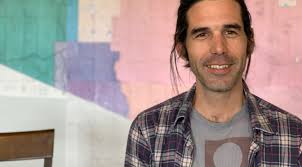






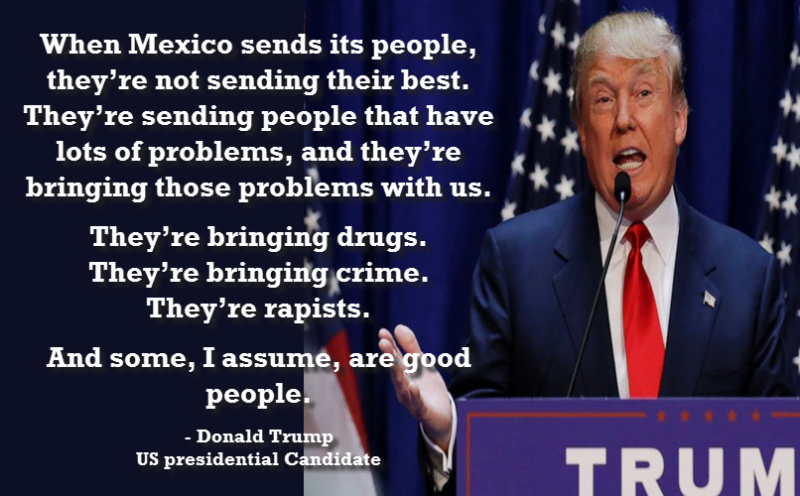

 About Things That Matter