The Most Revealing Take-Away from the Nevada Debate: Our Problems Have Been Solved

Readings for Seventh Sunday in Ordinary Time: Leviticus 19: 1-2, 17-18; Psalms: 103: 1-13; 1st Corinthians: 3: 16-23; 1 JN 2:5; Matthew 5: 38-48

Last week’s Democratic debate was the most interesting and revealing yet. And we have Mike Bloomberg to thank for that. His tone-deaf buffoonery was stunning and just happens to be intimately connected with this Sunday’s liturgical readings.

Taken together, the readings and Bloomberg’s performance show us that all the problems addressed in the debate have already been solved – especially that of religiously inspired terrorism despite its not being addressed in last Wednesday’s “show.”

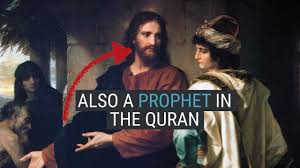
I say all that because today’s selections contrast the foolish wisdom of the world (embodied in billionaires like Bloomberg) with the contradictory visions of Moses and Jesus the Christ who are prophets not just for Christians and Jews, but for Muslims as well. As such, their words call us to recognize our absolute unity with our neighbors, and to reject entirely the Bloombergian separative thinking of the world. What we do to others, the readings tell us, we do to ourselves.

But before we get to that, let’s recall what happened on Wednesday. 

As far as I was concerned, the most instructive moment came not when Mr. Bloomberg declined to release women from their non-disclosure agreements (NDAs). It wasn’t even when he arrogantly joked about the inability of TurboTax to help determine his annual attempts at gargantuan tax evasion.

No, it came in a throw-away line in his exchange with Elizabeth Warren about her proposed “two-cent wealth tax.” Almost as an aside, he said something like, “Well, of course I don’t agree with Senator Warren’s tax proposal.” He then went on to make another of his monumentally vacuous non-points.

I only wish one of the moderators or debaters had followed up: “What exactly is your objection to a two-cent tax? Would it somehow diminish your lifestyle or impoverish you?”

Bernie Sanders came closest to asking that question when he raised the issue of capitalism’s immorality. He observed:

“We have a grotesque and immoral distribution of wealth and income. Mike Bloomberg owns more wealth than the bottom 125 million Americans. That’s wrong. That’s immoral. That should not be the case when we got a half a million people sleeping out on the street, where we have kids who cannot afford to go to college, when we have 45 million people dealing with student debt. We have enormous problems facing this country, and we cannot continue seeing a situation where, in the last three years, billionaires in this country saw an $850 billion increase in their wealth — congratulations, Mr. Bloomberg — but the average American last year saw less than a 1 percent increase in his or her income. That’s wrong.”

There, Bernie said it: capitalism is a highly immoral system. No Jewish prophet; not Moses, not even Jesus of Nazareth could have said it better.  We have the money – unlimited resources – to solve the world’s problems. However, those resources remain locked up in the vaults of the world’s 2000 billionaires. Fact is: their living standards would not be lowered by Warren’s 2% tax. Mr. Bloomberg’s lifestyle would even be unaffected if billionaires like him were outlawed altogether and if as a result, he lost 49.1 billion of his 50-billion-dollar bank account.

Yet, those resources (along with similar confiscations from other billionaires) could absolutely eliminate our material problems not merely in the United States, but throughout the entire world. Despite that undeniable fact, the billionaires and their kept allies refuse to entertain even the possibility of such taxation.

Could anything demonstrate more clearly the immorality of the reigning system?

In other words, the super-rich and corporate “persons” along with their servants in the mainstream media, and in the United States Congress prevent us from seeing that the solutions to the world’s problems are already here and staring us in the face. Yes, the world’s major problems have already been solved!

And I’m not just talking about correcting wealth inequality through confiscatory tax rates on the world’s billionaires. I’m also referring to “problems” like immigration, Medicare for all, free college tuition, forgiveness of college loans, the $15.00 an hour minimum wage, the Green New Deal, world peace, and especially (in the light of today’s readings) terrorism. To repeat: all of those problems (and more) have already been solved. It’s just that the prevailing received wisdom prevents us from recognizing it.

Consider the issues just mentioned one-by-one and how they’ve already been effectively addressed:

  • Immigration: The United States, Canada, and Australia prove that nations made up almost entirely of immigrants (most of them poor at the beginning) cannot only survive but thrive. There is nothing to fear from even the poorest of immigrants. Virtually all of us are descended from such outsiders. Why not make it as easy for immigrants to enter our country today as it was when our parents, grandparents or great grandparents came over? It’s already been done.
  • Medicare for all: Publicly funded healthcare has outperformed (and at much lower cost) the U.S. privately funded system in every industrialized country. The same has happened in the U.S. itself in the form of Medicare, Medicaid, and as plans provided by the Veterans’ Health Administration, and by those extended to U.S. legislators. Medicare for All merely expands already proven systems. There is no need to reinvent the wheel.
  • Free College Tuition: We already have publicly funded elementary and high schools. Why not extend that funding to public colleges and universities? Mr. Bloomberg’s billions could take care of that.
  • College Loan Forgiveness: Michael Hudson has shown that periodic debt forgiveness has been an engine of economic growth since ancient times. It was even enshrined and required in the Hebrew Testament (Leviticus 25: 8-13) as well as centralized in Jesus’ preaching (Luke 4: 19). Moreover, billionaires (like Messrs. Bloomberg and Trump) declare bankruptcy all the time. Why exclude students from such relief?
  • Minimum Wage: A $15-dollar-an-hour minimum wage is already a fact in Seattle, New York, in the Amazon workforce, and elsewhere. It provenly works to raise working class living standards.
  • Green New Deal: In the 1930s FDR’s New Deal fundamentally changed the economic landscape of the United States including (for the first time) a minimum wage, unemployment insurance, social security, and a government jobs program employing millions. The result was the creation of a large, previously non-existent prosperous middle class. Similar even more robust programs were enacted throughout Western Europe even though its infrastructure had been devastated by the Second Inter-Capitalist War. In other words, the Green New Deal is not unprecedented. Its suggested provisions are affordable and have highly successful and popular precedents.
  • World Peace: Think about it. Current crises with Iraq, Korea, Russia, China, Iran, Syria and elsewhere have been manufactured — absolutely pulled out of the air. None of those countries represent mortal threat to the United States. And in any case, the tools for resolving international conflicts already exist under the auspices of the United Nations. Those who routinely ignore those tools and associated laws are not our “enemies,” but ourselves and our “allies.” “We” are the agents who employ force, sanctions, droning, and bombing as a first resort rather than observe international law and UN procedures for avoiding international conflict. Our merely observing international law would represent a giant step towards world peace.

But, of course, the wisdom of the world denies all of the above. It would convince us that reform is without precedent, that those proposing it are radicals, and that their proposals are unrealistic and impossible to implement. They would even have us believe that Bloombergian and Trumpian wealth based on individualism, competition, and separateness are somehow compatible with the Judeo-Christian tradition.

Today’s readings make the opposite point and condemn as heretical such received wisdom. Instead, the readings emphasize the unity of humankind and the need to reject the world’s ideology.

And that’s where the connection with terrorism comes in. The fact is that the world’s leading terrorists are religiously motivated Jews, Christians and Muslims. Yet, all three accept the Bible as inspired. All three recognize Moses and Jesus as hallowed prophets. All three claim to endorse the basic teachings of those prophets as contained in today’s readings. Such convergence represents a basis for eliminating terrorism far more powerful than bombs, drones or boots on the ground.

To see what I mean, please consider today’s readings in my translated form. (And do check them out here to see if I have them right.) They describe the basis for replacing armed conflict with peaceful religious dialog.

Leviticus 19: 1-2, 17-18: Moses called Yahweh’s people to divine holiness outlawing all hatred, grudges and any type of revenge. All such animosity, he warned, ultimately equates with self-hatred.

Psalms: 103: 1-13 This is because God’s very essence is kindness, compassion, generosity, and unbounded forgiveness.

1st Corinthians: 3: 16-23:And that essence is ours too. Hence, destroying another person represents an attack not only on God but on our Selves. Such profound wisdom is 180 degrees opposed to the world’s foolhardy “savoir faire.” Therefore, accepting Jesus means rejecting received wisdom.

1 JN 2:5:  In other words, following Jesus’ teaching (and btw the Buddha’s, Mohammed’s, Krishna’s, Lao Tzu’s, and that of history’s great humanists) is the only way of pleasing God

Matthew 5: 38-48: More specifically, the world teaches eye for eye revenge, retaliation two for one, suing at the drop of a hat, suspicion of borrowers and beggars, and hatred of enemies. However, (along with Moses) Jesus counsels exactly the opposite: gentleness, generosity, having no enemies at all, loving even those who cause us pain, recognition that all are neighbors loved equally by the One whose sun and rain benefit everyone without distinction. Yes, our neighbor (including “enemies”) is our very Self!

Can you see how the wisdom expressed in those readings provide a basis for dialog rather than for armed conflict between Jews, Christians, and Muslims? Can you see how rejecting the “wisdom of the world” reveals that the world’s most pressing problems have already been solved? None of them is new, unprecedented, or insoluble.

It’s time for Jews, Christians, and Muslims to unite in a shared project that opens everyone’s eyes to those facts. It’s time to expropriate the Bloombergs, Trumps and their corporate allies who deny solutions that are absolutely staring everyone in the face.  

The Enlightened Jesus (Like Us) Rejects the Religion of His Childhood

Readings for the Feast of the Presentation of the Lord: MALACHI 3: 1-4; PSALM 24: 7-10; HEBREWS 2: 14-18; LUKE 2: 22-48.

Today is the feast of the Presentation of the Lord. It recalls the day when the infant Jesus entered Jerusalem’s temple for the first time. Jesus’ presentation began a relationship with the temple and its priesthood that was difficult at best.

This first entrance however was dominated by the simple faith of his impoverished parents. They came offering the sacrifice of the poor — two pigeons or turtle doves.

However all was not smooth even that day. In effect, two elderly fortune tellers, Simeon and Anna, confront Jesus’ parents and predict that trouble lay ahead for Jesus and them.

But that would be long in the future — after (as today’s gospel selection concludes) Jesus matured and grew up. Some even say he traveled to India, absorbed the sub-continent’s ancient wisdom, and came back Enlightened.

In any case, by the time of Jesus’ final visit to the temple, he was fully at odds with its priesthood and talked openly about the temple’s destruction — almost as if he relished the thought.

All of this might be reminiscent of our own relationships with the church. Many of us were baptized as infants — introduced to the faith by simple parents.

But then we too advanced in age and wisdom — even to the point where today we might find ourselves at odds with the church and its priests.

Could it be that this is the human vocation — to be loyal church members until (like Jesus) we realize our religion’s hypocrisy, its cooperation with oppression and its need of reform? Where does it leave us vis-a-vis the church? Are we called to step outside its boundaries and embrace mystical enlightenment? Or is our vocation to remain within as outspoken critics? Can the two options be combined?

I try to capture those thoughts and questions in the following attempt at poetic reflection of today’s readings from Malachi, I Corinthians, and Luke’s Gospel.

I
The prophet Malachi said this day would come!
The Lord would send his messenger to scorch the Temple and its worthless priests.
It would hurt, Malachi warned.
In the presence of God's anointed,
Those faithless "holy men" would feel their world was melting --
As if they were melting like gold or silver in a refiner's cauldron,
As if caustic lye were thrown in their hypocritical faces.
Ha!
Then those unworthy priests
Would finally be forced to do
Something pleasing to God.
Let them all go to hell!

II
The prophet Malachi said this day would come!
And here it is at last.
Or so it seems.
But what's this?
The promised messenger is a poor child
Wrapped in a blanket patched and smelling of baby urine.
His parents with simple uncomprehending faith
Offer the bored priest
Two pigeons or a pair of doves
(I forget which).
The priest hardly notices either.
But he performs his magic rite
And rattles by rote the hackneyed phrases.
He would find the notion laughable that he or his temple
Might have anything to fear from . . .
"What's this child's name?" he asks.
"Yeshua ben Joseph," his father stutters
In tones of humble deference.

III
You see,
That's the trouble with priests.
Their fulsome selves cannot see
What's before their eyes,
And clear to everyone else:
Their days are numbered.
And so are the Temple's -- and mosques' and churches'.
Malachi predicted it.
Yeshua would see to it.
(More below.)

IV
Nonetheless, the Elders, Simeon and Anna see.
Ah, yes!
They are Seers.
Gaunt and bony from years of prayer and long fasts
These elders, recognize in Yeshua
The one Malachi had foretold.
"Now is not the time," the hoary Simeon intones.
"But the day will surely arrive
When this child will polarize everyone in Israel
Including these wicked priests."
The prophet's words startle the rough peasant woman from Nazareth.
"He'll be a matricide," the fortune teller warns her.
"He'll cut you to the quick."
Anna the widowed prophetess
Echoes Simeon's threatening words.
Yeshua's parents tremble with fear.

V
What kind of child have you sired?
Miryam later asks her husband
(half joking)
On the highway home from Jerusalem.
Joseph smiles.
He simply shrugs
And shakes his shaggy peasant's head.
They walk on in silence.
But Yeshua bides his time
Learning justice from his father
And patience from Miryam.
Some say he journeyed to Egypt
Or India
To study Wakefulness
And Light.
"You have a nice boy,"
The village matrons say to Miryam,
While she ponders Simeon's words
And waits for the other shoe to drop.

VI
And drop it does -- more than a quarter century later!
Jesus returns to the Temple
This time with whip in calloused hand.
He realizes (as the psalmist says today)
That even Herod's Magnificent Shrine
Is too small for God -- or for him.
"All churches are robbers' dens!"
Jesus shouts.
So the workman lashes out left and right
At those who exploit
Simple peasants like the pair who raised him.
Yeshua despises the priests.
"This Temple," he says, "will be reduced to rubble.
And good riddance!
These charlatans traffic in your fear of death?
Free yourselves from their superstition
And temple!
Dare to live
With your own thoughts!"
Miryam's spirit sinks as she hears such words.
Simeon's sword has begun to cleave her mother's heart.
"My son has lost his faith,"
She fears.
The priests know Yeshua has lost their faith
And corrupts the crowds
Who hang on his every word.
They conspire to destroy him
As an atheist and blasphemer.

VII
Perhaps that's our vocation too,
Don't you see?
As followers of Jesus
To come to the temple
(Or not !)
To present ourselves there
As fullers and refiners
As atheists, blasphemers
In the eyes of a too credulous world
Scared out of its wits
By pretentious ignorant priests and televangelists
Who (as the author of "Hebrews" says)
Traffic in our fear of death.
Instead,
Believe the psalmist's words:
God's bigger than that
And so is Jesus.
So must we be!

Border Reality in Tijuana: Horror, Heartbreak – and Heroism

Readings for 3rd Sunday in Ordinary Time: Isaiah 8:23-9:3; Psalm 27: 1, 4, 13-14; I Corinthians 1: 10-13, 17; Matthew 4:23; Matthew 4: 12-23

In recent weeks, I’ve been trying to report on my rich but heartrending experiences in Tijuana Mexico where I’m volunteering for a legal services group, Al Otro Lado (AOL). We offer professional counseling and support to refugees at our country’s heaviest border crossing here in Baja California. For someone in his 80th year, workdays here have been incredibly busy, very exhausting, but also extremely rewarding.

I mean, who wouldn’t be edified to witness the example of heroic but impoverished fathers and mothers AOL counsels each day. Their love for their children is so powerful that it has driven them to leave the homes and countries they love and actually walk hundreds of miles to what they imagine will be safer conditions for their little ones? (How desperate do you have to be to do that?!) It’s like the mythic journeys celebrated in some of the greatest stories human beings have ever produced.  

And yet, whose heart wouldn’t be broken to realize that helping these heroines and heroes fill out reams and reams of invasive forms and questionnaires will in most case lead nowhere but back to their original unbearable circumstances? That’s because the heartless Trump administration is doing everything in its power to thwart the dreams of these mythic champions.

Refugee Testimony

To be more specific, here’s what I’ve been told over the past two weeks while taking testimony from refugees seeking asylum in the U.S. (What follows is virtually in the refugees own words.) See if you find them as distressing as I have:

  • My country (e.g. Mexico, Honduras, El Salvador, or Haiti) is controlled by drug cartels created by the U.S. so-called “war on drugs.”
  • Small business owners in my barrio must offer the gangs protection money or otherwise cooperate with them – either that or suffer horrific consequences.
  • They try to get the rest of us to pay “war taxes” and/or to transport or distribute drugs.
  • For refusing to do so, my father (and/or a brother, or uncle) has been murdered. They’ve beat me up too. They almost stabbed me to death. They’ve burnt down our family’s house.
  • And the gangs are currently threatening to kill me and remaining members of my family if we don’t give in.
  • I can’t move elsewhere in my country to escape all of this, because the gangs are everywhere. They’ve followed me to the border, made threatening phone calls, parked prominently outside my place of work. They always seem to know where I live.
  • Moreover, it doesn’t help to go to the police. They either fear the gangs or cooperate with them. We’re all afraid of the police; they are so corrupt and unhelpful.
  • I’m desperate, so I and my family have walked across three countries to get here.

Women hovering over young children, clinging infants, and adorable babies report:

  • I’ve been a victim of domestic violence for years.
  • My husband who’s alcoholic regularly beats me and my children.
  • Since I left him, there’s been no escape; he stalks me wherever I go.
  • I can’t live like this anymore.
  • I’ve got to get as far away from this man as possible.

To repeat: those are the stories all us volunteers for AOL hear each day. I bring them up today because they turn out to be intimately connected with the liturgical readings for this third Sunday in Ordinary Time. Those selections offer encouragement to our mythic heroes, because their stories are quite like those of 6th century (BCE) Jews reflected in today’s first reading as well as of Jesus of Nazareth in today’s gospel selection. In fact, heroes’ journeys, exile, and refugeeism turn out to be prominent recurring biblical themes. Think about it.

Biblical Parallels

Consider for example today’s first selection from the prophet Isaiah. It celebrates Israel’s homecoming after a 50-year exile in Babylon (modern Iraq). It was then that their leaders had been forced to emigrate from Israel to Babylon. In other words, they were victims of wholesale kidnapping when Babylon’s rulers desired to prevent uprisings in the land they had just conquered and occupied. So, like our clients here in Tijuana, the removed ones became victims of heartless force and violence back home.

And then in the Gospel (500 years later), we find John the Baptist and Jesus similarly victimized by regimes almost as ruthless as the Trump administration. Today’s gospel reading focuses on Jesus himself becoming a political refugee for the second time. [Remember that first time in Matthew’s “infancy narratives,” when he and his parents sought expatriate status in Egypt to escape wholesale state infanticide (MT 2:13-23)?]

This time, that same King Herod has arrested Jesus’ mentor, the outspoken John the Baptizer. (The king would shortly have him beheaded.) And that in turn forces Jesus, as John’s protege, to go underground. So, the young teacher flees for refuge specifically among non-Jews in the Gentile region of Zebulon and Naphtali in eastern Galilee.

Significantly, that entire territory constituted a rebellious district and a hotbed of revolution. As such, it was largely out of Herod’s control. (To some extent, the king had only himself to blame for that, because it was in Zebulon and Naphtali that he had forcefully resettled migrants, non-Jews, and the poor.) In any case, Jesus finds comparative safety in that mixed context of foreigners, rebels and refugees.

Nevertheless, Matthew’s gospel makes it clear that Jesus’ semi-clandestine status didn’t silence him. Instead, he simply took up where John had left off proclaiming their shared conviction that another non-imperialized world is possible. As a world without Caesars – as a world with room for everyone – Jesus called it the “Kingdom of God.” It’s what refugees and immigrants have always wanted.

What I’m trying to say is that here in Tijuana, AOL deals every day with refugees from violence pretty much like what’s portrayed in today’s biblical selections. Circumstances have forced most of them into exile every bit as effectively as 6th century (BCE) Jews were forced into Babylon. They are just as frightened as Jesus must have been when he fled to eastern Galilee to hide out in a district virtually ungovernable by the reigning King Herod.

Calling attention to the similarities between the stories of heroes at our southern border and those of Israel in general and of Jesus in particular should offer encouragement to both today’s refugees and those who work with them (like the AOL permanent volunteers I’ve found so inspiring). The message for everyone is “this too will pass.” In any case, here are my “translations” of the readings in question. You can find them here in their original form.

Today’s Readings (in Translation)

Isaiah 8:23-9:
Our long, alienated exile
Is finally over.
Anguish, darkness
Gloom and distress
Have been replaced                                       
By light, joy and merriment.
The burdens                                                   
Of foreign taskmasters
Have been lifted
Their instruments of torture,
Smashed.
It is time to celebrate.
 
Psalm 27: 1, 4, 13-14
Indeed, fear is gone
Removed by the Divine One
Who is Light, Salvation,
Refuge and Loveliness
The Source of
Bounty, courage, strength,
And life.
 
I Corinthians 1: 10-13, 17
For us, Yeshua
Is the wellspring
Of such delight
Despite Empire’s
Divide-and-conquer strategy.                        
So, as his followers
We should never
Split into petty factions
But stay united instead.
 
Matthew 4:23
Yes, embracing 
God’s Kingdom
Where disease                                               
Is banished –
Has us rejecting
The World’s division
Its insanity –
Its fundamental sickness.
 
Matthew 4: 12-23
That World even
Imprisoned John the Baptizer
And caused
Yeshua himself
To hide underground
Among anarchists.
Yet he never stopped
Insisting that                                      
Another world is possible
With room for everyone                    
Even persuading
Working class people
To leave behind
Job security
For its sake
With the added bonus
Of free health care
For everyone!

Conclusion

A key foundational principle of liberation theology is the “hermeneutical privilege of the poor.”

It means that since poor people stand on the same ground as the ones whose experience is centralized in the Bible, their interpretations of texts (hermeneutics) are probably more accurate than the readings of the non-poor and even of academics trained in biblical science. The poor and oppressed see elements of historical accounts, parables, and other literary forms that remain opaque to the rest of us.

The truth of that privilege has come home to me strongly since I began my stint two weeks ago here in Baja California. It has forced me to see the world through the eyes of the refugees our group accompanies each morning at the el Chaparral crossing.

So, when I considered this week’s liturgical readings from Isaiah and Matthew, I saw what I never saw before, though I was previously quite familiar with both passages. Today’s readings, I realized, are about escapees from persecution similar to what our refugees from Mexico and Central America have experienced.

In summary, Tijuana’s refugees are more authentically God’s people – God’s favorites – than the rest of us.

I thank the heroes I’ve met here in Baja California for teaching me that lesson. They are mythic giants indeed.

When God Had A Wife: Ashera, Magdalene & Modern Biblical Scholarship

Why is the world in such trouble?

Biblical scholars Lynn Picknett and Clive Prince present a compelling answer in their 2019 gem, When God Had A Wife: the fall and rise of the sacred feminine in the Judeo-Christian Tradition.

We’re all upset, they tell us, because our patriarchal universe is completely unbalanced. Politically it is overwhelmingly run by members of a single gender. It’s a man’s world whose arrangement excludes almost completely more than half the human race.

That’s true even spiritually. For instance, the Roman Catholic Church with more than 1.3 billion members has a hierarchy composed entirely of men. Outrageously, it holds officially that women are divinely excluded from its ruling elite. Other Christian denominations as well as the Jewish and Islamic communities are not far behind in their patriarchal orientation.

How could we expect balance and harmony in a world like that? No one can.

Of course, none of that should come as a surprise to anyone – especially to women. What is surprising and extremely important in Picknett and Prince’s exposition is their argument that our culture’s spiritual imbalance stands in sharp contradiction to earliest biblical traditions. There in both its Jewish and Christian Testaments the sacred feminine was originally honored as much as the sacred masculine.  

To demonstrate the truth of their position, Picknett and Prince reinterpret the concept of monotheism itself. They take readers on a tour of often-overlooked and downplayed middle eastern biblical sites, expose them to goddess-centered texts, and centralize the figures of Simon Magus, his lover and inspiration Helen, as well as Mary Magdalen who fulfills the same role for Jesus himself. It’s a mind-blowing trip with momentous implications for those committed to solving the world’s problems at their patriarchal and profoundly religious roots.

Monotheism and Patriarchy

Begin by considering the connection between patriarchy and monotheism itself. For the authors of When God Had A Wife, monotheism does not represent a sophisticated advance over a “primitive” polytheism. Quite the reverse. Monotheism instead embodies a drastically narrowed impoverishment of human spiritual experience. It entirely excised the divine feminine which humans across the planet have always thirsted for, recognized and honored. In fact, according to our authors, monotheism is synonymous with “the menfolk.” It is itself a patriarchal project. 

To develop that point, Picknett and Prince show readers that even the Bible is not basically monotheistic in its alleged identification of a single Old White Man in the Sky watching and judging our every decision. It’s not that other gods are merely pretenders who do not exist. It’s not even that the biblical tradition is devoid of goddesses. The latter are evidently visible for scholarly detectives like our authors who have been seeking clues for her presence in primary source manuscripts and secondary scholarship for more than 30 years. (The result has earned them world-wide recognition that even includes a cameo appearance in Hollywood’s version of “The Da Vinci Code.”)

Actually, within Judaism, monotheism (exclusive recognition of one God alone) was a late development. In a tradition that reputedly began about 1200 BCE, monotheism emerged exclusively only around 530 BCE – after the Babylonian exile. It was then that Judah’s elite represented by Ezra, Josiah, and Nehemiah reformulated the nation’s longstanding traditions. Their patriarchal work removed, downplayed, and/or reinterpreted all references acknowledging the existence and power of “foreign” gods other than Yahweh, Judah’s national deity. The reformulators took special pains to erase references to goddess worship.

Ezra’s reforms obscured, for instance, the fact that the people’s origin traditions identified an entire family of Gods as the ones responsible for the creation of the cosmos. Headed by the Great God, El, the family was called Elohim. It included 70 sons. Israel’s Yahweh was one of them – an inferior subordinate of El. His assignment was to protect the nation of Israel. (Note El’s name in the term Yisra-El itself.) Only at the beginning of the first millennium BCE was El replaced by Yahweh as Israel’s particular God.

More importantly for Picknett and Prince, El had a wife. The arrangement was only natural to the ancient mind – divine families mirrored human ones complete with father, mother, sons and daughters. It was just like the Greek and Egyptian myths familiar to all acquainted with classical literature. In fact, El’s wife sometimes had names drawn directly from cultures surrounding the Hebrew nation (Egypt’s in particular). Thus, she was variously identified as Anat, Qadesh, Isis, Sophia, and (the favorite) Asherah. As the quintessential shape shifter, the Hebrew goddess was variously a lustful, raunchy and sexually insatiable seductress, a fierce warrior, a loving wife, a beloved mother, and a wise crone.

Consider Ashera then. Despite patriarchal attempts to write her out of the Bible, and despite similar cultural obstacles obscuring the perception of most contemporary scholars, Asherah’s prominence for ancient Hebrews emerges unmistakably from:

  • The hundreds of female figurines unearthed from early iterations of pre-exilic Hebrew temples, i.e. before the end of the 6th century BCE. (That’s right: Asherah was officially worshipped in Jerusalem’s temple as well as in a Hebrew counterpart on the Nile Island called “Elephantine,” and in Samaria’s sanctuary on Mt. Gerizim.)
  • Their absence from similar sites following the 6th century reform
  • The presence of Asherah’s symbol [some version of a palm-like tree and/or mysterious (and always feminine) cherubim] inscribed on temple doors and other holy places closely associated with worship of El
  • Even more specific dedications sweetly referring to “El’s Asherah” or “Yahweh’s Asherah” on or near temple sites
  • Prohibitions by the anti-goddess prophets of outdoor worship associated with Asherah’s iconic trees
  • Indications in the oldest biblical texts that female biblical heroines like the Judge Deborah may have been priestesses of Asherah herself
  • Ashera’s reappearance as a domesticated “Sophia” in the Book of Wisdom (and elsewhere) redacted by patriarchs reluctantly responding to widespread popular demand for acknowledgement of the sacred feminine. Describing her as Sophia, even these conservative biblical texts identify the goddess as Yahweh’s first thought and co-creator with him. (More about this below. . .) 

The bottom line here is that goddess worship was central to ancient Israel’s past. Only heroic (not to say malevolent) efforts by the nation’s 6th century (BCE) reformers coupled with the cultural blindness of mainstream biblical scholarship has kept that powerful truth from penetrating the consciousness of Jews and Christians everywhere.

Jesus (& Simon Magus) as Feminist

Despite such obstacles past and present, our authors go on to explain the survival of goddess worship within the Judeo-Christian tradition. In the process, they take us on a geographical odyssey from Judah to Alexandria and then to Samaria illustrating how recognition of the sacred feminine was advanced not only by the “proto-feminist” Jesus of Nazareth, but by two unexpectedly key figures: the arch-heretic Simon Magus (i.e. Simon the Magician) and John the Baptist.

As just indicated, even the best efforts of its scribal menfolk, could not keep goddess worship out of Judah’s public consciousness. Without honoring her actual name, popular pressure evidently forced the patriarchs to somehow acknowledge Ashera’s identity and influence. That pressure was increased by the spread of Greek (Hellenistic) culture especially as it emanated from Alexandria where fully 1/3 of the population was Jewish. (Greek culture was far more woman-friendly than its Jewish counterpart.)

Accordingly, as evidenced in the Book of Wisdom (produced at the end of the 3rd century BCE), the sacred feminine resurfaced under the title Sophia, a de-sexualized, sanitized, domesticated and abstract female principle called “Wisdom” and portrayed as God’s First Thought — his co-creator of the universe.

For its part, Samaria also proved central to the preservation of goddess traditions. Contrary to the impression given in the canonical gospels, the region was not a minor, out-of-the-way location. Instead, it covered a major swath of territory in northern Israel which was always more prosperous than its southern neighbor. The opposite impression comes from the anti-Israel and pro-Judah bias of the Jewish Testament in general and from a similar prejudice against Samaria itself in Mark, Matthew, Luke, and John.

In any case, Samaria played a major role in Jesus’ public life as did its inhabitants. Scandalously, a Samaritan emerged as the hero of one of Jesus’ most famous parables. Additionally, according to John’s Gospel, Jesus made his first public declaration of his messianic identity to a Samaritan woman.

John the Baptist had Samaritan connections too. So did Simon Magus, who (as we’ll see presently) was both a disciple and rival of Jesus. And since Simon as well as Jesus were disciples of John, and since both of them ended up centralizing devotion to flesh-and-blood embodiments of Sophia, it makes sense to attribute similar focus to the Baptist.

In fact, all three – Jesus, John the Baptist and Simon the Magician had equal first century claims to the title of Christ or Messiah. (Well into the second century, John’s disciples invoked Jesus’ own praise of their master as “the greatest prophet” to argue John’s superiority to Jesus.) It’s therefore a fluke of history that today’s “Christians” are not Johannites or Simonists.  

As for Simon Magus . . . Christian polemic portrays him as a contemptuous minor figure not only in Luke’s Acts of the Apostles but throughout early Christian tradition. However, historically speaking, he himself was widely revered as the Son of God. He was a wonder worker on a par with his Nazarene rival. Both men presented themselves as prophets of Sophia. Both were besotted with women who for them embodied God’s Wisdom complete with all the sexual overtones reminiscent of goddess worship everywhere.

The latter is most evident in the case of Simon, a free thinker who, like Jesus, rejected the group consensus of his own time in favor of the Wisdom of God. Simon’s Sophia went by the name Helen whom he portrayed as God’s First Thought. She was a former prostitute whose status as such, Simon argued, incarnated the patriarchy’s degrading treatment of women in general. Accessing Helen’s wisdom involved daily sexual relations with the beloved.

Jesus’ relations with his own Sophia, Mary Magdalen, mirrored that of Simon the Magician. Clearly his favorite, Mary was Jesus’ link with his many female disciples. She was probably his sexual consort if not his wife and mother of his children. (It was simply a given, the authors argue, that any Jewish man above 20 years of age had to be married. So, at the age portrayed in the gospels, Jesus was either a widower or a divorcee.)

At the same time, Mary Magdalene was a rival of Peter the apostle who according to Magdalene’s Gospel and other recently discovered texts was an extreme misogynist and enemy of the one Jesus saw as the embodiment of the divine feminine – God’s First Thought. Jesus’ identification of Mary as “the apostle of apostles” wounded Peter to the quick.

All of this has evident implications not only for questions about the sacred feminine in general, about goddess worship and church leadership, but also for “the contemporary rise of the sacred feminine in the Judeo-Christian tradition” and for restoring balance in our increasingly troubled world.

Conclusion

Reading When God Had A Wife was like taking a short course in biblical studies. Thankfully, it recalled for me what I had learned more than half a century ago in the most important courses I took in preparation for priestly ordination in the Catholic seminary. And that recollection made me wonder why the knowledge communicated in When God Had A Wife has not yet filtered down to those who occupy the pews in churches and synagogues, and prayer mats in mosques.

It’s as if there were some conspiracy to keep everyone ignorant, naïve and childish in their approach to faith. For instance, our authors reminded me that in the seminary well more than 50 years ago, I had learned about text criticism, form criticism and redaction criticism. I wonder why all of that isn’t common knowledge.

The answer of Picknett and Prince is that there has indeed been a conspiracy by the ruling elite to keep everything secret. The goddess had to be removed from the Judeo-Christian pantheon to more firmly establish patriarchal monotheism, which, remember, has always been about “the menfolk.”

It’s that latter insight that will stick with me long after I’ve forgotten the wonderfully detailed and exquisitely documented work presented in When God Had A Wife. The interests of the menfolk explain more convincingly than anything else the reluctance of those who should know better to share with the rest of us the rich fruits of biblical scholarship.

After all, if “the faithful” knew about variant texts, literary forms and redacted interpretations, they might call into question the exclusive right claimed by priests, bishops, cardinals, popes, rabbis, and imams to explain their Old White Man up in the Sky. They might embrace instead female leadership and Yahweh’s Wife – Ashera, Anat, the Cosmic Mother, or Isis.

For that matter, they might demand ecclesial leadership modeled on the discipleship of Mary Magdalene or Simon Magus’ Helen.   

It’s because Picknett and Prince have the courage to forcefully and convincingly suggest such revisions that I cannot recommend more highly their supremely accessibly and wonderfully popularized When God Had A Wife: the fall and rise of the sacred feminine in the Judeo-Christian tradition.

On Joining John the Baptist in Rebellion against the Religious Establishment – and the Republican Party

dangerous

Readings for Second Sunday of Advent: IS 11: 1-10; PS 72: 1-2, 7-8, 12-13; ROM 15: 4-9; MT 3: 1-12

“The meaning of the Incarnation is this: In Jesus Christ, God hits the streets. And preparing for that is the meaning of Advent.” (Jim Wallis. “Advent in 2016: Not Normal, Not Now, Not to Come.”)

__________

Three years ago I published a review of James Patterson’s novel, Woman of God. It continues to get clicks – perhaps more than anything I’ve published on my blog.  I think that’s because so many of us find ourselves searching for a richer, more relevant church experience that connects with the extraordinarily dangerous times we’re living in. They have in fact been shaped by “the most dangerous organization in the history of the world.”

Woman of God is the story of Brigid Fitzgerald, a medical doctor who though female, becomes a priest and candidate for the papacy.

Brigid and her husband (also a dissident priest) decide to form their own Catholic parish. They do so because of the studied irrelevance of the Catholic Church to pressing problems of the real world. The two call their congregation the “Jesus, Mary and Joseph (JMJ) Church.” They insist on remaining Catholics not allowing their opponents to drum them out of the church as just another break-away Protestant sect.

The JMJ Church spreads rapidly, largely because it connects Jesus’ Gospel with issues of peace and social justice. And though vilified by her local bishop and physically threatened by right wing Catholics, Brigid eventually becomes widely celebrated and is summoned to Rome not for condemnation, but papal approval.

I couldn’t help thinking of Woman of God as I read today’s liturgy of the word this Second Sunday of Advent. Like the JMJ Church, the first two readings along with the responsorial psalm emphasize the connection between faith and social justice.

Then in today’s Gospel, the prophet, John the Baptist, like Brigid Fitzgerald, initiates an alternative community of faith far from the temple in the desert wilderness. John’s credibility leads “all Jerusalem and Judea” to see him as a prophet. In fact, (as John Dominic Crossan has pointed out) John becomes for the Jewish grassroots their de facto alternative “High Priest.”

To see what I mean, consider that first selection from the prophet Isaiah. It directly links faith with justice for the poor, oppressed and marginalized. In Isaiah’s day (like our own) they were typically ignored. By way of contrast, Isaiah’s concept of justice consists precisely in judging the poor and oppressed fairly and not according to anti-poor prejudice – in Isaiah’s words, not by “appearance or hearsay.”  (A clearer statement against contemporary police and/or government profiling can hardly be imagined.)

Not only that, but according to the prophet, treating the poor justly is the key to peace between humans and with nature. Centralizing their needs rather than those of the rich produces a utopian wonderland where all of us live in complete harmony with nature and with other human beings. In Isaiah’s poetic reality, lions, lambs, and calves play together. Leopards and goats, cows and bears, little babies and deadly snakes experience no threat from each other. (This is the prophetic vision of the relationship between humans and nature – not exploitation and destruction, but harmony and mutual respect.)

Most surprising of all, even believers (Jews) and non-believers (gentiles) are at peace. Today’s excerpt from Paul’s Letter to the Romans seconds this point. He tells his correspondents to “welcome one another” – including gentiles – i.e. those the Jewish community normally considered enemies. (That would be like telling us today to welcome Muslims as brothers and sisters whom God loves as much as any of us.)

Today’s responsorial psalm reinforces the idea of peace flowing from justice meted out to the “least.” As Psalm 72 was sung, we all responded, “Justice shall flourish in his time, and fullness of peace forever.” And again, the justice in question has the poor as its object. The psalmist praises a God and a government (king) who “rescue the poor and afflicted when they cry out” – who “save the lives of the poor.”

In his own time, the lack of the justice celebrated in today’s first three readings infuriates Jesus’ cousin, John the Baptist. His disgust forces him out of the temple and into the desert. It has him excoriating the religious leaders of his day as a “brood of vipers.”

Unmistakably clothed as a prophet – in garments that absolutely repudiate the “sacred garb” of his effete opponents – John lambasts the Scribal Establishment which had normalized relationships with the brutal occupation forces of Rome. As opposition high priest, John promises a religious renewal that will lead to a new Exodus – this time from the power of Rome and its religious collaborators.

I hope you can see as I do the parallels between the context of John’s preaching and our own. We live in a culture where those in charge contravene our faith by openly slandering the poor and marginalized celebrated in today’s readings as especially dear to God.

I mean, following the elections of 2016, all the levers of power (the presidency, the Supreme Court, the House and Senate) found themselves in the hands of billionaires and their friends – the 1% that the Occupy Movement identified so accurately eight years ago. Ironically that richest 1% has succeeded in scapegoating the country’s poorest 1% (immigrants) as a major cause of our country’s problems. Moreover, they equally vilify other poor and marginalized people: the impoverished in general, brown and black-skinned people, women, the LGBTQ community, environmentalists, protestors and anyone who exposes the crimes of the billionaire class.

As a result, we entered a period of unprecedented national darkness that still promises to rival that of Germany, 1933-1945. Until the mid-term elections of last year, virtually everything was controlled by the single organization Noam Chomsky calls “the most dangerous in the history of the world.”

More dangerous than the Nazis? Yes, Chomsky insists. Hitler did not have the power to destroy the planet by nuclear war. Hitler ruled Germany before climate change threatened innumerable species, Mother Earth herself, and continued human existence. And yet the entire Republican Party denies that the problem even exists! Yes, it is the most dangerous organization in the history of the world.

And despite all of that, there’s not a peep about it from the pulpit. People keep going to Mass as though the most important upcoming event is the arrival of St. Nicholas at the parish potluck – or the Christmas bazaar.

So, what should we do in the face of such disconnect?

How about following the example of John the Baptist, Brigid Fitzgerald and her husband?

This would entail:

  • Admitting that present forms of church are hopelessly disconnected from the unprecedented tragedy and threat represented by the accession to power of anti-poor climate change deniers.
  • Publicly moving out of our local church building.
  • Perhaps, opening a store front JMJ Catholic church on the Main Street Jim Wallis referred to in his article referenced above.
  • Empowering faithful women in the JMJ community to preach and celebrate the Eucharist.

Objectors will say:

  • We have no authority to do this.
  • It’s better to continue our reform efforts from within.
  • This will only cause division in our church.
  • The status quo really doesn’t bother me, because I use the quiet provided by Sunday Mass to facilitate my own prayer life.
  • (If, like me, you’re of a certain age) I’m too old for such radical disruption of my life.

To such objections John the Baptist might reply:

  • “I had no official authority to start my desert community of resistance and reform. In fact, I was identified by the authorities as an enemy of the state. Eventually they cut off my head. So don’t expect approval.”
  • Reform from within? “I gave up on that early on. So did my cousin, Jesus. Both of us operated outside the temple system which we criticized harshly.”
  • Division in our faith communities? “That didn’t bother me either. Can you get much more divisive or polarizing than calling religious leaders a ‘brood of vipers’?”
  • Withdrawing into personal prayer? “The spiritual masters in my Essene community convinced me that prayer and meditation are essential elements undergirding prophetic action. However, pietism is useless unless it leads to the kind of witness I gave and risk I took on the banks of the Jordan.”
  • Too old? “Again, my Essene mysticism would not permit me to identify with the physical as if I were primarily a body with a soul. The truth is that we are first of all ageless spirits who happen to inhabit temporary bodies. The imperative for action is no less incumbent on older people than on the young. Hell, the elders criticized me for being too young to oppose them. I was barely 30 when they killed me.”

As Jim Wallis has intimated, the specter of John the Baptist should haunt us this second Sunday of Advent and drive our faith communities onto Main Street. These unprecedented times call for radical response outside the sacred precincts and independent of the sleepwalkers awaiting the arrival of St. Nicholas.

Pope Francis Calls Possession of Nuclear Weapons Sinful

Readings for First Sunday of Advent: IS 2:1-5; PS 122:1-9; ROM 13: 11-14; PS 85:8; MT 24: 37-44

Last weekend, Pope Francis outright condemned the manufacture and possession of nuclear weapons. (I’ll bet you didn’t notice that in the mainstream media.)

The pope did so during his visit to Hiroshima and Nagasaki, where he met with survivors of the two Japanese cities which were virtually wiped off the map when atomic bombs were dropped on them in 1945. The weapons of unprecedented mass destruction killed more than 200,000 people in matters of minutes.

During his remarks, Pope Francis said, “A world without nuclear weapons is possible and necessary. . .  The use of atomic energy for the purpose of war is immoral, just as the possessing of nuclear weapons is immoral . . .”

The pope’s visit and sharp condemnation could not come at a more opportune time either historically or liturgically (on this First Sunday of Advent). Historically, they follow hard upon the conviction of the Kings Bay Plowshares 7, a group of seven Catholic peace activists who in April of last year entered the Kings Bay Naval Submarine Base in Georgia to symbolically destroy the nuclear weapons housed there. (Kings Bay harbors at least six nuclear ballistic missile submarines. Each of them carries 20 Trident missiles.)

The Seven included Liz McAlister, the wife of deceased peace activist Phil Berrigan, as well as Martha Hennesy, the granddaughter of Dorothy Day, the legendary co-founder of the Catholic Worker Movement.  

As I pointed out a couple of weeks ago, the group’s own “weapons” for accomplishing their task were hammers, crime scene tape, and baby bottles containing their own blood. Once inside, they splashed their blood on the walls of the base’s administration building. They used their hammers to “destroy” the nosecone of one of the Trident missiles. They also posted a formal indictment of the U.S. government charging it with crimes against peace.

At their trial the activists had planned to mount a “necessity defense.”  However, the presiding judge forbade them to cite their religious motivations. That nullified their planned argument that their “crime” was morally necessary to prevent the far greater catastrophe of a nuclear war.

The Seven had also planned to present Daniel Ellsberg as an expert witness to articulate that defense. All of us recall Ellsberg as the most famous whistle blower in U.S. history. In 1971, he risked a lifetime behind bars when he leaked the famous Pentagon Papers that revealed Washington’s hidden strategy behind the Vietnam War. His recent book The Doomsday Machine: confessions of a nuclear war planner details his work as a Defense Department analyst and nuclear weapons strategist.

However, Ellsberg too was forbidden to testify. Had he done so, he would have argued that the Seven were faithfully following the prophet Isaiah’s command to “beat swords into plowshares” (IS 2:4).

(By the way, with the judge’s restrictions in place, the Plowshares 7 were convicted of conspiracy. On their sentencing within 90 days, the activists will face more than 20 years in prison.)

All of this – Pope Francis’ words about the sinfulness of nuclear weapons manufacture and possession as well as the conviction of the Plowshares 7 – is relevant to this Sunday’s liturgy of the word and historically relevant in the way just explained. That’s because today’s first reading contains those words from the prophet Isaiah.

Contradicting his people’s earlier understanding of God as a “Man of War,” Isaiah’s words describe divine opposition to all war and a fortiori, of course, to nuclear war. They envision a precisely enlightened human future when the people of the world will “beat their swords into plowshares and their spears into pruning hooks,” and where “one nation shall not raise the sword against another.”

Then in today’s Gospel reading from the 24th chapter of Matthew’s Gospel, Jesus (like the Buddha before him) calls his followers to simply wake up rather than prepare for war against their Roman occupiers led by a violent “Son of Man.” As Matthew’s readers will discover in his 25th chapter, “waking up” means recognizing Christ’s presence in the “least of the brethren.” Jesus implies that such recognition precludes war of any kind and (again a fortiori) nuclear war.

To get what I mean, please read for yourself today’s biblical selections. You can find them here. Despite their obscurity (especially in today’s apocalyptic Gospel passage), you’ll see that they’re about waking up and renunciation of war. At least that’s what I see in them, as you can tell from my “translations” immediately below:  

IS 2:1-5

For the prophet Isaiah,
Jerusalem and its Temple
Called people everywhere
To lift their gaze
Above the world’s
Hills and highest mountains
To the realm of peace and light
He believed possible.
To get there, he said,
Disarm and demilitarize.
Transform all
Weapons of mass destruction
Until they look like
Hoes and shovels,
Tractors and cultivators.
 
PS 122: 1-9
 
Yes, it’s possible to turn this world
Into a house of worship –
A City of Peace –
Where all human beings
Enjoy the prosperity
That disarmament makes possible.
That’s the key to reconciliation and happiness.
 
ROM 13: 11-14
 
St. Paul calls us to wake up!
Only our selfishness,
He says,
Prevents the advent
Of that other peaceful world.
So, don’t be deceived, he said,
By the world’s empty promises
Of fulfillment by (Christmas) consumption
And militarization.
Instead, seek that other world first
And everything else you need
Will follow automatically.
 
PS 85:8
 
Lord, please show us
How to get from here to there!
 
MT 24: 37-44
 
Jesus warned his friends
About using violence
To achieve peace.
They hoped that
Daniel’s “Son of Man”
Would dethrone imperial Rome
By force of arms.
“Be careful what you wish for,”
Jesus cautioned.
“Your hoped-for apocalypse
Will recall the devastation
Of Noah’s Flood.
Civilian casualties
Will run at 50% —
Killing innocent
Men and women alike
(Just as at Hiroshima
And Nagasaki).
True change however
Comes from disarmament
(as Isaiah taught)
And from extreme wakefulness
(as the Buddha instructed).
Pray then for blessed insomnia!
Wake up
To the signs of the time!”

Don’t you agree that Pope Francis is wonderful? His faithful following of Jesus and of St. Francis of Assisi has led him to call things by their right names. Nuclear war is sinful, he has said unmistakably. Possessing nuclear weapons is immoral. Catholics and the entire world need to take those words to heart and act upon them.

The Plowshares Seven show us what such open-hearted action means. The Seven are willing to go to prison for enacting the logical consequence of the words of Pope Francis and of Jesus in a world cursed by nuclear weapons.

But few are paying attention. Few take notice. Since Francis’ words weren’t about abortion, homosexuality, or refusing communion to politicians, the pope’s words of condemnation received little attention in the mainstream media. Moreover, those words seemed pointed sharply at the U.S. which alone has ever used nuclear weapons and possesses more of them than any nation on earth. And who among us (much less, among the corporate media) is willing to endure such condemnation?

Fewest of all among us are willing to take seriously the challenge of the Plowshares 7. Who among us is willing to do prison time for the sake of following the prophetic ones who identified disarmament, wakefulness and enlightenment as the only effective path to happiness and peace?

Advent is the time for entertaining those questions. What are your answers? What are mine?

(Discussion follows)   

“Christ the King”: How Jesus Became Donald Trump

Readings for the feast of “Our Lord Jesus Christ, King of the Universe”: 2 SM 5: 1-3, PS 122: 1-5; COL 1: 12-20; LK 23: 35-43.

Do you ever wonder how U.S. Christians were able to elect a man like Donald Trump?

After all, Trump represents the polar opposite of the values embodied in Jesus of Nazareth. In fact, Jesus was the kind of person Donald Trump and his supporters actually hate.

I mean, the Nazarene was poor, dark skinned, the son of an unwed teenage mother, and an immigrant in Egypt. Jesus was viscerally opposed to an empire very like the United States. And that empire (Rome) executed him as a terrorist. Jesus ended up on death row and finished as a victim of torture and capital punishment. To repeat, Trump and the Republicans hate people like that. They want Middle Easterners like Jesus out of their country at best, and dead at worst.

Again, how could followers of Jesus elect his sworn enemy?

The readings for today’s feast of “Our Lord Jesus Christ, King of the Universe” provide the answer. They explain what might be termed the great “makeover” of Jesus of Nazareth changing him from the leader of an anti-imperial revolutionary movement into a pillar supporting the very institutions that assassinated him.

In other words: through 4th century sleight of hand, the Jesus who sided with the poor and those oppressed by empire was made to switch sides. He was co-opted and domesticated – kicked upstairs into the royal class. He became not only a patron of the Roman Empire, but a “king” complete with crown, purple robes, scepter and fawning courtiers.

Reza Aslan’s best-seller, Zealot, explains the process in detail. The book centralizes today’s account of Jesus’ crucifixion in Luke, Chapter 23. There Aslan pays particular attention to:

  • Jesus’ cross,
  • To the Roman inscription identifying Jesus as “King of the Jews,”
  • To the dialog between Jesus and the two “thieves” presented as sharing his fate.

Take the cross first. It was the mode of execution reserved primarily for insurrectionists against the Roman occupation of Palestine. The fact that Jesus was crucified indicates that the Romans believed him to be a revolutionary terrorist. Aslan asks, how could it have been otherwise?  After all, Jesus was widely considered the “messiah” – i.e. as the one, like David in today’s first reading, expected to lead “The War” against Israel’s oppressors.

Moreover, Jesus proclaimed the “Kingdom of God,” a highly politicized metaphor which could only be understood as an alternative to Roman rule. It would return Israel, Jesus himself promised, to Yahweh’s governance and accord primacy to the poor and marginalized. The Romans drew logical conclusions. Put otherwise, the Roman cross itself provides bloody testimony to the radical threat the empire saw personified in Jesus.

That threat was made specific in the inscription the Romans placed over the head of the crucified Jesus. It read, “King of the Jews.”

Typically, those words are interpreted as a cruel joke by the Roman procurator, Pontius Pilate – as if he were simply poking fun at those who saw Jesus as the worthy successor of Israel’s beloved King David.

However, according to Reza Aslan, nothing humorous was intended by the inscription. Instead it was a titulus. Every victim of crucifixion had one – a statement of the reason for his execution. The motive for Jesus’ crucifixion was the same as for the many others among his contemporaries who were executed for the same crime: aspiring to replace Roman rule with home rule – with an Israel governed by Jews instead of Romans. The titulus on Jesus’ cross, along with the cross itself identify him as the antithesis of what he eventually became, a Roman tool.

And then there are those two thieves. Aslan says they weren’t “thieves” at all. That’s a mistranslation, he points out. A better translation of the Greek word, lestai , would be “bandits” – the common designation in the first century for insurrectionists. And there probably weren’t just two others crucified the day Jesus was assassinated. There may have been a dozen or more.

In this context the dialog between Jesus and two of the terrorists crucified with him takes on great significance. Actually, it documents the beginning of the process I described of changing Jesus’ image from insurrectionist to depoliticized teacher.

Think about it. Luke’s account of Jesus’ words and deeds was first penned about the year 85 or 90 – 20 years or so after the Roman-Jewish War (66-70 C.E.) that utterly destroyed Jerusalem and its temple. In the war’s aftermath, defeated Christians became anxious to show the Roman world that it had nothing to fear from their presence in empire.

One way of doing that was to distance the dying Jesus from the Jewish insurgents and their terrorist actions against their oppressors. So in Luke’s death-bed dialog among three crucified revolutionaries, one of the terrorists admits that Jesus is “under the same sentence” as he and his comrade in arms. Given what Aslan said about crucifixion, that fact was undeniable. All three had been sentenced as insurrectionists.

But now comes the distancing between Jesus and Israel’s liberation movements. Luke has the “good thief” (read good terrorist) say, “. . . indeed we have been condemned justly, for the sentence we received corresponds to our crimes, but this man has done nothing criminal.”

In other words, Luke (writing for a post-war Roman audience) dismisses insurrection as “criminal,” and removes Jesus from association with such crime – a fact endorsed, Luke asserts, by insiders like the honest lestai crucified with Jesus. Luke’s message to Rome: the killing of Jesus was a terrible mistake; he meant no harm to Rome. And neither do we, his followers.

After the 4th century, Luke’s message became the official position of the Catholic Church – adopted subsequently by Protestantism. The message transformed the poor, brown, bastard, revolutionary martyr from a tortured and executed criminal into “Our Lord Jesus Christ, King of the Universe.”

So, by now in 2019 Jesus has changed color and class. He is the white, rich, bigoted “American” champion of U.S. empire. Those pretending to follow the one-time immigrant from the Middle East show they want to keep riffraff like Jesus, Mary and Joseph out of their land of the free and home of the brave. They want enemies of empire like the Nazarene tortured and executed the way Rome tortured and killed the historical Jesus. Their president even wants to go after Jesus’ parents while he’s at it.

We’ve come a long way, baby! Or have we?

The truth is that only by rescuing the historical Jesus – the antithesis of his radically domesticated version – can we be saved from Jesus-hating Trumpism.

Marianne Williamson, Reparations & Restorative Justice

Readings for 31st Sunday in Ordinary Time: WIS 11:22-12:2; PS 145:1-2, 8-9, 10-11, 13, 14; 2 THES 1:11-2:2; JN 3:16; LK 1:1-10

Today’s readings for the 31st Sunday in Ordinary Time bring up questions of restorative justice and reparations for the harm we may have caused others as individuals and as Americans.

The day’s main focus is the familiar story of the tax collector Zacchaeus.  This very wealthy man was inspired by Jesus to give half of his possessions to the poor and to restore to those he had defrauded four times as much as he had embezzled.

Zacchaeus’ example makes me think of Marianne Williamson’s campaign for president which has made reparations a central plank in her platform.  

Of course, Marianne’s reparations focus is the African American community. But her rationale for it suggests something far beyond race relations within the United States.  It intimates as well reparations to victims of U.S. foreign policy and to Mother Nature herself.

Let me explain and then show how the explanation is related to this day’s readings.

To begin with, yes, I’m still supporting Marianne Williamson for president.  She is the only candidate who confronts us with the undeniable truth that Americans need a fundamental change in consciousness if we are to address the unprecedented problems currently facing humankind.

That’s what Marianne means by “miracles” — changes in fundamental perceptions. That was also central to Jesus’ proclamation about the Kingdom of God. We must think differently about the world and act accordingly.

So, it’s not a question of merely tweaking the reigning economic system or of reviving Roosevelt’s New Deal. What we need is an entirely new world vision that operates from the premise that everything we see is completely upside down. Reality stands 180 degrees away from what our culture tells us. All of it. If our culture says “black,” we should think “white.” If it says “good,” we should think “bad.” If it says “peace,” we should know they’re getting us ready for another war.

Instead, we are all one – women, men, children, immigrants, refugees, animals, plants, and the very air we breathe. That’s the basis of Marianne Williamson’s candidacy. There are no foreigners, no sacrosanct borders – no America First. In fact, the United States must take 100% responsibility for the world’s ills.  

My decision to continue my support of Marianne Williamson was reinforced by listening to a campaign speech she gave at Yale University last week.

There she made the following points that she has always centralized in her approach to politics and to simply living as an evolved human being in our troubled world. Notice how they echo today’s Gospel themes, reparations and restorative justice:

  1. We all know that until we identify and address the root of our problems in our personal, family, and community relationships, we’ll never truly solve those problems.
  2. However, what is true in our personal lives also applies to our nation, because nations are simply groups of individuals.
  3. As Americans, we have been unwilling to face up to the harm caused by slavery, Jim Crow, and segregation on the one hand and to the resulting wealth accumulation in the white community on the other.
  4. The same holds true for U.S. foreign policy which has been based on colonialism and neocolonialism which are simply euphemisms for forcefully transferring wealth from the Global South to the Global North.
  5. Such transfer-by-force has been destructive not only to people but to the natural environment destroyed by industrialized agriculture, rainforest destruction, overfishing, and massive waste disposal in what’s been called the Third World.
  6. We thus owe reparations to African Americans, to the Global South, and to Mother Nature.
  7. Marianne’s presidency would have us directly confront those problems as the sine qua non for solving our national dilemmas, world poverty, and impending climate catastrophe.

Now, those are truly radical positions (in the etymological sense of that term). No other candidate – not even Bernie or Elizabeth Warren – addresses them at the level of consciousness emphasized by Marianne Williamson.

So, think about that and Marianne’s position on reparations and restorative justice as you read the selections included in this Sunday’s liturgy of the word. You’ll find them here. They all invite us to radically transformed ideas of God, ourselves and of those we live with – particularly on the other side of the street, on the other side of the tracks and on the other side of the world.  (Note that the first reading is from the Book of Wisdom which imagines God’s Spirit as female.) What follows are my reading’s “translations.” Please check for yourself to see if I’ve got them right:

 WIS 11:22-12:2

The Real Master
Of the Universe
Is immense
And intense
In her presence
In everything
And everyone.
To her
Our “sins” and addictions
Are trivial.
They mean nothing
In her vast
Scheme of things
Where all people
Are loved and cherished
Just as they are –
As God created them.
“Repentance”
Means rejecting
False guilt
And “wickedness”
While repairing
The hurts
We’ve inevitably inflicted
On others.
 
PS 145:1-2, 8-9, 10-11, 13, 14
 
Where God is recognized
As Love
Her name
Is constantly extolled.
She is lovely herself
And merciful
Never angry
But kind and compassionate
Always.
So, set aside
“Fear of the Lord”
And embrace your Queen
Who keeps her word,
Does nothing harmful
And favors her
Heavily burdened
And (necessarily) fallen
Children.
 
2 THES 1:11-2:2
 
Rabbi Paul’s
Constant prayer for us
Is that we might be
Like his teacher, Jesus
Who recognized
Everyone and everything
As lovable
And full of grace.
In fact,
Jesus is among us
Each day
Whenever we gather
Together
And not merely in some
Far distant future
As false teachers say.
 
JN 3:16
 
Yes, our wise Queen
Has given us Jesus
Who showed us Life
In its fullest form
That we might live
Happily ever after
 
LK 1:1-10
 
Zacchaeus,
The rich exploiter
Of his own people,
Was a tiny man
In more ways than one,
But as an example
Of repentance and reparation.
He rose above the crowd
To see Jesus differently.
Imagine his surprise
(And the anger
Of his victims)
When Jesus
Saw him differently
And invited himself for dinner.
The result?
Zacchaeus grew
Into a giant
On the spot
Giving half his possessions
To the poor
And paying
Four times
His extortions!
Four times!!
How’s that
For reparations?

I hope you can see the connection between those readings and Marianne Williamson’s emphasis on reparations for slavery and restorative justice for resources stolen in a system of unequal trades identified in the Global South as neocolonialism. The readings (and especially the example of Zacchaeus) show that such policies based on a clear moral sense of justice should represent the twin pillars of domestic and foreign policy.

No other candidate has identified those pillars with the clarity and conviction of Marianne Williamson. In the end, no other candidate — and very few spiritual leaders of any stripe — challenge us to rethink our entire understanding of life.

According to Williamson and Jesus, life, truth, and our health as a nation are to be found in exactly the opposite direction from that indicated by the reigning ideology.

The Biblical Tradition Advocates Healthcare for All – Even for Enemies of the State

Readings for the 28th Sunday in Ordinary Time: 2 KGS 5: 14-17; PS 98: 1-4; 2 TM 2: 8-13; 1 THES 5:18; LK 17: 11-19

On October 4th, President Trump signed a proclamation denying visas to immigrants who can’t afford to purchase health insurance within 30 days of their arrival to the United States. The new restrictions are scheduled to be implemented on November 3. They will also exclude immigrants from subsidies under the Affordable Care Act.

In its proclamation, the White House said it was taking this step to safeguard the health-care system for American citizens by preventing immigrants from enrolling in Medicaid or going to emergency rooms with no insurance, requiring hospitals or taxpayers to cover the cost.

“President Trump has taken action to promote immigrant self-sufficiency, which has long been a fundamental aspect of our immigration system,” the proclamation said.

In other words, (and listen for the irony here) the uber-rich president’s action is directed against poor people and is designed to save money for a revenue base recently depleted by tax breaks principally benefitting the richest people in the most affluent country in the world.

It’s simply another onslaught in Trump’s war of rich against poor.

Today’s liturgy of the word shows that the new proclamation is not only ironic, it also stands in sharp contradiction to the Judeo-Christian tradition and its emphasis on gratuitous healing.

I mean, this week’s readings seem providentially related to the issue of healthcare not only for resident aliens, but for explicit enemies of the state. The selections have two prophets (Elisha in the case of the Jewish Testament) and Jesus (in its Christian extension) curing foreign lepers. In Elisha’s case, the beneficiary of his cure is a general in an enemy army (Assyria) actually at war with Israel. That would be like Americans extending care to a notorious terrorist.  

Additionally, the readings connect with current debate about Medicare for All by suggesting the inappropriateness of charging money for healing which is understood as a gift from God. As such, the readings intimate, it should be available to all humans with no distinctions about race, class, or gender.

Please read the texts in question here. What follows is my own “translation” of their unusually coherent message about foreigners and healthcare.

 2 KGS 5: 14-17
 
During Assyria’s war on Israel,
Naaman, an enemy general,
Was cured of leprosy
By Israel’s prophet, Elisha.
The general offered
A valuable gift
In exchange.
But Elisha refused
To profit from
God’s healing.
Such salvation
Is as free as earth itself,
He implied.
It is entirely fungible
To entirely
Fungible people.
 
PS 98: 1-4
 
So, let’s sing
Of God’s healing (salvation).
On behalf of Israel
It manifests
God’s favor to non-Jews too
Causing the whole earth
To break out in song.
 
2 TM 2: 8-13
 
Jesus the Risen Christ
Endorsed Paul’s teaching
About the equality
Of Jews, Greeks,
Slaves and free,
Male and female
Prisoners and criminals.
Jesus identifies with all,
Paul said.
Every one of them
Is “chosen.”
God cannot deny
God’s generous Self.
 
1 THES 5:18
We are so grateful
For this wonderful teaching!
 
LK 17: 11-19
 
Like Elisha,
Jesus cured leprosy
This time
In a gang of 10 –
Including a Samaritan
An enemy of the people
Just like Naaman.
It was Healing
For nothing
Except for the outsider's
Singular word of thanks
Which healed him
Totally.
[No doubt
The ungrateful ones
Remained (partially) healed
As well.]

Not much needs to be added to the teachings so clearly embedded in today’s readings.

They’re about curing a culture’s most dreaded disease. They’re about foreigners and a divine dispensation that recognizes no one as somehow “foreign” or to be “shunned.” That’s true even if they represent a designated enemy of the state or adherents to a religion considered intrinsically evil by prevailing community standards.

As usual, then, and in other words, this week’s readings challenge our most cherished certainties. They call us to open ourselves to the poor, to foreigners, and even to those we’re taught to fear and hate.

They call us to denounce and resist Trumpian “proclamations” like the recent one punishing immigrants and refugees for their poverty and accidents of birth over which they have no control, but which especially endear them to the Author of Life.

We Baptize Our New Grandson, Sebastian Nels

Last Sunday, we had yet another baptism in our family — this one of our new grandson, Sebastian Nels. And what a beautiful event it was!

Our daughter, Maggie (Sebastian’s mother) was the MC. Sebastian’s godmothers were outstanding. One, Eden Werring, gave a beautifully sung Jewish blessing; the other, Claudine Maidique read the Gibran classic “On Children.” Rob Silvan, the music minister at our new church here in Connecticut (Talmadge Hill Community Church) led us in singing “Down to the River” (from “O, Brother, Where Art Thou”), “Swimming to the Other Side,” “The Prayer of St. Francis, and “This Little Light of Mine.”

Our son, Patrick, was here with his lovely girlfriend, Michelle. And later, we all retired to Maggie’s beautiful home here in Westport for the after-party. It featured a bluegrass band, a hot-dog food truck, and lots of good conversation and laughter. What fun!

As I remarked to Maggie, it was all perfect in its imperfection. The star of the event, however, was little Sebastian Nels. I’ve never seen a more tranquil baby. His quiet demeanor made the remarks I share below (my homily on the occasion) even more relevant. Please allow me share them with you. To begin with here are the readings:

  • LK 3: 21-22: When all the people were being baptized, Jesus was baptized too. And as he was praying, heaven was opened 22 and the Holy Spirit descended on him in bodily form like a dove. And a voice came from heaven: “You are my Son, whom I love; with you I am well pleased.”
  • LK 3:21-22: So, in Christ Jesus you are all children of God through faith, 27 for all of you who were baptized into Christ have clothed yourselves with Christ. 28 There is neither Jew nor Gentile, neither slave nor free, nor is there male and female, for you are all one in Christ Jesus. 29 If you belong to Christ, then you are Abraham’s seed, and heirs according to the promise.
  • MK 10: 13-16: 13 People were bringing little children to Jesus for him to place his hands on them, but the disciples rebuked them. 14 When Jesus saw this, he was indignant. He said to them, “Let the little children come to me, and do not hinder them, for the kingdom of God belongs to such as these. 15 Truly I tell you, anyone who will not receive the kingdom of God like a little child will never enter it.” 16 And he took the children in his arms, placed his hands on them and blessed them.

And here is the homily:

“Sebastian’s First Sermon”

Here we are yet again, gathered for yet another baptism. Having done this with Eva, Oscar, Orlando, and Markandeya, it’s now Sebastian’s turn. These experiences are always so memorable.

Of course, Sebastian knows nothing of why we’re doing this. After all, as my good friend, Guy Patrick (also a former priest), reminds us, religion really isn’t for children, much less for babies. It’s an adult thing. And when children express boredom or rebellion against going to church or religious practice, we should patiently tell them, “Don’t worry, if you’re lucky, you’ll one day ‘get it,’ maybe when you grow up. And if you don’t get it then, perhaps you will in some other life.” (At least, that’s what Guy says. I think he’s right. He usually is about these things.)

So, what’s here for adults to “get”? Today’s readings and that beautiful song, “Swimming to the Other Side,” suggest an answer. Baptism, they tell us, is about personal transformation. It’s about navigating from the world’s way of thinking to God’s way, which lies on the other side of the Jordan, where Jesus himself was baptized. It’s about swimming against the world’s current to what Jesus called the “Kingdom of God.” God’s way of thinking is 180 degrees opposed to that of the world. It’s the very definition of “the other side.”

Think about Jesus’ own baptism. As a 30-something adult, he has evidently reached a decision point about the direction of his life. As a disciple of John, he’s seeking a new course; he wants to “swim to the other side.” So, like so many others (Luke tells us “all the people” were being baptized) he presents himself for a rite of conversion performed by John the Baptist whom Luke describes as completely counter-cultural in his dress, diet, and way of speaking. [Jesus will later describe him as the greatest person who has ever lived (MT 11:11).]

Anyway, Jesus goes down to the Jordan River, is pushed beneath the water, and emerges with a new vocation. He hears a voice that tells him “You are my beloved Son.” Evidently puzzled by that revelation, the next thing he does is to go out into the desert to discover what those words might mean.

He’s on a vision quest. And there, in the desert’s heat and cold, in the company of wild beasts and scorpions, the visions come to him. Fevered from 40 days of starvation and thirst, he sees angels, devils, and fantastic possible futures. He imagines stones as bread. He’s taken to a mountain, and to the pinnacle of the temple. The thought of suicide crosses his mind. He’s shown all the kingdoms of the world. He’s presented with unlimited possibilities.

In all of this, his question is the same as ours. Which will he choose? Will it be the world’s ways of pleasure, power, profit, and prestige? Or will he instead swim against the current and live out his identity as God’s beloved son?

We all know Jesus’ decision. He chose poverty over wealth, non-violence over violence, and identification with the poor, oppressed, tortured and victims of capital punishment. Those were his decisions. They’re what his followers claim commitment to.

What a challenge to us!

Sebastian, quite naturally, understands none of that.

But that doesn’t mean that he’s disconnected from Jesus’ vision quest or that his role here is entirely passive. Quite the contrary. By merely acting like a baby, Sebastian is preaching a sermon – his first one. He’s reminding us of what Jesus discovered in the desert. He’s showing us who we are as we come from the hand of God. He’s reminding us of what’s important in life. And it’s not what the world says. 

It’s not borders or of being American. Sebastian knows nothing of such things – nothing of male privilege, or white privilege, of war, lust, politics, or the power of money.

What he does know is love. He knows that he’s entitled to food and warmth, to the simplest of clothing. He’s aware of his entitlement to care from his mother, father, siblings, grandparents, and from all those strangers who are constantly fawning over him, picking him up, and making all those strange happy sounds. In our adult language, we’d call all of those human rights.

Yes, by simply being a baby, Sebastian is preaching us a sermon. He’s saying, “Be like me.

Set aside what the world values, because those values are categorically opposed to life as those closest to its origins experience it. Swim against the current. Swim to the other side to what Jesus called the God’s Kingdom. At your deepest level, live the consciousness I experience and exemplify.” Become as little children – or as St. Paul puts it: live in a world uncontaminated by race, class, or sexual orientation. In God’s world, Paul says, there is “neither Jew nor Greek, slave nor free, male nor female.”

Of course, we don’t know if any of this will stick for Sebastian. We don’t know if in this lifetime he’ll choose to follow Jesus’ teachings. We pray that he will. But at this moment – before he forgets –  his silence couldn’t be more eloquent in reminding us of the nature of life as it comes from the hands of God! This is his first sermon. Let’s all take it all in, remember it, – and now get on with his baptism.