
Doubting Thomas: Our Twin (Jesus’ Twin!) in Denial

Readings for 1st Sunday after Easter: Acts 5:12-16; Ps. 118: 2-4, 13-15, 22-24; Rev. 1: 9-11A, 12-13, 17-19; Jn. 20: 19-31.

The picture painted in today’s gospel story should be familiar to all of us. I say that not only because we have heard it again and again, but because it’s our story. It’s about a man in denial, the original doubting Thomas. Thomas’ nickname was “the twin.”

Whatever that meant originally, Thomas is undoubtedly our fraternal double in that he depicts our condition as would-be followers of Yeshua. Like Thomas we live in practical denial concerning the reality of Yeshua’s resurrection – about the possibility of a radically transformed life. Recall our twin’s story. Pray that it can be ours as well.

The disciples are there in the Upper Room where they had so recently broken bread with Yeshua the night before he died.  And they are all afraid. John says they are afraid of “the Jews.” However it seems they fear death more than anything else. They dread it because they are convinced that death spells the end of everything they hold dear – their ego-selves, families, friends, culture, and their small pleasures. Besides that, they are afraid of the pain that will accompany arrest – the isolation cells, the beatings, torture, the unending pain, and the final blow that will bring it all to a close. Surely they were questioning their stupidity in following that failed radical from Galilee.

So they lock the doors, huddle together and turn in on themselves.

Nevertheless, the very fears of the disciples and recent experience make them rehearse the events of their past few days. They recall the details: how Yeshua so bravely faced up to death and refused to divulge their names even after undergoing “the third degree” – beatings followed by the dreaded thorn crown, and finally by crucifixion. All the while, he remained silent refusing to name the names his Roman interrogators were looking for. He died protecting his friends. Yeshua was brave and loyal.

His students are overwhelmingly grateful for such a Teacher. . . .

Then suddenly, the tortured one materializes there in their midst. Locks and fears were powerless to keep him out. They all see him. They speak with him. He addresses their fears directly. “Peace be with you,” he repeats three times. Yeshua eats with them just as he had the previous week. Suddenly his friends realize that death was not the end for the Teacher. He makes them understand that it is not the end for them either – nor for anyone else who risks life and limb for the kingdom of God. No doubt everyone present is overwhelmed with relief and intense joy.

“Too bad Thomas is missing this,” they must have said to one another.

Later on, Thomas arrives – our fraternal double in unfaith. His absence remains unexplained. Something had evidently called him away when the others evoked Jesus’ presence by their prayer, recollections, and sharing of bread and wine. Like us he hasn’t met the risen Lord.

“Jesus is alive,” they tell the Twin. “He’s alive in the realm of God. He took us all with him to that space for just a moment, and it was wonderful. Too bad you missed it, Thomas. None of the rules of this world apply where Yeshua took us. It was just like it was before he died. Don’t you remember? Yeshua brought us to a realm full of life and joy. Fear no longer seems as reasonable as it once did. He was here with us!”

However, Thomas remains unmoved. Like so many of us, he’s is a literalist, a downer. He’s an empiricist looking for the certainty of physical proof. Thomas is also a fatalist; he evidently believes that what you see is what you get. And for him there has been no indication that life can be any different from what his senses have always told him. Life is tragic. Death is stronger than life; it ends everything. And that means that Yeshua is gone forever. Who could be so naïve as to deny that?

Our twin in unfaith protests, “In the absence of physical proof to the contrary, I simply cannot bring myself to share your faith that another life is possible. And make no mistake: Yeshua’s enemies haven’t yet completed their bloody work. They’re after us too.”

Can’t you see Thomas glancing nervously behind him? “Are you sure those doors are locked?”

Then lightning strikes again. Yeshua suddenly materializes a second time in the same place. Locks and bolts, fear and terror – death itself – again prove powerless before him.

Yeshua is smiling. “Thomas, I missed you,” he says. “Look at my wounds. It’s me!”

Thomas’ face is bright red. Everyone’s looking at him. “My God, it is you,” he blurts out. “I’m so sorry I doubted.”

“Don’t worry about it,” Yeshua assures. “You’re only human, and I know what that’s like, believe me. I too knew overwhelming doubt. Faith is hard. On death row, my senses told me that my Abba had abandoned me too. I almost gave up hope. It’s like I’m your twin.

“But then I decided to surrender. And I’m happy I did. My heart goes out to you, Thomas. My heart goes out to all doubters. I’ve been there.

“However, it’s those who can commit themselves to God’s promised future in the absence of physical proof that truly amaze and delight me. Imagine trusting life’s goodness and an unseen future with room for everyone when all the evidence tells you you’re wrong! Imagine trusting my word that much, when I almost caved in myself? That’s what I really admire!

“My prayer for you, Thomas, and for everyone else is that you’ll someday experience the joy that kind of faith brings.

Working for God’s Kingdom – for fullness of life for everyone – even in the face of contrary evidence – that’s what faith is all about. May it be yours.”

May it be ours!

Easter Reflection: Did Jesus Really Rise from the Dead?

Resurrection

Readings for Easter Sunday:ACTS 10:3A, 37-43; PS 118: 1-2, 16-17, 22-23; COL 3:1-4; JN 20: 1-9.

Did Jesus really rise from the dead? Or is belief in his physical resurrection childish and equivalent to belief in the Easter Bunny or Santa Claus?

I suppose the answer to those questions depends on what you mean by “really.” Let’s look at what our tradition tells us.

Following Jesus’ death, his disciples gave up hope and went back to fishing and their other pre-Jesus pursuits. Then, according to the synoptic gospels, some women in the community reported an experience that came to be called Jesus’ “resurrection” (Mt. 28:1-10; Mk. 16: 1-8; Lk. 24:1-11). That is, the rabbi from Nazareth was somehow experienced as alive and as more intensely present among them than he was before his crucifixion.

That women were the first witnesses to the resurrection seems certain. According to Jewish law, female testimony was without value. It therefore seems unlikely that Jesus’ followers, anxious to convince others of the reality of Jesus’ resurrection, would have concocted a story dependent on women as primary witnesses. Ironically then, the story’s “incredible” origin itself lends credence to the authenticity of early belief in Jesus return to life in some way.

But what was the exact nature of the resurrection? Did it involve a resuscitated corpse? Or was it something more spiritual, psychic, metaphorical or visionary?

In Paul (the only 1st person report we have – written around 50 C.E.) the experience of resurrection is clearly visionary. Paul sees a light and hears a voice, but for him there is no embodiment of the risen Jesus. When Paul reports his experience (I Cor. 15: 3-8) he equates his vision with the resurrection manifestations to others claiming to have encountered the risen Christ. Paul writes “Last of all, as to one untimely born, he appeared also to me.”

In fact, even though Paul never met the historical Jesus, he claims that he too is an “apostle” specifically because his experience was equivalent to that of the companions of Jesus who were known by  name. This implies that the other resurrection appearances might also be accurately described as visionary rather than physical.

The earliest gospel account of a “resurrection” is found in Mark, Ch. 16. There a “young man” (not an angel) announces Jesus’ resurrection to a group of women (!) who had come to Jesus’ tomb to anoint him (16: 5-8). But there is no encounter with the risen Jesus.

In fact, Mark’s account actually ends without any narrations of resurrection appearances at all. (According to virtually all scholarly analysis, the “appearances” found in chapter 16 were added by a later editor.) In Mark’s original ending, the women are told by the young man to go back to Jerusalem and tell Peter and the others. But they fail to do so, because of their great fear (16: 8). This means that in Mark there are not only no resurrection appearances, but the resurrection itself goes unproclaimed. This makes one wonder: was Mark unacquainted with the appearance stories? Or did he (incredibly) not think them important enough to include?

Resurrection appearances finally make their own appearance in Matthew (writing about 80) and in Luke (about 85) with increasing detail. Always however there is some initial difficulty in recognizing Jesus. For instance, Matthew 28:11-20 says, “Now the eleven disciples went to Galilee, to the mountain to which Jesus had directed them. And when they saw him they worshipped him; but some doubted.” So the disciples saw Jesus, but not everyone was sure they did. In Luke 24:13-53, two disciples walk seven miles with the risen Jesus without recognizing him until the three break bread together.

Even in John’s gospel (published about 100) Mary Magdalene (the woman with the most intimate relationship to Jesus) thinks she’s talking to a gardener when the risen Jesus appears to her (20: 11-18). In the same gospel, the apostle Thomas does not recognize the risen Jesus until he touches the wounds on Jesus’ body (Jn. 26-29). When Jesus appears to disciples at the Sea of Tiberius, they at first think he is a fishing kibitzer giving them instructions about where to find the most fish (Jn. 21: 4-8).

All of this raises questions about the nature of the “resurrection.” It doesn’t seem to have been resuscitation of a corpse. What then was it? Was it the community coming to realize the truth of Jesus’ words, “Whatever you do to the least of my brethren, you do to me” (Mt. 25:45) or “Wherever two or three are gathered together in my name, I am there in their midst” (Mt. 18:20)? Do the resurrection stories reveal a Lord’s Supper phenomenon where Jesus’ early followers experienced his intense presence “in the breaking of the bread” (Lk. 24:30-32)?

Some would say that this “more spiritual” interpretation of the resurrection threatens to destroy faith.

However, doesn’t such perception of threat reveal a quasi-magical understanding of faith? Does it risk limiting faith to belief in a God who operates outside the laws of nature and performs extraordinary physical feats that amaze and mystify? Doesn’t it flatten the significance of resurrection belief to simply one more “proof” of Jesus’ divinity?

But faith doesn’t seem to be principally about amazement, mystification and proof analogous to the scientific. It is about meaning.

And regardless of whether one believes in resurrection as resuscitation of a corpse or as a metaphor about the spiritual presence of God in communities serving the poor, the question must be answered, “What does resurrection mean?”

Surely it meant that Jesus’ original followers experienced a powerful continuity in their relationship Jesus even after his shameful execution. Their realm of experience had expanded. Both Jesus and his followers had entered broadened dimensions of time and space. They had crossed the threshold of another world where life was fuller and where physical and practical laws governing bodies and limiting spirits no longer applied. In other words, the resurrection was not originally about belief or dogma. It was about a realm of experience that had at the very least opened up in the context of sharing bread – in an experience of worship and prayer.

Resurrection meant that another world is possible — in the here and now! Yes, that other world was entered through baptism. But baptism meant participation in a community (another realm) where all things were held in common, and where the laws of market and “normal” society did not apply (Acts 2:44-45).

In order to talk about that realm, Jesus’ followers told exciting stories of encounters with a revivified being who possessed a spiritual body, that was difficult to recognize, needed food and drink, suddenly appeared in their midst, and which just as quickly disappeared. This body could sometimes be touched (Jn. 20:27); at others touching was forbidden (Jn. 20:17).

Resurrection and Easter represent an invitation offered each of us to enter the realm opened by the risen Lord however we understand the word “risen.” We enter that realm through a deepened life of prayer, worship, community and sharing.

We are called to live in the “other world” our faith tells us is possible – a world that is not defined by market, consumption, competition, technology, or war.

Pope Francis’ recent encyclical, Fratelli Tutti supplies the details.

Jesus Is Not God!

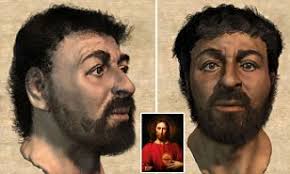
Forensic archeologists say that the historical Jesus looked like this. He was not white and stood about 5 feet tall and weighed about 110 pounds.

Last night we had another meeting of our church’s Lenten series discussing controverted questions of faith. So far, we’ve discussed (1) miracles, (2) healing, (3) Jesus and the poor, (4) the tension between American and Christian identities, and (5) what happens after death. Next week, we’ll address the question of resurrection. It’s all been interesting and at times quite inspiring to interact with more than a dozen gifted and earnest fellow seekers in a very admirable faith community.

However (if you recall), a couple of weeks ago when I was asked to lead the session on Jesus and the Poor, I got “hooked” into defending (at inappropriate length) the centrality of the biblical “preferential option for the poor” as the heart of Christianity. The one who hooked me is a very friendly, intelligent, articulate, and sincere church member whose faith convictions are undeniably robust. I admire him greatly.  

Nevertheless, during last evening’s meeting, it almost happened again. I mean, I was tempted to respond that same interlocutor rather than biting my tongue regarding a revisitation of our topic of two weeks ago about Jesus’ identity. (Remember, last night’s topic was to be what happens after death.)

Instead, my friend in the evening’s opening remark said something like the following: “We’re supposed to be Christians here discussing our faith. But the readings we’ve shared not only this week but two weeks ago, depart quite radically from central Christian beliefs. For instance, this evening’s reading is by Marcus Borg who sees Jesus is nothing more than a prophet. In this, he agrees with Judaism and Islam both of which of course honor Jesus – but as a mere religious genius, not as the Christ or as God. Christian faith on the other hand holds emphatically that Jesus is God, that he is indeed the expected Christ (Messiah). Without those beliefs, you’re simply not a Christian.”

As I said, I had other ideas, but bit my tongue.

However, here’s what I wanted to say in response (but thankfully did not):

Jesus is not God

Following the great Jesuit theologian, Roger Haight, I’ve come to believe that Jesus is not God. Instead, I believe that God is Jesus.

The distinction is not merely semantic. Saying that “Jesus is God” presumes that we know what the term “God” means. But that term, of course, has always been entirely problematic. What exactly is content? Answers to that query are legendarily diverse.

The problem is not only perennial, but in the case of Jesus is compounded by the ironic fact that the identification of Jesus as “God” took place under the aegis of the Roman Empire at the Council of Nicaea in 325. The irony stemmed from the fact that the Council was summoned by the Constantine, the emperor of Rome which had executed the prophet Jesus as an insurgent.

So, Constantine’s own problem was how to transform a rebel against Rome into a God (Deus was the Latin term) not only acceptable to, but supportive of his empire. His conundrum was how to transform Jesus into the son of a God whom worshippers of Zeus could understand.

[By the way, I hope you can see the significance of the similarity in terms Deus and Zeus. Its single consonant variation suggests that the Romans (who knew nothing of the Jewish God, Yahweh) couldn’t help but transform God into a thunder-bold throwing Zeus and Jesus into Zeus’ favorite son Apollo. In practice, no other understandings were possible for them!]

With all of this in mind, remember that Nicaea’s mandate was to answer questions like the following about the identity of Jesus:

  • Was he simply a man, a prophet?
  • Was he simply a god?
  • Was he a man who became a god?
  • Was he a god pretending to be a man?

In Constantine’s 4th century, there were “heresies” that represented each of these viewpoints.

But Nicaea’s answer to such questions was different. It stated that: Jesus was a divine being who was fully Deus/Zeus and fully man as well. The Council however left it for future theologians to explain exactly how that combination was possible.

[In my opinion, no one ever successfully did that. Marcus Borg, I think, came closest by holding that Jesus was fully human before his “resurrection” (however we might interpret that term) and fully God afterwards.]

In any case, throughout history Christians themselves have in practice resolved the fully God/fully human dilemma by emphasizing Jesus’ God dimension while neglecting almost entirely his humanity. Practically speaking, Christians have never truly endorsed Jesus’ humanity.

God Is Jesus

And that’s where the importance of holding that “God is Jesus” surfaces. On the one hand, the formulation recognizes the problematic nature of the term “God.” On the other, it resolves the dilemma by pointing to the Jesus of history to reveal the meaning of the term Deus. Look at the human Jesus, it says, and you’ll better understand the meaning of the word God.

And what do we find when we look at Jesus while bracketing official understandings of God as Zeus and Jesus as Apollo? The answer is entirely surprising and turns official theologies on their heads.

As revealed in Jesus, God shows up as the champion not of imperial majesties, but of slaves escaped from those same imperial majesties. More specifically, God’s embodiment (incarnation) is found in a man actually oppressed, not championed by empire. He is a peasant, the son of an unwed teenage mother, a refugee in Egypt, an enemy of the religious establishment, the leader of a poor people’s movement, a victim of torture and of capital punishment.

According to Christian faith, that’s who Jesus is; that’s who God is – found in the poor, the oppressed, in the torture chamber, on death row. . .

The fact that God chose to reveal God’s self as such is what is meant by the Bible’s “preferential option for the poor.”

Jesus is the Christ

All of this is intimately linked with my church friend’s insistence that Jesus is the Christ, the messiah.  Here too we must remember that “Christ” is not a Roman term; it is entirely Jewish and has specific Jewish meaning impossible to understand apart from its cultural context.

As Jesus-scholar, Reza Aslan, reminds us, the term “Christ” had one meaning and one meaning only for Jews: the Christ was (1) a descendent of Judah’s King David who would (2) reestablish David’s kingdom (3) in a once again sovereign state. And reestablishing sovereignty necessarily meant disestablishing Rome’s kingdom which occupied 1st century Palestine where Jesus lived.

Of course, the Romans understood that. Consequently, they executed Jesus precisely as an insurgent – along with the untold others in the same historical period who made the same messianic claim. Such was the point of the titulus, “King of the Jews” that the Roman procurator, Pontius Pilate insisted be displayed over Jesus’ head as he hung dying on his cross – the instrument of torture and death reserved for insurgents against the Roman empire (John 19:22). The titulus proclaimed the charges against the executed. Jesus’ crime was proclaiming himself “King of the Jews.”

So, historically speaking, claiming that Jesus is the Christ or messiah is a highly political statement. It signifies belief in Jesus as the quintessential opponent of empire and its inevitable oppression of God’s chosen – the poor and oppressed.

Conclusion

I’m glad I didn’t try to say all of that at last night’s meeting. Still, I’m happy for the evocation of such thoughts by my brother in faith at our Talmadge Hill Community Church.

It all reminded me of what I first learned at a memorable lecture by Passionist scripture scholar, Barnabas Ahern back in 1965 (when I was just 25 years old). Ahern’s topic was the historical Jesus. He inspired me to confront the fact that christians (myself included) tend to believe with all our hearts that Jesus is God, while at the same time paying only lip service to Jesus’ humanity. Ever since then, I resolved to avoid that mistake myself.

In fact, I was so impressed by what Fr. Ahern said that the very next day I wrote out from memory the scholar’s entire talk which has since then played a central role in driving me to internalize modern scripture scholarship about the humanity of the historical Jesus.

It has led me to Roger Haight’s formulation that Jesus is not God, but God is Jesus.

With Reza Aslan’s help, I’ve also come to grasp the revolutionary meaning the terms “Christ” and “Messiah” must have had for 1st century Jews. Then writers such as Marcus Borg have helped me understand the post-resurrection process by which the human Jesus himself appropriated his divine nature – human before his resurrection, divine afterwards.

And that entire sequence of lessons has immeasurably enriched my own faith and enabled me to share their insights.

Thank you, my brothers and teachers Barnabas, Roger, Reza and Marcus.

Amazon Workers to Vote on Unionization: Bezos Says He Can’t Afford It

Readings for 5th Sunday in Ordinary Time: Job 7: 1-7; Psalm 147: 1-6; 1 Cor. 9: 16-19, 22-23; Mark 1: 29-39.

Tomorrow, 6,000 Amazon warehouse workers in Alabama will vote on unionization. Of course, their decision will affect workers throughout Amazon’s mammoth enterprise – most of them non-white. The company employs 798,000 full-and part-time employees. In 2019, its net revenues were around $280.5 billion. Its CEO, Jeff Bezos, is himself worth about $184 billion. He’s the second richest man on the planet.

Work at Amazon

Despite company profits and the wealth of its chief, there’s good reason for the unionization drive including alienated labor resulting from:

  • Low pay: Recently, Amazon raised its wages to $15 per hour. It also extended to its workers a $2 per hour bonus for “heroic” service during the pandemic. However, the company has since removed that extra pay in the light of its claims that the pandemic’s severity has diminished. Amazon workers dispute that assertion, while maintaining that $15 per hour remains inadequate remuneration for their heavy workloads. And besides, Amazon workers’ unprecedentedly profitable production increases during the pandemic need due reward.
  • Intense surveillance of workers: Sophisticated AI technology tracks every move of each Amazon worker – to such an extent that those not meeting production goals can be threatened with imminent job termination by a robot without intervention from a human supervisor.
  • Union-busting: That same sort of technology makes sure that workers on break do not congregate for purposes of conversation related to union organizing. Those caught engaging in such exchanges have been summarily fired.
  • Wage theft: Last Tuesday, the Federal Trade Commission fined Amazon $61.7 million for actually stealing tips from Amazon’s Flex drivers over a two and a half-year period. Flex drivers are hourly workers who receive no benefits and use their own cars to make deliveries.
  • Dangerous working conditions: Work at Amazon is three times as dangerous as employment across the private sector and twice as dangerous as warehouse work in general. 911 records show that on the job mental episodes and even suicides are common in the Amazon workplace.  
  • PR to the contrary: The Amazon website proclaims that it supports the Black Lives Matter movement. However, according to Amazon’s largely non-white workforce, the items just listed tell another story.

Today’s Readings

I bring all of this up, because this Sunday’s readings suggest themes of work, overwork, and low pay.  They implicitly compare the alienated work of “hirelings” and “slaves” to that of the self-chosen pro bono work done by Yeshua and Paul in service of the poor. Both types of work are exhausting. But one is human, the other not.

What I’m driving at is reflected in my translations of these thoughtful readings about work. Please check out the originals here:

 
 Job 7: 1-7:
 Joining Job
 On his stinking POS
 Wage workers know
 That life is hard
 When a plague requires
 Months of misery
 Sleepless nights
 Overtime work
 And hopeless days
 That drain their lives
 And have them wondering
 If they’ll ever
 Smile again.
  
 Psalm 147: 1-6:
 Brokenhearted,
 Some look to “God”
 And still find words
 Of prayer,
 Praise and thanks
 That transform 
 Even bricklayers’ 
 Tattered blueprints
 Into transcendent plans
 Of infinite intelligence,
 Power, and wisdom
 That one day will find
 Bosses humiliated
 And poor workers 
 Finally earning 
 Their just wage.
  
 1 Cor. 9: 16-19, 22-23:
 Paul’s proud labor
 Was teaching
 Which he too found 
 Underpaid and driven
 As he gave hope to
 Those too poor to pay
 Just as his Master had
 In order to help them
 Regain that grin.
  
 Mark 1: 29-39:
 Yes, Jesus too 
 Worked hard
 As a day-laborer
 Become faith healer
 First of his friend’s 
 Feverish in-law
 And then 
 Of the insane
 And those afflicted
 With unnamed infection
 Of every type.
 Sustained by prayer
 At early dawn,
 He too soon returned 
 To his tireless grind
 As a selfless
 Pro bono physician
 Without borders.

Alienated Labor or Not

Do you see what’s happening in those readings?

The first one from the Book of Job indirectly reveals reluctant wage labor (a la Amazon) to be like sitting on top of Job’s famous pile of excrement (Job 2: 8-13). It’s pure drudgery. It’s slavery. Its misery leads to sleepless nights, and a shortened life entirely deprived of happiness.

By way of contrast, the second and third readings describe unalienated labor. In both the case of Paul and Yeshua, the work is completely exhausting and without monetary remuneration – but by their own choice. (The gospel reading’s description of a typical “day in the life” of Yeshua the Christ is actually quite detailed. It’s up in the early morning for prayer and then dealing with a constant stream of impoverished peasants seeking relief from diseases both mental and physical. Then it’s on to the next town for a round of the same – all without charge.)

Of course, the difference between the work Job’s text references and that of Yeshua and Paul is that the latter determined their own workload and pace of activity. They exhausted themselves because they freely chose to do so – not in the service of a distant wealthy slavedriver like Bezos, but in service to Life Itself.

Though union organizers don’t put it this way, that’s the ideal of the labor union movement – a humanized workplace, where workers have voice and some control over conditions in the place where they spend fully half of their waking hours.

As economists like Richard Wolff point out, an even more humanized workplace would be run entirely by workers. They’d determine for themselves every aspect of their workday – what to produce, where to produce it, the pace of work, and what to do with the profits. In such a cooperative there’d be no alienation, no intense surveillance, no dangerous working conditions, no underpayment or wage theft.

Conclusion

Naturally, all of us have to work. But exhausting labor too (like that of Yeshua and Paul) can bring a sense of joy and participation in creation of the universe like that described in today’s responsorial, Psalm 147.

Even work for Amazon could be dignified – absent the intense surveillance, constant race against the clock, low pay, and wage theft at the hands of one of the wealthiest companies in the world run by the globe’s second richest man. That sort of work can and does drive people over the edge even to the point of suicide.

The efforts by Alabama’s Amazon employees to unionize represent an attempt by wage earners to humanize all of that harshness. Within the capitalist system as we know it, unionization is the closest workers can get to escape slave-like conditions and completely alienated labor. The real humanization however would come from transforming the workplace into a cooperative where employees would be self-empowered.

As always, the call of today’s readings is to do what our faith tells us the Great Father-Mother God did: become human. In today’s instance that means humanizing the workplace. That means opposition to Amazon’s exploitation of workers. It implies support of unions everywhere. It suggests support of the co-op movement.

Controlling History’s Narrative: Who Speaks for God Today?

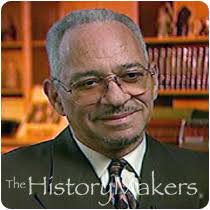
Rev. Jeremiah Wright

Readings for 4th Sunday in Ordinary Time: Deuteronomy 18: 15-20; Psalm 95: 1-9; I Corinthians; 7: 32-35; Mark 1: 21-28

Today’s readings once again raise the central biblical question of prophets and prophecy.

We should read them carefully remembering that prophets are not fortune tellers focused on the future. They were and today remain social critics focused on present injustices committed against the original beneficiaries of Life’s covenant with Moses – the poor and oppressed (widows, orphans, and resident aliens). Insofar as they predict the future, the prophets’ threat is usually that neglect of the poor will lead to national tragedy.

 Yeshua the Christ, of course, appeared in the prophetic tradition which is always confused by the fact that the Great Mother’s spokespersons are inevitably contradicted by their fake counterparts. This Sunday’s readings highlight that point.

 Prophets Then

I was reminded of all this last week during a Zoom “Talk Back” responding to our pastor’s Sunday sermon on the fictional story of the prophet Jonah. That tale was centralized a week ago in the liturgy of the word. Towards the end, the pastor herself asked the question, “Who today is speaking the harsh truth that the Book of Jonah expressed?”

(As we saw last week the little Jonah parable (only 48 verses) is about a reluctant prophet who eventually has to face the fact that those imagining themselves to be the People of God (Israel) were quite the opposite. Meanwhile those whom Israel viewed as their corrupt enemies (Assyrians) were more responsive to God’s word.

In my own response to our pastor’s question, I observed “That would be like our hearing during the Cold War that Russians (communists) were more on God’s side than Americans. Today, it would be like being told the same thing about the Chinese or Muslims, or (worse still) al-Qaeda and other terrorist groups.”

Yes, that’s the way the Book of Jonah would have been heard in the middle of the 8th century BCE – as the Assyrian hordes massed on Israel’s borders ready to descend on “God’s People.” Eventually, they’d come (as Lord Byron would put it) “like the wolf on the fold.” They’d destroy the Northern Kingdom and take large masses of its people off to the Assyrian capital, Nineveh – as slaves. The book of Jonah dares to identify Assyrians as godly.

Imagine if some prophetic preacher today actually echoed Jonah saying, “You American exceptionalists believe that you’re especially pleasing to God. The exact opposite is true. In fact, your designated ‘enemies,’ Muslims, the Russians, the Chinese, and those you imagine as terrorists are actually God’s favorites.”

How hard would that be for Americans to hear?

Prophets Now

But (to answer our pastor’s question directly) there actually have been and are religious prophets among us who have said such things and who are saying them today. I’m thinking of Malcolm X, Martin Luther King, Jeremiah Wright, William Barber II, the Rev. Liz Theoharis, Dorothy Day, and even Pope Francis. Here’s what they’ve said in the name of God:

  • Malcolm X: “I’m not standing here speaking to you as an American, or a patriot, or a flag-saluter, or a flag-waver — no, not I. I’m speaking as a victim of this American system. And I see America through the eyes of the victim. I don’t see any American dream; I see an American nightmare.”
  • Martin Luther King: The United States is “the greatest purveyor of violence in the world today.”
  • Jeremiah Wright: “When it came to treating her citizens of African descent fairly, America failed. . . The government gives them the drugs, builds bigger prisons, passes a three-strike law and then wants us to sing “God Bless America“. No, no, no, not God Bless America. God damn America. . . as she tries to act like she is God, and she is supreme”
  • William Barber II: “. . . I, too, am an atheist. . . if we were talking about the God who hates poor people, immigrants, and gay folks, I don’t believe in that God either.” 
  • Liz Theoharis: “Jesus led a poor people’s campaign.”
  • Dorothy Day: “Our problems stem from our acceptance of this filthy rotten system.”
  • Pope Francis: “This system is by now intolerable: Farmers find it intolerable; laborers find it intolerable; communities find it intolerable; people find it intolerable.”

Those are not voices most of us are accustomed to hearing as representative of a Christian message that has been completely dominated by right-wingers who have effectively silenced the political voice of the one Christians pretend to recognize as the greatest of all prophets. They silence Yeshua’s authentic voice by focusing exclusively on the fiction of American Exceptionalism and on personal “salvation.”   

The Prophet Yeshua

Instead, the very life of Yeshua the Christ was highly political from start to finish. He literally embodied God’s prioritization of the needs of the poor while specifically condemning the rich and powerful of his day. That’s why he had to be assassinated at a very young age — same as Malcolm, Martin Luther King, Fred Hampton. . .

Think of it this way: Isn’t it true that Christian belief holds that Yeshua was the fullest revelation of God? If so, isn’t it therefore significant that the revelation site supposedly chosen by God was a poor man from the working class? Isn’t it theologically meaningful that he was born out-of-wedlock to a teenage mother (LK 1:34), was houseless at birth (LK 2:7), experienced immigrant status as an asylum seeker (MT 2: 13-15), traveled with a band of young people who had no visible means of support, was thought insane by his mother and close relatives (MK 3:21), was identified as a terrorist by the most powerful nation then on earth, and finished a victim of its torture and capital punishment?

I’d say that believers should find all of that extremely revealing.  

Moreover, the highly political Yeshua is reported to have made radical statements about wealth and poverty, e.g.:

  • “The Spirit of the Lord is on me, because he has anointed me to proclaim good news to the poor. He has sent me to proclaim freedom for the prisoners and recovery of sight for the blind, to set the oppressed free, to proclaim the year of the Lord’s favor” (Luke 4:16-22)
  • “Blessed are you poor, yours is the Kingdom of God” (Luke 6:20).
  • “Woe to you rich, you have had your reward” (Luke 6:24).
  • “It is easier for a camel to pass through the eye of a needle than for a rich man to enter the Kingdom of God” (Matthew 19:24).
  • “So therefore, whoever of you does not renounce all that he has cannot be my disciple” (Luke 14:33)
  • “If you want to be whole, go and sell your possessions and give to the poor, and you will have treasure in heaven; and come, follow me” (Matthew 19:21).

Still more, his followers took their teacher literally as they practiced a kind of primitive communism:

  • “All the believers were together and had everything in common. They sold property and possessions to give to anyone who had need” (Acts 2: 44-47).
  • Now the full number of those who believed were of one heart and soul, and no one said that any of the things that belonged to him was his own, but they had everything in common” (Acts 2: 32).

All of that identifies Yeshua as a great prophet in the tradition of Moses, the liberator of slaves in Egypt, of Amos who defended the poor and criticized the rich, of Karl Marx, the last of the great Jewish prophets, and of the contemporary troublemakers listed above.

Today’s Readings

Keep all of that in mind as you review today’s liturgy of the word which centralizes the question, “Who are the true prophets among us?” What follows are my “translations.” You can find the originals here to see if I’ve got them right.

 
 Deuteronomy 18: 15-20:
 More than 500 years
 After the Great Prophet’s Death
 Moses was remembered
 As predicting the advent
 Of another Great One
 For a people deathly afraid
 Of hearing God’s voice directly.
 Problem was:
 There’d be false prophets too
 Claiming to speak 
 In the name of Yahweh,
 But actually representing 
 False gods
 Whom, if listened to
 Would bring to believers
 Severe punishment. 
 (Hmm.
 Where does that leave us?)
  
 Psalm 95: 1-9
 It leaves us confused
 And in danger
 Of letting our own self-interest
 Harden our hearts
 To the authentic voice
 Of our loving Mother-Father God
 Our firm refuge
 Benefactor and guide.
 Her wonderful handiwork
 In creation itself
 Reveals more
 Than any prophet’s words.
 So, believe and embrace
 What you see
 With your own eyes.
 
 I Corinthians 7: 32-35
 The case of St. Paul
 Illustrates our confusion
 About what to believe – 
 What our eyes tell us
 Or the words 
 Of an anxious 
 Celibate prophet
 Like Paul
 Who’s been interpreted 
 To say that
 Eros is somehow “improper”
 And a huge “distraction”
 For anyone serious
 About what’s truly important.
 (For, doesn’t Life Itself teach
 That Eros is
 A primary source
 Of God’s revelation
 About the nature of Life
 And Love?)
  
 Mark 1: 21-28
 Jesus, on the other hand
 Had no such reservations.
 His followers believed
 Him to be the Great Prophet
 Predicted by Moses.
 He taught astonishing truths
 With authority and certainty
 Unlike the temple scribes
 (And the doubt-filled Paul).
 He terrified unclean spirits
 While delighting
 The (married) women and men
 Who hung on his every word.  

Conclusion

The disparity between the nationalistic and exclusively personal understandings of the prophet Yeshua on the one hand and the highly political nature of his life and discourse on the other is extremely important to confront.

That’s because (as Caitlin Johnstone has recently reminded us) those who control cultural narratives control the world. And no narrative is more important to history’s control than the religious one we’ve just considered. That’s because religious faith addresses life’s most fundamental questions – the ones so thrillingly addressed by the prophets we’ve considered here: about the nature of life; our relations with one another, human connections with the environment, about foreigners, power, love, money, and justice.

I’ll even venture to say that religious story supplies the popular “philosophy” of most people in the world. It organizes their experiences. They might not know much about history, economics, or political parties, but they know what they’ve been told about the Bible, the Bhagavad-Gita, or the Holy Koran.

To ignore this truism is tragically to surrender an essential tool of social justice to its enemies. On the other hand, exposing the radical social justice character of the Judeo-Christian narrative while challenging its domestication by false prophets represents an essential element of any attempts to shape the world by controlling its narrative.

Even completely secular social justice warriors should take note.

Don’t Listen to Blinken: China’s System Is More Just Than Ours

Readings for the 3rd Sunday in Ordinary Time: Jonah 3: 1-5, 10; Psalm 25: 4-9, I Corinthians 7: 29-31; Mark 1: 14-20.

The liturgical readings for this Sunday are about designated enemies often being readier to recognize and respond to divine wisdom than are believers who consider themselves God’s People.

Accordingly, the selections present the mind-blowing discovery of the reluctant chauvinist prophet Jonah (he of belly-of-the-whale fame) alongside the habitual people-centered attitude of the courageous universalist prophet Yeshua the Christ. Together, the readings’ call is to open ourselves to the wisdom and goodness of despised foreigners and the non-elite.

That theme (explained below) reminds me of China and its bipartisan vilification by U.S. politicians and mainstream media. Like the Ninevites in today’s first reading, China has gradually and unquestionably become the enemy du jour as described not only by outgoing Secretary of State, Mike Pompeo but by his incoming counterpart, Antony Blinken.

The Case of China

Like Jonah’s assessment of Nineveh, neither can say a good word about China, even though (according to western polls) its government enjoys something like 90% approval by the Chinese people. (Furthermore, according to Dorinda Elliot of the China Institute, rather than diminishing its popularity, the government’s success in dealing with Covid-19 has made it more popular than ever.)  

Still, on his way out the State Department door, Mr. Pompeo denounced China not only for stealing western intellectual property, but for its policies on Muslims and ethnic minorities in its western Xinjiang region. According to Pompeo, those policies constitute “crimes against humanity” and “genocide.”   

In his testimony before the U.S. Senate, Antony Blinken fully agreed with Pompeo’s assessment. Both painted China as an enemy rather than a hugely successful competitor with whom our country might well cooperate and from whom we might learn. Relative to crimes against humanity, both Pompeo and Blinken ignore the facts that their own country’s policies:

  • Continue to kill Muslims every day in Palestine, Iraq, Afghanistan, Libya, Syria, Yemen, and Somalia
  • Imprison and torture them in Guantanamo and other black sites
  • Have done so for nearly 20 years
  • While maintaining concentration camps and baby jails for immigrants and asylum seekers on its southern border.

Despite all of that, Mr. Blinken had the temerity to criticize China’s use of reeducation camps as its particular method of dealing with Muslim terrorist threats rather than “our” method of endless wars, bombings and drone strikes. (In Iraq’s illegal war, such have taken the lives of more than 1 million people — with no official mention of genocide or crimes against humanity.)

Moreover, Pompeo’s and Blinken’s denunciations ignore the facts that China’s system of political economy has (in Jonah’s terms) “repented.” It has self-consciously departed from the inefficient and destructive ways of capitalism-as-we-know-it. Yes, China’s way involves a large free-market sector. But a huge part of its economy is under direct government control. The results of that combination have been astoundingly successful.

Moreover, according to economist Richard Wolff, accusations against China’s alleged stealing of intellectual property are nonsensical. According to Wolff, the transfer of intellectual property was part and parcel of the bargain long since struck between U.S. companies and the Chinese government when those companies were given access to Chinese labor and the country’s markets. On China’s part, the understanding was: we give you access to our market and cheap labor; you share profits with us and give us the right to reverse engineer your technology. It was an at least implied quid pro quo agreement that everyone understood.

The result was the Chinese Way that enjoys huge success not only internationally, but domestically. According to Bloomberg News, the Chinese economy is set to grow by 2.5 percent this fiscal year, despite the ravages of Covid-19.

In other words, Chinese “repentance,” its unprecedentedly rapid response (in just over 40 years) to the needs of its people, has saved it from the destruction our version of capitalism has arguably made inevitable for us. Like the prophet, Jonah, our politicians and business elite don’t want to hear any of that.

Today’s Readings

As I’ve been saying here, all of this is closely connected with today’s readings. In the first selection, the Spirit of Life sends Jonah to learn from Nineveh, Israel’s archenemy. He’s completely surprised to discover that the Ninevites, like China, are more responsive to the way of Yahweh than Jonah’s own people.

Similarly, in today’s Gospel selection, Jesus departs entirely from conventional wisdom. He selects illiterate workmen (rather than temple priests or members of his country’s elite) as recruiters for his Kingdom of God Movement bent on creating a world governed by divine principle rather than Caesar’s brute force.

Here’s the way I translate today’s readings about the superior ways of those (like China) whom we routinely despise as foreign and inferior. You can find their original forms here to see if I’ve got them right.    

 Jonah 3: 1-5, 10
 The reluctant prophet Jonah
 Braved Nineveh’s
 Hostile urban jungle
 To announce Yahweh’s
 Urgent call
 For Israel’s Great Enemy
 To change its entire
 Unjust system.
 To the patriotic prophet’s
 Great chagrin
 The enemy listened
 Changed completely
 And transformed
 Its destructive way
 In just 40 days!

 Psalm 25: 4-9
 So, Great Mother-Father
 Teach us the way
 Of the Ninevites.
 For the enemy’s
 Path of justice
 Humility, love
 Kindness, good
 Truth and compassion
 Is your way too.

 I Corinthians 7: 29-31
 Our time for such willing
 Social transformation
 Is quickly running out.
 Choosing it
 Is more important
 Than sex,
 Our little trials
 And triumphs
 Our trinkets
 And work.
 But actually,
 Our Great Father-Mother’s
 Drastically New World
 Is inevitable.

 Mark 1: 14-20
 Yeshua recognized
 That inevitability
 After conservative forces
 Arrested his mentor,
 The Great prophet,
 John the Baptist.
 Ordinary workers
 With simple names like
 Simon, Andrew,
 James and John
 Saw it too.
 So, they left everything:
 Work and companions
 Father and mother,
 Wives and lovers
 To join Yeshua’s
 Working class movement
 For the sake of
 Good News
 To laborers like themselves
 About the Great Mother-Father’s
 In-breaking New Order. 

Conclusion

Like Yahweh in the days of Jonah and Jesus centuries later, the Spirit of Life today is calling us in so many ways to repent and imitate the equivalents of Jonah’s Ninevites. Like Paul in Corinth, the Great Mother-Father tells us that the time is short. Climate chaos itself underlines that urgent message. Our task is more important than anything our culture presents as essential.

China’s example of repentance, its departure from capitalism-as-we-know-it, its construction of an economy based above all on meeting the needs of its huge population represents a path forward – if not for imitation, for inspiration and instruction.

It tells us that we must reorient away from profits and wealth for the few towards the creation of a society with room for everyone and abundance for all – just what the working man, Yeshua, demonstrated in his choice of working-class people to introduce the Kingdom’s new heaven and new earth.   

We’re called today to listen to the prophets of such unconventional wisdom rather than to Pompeo and Blinken’s misdirection.

The “Woke” Brotherhood of Eli, Samuel, John, Peter & Jesus

Readings for the 2nd Sunday in Ordinary Time: I SAM 3: 3B-10, 19; PS 40: 4, 7-10; I COR 6: 13C-15A, 17-20; JN 35-42  

This week’s readings are about wakefulness. They tell the stories of five great prophets of the Judeo-Christian tradition. (Prophets, remember, are not fortune tellers. They’re the spokespersons for the Great Father-Mother God however s/he is named.)  

Prophets were never popular with the authorities of their day. But the poor loved them, because their words comforted the afflicted and afflicted the comfortable sleeping peacefully behind their temple and castle gates.

Prophetic words lit fires in those ready to hear them. They awakened those in oblivious slumber – sleepers like you and me.  

As a disciple of the one he identified as the greatest man ever to draw breath (MT 11:11), Yeshua was like that. He passed his inherited mantle on to Peter – another working man like himself, just as Eli had willed his mantle to his disciple, Samuel.  

Today’s readings are specifically about the awakening of Samuel and Peter. They should sound alarm bells for us as well. Here are my translations of this Sunday’s selections. (You can find the originals here.):    

 
 I Samuel 3: 3B-10, 19
  
 Prophets sometimes fall asleep
 Even telling would-be disciples
 To ignore the summons
 To fullness of life
 In favor of slumber’s cheap comfort.
 Old Eli did that to young Samuel.
 However, the Mother-God’s persistence
 Eventually awakened 
 Both the ancient mystic
 And his young apprentice
 Until their shared prayer became
 “Speak, Great Mother,
 For your servants are listening!”
 From then on,
 Neither permitted any Goddess word
 To be spoken without its effect.
  
 Psalm 40: 4, 7-10
  
 Let that be our prayer as well:
 “Here I am, Great Mother,
 I come to do your will.”
 The invocation will give
 New melody to our life’s song.
 It will replace old time religion
 With sharp vision
 And attentive ears
 That reveal justice’s demands
 Already inscribed 
 In our very hearts
 As the Goddess’ 
 Inescapable Law of Life.
  
 I Corinthians 6: 13C-15A, 17-20
  
 Yeshua shared the awakened consciousness
 Of old Eli and young Samuel.
 He taught that
 Placing ourselves at the Goddess’ disposal 
 Would transform our lives too
 Making us avoid the immorality 
 Of injustice towards others
 As crimes against our own bodies
 And against the Great Spirit
 Who resides within each of us.
  
 John 1: 35-40
  
 For that reason
 Even the Great John the Baptist
 And his disciples
 Recognized the unschooled 
 But wide-awakened Jesus 
 As rabbi, teacher, Messiah
 And Goddess favorite.
 One of them, changed his name
 On the spot
 To signify his newly awakened self-consciousness
 Wrought by 
 A single afternoon’s conversation.
 So, please speak to us too, 
 Dear rabbi Yeshua,
 As you did to young Peter.
 Your servants are listening indeed.
 May none of your words
 Remain without its effect. 

David and Solomon’s Crime Family Was No Better than Trump’s

Readings for the 4th Sunday of Advent: 2 Samuel 7: 1-5, 8B-12, 14A, 16; Psalms 89: 2-5, 27, 29; Romans 16: 25-27; Luke 1: 38

In terms of teaching theology and elucidating the Bible, I’m happy for our nation’s experience of Donald Trump. Otherwise, not so much.

The reason for my contentment is Mr. Trump’s blatant exploitation of religion and his ability to persuade so many people of faith that he is a man of God. Think of his now infamous Bible posing in front of DC’s St. John’s Church after having police clear the area of Black Lives Matter protesters.  

The event clearly illustrated a perennial religious dynamic that is essential for critical thinkers to understand. I’m referring to what Chilean scripture scholar, Pablo Richard, calls the “battle of the gods.”

The Battle of the Gods

The combat in question pits the God of the rich against the God of the poor. Specific to our readings on this fourth Sunday of Advent, it sets the God of Moses against the God of King David’s crime family. Yes, his crime family.

To begin with, the God of the poor set free a motley group of slaves from Egypt and instituted Moses’ order that favored them rather than their Egyptian slavers. Its “preferential option” prioritized the interests of widows, orphans, and resident non-Hebrews living in Israel. Covenant law eventually forgave the debts of impoverished Hebrews every fifty years. In the process, it disadvantaged landlords and bankers. It made no provision for reestablishing the royal class that had made the lives of slaves so miserable in Egyptian captivity.

Then about a thousand years before the birth of Yeshua, all of that changed. Israel’s upper classes decided to reinstitute an order reminiscent of Egypt. It had the rich lording power over the poor, taxing them heavily, instituting forced labor, and sending Israel’s young men to fight and die in gratuitous wars of conquest as conscripts in a standing army.

Saul was Israel’s first king. He was succeeded by King David and then by his son, Solomon. Both father and son were ruthless womanizers committed to increasing their own wealth and power at the expense of the poor. Theirs was truly a crime family masquerading as God’s beloved appointees.

Family dysfunctions included internecine murders and wars, incestuous rape (2nd Samuel 13) and lasting vendettas. David’s deathbed will and testament was worthy of any Mafia don (I Kings 2: 2-12). However, to achieve the power for which they thirsted, both David and Solomon had to convince their subjects that they were indeed men of God.

That called for fabricated visions and assurances from the divine. Both David and Solomon assisted by their court prophets and scribes enthusiastically obliged. And so, David made sure it was recorded that he was a man “after God’s own heart” (I Samuel 13:14). Meanwhile, Solomon’s own court historians portrayed him as the wisest man who ever lived (I Kings 3: 11-15).

Central to the ruse was a reframing of Moses’ Sinai Covenant to favor the newly emergent royalty and their hangers-on rather than the poor. That’s what we find in this Sunday’s first reading from 2nd Samuel. There, David and his court prophet, Nathan, conspire to change the beneficiaries of the Mosaic Covenant from the poor and oppressed to the royals. In this way, the covenant becomes not a divine promise to protect widows and orphans, but to assure a lasting dynasty for David’s crime family. Put otherwise, the Covenant of Moses was replaced by the Covenant of David.

The great prophets of Judah and Israel rebelled against such palace distortions of faith.

Some tried to work within the new system holding kings’ feet to the fire, reminding them of their obligations towards the weak and vulnerable. Others gave up on the royals and called them out for their self-serving cruelty and corruption.

The great prophets celebrated during this advent season, John the Baptist and his disciple Yeshua of Nazareth, fell into the latter category. They had no use for the royals, the temple priests, their lawyers and apologists. They reserved special abhorrence for their country’s Roman occupiers.

Evidently, Yeshua inherited all of that from his mother, Miryam. She and her husband, Yosef, gave all of their children revolutionary names (Matthew 13: 55-56). Yeshua was named after the great liberator Joshua. The evangelist called “Luke” recorded Miryam as singing a fierce revolutionary song calling for the dethronement of the rich and mighty everywhere (Luke 1: 46-55).

All of that is reflected in today’s readings. What follows are my “translations.” You can find them here to see if I got them right.

Readings for 4th Sunday of Advent   

2 Samuel 7: 1-5, 8B-12, 14A, 16: The wily King David conspired with his court prophet, Nathan to persuade their people that God was on his side. The strategy was to build a magnificent temple (actually about the size of a middling parish church today) and then to claim a well-publicized “vision.” There, according to Nathan’s testimony, David’s battlefield accomplishments would be celebrated by God himself. But even more importantly, his country’s constitution (called “The Covenant”) would be subtly changed from centering on the welfare of widows, orphans, and immigrants, to assuring that David’s crime family would stay in power forever. 

Psalms 89: 2-5, 27, 29: The arrangement was then celebrated in song (Psalm 89) praising the goodness of God for establishing David’s throne “for all generations.”

Romans 16: 25-27: Paul’s allegiance, however, was not to any earthly king, but to what Yeshua proclaimed as the Kingdom of God. It embraced the welfare of “all nations.” Following Yeshua, Paul’s understanding re-established the pre-Davidic Covenant (favoring those widows, orphans, and immigrants) which David’s Covenant (in its hijacked form) had attempted to replace.

Luke 1: 38: Vaguely following the example of David, Luke’s early church made up a visionary tale about Yeshua’s very conception. There, the angel Gabriel secures Mary’s permission to have the Holy Spirit impregnate her. The resulting child will be great, the angel said, and (like David) initiate a kingdom to which “there will be no end.” However, Yeshua’s New Covenant would once again centralize not the royal class, but Yahweh’s beloved widows, orphans, and immigrants. As Mary would say beginning eight verses later (LK 1: 46-55), it would “take down the mighty from their thrones and exalt the humble.” So much for palace crime family conspiracies.

Conclusion

So, portraying the Trumps, or Bushes, or Clintons or Kennedys or Obamas as “crime families” is not at all far-fetched or somehow unchristian. On the contrary, insofar as any of them neglect the poor – the widows, orphans, immigrants, asylum seekers, or victims of their wars – they are just that. They’re like the criminal family of David and Solomon.

Yes, they go to church, invoke God’s blessings on America at the end of every formal speech, and even attend “prayer breakfasts.” But like David and Solomon (and most of the kings portrayed in the Bible), they are really in bed with the rich and powerful, with the bankers and corporate heads, and with compliant pastors, priests and court prophet equivalents. At best, they are completely disinterested in the spiritual descendants of Egypt’s slaves. At worst, they are actual enemies of workers, widows, orphans, immigrants as well as of those who side with the unemployed, houseless, and those without medical care.

In summary, this fourth Sunday of Advent provides a stark reminder to critical thinking people of faith. It tells us not to be seduced by Bible-waving presidents or by pastors who endorse them and their God of the rich.

Neither Yeshua whose birthday we are about to celebrate nor his cousin John nor his revolutionary mother had anything to do with that God. Before him, they were all complete atheists. So should we be.

Their God was the God of Moses, not of David. Their God was precisely the one rejected by the rich and the powerful – the One who Miryam said “puts down the mighty from their thrones and exalts the humble,” who “fills the hungry with good things, while the rich he sends empty away” (Luke 1: 53). 

Debt Amnesty Now: The Heart of Jesus’ Good News

Readings for the third Sunday of Advent: Isaiah 61: 1-2A, 10-11; Luke 1: 46-48, 49-50, 53-54;       I Thessalonians 5: 16-24; John 1: 6-8, 19-28

As most are aware, U.S. students currently owe bankers and creditors more than $1.5 trillion. Progressives like Bernie Sanders and Elizabeth Warren want that debt written off. Their opponents however wonder what would be the economic impact of such debt forgiveness? Wouldn’t it spell disaster for the nation’s economy and for banks “too big to fail?”

Economic historian and ex-Chase Manhattan analyst, Michael Hudson answers those questions in ways intimately connected with the readings for this Second Sunday of Advent. He does so in his magisterial study, …and Forgive Them Their Debts: lending, foreclosure and redemption from Bronze Age finance to the jubilee year.

Written in the face of massive worldwide indebtedness far beyond that of U.S. students, the book’s basic thesis is that debts that can’t be paid won’t be paid. So, the only solution is to write off those obligations.

Far from spelling disaster for the world’s economies, Hudson says such amnesty would rejuvenate them. completely.

How does he know?

Because debt amnesties were standard procedure throughout the history of the ancient Near East from 2500 BC in Sumer to 1600 BC in Babylonia and its neighbors. During that long period, it was the common practice for new rulers to proclaim debt jubilee on the day of their ascension to the royal throne. As seen in the Bible’s Book of Leviticus 25, Israel adopted that practice when its ruling class returned from their “Babylonian Captivity” in the 6th century BCE.

And the result?

Uniformly, Hudson says, it was shared prosperity and the prevention of huge wealth differentials between rich and poor. According to Hudson, the same result can be expected if debts were forgiven today.

The Bible & Debt Forgiveness

And that brings us to our readings for this Third Sunday of Advent. They’re all about a central pillar of Jewish social organization and profound spirituality. I’m referring to debt forgiveness and its “preferential option for the poor.”

As seen in Leviticus 25 and in the words of the prophet Isaiah in today’s first reading, the very word “gospel” (“good news” in Isaiah’s words) is assigned to the proclamation of “Jubilee” – the Jewish Testament term for the periodic practice of wiping debt slates clean every 50 years. That custom borrowed from the Babylonians (and others) prevented oligarchies from using debt as a lever to pry land ownership and other forms of wealth away from impoverished debtors.

In other words, Jubilee was an expression of a divinely structured economy whose ideal (unlike our own) prioritized the welfare of widows, orphans, and resident foreigners. That bottom-up arrangement is what I mean by “preferential option for the poor.”

Yeshua & Debt    

Such preference constituted the emphasis in the work of the prophet, Yeshua of Nazareth as well. As a populist leader in the 1st century CE, he made debt amnesty (Jubilee) a central focus of his public platform. Mainstream scripture scholarship has identified such focus in what it terms Yeshua’s “programmatic” declaration in the Gospel of Luke 4:16-30. Quoting our first reading directly, he is remembered as saying:

18 “The Spirit of the Lord is on me,
             because he has anointed me
            to proclaim good news to the poor.
He has sent me to proclaim freedom for the prisoners
    and recovery of sight for the blind,
to set the oppressed free,
19     to proclaim the year of the Lord’s favor. . .”[a]
 20 “Today this scripture is fulfilled in your hearing.” 

Yes, the Master’s principal concern was about the economic and social welfare of the poor. The words “the year of the Lord’s favor” are synonymous with Jubilee.

Today’s Readings

To get a better idea of what I’m saying, please read today’s liturgical selections directly as found here. My “translations” run as follows:

Isaiah 61: 1-2A, 10-11: A Jubilee year! Debts forgiven! Interest payments written off! Here is good news for the poor whose captive hearts are broken in their miserable debtors’ prisons – reminiscent of their ancestors’ captivity In Babylon. It is all a matter of divine justice, salvation and overwhelming joy – like a wedding celebration where both bride and groom, once poor, are now adorned with splendid jewels.

Luke 1: 46-48, 49-50, 53-54: Jesus’ mother shared that nuptial joy. Though dirt poor like her husband and son, she thirsted for the promised Great Reversal. There the hungry would be well fed, while the rich would at last experience a well-deserved famine. What happiness for the vindicated poor in God’s New Order of justice!

I Thessalonians 5: 16-24: Paul shared Mary’s happiness revealed in her son and by the prophets before him. While the rich despise prophetic proclamations of God’s reckoning, the poor cherish them word for word. They know the prophetic arc of justice bends in their direction.

John 1: 6-8, 19-28: Such was the message of John the Baptist too. Justice at last, jubilee for the poor! The light surrounding the man was so bright that even corrupt religious leaders mistook him for the reincarnation of Elijah himself –or maybe the promised messiah. But no, said John; he was merely a voice proclaiming God’s just path that all are called to trod. His baptism of mere water would be displaced by Yeshua’s social and spiritual revolution of raging fire. Jubilee for the poor at last!!

Conclusion

All of this might seem like ancient history. However, it’s really common sense that is extremely relevant to the issue of writing off the world’s unpayable debts in general and student loans in particular. These considerations also tell us a lot about distortions of Christianity to the point of complete irrelevance.

Regarding loans, Hudson teaches that periodic debt forgiveness (as in Jubilee) is absolutely necessary to correct the dynamics of borrowing and lending. It’s a matter of simple math. Compound interest grows exponentially; incomes increase linearly. As a result, debt will always outrun income.

Consequently too, debts that can’t be paid won’t be paid. Requiring the impossible hamstrings any economy. It robs consumers of spending power. They can’t buy homes and other goods that keep markets humming.

(This was demonstrated in post-WWII Germany. There, in contrast to the aftermath of WWI, German debts were for all practical purposes forgiven. An economic “miracle” followed.)

As for Christianity in relation to all of this . . .  Scripture scholars tell us that the lives and concerns of Yeshua’s people were principally three: (1) foreign (Roman) occupation, (2) land reform, and (3) debt forgiveness. That the Master addressed all of these problems directly in accord with the divine “preferential option for the poor” accounts for his wild popularity among the peasant farmers who constituted his audience of focus.

In this he separated himself from Rabbi Hillel and the Pharisees who rejected wealth redistribution through Jubilee. His separation eventually led to his arrest, torture, and submission to a form of capital punishment reserved for rebels against the Roman Empire.

This, however, is not the picture the Christ that most of us carry around in our minds. There, as Hudson points out, Jesus’ resonance with the material concerns of his people has been transformed into insipid spiritual platitudes that would never have made him a threat to the religious leaders of his day, much less to the Roman Empire.

Restoring any relevance to Christianity in our contemporary world hinges on recovering the radical Jesus of history and his connection with issues like debt forgiveness of student loans. It also hinges on our willingness to stand up for the debt-impoverished (ourselves!!) – despite empire’s vile threats.    

The First Sunday of Advent: Pope Francis’ Covid-19 Reflection

Readings for the First Sunday of Advent: Isaiah 63: 16B-17, 19B; 64: 2-7; Psalm 80: 2-3, 15-16, 18-19; I Corinthians 1: 3-9; Mark 13: 33-37

Last week, Pope Francis wrote a beautiful Covid-19 reflection in the New York Times (NYT).

He recalled how the pandemic’s unsung heroes reminded him of his own brush with death when he was just 21 years old.  At that tender age, he was hospitalized with a pulmonary infection that ultimately cost him part of a lung.

At the height of his crisis, two nuns working as nurses in his Argentine hospital ignored doctors’ prescriptions and doubled the dosage of penicillin and streptomycin in one case and increased his pain killers on the other. Their courage in doing so, the Pope is convinced, saved his life.

Generous, courageous souls like the two religious sisters who helped him then have reemerged, Francis noted, during the pandemic. They’re the “saints next door.” They’ve saved innumerable lives as nurses, doctors, caregivers. They’re the essential workers who in many countries have regularly been applauded at doorsteps and windows with genuine gratitude and awe.

The selflessness of such heroes has sometimes cost them their lives. But many among those champions sacrificed freely knowing as Francis put it, that “it is better to live a shorter life serving others than a longer one resisting that call.” They represent the antibodies to an infection among us far more dangerous than Covid 19 – the virus of indifference.

Writing pointedly in the premiere U.S. newspaper, Francis identified that more dangerous virus with governments that have not put the well-being of their people first. Instead, they have “shrugged off the painful evidence of mounting deaths.” They’ve pandered to groups opposing travel restrictions, social distancing and facemasks as if such measures constitute “some kind of political assault on autonomy or personal freedom!” Francis said that worship of that kind of liberty has become for many a kind of ideology obstructing all understandings of common good.

In Francis’ view, such selfish shortsightedness shows that Covid-19 is merely one of the pandemics currently afflicting our planet. Hunger, violence and climate change are others. All of them lack perspective and generosity.

Responding effectively means attuning our sensibilities to the pain of others who have been deprived of life’s basic needs – work, food, housing and human dignity. Responding means recognizing that we’re never saved alone; we are bound by human solidarity and reciprocity.

Reading the pope’s words, I couldn’t help thinking of parallels between them and our readings for the first Sunday of Advent. Together, they call us to reverse course – to wake up from our collective stupor to the presence of what some call God in the neighbors, heroes and martyrs whom Francis’ words identify so poignantly.

What follow are my “translations” of the readings in question. Please check the originals here to see if I’ve got them right.      

 Isaiah 63: 16B-17, 19B; 64: 2-7

 We have lost our way;
 We’ve hardened our hearts;
 We no longer even know
 What faithfulness means.
 We feel somehow unclean,
 Polluted and aimless.
 Yet, we long to see more deeply
 To reality’s very heart
 As never before.
 Reunion with You, Divine Mother
 Is what we ultimately crave –
 To be refashioned
 As if we were clay
 In your lovely hands.
 
 Psalm 80: 2-3, 15-16, 18-19

 So, please show us your face.
 Save us from ourselves.
 Strengthen us.
 Bring us home.
 Demonstrate again
 Your care for us
 As a shepherd guarding her flock,
 As a gardener tending her vine.

 I Corinthians 1: 3-9

 Oh, wait
 You’ve already done that
 Haven’t you?
 You’ve answered our prayer
 In Yeshua, the Christ.
 His loving kindness
 And revolutionary teachings
 Bring clarity, insight
 And serene understanding.
 They restore
 Meaning to our communal lives.
 
 Mark 13: 33-37

 Above all
 (Like the Buddha)
 Yeshua commanded us
 To wake up
 To see
 What sleepers miss:
 Constant divine manifestations
 At our very doorstep
 When we expect
 Them least
 Morning, noon and night.