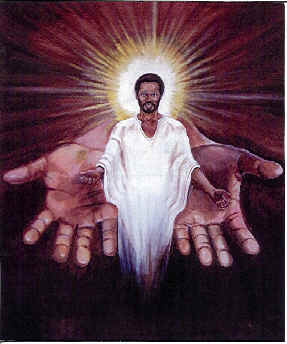
When the Government Turns Criminal: Edward Snowden and the Good Samaritan (Sunday Homily)

Snowden

Readings for 15th Sunday in Ordinary Time: DT. 30: 10-14; Ps. 69: 14, 17, 30-31, 34, 36-37; Col. 1: 15-20; Lk. 10: 25-37. http://www.usccb.org/bible/readings/071413.cfm

In his recent book about the parables of Jesus (The Power of Parable: How Fiction by Jesus Became Fiction about Jesus), John Dominic Crossan poses the question: What happens to your world when the “best” people act badly and only the “worst” do what is right?

That scenario seems to be playing itself out in the case of Edward Snowden.

Snowden, you recall, is the NSA contractor and CIA employee who last month disclosed a vast secret program of U.S. government spying on its own citizens and on individuals, corporations, and governments throughout the world.

The program (Prism by name) seems to violate the Fourth Amendment of the U.S. Constitution which reads: “The right of the people to be secure in their persons, houses, papers, and effects, against unreasonable searches and seizures, shall not be violated, and no Warrants shall issue, but upon probable cause, supported by Oath or affirmation, and particularly describing the place to be searched, and the persons or things to be seized.”

Snowden made his disclosures three months after James Clapper, the Director of U.S. intelligence had denied its existence in testimony (under oath) before the Senate Committee overseeing the U.S. intelligence program. Snowden’s disclosures also followed hot on the heels of President Obama’s publically expressed concern that China was illegally spying on the U.S. in exactly the same way (though on a smaller scale) that the U.S. turns out to have been spying on China and its own allies.

For his troubles in exposing such lies, hypocrisy, and violations of the Constitution, Snowden himself has been designated a spy, traitor, and enemy of the United States – categories applied to its worst enemies. As a pariah in his own country, he has fled the United States and sought asylum in various countries including China, Russia, Cuba, Nicaragua, Venezuela, Ecuador, and Bolivia. Snowden (and human rights organizations such as Amnesty International) alleges that if extradited to the U.S. he is unlikely to receive a fair trial, but instead to be tortured and indefinitely imprisoned like other whistleblowers such as Bradley Manning.

All of the countries just mentioned have histories less-than-friendly to U.S. interests, which they have each described as criminally imperialistic. Other “good” countries such as France and Germany have (under great pressure from the United States) refused Snowden asylum.

Meanwhile, James Clapper has not been charged with perjury, and President Obama has managed to deflect attention away from constitutional violations to the search for the fugitive Snowden.

In other words, the Snowden Affair presents us with a “Spy,” “Traitor,” and “Terrorist Sympathizer” obeying his conscience in his exposure of government crime. He has done the right thing. Meanwhile, the President of the United States, himself a constitutional lawyer, has been caught violating the Constitution, and the Director of Intelligence has been exposed as a perjurer. And on top of that, friendly countries often lauded by the United States as models of democracy refuse to respect International Law governing asylum seekers. Only the “bad countries” are willing to honor that law.

In this situation, the question Crossan posed earlier finds uncomfortable relevance: “What happens to your world if a story records that your “best” people act badly and only your “worst” person acts well?”

As I said, Crossan asks that question in the section of his book commenting on “The Good Samaritan” which is the focus of the gospel selection in today’s Liturgy of the Word.

The parable, of course, is very familiar. Almost all of us know it nearly by heart. Typically sermons find its point in simply calling us to be “follow the Samaritan’s example, treat everyone as your neighbor, and help those you find in trouble.”

That’s a good point, of course. But Jesus’ own intention went beyond simply providing an example of a good neighbor. More profoundly, it focused on the hypocrisy of “the good” and the virtues of designated enemies. As such, the story calls us to transcend those socially prescribed categories and look at actions rather than words of both the “good” and “bad.”

More specifically, the hero of Jesus’ story is a Samaritan. According hero status to such a person would be unthinkable for Jesus’ listeners. After all, Samaritans were social outcasts belonging to a group of renegade Jews who (by Jesus’ time) had been separated from the Jewish community for nearly 1000 years. They had also polluted the Jewish bloodline by intermarrying with the country’s Assyrian conquerors about 700 years earlier.

Jews considered Samaritans “unclean;” they were traitors, enemy-sympathizers, heretics and even atheists. They rejected Jewish understandings of Yahweh and the Temple worship that went along with it.

And yet in the story, Jesus finds the Samaritan to be more worthy, more pleasing in God’s eyes than the priest or Levite. That’s because the Samaritan’s actions speak much louder than the word “Samaritan” would allow. He is compassionate; so Jesus approves.

In the meantime, the priest and the Levite lack compassion. Their actions condemn them.

They say that slightly more than 50% of the American people think Edward Snowden is a traitor and spy. And this despite the fact that his accusers have advanced no evidence to that effect – and despite polls that indicate a solid majority believing that the government’s surveillance program is objectionable if not clearly unconstitutional.

Today’s parable invites us to reconsider – not just Snowden, but our very understanding of the world and its categories of “good” and “evil.”

Perhaps we’re looking for the real criminals, traitors, spies, and terrorists in exactly the wrong places.

Would Jesus Celebrate July 4th?

american-jesus-195x300

Readings for 14th Sunday in Ordinary Time: Is. 66: 10-14c; Ps. 66: 1-7, 16, 20; Gal. 6: 14-15; Lk. 10: 1-12, 17-20. http://www.usccb.org/bible/readings/070713.cfm

Sometimes I wonder if I’m on the right path. Do you ever think that about yourself? I’m talking about wondering if your whole “take” on the world is somehow off base.

My own self-questioning has been intensified by my blogging over the last 15 months. For instance I recently wrote a piece on why I refused to celebrate the 4th of July. My thesis was that the U.S. has lost its way, turned the Constitution into a dead letter, and made its claims to democracy meaningless. We are rapidly moving, I said, in the direction of Nazi Germany. All of that is contrary to the Spirit of 1776. So there’s no point in celebrating Independence Day as if Edward Snowden and Bradley Manning didn’t exist.

One person kind enough to comment said she lost all respect for me as a result of what I had written. Others have told me that my message is just a poor man’s left-wing version of the ideological nonsense spouted by Sean Hannity and Rush Limbaugh. Even people close to me have referred to what I write as diatribes, screeds, and rants. I hope that’s not true.

What is true is that as a theologian, I’m attempting to write “About Things That Matter” (as my blog title puts it) from a self-consciously progressive (i.e. non-conservative) perspective – or rather from a theological perspective that recognizes that following Jesus is counter-cultural and requires a “preferential option for the poor” — not the option for the rich that “America” and its right wing versions of Christianity embrace.

I adopt this position in a national context that I recognize as anti-gospel – materialistic, individualistic, extremely violent, and pleasure-oriented. Or as my meditation teacher Eknath Easwaran says, our culture refuses to recognize that we are fundamentally spiritual beings united by the divine core we all share. At heart, we are 99% the same in a culture that tells us we’re 100% unique. Jesus’ values are not the American values of profit, pleasure, power, and prestige.

Instead what Yeshua held as important is centered around the Kingdom of God – a this-worldly reality that turns the values of this world on their head. The Kingdom embodies a utopian vision that prioritizes the welfare of the poor and understands that the extreme wealth Americans admire is a sure sign that those who possess it have somehow robbed others of their due.

As a possessor of extreme wealth myself (on a world-scale) each time I read the gospels – or the newspaper – I feel extreme discomfort. In other words, it’s Jesus’ Gospel that makes me think I’m on the wrong track. But it’s not the one critics have in mind when they suggest I temper my positions.

Instead, consideration of Jesus’ words and deeds convince me that I’m not radical enough. I do not yet occupy a position on the political spectrum respectful enough of the poor. I’ve forgotten that life outside God’s Kingdom (“Jerusalem”) is “Exile” in God’s eyes (as today’s first reading recalls). The liberation from slavery referenced in this morning’s responsorial psalm has lost its central place in my spirituality.

Our culture might say, that by all this I mean that I’m not far enough “left.” Be that as it may. The truth is that insofar as my daily life doesn’t reflect Jesus’ utopian values, I should feel uncomfortable.

Today’s second and third readings reinforce my discomfort. They highlight the conflict between the values of Jesus and those of “the world” – of American culture in our case. In fact, the world finds it hard to understand Jesus’ real followers at all. And why not? For all practical purposes, our culture denies the very existence and /or relevance of spirituality to everyday life – at least outside the realm of the personal.

In today’s excerpt from his Letter to Galatia, Paul says the world considers the Christian life not even worth living. That’s what Paul means when he says that in Christ he is crucified to the world (i.e. in the world’s opinion). He means that as far as the world is concerned, he as a follower of Jesus is already dead because of his rebellion against the values of Rome. Crucifixion, after all, was the form of torture and capital punishment reserved for insurgents against the Empire.

But then Paul turns that perception on its head. He writes that his accusers are wrong. In reality, it is life lived according to Roman values that is not worth living. Paul says, “As far as I’m concerned, the world has been crucified.” He means that what Rome considers life is really death – a dead end. It constitutes rebellion against God’s Kingdom, the antithesis of Rome.

In today’s Gospel selection Jesus describes the lifestyle of those committed to God’s Kingdom. He sends out 72 community organizers to work on behalf of the Kingdom giving specific instructions on how to conduct themselves. They are to travel in pairs, not as individuals. (Companionship is evidently important to Jesus.) Theirs is to be a message of peace. “Let your first words be ‘peace’ in any location you frequent,” he says. He tells his followers to travel without money, suitcase or even shoes. He urges them to live poorly moving in with hospitable families and developing deep relationships there (not moving from house to house). They are to earn their bread by curing illness and preaching the inevitability of God’s Kingdom which the world routinely rejects as unrealistic.

Jesus’ followers are to spread the word that the world can be different. God should be in charge, not Caesar. Empire is evil in God’s eyes. So peace should replace anger and violence; health should supplant sickness; shared food and drink should eliminate hunger. Those are Jesus’ Kingdom values.

And the world rejects them. Not only that, Jesus’ “lambs among wolves” imagery recognizes that the world embodies an aggressive hostility towards followers of Jesus. It would devour them – so different are its values from the Master’s.

So maybe it shouldn’t surprise any of us when we’re accused of being extreme – as communists or utopians or hippies – if we’re attempting to adopt the values of Jesus.

After all, they thought Jesus was crazy. They thought he had lost his faith. They considered him a terrorist and an insurgent.

Then in the fourth century, Rome co-opted Jesus’ message. Ever since then, we’ve tamed the Master.

As our culture would have it, Jesus would have no trouble celebrating July 4th.

Am I mistaken?

Fire from Heaven: “Collateral Murder,” Bradley Manning and Edward Snowden (Sunday Homily)

Readings for 13th Sunday in ordinary time: I Kg. 19:16B, 19-21; Ps. 16: 1-2, 5, 7-11; Gal. 5:1, 13-19; Lk. 9: 51-62. http://usccb.org/bible/readings/063013.cfm

The film clip you have just seen has been dubbed “Collateral Murder.” It chronicles a series of attacks by the U.S. Army in Baghdad on July 12, 2007. The attacks directed 30 mm cannon fire at a group of nine to eleven mostly unarmed men – apart from one who carried an AK-47 and another who was holding a grenade launcher. Two in the group were war correspondents for Reuters News Service. Their cameras were mistaken for weapons. After the attack took place, Iraqi civilians arrived on the scene and attempted to aid the wounded. They too were killed. Children in the van which their father stopped to help were also shot. The film was taken by a camera mounted on the gun sights of two AH-64 Apache helicopters.

In 2007, Reuters requested the footage of the airstrikes under the Freedom of Information Act. Their request was denied. Instead the military reported that the shooters in the film had come under attack and were following strict Rules of Engagement.

However in April of 2010, U.S. Army Private, Bradley Manning, released the footage (along with other revealing documents) to the internet whistle-blower website, WikiLeaks. Manning said he wanted to expose crimes whose details routinely crossed his desk as a U.S. Army Intelligence officer. His intention was to bring those specifics to the attention of the American people, and stimulate debate about U.S. military policy and tactics. He judged that policy and its implementation to be largely immoral and contrary to international law. This was true, he said, especially in the criminal war in Iraq which the U.S. entered on false pretenses against a nation that represented no threat to its well-being. Manning found especially shocking the cavalier chatter of those he saw as murderers. Manning’s action also implied that Iraqi citizens had the right to arm themselves against such aggressors brutally invading their sovereign country without provocation.

For his trouble, Private Manning was arrested in July 2010 and held in solitary confinement for more than a year in the Marine Corps Brig in Quantico, Virginia. His treatment there was described as “torture” by more than one international human rights agency. In February of 2013, Manning pleaded guilty to 10 of the 22 charges against him. He is currently being tried for alleged crimes that could bring a sentence of life imprisonment and even the death penalty.

I bring those details up this morning because inflicting death from the skies seems particularly relevant to our readings about Elijah and Jesus. There the concept of “fire from heaven” is associated with Elijah, invoked by James and John, and rejected by the non-violent Jesus. The readings raise questions about Christians’ routine support for wars – especially illegal ones – and about our attitudes towards prophetic disturbers of our peace such as Bradley Manning and (most recently) Edward Snowden. Snowden, of course, is the CIA employee who recently leaked details of mass surveillance programs directed against ordinary citizens like you and me. The programs appear to violate Fourth Amendment protections against unreasonable search and seizure.

You see, all of them – Elijah, Jesus, Manning, and Snowden have been judged by the State to be trouble-makers. In fact, Elijah was specifically called “the troubler of Israel” by King Ahab (I Kg. 18:17). In retort Elijah replied as perhaps Pvt. Manning would to President Obama. The prophet said in effect, “Now there’s a case of the pot calling the kettle black. You, dear King (or Mr. President), are the real trouble-maker. I am merely pointing that out.”

It was later on, when Ahab’s successor, his son Ahaziah, sent soldiers to arrest Elijah, that the prophet called down fire from heaven to kill the fifty arresting officers. Elijah was a fierce man.

That’s the way James and John wanted Jesus to be. It was the way they imagined God to be – fierce, vengeful, and blood-thirsty. It’s the way unquestioning supporters of “our troops” appear to picture God today. But Jesus refused to reprise Elijah’s vengeance. He rejected the prophet’s violent conception of God.

Instead, the divine as embodied in and described by Jesus is more reminiscent of the Yahweh who appears in today’s responsorial Psalm 16. There God is described as the protective refuge of the afflicted, the one who holds human destiny in his loving hands, the God who shows the way to fullness of life and lasting joy. Jesus’ God was not a war God. Instead, the divine for Jesus evoked self-sacrifice in the face of attack.

All of this means that the cost of discipleship for the followers of Jesus is high – especially when speaking truth to political power as both Elijah and Jesus made a habit of doing.

Jesus says as much in this morning’s gospel. Discipleship, he insists, requires adopting Jesus’ own posture of non-violent resistance which rejected the “fire from heaven” approach of Elijah, James and John. It entails being decisive, leaving home and family, crossing borders, and in the end not having anywhere to rest one’s head. Once we put our hands to that plow, Jesus says, there must be no turning back.

Regardless of their spiritual motivation, that in fact is the price being paid today by Bradley Manning and Edward Snowden as they oppose tyranny in the spirit of Elijah, but especially of the non-violent Jesus.

To put it in terms of Paul’s Letter to Galatia, both Manning and Snowden are living “according to the Spirit.” They are engaged in non-violent resistance to acts of deceit and murder. They are serving Truth and opposing “the father of lies.”

God is truth. Or as Gandhi put it, “Truth is God.” Living according to God’s truth means resisting “flesh,” which was Paul’s term for the way of the world that Jesus found so offensive. To repeat, that is what Pvt. Manning and Edward Snowden are doing. And they are paying the price Jesus said was inevitable in this morning’s gospel. They are homeless and hunted by the same kind of arrogant powers that were mobilized against Elijah and Jesus.

Few of us have the courage of a Manning or Snowden. At the very least, however, they deserve our support against those who would turn our world into the Surveillance State so presciently described in George Orwell’s 1984. Manning and Snowden have put their hand to the plow, and for them there is no turning back.

Recently in my travels I saw a sign in the airport reading, “If you see something, say something.” I thought, “Yeah, unless the one you’re reporting is your boss, the President or the head of the CIA, or other officials engaged in mayhem like that portrayed in ‘Collateral Murder’.” Then if you “say something” you’ll be called a terrorist, traitor and thief.

Tellers of truth like Elijah, Jesus, Bradley Manning and Ed Snowden saw what is true, reported it, and suffered the consequences which are always the lot of prophets. They opposed fire from the sky. They all live(d) according to the Spirit and rejected business as usual (“flesh”).

Thank God for all of them! My God give us the courage to support them and follow their examples!

Are 50% of Us Cowards in the Face of Terrorism? (Sunday Homily)

Fear

Readings for 12th Sunday in Ordinary Time: Zec. 12:10-11; 13:1; Ps. 63: 2=6, 8-9; Gal. 3: 26-29; Lk. 9:18-24. http://new.usccb.org/bible/readings/062313.cfm

Recently Colonel Lawrence Wilkerson called you and me cowards. He said at least 50% of us fall into that category. We’re scared out of our wits, he says.

Wilkerson is the former chief of staff to Colin Powell when Powell served as U.S. Secretary of State. (The Colonel campaigned for Barack Obama in 2007.)

Wilkerson was talking about our compliance with the “War on Terror” in general and our acceptance of most anything our government and its “spineless leaders” decide to do – always justified by ”9/11.” Everything is permitted, we’re told, because our overseers are keeping us safe. We should trust them.

That’s nonsense, Wilkerson charged.

The Colonel was referring to support for the wars in Iraq and Afghanistan, as well as drone operations, torture and detainee abuse. He was talking about widespread invasions of privacy like those exposed last week by Edward Snowden – the whistleblower who revealed that the government is eavesdropping on our phone calls and e-mails on a daily basis.

Most of us are persuaded that all of those measures are necessary to “save” us from terrorists who are supposedly lurking behind every crime, threatened plot and alleged conspiracy.

Here are Wilkerson’s actual words. Consider them in the light of today’s liturgical readings:

Did you hear that? Wilkerson is pointing out that relatively few people have lost their lives to terrorists in our “homeland.” In fact, far more have been killed in auto accidents. (And, I might add, infinitely more find themselves threatened by global warming.) We do virtually nothing about climate change. We don’t outlaw automobiles or super highways. Yet we spend billions each day to defeat an essentially invincible “enemy” responsible for a comparatively few casualties.

Terrorism cannot be defeated, Wilkerson reminds us. The best we can do is minimize its occurrence. In fact, it is preferable to have active terrorists on the loose and plotting against the United States than to violate international law by keeping the innocent in prison.

Nonetheless, efforts to defeat terrorists are not only depleting our national treasury; they are turning the U.S. into a Third World country. We’re pouring money down the rat hole of weapons and war while our infrastructure and social programs decay and vanish. In a word, counter-terror initiatives are fundamentally changing the traditions the U.S. claims to stand for. In effect, by trying to save our lives, we are losing what makes life meaningful.

Today’s liturgy of the word addresses such folly. It helps us face the question: are we cowards like half of our compatriots or courageous like Jesus and Zachariah? Are we prepared to face the extremely remote possibility of death at the hands of terrorists rather than resort to the unending violence of an eternal unwinnable war against a relatively insignificant threat?

Consider that question in the light of this morning’s gospel.

Luke tells us that Jesus has just emerged from a period of solitary prayer. That experience has evidently brought the Master face-to-face with his fundamental God-identity – an identity Paul tells us in the second reading, is shared by all of us who are, the apostle reminds us, “children of God” just like Jesus. Since we exist “in Christ,” Paul implies, we can learn something from the experience of Jesus and from the attitudes he expressed in his words and actions. We should be able to see ourselves “in Christ.”

In any case, our Lord has just encountered the God within. According to the responsorial from Psalm 63, that God is not only powerful and glorious, but our ultimate source of help, support, and joy in life’s greatest difficulties. For that God each of us should be thirsting, the Psalmist says, like parched ground for water. In fact, God’s kindness is more valuable than life itself. Or as the psalmist puts it, God’s kindness is “a greater good than life.” This seems to mean that it’s more important for believers to be kind (i.e. non-violent) than to survive.

With those insights in mind, Jesus decides to share them with his disciples. So he asks a leading question about identity: “Who do the crowds say that I am?” (Jesus really wants his friends to face who they are!) The disciples have a ready response. Everyone is talking about Jesus. “Some say you are John the Baptist returned from the dead,” they say. “Others say you are Elijah or one of the prophets come back to life.”

“But who do you say I am?” Jesus insists.

Peter speaks for the others. “You are God’s anointed,” he says – “the Messiah.”

Jesus knows what Peter has in mind. For a Jew living under the Roman jackboot, “Messiah” could mean only one thing – the leader of The War against Rome.

So Jesus says, “Don’t call me that! I am not the Christ you imagine! No, I’m a human being like the rest of you.

“Yes, I’m as much against the Roman enemy as you are.” Like the ‘Son of Man’ in the Book of Daniel, I reject all the enemies of our people in the name of Yahweh our God. I am a patriot just like you – and the prophet Daniel. But rather than use violence to conquer our enemies, I am willing to lose my life even if it means crucifixion at the hands of Rome. They cannot kill my real Self; I will rise again and again despite the way they terrorize us all. In the final analysis the God within all of us cannot be defeated.

“And there’s more. All of you must all be prepared to follow my example – even if it means rejection by the religious establishment and a cross imposed by our foreign enemies. In fact, I tell you all, anyone who tries to save his or her life will lose it.

“Don’t you realize that by killing others, you are killing your Self? You are murdering the God within. But those who follow my example of non-violent resistance will actually save their Selves. They will preserve their in-born unity with the divine core shared by all of God’s children. Don’t be afraid to follow my example of non-violent resistance. You will emerge victorious in the end.”

That, I think, is what Jesus means in this morning’s gospel with his talk about losing life and saving it, with his words about denying self and carrying one’s cross. Suffering, terrorism, and even national enslavement are not the end of the world.

Yes, even national enslavement! The prophet Zachariah makes that point in today’s first reading. Writing at the end of the 6th century BCE, he addresses an Israel defeated and enslaved in Babylon for more than 50 years. They survived, he reminds them. And somehow they’re better off than before. They’ve been purified as if by a gushing fountain.

Of course, Colonel Wilkerson’s point about terrorism is that nothing like national defeat is threatened by “terrorists.” Once again, terrorists’ threats to our homeland are remote and relatively insignificant.

Instead, it is our country’s response to terrorism – our efforts to “save ourselves” – that threatens us with defeat. According to Jesus and Zachariah, accepting life’s lessons administered by a foreign enemy might even lead to national purification.

Paradoxically, however, doomed efforts to save our lives through violence will bring about the end we so fearfully seek to avoid.

As Jesus himself put it: “. . . those who want to save their life will lose it, and those who lose their life for my sake (that is, as a result of living ‘in Christ’) will save it.”

That sort of insight and the courage to follow Jesus can only come from the kind of deep prayer which Jesus exemplified in Luke this morning. They come as well from the meaningful sharing of bread and wine at the heart of today’s liturgy.

Please pray with me that our cowardice might be overcome by Jesus’ courage, by prayer and the Eucharist we share.

Move Over, Pope FrancIs, and Bring on FrancEs I!! (Fathers’ Day Sunday Homily)

Anointing

Readings for the 11th Sunday in Ordinary Time:2 SM 12:7-10, 13; Ps. 32: 1-2, 5, 7, 11; Gal. 2: 16, 19-21; Lk. 7:36-8:3. http://www.usccb.org/bible/readings/061613.cfm

Today is Father’s Day. So, happy Father’s Day to all of us who merit the title “father.”

However, I must observe that despite the male focus which our culture gives this June 16th, today’s readings end up being quite critical of men and patriarchy. They reveal the misogyny of western culture and of the Christian tradition right from the beginning. Unwittingly, they also make a strong case for female leadership in the church even to the point of suggesting female leadership for the entire enterprise. Sorry, dads!

Start with the first reading. There Nathan condemns the great father-figure, David for his own male chauvinism and for his disregard of all the gifts the prophet says he himself gave David in God’s name.

Nathan recalls that as prophet he himself anointed David king over both Israel and Judah. Nathan rescued David from his rival, Saul. The prophet gave him the Lord’s dwelling and a harem to live with David in his palace. All these including David’s many wives, Nathan says, were gifts from God. (So much for Yahweh’s “traditional family values” allegedly favoring domestic arrangements with one father and one mother.)

And what was David’s response to all the favors conferred by Nathan? Adultery and murder. He used his power as king to steal the wife of one of his generals, Uriah the Hittite. Then in effect, he “rendered” Uriah to the Ammonites to have him killed, while preserving his own “deniability” for the crime. But neither Yahweh nor Nathan was fooled.

Of course, the woman’s in question was the famous Bathsheba who eventually gave birth to King Solomon, who ended up succeeding David as King of Israel instead of David’s eldest son, Adonijah.

In fact the section of 2nd Samuel in which this episode is found is referred to as “the succession narratives,” because it answers the question “why is it that Solomon is sitting on the throne instead of David’s eldest living son, Adonijah?”

Solomon is on the throne, the story says, because of David’s theft of Bathsheba and killing of Uriah, and the curse of Nathan which resulted: “The sword will never depart from your house.” That is, all of David’s sons, but Solomon were condemned to die violent deaths. According to this tradition, God’s sole “blessing” for the eventually penitent king is limited to the boon that he himself will not be killed. Father-rule – the patriarchy – does not come out well in this first reading.

Neither is today’s gospel selection kind to patriarchy. Jesus has been invited to the house of a Pharisee for dinner. For Jews Pharisees were defenders of the father-rule system But in this case, the “host” proves to be an inhospitable man in terms of Jewish custom. He obviously sees the carpenter from Nazareth and his uncouth fisherman friends as riff-raff. He omits giving them the traditional greeting, and doesn’t even offer them water to wash their feet. Evidently he considers the band from Nazareth unclean – dirty people who won’t even know the difference.

Then the hero of the story appears to set things right. She’s a woman whose gender relegated her to unquestionably second class status. She is Mary of Bethany (whom scholars identify with Mary Magdalene). And she does something extraordinary. She does what Nathan the prophet recalled in today’s first reading that he did for David. She anoints Jesus as the Christos – the Christ, designating (and making) him God’s chosen one.

This is extraordinary, since the term “Christos” (or Christ) itself means “anointed.” And in the gospels there is only one anointing of Jesus the Christ. And it occurs at the hands of Mary Magdalene, not of some male priest. In other words, the Magdalene in today’s gospel acts as prophet and priestess on a level arguably above Nathan’s role recalled in the reading from 2nd Samuel.

And there’s more. The Magdalene appears in public with her head uncovered and hair flowing – a condition appropriate for a woman of Jesus’ time only in the presence of her husband. And besides anointing Jesus, she performs what can only be described as an extremely intimate act. She continually kisses his feet with her lips and washes them with tears of love.

But how could a woman perform such an act? Why would Jesus allow it? After all, according to Jewish law, women were not even permitted to say ritual prayers at home, much less perform religious rites of such central import as identification and anointment of the Christ.

That is, not according to Jewish law. However, according to “pagan” law such election by a priestess was not only permitted but essential for any sacred king. There according to the rite of hieros gamos or sacred marriage, the priestess would anoint the priest-king and by virtue of her act (often consummated by ritual sex), the anointed would be flooded with power of the god. Conversely, without the power conferred by the woman, the king would remain powerless and have no knowledge of himself or of the gods. These facts would have been evident to Jesus’ contemporaries.

Why has this history and the prophetic role of Mary Magdalene in identifying (and consecrating) the Christ been hidden from us all these years? Feminist scholars tell us that patriarchal misogyny – anti-woman sentiment – is the answer.

And negativity towards women is written all over today’s excerpt from Luke’s gospel. There the evangelist emphasizes the sinfulness of the Magdalene as that of the other women in Jesus’ company.

Luke describes Mary as “a sinful woman in the city,” and “a sinner.” He has Jesus tell those seated at table that “many sins have been forgiven her,” and say to the woman, “Your sins are forgiven.” So we won’t miss the point, Luke gratuitously describes Mary Magdalene as the one “from whom seven demons had been cast out.” And finally, women in Jesus’ company are described as formerly sick and possessed.

Nevertheless, Luke feels compelled to note what everyone in his community knew: women like the Magdalene and Joanna and Susanna and the “many others” who followed Jesus were his financial supporters of Jesus and “the twelve.”

But Luke doesn’t call the apostles “free-loaders.” Neither does he parallel his description of the women as sinners by recalling that one of the 12, Peter, was identified with Satan himself by Jesus. Nor does he recall that a key apostle, Judas, actually betrayed Jesus or that all of the twelve but one (unlike the Master’s women followers) abandoned him in his hour of greatest need. Instead, Luke simply mentions “the twelve,” who by the evangelist’s omissions are implicitly contrasted with the “sinful” women.

Above all, Luke omits the description of Mary Magdalene which we find in the church-suppressed Gospel of Thomas. There she is described as “the apostle of apostles” – no doubt because of her key role in identifying and anointing Jesus as the “Christos,” and because she was the one to whom the resurrected Jesus appeared before showing himself to any of “the twelve.”

In fact the Gospel of Thomas describes says:

“. . . the companion of the Savior is Mary Magdalene. But Christ loved here more than all the disciples, and used to kiss her often on her mouth. The rest of the disciples were offended . . . They said to him, “Why do you love her more than all of us?'”

Here the word for “companion” is koinonos which refers to a consort of a sexual nature. Moreover in other suppressed writings, Magdalene emerges as Jesus’ star pupil and the center of his attention. He praises her as “one whose heart is raised to the kingdom of heaven more than all thy brethren.” He predicts that she “will tower over all my disciples and over all men who shall receive the mysteries.” Additionally, following Jesus’ ascension, it is Magdalene who comes to the fore to encourage the disheartened apostles to man-up and get on with the business of understanding and living out the teachings of Jesus.

These words and the Magdalene’s functioning as prophet and priest should be extremely meaningful for contemporary women – and us patriarchs so fond of “Father’s Day. They highlight the way at least one female disciple of extraordinary talent and charisma was not only marginalized but denigrated in the church right from the beginning. And that denigration has continued in church circles and beyond to our very day.

Put otherwise, besides shedding light on the distant past, today’s readings expose the extreme weakness of contemporary ecclesiastical “fathers” in their exclusion of women from the priesthood and from other forms of church leadership. They also uncover the perversity of their other anti-woman pronouncements regarding topics such as contraception, abortion, and women’s rights in general.

In short today’s readings help us see beyond the “official story” to discern the fact that female leadership in the Christian community is nothing new. It is the males – the ones we call “father” – who are the interlopers and charlatans.

Mover over, Francis; bring on Pope FrancEs I!

Gil Rosenberg’s Anniversary, Jesus’ Pentecost (Sunday Homily)

Gil

Readings for Pentecost Sunday:Acts 2: 1-11; Ps. 104: 1, 24, 29-30, 31, 34; I Cor. 12: 3B-7, 12-13; Jn. 20: 19-23. http://www.usccb.org/bible/readings/051913-pentecost-mass-during-day.cfm

A couple of weeks ago Peggy and I were blessed to attend an extraordinarily powerful spiritual gathering. It was at the home of June Widman, a friend of ours in Berea, Kentucky who lost her husband, Gil Rosenberg, in a tragic car accident one year earlier (See my “In Memoriam” blog entry for Gil under the “Personal” button just below this blog site’s masthead). Our friend’s daughter and son (Jessie and Greg), some co-workers and friends like us were all present at this commemoration potluck. There were about 20 of us in all.

Before eating we gathered in a circle. The “priest” among us – a former Mercy Sister who has a real gift for this sort of thing – started us off reminding us of why we were there and of how quickly (and painfully) the intervening year had passed. There were some readings – most moving for me “Death” by Pablo Neruda, read in both English and Spanish. A recorded musical selection followed.

And then people began sharing memories of Gil – an extraordinarily beloved member of our church community in Berea. (His funeral had been attended by an overflow crowd rarely seen in our Catholic church – and this for a man who was himself Jewish, though a faithful attendee at weekly Mass along with June and their children.) Gil was smart, quick-witted, and very funny. A teacher at a local community college, he was also a soccer and basketball coach for many of our children. Everyone loved him.

And that’s what we talked about. But more than that, Gil’s friends told stories of how they continued to experience his presence during the past year. People told of actual “conversations” they had with him (mostly humorous) as they faced problems or were taking themselves too seriously. They told how memories of Gil’s quirky wisdom helped them muddle through otherwise overwhelming circumstances. It was entirely inspiring.

The whole experience made me think of that first Pentecost experienced by Jesus’ followers after his resurrection. What happened then stemmed from an attempt on their part to keep Jesus’ memory alive. That’s what June and the rest of us were going for in relation to Gil as well. And like June’s gathering (and like Gil himself), Pentecost blended Jewish and Christian elements. “Pentecost,” of course, was originally a Jewish feast. It was celebrated fifty days after Passover.

Whereas Passover celebrated the Exodus from Egypt, Pentecost (seven weeks later) commemorated the giving of God’s Law at Mt. Sinai. Also called “the Feast of Weeks,” Pentecost was a harvest festival like our Thanksgiving. And like the Passover, the feast drew Jews from all over the world to Jerusalem and its Temple. The evangelist, Luke, takes time to make this point. He lists Parthians, Medes, and Elamites, inhabitants of Mesopotamia, Judea and Cappadocia, Pontus and Asia, Phrygia and Pamphylia, Egypt and the districts of Libya near Cyrene. He refers to travelers from Rome, both Jews and converts to Judaism, Cretans and Arabs.

Because of the events recorded in today’s readings, Christians have come to consider Pentecost the “birthday of the Church.”

I used to think of Pentecost as taking place among Jesus’ disciples (the 11 apostles and about 110 others, they say, including many women) who had stayed in Jerusalem following Jesus’ death and resurrection simply awaiting the coming of the Holy Spirit. However, now that seems unlikely.

Jesus’ followers and inner circle were poor working people. They needed to earn their daily bread. Even John 21:3ff indicates that following the tragic (and later hopeful) events in Jerusalem, several of them returned to Galilee to resume their labor as fishermen.

Then as the feast of Pentecost approached, they must have decided to return to Jerusalem along with all those other pilgrims I mentioned. No doubt they wanted to re-experience “on location” their final hours with Jesus, even returning to the “Upper Room” to do what June and the rest of us did a couple of weeks ago in commemorating Gil on the anniversary of his death. Surely they wanted to break bread together as Jesus had told them to do – but there in the Upper Room. That would make it truly special.

So they returned to Jerusalem at some risk to their own safety. Luke tells us that they kept the doors locked because they were afraid of the same powers that had arrested, tortured and executed Jesus. After all, Jesus’ disciples had been responsible for circulating the rumor that their Teacher was not really dead. They told their friends that he somehow survived the Roman’s attempts to eliminate him. He was alive.

Evidently, word of that “resurrection” had gotten back to officials of the Sanhedrin – the Jewish court whose members were collaborators with the Romans, working with them hand in glove. The Jewish sell-outs well remembered how the carpenter from Nazareth had “stirred up the people” (Lk. 23:5) with his message about God’s revolutionary “Kingdom.” They especially recalled how just before his execution, he had entered Jerusalem to popular acclaim and led that notorious demonstration in the Temple.

As a result of all that, the people took Jesus for their messiah, which meant he was the enemy of Rome and collaborators like the Sanhedrin members. If word got out that “He lives!” the trouble could well start all over again during the Pentecost feast. So the Sanhedrin mobilized its brutal police to hunt down the members of Jesus’ Galilean terrorist gang and solve the Jesus problem once and for all.

Despite such threat, Jesus’ followers gathered in the Upper Room (or perhaps, some scholars say, it was even in the Temple). There in that place so full of memories, they must have recalled the Master’s words and deeds, and how he continued to influence them even in his apparent absence. I’ll bet their stories were just as dear and humorous as June’s friends’ recollections of Gil.

Then suddenly (in John’s version of the Pentecost event) Jesus is standing there in their midst. He tells them not to worry about the police. “Peace be with you,” he says twice. Jesus shows his friends his pierced hands and wounded rib cage. Don’t be worried, he implies, they can kill you and torture you, but like me, you will not really die.

Then Jesus breathes on them all, and they receive his own Spirit – of forgiveness and discrimination in the sense of discernment. His spirit, Jesus promises, will instruct them about forgiveness — and about what they should never overlook. He tells them to continue his work despite any threats from Rome and its collaborators.

Luke’s version of the same event is recorded in the familiar story from Acts which we heard in today’s first reading. Luke calls on imagery from Exodus – wind and fire – to describe the transforming event of Pentecost. Instead of Jesus appearing personally to bestow his Spirit, Luke says the Spirit came in the form of a mighty wind. It was like the wind that dried up the Sea of Reeds in the Exodus. The Spirit came in the form of “tongues of fire” like the pillar of fire that led the Israelites during the dark nights that followed the initial euphoria of liberation from Egypt.

In both cases (John and Luke), the result of receiving Jesus’ Spirit is the same. The disciples are literally encouraged. Their fear entirely disappears. Doors are unlocked. Jesus’ friends are suddenly are out in the street. And everyone can understand the import of their words: Jesus lives! Everyone can understand because Jesus’ message (as always) is about the Kingdom of God. No matter where people come from, famished stomachs speak the same language of hunger. Calloused hands speak the same eloquent “sign language.” Mothers weep the same tears for their sons tortured and victimized by empire.

According to Jesus’ Spirit, it’s the Romans and their collaborators, not Jesus’ followers, who have reason to fear. Their days are numbered. God’s kingdom is at hand. Once again, Jesus lives! The old order is about to be overturned. The first will be last; the last, first. The rich will be poor; the poor, rich. Those laughing now will find themselves in tears; those in mourning will at last find joy.

In their sheer numbers of converts (3000 says Luke that very first day) the crowds from all over the Jewish world protect Jesus’ friends from the Sanhedrin police. We can picture the lawmen on the edges of the crowd rendered powerless by the crowd’s solidarity.

And what’s to be learned from that first Pentecost experience? Could it be that we must keep Jesus’ memory alive – as the prophetic preacher of God’s Kingdom in the here and now, not in the sky somewhere after death? (Shouldn’t that be the purpose of our weekly gatherings for worship and the Lord’s Supper?) Is the lesson of today’s feast that believers must insist on speaking in language that anyone can understand – the language of the working classes, the hungry, and of mothers in mourning? Is it that a measure of the truth of our beliefs is the degree of threat we feel from empire and its collaborators as a result of the beliefs we fearlessly profess? Is it that followers of Jesus should refuse to accept division but unite instead with a solidarity that protects us from the same forces of empire and its collaborators that threatened Jesus’ first followers?

The truth is that there’s much to learn from Pentecost. June’s and her children’s devotion to Gil Rosenberg along with his friends’ recollections and experiences of Gil’s “real presence” remind us of the nature and purpose of that first Pentecost gathering. It was not only to recall what Jesus said and did in terms of resistance to Rome and its oppression on a macro-level. For us it can also be about creating Kingdom in our personal lives and with our families as Gil himself did. Besides bringing gifts of forgiveness, the Holy Spirit was the basis of Gil’s humor, non-conformity, attention to the needs of the exploited, and refusal to take himself (or others) too seriously.

If we open ourselves wide, we too can receive all of those gifts. The Spirit can make us fierce advocates of God’s Kingdom. It can help us overcome our very selves, along with our fears of the Empire, its police and religious collaborators.

Ascension Sunday: What’s Christianity for Anyway? (Sunday Homily)

People attend the funeral mass for Cardinal Aloysius Ambrozic at St. Michael's Catholic Cathedral

Readings for Ascension Sunday: Acts 1: 1-11; Ps. 47: 2-3, 6-9; Eph. 1: 17-23; Lk. 24: 48-53 http://www.usccb.org/bible/readings/050913-ascension.cfm

This is Ascension Sunday. For us Catholics, it used to be “Ascension Thursday.” It was a “holy day of obligation.” That phrase meant that Catholics were obliged to attend Mass on Thursday just as they were on Sunday. To miss Mass on such a day was to commit a “mortal sin.” And that meant that if you died before “going to confession,” you would be condemned to hell for all eternity.

So until the years following the Second Vatican Council (1962-1965) Catholics would fill their churches on Ascension Thursday in the same numbers (and under the same threat) that made them come to Mass on Sundays. That’s hard to imagine today.

I suppose that difficulty is responsible for the transfer of the commemoration of Jesus’ “ascension into heaven” from Thursday to Sunday. I mean it wasn’t that the church changed its teaching about “holy days of obligation.” It didn’t. Catholics simply voted with their feet. They stopped believing that God would send them to hell for missing Mass on Ascension Thursday or the feast of the Blessed Virgin’s Assumption (August 15th), or All Saints Day (November 1st) or on any of the other “holy days.” Church once a week was about as much as the hierarchy could expect.

But even there, Catholics stopped believing that God would punish them for missing Mass on Sunday. So these days they more easily attend to other matters on Sunday too. They set up an early tee time or go for a hike in the woods. Afterwards they cut the lawn or go shopping at Wal-Mart. That kind of “servile work on Sundays” or shopping used to be forbidden “under pain of sin” as well. And once again, it isn’t church teaching that has changed. Catholics have just decided that the teachings don’t make sense anymore, and have stopped observing them.

And apparently they do so in good conscience. So you won’t find them running to confession after missing Mass or working and shopping on Sunday. In fact, that’s another way Catholics have voted with their feet. For all practical purposes, they’ve stopped believing in Confession – and largely in many of the mortal sins they were told would send them to hell – like practicing contraception or even getting a divorce.

I remember Saturday evenings when I was a kid (and later on when I was a priest). People would line up from 4:00-6:00, and then from 7:00 -9:00 to “go to Confession.” And the traffic would be steady; the lines were long. No more! In fact, I personally can’t remember the last time I went to confession. And no priests today sit in the confessional box on Saturday afternoons and evenings waiting for penitents to present themselves.

What I’m saying is that the last fifty years have witnessed a tremendous change in faith – at least among Catholics. Our old faith has gone the way of St. Christopher and St. Philomena and “limbo” all of which have been officially decertified since Vatican II.

In fact, since then the whole purpose of being a Catholic (Christianity) has become questioned at the grassroots level. More and more of our children abandon a faith that often seems fantastic, childish and out-of-touch. Was Jesus really about going to heaven and avoiding hell? Or is faith about trying to follow the “Way” of Jesus in this life with a view to making the world more habitable for and hospitable to actually living human beings?

That question is centralized in today’s liturgy of the word. There the attentive reader can discern a conflict brewing. On the one side there’s textual evidence of belief within the early church that following Jesus entails focus on justice in this world – on the kingdom. And on the other side there are the seeds of those ideas that it’s all about the promise of “heaven” with the threat of hell at least implicit. The problem is that the narrative in today’s liturgy of the word mixes each view with its alternative.

According to the story about following Jesus as a matter of this-worldly justice, the risen Master spent the 40 days following his resurrection instructing his disciples specifically about “the Kingdom.” For Jews that meant discourse about what the world would be like if God were king instead of Caesar. Jesus’ teaching must have been strong. I mean why else in Jesus’ final minutes with his friends, and after 40 days of instruction about the kingdom would they pose the question, “Is it now that you’ll restore the kingdom to Israel?” That’s a political and revolutionary question about driving the Romans out of the country.

Moreover Jesus doesn’t disabuse his friends of their notion as though they didn’t get his point. Instead he replies in effect, “Don’t ask about precise times; just go back to Jerusalem and wait for my Spirit to come.” That Spirit will “clothe you in justice,” he tells them. Then he takes his leave.

Presently two men clothed in white (the color of martyrdom) tell the disciples to stop looking up to heaven as if Jesus were there. He’s not to be found “up there,” they seem to say. Jesus will soon be found “down here.” There’s going to be a Second Coming. Jesus will complete the project his crucifixion cut short – restoring Israel’s kingdom. So the disciples who are Jews who think they’ve found the Messiah in Jesus return in joy to Jerusalem and (as good Jews) spend most of their time in the Temple praising God, and waiting to be “clothed in Jesus’ Spirit” of liberation from Roman rule.

The other story (which historically has swallowed up the first) emphasizes God “up there,” and our going to him after death. It’s woven into the fabric of today’s readings too. Here Jesus doesn’t finally discourse about God’s kingdom, but about “the forgiveness of sin.” After doing so, he’s lifted up into the sky. There Paul tells his readers in Ephesus, he’s enthroned at the Father’s right hand surrounded by angelic “Thrones” and “Dominions.” This Jesus has founded a “church,” – a new religion; and he is the head of the church, which is his body.

This is the story that emerged when Paul tried to make Jesus relevant to gentiles – to non-Jews who were part of the Roman Empire, and who couldn’t relate to a messiah bent on replacing Rome with a world order characterized by God’s justice for a captive people. So it gradually turned Jesus into a “salvation messiah” familiar to Romans. This messiah offered happiness beyond the grave rather than liberation from empire. It centralized a Jesus whose morality reflected the ethic of empire: “obey or be punished.” That’s the ethic we Catholics grew up with, that sent some of us to weekly “confession,” and that former and would-be believers find increasingly incredible, and increasingly irrelevant to our 21st century world.

Would all of that incredibility and irrelevance change if the world’s 2.1 billion Christians (about 1/3 of the world’s total population) adopted the this-worldly Jesus as its own instead of the Jesus “up there?” That is, would it change if Christians stopped looking up to heaven and focused instead on the historical Jesus so concerned with God’s New World Order of justice for the poor and rejection of empire?

Imagine if believers uncompromisingly opposed empire and its excesses – if what set them apart was their refusal to fight in empires wars or serve its interests. How different – and more peaceful – our world would be!

A sensitive discerning reading of today’s liturgy of the word, a sensitive and critical understanding of Jesus’ “ascension” presents us with that challenge. How should we respond?

(Discussion follows.)

Saving Jesus from Paul and John (Sunday Homily)

rebel_jesus2

Readings for the 4th Sunday after Easter: Acts 13:14; Ps. 100: 1-2, 3-5; Rev. 7:9, 14B-17; Jn. 10: 27-30. http://www.usccb.org/bible/readings/042113.cfm

As I’ve been reporting here, a group of about 25 people met weekly during Lent for an intensely rewarding study of “The Historical Jesus.” The group included members of our local Catholic church in Berea, Kentucky along with an equal number from our Ecumenical Table in nearby Richmond. In the aftermath of that experience, I find it impossible to read selections like those in today’s liturgy of the word without making connections with our little seminar.

For instance, today’s readings remind me that would-be followers of Jesus might more accurately call ourselves “Paulists” rather than “Christians.” That observation is sparked by the tension between Paul and “the Jews” in this morning’s selection from Acts. The tension reminds us that our belief system has been shaped more by Paul of Tarsus than by Jesus of Nazareth who was himself a Jew. The same holds true for the gospel selection from John the Evangelist with its emphasis on Jesus’ divinity (“I and the Father are one”). As a result of the influence of Paul and John, our faith tends to be other-worldly and de-politicized. Our Jesus tends to be one-dimensionally divine rather than the enlightened very human rabbi who graced the Palestinian landscape 2000 years ago. Let me explain.

To begin with it’s important to point out that we know more about Paul than we do about the historical Jesus. And we know more about the historical Jesus than did the rabbi from Tarsus. The reasons why are simple. On the one hand, most of the Christian Testament is written by or heavily influenced by Paul. The New Testament, then, is more Pauline than Christian.

On the other, Paul never met the historical Jesus and shows almost no knowledge of Jesus’ words and deeds in his epistles. Meanwhile, scholarship based on manuscript discoveries at Nag Hammadi in Upper Egypt in 1945 and at the Dead Sea in 1947 (the famous Dead Sea Scrolls) has yielded unprecedented knowledge of the historical Jesus. That means we know more about the rabbi from Nazareth than did Paul.

Think about the Pauline nature of the faith we’ve inherited. There are 27 books in the “New Testament.” Thirteen of those 27 are letters written by Paul. Then there’s the “Acts of the Apostles” which really is a travelogue about the mission and adventures of Paul written by Paul’s companion, Luke the evangelist. Luke also wrote his own Gospel, which, of course, was heavily influenced by his mentor. Finally, as the earliest entries in the New Testament, Paul’s epistles (written from about 50 to 64 CE) evidently exercised great influence on the other evangelists Mark, Matthew and John who wrote much later.

That means that nearly half of the New Testament (13 of 27 entries) is comprised of letters attributed to Paul. Fifty-five percent (15 of 27 entries) was written by Paul or Luke. And more than 66% (18 of 27 entries) was arguably more influenced by Paul than by Jesus.

I say “more influenced by Paul than by Jesus” because what we have in Paul’s letters, the Acts of the Apostles and in the gospels themselves are proclamations about Jesus rather than the proclamation of Jesus. Remember, Jesus’ proclamation was about the Kingdom of God, “Repent, the Kingdom of God is at hand.” In contrast, the New Testament’s proclamations about Jesus are “Jesus is Lord.”

The differences between these two “gospels” are enormous and they are, as I indicated, illustrated in today’s readings on this fourth Sunday after Easter. Today’s selection from John’s Gospel (written about 70 years after the crucifixion of the Enlightened Yeshua) has Jesus discoursing about himself. He speaks of himself as a “shepherd” leading his sheep and about offering them “eternal life.” He concludes by claiming to be God’s Son equal to the Father. “I and the Father are one,” he says. (The historical Jesus could never have made such statements without being stoned by his fiercely monotheistic Jewish audience.)

However, Jesus’ discourse as reported in John’s gospel is completely coherent with the gospel of Paul. Paul, I repeat, never met the historical Jesus. In fact, as we all know, before his famous conversion on the road to Damascus, he was a persecutor of Christians. He pursued them on behalf of the Sanhedrin, the Jewish high court, which worked hand-in-glove with the Romans.

The Romans were hunting down Christians for the same reason they arrested and executed Jesus – because he was perceived as the Jewish Messiah whose overriding responsibility was the overthrow the Roman occupation of Palestine. With good reason, the Romans considered Jesus’ followers to be subversives.

In other words, the Romans, their Sanhedrin collaborators, and their point-man, Saulous (Paul’s name before his conversion) were cooperating in a counter-revolutionary program that targeted Jesus’ nationalistic followers.
Those followers had actually lived with Jesus. They were Jews primarily – members of a Jerusalem community gathered around Jesus’ brother, James, the apostles, and Jesus’ “inner circle” of followers including many women and numbering perhaps 120 people or more. Together they constituted a group of reformed Jews. Many of them had been eye-witnesses of Jesus’ deeds and followers of his teachings.

Those teachings centralized a new understanding of “the Law” which Yeshuaists called “the Way.” It emphasized love and forgiveness over fear, punishment and a purity code that divided people into “clean” and “unclean.” It emphasized justice for the poor and oppressed and freedom from foreign domination. The Jerusalem community of The Way recognized Jesus as the True Prophet predicted in their scriptures – a wonder-working Messiah and liberator who would usher in an era reminiscent of the Exodus from Egypt under the great rebel Moses. This Jewish messiah was human (the Son of Man) not a divine Son of God.

Paul, as I said, had never met the Son of Man. His writings show neither knowledge of Jesus’ deeds nor of specific teachings which were so important to the Jewish Yeshuaist community. Instead, Paul preached a kind of mythological Jesus who was entirely recognizable to the gentile audiences which interested him. Paul’s Jesus was born, crucified, risen and ascended to heaven. Evidently, Paul considered nothing between Jesus’ birth and death worth reporting.

For Paul’s gentile audience, any wonder-working “messiah” had to be a divine incarnation like the gods Romans and Egyptians worshipped — Mithra, Isis, Osiris, the Great Mother God. These “dying and rising gods” descended from heaven, lived for a while on earth, died, and then rose from the dead. Typically, they offered “eternal life” beyond the grave to believers who ate sacred meals together sharing the gods’ body and blood in the form of bread and wine. These are the terms Paul used to explain Jesus to his gentile audiences.

As reformed Jews, the Jerusalem community along with most unreformed (non-Yeshuaist) Jews had trouble with such explanations which offended their strictly monotheistic beliefs. How could Jesus be uniquely “one with the Father?” That sounded like two Gods and was entirely offensive and unacceptable.

Moreover, Paul’s version of the gospel seemed to remove the Kingdom of God to an other-worldly heaven. It left the Romans in charge of Palestine ruled by a god (the Roman emperor) who was a rival of Yahweh, who, for good Jews, alone was God and who alone was the legitimate ruler of the Palestinian homeland. Such a gospel along with Paul’s background of cooperation with the Romans made all Jews (Yeshuaist and orthodox) deeply suspect of Paul. They remained adamant in their hope of the “Second Coming” of Jesus who would finally defeat the Romans and introduce God’s Reign to replace Caesar’s.

We pick up the tension between Paul’s message aimed at gentiles and the anti-imperial faith of Jews (including Yeshuaists) in today’s readings. In the selection from Acts, Paul proclaims his version of Jesus. And “the Jews” respond as expected. To them Paul’s (and John’s) understanding of Jesus as God’s only Son, his understanding of salvation as “eternal life” rather than messianic liberation from foreign domination was completely blasphemous. So Paul and Barnabas end up “shaking the dust” of Antioch’s streets from their feet against “the Jews.”

Eventually, Paul’s gospel (with the deeply engrained seeds of anti-Semitism) ends up triumphing completely. This is because the base of the Jerusalem Yeshuaist community (the inner circle referenced earlier) was completely destroyed during the Jewish war with Rome (64-73). In the absence of strong Yeshuaist leadership, the way was thus opened for the triumph of a divine Jesus proclaiming himself (rather than God’s Kingdom) and offering an other-worldly “eternal life” rather than a new revolutionary social order characterized by love, forgiveness, justice, and room for everyone.

That other-worldly “Christianity” was finally canonized by Constantine in the fourth century (325 at Nicaea). Afterwards, in his zeal for uniformity of belief, the emperor and his church accomplices ordered the destruction of documents reflecting anything other than the Pauline and Johannine understandings of Jesus. The rest is history. The historical Jesus was lost. We’ve been worshipping a Roman Mithra instead of a prophetic Enlightened Jewish Jesus ever since.

Luckily disobedient monks ignored Constantine’s order to destroy manuscripts reflecting understandings of Jesus other than Paul’s. That happened at the Dead Sea and at Nag Hammadi.

Thank God for their crime! At this late date it has directed our focus away from the Gospel about Jesus to the Gospel of Jesus. It calls us to work not for an after-life heaven, but for God’s Kingdom in the here and now.

Meet Declan Coyle, a Real Liberation Theologian (Sunday Homily)

Declan

My Easter homily two weeks ago evoked a wonderful response from one of my former priest-colleagues from the Society of St. Columban – the missionary community of priests I belonged to before I left in 1976. The colleague is Declan Coyle (pictured above).

Declan, it turns out, is a wonderful and witty writer. In a future blog I’ll share his moving piece on his son, Alexander who has Mowat Wilson Syndrome. It’s a truly inspiring essay on the meaning of living in the present moment.

When I asked for permission to share his Easter thoughts, here’s how Declan responded.

Of course Mike you can share it with you audience.

I soldiered (how easily the old militaristic verb crops up, “Who has a blade for a splendid cause … our horses are red to the hocks with the blood of the heathen”) with the Columbans for 27 years from seminary to moving on to marry Annette, an Australian in 1990.

I studied Liberation Theology in St Paul’s Ottawa after ordination, and then I asked the Superior General for five years in a slum in Latin America or Asia. After nine years of post-high school academic study I felt I was not fit to teach in Boston. But I knew that if I got some years in a slum where the slum dwellers who had survived and graduated from the University of Life taught me some life lessons, and I got these in my blood and my guts and my bones and my being, then I could teach Liberation Theology with passion and enthusiasm.

I got five years in the Philippines and six in Taiwan.

I got married to Annette, my wife in 1990. We have three children, Genevieve (19), Fionn (16) and little Alexander who is eight. He is a very special child. He has Mowat Wilson Syndrome. It was only discovered in 1997 and he was the first child in Ireland to be diagnosed with it. I’ll attach a reflection I wrote recently about him. He’s the epitome of the idea that he’s not a human being having the odd spiritual experience, he’s a spiritual being having a human experience.

The last 90 days I was in the Philippines I buried 65 children under two years old … all who died from hunger or hunger related diseases. In the slums we lived Jesus’ Synagogue Speech and Matthew 25 and life to the full and joy overflowing.

From where I’ve lived my so called Christian life, you’ve got your hand on the heart and the soul of the gospel and what the carpenter poet of Galilee was all about. I’m still baffled as to why John Paul II didn’t jump on a plane and go out and finish that Mass that stopped when Romero was shot. Would that not have been a symbolic gesture to lift the hearts of the poor and baffle Reagan?

Every blessing in your great work. You are real good news for the poor. You are real liberation for those oppressed by the historical accretions of the empire and real new sight for those of us who have been blind to the real meaning of the gospels for our world today. You remind me of the great prophet Micah whose words you live: To act justly, to love tenderly with kindness and to walk humbly with your God.

All the lovely things of the Holy Spirit on this Easter Week.

Declan

And now Declan Coyle’s Easter Reflection:

Years ago here at home our eldest two children Genevieve and Fionn were playing hide and seek all over the house. All I could hear all day was, “ready or not, here I come!”

That evening Genevieve asked me how did Jesus rise from the dead. I told her that on Easter Sunday morning the soldiers were outside the tomb, cooking their Easter eggs in a pot on the fire. Then suddenly from the tomb came this thunderous voice, “Ready or not here I come!” Then the rock rolled away and out came Jesus.

The two soldiers fainted with the fright.

The following week, the teacher asked the children to explain how the resurrection happened. Genevieve told her how. The teacher was not impressed.

I asked Genevieve which story she preferred. She said yours Daddy. In one fell swoop, she turned me into the fifth evangelist – a storyteller with a myth, a story, a lie that tells the truth. She understood hermeneutics.

In our recent discussions I told her that if ever she is tempted to go literal, she’ll lose the meaning. Always go symbolic. If you go literal, then you’re wondering at Christmas was Jesus born in a stable, or a cave or was it a kindergarten for the Essenes?

Literal is a dead end. But when you go symbolic you realize that the Christmas story simply means that great power comes in humble packages.

Keep up the great work Mike.

And send your material to Pope Francis.

Happy Easter. Declan

Doubting Thomas: Our Twin (Jesus’ Twin!) in Denial (Sunday Homily)

jesus-black-love

Readings for 1st Sunday after Easter: Acts 5:12-16; Ps. 118: 2-4, 13-15, 22-24; Rev. 1: 9-11A, 12-13, 17-19; Jn. 20: 19-31. http://www.usccb.org/bible/readings/040713.cfm

The picture painted in today’s gospel story should be familiar to all of us. I say that not only because we have heard it again and again, but because it’s our story. It’s about a man in denial, the original doubting Thomas. Thomas’ nickname was “the twin.”

Whatever that meant originally, Thomas is undoubtedly our fraternal double in that he depicts our condition as would-be followers of Yeshua. Like Thomas we live in practical denial concerning the reality of Yeshua’s resurrection – about the possibility of a radically transformed life. Recall our twin’s story. Pray that it can be ours as well.

The disciples are there in the Upper Room where they had so recently broken bread with Yeshua the night before he died. And they are all afraid. John says they are afraid of “the Jews.” However it seems they fear death more than anything else. They dread it because they are convinced that death spells the end of everything they hold dear – their ego-selves, families, friends, culture, and their small pleasures. Besides that, they are afraid of the pain that will accompany arrest – the isolation cells, the beatings, torture, the unending pain, and the final blow that will bring it all to a close. Surely they were questioning their stupidity in following that failed radical from Galilee.

So they lock the doors, huddle together and turn in on themselves.

Nevertheless, the very fears of the disciples and recent experience make them rehearse the events of their past few days. They recall the details: how Yeshua so bravely faced up to death and refused to divulge their names even after undergoing “the third degree” – beatings followed by the dreaded thorn crown, and finally by crucifixion. All the while, he remained silent refusing to name the names his Roman interrogators were looking for. He died protecting his friends. Yeshua was brave and loyal.

His students are overwhelmingly grateful for such a Teacher. . . .

Then suddenly, the tortured one materializes there in their midst. Locks and fears were powerless to keep him out. They all see him. They speak with him. He addresses their fears directly. “Peace be with you,” he repeats three times. Yeshua eats with them just as he had the previous week. Suddenly his friends realize that death was not the end for the Teacher. He makes them understand that it is not the end for them either – nor for anyone else who risks life and limb for the kingdom of God. No doubt everyone present is overwhelmed with relief and intense joy.

“Too bad Thomas is missing this,” they must have said to one another.

Later on, Thomas arrives – our fraternal double in unfaith. His absence remains unexplained. Something had evidently called him away when the others evoked Jesus’ presence by their prayer, recollections, and sharing of bread and wine. Like us he hasn’t met the risen Lord.

“Jesus is alive,” they tell the Twin. “He’s alive in the realm of God. He took us all with him to that space for just a moment, and it was wonderful. Too bad you missed it, Thomas. None of the rules of this world apply where Yeshua took us. It was just like it was before he died. Don’t you remember? Yeshua brought us to a realm full of life and joy. Fear no longer seems as reasonable as it once did. He was here with us!”

However, Thomas remains unmoved. Like so many of us, he’s is a literalist, a downer. He’s an empiricist looking for the certainty of physical proof. Thomas is also a fatalist; he evidently believes that what you see is what you get. And for him there has been no indication that life can be any different from what his senses have always told him. Life is tragic. Death is stronger than life; it ends everything. And that means that Yeshua is gone forever. Who could be so naïve as to deny that?

Our twin in unfaith protests, “In the absence of physical proof to the contrary, I simply cannot bring myself to share your faith that another life is possible. And make no mistake: Yeshua’s enemies haven’t yet completed their bloody work. They’re after us too.”

Can’t you see Thomas glancing nervously behind him? “Are you sure those doors are locked?”

Then lightning strikes again. Yeshua suddenly materializes a second time in the same place. Locks and bolts, fear and terror – death itself – again prove powerless before him.

Yeshua is smiling. “Thomas, I missed you,” he says. “Look at my wounds. It’s me!”

Thomas’ face is bright red. Everyone’s looking at him. “My God, it is you,” he blurts out. “I’m so sorry I doubted.”

“Don’t worry about it,” Yeshua assures. “You’re only human, and I know what that’s like, believe me. I too knew overwhelming doubt. Faith is hard. On death row, my senses told me that my Abba had abandoned me too. I almost gave up hope. It’s like I’m your twin.

“But then I decided to surrender. And I’m happy I did. My heart goes out to you, Thomas. My heart goes out to all doubters. I’ve been there.

“However, it’s those who can commit themselves to God’s promised future in the absence of physical proof that truly amaze and delight me. Imagine trusting life’s goodness and an unseen future with room for everyone when all the evidence tells you you’re wrong! Imagine trusting my word that much, when I almost caved in myself? That’s what I really admire!

“My prayer for you, Thomas, and for everyone else is that you’ll someday experience the joy that kind of faith brings.

Working for God’s Kingdom – for fullness of life for everyone – even in the face of contrary evidence – that’s what faith is all about. May it be yours.”

May it be ours!