The Republican Spirit Is Not the Holy Spirit (Pentecost Homily)

trump's audience

Readings for Pentecost Sunday: ACTS 2:1-11; PS 104: 1, 24, 29,-31, 34; I COR 12: 3B-7, 12-13; JN 20: 19-23.

We all saw it last Thursday, didn’t we?

A rich white septuagenarian president stood (ironically) in a garden before a crowd of other rich white old men. He bravely announced a decision whose negative repercussions will be mostly felt after all of them are dead. What courage!

“We’re withdrawing from the Paris Climate Accord,” the speaker fearlessly proclaimed. “We’re putting ourselves first! It’s the American way! It’s the capitalist way! America first! America first!”

The old men in the audience wildly applauded the ignorant dolt at the lectern who probably can’t remember the last time he cracked a book. And why not? They’re just uninformed dolts themselves. And yet, they have to gall to contradict the near-unanimous conclusions of the smartest people on the planet.

Can you spell “arrogance?” Can you smell it? Or maybe you can hear it. It sounds like this: ”U.S.A! U.S.A.! We’re putting ourselves first! We’re making America great again!”

None of them seem to care, do they? As I said, they won’t bear the brunt of their egotistical stupidity – of their ecological terrorism. Instead, their children and grandchildren will be stuck with the unpayable tab. And so will ours. Our children and the grandkids we know and love will be the ones whose lives will be immiserated by these fools.

“But Who cares about them?” the rich old white men say by their actions. “To hell with children everywhere. To hell with the planet for that matter. We’ll be long dead when the hurricanes blow, the heatwaves desiccate, and the forest fires rage. We’ll be gone when the waves of refugees swarm the globe in search of water, food, and shelter after the rising seas have destroyed their homes and livelihoods. Good luck with all that, kids! We don’t care about you. We care about what’s really important: MONEY! Can’t get enough of it!”

No wonder Noam Chomsky calls this rogue group of Christian terrorists (the Republican Party) “the most dangerous organization in the history of the world.”

Yes, that’s what Chomsky said. That’s what I just said. Yes, be reminded, on this Pentecost Sunday that these people call themselves Christians, and they’re more dangerous than ISIS. Most of them, I suppose, have been baptized and confirmed. They believe they have received Jesus’ Holy Spirit. Evidently on this day of Pentecost, they hear that Spirit saying:

  • Before all else, be separate; be individuals; God is not everyone’s Parent – just yours.
  • There is no such thing as the common good; the earth belongs only to those who can pay for it – or fight wars to steal it.
  • Your country is an island specially blessed by God.
  • So put yourselves first just as Jesus did.
  • Despise foreigners just like the Master.
  • Ignore the suffering of others; that’s the Christian way.
  • And if they threaten you in any way, kill them just as Jesus killed his enemies.
  • And even if they don’t, (as a Great Woman once said) “Let them eat cake!”

It’s all so familiar. But, of course, such belief has nothing to do with Jesus or his Holy Spirit celebrated in Pentecost’s liturgy of the word. There the whole thing is about human unity, mutual responsibility and care for the most vulnerable.

Look at that first reading. It depicts the Holy Spirit as uniting people from across the globe. No “me first,” no “us first” here. The list of God’s children is long and diverse for a reason: Parthians and Medes and Elamites, Mesopotamians, Judeans, Cappadocians, and people from Pontus and Asia, Phrygia, and Pamphylia, Egypt, Libya, Cyrene and Rome, Jews and converts to Judaism, along with Cretans and Arabs. The list’s length means that everyone is included. Everyone (as the Responsorial Psalm puts it) is a beloved creature of the Great All-Parent. No one is dispensable in God’s eyes.

The reading from First Corinthians makes the same point. There Paul reminds his friends that they are all members of a single Body of Christ. That’s Paul’s favorite image. We are all one body, he said, made one by Jesus Spirit — whether we’re Jews or Greeks, slaves or free, woman or man. There’s no room for “Romans first” here – not even “Jews first.”

But then, today’s gospel reading reminds us that God does in fact play favorites. God has made a “preferential option” putting the welfare of some ahead of others. The preferred ones, Jesus indicates, are the very ones who will be most harmed by climate chaos. They are not the septuagenarians who usually end up running empires. Instead, they are empire’s wounded victims.  That’s the meaning of the risen Christ’s showing his wounds to his apostles. He once again discloses himself as the tortured victim of capital punishment – as  present in the planet’s most vulnerable. By showing his wounds, Jesus reinforced what he’s recorded as saying at the end of Matthew 25, “Whatever you do to the least in my family, you do to me.”

Could anything be more contradictory to what was said and celebrated last Thursday in the imperial Rose Garden? Could anything be further from “To hell with children; to hell with the planet, to hell with the poor who will be the first to suffer from climate change?”

On this Pentecost Sunday, every baptized and confirmed person should be outraged at the hypocrisy.

Testing Chomsky’s Propaganda Model (6th in a series on critical thinking)

Propaganda Model

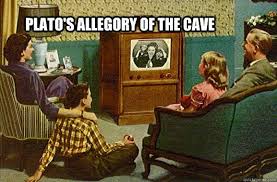
Last week in this series on critical thinking, I attempted to connect Plato’s Allegory of the Cave with the work of Noam Chomsky and Edward Herman in Necessary Illusions. There they alleged that the function of the mainstream media (MSM) is and has always been the dissemination of propaganda. It’s purpose is to create a shadow world far removed from reality. In other words, President Trump is largely correct: fake news is the rule, not the exception. So, for instance, is fake history, fake economics, and fake religion.

Chomsky and Herman don’t expect readers of Necessary Illusions to simply accept their allegations. Instead, they propose testing the model’s predictions (enumerated in last week’s posting).  The first step in doing so identifies “paired examples.” These involve similar controversial actions, performed by the United States or its client states on the one hand, and by “designated enemies” on the other.

In Necessary Illusions many such pairings are provided – all of them, of course, taken from the 1980s, when the book was published. Then U.S. involvement in Central American wars (especially in Nicaragua) dominated the news. While historically “dated,” the examples still communicate what the authors mean by paired examples. In addition, even dated case studies can prove useful to research in order to broaden one’s historical knowledge, while at the same time testing the model’s predictions. (More current examples will be suggested below.) Those given by Chomsky and Herman include[1]:

  • Celebration of elections in (client state) El Salvador (widely criticized for their meaninglessness in Europe) vs. media adoption of the U.S. official account that the 1984 elections in (designated enemy) Nicaragua either never occurred or were hopelessly rigged, even though the Nicaraguan elections were praised internationally for their freedom and fairness (66-67).
  • The defense and rationalization of the U.S. downing of the Iranian air bus in 1988, vs. the furor over the earlier Soviet destruction of KAL 007 (34).
  • The lack of comment on Indochinese injuries and fatalities caused by U.S. mines left behind after the Vietnam war, and on the refusal of the United States to supply minefield maps to civilian mine-deactivation squads, vs. the denunciation of the Soviet Union for the civilian casualties caused by their mines in Afghanistan, where they did provide maps to assist mine clearing units (35).
  • Media indignation aroused in 1988 over alleged plans to build chemical weapons factories in Libya, vs. the media’s lack of concern for the extensive civilian casualties in Indochina caused by U.S. chemical warfare there through its use of Agent Orange (38-39).
  • The sympathetic support given Israel for its repeated invasions and bombings in Lebanon even in the absence of immediate provocation, vs. the identification of Nicaraguan “hot pursuit” of Contras across its unmarked border with Honduras as an “invasion” of a sovereign state (54-55).
  • The press position that Soviet provision of MIG fighter planes to Nicaragua would legitimate a U.S. invasion of that country, vs. media acceptance of the threat posed to Nicaragua by U.S. shipment of F-5 fighter planes to neighboring Honduras (55-6).
  • Portrayal of the World Court as the culprit, when the United States was condemned for its support of the Nicaraguan Contras in 1986, vs. press astonishment over Iran’s lawlessness when it refused to recognize the Court’s adverse decision during the hostage crisis of 1979 (82).
  • Portrayal of the World Court as the culprit, when the United States was condemned for its support of the Nicaraguan Contras in 1986, vs. press astonishment over Saddam Hussein’s lawlessness when he refused to recognize the Court’s jurisdiction, when it ordered him to cease his occupation of Kuwait in 1990.
  • Press outcry over the genocide of the Pol Pot regime in Cambodia, vs. its silence about the proportionately larger-scale slaughter in East Timor at the hands of U.S.-backed Indonesian invaders (156).
  • Criticism of Soviet failure to pay its U.N. dues, vs. silence about U.S. debts in the world body (222).
  • Focus on Nicaragua’s alleged failures to live up to the Esquipulas II accords, vs. relative silence about the much worse records of client states, El Salvador, Honduras and Guatemala (239).
  • The extensive media coverage given the 1984 murder of Fr. Jerzy Popieluszko in (designated enemy) Poland by policemen who were quickly apprehended, tried, and jailed, vs. the comparatively little space given the murder of 100 prominent Latin American religious martyrs, including the Archbishop of San Salvador and four raped American churchwomen, victims of the U.S.-backed security forces (137, 146-47).

Paired examples with more contemporary relevance might include:

  • The San Bernardino shooting on December 2, 2015 by Muslim, Rizuan Farook and Tashfeen Malik vs. the January 29th, 2017 shooting in a Quebec City mosque by white nationalist and supporter of Donald Trump, Alexandre Bissonette.
  • The U.S. nuclear weapons modernization program announced by President Obama vs. suspicions that Iran might have initiated a program to acquire nuclear weapons.
  • Iran’s nuclear weapons program vs. Israel’s.
  • Monroe Doctrine justifications for U.S. attempts to overthrow the Sandinista government of Nicaragua during the 1980s vs. Russian justifications for its invasion of the Ukraine beginning in 2014.
  • Russian and Syrian atrocities in the Battle for Aleppo in 2016 vs. similar acts by the U.S. and Iraq in the Battle for Mosul that same year.
  • Stories on Cuban political prisoners vs. stories on U.S. political prisoners.
  • Islam as an inherently violent religion vs. Christianity as an inherently violent religion.
  • The Jewish Holocaust at the hands of Germans vs. the Native American Holocaust at the hands of European settlers.
  • Alexander Putin as a “murderer” vs. Barack Obama as a “murderer.”

Testing such paired examples involves

  • Locating news reports of both incidents in the mainstream media, e.g. The New York Times.
  • Counting the number of articles devoted to each incident.
  • Measuring the column inches devoted to each
  • Comparing the reporting of each incident, noting:
    • The source-bases of the articles in question and whether they conform to Chomsky’s predictions as earlier described.
    • Whether there are significant language differences in the reports of the “paired examples.”
    • The significance of the differences.
    • How the quality of evidence advanced or demanded in each case differs. (E.g. Is a “smoking gun” required for alleged U.S. crimes, while something less is tolerated as proving the crimes of designated enemies?)
    • Whether conclusions are drawn or implied about evil intent on the part of “designated enemy” leaders, while similar actions by the U.S. or its clients are excused or rationalized.
    • Whether conclusions are drawn or implied about the corruption and unworkability of the “designated enemy’s” system, while similar actions by the U.S. or its clients are explained in terms of exceptional crimes by officials at the lowest level possible.
    • Whether arrests, trials or convictions are accepted as indications that the system in question does work or that it doesn’t.

Conclusion:

Both Plato’s Allegory of the Cave and Chomsky’s propaganda model suggest that the problem of fake news has been with us for a long time. Even more importantly: critiquing it goes much deeper than merely analyzing what appears in the newspapers, on television or online. Instead, critical thinking often challenges its practitioners to make a 180 degree turn away from accepting what we’ve been told by beloved parents, teachers, priests, ministers, politicians, other public figures and friends.

No wonder it’s so intimidating to walk through our prison’s open cell door!

(Next week: My own journey from egocentrism towards Cosmo-centrism)

[1] Here all page references are to Chomsky, Noam. Necessary illusions. Toronto, ON: CBC Enterprises, 1990.

Noam Chomsky & Plato’s Allegory: It’s All Fake News (5th in a series on critical thinking)

Plato TV

Last week I reviewed Plato’s Allegory of the Cave in an attempt to show that problems of “alternative fact” and “fake news” have been with us a long time.

In their book, Necessary Illusions, Noam Chomsky and Edward Herman in effect, connect Plato’s parable to contemporary controversy about truth in reporting. The authors do so by explaining what they call the Propaganda Model of information dissemination through ethnocentric political discourse, education, and especially the mainstream media.

For Chomsky and Herman, such information sources create for us an unreal shadow world that fails to take into account the realities of the world’s unseen majority whose lives are shaped by U.S. domination. Besides explaining that theory, the authors offer a way of testing its veracity. This week let me explain the propaganda model and its predictions. Next week I’ll show how to test both.

To begin with, the propaganda model holds that the mainstream media function as vehicles of propaganda intended to “manufacture consent” on the part of our culture’s majority – often described within the cave as “special interests.” The majority includes workers, labor unions, the indigenous, family farmers, women, youth, the elderly, the handicapped, ethnic minorities, environmentalists, etc. The MSM and those they represent seek to secure the latter’s consent for policies favoring what is termed “the national interest.” This, according to propagandists, is the province of corporations, financial institutions and other business elites. Such interests in turn are served not only by the media, but by elected officials, educational institutions, churches, and so on. These latter often represent resistant grassroots movements as threats, since such movements actually seek greater influence on national life.

To control such tendencies, the media in the United States defines the limits of national debate within boundaries set by a two party system of wealthy government officials, by unquestioned patriotism, support for the free market, vilification of designated enemies (e.g. ISIS, Russia, China, Cuba, Syria, Iraq, Iran, North Korea . . .) and support for official friends (e.g. Israel, Saudi Arabia, Great Britain . . .). Support for such “client states” ignores their objectionable actions that often parallel and even surpass similar acts committed by designated enemies.

None of this means that “liberal” criticism is excluded from the national media. On the contrary, such criticism of either government officials (like Donald Trump) or the corporate elite is common. However, the media never allow serious criticism of either the free enterprise system as such, nor of the American system of government.

Testing this model involves comparing its predictions with specific stories as reported, for instance, in the New York Times often referred to as the nation’s “paper of record.” The predictions include the following:

  • More articles will be devoted to the “atrocities” of designated enemies than to similar actions by the U.S. or its clients.
  • Less space (column inches) will be similarly allocated for reporting the alleged crimes of the U.S. or its clients.
  • In either case, story sources will tend to be American government officials and intellectuals (university professors, think tank experts, conservative churchmen) friendly to U.S. policy.
  • The reporting of “enemy” crimes will devote comparatively little space to the “official explanations” of the governments in question.
  • It will depend more heavily U.S. government spokespersons, on opposition groups within the offending countries concerned and on grassroots accounts.
  • The crimes and “atrocities” of designated enemies will be explained in terms of a corrupt and unworkable system.
  • On questionable evidence or with none at all, the crimes and atrocities of “designated enemies” will be attributed to the highest levels of government.
  • Meanwhile the crimes of the U.S. or its client states will be denied, rationalized or otherwise excused.
  • Incontrovertible proof (a “smoking gun”) will be demanded to prove the “crimes” of the U.S. or its friends.
  • If admitted, these crimes and atrocities will be explained as exceptional deviations by corrupt individuals (at the lowest level possible).
  • The ultimate conclusion drawn from the discovery of crimes along with any resulting trials and convictions will be that the “system works.”

This bias will be revealed not only in the ways noted above, but by differences in language (words, phrases, allusions) employed in writing the articles in question.

Again, next week I’ll show how Chomsky and Herman suggest testing this model and its predictions.

Critical Thinking & Fake News (1st in a series)

fake-news

I’m currently writing a book on critical thinking. A first draft is being reviewed by Peter Lang Publishers. Peer reviewers are giving it the once-over. In this series, I’d like to expose some of the book’s key ideas. What I share immediately below tries to set the stage for  the analysis that will follow in subsequent postings, usually on Tuesdays.

_____

By all accounts, we’re living in a post-fact age, where it’s increasingly difficult to tell truth from falsehood. That’s why in our culture, contemporary debate rages over terms such as “post-truth,” “truthiness,” “alternative facts,” “fake news,” outright “bullshit,” and “propaganda.”

In fact, according to the Oxford Dictionary, the 2016 Word of the Year (WOTY) was “post-truth.” That same year, the Australian Macquarie Dictionary identified “fake news” as its own WOTY. The trend is unmistakable – signaled as far back as 2006, when “truthiness,” a term coined by Stephen Colbert, took the Oxford Dictionary honor. The Colbert term synthesized the trend’s direction. “Truthiness” was defined as “The quality of seeming or being felt to be true, even if not necessarily true.”

That’s what the post-truth era centralized: feelings over analysis. “Trust your gut and not your brain,” as Beppe Grillo put it while urging Italians to vote with his conservative Five Star Party against constitutional reforms.

Shortly after being elected, Donald Trump’s team took the trend a step further. Republican strategist Kellyanne Conway, introduced the phrase “alternative facts.” She was debating “Meet the Press” host, Chuck Todd about the size of Trump’s 2017 inauguration audience.

Conway defended the position expressed by Sean Spicer, President Trump’s Press Secretary. He had described the crowd was the largest in inauguration history. Todd disagreed citing D.C. police estimates that it was four times smaller than the number attending Barack Obama’s second inauguration. Conway responded, “. . . Our press secretary, gave alternative facts to that. . .” Todd answered, “Look, alternative facts are not facts. They’re falsehoods.”

Philosopher Harry G. Frankfurt would put Todd’s point in even starker terms. Drawing on the title of his best-selling book, Frankfurt would say it’s simply “B.S.”  In On Bullshit the professor contrasts liars and bullshitters. The Liar, Frankfurt writes, cares about truth and attempts to hide it; bullshitters don’t care if what they say is true or false. Their only concern is whether or not their listeners are persuaded.

According to another philosopher, Ken Wilber, polls taken during the 2016 election cycle showed that truthiness was valued more highly by a majority of voters than researched facts. Day after day, Wilber writes, newspapers would keep count of questionable statements made by Donald Trump the previous day. Reporters would write things like, “Our fact checkers have found that Mr. Trump told 17 lies on the campaign trail yesterday.” To a lesser extent, they criticized Ms. Clinton’s statements. And yet, when asked who is more truthful, Donald Trump or Hillary Clinton? the polls consistently ranked Trump first. This signified, Wilber says, that poll respondents valued persuasiveness more highly than what news reporters called truth.

Truthiness, alternative facts, and bullshit have given rise to widespread concern about “fake news.” During the 2016 presidential campaign, the phrase received prominence when it was discovered that Eastern European bloggers had concocted from whole cloth wild stories about Hillary Clinton and Barack Obama. The stories were directed towards supporters of Donald Trump, and the concoctions’ only purpose was to have the tales go viral – while earning thousands of dollars for their authors. So, readers were treated to headlines such as: “JUST IN: Obama Illegally Transferred DOJ Money to Clinton Campaign!” and “BREAKING: Obama Confirms Refusal to Leave White House, He Will Stay in Power!”

Such headlines might make one laugh. However, Noam Chomsky reminds us that “fake news” is by no means a trivial matter. However, its principal perpetrators are not Macedonian teenagers trolling for cash. They are the C.I.A., the NSA, and the White House (under any president). Their messages are communicated to the rest of us through the mainstream media (MSM) whose function is the dissemination of propaganda. In Necessary Illusions, Chomsky and Edward Herman put it this way:

“The mass media serve as a system for communicating messages and symbols to the general populace. It is their function to amuse, entertain, and inform, and to inculcate individuals with the values, beliefs, and codes of behavior that will integrate them into the institutional structures of the larger society. In a world of concentrated wealth and major conflicts of class interest, to fulfill this role requires systematic propaganda.”

In other words, at least according to Chomsky and Herman, fake news has long been with us. It is the official policy of the country’s ruling elites.

Now that’s the “fake news” that should really concern us. It’s just about all we get from the mainstream media in this country. And it’s been that way at least since the end of the Second Inter-Capitalist War. In that sense, Donald Trump’s continual lambasting of the press is right on target. (Next week: There Really Are Alternative Facts!)

Catholic Action vs. Trumpism: An Invitation to an Alternative Weekly Mass[1]

lords-supper

As indicated in earlier postings (here and here), the ascension of Donald Trump and his group of billionaire confidants to national leadership calls people of faith in general and Catholics in particular to adopt extraordinary and vigorous responses to the grave threat their ascent signifies.

This posting represents one such response. Its call is especially urgent in the light of the fact that the Trump administration and Republicans in general embody what Noam Chomsky has termed “the most dangerous organization in the history of the world.” Their unanimous climate-change denial accords them the title. In fact, they not only deny the human causality of climate chaos, they plan to proceed full speed ahead with the practices (oil and gas drilling and fracking) that our planet’s finest minds identify as its causes. The Republicans (with the Democrats not far behind) are leading us all like lemmings to the precipice of planetary destruction and the end of human life as we know it.

This is no exaggeration.  As Pope Francis has written so eloquently:

“Doomsday predictions can no longer be met with irony or disdain. We may well be           leaving to coming generations debris, desolation and filth. The pace of consumption, waste and environmental change has so stretched the planet’s capacity that our contemporary lifestyle, unsustainable as it is, can only precipitate catastrophes, such as those which even now periodically occur in different areas of the world. The effects of the present imbalance can only be reduced by our decisive action here and now. We need to reflect on our accountability before those who will have to endure the dire consequences.” (Laudato Si’ 161).

It is clear that despite Francis’ strong words, “decisive action” in the face of Trumpism’s climate-change denial and other destructive policies has no chance of issuing from the diocesan Catholic Church nor from our local Catholic community in Berea. So the invitation here is to Catholics and other people of faith to create an alternative (or, if you will, a complementary) community of faith to celebrate a house-church Mass each week. Its liturgy will be characterized by sharp awareness of the unique political context we are now entering. Each will be followed by discussions planning direct action against Trumpism in all of its forms.[2]

The Mass will be simple and prayerful. It will take place on Saturday evenings in a home (Peggy’s and mine to begin with). Together we will sing some inspiring songs, reflect on the week’s liturgical readings in the light of the Church’s rich social justice tradition, and break bread eucharistically before sharing a pot-luck supper. Each meeting will incorporate planning for specific acts of resistance.

The first convening of this alternative community will take place on Saturday, January 21st, the day after Mr. Trump’s inauguration which is scheduled for January 20th. Here are the details:

Berea’s Weekly Alternative Home-Church Mass

Place: 404 Jackson St.

Time: 5:00-7:00

The Mass:

  • Welcome (5:00)
  • Singing, opening prayers, & Liturgy of the Word (5:00-5:45)
  • Eucharist (around the dining room table) & Pot Luck (5:45-6:45)
  • Planning the week’s direct action (6:45-7:00)
  • 7:00 (promptly): Dismissal

Beginnings, no doubt, will be small and modest. But we should not be discouraged. Ideas about how to proceed more inspiringly will surely develop as all group members share their suggestions.

[1] Starting next Tuesday, I will start a 4-part series here explaining the history and theology behind home liturgies including an explanation of current theologies of the Eucharist and “Real Presence.”

[2] For those who remember: The faith community envisioned here might be thought of as a more spiritually-focused Berea Inter-Faith Task Force for Peace.

I’m Happy that Trump Stole the Election: At Last, Everyone Can See “America” for What It Is!

election-stolen

For years I’ve been arguing with friends that Adolf Hitler actually won the Second Inter-Capitalist War (1939-’45). [As a matter of fact, in 2001, I wrote an article to that effect; it was published (in Spanish) by Costa Rica’s Ecumenical Research Institute (DEI).]

It took a while for his fascism to triumph here, I argued. But triumph it did. U.S. support of fascism in the Global South was bound to come home. Moreover, I said, the United States represents the planet’s greatest threat to world peace. It not only spends more on the military than the rest of the world combined, it is also the instigator of most of its wars. The world scourge of “terrorism” is a U.S. product directly traceable to its military interventions on behalf of Big Oil. Additionally, “America’s” human rights record is abysmal. If it dropped off the map tomorrow, the world would be much better off.

Domestically, I said, U.S. “democracy” is a sham. In reality, those calling the shots are not “The People,” but large corporations aided and abetted by the military – what Dwight Eisenhower called “the military industrial complex.” In fact, Eisenhower’s phrase represents a nearly perfect definition of fascism. According to Benito Mussolini, it’s the union of government and corporations. “Corporatism,” he called it. That’s our system, pure and simple.

Despite my arguments, my friends have continued to insist robotically, “We’re the greatest country in the world. We’re its leading democracy. We’re the richest country in the world. We respect human rights like no other.”

On and on the argument continued.

Since November 8th, however, I’m happy to report the argument is over. With the accession of the Trump team to power, the truth of my argument has become transparent. Pretense is no possible. Now no one can deny:

  • The U.S. is a complete plutocracy. It is fascism incarnate.
  • It is criminal in its approach to human rights.
  • It is indeed the greatest threat to world peace and human survival.
  • Its system of so-called “democracy” is rigged and is probably finished.
  • The U.S. is not the richest country in the world.

Begin with the question of plutocracy and fascism. The take-over by the rich – by Mussolini’s corporations – is complete and transparent. And sitting right next to them at “The Table” are the military men. Add them up:  A self-identified billionaire heads the whole show. The president of Exxon will be his secretary of state. Goldman-Sachs officials will hold several cabinet posts. The Secretary of Defense will be a general. Same for the head of Homeland Security. And then there’s Trump’s National Security Advisor – also an ex-general. It’s all suggestive of a military coup.

As for human rights . . . The president-elect has promised to expand the U.S. prison at Guantanamo, where prisoners are held in violation of Habeas Corpus requirements. He has also threatened to torture terrorist suspects – and to kill their families! Yes, he’ll water-board, he said, and do “a hell of a lot worse” than that. Such statements, of course, run contrary to international law and fly in the face of the Nuremberg Principles. Though Trump recently has claimed to reverse his stance, his nomination, for instance, of National Security Advisor calls such disclaimers into question. Michael Flynn, has also been a torture advocate. So under Trump look for more Bush II-style legal justifications of “enhanced interrogation” techniques which included waterboarding and infliction of physical pain stopping just short of the point of death. As they say, torture by any other name . . .

Such positions on what the rest of the world regards as inhumane and illegal are just part of the reason why the U.S. is now and has been for years generally regarded as the greatest threat to world peace. Gallup polls have born that out. Look it up on the web, and here’s what you’ll find:

“According to the leading western polling agencies (WIN/Gallup International), the prize for ‘greatest threat’ is won by the United States. The rest of the world regards it as the gravest threat to world peace by a large margin. In second place, far below, is Pakistan, its ranking probably inflated by the Indian vote.”

And this does not even take into account the incoming administration’s position on climate change. Trump’s nominations to head the Environmental Protection Agency (EPA) and the Department of Interior remove any doubt that the U.S. is the greatest threat to human survival. Both of them are vehement climate-change deniers – as are the president-elect himself and the entire Republican Party now in charge of most of the nation’s levers of power. None of them is a climate scientist. Yet as a group, and despite the contrary conclusions of 97% of climate scientists, they choose to impose their unsupported opinion on the entire planet regardless of its predicted impact their own grandchildren. Their promise to withdraw from COP 21 agreements regulating carbon emissions isolates the United States as a truly rogue nation – a criminal state. It makes the Republican Party what Chomsky has called “the most dangerous organization in the history of the world.”

The U.S. is also no longer a democracy. Here Donald Trump was right. The whole system is rigged. And (once again) with Republicans holding all those power levers, it will possibly never be set right. Think about what’s just happened:Republicans have “won” the recent election on a constitutional technicality. That is, despite the fact of losing the popular vote by 2.7 million votes, they’ve been awarded the White House on the basis of “electoral votes.” But even that claim is questionable (even without considering charges of Russian interference in the election on behalf of Donald Trump). For instance, as Greg Palast has shown, 73,000 votes from African-American precincts in Detroit and Flint (heavily Democratic areas) were not even counted. The story is similar in Ohio and Florida, where Trump’s margins of victory were also razor thin. Yet in all three states, Republicans and supporting partisan judiciaries have opposed even recounting ballots by hand. Simply put: that’s not democracy.

And democracy might never return because of Republican-tilted electoral machinations including:

  • Retention of the Electoral College system that has allowed the GOP to win 40% of the last five elections without having won the popular vote.
  • The Citizens United decision permitting unlimited and largely secret funding of political candidates.
  • Control of the mainstream media by corporate power identified or aligned with the billionaires now running the show in Washington.
  • Voting on Tuesdays instead of on a Sunday or special holiday.
  • Exclusion of third party candidates from debates.
  • Repeal (in effect) of the Voting Rights Act.
  • Gerrymandering of congressional districts.
  • Use of entirely hackable voting machines.
  • Voter suppression techniques: including short supply of voting machines in minority districts, machine “malfunctions” in poor communities, voter I.D. requirements, stripping convicts of their right to vote . . .
  • Judicial refusals to allow ballot recounts even when voting count differences between candidates fall within statistical margins of error.
  • Refusal to establish a bi-partisan National Electoral Commission to supervise elections under clear uniform and reviewable procedures in every state.

All of this –  the plutocracy and its fascism, the criminal disregard of human rights, permanent war and climate-change denial, and the impossibility of even pretending to be democratic – has rendered the United States not only venal and rogue, but POOR. Even at the economic level, we are shockingly impoverished with 14.8 percent of the population living below the official poverty line. But apart from that, U.S. infrastructure is falling apart, our public education system is harshly segregated and unequally provisioned between rich and poor. Our health-care system ranks last overall among 11 industrialized countries “on measures of health system quality, efficiency, access to care, equity, and healthy lives.” All of that makes Americans poor, even as stock prices boom and some among us are unfathomably rich.

None of that promises to improve under a Trump presidency. The president-elect’s cabinet nominations including for Secretary of Labor and for Housing and Urban Development tell the story. One is the enemy of unions and “living wage” movements; the other wants to dismantle public housing despite a nationwide epidemic of homelessness. Trump’s Attorney General is a white supremacist. Under such “leadership,” U.S. poverty will deepen. Gaps between rich and poor will widen. Our status as a Third World country will solidify.

All of that is now clear. We can no longer pretend. Hitler won. Fascism has triumphed. The racism, sexism, homophobia, and xenophobia at the top stand clear for all to see. Clarity like that is good. And since complacency is now intellectually unfeasible, the Cassandras among us can now unite with the formerly complacent to attack the problem at hand. Doing so must entail the following steps:

  1. Facing the undeniable fact that the billionaires are now in charge.
  2. Realizing that their power comes from money, but that money represents only one form of control.
  3. Identifying and mobilizing power’s other modalities including: people in the streets, community grassroots organizations, and progressive churches.
  4. Recalling history and the fact that meaningful change has never started from the top. Even the New Deal resulted from pressure by labor unions, socialists, and the Communist Party. Similarly, the Civil Rights, Women’s Suffrage, Gay Rights, and Anti-War Movements began at the grassroots. None of these began as majoritarian campaigns, but in the face of fierce resistance by the majority.
  5. In the light of that history, supporting organizations that have already coalesced: Bernie Sanders’ “Our Revolution,” the Green Party, Black Lives Matter, 350.Org., the Standing Rock Water Protectors, Code Pink, Labor Unions, the Fight for Fifteen movement, and a revived Occupy crusade.
  6. Focusing on the most important issues:* Displacement of Patriarchy

    * Economic Reform

    * Climate Chaos

    * Nuclear Disarmament

    * Racial Justice

    * Reform of the voting system

    Working and organizing around these issues starting now.

On Joining John the Baptist in Rebellion against the Religious Establishment – and Trumpism (Sunday Homily)

dangerous

Readings for Second Sunday of Advent: IS 11: 1-10; PS 72: 1-2, 7-8, 12-13; ROM 15: 4-9; MT 3: 1-12

“The meaning of the Incarnation is this: In Jesus Christ, God hits the streets. And preparing for that is the meaning of Advent.” (Jim Wallis. “Advent in 2016: Not Normal, Not Now, Not to Come.”)

__________

A few days ago I published a review of James Patterson’s novel, Woman of God. It’s the story of Brigid Fitzgerald, a medical doctor who though female, becomes a priest and candidate for the papacy.

Brigid and her husband (also a dissident priest) decide to form their own Catholic parish. They do so because of the studied irrelevance of the Catholic Church to pressing problems of the real world. The two call their congregation the “Jesus, Mary and Joseph (JMJ) Church.” They insist on remaining Catholics not allowing their opponents to drum them out of the church as just another break-away Protestant sect.

The JMJ Church spreads rapidly, largely because it connects Jesus’ Gospel with issues of peace and social justice. And though vilified by her local bishop and physically threatened by right wing Catholics, Brigid eventually becomes widely celebrated and is summoned to Rome not for condemnation, but papal approval.

I couldn’t help thinking of Woman of God as I read today’s liturgy of the word this Second Sunday of Advent. Like the JMJ Church, the first two readings along with the responsorial psalm emphasize the connection between faith and social justice.

Then in today’s Gospel, the prophet, John the Baptist, like Brigid Fitzgerald, initiates an alternative community of faith far from the temple in the desert wilderness. John’s credibility leads “all Jerusalem and Judea” to see him as a prophet. In fact, (as John Dominic Crossan has pointed out) John becomes for the Jewish grassroots their de facto alternative “High Priest.”

To see what I mean, consider that first selection from the prophet Isaiah. It directly links faith with justice for the poor, oppressed and marginalized. In Isaiah’s day (like our own) they were typically ignored. By way of contrast, Isaiah’s concept of justice consists precisely in judging the poor and oppressed fairly and not according to anti-poor prejudice – in Isaiah’s words, not by “appearance or hearsay.”  (A clearer statement against contemporary police and/or government profiling can hardly be imagined.)

Not only that, but according to the prophet, treating the poor justly is the key to peace between humans and with nature. Centralizing their needs rather than those of the rich produces a utopian wonderland where all of us live in complete harmony with nature and with other human beings. In Isaiah’s poetic reality, lions, lambs, and calves play together. Leopards and goats, cows and bears, little babies and deadly snakes experience no threat from each other. (This is the prophetic vision of the relationship between humans and nature – not exploitation and destruction, but harmony and mutual respect.)

Most surprising of all, even believers (Jews) and non-believers (gentiles) are at peace. Today’s excerpt from Paul’s Letter to the Romans seconds this point. He tells his correspondents to “welcome one another” – including gentiles – i.e. those the Jewish community normally considered enemies. (That would be like telling us today to welcome Muslims as brothers and sisters whom God loves as much as any of us.)

Today’s responsorial psalm reinforces the idea of peace flowing from justice meted out to the “least.” As Psalm 72 was sung, we all responded, “Justice shall flourish in his time, and fullness of peace forever.” And again, the justice in question has the poor as its object. The psalmist praises a God and a government (king) who “rescue the poor and afflicted when they cry out” – who “save the lives of the poor.”

In his own time, the lack of the justice celebrated in today’s first three readings infuriates Jesus’ cousin, John the Baptist. His disgust forces him out of the temple and into the desert. It has him excoriating the religious leaders of his day as a “brood of vipers.”

Unmistakably clothed as a prophet – in garments that absolutely repudiate the “sacred garb” of his effete opponents – John lambasts the Scribal Establishment which had normalized relationships with the brutal occupation forces of Rome. As opposition high priest, John promises a religious renewal that will lead to a new Exodus – this time from the power of Rome and its religious collaborators.

I hope you can see as I do the parallels between the context of John’s preaching and our own. We live in a culture where those in charge contravene our faith by openly slandering the poor and marginalized celebrated in today’s readings as especially dear to God. I mean since November 8th, all the levers of power (the presidency, the Supreme Court, the House and Senate) find themselves in the hands of billionaires and their friends – the 1% that the Occupy Movement identified so accurately five years ago. Ironically that richest 1% has succeeded in scapegoating the country’s poorest 1% (immigrants) as a major cause of our country’s problems. Moreover, they equally vilify other poor and marginalized people: the impoverished in general, brown and black-skinned people, women, the LGBTQ community, environmentalists, protestors and anyone who exposes the crimes of the billionaire class.

As a result, we are about to enter a period of unprecedented national darkness that promises to rival that of Germany, 1933-1945. For at least the next four years our country will be controlled by an organization Noam Chomsky calls “the most dangerous in the history of the world.”

More dangerous than the Nazis? Yes, Chomsky insists. Hitler did not have the power to destroy the planet by nuclear war. Hitler ruled Germany before climate change threatened innumerable species, Mother Earth herself, and continued human existence. And yet the entire Republican Party denies that the problem even exists! Yes, it is the most dangerous organization in the history of the world.

And despite all of that, there’s not a peep about it from the pulpit. People keep going to Mass as though the most important upcoming event is the arrival of St. Nicholas at the parish potluck – or the Christmas bazaar.

So what should we do in the face of such disconnect?

How about following the example of John the Baptist, Brigid Fitzgerald and her husband?

This would entail:

  • Admitting that present forms of church are hopelessly disconnected from the unprecedented tragedy and threat represented by the accession to power of anti-poor climate change deniers.
  • Publicly moving out of our local church building.
  • Perhaps, opening a store front JMJ Catholic church on the Main Street Jim Wallis referred to in his article referenced above.
  • Inviting former Catholics, college students, and other disaffected church members to join.
  • Publishing the invitation in local newspapers.
  • Meeting in the store front for Eucharist each Sunday at the very times the local church celebrates Mass.
  • Empowering faithful women in the JMJ community to preach and celebrate the Eucharist.
  • Gathering in the storefront on Wednesday evenings for prayer and to plan the week’s acts of resistance to Trumpism in all of its manifestations.
  • Using those premises as a sanctuary for the bottom 1% threatened by ICE and police.

Objectors will say:

  • We have no authority to do this.
  • It’s better to continue our reform efforts from within.
  • This will only cause division in our church.
  • The status quo really doesn’t bother me, because I use the quiet provided by Sunday Mass to facilitate my own prayer life.
  • (If, like me, you’re of a certain age) I’m too old for such radical disruption of my life.

To such objections John the Baptist might reply:

  • “I had no official authority to start my desert community of resistance and reform. In fact, I was identified by the authorities as an enemy of the state. Eventually they cut off my head. So don’t expect approval.”
  • Reform from within? “I gave up on that early on. So did my cousin, Jesus. Both of us operated outside the temple system which we criticized harshly.”
  • Division in our faith communities? “That didn’t bother me either. Can you get much more divisive or polarizing than calling religious leaders a ‘brood of vipers’?”
  • Withdrawing into personal prayer? “The spiritual masters in my Essene community convinced me that prayer and meditation are essential elements undergirding prophetic action. However, pietism is useless unless it leads to the kind of witness I gave and risk I took on the banks of the Jordan.”
  • Too old? “Again, my Essene mysticism would not permit me to identify with the physical as if I were primarily a body with a soul. The truth is that we are first of all ageless spirits who happen to inhabit temporary bodies. The imperative for action is no less incumbent on older people than on the young. Hell, the elders criticized me for being too young to oppose them. I was barely 30 when they killed me.”

Again, as Jim Wallis has intimated, the specter of John the Baptist should haunt us this second Sunday of Advent, and drive our faith communities onto Main Street. These unprecedented times call for radical response outside the sacred precincts and independent of the sleepwalkers awaiting the arrival of St. Nicholas.

Trump’s Republicans Are “The Most Dangerous Organization in the History of the World” (Sunday Homily)

climate-change

Readings for First Sunday in Advent: IS 2: 1-5; PS 122: 1-9; ROM 13: 11-14; MT 24: 37-44

It’s impossible for thoughtful homilists not to be stopped dead in their tracks by the opening words of today’s Gospel selection.

Jesus said to his disciples:
“As it was in the days of Noah,
so it will be at the coming of the Son of Man.                                                                                       In those days before the flood,
they were eating and drinking,
marrying and giving in marriage,
up to the day that Noah entered the ark.
They did not know until the flood came and carried them all away.
So will it be also at the coming of the Son of Man. . .”

Of course, everyone knows the Noah tale. There God warned the great patriarch that a huge flood was coming to destroy the earth, because its inhabitants had become so violent.

Presumably, Noah shared such forewarnings with his contemporaries – or at least with those wondering why he was constructing so mammoth a vessel. Apparently no one listened. You might even say they were in denial about the coming deluge. But the disaster came anyway and swept them all away.

Jesus’ words seem unmistakably pertinent to themes of climate change today — particularly in a context where USians have just elected a climate change denier to the White House and have given control of all branches of government to a party of “representatives” who refuse to recognize that humans can or should do anything about predicted natural disasters that threaten to completely replicate the catastrophe recounted in the legend of Noah and his Ark.

Such denial has rendered the Trump-led Republican Party (in the words of Noam Chomsky) “the most dangerous organization in the history of the world.”  And that includes Hitler’s Nazis. Even aside from their not possessing nuclear weapons, the Nazis did not have the power to destroy all of human life even if they wanted to. The Republicans do.

And they are completely dedicated to that project. They are racing as fast as possible towards the destruction of organized human life. In the meantime, their allegiance to the fossil fuel industry and unwillingness to fund alternative sources of energy will undoubtedly produce millions of refugees from low-lying coastal regions throughout the world. The resulting influx of refugees from sea-level rise will render any exclusionary “walls” impotent and useless.

Jesus’ words in today’s Gospel reading become even more pointed since they connect the Noah story with imperialism — another great producer of refugees. The device for doing so is the Master’s reference to “the Son of Man.” That’s the character that the Book of Daniel invokes as the judge of all the empires that had conquered Israel – from Egypt to the Greeks. In his own day, Jesus apparently identified himself with that judge in relation to his people’s imperial enemy in first century Palestine, viz. the Roman Empire. Colonial violence, Jesus promises, will be Rome’s downfall.

Besides their suicidal climate change denial, Republicans , of course (like their Democratic counterparts), are champions of empire and U.S military supremacy.

Today because of their denial and dedication to empire, Trump and his party have taken Rome’s place as an even more dangerous Enemy of Humankind. Jesus words call us to “wake up” and recognize that danger.

All of us, the Noah reference suggests, must awaken and pray for a holy insomnia that refuses to accept as somehow “normal” the most dangerous organization in the history of the world.

If we don’t take to the streets and refuse to join Republicans’ rush to the precipice, there will surely come. . . LA DELUGE!

Islam as Liberation Theology: Muhammad as a Prophet for Our Times (Part One)

Islamic World

I remember as I was finishing my teaching career of 36 years at Berea College in Kentucky that I experienced a spectacular failure regarding Islam.

In the light of the then-recent events of 9/11/01, I had moved that all students be required to study Islam either in a separate required course or as part of an already existing course (on writing or Western Civilization). After a brief discussion, my proposal was put to a vote. It received two (!) “Yeas” and about 148 “Nays” from a faculty of 150. “Next order of business . . . “

Despite going down in flames like that, I still think my proposal was a good one. That’s because ignorance of Islam lies close to the heart of our country’s highly questionable (not to say bogus) “War on Terror.”

Even more importantly, as a liberation theologian, I see “Islamists” as part of world-wide movement of poor people to use their religious traditions as a force for freedom rather than control and slavery. In fact, I consider this movement as the most important intellectual and social development since the writing of the Communist Manifesto in 1848. Grasping that fact and the true nature of Islam should be Job #1 for teachers and peace advocates.

Perhaps, like the Berea faculty, you find that assertion difficult to buy. And why shouldn’t you? Even in its Christian form, “liberation theology” has been misrepresented and distorted beyond recognition. Why shouldn’t we expect even more of the same for its Islamic counterpart?

So let me explain. Begin with the context of my proposal.

Once again, it came in the immediate aftermath of 9/11. On all sides Islam was being vilified as foreign, primitive, terrorist, and anti-female. U.S. military personnel regularly desecrated the Koran.

And their leaders like Lt. Gen. Wm. G. Boykin, were asserting the superiority of “our God” over “their God.” Republicans who otherwise ridiculed feminists as “femi-nazis” suddenly became champions of women’s liberation as they attacked Islam for preventing women from driving cars and wearing mini-skirts.

All of that made me suspicious. I knew a little about Islam from my poor attempts at teaching an introductory course part of whose intent was introducing freshman students to “world religions.” We had read Huston Smith’s The Religions of Man. If nothing else, Smith taught me that Islam, Judaism, and Christianity are sister faiths. There is no distinction between “their God” and “our God.” All three were “religions of the book.” At the very least, all recognized Jesus as a great prophet.

I had also taught Malcolm’s Autobiography. His embrace of Islam had called my attention to the attraction of Islam for poor people as an alternative to enslaving interpretations of Christianity. Malcolm’s passion for the Nation of Islam easily connected with my own for liberation theology – i.e. with the reading of the Judeo-Christian tradition from the perspective of those committed to the welfare and destiny of the world’s poor.

I remembered that somewhere in the literature of liberation theology, I had read that Islam was today’s most prominent example of a ”religion of the poor and oppressed.” As such Islam was influencing far greater numbers of the world’s poor than had Christianity’s liberation theology which was largely defeated by the U.S. military in what Noam Chomsky has called “the first religious war of the 21st century.” That religious conflict had pitted the U.S. government against the Catholic Church in Latin America.

Understanding Islam as today’s foremost expression of the liberating power of faith made the 1979 uprising in Iran a movement inspired by “liberation theology.” It did the same thing for other movements for liberation throughout the Asia and Africa. With all their triumphs and distortions, they too were movements against colonialism and its neo-colonial aftermath. In the name of God, they all stood against the exploitation and oppression of the East by the West.

That’s true, of course, for our contemporary “Arab Spring.” After all, did you think all those students and others protesting in Tahrir Square had suddenly left behind their devotion to Islam? What do you think motivated them? Had they suddenly become secularists? More obviously, what moved the “Islamic Brotherhood” to oppose the U.S. puppet Mubarak? Or why do you think the Egyptians elected the Brotherhood to lead their country?

Obviously, the motivation was largely found in Islam and in the realization that their faith as exemplified in the life and writing of the prophet Muhammad champions the Arab world’s poor in their struggle against the rich who have hijacked both Christianity in the West and Islam in the East.

It’s that liberationist understanding of Islam that the West must distort and vilify just as it did Christian liberation theology when it threatened to radically alter the political landscape of Latin America from the Medellin Conference of 1968 to the assassination of El Salvador’s most prominent liberation theologians in 1989.

It’s time to set the record straight in no uncertain terms. (That after all was the thrust of my proposal that evening on the faculty floor.) Reading Karen Armstrong’s Muhammad: Prophet for Our Time can help. In fact, Armstrong’s book would be required reading in the course I proposed. Without ever mentioning liberation theology, it reveals Muhammad as the champion of the poor and oppressed that Christianity’s liberation theology shows Jesus to have been.

(More about this in next Monday’s post.)

Anniversary of St. Oscar Romero’s Assassination: Imagine if He Had Been Elected Pope!

A lot has been written in these pages about liberation theology. I’ve defined it as “Reflection on the following of Jesus of Nazareth from the viewpoint of those committed to the liberation of the world’s poor and oppressed.” I’ve called it the most important theological development in 1700 years and perhaps the most important intellectual development since the publication of the Communist Manifesto. (See my blog posts by clicking the “liberation theology” button just under the masthead of this blog site.)

Well, today is the feast day of liberation theology’s patron saint, Oscar Romero. On this day, March 24th in 1980, St. Oscar was gunned down by the U.S. – supported military of El Salvador. He was shot while celebrating the Eucharist in a convent chapel.

His killing was part of what Noam Chomsky calls “the first religious war of the 21st century.” It was fought by the U.S.-Vatican axis against the Catholic Church in Central America. That church had committed the unpardonable sin of taking seriously the call of the Second Vatican Council to live out what the Council called Jesus’ own “preferential option for the poor.” Such doctrinal consistency was unacceptable to the U.S. government and to the pope of Rome.

St. Oscar had been a conservative priest who was appointed archbishop of San Salvador by Pope John Paul II precisely because of Romero’s conservative leanings in both politics and theology. In a country heavily influenced by liberation theology, he could be counted on to continue the Catholic Church’s war against that movement, as well as its support for the Salvadoran oligarchy, the butchery of its military, and the U.S. policy that sponsored it all.

That particular troika brought about in 1977 the killing of Rutilio Grande, a Salvadoran Jesuit priest and close friend of St. Oscar. Their friendship had flourished even though Grande was an advocate of liberation theology.

Following Grande’s assassination, Romero underwent a profound conversion. He passed from being the enemy of liberation theology like John Paul II, his lieutenant Joseph Ratzinger (the future Benedict XVI), and Jorge Bergoglio (the future Francis I) to being its ardent promoter like Grande himself.

As U.S.-sponsored “White Hand” assassination squads did their bloody work throughout El Salvador, St. Oscar denounced the bloodbath in no uncertain terms. Each Sunday his sermons were broadcast throughout the country denouncing the military and reading the unending lists of people tortured, garroted, executed, burned, buried alive, drowned, smothered, shot and raped the previous week.

That is, while Bergoglio was giving at least “silent consent” to those same crimes by the military in Argentina, and while John Paul II worked hand in glove with Ronald Reagan against liberation theology, Romero fulfilled the role of courageous prophet in El Salvador.

For his troubles, St. Oscar received threats daily from the White Hand. He could see that his own days were numbered. “Yes, they will kill a bishop,” he had said, “but may my blood may be the seed of freedom for the Salvadoran people.” Those words and others spoken by the sainted archbishop are centralized in the song featured at the top of today’s blog post. (See the sponsoring website: TheMartyrsProject.com/)

True to his premonitions, on this day 33 years ago, he was shot at the altar.

But what if he had survived? What if (impossibly) he had been created Cardinal? What if he had been elected pope? How different then the church would be. How different the world.

Conversions are possible. St. Oscar changed profoundly.

Can something similar happen for Francis I?

St. Oscar, pray for us!

Pray for Francis I!