Tag: Rome
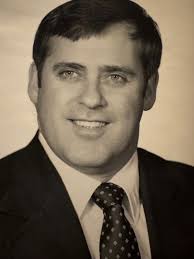
In Memoriam: Tom Shea (1938-2024)
I lost a dear friend last week. His passing made me cry.
His name was Tom Shea and I knew him for 70 years – ever since I entered St. Columban’s high school seminary in 1954 at the age of 14. Tom was 16 then, a junior while I was a freshman. Even in such a small school of only about 100 students, juniors didn’t have much to do with freshmen.
Still however, I admired him greatly. Everybody did. He was so smart and such a great athlete. He was a strong-armed quarterback, a terrific basketball guard, a hard-throwing pitcher, excellent at any racket sport, especially good at ice hockey, a super golfer, and even (I was told) a respectable Irish hurler. He was also a crafty poker and bridge player. With all that, he never took himself that seriously and had a great sense of humor.
However, I didn’t really get to know Tom till I got to the major seminary years after high school. Even there it took a while. At the age of 21, I arrived still working on my bachelor’s philosophy degree. Meanwhile, at 23 Tom had already begun his 4 years of graduate theology work. By the time I began my theological studies, he was almost ready for ordination. That happened for him in 1964. He was ordained on December 22nd of that year – 60 years (almost to the day) before his final transition.
Besides playing with and against him on various athletic fields, the only time I remember speaking seriously with Tom in the major seminary was during the Second Vatican Council (1962-1965). I asked him for advice on what to read to catch up with the drastic changes occurring because of that historic event. I forget what he told me. But I remember following his instructions.
Because Tom was so smart, our missionary group, the Society of St. Columban, had singled him out for professorship in the seminary. They wanted him to teach Sacred Scripture. So, after his ordination, they sent him off to Catholic University in Washington, DC to get a preliminary master’s degree in theology. After two years there, he’d go on to Rome (and Jerusalem) for his terminal degree in biblical studies.
That’s when Tom and I really connected.
I was ordained in 1966. And as with Tom, the Columbans wanted me to teach in the major seminary. My field would be moral theology instead of biblical studies. But Tom and I would go off to Rome together to study – he for 3 years, and I for 5.
And oh, what a ride that would be! In Europe, we’d vacation together, ski many of Europe’s great resorts, and as brothers and colleagues sort out the details of our personal and political lives.
It began with both of us living at St. Columban’s major seminary in Milton, MA the summer before we left for the Eternal City. That was in 1967. I forget what Tom was doing in Milton. I was completing a summer course in Hebrew at Harvard. But every night the two of us drove over to Boston’s West Roxbury to play basketball with “the brothers.” We were the white boys who could ball with any of them. (I remember one night the Celtics’ Satch Sanders was there watching.)
The basketball connections continued in Rome. Both of us ended up playing in something like a G League there for a team affiliated with Rome’s professional club, Stella Azzurra. We scrimmaged against them a time or two. And it was all great fun — a great way to learn Italian culture and make Italian friends. Our Stella Azzurra team was coached by Altero Felice who later had a basketball arena named after him. We considered Altero a good friend and father figure.
While in Rome, Tom and I were also invited by Giulio Glorioso [the Italian equivalent (we were told) of Babe Ruth] to play baseball for the Rome team. (We had worked out with them one spring.) I remember the Saturday afternoon Giulio came to the Columban residence to try to persuade us to play ball that summer.
For better or worse, we passed up that offer in favor of studying German two of our summers in Europe at the University of Vienna. (German at that time was still considered essential for any serious theologian or scripture scholar.)
In a sense, both Tom and I grew up in Rome. Following Vatican II, everything was called into question. Over Pasta e Faggioli and salsiccia dinners in the Columban house at Corso Trieste 57, the 20 or so of us graduate students (all ordained priests from Ireland, Great Britain, Australia, New Zealand, Scotland, Tasmania – and we two Yanks) debated fundamental topics never open to question before Vatican II: God (Is there such a being?), Jesus (Was he somehow God? But how?), the nature of the church (Was Luther a heretic or a saint?), the priesthood (Was it necessary?). And what about mandatory celibacy? The discussions were unforgettable and life-changing.
Our friendship continued and deepened to eventually include our wives, Dee (Tom’s bride) and Peggy (mine). We spent several year-end celebrations together. And once we got together in Costa Rica for a long weekend at an all-inclusive resort. Peggy and I attended the wedding of their eldest son, Tommy in Chicago. Tom and Dee came to our daughter Maggie’s wedding in 2007 in Kentucky. Peggy and Dee remain fast friends.
The four of us got together for the last time a year-and-a-half ago in Florida. By then Tom had already been slowed by heart and lung problems. But his sense of humor never faded. Neither did his life-long interest in and commitment to spiritual growth.
Yes, Tom Shea was a close friend of mine. We grew up together for nearly three-quarters of a century, often acting as each other’s counsellor, advisor and confessor — every minute accompanied by stories and laughter. As Peggy recently pointed out to me, his down-to-earth wisdom and example saved me in effect from a closed system and lonely life that otherwise would have throttled me.
So, thank you, Tom Shea for being such a good fellow traveler. You were wise, generous, humble, and always brilliant. I’m grateful for the gift of your impactful life. We’ll see each other again soon, I know.
From Italy

Greetings from Rome!
Apologies for not attending to my blog for so long.
I’ve been busy getting ready for this two-month trip as well as rehabbing from my knee operations and another unexpected surgery. I’ve also been preoccupied with Tarot readings for an increasing number of clients – not to mention readings for my immediate family.
All six of us (including my son-in-law) have birthdays in the span of a single month – from September 6th to October 5th. And this year I’ve decided to give each family member a 10-card Tarot reading. It’s been a lot of fun, but has taken time, since each reading (including visual representations of each card) runs to about a dozen pages.
With that behind me, I can now return to blogging.
So, again, greetings from the Eternal City.
Peggy and I are here visiting our son Brendan, his wife Erin, and their three children, Genevieve (4), Madeleine (2), and Sophie (8 months). We want to get to know those kids.
You may recall that Brendan works for the State Department. He operates out of the embassy in Rome and is doing quite well following previous postings in Mexico, Afghanistan, and Pakistan.
You might also realize that in a sense, this visit represents my “return to the scene of the crime.” I mean, as a newly ordained priest, my first assignment was to get my doctorate in moral theology here in Rome. So, between the years 1967 and 1972, I obtained my licentiate in systematic theology at the Atheneum Anselmianum and that doctorate at the Academia Alfonsiana.
Those five years changed my life.
Having educated me for 12 years (from a callow high school freshman in Silver Creek, New York to an ordained priest in Milton, Massachusetts) the intent of the Society of St. Columban (my sponsoring organization) was for me to return from Rome and teach moral theology in its major seminary.
However, studying post-Vatican II theology and living abroad for five years radically changed my world vision and understandings of God, Jesus, church, priesthood, politics, etc. Consequently, without my knowing it, the rector of our Rome house eventually wrote to the Columbans’ Superior General that I was “too dangerous” to teach in the organization’s major seminary.
So much for that.
In any case, I’ve written about all that elsewhere in these pages behind the “personal” button in my blog’s table of contents.
I won’t bore you with repetition.
So let me do so instead by simply noting that:
- We’re here.
- We’ve been generously received by our hosts.
- The grandkids are a lot of fun.
- I’ve forgotten most of my Italian (confusing it with similar languages I’ve learned in the meantime, viz., Portuguese and Spanish).
- At this very moment, Peggy and I find ourselves aboard a high-speed train heading from Rome to Turin, where we’ll attend a conference on the world’s food system.
- Afterwards, we’ll spend three nights in Venice.
- Then we’ll return to Rome and the adventures that await us there and elsewhere in the country.
- And oh (by the way) around Thanksgiving and our planned trip home, the two of us will return to Spain’s Granada for a week. That’s where we spent about a year in 2022-23. It will be great to reconnect with friends there.
Till next time arrivederci!
“Priest & Prostitute”: Chapter One of My Novel: The Pope, His Chamberlain, the Jinetera, and Fidel

For the introduction and prologue, please click here.
Returning to Rome after 43 Years!
(My Alma Mater: the Atheneum Anselmianum, Rome)
So there I was, last July 24th returning to my old haunts in the Holy City. As mentioned in previous postings, Peggy and I had returned to Italy with our family – with my daughter Maggie, her husband Kerry, and their four children, with our youngest son, Patrick, one of our nieces, and with my brother-in-law and his family of five. Late in the trip, a friend of Maggie also joined us. In all we were 17 people!
It was hard to believe that so much time had passed since those halcyon days when I was studying in Rome. I had actually spent five wonderful years there from 1967-’72. It was a time of unprecedented personal growth for me as I passed from my late 20s to my early 30s.
The Second Vatican Council had just concluded (1965), and the city was still electric in the aftermath. Everything I cared about was under question – the nature of God, Jesus, morality, the church, papal infallibility, the priesthood, and mandatory celibacy.
After 12 years of being cooped up in highly regimented seminaries in Silver Creek, New York; Bristol, Rhode Island, and Milton Massachusetts, I had at last been ordained. In Rome I found myself living in a community of 20 priests also involved in their graduate studies. Our home was a sprawling house belonging to the Society of St. Columban, of which I was a member. It was located on Corso Trieste 57, right next to the Russian Embassy. I can still smell the fumes of the city busses that passed our front door.
Only two of us in our community were from the U.S. The others came from Ireland, Great Britain, Australia, Scotland and New Zealand. I was studying systematic and moral theology. Others were similarly occupied or focused on Canon Law, liturgy, or Sacred Scripture. Daily meals around our huge refectory table were usually raucous affairs as we bantered over the new theology or political questions – often surrounding “the troubles” then afflicting Ireland or the Civil Rights and Anti-War Movements in the United States, or the youth revolution sweeping Europe especially in France. The times couldn’t have been more exciting.
Every couple of weeks we’d have special guests at table (bishops, theologians, politicians, intriguing women). All of them were passing through Rome on business or vacation. Those, I remember, were special feasts. The guests enriched our table-talk. And the elaborate dinners were always followed up by “retiring” to our community parlor for cognac and cigars. Then the guitars would come out, and everyone would do their party-pieces. It was all great fun. Unforgettable.
So on July 24th I was trying to recapture some of that. On that day, our daughter, Maggie, had arranged for a tour of Rome in long “golf carts” to accommodate that family party I mentioned.
I begged off saying I’d rather revisit my old schools – the Athenaeum Anselmianum (where I had gotten my licentiate in systematic theology), and the Academia Alfonsiana (where I received my doctorate in moral theology). Generously, Maggie and everyone else let me go. I had a great day.
Two years ago, when Peggy and I were in Rome, I had tried to do the same thing. But at both my schools, the portieres were so uptight that they wouldn’t let me in. This time was different.
At the “Anselmo” (pictured above) I met the same dour doorkeeper of two years ago. But this time, I somehow persuaded him to let me enter – though he stipulated “for one minute only!”
So I walked quickly around the monastery’s ample cloister where the main classrooms were located. I poked my head into the Aula Magna, where I recalled the life-changing lecturers of the great Magnus Lohrer. I had so admired him – that chubby red-cheeked German theologian (who I was told died about six or seven years ago). He was such a great teacher. I wanted to be like him – smart, committed, energetic, enthusiastic, interested and interesting. It was such a pleasure sitting at his feet – even when the lectures were in Latin!
Despite the portiere’s injunction, my personal tour took at least five minutes. Afterwards I went to the monastery chapel to do my day’s second meditation. I was slightly distracted by a couple whispering in a pew across from me. It turned out that they were celebrating their 57th wedding anniversary. They had been married in the Convento Church where the three of us were sitting. When we spoke outside, they told me of their wedding, their life together, their children and grandchildren. They seemed so happy to be in Rome. I was too.
Next, I took a cab to the Alfonsiana, just down the Via Merulana from Santa Maria Maggiore. The portiere there let me in with no stipulations. I explored the rambling set of attached buildings at my leisure. I recalled lectures by Bernard Haring and Francis X. Murphy (who mysteriously had reported on Vatican II for The New Yorker under the pseudonym, Xavier Rynne). In theological terms, Haring was a giant. I didn’t really hit it off with Murphy though. That was probably because he gave me a lower grade expected on a paper where I argued that Vatican II represented the Catholic Church finally catching up with the 16th century Protestant Reformation. I remember appealing that grade to no avail. I still think I was right.
As I left the Alfonsiana, I spoke with a very pleasant 45-year-old Polish woman who directs maintenance there. (She had been a librarian in Poland.) She asked me about my impressions of the school after so many years. I told her it all seemed renovated, shiny and up-to-date.
Finally, I took another cab to Corso Trieste 57. There I had a most interesting conversation with Fr. Robert McCullough, the Procurator General of the Society of St. Columban and the rector of the house that now has a much-reduced population. Fr.McCullough had a lot to say about Pope Francis.
I’ll tell about that in a future posting.
Our Family Trip to France & Italy
I’ve been off line for a while . . .
A week ago Peggy and I returned from almost three weeks in Europe. The two of us spent a couple of days in France, near Nice on the Cote d’Azur. Then it was on to Italy and Cinque Terre, where we had a marvelous time in Monterosso.
Next we travelled to Rome where we joined our daughter, Maggie, her husband, Kerry, and their four children – along with our son, Patrick, Peggy’s brother, Artie, his wife, Mary, and their three children, along with another niece. In all we were a group of 15 – 16 when a longtime friend of Maggie also joined us towards the end of our trip.
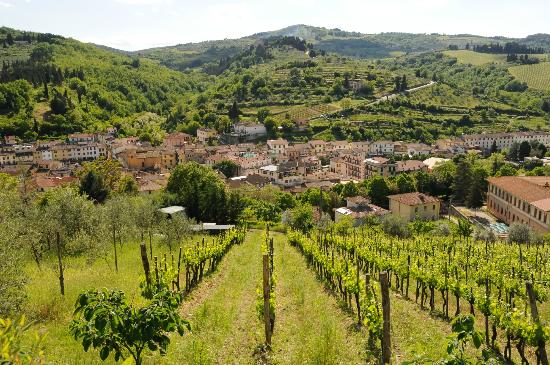
Our group spent three days in Rome. Afterwards we drove to Tuscany where we spent ten days in a villa in the little town of Panzano. (The photo above shows the villa where we stayed.) From there we did day trips to Florence and Pisa. But mostly we just enjoyed the unparalleled beauty, peace and quiet of the Chianti wine country.
Finally, Maggie and her family, Peggy and I spent three days on the beach on the island of Elba.
Throughout the magical days, we ate marvelous meals in restaurants of many kinds, as well as sumptuous repasts prepared by Maggie and Peggy at “home.”
It was all a wonderful experience.
But we’re all still recovering – I in more ways than one. Towards the end of our first day in Rome, I slipped and fell down three marble steps outside a restaurant where our large group ate its first meal together. I was wearing my Croc sandals and it had just rained. I felt like I was walking on ice. Just before I slipped, I was thinking, “I could easily fall down these stairs; I’d better be careful.” Before I knew it, I was flat on my back. I jumped up right away though claiming that I was ok. That wasn’t exactly true. Now, weeks later, my left shoulder is still sore, though the large black-and-blue mark that side of my body has finally disappeared. I’m still not able to do my morning exercise routine as normal. But I’m lucky I didn’t break anything.
If most of this sounds wonderful, it’s because it was.
However, it’s important to keep things in perspective.
Here’s an exchange I overheard in Cinque Terre. Hot and sweaty, we had just disembarked from the ferry that takes tourists past all of Cinque Terre’s five villages scattered along the mountainside.
Husband: Remind me again why we’re doing this.
Wife: Yeah, why are we doing this?
Husband (frustrated and testy): Because we need to see the five villages!
Wife: Can you tell one from the other?
Personally, I could relate to the couple’s weariness, frustration and touristic overload. That kind of sight-seeing is not at all my cup of tea. I prefer what Peggy and I ended up for the next two days – vegging on the beach under big umbrellas.
(Next Posting: Visiting the Matisse Chapel in Vence)
Asian Journal: First Stop, Tuscany
Well, we’re finally off on our five-month-long adventure to India. Peggy and I left last Wednesday (August 28th). Right now we’re in Italy staying in a Tuscan villa in Panzano in Chianti. It’s hard to believe that people actually live in such bucolic beauty surrounded by vineyards, rolling hills and castle-like structures like the one we’re luxuriating in at the moment.
I won’t bore you with the details of our journey here – cancelled flights, lost luggage, racing through airports, schlepping excessive baggage through the streets of Rome, lugging it onto a train between Rome and Florence, mistaking someone else’s bag for my own and carrying it off the train, getting tongue-tied in Italian and having it all come out Spanish. You can imagine the drill.
The reason for our trip? Peggy has won her second Fulbright Award – this time to Mysore, India. (Her last Fulbright in 1997-98 brought all of us to Zimbabwe, where Peggy taught at the University of Harare.) We’re all so proud of her. She’s enriched all of our lives immeasurably by the brilliance and hard work that have brought us to such exotic places.
This time Peggy’s grant will have her teaching at the university in Mysore. But that’s not the good part. Whereas in Zimbabwe, it was Peggy, I and our two boys Brendan and Patrick staying in Harare, this time we’ll be with our daughter, Maggie, her husband, Kerry, and their three children, Eva (4), Oscar (2), and Orlando (1). That’s the group that’s so enjoying our stay in Tuscany right now.
And, yes, our son, Brendan and his girlfriend, Erin, were with us as well. They stayed here for a week and left last evening. Brendan’s on leave from his work at the U.S. Embassy in Afghanistan. He’ll be back at his desk there on Wednesday. His tour in Afghanistan will end on December 29th. We’re all holding our breath and counting the days.
Maggie and her family are here because Kerry has taken a sabbatical from his job with a hedge fund. What an opportunity for them and their children! While in India, the kids will be in Montessori School just as they were back home in Westport, CT. Who knows what adventures await all of us in India?
My own adventure, I hope, will involve deepening my practice of meditation. With everyone’s blessing my plan was to do a ten-day retreat centralizing the Vipassana method of meditation. That would have begun on September 11th, and involved ten hours of meditation each day. Just this morning however, I received word that my application has been refused because of oversubscription. I’m now searching for an alternative.
In any case, if all goes well with the shorter experience, I’ll do a thirty-day retreat later on. We’ll see how things develop.
I’ll be writing regularly about our experiences as the adventure unfolds.
Is God Speaking to Us through Our Muslim Enemies? (Sunday Homily)
Readings for 20th Sunday in Ordinary Time: Is. 66: 18-21; PS. 117: 1-2; HEB. 12: 5-7, 11-13; LK. 13: 22-30. http://usccb.org/bible/readings/082513.cfm
Messages from God can come from the most unlikely places – even from our enemies and those our culture considers inferior and evil. That’s the teaching I find in today’s liturgy of the word. There God speaks to Babylonians through Jews, and to Romans through Christians. This suggests to me that God might be evangelizing Americans today through Muslims.
_____
Consider our first reading from Isaiah.
Imagine yourself a Babylonian in the 6th century BCE. You belong to an empire – one of the most powerful nations the world has ever seen.
In 586 your people conquered a small insignificant nation called “Israel.” Its leaders have been taken captive, and for more than three generations (586-516) have remained prisoners of your country. They are your enemies. You despise them as inferior, superstitious and violent.
Now towards the end of the 6th century, one of their “holy men,” someone called “Isaiah,” claims that those captives, those refugees, those “fugitives” as Isaiah calls them, are agents of the single God of the Universe. They have been sent specifically to call you away from your polytheistic worship of your Gods, Anshar, Ea and Enlil, and to recognize that there is only one God. They call him Yahweh. This God has special care specifically for refugees, slaves and outcasts in general.
For you, recognizing that entails releasing the prisoners your government has held captive for so long.
Even more, Isaiah says you and your proud people are being called to actually worship that God of refugees, political prisoners, and slaves! That means putting their needs first, while subordinating your own.
As Babylonian, you find all of this incredible and obviously insane.
______
Now to grapple with today’s gospel selection from Luke, imagine that you are a Roman living towards the end of the 1st century CE.
You belong to an empire recognized to this day as the greatest the world has ever known. As with the Babylonians more than 500 years earlier, Palestine and its Jewish people are provincial possessions of the empire; they are your captives. Roman legions continue to occupy Palestine whose haughty people resist their occupiers at every turn.
“Jews are nothing but terrorists, every one of them,” you think.
Among the most infamous of those terrorists was a man called Jesus of Nazareth. You’ve learned that he was a Jewish peasant crucified by Rome about the year 30 CE. You’ve heard that a new kind of religion has formed around that so-called “martyr.” In fact, his followers acclaim him by a title belonging to the Roman emperor alone – Son of God. To you that sounds absolutely seditious.
In any case, this Jesus asserted that the God he called “father” was blind to people’s national origins. He told a parable (in today’s gospel) whose refrain from a thinly veiled God figure was, “I do not know where you are from.” Apparently Jesus meant that in God’s eyes no nation – not even Rome – is superior to any other.
You wonder, was Jesus blind? No nation superior to any other? Did Jesus not have eyes to see Rome’s power, its invincible army, and feats of engineering – the aqueducts, the roads, the splendid buildings and fountains?
According to Jesus, Israel itself is not above other nations in the eyes of God. Nor are his own followers better than anyone else. Even those who drank with him and shared meals with him could not on that account claim special status in God’s eyes.
In fact, the only “superiors” are what Jesus called “the least” – his kind of people: artisans, peasants, the unemployed, beggars, prostitutes, lepers, immigrants, women and children. As in today’s reading from Luke, Jesus calls these people “the last.” In God’s eyes, they are “the first,” he said. Meanwhile those who are first in the eyes of Rome, Israel, and even of his followers end up being outcasts.
Worse still, many Romans, especially slaves and criminals, are embracing this new religion. Some in the Empire’s capital city are already worrying that if not stopped, this worship of an executed criminal from a marginal imperial province might undermine the religion of the Roman Gods, Jupiter, Mithra and of the emperor himself.
How absurd, you think, that Romans could be schooled in matters theological by riff-raff, Jews, and terrorist sympathizers.
_____
Finally, imagine that you are an American today. Many think that your country is the proud successor of Babylon and Rome. In fact, the United States may have surpassed Rome’s greatness. Certainly, it has the most powerful military machine the world has ever known. It has the capacity to destroy the earth itself, should its leaders take that decision.
Some attribute America’s greatness to its embrace of the faith of Jesus of Nazareth and to its partnership with Israel, the biblical People of God. As a result the U.S. has become the light of the world, the “city on a hill that cannot be hidden” (Mt. 5: 14-16). America can do no wrong.
This is not to say that its leaders aren’t fallible. They make their share of mistakes and even commit crimes. Yes, they torture, support dictators across the planet, imprison a higher percentage of their citizens than anyone else, drop atomic bombs, even threaten the extinction of human life as we know it, and have declared a state of permanent war against virtually the entire world.
But as a nation, the United States, you continue to believe, is idealistic; it stands for democracy, freedom and equality. As a result, America continues to enjoy God’s special protection.
Nevertheless, there are those in your midst who say that none of this is true. They are like the descendants of Abraham, Isaac and Jacob living in 6th century Babylon. They are like the first Christians who refused allegiance to Rome. They are the foreigners found in U.S. prisons all around the world – in places like Guantanamo Bay and Abu Ghraib.
By and large, those prisoners, those (in Isaiah’s terms) “fugitives” and exiles share a religious faith (Islam) that is as difficult for most Americans to understand as it was for Babylonians to understand Jews or for Romans to understand Christians. The faith of those held captive by America today is largely the faith of poor people called “terrorists” by your government – just as were the Jews and early followers of Jesus.
However, closer examination shows that Allah is the same as the Jewish God, Yahweh. Moreover Muslims recognize Jesus as the greatest of God’s biblical agents.
With that in mind, you realize that Muslims routinely invoke their faith to resist U.S. imperial rule. And they are critical of the use of Judaism and Christianity to justify oppression of their brothers and sisters in Palestine, Iraq, Afghanistan, Pakistan, Yemen, Bahrain, Somalia, throughout the rest of Africa and elsewhere.
Could it be that these exiles, captives, fugitives, “terrorists,” might be your empire’s equivalents of 6th century Jews in relation to Babylon and of 1st century Christians vis-a-vis Rome? Could they possibly be God’s agents calling us Americans away from heartless imperialism and to the worship of the true God (even if called “Allah”)?
Are our Muslim captives reiterating the words of Jesus in this morning’s gospel: God is oblivious to people’s national origins and to physical ties to Jesus? The Master “does not know where we are from” even if we’ve shared table with him. It makes no difference if we’re Jews or Christians, Babylonians, Romans, Americans, or Muslims.
Only the treatment of “the least” is important in God’s eyes. And for us Americans, those “least,” those “last” happen to be the poor of the Islamic world against whom our government has declared permanent war. And what is their God’s demand? It’s simple: Stop the war on us and our religion!
Is their God – our God – trying to save us – and the planet from the crimes of American Empire?
The fates of Babylon and Rome hang over us all like Damocles’ sword.
Critical Thinking: Where I’m Coming From
[This is the fifth blog entry in a series on critical thinking which lays out ten guidelines for critical thought. My previous entries addressed the first rule of critical thought, “Think Systemically.” That rule holds that we can’t really remove our culture’s blinders unless (without prejudice) we’re clear about the meaning of the key systemic terms: capitalism, Marxism, socialism, communism, mixed economy, and fascism. Today’s blog post begins explaining my second rule for critical thought, “Expect Challenge: Questioning the ‘Ruling Group Mind’” I open the topic with an autobiographical explanation of why I approach critical thought the way I do.]
Let me tell you where I’m coming from when it comes to critical thinking.
I am a field researcher whose travels have been inspired by concerns about Peace and Justice Studies – a program which I helped found and direct at Berea College in Kentucky. My research “digs” began in Rome where many years ago I spent half a decade doing graduate work, and where I first encountered Third World colleagues who raised deep questions about my own perceptions of reality.
Subsequently, my pursuit of intellectual archeology took me all over Europe – most notably to Soviet Poland – and then to Brazil, Nicaragua, Guatemala, Honduras, Mexico, Zimbabwe, India, Palestine-Israel, and Cuba. Over the years, I’ve taught as well in a Latin American Studies Program in Costa Rica, where I’ve also worked with a think tank, the Ecumenical Research Institute (DEI), in San Jose.
In all those places I’ve found that developing world thinkers are far ahead of would-be progressives in the United States. Third World scholars know all about colonialism, neo-colonialism, the CIA and its coups, as well as its support of dictators and right-wing counter revolutions around the world.
In the Third World, university students also know about the IMF and its disastrous Structural Adjustment Policies – terms which often raise nothing more than quizzical looks from U.S. audiences. So there’s no need in most Third World settings to argue about the pros and cons of corporate globalization and its effects on the world’s majority. For them the argument was long ago settled.
None of that is true in the United States. Here higher education largely ignores the Third World, where most people live. Most college classes overlook its rich traditions, indigenous scholarship, and progressive thinking. (I even once had a well-meaning colleague respond to similar observations on my part by admitting, “I didn’t know there were any Third World scholars.”) In the United States, the so-called “developing world” is seen as a center of self-induced misery, population problems, food-shortages, and inexplicable revolutions and genocides. Alternatively, the Third World is seen as the undeserving recipient of largesse on the part of the United States understood as the Santa Claus of the world
In the light of history and political realism, I’ve concluded that clearing up such misunderstandings should be Job #1 for post-secondary educators concerned with critical thinking. Doing so entails questioning the unquestionable and broadening students’ horizons to embrace what most thinkers in the Third World recognize as simply given.
To begin with, critical thinking must question the “of course” convictions that belong to American culture – to any culture. As noted earlier, Plato referred to such unquestioned beliefs with the Greek word, doxa. Its power is conveyed by his familiar “Allegory of the Cave.” There the human condition is portrayed in terms of prisoners chained in a cavern where their only experience of reality (including themselves) is conveyed by shadows produced by their manipulative captors.
Plato’s allegory finds its counterpart in American culture, including the prevailing system of education. Typically what happens in the classroom predisposes students to accept what John McMurtry of the University of Guelph (in Canada) calls “Ruling Group Mind” which is largely set by the parameters of generally admissible political opinion. Within such confines, the United States is seen as the best country in the world. Its overriding concern is with democracy, peace, justice and human rights. Its wars are fought in the interests of peace. God is on its side. “Of course!” we all agree.
Such naiveté is revealed in the second episode of the HBO series, “Newsroom.” Its highlight had lead actor, Jeff Daniels, delivering a speech about our country that has been viewed widely on the web. As a news anchorman of the stature and credibility of Walter Cronkite, Daniels’ character is badgered into answering a question posed by a bright American college student: “What makes America the greatest country in the world?” Here’s how he answered.
Daniels’ answer captures the realism of what I consider a major goal of critical thinking.
(Next week: Unveiling the uniquely narrow U.S. spectrum of debate)
How Empire Eliminated the Historical Jesus for Good
(This is the twelfth in a series of “mini-classes” on the historical Jesus. Together the pieces are intended to assist those who wish to “dig deeper” into the scholarly foundations of postmodern faith and to understand the methodology behind the postings on the blog site.)
According to the biblical scholarship we’ve been reviewing over the last dozen weeks or so, Jesus of Nazareth stood with the poor, and announced a future of justice for them. Jesus also resisted the empire which, as we’ll see presently, eventually dramatically diminished the importance of the Jesus of history. Examination of Jesus’ resistance to empire and empire’s co-opting of the Nazarene’s life and words is the point of this posting on the historical Jesus.
That Jesus stood with the poor and favored them is obvious. He was a simple worker, the son of an unwed teenage mother, and theologized as an immigrant in Egypt. He healed sick people, fed the hungry, and cast out evil spirits. He announced and embodied a new reality for the poor. In the “reign of God” justice would replace exploitation; the positions of rich and poor would be reversed, and a sharing ethic would take the place of competition and oppression. To put it in terms of faith: a poor person was the site God chose to reveal God’s Self to the rest of us. That in itself constitutes a stupendous revelation.
Being a poor person in Palestine, and especially coming from the revolutionary Galilee district, Jesus himself was understandably anti-empire. The best illustration of Jesus’ resistance is in the famous story of his temptations in the desert. We all know the story with its rich blend of historical fact, symbolism, and explicit and implied scriptural references. Jesus has just been baptized by John. A voice has told him that he is somehow the “Son of God.” He goes out to the desert to discover what that might mean. On this vision quest, he prays and fasts for 40 days. The visions come. He is tempted by Satan. In Matthew’s account, the culminating vision is imperial (4:8-9). Satan takes Jesus to a high mountain. He shows Jesus all the kingdoms of the earth – an empire much vaster than Rome’s. Satan says, “All of this can be yours, if only you bow down and worship me. Jesus, of course, refuses. He says, “Be gone, Satan! It is written, the Lord God only shall you adore; him only shall you serve.” In other words, Jesus rejected empire in no uncertain terms.
Jesus’ opposition to empire is extremely important to understanding how Christianity lost contact with the historical Jesus over 1500 years ago, when it became pro-rich and pro-empire. That’s what happened to the faith of Jesus under Constantine when Christian “orthodoxy” emerged. Christianity lost its soul. Or to put it more starkly: it actually began worshipping Satan at that point.
Here’s what I mean. Jesus rejected the temptation to empire as we’ve just seen. But in the 4th century, circumstances made it necessary for the emperor Constantine and his successors to repeat unwittingly Satan’s temptation – this time to the leadership of the Christian church. They could allow Christianity to become the official religion of the Roman Empire. All they had to do was to accept empire, give it religious legitimacy – become the state religion. Jesus had said “No!” to a similar temptation back there in the desert. Fourth century church leadership said “Yes!” and in doing so, in effect said “yes” to Satan worship – the necessary precondition of accepting empire. They also abandoned the Jesus of history and his this-worldly message. In the process, they reduced Jesus to a mythological figure and Christianity to a Roman mystery cult. Let me explain.
Think about the historical circumstances that led Constantine to be concerned with Christianity at all. Like all oppressors, he realized that religion represented an incomparable tool for controlling people. If an emperor can convince people that in obeying him they are obeying God, the emperor has won the day. In fact it is the job of any state religion to make people believe that God’s interests and the state’s interests are the same.
What Constantine saw in the 4th century was that as Rome expanded and incorporated more and more Peoples with their own religions, Rome’s own state religion was losing power. At the same time, Christianity was spreading like wildfire. And it was politically dangerous. The message of Jesus was particularly attractive to the lower classes. It affirmed their dignity in the clearest of terms. Often the message incited slaves and others to rebel rather than obey. Rome’s knee-jerk response was repression and persecution. But by Constantine’s day, Rome’s repression had proved ineffective. Despite Rome’s throwing Christians to the lions for decade after decade, the faith of Jesus was more popular than ever.
Constantine decided that if he couldn’t beat the Christians, he had to join them. And he evidently determined to do so by robbing Christianity of its revolutionary potential. That meant converting the faith of Jesus into a typical Roman “mystery cult.”
Now mystery cults had been extremely popular in Rome. They were “salvation religions” that worshipped gods with names like Isis, Osiris, and Mithra. Mithra was particularly popular. He was the Sun God, whose feast day and birth was celebrated on December 25th. Typically the “story” celebrated in mystery cults was of a god who descended from heaven, lived on earth for a while, died, rose from the dead, ascended back to heaven, and from there offered worshippers “eternal life,” if they joined in the cults where the god’s body was eaten under the form of bread, and the god’s blood was drunk under the form of wine.
To convert Christianity into a mystery cult, Constantine (who wasn’t even a Christian at the time) convoked a church council – the Council of Nicaea in 325. There the question of the day became who was Jesus of Nazareth. Was he just a human being? Was he a God and not human at all? Was he some combination of God and man? Did he have to eat? Did he have to defecate or urinate? Actually those were the questions. For Constantine’s purposes, the more divine and otherworldly Jesus was the better. That would make him less a threat to the emperor’s very this-worldly dominion.
The result of all the deliberations was codified in what became known as the Nicene Creed. Maybe you know it by heart. It runs like this:
We believe in one God,
the Father, the Almighty
maker of heaven and earth,
of all that is, seen and unseen.
We believe in one Lord, Jesus Christ,
the only Son of God,
eternally begotten of the Father,
God from God, Light from Light,
true God from true God,
begotten, not made,
of one Being with the Father.
Through him all things were made.
For us and for our salvation
he came down from heaven:
by the power of the Holy Spirit
he became incarnate from the Virgin Mary, and was made man.
For our sake he was crucified under Pontius Pilate;
he suffered death and was buried.
On the third day he rose again
in accordance with the Scriptures;
he ascended into heaven
and is seated at the right hand of the Father.
He will come again in glory to judge the living and the dead,
and his kingdom will have no end.
We believe in the Holy Spirit, the Lord, the giver of Life,
who proceeds from the Father and the Son.
With the Father and the Son he is worshipped and glorified.
He has spoken through the Prophets.
We believe in one holy catholic and apostolic Church.
We acknowledge one baptism for the forgiveness of sins.
We look for the resurrection of the dead,
and the life of the world to come. Amen.[
The Nicene Creed can be so familiar to us that we don’t notice what it does. In the part italicized above, it jumps from the conception and birth of Jesus to his death and resurrection. It leaves out entirely any reference to what Jesus said and did. For all practical purposes it ignores the historical Jesus and pays attention only to a God who comes down from heaven, dies, rises, ascends back to heaven and offers eternal life to those who believe. It’s a nearly perfect reflection of “mystery cult” belief. In effect Jesus becomes a harmless Mithra. The revolutionary potential of Jesus’ words and actions relative to justice, wealth and poverty are lost. Not only that, but subsequent to Nicaea, anyone connecting Jesus to a struggle for justice, sharing and communal life is classified as heretical. That is, mystery cult becomes “orthodoxy.” Eventually, the example and teaching of Jesus becomes heresy – especially later on when “communism” becomes a threat to Rome’s modern imperial successors.
Please think about that.
Next week: Series Conclusion