Jesus & Rent Strikes: Violent or Non-Violent?

Readings for 27th Sunday in Ordinary Time: Isaiah 5: 1-7; Psalm 80: 9-20; Philemon 4: 6-9; Matthew 21:33-43

During the COVID-19 hiatus, I watched in its entirety Ken Burns’ and Lynn Novick’s PBS production “The Vietnam War.” The series has ten episodes, each about an hour and a half long.

I bring it up because the viewing experience has relevance to this morning’s Gospel reading which describes resistance to a landlord system similar to the one that provoked Vietnam’s peasantry to take up arms.

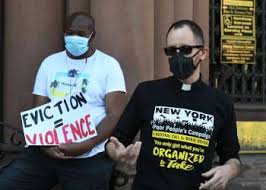
Closer to home, the parable is also relevant to our current Corona Virus context, where unemployed renters will soon be required either to pay their rents or risk eviction. Their dilemma, like those of Jesus’ audience 2000 years ago is whether to pay those rents or to join a general rent strike. Additionally, Jesus asks to what extent citizen violence might be justified as a strategic option as they resist paying rent.

Ironically, both the Burns and Novick film series and this morning’s gospel obscure the questions just posed. The producers of “The Vietnam War” avoid the rent question altogether. As for Matthew the evangelist, he completely allegorizes Jesus’ parable to similarly obscure its central question about absentee landlordism, rent strikes, and the role of violence in social change.

Vietnam & Rent Strikes

Let’s begin with Burns and Novick. The official story they tell is that of a geopolitical struggle between China and Russia on the one hand and the U.S. and France on the other. So, the film’s narrative is dominated by maps depicting huge swaths of geography (China and Russia) looming menacingly over Vietnam. The maps indicate that Vietnam along with the rest of “French” Indochina (including Laos and Cambodia) were threatened by monolithic communist takeover.

U.S. officials one after another describe their alarming “domino theory” contending that if Vietnam were “lost” to communism, so would Laos, Cambodia, Korea, Japan, the Philippines and the rest of Far East. It wouldn’t be long before Ho Chi Minh’s forces would be landing in Hawaii and then in California.

So, viewers are asked to believe that in the footage showing huge numbers of Vietnamese civilians (including the elderly, women and children) moving equipment, building bridges, and ferrying supplies, we are simply witnessing mindless agents of China and Russia. The Vietnamese were somehow persuaded to risk their lives (four million of them were killed in the conflict) to advance the totalitarian cause of Sino-Soviet world conquest.

As John Pilger and others have written, that simply doesn’t stand to reason. For one thing, there was no monolithic alliance between Russia and China. Any semblance of that lay in ruins between the years 1960 and 1989.

That is, for the Vietnamese, what they call “The American War” (1960-75) could not have been fought on behalf of China or Russia. Rather, the conflict represented a struggle against colonial rule by French and American forces. It was also fought against a rent system that had peasants paying predatory tribute to absentee landlords. The latter were holed up in Saigon along with other beneficiaries of deteriorating colonial arrangements including its dysfunctional army, government officials, and participants in the supporting infrastructure.

Meanwhile, outside of Saigon, the peasants’ revolutionary army (the Viet Cong) defended farmers against rent collection. They had the peasantry stop traveling to Saigon to pay their land fees. This, they said, would force representatives of the landlord class to venture out into territory controlled by the Viet Cong to collect their money or in-kind revenue. And there in the countryside they would be duly slaughtered.

In other words, patriotism and the peasants’ immediate economic interest, not geo-political considerations, provided their main motivations for resistance to a colonial rental system that had long exploited them and caused their families to starve.

Jesus & Rent Strikes

All of this has relevance to this morning’s Gospel episode where Jesus tells a story that parallels the situation I’ve just described. Jesus and his audience too were living under an imperial system not unlike Vietnam’s. The Romans controlled Palestine using tactics highly similar to those of the French and Americans in Indochina. The system’s administrators, armies, police, and hangers-on were all holed up in Jerusalem protected by Roman legions.

Meanwhile, absentee administrators and landlords kept the province’s peasants impoverished by exacting rent and taxes that the farmers detested. The latter resisted accordingly – at times in Israel’s history forming armies of resistance similar to the Viet Cong. One of those militias was known as the Zealots.

In any case, the parable centralized in this morning’s gospel has Jesus problematizing a situation of violent peasant conflict over rent collection. In so doing, Jesus, no doubt, provoked a spirited discussion among his listeners about colonialism, landlordism, and about violent vs. non-violent resistance.

Jesus’ story goes that an absentee landlord has rented out his vineyard. Peasants are resisting payment. So, the man in the Big House sends out no doubt well-armed rent collectors. After the first ones are murdered by the farmers, he sends out what was probably a small army of “enforcers.” But the peasants successfully defeat them too. Eventually, the landlord gets more serious. His own son heads up a collection force probably much larger and better armed than its predecessors. But surprisingly, the renters wipe them out as well. They assume ownership of the land in question presumably under some ancient version of the revolutionary slogan “Land to the tiller.”

That said, the Master articulates the problem that certainly provoked spirited discussion in his audience. “What will happen,” Jesus asks, “to the revolutionaries demonized as ‘wicked’ by the landowning class?”

No doubt, some in Jesus audience would say they weren’t “wicked” at all, but heroic champions of the exploited. They would applaud their armed resistance. Others though joining the applause, might point out that the peasant victory would be short-lived and doomed.

These more cautious discussants would hold that the better-armed and trained forces of the landowners and their Roman sponsors would eventually prevail with disastrous results for the entire province of Palestine. Accordingly, they might advise nonviolent resistance to the system in question. (There were, by the way, at least three such forms of nonaggressive struggle in Jesus’ first century context.)

It is unlikely that any in Jesus’ audience would defend the imperial status quo the way Matthew’s allegorized retelling of the parable seems to do. Fifty years after Jesus death the anonymous Jewish author called by that name even goes so far as to imply identification of the absentee landlord with God and the landlord’s son with Jesus himself. Such identification would have been possible around the year 80 or 85 when the Gospel of “Matthew” was written following the utter defeat of Jesus’ people by the Romans in the year 70.  That same identification would, of course, have been abhorrent to Jesus listeners and thus impossible in the Master’s revolutionary context.

Considerations like these – about the similarities in revolutionary situations separated by 2000 years – might help viewers better understand the causes of the Vietnam War and other conflicts even closer to our own day. Clearly, I find those causes obscured in the Burns and Novick documentary despite its very evident artistic merits.

Conclusions

Several conclusions suggest themselves from the considerations just advanced. They have to do with Jesus himself, with rent, and with considerations of violent vs. non-violent resistance.

First of all, Jesus:

  • As originally told, Jesus’ parables weren’t nice little five-minute vignettes. They were meant to stimulate long lively discussions as indicated in this morning’s reflection.
  • As thought provocateur, Jesus was wildly popular among peasants and the dispossessed on the one hand and hated by the religious-political establishment and occupying Romans on the other, not because of one-dimensional religious teachings, but because he constantly connected his people’s faith with issues like land reform, workers’ wages, debt and rent.
  • Those are the same connections that put religious leaders in danger and in early graves today, whether they’re Jewish, Christian, or Muslim.

Secondly, rent:

  • According to Jesus’ teaching, land reform, wages, and rent were more matters of faith than what we term “going to church” or saying the right words about God, the Bible, sexual behavior, or “thoughts and prayers.”
  • For the dispossessed including basically conservative peasant farmers (in ancient Palestine, Vietnam, or in the United States) such local issues are what lead to revolutionary action, not geopolitical considerations.
  • That is, like politics, all revolutions are local and center on issues of exploitation involving food, shelter, and dignity.

Thirdly, violence:

  • High rents imposed on poor people are an egregious form of violence.
  • Even violent resistance to such deprivation of the fundamental human right to shelter and subsistence is entirely justifiable as self-defense.
  • The U.S. Founding Fathers said something like that.
  • However (as indicated by the “more cautious discussants” referenced above) such secondary violence can be counterproductive in terms of the absolute destruction wreaked in response by state and empire.
  • Ironically too, the propaganda arms of state, empire, and church (including someone like Matthew the evangelist) excel at lastingly branding justifiable violence by the poor and oppressed as (to use Matthew’s word) “wicked.”

Finally, the very least people of faith can do today is to support rent strikers and to help others understand motivations for violent response in places like Vietnam, Lexington and Concord – or the streets of New York today. Equating state and imperial violence with the self-defense and counterattacks of the poor represents a false equivalency. Thoughtful people of faith must reject it.

Unforgetting the Past: The Karmic Roots of U.S. Border Problems

Readings for the 24th Sunday in Ordinary Time: Sirach 27: 30-28:7; Psalm 103: 1-4, 9-12; Romans 14: 7-9; Matthew 18: 21-35. 

This week’s readings are about forgetting and unforgetting. They emphasize our tendencies to remember, rehearse and perversely treasure wrongs done to us, while denying, ignoring or dismissing those we’ve done to others. The wrongs in question can be both personal and/or political.

For today, let’s leave aside the myriad personal grievances we all nurse.  

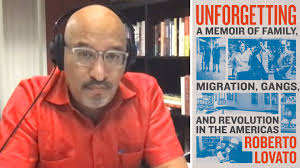
Instead, let me focus on political resentments and point out that this week’s selections are especially relevant to an interview many of us may have seen last week on Amy Goodman’s Democracy Now. The telecast spent time with Salvadoran journalist Roberto Lovato who has just published his own memoir called Unforgetting: A Memoir of Family, Migration, Gangs, and Revolution in the Americas.

Problems at the Border

In tune with our readings, the book addresses the topic of our collective amnesia about the true causes of immigration problems and their uncomfortable cure. In Lovato’s case, both remembering and forgetting connect more than four decades of destructive U.S. policy in Central America with the refugees and asylum seekers at our southern border mostly from El Salvador, Guatemala and Honduras. Those three countries, Lovato pointedly recalls, were absolutely destroyed by counter-insurgency wars that go all the way back to 1932.

Without “unforgetting” those disasters, the author insists, we can understand neither the border crisis nor the gang phenomenon that causes it.

To begin with, Lovato reminds us why almost no one outside El Salvador remembers “la matanza” of ‘32. Instead, that massacre along with its more recent reprise at El Mozote in 1981, have been shoved down our Orwellian memory hole by the U.S. and Salvadoran states whose very job is to destroy records and manufacture the mass amnesia that afflicts American culture.  

Similarly, very few of us connect our contemporary border crisis with U.S. Central American policy during the 1980s. Virtually no one links the Central American policies of the Carter, Reagan, Bush I, Clinton, Bush II, Obama, and Trump administrations to immigrant prisons and baby jails.   

Nonetheless, on Lovato’s analysis, the connections are there for the rescue.  La matanza, he says, was one of the most violent episodes “in world history in terms of the numbers of people killed per day, per week, in a concentrated place.” The massacre at the hands of a U.S. supported military government killed thousands upon thousands of mostly indigenous Salvadorans.

As for El Mozote, some can still remember that horrendous U.S. crime where nearly 1000 unarmed Salvadoran villagers were slaughtered by U.S.-trained forces.

In fact, El Mazote encapsulates the entire disaster of American policy towards Central America foreshadowed in la matanza and resumed with a vengeance all during the 1980s. Under its aegis, entire towns were destroyed; homes were set ablaze and jobs destroyed; families were decimated; sons and husbands were killed; wives and daughters were systematically raped; union leaders, social workers, and teachers along with liberationist priests and nuns were assassinated without pity.

Disgracefully, much of the destruction was financed by CIA operations that flew narcotics from Central America to Florida and carried guns and ammunition back to U.S.-supported terrorist troops in Salvador, Guatemala, and Honduras – not to mention the Contras in Nicaragua. 

And of course, in the aftermath the militarily decommissioned terrorists continued their lucrative involvement with narcotics. They became the drug gang kingpins and foot soldiers who in turn have driven so many families northward.

All of that, Lovato repeats, must be “unforgetted” if we North Americans are to have any hope of solving our problems of immigration, gangs, drugs, and social justice. Our country owes extensive reparation to Central Americans.      

Today’s Readings

So, with all of that in mind, please consider this Sunday’s selections. On the one hand, they centralize the divine amnesia of Jesus’ Great Father-Mother God regarding our personal and communal shortcomings that some refer to as “sin.” On the other hand, our Divine Parents’ compassionate forgetfulness is contrasted with our own petty preoccupation with the way we imagine others have somehow done us wrong.

Sirach, the Psalmist, Paul, and Jesus all remind us of how easily we forget the way we’ve abused “strangers” (like those at our border) whom the Master identified as our very sisters and brothers. Ironically, unforgetting them is the karmic key to our own forgiveness and liberation.

In any case, what follow are my “translations” of today’s biblical excerpts. You can find the originals here to see if I’ve got them right. 

Sirach 27: 30-28:7: Karma is a Law of the Universe. LIFE will treat you as you treat your neighbor. If you’re vengeful, you’ll inevitably experience others’ revenge. If you’re always angry, life will seem cruel. But if you’re forgiving, Life itself will forgive you. So, forget about your own fictitious wounds. Instead practice forgetful mercy, forgiveness, and compassion. After all, life is short. Vendettas will mean nothing to you on your deathbed.

Psalm 103: 1-4, 9-12: Our Divine Mother herself sets the example. She is patient, forgiving, kind, generous and compassionate. She doesn’t remember any of our faults – not even grave “sins” we fear may have destroyed our lives. Far, far from such guilt, it’s as if she never witnessed our shortcomings at all.

Romans 14: 7-9:  Practicing such forgetfulness, none of us will have anything at all to fear from death which will simply be surrender to the One in whom we have always lived and moved and had our being. This is what Jesus himself showed us by the example of his own life.

Matthew 18: 21-35: When Peter asked him about the limits of forgiveness, Jesus said there are none at all. “Or maybe” (he joked) “you can stop forgiving after the 490th time – but be sure to keep track, Peter, as I know you will. Don’t let yourself go over 500.” (He said that with a gentle smile.) “In any case, remember what Sirach said about karma. If you’re generous to others, Life will treat you kindly; If not, you’re creating your own tragic misfortune – and that of your entire family. It’s you, not God who creates your inevitable destiny.”

Conclusion

Yes, Karma is a law of the universe. All the world’s great spiritual traditions teach that simple profound truth. What we do to others will eventually come back to haunt us. There’s no getting around it.

The problems experienced at our borders are simply blowback from our country’s own criminal missteps in the world. While we imagine that we’re threatened and wronged by those at our border, simple unforgetting reminds us that we’re actually the ones who have victimized the ones seeking refuge and asylum. Actually, we have nothing at all to forgive them. Instead, we owe them enormous repair.

No, it’s the ones at our border who have so much to forgive us. So far, they’ve been generous in doing so – well beyond the 500-mark specified by Jesus. Both our karmic liability and our debt of gratitude to our southern siblings are huge.

We’re indebted to Roberto Lovato for helping us unforget all of that.

Beware: Conspiracy Theorists May Be Prophetically Correct

Readings for the 22nd Sunday in Ordinary Time: Jeremiah 20: 7-9; Psalm 63: 2-9; Romans 12: 1-2; Matthew 16:21-27

This Sunday’s readings are about truth, the world’s rejection of the same, and about the truth-teller’s willingness to take the consequences – even if they entail loss of one’s life.

The readings are extremely relevant to our moment in history. There, the current occupant of the White House has from day one (and before) challenged conventional ideas about truth itself. His administration popularized the phrases “fake news” and “alternative facts.” The Washington Post alleges that in less than one year, the chief executive told more than 2000 lies.

In the meantime, sources like QAnon have spread right-wing conspiracy theories that have many scratching their heads about what to believe. For instance, are Q’s assertions true that:

  • Antifa is a sworn enemy of Black Lives Matter (BLM)?
  • BLM itself is funded and controlled by George Soros and left-wing think tanks?
  • President Obama is really a Muslim?
  • Kamala Harris is ineligible to be POTUS?
  • Sandy Hook was a false flag event staged to justify disarming U.S. citizens?
  • Prominent Democrats have run a child-trafficking ring out of a D.C. pizzeria (“Pizzagate”)?
  • The entire world is run by a Satan-worshipping child sex-trafficking organization?

In the context of COVID-19, beliefs are widespread that:

  • COVID-19 is a fake “pLandemic” orchestrated by a “deep state” to eliminate democracy and reset the economy even more in favor of the rich.
  • Dr. Anthony Fauci is a key player in starting the pLandemic – to make billions for himself.
  • But the ultimate goal is to set up a New World Order under a single government.
  • Face masks and social distancing are means to deprive unsuspecting citizens of their civil liberties.

Debate Among OpEd Editors

With all of that in mind, a lively debate has erupted for the past couple of weeks among OpEdNews senior editors. It was sparked by an editorial penned by the website’s editor-in-chief (EIC), Rob Kall. Rob has taken a courageously firm editorial stance against articles that reflect the right-wing talking points of view just listed. According to Rob, they’re all “bad guy” theories. Moreover, the uncritical use of right-wing talking points and language (e.g. “deep state,” “pLandemic,” and “New World Order”) only serve to boost and promote right wing messaging. The EIC wrote, “When you use the language of the enemy, you help the enemy . . . So, stop using their language.”

For me, Rob’s stance makes a lot of sense. But I can also see how others (excluding the senior editors) might label it just another example of “cancel culture?” Are we to cancel well-written and well-documented articles because of their conspiratorial language?

More importantly (at least in the context of this Sunday homily) can we get away with classifying those we disagree with as “bad guys” or as “the enemy?”

[Believe me, I ask that question with some trepidation. I’m uncomfortable with the theories listed above. Many of them (not all – see below) seem outrageous. Most often, I think of Donald Trump and his cohorts as “the enemy” – as “bad guys.”]

Today’s Readings

However, such reflections bring me back to this Sunday’s readings and their faith underpinnings. All of the readings underwrite truth alternatives severely in conflict with unquestioned cultural convictions. They point to the embrace of those who hold “unacceptable” opinions.

And it’s not just the Judeo-Christian tradition I’m talking about. Instead, I’m referencing all the non-dual spiritualities that find home in all the world’s Great Religions. In their mystical forms, they all agree that there’s no distinction between us and those we’re tempted to “other” as bad guys and enemies. Despite our understandable antipathies, none of them is cancelable any more than we would like to be.

Even more familiarly, Jesus the Christ recommended loving “your neighbor as yourself” (i.e. because she or he is yourself). That’s because (as Marianne Williamson puts it) “There is really only one of us here.” Ken Wilber comes close to saying the same thing when he observes (uncomfortably for me!) that given their level of consciousness, everyone is right — at least partially. And then there’s Deepak Chopra who says everyone’s doing the best they can.

Again, with all of that in mind imagine, for instance, how Donald Trump or QAnon partisans would relate to today’s readings. Please check out the originals for yourself here to see what I mean. My “translations” run as follows:

Jeremiah 20: 7-9: Life is deceptive. When I explain how, everyone laughs and makes fun of me. Yet, despite my resolutions to stop talking, I cannot remain silent about the violence and outrages that no one else seems to see. My compulsion to tell the truth is like an out-of-control fire burning inside me.

Psalm 63: 2-9: In fact, truth-seeking is synonymous with my thirst for Life Itself. It’s like rain falling on parched soil. It involves an encounter with the Force that some call “God.” That meeting is what life itself is about. Hence despite rejection by the world, speaking truth is more satisfying than a rich banquet. It’s like water for my scorched soul.  

Romans 12: 1-2: So, sisters and brothers, be willing to endure rejection for your stubborn non-conformity – for your commitment to the true, the good, and the beautiful – for your enlightenment. No other way of life is worth living.

Matthew 16:21-27: Commitment to truth always brings some type of martyrdom. Jesus saw that clearly. However, he refused to be dissuaded from following his prophetic script – even by his closest friend. “STFU,” he told Peter in no uncertain terms. “You too,” he said, “and anyone wishing to follow me must be willing to endure even capital punishment. Yes, opposing the lies of church and state is more important than life itself.” 

The Unresolved OpEd Debate

So, if life is so mysterious and even deceptive, if our faith demands nonconformity and taking the heat for unpopular opposition to church and state, if transcendent truth really lies 180 degrees opposite of routinely accepted cultural bromides, what are we to do about “bad guys,” “enemies,” and their apparently wild conspiracy theories?

First of all, we must recognize that bad guys indeed exist. There are criminals in the world and the worst of them reside not behind bars, but behind desks in D.C., in state capitals, and on Wall Street. It may even be that CIA or NSA operatives are behind the more outlandish conspiracy theories in question.  Clearly, many of these perps belong in jail. And most of us look forward to the day of their incarceration.

Secondly, however, we must recognize that the bad guys are emphatically not the people writing for OpEdNews. In Ken Wilber’s terms, those persuaded by the earlier-referenced theories might simply be coming from mindsets Wilber calls “egocentric” or “ethnocentric.” These are not negative terms; all of us, even if we’ve transitioned to “world-centric” or even “cosmic-centric” levels, have passed through those stages (no one can avoid them). In other words, following the thread I’m trying to develop here, and given their stage of evolutionary development, these people are right and are doing the best they can.   

Thirdly (and most uncomfortably for me), it may be that the so-called “conspiracy theorists” are objectively correct or at least partially so. Here I’m thinking specifically about a video interview of Sasha Stone I posted on OEN a few weeks ago. There Stone (who sometimes appears angry and even unhinged) does endorse that claim that the world is run by a cabal of pedophiles and Satan worshippers. More importantly however, he’s endorsed in that position by Robert David Steele, an ex-CIA officer, who seems perfectly sane, objective, and entirely rational. Steele claims that 22,000 children are kidnapped and “disappear” every year into an underworld of pedophilia and Satan worship. That conclusion is supported by an entire panel of sober scholars and jurists belonging to Stone’s International Tribunal for Natural Justice.

What is one to think about all that – especially given what’s been revealed in the Jeffrey Epstein/Ghislaine Maxwell saga? Is that merely the tip of an iceberg?

Conclusion

Given the thrust of today’s readings (and even discounting them if you prefer) it could very well be possible that the conspiracy theorists now under threat of cancellation from OEN pages might be right – or at least partially so. With the readings’ recommendations of nonconformity and prophetic resistance ringing in my ears, here’s where I see that they might well be on the right path:

  • By his outrageous lies, Donald Trump has clearly pulled the curtain back from our culture’s ethnocentric prevarications. As the very incarnation of egocentrism, he has rendered untenable all claims to American exceptionalism. In that sense, he himself is a great (though completely unconscious) prophet.
  • Secretary of State and former CIA director, Mike Pompeo, has been even more explicit in his admissions about our government’s systemic lies. Pompeo’s predecessor under President Reagan, William Casey was more honest still. He said, “We’ll know our disinformation program is complete when everything the American public believes is false.” (Think about that! How can we trust anything our government says?)
  • Trump, Pompeo, Casey and the revision of American history stimulated by their policies have shown that all of us have been duped about our country’s foundations and “noble traditions.” Most of it is fake.
  • Consequently, everyone should presume without contrary smoking gun evidence that our politicians (and mass media, church leaders, scientists and educators) are lying, though often unconsciously.
  • NOTHING is immune from such well-founded skepticism – including COVID-19, mask wearing, and social distancing.
  • Moreover, the Epstein/Maxwell saga coupled with the worldwide pedophilia scandal within the Roman Catholic Church and the massive profits gained from child pornography have all revealed the centrality of child sexual abuse that few previously suspected. (As Robert David Steele puts it: the five pillars of U.S. policy are guns, gold, cash, drugs, and child trafficking.)
  • Those same revelations have demonstrated that our country’s ruling class (and the world’s!) are corrupt to the bone. NOTHING – no crime, no degeneracy – is beyond them. The swamp is deep and fetid.
  • Joe Biden and the Democrats will be no better than Mr. Trump in draining that swamp. They have no interest in doing so.

Of course, I could go on with my list. However, the point is that there is more overlap than one might think between the convictions of those on the right and progressive readers and contributors to OEN. As uncomfortable as it might be, leftists must not cancel, but rather dialog with “the enemy” and seriously investigate their claims.

Jesus Confers Power on the Poor to Unlock Empire’s “Gates of Hell”

Readings for 21 Sunday in Ordinary Time: Isaiah 22: 19-23; Psalm 138: 1-8; Romans 11: 33-36; Matthew 16: 13-20

Of course, you’re all following the news, I know. It’s so discouraging, isn’t it? Portland, Gaza, Syria, Yemen, and U.S. support for all that violence.

It all reflects such one-dimensional thinking. It gives the impression that in the eyes of public officials from the militarized cop in the street to the POTUS himself, the only solutions to social problems are found in shooting, tear gas, torture, and Hell Fire Missiles? In sum, “solutions” uniformly involve locking the poor and people of color behind “the Gates of Hell” centralized in today’s Gospel reading.

Gates of Hell Locked by the Rich

In every case, diplomacy, social reform, and negotiation seem out of the question. In fact, diplomacy has become a vanished art. Who needs it? After all, those damn “others” – be they Black Lives Matter demonstrators in Portland, Houthis in Yemen, or Palestinians in Gaza – can’t possibly have legitimate grievances. They simply must be brought to heel by force – shooting, bombing, and killing their children and youth. We’re made to believe that alternatives such as dialog and working out problems by negotiation and compromise are signs of weakness. So, violence is the first resort, never the last. It’s the order of the day in a world ruled by machismo, revenge, violence, and the law of the strongest.

When we’re not bombing, we’re building walls with locked gates. Our “gated communities” and locked doors wall us off from unsightly ghettos and the realities of the world’s poor mostly non-white majority. Better to build a wall along the Mexican border and then lock the gates, throw away the key and pretend that such barriers solve the problem of farmers and their children driven off their land by globalization, poverty and gangs. Better to justify it all by invoking the Ultimate White Privilege: “I feared for my life!” (Whites are the only ones who can get away with that one.)

Today’s Readings

All that brings us to today’s Liturgy of the Word. It’s about God’s interest in matters like those just enumerated – about politics, oppression and the liberation of non-white people like Jesus, Houthis, Palestinians, and residents of Chicago’s south side. It’s about breaking bonds and opening the gates of hell so that every Inferno can be transformed into the Kingdom of God. It’s about refusing to be discouraged even though the flow of history makes Jesus’ prayer, “Thy Kingdom come” seem like an impossible dream.

Start with today’s first reading. There the prophet Isaiah has God telling a courtier named Shabna to step down in favor of a man called Eliakim. Little is known about either one. The reason for including the reading today is apparently to establish today’s central point that God is concerned with the world of politics, and that (despite appearances) God is ultimately in charge of what happens in that sphere. There can be no separation of politics and religion in the divine dispensation.

The responsorial psalm continues the “this worldly” theme set by the first reading. It had us all singing “Lord, your love is eternal. Forsake not the work of your hands.” Once again, emphasis on “the work of God’s hands” reminds us of God’s commitment to this world – including ghettos, those living under endless bombing campaigns in Gaza and Yemen, and rich people like Mr. Trump and Saudi Princes making life unbearable for the world’s largely non-white poor. The psalm goes on to praise Yahweh for divine kindness, truthfulness, encouragement of the weak, care for the impoverished, and God’s alienation from their proud oppressors – again all connected with life here and now.

Then in today’s Gospel selection, we find a reprise of the very reading we shared just two months ago on the “Solemnity of St. Peter and Paul.” We practically know this passage by heart.

The reading centers on three titles associated with Jesus of Nazareth – Son of Man, Son of God, and Christ. All three names are politically loaded – in favor of the poor rather than the privileged and powerful.

Jesus asks his friends, “Who is the Son of Man in history and for us today?” (Scripture scholars remind us that the “Son of Man” is a figure from the Book of Daniel. He is the judge of all those who oppress the People of God whether they’re Egyptians, Assyrians, Babylonians, Medes, Persians, Greeks or Romans. He is “the human one” as opposed to a series of monstrous imperial beasts which the author of Daniel sees arising from the sea against God’s poor.)

So, Jesus’ question boils down to this: who do you think has taken the strongest stand against Israel’s oppressors? Jesus’ friends mention the obvious heroes, Elijah and Jeremiah. But in the end, they settle on a contemporary political prisoner in King Herod’s version of Abu Ghraib. He’s John the Baptist who was Jesus’ mentor. (According to Jesus, John was the greatest of all the prophets of Israel (MT 11:11). He’s the Son of Man, they say.

Having set that anti-imperial tone, Jesus then asks the question, “What about me? Who do you say that I am?” No question could be more central for any of us pretending to follow the Teacher from Nazareth. How we answer determines the character of the path we walk as Jesus’ would-be disciples in a world filled with Portlands, Yemens, Gazas, Hell Fire Missiles and militarized cops. Our answer determines whose side we are on – that of Mr. Trump or with the innocent victims of U.S. bellicosity.

Matthew makes sure we won’t miss the political nature of the question. So, he locates its asking in Caesarea Philippi – a city Herod obsequiously named for his powerful Roman patron. Herod had commemorated the occasion by minting a coin stamped with the emperor’s countenance and identifying him as “the Son of God.” Caesar was also called “the Christ,” God’s anointed. Good Jews saw all of that as idolatry.

So, Peter’s answer, “You are the Christ, the Son of the Living God” has the effect of delegitimizing Caesar and his empire. It’s also a swipe at King Herod. Peter’s response couldn’t be more political. Jesus, not Caesar is king, God’s anointed, the Son of God.

Neither could Peter’s words be more spiritually meaningful and heartening for those of us discouraged by events in those places afflicted by permanent U.S. belligerence.

Gates of Hell Unlocked by the Poor

The encouragement is found in Jesus rejoinder about the “gates of hell” and the “keys of the kingdom.” Jesus says, “Blessed are you, Simon son of Jonah . . . I will give you the keys of the kingdom of heaven . . . whatever you bind on earth will be bound in heaven, and whatever you loose on earth will be loosed in heaven.”

What powerful words of encouragement! They say that the world’s ultimate decision-makers are poor people like the fisherman, Peter, and like the rest of Jesus’ followers – the beggars, prostitutes, and victims of Roman imperialism. It’s what they decide — what they bind on earth — that reflects God’s divine order. History is on their side, not on that of the apparently invincible.

For those who would join Jesus on “The Way” to God’s Kingdom, Jesus’ words disclose the very key to life’s meaning. In effect, Jesus says, “Here’s the key to opening ‘the gates of hell’ and transforming life’s Infernos into God’s kingdom: all our actions – even apparent failures like my coming crucifixion – have cosmic significance. Don’t be discouraged even when the agents of hell end up killing me – as they inevitably will.”

Conclusion

In other words, we may not be able to see the effect of resisting empire and its bloody agents in the short term. But each act has its effect. God’s Kingdom will finally come. That’s our faith! It’s what gives meaning to our lives of resistance.

In today’s second reading, Paul elaborates the point. He says it’s not always apparent what God is up to in the world. After all, the ways of Transcendent Reality are deep and beyond comprehension – even by the wisest human beings. We may not be able to see God’s (political and personal) purposes at close range. But ultimately their inscrutable wisdom will become apparent (ROM 11: 33-36).

Or as Martin Luther King put it: “The arc of the moral universe is long, but it bends towards justice.”

All of us need to embrace that wisdom, refuse discouragement and continue doing what we can to resist the forces of empire and unlock those “Gates of Hell.” We may not live to see them swing open. But they will. That’s our faith.

A Palestinian Woman Schools Jesus (and Us) about small god faith

Readings for 20th Sunday in Ordinary Time: ISAIAH 56: 1, 6-7; PSALMS 67: 2-8; ROMANS 11: 13-15, 29-32; MATTHEW 15: 21-28

Today’s readings return us to the idea explored here a few weeks ago – Big God faith vs. small god beliefs. Today’s selections point to the latter as the root of diabolically deep divides like those separating Jews from Palestinians – as well as the rest of us from those we despise as somehow “foreign.”

This time however, the vehicle for making the Big God point is mildly sarcastic humor. And it comes from a completely unexpected source – a presumably uneducated Palestinian woman schooling a specifically Jewish prophet about his small god beliefs. It’s the only place in the early Christian tradition where Jesus is out bantered and rendered speechless in what can only be described as a contest of repartee. The joke is that the Great Teacher loses!

The woman in question is a Palestinian mom seeking a cure for here mentally disturbed daughter whom the reigning culture considered demon possessed. Within the story’s context, the demon in question seems to be a product of the dominant Jewish culture’s belief in a small nationalistic god who favors Jews over Palestinians. No wonder the child was disturbed; she had been told since birth that she was worthless. That, of course is the same demon that today not merely causes Palestinian children (and a whole list of others in our world) mental anxiety; too often, it costs them and/or their parents and siblings their very lives.

The woman is remembered by Matthew as “Syrophonician.” That meant she was not a Jew. She was a native or inhabitant of Phoenicia when it was part of the Roman province of Syria. She was living near the twin cities of Tyre and Sidon — a gentile or non-Jewish region of the Fertile Crescent where Matthew takes trouble to locate today’s episode. As I said, that would have made Jesus’ petitioner what we call a “Palestinian” today.

(By the way, Matthew’s geographical note serves to remind us that the Jews never controlled all of their “Promised Land.” Instead, they always had to share it with “Palestinians” including Canaanites, Hittites, Amorites, Perizzites, Hivites, Jebusites, Geshurites, Maacaathites, and Philistines.)

In any case, the woman’s daughter is troubled apparently by this culturally imposed anxiety.

So, identifying Jesus as specifically Jewish, the woman petitions: “Have pity on me, Lord, Son of David! My daughter is tormented by a demon.”

Jesus responds by ignoring his petitioner at first and then by disrespectfully associating his petitioner with dogs — almost calling her a b*tch. Disdainfully, he says, “I have been sent for the lost children of Israel . . . it is not right to take the food of the children and throw it to the dogs.”

The reply seems out of character for Jesus, doesn’t it? In fact, such dissonance has led many to reject the saying as inauthentic. (On the contrary, I would say that the negative light in which this tale presents Jesus argues for its authenticity. After all, the evangelists were anxious to present him as favorably as possible. Why would they make up a story like this?) Whatever the case, Jesus’ reply only echoes the rabbinic saying of the time, “He who eats with idolaters is like one who eats with a dog.”

In other words, Jesus’ comparison stands in a long line of small godders likening cultural outsiders to animals. If Matthew’s account is accurate, in his initial silence and then in his harsh response, Jesus was showing himself to be captive to his people’s traditional norms.

However, the brave woman in today’s gospel doesn’t take no for an answer. She drolly replies, “Please, Lord, for even the dogs eat the scraps that fall from the table of their masters.”

The witty answer evidently astonishes Jesus. We can almost hear him laughing as he shakes his head and exclaims, “O woman, great is your faith! Let it be done for you as you wish.” In other words, the woman “converts” Jesus; he concedes her argument. The one the gospels present as the master of verbal riposte is vanquished by this simple Palestinian mom.

Even more importantly, the woman’s daughter is cured. The demon that possessed her leaves. That is, by overcoming his reluctance and expanding his own nationalistic understanding of God, that broadened awareness was somehow communicated to the woman’s daughter. No more possession.

The lesson? Transcending small god religious convictions can vanquish even demons with supernatural powers. By comparison, overcoming more pedestrian foes is easy. Small god beliefs are diabolical. Setting them aside heals even at a cosmic level.

Today’s Readings

Notice how that encouraging Big God understanding is communicated by this Sunday’s entirely expansive vision communicated in all four readings. Here are my “translations” of their content. Please read them yourself here to see if I’ve got them right.

ISAIAH 56: 1, 6-7: What separates God’s People from the rest is not nationality, but their embrace of social justice towards everyone else. That’s what unites “foreigners” to our Great Mother. Doing justice makes their landscapes as holy as our own. It renders their altars sacred and their offerings meaningful. It designates their houses of worship as centers of joy. 

PSALMS 67: 2-8: Yes, according to their own customs, all people everywhere (implicitly or explicitly) recognize and worship the same Holy Mother. She is compassionate towards them all, guides them, and showers each with abundant blessings. That’s simply the divine way. All of us can be happy about such universal inclusion.

ROMANS 11: 13-15, 29-32: So, for our Mother there are no “foreigners.” There shouldn’t be for us either. Otherwise, we’re like petty jealous children vying for parental love and “telling on” each other for supposed disobedience. Accepting everyone as God’s gifted and forgiven children challenges every one of us to embrace a new form of living based on God’s universal love.   

MATTHEW 15: 21-28: Even Yeshua had to learn this lesson. When a Palestinian woman approached him as a specifically Jewish prophet, he at first ignored her and then nearly called her an unworthy “b*tch. He did! But she outsmarted him with a clever reply that made him laugh and melt. The demons of religious nationalism recoiled in disappointed disgust.

Conclusion

Off hand, I can think of about 10 conclusions to draw from today’s remarkably “Immense God” readings – and especially from today’s especially noteworthy story about the humbling of Jesus and the forced shift in his small god convictions. Here they are organized into two groups, one particular (i.e. related to our Gospel narrative) and the other a bit more general:

Particular

  • Small gods are seductive: Even Yeshua succumbed.
  • They are bad for mental health: Small god religion can drive people crazy as it did the daughter in the story at hand. (No religion at all seems preferable.)
  • Mother power is unstoppable: Very few need convincing here. Mamma bears will defend their cubs no matter what. Like most mothers, this Palestinian mom wouldn’t take no for an answer.
  • In general, women have much to teach even the wisest of men: To this day under patriarchy, it remains difficult for many to accept that mother usually knows best.
  • Change in consciousness can be miraculous and contagious: Who knows when this schooling of Jesus occurred in his life? If it happened, it probably came at the beginning. If so, it represented a radical and transformative shift in his approach to God.

More General

And that leads me to more general conclusions about Jesus’ conversion. Following the Big God insight that he learned from the Palestinian mom, Jesus’ revised understanding evidently led his most universally admired followers to conclude that:

  • Borders are arbitrary: They were not part of the original divine plan. As the universe comes from the hand of God, there are no borders. (And anyway, they keep changing all the time.) Human beings should be free to roam the earth as they wish.
  • Nationalities are random too: Even in the Jewish Testament, it’s only gradually that humans “fall” from their original unity into the sin of national distinctions. In the divine order, there are no Jews, gentiles, Syrophonicians, or Palestinians, blacks or whites.
  • Laws are entirely questionable: For the sake of human welfare, Jesus easily set aside even the “holiest” of laws (such as Sabbath Law). He recognized love’s law as supreme relativizing all others (Matthew 22:37-40). Those other regulations usually exist only to protect the rich and powerful. That’s who made them!
  • Racial distinctions are equally meaningless: What could be more relevant for us today?  Syrophoenician lives matter. Palestinian lives matter. Black lives matter.
  • Bold humor conquers all: This is perhaps the most important point driven home by today’s readings. Getting us to laugh at ourselves and our petty beliefs can melt hearts, overcome deep-seated prejudice, and restore sanity for everyone.

Ted Yoho & Small God Christians vs. AOC

Readings for 18th Sunday in Ordinary Time: Isaiah 55: 1-3; Psalm 145: 8-9, 15-18; Romans 8: 35-39; Matthew 14: 13-21

Nearly everyone is celebrating New York City Representative Alexandria Ocasio Cortez’s (AOC) brilliant speech last week in response to two attacks by her colleague, Ted Yoho, a Congressional representative from Florida. Some are calling her speech the best statement of feminist (and even specifically Catholic) values in generations.

Both attacks on AOC occurred on the Capitol steps where Yoho first accosted her directly, calling her “disgusting” for suggesting a connection between poverty and NYC’s rising crime rate. He then turned from his flabbergasted colleague and within earshot of a reporter called her a “f_cking b_tch.”

Ocasio Cortez delivered her now famous response after Yoho offered what everyone described as a “non-apology.” It’s that pretense that I want to focus on here.

That’s because this week’s Sunday readings highlight the issue of hunger and poverty – the issue that precipitated Yoho’s anger. And following his disingenuous remarks the congressman was asked to resign from a position he held on the board of directors of Bread for the World (BftW), a Christian organization focused (according to its literature) on “working to make hunger, poverty, and opportunity a priority for candidates. We are moved by God’s grace in Jesus Christ to work for justice for hungry people in our country and around the world.”

Yoho’s words also deserve attention this Sunday, because of his self-identification with a type of Christianity that sharply contrasts with the Bread for the World approach.  Adherents to Yoho’s brand of faith might be called “small god Christians” – at least when compared with the immensely generous God depicted in today’s readings and embraced by BftW.

Yoho’s Non-Apology

Let’s start by recalling Mr. Yoho’s non-apology. Although his brief statement’s ambiguities and irrelevancies reveal an evidently hasty composition, Congressman Yoho’s self-defensive remarks might be fairly summarized in about a dozen points. Taken together, they unrepentantly underline his supposed respectfulness, innocence, heroism, and devotion to family, country, and God.

His Commitment to Respect  

  1. I apologize for my abruptness with Representative Ocasio Cortez.
  2. Political differences should not lead to disrespect.
  3. My 45-year marriage and fathering 2 daughters have made me aware of my language.

His Innocence

  • What I said to others about Rep. Ocasio Cortez was misreported and misinterpreted by the press.
  • And I apologize for the media’s error.

His Heroism

  • I am passionate about the poor.
  • My wife and I were once poor ourselves.
  • However, we pulled ourselves up by sheer hard work.
  • That proves that any else can do the same without breaking the law.

His Admirable Devotion

  1. Such passion and bootstrap convictions will continue to inform my positions in policy debate.  
  2. They also express my love for my family, my country, and God.
  3. There is no need to apologize for any of that.

Readers should note that in his “apology,” Mr. Yoho uses that key word three different times. With the first, he expresses remorse for his abruptness (not for actually calling his colleague a “f_cking b_tch”). He is also sorry for the errors of the press in reporting his words (i.e., for the alleged mistakes of others, not his own.) Thirdly, without helping his listeners understand the connections, Mr. Yoho actually refuses apology, as he says, for his passion, loving his family, his country, and God.

Small god Christians

It’s that reference to God at the end of his remarks that deserves special comment. In these Sunday remarks, the allusion contextualizes everything else. It also illustrates the tininess of the god worshipped by what I’m calling here, “small god Christians.” (Today’s readings call us to something infinitely grander.)

Notice that Mr. Yoho’s focus is on law, self-justification, family, his own district’s constituents, his nation, and even (with his dog-whistle disconnections between poverty and crime) on his race and class. Presumably, that too is the focus of the god the congressman and his faith community worship.

That’s what I mean by small god Christians and their sharp contrast with the biblical God described below in today’s biblical selections. Small-godders are ethnocentric. Unlike Jesus [who said law was made for human beings, not the reverse (Mark 2:27)] they are law-and-order people. The object of their faith is essentially concerned with “Americans,” and has little or no concern for others, especially if those foreigners belong to other religions – let alone if they are Muslims.  

Little-godders are also (according e.g., to the self-identification of Catholic Attorney General William Barr) “micro-moralists.” They are convinced that the Christian Gospel is limited to matters of personal morality and has nothing to do with social justice. Even more narrowly, they focus on the single issue of abortion as overriding every other moral concern.

Accordingly, small-godders find themselves able to support a candidate like Mr. Trump despite his lifelong problems with marital fidelity, his self-identification as a sexual predator, his association with and sympathy for convicted pedophiles, and his appointment of a Secretary of State who brags about lying, cheating, and stealing. All is forgiven, as long as any candidate is anti-abortion, which is nowhere in the Bible even identified as a moral issue.

That’s the small and morally challenged nature of small god Christianity.

The Generous Biblical God

Now compare all of that with the infinite reality some (as in the Judeo-Christian tradition) call “God.” Immediately below you’ll find his her/his description in this Sunday’s readings. I’ve “translated” them as usual but recommend that everyone read the originals here to see if I’ve got them right.

Note how that God has constructed what some have called a Gift Economy. In that arrangement, everything is free for everyone – with special emphasis on the poor, widows, orphans, and immigrants. Yes immigrants! Biblically speaking, they (the poor) are the special focus of God’s attention and Yeshua’s preaching of Yahweh’s Kingdom (Luke 4: 18). Those who justify themselves as self-made and self-sufficient are ridiculed (Luke 18:9-14).

Isaiah 55: 1-3: In God’s order everything is free for the poor and exploited. Our Mother’s is a gift economy prioritizing the needs of the destitute (not the rich) and insured through laws enforced by government. Water, bread, milk and even the finest wines are provided to everyone without charge.

Psalm 145: 8-9, 15-18: Yes, because She is gracious, merciful and kind, our Divine Mother feeds us and answers all our needs without charge, exactly as She does for the birds, animals, trees and grass. Free food is a matter of God’s generosity, justice and truth. We are all so grateful.

Romans 8: 35, 37-39: Yeshua embodied our Great Mother’s Gift Imperative. We love him for that; we love our Mother for that. So, even though the world’s contradictory ways impose anguish, distress, famine, nakedness, danger and violence, we refuse to abandon the ideal of free food and drink for everyone.      

Matthew 14: 13-21: You say it’s impossible? Recall Yeshua’s “miracle of enough.” When everyone was hungry in the desert, his example of sharing five loaves and two fish caused the provident Jewish mamas there to follow suit by sharing the food they brought along. They turned a desperate crisis into an unforgettable picnic. It was a miracle!

Conclusions

With its self-justification, ethnocentrism, single issue and unbiblical micro-morality, small god Christianity contradicts the One described and exemplified so marvelously in our readings for the day.

Granted that in the Bible’s “battle of the gods” as depicted in last week’s homily, we also find more narrow, ethnocentric concepts of God in that ancient Book’s description of Israel’s long drawn out search for what we’re all looking for – meaningful lives and right relationship with what’s ultimately important in the universe.

However, the Yeshua tradition clarifies the resulting confusion. The Great Master himself turns out to encourage everything that contradicts small-godders as represented in the words of Congressman Yoho and by less enlightened figures in the Bible.

As I pointed out last week, Yeshua incarnates the real causes of hunger and poverty – houselessness (at his birth), immigration (in Egypt), rejection by his community and family (Luke 4: 14-30, Mark 3: 12-20), investigation by the state, torture and ultimately, capital punishment.

That Yeshua has nothing to do with a small god.

As for Mr. Yoho and Bread for the World. . . We can safely assume that he brought his small god approach into board meetings at that organization too. That’s what the small-godders do in such venues. They attempt to shrink to size the generous God that non-profits like BftW promote. At their directors’ table, you can bet that he was as adamant about self-sufficiency, micro-morality, and American-centered law and order just as he’s been each day in the U.S. House of representatives.

Again, that’s the mission of small-godders. Don’t let it be yours.

A Biblical Warning about Stable Geniuses Like Solomon (&DJT)

Readings for 17th Sunday in Ordinary Time: I Kings 3:5, 7-12; Psalms 119: 57, 72-77, 127-130; Romans 8: 28-30; Matthew 13: 44-52  

Do you ever wonder how those claiming to be Christian can support rich billionaires like Donald Trump and those with whom he’s surrounded himself? How can they vote for those who would deprive them of health care, and give tax breaks to the already super-rich, especially when such policies end up being funded by cut-backs in programs that benefit non-billionaires like themselves — programs like Medicare, Medicaid and environmental protection?

Today’s liturgy of the word suggests an answer. It presents us with what Chilean scripture scholar, Pablo Richard, calls the “Battle of the Gods.” The conflict embodies contrasting ideas about the nature of God and God’s order as found within the Bible itself – as well as in today’s “America.”

One concept of God belonged to the rich such as Israel’s Kings, David and Solomon – ancient analogues of Donald Trump and his friends. The other belonged to the poor who surrounded Jesus, the prophet from Nazareth. They were working people like you and me, along with n’er-do-wells: the unemployed, poorly paid, sick, disabled, and underemployed. Many were houseless street people and working girls. To them Jesus embodied and spoke of a God unrecognizable to David, Solomon, or today’s right wing.

The contrast emerges as today’s readings juxtapose the dream of Solomon, the representative par excellence of Israel’s 1% in our first reading, over against Jesus’ own words about the contrasting nature of God’s Kingdom in today’s Gospel selection.

Here are my “translations” of this Sunday’s selections. Check them out here to see if I’ve got them right.

I Kings 3:5, 7-12: So, the wily king David’s son, Solomon, had a convenient “dream” which proved him every bit as clever as his old man. In it, (as he told his fawning court historian) the new king successfully requested from God not riches or triumph over his enemies but understanding and judgment that would distinguish him as the wisest man ever. (Sounds very like a “stable genius,” wouldn’t you say?)

Psalms 119: 57, 72-77, 127-130: Would that we could believe such testimony on the part of self-serving politicians like king Solomon. It would mean that they actually preferred God’s wisdom to their own – God’s law over money. They would be compassionate rather than cruel, value truth over propaganda, and honor wisdom from below rather than the court ideologies of sycophants on the make.

Romans 8: 28-30: How different from the prophet Jesus. As a poor man himself, he was genuinely good, loved God and actually manifested true divine wisdom. We are all called to be like him – not like the always self-congratulatory royals.

Matthew 13: 44-52: However, accepting Jesus’ message calls for complete buy-in – for total commitment. It’s a pearl of great price. It demands wise discernment in choosing between the good and the bad, the old and the new. Making the wrong choice can be disastrous – though (pace, St. Matthew) never finally so.

Notice in that final reading how Jesus calls his would-be followers to a profound paradigm shift – away from one that lionized the imperial order to a divine kingdom in in which the poor prosper. The former was embodied not only in the Roman empire of Jesus’s day, but in Israel itself. Its leaders a thousand years earlier had hijacked the Mosaic Covenant that contradicted their New Imperial World Order.

In today’s first reading Solomon’s court historians mask the hijacking by predictably identifying their employer as “the wisest man ever,” just as before him they had identified Solomon’s cruel and womanizing father, David, as “a man after God’s own heart.” In this royally stolen form, the Covenant connected God and the royal family. It assured a royal dynasty that would last “forever.” It guaranteed God’s blessings on Solomon’s expansionistic policies.

The covenantal truth was much different. In its original Mosaic form (as opposed to the Davidic bastardization), the Covenant joined Yahweh (Israel’s only King) and escaped slaves – poor people all – threatened by royalty and their rich cronies.

The Covenant’s laws celebrated in today’s responsorial psalm protected the poor from those perennial antagonists.  For instance, “Thou shalt not steal,” was originally addressed to large land-owners intent on appropriating the garden plots belonging to subsistence agriculturalists.

Despite such prohibitions, those who established Israel’s basic laws knew the power of money. The rich would inevitably absorb the holdings of the poor as did David and Solomon. So, Israel’s pre-monarchical leaders established the world’s oldest “confiscatory tax.” It was called the “Jubilee Year” which mandated that every 50 years all debts would be forgiven and land would be returned to its original (poor) owners.

The advent of a Jubilee Year represented the substance of Jesus’ basic proclamation. No wonder the poor loved him. No wonder the refrain we sang together this morning repeated again and again, “Lord I love your commands.” That’s the refrain of the 99% locked in life-and-death struggle with the rich 1% represented by Solomon and his court.

In today’s Gospel selection, Jesus indicates the radical swerve necessary for establishing God’s kingdom understood in Jubilee terms. It involves “selling all you have” and buying into the Kingdom concept as if it were buried treasure or a pearl of great price.

That’s the kingdom – the world order we’re asked to believe in, champion, and work to introduce. It’s what the world would be like if God – not David or Solomon – were king.

In our own country, it’s what “America” would be like if our politics were shaped by God’s “preferential option for the poor,” instead of Mr. Trump’s preferential option for his dear 1%.

U.S. Wars on Muslims Continue Even During CV-19 & BLM Uprisings

Readings for the 16th Sunday in Ordinary Time: Wisdom 12: 13, 16-19; Psalms 86: 5-6, 9-10, 15-16; Romans 8: 26-27; Matthew 13: 24-43

Despite what you might hear in church today, this Sunday’s liturgy of the word is not about the end of the world and the condemned spending eternity in endless fire. So, don’t be confused by the words Matthew puts in Jesus’ mouth about an afterlife filled with “weeping and gnashing of teeth.”

No, today’s readings are much more relevant than that. They’re actually about non-violent resistance in a context of imperial aggression and war. They suggest that Americans withdraw our support for the U.S. military and from Washington’s policy of state terrorism against impoverished Muslims in the Middle East. (Need I remind us that even during the Covid-19 crisis and Black Lives Matter uprising, U.S. wars against Muslims continue unabated?)

At the same time, the day’s three parables attributed to Jesus also imply a message for Middle Eastern followers of Mohammed. Today, as the principal victims of (U.S.) imperialism, Muslims are the closest analogue to the Judeo-Christian understanding of “People of God.” So, all three readings call followers of Islam [which recognizes Isa (Jesus) as the second greatest of the prophets (after Mohammed and before Abraham)] to lay down their arms in favor of Jesus’ own non-violent resistance.

Today’s Readings

To get my meaning, begin by considering my translations of today’s exceptionally beautiful readings. As usual, you’re advised to check the originals here to see if I’ve got them right:

Wisdom 13: 13, 16-19: Our Divine Mother loves all her creatures, even unbelievers. She condemns no one. Her love is the source of justice, easy forgiveness and of human courage. Consequently, the truly powerful on earth are also merciful, lenient, gentle and kind. None of us should worry about our “sins.” They are all forgiven.

Psalms 86: 5-6, 9-10, 15-16: Yes, our Divine Mother is good, understanding and kind. So, in time of trouble, we should feel confident asking for her help. She’s the One we’re all looking for. Deep down, we all want to be like her – forgiving, graceful, patient, gentle and faithful. At our profoundest level, we are!

Romans 8: 26-27: In fact, our Mother is there even for those who don’t know how to pray. Weak, painful groanings are enough. She knows what they mean. She knows we’re trying to do our best.

Matthew 13: 24-43: Our Mother’s world is like a garden sown with radiantly beautiful flowers of all kinds and colors. However, the spiritually unevolved sow weeds of hatred and violence to ruin that splendid paradise. Don’t resist them in kind. That only makes matters worse. Instead, just tend the flowers. Our compassionate Mother will do the rest. Her power is everywhere like yeast in a loaf of bread. That knowledge should give us courage to exercise similar gentle influence everywhere.

Jesus & Nonviolent Resistance

I hope you’re able to see the call to non-violence contained in those selections. They implicitly address all victims of aggression by Americans, today’s ruling empire. This means the selections are most relevant to the Muslim community and the question whether or not (as people of The Book) they should resist their oppressors in kind – i.e. with extreme violence.

That is, Jesus’ parable of the weeds planted by an enemy in a landlord’s field can be read as addressing the Roman occupation forces encumbering Israel during Jesus’ lifetime. [According to John Dominic Crossan, Matthew’s allegorizing of Jesus’ parable – making it about the end of the world – is more reflective of the situation of the Jewish diaspora (following the destruction of Jerusalem in 70 CE) than of the actual revolutionary situation of Jesus’ own day.]

In Jesus’ occupied Israel, the suffocating Roman presence (like our own country’s in the Middle East) was as unwelcome, alien, and destructive as weeds in a garden or field.

The question was how to deal with such odious foreign occupation. Like ISIS and others today, Zealot revolutionaries had their answer: Uproot the weeds here and now. Take up arms; assassinate Romans and their collaborators; drive them out mercilessly. Be as cruel and vicious as the Romans.

Jesus’ response was different. As a non-violent revolutionary, he could surely understand such apocalyptic energy. After all, much of his teaching expressed sympathy to the Zealot cause including land reform, debt forgiveness, and expulsion of the hated Roman occupation forces. Many scripture scholars even identify possibly five members of Jesus’ inner circle as Zealots themselves.

But Jesus’ Parable of the Weeds is more prudent and sensitive to civilian casualties than the strategy of the impatient Zealots – or that of ISIS.

When the landlord’s workers ask, “Should we uproot the weeds?” Jesus’ landlord answers: “No, if you pull up the weeds you might uproot the wheat along with them.”

In other words, Jesus agrees with El Salvador’s Oscar Romero and with Brazil’s Dom Helder Camara that revolutionary violence, though understandable (and justifiable on the grounds of just war theory), is imprudent at the very least.

This is because when faced with a vicious, overwhelmingly armed oppressor (like the United States) resistance inevitably leads to state terrorism – to the war crime of collective punishment impacting women, children, the elderly and disabled. At the very least, that’s why Jesus eschews Zealot violence.

Conclusions for Muslims

How then are Muslims to respond to increasing American domination of the Middle East since the dissolution of the Ottoman Empire?

Jesus’ answer? Be like mustard plant, he says. Be like yeast in flour. Both puzzling recommendations are relevant not just to Muslim victims of United States imperialism, but to Christians in our country who wish to dissent from their government’s policies of endless war.

First of all, think of the puzzlement that must have struck Jesus’ listeners. Jews didn’t have much use for yeast. They preferred unleavened bread. Neither would any farmer sow mustard seeds in her field or garden. The mustard plant was like kudzu – itself a kind of weed that eventually can take over entire fields and mountainsides while choking out other plants, weeds or not. The mustard plant was unstoppable.

So, Jesus is saying:

* The Romans are enemy weeds in your garden.
* Don’t try to uproot them by force.
* That will only lead to slaughter of the innocent.
* Rather, become weeds yourselves in Rome’s “garden.” Be like the mustard plant which is much more powerful than ordinary Roman (or U.S.) weeds.
* Resist the Romans by embodying the Spirit of God that is slow to anger, good, forgiving, abounding in kindness.
* Only imitation of Wisdom’s God can defeat the evil of imperialism – or any evil for that matter.

Conclusions for Christians

What does that mean for Christians wishing to express solidarity with our Muslim brothers and sisters against their cruel “Christian” oppressors? At least the following:

* Reject U.S. militarism in general as counterproductive, since fully 90% of the casualties it inflicts in war are civilians.
* Be instead like the yeast a homemaker puts into 60 pounds of flour, “infecting” the greater culture by non-violent resistance rather than “supporting our troops.”
* Recognize and take sides with the real victims of terrorism – those plagued by U.S. policies of aggressive wars and regime-change – i.e. of state terrorism.
* Lobby against absurd proposals to increase U.S. military spending, when already “our” country spends more on “defense” than the next ten countries combined.

* Refuse to honor the military and dissuade your children and grandchildren from entering that corrupt and corrupting gang of outlaws.

Surely Jesus’ Way of non-violent resistance, forgiveness and love of enemies will strike many (non-believers and believers alike) as unrealistic. But according to the faith we Christians (and Muslims) pretend to embrace, Jesus’ Way is God’s way.

But then perhaps we Christians think we’re smarter and more realistic than Jesus — or our Divine Mother?

What do you think?

The Biblical Call to Woke, Politically Correct Identity Politics

Readings for 14th Sunday in Ordinary Time: Zechariah 9: 9-10; Psalm 145: 1-2, 8-14; Romans 8: 9-13; Matthew 11: 25-30

Whatever the world believes and does, choose to believe and do the opposite. That’s because the Truth that some call “God” is found 180 degrees opposite to what the world claims as true. That’s the message of today’s liturgy of the word.

So, take heart if as a follower of the Christ, they accuse you of advocating identity politics, deride you as a social justice warrior, woke, politically correct, a conspiracy theorist, or a whatabouter. Leaving aside their distorted meanings, all of those categories should actually be embraced by critical persons of faith who take this Sunday’s readings to heart.  

In today’s key selection, Paul refers to accusations like the above as “flesh,” because they insistently judge according to external appearances and directly contradict the teachings of Moses and Jesus. Such judgments routinely gas light activists demonstrating for social justice across the world. For instance, followers of Rush Limbaugh tell awakened Black Lives Matter demonstrators to go back to sleep. They admonish “conspiracy theorists” to simply accept White House narratives. They ridicule “social justice warriors” as pathetic Don Quixotes impotently jousting at windmills. And they say progressives, “snowflakes” should be embarrassed about their annoying “political correctness” and whataboutism.       

However, today’s reading from the prophet Zechariah calls for political strategy that penetrates below such superficiality at every turn. In the process, he longs for political leaders whose laser vision will reject the outer manifestations that tell us that things are fine the way they are. For instance, his ideal ruler will refuse military display and instead sponsor programs of national disarmament. That, of course, flies in the face of “American” cultural ideals of bluster, toughness, and aggression.

Finally, in our Gospel reading, Jesus promises that adopting contrary unfleshly values will result in easy, restful and unburdened existence for everyone.

Flesh Merchants

Before we get to those separate readings, begin by contrasting the wisdom of the world’s flesh merchants with the general vision recommended (as we’ll see below) in today’s selections. Think about the dominant culture’s superficial dismissal of social justice warriors, the “woke,” of everything that smacks of political correctness, or conspiracy theories or whataboutism. Those caught up in fleshly appearances want progressives to feel guilty about the critical thinking implied in each of those categories understood in the light of faith.

  • The Struggle for Social Justice: Our era’s flesh merchants generally ridicule what they call “social justice warriors” as naïve bleeding hearts. However, the truth is that the struggle for social justice lies at the heart of the Judeo-Christian tradition. It all began with the liberation of slaves from Egypt. The Hebrew Covenant prioritized the needs of widows, orphans and immigrants. It instituted permanent land reform measures and periodic wealth redistribution. Jesus advocated replacement of Rome’s empire with what he called the Kingdom of God – a world where God’s truth and love replaced Caesar’s looting, lies and oppression. All the great followers of Jesus were social justice warriors. Think Bartolome de las Casas, Sojourner Truth, Martin Luther King, Dorothy Day, and today’s William Barber.
  • Wokeness: Following in the footsteps of such prophets, all of us are called to permanent spiritual insomnia. In fact, Buddhism is entirely based on the concept. It teaches that the whole purpose of life is to wake up from the slumber that is endemic to dominant cultures everywhere. Plato’s “Allegory of the Cave” had a similar message. Any follower of the Judeo-Christian tradition is called to wake up.
  • Identity Politics: Notwithstanding its Buddhist and classical derivations, the term “woke” comes from the African American community. That origin reminds us that any struggle for social justice must begin with heightened awareness and affirmation of specific identity as an oppressed people. That’s why James Cone, the father of black liberation theology, jarringly insists that God is black. He’s referring to a divine preference for the unfairly “burdened” (as today’s Gospel selection puts it) in any age. It’s what lies at the heart of Pope Francis’ repeated allusions to God’s “preferential option for the poor.” It’s with the impoverished that followers of Moses and Jesus are called to unambiguously identify spiritually and politically. 
  • Political Correctness: This is perhaps the most distorted and denigrated of the concepts considered here. Originally, it was a self-critical tool used by political activists to make sure that their speech and action were consistent with their principles. More recently however, the term has been appropriated and trivialized by opponents of social justice to refer to any infringement of a dominant group’s supposed right to speak and act without considering the consequences for members of a subordinate class. Obviously, such “freedom” is out of step with the just-referenced preferential option for the poor. On the contrary, all would-be followers of Jesus the Christ are called to bring their speech and actions into correct alignment with their faith.    
  • Conspiracy Theory: Like political correctness, the original concept of conspiracy theory had no insulting overtones. In fact, conspiracy is a legal category referring to two or more people planning to commit a crime. Lawyers and prosecutors theorize about conspiracies all the time. And, of course, Jesus’ assassination resulted from a conspiracy between Jerusalem’s temple priests and the Roman imperial state. That fact alone should make his followers especially sensitive to conspiratorial plots. (BTW, one prominent conspiracy theory holds that following the Kennedy assassination, the CIA appropriated a negative understanding of the term conspiracy theorists precisely to discredit critics of the highly questionable Warren Report – and subsequently of every other CIA operation.) Bottom line here: no one familiar with history, much less Christianity, should be intimidated by accusations of being conspiracy theorists. Such allegations are meant to inhibit critical thinking.   
  • Whataboutism: The Wikipedia Dictionary defines whataboutism as any attempt to discredit an opponent’s position by charging them with hypocrisy without directly refuting or disproving their argument. Actually, in our U.S. context, it’s most often a refusal to take seriously right-wing accusations against designated enemies such as Russia, China, or Venezuela for crimes routinely committed by the United States itself. It recognizes that “America” has no ground to stand on in its accusations of election-interference, persecution of Muslims, or corruption in high office. That’s because our country’s officials routinely engage in such activities themselves and embody unsurpassed corruption at every level. It’s all in the spirit of Jesus’ words, “Why do you look at the speck of sawdust in your brother’s eye and pay no attention to the plank in your own eye?” Like Jesus, whatabouters are concerned with hypocrisy.

Today’s Readings

With all of this in mind, here are my “translations” of the readings that inspire today’s reflection. Please read them for yourselves here to see if I’ve got them right. I take them all as issuing a call to depart entirely from the dominant culture’s way of thinking and acting in the areas just designated.

Zechariah 9: 9-10: The world leader we’re all waiting for won’t come driving a Sherman Tank, Cadillac or a Rolls Royce.  Rather, she’ll arrive on a bicycle. Moreover, she’ll achieve peace by eliminating the entire military-industrial complex. No more war for this non-violent champion! 

Psalm 145: 1-2, 8-14: When she comes, we’ll all join in grateful thanksgiving to our Great Cosmic Mother. We’ll praise her for her grace, patience, goodness, kindness and compassion. We’ll finally realize that might is found precisely in what the world considers weakness – in the fallen and heavily burdened. 

Romans 8: 9-13: On that happy day, everyone on earth will understand their spiritual unity with everyone else regardless of externals – “flesh” including its color. We’ll see that at core, all of us share the loving Spirit that animated Jesus the compassionate Christ. Fullness of life, he taught, lies in a direction 180 degrees away from the fleshy exterior reality to which the world so insistently limits our attention.   

Matthew 11: 25-30: Yes, the worldly wise and learned tell us that “reality” is defined by what we can see and feel and that might makes right. However, the unpretentious nobodies of the world who follow Jesus know much more. In their humility, disarmed non-violence, and refusal to compete, they share the very mind of God. They’ve discovered the secret of an easy, restful and unburdened existence.

Conclusion

I suppose what I’ve been seeing in today’s biblical readings are implications that call into question our culture’s superficiality – something Paul called “flesh.” I hear the readings warning us against the dominant culture and its rejection of much deeper (spiritual) values firmly founded in the Judeo-Christian tradition.

I’m talking about commitment to social justice, and the identity politics that sides with the poor and oppressed. I’m referring to awakening from cultural slumber and the adoption of woke ways of thinking and acting that are politically correct in terms of coherence between theory and action. My reference is also to judicious suspicion of official stories mouthed by “leaders” who have repeatedly lied to us – even in the face of their accusations about conspiracy theories. All of this, I’m saying, entails complete rejection of hypocrisy hiding behind deflecting complaints of whataboutism.

I at least feel great relief to recognize culturally imposed guilt tripping for what it is. I’m happy to embrace my efforts to be an awakened politically correct social justice warrior identified with the poor and oppressed and alert to conspiracies by the rich and powerful.

All of these are proud labels embodied in countless heroes most of us profess to admire – people like Moses, Sojourner Truth, Gandhi, Martin King, Dorothy Day, William Barber, and Jesus himself. We’re in very good company.        

Jeremiads for America: Six Unspeakable Propositions (& One Glimmer of Hope)

Readings for 12th Sunday in Ordinary Time: JEREMIAH 20: 10-13; PSALM 69:8-17, 33-35; ROMANS 5: 12-15; MATTHEW 10: 26-33

Today’s readings can be seen as centralizing the term “jeremiad.” In that light, and despite its usually dismissive connotations, I hope you’ll consider what I’m about to say as belonging to that prophetic category. I make it my own in a spirit of desperation generated by the trouble we all observe in our streets these days following the murder of George Floyd. What follows is entirely consistent with a liberation theology perspective — the most important theological development in the last 1500 years.

Jeremiads

According to online dictionaries, “jeremiad” refers to a sermon or another work that accounts for the misfortunes of an era as a just penalty for great social and moral evils but holds out hope for changes that will bring a happier future.

The word derives from the name of the biblical prophet, Jeremiah whose words set the tone for today’s liturgy of the word. Taken together, the day’s readings might be considered commentary on his opening denunciation of his own country, Judah.

By way of context, you should know that Jeremiah did his work during the Babylonian Exile (roughly, 597 – 538 BCE), when his country’s elite had been abducted to what is modern day Iraq. Jeremiah attributed that defining tragedy to the infidelity of Judah’s leadership to their covenant with their God. Above all, it mandated care for the nation’s poor, its widows, and orphans.

Instead, its kings and upper classes were busy lining their own pockets while neglecting the very ones their religious traditions identified as God’s favorites. For Jeremiah, that neglect represented a rejection of God’s very self. It accordingly merited a half century of exile from the Holy Land and God’s special presence there.

With all of that in mind, please read today’s biblical selections. To repeat, they will lay the groundwork for my contemporary jeremiads that might be addressed to the United States. What follows are my “translations” of the readings. You can read them for yourself here to see if I got them right.

Today’s Readings

JEREMIAH 20: 10-13: I am surrounded by state terrorists. They monitor my slightest missteps using a sophisticated surveillance apparatus and sting operations that seek revenge for my damning accusations. But I remain undeterred.  My rich persecutors are the ones who will end up confused and shamed. YHWH, the champion of the poor, will see to that.  

PSALMS 69: 8-17, 33-35: In fact, nothing can stop any genuine prophet from siding with the poor: not public shame, not family ostracization, not insults or curses. Bolstered by divine kindness, mercy and love, all prophets speak words of comfort to the impoverished and imprisoned. In this, God’s spokespersons are one with the Source of Life itself that fills the seas and skies and the very hearts of humanity.

ROMANS 5: 12-15: The prophet, Paul of Tarsus, was no different from Jeremiah. Shockingly, he identified Law itself as the source of the world’s evil – a tool of the rich and powerful to control God’s favorites (the poor and despised) with feelings of guilt and shame. For Paul, Jesus the Christ – the greatest of the anarchistic prophets — rendered all such law obsolete. 

MATTHEW 10: 26-33: In that spirit, Jesus advised absolute refusal to accept the regulations, cover-ups and “state secrets” of the rich and powerful. Their every utterance should be disclosed for the lie it is. Speak truth then, even in the face of death threats. It is far better to lose your life, Jesus said, rather than surrender to lies of Rulers from Hell. Follow the example of prophets who though typically assassinated, preserved their integrity by telling the truth of a loving God committed to the poor and oppressed.

Jeremiads for America

So, in the spirit of those words from Jeremiah, Paul and Jesus the Christ, let’s review some of the most profound reasons for the police riots in our streets. I feel confident our three prophets would say that taken together, the following half-dozen propositions describe elements that have shaped our national reality of damning racism and police state violence. Our readings direct us to face up to these defining truths and take our lead from those vilified by mainstream culture – our nation’s indigenous, descendants of slaves, and the Latinx community.

  1. “America” was founded by scoundrels, not heroes: Face it: the so-called “Founding Fathers” were not heroic. They were outright colonialists who tired of sharing the spoils of their Grand Larceny with royal godfathers back home in England. Washington, Hamilton, and the rest wanted it all for themselves and their class. As liberation theologians argue, their Jeffersonian declaration that “all men are created equal” was intended principally to establish the fact that settlers were equal with the “Indians” and so could steal their land and resources which, they argued, were up for grabs according to the law of the strongest and that of capitalist “efficiency.”
  2. It all began with unbelievable genocide: In American Holocaust, David E. Stannard puts the number of indigenous Americans killed from the time of Columbus’ invasion to Wounded Knee (in the 1890s) at 100 million. It remains the most massive act of genocide in human history.
  3. Primitive accumulation of capital came from the unpaid work of millions of slaves: Three hundred years of such labor created huge fortunes and laid the groundwork for America’s industrial revolution.
  4. Huge swaths of “America” were stolen from Mexico: In 1845, the U.S. absorbed nearly half of Mexico – Texas first, and then [after the Mexican American War (1846-’48)], what became Arizona, California, Colorado, Nevada, New Mexico, Utah, and Wyoming. So, it’s not that Mexicans are crossing “our border;” rather, the border crossed them.
  5. Probably, about 90% of the nation’s police force is criminal: The evidence or police brutality displayed in our streets these days leads one to think that not much has changed since 1973. That’s when NYPD police insider, Frank Serpico, estimated that about 10% of police officers are honest; about 10% are absolutely corrupt, and the other 80% wish they weren’t. In fact, ninety percent of the cops we’ve seen on our TV screens exhibit what can only be described as unconstitutional criminal activity. Virtually all of them cover up, condone evidence-planting, and make excuses for crimes of their colleagues that we’ve all seen with our own eyes. In other words, virtually all of them are liars.
  6. Our nation remains the greatest purveyor of violence in the world: This characterization by Martin Luther King is as true today as it was when he made the allegation in 1967. As the most violent nation on earth, the United States represents the origin of most of the planet’s problems. If it fell off the face of the earth, the planet would be better off.

Of course, the list of propositions like those could go on infinitum. Our nation continues to exist in profound denial about its continued racism and overwhelming corruption. Democracy in America has virtually disappeared through gerrymandering, voter suppression, crooked voting machines, and campaign contributions that amount to legalized bribery. All levers of power now reside in the hands of oligarchs supported by a racist “justice system” that has also been captured by the wealthy elite – all the way up to the Supreme Court.

Glimmer of Hope

Besides echoing prophetic jeremiads, what I’ve just said are simply home truths. By themselves they’ll surprise almost no one who is paying attention. Yet (at least for me) taken together they illustrate the fact that (far from being exceptionally good) our country is deeply, deeply flawed by a profound racism, corruption, and supporting violence that put us nearly beyond human possibility of redemption.

Ironically, however (as always in the biblical tradition that Jesus endorsed) it’s in society’s marginalized classes that hope is to be found.

At this particular historical moment, it’s the nation’s black community that embodies our last best prospect. It’s what makes America truly distinct and great. I’m referring to abolitionism, the civil rights movement, and heroes like Sojourner Truth, Frederick Douglass, Fannie Lou Hamer, Ella Baker, Martin Luther King, and Malcolm X. They were more highly principled and greater heroes than Washington, Jefferson or Hamilton. Their work for social justice has influenced liberation struggles across the planet. It has inspired other achievements that make America great – such as the drive for women’s liberation, the gay rights struggle, and the environmental movement.  

Conclusion

Yes, this has been a jeremiad homily against a dying nation blinded to its false premises by systemic racism. Today’s readings and the prophetic traditions they represent remind us that what makes America great are those who have resisted and continue to resist all representations of white supremacy. The real heroes – the truly Great Americans – are our country’s indigenous remnant as embodied for example in the Standing Rock water protectors. They’re the slavery and prison abolitionists, women suffragists and feminists. Above all, at this moment, they’re the Black Lives Matter activists inspired by their Civil Rights Movement forebears.

The prophet Jeremiah himself, along with his counterparts, Jesus and Paul call us to accept such uncomfortable facts and join forces with those equally prophetic agents of hope.