IS Our Next War against Cuba? Who Really Threatens Whom?

Readings for 21st Sunday in Ordinary Time: Isaiah 22:19-23; Psalm 138:1-2, 2-3, 6, 8; Romans 11:33-36; Matthew 16:13-20

This week, the United States once again identified Cuba as a grave threat to our national security.

Think about that. I have in connection with this Sunday’s readings about keys that open and close the gates of life and death.

Start by considering the hell that the U.S. has created to starve Cubans into submission to the United States empire.

Cuba’s Plight

Cuba is an impoverished island of approximately ten million people. It has no fleet stationed off Florida, no military bases surrounding the United States, and no economic blockade preventing Americans from obtaining food, fuel, and medicine. Its electrical system is collapsing. Its people endure blackouts, food shortages, inadequate medical supplies, and transportation increasingly paralyzed by lack of fuel. And all of this has been caused by our government.

Nevertheless, Secretary of State Marco Rubio’s department recently issued a hundred-page report titled Cuba: The Capital of 21st Century Communism. It accuses that struggling island of mounting a vast subversive campaign against the United States—one allegedly connected with the George Floyd protests, campus activism, peace organizations, socialist groups, and even journalists such as Amy Goodman.

This week Melissa Ford Maldonado of the America First Policy Institute went further. Her report calls Cuba “The Dictatorship Next Door” and a “massive national security threat.” It recommends “sustained maximum pressure,” a permanent U.S. military presence in the Caribbean, weakening Cuba’s government, and restoring “American dominance” throughout the hemisphere.

Retired Lieutenant Colonel Daniel Davis sees where such rhetoric can lead. He asks: Is Cuba to become our next war?

Who”s the Threat?

But first we should ask: Who is threatening whom?

The United States has nearly thirty times Cuba’s population. Its economy is hundreds of times larger. Washington maintains a naval base on Cuban territory at Guantánamo—against the wishes of Cuba’s government. For more than sixty years, it has subjected the island to an embargo condemned almost unanimously by the United Nations General Assembly. Now it is tightening that blockade while ordinary Cubans endure hunger, blackouts, and economic collapse.

And yet Cuba is called the threat.

It is as though Goliath, armed from head to foot and standing on David’s chest, cried out that the boy beneath him was threatening his life.

That reversal of victim and aggressor is essential to empire. The powerful portray those who resist them as dangerous. Enslaved people become threats to enslavers. Colonized people become threats to colonizers. Palestinians become threats to the nuclear-armed state occupying their land. And an impoverished Caribbean island becomes a “massive threat” to the most heavily armed nation in history.

Cuba’s unforgivable offense is not that it intends to invade the United States. It is that Cuba maintains relations with China, Russia, Iran, and other governments Washington calls adversaries. According to that logic, the United States may establish alliances and military bases across the planet, but Cuba may not choose its own friends. The entire Western Hemisphere is treated as Washington’s property.

George Kennan’s Memorandum

That is also the logic behind hostility toward BRICS and the emerging multipolar world. The United States contains only about 4.3 percent of humanity, but its rulers still claim the right to determine everyone else’s economic relationships. Cuba must remain isolated. China must be contained. BRICS must not challenge the dollar. Formerly colonized nations must not become independent enough to close the gap between themselves and their former masters.

George Kennan stated that purpose honestly in a top-secret 1948 memorandum. The United States then possessed approximately half the world’s wealth with only 6.3 percent of its population. Our task, he wrote, was to create “a pattern of relationships” allowing us “to maintain this position of disparity.”

Not eliminate the disparity. Maintain it.

Today’s Readings

That confession helps us understand today’s readings. They concern palace officials, keys, gates, authority, and the difference between power used for the people and power used to protect privilege.

The first reading concerns Shebna, “master of the palace.” He is a high official, keeper of the keys, accustomed to opening doors for some and closing them against others. Immediately before today’s passage, Isaiah condemns him for carving an impressive tomb for himself. Shebna has converted public office into private privilege. So God tells him, “I will thrust you from your office and pull you down from your station.”

That warning addresses every president, secretary of state, bishop, CEO, and ruling class. No one owns authority. It remains legitimate only insofar as it serves the community. When officials use power to enrich themselves, exalt their nation, punish opponents, or preserve an unjust “position of disparity,” they become Shebna.

Eliakim is appointed in his place. God puts “the key of the House of David” upon his shoulder. But the key is not given for personal enrichment. Eliakim must become “a father to the inhabitants of Jerusalem”—protecting the household, especially its weakest members.

The criterion for judging government, then, is not military supremacy or the number of countries it can intimidate. It is whether government feeds the hungry, heals the sick, welcomes migrants, protects children, and permits weaker nations to control their own resources and destinies. By that standard, a policy deliberately intensifying deprivation in Cuba stands condemned.

Today’s responsorial psalm makes the criterion unmistakable: “The LORD is exalted, yet the lowly he sees, and the proud he knows from afar.” The powerful notice generals, investors, contributors, and fellow officials. But God sees the lowly. The psalmist invites us to look at history from that same perspective—from below, through the eyes of those who pay for decisions made in palaces.

That brings us to the Gospel. Jesus asks, “Who do you say that I am?” Significantly, he asks the question at Caesarea Philippi, a place identified with imperial power. In the shadow of empire, Peter identifies not Caesar but an impoverished Jewish teacher as God’s chosen one: “You are the Christ, the Son of the living God.”

“Christ” is not Jesus’ surname. It means Messiah—God’s anointed agent of liberation. Peter is saying that God’s saving presence is found not in Caesar’s palace, imperial wealth, or occupying armies, but in the peasant Jesus and the grassroots movement forming around him.

However, Peter does not yet understand what kind of Messiah Jesus will be. In the verses immediately following today’s reading, Jesus predicts that the political and religious establishment will kill him. Peter objects. In response Jesus calls him “Satan.” Peter has the right title but the wrong understanding. He still imagines divine power too much like conventional power.

Jesus will not defeat Caesar by becoming another Caesar. He feeds hungry crowds, heals the sick, forgives debts, welcomes the excluded, challenges religious hypocrisy, and confronts exploitative power. His community is organized not around domination but around service, sharing, forgiveness, and the dignity of those society considers disposable.

As Eliakim receives the key to the House of David, Peter receives “the keys to the kingdom of heaven.” Once again, the keys represent delegated responsibility. Peter does not own the kingdom. Neither does the Church. Its task is to open what domination has closed: food to the hungry, medicine to the sick, shelter to refugees, dignity to the humiliated, truth to those deceived by propaganda, and political agency to the voiceless. This is the thrust of Jesus’ program announced in Luke 4: 14-30.

The Gates of Hell

Jesus’ promise follows: “The gates of the netherworld shall not prevail.” We often picture the Church defending itself against attacking gates. But gates do not attack. Gates keep prisoners inside. Jesus commissions his community to break them open.

The gates of hell today include war, hunger, racism, sanctions, unpayable debt, ecological destruction, and propaganda that transforms victims into enemies. For Cuba, they take the form of fuel deprivation, economic strangulation, medical shortages, blackouts, and threatened military intervention. Those gates were built by human beings. They can be opened by human beings.

Paul offers a final warning: “How inscrutable are his judgments and how unsearchable his ways!” No nation, party, economic system, or Church possesses God. That includes the United States, despite its pretensions to be exceptional or indispensable. God is not America’s counselor, chaplain, or military ally.

Nevertheless, God’s mysterious ways have a recognizable direction. The God whom no empire can possess sees the lowly, removes Shebna, entrusts authority for service, and becomes visible in the crucified Jesus.

Conclusion

So today’s question is not merely, “Who do you say that Jesus is?” It is also: What kind of world does our answer create?

If we proclaim Jesus as Christ while worshipping empire, strangling Cuba, protecting inequality, and keeping the poor locked behind the gates of hell, our doctrinal answer may be correct. But our practical answer is false.

The Church stands upon rock only when it helps break those gates open.
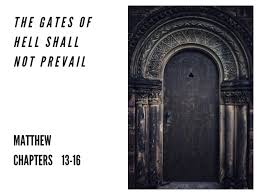
Jesus Confers Power on the Poor to Unlock Empire’s “Gates of Hell”

Readings for 21 Sunday in Ordinary Time: Isaiah 22: 19-23; Psalm 138: 1-8; Romans 11: 33-36; Matthew 16: 13-20

Of course, you’re all following the news, I know. It’s so discouraging, isn’t it? Portland, Gaza, Syria, Yemen, and U.S. support for all that violence.

It all reflects such one-dimensional thinking. It gives the impression that in the eyes of public officials from the militarized cop in the street to the POTUS himself, the only solutions to social problems are found in shooting, tear gas, torture, and Hell Fire Missiles? In sum, “solutions” uniformly involve locking the poor and people of color behind “the Gates of Hell” centralized in today’s Gospel reading.

Gates of Hell Locked by the Rich

In every case, diplomacy, social reform, and negotiation seem out of the question. In fact, diplomacy has become a vanished art. Who needs it? After all, those damn “others” – be they Black Lives Matter demonstrators in Portland, Houthis in Yemen, or Palestinians in Gaza – can’t possibly have legitimate grievances. They simply must be brought to heel by force – shooting, bombing, and killing their children and youth. We’re made to believe that alternatives such as dialog and working out problems by negotiation and compromise are signs of weakness. So, violence is the first resort, never the last. It’s the order of the day in a world ruled by machismo, revenge, violence, and the law of the strongest.

When we’re not bombing, we’re building walls with locked gates. Our “gated communities” and locked doors wall us off from unsightly ghettos and the realities of the world’s poor mostly non-white majority. Better to build a wall along the Mexican border and then lock the gates, throw away the key and pretend that such barriers solve the problem of farmers and their children driven off their land by globalization, poverty and gangs. Better to justify it all by invoking the Ultimate White Privilege: “I feared for my life!” (Whites are the only ones who can get away with that one.)

Today’s Readings

All that brings us to today’s Liturgy of the Word. It’s about God’s interest in matters like those just enumerated – about politics, oppression and the liberation of non-white people like Jesus, Houthis, Palestinians, and residents of Chicago’s south side. It’s about breaking bonds and opening the gates of hell so that every Inferno can be transformed into the Kingdom of God. It’s about refusing to be discouraged even though the flow of history makes Jesus’ prayer, “Thy Kingdom come” seem like an impossible dream.

Start with today’s first reading. There the prophet Isaiah has God telling a courtier named Shabna to step down in favor of a man called Eliakim. Little is known about either one. The reason for including the reading today is apparently to establish today’s central point that God is concerned with the world of politics, and that (despite appearances) God is ultimately in charge of what happens in that sphere. There can be no separation of politics and religion in the divine dispensation.

The responsorial psalm continues the “this worldly” theme set by the first reading. It had us all singing “Lord, your love is eternal. Forsake not the work of your hands.” Once again, emphasis on “the work of God’s hands” reminds us of God’s commitment to this world – including ghettos, those living under endless bombing campaigns in Gaza and Yemen, and rich people like Mr. Trump and Saudi Princes making life unbearable for the world’s largely non-white poor. The psalm goes on to praise Yahweh for divine kindness, truthfulness, encouragement of the weak, care for the impoverished, and God’s alienation from their proud oppressors – again all connected with life here and now.

Then in today’s Gospel selection, we find a reprise of the very reading we shared just two months ago on the “Solemnity of St. Peter and Paul.” We practically know this passage by heart.

The reading centers on three titles associated with Jesus of Nazareth – Son of Man, Son of God, and Christ. All three names are politically loaded – in favor of the poor rather than the privileged and powerful.

Jesus asks his friends, “Who is the Son of Man in history and for us today?” (Scripture scholars remind us that the “Son of Man” is a figure from the Book of Daniel. He is the judge of all those who oppress the People of God whether they’re Egyptians, Assyrians, Babylonians, Medes, Persians, Greeks or Romans. He is “the human one” as opposed to a series of monstrous imperial beasts which the author of Daniel sees arising from the sea against God’s poor.)

So, Jesus’ question boils down to this: who do you think has taken the strongest stand against Israel’s oppressors? Jesus’ friends mention the obvious heroes, Elijah and Jeremiah. But in the end, they settle on a contemporary political prisoner in King Herod’s version of Abu Ghraib. He’s John the Baptist who was Jesus’ mentor. (According to Jesus, John was the greatest of all the prophets of Israel (MT 11:11). He’s the Son of Man, they say.

Having set that anti-imperial tone, Jesus then asks the question, “What about me? Who do you say that I am?” No question could be more central for any of us pretending to follow the Teacher from Nazareth. How we answer determines the character of the path we walk as Jesus’ would-be disciples in a world filled with Portlands, Yemens, Gazas, Hell Fire Missiles and militarized cops. Our answer determines whose side we are on – that of Mr. Trump or with the innocent victims of U.S. bellicosity.

Matthew makes sure we won’t miss the political nature of the question. So, he locates its asking in Caesarea Philippi – a city Herod obsequiously named for his powerful Roman patron. Herod had commemorated the occasion by minting a coin stamped with the emperor’s countenance and identifying him as “the Son of God.” Caesar was also called “the Christ,” God’s anointed. Good Jews saw all of that as idolatry.

So, Peter’s answer, “You are the Christ, the Son of the Living God” has the effect of delegitimizing Caesar and his empire. It’s also a swipe at King Herod. Peter’s response couldn’t be more political. Jesus, not Caesar is king, God’s anointed, the Son of God.

Neither could Peter’s words be more spiritually meaningful and heartening for those of us discouraged by events in those places afflicted by permanent U.S. belligerence.

Gates of Hell Unlocked by the Poor

The encouragement is found in Jesus rejoinder about the “gates of hell” and the “keys of the kingdom.” Jesus says, “Blessed are you, Simon son of Jonah . . . I will give you the keys of the kingdom of heaven . . . whatever you bind on earth will be bound in heaven, and whatever you loose on earth will be loosed in heaven.”

What powerful words of encouragement! They say that the world’s ultimate decision-makers are poor people like the fisherman, Peter, and like the rest of Jesus’ followers – the beggars, prostitutes, and victims of Roman imperialism. It’s what they decide — what they bind on earth — that reflects God’s divine order. History is on their side, not on that of the apparently invincible.

For those who would join Jesus on “The Way” to God’s Kingdom, Jesus’ words disclose the very key to life’s meaning. In effect, Jesus says, “Here’s the key to opening ‘the gates of hell’ and transforming life’s Infernos into God’s kingdom: all our actions – even apparent failures like my coming crucifixion – have cosmic significance. Don’t be discouraged even when the agents of hell end up killing me – as they inevitably will.”

Conclusion

In other words, we may not be able to see the effect of resisting empire and its bloody agents in the short term. But each act has its effect. God’s Kingdom will finally come. That’s our faith! It’s what gives meaning to our lives of resistance.

In today’s second reading, Paul elaborates the point. He says it’s not always apparent what God is up to in the world. After all, the ways of Transcendent Reality are deep and beyond comprehension – even by the wisest human beings. We may not be able to see God’s (political and personal) purposes at close range. But ultimately their inscrutable wisdom will become apparent (ROM 11: 33-36).

Or as Martin Luther King put it: “The arc of the moral universe is long, but it bends towards justice.”

All of us need to embrace that wisdom, refuse discouragement and continue doing what we can to resist the forces of empire and unlock those “Gates of Hell.” We may not live to see them swing open. But they will. That’s our faith.

(Sunday Homily) Jesus’ Promise: Despite Appearances, God’s Kingdom Will Ultimately Triumph

Arc of history

Readings for 21st Sunday in Ordinary time: IS 22: 19-23; PS 138:1-3, 6,8; ROM 11: 33-36; MT 16: 13-28.

Of course, you’re all following the news, I know. It’s so discouraging, isn’t it? Charlottesville, Syria, Yemen, and President Trump’s defense of Neo-Nazis.

It all reflects such one-dimensional thinking. I mean it gives the impression that in the eyes of public officials from the militarized cop in the street to the POTUS himself, the only solutions to social problems are found in shooting, tear gas, torture, and Hell Fire Missiles? In sum, “solutions” uniformly involve locking the people of color behind “the Gates of Hell” centralized in today’s Gospel reading.

In every case, diplomacy, social reform, and negotiation seem out of the question. In fact, diplomacy has become a vanished art. Who needs it? After all, those damn “others” – be they African Americans in Charlottesville, Houthis in Yemen, or ISIS militants in Syria – can’t possibly have legitimate grievances. They simply must be brought to heel by force – shooting, bombing, and killing their children and youth. We’re made to believe that alternatives such as dialog and working out problems by discussion and compromise are signs of weakness. So violence is the first resort, never the last. It’s the order of the day in a world ruled by machismo, revenge, violence, and the law of the strongest.

When we’re not bombing, we’re building walls with locked gates. Our “gated communities” and locked doors wall us off from unsightly ghettos and the realities of the world’s poor mostly non-white majority. Better to build a wall along the Mexican border and then lock the gates, throw away the key and pretend that such barriers solve the problem of farmers and their children driven off their land by globalization, poverty and gangs. Better to justify it all by invoking the Ultimate White Privilege: “I feared for my life!” (We whites are the only ones who can get away with that one.)

All that brings us to today’s Liturgy of the Word. It’s about God’s interest in matters like those just enumerated – about politics, oppression and the liberation of non-white people like Jesus, Houthis, Syrians, and residents of Chicago’s south side. It’s about breaking bonds and opening the gates of hell so that every Inferno can be transformed into the Kingdom of God. It’s about refusing to be discouraged even though the flow of history makes Jesus’ prayer, “Thy Kingdom come” seem like an impossible dream.

Start with today’s first reading. There the prophet Isaiah has God telling a courtier named Shabna to step down in favor of a man called Eliakim. Little is known about either one. The reason for including the reading today is apparently to establish today’s central point that God is concerned with the world of politics, and that (despite appearances) God is ultimately in charge of what happens in that sphere. There can be no separation of politics and religion in the divine dispensation.

The responsorial psalm continues the “this worldly” theme set by the first reading. It had us all singing “Lord, your love is eternal. Forsake not the work of your hands.” Once again, emphasis on “the work of God’s hands” reminds us of God’s commitment to this world – including ghettos, those living under endless bombing campaigns in Syria and Yemen, and rich people like Mr. Trump and Saudi Princes making life unbearable for the world’s largely non-white poor. The psalm goes on to praise Yahweh for divine kindness, truthfulness, encouragement of the weak, care for the impoverished, and God’s alienation from their proud oppressors – again all connected with life here and now.

Then in today’s Gospel selection, we find a reprise of the very reading we shared just two months ago on the “Solemnity of St. Peter and Paul.” We practically know this passage by heart.

The reading centers on three titles associated with Jesus of Nazareth – Son of Man, Son of God, and Christ. All three names are politically loaded – in favor of the poor rather than the privileged and powerful.

Jesus asks his friends, “Who is the Son of Man in history and for us today?” (Scripture scholars remind us that the “Son of Man” is a figure from the Book of Daniel. He is the judge of all those who oppress the People of God whether they’re Egyptians, Assyrians, Babylonians, Medes, Persians, Greeks or Romans. He is “the human one” as opposed to a series of monstrous imperial beasts which the author of Daniel sees arising from the sea against God’s poor.)

So Jesus’ question boils down to this: who do you think has taken the strongest stand against Israel’s oppressors? Jesus’ friends mention the obvious heroes, Elijah and Jeremiah. But in the end, they settle on a contemporary political prisoner in King Herod’s version of Abu Ghraib. He’s John the Baptist who was Jesus’ mentor. (According to Jesus, John was the greatest of all the prophets of Israel.) He’s the Son of Man, they say.

Having set that anti-imperial tone, Jesus then asks the question, “What about me? Who do you say that I am?” No question could be more central for any of us pretending to follow the Teacher from Nazareth. How we answer determines the character of the path we walk as Jesus’ would-be disciples in a world filled with Charlottlesvilles, Yemens, Raqqas, Hell Fire Missiles and militarized cops. Our answer determines whose side we are on – that of Mr. Trump, his friend Sheriff Arpaio, or with the innocent victims of U.S. bellicosity.

Matthew makes sure we won’t miss the political nature of the question. So he locates its asking in Caesarea Philippi – a city Herod obsequiously named for his powerful Roman patron. Herod had commemorated the occasion by minting a coin stamped with the emperor’s countenance and identifying him as “the Son of God.” Caesar was also called “the Christ,” God’s anointed. Good Jews saw all of that as idolatry.

So Peter’s answer, “You are the Christ, the Son of the Living God” has the effect of delegitimizing Caesar and his empire. It’s also a swipe at King Herod. Peter’s response couldn’t be more political. Jesus, not Caesar is king, God’s anointed, the Son of God.

Neither could Peter’s words be more spiritually meaningful and heartening for those of us discouraged by events in those places afflicted by permanent U.S. belligerence.

The encouragement is found in Jesus rejoinder about the “gates of hell” and the “keys of the kingdom.” Jesus says, “Blessed are you, Simon son of Jonah . . . I will give you the keys of the kingdom of heaven . . . whatever you bind on earth will be bound in heaven, and whatever you loose on earth will be loosed in heaven.”

What powerful words of encouragement! They say that the world’s ultimate decision-makers are poor people like the fisherman, Peter, and like the rest of Jesus’ followers – the beggars, prostitutes, and victims of Roman imperialism. It’s what they decide — what they bind on earth — that reflects God’s divine order. History is on their side, not on that of the apparently invincible.

For those who would join Jesus on “The Way” to God’s Kingdom, Jesus’ words disclose the very key to life’s meaning. In effect, Jesus says, “Here’s the key to opening ‘the gates of hell’ and transforming life’s Infernos into God’s kingdom: all our actions – even apparent failures like my coming crucifixion – have cosmic significance. Don’t be discouraged even when the agents of hell end up killing me – as they inevitably will.”

In other words, we may not be able to see the effect of resisting empire and its bloody agents in the short term. But each act has its effect. God’s Kingdom will finally come. That’s our faith! It’s what gives meaning to our lives of resistance.

In today’s second reading, Paul elaborates the point. He says it’s not always apparent what God is up to in the world. After all, the ways of Transcendent Reality are deep and beyond comprehension – even by the wisest human beings. We may not be able to see God’s (political and personal) purposes at close range. But ultimately their inscrutable wisdom will become apparent (ROM 11: 33-36).

Or as Martin Luther King put it: “The arc of the moral universe is long, but it bends towards justice.”

All of us need to embrace that wisdom, refuse discouragement and continue doing what we can to resist the forces of empire and unlock those “Gates of Hell.”