A Frightening Child & Prayer to Save the Environment

Readings for the 29th Sunday in Ordinary Time:  EX 17: 8-13; PS 121: 1-8; 2 TM 3: 14-4:2; HEB 4: 12; LK 18: 1-8

Were you inspired by Greta Thunberg? I couldn’t get over her courage.

Imagine: a child of 16 years suddenly thrust beneath the blinding spotlight of the world’s stage – speaking confidently with a pope and with heads of state, addressing huge crowds and the United Nations itself. All of that would frighten me. How about you?

And she called them all to task. “How dare you!” she repeated again and again to the world’s movers and shakers whose programs for addressing climate change fell far short of the goals set by climate scientists. “Don’t listen to me,” she repeated; “listen to the scientists.” In other words, align yourselves with what Mother Nature, Life Itself, and the Universe are telling us.

And, of course, you saw the effects of her audacity. Millions were mobilized across the planet.

What started as a one-girl protest before the Swedish parliament swiftly became a thing.

Youngsters everywhere, including my own grandchildren, walked out of class and imitated Greta’s defiance. My five-year-old grandson challenged us all for driving a Volvo van whose gas engine, he said, is destroying the environment. “We should be driving an electric car instead” he objected. A five-year-old!

As someone pointed out, it’s a “Children’s Crusade” against capitalism’s worship of Moloch.

And what fear it inspired in the powerful! This wisp of a girl exercising the super-powers of concentration and focus conferred by an Asperger’s condition that would have others hiding under a rock, suddenly had the movers and shakers shaking with fear. Some ganged up on her, attacked her parents, and even belittled the teenager as mentally deficient. Their cowardly desperation showed that they were more afraid of her than she of them.

All of that is relevant to today’s liturgy of the word. It’s about prayer understood as Greta- Thunberg-like alignment with Life’s processes. Regardless of what we might call it, such re-orientation can change the world and cause powerful enemies of justice to tremble even before those they see as the weakest among us.

More specifically, today’s readings trace biblical understandings of prayer from a voodoo-like practice intent on harming one’s enemies to the alignment with Life’s purposes just described. Here’s the way they run according to my own “translation.” Judge for yourself to see if I’ve got them right. You can read the originals here

 Long ago
When Israel’s primitive faith
Still pictured God
As a Man O’ War,
They magically imagined
A Yahweh persuaded
To slaughter their enemies
By Moses’ adoption
Of Wiccan postures,
Magic rocks
And feats of
Super-human endurance.
 
PS 121: 1-8
 
They were right,
Of course,
To intuit
That the Creator
Is eternally helpful
In protecting
The lives
And chosen paths
Of his creatures
Providing sunlight by day
And moonlight by night.
Divine power
Is always disposed
To help
The oppressed.
 
2 TM 3: 14-4:2
 
However, the mystic Paul
Had already
Ventured far beyond
His forebears’ voodoo.
Though he recognized
Israel’s written tradition
As inspired,
He also
Identified Jesus
As its ultimate interpreter.
For the Master,
Life’s Author
Was no Man O’ War
But a loving, patient, encouraging
Father.
 
HEB 4: 12
 
Deep in our hearts
We already knew
This to be true.
Thank you!
 
LK 18: 1-8
 
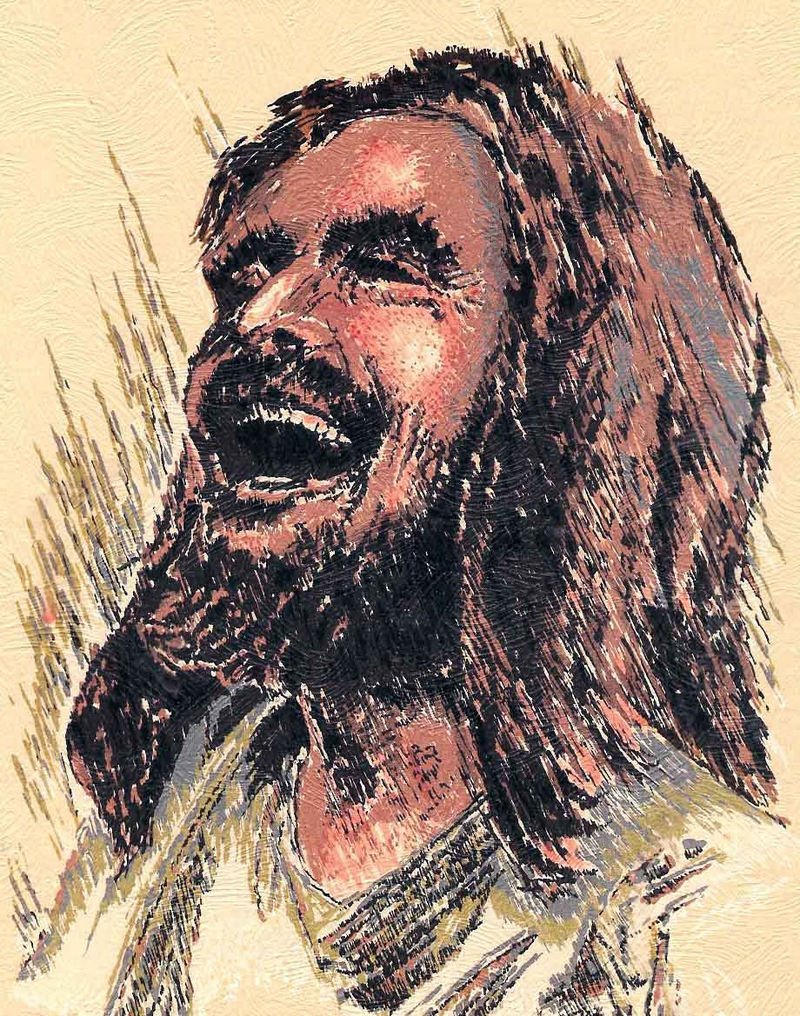
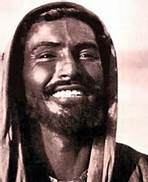
The comic Jesus
Even joked about
Those who thought
Of God as a cruel judge
Susceptible
To tiresome entreaties
And cowering before
Poor widows who
Might cuff him
About the ears
If he didn’t
Answer their petitions.
Better, he said
To “pray always”
In a quiet way
That matches
God’s unwavering disposal
To secure justice
For the oppressed.
No Man O’ War
No exhausting prayers
No Mosaic sorcerer
Here!

There are salutary lessons in those readings.

According to their vision, prayer does not mean persuading some Man in The Sky to change his mind to match our capricious whims. Instead, it’s the process of aligning our minds with the Universal Love that underpins all of reality and that in practice expresses itself in justice for widows, orphans, and immigrants – the traditional biblical protegees of God’s concern. Prayer is a habit of mind that doesn’t call for words or supplications, but for awareness of the places in life where love-as-justice is breaking in.

That love remains nearly invisible because of human attempts to obscure it with tropes about rugged individualism, survival of the fittest, dog-eat-dog reality, and “nature red in tooth and claw.” Such worldly wisdom normalizes fear. Unlike Greta Thunberg, ordinary people adopting that normality become frightened and immobilized before terror -inspiring kings, presidents, bosses and judges.

Jesus’ parable of the widow and the judge turns that familiar dynamic on its head. It calls us to “pray always” in the sense earlier described. Then, once our minds are aligned with God’s loving purposes, we’re called to imitate the widow who insistently sought justice not from God, but from the judge “who neither feared God nor respected any human being.”

In other words, Love understood as Justice for the oppressed will drive us (as it did Greta and her Children’s Crusade) to petition, protest, demonstrate, and engage in the type of direct action that threatens such agents of injustice. Jesus’ joke about the judge’s fear that a poor widow might do him physical harm makes his point that the selfish ones who exercise power over us are more afraid of us than we of them.

So, today’s readings suggest, align with justice and then join Greta in the streets. Be as courageous as she. Become as a little child (MT 18:3). Frighten the hell out of those judges, presidents and worshippers of Moloch! Save the planet!  

The Biblical Tradition Advocates Healthcare for All – Even for Enemies of the State

Readings for the 28th Sunday in Ordinary Time: 2 KGS 5: 14-17; PS 98: 1-4; 2 TM 2: 8-13; 1 THES 5:18; LK 17: 11-19

On October 4th, President Trump signed a proclamation denying visas to immigrants who can’t afford to purchase health insurance within 30 days of their arrival to the United States. The new restrictions are scheduled to be implemented on November 3. They will also exclude immigrants from subsidies under the Affordable Care Act.

In its proclamation, the White House said it was taking this step to safeguard the health-care system for American citizens by preventing immigrants from enrolling in Medicaid or going to emergency rooms with no insurance, requiring hospitals or taxpayers to cover the cost.

“President Trump has taken action to promote immigrant self-sufficiency, which has long been a fundamental aspect of our immigration system,” the proclamation said.

In other words, (and listen for the irony here) the uber-rich president’s action is directed against poor people and is designed to save money for a revenue base recently depleted by tax breaks principally benefitting the richest people in the most affluent country in the world.

It’s simply another onslaught in Trump’s war of rich against poor.

Today’s liturgy of the word shows that the new proclamation is not only ironic, it also stands in sharp contradiction to the Judeo-Christian tradition and its emphasis on gratuitous healing.

I mean, this week’s readings seem providentially related to the issue of healthcare not only for resident aliens, but for explicit enemies of the state. The selections have two prophets (Elisha in the case of the Jewish Testament) and Jesus (in its Christian extension) curing foreign lepers. In Elisha’s case, the beneficiary of his cure is a general in an enemy army (Assyria) actually at war with Israel. That would be like Americans extending care to a notorious terrorist.  

Additionally, the readings connect with current debate about Medicare for All by suggesting the inappropriateness of charging money for healing which is understood as a gift from God. As such, the readings intimate, it should be available to all humans with no distinctions about race, class, or gender.

Please read the texts in question here. What follows is my own “translation” of their unusually coherent message about foreigners and healthcare.

 2 KGS 5: 14-17
 
During Assyria’s war on Israel,
Naaman, an enemy general,
Was cured of leprosy
By Israel’s prophet, Elisha.
The general offered
A valuable gift
In exchange.
But Elisha refused
To profit from
God’s healing.
Such salvation
Is as free as earth itself,
He implied.
It is entirely fungible
To entirely
Fungible people.
 
PS 98: 1-4
 
So, let’s sing
Of God’s healing (salvation).
On behalf of Israel
It manifests
God’s favor to non-Jews too
Causing the whole earth
To break out in song.
 
2 TM 2: 8-13
 
Jesus the Risen Christ
Endorsed Paul’s teaching
About the equality
Of Jews, Greeks,
Slaves and free,
Male and female
Prisoners and criminals.
Jesus identifies with all,
Paul said.
Every one of them
Is “chosen.”
God cannot deny
God’s generous Self.
 
1 THES 5:18
We are so grateful
For this wonderful teaching!
 
LK 17: 11-19
 
Like Elisha,
Jesus cured leprosy
This time
In a gang of 10 –
Including a Samaritan
An enemy of the people
Just like Naaman.
It was Healing
For nothing
Except for the outsider's
Singular word of thanks
Which healed him
Totally.
[No doubt
The ungrateful ones
Remained (partially) healed
As well.]

Not much needs to be added to the teachings so clearly embedded in today’s readings.

They’re about curing a culture’s most dreaded disease. They’re about foreigners and a divine dispensation that recognizes no one as somehow “foreign” or to be “shunned.” That’s true even if they represent a designated enemy of the state or adherents to a religion considered intrinsically evil by prevailing community standards.

As usual, then, and in other words, this week’s readings challenge our most cherished certainties. They call us to open ourselves to the poor, to foreigners, and even to those we’re taught to fear and hate.

They call us to denounce and resist Trumpian “proclamations” like the recent one punishing immigrants and refugees for their poverty and accidents of birth over which they have no control, but which especially endear them to the Author of Life.

Dives & Lazarus: a primer on liberation theology

Readings for the 26th Sunday in Ordinary Time: AM 6: 1A, 4-7; PS 146: 7-10; I TM 6: 11-16; LK 16: 19-31 

Today’s liturgy of the word provides us with a virtual catechism of liberation theology – Christianity’s most important theological development in the last 1500 years, and the West’s most important social movement of the last 150 years.

I have come to those conclusions over a period of more than forty years studying liberation theology. My interest began in Rome during my graduate studies there, 1967 through 1972. There I first heard Peru’s Gustavo Gutierrez speak. (Fr. Gutierrez is considered the father of liberation theology.)

Subsequently I read Gutierrez’s bookA Theology of Liberation (1971) and was completely taken by it. Reading the book gave me the feeling that I was hearing Jesus’ Gospel for the very first time.

You might ask, what is liberation theology? To answer that question fully, please look at my blog entries under the “liberation theology” button. I’ve written a series on the question. In my blogs, you’ll find that I always define it in a single sentence. Liberation theology is reflection on the following of Christ from the viewpoint of the world’s poor and oppressed. That’s the class of people to which Jesus himself belonged. They constituted the majority of his first followers.

When read from their viewpoint, accounts of Jesus’ words and deeds – the entire Bible for that matter – take on depths of meaning and relevance to our contemporary world that are otherwise inaccessible to people like us who live in the heart of the wealthy world. From the viewpoint of the poor, God passes from being a neutral observer of earth’s injustices to an active participant with the poor as they struggle for justice here on earth. Jesus becomes the personification of that divine commitment to the oppressed. After all, he was poor and oppressed himself. The Roman Empire and its Temple priest collaborators saw to that.

My interest in liberation theology deepened as my teaching career developed at Berea College in Kentucky from 1974 to 2010. There I was encouraged to continue my study of liberation theology. So, I spent extended periods in Brazil, Nicaragua, Costa Rica, Honduras, Guatemala, Cuba, Mexico, Zimbabwe, South Africa, India and elsewhere studying under liberation theologians, dialoging and publishing with them. The poor in all of those countries were suffering from the aggression the United States directed against them.

Meanwhile at Berea, I found the conclusions of liberation theologians validated by the college’s very fine scripture scholars. They had almost no acquaintance with liberation theology, and yet what they were teaching perfectly harmonized with its central tenets. It’s just that they stopped short of drawing what seemed to me the obvious political conclusions from their work.

More specifically, Berea’s scholars identified the Exodus (Yahweh’s liberation of slaves from Egypt) as God’s original and paradigmatic revelation. The whole tradition began there, not in the Garden of Eden. Moreover, the Jewish prophetic tradition emphasized what we now call “social justice.” Even more, Jesus of Nazareth appeared in the prophetic tradition, not as a priest or king. Jesus directed his “ministry” to the poor and outcasts. The Gospel of Luke (4: 18-19) has Jesus describing his program in the following words:

“The Spirit of the Lord is upon me, because he has anointed me to bring good news to the poor. He has sent me to proclaim release to the captives and recovery of sight to the blind, to let the oppressed go free, and to proclaim the year of the Lord’s favor.”

After his death, Jesus’ followers continued along those lines. They lived communally, having sold all their worldly possessions and distributed the proceeds to the poor.

All of that finds vivid expression in today’s liturgy of the word. As I said, it’s a kind of catechism of liberation theology. The reading from Amos the prophet describes the sin that most offends God – wealth disparity in the face of extreme poverty. Amos decries a “wanton revelry” on the part of the wealthy that sounds like the “American Way of Life” or the “Lives of the Rich and Famous” that we Americans find so fascinating.

The prophet describes a rich class that lives like King David himself – in luxurious houses, overeating, drinking wine by the bowlful, and generally ignoring “the collapse of Joseph,” i.e. the poverty of their country’s most destitute. For that, Amos says, the rich will ultimately suffer. All their wealth will be confiscated and they will be driven into shameful exile.

In railing against the rich and defending the poor, Amos was calling Judah back to the worship of Yahweh whose attributes are described in today’s responsorial psalm. There God is depicted as loving the just and thwarting the ways of the wicked. The psalm describes Yahweh as securing justice for the oppressed, giving food to the hungry, and setting captives free. He gives sight to the blind and protects resident aliens, single mothers and their children.

Then today’s excerpt from 1st Timothy outlines the characteristics of those who worship that God by following in Jesus’ footsteps. They keep the commandment which is to do unto others as we would have them do unto us.

According to St. Paul, that means pursuing justice and living with devotion, faith, love, patience, and gentleness.

Finally, the gospel selection from Luke chapter 16 dramatizes the sinful relationship between rich and poor and the destinies awaiting both. Luke tells the story of the rich man and “St. Lazarus” who is honored by the poor throughout Latin America.

It is significant that Lazarus is given a name in Jesus’ parable. Usually we know the names of the rich, while it is the poor that remain anonymous. Here matters are reversed. To remedy this anomaly, tradition has assigned the wealthy man a name. He’s called Dives, which is simply the Latin word for rich man.

For his part, Lazarus is quintessentially poor, hungry, and lacking medical care. His sores are open and the only attention they receive are from dogs that lick his wounds. Meanwhile, Dives seems completely unaware of Lazarus’ presence, though the beggar is standing at his very doorstep. Within the sight of Lazarus, the wealthy one stuffs himself with food to such a degree that the scraps falling from his table would be enough to nourish the poor beggar. But not even those crumbs are shared. How could Dives share? He doesn’t even know that Lazarus exists.

So, the two men die, and things are evened out. The rich man goes to hell. We’re not told why. Within the limits of the story, it seems simply for the crime of being rich and unconsciously blind to the presence of the poor. For his part, Lazarus goes to the “bosom of Abraham,” the original Hebrew patriarch.

Lazarus is rewarded. Again, we’re not told why. Within the story, it seems simply because he was poor and Yahweh is partial to the poor, just as he was to the slaves God intervened to save when they were starving in Egypt.

Seated with Abraham, Lazarus feasts and feasts at the eternal banquet hungry people imagine heaven to be. Dives however is consumed by flame in the afterlife. Fire, of course, is the traditional symbol of God’s presence, or purification, and of punishment. This seems to suggest that after death, both Dives and Lazarus find themselves in the presence of God. However what Lazarus experiences as joyful, Dives experiences as tormenting.

And why? Simply, it seems, because Dives was rich, and Lazarus was poor.

Does the parable tell us that what awaits us all after death is a reversal of the economic conditions in which we now find ourselves? The first will be last; the last first. The rich will be poor, and the poor will be rich. That in itself is highly thought-provoking.

In any case, Yahweh is presented as champion of the poor in this parable, just as in the reading from Amos, in today’s responsorial psalm, and in Paul’s letter to Timothy. And according to liberation theologians, that’s the central characteristic of God throughout the Judeo-Christian tradition. God is on the side of the poor and hates obscene wealth disparity.

You can well imagine how such insight inspired the poor and oppressed throughout the world when it emerged as “liberation theology” following the Second Vatican Council. Poor people everywhere (and especially in Latin America) took courage and were inspired to demand social justice from the rich who had been ignoring them in the New World since the arrival of Columbus 500 years earlier. In fact, Liberation theology motivated social movements more powerfully than any thought current since the publication of the Communist Manifesto in 1848.

And that’s why the reigning empire, the United States of America took action against liberation theology. It initiated what Noam Chomsky calls “the first religious war of the 21st century.” It was a war of the United States against the Catholic Church in Latin America – yes against the Catholic Church. The war killed hundreds of thousands of priests, nuns, lay catechists, social workers, union organizers, students, teachers, and journalists along with ordinary farmers and workers.

Today’s liturgy of the word reminds us not to let the United States have the final word. We are called to divest ourselves of our wealth and to take notice of St. Lazarus at our gates. God is on the side of the poor, not of the rich.

Clarifying Economic (& Theological) Terms in the Capitalism-Socialism Debate

Readings for 25th Sunday in Ordinary Time: AM 8: 4-7; PS 113: 1-2, 4-6, 7-8; 1TM 2: 1-8; 2 COR 8:9;LK 16: 1-13

Last weekend, comedian, Bill Maher, and film-maker, Michael Moore, got into a shouting match on Maher’s show “Real Time.” Their point of contention was capitalism vs. socialism. Moore argued for socialism; Maher was against it. Their boisterousness reminded me of dinner-table arguments which (I’m ashamed to admit) I’ve been part of myself.

I bring all this up because the debate is intimately related to this morning’s liturgy of the word. Though the readings obviously pre-date the emergence of the modern system, they all criticize what has historically become “the spirit of capitalism.”  

In any case, the Maher-Moore debate is worth considering not only because it manifests the relevance of the Jesus tradition to arguments like theirs. The argument also demonstrates the counter-productivity of the squabble itself. It’s counter-productive because its terms fall into a trap congenial to the enemies of the biblical tradition. The trap frames alternatives to our present economic system in terms of “socialism” instead of in terms of social justice, mixed economy, and “preferential option for the poor.”

That’s a simple distinction I never tire of making, because (as I point out in my book, The Magic Glasses of Critical Thinking: seeing through alternative fact and fake news) it’s absolutely key to the discussions of capitalism and socialism that will inevitably characterize the election season we’ve just entered – especially following the eventual selection of any Democratic candidate. No matter who the candidate turns out to be, s/he will be predictably vilified for advocating socialism pure and simple – an economic system that simply does not exist.

Maher and Moore both missed that point. The rest of us shouldn’t. In fact, I recommend avoidance of capitalism-socialism framing altogether. I’ll explain what I mean, and then elucidate the connections with today’s readings.

To begin with, Moore’s mistake was to represent as “socialism” his advocacy of Medicare for all (Maher was against it), free college tuition, college loan-forgiveness, and the Green New Deal. In reality, those programs notwithstanding, each of them represents elements of mixed economies – the only form of economic organization that exists in our present context. And a mixed economy always has three elements (1) Some private and some public ownership of the means of production, (2) Some controlled markets and some that are free of control, and (3) earnings limited (usually by progressive income taxes).

Every economy in the world has those elements. There are no exceptions.

Mixed economies contrast with the three elements of capitalism as well as with those of socialism. Capitalism’s three points are (1) Private ownership of the means of production, (2) Free and open markets, and (3) Unlimited earnings. None of the world’s economies embodies those elements untempered by planning.

Meanwhile, socialism’s three points are (1) Public ownership of the means of production, (2) Controlled markets, and (3) Limited earnings. Like untempered capitalism, such economic arrangement exists nowhere (including in “communist” China or Cuba).     

For his part, Maher’s defense of capitalism was also a defense of mixed economy. He agreed with many of Moore’s points. So, Maher’s “capitalism” was no less mixed than Moore’s. The difference was that Maher wanted more market and less planning in economic policy.

This is not to say that all mixed economies are equal. (And this point is essential to keep in mind). The crucial question with them is “Mixed in favor of whom?” Those who mistakenly identify themselves as “capitalists” tend to advocate economies mixed in favor of the rich. They do so on the belief that wealth trickles down; a rising tide lifts all boats, etc.

Those who (equally mistakenly) identify as “socialists” want economies mixed more in favor of the working and unemployed classes. They recognize that unregulated markets respond primarily to those with the most money. Economies therefore have to be controlled to include those with limited (or no) resources.

With all of this in mind, Moore and Maher might have resolved their argument by recognizing that the choice before them is not between capitalism or socialism, but between an economy mixed in favor of the rich or one mixed in favor of the poor. And the formula for doing so might be: As much market as possible, with as much regulation as necessary (to assure a decent standard of living for everyone on the planet).   

Now, a formula like that not only avoids “the socialist trap;” it is also highly compatible with the biblical social justice tradition that’s expressed so clearly in this morning’s liturgy of the word. As I’ve translated them below, today’s selections point out the injustices inherent not only in the economies of the ancient world, but in today’s neoliberal order. Both, the readings imply, were and are rigged in favor of the rich and against the poor.  Check the readings for yourself here.

This is the way I interpret them:

 AM 8: 4-7

Money makes the rich
Exploit the poor.
It leads the wealthy
To distort religion
Manipulate currency
Put thumbs on scales
Sell shoddy products
And underpay workers.
But never doubt:
They will one day reap
Due karma.
 
PS 113: 1-2, 4-6, 7-8
 
For God will lift up
The poor
From the dirt
And “shitholes
They’re forced
To live in.
Thank God:
The lowly
Will one day
Become their own
Masters instead.
 
1 TM 2: 1-8
 
In the meantime,
Pray that the powerful
Might change their ways
For God cares
Even for them.
Pray that they
Might know God
As revealed in
The poor man
Jesus who died
For them too
Despite their bitterness
Lies and self-serving
Talking points.
 
2 COR 8:9
 
Yes, don’t forget:
God chose
Self-revelation
In the poor
Not in the rich.
Ironically,
God’s Preferential Option
For the Poor
Is the only way
To prosperity.
 
LK 16: 1-13
 
In fact,
The poor man, Jesus,
Laughed at the rich
Who can’t use a shovel
To save their lives,
But blame the beggars
Their own policies have created.
The rich are so crooked,
He joked,
That they even admire
Shrewdness in those
Who end up stealing from them!
Their own small larcenies
Grow exponentially.
So they cannot be trusted.
Restitution is therefore in order.
But don't worry
About the bankers:
Their “generous” loans
Can easily be written off
Without in the least
Impacting their
Decadent life-styles.
Their basic mistake
Is believing that
Differentiating wealth and God
Are somehow compatible.
They are not!

Don’t you agree that sentiments like those favor economies mixed in favor of the poor? (That’s the way they appear to me.) The readings imply that if mixed economies are all we have, we shouldn’t allow ourselves to fall into the trap that ensnared Moore and Maher. Instead of arguing about non-existent “capitalism” or “socialism,” we should make sure to embrace the principle “As much market as possible, but as much planning as necessary (to insure a dignified life for all).”

But to avoid pointless shouting matches, it will be necessary to carry around in our minds those clear and easily understood ideas about what capitalism and socialism are. To repeat: capitalism’s essential elements are (1) private ownership of the means of production; (2) free and open markets, and (3) unlimited earnings. Socialism’s defining points are just the opposite: (1) public ownership of the means of production; (2) controlled markets, and (3) limited earnings. Once again, those two definitions make it clear that mixed economies are all we have. 

Finally, we should be emphasizing the incompatibility between  the Judeo-Christian tradition and the spirit of capitalism as characterized in today’s readings. Excessive wealth on the one hand and God on the other are not compatible. Or, as Jesus put it, “No one can serve two masters. Either you will hate the one and love the other, or you will be devoted to the one and despise the other. You cannot serve both God and money.”

Despite our culture’s claims to the contrary, that’s the faith we “People of The Book” (Jews, Muslims, and Christians) are called to embrace.

Everyone Likes a Good Joke: Jesus Makes Fun of “Humble” Religious Hypocrites (Sunday Homily)

Readings for 22nd Sunday in Ordinary Time: SIR 3: 17-18, 20, 28-29; PS 68: 4-5, 6-7, 10-11; HEB 12: 18-19, 22-24A; LK 14: 1, 7-14.

[What follows is a dramatic re-creation of Luke’s rather abstract account of Jesus’ dinner at a Pharisee’s home. (See the narrative here.) While Luke seems to have the Master recommending impossible (for Jesus) hypocrisy and self-promotion, the re-creation seems more probable and gets at Jesus’ real message about the Kingdom of God and its preferential option for the poor.]

In this morning’s gospel episode, Jesus finds himself invited for dinner to the home of a Pharisee. All present, Luke tells us, are watching Jesus closely. No doubt, they’re keeping an eye on his disciples too. And they don’t approve.

After all, like Jesus, his disciples are mere riff-raff. But at least Jesus is the reputed peasant-rabbi. Everyone’s talking about him. And investigating Jesus is the whole reason for this dinner. So for the moment at least, the Pharisees are willing to cut him some slack. He’s sitting near his hosts towards the head of the table.

His hangers-on however are a different story. They’re rough. They smell of fish and sweat, and have no manners. And yet, as Jesus’ friends, they’ve been granted a place at table — down towards the end. Even there, they feel out of place, but for that very reason they are enjoying themselves tremendously. You can imagine their rough jokes and loud laughter.

Yes, the Pharisees are watching Jesus and his friends. But obviously, Jesus has been watching them as well. He knows they are expecting some words of wisdom. So . . . he tells them a joke. And the joke’s on them. It contains a sharp barb.

“Thanks for inviting us to this banquet,” Jesus begins. “Unaccustomed as we are . . .” He pauses and smiles. “That’s quite generous of you. After all, none of us can repay your kindness. We are homeless people, as you know. We’re unemployed too, so we are in no position to return your kindness.

The best I can do is offer you some wisdom. So let me tell you what I’ve been observing here.

“Evidently,” Jesus goes on, “it’s your custom to adopt the humility recommended in the biblical Book of Sirach. I can’t tell you how impressed I am; I’m edified by your piety. I mean, you have clearly taken to heart the words of the sage, Jesus ben Sirach – what he said about being humble, especially if we are ‘great’ as all of you are here, I’m sure.”

Jesus eyes his listeners. He can tell that they are waiting for the penny to drop. So he drops it.

“I can see that when you come into a place like this, you take the lowest place available — down there where my friends are.” With this, Jesus stands up bows his head, stoops his shoulders and slumps towards the lowest place at table. He laughs.

“That way,” the Master continues, “our host, of course, is obliged to publicly invite you to a more honored position at table. ‘Friend,’ he’ll say, ‘come up higher, and sit in the place you’ve merited not down there with the unwashed and poor.’”

Now Jesus is standing. He throws out his chest and strides towards the seat right next to his pharisaical host. He chuckles again. “That enables you,” Jesus continues,” with great protestations of unworthiness, to take your ‘rightful’ place at table. Your stock has risen in everyone’s eyes.

“So congratulations are in order,” Jesus says. “All of you have learned your lessons well. You’ve just created a show, and have actually exalted yourself by pretending to be humble. In a sense, you’ve received your reward.”

Jesus is seated again and looking intently at everyone. Their mouths are open with shock.

“So here’s my wisdom, friends. . . . Your ‘humility’ is not what Sirach was recommending. In fact, it’s a form of pride and self-promotion.

“Instead, real humility is this: when you throw a party like this one, invite the poor, the lame and the blind, and then serve them. Place them at the head of your table and treat them as honored guests. People like that can’t or won’t repay you. But in fact, YOU OWE THEM.” Jesus fairly shouts those last three words.

“I’m telling you the truth,” he says. And humility is nothing but the truth.”

Jesus pauses, but he hasn’t finished yet. “You see, those belonging to what you consider the Great Unwashed — like my friends — are actually God’s favorite people. Recall what the psalmist said about them in Psalm 68. He said God is the Father of orphans; he’s the defender of widows, of prisoners, of the homeless, and of farmers without land.”

Jesus is quiet now; his smile is broad and friendly. He searches the faces of his table companions one-by-one.

Then he turns to his host and adds.

“To be fair, my friend, you yourself are on the right track. By inviting us today, you’ve shown that you already understand what I’ve been saying. As I say, none of us can repay you, and yet you’ve invited us to this abundant table. We are sincerely grateful.

“But don’t think that you’ve somehow performed an act of charity by your invitation. No, it’s an act of justice – of compensation to make up for what you have stolen from the poor by underpaying them and taxing them heavily. In supporting the poor and even the “lazy,” you are simply imitating our generous God.

“I mean the earth and its produce are all gifts from God. No one has earned them. No one owns them but the creator. If you have food, then, you are obliged to share it with the hungry – even with those unwilling to work. As difficult as it might be to understand, that’s simply the divine dispensation.

“The earth and the life it supports have been freely given to everyone – even to people like me and my friends who refuse to work and live from the alms of people like you. No one deserves life or food more than anyone else. So in effect, you are obliged to do what you’ve done.”

(Homilist’s note) None of this needs commentary from me.

What’s your commentary?

P.S. You might be helped in formulating your thoughts by this short interview of scripture scholar, Reza Aslan, by Russell Brand. In the exchange, Aslan explains how Jesus, the Buddha, and Mohammed were more interested in economics than in theology. They were economic radicals intent on turning their societies upside-down. None of them intended to found a new religion.

(Sunday Homily) Is God Speaking to Us through Our Muslim Sisters and Brothers?

Islam

Readings for 21st Sunday in Ordinary Time: Is. 66: 18-21; PS. 117: 1-2; HEB. 12: 5-7, 11-13; LK. 13: 22-30.

Messages from God can come from the most unlikely places – even from our enemies and those our culture considers inferior and evil. That’s the teaching I find in today’s liturgy of the word. There God speaks to Babylonians through Jews, and to Romans through Christians. This suggests to me that God might be evangelizing Americans today through Muslims.
_____
Consider our first reading from Isaiah.

Imagine yourself a Babylonian in the 6th century BCE. You belong to an empire – one of the most powerful nations the world has ever seen.

In 586 your people conquered a small insignificant nation called “Israel.” Its leaders have been taken captive, and for more than three generations (586-516) have remained prisoners of your country. They are your enemies. You despise them as inferior, superstitious and violent.

Now towards the end of the 6th century, one of their “holy men,” someone called “Isaiah,” claims that those captives, those refugees, those “fugitives” as Isaiah calls them, are agents of the single God of the Universe. They have been sent specifically to call you away from your polytheistic worship of your Gods, Anshar, Ea and Enlil, and to recognize that there is only one God. They call him Yahweh. This God has special care specifically for refugees, slaves and outcasts in general.

For you, recognizing that entails releasing the prisoners your government has held captive for so long.

Even more, Isaiah says you and your proud people are being called to actually worship that God of refugees, political prisoners, and slaves! That means putting their needs first, while subordinating your own.

As Babylonian, you find all of this incredible and obviously insane.
______
Now to grapple with today’s gospel selection from Luke, imagine that you are a Roman living towards the end of the 1st century CE.

You belong to an empire recognized to this day as the greatest the world has ever known. As with the Babylonians more than 500 years earlier, Palestine and its Jewish people are provincial possessions of the empire; they are your captives. Roman legions continue to occupy Palestine whose haughty people resist their occupiers at every turn.

“Jews are nothing but terrorists, every one of them,” you think.

Among the most infamous of those terrorists was a man called Jesus of Nazareth. You’ve learned that he was a Jewish peasant crucified by Rome about the year 30 CE. You’ve heard that a new kind of religion has formed around that so-called “martyr.” In fact, his followers acclaim him by a title belonging to the Roman emperor alone – Son of God. To you that sounds absolutely seditious.

In any case, this Jesus asserted that the God he called “father” was blind to people’s national origins. He told a parable (in today’s gospel) whose refrain from a thinly veiled God figure was, “I do not know where you are from.” Apparently Jesus meant that in God’s eyes no nation – not even Rome – is superior to any other.

You wonder, was Jesus blind? No nation superior to any other? Did Jesus not have eyes to see Rome’s power, its invincible army, and feats of engineering – the aqueducts, the roads, the splendid buildings and fountains?

According to Jesus, Israel itself is not above other nations in the eyes of God. Nor are his own followers better than anyone else. Even those who drank with him and shared meals with him could not on that account claim special status in God’s eyes.

In fact, the only “superiors” are what Jesus called “the least” – his kind of people: artisans, peasants, the unemployed, beggars, prostitutes, lepers, immigrants, women and children. As in today’s reading from Luke, Jesus calls these people “the last.” In God’s eyes, they are “the first,” he said. Meanwhile those who are first in the eyes of Rome, Israel, and even of his followers end up being outcasts.

Worse still, many Romans, especially slaves and criminals, are embracing this new religion. Some in the Empire’s capital city are already worrying that if not stopped, this worship of an executed criminal from a marginal imperial province might undermine the religion of the Roman Gods, Jupiter, Mithra and of the emperor himself.

How absurd, you think, that Romans could be schooled in matters theological by riff-raff, Jews, and terrorist sympathizers.
_____

Finally, imagine that you are an American today. Many think that your country is the proud successor of Babylon and Rome. In fact, the United States may have surpassed Rome’s greatness. Certainly, it has the most powerful military machine the world has ever known. It has the capacity to destroy the earth itself, should its leaders take that decision.

Some attribute America’s greatness to its embrace of the faith of Jesus of Nazareth and to its partnership with Israel, the biblical People of God. As a result the U.S. has become the light of the world, the “city on a hill that cannot be hidden” (Mt. 5: 14-16). America can do no wrong.

This is not to say that its leaders aren’t fallible. They make their share of mistakes and even commit crimes. Yes, they torture, support dictators across the planet, imprison a higher percentage of their citizens than anyone else, drop atomic bombs, even threaten the extinction of human life as we know it, and have declared a state of permanent war against virtually the entire world.

But as a nation, the United States, you continue to believe, is idealistic; it stands for democracy, freedom and equality. As a result, America continues to enjoy God’s special protection.

Nevertheless, there are those in your midst who say that none of this is true. They are like the descendants of Abraham, Isaac and Jacob living in 6th century Babylon. They are like the first Christians who refused allegiance to Rome. They are the foreigners found in U.S. prisons all around the world – in places like Guantanamo Bay and Abu Ghraib.

By and large, those prisoners, those (in Isaiah’s terms) “fugitives” and exiles share a religious faith (Islam) that is as difficult for most Americans to understand as it was for Babylonians to understand Jews or for Romans to understand Christians. The faith of those held captive by America today is largely the faith of poor people called “terrorists” by your government – just as were the Jews and early followers of Jesus.

However, closer examination shows that Allah is the same as the Jewish God, Yahweh. Moreover Muslims recognize Jesus as the greatest of God’s biblical agents.

With that in mind, you realize that Muslims routinely invoke their faith to resist U.S. imperial rule. And they are critical of the use of Judaism and Christianity to justify oppression of their brothers and sisters in Palestine, Iraq, Afghanistan, Pakistan, Yemen, Bahrain, Somalia, throughout the rest of Africa and elsewhere.

Could it be that these exiles, captives, fugitives, “terrorists,” might be your empire’s equivalents of 6th century Jews in relation to Babylon and of 1st century Christians vis-a-vis Rome? Could they possibly be God’s agents calling us Americans away from heartless imperialism and to the worship of the true God (even if called “Allah”)?

Are our Muslim captives reiterating the words of Jesus in this morning’s gospel: God is oblivious to people’s national origins and to physical ties to Jesus? The Master “does not know where we are from” even if we’ve shared table with him. It makes no difference if we’re Jews or Christians, Babylonians, Romans, Americans, or Muslims.

Only the treatment of “the least” is important in God’s eyes. And for us Americans, those “least,” those “last” happen to be the poor of the Islamic world against whom our government has declared permanent war. And what is their God’s demand? It’s simple: Stop the war on us and our religion!

Is their God – our God – trying to save us – and the planet from the crimes of American Empire?

The fates of Babylon and Rome hang over us all like Damocles’ sword.

Did Jesus Justify Armed Resistance to Roman Imperialism? What about Insurgent Resistance to U.S. Imperialism? (Sunday Homily)

Readings for the 20th Sunday in Ordinary Time: JER 38: 4-10; PS 40: 2-4, 18; HEB 12:1-4; LK 12: 49-53

Today’s gospel excerpt presents problems for any serious homilist. That’s because it introduces us to an apparently violent Jesus. It makes one wonder; why does the Church select such problematic passages for Sunday reading? What’s a pastor to make of them?

On the other hand, perhaps it’s all providential. I say that because, today’s gospel might unwittingly help us understand that even the best of imperialism’s victims (perhaps even Jesus) are drawn towards reactive, revolutionary, or self-defensive violence. After all, Jesus and his audiences were impoverished victims of Roman plunder. By the standards most Christians today accept, they had the right to defend themselves “by any means necessary.”

Here’s what I mean. Without apology, today’s reading from Luke has the ‘Prince of Peace” saying, “I have come to set the earth on fire, and how I wish it were already blazing . . . Do you think that I have come to establish peace on the earth?  No, I tell you, but rather division.”

In a parallel passage, Matthew’s version is even more direct. He has Jesus saying, “Do not suppose that I have come to bring peace to the earth. I did not come to bring peace, but a sword.”

Is that provocative enough for you?

What’s going on here? What happened to “Turn the other cheek,” and “Love your enemy?”

There are two main answers to the question. One is offered by Muslim New Testament scholar, Reza Aslan, the other by Jesus researcher, John Dominic Crossan. Aslan associates the shocking words attributed to Jesus in this morning’s gospel directly with Jesus himself. Crossan connects them with the evangelists, Luke and Matthew who evidently found Jesus’ nonviolent resistance (loving enemies, turning the other cheek) too difficult to swallow for people living under the jackboot of Roman imperialism.

For his part, Aslan points out that the only God Jesus knew and the sole God he worshipped was the God of Jewish scripture. That God was a “man of war” (Exodus 15:3). He repeatedly commands the wholesale slaughter of every foreign man, woman, and child who occupies the land of the Jews. He’s the “blood-spattered God of Abraham, and Moses, and Jacob, and Joshua (Isaiah 63:3). He is the God who “shatters the heads of his enemies” and who bids his warriors to bathe their feet in their blood and leave their corpses to be eaten by dogs (Psalms 68: 21-23). This is a God every bit as violent as any the Holy Koran has to offer.

For Aslan, Jesus’ words about turning the other cheek and loving enemies pertained only to members of the Jewish community. They had nothing to do with the presence of hated foreigners occupying and laying claim to ownership of Israel, which in Jewish eyes belonged only to God. Accordingly, Jesus words about his commitment to “the sword” expressed the hatred he shared with his compatriots for the Roman occupiers.

In other words, when it came to Roman imperialists, Jesus was not a pacifist. He issued no call for nonviolence or nonresistance. Quite the opposite.

John Dominic Crossan disagrees. For him the earliest layers of tradition (even the “Q” source in Matthew and Luke) reveal a champion of non-violent resistance. In fact, the Master’s earliest instructions to his disciples tell them to travel freely from town to town. But in doing so, they are to wear no sandals, carry no backpack, and no staff. He instructs: “Take nothing for the journey–no staff, no bag, no bread, no money, no extra shirt” (LK 9:3).

Crossan finds the prohibition against carrying a staff highly significant. The staff, of course, was a walking stick. However, it was also a defensive weapon against wild animals – and robbers.

So, with this proscription Jesus seems to prohibit carrying any weapon – even a purely defensive one like the staff all travelers used.

Apparently, that was too much for the evangelist, Mark. Recall that he wrote the earliest of the canonical gospels we have – during or slightly before the Great Jewish Rebellion against Rome (66-70 CE). Matthew and Luke later copied and adapted his text for their own audiences – one Jewish (in the case of Matthew), the other gentile (in the case of Luke). Mark remembers Jesus’ directions like this: “He instructed them to take nothing but a staff for the journey–no bread, no bag, no money in their belts” (MK 6:8).

Notice that Mark differs from what Crossan identifies as the earliest Jesus traditions upon which Matthew and Luke depended. Instead of prohibiting carrying a staff, Mark’s Jesus identifies the staff as the only thing Jesus’ disciples are allowed to carry. Evidently, that seemed more sensible to a pragmatic Mark than the words Jesus probably spoke. I mean, everyone needs to at least protect themselves from violent others.

Matthew and Luke prove even more pragmatic. By the time we get to them (almost two generations after Jesus’ death and fifteen or twenty years after Mark), we find their Jesus commanding that his disciples carry, not just a staff, but a sword – an offensive, lethal weapon. Matthew even portrays Jesus’ right-hand-man, Peter, actually armed with a sword the night Jesus was arrested. Jesus has to tell him: “Put away your sword. Those who live by the sword will perish by the sword” (MT 26:52). (It makes one wonder if Peter was absent the day Jesus gave instruction about turning the other cheek and loving one’s enemies. Or is Aslan correct about Jesus’ militancy?)

In other words, on Crossan’s reading, it is the gospel authors, not Jesus himself, who subscribe to belief in the blood-spattered God of the Jewish Testament. Jesus’ God was the Forgiving One who recognized no one as enemy, and who (as his later actions showed) refused to defend himself. His dying words were about forgiving his executioners.

Crossan reasons that this more pacifist Jesus is probably the authentic one, precisely because his words (and actions) contradict so radically the Jewish tradition’s violent God.

So, whose words do we encounter in today’s gospel? Can we attribute them to the historical Jesus or to his disciples who found themselves unable to accept the Master’s radical non-violence?

Whatever our answer, the shocking words we encounter today remind us that even people of great faith (Mark, Matthew, Luke – or perhaps even Jesus himself) despise imperial invaders. Their arming themselves and fighting revolutionary wars (like the 66-70 Uprising) are completely understandable.

In any case, by gospel (and Koranic?) standards such rebellion is more justified than the entirely unacceptable violence of imperial invasion.

Does any of this shed light on ISIS response to U.S. Middle Eastern invasions, bombings, torture centers and dronings? As a Christian, what would be your response if foreigners did in our country what U.S. soldiers and pilots are doing in Arabia? Would you be a non-violent resister as Crossan says Jesus was? Or would you take up arms – the way violent insurgents have done in Iraq, Afghanistan, Libya, Yemen, Ethiopia, and elsewhere?

Which Jesus do you follow? Can you understand religious people who in the face of United States imperialism say: “I have come to set the earth on fire, and how I wish it were already blazing . . . Do you think that I have come to establish peace on the earth?  No, I tell you, but rather division.”

Faith Is Belief in What the World Cannot See – In What the Mainstream Denies

Readings for 19th Sunday in Ordinary Time: WIS 18:6-9; PS 33 1,12, 18-19, 20-22; HEB 11: 1-2, 8-19; MT 24:42A, 44; LK 12: 32-48

Despite their apparent obscurity, this week’s readings should be powerful and encouraging for people of faith. They are about faith that enables followers of Jesus to see what remains opaque to a purblind world.

By definition faith cannot adjust to what the world takes for granted. It is commitment to what materialists cannot see – to what the mainstream denies. After all, the world’s normalcy exalts individualism, money-grubbing, meaningless entertainment, oppression of “the othered,” endless war, and the never-satisfied quest for pleasure, power, profit, and prestige.

Faith, on the other hand, believes in a world that remains unseen by the dominant culture. It’s the world as it comes from the hand of God: beautiful, simple, loving, forgiving, and belonging to everyone.

As a result, people of faith are called to stand with those our dominant culture rejects. In “America,” that means standing with the poor and homeless, with immigrants, Muslims, people of color, LGBTTQQIAAP humans, socialists, communists, environmentalists, and social justice warriors. . .  That’s the short list, today’s readings suggest, of those who are favored by God.

Put more simply, faith realizes that all of us are one. All are children of God. All creatures from smallest to greatest are loved by God. It’s that simple. It cannot be said too often. That’s why some of us formally celebrate creation’s oneness each week with others who share our simple outlook. That’s why the world’s spiritual teachers of all faiths insist that each day must begin with some spiritual discipline (such as meditation or centering prayer). Such quiet time reminds practitioners that we do not belong to this world. That’s why Jesus told us to “pray always.”

There is nothing more important than living from the truth that all creation is one. NOTHING! That faith alone can save our world from the impending disaster sadly looming on our near horizon in the form of nuclear war and climate disaster.

But it is so hard to swim against the stream, isn’t it? It’s exhausting. After all, we’re surrounded by daily events that contradict it at every turn. Everything in our world conspires to tell us that we’re atomized individuals hostile to everyone unlike us. Think of the daily mass shootings, endless sanctions of designated enemies, obvious public lies, redefinitions of truth, police brutality, worship of money, resources absolutely wasted on war, and the distortions of God and religion for selfish purposes. Think of our belief that our country, the principal cause of the world’s problems, is somehow special, exceptional, and favored by God. Nothing could be further from the truth.

Thank God for Sacred Scripture that calls us back to Center. (That’s the beautiful thing about the Bible – almost alone in ancient western tradition it represents the consciousness and voice of the poor, rather than those of kings, generals, and court prophets.)  

In any case, and for what they’re worth, here are my “translations” of this week’s readings as they’d be understood by their authors who were themselves marginalized people surrounded by Great Powers intent on exploiting and even obliterating them. Please read them for yourself here. At first, and in their original form, they might strike you as obscure. However, read thoughtfully, they are powerful. So, here’s what I take them to say in these dark times. See if you agree.

 WIS 18:6-9 (A reflection on Israel’s Exodus)
 
Our tradition is that of
An enslaved people
Exhibiting the meaning
Of faith
As courageous commitment
To an unseen glorious future
Where the mighty
Are dethroned
And brought to justice
While the exploited
Are exalted
As God’s own people.
 
PS 33: 1, 12, 18-19, 20-22 (Blessed are the people God has chosen to be his own)
 
Yes, God’s Chosen People
Are the famished
And those threated
By death.
They are driven by
A divine Life Force
Calling them
To struggle for justice.
The Force is kind
And protective
Of the oppressed.
 
HEB 11: 1-2, 8-19 (Follow the example of our forebears)
 
In fact,
Faith is a verb,
An active commitment
By the hopeless poor
To a just future
That the world
Cannot even see.
It’s what our ancient ancestors
Lived by
Giving them hope
Even when they were
Only a few immigrants
Among a hostile
Foreign people
Fearful that the poor
Unbelievably fertile “invaders”
Would eventually outnumber
And replace them.
 
MT 24: 42A, 44 (Don’t give up the fight)
 
So, wake up!
God’s future will dawn
Just when the World’s saying
“That can never happen.”
 
LK 12: 32-48 (These readings are meant for everyone)
 
Yes, we might be small in number
And it might take a long time,
But we are the agents
God has chosen
To bring about
Our Master’s future
Where money’s not important,
The rich serve the poor,
The thieves are thwarted,
And empires overthrown
By true humanists,
Yes, humanists
Like Jesus
And us!

The Profound Miracle a Marianne Williamson Presidency Would Bring About (Sunday Homily)

Readings for 17th Sunday in Ordinary Time: GN 18:20-32; PS 138: 1-8; COL 2:12-14; LK 11:1-13

Today’s readings are about the role of prayer in changing consciousness. On this topic, they share with us the understandings of Abraham, the Psalmist (sometimes called David), Paul of Tarsus, John the Baptist, and Jesus himself.

As you’ll see immediately below, all of the readings address changing our ideas about God from the One who punishes and kills to a merciful Father who wants us to be happy. The readings are about God’s mercy towards enemies and kindness to strangers. They’re about persistence, generosity, abundance, about sharing bread, eggs, and fish – and about debt forgiveness. As always, in a Christian context, they explain the New World Order that Jesus called the Kingdom of God.

In this (over-long) election season, I can’t help but make the connection between those readings about prayer and its mind-changing power on the one hand, and the candidacy of Marianne Williamson on the other. That’s because Marianne is the most prayerful spiritual leader I’ve come across in my lifetime of engagement with theology and with people attempting to connect with the Reality that some still call “God.” As such, Marianne’s candidacy credibly promises to change world consciousness from one dominated by fear and necrophilia to one characterized by forgiveness and reverence for life. I’ll explain how in a minute.

Today’s Readings

However, before I get to that, here are my “translations” of today’s readings about the miraculous power of prayer even as exemplified by Ms. Williamson and the great biblical figures just mentioned. Please check here to see if they coincide with your own understandings:


GN 18: 20-32
 
Sheik Abraham,
The product
Of bedouin violence,
Comes gradually to understand
That Yahweh listens
To prayers
On behalf of innocents
Otherwise lost
As collateral damage
In mayhem
Inspired by
Tribal lust
For war.
 
PS 138: 1-8

Yahweh, then,
Is not vengeful
But kind and truthful,
Close to the lowly
And far from the proud
Protecting his petitioners
And saving them
From those who
Would do them harm.
 
Col 2: 12-14

Thank you, Jesus,
For freeing us from
The world’s lie
That we are condemned
By a necrophilic God
And morbid legal system
Instead of freed
By One
Who forgives
And offers us
An entirely new
Way of Life."
 
 
LK 11: 1-13

To get there,
Jesus taught his friends
The prayer of his mentor,
John the Baptist:
“May God’s Kingdom
Come soon
With its abundant daily bread
And the same mercy
(And debt forgiveness!)
That Abraham
Came to understand.”
In God’s New Order,
And despite human reluctance
(And the midnight hour)
Bread, eggs and fish
Will be shared
Even with inconvenient
And rudely persistent visitors
In God’s Holy Spirit
That enables it all.

The Marianne Connection

Those readings about prayer evoke reflections on the candidacy of Marianne Williamson. As I was saying, I’ve never come across a person who so naturally, easily, and comfortably prays. Unabashedly, she invokes miracles one after another – just what we need in these troubled times.

But please note this: for Marianne Williamson, “miracles” do not refer to woo-woo magic events “out there” contrary to the laws of nature. Instead, they are profound interior changes in consciousness just like the one experienced by Abraham in that reading from Genesis.

And change in consciousness is precisely what we need in these times of overriding threat from systems-induced climate chaos, from nuclear war, and from the underlying fears and insecurities fostered by “leaders” such as Donald Trump, Boris Johnson, Manuel Duterte, Jair Bolsonaro and the other fascist heads of state.

With those monsters in mind, I’m driven to imagine how a Marianne Williamson presidency would change planetary (yes planetary!) thinking from processes governed by fear embodied in those men, by (mostly state) terrorism – a specifically fear-inducing tactic – to one governed by love and reverence for life.

The miraculous change intimately connected to today’s topic of prayer, would go something like this: 

  • On Marianne’s accession to the presidency (actually, long before), the entire world would scour her books for clues to her real identity – just as they did with President Obama’s Dreams from My Father and with Mr. Trump’s The Art of the Deal.
  • Some would read Marianne’s spiritual guidebook, A Course in Miracles (ACIM) or (more likely) what Marianne describes as her ACIM CliffsNotes, A Return to Love.
  • Others would even take up the daily discipline described in ACIM’s volume II, A Workbook for Students.
  • In any case, the resulting analysis, commentary and direct experience would get people everywhere discussing ACIM’s basic ideas with the same fervor currently given to Mr. Trump’s “fake news” and “alternative fact.”  Those ACIM ideas hold that:  
  1. Our world of fear-induced violence is a completely human fabrication making Americans in particular (as Chris Hedges puts it) “the most illusioned people on earth.”
  2. No one is actually attacking us. Instead, according to Marianne’s analysis, most of the world’s violence is induced by an economic system that financially rewards human destruction fostered by the Military Industrial Complex, Big Pharma, and Big Oil. In other words, capitalism-as-we-know-it is our enemy including its ideological defenses.
  3. The way out of the resulting morass is forgiveness. That is, we must realize that the ones our culture habitually blames are actually innocent. Our problems are not caused by immigrants, non-whites, LGBTQQIAs, not by the Russians, Chinese, North Koreans, Syrians, Libyans, Somalis, Iraqis, Iranians, Yemenis . . . Forgiveness means accepting the fact that all of those just mentioned are not only our sisters and brothers. THEY ARE OURSELVES. Or as ACIM puts it, “There is really only one of us here.”
  4. Such forgiveness leads to atonement – to At-One-Ment, i.e. to specific policies reflecting the unity that exists between human beings and between humans and nature. Policies include reparations to the descendants of African slaves, to Native Americans, and to countries whose economies and cultures have been destroyed by imperialist wars encouraged by capitalism-as-we-know-it. Atonement with Mother Nature includes a Green New Deal.   

Conclusion

When Marianne Williamson is asked about her inexperience as a politician, she invariably invokes Franklin Roosevelt who said that the primary role of the presidency is not governmental management, but moral leadership. In fact, once elected, presidents can turn over day-to-day policy management to carefully chosen experts in each relevant field.

Moreover, the policies in question will end up virtually the same under any of the Democratic candidates all of whom claim to be “progressive.” They’ll all hire similar technocrats to implement Medicare for All, the Green New Deal, $15.00 minimum wage, and forgiveness of college loans. Except for Marianne and Tulsi Gabbard, with their emphasis on peace-building and military disengagement, all the candidates promise to support the same tired U.S. foreign policy.

Besides such crucial peace-building emphasis, what really separates the twenty or so candidates are their character, credibility, and personal values that will enable them to change the national and international conversation.

In a perverse way, Donald Trump has actually demonstrated the importance of character traits in the oval office. Think about it. In Trump we have a nihilist of questionable intellectual competence, completely without moral principle and with virtually no understanding of policy, how Washington runs, or even of basic history or geography.

And yet, Trump has changed the tenor of the national and international conversation more profoundly than any formally educated nihilist philosopher possibly could. He has literally reshaped the world by giving courage to fascists, racists, homophobes and misogynists of all stripes everywhere in the world.

What our liturgical readings for the day suggest (at least to me) is that Marianne Williamson’s life-long commitment to prayerful change in consciousness equips her better than anyone else not simply to return the world to normality after the Trump disaster. She can do more than that. She can move the entire world to the unprecedentedly deeper level of consciousness that our times and impending disasters require.

Marianne’s mindset represents what’s really required to implement the values of love, forgiveness, generosity and at-one-ment that we’ve read about today. They are precisely the values required by our desperate times. Implementing those values world-wide is the profound miracle a Williamson presidency could bring about.  

Jesus (& Mary Magdalen) Rejects the American Work Ethic (Sunday Homily)

Readings for the 16th Sunday in Ordinary Time: Gn. 18: 1-10A; Ps. 15: 2-5; Col. 1: 24-28; Lk. 10: 38-42. 

This week’s Gospel reading is fun. It’s about work and relaxation. It contains Good News for workers that contrasts sharply with the attitude of their employers.

The reading has Jesus and his closest companion, Mary Magdalen, exemplifying the Master’s habitual attitude towards work which is exactly what American capitalists condemn as laziness. Its take-away: forget Martha’s overwork. Instead, be more like Jester Jesus and Lazy Mary.

I’ll explain that in a minute. But before I do, let me offer an amusing reminder of our culture’s deification of work. It came a couple weeks ago in a Fox News interview with Donald Luskin, the CEO of Trend Macrolytics, a prominent Wall Street consulting firm. As such, it’s his job to forecast market trends and offer stock market advice to institutional investors. I imagine he spends his day making phone calls, having three-martini luncheon meetings with clients, or maybe advising them on the golf course or in a luxury suite at the local baseball stadium. For him, that’s work. It ultimately ends in pressing computer keys to implement his momentous decisions to “buy” or “sell.” Whew!

In any case, Luskin was asked on Fox about a recent report showing that retirement is becoming a thing of the past. In fact, nearly one in four Americans will never have enough money to quit the daily grind. When asked if he found the trend worrisome, Luskin said it didn’t concern him personally. On the contrary, and employing theological language, the man actually called it a “blessing” and a “miracle” that people have been relieved of the burden of retirement that workers had to endure in less fortunate times.

He said:

“It doesn’t worry me personally. I guess I’m one of those people who plans never to retire. I mean, I’ve got to tell you, what do people do when they retire? You know, how do you spend a day? I mean, is bowling that interesting? Is fishing that interesting? I mean, I happen to love my work. Why do I want to stop it? You know, it’s not like it hurts. Why would I stop it? This is great. What a great country where we have the opportunity to keep working. What a miracle where our lives are long enough and we’re healthy enough and mentally alert enough, so we don’t have to retire like generations before us. This is a great blessing. You should embrace it.”

Such words need very little comment. What do retired people do? Are you serious? How about: what you always wanted to do but couldn’t while working two or three meaningless jobs involving physical activity, danger, heavy lifting or boring repetitious tasks for clueless employers like Luskin himself. How about: volunteering for Habitat, working for Marianne Williamson‘s campaign (with its commitment to changed political consciousness); how about spending time with your spouse and grandchildren? How about traveling, reading, writing poetry, listening to or playing music, making love, taking naps, meditating, playing checkers or chess, hiking, learning a new skill, painting – and yes, bowling or fishing.

What Luskin reflects is our entire culture that locates “real life” in the shop or market place. In fact, we’re taught to prize overwork. This is especially true of “American” culture where unlike our European counterparts, we spend an average of three hours per week more on the job. That adds up to something like a month more of work each year than our European sisters and brothers. Most important, Americans take fewer (and shorter) vacations. The average American takes off fewer than six weeks a year; the average Frenchman almost 12. Swedes take the longest vacations – 16 ½ weeks per year.

Today’s gospel reading from Luke urges us to correct our tendency to overwork before it’s too late. In doing so, it directs our attention to the counter-cultural nature of Jesus’ teachings about how we should spend our days.

Yes, Jesus was extremely counter-cultural even about work. We shouldn’t forget that. As Deepak Chopra points out (in his The Third Jesus), the Sermon on the Mount, which captures the essence of Jesus’ wisdom, has him explicitly telling his disciples not to earn a living, save money, plan ahead or worry about the future. He actually does! Read it for yourself.

And did you notice the description of the “Just Person” in today’s responsorial psalm? Man or woman, they harm no one, do not slander, speak ill of no one, and refuse to accept bribes. All of that raises no eyebrow. We yawn: none of that seems particularly counter-cultural.

But how about, “They lend not money at usury?” Could anything be further from the work Mr. Luskin idealizes? Yes, lending at interest is considered robbery and is forbidden in the Bible. [What if all Christians (and Jews) kept that commandment? Our world with its economy based on credit and interest, would be entirely different.]

More to the day’s point: the world would also be different – our lives would not be the same – if we acted like Mary instead of Martha.

The misdirection of traditional sermons obscures that possibility. Customarily homilists understand the story of Martha and Mary in a strictly spiritual sense. Their commentaries use the two sisters to compare the active and the contemplative lives – as though poor Martha stood for lay people having to wait on others with no time for prayer like the more otherworldly Mary. Martha’s sister “choses the better part” like a contemplative “religious” eschewing “the world of work” and spending their time pondering the spiritual teachings of Jesus and living a life rapt in prayer and contemplation.

I used to think that too – until I read Un Tal Jesus (“A Certain Jesus”) written by Maria Lopez Vigil and her brother, Jose Ignacio. (The book has been translated into English under the title Just Jesus.) The authors are Cuban and now live in Nicaragua. Maria is a former nun; Jose Ignacio, a former priest.

Together the Lopez-Vigils created a series of radio programs broadcast all over Latin America. The shows dramatized the four gospels and presented a very human Jesus – the one who emerges from recent scholarship on the historical Jesus.

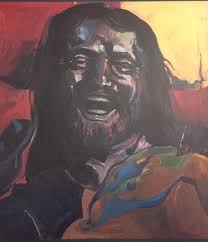
In Un Tal Jesus, Jesus is black, has a winning smile, and a very down-to-earth sense of humor. (The photo at the top of this blog entry shows Jesus as depicted in the Lopez-Vigil’s book.) The human Jesus portrayed in that radio series scandalized many and inspired even more throughout the Latin world and beyond.

As the Lopez-Vigils envision it, today’s episode takes place in a Bethany tavern owned by Lazarus, the brother of Martha and Mary. It’s a place of eating, drinking and lodging for travelers. It’s a place of laughter, joking, over-eating and drunkenness. And Jesus is right there in the middle of it all.

Passover is approaching, and the inn is full of pilgrims. It’s steamy, noisy, and loud. Martha is on the job, waiting on tables and controlling the rest of the staff. Meanwhile Mary (whom scholars increasingly identify with Mary Magdalene, Jesus closest female companion) is distracted by conversation with Jesus, who is bantering with his friends.

And what are they talking about? Religion? God? Spirituality? No, they’re joking. Jesus is posing riddle after riddle. And Mary finds it completely entertaining. In part, their dialog goes like this:

Jesus: What’s as small as a mouse but it guards the house like a lion. One, two, three: Guess what it is!
Mary: Small as a rat…and…it’s a key! I guessed it, I guessed it!
Jesus: Listen to this one: It’s as small as a nut, has no feet but can climb a mountain.
Mary: Wait… a nut going up the mountain…a snail!…Ha, ha, ha, tell me another one!
Jesus: You won’t guess this one right. Listen well: It has no bones, it is never quiet, with edges sharper than scissors.
Mary: It has no bones… I don’t know…
Jesus: It’s your tongue, Mary, which never rests!

Well, Mary and Jesus might have found that sort of patter entertaining, but Martha did not. She’s in charge of the inn and is worried about her guests waiting impatiently for their food while bread is burning in the oven. So, she makes her complaint to Jesus: “Stop your chatter and let my sister do her job!” It’s then that Jesus makes that remark about Mary’s choosing the better part. She’s chosen socializing and play over work.

Does that scandalize you – Jesus distancing himself from work? Well, it seems completely consistent with what I said about Jesus earlier. It coincides with his general approach to work, money, profit, saving, and anxiety about the future.

What difference would it make in our own lives if we accepted that message: socializing, community, and fun are more important than the work people like Donald Luskin would have us devote our entire lives to?

What difference would it make in our culture if, in a context of underpaid labor and long hours on the job we elected candidates advocating “spreading the work around,” spreading the money around, shortening the work week, and affording us more time with friends and family, eating, drinking, joking, and playing?

That’s the message of today’s Gospel reading: we need more free time, more vacations, and assured dignified retirement.

Wake up, Mr. Luskin! Wake up, American workers: You have nothing to lose but your chains.

P.S. Here’s the actual interview with Donald Luskin along with commentary by TYT‘s John Iadarola