Paris, San Bernardino & Double Standards

Double Standard

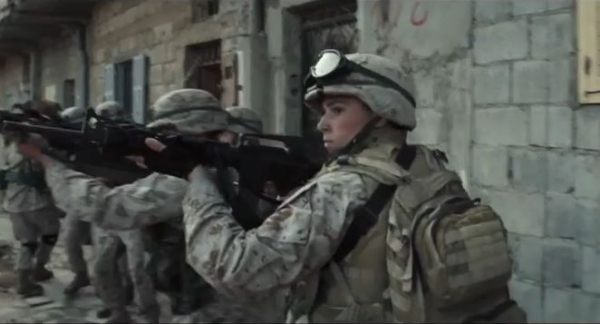
In the wake of slaughters in Paris and San Bernardino, a wave of Islamophobia is sweeping our country. The killings have revived charges that Islam is an inherently violent religion.

Given their sources, the charges are obscene.

That’s because they are almost invariably made by “Christians” who are among the strongest supporters of spending $2 billion per day (!) on the military. They love holy wars that have (among others) specifically targeted Muslims for the last 60 years.

Back in 1954, the Christians’ government overthrew a democratically elected head of a Muslim state in favor of a brutal puppet, Reza Palavi. There followed a 25 year reign of terror in Iran, whose 1979 revolution inspired and empowered Muslim resisters across the planet.

Additionally the government of these Christians unconditionally supports Israel, a state which since 1948 has evicted Muslims from their ancestral homes in Palestine killing tens of thousands in the process. The majority of U.S. Christians not only support Israel in general (often on religious grounds), but even its possession of a vast arsenal of nuclear “weapons of mass destruction.”

In response, angered Muslims have used box cutters, stones, sling shots, primitive IEDs and rockets, (along, one day, with hijacked planes) to defend themselves and counter-attack against forces that have declared a perpetual war against them.

Why this condemnation of violence by impoverished Muslims alongside virtual worship of the “Gods of Metal” by rich Christians? The answer lies in Muhammad’s attitude towards war.

Like the vast majority of Christians since the 4th century, and along with virtually all the prophets of the Jewish Testament, Muhammad was not a pacifist. Instead he was a proponent of just war theory. In fact, he pioneered the theory’s development far ahead of its Christian proponents. Following its dictates and common sense, he insisted that the poor have the right to self-defense.

That’s what makes Islam so threatening to the West. It wants no part of people who defend themselves against western depredations. Meanwhile western powers themselves claim not only the right of self-defense but even the prerogative of “preemptive strikes.”

What the West expects in return on the part of those attacked – especially if the attacked are “religious” – is a pacifism that for more than seventeen hundred years has never been a major part of “Christendom’s” belief system. On the contrary, western Christians tend to ridicule pacifists as unrealistic, unpatriotic, even cowardly “bleeding hearts.”

No, the West wants an enemy that simply rolls over for colonialism (in Israel), wars of aggression (in Iraq), policies of torture and illegal imprisonment (in Guantanamo), drone strikes, mass killings of innocent civilians, support of unpopular dictators, rigged elections, and a host of other crimes. And when religious people defend themselves, westerners cry “foul” and consider themselves blameless victims.

Paris and San Bernardino should not surprise us. Barring mass conversion of blood thirsty “Christians,” more is on the way.

Terrorism’s Causes? Ask Jihadi John!

jihadi john

Last month The Atlantic headlined Graeme Wood’s article, “What Isis Really Wants and How to Stop It.” That article apparently set the tone for President Obama’s White House Summit on Countering Violent Terrorism (Feb. 18th).

Together the article and the Obama’s meeting gave rise to endless talk show discussions about radicalism and its causes. All reformulated the old 9/11 question, “Why do they hate us?”

Most expert answers missed the obvious historical response. They overlooked the basic law of cause and effect.

Instead, they focused on terrorist psychology.

According to the experts, many ISIS radicals are directionless youths without gainful employment. Others are adventure-seekers, or mentally ill psychopaths. Some radicals are medievalists with an unexplainable bias against the modern world. Most are products of bad religion and corrupt imams.

Ostensibly, the majority are easily influenced by Facebook advertising which ISIS rebels have mastered to an art form that somehow escapes the medium’s inventors.

What to do about such problems? The talk show whizzes weren’t sure. Most highlighted better advertising. We’ve got to improve our Facebook skills, they intoned.

Missed or downplayed in all the ruminations is the obvious. Why not ask Jihadi John?

Here’s what he said on YouTube as he pointed his knife at President Obama before beheading yet another victim dressed tellingly in an orange jumpsuit: “As your missiles continue to strike our people, our knives will continue to behead your people.”

Hmm. . . . Wouldn’t you say that’s pretty straight-forward? In a word, the man is talking about blowback. It’s as simple as that.

What causes radicalism? Let me count the ways: everything signified by Guantanamo orange jumpsuits, extra-judicial assassinations, drones hovering over towns terrorizing children, wedding parties whose revelers are suddenly turned into “bug splats,” U.S. soldiers urinating on the lifeless corpses of one’s parents, the work of reassembling body parts for purposes of identification after a U.S. bombing attack, the smell of human flesh incinerated by our napalm and white phosphorous.

The list goes on and on: Abu Grahib, Fallujah, Haditha, the Torture Report, support of dictators throughout the Arabian Peninsula, continued arming of Israel even after Netanyahu incinerated and dismembered more than 495 Muslim children in his latest “turkey shoot” in Gaza, Christian fundamentalists ignorantly crusading against Islam, racist cartoonists lampooning “the Prophet” when they can hardly spell his name, western industrialism destroying the planet by climate change.

Why do they hate us? It’s not rocket science, friends. It’s blowback. It’s what none of our leaders will say because curing the radicalism means drastically reforming U.S. policy.

It means ceasing to be the radical terrorist state “America” itself has become.

For God’s sake, listen to Jihadi John!

(Sunday Homily) Why I Liked “American Sniper”

american-sniper

Readings for 3rd Sunday in ordinary time: DT 18: 15-20; PS 95: 1-2, 6-9; I COR 7: 32-35; MK 1: 21-28

Today’s readings are about resistance to oppression. They invite us to side with the oppressed and poor in their fight against world-class bullies – to understand the world from the viewpoint of the “unclean.” Seen from that perspective, “American Sniper” is full of insight. It calls us to think critically about whose side we are on in the endless wars our country wages.

The need to see reality “from below” is a major point of today’s first reading. There the message of Moses announcing liberation of the oppressed is presented as the criterion of prophetic truth. Those who teach like Moses (on behalf of the enslaved) should be listened to. False prophets with another message will be punished. This first reading from the Jewish tradition goes on to promise the advent of another prophet like Moses.

By virtue of its inclusion in the liturgy of the word, today’s gospel selection from the Christian tradition identifies Jesus as fulfilling the Mosaic promise. He not only astounds people by his authoritative way of speaking. His action on behalf of a man considered “unclean” demonstrates Jesus’ prophetic authenticity.

That insight was on my mind last week when I decided to see “American Sniper” for myself. I had read the reviews. I knew the criticisms. But I wondered what it would look like if I followed the suggestions of today’s readings and viewed the film “from below,” from an Iraqi perspective.

What I discovered was surprising.

Viewed from the underside of history, “American Sniper” was a tribute to the world’s poor and oppressed – especially to the heroic people of Iraq. That’s because “American Sniper” was about resisting bullies the way the Iraqis have since 2003.

That bully theme is not farfetched. It was announced in one of the film’s opening scenes.

There an adolescent Chris Kyle is instructed by his father about three ways of being in the world. Kyle, of course, is the film’s central character – the most lethal sniper in the history of the American military. He is believed to have killed 255 Iraqis in his 4 tours of duty. Many, it is certain, had their heads blown right off.

“You can be a wolf, a sheep, or a sheepdog” Kyle’s father tells him (in my paraphrase). “Wolves are bullies; they are cowards preying on the weak. Sheep are the naïve who simply go along, following the herd; they do nothing about bullies. They too are cowards. The way to deal with bullies” says Kyle’s father,” is to be a sheepdog and protect those the bully preys upon.

“I want you to be sheepdogs!” the elder Kyle shouts at his sons, “Don’t let the bullies have their way.”

Ironically, the rest of “American Sniper” shows how Chris Kyle entirely rejected his father’s advice, but also how Iraqi patriots unconsciously heeded it. They emerge in the film as the sheepdogs Kyle’s father admired.

For his part, Kyle joins a gang that specifically preys upon the weak for no good reason – simply because it can and because (as Kyle writes) it’s fun. Chris Kyle became a gangster bully.

No, he didn’t join the “Crips” or “Bloods,” “Sharks” or “Jets.” He joined the “Seals.” And their destructive power was beyond belief. To begin with, their gang attire was fearful including matching helmets and boots, flak jackets, camouflage, wrap-around sunglasses, and night vision goggles. They had guns of all types, unlimited supplies of bullets, grenades, missile launchers, armored vehicles, helicopters, planes, and sophisticated communication devices. They prowled in menacing groups along the streets of Bagdad pointing guns at open windows and doors, pedestrians and drivers.

But it wasn’t easy for aspiring bullies to become Seals; doing so required absolute submission and humiliation. So as with all gangs, they had their initiation rites. These included merciless hazing and demeaning tests of endurance. Such rites of passage were accompanied by constant indoctrination that left initiates exhausted and absolutely malleable. In terms of today’s responsorial psalm, their hearts were sufficiently hardened for the inhuman tasks before them.

As a result, and with no knowledge whatever of their intended victims, Seals became convinced that anyone their superiors identified as “targets” were savages. They knew that because their indoctrinators told them so.  They knew nothing else about Iraq, Iraqis or their culture. And so, and like their Indian Fighter predecessors, Seals hated “savages” and wanted them all dead.

In other words, gang aspirants became servile and submissive sheep. They obeyed orders without question or understanding of context. (It’s the military way.) Seals stood ready to kill women, children, the elderly and disabled – anyone identified by their superiors or who threatened their mafia-like ethos of “family.” Protecting one’s “brothers” in crime became the justification of any slaughter. As a result of that brainwashing, Seals were entirely unable to see their “enemies” human beings.

Such identification was difficult for audiences of “American Sniper” as well. Nonetheless, Iraqi humanity inevitably surfaced for anyone remembering today’s readings about Moses and Jesus.  Those prophetic lenses revealed the Seals’ victims to be the successors of the poor and oppressed that both of those prophets came to rescue.

Think about the Iraqis for a minute.

Like their predecessors in Egypt, they were perfect targets for bullies. They had no army, no sophisticated weapons, no helicopters, planes or armored vehicles. They wore no uniforms or protective clothing. Apart from unemployed members of Iraq’s Republican Guard, almost none had formal military training.

Instead they were simple peasants, merchants, teachers, barbers and taxi drivers. They were fathers and mothers, children barely able to lift a grenade launcher, grandparents, friends and neighbors banding together as best they could to protect their homes, families from the ignorant, marauding invaders who proudly called themselves “The Seals.” Unable to show weapons in public (like their menacing occupiers), Iraqis hid them by day under floor boards in their homes.

Some were so desperate that they were willing to sacrifice themselves and their children to resist the Seal home-invaders. So they became suicide bombers. Others experimented with non-violent resistance. They were willing to share their tables with the barbarians from abroad, offering them food and shelter in hopes that kindness might win them over.

But no such luck.

So the majority resorted to defending themselves and each other with weapons – mostly captured or left over from previous Seal invasions (there have been many). What else were these brave patriots to do?

One of them became particularly admired. He had been a national hero, called Mustafa. In the story, this fictional character was an Olympic gold medal winner like the American’s Michael Phelps. But instead of resting on his laurels or using his status to protect himself from harm, he employed his skills as a sharp shooter to defend his people.

We can only imagine the pride that swelled the hearts of Iraqis when they heard how he inspired fear in the American bullies who constantly kicked in their doors, destroyed and looted their property, belittled their culture and faith, intimidated their children, frightened their elders, and demeaned their women.

In the end, Mustafa became a glorious martyr.

Again ironically, he was gunned down by his ignorant American counterpart. He was killed by the bully without a thought in his head who was in the game for fun, for the rush of battle, and to protect his relatively invulnerable “brothers” from the harm they deserved at the hands of the civilian victims they tormented.

In what can only be described as an act of self-loathing, that counterpart, Chris Kyle, takes careful aim and from a great and safe distance shoots a patriot he considers “savage,” because he mirrors so well his own bloody “work.”

It’s easy to vilify Chris Kyle. But he’s not to blame. He was no different from any other soldier serving in Iraq. He was no different from drone “pilots” operating from their air-conditioned “theaters” in Nevada or New Mexico. Sad to say, all of them are unwitting bullies and gangsters. They are brainwashed sheep.

Today’s readings are a reminder of all that. So is “American Sniper.”

Both call us to put ourselves in the shoes of those we are taught to hate.

Shockingly, they call us to change sides!

(Instead of a Sunday Homily) War Mongering at the New York Times: There’s always a “Why”

Urinating soldiers

Today The New York Times published an inflammatory editorial called “The Fundamental Horror of ISIS.” The evident but unstated purpose of the piece was to strengthen support for the latest waste of our tax-payer dollars on the most recent phase of the so-called “war on terror.” Like its predecessors, that phase has nothing to do with protecting our “homeland.” Rather as Dennis Kucinich has observed, it’s yet another phase of the (by-now) 25 year long war against the impoverished masses who have the misfortune of finding their homes floating on top of a vast sea of oil controlled by foreign outsiders.

To help the White House justify its consequent greed-based aggression, the NYT editorial trotted out the well-worn thesis that ISIS represents unmitigated, irrational evil entirely foreign to the sensitive minds of its gentle readers. So it rehearsed “the beheadings, crucifixions, tortures, rapes and slaughter of captives, children, women, Christians, Shiites.”

This, of course, represents a highly familiar litany relative to our state’s designated enemies. The “presstitutes” made similar allegations against “the Russians” during the Cold War as well as the Chinese Communists. It was also the case with the Sandinistas, the PLO, Hezbollah, and Hamas. Similarly, Manual Noriega, Slobodan Milosevic, Saddam Hussein, Osama bin Laden, Muammar Kaddafi, and (until recently) Bashar al-Assad all represented unmitigated evil. Now it’s the turn of ISIS and (as of last Tuesday) Khorasan.

In all of these cases the designated enemies in question have represented pure evil without any legitimate grievance other than sadism that strangely and inexplicably has (according to the Times in the case of ISIS) “attracted hundreds of willing followers — yes, also from Europe and America.”

Times editors put it succinctly in today’s rant: “Comparisons are meaningless at this level of evil, as are attempts to explain the horror by delving into the psychology or rationale of the perpetrators. . . as Roger Cohen, the New York Times columnist, wrote in a recent piece about ISIS, there is no “why” in the heart of darkness.”

To repeat, this level of evil is entirely foreign to the civilized westerners.

Really?

Try explaining that to the victims of the 25 year war in Iraq and Afghanistan.

They remember:

• The million and a half civilian deaths in Iraq caused by the U.S.’s naked “war of aggression” against that country – the “supreme international crime” in the eyes of the United Nations.
• YouTube films of U.S. military personnel urinating on the bodies of dead Iraqi patriots defending their “homeland” from barbarous Marines, Special Forces, and Navy Seals.
• Abu Ghraib and its broadly smiling heroes (from next door) sexually assaulting their victims and proudly posing with thumbs up over bodies of those they’ve just tortured to death.
• President Bush and Dick Cheney not only ordering the war crimes of water-boarding and other acts of torture, but joking about it.
• Fallujah and the use of illegal white phosphorous.
• Haditha and the heartlessness of U.S. soldiers systematically slaughtering entire families there.
• The frequent reports of wedding parties and funerals routinely devastated by drones in Afghanistan, Iraq, Libya, Somalia, Bahrain, Yemen, Pakistan, and who knows where else?
• Chelsea Manning’s release of the film “Collateral Murder,” where U.S. “pilots” joke about “wasting” international journalists and the civilians who came to their aid.
• U.S. insistence on using cluster bombs whose known effect is to blow arms and heads off children attracted to explosives disguised as toys.
• Secretary of State Madeleine Albright’s justification of the effects of U.S. sanctions on Iraq, which she admitted killed 500,000 Iraqi children. “Yes, Leslie,” Ms. Albright said to interviewer Leslie Stahl, “we think it was worth it.”
• U.S. supply of arms enabling Israel’s “Operation Protective Edge” which wantonly slaughtered more than 2500 Palestinians in direct attacks on civilians and the infrastructure of Gaza.
• U.S. stated intent to adopt similar policy of “relaxed rules” around tolerance of civilian deaths in its latest attacks on Iraq and now Syria.

All of that would easily inspire Al-Jazeera editors to write:

“Comparisons are meaningless at this level of evil, as are attempts to explain the horror by delving into the psychology or rationale of the perpetrators. . . as one of our reporters wrote in a recent piece about the United States, there is no “why” in the heart of darkness.”

But of course, there’s always a “why.”

The difference is that the “why” in the U.S. heart of darkness is greed for oil and the protection of an oil economy that will predictably destroy our planet.

Meanwhile the unexamined “why” of ISIS and the thousands attracted to its cause is intimately connected with response in kind to the Original Aggression of colonialism’s systematic rape of the Middle East. ISIS is responding in kind to U.S. crimes. It’s all blowback.

And the gentle editors of the New York Times (speaking for their employers in the military-industrial complex) can’t stand what they see when they look into the mirror.

(Sunday Homily) U.S. Doublespeak Is More Threatening to the World than ISIS or Khorasan

uncle-sams-lies

Readings for 26th Sunday in ordinary time: EZ 18:25-28; PS 25: 4-5, 8-10, 14; PHIL 2: 1-11; MT 21: 28-32 http://www.usccb.org/bible/readings/092414.cfm

If I were you, I’d be careful about air travel. That’s because, as the President reminded us last week, the enemies we’ve so fiercely created over the last 13 years are plotting to blow U.S. commercial aircraft out of the skies. So one of these days Khorasan’s heat-seeking missiles will find the rear end of your plane, and that will be the end of you.

And, when you think about it, those firing the rockets will be justified in doing so. That is, if we allow them to apply the insane logic behind Mr. Obama’s latest justification for bombing his seventh Muslim country in six years.

In doing so the Nobel Peace Prize laureate said last week, “Once again, it must be clear to anyone who would plot against America and try to do Americans harm that we will not tolerate safe havens for terrorists who threaten our people.”

Wait a minute!

Our “leader’s” logic (if we universalize his pronouncement) has just endorsed an endless cycle of violence that should be completely unacceptable to any human being — not to say any Christian. His words mean that anyone who plots against another country trying to do their citizens harm can claim no safe haven. They will be subject to reprisal.

Tell that to drone victims and to Syrians who lost their children in last week’s bombings – or to similar casualties at weddings and funerals in Afghanistan, Iraq, Libya, Pakistan, Yemen, and Somalia. The President’s doublespeak logic allows them to say, “Once again it must be clear to the Americans plotting against us and trying to do our citizens harm that we will not tolerate safe havens for such terrorists who threaten our people. There will be reprisals.”

That means that the militants in the countries just mentioned can legitimately respond to the terrorism of drone and outright bombing attacks with similar assaults on American citizens in our own “homeland.”

So as I say, hold your breath on your next airline trip to Miami or New York. The blowback is coming – and the blowback to that blowback too.

Such are the realities of Eternal War.

It’s that sort of damned logic (I’m choosing my words) that is addressed in today’s liturgy of the word. It’s not at all comforting.

The first reading from the prophet Ezekiel sets the tone. It underlines what Easterners call the Law of Karma. Ezekiel says that people die because of their wicked deeds. He says, “When someone virtuous turns away from virtue to commit iniquity, and dies, it is because of the iniquity he committed that he must die.” That’s karma. It’s an inescapable law of the universe.

St. Paul put it this way, “Do not be deceived, God is not mocked; for whatever a man sows, this he will also reap.” (GAL 6:7-9). Relative to war, Jesus was even more pointed. He said all those who live by the sword will die by that same instrument (MT 26:52). It’s all karma.

As citizens of a nation that lives by the sword more than any other in world history, what then are we to do? Here, once again, today’s readings supply an answer. We must abandon the destructive path we’re on. That’s what Ezekiel says. Speaking of the potential recipient of negative karma, Ezekiel promises, “But if he turns from the wickedness he has committed, he does what is right and just, he shall preserve his life; since he has turned away from all the sins that he has committed, he shall surely live, he shall not die.” That too is karma.

In other words, to avoid the negative consequences of our actions, we must change course radically. More specifically today’s gospel selection addresses that imperative to political leaders. It calls them to make their actions correspond to their words.

Yes, today’s gospel is addressed to leaders like our president and congresspersons. There Jesus addresses those in power and tells the local rulers of his day (“the chief priests and elders”) a parable about lip service and the required change of direction. (Remember, in Jesus’ context there was no sharp distinction between religious and civil government.)

“A man had two sons,” the Great Teacher tells these government officials. “He came to the first and said, ‘Son, go out and work in the vineyard today.’ He said in reply, ‘I will not, ‘ but afterwards changed his mind and went. The man came to the other son and gave the same order. He said in reply, ‘Yes, sir,‘ but did not go. Which of the two,” Jesus asks, “did his father’s will?”

The chief priests and elders answer,”The first.”

Jesus said to them,”Amen, I say to you, tax collectors and prostitutes are entering the kingdom of God before you.”

I’m sure you see that Jesus’ parable is about governmental lip service and deception. The parable calls them to radical change in policy. Jesus implies that the leaders of his day were like the first son. They said the right things, but their actions belied their words. As a result, their deeds excluded them from the New Order (God’s Kingdom) which was always the focus of Jesus’ revolutionary discourse.

And that brings us back to our own leaders and the differences between what they say and do. Think of the events of recent weeks – even last week. During that time our leaders have:

• Paid lip service to national boundaries in the case of Russia and Ukraine, but then have claimed that national boundaries are irrelevant in their own “war on terrorism.”
• Paid lip service to international law – again in the case of Russia and Ukraine, but then ignored that law by going to war with ISIS without the required U.N. resolution.
• Paid lip service to civilization and decency in decrying ISIS’ brutal beheadings (by knife) of innocent civilians, but then beheaded literally untold others via drones and direct bombings. (Yes, drones and bombs inevitably blow heads off bodies.)
• Paid lip service to the human rights of civilians brutalized by ISIS, while ignoring the million and a half civilians their own armed forces have just as brutally killed in Iraq and Afghanistan.
• Paid lip service to nuclear non-proliferation in their demands upon Iran, but then have pledged billions to modernize their own overwhelming nuclear arsenal.
• Paid lip service to environmental protection (following last Sunday’s “People’s Climate March”), but the very next day implicitly embraced the possibility of “nuclear winter” through that same weapons modernization program.

Of course, there are many more examples of our leaders’ saying one thing and doing the opposite. In fact, their lies come so thick and fast that confusion and weariness results on the part of listeners. Our leaders’ honeyed words accompanied by unspeakably cruel acts paralyze us from taking action against or even recognizing in our own country a world force that is far more destructive than ISIS, Khorasan, or al-Qaeda. In the words of Noam Chomsky, the latter represent “retail terrorism,” while the U.S. “network of death” (with bases all over the world) embodies “wholesale terrorism” that is far more evil and destructive.

I believe that danger of confusion and consequent inaction is why Jesus shocked his opponents by saying simply, “Amen, I say to you, tax collectors and prostitutes are entering the kingdom of God before you.”

That would be as scandalous to Jesus’ audience as if he said to President Obama and John McCain, “Amen, I say to you, ISIS, Khorasan and al-Qaeda will enter God’s kingdom before you.”

What does that mean for us who are attempting to follow the Way of Jesus and are trying to be part of his Kingdom revolution? It means that we must realize that:

• Perpetual war contravenes the teachings of Jesus who taught us to love our enemies.
• Our “leaders” (just like the priests and elders of Jesus’ day) are liars to the core.
• The United States is (in the words of Dr. King) the “greatest purveyor of violence in the world.”
• That the retail terror and brutality of ISIS pales in comparison with the wholesale terror the United States inflicts on the world’s poor.
• That we must work and pray every day for the defeat of the United States in its endless, genocidal wars.

Believe me: that defeat is coming. Better yet, believe Ezekiel. It’s the law of karma.

(Sunday Homily) Zionists Are Weeds in the Garden of Palestine

Zionists

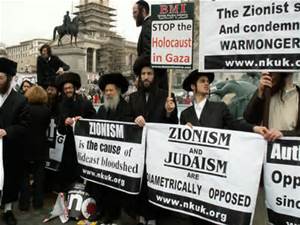
The entire world stands aghast at the cruelty of Israel’s vicious and illegal collective punishment of Palestinian civilians for the perceived “crimes” of Hamas – the group of Palestinian resisters committed to the expulsion of illegal Zionist occupiers from the Palestinian homeland.

Today’s liturgy of the word implores the Zionists to abandon their butchery.

It also challenges Christians to denounce such ethnic cleansing and to withdraw the last vestiges of support for a group that more resembles their former Nazi persecutors than the “People of God” celebrated in the Hebrew Bible.

At the same time, today’s readings support rabbi Michael Lerner in cautioning Hamas against its policy of violent resistance. Though many of us would agree that Hamas’ tactics are understandable and often justified by principles of self-defense, today’s Gospel reading identifies them as counterproductive and ultimately harmful to the very people Hamas seeks to defend.

Instead, Jesus suggests that violent resistance should be replaced by greater reliance on more subtle and patient strategies. Such strategies are reflected in the three basic themes of today’s readings. They emphasize (1) the power of God expressed in leniency and forgiveness, (2) the futility of violent response to unwanted foreign presence, and (3) resistance that takes the form of patient trust that God’s forgiving power will prevail. In succession, the themes suggest challenges for Jewish Zionists, Palestinians, and Christians.

Begin with the first reading from the Jewish Testament’s Book of Wisdom. It is particularly relevant to Zionist Jews. The reading says explicitly that God’s power is not expressed in violence but in leniency to all, Jew and non-Jew alike.

That theme is repeated in today’s responsorial psalm with equal relevance to Zionists. There God is described as belonging to all nations. The divine Spirit, as Paul insists in today’s second reading, dwells within all humans regardless of nationality. It is slow to anger, good, forgiving, abounding in kindness.

From this, Jewish wisdom insists that the “People of God” must in turn be kind, lenient and forgiving to all – presumably even to their worst enemies. There is no room here for exceptions involving the indigenous tribal people of Palestine.

The second theme of today’s liturgy enjoys direct relevance to contemporary Palestinians. Whether they are Muslims or Christians (and many are Christians), they also recognize the Bible as the Word of God. I point to Palestinian relevance because this second theme addresses the question of resisting illegal occupation.

That is, Jesus’ parable of the weeds planted by an enemy in a landlord’s field can be read as addressing the Roman occupation forces encumbering Israel during Jesus’ lifetime. [According to John Dominic Crossan, Matthew’s allegorizing of Jesus’ parable – making it about the end of the world – is more reflective of the situation of the Jewish diaspora (following the destruction of Jerusalem in 70 CE) than of the actual revolutionary situation of Jesus’ own day.]

In occupied Israel, the suffocating Roman presence was as unwelcome, alien, and destructive as weeds in a garden or field. It was like the presence of basically European Zionist colonizers who have encumbered Palestinian land since their colonial invasion in 1948.

The question was how to deal with such odious foreign presence. Zealot revolutionaries had their answer: Uproot the weeds here and now. Take up arms; assassinate Romans and their collaborators; drive them out mercilessly. Be as cruel and vicious as the Romans.

Jesus’ response was different. As a non-violent revolutionary, he could surely understand the more apocalyptic strategy. After all, much of his teaching expressed sympathy to the Zealot cause which included land reform, debt forgiveness, and expulsion of the hated Roman occupation forces. Many scripture scholars even identify possibly five members of Jesus’ inner circle as Zealots themselves.

But Jesus’ Parable of the Weeds is more prudent and sensitive to civilian casualties than the strategy of the impatient Zealots – or that of Hamas.

When the landlord’s workers ask, “Should we uproot the weeds?” Jesus’ landlord answers: “No, if you pull up the weeds you might uproot the wheat along with them.”

In other words, Jesus agrees with El Salvador’s Oscar Romero and with Brazil’s Dom Helder Camara that revolutionary violence, though understandable (and justifiable on the grounds of just war theory), is imprudent at the very least.

This is because when faced with a vicious, overwhelmingly armed oppressor (like the Zionist state) resistance inevitably leads to state terrorism – to the war crime of collective punishment impacting women, children, the elderly and disabled. At the very least, that’s why Jesus eschews Zealot violence.

How then respond to illegal occupation like Rome’s in the 1st century or Israel’s over the last more than 60 years?

Jesus’ response? Be like mustard plant, he says. Be like yeast in flour. Both puzzling recommendations are relevant not only to Palestinians, but to Christians who wish to help their brothers and sisters in Palestine against the Zionists-turned-Nazis.

First of all think of the puzzlement that must have struck Jesus’ listeners. Jews didn’t have much use for yeast. They preferred unleavened bread. Neither would any farmer sow mustard seeds in her field or garden. The mustard plant was like kudzu – itself a kind of weed that eventually can take over entire fields and mountainsides while choking out other plants weeds or not. The mustard plant was unstoppable.

So Jesus is saying:

 * The Romans are weeds in your garden.
 * Don’t try to uproot them.
 * That will only lead to slaughter of the innocent.
 * Rather become weeds yourselves – like the mustard plant which is much more powerful than simple Roman (or Zionist) weeds.
 * Resist the Romans by embodying the Spirit of God that is slow to anger, good, forgiving, abounding in kindness.
 * Only imitation of Wisdom’s God can defeat the evil of imperialism.

What does that mean for Christians wishing to express solidarity with Palestinians against their cruel oppressors? At least the following:

 * Reject U.S. militarism in general as counterproductive, since fully 90% of the casualties it inflicts in war are civilians.
 * To bring about change, be instead like the yeast a homemaker puts into 60 pounds of flour, “infecting” the greater culture by non-violent resistance rather than seeking to destroy enemies.
 * Recognize the Zionists for what they are: an outlaw European “settler society” illegally occupying Palestinian land.
 * Take sides with Palestine’s indigenous tribal People.
 * Recognize them for what they are: “the Jews’ Jews” – treated by Zionists in the same way the Nazis treated Jews in Germany.
 * Petition the U.S. government to withdraw its support of Israel (more than one million dollars per day) unless the Zionists obey UN Resolution 242 and abandon the occupied territory while tearing down the odious Wall of Shame protecting the illegal Zionist settlements.
 * Support boycotts of Israel’s products by not buying them and by urging our churches and places of business to do the same.

Surely Jesus’ Way of non-violent resistance, forgiveness and love of enemies will strike many (non-believers and believers alike) as unrealistic. But according to the faith we Christians pretend to embrace, Jesus’ Way is God’s way.

But then perhaps we think we’re smarter and more realistic than Jesus — or God?

For Decades the U.S. Hated Nelson Mandela

NelsonMandela_Terrorist

Nelson Mandela was buried yesterday. The entire world is in mourning. President Obama joined others in eulogizing the 95 year old hero with words of deep admiration and praise.

All the adulation was richly deserved.

However, in our present context of anti-terrorist hysteria, it is important to note that Nelson Mandela and his African National Congress (ANC) party were on the U.S. terrorist Watch List until quite recently. In fact, after spending more than a quarter century in South Africa’s Robben Island, and despite Mandela’s stature as President of South Africa, it wasn’t until 2008 that Mandela and his ANC were removed from that role of infamy.

That fact coupled with Mandela’s now-heroic status shows how the term “terrorist” can be misapplied for decades to genuine freedom fighters while the U.S. opposes them in its de facto support of oppression. Martin Luther King teaches the same lesson.

The Reagan administration was largely responsible for attempting to ruin Mandela’s reputation. It called him “subversive” and “communist” all during the 1980s. Mr. Reagan insisted that Mandela and the ANC were Cuban backed enemies of the United States and its interests in South Africa. Such charges were behind the administration’s refusal to support UN and international trade sanctions and an arms embargo against the racist South African apartheid system.

Even after “Madiba” (his affectionate tribal name) received the Nobel Peace Prize (1993), the U.S. continued to treat Mandela as a pariah. However, after 9/11, it changed its reason for doing so. The State Department then stopped referring to him as a communist and called him a “terrorist” instead. In fact as late as 2005, he was required to get a special State Department waiver in order to enter the U.S. in order to visit George W. Bush.

Finally in 2008, with a big prod from the Congressional Black Caucus, Congress at last voted to remove the by then 90 year old Mandela and ANC from the U.S. government’s official list of terrorists.

All of this has been consigned to George Orwell’s Memory Hole in the upsurge of universal acclaim for South Africa’s safely dead Madiba.

The same thing happened, of course, to Martin Luther King whom the State Department, CIA, and others had labeled “communist” and “subversive” before finally honoring the martyr’s memory with a national holiday and with innumerable “Martin Luther King Boulevards” throughout the country.

In the light of such history, can our grandchildren look forward to misty eyes, holidays and street renamings after the passing of Daniel Ellsberg, Edward Snowden, Chelsea Manning, Julian Assange, Aaron Swartz, and Assata Shakur?

Stay tuned.

What “Terrorists” Think while Being Tortured (Sunday Homily)

Terrorist

Readings for 32nd Sunday in Ordinary Time: 2 MC 7: 1-12, 9-14; PS 17:1, 5-6, 3, 15; 2 THES 2:11-3:5; LK 20: 27-38. http://usccb.org/bible/readings/111013.cfm

One of the wonderful aspects of the Judeo-Christian tradition is how so much of it reflects the consciousness of the poor and oppressed, while at the same time giving expression to a “preferential option for the poor.” That’s a gift for us in a culture that generally despises poor people, oppresses the world’s impoverished majority, and spins the news in ways that ignore the poor and reflect a decided “preferential option for the rich.”

This morning’s first reading is especially valuable for us who live in under the torture regime of American Empire. It actually invites us inside the heads of tortured “terrorists.” It raises the question, who are the real terrorists – the forces of empire or those who resist them? In doing so, the reading from Second Maccabees sheds light on the contemporary debate about torture in service of empire. It also highlights parallels between the mentalities of “terrorists” then and now. The reading calls us to question our support for the entire War on Terror.

For starters, consider torture itself. Our culture actually debates torture’s use, its effectiveness and morality! It does!

Previously, that would have been unthinkable. Torture used to be considered one of those intrinsic evils about which there simply could be no debate.

However, ever since Abu Ghraib gave the lie to George W. Bush’s famous prevarication, “The United States doesn’t do torture” – ever since our government’s redefinition of the word to exclude even waterboarding – it has become apparent that Bush (and so many others of our “thought-leaders”) was lying. So today, many prominent “court intellectuals” have been pushed to actually defend torture’s permissibility.

But what do tortured terrorists actually think about having limbs removed and tongues cut out? Read today’s selection about the Maccabee brothers and find out.

The Maccabees were members of a heroic family of guerrilla fighters who in the mid- 2nd century BCE terrorized the invading Greek forces of Antiochus IV Epiphanes. (Actually, “Maccabee” wasn’t the family’s name; it was more a nom de guerre for an entire resistance movement. The word meant “Hammer” – the Hammer Gang – so-called because of its delight in pounding to mincemeat the invaders of their beloved homeland. The term “Maccabee” was similar to “al Qaeda,” when it simply meant “the list” – a reference to the Rolodex of assets the CIA used when it employed al Qaeda back when they were “freedom fighters” against the Russians in Afghanistan.)

For his part, the Seleucid king, Antiochus, was anti-Semitic. He considered the Jews historically and culturally backward. For him and his empire’s advancement, Jews had to be brought into the 2nd century BCE even if it meant their kicking and screaming the whole way.

Today we might understand Antiochus’ project as “modernizing” the Jews – as Hellenizing them for purposes of imperial control. Evidently the Seleucid king subscribed to the position that if empire can persuade conquered peoples to adopt its patterns of thinking and especially of imagining God, the task of imperial administrators is made that much easier.

Many Jews agreed with the program of Antiochus. After all, the Greeks’ empire seemed invincible. If the empire couldn’t be beat, it was better to join it willingly. So these “Hellenized Jews” stopped circumcising their sons, and changed their diets even to include eating pork. They became more Greek than the Greeks.

They also became the targets of Maccabee “terrorist” attacks. In today’s terms, such Hellenized Jews would be the targets blown up by Maccabee suicide bombers in marketplaces located in Jewish but Greek-loving neighborhoods. (Even if the Maccabee targeting may have been more selective than that, it is certain that Hellenized Jews were as much the objects of Maccabee terror as were the Seleucid forces themselves.)

In countering such extremism, Antiochus IV proscribed the Jewish religion as itself criminal and illegitimate. This was very similar to the way many “Americans” consider Islam. So Greek troops burnt and otherwise desecrated copies of the Torah in much the same way as our “Christian” troops are frequently caught burning or urinating on the Holy Koran and on corpses of Muslim resistance fighters.

Though the Greeks considered the Maccabean forces to be terrorist, faithful Jews admired them as national heroes and servants of God. They understood that the Maccabees were fighting a Holy War against the much more powerful Seleucids. It was David against Goliath all over again.

In any case, according to today’s selection from Second Maccabees, seven brothers of the gang’s leadership were finally arrested (along with their mother) by the Greek invaders. (This would have been reported to Greeks “back home” as a great triumph – “Senior Leaders” captured making “our troops” and “our world” much safer.)

Then the torture and the screaming start.

To begin with all eight are beaten with whips and instruments designed to tear open their flesh. Then following standard operating procedures still practiced today, other enhanced interrogation techniques were used to torture the brothers one after the other in the presence of their blood-drenched mother, herself near death. The purpose here, of course, was to induce the woman to divulge names, places, and plans that she was privy to as the wife of the one who started the Jewish resistance to the Seleucids.

But what does she do? And what about her sons?

In a word, they are all – mother as well as her sons – completely defiant.

“What do you expect to achieve by questioning us” one of the brothers shouts? “We are ready to die rather than transgress the laws of our ancestors.”

Even at the point of death he spits out the words: “You accursed fiend” (I wonder what expletive he really used!), “you are depriving us of this present life, but the King of the world will raise us up to live again forever. It is for his laws that we are dying.”

Another of the brothers sees that his torturers are actually enjoying their work. (The text refers to cutting out his tongue and amputating his hands as “cruel sport.” Does that remind you of Abu Ghraib?) So he sticks out his tongue and stretches out his hands inviting them to do their work. “It was from Heaven that I received these,” he says. “I’d rather lose them than offend Yahweh” (read Allah).

“Even the king and his attendants marveled at the young man’s courage,” the text says. Far from being intimidated, the freedom-fighter “regarded his suffering as nothing.”

Just before dying, another of the tortured brothers undergoing the very same cruelties says: “It is my choice to die at the hands of men with the hope God gives of being raised up by him; but for you, there will be no resurrection to life.” As indicated by those words, conviction of a happy eternity moved these guerrilla fighters to embrace death willingly. (Seventy-two virgins, anyone?)

So what goes on in the heads of the tortured? Disdain for their torturers. Defiance. Show of courage. Love for the motherland. Hope.

And what goes on for the people they die for? Admiration. Elevation of martyrs and the tortured to sainthood. Motivation to follow their example.

And ultimately victory for the tortured and assassinated. . . . I mean, against all odds, the Jewish resistance – the Hammer Terrorists – did succeed in evicting the Greeks from their homeland.

As I was saying, this reading should cause us to reevaluate our attitude towards terrorism, terrorists, and the scandal of debating the pros and cons of torture.

Who Will “Punish” Us? Photographs and Testimony about United States’ Use of Chemical Weapons

White Phosphorus

It is extremely interesting to compare the U.S. response to the use of chemical weapons in Syria and its suppression of evidence of similar weapons use by the U.S. and U.K. in Fallujah in March and November of 2004.

We all know about the U.S. reaction to the use of chemical weapons in Syria.

In the face of denials by the Syrian government, and on evidence that remains secret and other indications provided by photographs, testimonies of eye-witnesses, accusations of the al-Qaeda-affiliated rebels, and deductions derived from consideration of the delivery mechanisms necessary to launch such weapons, the U.S. government was determined to “punish” the al-Assad government for the heinous crime of using chemical weapons.

Such circumstantial evidence was considered more than sufficient for president Obama and secretary of state Kerry.

In his speech to the nation on Tuesday, September 10th president Obama paid particular attention to the photographic evidence of chemical weapons use by the al-Assad government. Specifically he reminded us of the child victims involved.

The pictures Mr. Obama was referring to included this one:

chemical weapons Syria

And this one:

syria chemical weapons 2

And this one:

Syria chemical weapons 3

But what about the U.S.-inflicted atrocities behind photos like this one?:

Fallujah 1<a

Or this one?:

Fallujah 2

Or this one?:

Fallujah 3

According to a study published in 2010,”Beyond Hiroshima – The Non-Reporting Of Fallujah’s Cancer Catastrophe,” those are pictures of the deaths and birth defects directly resulting from “American” use of depleted uranium and chemical weapons including white phosphorous in Fallujah in 2004.

And it’s not simply a question of birth defects.

According to the same study infant mortality, cancer, and leukemia rates in Fallujah have surpassed the rates recorded among survivors of the U.S. atomic bombing of Hiroshima and Nagasaki in 1945. Following the Fallujah offensives, the rates in question rose by 60%. Dr Mushin Sabbak of the Basra Maternity Hospital explained the rises as resulting from weapons used by the U.S. and U.K. “We have no other explanation than this,” he said.

And the problem extends far beyond Fallujah. Increased cancer rates and astronomical rises in birth defects have been recorded in Mosul, Najaf, Basra, Hawijah, Nineveh, and Baghdad. As documented by Mozhgan Savabieasfahani, an environmental toxicologist at the University of Michigan, there is “an epidemic of birth defects in Iraq.” She writes,

“Sterility, repeated miscarriages, stillbirths and severe birth defects – some never described in any medical books – are weighing heavily on Iraqi families.”

Australian anti-war activist, Donna Mulhearn, who has travelled repeatedly to Fallujah, talking with Iraqi doctors as well as affected families, added to the list:

“babies born with parts of their skulls missing, various tumors, missing genitalia, limbs and eyes, severe brain damage, unusual rates of paralyzing spina bifida (marked by the gruesome holes found in the tiny infants’ backs), Encephalocele (a neural tube defect marked by swollen sac-like protrusions from the head), and more.”

Several highly remarkable aspects of the situation just described immediately present themselves. For one there is the almost total silence of the media about the crimes of the U.S. and U.K. Then there is the lack of outrage by president Obama and secretary of state Kerry. And what about those members of Congress so concerned about damage and pain to unborn fetuses? (I mean, what we have here in effect is a massive abortion operation by the United States in an entirely illegal war which has already claimed more than a million mostly civilian casualties.)

However, what is most remarkable about the contrast between responses to Syria and Iraq is the continued surprise of “Americans” by reprisal attacks by Muslims, which continue to be identified by our media as irrational and evil “terrorist attacks.”

That is, on the one hand, the U.S. feels free to self-righteously rush to judgment and “punish” the suspected perpetrators of the Syrian attacks. But on the other, it hides, classifies, and otherwise suppresses photographs and scientific reports testifying to its own much worse crimes. Once again, those outrages are carried out against unborn fetuses, living children, women, the elderly and male adults – the very same population cohorts that so concern our “leaders” when they are attacked by designated enemies.

The logic is inescapable. What’s good for the goose is good for the gander. If the U.S. is outraged by the killing of innocents and feels the need to “punish” the suspected perpetrators, someone else the right to treat the United States in the same way. (We might not know of the crimes of our government and military, but the whole Arab world knows!)

So we shouldn’t be surprised by a Boston Marathon “massacre,” or by militants seizing hotels or malls and killing randomly.

That’s the cost of hypocrisy, double standards, wars of aggression, and the use of outlawed weapons of mass destruction. In war ghastly offensives elicit ghastly counter-offensives.

Jesus Would Have Supported al Qaeda Sooner than the U.S.! (Sunday Homily)

jesus  terrorist

Readings for 23rd Sunday in Ordinary Time: WIS 9:13-18B; PS 90: 3-6, 12-14, 17; PHMN 9-10, 12-17; LK 14: 25-33. http://usccb.org/bible/readings/090813.cfm

Did you have trouble with today’s gospel reading? I did. Frankly, it makes me wonder about Jesus’ attitude towards violence and armed attempts to overthrow foreign occupation forces like the Roman legions in Palestine – or American armed forces in Afghanistan or their authoritarian clients in Israel, Egypt, Bahrain, Yemen and elsewhere.

I wonder: whose side would Jesus be on in today’s War on Terrorism? I doubt it would be “ours.” Certainly, Jesus was not on the side of Rome. Instead, he was clearly sympathetic to Rome’s armed opponents. That makes me suspect that he would also have sided with those our own government deems “terrorists.”

What do you suppose that means for us and our politics?

Before answering, think about Jesus’ words in today’s selection from Luke. There Jesus is not telling us to love our enemies. He’s saying that we must hate! Yes he is. And the objects of our hatred must be our family members, down to our spouses and children. According to Jesus, we must even hate our own lives!

That’s pretty outspoken, hyperbolic, radical and edgy. In fact, his words make clear why the Romans and their Jewish collaborators in the Temple would have seen Jesus as an insurgent and terrorist. In any case, he was surely not the apolitical, domesticated preacher tradition later made him. He was not blissfully unaware of or uncaring about the searing resentment his people shared about Rome’s occupation of the land whose only sovereign in their eyes was Yahweh.

Yet Jesus’ words today also make it clear that he was not a violent revolutionary like the many other “messiahs” who sprang up in his 1st century context. As Reza Aslan points out, Jesus was not like Theudas, Hezekiah the bandit chief, Judas the Galilean, Menahem, Simon son of Giora, Simon son of Kochba and the rest.

Still today’s gospel makes it clear that there was genuine cause for concern about Jesus and his followers among the Romans and their Jewish clients in the Temple.

To begin with there were those “great crowds” Luke describes as following Jesus everywhere. In revolutionary situations, masses of people thronging about a charismatic troublemaker are reason for serious concern. According to U.S. standards under American Empire, it’s enough for local armed men in suspect locations to merely assemble to justify their being droned. And, of course, we know that at least some of Jesus’ disciples were armed (MK 14:43-52). Presumably others in the “large crowds” carried weapons as well. They would not have been viewed any more kindly by Roman occupation forces than their U.S. equivalents.

Then, listen to Jesus’ rhetoric as recorded by Luke. There’s all that talk about hating everyone near and dear to us that I already mentioned. That’s the second time we’ve encountered such language from the Prince of Peace in the last few weeks. Remember what we read a month ago about his coming not as a peacemaker, but to create division between children, their parents and in-laws? In MT 10:34 Jesus even said specifically that he had come to bring the sword. “I come not to bring peace” he said, “but to bring a sword.” If he actually said those words, how do you think they would have been understood by Roman and Temple authorities?

However, Jesus’ most dangerous statement this morning is the one about willingness to be crucified in order to qualify as his disciple. In occupied Palestine, those words had nothing to do with patiently bearing life’s inconveniences. No, in Jesus’ context, they could only be about opposing Rome and its Jewish collaborators.

Again, it is Aslan who reminds us that crucifixion was the mode of torture and execution the Romans reserved for insurgents. So in a Palestine where rebels were crucified almost every day (sometimes hundreds at a time), Jesus’ words could mean only one thing: his followers must join him in opposing Roman occupation of their Holy Land and in doing so virtually seal their fates.

But then comes the non-violent “catch.” Opposition to imperial occupation of the homeland might be the duty of every patriotic Jew, Jesus implies. But that doesn’t necessarily mean violent opposition. Calculate well, Jesus says – like a man building a tower. Realize whom we are opposing. We’re talking about Rome. Its legions can mobilize 20,000 well trained and heavily armed troops on a moment’s notice. At best we have less than half that number. To avoid suicide, we must “sue for peace” like a wise king threatened by a superior force. In other words Jesus counsels a prudent non-violence to avoid a bloodbath.

Bishop Oscar Romero made a similar recommendation to the revolutionary forces of El Salvador (the FMLN) in the 1970s. He said he could surely sympathize with the anger of the FMLN towards the United States and its puppet regime in El Salvador. He could understand why peasant farmers might see violent revolution as their only option in fighting brutal forces of “order” which wantonly tortured and murdered women, children, and the elderly, along with teachers, social workers, union organizers, priests, nuns, and other resisters.

No doubt Romero would say the same today about young Egyptians opposing the U.S.-supported military dictators in their own country, or about similar insurgents in the U.S.-controlled countries I’ve already mentioned.

But, Romero said, such violence is suicidal in the face of the billions in arms supplied such forces of oppression by the United States. Better to resist non-violently. At least then, the inevitable ensuing bloodbath (the modern equivalent of crucifixion) will be smaller in scope.

In 1st century Palestine, Jesus was not the only one employing such non-violent reasoning. According to John Dominic Crossan in his book, The Power of Parable, strong non-violent movements of resistance to Rome characterized Jesus’ context.

These movements were sandwiched between two epochs of extremely bloody opposition to Rome. The first occurred exactly in the year of Jesus’ birth, 4 BCE. That was the year the Roman client, Herod the Great, died. Jewish freedom fighters seized upon the resulting leadership vacuum as an opportunity to rise up against Herod’s Roman patrons. Jewish insurgents captured the city of Sephoris, the capital of Galilee. In response, the Romans razed the city to the ground and killed everyone who might be associated with the rebellion. Jesus’ family in nearby Nazareth was lucky to escape.

The second period of extremely violent resistance to Rome occurred about 40 years after Jesus’ crucifixion – just before the gospels of Mark, Matthew and Luke were composed. This time the Jews rose up against the Roman occupiers throughout Palestine. The Roman response? They utterly sacked Jerusalem itself, destroying its temple, and killing virtually all those who had heard Jesus’ words and witnessed his deeds.

In between those fierce chapters, Crossan says, there was a period of non-violent resistance to Rome. That’s when Jesus traversed Palestine and spoke so memorably about God’s Kingdom. According to Crossan, Jesus’ era represented a period of “massive, well-organized, unarmed, nonviolent resistance against Rome.”

That’s the probable context for Jesus’ shocking words this morning.

There’s so much more that could be said about all of this. To fill in the blanks, read Crossan’s book, along with Aslan’s Zealot, which recently topped the New York Times Best Seller list.

For today it’s sufficient to note the implications of Jesus’ shocking words. Personally, I’m so glad the church makes us face them. They show that Jesus was far more complex regarding violence than he’s usually made out to be. These difficult readings open a conversation that would otherwise be unthinkable.

Going forward, the conversation might well address the following questions:

• What difficulties do we have with realizing that Jesus situation vis-à-vis Rome was extremely similar to that of today’s “terrorists” vis-à-vis the United States and that Jesus himself was considered a terrorist?
• Is the “War on Terror” a real war or merely empire once again defending its right to plunder, torture, and kill with impunity?
• How is it that U.S. citizens end up supporting massive U.S. violence against “terrorists,” but that we find the latter’s much less injurious response (like the “Boston Marathon Massacre”) so horrendous?
• Put otherwise, how is it that U.S. citizens generally support the wars of their country which Martin Luther King described as “the greatest purveyor of violence in the world today,” while demanding pacifism on the parts of those whom the U.S. attacks.
• Do the ones our government calls “terrorists” have the right to defend themselves against what Edward Herman has termed the “wholesale terror” of the U.S. and its allies? (See his book, The Real Terror Network.)
• Which terrorists do we support – our government and its brutal military or their victims?

What other questions do the readings raise – for you?

How about my reflections?

(Discussion follows)