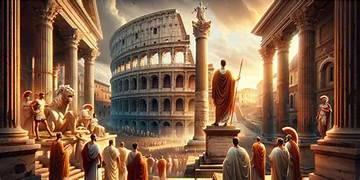
I am back in Rome — a city that once formed me more deeply than I knew at the time. This time Peggy and I will be here for three months visiting our diplomat son, his wife, and our three little granddaughters.
More than fifty years ago, as a young priest, I walked these same streets believing I stood near the center of the Christian world. Rome felt solid, ancient, authoritative. Theology here carried the weight of centuries. I absorbed its categories, its rhythms, its confidence. That was soon after Vatican II (1962-’65). I was only beginning to question the map I had inherited.
Now, decades later, I find myself returning not as a defender of that center nor as its adversary, but as someone who has been slowly reshaped by teachers, students, and experiences far from these stones. Being here again has stirred gratitude — and reflection. I see more clearly how much of my life has been an apprenticeship in learning to redraw the map I once took for granted.
Learning to Turn Things Over
To begin with, my teachers here in the Eternal City were dynamite in terms of creatively upsetting my theological and even political certainties. I think especially of Magnus Lohrer and Raphael Schulte at the Atheneum Anselmianum on Rome’s Aventine hill. That first year in Rome, lectures at the Anselmo were in Latin. Regardless, Lohrer and Schulte called all my categories into question. They had me seriously reading non-Catholic theological giants for the first time. I brought it all home to unending lunch and dinner debates with the fifteen or so young priests (who were also pursuing terminal degrees in Rome) at our Columban house on Corso Trieste 57.
But the deepest fissures in my theological and political certainties came after Rome – in Brazil, Nicaragua, Cuba, and especially in Costa Rica, where Peggy and I became fellows at the Departamento Ecumenico de Investigaciones, a liberation theology think tank. The center of it all was Franz Hinkelammert who became not only my teacher, but colleague and friend. As an economist and theologian, he adopted critical thinking as his own central category.
I remember telling him, somewhat playfully, that I thought I had figured out the method behind his approach to the discipline: he seemed always to take what passed as “common sense” and quietly invert it with exquisite historical, philosophical, and theological insight. Markets are described as free. Economic growth is described as necessary. Sacrifice of the vulnerable is described as realistic. He would simply ask: who benefits? who suffers? what “god” is being served?
He smiled when I said that — a smile that felt less like approval and more like invitation. He was not urging me toward cynicism. He was urging me toward attentiveness.
Under his influence, I began to recognize how easily societies sanctify their own arrangements. The market can become providence. National security can become destiny. Even theology can become a cloak for power. What I once called realism I learned to approach more cautiously.
That habit of questioning did not make me certain. It made me slower to accept easy answers.
Learning to Relocate the Center
Another teacher, Enrique Dussel, unsettled me in a different way. I first met him in Brazil during a seminar specifically on liberation theology. The cream of the crop – theologians I had been reading for years – were there.
I still see Dussel at a whiteboard, sketching a world map from memory. He did not begin in Athens, as my education had. He began in Egypt. He traced the movement of civilizations across Asia. He lingered over China’s long intellectual and cultural history before Europe entered the frame at all.
“Wherever I lecture,” he would say, “people repeat the same historical story: ancient, medieval, modern.” Then he would perceptively add, “That story is not universal. It is European.” Leonardo da Vinci’s futuristic drawings were lifted straight from Chinese engineers.
I felt enlarged listening to him. The world was older and more intricate than the timeline I had inherited. Europe’s achievements remained real, but they were no longer singular or central in the way I had assumed.
After his lectures, I found myself trying to reproduce his map — not because I wished to argue, but because I wanted to see as he saw. His point was not so much to diminish Europe, as to free history from provincial boundaries.
That lesson stayed with me. Once you realize that a “center” may simply be a perspective, you become cautious about every center — political, economic, even theological.
Encounters in the Global South
My years of teaching in the United States and traveling in Latin America and other parts of the Global South deepened that reorientation. Theology in Brazil, Nicaragua, El Salvador, Honduras, Cuba, and Mexico was not an abstract discipline. It was bound up with hunger, repression, resilience, hope.
Through thinkers like Pablo Richard and Elsa Tamez, I saw how scripture could sound different when read from below rather than from established centers of power. Through Rosemary Ruether, I came to see how deeply gendered our language about God and authority has been. Helio Gallardo showed how The United States’ regime change policies prevented human development throughout the Global South. Vandana Shiva widened my awareness of how economic systems scar both land and people in the name of progress. And Dom Hélder Câmara reminded me, in his gentle way, that charity without justice leaves underlying structures intact. He famously said, “‘When I give food to the poor, they call me a saint. When I ask why the poor have no food, they call me a communist.’
None of these encounters destroyed my faith. They complicated it. They forced me to acknowledge that what I had once regarded as neutral theology was often shaped by social location and power.
Over time, I began to describe myself not simply as Catholic, bus as belonging to the Church’s “loyal opposition.” I still claim that designation. I did not wish to abandon the Church. I owed it too much. But I could not ignore its entanglements with empire or its silences in the face of suffering.
I learned that loyalty without critique can drift toward idolatry. But critique without love can harden into bitterness. Holding both has never been simple.
The God I Was Taught — and the God I Pray To
Returning to Rome has also stirred memories of the God-image that accompanied my early formation.
God was Creator, Lawgiver, Judge, Punisher (even Torturer!). Sin was pervasive. Conscience was vigilant. That framework gave me seriousness and discipline. It also sometimes fostered fear and self-scrutiny that felt heavier than grace.
Over the years, influenced by the teachers I have named and by the communities I have encountered, that image loosened. I began to see how easily our political imaginations shape our theology. A hierarchical society imagines a hierarchical heaven. An imperial culture imagines a commanding deity.
Genesis says something simpler and perhaps more daring: we are clay, animated by breath. Clay is not flawless. It is vulnerable, shaped by experience, capable of cracking and reforming. The problem in Eden is not embodiment but mistrust — the suggestion that God is withholding, that God is threatened by human growth.
Slowly, I found myself praying less to a divine Auditor and more to a Life-Giver. Paul’s contrast between Adam and Christ came to sound less like courtroom procedure and more like two ways of being human: hiding in shame or standing in trust.
That shift did not happen overnight. It came through study, mistakes, conversations, disappointments, and, occasionally, grace.
Sitting in Trastevere
Recently, sitting in Santa Maria in Trastevere, I felt the weight of all these strands all at once.
Trastevere was once a district of the marginal — dockworkers, Jews, early Christians. Yet the Church that took root among them eventually learned to speak the language of empire. The basilica’s golden mosaics shimmer above centuries of compromise and devotion alike.
The Church, I realized again, is both clay and gold.
So am I.
If my children sometimes experience my positions as strong or unsettling, I understand. They did not sit in those classrooms. They did not travel in those communities. They did not hear those lectures. My convictions were not born of sudden rebellion. They accumulated slowly, sometimes against my own initial resistance.
I do not claim to see perfectly now. If anything, these teachers made me more cautious about certainty. They taught me to ask whose voices are missing, whose suffering is hidden, which assumptions have gone unquestioned.
Returning to Rome does not feel like a triumph. It feels like a reminder. A reminder of where I began. A reminder of how much I was given. A reminder of how much I had to unlearn. And a reminder that any map — even the one I now hold — remains partial.
Clay, Breath, and Ongoing Revision
The longer I live, the less interested I am in appearing marble. Marble is impressive, but rigid. Clay is humbler, more exposed, more capable of change. Genesis names us clay. The Spirit breathes.
If there has been a “crime,” it was never Rome itself. It was the temptation to mistake any center — any institution, any system, any theology — for the whole.
The teachers who shaped me did not hand me a new dogma. They handed me a way of seeing: turn the claim over, redraw the map, listen to the margins, be wary of sanctified power, hold loyalty and critique together.
Rome, with all its beauty and ambiguity, is a fitting place to remember that.
I return not to condemn, nor to congratulate myself for having moved beyond something, but to give thanks for the long, unfinished work of being reshaped.
The map has been redrawn more than once in my life. It may yet need redrawing again.
For now, I remain grateful — for Rome, for the margins, for the teachers who widened my world, and for the breath that continues to animate clay.




 About Things That Matter