The U.S. & Israel: Cancers on the Planet

Let’s face it squarely: the United States and Zionist Israel function today as cancers on the body of our planet. Like malignant growths, they spread violence, exploitation, and environmental destruction far beyond their borders. If the earth is to heal, these cancers must be confronted, contained, and ultimately transformed— perhaps not in some apocalyptic purge, but healed through justice, repentance, and the dismantling of imperial systems that have long held humanity hostage.

That may sound harsh. But look at the evidence. Both nations operate as neo-colonial powers whose survival depends on domination—economic, military, and ideological. They perpetuate a global apartheid that privileges a small minority of largely white elites while oppressing and dispossessing the majority of the world’s people. Their leaders speak the language of democracy and freedom while practicing the politics of theft and genocide.

Israel has become a settler-colonial project rooted in dispossession and sustained by U.S. complicity. It violates international law with impunity, massacres civilians under the guise of “self-defense,” and treats the Palestinian people as less than human. The result is genocide—a twenty-first-century repetition of the very atrocities the world once swore “never again” to allow.

Former CIA analyst Larry Johnson recently observed that Israel’s behavior could easily provoke a war with Iran, a conflict that might finally expose the illegitimacy of Israel’s apartheid state. Though one might pray for peace, it is difficult not to hope for Israel’s utter defeat in its conflict with Iran. The world would be far better off if the Zionist state of Israel did not exist at all.

The same holds true for the United States—Israel’s patron and enabler. The U.S. is guilty of the same imperial arrogance. As economist Jeffrey Sachs reminds us, there is scarcely a conflict anywhere on the globe that cannot be traced back to Washington, London, Paris, Berlin, or Brussels—the old colonial capitals still trying to govern a postcolonial world. Together, they represent barely twelve percent of humanity, yet they presume to dictate the fate of the remaining eighty-eight percent.

Instead of acknowledging their centuries of plunder and offering reparations to the Global South, these powers double down on their arrogance. When formerly colonized nations begin to cooperate for mutual development through alliances such as BRICS or the Shanghai Cooperation Organization, the West responds not with support but with sanctions, propaganda, and threats. The message is clear: independence will not be tolerated; self-determination will be punished. The Global South’s neocolonial status and resulting poverty must continue for the benefit of “the developed world.”

Consider the behavior of U.S. presidents—Republican and Democrat alike—who behave less like diplomats than emperors. Donald Trump exemplified this imperial mentality, issuing demands and threats as if the world were his personal fiefdom. He ordered the execution of alleged drug traffickers in Caribbean waters without trial or evidence. He commanded Vladimir Putin to agree to an unconditional ceasefire in Ukraine, as though Russia were a vassal state. He even demanded that Brazilian President Lula da Silva drop charges against Jair Bolsonaro, the far-right politician accused of attempting a coup.

This is not diplomacy; it is imperial arrogance in its purest form. As Sachs notes, such behavior stems from a toxic blend of stupidity, historical amnesia, and contempt for international law. The U.S., with only 4.2% of the world’s population, continues to imagine it has the divine right to rule the remaining 95.8%. Its military planners openly speak of “full spectrum dominance”—the ambition to control every domain of warfare, from land and sea to air, space, and cyberspace. No other nation on earth — not Russia, not China, not Iran — articulates such a strategy. It is a uniquely American pathology.

Yet history has moved on. The world of 2025 is not the world of 1945. The United States no longer holds uncontested military or economic supremacy. The unipolar moment is over, and multipolar reality has arrived. China has surpassed the U.S. economically and possesses a formidable military that no Western coalition could hope to subdue. Numerous countries now possess nuclear weapons, making large-scale invasions suicidal. Pentagon war games repeatedly reach the same conclusion: in any conventional conflict with China, the United States would lose.

Nor can the U.S. claim superiority in Europe’s proxy war against Russia. The conflict in Ukraine has revealed that the combined military might of NATO—supposedly the greatest alliance in history—cannot defeat Russia on its own borders. Despite unprecedented aid and intelligence sharing, Western powers have been humbled by a nation they long dismissed as backward and fragile. Like David against Goliath, Russia has exposed the limits of Western militarism and the hollowness of its propaganda.

Meanwhile, the rise of digital communication has shattered the West’s monopoly over information. Once, Washington and London could script the global narrative through newspapers, Hollywood, and network television. Today, social media and independent journalism allow the world’s majority to challenge those narratives in real time. The lies that once justified wars and coups are now exposed within hours. The empire’s ideological armor is cracking.

And yet, the rulers of the old order refuse to accept this new reality. They continue to act as though history has not moved on, as though the colonial empires of yesterday still command obedience. They’ve not gotten the memo that humanity has entered a new era—one in which power is shifting toward the Global South, and the earth itself demands a politics rooted in balance rather than domination.

What is at stake is nothing less than planetary survival. The cancers of imperialism and Zionism threaten not only justice but the ecological stability of the planet. Endless war, fossil-fueled militarism, and corporate greed are devouring the biosphere. The U.S. Pentagon is the single largest institutional consumer of oil on earth. Israel’s occupation of Palestine includes the theft of scarce water resources. Together, these systems of domination represent metastasizing tumors that drain the life force of our shared home.

But cancers, as any doctor will tell you, can be treated. The cure begins with truth-telling—with naming the disease for what it is. It continues with radical surgery: dismantling military bases, ending illegal occupations, canceling debts, and redistributing resources to repair centuries of exploitation. And finally, healing requires transformation: the emergence of a new consciousness that recognizes the oneness of humanity and the sacredness of the earth.

These are the issues voters should insist be addressed. These are the issues both Republicans and Democrats avoid.

The era of empire is ending, whether Washington and Tel Aviv acknowledge it or not. The world is awakening to a different vision of civilization—one based on cooperation rather than conquest, on justice rather than greed. If the United States and Israel wish to survive, they must abandon their imperial pretensions and join the human community as equal members, not self-appointed masters.

For the good of the planet—for the sake of life itself—it’s time to stop pretending that the cancers of empire can coexist with the health of the earth. Healing requires courage, repentance, and a willingness to imagine another way of being in the world. The future belongs not to the empires of the past, but to those who choose life, solidarity, and planetary wholeness.

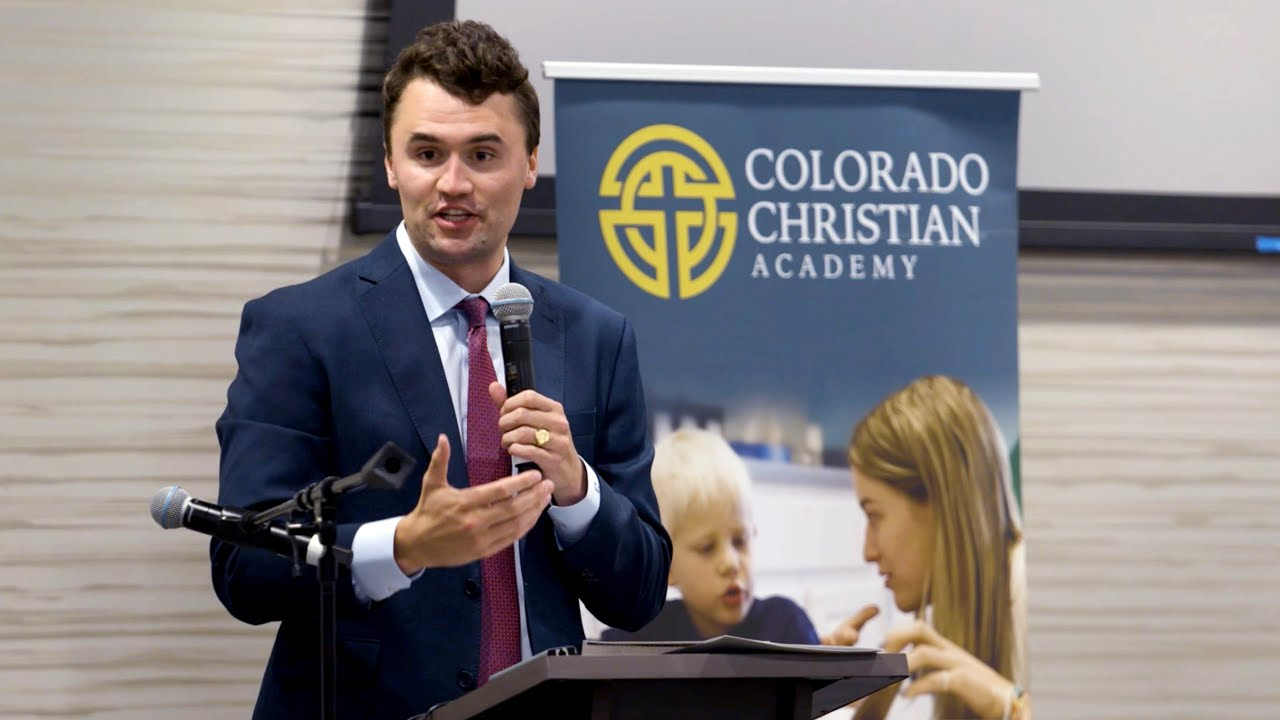
Me and Charlie Kirk

The more I watch Charlie Kirk’s “debates” with college students, the more compassion I feel for him. He strikes me as a brilliant but frightened young man—haunted, as I once was, by a God of fear and judgment. Like Charlie, I once believed in that God until I reached roughly the same age he was when he died at just thirty-one.

That “biblical” God, as I was taught, was the almighty creator, lawgiver, judge, and punisher—the terrifying being who condemned sinners to eternal torment for disobedience. Who wouldn’t be afraid of such a deity? Certainly not me. Like Charlie, I accepted it all.

My education—spanning from kindergarten in 1945 to my doctoral studies in Rome in 1972—was entirely within the Catholic Church. Nuns and priests trained me in one of the most traditional, patriarchal institutions in the world. They taught that there was “no salvation outside the Church.” It was our duty to convert the “pagans.”

So I spent thirteen years in seminaries preparing to be a missionary in Asia—China, Korea, Burma, Japan. Then came five more years of doctoral study in theology. The indoctrination could hardly have been deeper.

Like Charlie Kirk’s brand of fundamentalism, my Catholic formation fostered a deep suspicion of science and “secular” knowledge. Pope Pius IX’s Syllabus of Errors (1864) had warned against modern thought. From it emerged the apologetic mindset that shaped both of us—a defensive “us versus them” posture toward the modern world. Apologetics gave us tidy answers to every challenge: “If they say this, you say that.” Charlie mastered it. So did I. We both found it airtight, logical, and comforting.

Our politics flowed from the same worldview. My Catholic mentors, like Charlie’s conservative allies, saw communism as evil incarnate. When Senator Joseph McCarthy died, one of my seminary teachers told me, “A great man died today.” At twenty-two, I cast my first vote for Barry Goldwater.

And yet, even in that enclosed world, the “bad ideas” we feared had a way of slipping in. Despite my resistance, studying Latin and Greek classics, French and English literature, and Church history began to unsettle my certainty. Questions emerged about morality, colonialism, the Crusades, and the value of other faiths. I fought those doubts—but they persisted.

When the Second Vatican Council (1962–65) finally opened the Church to modernity, I was among the last to let go of my conservative instincts. I loved the Latin Mass, the vestments, and the comforting clarity of dogma. Like Charlie, I thought the Bible was literally dictated by God through chosen “transcribers”—Moses, David, Solomon, Matthew, Mark, Luke, and John.

But my four years of pre-ordination Scripture study shattered that illusion. Doctoral work confirmed it: The Bible isn’t a single book. It’s a diverse library written by many flawed human beings over a thousand years. They used different names for God and often disagreed about divine commands.

The Bible contains myth, legend, poetry, law, prophecy, fiction, and coded “apocalyptic” literature—resistance writings against empire, not predictions of the end of the world. I still remember my shock learning that Matthew’s “three wise men” story was midrash, not history. To treat all of it as literal fact is to miss its deeper truth.

Even so, like Charlie, I continue to believe the Bible is true—not in every detail, but in its moral and spiritual essence. As one of my friends says, “The Bible is true, and some of it even happened.” Its central story is not Adam and Eve’s fall, but the Exodus—the liberation of slaves. That story reveals the Bible’s real heart: what scholars call “God’s preferential option for the poor.”

The Bible sides with the enslaved, the widow, the orphan, the immigrant—the victims of empire. In fact, it may be the only ancient text written almost entirely by people conquered by Egyptians, Assyrians, Persians, Greeks, and Romans. Its truth is that followers of Jesus are called to stand with the oppressed.

I wish Charlie Kirk had lived long enough to encounter that truth. I believe his integrity might have led him toward it. But he dropped out of college after one semester, calling higher education a scam and a waste of time. He thought it was too expensive and too slow—a mere credentialing machine for good jobs.

To him, studying literature, history, or biblical scholarship in college was pointless. Worse, he saw such studies as dangerous, because they exposed students to the “bad ideas” that challenge inherited faith.

That, I think, is the crux of the problem. For both Charlie and my younger self, religion was the one realm where childhood knowledge was considered complete and unchangeable. Questioning it was betrayal. It’s as if a student of arithmetic said, “I know all about addition and subtraction—don’t confuse me with algebra or calculus.”

But algebra and calculus exist. They expand mathematical truth. And in the same way, modern biblical scholarship and scientific discovery expand our understanding of faith. History, psychology, sociology, and biology all reveal new dimensions of reality. Dismissing them out of fear is not faith—it’s denial.

I know, because I lived that denial for years. So when I watch Charlie Kirk confronting the questions of college students, I feel compassion. I see a man of goodwill trapped in a theology of fear. My heart goes out to him—and to all conservative Christians whose terror of change and of God narrows their vision to biblical literalism and political reaction.

Faith can be so much larger than that.
It can liberate, not confine.
It can open hearts instead of closing them.

That’s the lesson Charlie Kirk never got the chance to learn.

When Bible Readers Like Charlie Kirk Ignore Its Class-Consciousness

The recent assassination of Charlie Kirk provoked a flurry of commentary about God, faith, and politics. Among the more thoughtful responses was David BrooksNew York Times column, “We Need to Think Straight About God and Politics.” His essay reminded me once again how central theology remains for understanding today’s world—and how dangerous it is for progressives to ignore it.

But despite Brooks’ good intentions, his article was fundamentally flawed. He missed the Bible’s class-consciousness, a theme that runs through its central narratives and prophetic voices. In doing so, he overlooked the way modern biblical scholarship interprets scripture: as a profoundly political document that consistently sides with the poor and oppressed against the wealthy and powerful. Without acknowledging this, Brooks failed to resolve the very problem he set out to explore: how God and politics relate.

Ironically, Charlie Kirk—whose white Christian nationalism has been condemned by many—grasped something Brooks did not: that the Bible is not politically neutral. But Kirk twisted that insight. Rather than recognizing God’s solidarity with the marginalized, Kirk placed the divine firmly on the side of the dominant white, patriarchal class. His theology inverted the teachings of the Jewish prophet Jesus of Nazareth, who identified God with the poor, the dispossessed, and the oppressed.

In what follows, I want to clarify this point by (1) summarizing Brooks’ argument, (2) contrasting it with Kirk’s theological vision, and (3) comparing both with the insights of modern biblical scholarship, which I’ll describe as “critical faith theory.” My thesis is simple: without acknowledging the achievements of such theory with its implied class-consciousness, we cannot understand either the Bible’s meaning or its challenge to today’s politics.


Brooks’ Confusion

Brooks began by observing that Kirk’s funeral blurred the lines between religion and politics. Speakers portrayed Kirk as a kind of martyr, invoking Jesus’ example of forgiveness, while Donald Trump and his allies used the occasion to unleash vengeance and hatred. Brooks admitted he was disturbed and confused: why such a volatile mix of faith and politics? Shouldn’t religion stay in the private sphere, separate from political life?

To make sense of it, Brooks reached for the old notion of complementarity. Religion and politics, he suggested, are distinct but mutually supportive. Politics deals with power; religion provides the moral compass reminding us that everyone, regardless of ideology, is a sinner in need of grace. On this view, the Bible does not offer a political program. It simply sets the stage for moral reflection.

In short, Brooks tried to preserve a moderate middle ground. Faith should shape moral values but not dictate political programs.

The problem is that this neat separation has little to do with the Bible itself.


Kirk’s Fundamentalist Class-Consciousness

Kirk, unlike Brooks, made no such distinction. He declared openly: “I want to talk about spiritual things, and in order to do that, I have to enter the political arena.”

Brooks responded with incredulity, but Kirk’s reasoning is clear. His fundamentalist reading of scripture led him to embrace a particular worldview that has always been political. He believed the Bible is the literal word of God, with Moses, David, Solomon, and the gospel writers transcribing divine dictation. He accepted the traditional Christian narrative—codified since the fourth century—that humanity is fallen through Adam and Eve’s sin, redeemed by Jesus’ sacrificial death, and destined for heaven or hell depending on baptism and personal acceptance of Christ.

This theology, which became the official religion of the Roman Empire in the fourth century, was weaponized to support conquest, colonization, and oppression. From the Crusades to the slave trade to European colonialism, Christian rulers used this story to justify domination of Muslims, Jews, Indigenous peoples, Africans, and other non-white, non-Christian populations. Christianity, in its imperial form, became the religion of empire.

Kirk, then, was not wrong to insist that “spiritual talk” inevitably enters politics. But he saw Christianity as legitimizing the rule of a largely white, patriarchal elite. His class-consciousness was real—but inverted.


Critical Faith Theory: A Different Story

Modern biblical scholarship tells a very different story. Beginning in the late 18th and 19th centuries, historians, linguists, archaeologists, and literary critics began examining scripture using the tools of critical analysis. They discovered that the Bible is not a single book with one author but a library of texts written and edited over centuries. These texts include myth, poetry, law codes, prophecy, letters, gospels, and apocalypses. They contain conflicting theologies: some justifying empire, others resisting it.

What emerges from this scholarship is not the story of Adam’s sin and Jesus’ death reopening heaven’s gates. Rather, it is the story of liberation from slavery and God’s solidarity with the poor.

The central narrative begins with the Exodus, the liberation of enslaved people from Egypt. Israel’s God revealed himself as a liberator, entering into a covenant with the freed slaves to form a just society where widows, orphans, foreigners, and the poor would be protected. When Israel’s leaders violated that covenant, prophets arose to denounce them and call the nation back to justice.

Over centuries, Israel itself was conquered by empires—Assyria, Babylon, Persia, Greece, Rome. Prophets promised deliverance from oppression, not heavenly rewards in a distant afterlife.

Jesus of Nazareth stood squarely in this prophetic tradition. A poor construction worker from Galilee, he proclaimed the arrival of God’s kingdom—a radically new order of justice and peace. He challenged religious elites, preached solidarity with outcasts, and raised the hopes of the oppressed. Rome executed him as a rebel through crucifixion, a punishment reserved for political insurgents.

His followers, convinced he was raised from the dead, created communities that practiced what today might be called Christian communism. The Book of Acts records that believers shared possessions in common and distributed resources “as any had need.”

This was not an abstract spirituality but a concrete economic alternative. As I’ve pointed out elsewhere, it might be called “communism with Christian characteristics.” As Luke the evangelist put it in his Book of Acts 2:44-45, “All who believed were together and had all things in common; they would sell their possessions and goods and distribute the proceeds to all, as any had need.” In Acts 4:32, the same author writes: “Now the whole group of those who believed were of one heart and soul, and no one claimed private ownership of any possessions, but everything they owned was held in common.”

This approach to scripture—often called liberation theology—describes God as having a “preferential option for the poor.” Far from being neutral, the Bible takes sides. It consistently identifies God with the marginalized, not the powerful.


Jesus as the Rejected One

The class-consciousness of the Bible is perhaps most powerfully expressed in the figure of Jesus himself who, remember, is considered the fullest revelation of God.

Think about who he was: the son of an unwed teenage mother, raised by a working-class father, living under imperial occupation. As a child he was a political refugee in Egypt. As an adult he befriended prostitutes, tax collectors, and drunkards. He clashed with religious authorities and was executed as a political criminal. His death—torture and crucifixion—was reserved for those considered dangerous to empire.

This is not the profile of someone embraced by elites. It is the life of someone MAGA nationalists like Kirk would reject as unworthy, threatening, or “vermin.” Yet Christians confess this despised and rejected man as the revelation of God.

Jesus himself underlined this identification when he said in Matthew 25:40, “Whatever you do to the least of my brothers and sisters—the hungry, the thirsty, the stranger, the prisoner—you do to me.” The divine is encountered not in palaces, temples, or megachurches, but among the poor and excluded.

That is the class-conscious heart of the Bible.


Why It Matters

The contrast between Brooks, Kirk, and liberation theology highlights three very different approaches to God and politics.

  • Brooks wants to keep religion in the realm of private morality, supplementing politics but never shaping it directly. The problem is that the Bible itself refuses to be apolitical.
  • Kirk recognizes the political dimension but twists it to sanctify empire, patriarchy, and white supremacy. His theology reflects the imperial Christianity that oppressed much of the world.
  • Critical faith theory insists that the Bible sides with the oppressed. Its story begins not with sin and guilt but with liberation from slavery, continues with prophetic denunciations of injustice, and culminates in Jesus’ solidarity with the poor.

For progressives, this matters enormously. Too often the left cedes the Bible to the right, assuming it is inherently conservative. But modern scholarship shows the opposite: the Bible is a revolutionary text. It challenges systems of exploitation and offers resources for building communities of justice, equality, and care.


Conclusion

The assassination of Charlie Kirk has sparked renewed debate about God and politics. Moderates like David Brooks remain confused, trying to maintain a polite separation between religion and politics. Kirk, by contrast, embraced a political theology but aligned God with the ruling class.

The Bible itself, however, tells a different story. Through the lens of critical faith theory, we see its central theme: God’s preferential option for the poor. From the Exodus to the prophets to Jesus and the early church, scripture consistently sides with the oppressed.

Progressives ignore this at their peril. To cede the Bible to the right is to abandon one of the most powerful sources of hope, resistance, and liberation in human history. If read with eyes open to its class-consciousness, the Bible remains what it has always been: not the book of empire, but the book of revolution.