Meet Declan Coyle, a Real Liberation Theologian (Sunday Homily)

Declan

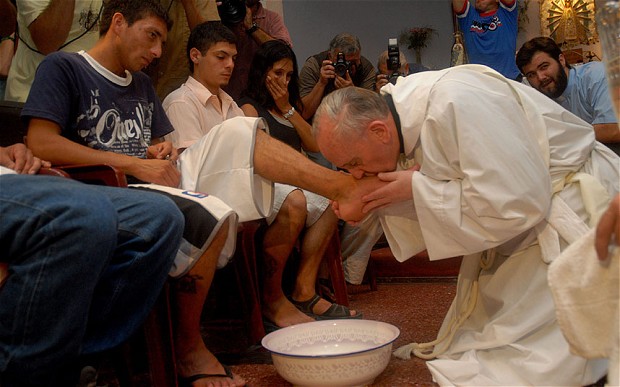
My Easter homily two weeks ago evoked a wonderful response from one of my former priest-colleagues from the Society of St. Columban – the missionary community of priests I belonged to before I left in 1976. The colleague is Declan Coyle (pictured above).

Declan, it turns out, is a wonderful and witty writer. In a future blog I’ll share his moving piece on his son, Alexander who has Mowat Wilson Syndrome. It’s a truly inspiring essay on the meaning of living in the present moment.

When I asked for permission to share his Easter thoughts, here’s how Declan responded.

Of course Mike you can share it with you audience.

I soldiered (how easily the old militaristic verb crops up, “Who has a blade for a splendid cause … our horses are red to the hocks with the blood of the heathen”) with the Columbans for 27 years from seminary to moving on to marry Annette, an Australian in 1990.

I studied Liberation Theology in St Paul’s Ottawa after ordination, and then I asked the Superior General for five years in a slum in Latin America or Asia. After nine years of post-high school academic study I felt I was not fit to teach in Boston. But I knew that if I got some years in a slum where the slum dwellers who had survived and graduated from the University of Life taught me some life lessons, and I got these in my blood and my guts and my bones and my being, then I could teach Liberation Theology with passion and enthusiasm.

I got five years in the Philippines and six in Taiwan.

I got married to Annette, my wife in 1990. We have three children, Genevieve (19), Fionn (16) and little Alexander who is eight. He is a very special child. He has Mowat Wilson Syndrome. It was only discovered in 1997 and he was the first child in Ireland to be diagnosed with it. I’ll attach a reflection I wrote recently about him. He’s the epitome of the idea that he’s not a human being having the odd spiritual experience, he’s a spiritual being having a human experience.

The last 90 days I was in the Philippines I buried 65 children under two years old … all who died from hunger or hunger related diseases. In the slums we lived Jesus’ Synagogue Speech and Matthew 25 and life to the full and joy overflowing.

From where I’ve lived my so called Christian life, you’ve got your hand on the heart and the soul of the gospel and what the carpenter poet of Galilee was all about. I’m still baffled as to why John Paul II didn’t jump on a plane and go out and finish that Mass that stopped when Romero was shot. Would that not have been a symbolic gesture to lift the hearts of the poor and baffle Reagan?

Every blessing in your great work. You are real good news for the poor. You are real liberation for those oppressed by the historical accretions of the empire and real new sight for those of us who have been blind to the real meaning of the gospels for our world today. You remind me of the great prophet Micah whose words you live: To act justly, to love tenderly with kindness and to walk humbly with your God.

All the lovely things of the Holy Spirit on this Easter Week.

Declan

And now Declan Coyle’s Easter Reflection:

Years ago here at home our eldest two children Genevieve and Fionn were playing hide and seek all over the house. All I could hear all day was, “ready or not, here I come!”

That evening Genevieve asked me how did Jesus rise from the dead. I told her that on Easter Sunday morning the soldiers were outside the tomb, cooking their Easter eggs in a pot on the fire. Then suddenly from the tomb came this thunderous voice, “Ready or not here I come!” Then the rock rolled away and out came Jesus.

The two soldiers fainted with the fright.

The following week, the teacher asked the children to explain how the resurrection happened. Genevieve told her how. The teacher was not impressed.

I asked Genevieve which story she preferred. She said yours Daddy. In one fell swoop, she turned me into the fifth evangelist – a storyteller with a myth, a story, a lie that tells the truth. She understood hermeneutics.

In our recent discussions I told her that if ever she is tempted to go literal, she’ll lose the meaning. Always go symbolic. If you go literal, then you’re wondering at Christmas was Jesus born in a stable, or a cave or was it a kindergarten for the Essenes?

Literal is a dead end. But when you go symbolic you realize that the Christmas story simply means that great power comes in humble packages.

Keep up the great work Mike.

And send your material to Pope Francis.

Happy Easter. Declan

“Run, Ashley, Run!”

ashley-judd

So Mitch McConnell and his staff think Ashley Judd’s bouts with depression and her understandings of Christianity are hilarious. That’s the impression emerging from a meeting of the senator with his staff as recently reported in Mother Jones.

Perhaps instead their hilarity should make us rethink Mitch himself and his fitness for holding public office. Let’s hope it convinces Ms. Judd to rethink her decision about opposing McConnell in 2014. Here’s what I mean . . . .

Until recently film star Ashley Judd had considered running against ole Mitch for his Senate seat. So his staff was huddling about how to discredit this well-known movie star who also happens to be a graduate of Harvard’s J.F. Kennedy School of Government. Apparently, however one staff member was a mole.

Whatever happened, someone recorded the conversation and later released it to Mother Jones. An article based on the transcript showed the McConnell team as a rowdy bunch of “good old boys” having a great time yucking it up about mental illness, environmentalists and of understandings of faith actually daring to differ from their own.

As her autobiography makes clear, Ms. Judd brings those issues together in ways that might appeal to constituents actually living in the twenty-first century, rather than with Mitch, his staff, and the best minds of the Civil War South.

Evidently, those minds have a hard time wrapping themselves around issues that really impact people’s lives such as poverty, climate change and coal’s relationship to global warming. They have difficulty understanding the concept of patriarchy and its impact on women (and men and children!), and that Christianity might not be synonymous with their own Bible-thumping fundamentalism.

So the boys had some good laughs talking over Ms. Judd’s well-known bouts with depression which she has documented in her autobiography. They seemed to agree that far from evincing a rather high degree of maturity, facing up to mental illness, writing about it, and helping others with similar problems make anyone permanently unfit to hold public office. Instead, they implied those who consider mental illnesses laughable are best fit to lead.

The boys also strategized about painting Ms. Judd as an unstable carpetbagger – because of her residence in Tennessee (though she spent the majority of her early years in Kentucky). Furthermore, she takes climate chaos seriously and so could be painted as “anti-coal.”

But above all, staffers gloated, she has these crazy ideas about Christianity! Yeah, she thinks it’s played into the hands of the “patriarchy.” How crazy is that? She actually thinks that God is much bigger than the concepts of male and female. She has this insane idea that the church is too male-dominated and might benefit from women pastors and preaching and who knows what else?

And “Get this,” one of them guffawed, “Judd actually wrote

I still choose the God of my understanding as the God of my childhood. I have to expand my God concept from time to time, and you know particularly I enjoy native faith practices, and have a very nature-based God concept. I’d like to think I’m like St. Francis in that way. Brother Donkey, Sister Bird.”

Evidently, that last line was just too much for everyone. The laughter got even more out of control. Apparently laughing through his tears, one meeting participant managed to get out “Brother Donkey, Sister Bird! That’s my favorite line so far. Absolute favorite one so far!” Ha, ha, ha!

Imagine a person actually taking seriously someone like Francis of Assisi, the 13th century spiritual father of the environmental movement. That particular nut once preached a sermon to birds—”my little sisters”— and referred to his own body as the “Brother Donkey.” How crazy was that?

And imagine a person needing to rethink her concept of God on a regular basis! Ha, ha, ha!

Ashley, you are what Kentucky needs. It’s time for us to ditch Mitch. He’s so 1862!

Run, Ashley, run!

Obama: Second Verse Same as the First

obama_liar

Remember when progressives thought that during his second term President Obama would be free to do what he really wanted all along but couldn’t because of concerns about re-election? We reasoned that during his second term he’d finally be free to show his true colors and implement the programs closest to his heart or hearts.

Well, we were right.

Problem is the programs closest to Obama’s heart have nothing to do with “Rooseveltian” courage. Instead, they’re about “Republican Lite” and rolling back the type of social programs that Roosevelt championed.

Turns out Obama loves torturing, secret prisons, punishing whistleblowers, spying on Americans without warrant, spending billions on wars, provoking North Korea, escalating the war in Syria, and droning American citizens and anyone else his friends identify as perhaps maybe possibly dangerous. He’ll probably approve the XL Pipeline.

Above all, Obama’s about rewarding the financiers unilaterally responsible for the current depression, and making grandma and grandpa pay instead.

How many times do we have to say it? Social Security has contributed not a nickel to the current economic crisis. If left as it is, it will be solvent for the next 35 years. To cure any problems then, all that needs done is to lift the cap that prevents the rich from paying into the system after their first $110,000. It’s as simple as that.

And this is the guy who just a few months ago was groveling for our votes promising he had the backs of the 99% and would see that the 1% pay their fair share.

What happened to all his talk about doing something about Cayman Islands tax dodges?

We’ve been duped twice by this snake-oil salesman. Shame on us!

It’s like that great man once said, “There’s an old saying in Tennessee – I know it’s in Texas, probably in Tennessee – that says, fool me once, shame on – shame on you. Fool me – you can’t get fooled again.”

Whatever.

I’ve said it before and will say it again. Obama’s nothing but a “Wall Street Democrat.” (That’s what we used to call Republicans before they all went nuts.)

Or as his former pastor, Jeremiah Wright, put it, Obama’s “just another cheap Chicago politician.”

We gotta write to this guy and express our outrage about his betrayal.

Democrats who support Obama’s budget should be made to pay at the ballot box. They should all be primaried.

Doubting Thomas: Our Twin (Jesus’ Twin!) in Denial (Sunday Homily)

jesus-black-love

Readings for 1st Sunday after Easter: Acts 5:12-16; Ps. 118: 2-4, 13-15, 22-24; Rev. 1: 9-11A, 12-13, 17-19; Jn. 20: 19-31. http://www.usccb.org/bible/readings/040713.cfm

The picture painted in today’s gospel story should be familiar to all of us. I say that not only because we have heard it again and again, but because it’s our story. It’s about a man in denial, the original doubting Thomas. Thomas’ nickname was “the twin.”

Whatever that meant originally, Thomas is undoubtedly our fraternal double in that he depicts our condition as would-be followers of Yeshua. Like Thomas we live in practical denial concerning the reality of Yeshua’s resurrection – about the possibility of a radically transformed life. Recall our twin’s story. Pray that it can be ours as well.

The disciples are there in the Upper Room where they had so recently broken bread with Yeshua the night before he died. And they are all afraid. John says they are afraid of “the Jews.” However it seems they fear death more than anything else. They dread it because they are convinced that death spells the end of everything they hold dear – their ego-selves, families, friends, culture, and their small pleasures. Besides that, they are afraid of the pain that will accompany arrest – the isolation cells, the beatings, torture, the unending pain, and the final blow that will bring it all to a close. Surely they were questioning their stupidity in following that failed radical from Galilee.

So they lock the doors, huddle together and turn in on themselves.

Nevertheless, the very fears of the disciples and recent experience make them rehearse the events of their past few days. They recall the details: how Yeshua so bravely faced up to death and refused to divulge their names even after undergoing “the third degree” – beatings followed by the dreaded thorn crown, and finally by crucifixion. All the while, he remained silent refusing to name the names his Roman interrogators were looking for. He died protecting his friends. Yeshua was brave and loyal.

His students are overwhelmingly grateful for such a Teacher. . . .

Then suddenly, the tortured one materializes there in their midst. Locks and fears were powerless to keep him out. They all see him. They speak with him. He addresses their fears directly. “Peace be with you,” he repeats three times. Yeshua eats with them just as he had the previous week. Suddenly his friends realize that death was not the end for the Teacher. He makes them understand that it is not the end for them either – nor for anyone else who risks life and limb for the kingdom of God. No doubt everyone present is overwhelmed with relief and intense joy.

“Too bad Thomas is missing this,” they must have said to one another.

Later on, Thomas arrives – our fraternal double in unfaith. His absence remains unexplained. Something had evidently called him away when the others evoked Jesus’ presence by their prayer, recollections, and sharing of bread and wine. Like us he hasn’t met the risen Lord.

“Jesus is alive,” they tell the Twin. “He’s alive in the realm of God. He took us all with him to that space for just a moment, and it was wonderful. Too bad you missed it, Thomas. None of the rules of this world apply where Yeshua took us. It was just like it was before he died. Don’t you remember? Yeshua brought us to a realm full of life and joy. Fear no longer seems as reasonable as it once did. He was here with us!”

However, Thomas remains unmoved. Like so many of us, he’s is a literalist, a downer. He’s an empiricist looking for the certainty of physical proof. Thomas is also a fatalist; he evidently believes that what you see is what you get. And for him there has been no indication that life can be any different from what his senses have always told him. Life is tragic. Death is stronger than life; it ends everything. And that means that Yeshua is gone forever. Who could be so naïve as to deny that?

Our twin in unfaith protests, “In the absence of physical proof to the contrary, I simply cannot bring myself to share your faith that another life is possible. And make no mistake: Yeshua’s enemies haven’t yet completed their bloody work. They’re after us too.”

Can’t you see Thomas glancing nervously behind him? “Are you sure those doors are locked?”

Then lightning strikes again. Yeshua suddenly materializes a second time in the same place. Locks and bolts, fear and terror – death itself – again prove powerless before him.

Yeshua is smiling. “Thomas, I missed you,” he says. “Look at my wounds. It’s me!”

Thomas’ face is bright red. Everyone’s looking at him. “My God, it is you,” he blurts out. “I’m so sorry I doubted.”

“Don’t worry about it,” Yeshua assures. “You’re only human, and I know what that’s like, believe me. I too knew overwhelming doubt. Faith is hard. On death row, my senses told me that my Abba had abandoned me too. I almost gave up hope. It’s like I’m your twin.

“But then I decided to surrender. And I’m happy I did. My heart goes out to you, Thomas. My heart goes out to all doubters. I’ve been there.

“However, it’s those who can commit themselves to God’s promised future in the absence of physical proof that truly amaze and delight me. Imagine trusting life’s goodness and an unseen future with room for everyone when all the evidence tells you you’re wrong! Imagine trusting my word that much, when I almost caved in myself? That’s what I really admire!

“My prayer for you, Thomas, and for everyone else is that you’ll someday experience the joy that kind of faith brings.

Working for God’s Kingdom – for fullness of life for everyone – even in the face of contrary evidence – that’s what faith is all about. May it be yours.”

May it be ours!

What Is Retirement (and Life) for Anyway?

retirement

Last night Peggy and I had some dear friends over for drinks and conversation. Our friends retired two years ago – about a year after I did so myself. So more or less naturally, our conversation turned to retirement and its ups and downs – and to Florida and warmer climes.

The ups of retirement are obvious. They include not having to show up at the office any more. They entail being free each day to decide what to do. Travel, movies, hobbies like golf and tennis can be pursued freely in retirement. There’s more time to spend with children and grandchildren. And there’s space to think, write, study and pray. All of that is what people dream about doing in their golden years.

And so far, even though Peggy has not yet retired (and probably won’t for 3 or 4 years), my first years of retirement have been filled to overflowing with more of the expected ups than I can count. I’ve spent parts of 3 semesters in Costa Rica teaching in a Latin American Studies Program that was completely enjoyable and fun. The program served North American students from a large number of Christian colleges and universities. It was their “term abroad.” And it introduced them to the realities of the underdeveloped world, taking them to impoverished parts of Costa Rica, living with local families in Nicaragua and investigating first-hand the successes and shortcomings of socialist revolution in Cuba.

My part in the program was to introduce our Evangelical (and Republican) students to liberation theology. On the whole, the students were surprisingly open and receptive. And though I’ve always loved teaching, I’ve never found it as enjoyable as in Costa Rica.

Then last spring Peggy and I used her sabbatical to spend five months in Cape Town, South Africa – or, as they say, in the heart of “whitest Africa.” We were completely captivated by Cape Town which we agreed is the most beautiful city we’ve ever seen. We loved Table Mountain and the beautiful sea vistas everywhere we traveled. We also learned a great deal in South Africa, not only about politics and history, but about African spirituality and the powerful energy of rock formations subtly transformed by the San and Koi-Koi Peoples to track the movements of the heavens.

We traveled South Africa’s “Wine Route” and visited game parks with our grandchildren and their parents. I played golf with my son Brendan on a few of South Africa’s best courses. We passed a day on Robben Island, where Nelson Mandela was imprisoned for 17 of his 28 years of punishment in South African jails. We also spent weeks with Ann Hope and Sally Timmel, colleagues of Steve Biko with a life-long commitment to activism and the struggle against apartheid. We compared notes with them about common experiences, shared friendships, theology and spirituality. What a privilege that was!

With South Africa behind us, we’re now looking forward to five months in India. Can you imagine that? My Peggy has won her second Fulbright Fellowship (the other having brought us to Zimbabwe for a year back in ’97-’98). During this Fulbright term, Peggy will be teaching in Mysore. This will be our second trip to India. In 2004 we attended the World Social Forum in Mumbai.

This time we’ll be living in India with our daughter Maggie, our son-in-law, Kerry, and their three small children, Eva (4), Oscar (2), and Orlando (10 months). Kerry is taking his own sabbatical from his work in finance. So this will be an extraordinary opportunity not only to learn from a deeply spiritual culture, but to bond deeply with our grandchildren.

And then there’s this blog. It’s been unexpectedly fulfilling. I’ve never written as much as I have over these past three years, not only on my blog site, but on OpEdNews and in our local newspaper. Writing a homily each week has kept me grappling with my life-long commitment to spirituality, faith and theology. It’s all helped me think more clearly about life and its purpose.

Actually I’ve thought of the blog as a vehicle for reclaiming the formal priesthood I left more than 36 years ago – as has my involvement in the planning committee of a local Ecumenical Table Fellowship. I’ve seen this new work as a demonstration of the fact that Christian faith isn’t synonymous with fundamentalism. Approaching faith historically and contextually can recover the authentic teaching of Yeshua the Nazarene (the opposite of fundamentalism) and engage and animate radicals and progressives in the process.

How are those for retirement ups? At some level, I couldn’t ask for more.

But then there have been unexpected downs. With retirement comes a loss of identity. With my particular work as a college teacher, I had one of the best jobs I could think of. Imagine getting paid to read, study, write, and travel – all so that you might have hours of interesting conversations with young people?

Yes there was drudgery involved – papers to grade, committees, endless meetings, “administrivia.” But there was no heavy lifting. And there were those long vacations – three weeks at Christmas, three months in the summer, and mid-term breaks fall and spring. The “pay” for teaching went way beyond a monthly check. It involved those conversations I mentioned, but also the resulting life-long friendships, “turning on” students to life’s big questions, seeing that “light” go on, and watching students take their places as agents of transformation in the world.

Most of that (except the now-endless vacation) disappeared with retirement. And whereas previously I could walk across Berea’s campus and meet my students and former students at virtually every turn, I now find students (and myself!) largely anonymous. I miss the interactions with young people. I even have to show my identity card when I enter the Seabury Athletic Center to do my morning exercises. “Mike who. . .?”

On the one hand I find the question liberating, but also a little depressing. It means my identity is gradually slipping away. It all reminds me of the inevitable: the final slipping away, and the complete loss of identity and of any conscious trace of having been here at all. That’s not a morbid thought. It’s simply a fact. Following our deaths and within a generation or less, virtually anyone I know will disappear entirely from everyone’s memory.

And that brings me to my question: what is life for anyway? Truth is: I don’t know for sure.

And that’s where faith comes in. I’ve come to understand faith as taking a leap into what we don’t know for sure. I mean life might be just about family, travel, good food and drink, getting strokes from grateful students, breaking par or watching movies. However, I don’t think it is.

Instead, I’ve come to agree with the great mystics of all traditions – Hindu, Buddhist, Muslim, and Christian. At their highest peak, all of those traditions come together on the following points:

1. There’s a spark of the divine within each of us – our deepest identity.
2. Each human being is called to live from that divine place – to actualize God’s love in the world.
3. And that’s the purpose of life.
4. Gradually, as one strives for such actualization, s/he begins to see divine presence in everything, in all of creation.

So that’s what life is about for me – seeing God everywhere and responding accordingly. That’s what retirement is about. Sixteen years ago I decided to leap in that direction. My jump has involved the daily practice of meditation, repetition of my mantram, training the senses, spiritual reading from the mystics, spiritual companionship, slowing down, and one-pointed attention – the eight-point program of Eknath Easwaran, the great meditation teacher from Kerala state in India. In retirement I finally have time to follow Easwaran’s program more wholeheartedly than ever.

None of this excludes the other activities I’ve mentioned. Peggy and I will still travel, and spend time with our children and grandchildren. I’ll still hack around on the golf course, study, write, and give the occasional class. And I’ll continue learning to grapple with and mostly enjoy my anonymity and nobody-ness.

But meditation and its allied disciplines puts all those things in perspective. And it gets me ready for my next incarnation. [Oh yes, I’ve come to agree with the mystics (including Yeshua) that life won’t end for me or anyone else when those last memories fade . . . .]

Do you agree?

Did Jesus Really Rise from the Dead?

resurrection

Did Jesus really rise from the dead? Or is belief in his physical resurrection childish and equivalent to belief in the Easter Bunny or Santa Claus?

I suppose the answer to those questions depends on what you mean by “really.” Let’s look at what our tradition tells us.

Following Jesus’ death, his disciples gave up hope and went back to fishing and their other pre-Jesus pursuits. Then, according to the synoptic tradition, some women in the community reported an experience that came to be called Jesus’ “resurrection” (Mt. 28:1-10; Mk. 16: 1-8; Lk. 24:1-11). That is, the rabbi from Nazareth was somehow experienced as alive and as more intensely present among them than he was before his crucifixion.

That women were the first witnesses to the resurrection seems certain. According to Jewish law, female testimony was without value. It therefore seems unlikely that Jesus’ followers, anxious to convince others of the reality of Jesus’ resurrection, would have concocted a story dependent on women as primary witnesses. Ironically then, the story’s “incredible” origin itself lends credence to the authenticity of early belief in Jesus return to life in some way.

But what was the exact nature of the resurrection? Did it involve a resuscitated corpse? Or was it something more spiritual, psychic, metaphorical or visionary?

In Paul (the only 1st person report we have – written around 50 C.E.) the experience of resurrection is clearly visionary. Paul sees a light and hears a voice, but for him there is no embodiment of the risen Jesus. When Paul reports his experience (I Cor. 15: 3-8) he equates his vision with the resurrection manifestations to others claiming to have encountered the risen Christ. Paul writes “Last of all, as to one untimely born, he appeared also to me.” In fact, even though Paul never met the historical Jesus, he claims that he too is an “apostle” specifically because he shared the same resurrection experience as the companions of Jesus who were known by that name. This implies that the other resurrection appearances might also be accurately described as visionary rather than physical.

The earliest Gospel account of a “resurrection” is found in Mark, Ch. 16. There a “young man” (not an angel) announces Jesus’ resurrection to a group of women (!) who had come to Jesus’ tomb to anoint him (16: 5-8). But there is no encounter with the risen Jesus. In fact, Mark’s account actually ends without any narrations of resurrection appearances at all. (According to virtually all scholarly analysis, the “appearances” found in chapter 16 were added by a later editor.) In Mark’s original ending, the women are told by the young man to go back to Jerusalem and tell Peter and the others. But they fail to do so, because of their great fear (16: 8). This means that in Mark there are not only no resurrection appearances, but the resurrection itself goes unproclaimed. This makes one wonder: was Mark unacquainted with the appearance stories? Or did he simply not think them important enough to include?

Resurrection appearances finally make their own appearance in Matthew (writing about 80) and in Luke (about 85) with increasing detail. Always however there is some initial difficulty in recognizing Jesus. For instance Matthew 28: 11-20 says, “Now the eleven disciples went to Galilee, to the mountain to which Jesus had directed them. And when they saw him they worshipped him; but some doubted.” So the disciples saw Jesus, but not everyone was sure they did. In Luke 24: 13-53, two disciples walk seven miles with the risen Jesus without recognizing him until the three break bread together.

Even in John’s gospel (published about 90) Mary Magdalene (the woman with the most intimate relationship to Jesus) thinks she’s talking to a gardener when the risen Jesus appears to her (20: 11-18). In the same gospel, the apostle Thomas does not recognize the risen Jesus until he touches the wounds on Jesus’ body (Jn. 26-29). When Jesus appears to disciples at the Sea of Tiberius, they at first think he is a fishing kibitzer giving them instructions about where to find the most fish (Jn. 21: 4-8).

All of this raises questions about the nature of the “resurrection.” It doesn’t seem to have been resuscitation of a corpse. What then was it? Was it the community coming to realize the truth of Jesus’ words, “Whatever you do to the least of my brethren, you do to me” (Mt. 25:45) or “Wherever two or three are gathered together in my name, I am there in their midst” (Mt. 18:20)? Do the resurrection stories reveal a Lord’s Supper phenomenon where Jesus’ early followers experienced his intense presence “in the breaking of the bread” (Lk. 24:30-32)?

Some would say that this “more spiritual” interpretation of the resurrection threatens to destroy faith.
However, doesn’t such perception of threat reveal a quasi-magical understanding of faith? Does it risk limiting faith to belief in a God who operates outside the laws of nature and performs extraordinary physical feats that amaze and mystify? Doesn’t it reduce the significance of resurrection belief to simply another “proof” of Jesus’ divinity?

But faith doesn’t seem to be principally about amazement, mystification and proof analogous to the scientific. It is about meaning.

And regardless of whether one believes in resurrection as resuscitation of a corpse or as a metaphor about the spiritual presence of God in communities serving the poor, the question must be answered, “What does resurrection mean?”

Surely it meant that Jesus’ original followers experienced a powerful continuity in their relationship Jesus even after his shameful execution. Their realm of experience had expanded. Both Jesus and his followers had entered broadened dimensions of time and space. They had crossed the threshold of another world where life was fuller and where physical and practical laws governing bodies and limiting spirits no longer applied. In other words, the resurrection was not originally about belief or dogma. It was about a realm of experience that had at the very least opened in the context of sharing bread – in an experience of worship and prayer.

Resurrection meant that another world is possible — in the here and now! Yes, that other world was entered through baptism. But baptism meant participation in a community (another realm) where all things were held in common, and where the laws of market and “normal” society did not apply (Acts 2:44-45).

In order to talk about that realm, Jesus’ followers told exciting stories of encounters with a revivified being who possessed a spiritual body, that was difficult to recognize, needed food and drink, suddenly appeared in their midst, and which just as quickly disappeared. This body could sometimes be touched (Jn. 20:27); at others touching was forbidden (Jn. 20:17).

Resurrection and Easter represent an invitation offered each of us to enter the realm opened by the risen Lord however we understand the word “risen.” We enter that realm through a deepened life of prayer, worship, community and sharing.

I for one feel a need to think together about practical responses to an Easter invitation understood in this way.

Easter and Drone Warfare: Religious Leaders Deliver an Easter Message to President Obama

Happy Easter! Yes, today is Easter Sunday. Spring is here. We celebrate nature returned to life after a long dark winter. This is a time of physical rebirth that fills us with hope and optimism. It’s a time for planting gardens, cleaning house and just generally starting over.

But today is not just (or even principally) about celebrating spring. Today’s focus is Yeshua returned to life after the tragic events of his arrest, rigged trials, torture, and execution. This is a time to celebrate spiritual rebirth and the fact that a new transformed life is possible not only for Yeshua of Nazareth, but for all of us as individuals, and as members of communities and nations.

Easter promises that all of us can enter God’s sphere and live new lives there as though we believed Yeshua’s words about treating others as we would like to be treated ourselves.

Resurrection in that sense means overcoming our fears of death. As Americans supposedly living in the “home of the brave,” we appear to be an especially timorous people. So we arm ourselves to the teeth and pass “Stand Your Ground” laws allowing us to shoot one another if we feel threatened by them. And these days we seem to be threatened by everyone – especially if they’re different in color, nationality, religion (especially Muslim), or sexual orientation. Truth be told: our lack of bravery borders on shameful cowardice.

In foreign policy our monumental American terror in the face of death has brought our “leaders” to implement a policy of remotely controlled death squads (drones). This means that from the comfort of air-conditioned “theaters” our brave drone “pilots” prowl about the world looking for suspected terrorists and “signature” targets. They patrol Iraq, Afghanistan, Pakistan, Ethiopia, and who knows where else looking for impoverished young men who meet the target profile. The victims are young, poor, and probably Muslim. They are carrying the very weapons we claim the right to bear; they are associates of or nearby others merely suspected of being terrorists.

So we bomb them – and any others who happen to be at hand including women, young children, the elderly and babies. We classify the casualties as “collateral damage.” Better that they die, we think, than that we endure the remote possibility of someday being attacked and deprived of life.

All of that seems terribly out-of-sync with the Christian faith 70-75% of us claim as our own. Yeshua had no fear of death. Or rather, he overcame his fear and endured torture and death on behalf of others. Saving his own life in favor of sacrificing others was not Yeshua’s Way. Quite the opposite.

Imagine if 70-75% of U.S. citizens refused to fight our unending wars simply because we claim to follow Yeshua’s Way. Imagine if we called upon our faith to demand that President Obama and CIA chief John Brennan stop the cowardly drone death squads. A faith like that would be worth embracing; it would make a difference.

In the film clip at the top of this post, religious leaders use the occasion of Easter to express such faith. Their words contrast sharply with the cowardly justifications fearfully mouthed by Obama and Brennan also centralized in the clip. As you watch our officials speak, see them as the fearful, timorous, cowardly bullies their words attempt to disguise.

How might we as believers add our voices to the call of our true leaders in this Easter invitation to rise with Yeshua to a new truly transformed way of life?

(Discussion follows)

Christianity is the Enemy of Humankind (Reflections on the Historical Jesus)

To the least

Last night I concluded a Lenten series of classes on the historical Jesus. As always, the course had its ups and downs. But it was faithfully attended by about 25 soul mates who, like me, remain fascinated by and somehow in love with Jesus of Nazareth.

At last evening’s final meeting, one of the participants – a fierce unflinching seeker of truth, asked the question in the back of everyone’s mind. “So what?” she asked. “If, as we have learned here, Jesus has been distorted beyond recognition by the early church (and especially by Paul and Constantine) why should we believe any of it?”

What a good question! It has forced me to pull together (for myself!) what I have learned from this latest round of studies of the historical Jesus. Let me express them in as clear an unvarnished a way as possible both positively and critically.

First of all, my positive learnings . . . . The study forced me to face the fact that the historical Jesus, un-obscured by later developments is the touchstone for authentic Christian faith. That is, the Jesus of history (vs. the Jesus of later doctrines) trumps all other conceptualizations in terms of being normative for Christian faith. The teachings of the historical Jesus were extremely simple: God is love. God is bread. Salvation consists in sharing food – bread and wine. A world with room for everyone (the Kingdom of God) is entirely possible. Empire is the anti-thesis of love and sharing. It uses religion to enslave. It finds Jesus message of liberation abhorrent. Empire is the enemy.

Second of all, my critical learnings . . . . If anything the Christian Testament makes it extremely difficult to locate the normative historical Jesus. In fact, the canonical gospels often contradict the basic revelations of Jesus. When this happens, those contradictions have to be faced, learned from, and set aside as merely illustrative of the way history and religion are routinely distorted by the rich and powerful. It is evidence of what people either used to believe before Jesus’ revelation, or what they came to believe when the faith of Jesus subsequently interacted with and was domesticated by other cultures and times.

More particularly, examination of the gospels makes it abundantly clear that following the destruction of Jerusalem in the Jewish-Roman War (66-73), the Jesus of history increasingly receded from Christian perception. In his place a Jesus of faith came to prominence. The two are at odds with each other. The Jesus of history strove to liberate the poor. The Jesus of faith became the servant of empire and the rich who run it.

The Jesus of history was a mystic, prophet, teacher, healer, and movement founder. He was intent on reforming Judaism whose leaders had sold Judaism’s soul to the Roman Empire transforming it into a religion of laws, rituals and obedience to the powerful. This Jesus called himself the “Son of Man,” not the “Son of God.” He was perceived by the poor as a “messiah” who would deliver his people from Roman domination. He proclaimed a new social order which he referred to as the “Kingdom of God.” There Rome’s domination model of social organization would be replaced by a sharing model. In God’s kingdom everything would be reversed: the rich would be poor; the poor would be rich; the first would be last; the last would be first; prostitutes and “the unclean” would enter the new order before priests, the rich and the famous.

And although he shied away from accepting the conventional messianic identity associated with “The War” (against the Romans), Jesus’ program of “Good News for the poor” along with his healings and exorcisms confirmed that identification in the eyes of the marginalized and oppressed. It did the same for the Romans and their collaborators to such an extent that they ended up executing him as an insurgent.

The memory of this Jesus of history was preserved and celebrated by the Jerusalem community called “The Way” before its eradication in the horrendous Roman-Jewish War of 66 to 73CE. In obedience to Jesus, they adopted a communal life where food, drink, and material possessions were shared and held in common. Following Jesus’ death, some were even hoping for his “second coming” in their own lifetimes to complete the task of empire-destruction his execution had prevented him from fulfilling.

This prophetic Jesus was replaced by the Jesus of faith who emerged in the post-war world after the Jerusalem church and its leadership had been slaughtered by Rome. At this point, “The Way” (Jesus’ version of reformed Judaism) was replaced by “Christianity.” This religious movement was non-Jewish. It derived from the teaching of Paul of Tarsus (in Turkey) who never met the historical Jesus, and who thought of him in terms of God’s unique and only Son. Paul was a thoroughly Romanized Jewish rabbi intent on acquainting non-Jews with the Jesus he experienced in the visionary psychic experience recorded as his conversion on the Damascus Road.

By ignoring the Jesus of history, Paul’s experience and subsequent preaching laid the foundation for an understanding that centralized a Jesus understood as God’s only Son – a divine being who would have been (and was!) completely unacceptable to the fiercely monotheistic Jews. At the same time, this domesticated Jesus was not threatening to Rome. In fact, he was completely familiar to Romans resembling the “dying and rising gods” of Roman-Greco culture who offered “eternal life” beyond the grave rather than an anti-imperial Kingdom of God in the here and now. In other words, the Jesus of history was co-opted beyond recognition by the Roman Empire.

So what’s the take-away from the study of the historical Jesus? I think the following extremely important lessons:

1. History is unreliable. It has been distorted and manipulated by the powerful to suit their own needs. (If taken seriously, this in itself is an invaluable lesson.)

2. Hard work is required to find historical truth – not just about Jesus but about what happened yesterday!

3. Empire is the enemy. It is a system of robbery whereby the rich and powerful steal resources from the poor they oppress. It is entirely contrary to the will of God (the Principle of Life). It represents a “preferential option” for the rich and powerful. It is absolutely ruthless in its eternal war against the world’s poor and in falsifying history for its own benefit.

4. Those who resist empire can expect to be tortured and assassinated. Nonetheless, from time to time courageous and insightful prophets arise from the non-rich and non-powerful with Good News for the poor. Their very simple message: fullness of life is to be found not in empire, but among the poor and simple of the world (God’s people). Salvation, these prophets teach, consists in sharing the simple realities of bread and wine. In effect: God is Bread.

5. Among the west’s best known prophets of Jesus’ God are Moses, Jesus himself, Gandhi, Bartolommeo de las Casas, Karl Marx, Martin Luther King, Malcolm X, Dorothy Day, and the nameless martyrs (so many of them women!) inspired over the last fifty years by liberation theology.

6. Most people are in denial about these simple facts. They are powerfully assisted in their denial by politicians, scholars, priests, and the media who make the teachings of the prophets extremely complicated. They have transformed the prophets’ message about sharing bread and fullness of life in the here and now into “religion” and a promise of life after death. As such, religion is the enemy of humankind. Christianity is the enemy!

7. Those who accept these learnings should leave institutionalized “religion,” band together, internalize the teachings of the historical Jesus and change the world!

Anniversary of St. Oscar Romero’s Assassination: Imagine if He Had Been Elected Pope!

A lot has been written in these pages about liberation theology. I’ve defined it as “Reflection on the following of Jesus of Nazareth from the viewpoint of those committed to the liberation of the world’s poor and oppressed.” I’ve called it the most important theological development in 1700 years and perhaps the most important intellectual development since the publication of the Communist Manifesto. (See my blog posts by clicking the “liberation theology” button just under the masthead of this blog site.)

Well, today is the feast day of liberation theology’s patron saint, Oscar Romero. On this day, March 24th in 1980, St. Oscar was gunned down by the U.S. – supported military of El Salvador. He was shot while celebrating the Eucharist in a convent chapel.

His killing was part of what Noam Chomsky calls “the first religious war of the 21st century.” It was fought by the U.S.-Vatican axis against the Catholic Church in Central America. That church had committed the unpardonable sin of taking seriously the call of the Second Vatican Council to live out what the Council called Jesus’ own “preferential option for the poor.” Such doctrinal consistency was unacceptable to the U.S. government and to the pope of Rome.

St. Oscar had been a conservative priest who was appointed archbishop of San Salvador by Pope John Paul II precisely because of Romero’s conservative leanings in both politics and theology. In a country heavily influenced by liberation theology, he could be counted on to continue the Catholic Church’s war against that movement, as well as its support for the Salvadoran oligarchy, the butchery of its military, and the U.S. policy that sponsored it all.

That particular troika brought about in 1977 the killing of Rutilio Grande, a Salvadoran Jesuit priest and close friend of St. Oscar. Their friendship had flourished even though Grande was an advocate of liberation theology.

Following Grande’s assassination, Romero underwent a profound conversion. He passed from being the enemy of liberation theology like John Paul II, his lieutenant Joseph Ratzinger (the future Benedict XVI), and Jorge Bergoglio (the future Francis I) to being its ardent promoter like Grande himself.

As U.S.-sponsored “White Hand” assassination squads did their bloody work throughout El Salvador, St. Oscar denounced the bloodbath in no uncertain terms. Each Sunday his sermons were broadcast throughout the country denouncing the military and reading the unending lists of people tortured, garroted, executed, burned, buried alive, drowned, smothered, shot and raped the previous week.

That is, while Bergoglio was giving at least “silent consent” to those same crimes by the military in Argentina, and while John Paul II worked hand in glove with Ronald Reagan against liberation theology, Romero fulfilled the role of courageous prophet in El Salvador.

For his troubles, St. Oscar received threats daily from the White Hand. He could see that his own days were numbered. “Yes, they will kill a bishop,” he had said, “but may my blood may be the seed of freedom for the Salvadoran people.” Those words and others spoken by the sainted archbishop are centralized in the song featured at the top of today’s blog post. (See the sponsoring website: TheMartyrsProject.com/)

True to his premonitions, on this day 33 years ago, he was shot at the altar.

But what if he had survived? What if (impossibly) he had been created Cardinal? What if he had been elected pope? How different then the church would be. How different the world.

Conversions are possible. St. Oscar changed profoundly.

Can something similar happen for Francis I?

St. Oscar, pray for us!

Pray for Francis I!

Reading the Passion Narrative again for the First Time: The Origins of Submission to Authority and Anti-Semitism

no-jews-allowed

Readings for Palm Sunday: http://www.usccb.org/bible/readings/032413.cfm

Since the beginning of Lent, I’ve been teaching a seminar on the historical Jesus. About twenty-five of us have come together each week to get closer to the Jesus who taught and served the poor in Palestine two millennia ago.

In that context, it’s nearly impossible for me not to read this Sunday’s Passion Narrative from Luke without applying what we’ve been learning at our group’s Wednesday night meetings. Doing so provides a fresh set of ears for understanding a familiar story as if hearing it for the first time. The result can in turn cause us to re-vision and re-conceptualize our lives as Jesus’ followers living under the sway of U.S. Empire.

As part of our seminar’s study, we’ve been watching excerpts the PBS video series “From Jesus to Christ.” It has helped us see that Jesus and his audiences were first and foremost Jews whose lives were shaped more than anything else by the Roman occupation of their homeland. As such, they weren’t waiting for a Roman-Greco “messiah” who, like the Sun God Mithra, would die and lead them to heaven. They were awaiting a Davidic messiah who would liberate them from the Romans.

Roman rule was especially odious for Jews. After all, they believed they had been given the land of Palestine by their God, Yahweh, whom Jews regarded as their land’s rightful sovereign. And yet, at the time of Jesus, Roman occupiers claimed that their emperor was god. In other words, the Palestine of Jesus’ day was blasphemously controlled by a foreign god. That was intolerable for Jews in general and for Jesus of Nazareth in particular.

So on this Palm Sunday, what do you think was on the minds of the crowds who Luke tells us lined the streets of Jerusalem to acclaim Jesus the Nazarene? Were they shouting “Hosanna! Hosanna!” (Save us! Save us!) because they thought Jesus was about to die and by his sacrificial death open the gates of heaven closed since Adam’s sin by a petulant God? Of course not. They were shouting for Jesus to save them from the Romans. They looked to him to play a key role in the Great Rebellion everyone knew about to take place against the hated Roman occupiers.

And what do you suppose was on Jesus’ mind? He was probably intending to take part in the rebellion just mentioned. It had been plotted by the Jews’ Zealot insurgency. Jesus words at the “Last Supper” show his anticipation that the events planned for Jerusalem might cause God’s Kingdom to dawn that very weekend.

At least Jesus’ Passover words show that something big was brewing for him – something on a par with the liberation from Egypt that had occurred more than 1000 years earlier. So over bread and wine he speaks of a “new covenant” to replace the old one the rebel Moses had mediated from Yahweh. After spending three years preaching about it, God’s Reign seemed so immediate to Jesus that he evidently thought it might dawn even before their next meal. He says “I will not drink wine with you again before the kingdom comes.”

So Jesus issues new and mysterious tactical orders. The advocate of simple living says “Whereas once I sent you out without money or a change of clothes, I’m telling you now to fill your wallet and pack a suitcase.” The non-violent one tells his friends to arm themselves. The courageous teacher of “the Twelve” warns darkly about intrigue, betrayal and denial by members of his innermost circle. Anticipation of all that causes such stress that Jesus eventually sweats blood over it.

Clearly Jesus had his differences with the Zealots. They were nationalists; he was inter-nationalist who was open to gentiles. The Zealots were violent; Jesus was not. And yet the Zealots and Jesus came together on their abhorrence of Roman presence in the Holy Land. They found common ground on the issues of debt forgiveness, non-payment of taxes to the occupiers, and of land reform. Within Jesus’ inner circle there was at least one Zealot (Simon). Indications might also implicate Peter, Judas, James, and John. And Jesus’ friends were armed when he is arrested. Whoever cut off the right ear of the high priest’s servant was used to wielding a sword – perhaps as a “sicarius” (the violent wing of the Zealots who specialized in knifing Roman soldiers).

But we’re getting ahead of our story. . . Following his triumphant entry into Jerusalem, Jesus soon found himself and his disciples inside the temple participating in what we’d call a “direct action” protest. They were demonstrating against the collaborative role the temple and its priesthood were fulfilling on behalf of the Romans.

As collaborators, the temple priests were serving a foreign god within the temple precincts. For Jesus that delegitimized the entire system. So, as John Dominic Crossan puts it, Jesus’ direct action was not so much a “cleansing” of the temple as the symbolic destruction of an institution that had completely lost its way.
It was this demonstration that represented the immediate cause of Jesus’ arrest and execution described so poignantly in today’s long gospel reading.

Following the temple demonstration, Jesus and his disciples became “wanted” men (Lk. 19:47). At first Jesus’ popularity affords him protection from the authorities (19:47-48). The people constantly surround him eager to hear Jesus’ words denouncing their treasonous “leaders” (20:9-19), about the issue of Roman taxation (20:20-25), the destruction of the temple (21:1-6), the coming war (21:20-24) and the imminence of God’s Kingdom (21:29-33). By night Jesus and his friends repair to their Garden of Olives hideout (21:37).

Eventually however, Jesus has to go underground. On Passover eve he sends out Peter and John to arrange for a safe-house to celebrate the feast I described earlier. The two disciples are to locate the “upper room.” They do so by exchanging a set of secret signs and passwords with a local comrade.

Then comes Jesus’ arrest. Judas has betrayed Jesus to collect the reward on Jesus’ head – 30 pieces of silver. The arrest is followed by a series of “trials” before the Jewish Council (the Sanhedrin), before Pilate and Herod. Eventually, Jesus is brought back to Pilate. There he’s tortured, condemned and executed between two other insurgents.

The trials point up an interesting and important difference between the Jesus of history and the political project of the author of Luke’s Gospel. In the past, we’ve been told the real charge against Jesus was blasphemy; the Jewish authorities were offended because Jesus claimed to be God. However, under Roman law, the Jewish leaders lacked authority to execute criminals. So they were forced to trump up political charges and involve the Romans who alone had the power to inflict capital punishment.

Clearly, however, this was not the case. As we saw last week with the woman taken in adultery, the Jews had the authority to execute people for religious crimes such as adultery or (in Jesus’ case, blasphemy). If Jesus had committed blasphemy, they could have stoned him using the Jewish form of execution.

Instead, Luke presents Jesus as hauled off to Pilate. And completely out-of-character, and after the presentation of clear-cut evidence that the Nazarene rabbi was “stirring up the people,” and despite Jesus’ own admission to crimes against the state (claiming to be a rival king), Pilate insists three times that the carpenter is innocent of capital crime. Such tolerance of rebellion contradicts what we know of Pilate as described for example by the Jewish historian Josephus.

Contradicting all of this as well, Crossan insists that Pilate had standing orders to execute anyone associated with lower class rebellion during the extremely volatile Passover festivities. In other words, there would have been no drawn-out trial.

What’s going on here? Two things.

First of all, like everyone else, Luke knew that Jesus had been crucified by the Romans. That was an inconvenient truth for Luke’s audience who around the year 85 CE (when Luke was writing) was desperately trying to reconcile with the Roman Empire which lumped the emerging Christian community with the Jews whom the Romans despised.

Luke’s account represents an attempt to create distance between Christians and Jews. So he creates an account that exonerates Pilate (and the Romans) from guilt for Jesus’ execution. Simultaneously, he lays the burden of blame for Jesus’ execution at the doorstep of Jewish authorities.

In this way, Luke made overtures of friendship towards Rome. He wasn’t worried about the Jews, since by the year 70 the Romans had destroyed Jerusalem and its temple along with more than a million of its inhabitants. After 70 Jewish Christians no longer represented the important factor they once were. Their leadership had been decapitated with the destruction of Jerusalem.

Relatedly, Jesus’ crucifixion would have meant that Rome perceived him as a rebel against the Empire. Luke is anxious to make the case that such perception was false. Rome had nothing to fear from Christians.
As we have seen in today’s readings, that assurance itself was untrue. It domesticated the Jesus of history who shines through even in Luke’s account when it is viewed contextually. That’s the vision we’ve been attempting grasp in the Historical Jesus Seminar.

And so what?

Well, if you wonder why Christians have lost their edge . . . if you wonder why they so easily succumb to empires (Roman, Nazi, U.S.) you’ve got your answer. It all starts here – in the gospels themselves – with the great cover-up of the rebel Jesus.

And if you wonder where the West’s and Hitler’s anti-Semitism came from . . .