Silent Thunder: Jill Stein’s Absence from the Third Debate

cornel-west-endorsement

Well, I watched the final debate last night. Once again, it pointed up the debate format’s limitation and the absence of alternatives to the duopoly of Democrats vs. Republicans.

Specifically, it made me miss the voice of Green Party candidate, Jill Stein.

Her absence on the debate stage prevented voters from hearing her viewpoint on vital issues virtually excluded from the three personality-focused brawls between Mr. Trump and Ms. Clinton. I’m referring to income inequality, student debt, climate change, public transportation, disease prevention, and the continuing need for 9/11 transparency to blunt its rationale for insane military expenditures and endless war.

Liberal funnyman, John Oliver, recently endorsed such exclusion in a strained barely-comic monologue that merits comment not only because of its shallowness, but because it discouraged expanding the narrow parameters of current political debate. (See Stein’s own response to Oliver here.) In his routine, Oliver attempted to disqualify Dr. Stein because she raised the very issues just indicated. More specifically:

  • She looks too nerdy.
  • Her plan for relieving student debt lacks specific detail.
  • She chose not to explain the intricacies of “quantitative easing” in a press conference.
  • Even as a physician with 27 years’ experience, she (like everyone else btw) is not completely certain about possible connections between vaccines and autism.
  • She agrees that the recently declassified pages from the government’s 9/11 report justify further investigation into that signal event that even Official Inquiry leaders, Thomas Kean and Lee Hamilton, say was “incomplete and flawed.”
  • She was part of a 1990s folk rock band whose lyrics contain a poetic device (paradox) that Mr. Oliver apparently doesn’t grasp – specifically, the apparent contradiction, “silent thunder.”
  • She is not a perfect candidate.

Ignored in all of this is the fact that Jill Stein’s positions are identical with those of Bernie Sanders who (now that he is no longer a candidate) has been nearly canonized by people like Oliver. In fact, Dr. Stein invited Sanders to join her on the Green Party ticket; she would run, she offered, as his V.P.

Ignored too were the actual lyrics of candidate Stein’s songs that (unlike Mr. Trump and Ms. Clinton) dared to raise the issue of climate change – as well as specifics about child and maternal health. Instead, Oliver focused on Stein’s voice [which turns out to be about as (dis)pleasing as Bill Clinton’s saxophone on Johnny Carson or Michelle Obama’s dancing with Jimmy Fallon.]

However, the most significant omission from Oliver’s denunciation was the importance of voting for Dr. Stein in red states. If Stein garners only 5% of the national vote, her name can appear on presidential ballots in many states in the next election cycle, Even more importantly, the Green Party will receive millions of dollars in campaign funds in 2020.

So, red state Democrats (like me in Kentucky) concerned about overcoming the dominance of the duopoly, and about continuing the Bernie Revolution should discount Oliver’s shallow criticisms and recognize their vote for Jill Stein as a small, but significant step towards reaching the Green Party’s important 2020 goals.

Last Night’s Debate: Now That Was Really Depressing!

debate-posture

I was afraid this would happen. Donald Trump actually out-performed Hillary last night. Admittedly, given the sex-tape disaster that had broken two days earlier, the man had nowhere to go but up. But in our media-driven horse-race approach to politics, where issues are ignored, memories and shockingly short and facts don’t matter, he probably did much last night to pick himself up off the floor.

Meanwhile, Hillary was left simply flailing. She seemed nonplussed throughout the whole affair having foolishly chosen (as she put it) to “go high” rather than deliver a knockout blow to an opponent who entered the debate reeling, bloody and battered. She couldn’t put him away.

Trump’s performance truly surprised me. Although he’s clearly an ethical moron, he has proven to be a brilliant debater. As in his spheres of business and taxes, he apparently knows how to manipulate broken systems and their rules. And these debate clown-shows play to that strength. They present him with (1) parameters entirely controlled by the parties of the debate’s participants, (2) an opponent who largely agrees with him on the most important issues, (3) opposing (third party) viewpoints systematically excluded, (4) weak-kneed “celebrity” newscasters who concerned about their own images are easily bullied, and (5) just two minutes to answer each question.

In other words, the whole thing is rigged. And, if nothing else, Donald Trump is a master at gaming rigged systems. By comparison, and despite all her vaunted experience, Hillary Clinton comes off as a rank amateur.

Trump has actually figured out that given the debate format, all he has to do is bob and weave, jab and jive, rope and dope. That means physically dwarfing his female opponent by strutting around the stage in barely-concealed threatening postures, complaining about the bias of is incompetent interrogators, and simply trotting out the old CIA spookstrategy: (1) admit nothing, (2) deny everything, (3) make counter accusations.

Last night it all worked like a charm.

As a result, the whole affair ended up completely mystifying. Candidates were allowed to ignore the actual questions, to answer other ones instead, and to ramble on, talk over each other, and ignore commands to stop their ranting. Most of the time, I was left scratching my head wondering, “Now what was the original question?” And then if I remembered, my follow-up was “What does this ‘answer’ have to do with that?”

Meanwhile our country’s and world’s most important issues were all but ignored. There was nothing about climate change until the last minute and a half (literally). And as usual the phrase itself and “global warming” remained unuttered. There was nothing about student loans, police murders of black people, Black Lives Matter, or voter suppression. And Clinton and Trump basically appeared to agree on “clean coal,” fracking, the need for Muslims to report on each other, privatized health care, military spending, the renewed nuclear arms race, and on how much they like each other.

As for the war in Syria, Trump made much more sense there than Hillary. He did! She’s actually willing to risk nuclear war with Russia to institute an impossible “no fly zone” there. (She practically spit out the phrase “THE RUSSIANS” while discussing the issue.) Trump, on the other hand recognizes that ISIS, not THE RUSSIANS is the real enemy in the Middle East. He advocates dialog with the Kremlin. It made me wonder, is he the peace candidate?

I was also left wondering about Hillary’s ethics compared with Trump’s.  Both of these characters are unsavory to say the least. I wonder who’s worse?

Trump’s actions border on rape. That’s serious. His offense was not “just words” – locker room banter – compared with Bill Clinton’s actions. The sex tape showed Trump bragging about unwanted kissing and groping.  Anyone else but a rich white billionaire would at the very least lose his job over an expose like that. Even Roger Ailes had to step down. (But, of course, Ailes had less money than Trump.)

But Hillary’s problem is lying and warmongering. Except for the justified furor over Trump’s sex tapes, last weekend’s publication of her long-hidden Wall Street speeches by Wikileaks might have mortally wounded her campaign. The leaks have her defending a practice of publicly advocating populist positions and then in private pushing more business-friendly policies. That’s what the Sanders wing of the Democratic Party had warned of all along. Her strategy in dealing with the revelations is to blame THE RUSSIANS – to ramp up the paranoia that melds seamlessly with her willingness to risk nuclear war.

But then, of course, Trump appears totally clueless about nuclear war himself. Isn’t he the one who asked repeatedly, “If we have nuclear weapons, why can’t we use them?”

It’s depressing. Candidates bickering over who’s more corrupt, ignoring the real issues, and despite the public’s yearning for change, both promising business as usual – or worse.

In the face of all this, I’d vote for Jill Stein and the Green Party, were it not for the issue of Supreme Court justices. Instead, I find faint hope in Bernie Sanders’ strategy of voting for Hillary this time around and then working hard for Bernie, Elizabeth Warren, Dr. Stein or whoever steps up over the next four years to help a now depressed and angry populist movement coalesce against the nonsense these two establishment candidates represent.

We also must work to return these debates to control by the League of Women Voters.

Last Week’s Debate: We All Should Be Embarrassed by These Two “Amazing” Frauds

liars-frauds

When you think about it, the whole campaign and debate system is rather embarrassing, isn’t it? The process forces grown adults to stand before 100 million people to brag about themselves, quarrel like children, and tell obvious lies while ignoring the nation’s real problems. Meanwhile, those willing to address those concerns are excluded from the debate stage with their solutions unheard.

Is this really the best we can do?

For instance, in Monday’s exchange between Hillary Clinton and Donald Trump, we had two rather out-of-touch, super-rich white people spending ninety minutes talking over each other and telling us how exemplary they are not only personally, but especially at solving the problems of non-whites. For this we should vote for one rather than the other.

Their other reasons?  The proposed policies of each are a bit less racist than their opponent’s. Each claims to be better at killing impoverished people in the Middle East and Africa. And, by the way, they’re superior at making their sponsors even richer, so that a more or less tiny portion of Wall Street’s wealth might trickle down to the rest of us – some day.

Take Mr. Trump (Please!). He brags about how “amazing” he is. He’s a billionaire, he claims. That (and nothing else) makes him . . . “amazing.” And this, even though his wealth was accumulated by frequent business interactions with mafia dons, by discriminating against people of color, stiffing contractors and workers, off-shoring American jobs, avoiding payment of taxes, and by regularly declaring bankruptcy.

Mr. Trump belittles women, African Americans, immigrants, Mexicans, and Muslims. He promises to break constitutional and international law by torturing terrorist suspects, by killing their families, expanding Guantanamo, excluding war refugees created by U.S. foreign policy, and by racial and religious profiling involving unconstitutional “Stop and Frisk” policing and intense surveillance of Muslim neighborhoods. He also pledges to build a wall along a border that separates a country whose land was stolen from Mexico in 1848. Moreover, he says he’ll continue trickle down economic policies of tax reductions for the rich that despite the historical record, will produce results that will be (you guessed it) “amazing.”

On the other hand, we have in Hillary Clinton a woman who reached Monday’s podium by highly questionable means centralizing fraud, disenfranchisement of independent voters, incomplete vote counts, and violation of rules governing the Democratic National Committee. (We’re supposed to forget all of that.)

Moreover, she thinks her husband did a “pretty good job” as president when he betrayed his working class base by ramming through the North American Free Trade Agreement (NAFTA), the worst trade deal in American history. (Mr. Trump is right about that.) With his wife’s approval, that president oversaw passage of an Omnibus Crime Bill which Ms. Clinton saw as a necessary measure against black “Super Predators” who (like dogs) must be “brought to heel.” In reality however, the Crime Bill proved responsible for the imprisonment of record numbers of African Americans and Hispanics mostly guilty of victimless crimes. The Clintons also ended “welfare as we know it.” In the process, their “reforms” further impoverished the poor now desperate for non-existent work in the jobless economy exacerbated by NAFTA.

As the senator from New York, Mrs. Clinton voted for the Iraq War that directly resulted in the deaths of more than one million people. As Secretary of State, she pushed for regime change in Libya and created a failed state where relative prosperity had existed before. Same in Syria. She unconditionally supports Israel in its illegal occupation of Palestinian territory and approves record-level arms sales to Saudi Arabia –  the Butcher of Yemen (the poorest country in the Middle East) and the hidden hand behind ISIS itself. Clinton favors a no-fly zone in Syria and is evidently willing to risk the nuclear war with Russia that well might result.

In short, under a Clinton presidency, the U.S. will continue to modernize its nuclear weapons of mass destruction, and to implement a foreign policy based on imperialism, full spectrum military dominance, and permanent war.

That’s business as usual. And that’s why Mrs. Clinton might lose this election. At least crazy Donald represents change for people whose daily experience tells them that business as usual isn’t working for them.

Are Trump and Clinton the best we can do? God help us!

In the meantime, the voices of Bernie Sanders and Jill Stein are quite forgotten and inaudible. If you recall, their campaigns are not based on braggadocios trumpeting of their “amazing” accomplishments. Instead, they propose actual policy changes aimed at directly improving the lives of working people like you and me. They actually talk about:

  • Climate change
  • A job-creating Green New Deal
  • Mass transportation
  • Medicare for all
  • A bail-out for indebted college students (analogous to the $1.3 trillion Wall Street bail-out in 2008).
  • Free post-secondary education for everyone.
  • Abandoning U.S. policies of imperialism, dominance and regime-change.
  • Reducing (not increasing) military spending.
  • Nuclear disarmament
  • Tax increases for the rich and for corporations
  • Community policing and law enforcement oversight along with demilitarization of police forces
  • A Truth and Reconciliation Process aimed at healing unaddressed divisions between whites and African-Americans.

So, what to do in this embarrassing situation? Here’s what I think. Unfortunately, we must recognize that:

  1. Perhaps Ms. Clinton might be slightly more rational than Mr. Trump.
  2. As a damage-control measure (and especially in view of up-coming Supreme Court vacancies), we must vote for her in locations where our truly ridiculous, anti-democratic, winner-take-all electoral system (skewed by the Electoral College) makes one’s vote actually mean something.
  3. We must work like hell during the next four years at identifying and promoting a candidate who in 2020 will defeat self-serving corporate braggarts and frauds like Trump and Clinton.

The Disappointing First Debate: The Best We Can Do Is Damage-Control

debate-photo

Like everyone else I know, I watched the first presidential debate last night. I tuned in to “Democracy Now” (DN) to witness the contest between Hillary Clinton and Donald Trump. Afterwards I kept my dial set right there for the après debate discussion.

Then just this morning, I returned to DN to view debate highlights and the space host, Amy Goodman, gave to Jill Stein to answer the questions posed the night before by NBC News anchor, Lester Holt. Ms. Goodman had also invited Libertarian candidate, Gary Johnson, to participate in her two hour “Expanding the Debate” special. However, Mr. Johnson claimed he was otherwise occupied.

Despite polls that show most Americans would like their participation, both Dr. Stein and Mr. Johnson had been excluded from the previous evening’s debate by the Commission on Presidential Debates entirely controlled by the Democrat and Republican parties.

This morning I was relieved to find the Washington Post supporting my own judgment. It detailed a nearly unanimous verdict that Secretary Clinton had trounced Mr. Trump even according to conservative media outlets.

For me, the debate’s most important question addressed to both candidates was “If you happen to lose the election on November 8th, will you support your opponent as President of the United States?” Of course, both candidates answered in the affirmative.

If the question were posed to me – will I support either candidate? – my answer would be negative.

As many have pointed out, Donald Trump is entirely unqualified to be POTUS. Last night he came off like some guy you’d meet in a bar –  or your nutty uncle at Thanksgiving dinner, who after one too many, rants on in broad generalizations without any rational argument or factual support. At times he seemed completely incoherent.  He definitely generated more heat than light.

Meanwhile, Ms. Clinton had the opposite problem.  Yes, she was coherent. And yes, she had done her homework.

But she promises nothing more than continuation of the status quo. That in turn means perpetual war, more bombing, drone attacks, and regime change fueled by nostalgia for the 1990 Clinton years where “My husband did a pretty good job.”

That’s a reference to the same Bill Clinton who betrayed his working class base by ramming through what Mr. Trump correctly called the “worst trade deal in history” – the North American Free Trade Agreement. It’s the same president who sponsored the Omnibus Crime Bill that filled U.S. prisons with (largely black and Hispanic) perpetrators of victimless crimes. Mr. Clinton’s the one who gutted “Welfare as We Know It” eliminating Aid to Families with Dependent Children and replacing it with the punitive Temporary Assistance to Needy Families. The Clintons are responsible for lowering the minimum wage in Haiti from 60 cents an hour to 40 cents.

What I’m saying is that Mrs. Clinton represents a depressing continuation of the status quo that millennials and other progressives have largely repudiated.

Forgotten in all of this is the fact that the alternative to business as usual was stymied by Hillary and her minion, Debbie Wasserman Schultz. Under Shultz, the Democratic National Committee worked in concert with the Clinton campaign to discredit Bernie Sanders and, it seems, to prevent accurate vote tallies. In other words, Hillary is very likely where she is because of election fraud – one of the causes of voter apathy in relation to this Democratic candidate – and to elections in general.

With all of this in mind, I’m voting for Jill Stein, just as I did in the last election.  That’s because as a citizen of Kentucky, I’m disenfranchised by our current dysfunctional electoral system. So in my irredeemably Red State, my vote carries no weight at all, except as a protest. My protest vote then will be for the Green Party candidate.

As she showed this morning on DN and in other interviews I’ve seen, Dr. Stein is on top of issues and offers a truly progressive agenda largely ignored last night. That agenda includes:

  • A Green New Deal that amounts to a huge jobs program that will turn the tide on climate change.
  • For debt-ridden students (43 million of them), a bail-out analogous to the Bush-Obama 2008 $1.3 trillion Wall Street bail-out.
  • Tax increases on the 1% and on corporations to fund such programs.
  • The end of foreign policies whose guiding principle entails global dominance, imperialism, and regime change. (That policy, in turn, generates and feeds the problem of terrorism.)
  • Corresponding and substantial cut-backs in military spending that currently consumes nearly half of the U.S. budget.
  • Community-controlled policing with Citizen Review Boards for U.S. police departments. These boards would have investigative and subpoena power and authority to fire and hire police chiefs.
  • The establishment of a Truth and Reconciliation Commission to address racism, its causes and remedies including reparations for slavery.
  • Halting the Obama $1 trillion plan to modernize the U.S. nuclear arsenal and replacing it with world-wide nuclear disarmament negotiations.
  • Dismantling nuclear power plants which with the likelihood of a 9-foot rise in sea levels by 2050 are in line to “go Fukushima” by then.

Absent the Electoral College nonsense, I’d hold my nose and vote for Hillary. But that would only be a “damage control” measure on my part. This time around we have no choice – just two highly defective corporate candidates. And Trump is clearly unqualified for Dog Catcher.

Between now and 2020, we have to work with Bernie Sanders, Jill Stein and others to implement a program with features like the ones just listed.

What do you think?

Dives & Lazarus: a liberation theology catechism (Sunday Homily)

Lazarus

Readings for the 26th Sunday in Ordinary Time: AM 6: 1A, 4-7; PS 146: 7-10; ITM 6: 11-16; LK 16: 19-31

Today’s liturgy of the word provides us with a catechism of liberation theology – Christianity’s most important theological development in the last 1500 years, and the West’s most important social movement of the last 150 years.

I have come to those conclusions over a period of more than forty years studying liberation theology. My interest began in Rome during my graduate studies there, 1967 through 1972. There I first heard Peru’sGustavo Gutierrez speak. (Fr. Gutierrez is considered the father of liberation theology.)

Subsequently I read Gutierrez’s book, A Theology of Liberation (1971) and was completely taken by it. Reading the book gave me the feeling that I was hearing Jesus’ Gospel for the very first time.

You might ask, what is liberation theology? To answer that question fully, please look at my blog entries under the “liberation theology” button. I’ve written a series on the question. In my blogs, you’ll find that I always define it in a single sentence. Liberation theology is reflection on the following of Christ from the viewpoint of the world’s poor and oppressed. That’s the class of people to which Jesus himself belonged. They constituted the majority of his first followers.

When read from their viewpoint, accounts of Jesus’ words and deeds – the entire Bible for that matter – take on depths of meaning and relevance to our contemporary world that are otherwise inaccessible to people like us who live in the heart of the wealthy world. From the viewpoint of the poor, God passes from being a neutral observer of earth’s injustices to an active participant with the poor as they struggle for justice here on earth. Jesus becomes the personification of that divine commitment to the oppressed. After all, he was poor and oppressed himself. The Roman Empire and its Temple priest collaborators saw to that.

My interest in liberation theology deepened as my teaching career developed at Berea College in Kentucky from 1974 to 2010. There I was encouraged to continue my study of liberation theology. So I spent extended periods in Brazil, Nicaragua, Costa Rica, Honduras, Guatemala, Cuba, Mexico, Zimbabwe, South Africa, India and elsewhere studying under liberation theologians, dialoging and publishing with them. The poor in all of those countries were suffering from the aggression the United States directed against them.

Meanwhile at Berea, I found the conclusions of liberation theologians validated by the college’s very fine scripture scholars. They had almost no acquaintance with liberation theology, and yet what they were teaching perfectly harmonized with its central tenets. It’s just that they stopped short of drawing what seemed to me the obvious political conclusions from their work.

More specifically, Berea’s scholars identified the Exodus (Yahweh’s liberation of slaves from Egypt) as God’s original and paradigmatic revelation. The whole tradition began there, not in the Garden of Eden. Moreover, the Jewish prophetic tradition emphasized what we now call “social justice.” Even more, Jesus of Nazareth appeared in the prophetic tradition, not as a priest or king. Jesus directed his “ministry” to the poor and outcasts. The Gospel of Luke (4: 18-19) has Jesus describing his program in the following words:

“The Spirit of the Lord is upon me, because he has anointed me to bring good news to the poor. He has sent me to proclaim release to the captives and recovery of sight to the blind, to let the oppressed go free, and to proclaim the year of the Lord’s favor.”

After his death, Jesus’ followers continued along those lines. They lived communally, having sold all their worldly possessions and distributed the proceeds to the poor.

All of that finds vivid expression in today’s liturgy of the word. As I said, it’s a kind of catechism of liberation theology. The reading from Amos the prophet describes the sin that most offends God – wealth disparity in the face of extreme poverty. Amos decries a “wanton revelry” on the part of the wealthy that sounds like the “American Way of Life” or the “Lives of the Rich and Famous” that we Americans find so fascinating. The prophet describes a rich class that lives like King David himself – in luxurious houses, overeating, drinking wine by the bowlful, and generally ignoring “the collapse of Joseph,” i.e. the poverty of their country’s most destitute. For that, Amos says, the rich will ultimately suffer. All their wealth will be confiscated and they will be driven into shameful exile.

In railing against the rich and defending the poor, Amos was calling Judah back to the worship of Yahweh whose attributes are described in today’s responsorial psalm. There God is depicted as loving the just and thwarting the ways of the wicked. The psalm describes Yahweh as securing justice for the oppressed, giving food to the hungry, and setting captives free. He gives sight to the blind and protects resident aliens, single mothers and their children.

Then today’s excerpt from 1st Timothy outlines the characteristics of those who worship that God by following in Jesus’ footsteps. They keepthe commandment which is to do unto others as we would have them do unto us. According to St. Paul, that means pursuing justice and living with devotion, faith, love, patience, and gentleness.

Finally, the gospel selection from Luke chapter 16 dramatizes the sinful relationship between rich and poor and the destinies awaiting both. Luke tells the story of the rich man and “St. Lazarus” who is honored by the poor throughout Latin America.

It is significant that Lazarus is given a name in Jesus’ parable. Usually we know the names of the rich, while it is the poor that remain anonymous. Here matters are reversed. To remedy this anomaly, tradition has assigned the wealthy man a name. He’s called Dives, which is simply the Latin word for rich man.

For his part, Lazarus is quintessentially poor, hungry, and lacking medical care. His sores are open and the only attention they receive are from dogs that lick his wounds. Meanwhile, Dives seems completely unaware of Lazarus’ presence, though the beggar is standing at his very doorstep. Within the sight of Lazarus, the wealthy one stuffs himself with food to such a degree that the scraps falling from his table would be enough to nourish the poor beggar. But not even those crumbs are shared. How could Dives share? He doesn’t even know that Lazarus exists.

So the two men die, and things are evened out. The rich man goes to hell. We’re not told why. Within the limits of the story, it seems simply for the crime of being rich and unconsciously blind to the presence of the poor. For his part, Lazarus goes to the “bosom of Abraham,” the original Hebrew patriarch.

Lazarus is rewarded. Again, we’re not told why. Within the story, it seems simply because he was poor and Yahweh is partial to the poor, just as he was to the slaves God intervened to save when they were starving in Egypt.

Seated with Abraham, Lazarus feasts and feasts at the eternal banquet hungry people imagine heaven to be. Dives however is consumed by flame in the afterlife. Fire, of course, is the traditional symbol of God’s presence, or purification, and of punishment. This seems to suggest that after death, both Dives and Lazarus find themselves in the presence of God. However what Lazarus experiences as joyful, Dives experiences as tormenting.

And why? Simply, it seems, because Dives was rich, and Lazarus was poor.

Does the parable tell us that what awaits us all after death is a reversal of the economic conditions in which we now find ourselves? The first will be last; the last first. The rich will be poor, and the poor will be rich. That in itself is highly thought-provoking.

In any case, Yahweh is presented as champion of the poor in this parable, just as in the reading from Amos, in today’s responsorial psalm, and in Paul’s letter to Timothy. And according to liberation theologians, that’s the central characteristic of God throughout the Judeo-Christian tradition. God is on the side of the poor and hates obscene wealth disparity.

You can well imagine how such insight inspired the poor and oppressed throughout the world when it emerged as “liberation theology” following the Second Vatican Council. Poor people everywhere (and especially in Latin America) took courage and were inspired to demand social justice from the rich who had been ignoring them in the New World since the arrival of Columbus 500 years earlier. In fact, Liberation theology motivated social movements more powerfully than any thought current since the publication of the Communist Manifesto in 1848.

And that’s why the reigning empire, the United States of America took action against liberation theology. It initiated what Noam Chomsky calls “the first religious war of the 21st century.” It was a war of the United States against the Catholic Church in Latin America – yes against the Catholic Church. The war killed hundreds of thousands of priests, nuns, lay catechists, social workers, union organizers, students, teachers, and journalists along with ordinary farmers and workers.

Today’s liturgy of the word reminds us not to let the United States have the final word. We are called to divest ourselves of our wealth and to take notice of St. Lazarus at our gates. God is on the side of the poor, not of the rich.

The November Elections, Pope Francis, and the Catholic Vote

romneyryan

On September 6th, the Washington Post published a report called “White Catholics Struggle to Get on Board the Trump Train.” The article’s assumption was that obviously Caucasian Catholics are expected to vote Republican. However, the report noted, some are having second thoughts in the light of the Trump candidacy – presumably because of his waffling on the issue of abortion.

Unexplainably, the Post article completely ignored the overall progressive thrust of Pope Francis’ teaching and the un-Republican influence it might be having on Catholic voters. Instead, it bolstered its “of course” assumption about Catholics voting Republican by puzzling over the fact that four years ago Catholics who attended Mass at least once a month favored Mitt Romney by 38 points. This year, Donald Trump’s lead among such Catholics has shrunk to 17 points..

True, the WaPo article did suggest that Pope Francis might have something to do with the trends it described. After all, Francis had explicitly intimated that Mr. Trump was unchristian for intending to build a wall along the U.S.-Mexican border. Followers of Jesus, Francis said, build bridges, not walls. In response Trump dismissed the pope as “very political.”

However, the Post completely ignored the issues of climate change, a world economy based on arms manufacture, capital punishment, and world-wide income disparities – Pope Francis’ signature issues that he himself highlighted in his speech last year to the U.S. Congress.

The Post carried on as if that speech and the pope’s landmark encyclical on climate change had never occurred. It was as though the Church were still mired in the reactionary era of John Paul II and Benedict XVI, when Catholics seemed obsessed with one issue alone: abortion without connecting it (as Francis has done) to problems of poverty, war, environmental destruction, and an overwhelmingly punitive “justice” system.

So how should Catholics vote who are tuned into Pope Francis’ more comprehensive moral concerns? According to the pope’s eco-encyclical, his Apostolic Exhortation, The Joy of the Gospel, and his address to the U.S. Congress, Catholics should vote:

  • Against climate change deniers and for those who share the pope’s climate concerns.
  • Against champions of dirty fossil fuels and in favor of those supporting alternative, renewable energy sources.
  • Against those who would exclude refugees from finding shelter in the United States and in favor of those advocating sanctuary.
  • Against those who favor arms sales abroad and in favor of proponents of divestment from the arms industry.
  • Against champions of capital punishment and in favor of those calling for its abolition.
  • Against those proposing tax cuts for the wealthy and in favor of increased redistributive taxes on their incomes.
  • Against those whose answers to global terrorism are war, bombing, and drone assassinations, and in favor of those who offer legal and diplomatic solutions to the problem of national security.
  • Against those who are selective in their “pro-life” advocacy, and for those who connect respect for life not just with abortion, but with providing care for unwanted children brought to term, with clean energy, environmental protection, universal health care, investment in public education, and opposition to capital punishment and war.

In the run-up to the elections, these are the issues Catholics should quiz Ms. Clinton and Mr. Trump about – as well as candidates for other public offices.

Colin Kaepernick as Heretical Prodigal Son (a Sunday Homily)

kaepernick-homily

San Francisco 49ers quarterback, Colin Kaepernick, shocked us all recently by refusing to stand up for the singing of “The Star-Spangled Banner” before football games. His bold action seems intimately connected with Andre Gide’s daring reinterpretation of Jesus’ parable of The Prodigal Son which is centralized in today’s liturgy of the word.

To begin with, think about the reasons for Kaepernick’s action and the response it has evoked. Explaining himself, the Pro Bowl quarterback said, “I am not going to stand up to show pride in a flag for a country that oppresses black people and people of color. To me, this is bigger than football and it would be selfish on my part to look the other way. There are bodies in the street and people getting paid leave and getting away with murder.”

In effect Kaepernick was supporting the Black Lives Matter movement (BLM). He was pointing out the fact that from the African-American point of view we don’t actually live in anything like “the land of the free and the home of the brave.”

Instead our homeland is a place where African-Americans are still not as free as white people, and where most of us are scared out of our wits. White people walk around frightened of terrorists, black men, immigrants, Muslims, and a whole host of ailments whose remedies Big Pharma hawks to us incessantly through our computers and flat screens. Free and Brave? Not so much.

By sitting down during the singing of the National Anthem Kaepernick was symbolically calling attention to that contradiction. He was separating himself from the comfort of his patriarchal home dominated by the false consciousness of American exceptionalism, machismo, militarism, and knee-jerk jingoism.

All of reminds me of the hero of The Prodigal Son story retold in today’s liturgy of the word. (We’ll return to Kaepernick in a moment.) No, I’m not talking about the father of the so-called prodigal. Instead, I’m referring to the central character in Andre Gide’s version of today’s over-familiar tale.

Here’ I’m taking my cue from John Dominic Crossan’s book The Power of Parable: how fiction by Jesus became fiction about JesusThere Crossan suggests challenging Luke’s parable as excessively patriarchal. After all, the story is about a bad boy who realizes the error of his ways and returns home to daddy and daddy’s patriarchy with its familiar rules, prohibitions, and tried and true ways of doing things.

But what if the story were about escaping the confines of a falsely-secure patriarchal reality. What if prodigal left home and never looked back? Would he have been better off? Would we be better off by not following his example as described today by Luke – by instead separating from the patriarchy, its worship of power, violence, and patriotism and never looking back? Would we be freer and braver by following the example of Colin Kaepernick?

The French intellectual Andre Gide actually asked such questions back in 1907 when he wrote “The Return of the Prodigal Son.” In his version, Gide expands the cast of the parable’s characters to five, instead of the usual three. Gide adds the father’s wife and a younger son. The latter, bookish and introspective, becomes the story’s central figure who escapes his father’s walled estate never to return.

According to Crossan, Gide tells his version of Jesus’ parable through a series of dialogs between the returned prodigal and his father, his older brother, his mother, and lastly, his younger brother. In his dialog, the father reveals that the older brother is really in charge of the father’s household. According to daddy, the brother is extremely conservative. He’s convinced that there is no life outside the walls of the family compound. This is the way most people live.

Then the mother comes forward. She tells the prodigal about his younger brother. “He reads too much,” she says, and . . . often perches on the highest tree in the garden from which, you remember, the country can be seen above the walls.” One can’t help detect in the mother’s words a foreboding (or is it a suppressed hope) that her youngest son might go over the wall and never come back.

And that’s exactly what the younger son decides to do. In his own dialog with the returned prodigal, he shares his plan to leave home that very night. But he will do so, he says, penniless – without an inheritance like the one his now-returned brother so famously squandered.

“It’s better that way,” the prodigal tells his younger sibling. “Yes leave. Forget your family, and never come back.” He adds wistfully, “You are taking with you all my hopes.”

Gide’s version of Jesus’ parable returns us to Colin Kaepernick, and how in these pivotal times he has followed the youngest son in Gide’s parable as he goes over the wall into the unfamiliar realm of uncertainty, danger, and creative possibility.

Echoing the younger son’s lack of material concern, Kaepernick has said, “I am not looking for approval. I have to stand up for people that are oppressed. … If they take football away, my endorsements from me, I know that I stood up for what is right.”

In response to Kaepernick’s audacity, patriarchal authority figures came out of the woodwork not only to denounce his point about cops killing unarmed black people, but to connect his protest with patriotism and the military.

“Many have given their lives defending the freedom and justice the flag stands for,” they all repeated. “Kaepernick is slapping all those brave service men and women in the face. If he doesn’t like it here, let him move to Cuba, Venezuela, North Korea or Russia. Then he’ll come to his senses.”

The shrillness of such reaction, suggests that the powers that be might be deathly afraid themselves – afraid that the rest of us might see Kaepernick’s point and start following his example.

What if we all suddenly grasped the BLM message. What if we realized that our military isn’t really defending us from anything, but instead is at the service of international corporations intent on stealing the resources of poor countries especially these days in the Middle East?  What if we started reading and discussing General Smedley Butler’s War Is a Racket? What if we drew obvious conclusions from Fallujah, Haditha, Abu Ghraib, and the fact that the Pentagon can’t account for $6.5 trillion of our tax money?

Such realizations might force many of us to remain seated during the pre-game rituals that reek so much of patriarchal machismo and pure propaganda. And that might lead to political rebellion, refusal to pay taxes, and formation of parties representing alternatives to Democrats and Republicans.

In other words, Colin Kaepernick has taken a small step. But because of his courage we’re all better off, and our country’s false reality is correspondingly weakened.

Imagine football fans all over the country wearing their Kaepernick jerseys and refusing to stand for “The Star-Spangled Banner.” That would be a start towards those other more radical measures I mentioned

The Day I Chickened Out on My Colin Kaepernick Moment

kaepernick-poem

This morning the Lexington Herald-Leader published an essay I wrote about Colin Kaepernick’s refusal to stand for the ritual singing of “The Star-Spangled Banner before games involving his San Francisco 49ers. I had published a longer version of the piece on my blog and on OpEdNews.

Turns out that the Herald-Leader op-ed received more response from Lexingtonians than any of the other editorials I have published in that venue. Most of the comments were quite critical of Kaepernick – and of me.

That doesn’t really bother me. As a matter of fact, it makes me hopeful. It shows that Kaepernick has touched a nerve. Perhaps he has even started a movement. What if all progressives sympathetic to Black Lives Matter (BLM) and unsympathetic to post 9/11Permanent Warfare decided to follow his example? Other sports figures have already begun to do so.

Mind you, it’s not so easy to follow their example. It takes a lot of courage for fans to remain seated during the National Anthem and endure the remarks, taunts, denunciations, and even threats of unthinking “patriots” who (despite overwhelming evidence to the contrary) still identify the United States as the land of the free and the home of the brave.

The evidence I’m thinking of involves not only out-of-control police executions of unarmed African-Americans, but unending wars against impoverished Muslims in Iraq, Afghanistan, Libya, Syria, Yemen, Somalia and elsewhere. I’m thinking of Fallujah, Haditha, Abu Ghraib – and before that of Vietnam, Laos, Grenada, and Panama. Even before any of that, I’m referring to “War Is a Racket” written  by General Smedley Butler way back in 1935.

With all of that in mind, I am no stranger to the impulse to remain seated during the singing of the National Anthem. I hate the ritual. What does such patriotic display have to do with sporting events? And as I have just suggested, I object to honoring a nation that Martin Luther King identified as the“greatest purveyor of violence in the world.”

Yet (to my embarrassment) I still cave in to group pressure at sporting events.

The following piece published as a Sunday Homily on my blog a couple of years ago describes the conflict between my higher Christ-inspired impulses and the craven behavior I hope to change in the future thanks to the courageous example of Colin Kaepernick. Can you join me in this aspiration?

As I say, we could start a movement of principled people against hypocrisy.

“I Stood Up”

Recently, between innings
Of a Cubs-Pirates game
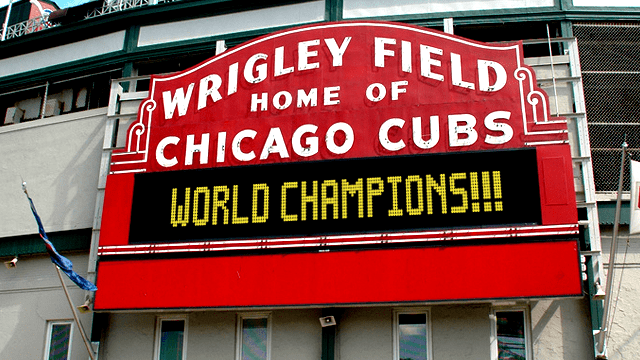
At Wrigley Field,
They celebrated a Marine from Iraq –
A local boy
Who emerged from the Cubs’ dugout
Waving
To a hero’s welcome
From a crowd on its feet
Cheering
Between swigs of PBR
As if the poor kid had hit
A game-winning dinger.

Reluctantly I stood up with the rest.

I now regret my applause.
I should have remembered shaved-headed
Brain-washed innocents
Kicking in front doors
Petrifying children
Calling their parents “mother f_ _kers”
And binding tender wrists
With plastic handcuffs.
To rid the world of evil.

Pitiful brainwashed innocents,
They are
Driven to war by poverty
And debt
To HadithaFallujahAbu Grahib,
To weddings transformed in a flash and bang
Into funerals
Leaving mourners shocked and awed –
Collateral Murder,”
By what King called
“The greatest purveyor of violence in the world”
And what the Sandinista hymn identified as
“The enemy of mankind.”

I should have remembered
Iraq (and Afghanistan btw)
Were wars of choice,
Of aggression,
The supreme international crime.”

Why did I not recall Zechariah?
(And here come my references to the readings for this Sunday)
And the peace-making Messiah
Christians claim he prophesied.
The prophet’s Promised One would be
Gentle and meek
Riding an ass
Rather than a war horse
Or Humvee
And banishing chariots, cross-bows
And drones raining hell-fire
From the skies.
His kingdom disarmed
Would encompass the entire world.
Refusing to call
Any of God’s “little ones”
(To use our military’s terms of art)
Rag-heads” or “Sand ni_ ggers

Paul called such imperial hate-speech “flesh.”
(Judging by appearances like skin color, nationality, religion)
“Live according to Christ’s Spirit,” Paul urged.
(Compassion for all, works of mercy)
No room for door-kickers there.

I should have remembered Jesus
And his yoke.
So good and light
He said
Compared with
The heavy burdens
The Roman War-makers
Laid on their subjects
Who kicked in Nazareth’s doors
And called parents like Joseph and Mary
“Mother f_cking Jews.”

Their imperial generals were “learned” and “wise”
In the ways of the world
But they piled crushing burdens
On the shoulders
Of those “little ones”
Jesus preferred –
In places far from the imperial center
Like Palestine (or Iraq today).
Victims there might be out of sight
And mind
For those enjoying bread, circuses
Cubs and Pirates,
But not for the All Parent
Described by the Psalmist today
As gracious, merciful, slow to anger, hugely kind, benevolent to all, compassionate, faithful, holy, and lifting up (rather than crushing) those who have fallen under the weight of the burdens Jesus decries.

I should have asked,
If following that Messiah
If worshipping that All Parent
Allowed standing and applauding
A robot returned
From a war
Where over a million civilians have been slaughtered
To rid the world of violence.
(In 1942 would I have joined the crowd
Applauding an S.S. “hero” in a Munich stadium
Just back from the front –or Auschwitz?
Or a pilot who had bombed Pearl Harbor
At a “Wrigley Field” in Tokyo?)

No: I should have had the courage
To remain seated.
And so should we all
Instead of
• Celebrating the military
• Waving flags on the 4th of July
• Paying war taxes
• And wondering with Fox newscasters
What makes America great?

Colin Kaepernick’s the Real Hero, Not Desperate U.S. Soldiers

kaepernick

Can you imagine yourself as a twenty-something – a black person sitting in the San Diego Chargers football stadium – with 70,000 angry mostly white people booing you and you alone? Can you imagine how that would feel – or what it would do to your psyche and to your feeling of being oppressed – not to mention your performance on the field?

Well, that’s the position the San Francisco 49ers Colin Kaepernick was in last Thursday night. Every time he touched the ball (virtually each of his plays, since he’s the 49ers’ quarterback) he was booed mercilessly by a hostile overwhelmingly white crowd. Many of them obviously took the opportunity to scapegoat Kaepernick for their anger towards the Black Lives Matter Movement (BLM).

That’s because in the spirit of BLM, this 28 year-old bi-racial athlete has used the pre-game singing of “The Star Spangled Banner” to protest the numerous killings of unarmed black men and women by police officers over the past few years. He refuses to stand. He’s sitting it out.

As Kaepernick himself put it: “I am not going to stand up to show pride in a flag for a country that oppresses black people and people of color. To me, this is bigger than football and it would be selfish on my part to look the other way. There are bodies in the street and people getting paid leave and getting away with murder.”

Ignoring those reasons, the quarterback’s critics have somehow turned his protest into his alleged attack on the honor the military who have given their lives “defending our freedom.” So when Thursday’s Chargers-49ers contest coincided with San Diego’s 28th annual Salute to the Military, the pre-game ceremony took on added meaning. It featured a special flag ceremony that only heightened Kaepernick’s “unpatriotic” stance – and the reaction against it.

Specifically, before the game a huge flag was spread across the playing field, its borders held aloft by service men and women in Army, Navy, Marine, and Air Force uniforms. It was then that the National Anthem was sung. While everyone else stood with caps doffed and right hands over hearts, Kaepernick took a knee. He knelt while the others stood. Afterwards the boos rained down – on him and him alone.

For me, the boos called attention not simply to many white people’s opposition to BLM, but to our unthinking, unconditional support for capitalism and the U.S. military in general. The fact is that those soldiers, sailors, marines and pilots on that San Diego football field are not in any way defending our freedom. Instead they are victims of nationalistic propaganda and of a failed economic system.

Think about it: since 9/11 and well before (e.g. Korea, Vietnam, Grenada, Panama), U.S. military personnel have been simply brain-washed agents of U.S corporations defending the “right” of modern robber barons to steal resources, markets and cheap labor. General Smedley Butler said as much long ago. “War is a racket,” he charged.

The fact is that despite their good intentions, the military agents on that San Diego field do not deserve celebration any more than Hitler’s servicemen did.

Daniel Geery says it would be more fitting to celebrate conscientious objectors, deserters, and members of Iraq Vets against the War. It would be better to cheer young people who choose to actually do something productive with their lives. As he has identified them, they “serve us as nurses, doctors, teachers, construction workers, garbage men, laborers, cooks, waiters and waitresses, writers, inventors, organic farmers, architects, scientists, engineers, computer programmers, landscapers, and all those who choose to actually do something with their lives. . . Far better to be a prostitute, even, than to be a military person. You are at least hiring out to bring pleasure to others, not misery and destruction.”

Problem is, the “capitalist” economy is unable to provide enough of such jobs. So it funnels a desperate under-educated surplus workforce into the military whose commercials promise that there they can “Be all that you can be.” And the commercials are right. Under capitalism many simply can’t be more than killers for corporations. For them there is no alternative other than subscribing the neo-Cartesian principle, “I kill therefore I am.”

So subconsciously realizing capitalism’s failure to provide adequate jobs, but unable to face that music, propagandized fans express their anger by booing a scapegoat – a worker like themselves instead of the system’s managers.

Nonetheless, Kaepernick remains steadfast in his brave witness. He said, “I am not looking for approval. I have to stand up for people that are oppressed. … If they take football away, my endorsements from me, I know that I stood up for what is right.”

We should keep those words (and Colin Kaepernick’s example) in mind the next time we’re asked to stand for the National Anthem. Can we be as insightful and courageous?

Scott Anderson’s “How the Arab World Came Apart:” It’s Not Islam; It’s the Economy, Genius!

fractured-lands-lead-image

Last Sunday, the New York Times (NYT) devoted its entire Sunday Magazine to a five-part article by Scott Anderson. It was called “Fractured Lands: How the Arab World Came Apart.” The epic piece traced the lives of six Arabs from Egypt, Iraq, Libya, Syria, and Iraqi Kurdistan as each struggled to live through and make sense of the disintegration of the Arab World since the U.S. invasion of Iraq in 2003. In so doing, Anderson attempted to put compelling faces on a longer historical narrative that begs for clarification, order and humanization.

The author succeeds admirably in the human interest portion of his project. More importantly, he supplies invaluable detail about a 100 year-long history of political decisions and processes responsible for the crumbling of the Arab world.

But perhaps his most stunning insight is that “Arabia” has been fractured not principally by internecine religious radicalism, but by a long-standing anti-socialist policy on the part of the United States and its allies. Ever since the conclusion of World War II, that policy has blocked economic reform not only in the Arab world and the Middle East, but also in Latin America, Africa, and South Asia – in other words in the former colonies. In the Middle East, the resulting conflict has only recently taken on heavy religious overtones.

Specifically, in that troubled region, the result of U.S. policy has been warfare and economic sanctions imposed on socialist movements involving both Arab and non-Arab countries – on peoples most of whom happen to be Muslims. As a result, those Muslims have experienced extreme poverty, joblessness, and loss of hope. Consequently, many have gravitated towards a brutal gang of reactive terrorists (ISIS) offering employment, a sense of identity, pride, short-lived hope – and the power that comes from a uniform and a gun. The grunts in this gang know very little about Islam.

In an August 12th interview with Scott Anderson on “Democracy Now,” Juan Gonzalez led the Times correspondent to make that very point. He asked Anderson what he had learned from his 18 months of research that included interviews with 20 ISIS fighters all of whom are now imprisoned in Iraq or in Kurdistan. Anderson responded:

“There was an amazing pattern. . . (T)hey were all young men, kind of with very bleak futures, either unemployed or underemployed, from working-class families, and not religious at all. . . (T)hey were not from religious families. They did not know the Qur’an very well. In a couple of cases, I knew the Qur’an better than they did. . . And I think it was this kind of decision that young men make, that better to live large for a couple of years, and, you know, the power and the so-called glamour. . . that comes of carrying a gun . . . they had more akin to why somebody might join like an inner-city gang or why in Mexico they might join a narco gang. It’s this kind of despair at seeing any sort of future. But it’s not political, it’s not religious. It’s just this impulse to—you know, to have some sort of—I mean, it’s awful to say, in terms of ISIS, but adventure.”

Juan Gonzales then observes, “But that’s a quite different perspective from what we get here . . .  that these are religious zealots who are willing to die for Islam.”

“Yes,” Anderson agrees.

With that astounding exchange in mind, it’s informative to reread the NYT article and the long-term history it reviews to detect the pattern underlying what Anderson uncovers as an economic rebellion with a recent and thick religious overlay that obscures what’s really behind ISIS and the fracturing of the Arab world. For as Anderson implies, the rebellion there is not about religion, but about economy. It is about the conflict between capitalism and socialism that has been raging at least since the 1848 publication of The Communist Manifesto. Far from ending with the fall of the USSR in 1990, the conflict has only intensified, when the West took the Soviet demise as a signal that it could subsequently increase pressure and even overthrow socialist governments everywhere – from Cuba and Venezuela to Yugoslavia and Iraq –  without fear of reprisal.

 To understand, we need to examine the underlying historical pattern responsible not only for the fracturing of the Arab world, but for relations between the developed world (principally the United States) and impoverished nations generally.

That pattern (identified specifically by J.W. Smith and implicitly by John Perkins) runs as follows:

  • Any Western colony that attempts to “break for freedom” (from capitalism and colonial control)
  • By instituting a “socialist” economy prioritizing the needs of its own people, especially its majority poor
  • Will have its leaders accused of being undemocratic dictators – communist, totalitarian, or terrorist.
  • Those countries will find themselves undermined (with Western support) by local dissidents – usually drawn from those privileged under the old colonial order or from those marginalized by the new socialist order.
  • This will cause the governments in question to institute severe national security measures that Western enemies will vilify as dictatorial, thus justifying further measures to overthrow the “repressive” regime.
  • If such methods do not result in the desired regime change, the country in question will ultimately be subjected to direct invasion or other military action on the parts of its former colonial masters.
  • Interventionist military action will be met with resistance and retaliation on the part of imperialism’s victims. (This explains the origins of ISIS.)

To reiterate, this pattern lays the blame for Middle East conflict at the feet of colonialism.  It suggests that since the dissolution of the Ottoman Empire, capitalism’s real enemy in Arab countries and throughout the Middle East has been anti-imperialist socialism not primarily Islam. More precisely, the conflicts in Egypt, Iraq, Libya, Syria, Iran, and Afghanistan have been spawned not by religion, but by resistance to colonialism and by economic policies resistant to free market capitalism.

To grasp that point, let’s think first of all about imperialism or colonialism. Then connect resistance to such foreign adventurism with socialism and the birth of ISIS.

In essence, colonialism is a system of robbery. It has foreign armies invading, conquering militarily weak, resource-rich countries, and then controlling them either through occupying armies or through local militaries armed by the invaders and headed by indigenous collaborators working hand in glove with the colonists. The chief goal of such invasion is resource extraction – wealth transfers for purposes of enriching the colonizers.

Western colonization of Arabia began in earnest after World War I. Up until then (and from the end of the 13th century), what Westerners called the “Middle East” was the center of the Ottoman (i.e. the Turkish) Empire controlled by Muslim sultans.

The Ottoman Empire was the Islamic State of its day and at its height comprised central Hungary, the Balkan Peninsula, Anatolia, Mesopotamia, Syria and Palestine, Egypt, the Caucasus and western Iran. As the Anderson essay shows, the Sultans did not impose their religion or Sharia Law on those they colonized. Instead, they allowed Christians, Jews and others to practice their faiths with no interference. As long as they paid their taxes, tribes and clans throughout the region were allowed a great deal of freedom and self-determination.

After the Ottoman Empire broke down in 1920, the British, French, Italians, and the United States stepped in to fill the void. To control their newly annexed territories (and their oil), they instituted a divide and conquer strategy. This entailed creating small client states that never existed before. These new “nations” included entities such as Jordan, Lebanon, and Yemen. Each was run by local collaborators (royal monarchs and their families) who could be counted on to transfer Arabia’s patrimony at confiscatory prices.

Such divisions were immediately resisted by tribes and clans throughout the region. Their loyalty was (and remains) to local chiefs, not to prime ministers or presidents. Together tribal leaders and their people wanted foreigners out. Many wished to unite all Arabs in a “Pan Arab” movement to restore the unity of the Arab world that had existed under the Islamic State and Caliphate for more than 600 years. The operative sentiment was “Arabia for Arabs.”

Pan Arabism took two main forms, one secular and socialist, the other (much later) religious and Muslim.

It helps to keep Smith’s historical pattern in mind: (1) break for socialist freedom, (2) vilification of socialism’s leaders, (3) empowerment of their natural enemies (secular or religious), (4) repressive measures by the threatened government, (5) (as a last resort) U.S. military action, and (6) insurgent response.

To verify the pattern, let’s begin with Egypt as Anderson does. Then let’s join him in considering the cases of Iraq, Libya, and Syria. Add in the non-Arab examples of Iran and Afghanistan to complete the regional picture. All the while, note the elements of the six-point historical pattern. To repeat, they illustrate that capitalism’s enemy has not changed since 9/11. It remains socialism, not Islam.

The most prominent secular and socialist anti-colonial movement began emerging in 1952, when Gamal Abdel Nasser led a revolution that overthrew the Egyptian monarchy that had cooperated closely with the West. Nasser was an outspoken socialist. His first act as Prime Minister was to institute a wide-ranging land reform program benefitting peasant farmers.

In addition, Nasser was critical of the West in general. He was also anti-imperial and hostile to Israel, which he and his constituents saw as another Western colonial beachhead in the Arab world. Nasser and his supporters saw Jews returning to their “homeland” as opportunistic European invaders whose ancestors hadn’t thought about living in Palestine for well over a millennium.

Nasser was succeeded by Anwar Sadat in 1970. As Anderson shows, Sadat alienated Pan-Arabs by moving closer to a client-patron relationship with the United States. He cooperated with the Carter administration in negotiating a separate Peace Treaty with Israel in 1979, without prior consultation with the other Arab states. For such betrayal, Sadat was assassinated. He was succeeded by Hosni Mubarak, an even more compliant client of the United States who remained in power till he was driven from office by the Arab Spring movement in 2011.

Nasser’s vision was shared by Hafez al-Assad, who came to power in Syria in 1970. Like Nasser, Assad had participated in a revolution against a Western-compliant monarchy. That revolution brought his Pan-Arab Ba’athist Party to power in 1963. The Ba’ath Party derived its name from the Arabic word for “renaissance” or “resurrection.” It envisioned the eventual restoration of a single Arab state. It espoused Arab nationalism and Pan-Arabism – again, Arabia for the Arabs. Besides being anti-imperial and anti-West, Ba’athism was also socialist. Since 2011, the United States and Syria’s former colonial master, France, have taken both indirect and direct action for regime change in Syria.

In 1969 Ba’athism spread to Iraq, where revolutionary forces led by Saddam Hussein toppled the monarchy established and supported by the West. Of course, following the dissolution of the Soviet Union in 1990, Desert Storm (1991) and the invasion of Iraq (2003) involved elaborate military measures by the United States to remove Saddam from office.

The same year Saddam Hussein came to power (1969), the Pan Arab socialist movement spread to Libya under Muammar Gaddafi who also led a revolution against a monarchy supported by the Western colonial powers. Gaddafi gradually moved away from the Ba’athist Pan Arab ideal and embraced Pan Africanism instead. His Third International Theory (published in his Green Book) championed socialism and anti-colonialism for the entire African continent. U.S. military action deposed Gaddafi in 2011.

Besides its links to the six-point pattern indicated above, what socialism in Egypt, Iraq, Syria, and Libya had in common was the fact that it worked. It lifted masses of people from poverty and modernized the relevant countries in a relatively short time. For example, before the 1991 invasion, Iraq boasted the highest standard of living in the Arab world. Similar statements can be made about Nasser’s Egypt, Assad’s Syria, and Gaddafi’s Libya.

Regional resistance to control by Western capitalists also emerged prominently in non-Arab Iran and in Afghanistan – two other artificial countries which came into being at the end of the 19th century. It was in these countries that (with major U.S. implication) opposition to Western imperialism eventually took on the decidedly religious turn that most mistakenly identify today as the root cause of conflict in the Middle East.

However, to begin with (as was the case in Egypt, Iraq, Syria, and Libya), post-World War II Iran experienced a highly secular grassroots rebellion against foreign control of their region following the dissolution of the Ottoman Empire. The rebellion caused the democratic election of Mohammad Mossaddegh to displace the U.S. client, Reza Pahlavi, the Shah of Iran.

Upon his succession to office, the enormously popular Mossaddegh instituted social and economic reforms of the type championed by socialists all over the world: social security, land reform, abolition of forced labor, rent control, agricultural regulation, compensation for workers injured on the job, public housing, and public works – all with the intent (as he said) to “combat disease, poverty, and backwardness.”

Above all, Mossaddegh nationalized Iran’s oil industry. This outraged Great Britain (who controlled Iran’s oil) the United States. So the CIA instituted a coup that removed Mossaddegh from office and replaced him, restoring to office Reza Pahlavi who returned from exile to administer an extremely repressive Western-friendly regime for the next quarter century.

In 1979, the Shah was overthrown in a rebellion. However, this time the uprising was not inspired by socialism, but by an anti-Western, anti-imperial movement organized “in the name of God.” It is here that Islam begins to take over as the face of the perennial regional resistance to Western imperialism that had roiled above and below the surface since 1920.

Something similar happened in Afghanistan. There too a secular socialist movement against the West morphed into a rebellion in the name of God.

In Afghanistan, the secular People’s Democratic Party of Afghanistan took control of the country in 1973 under Nur Muhammad Taraki. It offered equal rights for women, universal education, and land reform. To oppose such reforms and the intervention of the Soviet Union to uphold them, the CIA identified and supported internal opposition, the Mujahedeen – Islamic jihadists who from their founding had adopted as their goal the expulsion of foreigner rulers (viz. the British) from the Middle East. The CIA now empowered them to expel the Soviet invaders and establish an Islamic State to replace socialism.

But Mujahedeen goals were not reached with the expulsion of the Soviets. The jihadists wanted all foreigners out of the region. That meant the expulsion of U.S. troops from Islamic holy centers in Medina and Mecca. The troops had taken up residence there following the 1991 defeat of Saddam Hussein in Operation Desert Storm. That defeat was followed by 12 years of economic sanctions that ended up taking the lives of half a million Iraqi children. Osama bin Laden would later identify those murders, along with the previous 80 years of European control of Arabia, and the stationing of troops in Mecca and Medina as the specific motives for the infamous attacks of 9/11. His rationale was hardly reported in the U.S. mainstream media (MSM).

Since 9/11those media and Western politicians have shifted blame for the dissolution of the Arab world away from neo-colonial capitalist depredations and the interventionist pattern Scott Anderson implicitly reviews. Instead of blaming a failed capitalist system and its related foreign policy, they locate the cause of Middle Eastern chaos in Islam and in Hitler-like tactics of egregiously evil dictators such as Saddam Hussein and Bashar Assad. The problems thus become personalized, cultural and religious. Thankfully for those responsible, they also become largely insoluble thus necessitating permanent war. Thus the grateful include Israel, Saudi Arabia and other “American” client states. They include as well the oil and arms industries, and the corporate-controlled MSM all of whom profit from a chaotic Middle East and from misidentifying the true culprit in the region.

If all of this is true, what then must be done about Anderson’s “Fractured Arab World?”  If the cause of the fissures there is not religion nor Hitler Redivivus, but capitalism itself, its 150-year war against socialism and its six-point pattern of colonial intervention, what policies might replace the failed, counter-productive measures of war, incessant bombing, and drone attacks? If the foot soldiers in the war are not religious zealots, but unemployed and underemployed young people without prospect or hope, what will give them hope and meaning beyond a black uniform, ski mask and gun?

Here’s where we might start:

  • Abandon imperial pretensions and allow nations everywhere to experiment with alternatives to a capitalist system that clearly does not serve them.
  • Stop all vilification of Islam and Muslims.
  • Completely transform the U.S. economy from its fossil fuel dependency, thus removing the major reason for “American” interest in the Middle East.
  • Nationalize the U.S. arms industry, thus severing the connection between war and profit.
  • Cut off all aid to Israel until it complies with repeated U.N. mandates to withdraw from the Palestinian territories it has illegally occupied. This would take seriously bin Laden’s claim that solving the Palestinian problem would also solve the problem of terrorism.
  • As a good-will measure and for the sake of justice, indict, try, and punish George Bush, Tony Blair, Dick Cheney, Donald Rumsfeld, and others responsible for the Iraq War that gave rise to ISIS.
  • Divert the billions now invested in failed wars against terrorism into reconstruction of Afghanistan, Iraq, Libya, Yemen, and other countries devastated by Western wars.
  • Similarly use those billions to provide constructive employment not only for ISIS fighters, but for U.S. soldiers who find themselves armed and in uniform for reasons similar to the young militants referenced in Scott Anderson’s essay.
  • With good will demonstrated in these ways, summon a Peace and Reconciliation Conference to include all stake holders in Middle East conflicts including ISIS..
  • Comply with the decisions of the conference.

That such common sense measures probably seem impossible and completely off the table for most of our diplomats (and readers of this essay!) represents a sad comment on our limits of perception. It exhibits a lack of genuine will on the parts of our “leaders” to solve the problem of global terrorism. It also demonstrates the need for a revolution of our own.