Studying Liberation Theology in Brazil: Realizing Hitler Won WWII (Personal Reflections XVI)

Nazis Won

Last week I wrote about Paulo Freire and the friendship Peggy and I formed with him in Brazil in 1984. Paulo had a huge influence on Liberation Theology which I first met during my graduate studies in Rome (1967-’72). There I had written my doctoral dissertation on Jurgen Moltmann, the great Reformed theologian who was the doyen of the Theology of Hope. As a member of a missionary society (Society of St. Columban) I tried to connect Moltmann’s concept of “mission” with the same category in the Second Vatican Council’s  Ad Gentes.

While finishing my work on that topic (at the Academia Alfonsiana – with Bernard Haring on my committee), I heard Gustavo Gutierrez speak. At the time, Gustavo was the leading voice in the theology of liberation, which emerged to prominence following the 1968 Medeillin Conference of Latin American Bishops in Colombia. Immediately I could see the connections between the two.

I got the opportunity to explore those connections while Peggy was working on her own dissertation with Freire. I enrolled in a seminar at the Santa Maria de Asuncao seminary in San Paulo. It had me sitting at the feet of a series of liberation theologians I had by that time been reading for years. Prominent among them was Enrique Dussel; so was Chilean scripture scholar, Pablo Richard who (because of the U.S.-supported Pinochet coup) was living in exile in Costa Rica. Dussel was an Argentinian philosopher of liberation. His home had been bombed by the Argentine military during its infamous “dirty war” supported by the United States. So he was then living in exile in Mexico.

He was a dynamic lecturer, but I found him puzzling. He used terms and made references that were new to me. For instance, instead of referring to World Wars I and II, he spoke of the First and Second Inter-capitalist Wars. I had never heard that before. But the phrases caused me to do some research. And sure enough: those wars were between capitalist powers who were struggling for supremacy and to achieve a position in the world very like the one enjoyed by the United States today.

How had I missed that, I wondered? The answer, of course, was that I had learned my history in the United States which conceals such obvious facts. I did more research and eventually wrote a long essay that I published in Spanish in Pasos, the journal of the Ecumenical Research Institute in Costa Rica – a liberation theology think tank. The essay was called “How Hitler Saved Capitalism and Won the War.”

Here it is summarized in the “Easy Essay” form coined by Peter Maurin, the founder (with Dorothy Day) of the Catholic Worker newspaper:

Following Germany’s defeat

in “the First Inter-Capitalist War,”

the system was in trouble in das Vaterland.

It also foundered world-wide

after the Crash of ‘29.

So Joseph Stalin

convoked a Congress of Victory

to celebrate the death of capitalism

and the End of History —

in 1934.

Both Hitler and F.D.R.

tried to revive the corpse.

They enacted similar measures:

government funds to stimulate private sector production,

astronomically increased defense spending,

nationalization of some enterprises,

while carefully keeping most in the hands of private individuals.

To prevent workers from embracing communism,

both enacted social programs otherwise distasteful to the Ruling Class,

but necessary to preserve their system:

legalized unions, minimum wage, shortened work days, safety regulation, social                     security . . .

Roosevelt called it a “New Deal;”

Hitler’s term was “National Socialism.”

Roosevelt used worker discontent

with their jobs and bosses

to get elected four times.

Meanwhile, Hitler successfully directed worker rage

away from the Krupps and Bayers

and towards the usual scapegoats:

Jews, communists, gays, blacks, foreigners and Gypsies.

He admired the American extermination of “Indians”

and used that model of starvation and internment

to guide his own program for eliminating undesirables

by hunger and concentrated slaughter.

Hitler strictly controlled national unions,

thus relieving the worries of the German elite.

In all of this,

he received the support of mainline churches.

Pius XII even praised der Führer  as

“an indispensable bulwark against the Russians.”

Dietrich Bonhoeffer and the German “Confessing Church”

resisted Hitler’s program

of social Darwinism, patriotism and persecution of the undeserving.

Confessing faithful were critical of “religion”

which combined anti-Semitism, white supremacy, patriotism and xenophobia

with selected elements of Christianity.

They insisted on allegiance

to Jesus alone

who stood in judgment over soil, fatherland, flag and blood.

They even urged Christian patriots

to pray for their country’s defeat in war.

Bonhoeffer participated in a plot to assassinate Hitler

and explored the promise of

Christianity without “religion.”

Hitler initially enjoyed great popularity

with the powerful

outside of Germany,

in Europe and America.

He did!

Then as baseball magnate and used car saleswoman, Marge Schott, put it,

“He went too far.”

His crime, however, was not gassing Jews,

but trying to subordinate his betters in the club

of white, European, capitalist patriarchs.

He thus evoked their ire

and the “Second Inter-Capitalist War.”

Following the carnage,

the industrialists in other countries

embraced Hitlerism without Hitler.

They made sure that communists, socialists and other “partisans”

who bravely resisted German occupation

did not come to political power,

but that those who had cooperated with Nazis did.

Today, the entrepreneurial classes

still support Nazis, whenever necessary.

The “Hitlers” they championed have aliases

like D’Aubisson (El Salvador), Diem (Vietnam), Duvalier (Haiti), Franco (Spain),

Fujimori (Peru), Mobutu (Zaire), Montt (Guatemala), Noriega (Panama), Peron                         (Argentina), Pinochet (Chile), Resa Palavi (Iran), Saddam Hussein (Iraq), Somoza                     (Nicaragua), Strossner (Paraguay), Suharto (Indonesia). . . .

The list is endless.

The global elite deflect worker hostility

away from themselves

towards communists, blacks, gays, immigrants and Muslims,

towards poor women who stay at home

and middle class women who leave home to work.

Today, Christians embrace social Darwinism

while vehemently rejecting evolution.

Standing on a ground of being

underpinning the world’s most prominent culture

of religious fundamentalism,

they long for Hoover,

and coalesce

with the right.

In all of this

is forgotten the Jesus of the New Testament

who was born a homeless person

to an unwed,

teenage mother,

was an immigrant in Egypt for a while,

came from the working poor,

was accused of being a drunkard,

a friend of sex workers,

irreligious,

possessed by demons

and condemned by the state

a victim of torture

and of capital punishment.

Does this make anyone wonder about Marge Schott,

the difference between Hitler’s system

and our own,

and also about “religion”

and how to be free of it,

about false Christs . . . .

And who won that war anyway?

(Next week: more about our experience in Brazil)

For Discussion: The Clearest Explanation of Marxism and Surplus Value I’ve Come Across

Whenever my adult children and I get together, we end up “discussing” current events such as the coming General Election, U.S. foreign policy, Black Lives Matter, or Cuba. And those discussions always lead to exchanges about alternatives to capitalism — especially socialism inspired by Karl Marx. On such occasions I end up defending those alternatives, and my dialog partners offer powerful counter-arguments.

I always come away from such events wishing I could be clearer in expressing my convictions. I’ve taught Marxism in the past. For a while, in a team-taught interdisciplinary course involving 15 Berea College faculty drawn from various disciplines (History, Philosophy, Physics, Biology, Economics . . .), I was asked to give the Karl Marx lecture to those colleagues and the entire B.C. sophomore class. The context was a course called “Religious and Historical Perspectives,” the best teaching (and learning) experience I’ve ever had.

There I wish I had been able to give something like the lecture I’ve pasted below. It’s given by Richard Wolff and it’s the clearest explanation of Marx’s theory of “surplus value” that I’ve come across.

Richard Wolff is emeritus professor of economics at the University of Massachusetts. He is a Marxist educated at Yale,Stanford and Harvard. He currently teaches at the New School in New York City. I am grateful to my good friend, John Capillo, who called him to my attention.

Please watch the video. If my children do, I know it will spark more enlightened conversation. I’m also hoping it will start discussion here among readers of this blog.

See what you think:

The Poor Know More than the Rich: Paulo Freire on What the Impoverished Can Teach Us All (Personal Reflections XV)

Freire Trust

Our world is characterized by an ongoing “conflict” (not to say “war”) waged by the rich and powerful against the poor and politically powerless. It’s all an inheritance of colonialism, which did not disappear after World War II. Instead, colonialism simply took other more sophisticated forms. As J.W. Smith puts it, the system changed from “plunder by raid” to “plunder by trade.” The enduring point is to keep the wealth and power where it’s been since the onset of the colonial era – with the plundering powers (Europe and the United States) which have systematically robbed the resources of the former colonies whose populations today (unsurprisingly) constitute the world’s poor.

One cannot be neutral in the conflict just referenced; one must take sides.  As our friend and mentor Paulo Freire put it, “Washing one’s hands of the conflict between the powerful and the powerless means to side with the powerful, not to be neutral.”

My forty-plus years of travel, teaching, and scholarship in the Global South (Brazil, Nicaragua, Costa Rica, Guatemala, Honduras, Mexico, India, Zimbabwe, South Africa, and Cuba) have taught me the truth of Paulo’s words. Not to decide is to decide – in favor of the status quo.

When sides are consciously taken with the poor and oppressed, a whole counter-narrative emerges that rarely gets a hearing in the United States whose official policy favors the rich and powerful. The counter-narrative about history, economics and politics comes from the underclasses that so concerned Paulo Freire and the liberation theologians I’ve studied with in the countries I’ve just mentioned as well as in the U.S. and Europe.

But here’s the Freirean point: the counter-narrative of the poor is more comprehensive and informed than the one typically pedaled in the United States. In fact, the U.S. story (pretending to be neutral) is actually the product of one-sided “banking” model of education that endorses oppression as normal and inevitable.

Let me explain.

Paulo Freire famously contrasted what he called the banking concept of education with “education for critical consciousness.” In the banking model, teachers make deposits of knowledge into the “accounts” of passive, unsuspecting students. What they learn is mostly irrelevant to their everyday lives. However it amounts to the “official story” which remains unquestioned and explains the given order as normal and good.

On the other hand, education for critical consciousness “problematizes” the students’ own reality and asks them to come up with solutions to real dilemmas: for example, their own hunger, its causes, and how to escape it. In the process they learn how the world works and come up with strategies to change their immediate experience.

Freire also made key distinctions about the stages of consciousness typically passed through by learners  among the world’s majority poor and oppressed. Normally, he said, students begin with the resigned attitude that “to be is to be under the oppressor.” They see no exit from their poverty and life’s circumstances. From there they pass to a second stage: “to be is to be like the oppressor.” They take the rich and powerful as their role models.  They want to be like them – rich and successful. Finally, if they persevere in the growth process, poor students arrive at a stage where they realize that “to be is to be neither oppressor nor oppressed.” In that stage they start taking active and proactive measures against their own poverty and oppression.  They work to change the world.

[BTW: Part of my quarrel with Lin Manuel Miranda’s “Hamilton” (which is where these reflections began) is that it reflects Freire’s second stage of consciousness – to be is to be like the Oppressor. In the play, African-American and Hispanic actors literally pretend to be their white oppressors; they actually celebrate the ones who enslaved and exterminated their ancestors – the ones who excoriated Native Americans in the Declaration of Independence and who wrote slavery into the U.S. Constitution.]

Towards accomplishing the task of changing the world, the poor have an epistemological privilege in their analysis of life in general. Though typically far less formally educated than the rich, their perception and analysis is characteristically more comprehensive and accurate. They might not be able to make the historical references or to employ the academic jargon; they might not use complete sentences or be grammatically correct, but simply put, the poor know more about life.

Why? Think about it for a minute.

Those of us who are rich and/or comfortable have very limited experience and awareness.  Our communities are pretty much siloed and gated. As a result, we can live without consciousness of the poor at all. Wall Street execs rarely really see them. The poor are located in different parts of town. Most even in the middle class never enter their homes or schools. The comfortable have no experience of hunger, coping with rats, imminent street crime, living on minimum wage, or cashing in Food Stamps. Even if they notice the poor occasionally, the comfortable can quickly dismiss them from their minds. If they never saw the poor again, the rich and middle class would continue their lives without much change. In sum, they have very little idea of the lived experience of the world’s majority.

That becomes more evident still by thinking of the poor outside the confines of the developed world who live on two dollars a day or less. Most in the industrialized west know nothing of such people’s languages, cultures, history, or living conditions. I’m talking about “enemies” living in Syria, Iraq, Somalia or Yemen.  Even though our governments drop bombs on such people every day, they remain only abstractions. That is, few of us know what it really means to live under threat of hellfire missiles, phosphorous bombs or drones. Similarly, we know little of the actual motives for “their terrorism.” Syria could drop off the map tomorrow and nothing for most of us would change.

None of this can be said for the poor and the victims of bombing. They have to be aware not only of their own life’s circumstances, but of the mostly white people who employ them, shape their lives, or drop bombs on their homes. The poor serve the rich in restaurants. They clean their homes. They cut their lawns. They beg from them on the streets. The police arrest, beat, torture and murder their children.

If the U.S., for example, dropped off the planet tomorrow, the lives of the poor would be drastically altered – mostly for the better. In other words, the poor and oppressed must have dual awareness. For survival’s sake, they must know what the rich minority values, how it thinks and operates. They must know more about the world than the rich and/or comfortable.

That’s why when the poor develop “critical consciousness,” (like Malcolm X or Mumia Abu Jamal) their analysis is typically more comprehensive, inclusive, credible, and full. They have vivid awareness not only of life circumstances that “make no difference” to their comfortable counterparts; they also have lived experience of life on the other side of the tracks.

However despite such comprehensive knowledge, the critically conscious poor and their representatives find little place in mainstream analysis which comes overwhelmingly from white, well-to-do, and university-educated men.

This is why I’ve learned to give scant credence to mainstream media (MSM) explanations of the world and always takes pains to understand reality from the viewpoint of the epistemologically privileged poor and oppressed – found outside the MSM. Those viewpoints are more comprehensive and informed.

Such Freirean insights are, I think, worth thinking about.

(Next week: My study of liberation theology in Brazil)

Anniversary Celebration in Wyoming: Photos

Family

I’ve been remiss lately in my blog postings. Family activities have kept me away from my computer. There have been lots of comings and goings as Peggy and I have moved to our cottage in Michigan for the summer.

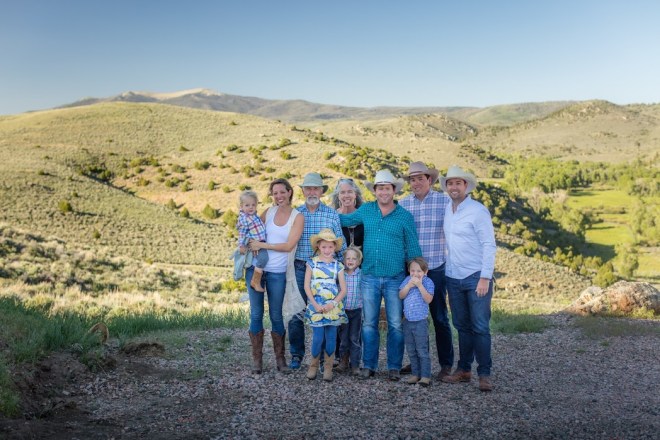
The big family event was a week on the Brush Creek Guest Ranch near Saratoga, Wyoming. It was an extremely generous gift from our daughter, Maggie, and our son-in-law, Kerry – part of this year’s celebration of Peggy’s and my 40th wedding anniversary. Our whole family was there: Maggie and Kerry, Brendan (on leave from his Foreign Service assignment in Pakistan), Patrick (who’s taking a new job working for The Economist), and our four grandchildren, Eva (age 7), Oscar (5), Orlando (almost 4), and Markendeya (almost 2). Diana, the family’s au pair from Colombia was also present.

It was our first time in Wyoming – the “Wild West” as we described it to our grandkids. And at Brush Creek we did it all: skeet shooting, horseback riding, river floating, zip line and rope courses, hiking, fly fishing, paint ball skirmishes, golf, yoga, picnicking, and eating and drinking that didn’t end. A couple of evenings, we watched the NBA Finals in the ranch’s Man Cave. On Friday, country singer, John Rich (of Big & Rich), who was also vacationing at Branch Creek, sang a few songs. Everyone loved it – especially his “Save a Horse; Ride a Cowboy.”

Our dinners together were transcendent. We reminisced, ribbed each other about marriage, parenting, and being parented. Eyes were tear-filled more than once. We really love our kids and grandchildren, and (gratefully) it’s so evident that they love and respect us.

Here are some pictures from Brush Creek:

Family Again

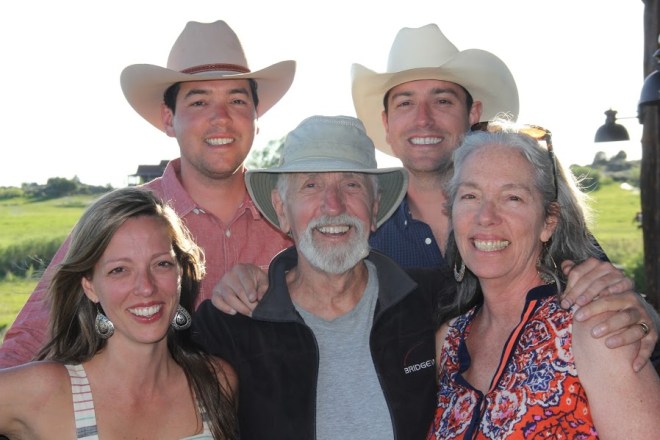
L-R: Maggie, Brendan, Mike, Patrick, Peggy

M & P

Maggie & Kerry

Our Hosts: Maggie and Kerry

Maggie's Family

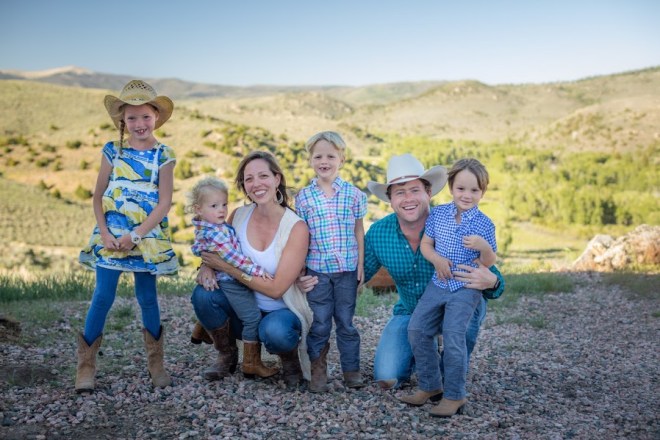
L-R: Eva, Markandeya, Maggie, Oscar, Kerry, Orlando

Lovers

Forty Years!

Our 1984 Experience with Paulo Freire (Personal Reflection XIV)

freire-neutral

This 14th “Personal Reflections” blog continues my modest project of explaining myself to my three adult children who are often puzzled by my criticisms of the United States in these blogs and elsewhere. Half- jokingly (I think) they often ask, “Why do you hate America, Dad?”

Of course, I don’t hate the country of my birth. Quite the opposite. But my patriotism and loyalty take quite different directions from those fostered by the mainstream media and the otherwise fine educations our children received at Wellesley (Maggie), Lafayette (Brendan), and Davidson (Patrick). In contrast to those sources, and for reasons connected with faith, my own thinking aspires to view the world from the perspective of the world’s impoverished majority (both nationally and in the Global South) rather than from that of privileged classes within the United States.

Along with liberation theologians, Paulo Freire has played a major role in shaping me that way. Freire’s the great Brazilian educator who (among other books) wrote The Pedagogy of the Oppressed and Education for Critical Consciousness. His influence on liberation theology is immeasurable.

Peggy and I got to know Paulo quite well beginning in 1982 when we participated in his two-week seminar at Boston College. Then during my first sabbatical from Berea College (1983-’84) Peggy worked with him for six months at his center in Sao Paulo, Brazil. Every week, she joined a team of young Brazilians conducting one of Paulo’s literacy programs in Sao Paulo’s impoverished favelas. It was all part of her research on Freire for her Ed.D (Philosophy of Education doctorate) at the University of Kentucky. In 1986 the American Education Research Association gave Peggy’s work the year’s “Outstanding Dissertation Award for Conceptual Research.” She later published an article based on her work in the Harvard Educational Review.

I remember spending our sixth wedding anniversary in Freire’s apartment in Sao Paulo where we had a memorable supper with him and his wife, Elsa. Afterwards Paulo read aloud from the latest chapter in Peggy’s evolving dissertation. I recall his pausing after reading a lengthy quotation from one of his works and remarking, “Right now I am loving these words.”

I’m convinced that the Rivage-Seul’s were given the gift of tongues for our Brazil experience. During the first semester of my sabbatical (at the end of 1983) and in preparation for our trip to Brazil, I had studied Portuguese at the University of Colorado in Boulder. [I had been given a fellowship there (at the Center for the Study of Values and Social Policy) to research the relationship between freedom and justice. It was to prepare me to head Berea’s newly established Freshman Seminar whose readings were organized around that theme.] In any case, my Latin, French, and Italian helped me learn Portuguese. Peggy’s college French major (at Central Michigan University) helped her as well. Then in Anapolis, Brazil with the help of a tutor, we spent our first two months studying intensively. And it somehow worked. We ended up quite able to carry on in the language.

Brazil at this time was still run by its generals. That was the result of a 1964 coup sponsored by the CIA. The father of my Portuguese teacher at CU was one of those generals. So she arranged for our first few nights in the country to be spent at the Clube Militar as guests of the oppressors and fierce enemies of liberation theology in Brazil which was a hotbed of the discipline. (More about that later.) Staying at the Clube was very creepy for us.

But back to Paulo Freire . . . . After our return to the United States we had a warm reunion with him at the Highlander Center where he was working on a text with the Center’s founder, the great activist, Myles Horton. Horton’s work had directly influenced Martin Luther King. In fact, in the ‘60s, the F.B.I. had published photos of MLK at what they called the “Communist” Center (Highlander). It was part of J. Edgar Hoover’s campaign to portray King as a Red. Paulo’s and Myles’ text was eventually published as We Make the Road by Walking.

As I said, Freire’s method of teaching and learning was central to the methodology of liberation theology, which had increasingly seized my attention since I first encountered it in 1969.

One of Freire’s key concepts (shared with liberation theology) is “the hermeneutical privilege of the poor.”  Basically it says that the poor and oppressed know more about the world (and about the Bible) than the rich and comfortable. That idea constitutes a key basis for my own analysis of the world.

(I’ll explain that more fully next week.)

Our Dinner with Amy Goodman

Amy Goodman

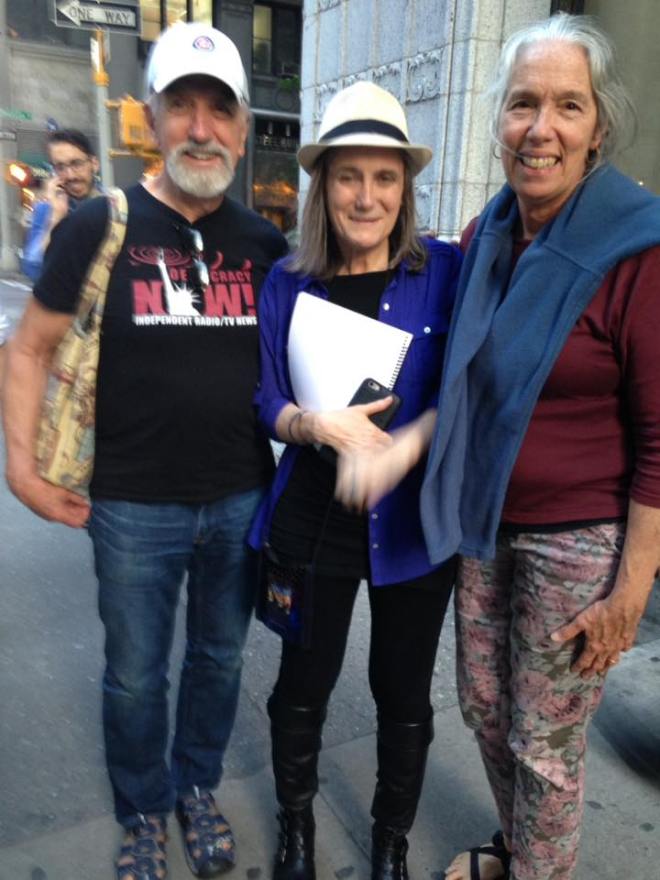
A week ago today, Peggy and I had dinner with Amy Goodman, the host of “Democracy Now: the War and Peace Report” (DN).  The program airs each Monday through Friday on radio and TV stations across the country. I watch it every morning in its podcast version that can be accessed at any hour at http://www.democracynow.org/

The dinner was a Christmas present from my daughter, Maggie who (with her husband, Kerry) had given DN a substantial contribution.

[The gift came with a black Democracy Now tee shirt (which I wore to our dinner) and two coffee cups showing the program’s logo. The meal portion of the gift was for me and a companion of my choice. Naturally, it was Peggy. Still another of the gift’s components was attendance at one of the show’s morning productions (which we’ll take advantage of sometime in the future).]

There were four of us in Thursday’s dinner party. Amy brought along her factotum, Edith Penty, whose presence was absolutely delightful. We ate at the Hangawi Korean restaurant on 32nd street between Fifth and Madison Avenue. There we shared “The Emperor’s Tasting Menu” that featured starters, appetizers, entrees and dessert –   acorn noodle salad with avocado fritters, dumplings in pine nut and pineapple sauce, tofu with sesame leaves and seaweed sauce, and dessert.

As the meal unfolded we all shared our biographies.

Amy is a New Yorker raised in Bay Shore. She is the daughter of an ophthalmologist father and a mother who taught literature and Women’s Studies. Her family is Jewish Orthodox. Her maternal grandfather was an Orthodox Rabbi.  She studied Hebrew and Torah from kindergarten through high school. Amy graduated from Radcliffe College in 1984, with a degree in anthropology.

From her stories about participation in demonstrations, vigils, and campaigns, it’s clear that Amy Goodman has always been an activist. For some years she worked in an organic bakery that eventually supplied buns for Arby’s restaurants. Journalism has always been in her family’s blood. (Her brother published a family newspaper before reaching his teenage years.) She founded Democracy Now in 1996; this is its 20th anniversary year. Throughout Amy’s account of her life, there wasn’t a trace of self-promotion. On the contrary, both Peggy and I were impressed with her interest in our stories, and with her unassuming presence.

In all the four of us spent about two hours together. And of course conversation went far beyond autobiographies. Inevitably we discussed Trump, Bernie and Hillary.

The most interesting insight came when Amy shared the fact that the Obamas and Clintons can’t stand one another. Obama made Hillary his Secretary of State following the principle: Stay close to your friends, and even closer to your enemies. One of the first questions asked in any Obama or Clinton vetting process is: “What do you think about Hillary?” “What do you think about Barrack?” Hiring decisions are made accordingly.

Towards the end of our time together, Amy left the table for a moment. Soon afterwards waiters came to our table with ice cream and small cakes and a candle. Amy had informed them that Peggy and I are celebrating our 40th wedding anniversary. That’s the kind of thoughtful person Amy Goodman is.

As we left Hangwai, a young African American man caught sight of my Democracy Now tee shirt. He said to me: “Love your tee shirt. I watch that program every day. Love that too!” I pointed ahead of us to Amy who was deep in conversation with Peggy. I said, “That’s Amy Goodman right there.” He couldn’t believe it. Soon we were all taking pictures with the celebrity. It was a moment that topped the evening off just perfectly.

If Democracy Now isn’t part of your daily news-gathering routine, it should be.  Unlike other newscasts, it centralizes stories from the grassroots. So it often interviews victims of police violence, representatives of NGOs (non-governmental organizations), political dissidents, and community organizers. Noam Chomsky, Glen Greenwald, Naomi Klein, Bill McKibben, Medea Benjamin, Cornel West, Lori Wallach, Richard Wolff, Tariq Ali, and many other thought-leaders and journalists are among the program’s frequent guests.

“Democracy Now” covers the Black Lives Matter Movement along with the Boycott, Divest, and Sanction campaign against the Israeli apartheid system – whose proponents are almost never interviewed in the mainstream media.

If you watch Democracy Now, you know details of the recent coup in Brazil, its predecessor in Honduras, and current attempts at still another in Venezuela. You know about Michael Brown, Eric Garner and Tamir Rice. But you also are familiar with police killings of Sandra Bland, Tanisha Anderson, and Miriam Cary.

None of the stories is reduced to sound bites. Interviewees like Noam Chomsky are sometimes given an entire hour (without commercial interruption) to analyze a whole host of world and national issues. An hour-long broadcast was devoted recently to Daniel Berrigan, the Jesuit peace activist who died last month.

Peggy and I are so grateful to Maggie and Kerry for making possible such a memorable evening — and of course, to Amy Goodman for spending so much time with us and for being the huge inspiration she is

What Am I Doing with My Life? A Reflection on a “Left Forum” Event

Pam Africa

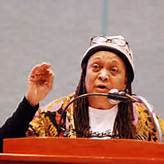
“I don’t care if you’re 100 people, or 50, or 10. If there’s just one of you going against these mother f_ _ kers, it’s enough. Together we can warm their asses up!”

Those were the words of 70 year old grandmother, Pam Africa. I heard her speak last weekend at the annual meeting of the Left Forum – an organization of progressive thought leaders and activists. The meeting took place at the John Jay College of Criminal Justice of the City University of New York (CUNY). Its theme was “Rage, Rebellion, and Revolution: Organizing Our Power.”

Ms. Africa was talking about the necessity of organizing and taking to the streets in order to confront U.S. political, social and economic institutions she said were based on theft, murder, and perjury. The entire system, she added, has lost its legitimacy having become increasingly unresponsive to human need, and ever more violent in repressing those demanding their rights.

Pam Africa’s long experience gave her words credibility. She is the former Minister of Confrontation of the Move Organization, the Philadelphia African-American liberation community whose homes were bombed by Philadelphia Police Force back in 1985. Since that time, as the coordinator of the International Concerned Family and Friends of Mumia Abu-Jamal, she has been working for the release of Abu-Jamal and other political prisoners.

That was the theme of the panel discussion where Pam Africa was speaking – political prisoners.  It was the most inspiring of the events I attended, having chosen 6 of them from the more than 400 panels, workshops, and events that filled the Left Forum’s Events Directory.

There were 10 participants in the Political Prisoner presentation. About half of them were African American. Seven were women. Only 3 appeared younger than sixty. All but 1 had spent time in prison. And each and every one of them had dedicated their lives to the struggle for social justice. They’ve done so in the face of a Prison-Industrial Complex that reaps a fortune from the increasingly privatized criminal justice system currently incarcerating 2.3 million Americans – more prisoners per capita than any country in the world. The annual cost of doing so ranges from $24,000 to $47,000 per inmate.

Think of what could be done with that money, we were urged. What if it were it invested in housing, education, or mental healthcare rather than in prisons-for-profit?  Instead, those human warehouses have become a repressive government’s de facto programs for the homeless, poorly educated and mentally ill. Prison activist Anne Lamb described political prisoners there as “the most humble people you ever want to meet.”

How do so many prisoners end up behind bars?  Most of their cases do not go to trial, we were told. Instead plea bargains are struck. An arrestee is typically given the choice to plead guilty to one of a whole list of charges to avoid spending 15 rather than 5 years in prison. On the other hand, those who choose to go to trial get the book thrown at them. They end up doing 20 rather than 5 years and are held up as examples to potential plea bargainers. “You don’t want to end up like him, do you?” is the threat. The whole system saves (i.e. earns) the for-profit system millions.

Witnessing the intensity, commitment and sharp focus of participants in Pam Africa’s panel raised existential questions for me.

“What am I doing with my life?” I scrawled in my notebook. “Playing golf??”  I mean, I’m in my life’s final stage. And there is still work to do – especially around nuclear disarmament, climate change, and prison reform. As Pope Francis has pointed out, all of those issues are inter-related. Everything is! And the sad fact is that I’m largely avoiding the task.

Meanwhile, Pam Africa and the other panel discussants are out there in the streets. Once again, I’m not.

For me, the most logical response to the experience I’ve been describing here is to get involved in the Bard Prison Project. It’s a program for securing college degrees for prison inmates. Two years ago, Berea College (my former employer) was invited to join. I was asked to take part. I and other invitees did some preliminary work. Since then I haven’t heard anything.

It’s time to pursue that possibility.

As one of last weekend’s panelists put it, “We need to stand on the neck of the system and make it cough up justice.”

How Biblical Studies Helped My Critical Thinking: Part Two (Personal Reflections Pt. XIII)

Kennedy

These last three weeks I’ve been trying to show how critical reading of biblical texts is connected to critical reading of every other text — including that of my own life. In all cases, “ideological suspicion” Is central.

It alerts readers to the fact that vested Interests tend to distort analysis — but mostly in conservative ways Intent on supporting the status quo. That’s the way as well with most extra-biblical texts like the mainstream media, best-sellers and school text books.

By way of contrast, readings issuing from the viewpoints of the socially-conscious dispossessed tend towards subversion of the status quo. That’s significant for Bible reading because (as I was saying last week) the Bible largely represents the memory of poor and oppressed communities. As such, books within the biblical cannon are nearly unique in history whose records normally preserve the memories of the rich and famous.

So with that in mind, here are twelve more conclusions I’ve drawn about the Bible. Notice the connections to politics and the very complex question of violence so pertinent in a world characterized by a permanent war against terrorism. Again, I present this second list of 12 conclusions to expose the way biblical studies have influenced my political leanings and the ideas that seem so strange to my adult children. .

  1. The experience of the socially activist poor and oppressed leads them to discover a liberating God in the Bible. He habitually overturns political, economic and social structures oppressive of people like themselves.
  1. In other words, the God of the Bible is not a neutral God. The biblical God is a class-biased God who has made a “preferential option for the poor.”  Similarly, Jesus is class-biased, not averse to making sweeping statements about “the poor” and “the rich” as groups without specific reference to individuals within those groups.
  1. Neither is the Bible a neutral text.  In fact, there are no neutral texts at all.  Any text, biblical or otherwise, either supports the status quo or it attempts to subvert it.  A text which does not subvert supports.  There is no third position.  By and large (though not universally) the biblical texts predominantly produced in situations of persecution, attempt to subvert the order of the world; they support God’s order often described in terms of “the reign of God.”  Once again, it is an order which as the antithesis of the world’s present order favoring the rich and powerful, favors instead the poor and oppressed.
  1. Similarly, there is no neutral exegesis of the sacred texts. Every reading is done by a person of a particular gender, race, nationality, and creed, with a particular personal history, and located in a given historical era.  Inevitably such readers possess more or less definite political commitments, and have predetermined understandings of the world.  Each of these elements as well as others inevitably bias his or her exegesis of the text. Each interpretation facilitates some insights but excludes others.  With this in mind, it is revealing to note that almost invariably respected mainstream exegesis has been done by rather comfortable white males of European background.  This means that the vast majority of believers, women, people of color, the poor, the illiterate, as well as Christians of the Third World have been left voiceless.  All of these have been forced to accept as normative well-off European, white, male biblical interpretations.  And once again, these interpretations almost universally have supported maintenance of white male euro-centric privilege.
  1. Today our Third World brothers and sisters are asking us to open ourselves to the levels of meaning they are discovering. They do not claim these are the only possible meanings; for clearly there are others.  Neither do they hold that those who make diametrically opposed interpretations are insincere; for such a claim would obviously be false.  They do, however, observe that these latter interpretations are extremely partial, for normally such readings take no note of their contradictory alternatives produced for example by unlearned people in the Third World.  Meanwhile, the exegesis of the poor and oppressed is normally more comprehensive, for it is well aware of the mainstream interpretation and usually spends a good deal of its time contesting such understandings as ideological.
  1. Meanings uncovered in this way lead to judgments about the structures of poverty and oppression experienced in the world, and to action towards changing those structures. Here the emphasis is on judgment of sinful structures rather than on sinful human beings.  For although personal sin is a painful reality, it is not up to Christians to judge how others stand in God’s eyes.  Nevertheless, God’s word can shed light on the human institutions which victimize both oppressed and oppressors by facilitating and often appearing to necessitate injustice.  An example of such an institution is international capitalism particularly as it impacts the Global South.  Institutions of this kind must be eliminated by Christian action in the world.
  1. Unfortunately, those who profit from the world’s sinful structures do not usually allow them to be changed willingly; instead their more frequent response to movements for change is one of extreme violence often directed towards the most vulnerable, children, the elderly, women, the sick.
  1. As a last resort, defense of these “least of the brethren” may demand that Christians take up arms and give their lives on behalf of the otherwise defenseless. Here other Christians, especially those outside the violent and threatening context in question must exercise extreme caution in judging such actions as contrary to the spirit of the Gospel.  This is especially true if those tempted to judgements of this type are among those whose taxes and/or silence enable their own  government to sponsor the violence which prompts assumption of arms in defense of the otherwise helpless.

21. Likewise criticism of Christians who take up arms in defense of “the least of the brethren” must be restrained since the Gospel is by no means clear consistent in its judgment about such action. In fact, historically speaking, most Christians who read the Bible in good faith have found that it does not require non-violent resistance.  A close reading of the biblical texts, and an examination of church history seems to reveal that highly contextualized considerations rather than some unchangeable principle of non-violent resistance have dictated the responses of Christians in situations of persecution.

  1. In addition, it must be admitted that not all violence is the same. There is a real difference between (a) the violence of the unprovoked attacker (This is clearly against Gospel teaching); (b) the violence of one defending himself or herself against unprovoked attack (This is less evidently against Christian belief); and (c) the violence employed in similar circumstances by one risking his or her own life in defense of the lives of the otherwise defenseless such as children or the elderly (Arguably this may represent a positive response to the Gospel).  To neglect such distinctions is to obscure questions of violence and non-violence.
  1. For these reasons, advocates of non-violence for others must humbly examine their consciences to see if their advocacy is not unwittingly supporting the interests of those oppressing the defenseless. Here it must be noted that most robbers and perpetrators of other forms of violence are quite enthusiastic supporters of “peace” which takes the form of non-violent response on the parts of their victims.  It should also be observed that in this case those upon whom the strategy of non-violence is so enthusiastically urged are the least able to defend themselves.  In fact, historically speaking, the poor and working classes of the world who for the most part are the victims of oppression, stand virtually without means of self-protection, having no armies of their own.  They are the only ones to whom both state and church authority have forbidden violence  as a legitimate means of defending their loved ones from their oppressors of the propertied classes who have huge armies and defense budgets at their disposal.
  1. Perhaps in view of all this, the most that some North American Christians can say is that they themselves are hearing a vocation to non-violent resistance, and that Christians in other very different situations  are being called to determine how best to defend the “least of the brethren.” in their own contexts.  No doubt some Christians there will choose to arm themselves on behalf of their families, friends and fellow citizens.  Others will choose non-violent resistance. Still others will choose a combination of the two approaches.   A great deal will depend on the context in question. Christians living in the U.S.A. must overcome the affliction of tolerating violence in service to U.S. corporate interests while condemning the violence of those who resist such oppression.  “I would assert that people who have not actively opposed the violence of the powerful against the poor, at some cost to themselves,” writes Philip Berryman, “have no moral authority to question the violence used by the poor.”  (Jack Nelson PallmeyerThe Politics of Compassion.”  Maryknoll, New York: Orbis Books 1986, 87.)

Realizations like the ones I’ve noted here — all of them faith-based have inclined me to:

  • Understand world events in ways that privilege the viewpoints of the  world’s poor.
  • Side with them in their conflicts with the rich and powerful.
  • Acquaint myself with the reasons for what the privileged habitually describe as the unprovoked “violence” of those they habitually oppress.
  • See that the violence of the rich and powerful dwarfs that of the poor they exploit.
  • Perceive that since World War II all of the U.S. wars have actually been fought against the world’s poor and oppressed to keep them in that condition.

Dan Berrigan: in Memoriam

Dan Berrigan Resist

I just spent the last hour in tears. The occasion was a tribute to Dan Berrigan on Democracy Now (the best daily news program available).  The saintly Jesuit poet, peace activist and prolific author died on Saturday. He was about to celebrate his 95th birthday this week. What a giant!

Father Berrigan stands with Dorothy Day and Thomas Merton as the most powerful U.S. prophets and social justice activists or our era. They along with Martin Luther King are the true saints of our time.

All of them changed the way Americans approach issues of war and peace. In particular they changed the Catholic Church – challenging it to reverse 1700 years of belligerence and unquestioning support of imperial war, and to follow instead the clear teachings of Jesus the Christ.

Dan Berrigan not only wrote and spoke in ways that uncomfortably juxtaposed the Gospel of Jesus with United States imperialism; he also walked the walk – literally. He marched, spoke out, carried signs, and was arrested more times than he could remember. He spent years in prison, and staged creative protests against the Pentagon and the arms industry.

During the Vietnam War, Berrigan and other activists raided the Selective Service offices in Catonsville MD. They removed nearly 400 files from the place, and burned them with homemade napalm in the adjoining parking lot. They justified the act saying it was better to burn paper than children’s bodies.

Berrigan knew first-hand what he was talking about.  In 1968 he traveled to North Vietnam with historian, Howard Zinn. They had set out on an ultimately successful mission to free three U.S. airmen captured by the Vietnamese. In the process, he saw the burn wounds of children and the elderly scorched by the liquid fire that pursued them relentlessly even in their underground bunkers. He experienced war’s realities as he huddled there with the children and elderly during terroristic bombing raids by his own country.

On another occasion, Dan along with his brother Phil and other “Plowshares” members entered the General Electric nuclear arms plant in King of Prussia PA. There they found an (as yet unarmed) missile and used hammers to beat its nosecone to smithereens. They said they were following the injunction of the prophet Isaiah to turn swords into plowshares (IS 2:4).

I knew Father Berrigan personally. He spent a fall with us here in Berea in the mid-‘80s. His brother, Phil, visited Berea College more than once in connection with a wonderful course called “The Christian Faith in the Modern World.” Imagine actually conversing with saints like that!

I remember how enthusiastic Dan was in supporting the work of the “Berea Interfaith Task Force for Peace.” We were busy at the time with the Nuclear Freeze Movement and with resisting U.S. wars in Central America, especially in Nicaragua.

He met with us regularly – on at least one occasion, in Peggy’s and my home in Buffalo Holler in Rockcastle County. We have a snapshot of him there in our family album. He’s seated on our deck, eating from a paper plate with a bottle of beer on the floor beside his chair.

Another photo shows him standing up in protest with the rest of us at the Bluegrass Army Depot in Richmond Kentucky.  (The Depot holds WWII ordnance – mustard gas and chemical weapons still awaiting demolition.) We had infiltrated a patriotic celebration there.

Our Task Force had entered the facility with protest signs folded up under our shirts. We stood up to display them in the middle of a triumphant speech by one of the generals. Mine read “US out of Nicaragua!” Dan’s message was printed on his tee shirt. When he removed his outer shirt, everyone could see it.  “Stop the Arms Race!” it said.

One of my most memorable Ash Wednesdays came when Dan was here. In his humble understated way he celebrated a thoughtful Mass to begin the season of Lent. It reminded our packed church of St. Clare’s about the ashes created and left behind by brutal U.S. bombing campaigns and unending wars. He called us to repent by refusing our support of such conflicts.

I attended a class Dan taught three times a week during his semester at Berea. It analyzed the Book of Revelation written by John of Patmos – an otherwise unknown author who had been exiled to the Island of Patmos in the Aegean Sea by the Roman Emperor, Domitian at the end of the first century CE. Like Father Berrigan, the book’s author, “John the Revelator,” was a political prisoner. His crime was that of prophecy – of speaking truth to power. So Father Berrigan claimed a kind of “hermeneutical privilege” in dealing with the Book of Revelation. He said his exegesis was a matter of “one jailbird to another.”

I recall driving Dan to the Bluegrass Airport in Lexington the day he left us. Always on task, Father Berrigan spoke about the similarities between Israel’s occupation of Palestine and the apartheid system still flourishing in South Africa. “All these ‘settler societies,’” he said, “operate in the same brutal ways.” Sadly, his words remain true to this day.

In my early days of working at Berea College, I was privileged to give three lectures a year to the entire sophomore class assembled in Phelps-Stokes Chapel along with my colleagues, their teachers.  The context was a two-semester, primary-source survey course called “Religious and Historical Perspectives.” ( I loved the course. It taught me more than any other academic experience in my life.) My lectures were on Jesus (in the fall), on Marx (in the middle of the spring semester), and on Harvey Cox’s The Secular City (the last presentation of the year).

I remember centralizing Dan Berrigan in my Secular City talk.  I held him up (as I still do) as an example of what the great Jewish prophets, Jesus of Nazareth and Karl Marx, have to tell us about Christians’ relationship to the realities Harvey Cox described in his book.  I recalled Father Berrigan being arrested after spending four months underground resisting relentless pursuit by J. Edgar Hoover and the F.B.I.

Dan’s hands were handcuffed in front of him, I recalled. And he was asked by a reporter if he had anything to say before going off to Danbury State Prison. Father Berrigan gave a one-word response. He held up his handcuffed hands and made a peace sign. He said simply: “Resist!”  That’s his message to us today!

Thank you, Father Berrigan, for having the courage to resist and for challenging us so consistently to do the same. May we follow your prophetic example.

Biblical Study Helps Me Develop Critical Consciousness (Personal Reflections Pt. XII)

,


Biblical Criticism

Here are the first dozen of the twenty-four conclusions I’ve drawn after my years of biblical study. As the cartoon above indicates, what I gained from Eamonn O’Doherty at St. Columban’s  Major Seminary in Milton, MA was an introduction to the historical/critical approach to the Judeo-Christian tradition. It provided a foundation that was deepened and developed by the scholars I mentioned in my last posting.in this series.

The historical/critical approach acts as a corrective to misreadings that emerge from the naive literary/confessional approach that had previously been mine. I learned that the latter is too open to ideological manipulation at the hands of the dominant culture anxious to secure divine support for a status quo favoring the rich and powerful ruling classes..

Accordingly, those more conventional approaches must be treated, I realized, with “ideological suspicion” which methodically doubts the veracity of conventional interpretations.

Such doubt made me suspect of any interpretation issuing from the United States and Europe. There analysis tended to remain largely apolitical and by that very fact ended up supporting the socio-economic status quo.

That was not the case in the underdeveloped world. (I use that term deliberately. Latin America, Africa, and South Asia, I found, have been deliberately under-developed –robbed of their resources by over-developed nations.)

Scholars in the Global South saw clearly and articulated connections between the biblical texts and imperial exploitation. The texts of both the Jewish Testament and its Christian counterpart are unique in the ancient world in that they were largely produced by victims of imperialism at the hands of Egyptians, Assyrians, Babylonians, Persians, Greeks and Romans. To ignore that fact and to interpret them apolitically is to impoverish them and rob them of their critical power vis-a-vis contemporary imperialist situations.

I’m sure such remarks make it clear how the biblical studies I’ve pursued have sensitized me to the dark realities of empires and the intolerable situations they have produced in the past and continue to produce in the present.

In any case, the twelve conclusions I share here unveil my gradual progression towards critical consciousness engendered by biblical studies. As you’ll see, they inexorably become less general and more sharply political. Judge for yourself:

  1. For the Christian Bible reading is extremely important. In some sense, the Bible is the word of God. However its many separate texts were produced by very human authors concerned with addressing highly politicized situations.
  1. But living is more important still. After all, even in the Bible itself, life and history constitute the primary vehicle of God’s revelation. In fact, it was out of reflection on these basic elements that the sacred texts themselves arose.  In other words, the main purpose of the Bible is not preservation or study of tradition for its own sake, but to help believers make faith-full sense out of the lives they are actually living.
  1. Therefore, as important as it is, Bible reading for the believer is a secondary activity, carried on “after the sun goes down.” It illumines life’s primary activity and vocation, living itself.

Continue reading Biblical Study Helps Me Develop Critical Consciousness (Personal Reflections Pt. XII)