Pope Francis Beatifies Oscar Romero: No More Bullsh*t!

bullshit

I’ve been agonizing about this little talk I’m to make tomorrow evening at the beatification celebration of Oscar Romero of El Salvador. Everybody will be there: parish members, guests from other churches (Protestant and Catholic), former pastors, and John Stowe, our brand new bishop.

So I’ve been boring my friends (and readers of this blog) with draft after draft. To begin with, my worries have centered on the writing concerns I’ve inflicted on my students over the years. You know, the ones about having a sharp thesis, a clear preview of the points to be made, good follow-through on those points, and a strong conclusion.

More than that, however, I’ve fretted about possibly offending my audience. I mean, if I really articulated what I think must be said about Oscar Romero, many listeners might just turn me off. “Too political,” they’d say, “inappropriate,” “polarizing,” “ranting.” I’ve been warned against all those things. (In any case, I’ve been told by a prominent member of my church that “90% of the people are offended by what you write in the Lexington Herald-Leader every month!”)

Yes, I’m worried.

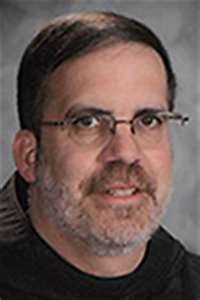
But then I thought of Dan McGinn, a mentor of mine during my doctoral studies in Rome. Like me, he was (but Dan still is) a priest in the Society of St. Columban. He was always refreshingly outspoken and unfailingly called things by their names.

Dan was fond of saying that if he ever “made bishop,” he’d put a special motto on his coat of arms. [Every bishop has a coat of arms with his motto at the bottom. For instance, the motto of the new bishop (John Stowe) heading our diocese of Lexington, Kentucky is “Annunciamus verbum vitae” (We proclaim the word of life.)] Well, Dan said that if ever made bishop, the motto under his coat of arms would be “No more bullshit!”

Bottom line is: I’ve decided to follow Dan’s implicit advice and throw caution to the winds. I no longer know exactly how my talk will come out. But I intend to say something like the following:

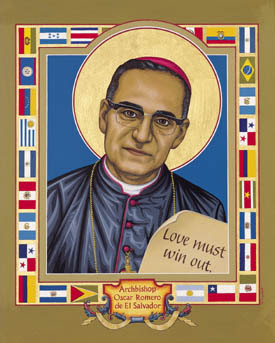
Oscar Romero

Good evening.

I’ve been asked by the parish Peace and Social Justice Committee and by the Lenten “Joy of the Gospel” Study Group to say a few words reminding us of why we are here.

Of course, we’re here to celebrate the beatification of Blessed Oscar Romero, the martyred archbishop of San Salvador in El Salvador. But why should we care?

We should care, I think, because Romero’s beatification personifies and embodies Pope Francis’ basic call in “The Joy of the Gospel.” There the pope summons the entire church to reform, to be converted, to repent, and be transformed. Nothing can remain as it has been, the pope says. The church must become relevant to the problems of poverty, inequality, and war that afflict our world.

So I suggest that the pope’s decision to beatify Oscar Romero dramatizes the pontiff’s exhortation.

But which side should we take in a politically polarized world? Which side are we on?

The side of the poor, the pope says. And by that he doesn’t mean greater generosity in making up our Christmas baskets or giving an extra dollar in Sunday’s second collection. He means doing what Oscar Romero did – what Jesus of Nazareth did.  He means identifying with the poor, their ways of seeing the world. He means refusing to support our culture’s favorite way of dealing with them – treating them with “tough love,” depriving them of life’s basics, waiting for wealth to “trickle down,” and when push comes to shove, killing them (whether that’s in Ferguson, Baltimore, Bagdad or Palestine).

In other words, Oscar Romero provides a case study of the kind of conversion and relevance the Holy Father urges us to embrace.

Like most of us – I speak for myself – Oscar Romero started out uncritical and unquestioningly patriotic. Until he was 60 he supported a system that had 1% of El Salvador’s population controlling 90% of its wealth. He sided with his county’s police and military which were at war with its own people to keep things that way.

He bought the line that those opposing the system were communists. So while his country was on fire, his sermons addressed the usual banalities: the afterlife, heaven, hell, and individual salvation.

The United States supported El Salvador’s government too. All during the 1980s, it gave its military more than one million dollars a day to fund what was called “the El Salvador option” for defeating the country’s insurgency. It was a “death squad” solution which killed everyone who might be connected with the insurgency – teachers, union organizers, social workers, priests and nuns. The slogan of the military’s “White Hand” death squad was, “Be a patriot; kill a priest.”

That slogan took on new meaning for Archbishop Romero when his good friend, the Jesuit, Rutilio Grande, was martyred by the White Hand. Grande was killed because El Salvador’s government saw how he lived among and served peasants and slum dwellers sympathetic to the insurgents. So they considered him a terrorist.

In reality, Father Grande was entirely motivated by the Gospel. He had come to see the world from the viewpoint of the poor. That was the essence of Jesus’ message, he said – good news for the poor. In the gospels, Grande found, Jesus not only saw the world from the viewpoint of the poor, he identified with them becoming one of them. He shared the values and characteristics of the poor that El Salvador’s rich despised.

For instance, Jesus’ skin was black or brown, not white like the elite of El Salvador. Jesus was dirt poor. He was conceived out-of-wedlock by a teenage mother. He was an immigrant in Egypt for a while. He belonged to the working class. His hands were calloused; his clothes were sweat-stained. Jesus liked fiestas and was accused of being a drunkard, possessed by the devil, and friend of sex workers. He was harassed constantly by the police and died a victim of torture and capital punishment, because the occupation forces of Rome considered him a terrorist.

That was the Jesus Rutilio Grande worshipped and preached – a Jesus completely like the people he served.

And so the “White Hand” or “The Secret Anti-Communist Army” (or one of those death squads) killed him – along with 75,000 other El Salvadorans. (Imagine the impact of those deaths in a country of just 6 million people!)

Grande’s death profoundly changed Oscar Romero. He said, “When I saw Rutilio lying there dead, I knew I had to follow his path.” And he did.

Archbishop Romero began speaking out against the government, army and police. He saw that the soldiers fighting against peasants and poor people weren’t heroes, but misled and brainwashed victims. Just before his death, he fairly shouted at them in a final homily: “No soldier is bound to follow orders that contradict the law of God. Don’t you see; you are killing your own brothers and sisters? . . . I beg you; I implore you; I order you: stop the repression!”

Those words sealed San Romero’s fate. The next evening while celebrating Mass for nuns in a hospital chapel, a sniper got him too. He became the first bishop to be murdered at the altar since Thomas Beckett at the beginning of the 12th century.

That’s the Romero story. It’s the story of a churchman converted late in life to centralizing peace and social justice concerns. And that’s the “Joy of the Gospel” connection. In that Apostolic Exhortation, the pope calls us to a similar centralization. The beatification of Oscar Romero reinforces that message.

To understand all of that, you have to grasp one shocking fact: Oscar Romero was killed by Catholics. And when he was murdered, there were fireworks and celebrations in the neighborhoods of El Salvador’s elite. These people were friends of the Vatican.

As a result, Pope Francis’ predecessors (John Paul II and Benedict XVI) were not anxious to canonize the archbishop. He was too polarizing, they thought. He too clearly took the side of the poor in their struggle with the rich. They even wondered if he had been duped by the communists.

And besides, how could Romero be classified as a martyr? After all, martyrs, by definition are defenders of the “true faith” against non-believers. But (again) Romero was killed by Catholics and hated by people who went to Mass each Sunday and believed all the right things about abortion, contraception, gay marriage, and divorce.

So John Paul II and Benedict XVI blocked Romero’s canonization and put the process on hold.

Francis has removed the block. Do you see what that implies?

It implies that “the true faith” is Romero’s faith. Its hallmark is identification with the poor in their struggle for justice — not those other narrow “moral” concerns. The true faith addresses issues like the justice of our economic system, wide disparities between the rich and the poor, and an economy based on war. It addresses climate change as a moral problem. All of these are themes central to “The Joy of the Gospel.”

Can you imagine what would happen to our state if the diocese of Lexington followed Romero’s example and became famous and distinguished as “that little peacemaking diocese in Central Kentucky” that everyone’s talking about?

Can you imagine what would happen in Berea if St. Clare’s worked closely with Union Church and cooperated to become as outspoken as Oscar Romero about issues of economic justice, racial and gender equality, war and peace?

Can you imagine what would happen in the world if 1.2 billion Catholics adopted Archbishop Romero’s spirit? What if Catholics on principle decided to absolutely reject war as a solution to the world’s problems and adopt economic justice instead? What if (in effect) we decided to drop books, hospitals, and schools on our perceived enemies instead of bombs and drone “hell fire”?

This evening, as you listen to the words of Oscar Romero during our celebration, please keep those questions in mind. They are vital to our faith.

What I’m saying is that all of us should care about Oscar Romero. He remains relevant to us; he challenges us today.

Archbishop Romero, Pope Francis, and Jesus Himself call us to radical change – to take sides. In effect, Oscar Romero’s beatification raises that old question: “Which side are you on?”

What’s your answer?

Please Help Me with My Reflections about Oscar Romero

Romero's Beatification

As readers here may have gathered from recent posts, my parish, St. Clare’s in Berea, Kentucky is about to celebrate the beatification of Oscar Romero. The celebration will take place a week from tomorrow.

It’s an extraordinary event, because our new bishop, John Stowe, will be in attendance as one of the first acts of his new episcopate.  The bishop has a special devotion to San Romero. That says volumes about his commitment to social justice – a welcome change from his predecessor.

So I’ve been asked to say some words about Archbishop Romero at an ecumenical paraliturgy. What follows are the ones I plan to share.

I will greatly appreciate any feedback. I’m worried about alienating conservatives in my parish – although Archbishop Romero eventually left aside such concerns, even incurring the wrath of his fellow bishops and the displeasure of Rome.

Please tell me what you think.

Oscar Romero

Bishop Stowe, Father Michael, honored guests, and my fellow parishioners.

I’m very grateful for this opportunity to speak about Oscar Romero who has been such an influence on my own life over these last 35 years especially as I’ve worked in Central America off and on since 1985.

Father John Dear, the great Jesuit peace activist calls Archbishop Romero perhaps the most important bishop in the history of the church. Certainly he’s one of the outstanding figures of the 20th century – on a par with Mahatma Gandhi, Martin Luther King, Dorothy Day and Mother Theresa.

But more than that Archbishop Romero is encouraging to each of us because, like Jesus himself, he achieved his greatness in just three years. He shows that it is possible for any of us to become a saint in a very short time if we follow Romero’s example of peacemaking in the face of war and oppression.

Like most of us – I speak for myself – Oscar Romero started out uncritical and unquestioningly patriotic. Until he was 60 he supported a system that had 1% of El Salvador’s population controlling 90% of its wealth. He sided with his county’s police and military which were at war with its own people to keep things that way.

He bought the line that those opposing the system were communists. So his sermons addressed the usual banalities: the afterlife, heaven, hell, and individual salvation.

The United States supported El Salvador’s government too. All during the 1980s, it gave its military more than one million dollars a day to fund what was called “the El Salvador option” for defeating the country’s insurgency. It was a “death squad” solution which killed everyone who might be connected with the insurgency – teachers, union organizers, social workers, priests and nuns. The slogan of the military’s “White Hand” death squad was, “Be a patriot; kill a priest.”

That slogan took on new meaning for Archbishop Romero when his good friend, the Jesuit, Rutilio Grande, was martyred by the White Hand. Grande was killed because El Salvador’s government saw how he lived among and served peasants and slum dwellers sympathetic to the insurgents. So they considered him a terrorist.

In reality, Father Grande was entirely motivated by the Gospel. He had come to see the world from the viewpoint of the poor. That was the essence of Jesus’ message, he said – good news for the poor. In the gospels, Grande found, Jesus not only saw the world from the viewpoint of the poor, he identified with them becoming one of them. He shared the values and characteristics of the poor that the country’s rich despised.

Jesus’ skin was black or brown, not white like the elite of El Salvador. Jesus was dirt poor. He was conceived out-of-wedlock by an unwed teenage mother. He was an immigrant in Egypt for a while. He belonged to the working class. His hands were calloused; his clothes were sweat-stained. Jesus liked fiestas and was accused of being a drunkard and friend of whores. He was harassed constantly by the police and died a victim of torture and capital punishment, because the occupation forces of Rome considered him a terrorist.

That was the Jesus Rutilio Grande worshipped and preached – a Jesus completely like the people he served.

And so the White Hand killed him – along with 70,000 other El Salvadorans.

Grande’s death profoundly changed Oscar Romero. He said, “When I saw Rutilio lying there dead, I knew I had to follow his path.” And he did.

Archbishop Romero began speaking out against the government. He saw that the soldiers fighting against peasants and poor people weren’t heroes, but misled and brainwashed victims. Just before his death, he fairly shouted at them in a final homily: “No soldier is bound to follow orders that contradict the law of God. Don’t you see; you are killing your own brothers and sisters . . . I beg you; I implore you; I order you: stop the repression!”

Those words sealed San Romero’s fate. The next evening while celebrating Mass for nuns in a hospital chapel, a sniper got him too. He became the first bishop to be murdered at the altar since Thomas Beckett at the beginning of the 12th century.

The thing was, the archbishop was killed by good Catholics. And there were fireworks and celebrations in the elite neighborhoods when those good Catholics learned of his death. The celebrators were friends of the Vatican who went to church every Sunday and believed all the right things about abortion, contraception and homosexuality.

Ultimately, that’s what blocked Romero’s path to sainthood. I mean, by definition martyrs are Catholics killed “for the faith” by non-believers. Even Pope St. John Paul II was unenthusiastic about Romero’s cause. When the archbishop had come to see him about El Salvador’s plight, the pope said he was exaggerating.

Today our country, like El Salvador in the ‘70s and ‘80s is at war against poor people everywhere, both at home and abroad. Our 1% has more wealth than the GNPs of the 48 poorest countries combined. Three hundred and fifty men are wealthier than 3.5 billion people – half the world.  When clergymen, like Jeremiah Wright denounce our wars against the poor, we accuse them of “hating America.” When Muslim clergy side with the poor, we call them terrorists too. Our drones kill them sometimes even in their mosques.

I hope you see how Oscar Romero is completely relevant to us and our country. This evening, please listen carefully to his words which will be centralized in our celebration of his status as a saint. See how they relate to us as followers of the impoverished Jesus living in country at war against the world’s poor. His words call us and our church to radical conversion – political conversion – like his own

It’s never too late.

Oscar Romero’s Message: Another God Is Possible; Another God Is Necessary!

PROMO9
PROMO9

(This is the second in a three-part series on our parish’s upcoming celebration of the beatification of San Oscar Romero which will take place on May 23rd. The event will be observed in Berea’s St. Clare’s parish on June 3rd, when our new bishop, John Stowe, will join us.)

In the previous installment of this mini-series inspired by the upcoming beatification of El Salvador’s Oscar Romero, I offered a thumb-nail sketch of the great archbishop’s life. Romero’s witness has been inspiring for many, including Lexington’s new bishop, John Stowe. (As I said, think of the thoughts that must have coursed through the bishop’s mind as he celebrated Mass recently at the very altar where Oscar Romero was shot. We look forward to his sharing those thoughts on June 3rd when he joins our local church to celebrate Monsignor Romero’s beatification.)

In fact, Monsignor Romero’s story should be encouraging to each of us because of its life-changing implications. It connects perfectly with the message of Pope Francis in his “Joy of .the Gospel.” Both tell us that political and spiritual transformation is not only possible; it is necessary to save our world.

First of all consider the example of Oscar Romero. His change was profound both politically and religiously. In both dimensions, he became a radical, like Jesus of Nazareth.

Remember, Monsignor Romero started out conservative in every sense of the word. To a large extent, that’s why he was appointed archbishop in 1977. Romero was considered safe. He was patriotic. He unquestioningly supported his country’s military. He looked on the widespread rebellion of the poor in El Salvador with great suspicion. He considered the would-be revolutionaries communist subversives.

And yet, the archbishop had this close friend on the opposite side of the political fence. He helped Romero grow. That friend was Rutilio Grande. Grande was a Jesuit who took very seriously his vow of poverty.

So the priest moved out of the parish rectory and lived with the poor in their barrio slums. He knew first-hand their struggles, their family break-downs, their unemployment, hunger, low wages, and harassment by local police. Those became his issues, his context for interpreting the Gospel of Jesus.

Even more, Grande knew the Salvadoran military’s strategy for defeating the country’s impoverished insurgents. It was simply this: kill everyone who might possibly be sympathetic to rebel forces. That meant targeting most of the country’s non-elite. It meant butchering many of their parish priests. For Rutilio Grande, the slogan of the White Hand death squad represented an everyday reality and threat: “Be a patriot; kill a priest.”

Eventually, of course, the White Hand killed Father Grande himself. It was his martyrdom that pushed Oscar Romero over the edge and radicalized him. He utterly abandoned his conservatism. He would later say, “When I looked at Rutilio lying there dead, I thought, ‘if they have killed him for doing what he did, then I too have to walk the same path.’” (The “they” Archbishop Romero referred to was his own government, its military, and their backers in the United States.)

So Archbishop Romero started listening to the poor. He attended their “biblical circles,” where peasants shared their thoughts about Sunday gospel readings. Once after listening to simple farmers sharing thoughts about “The Parable of the Sower,” the archbishop stood up without comment and walked away from the group. The local priest followed him and asked anxiously, “What’s the matter, Monsignor, did something offend you?”

“No,” the archbishop responded, “quite the opposite. It’s just that I think I’ve heard the Gospel of Jesus today for the first time.”

This is where Romero’s Other Gospel, Other Jesus, Other God comes in. The archbishop discovered that when poor people read the Bible, they see things that remain invisible for people like us who tend to be white, comfortable, patriarchal, and supportive of empire.

Jesus was none of those things, the archbishop realized. He was brown or black, poor, a victim of empire, and counter-culturally open to the viewpoints and experience of women. Those factors constituted the Master’s standpoint. They deeply influenced how he saw the world.

More specifically, Jesus stood on the same ground as El Salvador’s poor (and by extension, the poor of today’s Global South). He was conceived out of wedlock by a teenage mother. He was an immigrant in Egypt for a while. He was a working man with calloused hands and sweat-stained clothes. His friends, people said, were drunkards and prostitutes. Rabbis expelled Jesus from the synagogue, and thought he was diabolically possessed. Even his family thought he was insane. Jesus became a vagrant without visible means of support. He lived under an oppressive empire. Imperial authorities saw him as an insurgent and terrorist. He ended up a victim of torture and of capital punishment.

All those characteristics, Archbishop Romero realized, described Another Jesus that to him was far more compelling, inspiring and faithful to the gospels than the abstract and other-worldly Jesus elaborated in the theological texts that guided his doctoral studies in Rome.

So San Romero concluded that the poor knew Jesus more deeply and authentically than he ever could. (They had what scholars called a “hermeneutical privilege.”)

The Jesus of the Poor revealed that Other God who alone could save El Salvador. Fidelity to that same Jesus can save our world from the path to destruction we’ve embarked upon. (And this is where Pope Francis’ continuity with Romero’s vision comes in.)

Francis too has chosen to prioritize the experience and understanding of the world that belong to its poor. In doing so, he challenges our very idea of God. He evokes the Other God who alone can save us from the abyss.. For the pope, God is not neutral, but stands with the poor in their struggles against oppression. What does it mean, he asks implicitly, that God chose the poor, oppressed and despised as the primary site of his Self-revelation?

It means the poor of the world are God’s Chosen People. That answer has led Pope Francis to be the voice of the voiceless. And he does so even at risk of being called a communist. In this, he’s like Dom Helder Camara the late and sainted bishop of Recife in Brazil. Dom Helder said, “When I give food to the hungry, they call me a saint. When I ask why the hungry have no food, they call me a communist.”

Pope Francis does more than ask Dom Helder’s question. In his Apostolic Exhortation, “The Joy of the Gospel” (J.G.), he answers it. I’ll tell you what causes poverty, he says. It’s the reigning economic system that is homicidal (J.G. 53), and unjust at its roots (59). It’s allegiance to the “trickle down” ideology of the rich – a theory that has never worked (53). The world really belongs to the poor, the pope insists (57). The rich who refuse to return to the impoverished what is rightfully theirs are robbers and thieves (57). The rights of the poor take precedence over those of private property (189).

The pope’s choice to be the voice of the voiceless extends to the environment as well to impoverished humans. Watch for his encyclical on climate change to be published sometime next month. There he’ll surely give voice to the planet’s animals, plants, mountains, forests, rivers, and oceans. In the face of climate change, he warns us, “God always forgives. Human beings sometimes forgive. But nature never forgives.” So what’s the proper response to the challenges of Oscar Romero, Pope Francis, and (we hope) Bishop Stowe? As I see it, proper response entails:

  • Leaving behind the safety of contemporary Christianity’s conservative ways.
  • Committing to a path of parish renewal and personal faith development intent on acquainting ourselves with the biblical God of the poor.
  • Viewing the world and its conflicts from below – from the viewpoint of the Other Jesus embraced by Monsignor Romero – from that of unwed mothers like Miryam of Nazareth, of immigrants, the mentally unbalanced, sex workers, the homeless, insurgents, terrorists and those being water-boarded and executed by the state.
  • Recognizing that with 1.2 billion members world-wide, a Catholic Church attuned to the spirits of Oscar Romero and Pope Francis has unlimited potential for changing the world.
  • Embracing that change as our collective vocation.
  • Abandoning pet convictions that national allegiance, military action, and trickle-down theories will solve our world’s problems.
  • Embracing the Other Jesus of the poor
  • His Other God
  • And the Other World that Oscar Romero, Pope Francis, and Jesus proclaim as the very essence of God’s Kingdom.

The Long Reach of Pope Francis: how he (and Oscar Romero) touched our diocese & our parish

Pope francis oscar romero


I once was once skeptical about Pope Francis.

When he was elected, my first thought was “Can anything good come out of an Electoral College of Cardinals packed so tightly with clones of the reactionaries, John Paul II and Benedict XVI? Bergoglio must be one of those carbon copies.”

But I was wrong.

Jorge Mario Bergoglio turned into Pope Francis. Far from a triplet brother of his immediate predecessors, the new pope has proven to be truly Latin American. That’s so even to the point of embodying the ideals of liberation theology, or reflection on the gospel from the viewpoint of the poor and oppressed. He has espoused the latter’s “preferential option for the poor,” its trenchant critique of corporate globalization, and its openness to marginalized people of all kinds. What a surprise!

My second thought was, “But he’s already old. His papacy will be short. He won’t be able to accomplish much of enduring impact.

Imagine then my further astonishment, when a mere three years into his papacy, Pope Francis’ touched  in remarkable ways our  tiny and remote diocese of Lexington, Kentucky. Even stranger to say, his reach extended to our little Kentucky parish of St. Clare’s in Berea. It made me wonder if this is happening all over Francis’ world. I hope so.

First of all, consider what’s happened in Lexington.

Our previous bishop was a canon lawyer – an appointee of John Paul II. Bishop Ronald Gainer distinguished himself by urging pro-choice politicians to refrain from receiving Holy Communion. He has since shown other overriding concerns by forbidding Catholic School girls in his new diocese from engaging in sports (such as wrestling, rugby, and football) “…that involve substantial and potentially immodest physical contact.” You get the idea.

After waiting for more than a year, Bishop Gainer’s replacement was at last named. It was John Stowe, a Conventual Franciscan. Father Stowe showed his colors in his introductory press conference. There was not a word about abortion, contraception, or gay marriage, much less about girls’ wrestling.

Instead he introduced himself as “a Franciscan educated by the Jesuits and appointed by a Jesuit Pope who has taken the name Francis.” “I love Pope Francis,” Father Stowe said, “and I will do whatever he asks.”

Turns out, the new appointee is not only a disciple of the pope; he is also a sharp critic of reactionary politics – especially as they affect immigrants. (Fr. Stowe, BTW, speaks fluent Spanish.)

For instance, in 2006, when Fr. Stowe addressed the Mayor’s Congress on Immigration Reform in El Paso, Texas, he criticized the U.S. Congress saying, “We shudder to imagine what the inscription on the Statue of Liberty might read if it had been erected by the current U.S. Congress.” Promising words indeed.

And that brings me to our parish, the long reach of Pope Francis and its connection with our new bishop.

You see, during this past Lent, for the second year in a row, a small group of us met each week to study the pope’s “The Joy of the Gospel” – the Apostolic Exhortation published in November 2013. In one of our concluding sessions, we were searching for something practical to connect the pope’s words with our community of St. Clare’s.

The calendar told us that the beatification of El Salvador’s Oscar Romero was coming up on the 23rd of May. (Beatification is a major step towards canonization or sainthood in the Catholic Church.)

Romero, you recall, was the martyred archbishop of San Salvador. In 1980, he was gunned down at the altar by an assassin connected with El Salvador’s Arena party which was supported by the Reagan administration. Because Romero is considered the patron saint of liberation theology (which the pope saw as too influenced by Marxism), John Paul refused to even call the archbishop a martyr. Instead, he referred to him merely as “a zealous pastor.”

Pope Francis has changed all of that. Romero, he says, was not only a martyr, but has advanced him on the way to official recognition as a saint of the entire Roman Catholic Church.

Well, our little discussion group thought: Why not have our parish celebrate Romero’s beatification?

“Great idea” we all agreed; “We could hire a Mariachi band, invite the Hispanic community and folks from Berea College’s Union Church” (a Church of Christ with whom people from St. Clare’s traveled to El Salvador on more than one occasion). “And then we could follow it all with a big fiesta.”

Someone else added, “And why not invite the new bishop?”

“Wouldn’t hurt to ask,” was the consensus — although we thought his acceptance would be unlikely, since by the end of May, he’d barely have been installed as bishop.

Well, guess what? He agreed to come. That sends a strong signal about his priorities.

So did his letter written immediately after receiving our invitation:

Thank you for your kind words of welcome and the excellent suggestion of celebrating the beatification of Archbishop Romero. I am so happy to know that St Clare’s and Union Church are in a relationship with the Church in El Salvador. That is exactly what Pope Francis is encouraging us to do!

I just returned last night from visiting our Central American Friars; we celebrated the 35th anniversary of Romero’s martyrdom although we were in Costa Rica. This past February 1st, I was able to celebrate mass in the hospital where Romero was killed—all this to say, Oscar Romero is a great inspiration in my life and I am thrilled to know of a community that wishes to celebrate his witness.

I will look for possible dates to celebrate the beatification with your community.

Your message is most welcomed!!

Bishop-elect Stowe’s acceptance of our invitation means that everyone in our parish and from parishes nearby will surely attend an event that might otherwise have been overlooked. Everyone will want to meet the new bishop.

He is sure to have some inspiring words to say about Romero, and hopefully about liberation theology, and U.S. policy in Central America during the 1980s. This will indeed be a teachable moment.

Do you see what I mean about Francis’ long reach? This is already far better than I anticipated three years ago.

My Secret Thirteen Years in Prison

Silver Creek

Recently my wife, Peggy, and I listened with rapt attention to a CD recording of the John Grisham novel, The Racketeer.  The 2012 Doubleday publication was a page turner from the very start. It caused us to miss a turn on the highway on our way to our Michigan lake house.

The Racketeer is the story of an African-American attorney, Malcolm Bannister, unjustly disbarred and jailed for an alleged and complicated money laundering scheme. It’s about his escape from a federal prison near Frostburg Maryland by means of an equally complicated and fascinating scheme of his own.

Such an interesting novel deserves a separate review. My point here however is different. It’s autobiographical and theological. It’s about the reflections on my own life and on God that The Racketeer stimulated.

You see, Malcolm Bannister’s life in his prison reminded me of my own time served in a similar institution under an infinitely worse warden. It caused me to remember my own escape and the way I finally told the warden off.

From the age of 14 to 27, my life featured the same restrictions as Bannister’s. There was the same dull prison food, interactions with a self-absorbed overseer and redeeming friendships with fellow prisoners. Only, since I was so young, life in prison meant minimal contact with women – nothing at all romantic, much less sexual. The warden had this weird attitude towards sex.  He didn’t care for it at all, and didn’t want us to either.

Like my own, Malcolm Bannister’s prison was minimum security. It had no walls or razor wire. There were no gun towers or barred prison cells. Inmates lived large dormitories or in single rooms with a cot, desk, chair and window. Everyone wore the same uniform. But prisoners were free to roam about the paths winding across the institution’s wooded acres. Escape would be easy, but few “walked off,” because capture would bring reassignment to a real hell-hole. That was my experience too.

The similarities between Bannister’s warden, Robert Earl Wade, and my own were uncanny. As mentioned, both were self-absorbed. But mine was far crueller – the most sadistic person I’ve ever met.

Offending the warden in my prison wouldn’t merely bring reprimands, punitive labor assignments or restrictions on free time. Ultimately, it would result in real torture that was almost unspeakable. We quaked in the warden’s presence. And, no more than children ourselves (at least at the beginning), we had to mouth his praises unceasingly. He was to be our first thought on waking in the morning, and the last before retiring at night.

The warden thought he was God; and so did we. He had ways of knowing everything. We were convinced he could read our minds. And just in case he couldn’t, we were forced to declare forbidden thoughts and deeds to him once a week. (That’s where the warden’s sexual hang-ups played a central part. Yes, we were required to fess up to entertaining sexual thoughts.) As a result, we prisoners were entirely self-regulated in an extremely repressive way.

Almost nothing we did (apart from the prison’s compulsory athletic events) displayed the freedom and spontaneity of the children we were and the young men we became.  For those not athletically inclined, even the requisite “play” was torturous, I’m sure.

As for me (apart from the sports), what saved it all were friendships with fellow internees. That was Bannister’s experience in Frostburg as well. The inmates I lived with were uniformly smart and unusually witty. As a result, they lightened the sameness of our daily life with unrelenting humor – mostly of the inside gallows variety.

Finally, I had enough. I did the forbidden thing. I just walked off. But before leaving, I told the warden what I thought of him.  Who did he think he was . . . God? “You’re not God,” I told him. “You have nothing to do with God. You’re just a projection of a system of absolute control that keeps young people from growing up. It keeps us all children! And once those you have ‘schooled’ in your prison are released, they inflict your hang-ups on others. That’s a big reason our world is in such a mess.”

_____

Of course, the system I’ve been describing is the one that trained priests for the Roman Catholic Church. It’s the seminary I experienced from my early teens till ordination at the age of 27. And its warden (the one we thought was God) is a fraud. Unfortunately, he’s still at work in the world – still torturing people.

No, I don’t regret the time I spent in the seminary. Moreover, I’m sure others would see life on the inside much more positively than I’m expressing here. Sometimes I do too. After all, life there gave me discipline and some valuable academic training – absolutely free through my doctoral studies. Without those gifts, my subsequent life as a professor of Peace and Social Justice Studies would have been impossible. For all of that, I’m eternally grateful. Who wouldn’t be?

And I haven’t lost faith. It’s just that my idea of God has changed radically.  No more Prison Warden. Only the Supreme Self in whom we live and move and have our being. Only the God of love. Only the God embodied in his prophet, Yeshua. Yeshua’s God breaks down separation walls of all types. That’s the one who liberated me from prison.

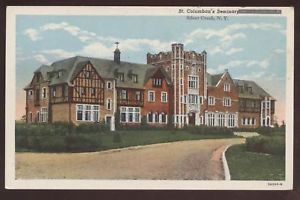
I just wouldn’t want to experience that jail time again. It was the dullest, most restrictive and spiritually wounding period of my life – formative years that (apart from the goodness of my fellow inmates) were little different from Malcolm Bannister’s prison camp. (The picture at the top of this post shows the high school seminary I attended in Silver Creek, New York from 1954 through 1958.)

Those dark years [and (ironically) the academic legacy they gave me] have always stimulated my resolve to help others escape from the confines erected by the false idea of God-as-prison-warden.

That’s been the thrust of my life as a college teacher. It’s what I’m attempting to do on this blog site.

School-Is-Prison-63787456510


A Zapatista Prophet Comes to Berea Pointing the Way to a New World

Gustavo

Last month Peggy and I had a prophet in our home: Gustavo Esteva.

No doubt, the seer would be shocked by my characterization. After all, Gustavo says he’s an atheist. He’s a harsh critic of the Catholic Church — and all religions for that matter.

Gustavo was once an IBM executive, and an official high-up in the Mexican government. At one time he was also a revolutionary guerrilla. Now he calls himself a de-professionalized intellectual and itinerant story-teller. He’s the founder of an alternative university (Unitierra). He has authored more than 30 books, among them Grassroots Postmodernism and Escaping Education.

But I stick with my assertion: he’s a prophet.

In the presence of someone like that, you can imagine the transcendent conversations we had around our dinner table each evening during his ten-day stopover in our home. Sometimes dear friends were there with us. At others, it was just Peggy and I.  We talked of almost nothing else but politics, literature, spirituality and the direction of history.

Gustavo is from Oaxaca in Mexico.

Among his outstanding qualifications is his position as advisor to the Zapatista revolutionaries. Perhaps you remember them. They’re the Native Americans who on January 1, 1994 captured the imagination of Mexico (and many of us outside) when their lightly armed military forces occupied five Mexican towns around San Cristobal in the state of Chiapas.

They were protesting the implementation of the North American Free Trade Agreement (NAFTA), which they said spelled the death of their culture and way of life. Their courageous Indian Uprising made them instant international heroes. So did their eventual abandonment of armed struggle in favor of non-violent resistance.

On more than one occasion, Peggy and I have led students into Zapatista communities to experience their radically counter-cultural lives first hand.

According to the Zapatistas, women are leading the way they have embarked upon.  In fact, 60% of their army commanders are women.

The importance of women’s leadership was the heart of the extraordinary convocation Gustavo gave at the beginning of his “scholar-in-residence” stint at Berea College. It was a theme to which he returned often during his many classes and lectures there. Women are leading the way, he said, into the “other world” that is not only possible but required if our planet is to survive.

Our threatened survival is where Gustavo started. He said our world stands in a position of unprecedented danger. It is threatened by climate chaos, oligarchical governments, tremendous wealth disparities, an economic system that simply doesn’t work, schools and communications media that propagandize rather than inform, and by an emerging and universal police state with its system of perpetual war that (suicidally) defends the status quo. Under the present world order, the line between governments, the military, the police and the judiciary on the one hand and the criminals and thugs on the other has completely disappeared. Not a pretty picture.

During his general convocation, Gustavo held us all spell-bound as he outlined the seven principles to guide us out of the morass just described. They represent the North Star that guides the Zapatista movement as Native Americans once again mark out the path to planetary survival. The Zapatista principles call into question our entire way of life.

Here they are as Gustavo explained them:

    1. To serve others, not self. For Zapatistas, the goal of life is the common good, not the accumulation of money or power.
    2. To represent, not supplant. The Zapatista model of revolution is not the seizure of power (supplanting one government with its mirror image), but the representation of the majority without reproducing old relationships of domination.
    3. To construct, not destroy. The new order cannot be built upon violence.
    4. To obey, not command. However, the Zapatista model of obedience is not that of servant to master or of soldier to comandante, but of mother to her infant child.
    5. To convince, not to win. The Zapatista way centralizes respectful dialog based not primarily on logical argument, but supplementing logic with intuition derived from the experience of life.
    6. To propose, not impose. Imposition represents the violence rejected by Zapatismo.
    7. To go down, not up. For Zapatistas the geography of social discourse and action has changed. Old categories of left and right, conservative and liberal are no longer applicable. The new more relevant topography directs our gaze up and down, north and south – to recognize the gap between the one-percent and the rest of us.

Not surprisingly, not everyone welcomed that message of coöperation, non-violence, care and acceptance. During the Q&A following Gustavo’s principal address, a particularly articulate young man posed a question that must have been on the minds of many “exceptionalist Americans” in the audience.

“You’ve described a rather bleak world, Gustavo,” the young man said. “But surely you’re talking about a reality outside the United States. After all, here we enjoy extraordinary freedom and prosperity. That’s shown by the fact that so many foreigners are anxious to come here. Isn’t that true?”

Gustavo responded, “I have bad news for you, my friend. The United States you describe is fast disappearing, and is harder and harder to find. Your country with its pot-holed highways, homeless beggars, and falling bridges increasingly resembles what you call the Third World.

“And that’s the purpose of your politicians’ New World Order – to create a reality where we’re all racing to the bottom, while they enjoy the cream on top. Unfortunately, that cream is also fast evaporating. Soon the system benefitting the 1% will collapse entirely. (In fact it’s happening before our eyes.)  There is simply no exception to the collapse I’ve described. To save ourselves we have no alternative to a complete change of guiding principles. The Zapatista principles I’ve just described and which centralize women’s ways of knowing show us the way.”

That’s the way real prophets talk. They’re usually right. This time however the warning is planetary and universal.

Will we listen and adopt the Zapatista way?

“Joy of the Gospel” Sparks Lively Discussion (and Resistance)

change

Last night, a small group of us meeting Sunday evenings during Lent to discuss Pope Francis’ “Joy of the Gospel” found the discussion more lively than usual. That’s because as Lent draws to a close, our group had decided to actually entertain minor changes in parish life as a result of the pope’s injunction to do so.

Resistance from our pastor and pastoral associate was evident. Nonetheless, while neither (perhaps understandably) was willing to exert leadership in this case, both showed faint signs of willingness to be led.

The mild suggestion sparking discussion was the following:

  • To celebrate the upcoming beatification of Oscar Romero (Saturday, May 23rd) with a special evening Mass and fiesta (featuring a mariachi band, salsa dancing, and food catered by our local Mexican restaurant).
  • To precede the Mass with an hour-long “adult education” session featuring a 15 minute talk on Oscar Romero and liberation theology along with a half-hour documentary on the Salvadoran martyr, and a 15 minute discussion.
  • To have the Mass concelebrated with the main celebrant and homilist being Padre Eulices, the clerical leader of our local Hispanic community.

According to the pastor and his associate, the suggestion was highly problematic. After all:

  • Didn’t we know that May 23rd is the Vigil of Pentecost? “And I, for one,” the pastor said, “am not willing to substitute something like this for the celebration of Pentecost, one of the greatest feasts of the liturgical year.”
  • On top of that, “I have Mass in Mt. Vernon (a congregation of fewer than 30 people btw) at 5:00, and I could never get back to Berea by the 6:00 starting time you have here on your schedule.”
  • And what about McKee (a congregation of perhaps 15-20 people)? “They surely wouldn’t show up for something like this. They’re very stuck in their ways.”
  • “And then there’s the Saturday night crowd! They expect Mass at 7:00. Changes like this would upset them.” (It turned out that the suggested event had taken this into account and had Mass beginning @ the usual 7:00 time).
  • “And what about the Hispanic group? They always celebrate Mass at 11:00 on Sunday morning. I’m sure they would resist coming to Mass Saturday evening as this change suggests.”
  • “And do you mean to say that there’d be no Sunday Mass at 9:00 – the way we’ve done it all these years?”
  • “And why would we spend all that money on a mariachi band? Our Sunday choir along with that of the Hispanic community would be better and would cost no money.”
  • “And wouldn’t it be better to have someone from the chancery come to speak to us about Oscar Romero rather than someone from the parish?”
  • “So let’s: (1) move the program to Sunday at the usual time, (2) shorten up the presentation about Romero, (3) forget the mariachi band, (4) emphasize Pentecost, and (5) see if we can get some speaker from Lexington to speak about Romero.”

Naturally, the lay group had responses to those clerical objections:

  • The themes of Pentecost and Romero’s beatification can quite easily be integrated. They actually complement one another.
  • If the pastor could not get back from Mt. Vernon at 6:00, we could move the event’s starting time to 6:30. Or maybe we could (this one time!) just have a single Mass instead of 5 (!) inviting the Mt. Vernon folks to come to this fun party. If they choose not to come, well, it’s a free country.
  • Same goes for the McKee community.
  • As previously noted, nothing would be changed for the Saturday night crowd in terms of the starting time for their evening Mass.
  • The Hispanic community is the most flexible of all. Its members are anxious to integrate with the Anglo community. And Romero is one of them! Surely it wouldn’t be hard to persuade them to come to a party a mariachi band, salsa dancing, and Mexican food.
  • If we must have a Sunday morning Mass at 9:00, no problem. On this particular Sunday, the congregation will, no doubt, be smaller (with most having satisfied their “Sunday obligation” the previous night). But is that a problem? In fact, nothing would be hurt by cancelling that Mass as well. (But, of course, cancelling the 9:00 Sunday Mass is not part of the plan.)
  • As for the mariachi band . . . We’re talking about a fiesta and illustrating “the joy of the Gospel!” For something worthwhile like that, people are willing to pony up. We could easily raise $1000 to cover an event like this. At least we could float the idea to see.
  • In this college community with so many professors and theologians, do we really need someone from the chancery to speak about Romero and liberation theology?
  • And why Saturday night instead of Sunday? Because Saturday night is a party night! And (again) we’re talking about the joy of the Gospel.

As you can see, it’s not easy for some to make even minor changes in “what we’ve always done.” For others, change is easy. For instance, Padre Eulices was unfazed when asked to consider altering his schedule for the Romero celebration. “Well,” he said, “I normally have Mass in Richmond at 6:00. But I’ll try to get a substitute. I’ll get back to you. Thanks for asking.”

However, the changes implied in this whole event go much deeper than resistance to a one-off Mass-and-fiesta. It all raises serious questions about parish organizations and the way priests in the new pope’s church spend their time. Among the questions to be addressed in our own community, the following seem most obvious:

  • Given the fact that we now have only one pastor (and not the 3 or 4 priests we had when our 3 parishes were founded about 50 years ago), does it really make sense to have 5 Masses (!) each weekend?
  • If we must maintain the dubious practice of “servicing” three parishes, why doesn’t our church sponsor the training and ordination of one or more deacons to provide more meaningful communion services (and preaching) at the churches in question? Our community could easily identify and invite good candidates (male & female) with a gift for preaching and pastoral work.
  • In fact, for some (the 3 or 4 ex-priests among us) additional training would not be necessary. They could start preaching and presiding over a communion service next Sunday!
  • In view of such considerations, shouldn’t we sit down with our pastor and help him brainstorm about less stressful use of his time?
  • Hasn’t the moment arrived for constructing a serious strategic plan for the parish involving input from all its members and taking advantage of their much-needed gifts?

As you can see, it’s been a productive Lenten discussion.

Lexington’s New Bishop Channels Pope Francis

Stowe

“A Jesuit pope by the name of Francis sends you a Franciscan bishop trained by the Jesuits.”

Those were the words of Lexington, Kentucky’s new bishop, John Stowe, as he introduced himself at his first press conference last week.

The words came as a breath of fresh air to progressive Catholics in the Lexington Diocese. As a resident of that diocese, they came as a refreshing breeze to me.

In his opening statement, there was not a word about abortion, contraception, or gay marriage – the dreary, unvarying drum beat of doctrinal rigidity that has (in the pope’s words) turned the lives of Catholics into an endless “Lent without Easter.”

Instead, bishop-elect Stowe follows the lead of his boss who emphasizes the “Good News” of the Christian faith, and not right-wing doom and gloom. While not ignoring those other matters, Pope Francis (and, it seems, bishop-elect Stowe) would have Catholics engage the big issues such as the failure of corporate capitalism and its resulting wealth inequalities, wars, climate chaos, and particularly exclusion of those conservatives consider “outsiders.”

In his progressive stances, however, Lexington’s new appointee is not merely a disciple of Pope Francis. He also has a long personal history social activism, community organization, and inter-faith cooperation.

In his earlier posts in Ohio and Texas, the bishop-elect has been a consistent peace and social justice leader, and a critic of reactionary politics – especially as they affect immigrants.

Father Stowe recognizes, for instance, the parallels between the experience of today’s undocumented workers and that of his Italian grandmother who along with her compatriots were routinely called “WOPS,” or immigrants without papers.

More specifically, in 2006, when Fr. Stowe addressed the Mayor’s Congress on Immigration Reform in El Paso, Texas, he rejected the “Minuteman” and vigilante approach to border security. He criticized the U.S. Congress saying, “We shudder to imagine what the inscription on the Statue of Liberty might read if it had been erected by the current U.S. Congress.”

The bishop-elect is fluent in Spanish. His introductory conference featured a long paragraph in perfectly delivered in that language. I’m sure that gladdened the hearts of the growing Hispanic community in the Lexington diocese. Hispanics, Stowe says, (along with his Franciscan emphasis on service to the poor) have formed him as a priest and pastor.

In summarizing his priorities and agenda, Rev. Stowe said he will focus on worship and the service that inevitably flows, he said, out of meaningful liturgy. But like his papal mentor, he would do lots of listening before acting.

In all things, he would take Pope Francis as his inspiration and guide, and would follow his example. “I love Pope Francis,” he said, and will do whatever he asks.“

That augurs well for progressive Catholics, for the Lexington diocese, and for the Commonwealth in general.

My Meeting with Our Pastor, Father Michael Flanagan

St. Clare

On Thursday morning, February 26th, I had a 45 minute meeting with the pastor of our church. The ostensible reason for the conference was to discuss Fr. Flanagan’s decision not to publish two homilies I had submitted for the St. Clare Parish Blog. Of course, we ended up talking about matters far beyond that presenting issue. Among them were the weather and U.K. basketball, The Joy of the Gospel, homilies, parish renewal, and the nature of scripture study in seminaries these days. The discussion left me hopeful.

The Weather and U.K. Basketball: Fr. Flanagan is puzzling about how to get emergency messages out to the parish. He decided after the 8:00 a.m. Mass on Ash Wednesday, to call off the evening Mass because he found icy conditions in the parking lot so treacherous. There are professional services he’s considered purchasing for emergency notifications. But they’re probably not worth the cost. Currently, he plans to update his parish e-mail list.

As for U.K., he had watched the game with Mississippi State the previous night. We agreed that the Cats will probably finish the season unbeaten. We’ll see.

My Homily Submissions: Here Fr. Flanagan said that it wasn’t that he had any reservations about what I had said in the posts. It’s just that the Parish Blog isn’t intended for purposes of expressing opinions of parish members. It’s more of an information source. True: the Blog does publish articles from more official sources such as “Vatican News,” and other articles published elsewhere. But the Blog is not the place for expressing opinions of parishioners. “If you want,” Father suggested, “I can check with the Diocesan Director to see what official policy is.” I observed that in the light of the pope’s instruction in Evangelii Gaudium, such checking doesn’t seem necessary. The Apostolic Exhortation, I reminded him, calls for parish autonomy which respects unique local situations, resources and needs. Any objection “from above,” I said, could be met by appeal to the pope’s words.

“In any case,” Fr. Flanagan said, “you’re welcome to come to our Tuesday night discussions of the coming week’s readings.” The discussions are held from 8:00-9:00, are well-attended and enthusiastically received as the most valuable event on the weekly parish calendar. I’m considering taking Father up on that offer.

The Joy of the Gospel: Fr. Flanagan has read the document and is looking forward to Sunday night discussions during Lent. (Although he probably won’t be able to make the pot-luck part, because of his commitment to celebrate Mass at the college beforehand.) He’s turned over leadership of the discussion to Nanette Navarre. We both observed that few people had signed up for the discussions. But Fr. Flanagan said that his experience of parish trends shows that people are reluctant to sign up for events ahead of time, but then show up in substantial numbers.

For my part, I said that I was sorry that the pastor was unable to attend last year’s Lenten discussion of the pope’s Exhortation. I was surprised, I said, that so many people attended and that so much dissatisfaction with parish life found expression – particularly about homilies.

Father pointed out that the Vatican has recently published weekly guidance and suggestions for homilies and approved points of focus,  and that he intends to take advantage of that resource.

Parish Renewal: Using my prepared summary of Evangelii Gaudium highlights, I reminded Father that the pope has called for radical change at the parish level. “Everything must change,” was the theme, I said. But as far as I can see nothing has changed.

Fr. Flanagan agreed that the pope’s document is radical. But it’s not that nothing has changed. He pointed to the Tuesday night discussions of the upcoming Sunday’s liturgy of the word.

In the end, though, we agreed that very little has changed. We were unable to put our fingers on exactly why.

We then turned to the practical suggestions I had listed on page two of my Joy of the Gospel summary. We agreed that the first items in my list were impractical (e.g. a September three-night “revival tent meeting”). But, I suggested, we could do the equivalent this September using the pope’s visit to the United States as an occasion for implementing radical parish changes in the spirit of the Apostolic Exhortation. We could, I said:

  • Encourage people to travel to the papal events.
  • Have an elaborate supper in the parish hall for purposes of viewing Francis’ televised speeches to the UN, and to the U.S. Congress. At a final gathering, the parish could view the papal Mass concluding Francis’ visit to “America.”
  • Have the attendees of the actual events give a report to the parish at another elaborate supper following their return – with Fr. Flanagan sharing his experiences by way of a “State of the Parish” report calling parishioners to a program of joyful renewal where “everything will indeed change.”
  • Sponsor a formal “calling out of gifts and charisms” as part of that radical change – thus taking advantage of the liturgists, artists, poets, musicians, and homilists in the parish. (And if homilists couldn’t share their ideas at Mass, perhaps we might at least post their reflections in the Parish Blog.)

Throughout all of this, Fr. Flanagan was shaking his head in mild affirmation. I found that encouraging.

Scripture Study in Catholic Seminaries: I remarked in general that the scripture scholarship of the last 150 years has not really trickled down to congregations in the pews. I recalled that in my seminary days (1954-1966) – especially after Vatican II (1962-’65) and then in my after-ordination graduate years in Rome (1967-’72) – everything was based on biblical studies. Increasingly, in the major seminary we were exposed to form-critical and redaction-critical studies. Similarly, nothing worthwhile in theology today omits taking into account the work of the Jesus Seminar or by liberation theologians. Nevertheless, none of that seems to influence homilies – anywhere since the very conservative papacies of John Paul II and Benedict XVI. Congregations are treated as if the Bible were simply to be read at face value. That’s not really treating us as adults or helping us understand the relevance of faith to science, history, and world events.

Fr. Flanagan said that seminaries still (of course) centralize scriptural studies. He also agreed that modern scholarship doesn’t play much role in most homilies. Neither of us was able to pinpoint exactly why.

Conclusion: Our meeting concluded after 45 minutes. On my way out, we discussed Peggy’s and my decision to attend the Hispanic Mass on Sundays. Father Flanagan observed that he’ll be celebrating that Mass too (once a month) to give Fr. Ulysses a well-deserved break.

In parting, I gave our pastor an inscribed copy of my The Emperor’s God. We said we’d see each other in church and at this week’s discussion of The Joy of the Gospel.

Twenty Lessons I learned from My 40 Years of Teaching Social Justice

mike teaching

During the fall semester of 2014, I taught a Religion course at Berea College called “Poverty and Social Justice.” The course was personally significant because it rounded off 40 years of teaching at Berea, where my first class convened in 1974 – exactly 40 years ago. I remember how I came to Berea, fresh from leaving the priesthood, on fire from Vatican II, sensing the increasing importance of liberation theology (see below) and (naively) ready to change the world.

In this 2014 semester, nineteen students (mostly juniors and seniors) participated in REL 126. The students were engaged, committed, funny, energetic and smart. They, along with our readings, films and required community activism, taught me a great deal.  And that, by the way, has been my consistent experience since 1974 – I’m the principal beneficiary of the courses I’ve taught. (I’m thankful every day for the path Life has so gently led me follow.)

In any case, I’d like to share twenty of my own specific learnings here. Of course, none of my students would be able to draw these conclusions. After all, they were exposed to the underlying historical events and to the resulting ideas for the first time during the course. However for me, as I’ve indicated, REL 126 represented a kind of capstone to forty years of teaching and nearly half a century of trying to understand the world from the viewpoint of its disenfranchised majority. Grasping that understanding, I’ve come to realize, is the only hope of salvation our world has.

But before sharing those conclusions, let me tell you a bit more about the course itself.  Like all of my courses over the years, its basic purpose was to stimulate critical thought about poverty, hunger and what the Christian tradition teaches about social justice. Our readings included Ron Sider’s Just Generosity, Cynthia Duncan’s Worlds Apart, and the Bread for the World 2014 Hunger Report. We also analyzed the (still relevant) 1973 Pastoral Letter by the U.S. Catholic bishops of Appalachia, “This Land Is Home to Me.”

In addition, all of us attended monthly meetings of Kentuckians for the Commonwealth (KFTC) and volunteered for their “Get out the Vote” actions. A KFTC activist spent two of our class periods leading us in a game of “Survive or Thrive,” a wonderfully instructive game she had invented to replicate the problems of international “free trade” agreements. The activist wasn’t our only class guest.  A grass roots entrepreneur from a clothing factory in Nicaragua and a Glenmary priest-activist campaigning against Appalachian mountaintop removal also graced our classroom.

Inspired by Howard Zinn’s A People’s History of the United States, and taking Plato’s Allegory of the Cave as our guiding image, the course had us attempting to re-vision U.S. history from the viewpoint of the poor and disenfranchised rather than “the official story” of presidents, generals, the rich and the famous.

So we made sure that our current events source reflected those usually neglected viewpoints. To that end, students watched and reported regularly on “Democracy Now.” We even spent some class time watching and discussing a number of interviews with street-level newsmakers by the show’s anchor, Amy Goodman. Additionally class participants researched and reported on issues highlighted on the program including climate change, police militarization, prison privatization, the philosophy of Ayn Rand, reparations to descendants of African slaves, the campaign for a living wage, the rise of ISIS in the Middle East, and Israel’s bombing of Palestinians in Gaza.

In line with our commitment to understanding the experience of the actually poor and disenfranchised, our approach to the Christian tradition in this religion course was that of liberation theology – understood as “reflection on the following of Christ from the viewpoint of those working for the liberation of the poor and oppressed.” Our readings here were drawn from a series on the topic which I had authored and published on my blog site.

A screening of the film “Romero” along with some other shorter documentaries, put flesh on those intentionally brief to-the-point readings. The documentaries emphasized U.S. sponsorship of third world dictatorships under genocidal U.S. allies like Pinochet (Chile), Saddam Hussein (Iraq), the Duvaliers (Haiti) and Somozas (Nicaragua), Mobutu (Congo), and Diem (Vietnam).

Together our intentionally subversive approaches to history and faith were intended to expose students to the untold history of the United States, and to the untold story of Jesus of Nazareth.  From all of this, I drew the twenty conclusions I mentioned earlier. Remember, my students could never reach such conclusions. My hope is that someday (if they continue reading outside the dominant culture) they might:

  1. Historically speaking, the United States is the country Adolf Hitler and his backers imagined Germany would be had they triumphed in World War II – the absolute ruler of the capitalist world at the service of corporate interests. In short, the U.S. has become the fascist police state Adolf Hitler aspired to lead.
  2. As such the principal enemies of the United States are those Hitler imagined being the protégés of “Jewish Madness”—viz. the world’s poor and disenfranchised.
  3. These are (and have been since the end of World War II) the objects of what C.I.A. whistle-blower, John Stockwell, has termed the ”Third World War against the Poor” located throughout the developing world. It has claimed more than seven million victims.
  4. This war by the United States has made it the principal cause of the world’s problems in general and especially throughout the former colonial world, as well as in the Middle East, Ukraine, and in the revived threat of nuclear war, along with the disaster of climate change.
  5. Its war against the poor has made the United States a terrorist nation. Compared to its acts of state terrorism (embodied e.g. in its worldwide system of torture centers, it unprovoked war in Iraq, illegal drone executions, the unauthorized bombings in Syria, its preparations for nuclear war), the acts of ISIS and al-Qaeda are miniscule.
  6. Far from “the indispensable nation,” the United States is more aptly characterized (in the words of Martin Luther King) as “the greatest purveyor of violence in the world today.” Without the U.S., the world would be far less violent.
  7. At home, “our” country increasingly tracks the path blazed by Nazi Germany. It has become a state where corporate executives and their government servants are excused by one set of laws, whereas U.S. citizens are punished by another. Following this regime, law-breakers go unpunished; those who report them are prosecuted.
  8. This type of law is increasingly enforced by a militarized police state in which law enforcement officers represent an occupying force in communities where those they are theoretically committed to “protect and defend” are treated as enemies, especially in African-American and Latino communities.
  9. As a result, new wave of “lynchings” has swept the United States at the hands of “law enforcement” officers who execute young black men without fear of punishment even if their murders are recorded on video from beginning to end.
  10. In addition, disproportionate numbers of blacks and Latinos have been imprisoned in for-profit gulags that rival in their brutality Nazi concentration camps.
  11. The point of the militarized police state and prison culture is to instill fear in citizens – to discourage them from constitutionally sanctioned free speech, protest and rebellion.
  12. As in Nazi Germany, the dysfunctions of “America’s” police state (including poverty, sub-standard housing and schools, drug addiction, and broken families) are blamed on the usual suspects: the poor themselves, especially non-white minorities. They are faulted as undeserving welfare dependents and rip-off artists. Systemic causes of poverty are routinely ignored.
  13. In reality, welfare and other “government programs” represent hidden subsidies to corporate employers such as Wal-Mart and McDonalds. These latter pay non-living wages to their workers and expect taxpayers to make up the difference through the programs just mentioned.
  14. Government programs such as food stamps could be drastically shrunk and limited to the disabled, children, and the elderly, if all employers were compelled to pay their workers a living wage adjusted for inflation on an annual basis. Currently, that wage must be at least $15.00 an hour.
  15. Moreover, since education quality and achievement are the most reliable predictors of students’ future poverty levels, the U.S. education system should be nationalized, teachers’ salaries should be dramatically increased, and all facilities K through 12 regardless of location should enjoy highly similar quality.
  16. All of this should be financed by declaring an end to the so-called War on Terror, withdrawing from foreign conflicts and reducing by two-thirds the U.S. military budget.
  17. Instead, the current system of corporate domination, state terrorism, war against the world’s poor, and lynching of minority men is kept in place by rigging the nation’s electoral system in favor of right wing extremists. They control the system through practices such as unlimited purchase of government (the Citizens United decision), voter suppression tactics (e.g. voter I.D. laws), redistricting, and rigged voting machines. They do not want everyone to vote.
  18. U.S. citizens are kept unaware of all this by a mainstream media and (increasingly) by a privatized system of education owned and operated by their corporate controllers.
  19. As a result, revolution has been rendered inconceivable.
  20. The only hope and prayer is for a huge general economic crash that will awaken a slumbering people.