“Joy of the Gospel” Sparks Lively Discussion (and Resistance)

change

Last night, a small group of us meeting Sunday evenings during Lent to discuss Pope Francis’ “Joy of the Gospel” found the discussion more lively than usual. That’s because as Lent draws to a close, our group had decided to actually entertain minor changes in parish life as a result of the pope’s injunction to do so.

Resistance from our pastor and pastoral associate was evident. Nonetheless, while neither (perhaps understandably) was willing to exert leadership in this case, both showed faint signs of willingness to be led.

The mild suggestion sparking discussion was the following:

  • To celebrate the upcoming beatification of Oscar Romero (Saturday, May 23rd) with a special evening Mass and fiesta (featuring a mariachi band, salsa dancing, and food catered by our local Mexican restaurant).
  • To precede the Mass with an hour-long “adult education” session featuring a 15 minute talk on Oscar Romero and liberation theology along with a half-hour documentary on the Salvadoran martyr, and a 15 minute discussion.
  • To have the Mass concelebrated with the main celebrant and homilist being Padre Eulices, the clerical leader of our local Hispanic community.

According to the pastor and his associate, the suggestion was highly problematic. After all:

  • Didn’t we know that May 23rd is the Vigil of Pentecost? “And I, for one,” the pastor said, “am not willing to substitute something like this for the celebration of Pentecost, one of the greatest feasts of the liturgical year.”
  • On top of that, “I have Mass in Mt. Vernon (a congregation of fewer than 30 people btw) at 5:00, and I could never get back to Berea by the 6:00 starting time you have here on your schedule.”
  • And what about McKee (a congregation of perhaps 15-20 people)? “They surely wouldn’t show up for something like this. They’re very stuck in their ways.”
  • “And then there’s the Saturday night crowd! They expect Mass at 7:00. Changes like this would upset them.” (It turned out that the suggested event had taken this into account and had Mass beginning @ the usual 7:00 time).
  • “And what about the Hispanic group? They always celebrate Mass at 11:00 on Sunday morning. I’m sure they would resist coming to Mass Saturday evening as this change suggests.”
  • “And do you mean to say that there’d be no Sunday Mass at 9:00 – the way we’ve done it all these years?”
  • “And why would we spend all that money on a mariachi band? Our Sunday choir along with that of the Hispanic community would be better and would cost no money.”
  • “And wouldn’t it be better to have someone from the chancery come to speak to us about Oscar Romero rather than someone from the parish?”
  • “So let’s: (1) move the program to Sunday at the usual time, (2) shorten up the presentation about Romero, (3) forget the mariachi band, (4) emphasize Pentecost, and (5) see if we can get some speaker from Lexington to speak about Romero.”

Naturally, the lay group had responses to those clerical objections:

  • The themes of Pentecost and Romero’s beatification can quite easily be integrated. They actually complement one another.
  • If the pastor could not get back from Mt. Vernon at 6:00, we could move the event’s starting time to 6:30. Or maybe we could (this one time!) just have a single Mass instead of 5 (!) inviting the Mt. Vernon folks to come to this fun party. If they choose not to come, well, it’s a free country.
  • Same goes for the McKee community.
  • As previously noted, nothing would be changed for the Saturday night crowd in terms of the starting time for their evening Mass.
  • The Hispanic community is the most flexible of all. Its members are anxious to integrate with the Anglo community. And Romero is one of them! Surely it wouldn’t be hard to persuade them to come to a party a mariachi band, salsa dancing, and Mexican food.
  • If we must have a Sunday morning Mass at 9:00, no problem. On this particular Sunday, the congregation will, no doubt, be smaller (with most having satisfied their “Sunday obligation” the previous night). But is that a problem? In fact, nothing would be hurt by cancelling that Mass as well. (But, of course, cancelling the 9:00 Sunday Mass is not part of the plan.)
  • As for the mariachi band . . . We’re talking about a fiesta and illustrating “the joy of the Gospel!” For something worthwhile like that, people are willing to pony up. We could easily raise $1000 to cover an event like this. At least we could float the idea to see.
  • In this college community with so many professors and theologians, do we really need someone from the chancery to speak about Romero and liberation theology?
  • And why Saturday night instead of Sunday? Because Saturday night is a party night! And (again) we’re talking about the joy of the Gospel.

As you can see, it’s not easy for some to make even minor changes in “what we’ve always done.” For others, change is easy. For instance, Padre Eulices was unfazed when asked to consider altering his schedule for the Romero celebration. “Well,” he said, “I normally have Mass in Richmond at 6:00. But I’ll try to get a substitute. I’ll get back to you. Thanks for asking.”

However, the changes implied in this whole event go much deeper than resistance to a one-off Mass-and-fiesta. It all raises serious questions about parish organizations and the way priests in the new pope’s church spend their time. Among the questions to be addressed in our own community, the following seem most obvious:

  • Given the fact that we now have only one pastor (and not the 3 or 4 priests we had when our 3 parishes were founded about 50 years ago), does it really make sense to have 5 Masses (!) each weekend?
  • If we must maintain the dubious practice of “servicing” three parishes, why doesn’t our church sponsor the training and ordination of one or more deacons to provide more meaningful communion services (and preaching) at the churches in question? Our community could easily identify and invite good candidates (male & female) with a gift for preaching and pastoral work.
  • In fact, for some (the 3 or 4 ex-priests among us) additional training would not be necessary. They could start preaching and presiding over a communion service next Sunday!
  • In view of such considerations, shouldn’t we sit down with our pastor and help him brainstorm about less stressful use of his time?
  • Hasn’t the moment arrived for constructing a serious strategic plan for the parish involving input from all its members and taking advantage of their much-needed gifts?

As you can see, it’s been a productive Lenten discussion.

Lexington’s New Bishop Channels Pope Francis

Stowe

“A Jesuit pope by the name of Francis sends you a Franciscan bishop trained by the Jesuits.”

Those were the words of Lexington, Kentucky’s new bishop, John Stowe, as he introduced himself at his first press conference last week.

The words came as a breath of fresh air to progressive Catholics in the Lexington Diocese. As a resident of that diocese, they came as a refreshing breeze to me.

In his opening statement, there was not a word about abortion, contraception, or gay marriage – the dreary, unvarying drum beat of doctrinal rigidity that has (in the pope’s words) turned the lives of Catholics into an endless “Lent without Easter.”

Instead, bishop-elect Stowe follows the lead of his boss who emphasizes the “Good News” of the Christian faith, and not right-wing doom and gloom. While not ignoring those other matters, Pope Francis (and, it seems, bishop-elect Stowe) would have Catholics engage the big issues such as the failure of corporate capitalism and its resulting wealth inequalities, wars, climate chaos, and particularly exclusion of those conservatives consider “outsiders.”

In his progressive stances, however, Lexington’s new appointee is not merely a disciple of Pope Francis. He also has a long personal history social activism, community organization, and inter-faith cooperation.

In his earlier posts in Ohio and Texas, the bishop-elect has been a consistent peace and social justice leader, and a critic of reactionary politics – especially as they affect immigrants.

Father Stowe recognizes, for instance, the parallels between the experience of today’s undocumented workers and that of his Italian grandmother who along with her compatriots were routinely called “WOPS,” or immigrants without papers.

More specifically, in 2006, when Fr. Stowe addressed the Mayor’s Congress on Immigration Reform in El Paso, Texas, he rejected the “Minuteman” and vigilante approach to border security. He criticized the U.S. Congress saying, “We shudder to imagine what the inscription on the Statue of Liberty might read if it had been erected by the current U.S. Congress.”

The bishop-elect is fluent in Spanish. His introductory conference featured a long paragraph in perfectly delivered in that language. I’m sure that gladdened the hearts of the growing Hispanic community in the Lexington diocese. Hispanics, Stowe says, (along with his Franciscan emphasis on service to the poor) have formed him as a priest and pastor.

In summarizing his priorities and agenda, Rev. Stowe said he will focus on worship and the service that inevitably flows, he said, out of meaningful liturgy. But like his papal mentor, he would do lots of listening before acting.

In all things, he would take Pope Francis as his inspiration and guide, and would follow his example. “I love Pope Francis,” he said, and will do whatever he asks.“

That augurs well for progressive Catholics, for the Lexington diocese, and for the Commonwealth in general.

My Meeting with Our Pastor, Father Michael Flanagan

St. Clare

On Thursday morning, February 26th, I had a 45 minute meeting with the pastor of our church. The ostensible reason for the conference was to discuss Fr. Flanagan’s decision not to publish two homilies I had submitted for the St. Clare Parish Blog. Of course, we ended up talking about matters far beyond that presenting issue. Among them were the weather and U.K. basketball, The Joy of the Gospel, homilies, parish renewal, and the nature of scripture study in seminaries these days. The discussion left me hopeful.

The Weather and U.K. Basketball: Fr. Flanagan is puzzling about how to get emergency messages out to the parish. He decided after the 8:00 a.m. Mass on Ash Wednesday, to call off the evening Mass because he found icy conditions in the parking lot so treacherous. There are professional services he’s considered purchasing for emergency notifications. But they’re probably not worth the cost. Currently, he plans to update his parish e-mail list.

As for U.K., he had watched the game with Mississippi State the previous night. We agreed that the Cats will probably finish the season unbeaten. We’ll see.

My Homily Submissions: Here Fr. Flanagan said that it wasn’t that he had any reservations about what I had said in the posts. It’s just that the Parish Blog isn’t intended for purposes of expressing opinions of parish members. It’s more of an information source. True: the Blog does publish articles from more official sources such as “Vatican News,” and other articles published elsewhere. But the Blog is not the place for expressing opinions of parishioners. “If you want,” Father suggested, “I can check with the Diocesan Director to see what official policy is.” I observed that in the light of the pope’s instruction in Evangelii Gaudium, such checking doesn’t seem necessary. The Apostolic Exhortation, I reminded him, calls for parish autonomy which respects unique local situations, resources and needs. Any objection “from above,” I said, could be met by appeal to the pope’s words.

“In any case,” Fr. Flanagan said, “you’re welcome to come to our Tuesday night discussions of the coming week’s readings.” The discussions are held from 8:00-9:00, are well-attended and enthusiastically received as the most valuable event on the weekly parish calendar. I’m considering taking Father up on that offer.

The Joy of the Gospel: Fr. Flanagan has read the document and is looking forward to Sunday night discussions during Lent. (Although he probably won’t be able to make the pot-luck part, because of his commitment to celebrate Mass at the college beforehand.) He’s turned over leadership of the discussion to Nanette Navarre. We both observed that few people had signed up for the discussions. But Fr. Flanagan said that his experience of parish trends shows that people are reluctant to sign up for events ahead of time, but then show up in substantial numbers.

For my part, I said that I was sorry that the pastor was unable to attend last year’s Lenten discussion of the pope’s Exhortation. I was surprised, I said, that so many people attended and that so much dissatisfaction with parish life found expression – particularly about homilies.

Father pointed out that the Vatican has recently published weekly guidance and suggestions for homilies and approved points of focus,  and that he intends to take advantage of that resource.

Parish Renewal: Using my prepared summary of Evangelii Gaudium highlights, I reminded Father that the pope has called for radical change at the parish level. “Everything must change,” was the theme, I said. But as far as I can see nothing has changed.

Fr. Flanagan agreed that the pope’s document is radical. But it’s not that nothing has changed. He pointed to the Tuesday night discussions of the upcoming Sunday’s liturgy of the word.

In the end, though, we agreed that very little has changed. We were unable to put our fingers on exactly why.

We then turned to the practical suggestions I had listed on page two of my Joy of the Gospel summary. We agreed that the first items in my list were impractical (e.g. a September three-night “revival tent meeting”). But, I suggested, we could do the equivalent this September using the pope’s visit to the United States as an occasion for implementing radical parish changes in the spirit of the Apostolic Exhortation. We could, I said:

  • Encourage people to travel to the papal events.
  • Have an elaborate supper in the parish hall for purposes of viewing Francis’ televised speeches to the UN, and to the U.S. Congress. At a final gathering, the parish could view the papal Mass concluding Francis’ visit to “America.”
  • Have the attendees of the actual events give a report to the parish at another elaborate supper following their return – with Fr. Flanagan sharing his experiences by way of a “State of the Parish” report calling parishioners to a program of joyful renewal where “everything will indeed change.”
  • Sponsor a formal “calling out of gifts and charisms” as part of that radical change – thus taking advantage of the liturgists, artists, poets, musicians, and homilists in the parish. (And if homilists couldn’t share their ideas at Mass, perhaps we might at least post their reflections in the Parish Blog.)

Throughout all of this, Fr. Flanagan was shaking his head in mild affirmation. I found that encouraging.

Scripture Study in Catholic Seminaries: I remarked in general that the scripture scholarship of the last 150 years has not really trickled down to congregations in the pews. I recalled that in my seminary days (1954-1966) – especially after Vatican II (1962-’65) and then in my after-ordination graduate years in Rome (1967-’72) – everything was based on biblical studies. Increasingly, in the major seminary we were exposed to form-critical and redaction-critical studies. Similarly, nothing worthwhile in theology today omits taking into account the work of the Jesus Seminar or by liberation theologians. Nevertheless, none of that seems to influence homilies – anywhere since the very conservative papacies of John Paul II and Benedict XVI. Congregations are treated as if the Bible were simply to be read at face value. That’s not really treating us as adults or helping us understand the relevance of faith to science, history, and world events.

Fr. Flanagan said that seminaries still (of course) centralize scriptural studies. He also agreed that modern scholarship doesn’t play much role in most homilies. Neither of us was able to pinpoint exactly why.

Conclusion: Our meeting concluded after 45 minutes. On my way out, we discussed Peggy’s and my decision to attend the Hispanic Mass on Sundays. Father Flanagan observed that he’ll be celebrating that Mass too (once a month) to give Fr. Ulysses a well-deserved break.

In parting, I gave our pastor an inscribed copy of my The Emperor’s God. We said we’d see each other in church and at this week’s discussion of The Joy of the Gospel.

Twenty Lessons I learned from My 40 Years of Teaching Social Justice

mike teaching

During the fall semester of 2014, I taught a Religion course at Berea College called “Poverty and Social Justice.” The course was personally significant because it rounded off 40 years of teaching at Berea, where my first class convened in 1974 – exactly 40 years ago. I remember how I came to Berea, fresh from leaving the priesthood, on fire from Vatican II, sensing the increasing importance of liberation theology (see below) and (naively) ready to change the world.

In this 2014 semester, nineteen students (mostly juniors and seniors) participated in REL 126. The students were engaged, committed, funny, energetic and smart. They, along with our readings, films and required community activism, taught me a great deal.  And that, by the way, has been my consistent experience since 1974 – I’m the principal beneficiary of the courses I’ve taught. (I’m thankful every day for the path Life has so gently led me follow.)

In any case, I’d like to share twenty of my own specific learnings here. Of course, none of my students would be able to draw these conclusions. After all, they were exposed to the underlying historical events and to the resulting ideas for the first time during the course. However for me, as I’ve indicated, REL 126 represented a kind of capstone to forty years of teaching and nearly half a century of trying to understand the world from the viewpoint of its disenfranchised majority. Grasping that understanding, I’ve come to realize, is the only hope of salvation our world has.

But before sharing those conclusions, let me tell you a bit more about the course itself.  Like all of my courses over the years, its basic purpose was to stimulate critical thought about poverty, hunger and what the Christian tradition teaches about social justice. Our readings included Ron Sider’s Just Generosity, Cynthia Duncan’s Worlds Apart, and the Bread for the World 2014 Hunger Report. We also analyzed the (still relevant) 1973 Pastoral Letter by the U.S. Catholic bishops of Appalachia, “This Land Is Home to Me.”

In addition, all of us attended monthly meetings of Kentuckians for the Commonwealth (KFTC) and volunteered for their “Get out the Vote” actions. A KFTC activist spent two of our class periods leading us in a game of “Survive or Thrive,” a wonderfully instructive game she had invented to replicate the problems of international “free trade” agreements. The activist wasn’t our only class guest.  A grass roots entrepreneur from a clothing factory in Nicaragua and a Glenmary priest-activist campaigning against Appalachian mountaintop removal also graced our classroom.

Inspired by Howard Zinn’s A People’s History of the United States, and taking Plato’s Allegory of the Cave as our guiding image, the course had us attempting to re-vision U.S. history from the viewpoint of the poor and disenfranchised rather than “the official story” of presidents, generals, the rich and the famous.

So we made sure that our current events source reflected those usually neglected viewpoints. To that end, students watched and reported regularly on “Democracy Now.” We even spent some class time watching and discussing a number of interviews with street-level newsmakers by the show’s anchor, Amy Goodman. Additionally class participants researched and reported on issues highlighted on the program including climate change, police militarization, prison privatization, the philosophy of Ayn Rand, reparations to descendants of African slaves, the campaign for a living wage, the rise of ISIS in the Middle East, and Israel’s bombing of Palestinians in Gaza.

In line with our commitment to understanding the experience of the actually poor and disenfranchised, our approach to the Christian tradition in this religion course was that of liberation theology – understood as “reflection on the following of Christ from the viewpoint of those working for the liberation of the poor and oppressed.” Our readings here were drawn from a series on the topic which I had authored and published on my blog site.

A screening of the film “Romero” along with some other shorter documentaries, put flesh on those intentionally brief to-the-point readings. The documentaries emphasized U.S. sponsorship of third world dictatorships under genocidal U.S. allies like Pinochet (Chile), Saddam Hussein (Iraq), the Duvaliers (Haiti) and Somozas (Nicaragua), Mobutu (Congo), and Diem (Vietnam).

Together our intentionally subversive approaches to history and faith were intended to expose students to the untold history of the United States, and to the untold story of Jesus of Nazareth.  From all of this, I drew the twenty conclusions I mentioned earlier. Remember, my students could never reach such conclusions. My hope is that someday (if they continue reading outside the dominant culture) they might:

  1. Historically speaking, the United States is the country Adolf Hitler and his backers imagined Germany would be had they triumphed in World War II – the absolute ruler of the capitalist world at the service of corporate interests. In short, the U.S. has become the fascist police state Adolf Hitler aspired to lead.
  2. As such the principal enemies of the United States are those Hitler imagined being the protégés of “Jewish Madness”—viz. the world’s poor and disenfranchised.
  3. These are (and have been since the end of World War II) the objects of what C.I.A. whistle-blower, John Stockwell, has termed the ”Third World War against the Poor” located throughout the developing world. It has claimed more than seven million victims.
  4. This war by the United States has made it the principal cause of the world’s problems in general and especially throughout the former colonial world, as well as in the Middle East, Ukraine, and in the revived threat of nuclear war, along with the disaster of climate change.
  5. Its war against the poor has made the United States a terrorist nation. Compared to its acts of state terrorism (embodied e.g. in its worldwide system of torture centers, it unprovoked war in Iraq, illegal drone executions, the unauthorized bombings in Syria, its preparations for nuclear war), the acts of ISIS and al-Qaeda are miniscule.
  6. Far from “the indispensable nation,” the United States is more aptly characterized (in the words of Martin Luther King) as “the greatest purveyor of violence in the world today.” Without the U.S., the world would be far less violent.
  7. At home, “our” country increasingly tracks the path blazed by Nazi Germany. It has become a state where corporate executives and their government servants are excused by one set of laws, whereas U.S. citizens are punished by another. Following this regime, law-breakers go unpunished; those who report them are prosecuted.
  8. This type of law is increasingly enforced by a militarized police state in which law enforcement officers represent an occupying force in communities where those they are theoretically committed to “protect and defend” are treated as enemies, especially in African-American and Latino communities.
  9. As a result, new wave of “lynchings” has swept the United States at the hands of “law enforcement” officers who execute young black men without fear of punishment even if their murders are recorded on video from beginning to end.
  10. In addition, disproportionate numbers of blacks and Latinos have been imprisoned in for-profit gulags that rival in their brutality Nazi concentration camps.
  11. The point of the militarized police state and prison culture is to instill fear in citizens – to discourage them from constitutionally sanctioned free speech, protest and rebellion.
  12. As in Nazi Germany, the dysfunctions of “America’s” police state (including poverty, sub-standard housing and schools, drug addiction, and broken families) are blamed on the usual suspects: the poor themselves, especially non-white minorities. They are faulted as undeserving welfare dependents and rip-off artists. Systemic causes of poverty are routinely ignored.
  13. In reality, welfare and other “government programs” represent hidden subsidies to corporate employers such as Wal-Mart and McDonalds. These latter pay non-living wages to their workers and expect taxpayers to make up the difference through the programs just mentioned.
  14. Government programs such as food stamps could be drastically shrunk and limited to the disabled, children, and the elderly, if all employers were compelled to pay their workers a living wage adjusted for inflation on an annual basis. Currently, that wage must be at least $15.00 an hour.
  15. Moreover, since education quality and achievement are the most reliable predictors of students’ future poverty levels, the U.S. education system should be nationalized, teachers’ salaries should be dramatically increased, and all facilities K through 12 regardless of location should enjoy highly similar quality.
  16. All of this should be financed by declaring an end to the so-called War on Terror, withdrawing from foreign conflicts and reducing by two-thirds the U.S. military budget.
  17. Instead, the current system of corporate domination, state terrorism, war against the world’s poor, and lynching of minority men is kept in place by rigging the nation’s electoral system in favor of right wing extremists. They control the system through practices such as unlimited purchase of government (the Citizens United decision), voter suppression tactics (e.g. voter I.D. laws), redistricting, and rigged voting machines. They do not want everyone to vote.
  18. U.S. citizens are kept unaware of all this by a mainstream media and (increasingly) by a privatized system of education owned and operated by their corporate controllers.
  19. As a result, revolution has been rendered inconceivable.
  20. The only hope and prayer is for a huge general economic crash that will awaken a slumbering people.

On Visiting the Hermitage of Thomas Merton

merton5

Last week I received a surprise phone call from a good friend. It was Don Nugent, a University of Kentucky historian who once taught Peggy during her graduate years. Don told me that his “Thomas Merton Group” would be meeting on Sunday. It would be the once-a-year special gathering in Merton’s hermitage. Would we like to come? What a question! What a privilege! Wild horses couldn’t keep us away (although a severe cold did prevent Peggy from accompanying me). In any case, here are the thoughts the visit provoked:

“On Visiting the Hermitage of Thomas Merton”

I entered a saint’s house today,
Thomas Merton’s hermitage
In Gethsemane, Kentucky,
A stark cinder-block hut
With walls unpainted
Stuck incongruously
At the end of a long muddy path
Covered with stones
And fallen brown leaves
In a bleak December woods.

The journey to Gethsemane was tedious
But grand –
Two hours along twisting roads
Through Bardstown, Paint Lick, and Gravel Switch
With their stunning landscapes
Of rolling bluegrass hills
And endless farms
Dotted with double-wides
And red brick mansions
With identical Christmas lights
Following the contours of their disparate roofs
And bathtub Madonnas adorning their lawns.

Near the monastery
I passed huge black distilleries
of presaging Spirits --
Makers’ Mark, Four Roses, and Wild Turkey.

Merton’s hermitage had a large living room,
A bedroom with a narrow cot
On which (no doubt) the saint dreamed
Of that nurse in Louisville
Who won his heart
And made him human
For the rest of us.
There was a kitchen and bathroom
And a chapel too
With a small square altar
And a wall with the Coptic icons
So dear to that mystic’s soul.

We sat in a circle
Twenty of us
In Father Louis’ living room
On folding chairs
Spotted with rust
Between a smoking fire
And the desk where “Louie”
Used to write.
Jacques Maritain once sat with him there,
We were told,
And MLK would’ve as well
Had not the assassin’s bullet
Aborted his planned pilgrimage
To the Great Man’s feet.

We listened to Brother Paul
Read his poetry –
A gloss on Matthew’s words,
“Blessed are the poor in spirit.”
In the winter cold,
Some dozed,
One snored.
But brother Paul was on fire,
His breath’s vapor blending
With the hearth’s smoke.
For the wakeful,
His words lit flames
That made wood fire redundant.

All of us are poor
He said.
None of this is ours
Everything is gift.
Prayer knows the Reality
That is always there
But not perceived.
It is coming to realize
What we already sense
But normally do not recognize.
Prayer is a pause
That shifts the atmosphere
Of the soul.
It is encountering a Christ
Who comes in ways hidden,
But not recognized
For a long time.
Paul quoted Emily Dickinson
“I’m nobody.
Who are you?
Are you nobody too? . . .
How dreary to be somebody!”

Suddenly Paul jumped up.
“It’s time for Vespers," he said,
And ran off.
The rest of us scurried to follow him
To the monastery chapel.

“I used to live like this,”
I thought as I stared at the monks
In stalls opposed across a narrow aisle.
There were perhaps thirty of them
Mostly middle-aged and older
One black, the rest white, balding; some bearded.
“I did this for twenty-years,” I thought.
I wondered how.
All men, dressed identically,
Praying together seven times each day,
Keeping long silences
Punctuating endless hours of chaste study,
Now and then catching glimpses of women
And wondering about them
Before driving those thoughts from our minds.
I’m  glad I failed at that.

But Brother Paul was right.
It is all gift.
Trying to be somebody
Is quite dreary
Truly I was born without anything .
So were you.
My goal is
To keep most of it
Till I die.
What’s yours?

Thanksgiving Table-Talk: Immigration Reform

thanksgiving-religious-debate-family

I’m not looking forward to Thanksgiving. Oh, it’s not that I don’t like turkey and won’t eat my share. It’s just that, like most of you, I’ve got this Fox News brother-in-law, and he gives me indigestion. I see Harry once a year, and for the past six Thanksgivings it’s always the same: complaints about Obama. You know the drill; just read Rush Limbaugh’s current talking points. They’re all sure to surface at Thanksgiving dinner.

This year, no doubt, we’ll end up arguing about immigrants, immigration reform, and the imperial presidency. My brother-in-law will complain about “illegals” (that’s what he’ll call undocumented workers), the law, amnesty, border security, and Obama’s failure to reach across the aisle to well-meaning and otherwise cooperative Republicans.

But most of all, my dear relative will complain about the disruptive effects of “the brown peril” – waves of immigrants pouring over our borders and disrupting our economy. “I mean,” he’ll say, “if we keep giving amnesty to ‘those people,’ they’ll disrupt everything. You just can’t let everybody into the country without rules. ‘Freedom’ like that is simply anarchy. And anarchy is destructive. They’ll eventually take all the good jobs.”

Well, here’s what I plan on telling old Harry this year:

“You see, Harry, we’re finally getting a taste of the disruption economies like Mexico have experienced since 1994 and the passage of the North American Free Trade Agreement (NAFTA). It was then that in the name of “free trade” tsunami waves of capital investment were unleashed across the Mexican border. To Mexican farmers it was an onslaught of “white peril” that dwarfs any threat you and I might experience from brown people.

“For instance, cheap American corn (actually subsidized in the NAFTA agreement) drove Mexican farmers out of business. True, a relatively few of them got employment in maquiladoras (assembly plants).  But many of those factories soon closed when it became possible to hire lower wage workers in China and Vietnam. And in any case, working in the maquilas meant moving from the countryside to polluted and dangerous cities. It also meant accepting wages of $1.50 a day with no bathroom breaks. Conditions like those inevitably cause desperate workers to relocate to where the money is – to where the jobs are. And that’s the United States.

“Remember, Harry, there are two main components of the economic equation – not just capital. Labor is just as important. So any “free trade agreement” that allows capital to move without regulation should allow the same liberty to labor. Instead, the NAFTA insisted on free movement of capital alongside a captive labor force.

“Workers implicitly recognize the injustice of all that even if they can’t say the words. So despite ‘state law’ forbidding it, the labor force will obey the dictates of capitalism’s Sacred Law of supply and demand – of self-interest. Like capital, labor will migrate to where the money is. And you can’t really stop it. That’s capitalism.

“So here’s the way to stem the brown peril:

  • Renegotiate the NAFTA recognizing labor’s freedom of movement as well as capital’s.
  • That will mean electing governments on all sides of “free trade agreements” that truly represent working people and not just the corporations.
  • Make sure that ALL stake-holders are represented at the negotiating table – including male and female workers, children, environmentalists, and trade unionists.
  • Make sure the final product protects the environment and addresses climate change.
  • See that the newly elected people’s governments establish a living NAFTA wage of $15.00 an hour – indexed to inflation rates.

“Without such provisions, Harry, I’m afraid workers will look abroad to better their condition. They’ll continue (like their capitalist counterparts) to act in their own self-interest relocating quite naturally to where the money is. Really, we can’t do anything about it.

Like I say, that’s capitalism.”

Mike Silenced by the AIPAC: A Case Study of Zionist Control of Media and “Peace Groups”

AIPAC

Peggy and I are in San Miguel de Allende, Mexico. We’re here to give papers at the “Moving beyond Capitalism” conference of the Center for Global Justice (CGJ). I’m honored to be part of a panel with Rabbi Michael Lerner (editor of Tikkun Magazine, the Jewish left-progressive quarterly). My job will be to present the Palestinian viewpoint on the conflict with Israel.

Frankly, there’s only one reason I’ve been invited. It’s because of a crisis I created in San Miguel eight years ago when I spoke on the same topic. It nearly brought the end of the Center for Global Justice. It even threatened my job at Berea College.

The whole incident illustrates the way even small-time publications and good-willed advocates of social justice can be intimidated and silenced by champions of Zionism. The incident represents a summons to such agents to break the silence and speak the truth regardless of Zionist bullying and threats.

You see in 2006, Peggy and I were working with the CGJ directing a summer intern project for students from the U.S., Mexico and Cuba. Out of the blue, one week the program chair of the local Unitarian Universalist (U.U.) meeting asked me to speak at their Sunday gathering. I had done that in several places before and accepted without a second thought. The invitation came specifically because of my connection with the Center for Global Justice.

“Why do you want me to speak about?” I asked the organizer.

“Anything you want,” she replied.

“Well, I speak on conflicting understandings of Jesus,” I said. “As a liberation theologian, I like that topic.”

“Oh no,” came the immediate reply. “The last time someone spoke on Jesus we were all bored to tears. Can you talk about something else?”

That gave me pause. . . . But I had just returned from a three week trip to Israel sponsored by Berea College where I taught for 36 years. So I said, “How about sharing observations from my recent trip to Israel?”

“That sounds great,” the program chair said. “Let’s call your talk, ‘A Report from Israel.’”

I agreed, prepared my remarks, and delivered them the next Sunday. My thesis was clear and unambiguous. “The real terrorists in Israel, I said, “are the Jewish Zionists who run the country.” I didn’t consider my basically historical argument particularly original or shocking. Chomsky and others had been making it for years.

What I didn’t realize was that almost everyone in my audience was Jewish. (I didn’t even know about San Miguel’s large Jewish population – mostly “snowbirds” from New York City.) Nonetheless, my remarks that Sunday stimulated an engrossing extended discussion. Everyone was respectful, and the enthusiastic conversation even spilled over beyond the allotted time.

Immediately afterwards, during breakfast in the U.U. center, one of the founders of the CGJ said, “That was great, Mike. You really ought to put all of that down on paper. You can publish it as an article in San Miguel’s weekly English newspaper, Atencion. They give us column space there each week.”

“Great,” I said. (I already had the talk written out.) I sent it into Atencion and it was published about a month later. By then I was back in the states teaching at Berea.

I’ll never forget what followed: all hell broke loose:

• A barrage of angry letters flooded the Atencion pages for the next two weeks and more.
• As a result, Atencion threatened to cancel the CGJ’s weekly column.
• San Miguel’s Bibliotheca talked about ending the CGJ’s access to meeting space there.
• My article was removed from Atencion’s archives and (I think) from the archives of the Center for Global Justice.
• Someone from the AIPAC (American-Israeli Public Affairs Committee) phoned my provost at Berea College reporting me for my inflammatory article, asking whether I really taught there and if my credentials were genuine.
• The CGJ’s leadership was forced to do some back-pedaling distancing itself from me and my remarks.
• They lit candles of reconciliation at a subsequent U.U. meeting begging forgiveness from the community and absolution for that mad man from Berea.
• The guiding assumption in all of this was that my argument was patently false.

In other words, an article that should have stimulated discussion of its thesis (with CGJ activists leading the way as a voice for the voiceless) was met instead with denial and apology.

However, the ongoing slaughter of Palestinians in Gaza only confirms my original thesis. So let me repeat it here: the real terrorists in Israel are the Jewish Zionists. I’ll go even further and say that in the present phase of the conflict between Jews and Palestinians, the Jews have little or no right to claim they are acting in self-defense. They are clearly the aggressors guilty of extreme war crimes.

This time I base that argument on helpful analytic distinctions concerning “violence” commonly made be liberation theologians in general and by Palestinian liberation theologians in particular. I interviewed the latter back in 2006 at the Sabeel
Ecumenical Center for Liberation Theology in Jerusalem.

I’ll explain the relevant distinctions in the second part of this posting. For now my points are these:

• Zionist defenders are afraid of open discussion of the conflict in Palestine.
• Zionist media control extends far beyond The New York Times.
• It even blacks out Palestinian viewpoints in small-time publications like San Miguel de Allende’s Atencion.
• It threatens academic integrity as well attempting to reach into classrooms like my own at Berea College.
• It even intimidates well-meaning and highly informed activists like those at the CGJ.

My conclusion for now: the media and even would-be “radicals” need to own their power in fearlessly denouncing the war crimes of Israel’s Zionists which will be discussed in the article following this one: “The Conflict in Israel: the Perspective of Palestinian Liberation Theology.”

Cuba: the Most Important Country in the World!

Malecon

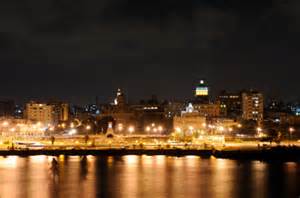
Early in my just-ended three-week visit to Cuba, my wife and I were strolling along Havana’s stunning Malecon walkway which stretches for miles along Havana’s northern coast. It was mid-afternoon on a Friday. We couldn’t help noticing how the seafront was more gorgeous than ever.

Both Peggy and I had been to Cuba many times, but it had been seven years since our last visit. In the meantime, buildings along the Malecon had taken on new coats of paint. Greens and whites, reds, golds, oranges, and blues sparkled in the sunlight alongside as yet unpainted decrepit apartment buildings. As ever, clotheslines of bed sheets, shirts, blouses and underwear flapped from balconies in the sea breeze.

Yes, we couldn’t help noticing, things had changed drastically since our last visit. And it wasn’t only the paint and scaffolding outside the buildings under reconstruction.

Tourists were everywhere. Even those “Hop-on, Hop-off” double-deck tour busses which we had seen in Europe passed at regular intervals. Havana’s atmosphere wordlessly conveyed an optimism we had not witnessed since we began visiting Cuba in 1997.

Sharing observations like that, we suddenly heard someone call out to us.

“Hey, where are you from?” The young man addressing us was Cuban, tall, black and smartly dressed in jeans, Nike T-shirt and sneakers. His wife was lighter skinned and similarly dressed. Both were friendly and smiling. Seeing the couple reminded us that Cuba has a largely Afro-descendent population.

“We’re from the United States,” I replied.

“Oh, the U.S.!” The young man smiled broadly. “We love the United States; the U.S. is the greatest country in the world!” His wife shook her head In agreement.

“No,” I contradicted, “Cuba is the greatest country in the world.”

“That’s where you’re wrong, my friend,” the young man said still smiling. “Cuba is the greatest country in Latin America. The United States is the greatest country in the world!”

The encounter spoke volumes about the new Cuba that impressed us so as we walked the Malecon. The exchange offered a snapshot of an economy that is rebounding from a deep depression, of a people who are friendly, proud and patriotic, and of Cuban aspirations to U.S. levels of consumption. That aspiration contains both promise and threat.

But before I get to that, let me tell you more about our visit. . . .

This time we were in Cuba as part of a Berea College summer school course. We called the course “Cuba: Resilience and Renovation.” Ours was a fact-finding study. What has Cuba been? What will it become? Those were our questions. Thirteen students engaged the conversation along with my daughter and her husband, and several friends. It was great fun.

Our course took us from Havana eastward to Varadero, Santa Clara, Matazanas, Camaguey, and Santiago de Cuba. We filled our days with conferences involving academics and government officials including a representative of the U.S. Interests Section (the U.S. quasi-embassy in Havana).

We found ourselves chatting with people on the street; some of us went into their homes. We met students, social activists, feminists, representatives of the LGBT community, farmers, co-op representatives, merchants, Santeria practitioners, Baptist ministers, medical personnel, hospital patients, children and the elderly in a day-care centers, and members of a Committee in Defense of the Revolution.

On a couple of occasions, I spoke with a fellow OpEdNews contributor – “Guillermo Tell,” a Russian ex-pat who has lived in Havana for 27 years. He reminded me of Cuba’s on-going problems with bureaucracy and of the dangers of “reforms” that could end up selling-out the hard won gains of the Revolution. (More on that later.)

Then there were those casual conversations with Cubans on the street, in night clubs and along the Malecon where Habaneros crowd each evening and especially on weekends for music, dance, love, conversation and arguments about baseball and politics.

We even found our way to a ringside table at the Tropicana nightclub, to a performance of the Buena Vista Social Club, and a children’s theater presentation on the Cuban Five that rivaled anything we’ve seen on Broadway.

Usually however our focus was the Revolution, socialism, and Cuba’s prospects for the future.

And what did we find out? Simply this: Cuba is the most important country in the world. Ernesto Cardenal said that of Nicaragua in the 1980s. And he was right. Nicaragua was then the most prominent center of resistance to U.S. imperialism. Today (and for the past 55 years) Cuba fills that role like none other. Alone in the world, it is demonstrating that Third World Countries can accomplish so much with so little even in the face of pitiless opposition from the most powerful country in the world. Cuba is showing the world a way into a future that accommodates itself to the new globalization – but on its own terms. In doing so, it has already surpassed Latin American darlings of development such as Costa Rica. It has already surpassed the United States in quality of life.

Are you surprised by that? Let me tell you what I mean – and here I address Cuban patriotism and the revolutionary gains evoked by our sidewalk encounter. Those elements are what make Cuba so important even in the face of the seduction by “the greatest country in the world.”

First think about Costa Rica. Peggy and I have lived there on and off for the last 25 years. To begin with, Havana is much more beautiful than Costa Rica’s capital, San Jose. Havana’s seafront, colonial structures, its comparative cleanliness and hospitality far exceed what we’ve found in San Jose which is dirty and bleak by comparison. The latter has nothing like Havana Vieja – the old city whose restorations, museums and newly proliferated restaurants have created a tourist center that rivals anything we have seen in Europe.

Cuba’s Varadero seacoast is cleaner, more orderly, more extensive and luxurious than Costa Rica’s famed Manuel Antonio or Guanacaste’s Flamingo Beach resorts. Cuba’s highways are better than Costa Rica’s pot-holed thruways.

Yet, on the basis of independent surveys and assessments, Costa Rica bills itself as the “happiest country in the world.” I suspect Cubans are happier still.

And that brings me to the reasons why and to my claim about the U.S. and comparative qualities of life. Am I really saying that Cuba has surpassed not only Costa Rica but the U.S. in those terms? Yes – despite the impressions of that young man accosting us on the street.

Or let me put it this way: what do we value most in life? Few, I think, would respond: money, competition, meaningless work with increasing hours with fast-diminishing rewards. Few would list fast food, shopping malls, movies, luxury cars and vast homes at the head of our must-have lists.

Even abstractions like U.S. “freedom” (in our system that imprisons and executes more than any other country in the industrialized world), “democracy” (where voter-suppression is the order of the day), “free speech” (where the mainstream media ignores issues important to the poor and middle class), and “rule of law” (where universal surveillance, torture, police-impunity and extrajudicial killings are common) have become increasingly meaningless.

Instead most of us would say: “What I care most about are my children and grandchildren. I care about my health and that of my family. I care about the well-being of the planet we’ll leave to our descendants. Education is important. And I want safety in the streets. I’d even like to have some years of retirement toward the end of my life.”

In all of those terms – addressing what most humans truly care about – Cuba far outstrips the United States. Consider the following:

 * Education in Cuba is free through the university and graduate degree levels.
 * Health care and medicine are free.
 * Cuban agriculture is largely organic.
 * 80% of Cubans are home-owners.
 * Cuban elections are free of money and negative campaigning. (Yes, there are elections in Cuba – at all levels. Please see my last blog entry.)
 * Nearly half of government officials are women in what some have called “the most feminist country in Latin America.”
 * Drug dealing in Cuba has been eliminated.
 * Homelessness is absent from Cuban streets.
 * Streets are generally safe in Cuba
 * Gun violence is non-existent.

But what about Cuba’s notoriously low incomes for professional classes? They have doctors and teachers earning significantly less than hotel maids and taxi drivers who have access to tourist dollars. Professionals, it is often said, earn between $20 and $60 per month. Taxi drivers can earn as much in a single day.

There’s no denying, the growing income gap is a problem. It’s one of the most vexing issues currently under discussion by the Renewal Commission that is now shaping Cuba’s future after years of consultation with ordinary Cubans nation-wide.

And yet the income gap has to be put into perspective. That’s supplied by noting that Cubans do not live in a dollar economy, but in a peso arrangement where prices are much lower than they are for tourists. One also attains perspective by taking the usually cited $20 monthly wage and adding to it the “social wage” all Cubans routinely receive. And here I’m not just talking about the basket of goods insured by the country’s (inadequate) ration system. I’m referring to the expenses for which “Americans” must budget, but which Cubans don’t have. That is, if we insist on gaging Cuban income by U.S. dollar standards, add to the $20 Cubans receive each month the costs “Americans” incur monthly for such items as

 * Health insurance
 * Medicines
 * Home mortgages or rent
 * Electricity and water
 * School supplies and uniforms
 * College tuition and debt
 * Credit card interest
 * Insurances: home, auto, life
 * Taxes: federal, state, sales
 * Unsubsidized food costs

The point is that those and other charges obviated by Cuba’s socialist system significantly raise the wages Cubans receive far above the level normally decried by Cuba’s critics – far above, I would say, most Third World countries.

None of this, however, is to say that Cuba (like our own country) does not have serious problems. Its wealth-gap though infinitely less severe than in the United States holds potential for social unrest. And hunger (as in the U.S.) is still a problem for many.

To address such challenges and to responsibly integrate itself into today’s globalized economy, Cuba seems to be embracing:

 * A reduction of the government bureaucracy that my friend Guillermo Tell so despises.
 * Changing the state’s role from that of owner of the means of production to manager of the same.
 * Increasing the role of cooperatives in all sectors of the economy.
 * Connecting wages with productivity.
 * Expanding the private sector in an economy based on the general principle, “As much market as possible, and as much planning as necessary” (to insure a dignified life for all Cubans).
 * Elimination of subsidies to those who don’t actually need them.
 * Establishing income “floors” and “ceilings” rendering it impossible for Cubans to become excessively rich or poor.
 * Introducing an income tax system in a country that has no culture of taxation – itself a tremendous challenge. (So tremendous, a friend told me, that a tax system is “impossible” for Cubans even to contemplate.)
 * Perhaps even more difficult: establishing some kind of “wealth tax” a la Thomas Picketty (whom, I’ve been assured, the Economic Planning Body is studying).
 * Incentives to repopulate the countryside with a view to ensuring Cuba’s food sovereignty.

Those are the general directions. Actual decisions will be “transcendent” more than one person at the heart of the process told me. They will be made according to a world vision that is “entirely new.”

Breathlessly, we await the results. They will determine whether Cuba continues to be the change which our deepest concerns indicate most would like to see in the world.

What I’m saying is that Cuba’s resistance to imperialism, its willingness to address real problems (like climate change and income inequalities) rather than ignore or deny them – all of these are what make Cuba “most important.”

They are the reason Cuba might well be poised to become “the greatest country in the world.”
India Afterthoughts III: A Rat as Big as a Cat – Living Inter-generationally in Mysore

rodent of unusual size

“Hello . . . hello . . .” It was my eldest son, Brendan, calling out at 2:20 in the morning. He was sitting up in the bed next to mine, and calling towards the window. Hearing him caused me to sit up as well. Brendan thought someone was in our room. My immediate thought was that a monkey had somehow gotten inside.

Brendan and I were sleeping in the room his mother and I had shared during our time in Mysore. My son had just returned from a year in Afghanistan, where he had served as a diplomat in the U.S. Embassy. He was spending a week with us in India before returning for his next assignment in D.C. Peggy had gone home several days earlier; I was to join her in the States a few days later.

Now Brendan had ignited his iPhone flashlight app and was shining it towards the floor near the entry door to our room.

“God, Dad, it’s a rat!” he exclaimed.

I turned on my flashlight too just in time to see a huge rodent – as big as a medium-sized cat – slinking across the floor in front of our beds. Now he was in the corner near the window.

“What do you think we should do?” Brendan said.

“I don’t know,” I replied.

Gingerly I got up and opened the door leading to the outside patio in front of our room. Just then the rat jumped onto the window sill and slipped out through a hole in the screen. I heard him scurry out across the yard.

I closed all the windows and said, “That’s going to make it hard to go back to sleep, won’t it?”

Brendan agreed. But somehow we fell asleep again — I suppose dreaming of “Rodents of Unusual Size,” which played such a role in “The Princess Bride” which ironically we had just viewed that very night.

In any case, that’s only one of the many astonishing incidents Peggy and I shared with our children in India where all of them spent time with us in a funky apartment that housed our wonderful inter-generational community.

That is, for three of our four months in India we shared space and time with our daughter Maggie, her husband Kerry, and those three yellow-haired children, Eva (5), Oscar (nearly 3), and Orlando (nearly 2). Peggy’s roommate from her college days, Micki Janssen, joined us half-way through and stayed for two months. Our sons, Brendan and Patrick came for the Christmas holidays. During one of his leaves from Afghanistan, Brendan and his girlfriend, Erin, had also spent a week with us in Sri Lanka.

Our house in Mysore’s V.V. Mohala neighborhood was perfect for renewing family ties. It resembled a three-story motel right out of the 1950s. Four separate living spaces (each with its own lockable entrance and kitchen) made up the first floor. Peggy and I occupied one of those rooms. That’s where the incident with the rat occurred.

Oscar slept in another room on that same floor. The idea was for Peggy and me to keep tabs on him during the night. The house’s owner (the ever-present Mr. Dass) made his office in a third room. And then there was an American college professor (whom we rarely saw) who lived in the fourth.

The second floor of the “motel” was a two bedroom apartment with a large kitchen, two bathrooms, a living room, dining room and office. That’s where Maggie, Kerry, and our grandkids lived. Early on, they converted one of the walk-in closets into a “bedroom” for baby Orlando.

Peggy and I ate lunch and dinner in that apartment with the whole family every day. (The two of us had breakfast each morning on our own at the “Barista” Coffee Shop a few blocks away – café lattes and “Breckwich” sandwiches consisting of an omelet with lots of cheese on a white bun. I figure that between us we probably ate more than 100 of those sandwiches while in Mysore. )

Everyone eating together twice a day was terrific. What bonding we did! We had a great cook by the name of Anita. She’d fix us Indian food for lunch. And it was always superb – Indian curries, dhal, chapattis, naan, biryani rice, roti, bitter gourd, yogurt, and other delights. Then we usually had something western for supper – pasta, pizza, quesadillas – that sort of thing. Two other women, Vigia (of whom Oscar was strangely afraid) and her daughter Pavrita helped Anita and did the cleaning and laundry as well.

The “motel” had a third floor too. Micki lived in the apartment up there. The third floor’s terrace spread itself in front of Micki’s room. Kerry and Maggie eventually placed two table and chair sets there. That made it nice for parties and occasional meals when the weather was especially fine – and when the laundry had dried and could be removed for the occasion.

Intergenerational living in those circumstances turned out to be wonderful. Many mornings Eva would wake us up, join us in bed, and insist on playing some game – usually involving Pippi Longstocking or Harry Potter. She’d also want to awaken her brother Oscar who always slept longer than Eva and was (as I said) sleeping next door. So we’d have to dissuade her from doing that.

Though the living arrangements and interactions were not without their challenges, I’m sure none of us will ever be the same after living inter-generationally like that. We learned we could do it and have great fun in the process.

Brendan and I will never forget that rat either. . . .

Vipassana Reflections (Dec. 4-15, 2013): Alur, Karnataka State, India

dhamma_paphulla_vipassana

Here are 18 little reflections on the 10 day meditation retreat I finished about a week ago. It was extremely intense — a real immersion experience both in meditation and in Indian culture. The living circumstances and diet were Spartan. No talking or even eye contact for 10 days. No cell phones or computers, newspapers or TV. We meditated for 10 hours each day using a method that will be explained below. It was one of the most unforgettable experiences of my life. I feel so privileged to have had the opportunity. India is wonderful!

I
“Arrival”

Here at last.
This is what brought me to India, I’m convinced.
But how did I get here?
Did I die?
I can’t remember doing that
Or how.
I recall saying goodbye to my loved ones – a wonderful hug from Maggie,
A goodbye kiss from Peggy . . . .
“May you find what you’re looking for,”
She whispered.
“I think you already have.”
So here I am – dead to the world.
Is this what heaven is like?
Or am I in hell or in prison?
I’m determined to find heaven here,
And wherever I land
From now on . . . .

II
“The Vipassana Community”

So many people here,
(about 80 I’d guess)
Young, old, men, women,
Tall, short, slim, heavy,
All but 5 of us brown,
All seeking God.
I am not alone.

III
“The Setting”

It’s quiet here.
Green, brown and dusty,
Run-down, like India,
And very slow.
But there’s a well-kept garden space,
In front of the Meditation Hall.
No golf course beauty though
Or slick railings, winding staircases or polished floors.
Instead there are large patches of dirt,
Stoney paths, chirping birds,
Blood-thirsty mosquitoes,
And sunshine all around.

IV
“Where I Sleep”

I sleep in one of the “Gents Dormitories,”
In bed # 22.
Fifteen cots, each two feet apart.
The beds are pieces of slate,
With a mattress on top, just 2 inches thick,
And a small hard pillow.
A piece of canvas suspended from a rod
Separates each bed.
But nothing filters
The farting, snoring, throat-clearing, belching, spitting, coughing and sneezing.
Still, we somehow manage to sleep
From 9:30 till 4:00.
Already by 3:30
Alarms go off.
Fluorescent tubes ignite.
The farting and throat-clearing begins in earnest,
And the race to the outdoor washstands.
By 4:30 we’re in the meditation hall.
Following our breathing – till 6:30.

V
“Be Happy”

“Be Happy”
That’s the mantram here.
Every notice ends with those words:
“Be Happy!”
It’s a strange, forbidden thought for me
Who fears happiness,
(I’ve been told)
Who’s blind to the happiness already bestowed
Here,
And who longs for the pains of hell.
What if I realized heaven is indeed already mine,
Surrendered to it,
Luxuriated in my body, mind and spirit,
And spurned the hell
The saints have sold me?
What then?
Would I actually see God?
Why this terror before heaven all around?

VI
“The Reason for Unhappiness – and Its Cure”

All life is suffering
Says the Buddha.
But why?
What’s the cause?
Gotama went deep inside
To find out.
It’s because of craving,
He discovered.
Senses encounter sense objects.
Attachments and aversions form.
When inevitably thwarted
Suffering results.
To overcome suffering,
Simply detach!
Become a dispassionate watcher of sensations
Pleasant and unpleasant,
Knowing that each
Is governed by
The Universal Law of Impermanence.
“This too will pass”
Is the salvific mantram.
“I am the Happiest of mortals,”
the Enlightened, Unattached Buddha insisted.

VII
“Where I Eat”

Our mess hall has red concrete floors.
We eat on narrow shelves
Each facing a dingy white wall
Whose Scotch Tape wounds
Cry out for soap or paint.
Thousands have sat here before us
Clattering teaspoons
On stainless steel plates.
Rice and dal
And a sweet thick drink
I can’t identify.
No one speaks or makes eye contact.
Afterwards
We line up to wash our cups and plates
At stone pilas.
Then one by one
We melt back into the darkness
Whence we came
Like moths seeking light.

VIII
“The Menu”

Breakfast
Upma (millet mush)
Or biryani rice
Sprouts
Idles (twice)
Pickled green peppers (available at every meal)
Chai

Lunch:
White rice
Biryani rice
Iragi balls (black millet)
Dal
Chapattis
Sliced cucumbers
2 vegetables: green beans, diced beets, squash, okra, or bitter gourd
Sauce: spinach, tomato and onion,
Buttermilk

Supper/Snack:
Fruit (one piece): watermelon, papaya, or banana
Salted and peppered “puffed rice” with peanuts and cilantro
Chai

IX
“Take Things Hard”

I love living like this
(My kids will laugh)
When I was a Columban
The motto was
“Take things hard.”
I bought into that,
I guess,
And still do.
I like the predictable daily routine,
The rock-hard bed,
Cold “showers” from a bucket,
The same meals repeated.
But time to think,
And meditate
And pray.
What more could I ask?
(Well, maybe not the cold showers.)

X
“How to Meditate”

“Narrow your focus,”
The teacher said,
“To the triangle
Whose base is your upper lip,
With its apex, the top of your nose.
Now do nothing
But breathe.
Just observe your natural breath
For 15 hours.
That’s step one.”

“Step 2 is to spend 10 hours
Focusing on sensations
In the same triangular space –
An itch, a pain, a tingling, throbbing – anything.
Work diligently, ardently, patiently.
This was the Buddha’s path
To enlightenment and liberation,”
The teacher advised.
“It can be yours as well
If you follow his technique.
Doing so, you are bound to succeed,
Bound to succeed.”

“Step 3 is to narrow focus still further.
The triangle shrinks.
Its base remains your upper lip.
But its apex becomes the bottom of your nostrils.
Focus on that mustache area.
Identify the feelings there,
And contemplate it – for 10 hours.”

Now you’re ready for Vipassana itself.
The word means “seeing things as they are,
Not as you want them to be.”
You scan your body
From head to toe
For changing sensations,
For 5 hours in the morning
And 4 in the afternoon.
The point is
To experience life’s impermanence
Where it cannot be denied
Within the framework of your own body,
And so be liberated
From cravings and aversions.
Which like all bodily sensations
Always pass.
Do that for 65 hours.

XI
“The Lotus Position”

The lotus position
Is killing me.
After 15 minutes
The fronts of my thighs
Are throbbing uncontrollably
Like waves on a rough sea
I can actually see the turbulent ripples.
And I still have 45 minutes
(Sometimes and hour and 45 minutes!)
To go!
Towards the end,
Each 60 seconds seems like an hour.
Is this what I must do
For the rest of my life
To achieve enlightenment?
“It’s not about torturing yourself,”
The teacher tells me.
“It’s about self-discipline,
And purification of mind.”
I review my life:
For 16 years I’ve gotten up each day at 4:45
For half an hour of meditation.
For 25 years
I’ve run 4 miles every morning
In cold and snow, heat and rain.
“No pain, no gain,” I’ve always believed.
Then a half hour of spiritual reading.
Three vegetarian meals
When I’d rather eat meat.
Another half hour of meditation at night.
What I need is not more pain.
What I need is the Buddha’s understanding
That the pain already here
And the abundant joy
Are both temporary
Subject to the universal law of impermanence
And destined to pass.
Don’t be attached
To either pain or pleasure.
That’s the lesson
And the purification of mind
My teacher was talking about.
But pardon me;
I’m using a chair.

XIi
“I Hate Vipassana”

It’s day four of our course.
During the last half hour of morning meditation (4:30-6:30)
Something snapped.
I felt like screaming,
“This is just bullshit!”
The chanting had started,
Making it impossible for me
To concentrate on my body scan.
All of a sudden,
I hated everything:
India, Indians, Vipassana Meditation, the chanting,
My hard bed
The food
That’s making me gag.
I don’t understand Vipassana!
Yes, I know it’s about
Facing up to life’ impermanence.
But how many times can you survey your body
For changing sensations
Without screaming about bullshit –
From sheer boredom?
It’s a good thing I still have nearly a week
To recover,
Make sense of this,
And find heaven
Here.

XIII
“I Love Vipassana”

The crisis passed
As quickly as it had come.
This morning
After 3 hours
Of fruitless, distracted, infuriating “meditation,”
A conference with our dour, laconic teacher
Helped me see. . . .
He spoke of the importance of posture
For disciplining the mind.
He asked about mine.
“No problem,” I said,
“I’m old,
I don’t do the lotus position;
I sit in a chair.”
“Hmm . . .” was his pitiless response.
Chastened,
I adopted the lotus configuration
For the next hour.
My legs absolutely throbbed.
At one point
I couldn’t tell my right from my left.
But then I saw:
The Buddha based everything,
I realized,
On what was certain,
From the experience of his own body.
Since that body perfectly mirrored
The entire universe,
And the laws of nature,
Reading it
Was better than reading a whole library of books.
So scanning the body
From crown to toe
Is like journeying among the planets,
Like a history lesson,
Like a review of my own life.
Bodily sensations
Pleasant and painful
Were like all the crises of life
Like all its joys – destined to pass.
The point is however
To awaken the body completely,
To make every single cell
Sensational.
And to do the same
With every moment of life.
“Just observe it all objectively
With perfect equanimity,
Without craving or aversion
Everything will soon pass,”
The teacher said.
“Everything is changing,
Changing
Changing.”
I can hardly wait for this afternoon’s
4 hours of “work.”

XIV
“A Meditation High”

This afternoon
December 11 , 2013
At 2:15
I had a unique experience – for me.
(My teacher would later tell me it’s quite common.)
During the last 15 minutes of meditation (1:00-2:30)
I had been sweeping through
My Vipassana survey of my body,
And had done so quickly
Perhaps 6 times in a row.
I stopped.
And all of a sudden
My entire body was tingling
From head to toe
In mild vibration.
I felt my body was filled with light.
The vibration continued for 15 minutes.
This, I believe,
Was the experience
Of the “Inner body,”
The immanence of the divine
That Eckhart Tolle describes
In The Power of Now.
My Indian teacher however
Warns
Not to treat such experiences
With any more preference
Than dryness, distraction or frustration.
All – the pleasant and the unpleasant –
Are merely sensations.
The point of Vipassana is
To treat all sensations the same:
“With perfect equanimity.”
It’s the nature
Of both pleasant
And unpleasant sensations
In meditation
And in life
To arise and then subside.
It’s fatal to crave and form attachment to the pleasant
And to fear and cultivate aversions to the unpleasant.
(Still, the experience was nice!)

XV
“Outta Gas – again!”

Today – the 7th of the course—towards the end
Of our 7th hour of meditation
(with 3 ½ to go)
I just ran out of gas.
My back ached.
I couldn’t bring myself
To scan my body even one more time,
“From the top of your head, to the tips of your toes;
From the tips of your toes
To the top of your head.”
And then those aversions kicked in again –
To meditation, Indian accents,
Endless translations into Kanada and Pali
And our teacher’s chanting
In that artificially deep voice,
With the weird tones, melodies and cadences
I don’t understand.
Then I realized
My aversions are the point.
It’s sensations like this I’m supposed to identify
And observe objectively.
Life is full of them,
And they are merely feelings – at least until I own them
(as I mistakenly have done again!),
Making them mine
And creating new “samskaras”
(Negative behavior patterns)
In the process.
“Just observe the sensations,
The teacher intoned.
View them objectively
With equanimity
And patience.
Like all sensations,
They will arise
And then disappear.
Don’t attach to them.”
Lesson learned . . .
For now.

XVI
“The Problem with Pleasure”

My teacher says that
Pleasure is good
When it’s shared with others:
A good meal with friends
A game of golf with my sons. . .
But not when it’s sought
For its own sake,
Especially in isolation
(Drinking alone,
That bowl of ice cream for a midnight snack).
Those sorts of “pleasures”
Give rise to craving
And attachment
Which the Buddha teaches are the causes of unhappiness.
I’m afraid all of that is true.
My experience shows:
Unsought pleasures
Have filled my life to overflowing.
The pleasures I’ve sought – for me –
Have been the problem:
Craving when they’re absent,
Disappointment when over.
And then there are those samskaras . . .
So give others pleasure in abundance.
And let life shower you with gifts unsought.
(It always will.)
Otherwise, live simply
Your cup will overflow
Even if nothing extraordinarily delightful
Ever happens again.

XVII
“Self-Denial”

All my life
It’s been preached to me,
“Deny yourself.”
And what a burden it’s been!
Now I see
That responding (not reacting) to impulses
Is intimately connected to
The Universal law of Impermanence
And to my anger and defensiveness.
Impulses are impulses
Whether to take that 2nd piece of cake
Or to make a smart retort.
As sensations they arise and pass away.
Recognizing self-indulgence
As a passing impulse
Helps me identify angry sensations
As impulses too –
To be recognized
And given time to pass –
In order to escape misery.

XVIII
“Conclusion”

This has been
A 10 day
100 hour Meditation
On the Universal Law of Impermanence.
(I.e. on reality’s changing nature
As events constantly rise and pass away),
On the need to face
And accept
The present moment
As it is
and not
As we would like it to be,
With equanimity and calmness.
It has been about
Eradicating (uprooting)
The causes of unhappiness
Located in the sensations
Our bodies constantly produce
As our senses meet
Sense objects.
Eradication happens when
We don’t react or become attached to such sensations,
But simply observe them
With heightened awareness –
Objectively, calmly,
Equanimously.
To accomplish that feat,
We must practice
An hour of mediation
Each morning and evening
Scanning our bodies
“from the top of our heads
To the tip of our toes”
And back,
This establishes a pattern
(Based on experience)
For facing the vicissitudes of daily life
Which is constantly
Changing,
Changing,
Changing.
Remember:
The two wings of the Vipassana bird are
Awareness and
Equanimity.