Last week Peggy and I took off from our home in Westport, CT to Clearwater Beach FLA where we’ll be snow-birding till the beginning of April. We’ve rented a condo in the Regatta Beach Club in North Clearwater. Such is octogenarian privilege (for some).
On the way, however, we ran into a dangerous snowstorm in the Washington D.C. area. It turned out to be truly frightening in a way that likely portends a new normal of systemic breakdown in the face of climate change and the inability and/or unwillingness of government to respond to associated problems.
Here’s what happened.
As we drove down I 95 on the outskirts of D.C., downed trees inhibited passage all along the way. Fallen trees overburdened by a wet snowfall blocked entire lanes while the rest of the highway was covered with snow, ice, and slush. Such conditions and innumerable accidents (with many cars stuck in the median) reduced highway passage to a crawl. There was not an emergency vehicle in sight.
Then suddenly everything stopped completely. Unbeknownst to anyone, a huge accident involving long-haul trailers lay some miles ahead. At least one of the truck drivers was trapped inside his tractor and had to be extricated by emergency crews. The process took hours.
Peggy and I were part of the lineup for about 5 hours – crawling forward only occasionally at less than a snail’s pace.
Luckily, our crawl eventually took us near an exit. On cellphone advice from our son, Patrick, we decided to leave the traffic jam then and there. We could see that there were several motels in the vicinity. We drove towards them, leaving the highway for a service road.
However, we found all the lodgings in darkness with empty parking lots. Evidently, electrical service had been lost to the entire area. And now we were on an uncleared side road and in danger of getting stuck in the snow with no one around to help. With difficulty, we made it back to the highway.
Peggy then secured a room for us via her Hilton app at a Comfort Inn about 20 miles from I 95. She also phoned ahead to confirm the reservation. The first words she heard from the motel desk were, “Thank you for calling Comfort Inn. All rooms are taken this evening. None are available.”
Peggy responded, “Yes, but I’ve just made a reservation online and it was accepted. Please check your records.”
“Oh, yes, here it is,” came the response. “You got the last available room.”
Relieved, we arrived at the Inn and were in bed by midnight.
The next morning, we found out how unbelievably fortunate we had been. I 95 was still closed and would remain so for most of the day. Many people, we read, had been forced to abandon their unheated cars now out of gas or electrical charge. They had to walk through the ice and snow to – who knows where?
The highway was closed for most of the next day. [Can you imagine the complications involved in removing (and retrieving) all those abandoned cars?]
Meanwhile, Peggy and I were able to continue towards Florida on secondary roads. It took us an extra day to reach our destination. But we were so much more fortunate than those other stranded motorists.
It was a close call indeed – for us, but a real tragedy for so many others.
However, the whole affair made us reflect on what promises to be a new normal. It demonstrates the inability of laissez-faire government to deal even with comparatively minor and predictable emergencies, much less with major ones looming on the climate-chaos horizon. For instance:
Virginia governor Ralph Northam refused to deploy the National Guard to help stranded motorists by clearing even a single lane to safety – or to distribute food, blankets, and information.
More specifically, despite unprecedented communications technology at their disposal (including at the very least helicopters with loudspeakers) motorists were left without basic information about the severity and likely time span of their situation.
They were stranded without means of mass transportation at highway exists to bring them to safety and warming centers which did not become available till noon the next day.
At the most basic level, highway crews left entire lanes blocked by fallen trees on I 95 for more than 24 hours despite possessing the machinery for debris removal.
All of this raises questions about government and its purpose in the face of (once again) entirely predictable and more severe emergencies ahead. As one stranded motorist put it, “No one came. It was just shocking. Being in the most advanced country in the world, no one knew how to even clear one lane for all of us to get out of that mess?”
Get ready, this promises to be the new normal. Evidently, despite our tax dollars and the predictability of emergencies much worse than the I 95 occurrence, we’re all on our own.
Yesterday (December 15, 2021)
The world lost a great seer.
My wife, Peggy, and I
Lost a dear friend
And colleague
At Berea College
Too soon.

bell hooks was brilliant.
She lit up the world
And Jackson Street
No less
Just down from our place
There in Central Kentucky.

Countless times
She graced our kitchen table
Over 15 years together
Just the 3 of us
Breaking Peggy’s French bread
Or at larger gatherings
On special occasions.

bell introduced Berea
To Cornel West
In a living room soiree
I’ll not forget
And to Laverne Cox
And Emma Watson.
bell was a celebrity too
Beyond any of them
But you'd never know it.

Always up
For deep conversation
About issues,
Feminism for everyone
And liberation,
The sprite in her
Found yet more energy
For gossip and trash talk.
She was nothing
If not great fun.

“Let’s recite our favorite poems”
She’d suggest.
Or “talk about
Our romantic relationships,”
She’d grin
With that wicked twinkle
In her mischievous eyes.

And we’d obey.
We did!
Poems one after another.
And one night
At that kitchen table
In darkness
Relieved by candlelight
Eight or so grave professors
Bared secrets
About just that
Our romances!
Can you imagine?
Extraordinary and memorable.
And so she was.

bell showed it
In her books and lectures
That changed the world.
Didn’t they?
Didn't she?
They transformed
Berea College students,
And all who read and heard
Across the planet.
They changed me and Peggy.

More than anything however,
bell hooks was a seeker
With infinite energy
For prayer and meditation
And the goddess
Understood as Pure Love
Absolutely forgiving
Creator of a world
With room for everyone
Feminist or not
..
So, rest in peace
Dear friend,
And sister
Dear teacher
And prophet.
Dear author
And speaker,
Dear fellow traveler
And seeker.
Diminutive giant of a woman,
We love you,
Dearest bell.
We are grateful
For your gifts
And most of all,
For your
Rare goddess grace.
I’ve given up on the Democratic Party. For reasons that are listed below, I’ve drawn the conclusion that our country’s only hope is to support a 3rd party to contest the strangle hold the Democratic and White Party (aka the Republicans) have on a gridlocked national government.
Fact is, to this point I’ve cared more about getting Democrats elected than the Democrats themselves have. They currently control the White House, the Senate and the House, but still have allowed the White Party to rig elections (through gerrymandering and voter suppression laws) for at least the next decade. Democrats could stop this, but have decided not to.
I’ve had enough of that.
So, at this late stage of my life, I’ve decided to put my activist efforts into supporting The People’s Party. I’ve begun my campaign on its behalf by making the following proposal to a group of highly motivated seniors from New York and Connecticut whose company I’ve joined just recently.
See what you think. And if it makes sense to you, sign up for People’s Party membership and follow the suggestions below to get its candidates on the ballot where you live.
Proposal for Joining the People’s Party
GIVEN THAT:
The United States is a failed state.
Whose gridlocked political system daily shows itself incapable of the radical change demanded by rampant inequality, climate chaos and the threat of nuclear war,
Since practically speaking, it has become a single War Party state
Whose White Party and its almost indistinguishable “opposition” (the Democrats) have both been captured by Wall Street, the Military Industrial Complex, and by the health care, pharmaceutical, and fossil fuel industries – as well as by the gun lobby,
And whose corporate agendas (despite Democratic control of the presidency, House, and senate) have blocked legislation addressing issues touching the lives of ordinary people such as:
Medicare for all
$2000 stimulus checks (vs. Biden’s $1500)
$15 minimum wage
Cancellation of college debt
Free college tuition
Electoral reform
Passage of the PRO Act (protecting the right of workers to organize)
Immigration reform
Normalization of relations with Cuba
Stopping the war in Yemen
Etc., etc., etc.
All rendering the U.S. more fascist than democratic (i.e., a police state supporting corporate interests rather than those of “the people” while blaming national dysfunctions on the poor and powerless),
AND GIVEN THAT:
Democrats simply ignore progressives because the latter have nowhere else to go
Despite existence of an unmistakable national hunger for profound political change
Evidenced by the fact that
62% of Americans want a 3rd party (up from 57% just last September)
50% of Americans now identify as “Independent” and therefore constitute a de facto 3rd party left without meaningful representation
With only 25% identifying as Republican and 25% as Democrat.
AND GIVEN THAT:
The members of our Men’s Group feel great urgency to leave the world a better place
By using our various skills (organizational, activist, administrative, academic, inspirational, journalistic, artistic . . ..)
And the wisdom gathered from long experience-packed lives
Today is my Granddaughter, Eva's 13th birthday. That's a big one; she's entering into her teenage years. I feel especially close to Eva. We often go for long walks and sit by the Saugatuck River drinking coffee and solving the world's problems. So here are some verses I wrote to celebrate all of that. It's so much fun being Eva's "Baba."

For Eva

I have cherished brave Eva
From the day
She was born.
We’ve been friends from that moment
Through rose and sharp thorn.

We’ve walked miles together
In sun, showers, and snow
In deep conversation
Whenever we go.

Sitting hard by the river
Eating cheese and egg sandies
And donuts
From "Coffee an’"
Sweet as Halloween candies.

We talk about school
And “Democracy Now.”
We discuss what we’ve written,
How to follow the Tao.

We talk about Life
And its meanings so deep
About New Worlds,
Marx, and Malcolm.
That make our minds leap
To conclusions unexpected
With insights brand-new.
Eva learns from her Baba.
Baba learns from her too.

Now she’s turning 13
Entering teenage at last.
I just can’t believe
Life is passing that fast.

But I’m confident Eva
Will serve the world well.
She’ll write books
That will change it
And save it from hell.

She’s a philosopher you see
She’s a lover of truth
(A grammar snob also
But never uncouth.)

So, Eva, let me tell you
At this age of 13
Just how much I love you.
You’re the best girl I’ve seen.

God’s blessings upon you.
Be safe, happy, protected.
Be loved by your friends.
Be never rejected

Because your heart is so pure.
Your thoughts are so clear.
That’s why we all love you
And hold you so dear.

That’s specially true for Baba
Your companion and friend
Your grandpa who’ll protect you
Till his own life shall end.

And beyond that I promise
For our hearts have been blended
From your moment of birth.
Love like ours
Can’t be ended!

Happy birthday, dearest Eva!!
Recently, a friend (also a former priest) allowed me to read a master’s dissertation he wrote while in Rome 40 years ago. As a 34-year-old Kiltegan missionary with experience in Africa, my friend (now in his early 70s) was exploring the meaning of the term “conversion.” It was a query, I suspect, sparked by his personal struggle with questions raised by his own discomfort with missionary work aimed at converting “pagan” Africans to Christianity.
Reading my friend’s dissertation recalled my own similar struggles as a member of the Catholic missionary group, the Society of St. Columban. Like the Kiltegans, the Columbans emerged from Ireland in the first half of the 20th century. My group’s original work was converting Chinese rather than Africans. As I was completing my graduate studies in Rome, I too had my own doubts about the Columbans’ project.
So, for me reading my friend’s work was a trip down memory lane. His thesis addressed the work of theologians I remember admiring during the late 1960s.
I’m talking about the revered thinkers Bernard Lonergan, Karl Rahner, and a lesser-known Jesuit theologian, William Lynch. I recall so well puzzling over their dense prose as it tried to make sense of the Judeo-Christian tradition in the light of the Second Vatican Council (1962-1965). Who was Jesus, they asked, and what was his relationship to the “modern world?” As I said, my friend’s question to them was about their understanding of the term “conversion?”
Lonergan’s, Rahner’s, and Lynch’s answers to such questions revealed their developed world perspectives. Lonergan was a Canadian; Rahner a German; Lynch, an American. All three were heavily influenced by existentialist and Heideggerian philosophy that at the time contrasted so refreshingly with the Thomistic approach of pre-conciliar theology that heavily relied on Thomas Aquinas and medieval scholastic philosophy.
However, I (and theologians in general, including, I presume, my friend) have long since moved beyond the impenetrable, abstract, thought of the three theologians in question. Influenced by Jesus scholarship and by liberation theology, the reflections of today’s scholars are much more biblically and historically grounded – much more reliant on concrete social analysis than on existential speculation.
Let me try to show what I mean.
Lonergan, Rahner & Lynch
Without venturing too far into the deeper weeds of their relevant speculations, here’s how Lonergan, Rahner and Lynch approach the question of conversion:
Lonergan: Conversion is acceptance of truth rather than the world’s falsehoods. Its end point is awakening from an uncomprehending slumber. Its heightened consciousness yields a changed attitude towards the problem of evil, which is ultimately theological before the world’s otherwise incomprehensible tragedies. Conversion emerges from one’s unique experience of God which is analogous to falling in love. It is not rational; it is not dependent on argument. Conversion simply happens as a gift from God to one inexplicably grasped by the reality of Christ crucified, dead, and risen.
Rahner: Conversion is the owning of one’s human nature which is absolute openness (potentia obedientialis) to ultimate reality (aka “God”). Conversion is the process of becoming receptive to what the world discloses about itself against the backdrop of the Ground of Being. That receptivity is modeled in the person of Jesus the Christ.
Lynch: Conversion represents a radically changed way of experiencing the world. The world of the convert revolves around a different center than it does for the unconverted. He or she perceives and embraces the fact that all of creation is driven by eros – by the basic life-force that informs everything that is. For Lynch, Jesus understood that fact and because of living its truth, represents the ultimate version of humanity. He reveals to human beings who they are.
All these insights are profound and helpful to academics seeking a deeper understanding of the term conversion. And, as I earlier indicated, I once found them to represent the apex of theological reflection. I agreed, that (1) human beings are basically asleep to life’s deeper dimensions, (2) conversion entails awakening and (3) finally embracing a shared human nature as fundamental openness to Ultimate Reality that some call “God.” (3) Accepting that reality involves perceiving the Life Force (eros) that informs and unites all of creation. (4) Such perception gives the lives of the converted a new center not shared by “the world,” but (5) embodied instead in the person of Jesus the Christ crucified, dead, and resurrected.
That’s what I once believed. But that was before I encountered Jesus-scholarship and liberation theology. It was before (precisely as a Global South advocate) I took seriously the imperative to change the world rather than explain it to intellectuals.
Jesus Scholarship & Liberation Theology
Jesus-scholarship and liberation theology agree that conversion involves awakening to a reality other than that generally accepted by “the wisdom of the world.” But it understands awakening as development of class consciousness. Theological awakening moves the center of reflection from imperial locations such as Rome, Canada, Germany, and the U.S. to the peripheries of neo-colonies and the slums of Sao Paulo, Managua, and Mexico City.
For liberation theologians, reality is not fundamentally theological or philosophical, but historical, economic, political, and social. It has been created by phenomena that Raul Peck says summarize the last 500 years of western history. Three words, he tells us, encapsulate it all – civilization (i.e., white supremacy), colonialism, and extermination. Those terms and the bloodstained reality they represent rather than abstract theological speculation, summarize the real problem of evil. That problem is concrete, material, and historical, not primarily theological. It is not mysterious, philosophical, or even theological.
Accordingly, liberation theology’s reflections start with the real world of endemic poverty, climate change, and threat of nuclear war. Closer to home, they begin in biblical circles where poor slum dwellers ask why there’s no electricity or plumbing – why their children are threatened by gang members and drug dealers. Only as a second step does theological reflection enter the picture. In reading the Gospels, the poor (not developed world theologians) discover the fact that Jesus and his community faced problems similar to their own. In the process, they find new relevance in the narratives of Jesus’ words and deeds.
This leads to a third step in liberation theology’s “hermeneutical circle” – planning to address community problems and to the identification and assignment of specific tasks to members of the reflection group in question. Will we demonstrate in front of city hall? Who will contact the mayor? What about community policing?
Answering and acting on questions like those represent the third step in liberation theology’s circle of interpretation. They are a form of reinsertion into community life. That reengagement then begins the circle’s dynamic all over again.
In summary then, liberation theology begins with social analysis that defines the context of those who (regardless of their attitudes towards theology) would not merely understand the world but are intent on transforming it in the direction of social justice. That by the way is the purpose of liberation theology itself – highlighting the specifically biblical stories whose power can change the world. Accordingly, liberation theology is reflection on the following of Christ from the standpoint of the world’s poor and oppressed who are committed to the collective improvement of their lives economically, politically, socially, and spiritually.
And this is where Jesus enters the reflective process in ways that traditional theologians (even like Lonergan, Rahner, and Lynch) end up avoiding. For liberation theologians, Jesus is not merely crucified, dead, and risen. He also had a life (traditional theology’s “excluded middle”) including actual words and deeds before the eventuation of those culminating events.
In other words, Jesus is not primarily the transcendent Universal Christ. He is an historical figure who (as William Lynch correctly has it) relocates the center of the world and history. However, as just seen, he moves that center from the privileged terrain of Rome or the United States to their imperialized provinces and colonies. For liberation theology, kings and emperors are not the center of history, but people like the construction worker from Nazareth. That’s the astounding revelation of Jesus. It turns one’s understanding of the world upside-down.
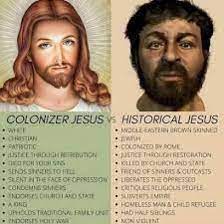
Put still otherwise, (according to biblical stories whether considered historical or fictional) Jesus represents God’s unlooked-for incarnation in the earth’s wretched. He was the son of an unwed teenage mother, an infant refugee from infanticide, an asylum seeker in Egypt, an excommunicate from his religious tribe, a friend of drunks and street walkers, and a victim of torture and capital punishment precisely for opposing Rome’s colonial control of Palestine.
Conclusion
Yes, I remember admiring the likes of Lonergan, Rahner, and Lynch. But they no longer speak to me. Their abstract words, tortured existential questions, and impenetrable grammar obscure the salvific reality so easily accessible and fascinating in the character of Jesus belonging to the Gospel stories – and to those impoverished and oppressed by what bell hooks calls the white supremacist, imperialist, capitalist patriarchy.
Unfortunately, however, the world and its theologians have always been reluctant to recognize that figure for what he was. The change he requires is too drastic. It would mean taking sides with the wretched of the earth.
Instead, theologians even like Lonergan, Rahner, and Lynch have preferred to focus on Christ crucified, dead and resurrected without the biblical narrative of the construction worker’s words and deeds that stand 180 degrees opposite truths taken for granted in the world’s imperial centers.
But it is precisely that down-to-earth Jesus that our world today needs more than an abstract Universal Christ. Conversion to that despised and rejected messiah means rejecting identification with empire’s pretensions and goals. It means taking to the streets with the Sunrise and Black Lives Matter movements. It means running the risk of sharing with Jesus his own fate as a victim of arrest, torture, and even capital punishment.
That’s what Jesus meant by urging his followers to take up the cross and follow him.
On Saturday, Peggy and I returned from our week on Bustin’s Island in Maine. It was a marvelous time spent not only together, but with our daughter, Maggie, and two of her five children — Markandeya (6 yrs.) and Sebastian (2 yrs.). [Her other three children (Eva 12 yrs., Oscar 10 yrs., and Orlando 8 yrs.) are all away at summer camps.] A dear friend from Berea, Joan Moore, also visited for three days. By way of a report on our collective experience, what follows is a letter to my granddaughter, Eva, who (as I started to say) is spending the last of six weeks at her summer camp (Fernwood) also in Maine.
August 1, 2001
My dearest Eva Maria,
Thanks so much for your two recent letters. It was such a nice surprise to return from Maine to find them waiting for me here — along with the beautiful pin you made for me with our favorite colors, yellow and green. As you suggested, I’ll wear that on my walking duds.
I’m so glad you’re doing the reading you mentioned from Howard Zinn and An Indigenous People’s History. Your comments make me think you’d very much like a four-part film series I’ve just watched (twice!). It’s called “Exterminate All the Brutes.” It’s by Raul Peck (a Haitian born director). He’s the narrator of the series as well. He too loves Zinn and the author of An Indigenous People’s History.
Peck says that all of history can be summarized in three words: civilization (i.e., white supremacy), colonialism, and extermination. The film details the evils of the Native American holocaust and of enslavement of Africans. Grandma Gaga started watching it with me. However, she left after about ten minutes saying that she thought the story and graphics were too violent. So, maybe it’s inappropriate for your viewing at this stage of your life. We can talk about that.
Last night, Gaga and I returned from our week on Bustin’s Island near Freeport, Maine (the home of LL Bean). It was a wonderful experience. It was like going back more than 100 years in a time machine. No cars, internet, plumbing or running water. We fetched our water supply from a town pump, used the outhouse, and boiled all our water including what we used for rinsing dishes. The whole experience was an exercise in simple living. We loved it.
What I liked most about Bustin’s Island was the community of people there. It was formed mainly of families that have been going there each summer for generations. Lots of young people about your age and somewhat older. They were all so enthusiastic about the privilege of living there. I’m sure you’d love it too.
Your mom, Markandeya, and Sebastian shared our experience. Markandeya was especially enthusiastic. Sebastian was fun too. I spent a good amount of time pulling him around in a wagon that belonged to the cottage. Marku loved pumping water and pulling the wagon loaded with more than 100 pounds (including two five-gallon water containers and his brother). Gaga joined the Monopoly enthusiasts. Others of us played Hearts and a bit of Yahtzee. Markandeya’s a fierce Monopoly competitor. (I know you know that quite well!).
Joan Moore, a friend of ours from Berea also spent three days with us. She was a very easy presence – very willing to do her part cleaning, playing with the kids, and generally offering a helping hand. She’s a friend of your grandma Momo’s too and will visit her this week. On her way home, Joan says she may stop off in Westport for a visit. Both Gaga and I love Joan.
Weather at Bustin’s was mixed. But it was never hot. As a matter of fact, at night it was often a bit too cold. Our house was located right on Casco Bay that offered wonderful moments for quiet contemplation.
One morning your great uncle and great aunt, Jerry and Liz (whose summer cottage was nearby on Birch Island), came over and took us by boat to their place. They love it there too. Their house had running water and an indoor composting toilet. I enjoyed talking with both of them.
On the way to Birch Island, we passed some of the Calendar Islands (there are 365 of them) with names like “Sow and Pigs,” “Upper Goose, Lower Goose, and Their Three Goslins.” We passed eagles’ nests that sat like huge card tables on top of giant pine trees. One island that evoked interest from my hermit’s heart was called Moshier. It had only a single house on it. I can imagine living there quite happily.
Your mother and I also had some time together – just one-on-one. We talked over our relationship and other such matters. We both promised to continue the conversation now that we’re back in Westport.
One of these nights all of us here are going to watch the film “NomadLand” on your folks’ outdoor screen. It won this year’s Academy Award as the best film of the year. It’s about people who have left the “rat race” of American life and have returned to simple living of the kind that we experienced last week in Maine. Only, the film’s characters are living on the road in campers, mobile homes, and trailers. I find that stuff fascinating. (Although your mom has hastened to tell me quite emphatically, “Don’t get any ideas, Dad. You are NOT going to end up living that way.”)
I know your regimen at Fernwood doesn’t allow you to watch “Democracy Now” each day as you’re accustomed to do. And maybe that’s for the best. I mean, the reports on the pandemic, on suppression of voting rights (especially for black people), and on the U.S. support of wars everywhere all border on depressing. Nonetheless, when you get back here, I know you’ll take pains to catch up. I’ll help you with that on our walks together.
Of course, Eva, I’m very much looking forward to your return (next Saturday!). It goes without saying that I’ve missed you a great deal. I’m looking forward to your account of this summer’s experience at camp. I’m sure you learned a lot and made many new friends. I’m proud of your rock-climbing achievements. As I always tell you, you’re a much better athlete than you give yourself credit for.
So, until Saturday, let me assure you that you’re never far from my thoughts and (yes!) my prayers. I love you so much and am very, very proud of you – especially for your making the best of Fernwood.
Peggy and I will take off for Bustin’s Island, Maine, tomorrow morning. We’ll be gone for a week to a place reachable only by ferry. No electricity; no cars; no internet; outhouse toilet; all water must be boiled. On Tuesday, our daughter, Maggie, and her two youngest (of five) children will join us. (The other three are away at summer camp, also in Maine.) This should be fun and interesting. So, there’ll be no postings here till next week. But I’ll give a report when I get back.
A few days ago, I received a disturbing email blast from Lyle Roelofs, the president of Berea College (where I taught for 40 years). It was about recent “Events in Cuba.” The notice was upsetting because it reflected the one-sided narrative of the U.S. government and its subservient mass media.
This is not to vilify Berea’s president who is sincere and well-intentioned. It is however to demonstrate the effectiveness of U.S. anti-Cuban propaganda that would have even academicians think that “our” government has a leg to stand on in its denunciation of anti-democratic measures anywhere, of intolerance of any dissent, or of police attacks on peaceful protestors.
See for yourself. In his characteristic spirit of compassion, the president had written:
Dear Bereans
Many of you are aware of the ongoing unrest in Cuba as the country struggles with severe blackouts, a food shortage, high prices, lack of access to COVID-19 vaccinations as outbreaks increase, and an unstable economy. Residents of the island nation have taken to the streets to protest, filming conditions to share with the world. In response, the repressive government shut down the internet.
While we all care about the people of Cuba as our fellow human beings, a number of members of our immediate community have family ties there, as well, so our concern extends particularly to them in this worrisome time.
President Biden addressed the situation on Monday urging Cuban leaders to hear the people and address their needs rather than enriching themselves or trying to repress their human rights.
At Berea College, where one of our eight Great Commitments calls for us to create a democratic society, we align ourselves with the people of Cuba and echo the President’s sentiments. In a democratic society, organizations and the government can cooperate to address the sorts of critical problems currently being faced by Cubans, but which are found to a lesser extent elsewhere as well. For example, at Berea College our Grow Appalachia program combats food insecurity in Appalachia working to ensure community members have enough to eat and teaching them how to grow their own food.
Globally, the U.S. and Cuba are among the countries that signed the United Nations Declaration of Human Rights, a list of 30 rights that every human being is entitled to. The right to free speech and health are most relevant to the current events in Cuba. It is our hope that tensions will ease soon, the leadership there will work to provide food, access to vaccines, and make improvements to stabilize the country’s economy, and that this crisis will be an opportunity for improved relations with other countries, including our own, allowing urgently needed assistance to flow to the people of Cuba.
In solidarity with Cubans and Cuban-Americans,
Lyle Roelofs
What follows is my response in hopes that it might help Dr. Roelofs and the rest of us to be more cautious in accepting party lines about “official enemies” such as Cuba, Venezuela, Nicaragua, China, Russia. . .
Dear Lyle,
It was with rather eager anticipation that I opened your recently emailed note entitled “Events in Cuba.” Because of Berea’s commitment black, brown and impoverished communities, I thought your notice would express solidarity with virtually the entire world in its yearly demand that the United States lift the Cuban embargo (Cubans call it a “blockade”) especially in view of the COVID-19 pandemic.
Instead, I found your comments quite incomplete and misleading. Together they gave the erroneous impression that:
All Cubans (“residents of the island nation”) endorse the anti-government street demonstrations
That Cuban leadership is ignoring the COVID-19 pandemic
That the same leadership is resisting improved relations with other countries including the United States
That Cuba should combat the island’s food insecurity by teaching people “how to grow their own food”
That Cuba is out-of-step with the United Nations and its “Declaration of Human Rights” by specifically depriving its people of health care
That President Biden has satisfactorily “addressed the situation on Monday urging Cuban leaders to hear the people and address their needs rather than enriching themselves or trying to repress their human rights.”
Such commentary appears to simply repeat the U.S. official story about Cuba without even once mentioning:
Its development (unique in the former colonies) of several WHO-approved COVID-19 vaccines
The U.S. policy of blockading sale of syringes to Cuba thereby preventing the country from administering its own COVID-19 remedies
Cuba’s long-standing attempts to feed its own people by extensive, government sanctioned urban gardening projects and by environmental policies that make it arguably the greenest country in the hemisphere
The fact that similar demonstrations are happening all over the world including U.S. allies such as Brazil, South Africa, Haiti, Lebanon, Colombia, India, Ethiopia, Israel, Iraq, and Afghanistan (not to mention Black Lives Matter in the U.S. and the January 6th assault on the Capitol) — without comment on your part or emphasis in the mainstream media at large
The allied fact that “a number of members of our immediate community have family ties” in the countries just mentioned.
I am making these observations as a longtime friend of Cuba and (of course) Berea College. I have visited the island many times, never as a tourist, but always as an educator and researcher. In fact, the last course I taught at Berea (Summer 2014) had my wife Peggy and me leading another study tour of Cuba.
I have published many articles on Cuba including here and here about the country’s vaccine research and development. My daughter was treated for appendicitis while visiting Cuba two years ago. After spending five days in the hospital there, she was released virtually free of charge.
With Jose Gomariz (a Cubanist scholar, Jose Marti specialist, and former Berea College professor of Spanish) I once taught a Berea Short Term course at Havana’s Instituto de Historia de Cuba. The course was entitled “The African Diaspora in Cuba.” When I visited Cuba with the Greater Cincinnati Council of World Affairs, I was befriended by a family outspokenly and fearlessly critical of the Castro government. And in my many stints with the Latin American Studies Program of the Council for Christian Colleges and Universities, we took students to Cuba each semester to meet government officials, opposition forces, and diplomats at the U.S. Interests Section in Havana. In all, I’ve been there around a dozen times.
During the Fidel Castro years, I vividly recall a U.S. Interests Section spokeswoman revealingly lamenting the fact that Cuba (as she put it) did not hold presidential elections (thereby demonstrating her misunderstanding of Cuba’s electoral system). “As everybody knows,” she admitted, “he’d win hands down.”
What I’m suggesting is that there is much more to the Cuban story than we’re led to believe by United States propaganda against that beleaguered country.
By simply rehearsing the U.S. official story, Lyle, I suggest that (uncharacteristically) you are not helping the Berea community understand Cuba, its history, and the role of the U.S. in creating misery there, or what our government could do this very day to relieve it – namely lift the embargo and allow the import of syringes into the country.
This Saturday, I’ll be traveling back to Berea, Kentucky where I lived and taught for more than 40 years. The sad occasion will be a memorial service for my life’s best friend, Guy Patrick who died at the very beginning of this year. Guy’s widow, Peggy, has asked me to read at the ceremony an excerpt from one of Guy’s favorite authors, Thomas Merton. What follows is my “translation” the Merton passage as applied to Guy’s life. Afterwards, I include the great Trappist monk’s original words, so you can see if I got them right.
Guy’s death has created a hole in my own life that will never be filled.
Paradoxically,
Guy Patrick’s life
Affirmed itself
By all the endings
It contained.

He was blessed
To learn early on
The self-transcendent
Rewards and meaning
Of dying to himself and
Of using his time,
Effort, strength
And intelligence
To serve others
By giving them
Everything he had.

Doing so
Made Guy
The very embodiment
Of a mature man.
It set him apart
As uniquely
Productive and complete
Because he wasted no time
Seeking money or power.

So, at the age of 85
With nothing else
Left to give
To family world and humanity
He showed us
How to die
As his final bequest.

For Guy
The “end of life”
Meant culmination
Not termination.
It was an act of love
Of acceptance
And surrender
Of his entire life
With its good and bad
Sins and love,
Conquests and defeats
Into God’s gracious hands
Who then, no doubt,
Fulfilled Guy’s fondest hopes
By finally
Revealing life’s meaning and worth
Its point and destiny –
For all of us too.

Thank you, Guy
For your love, generosity
And wondrous example!
Thomas Merton On Worthful Living and Culminating Death
Thomas Merton
As a man grows into other stages of human development, he realizes that there are ways in which life affirms itself by consenting to end. For example, youth begins to discover that by bringing to an end some egoistic satisfaction, in order to do something for another, he can discover a deeper level of reality and of life. The mature man realizes that his life affirms itself most, not in acquiring things for himself, but in giving his time, his efforts, his strength, his intelligence, and his love to others. Here a different kind of dialectic between life and death begins to appear. The living drive, the vital satisfaction, by “ending” its trend to self-satisfaction and redirecting itself to and for others, transcends itself. It “dies” insofar as the ego is concerned, for the self is deprived of immediate satisfactions, which it could once claim without being contested. Now it renounces these things, in order to give to others. Hence, life “dies” to itself in order to give itself away, and thus affirms itself more maturely, more fruitfully, and more completely. We live in order to die to ourselves and give everything to others.
But since contingent lives must end — they are not interminable and there is nothing whatever in their constitution that justifies us thinking that they are — it is important that the end of life itself should finally set the seal upon the giving and the sacrifice which has marked mature and productive living. Thus man physically and mentally declines having given everything that he had to life, to other men, to his love, to his family, and to his world. He is spent or exhausted, not in the sense that he is merely burned out and gutted by the accumulation of money and power, but because he has given himself totally in love. There is nothing left now for him to give. It is now that in a final act he surrenders his life itself.
This is the “end of life,” not in the sense of termination, but in the sense of culminating gift, the last free perfect act of love which is at once surrender and acceptance: the surrender of his being into the hands of God, who made it, and the acceptance of the death which in details and circumstances is perhaps very significantly in continuity with all the acts and incidents of life — its good and its bad, its sins and its love, its conquests and its defeats. A man’s last gift of himself in death is, then, the acceptance of what he has been and the resignation of all final judgment as to the meaning of his life, its worth, its point, its ultimate destiny. It is the final seal his freedom sets upon the love and the trust with which it has striven to live.
Our granddaughter, Eva, has just been elected Ms. President of our town, Westport, CT). We couldn’t be prouder.
In my declining years, I’m leading a charmed life. Here Peggy and I are living in Westport, CT, just down the street from our daughter, Maggie, her husband, Kerry, and five of our grandchildren.
Here’s a picture of our house where we moved just three years ago:
Our grandsons, Oscar (10), Orlando (8), Markandeya (6), and Sebastian (2) usually stay overnight on Fridays and we have breakfast together Saturday mornings. All of them (except little Sebastian) love baseball, so Peggy and I spend a lot of time cheering them on in their Little League games.
About three nights a week, Peggy and I also have dinner at our daughter’s beautiful home. And with the advent of warmer spring nights, we’ve been eating outdoors, where we share not only Maggie’s gourmet meals, but the day’s “roses and thorns,” i.e. all of us taking turns telling about the highpoint and low point of our days.
When my turn comes, my “rose” is often an account of my morning walk with my granddaughter, Eva (12), who is the reigning “Ms. President” of Westport. [That’s right, Eva recently ran (albeit unopposed) for our town’s Ms. President and was elected based on her compelling presentation of a platform promoting planet-saving vegetarianism.]
In any case and for years, Eva has often joined me for my daily four-mile fast walks (which are getting slower all the time). This often happens on weekends, but sometimes we end up walking together to her school about two and a half miles distant. About half-way through our routine, we invariably stop for coffee at Starbucks and spend about 30 minutes just talking there on the shore of the Saugatuck River that runs through Westport’s heart. Our conversations are uniformly wonderful.
We often discuss what we’ve seen and heard lately on “Democracy Now,” Amy Goodman‘s Monday through Friday news program which Eva watches faithfully every day. (I’ve told Eva that if she continues her practice, she’ll end up knowing more about the world than most of her teachers at her Pierrepont School which she absolutely loves.)
Pierrepont School, Westport, CT
Both Eva and I are admirers of Malcolm X. So, we’ve watched and discussed Spike Lee’s film together (along with “Fahrenheit 451,” “Soul,” and “My Octopus Teacher”). We’ve also read Malcolm’s autobiography, and we’ve talked about Les Payne‘s latest biography about our hero, The Dead Are Arising (which I’m sure Eva will read on her own when she gets a bit older). I can imagine her producing some kind of research paper on Malcolm in high school or college. Anyhow, we often talk about X; Eva is intensely interested — as she is about almost everything.
And our conversations are so much fun.
For instance, just this morning, we had maybe our best exchange yet. In her history class at Pierrepont, Eva’s studying the Illiad and Odyssey. While Eva loves the tale, she was mildly complaining that her teacher takes the classic too seriously — i.e. she leads discussions as though Homer’s work were something more than what Eva recognizes as historical fiction.
“You know, Baba,” she confided to me, “I think they’ve misplaced Homer in the history section of our library; it really belongs in the fiction aisle. I mean, all this stuff about Helen of Troy as the cause of the Trojan War doesn’t make sense. How does anyone know that her abduction started the whole thing?”
“That’s a brilliant question,” I said. “You should ask your teacher.
“But you know,” I said, ” that’s probably true of all of the books in your school’s library. I mean they all should probably be classified as fiction. That’s what historians and other authors do; they write accounts that reflect their own biases. And that goes for the Bible too.” (I voiced that last part, because Eva considers herself an atheist, so I wanted to be even-handed about fields of study — she knows I’m especially interested in questions of faith and biblical interpretation.)
“But don’t be too quick to dismiss fiction,” I added. “Fiction is often more revealing of truth than history or scientific theory. It’s like my friend, Guy Patrick, used to observe about the Bible. . . ‘All of it is true,’ he’d say, ‘and some of it even happened.’ Hemingway’s and Faulkner’s novels are true, even though they didn’t happen. You might say the same about the poems of Emily Dickinson.”
And Eva could see all of that. Despite her atheism, she even agreed that the biblical stories of creation might be truer (i.e. more revealing of human meaning) than Darwin’s revolutionary theory. Stifling a theatrical yawn, she said “Darwin might be factually true, but it’s more boring, I agree.”
Can you see what I mean about a charmed life — and about my charming granddaughter?








 About Things That Matter