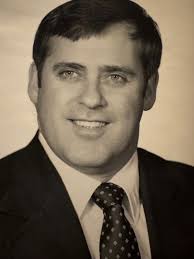
I lost a dear friend last week. His passing made me cry.
His name was Tom Shea and I knew him for 70 years – ever since I entered St. Columban’s high school seminary in 1954 at the age of 14. Tom was 16 then, a junior while I was a freshman. Even in such a small school of only about 100 students, juniors didn’t have much to do with freshmen.
Still however, I admired him greatly. Everybody did. He was so smart and such a great athlete. He was a strong-armed quarterback, a terrific basketball guard, a hard-throwing pitcher, excellent at any racket sport, especially good at ice hockey, a super golfer, and even (I was told) a respectable Irish hurler. He was also a crafty poker and bridge player. With all that, he never took himself that seriously and had a great sense of humor.
However, I didn’t really get to know Tom till I got to the major seminary years after high school. Even there it took a while. At the age of 21, I arrived still working on my bachelor’s philosophy degree. Meanwhile, at 23 Tom had already begun his 4 years of graduate theology work. By the time I began my theological studies, he was almost ready for ordination. That happened for him in 1964. He was ordained on December 22nd of that year – 60 years (almost to the day) before his final transition.
Besides playing with and against him on various athletic fields, the only time I remember speaking seriously with Tom in the major seminary was during the Second Vatican Council (1962-1965). I asked him for advice on what to read to catch up with the drastic changes occurring because of that historic event. I forget what he told me. But I remember following his instructions.
Because Tom was so smart, our missionary group, the Society of St. Columban, had singled him out for professorship in the seminary. They wanted him to teach Sacred Scripture. So, after his ordination, they sent him off to Catholic University in Washington, DC to get a preliminary master’s degree in theology. After two years there, he’d go on to Rome (and Jerusalem) for his terminal degree in biblical studies.
That’s when Tom and I really connected.
I was ordained in 1966. And as with Tom, the Columbans wanted me to teach in the major seminary. My field would be moral theology instead of biblical studies. But Tom and I would go off to Rome together to study – he for 3 years, and I for 5.
And oh, what a ride that would be! In Europe, we’d vacation together, ski many of Europe’s great resorts, and as brothers and colleagues sort out the details of our personal and political lives.
It began with both of us living at St. Columban’s major seminary in Milton, MA the summer before we left for the Eternal City. That was in 1967. I forget what Tom was doing in Milton. I was completing a summer course in Hebrew at Harvard. But every night the two of us drove over to Boston’s West Roxbury to play basketball with “the brothers.” We were the white boys who could ball with any of them. (I remember one night the Celtics’ Satch Sanders was there watching.)
The basketball connections continued in Rome. Both of us ended up playing in something like a G League there for a team affiliated with Rome’s professional club, Stella Azzurra. We scrimmaged against them a time or two. And it was all great fun — a great way to learn Italian culture and make Italian friends. Our Stella Azzurra team was coached by Altero Felice who later had a basketball arena named after him. We considered Altero a good friend and father figure.
While in Rome, Tom and I were also invited by Giulio Glorioso [the Italian equivalent (we were told) of Babe Ruth] to play baseball for the Rome team. (We had worked out with them one spring.) I remember the Saturday afternoon Giulio came to the Columban residence to try to persuade us to play ball that summer.
For better or worse, we passed up that offer in favor of studying German two of our summers in Europe at the University of Vienna. (German at that time was still considered essential for any serious theologian or scripture scholar.)
In a sense, both Tom and I grew up in Rome. Following Vatican II, everything was called into question. Over Pasta e Faggioli and salsiccia dinners in the Columban house at Corso Trieste 57, the 20 or so of us graduate students (all ordained priests from Ireland, Great Britain, Australia, New Zealand, Scotland, Tasmania – and we two Yanks) debated fundamental topics never open to question before Vatican II: God (Is there such a being?), Jesus (Was he somehow God? But how?), the nature of the church (Was Luther a heretic or a saint?), the priesthood (Was it necessary?). And what about mandatory celibacy? The discussions were unforgettable and life-changing.
Our friendship continued and deepened to eventually include our wives, Dee (Tom’s bride) and Peggy (mine). We spent several year-end celebrations together. And once we got together in Costa Rica for a long weekend at an all-inclusive resort. Peggy and I attended the wedding of their eldest son, Tommy in Chicago. Tom and Dee came to our daughter Maggie’s wedding in 2007 in Kentucky. Peggy and Dee remain fast friends.
The four of us got together for the last time a year-and-a-half ago in Florida. By then Tom had already been slowed by heart and lung problems. But his sense of humor never faded. Neither did his life-long interest in and commitment to spiritual growth.
Yes, Tom Shea was a close friend of mine. We grew up together for nearly three-quarters of a century, often acting as each other’s counsellor, advisor and confessor — every minute accompanied by stories and laughter. As Peggy recently pointed out to me, his down-to-earth wisdom and example saved me in effect from a closed system and lonely life that otherwise would have throttled me.
So, thank you, Tom Shea for being such a good fellow traveler. You were wise, generous, humble, and always brilliant. I’m grateful for the gift of your impactful life. We’ll see each other again soon, I know.
It’s Christmas again.
And Jesus is still under the rubble
In Gaza
(Just like last year).

He’s on an operating table
There
Having his infant arms and legs
Sawed off
Without anesthesia.
Screaming for his
Already dismembered mother
Who’s been blown away
By the U.S. and Israel.
He’ll never kiss her again
Or feel her warm embrace.

All but forgotten
By holiday revelers
With mindless
“Merry Christmases!!”

Meanwhile Zionists weaponize the Bible
So the slaughter might continue.
Christians do the same
Singing maudlin carols
They don’t understand
And buying silly trinkets
In Wal-Mart.
As if God were Santa Claus,
A billionaire,
Or a racist killer.

Worse still:
As if God were
A genocidal Amerikan!

It’s as if Yeshua were not
Piss poor
And homeless at birth
Considered by imperialists
As no more than an “animal”
Among stable asses and oxen,
The son of a disgraced
Unwed teenage mother,
An underpaid construction worker,
A drunken friend of prostitutes
Houseless as an adult
The sworn enemy
Of the Jewish power establishment
And the rich
That wanted that child
From nowheresville
Slaughtered.

(Good Christians don't like people like that)

As if Yeshua were just another
Palestinian street rat,
And not
An unwelcome refugee in Egypt,
A terrorist in Roman eyes,
Their inmate on death row,
 A victim of torture
And capital punishment.

“Good riddance,”
The Romans said
Just like us.

And the whole world
Wasn’t watching then either.
Few noticed
Or cared.

But should we open our eyes
We’d see a Yeshua
So much more
Than that.

He came to serve the poor.
He said.
God’s kingdom would be theirs
So would the entire earth.
Not Elon’s or Gates’ (Luke 6:24)
Or Amerika’s
Who’s blindness and arrogance
Deserves eternal damnation
Rather than the accolades
The world bestows on
Such fools
Along with Herod and Pilate
Anas and Caiaphas.

______

The pastor of Bethlehem’s
Christmas Church said
Something like that
In his own Christmas sermon
This year
Just like the one
Few noticed
When he said it
Last year.

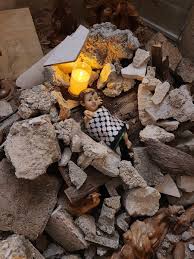
Here’s his Xmas creche
Here’s Pope Francis with his Jesus
In a keffiyeh-lined crib:
This year
Listen
To these holy men
And to Yeshua’s silenced voice
In the Sacred Land
Of Palestine.

Once again,
The real
Christmas Story
Is unfolding
There
Before our very eyes.
I’m always disappointed with Democracy Now’s (DN) coverage of Syria. Its reporting on the fall of the country’s president, Bashar al-Assad was no exception. It described Assad’s deposition as primarily a triumph of freedom and the will of a brutally repressed people.
Absent from DN’s narrative was the straightforward truth that the fall of Assad was the fruit of another regime change operation. It was part of the U.S. plan announced in 2001 to depose seven governments in five years, viz., Iraq, Afghanistan, Libya, Somalia, Sudan, Syria, and Iran.
Though the American timetable was overly optimistic, with the change of regime in Syria, the U.S. has succeeded in hitting six of its seven targets. Only Iran’s government remains in place.
Let me show you what I mean by summarizing DN’s account, contrasting it with its counter narrative, and sketching the way U.S. regime change operations work.
The Official Syrian Story
For years DN’s usually critical founder, Amy Goodman, has for some reason sided with the United States and Israel by uncritically repeating their official story about the Zionists’ neighbor to the north. It tells us that:
Bashar al Assad is a brutal dictator who succeeded his dictator father to rule Syria with an iron fist for the last half century and more.
He has not only claimed absolute power in Syria,
But has run an extensive secret prison system there (a “human slaughterhouse”) where captives are systematically mistreated, tortured, and held without charge.
His use of chemical weapons against those objecting to his rule is well documented by independent witnesses such as the Syrian Civil Defense Organization, the “White Helmets.”
For all these reasons, the U.S. and Israel have long held that “Assad must go.”
“Moderate rebels” have recently transformed that imperative into facts on the ground. Thankfully, they have successfully overthrown the hated dictator.
Since his removal from office, his brutality and consequent unpopularity have received ample testimony and denunciation by ordinary Syrians who are universally celebrating his fall from power.
Thus the U.S. and Israel (as champions of democracy, just war, and humane incarceration, and as opponents of torture and the killing of innocent civilians) have triumphed once again in yet another mid-east country.
The triumph mirrors what they have accomplished so idealistically and benevolently in Iraq, Afghanistan, Libya, Lebanon, Sudan, Somalia and other countries benefitting from their wars fought for democracy and peace.
That’s the official line DN’s Amy Goodman consistently presents and/or implies.
A More Complete Picture
However, what Goodman’s account fails to explore are its following contradictions that would have us forget that:
The foreign powers advocating and celebrating the end of Assad’s cruelty (i.e., Israel and the U.S.) are the current perpetrators of genocide in Palestine. Arguably, that deprives them of ability to convincingly champion human rights in any forum. It demonstrates that they have no concern about civilian deaths, secret prisons, unjust torture, democracy, freedom, or peace.
In fact (according to George Galloway) during its war on terror, the U.S. used Syrian prisons as black sites to which they rendered “terrorists” for torturous interrogation.
Moreover, the “moderate” agents fulfilling the U.S. and Israel’s imperative to remove Asad from power are successors to the very “terrorists” responsible for al-Qaeda’s 9/11 attacks 23 years ago).
That is, while designating Syria as a “state sponsor of terrorism,” the U.S. has once again allied itself with al-Qaeda as it had in Afghanistan during Russia’s war there (1979-1989).
Additionally, the U.S. has crippled the Syrian economy by illegally occupying its eastern oil fields since 2014 effectively stealing its oil revenue since then.
While Israel has similarly occupied its neighbor’s Golan Heights.
Syria’s economy and population have suffered severe hardships under a U.S. sanctions regime that started in 2011 and whose effects worsened following a massive earthquake in February of 2023. For years they’ve had to function on the provision of a single hour of electricity each day.
Civil Discontent in Syria
As for the testimony of Syrians applauding and celebrating the fall of Asad . . .. It too demonstrates the effectiveness of standard American policy against designated enemies whose political “regimes” the U.S. wishes to change. That policy never deviates from the following procedure:
Vilify the regime leader as the latest incarnation of Hitler.
Under the pretext of punishing him, use sanctions, economic blockades, bombing, propaganda, bribery, election interference, terrorism, and internal subversion whose real purpose is to make the lives of locals so miserable
That they will arise,
Overthrow the regime in question,
And celebrate the victory as the triumph of democracy.
This is the standard policy followed not only against Syria, but against official enemies such as Cuba, Nicaragua, and Venezuela.
The subversion invariably causes the threatened governments to adopt their own counter-policies that the U.S. and its allies then describe as authoritarian, oppressive, and brutal. The policies include imprisonment of compromised political opponents, jailing and mistreatment of terrorists (no harsher btw than the mistreatment of prisoners in Israel and the U.S.), and restrictions on (usually foreign allied) press along with fifth column civil and religious organizations. All these government actions provide further evidence of the illegitimacy of the regimes in question.
They also provide well-meaning news sources like Democracy Now with reasons to uncritically repeat imperialist talking points.
Conclusion
Listening to Democracy Now’s account of a people’s triumph in Syria after more than a half century of dictatorship made me think of Cuba. As a friend of the revolution there and as a frequent visitor to the island, I couldn’t help thinking how in the case of a successful uprising there (God forbid!), a similar sort of account might be concocted.
There’d be the same people dancing for joy in Havana’s streets and the same people saying on camera how relieved they are that the hated regime had been deposed. There’d also be the same ex-pat Cuban professors from prestigious U.S. universities sharing the joy and supplying historical details about the brutalities of Castro’s legacy.
Misinformed viewers would be led to conclude “Thank Goodness Cubans are finally free!”
But if the current Syrian template were followed, those viewers would never be stimulated to question the official story. They’d never be reminded of the disastrous effects of 60 years of sanctions, blockade, and acts of terrorism against the state. They’d never know about attempted assassinations of the country’s president. Neither would they think critically about the effect of anti-Cuban propaganda on their own psyches.
The point I’m trying to make here is that questions should always be raised about official stories concerning designated enemies of discredited imperialist countries like the United States and Israel.
They should be asked as well when perpetrators of genocide decry the human rights record “dictators” carefully selected from a long list of tyrants routinely supported by the complaining parties and when the black sites and “slaughterhouses” of the offending dictators have been used by their accusers themselves.
Yes, critical reporters should be able to identify such contradictions.
Simply repeating “the official story” helps no one.
Donald Trump’s landslide victory last month and his repeated promise to end war in Ukraine has Washington neocons quaking in their boots. How can they save their beloved Project Ukraine and prevent peace from breaking out on Russia’s border?
That’s the question Foreign Affairs (FA) tackled this week in an article by Elie Tenenbaum and Leo Litra. It’s entitled “Ukraine’s Security Now Depends on Europe.” The piece was marked by significant departure from the familiar “official story” on Ukraine. Yet it retained enough of that story’s elements to virtually render impossible reasoned discussion about ending the Ukrainian debacle.
The Official Story
To begin with, the FA article tells the story that aficionados of Foreign Affairs, the New York Times, and Washington Post have been programmed to accept. Taking its cue from the White House, the story holds that Putin is the aggressor in Ukraine. He cannot be trusted, lies habitually, routinely breaks promises, and remains unconstrained by international law.
Accordingly, everyone knows that his attack on Ukraine was unprovoked, and that Russia had been raining missiles on terrorized Ukrainian armed forces in the Donbas since 2014. It was Putin who backed out of the Minsk Accords as well as voiding the Istanbul peace framework in March of 2022. Putin also obstinately refuses to consider peace negotiations even though his army has suffered casualties by the hundreds of thousands – far more than his Ukrainian opponents. Moreover, Russia’s economy is crumbling while its citizens generally do not support the war effort.
That’s the Official Story. It’s the one largely repeated by Tenenbaum and Litra.
A Competing Narrative
However, the story’s elements are contradicted point by point by highly credible scholars, diplomats, ex-military and CIA officials and independent journalists. A short list of the latter includes John Mearsheimer, Jeffrey Sachs, Colonel Douglass MacGregor, Scott Ritter, Ray McGovern, Alexander Mercouris, Brian Berletic, and Chris Hedges.
All these maintain that a U.S.-led NATO provoked the war in Ukraine after completely ignoring Vladimir Putin’s peace proposal advanced in December of 2021. Moreover, Russia’s invasion mirrors what the United States would do – in fact what it has done – in similar circumstances. Recall the 1962 Cuban Missile Crisis. Remember America’s many violent invocations of the Monroe Doctrine to protect its interests in its Latin American “backyard” by direct invasion, proxy wars, and bloody regime changes.
According to the analysts just mentioned, it is the U.S. and NATO that lie habitually and cannot be trusted. In fact, the whole Ukrainian conflict is based on a broken promise by U.S. Secretary of State, James Baker, to Soviet President Mikhail Gorbachev in 1990. It said that NATO would not expand even “one inch” towards Russia.
Then (as admitted by German ex-prime minister Angela Merkel) NATO further tricked Russia into signing the Minsk Accords to provide time for Ukraine to build up its military for confrontation with its neighbor. According to Merkel, NATO had no intention of observing either Minsk I or Minsk II.
Additionally, in December of 2021, when Russia offered NATO those terms to prevent the Kremlin’s invasion of Ukraine, the U.S. refused to even consider the proposal. Two months later, after only one month of Russia’s “Special Military Operation,” and after Ukraine and Russia had initialed accords to ensure the former’s territorial integrity in exchange for neutrality on Ukraine’s part, NATO persuaded its protégé to fight on rather than finalize the accord.
The result of such deceptions has been complete catastrophe for Ukraine. Russia’s strategy of attrition has claimed more than 600,000 lives and seriously wounded 100,000 more. As a result, Ukraine is running out of men, its economy is in freefall, and Russian troops are moving relentlessly westward by kilometers every day. Meanwhile, Russia’s economy is flourishing despite the war generally supported by its citizens. There is no way Ukraine can bring Project Ukraine to a successful conclusion.
Cracks in the Official Story
Up until recently, NATO’s official story held unmovable sway. However, the FA article considered here exhibits important concessions to the unofficial account. For instance, Tenenbaum and Litra admit that: by all accounts Ukraine is losing the war as Russian troops rapidly move towards Kyiv. In fact, it seems nearly impossible to reverse this desperate situation since Ukraine and its allies have not only run short of weapons but also, of soldiers who are getting killed and wounded at unsustainable rates. Additionally, the Russian air force and air defense mechanisms are unmatched by Ukraine. Kremlin’s troops also far outnumber the Ukrainians while using and replacing their weapons at a scale Ukrainian allies cannot match.
In this dire situation, it is time for negotiations on terms NATO (not Russia) must dictate to possibly include: (1) vastly increased and decades-long economic and military aid to Ukraine, (2) a ceasefire that temporarily freezes current positions of both the Russian and Ukrainian front lines, (3) granting Ukraine NATO membership before hostilities cease or postponing the country’s entry into NATO for 10 to 20 years, (4) the deployment of a NATO peacekeeping force to ensure the frozen hostilities, and/or (5) more extensive intervention by multinational NATO land, sea, and air forces to act as a Security Shield or Guarantor Force against future Russian threats.
The problem is however (even for Tanenbaum and Litra) that absent a “significant military defeat or internal political change,” Moscow will never accept such terms, but is likely to insist instead on settling the war on the battlefield.
Nonetheless the authors hold that the Russian president may come to the negotiation table because: his Special Military Operation is unpopular at home. His army has suffered tremendous battlefield losses. His stockpile of Soviet Era weapons is rapidly diminishing. The Russian economy is overheating while public spending, inflation, and interest rates are exploding.
Conclusion
Do you see how the Official Story is weakening and now finds itself on the shakiest of grounds? It has finally made important concessions to its unofficial counterpart. It admits that Ukraine is losing the war, that it is getting weaker, and Russia is getting stronger.
On the other hand, FA’s insistence on the remnants of the Official Story render virtually impossible intelligent discussion of Ukraine’s future. Depending on one’s source of information – mainstream or alternative – it becomes a kind of “he said, she said” debate over details that are becoming increasingly irrelevant. Practically speaking, it matters little now who started the war, who backed out of agreements first, who’s lying, and who’s telling the truth. What matters now are facts on the ground. And all of them favor Russia.
So, given new agreement on the conflict’s inevitable direction, and given the promises of Mr. Trump, it remains unclear why Ukraine would continue sacrificing its soldiers for no good end.
After all, Ukraine lacks leverage in any negotiations that include proposals for Ukrainian inclusion in NATO. Membership now or ten years from now is a non-starter as far as the more powerful Russians are concerned. Russians are in the driver’s seat now and it must be remembered that a major purpose of their SMO was to prevent Ukraine from joining NATO.
Also, it is unclear why Tanenbaum and Litra think that a NATO peacekeeping force would be acceptable to Mr. Putin. Why not China and North Korea?
Yesterday’s posting evoked a very thoughtful response from a faithful and highly valued reader of this blog. He apparently read my remarks as endorsing the use of nuclear weapons by Russia in response to attacks against that country — attacks supported and directed by the U.S.
I sincerely apologize for giving that impression.
To clarify, let me say the following:
Nuclear weapons are categorically immoral.
No human being (Not Biden, Trump, Jake Sullivan, Antony Blinken, Rob Bauer, Vladimir Putin, or Xi Jing Ping) has the right to use (or threaten the use of) nuclear weapons that will cause the end of humanity.
This means that the reigning deterrence agreement between nuclear powers involving “mutually assured destruction” (MAD) is also unquestionably immoral.
Yet unbelievably, many academicians, politicians, moralists, and military leaders praise such deterrence (coupled with disarmament agreements and pacts limiting the number and explosive force of nuclear weapons) as the most effective way of avoiding nuclear war.
As a result (and quite irrationally), MAD represents the status quo that politicians of all the world’s nuclear powers have endorsed. It embodies the tragically accepted “rules of the game.”
Shamefully, NO ONE among world “leaders” speaks (or apparently thinks) beyond the parameters of MAD.
Nor do they evidence a willingness to engage in nuclear disarmament talks or to sign pacts limiting weapons design or deployment. (In fact, the U.S. has unilaterally withdrawn from several previously signed pacts.)
This means that provocations of one nuclear power against another are completely reckless, irresponsible, and insane, since (according to the “rules” of the MAD game) such provocations can easily lead to nuclear response.
More specifically, though the present conflict in Ukraine ostensibly involves a war between Russia and Ukraine, it is clearly a proxy war between the United States and Russia.
Yet U.S. insistence on provoking the nuclear power, Russia, with missile attacks that are impossible without direct logistical, targeting, and ordnance supplied by the United States and other NATO members exposes a level of insanity that would be unprecedented
If it weren’t for the fact that the United States is the only country in the history of the world that has ever actually used nuclear weapons (twice).
In these circumstances, it is Russia led by Vladimir Putin that has shown restraint.
And it is the Biden administration that is engaged in irresponsible escalation.
It is the world’s acceptance of its MAD “leaders” that makes it all (im)possible.
I never ever thought I’d write these words. But I find myself desperately wishing for the arrival of the Donald Trump presidency. My driving force here is my love for my children and grandchildren. For their sake, Trump’s advent can’t come soon enough. I don’t want them to die in nuclear war.
As I’ve written elsewhere, my hope is not founded in admiration for Mr. Trump. Far from it. I consider the man a moron unfit for the U.S. presidency.
But he seems to be our only hope of avoiding World War III and the end of humanity – an agenda recklessly pursued by the lame duck Biden administration so recently and so decisively rejected by the American electorate.
Have you seen what that old fool is doing? Do you realize the threat his utter stupidity poses to our children and grandchildren?
He’s trying to “Trump-proof” his insane and ill-fated Project Ukraine.
After having repeatedly rejected Russian attempts to resolve the project’s underlying issues (even before Mr. Putin’s invasion), and after more than a million casualties resulting from such obstinacy, Genocide Joe is trying to transform his failed project into World War III.
His “reasoning” seems to be that such transformation would tie Donald Trump’s hands. That is, despite his repeated promises to end the Ukraine War 24 hours after assuming office, the new old fool would find himself obliged to see it through to its suicidal end, thus dooming ourselves, our children and grandchildren.
That’s the problem. The “End” of World War III will be THE END of us all!
For Ukraine!!
It’s all so insane.
To implement the insanity, the senile old man with one foot already in the grave has:
Allowed Ukraine to invade Russia’s Kursk Region
Given Zelensky “permission” to attack targets deep within Russia.
Directly involved the U.S. and its NATO allies in targeting those attacks.
Permitted U.S. military brass to speak of the possibility of direct U.S. “preemptive” strikes against Russian targets.
Allows NATO “allies” to threaten fielding “boots on the ground” in Ukraine which remains the most corrupt government in Europe.
None of this is even remotely necessary.
Imagine U.S. reaction to similar events on our border. Imagine if Russia or China struck an alliance with Mexico or Canada, poured in arms and trained their allies specifically for conflict with the United States. Would the U.S. stand by idly?
Of course it wouldn’t. Of course it didn’t during the 1962 Cuban Missile Crisis.
This is not complicated. It’s simply crazy. It represents complete insanity on the part of “leaders” who should be put in jail for even considering such hypocrisy and mass murder. I can’t wait for January 20th.
I’m not yet sure what to think about last Tuesday’s election results. Surprisingly, I find myself ambivalent and guardedly hopeful.
On the one hand, I feel strong foreboding about the Trump victory. I have nothing but painful memories of his last term. It was tough to wake up each day to the crudity, mendacity, stupidity, self-promotion, and sheer ignorance of the man. As a result, like many others, especially at the beginning, I experienced great relief returning to a kind of normalcy under Joe Biden.
But then as that “normalcy” kicked in, I found that horrifying too. Distressingly, there are those billions and billions and billions spent on a war in Ukraine whose reasons were impossible for me to understand. How was Ukraine our concern? I mean, most Americans can’t even find it on the map. Additionally, by all accounts its government is incredibly corrupt. Historically, it has been consistently associated with Nazism. Ukraine seemed far from our business, especially when we have so many problems at home.
I’m referring to huge income gaps between rich and poor, to decaying cities, roads and bridges, low minimum wage, lack of universal health care, college loan indebtedness, rampant homelessness, and incoherent immigration policy. Why did the Biden administration find it so easy to find billions for Ukraine, but not for us and our problems?
Then came the genocide in Gaza! At the very least, it revealed the hypocrisy of Democrats ostensibly concerned with women’s rights, and racism, but supplying weapons to kill mothers and their children in Gaza. Clearly the administration felt differently about Palestinian women and children than about their American or Ukrainian counterparts. Isn’t that sexism? Isn’t that racism? Isn’t it politically suicidal?
Mrs. Harris promised more of the same. During her ineffective campaign she repeatedly refused to distance herself from anything Genocide Joe continues to implement in the Middle East. Doesn’t that make her a genocider too? Of course it does!
But won’t Trump just give us more of the same as well? Probably. But maybe not.
So, to clarify my own ambivalence about Tuesday’s election results, I decided to make a list of Trump’s pros and cons. Here’s how it came out:
Trump’s Negatives
There are so many! But here’s the short list:
In general, he’s crude, superficial, and uninformed.
He’s a pathological liar, e.g., about immigrant crime rates and their eating pets.
His only true accomplishment during his first term was to give gratuitous tax breaks to the world’s richest people.
He totally mishandled the COVID 19 outbreak. As a result, more Americans died than citizens of any other developed country.
His punitive policies against Venezuela, Nicaragua, and Cuba have increased the immigration situation he decries.
More specifically, he repeatedly tried to overthrow the Venezuelan government ridiculously installing U.S. puppet Juan Guaido to replace Nicolas Maduro.
He’s a climate change denier
He’s a champion of the fossil fuel industry’s super polluters.
He exhibits no understanding of the dangers of nuclear war. (Remember his wondering “If we have nuclear weapons, why can’t we use them.”)
Like Biden and Harris, he’s anti-Palestinian and an enthusiastic supporter of Israel’s genocide.
He blames U.S. unemployment and low wages on immigrants and the Chinese rather than on the decisions of his capitalist friends to offshore American jobs.
He thinks that tariffs hurt the Chinese, when they are covert taxes on American consumers, while increasing inflation and funneling the surcharged money to Washington.
He’s disrespectful of women and has been convicted of rape by a jury of his peers
He was a friend of Jeffrey Epstein.
He encouraged the January 6, 2021, assault on our nation’s capital.
He’s likely to incorporate into his administration neanderthals like Mike Pompeo and Marco Rubio.
Trump’s Positives
Believe it or not, there are a few. Here’s the longest list I can think of:
Trump’s disliked and vilified by the Washington establishment and the mainstream media. (Indicating that he can’t be all that bad).
His landslide election has exposed widespread discontent with the economic and political status quo.
He’s a loose cannon. He and his MAGA followers form the closest thing to the third party that America requires.
His “party” has succeeded in uniting large swaths of previously hopelessly polarized population segments who somehow realize that they have more in common with each other than what drives them apart – including women, African Americans, and Hispanics.
He promises to incorporate into his administration anti-big-pharma, Robert F. Kennedy Jr., war critic, Tulsi Gabbard, and Putin interviewer Tucker Carlson.
He’s willing to negotiate an end to the Ukrainian war.
He’s highly skeptical of NATO.
His vice-president is J.D. Vance has been described by Robert Barnes as “the most war skeptical and pro-labor Republican office holder in the last 50 years.”
Beyond that and unlike the Biden administration, he’s proven willing to dialog and “deal” with America’s designated enemies including North Korea’s Kim Jong Un and Russia’s Vladimir Putin.
He promises to open sealed government documents (and their can of worms) on the JFK assassination.
And (most importantly) his election may drive neo-con Democrats to repudiate their efforts to out-Republican Republicans and to reappropriate their identity as Roosevelt New Dealers.
Conclusion
Well, there you have it – the pros and cons of Trump’s triumph as I see it. What do you think? Am I being naïve and too optimistic? Am I whistling past the graveyard? Can you add to my lists? Do you care to refute my reasoning?
Well, it’s happened. My practice of Tarot reading has converted me into a satanist.
On the one hand Tarot has caused me to recognize that the God I was raised to worship (and to preach as a priest) is more like the devil depicted in Tarot’s 15th Major arcana card.
And on the other hand, the cards have helped me see that the devil represents a suppressed aspect of my dark side that (in the understanding of Carl Jung) contains a kind of gold I’m being called to mine. In some sense, Satan is my friend.
All of this has led me to reject the God of my youth (and to some extent of my priesthood) while embracing as a quasi-friend Satan himself.
Let me explain.
I
The Devil Card
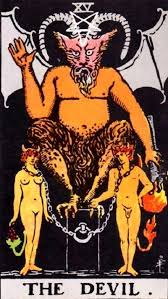
To begin with, here’s the Devil as depicted in the Rider, Waite, Smith (RWS) Tarot Deck.
What do you see here?
Straight away, I notice that its number 15 stands for a trifecta of strife (3 X 5 – with 5 being the Tarot’s number of conflict). The card depicts conflict with (1) the world, (2) the flesh, and (3) the devil himself.
Next, I see that black is the card’s dominant color – representing one’s dark side, death, destruction, and negativity.
The main figure in the card is a satyric monster half man and half beast. His face is fear-inspiring with monstrous horns jutting from his head. His right hand is raised in a mudra which says, “what you see is what you get.”
An inverted pentagram (which in upright form represents virtue and good) forms the monster’s “halo,” but in its inverted form is just the opposite.
In the card’s depiction, the monster reigns over a naked man and an unclothed woman. The heads of both are horned – a clear connection to the horned devil’s mind. The female figure’s tail is tipped with grapes, a vineyard sign of pleasure and intoxication. The tail of her gender opposite is inflamed directly from the torch the devil holds inverted in his left hand. The man’s passions are on fire in the presence of the disrobed woman.
Both the man and the woman are chained by their necks to the pillar from which the monster presides. The chains are loose and could easily be removed. But evidently, the humans either don’t perceive this or don’t want to escape their bondage.
In summary, the card portrays the human body and sexuality as somehow problematic. Both are intimately connected with the Spirit of Evil, with enslavement, and ambiguity about the whole affair.
II
God As Enemy
Personally, the more I contemplate the card, the more I see Christianity’s traditional God rather than the devil. That God was presented as creator, lawgiver, judge, condemner, and punisher.
He was fear-inspiring, wasn’t he? After all, his principal concern was understood as connected with the “sins of the flesh.” And he made us all feel guilty (or at least uncomfortable) with sexual thoughts, words, and deeds.
All of that flew in the face of common-sense recognition of sex and propagation of the species as humanity’s second most powerful drive (after self-preservation).
It was as if devilish priests and theologians had transformed an unparalleled good into an unparalled evil to keep penitents under their control, coming to confession, and paying for the indulgences that Martin Luther and others found so odious.
III
Satan As Friend
Don’t be turned off by the idea of Satan as friend. It’s quite biblical. For instance, in the book of Job, Satan is portrayed as God’s counsellor. He’s a realist who for instance (in the Book of Job) bets the Divine One that if Job comes on extremely hard times, he will abandon his virtue and show his true colors as just another fair-weather saint.
For his part, Carl Jung saw the devil as representing aspects of God. The former as well as the latter is part of the Life Force. As a psychological phenomenon the devil embodies suppressed dark forces that are part of every human personality. In Jung’s sense, he’s the “Left Hand of God.”
Think of what we’ve been taught about the “Seven Deadly Sins.” Tradition has it that they’re pride, greed, envy, anger, lust, sloth, and gluttony. None of us wants to acknowledge that such forces are inevitable parts of our personalities. So, we spend a great deal of time pretending they belong to others but not to us. We spend our life force suppressing their influence on us. Inevitably though they bubble to the surface and express themselves periodically.
Jung calls us not only to face our inner destructive forces, but to embrace them. There’s gold in our dark side, he teaches.
What did he mean by that? Yes, he acknowledges that in the extreme any one of the Seven Deadly Sins can destroy our lives. But under conscious control, they can also enrich us with the gold they contain. For instance, properly acknowledged, accepted, and controlled
Pride can be a source of self-esteem that preventing one from acquiescing to abuse by the disrespectful.
Greed under control can cause workers to organize in pursuit of higher wages and safer working conditions.
A productive amount of Envy can drive us to imitate the Christ, and saintly figures like Gandhi, King, Malcolm, Dorothy Day, Rosa Parks, and Mother Theresa.
Justified Anger can lead us to demonstrate against the genocide now perpetrated by Zionists and the United States in Palestine.
Lust can help us appreciate the gift of sex and the pleasure it brings.
Holy Sloth can keep us from endorsing our culture’s worship of “productivity,” the rat race, and overwork. It can drive workers to organize for more time off, longer vacations, and family leave for new parents.
Gluttony can help us become slow food cooks and appreciators of wines and spirits. It can turn us against fast food saturated with sugar and salt.
IV
Conclusion
So, the next time the devil card turns up in your Tarot reading, don’t be frightened. It can serve as a reminder that God is not primarily creator, lawgiver, judge, condemner, and punisher. All of that is diabolical. Instead, the Divine One is the total of all the energy in the universe and in the universe of universes. That includes the energy of consciousness even to the extent that She is aware of each one of us and can be addressed as Thou. She wants only the fullness of life for each of us.
On the other hand (God’s Left Hand?) Satan is in some sense our brother and friend. True, he is never satisfied with temperance, harmony, and balance (Tarot’s 14th major arcana card). However, there is gold in his Seven Deadly Sins. With controlled expression, they can drive us towards healthy self-esteem, just recompense for our work, the idealism of imitating the Christ, unwillingness to endorse genocide, an appreciation of sexual pleasure, the joy of doing nothing, and appreciation of the gifts of food and drink.
The Great Gustavo Gutierrez died this week. He transitioned as a 96-year-old giant whose A Theology of Liberation: History, Politics, and Salvation (1971) popularized and spurred the most important theological movement of the last 1700 years (i.e. since Constantine in the 4th century). In fact, liberation theology (LT) might well be described as responsible for the West’s most influential intellectual and social developments of the last 175 years (i.e. since the publication of the Communist Manifesto in 1848). United States and Vatican fierce opposition to LT testifies to its impact.
Think about it. Without liberation theology it is impossible to account for Salvador Allende’s rise to power in 1973 or the triumph of Nicaragua’s Sandinistas in 1979, or the power the FMLN in El Salvador had and continues to enjoy today. The Zapatista movement in Mexico is also intimately connected with liberation theology. Even more, without reference to liberation theology, it’s impossible to fully understand the rise of new left governments throughout Latin America. All of them are indebted to liberation theology and its power to motivate the grassroots.
Perhaps more surprisingly: apart from LT, one cannot fully understand the prominence of conservative evangelicals in the United States. That’s because (as we’ll see below) political support for their movement was part of the Reagan administration’s strategy to defeat liberation theology which the White House and the Pentagon termed a national security threat. Their fear of LT mirrored that of the Vatican which ended up cooperating with Washington’s war against it.
Many are convinced that Washington’s and Rome’s anti-LT war was successful. That’s because the U.S. systematically assassinated its prophets along with hundreds of thousands of its adherents in a massive conflict that Noam Chomsky called “the first religious war of the 21st century.” The sheer terrorism of the U.S. response plus an equally systematic offensive against LT within the Catholic Church itself deprived liberation theology of its best leaders, misinformed and intimidated the grassroots, and silenced many more. Nonetheless LT has changed the world. It has changed the church and Christianity in general.
But what is liberation theology? And why was it so threatening to the powers-that-be, both political and ecclesiastical? What steps were taken to defeat it? And why should believers be so grateful to theologians like Gustavo Gutierrez?
Liberation Theology Defined
Simply put, liberation theology is reflection on the following of Jesus of Nazareth from the viewpoint of the poor and oppressed. More accurately, it is reflection on the following of Jesus the Christ from the viewpoint of those among the poor who are committed to their own liberation. That is, LT begins from a place of commitment – to a world with room for everyone. In itself, it represents a popular movement, a solidarity movement for social justice.
Liberation from what? In a word, from colonialism and from the neo-colonialism represented today by the forces of corporate globalization. Those forces have nearly half the world living on $2 a day or less. They’ve concentrated the world’s wealth in the hands of a sliver of 1% of the world’s population. According to UN statistics, eight billionaires own as much as 50% or humanity. As a result, at least 25,000 people including 10,000 children die of preventable starvation each day. In the eyes of liberation theology’s protagonists, that’s sinful and runs entirely contrary to the teachings of Jesus of Nazareth.
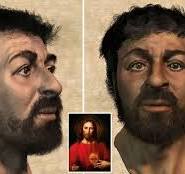
And what were those teachings? (This is the heart of liberation theology.) They were first of all those of a man recognized by the impoverished protagonists of liberation theology as someone like themselves. He looked like them. According to experts in the field of forensic archeology, he resembled poor mestizos everywhere in Latin America. He probably stood about 5’1’’ and weighed about 110 pounds. His skin was brown. He was a laborer, not a scholar; his hands were calloused.
Ironically, Jesus also possessed characteristics that mainstream Christians often find repulsive and ungodly. He was the son of an unwed teenage mother (Mt. 118-22; Lk. 1:26-38). He was homeless at birth (Lk.2:7). If we are to believe Matthew’s account, Jesus became an immigrant in Egypt (Mt. 2:13-15). The good people of his day called him a drunkard and the companion of prostitutes. They expelled him from his synagogue because he didn’t seem to care about the 10 Commandments, especially the most important one – the Sabbath law. (For a Jew such excommunication and the shunning it entailed were like a death sentence.) The religious authorities said he was a heretic and possessed by the devil. The occupying Roman authorities identified him as a terrorist. They arrested him. And he ended up a victim of torture and of capital punishment carried out by crucifixion – a means of execution the Romans reserved specifically for insurgents. He was not the kind of person mainstream Christians usually admire. He was far too liberal to merit their approval.
Jesus was clearly a feminist. Many of his disciples were women. He spoke with them in isolated places. He actually forgave a woman caught in adultery, while implicitly criticizing the hypocrisy of patriarchal law which punished women for adultery and not men. And Jesus refused to recognize his contemporaries’ taboos around segregations. He crossed boundaries not only dividing men from women, but Jew from gentile, lepers from non-lepers, and rich from poor.
He couldn’t have been more liberal. In a sense he was an anarchist. He honored no law that failed to represent the loving thing to do. His attitude towards the law is best summarized in his pronouncement about the Sabbath. “The Sabbath was instituted for human beings,” he said, “human beings weren’t made for the Sabbath.” This was pure humanism placing human beings above even God’s holiest law. Again, it was anarchistic.
Jesus’ teachings were politically radical as well. They centered on what today is called social justice. As such they infuriated his opponents but were wildly inspiring to the poor and oppressed. His proclamation was not about himself, but about what he called “The Kingdom of God.” That was the highly charged political image he used to refer to what the world would be like if God were king instead of Caesar. In that kingdom everything would be turned upside-down. The first would be last; the last would be first. The rich would be poor; the poor would be rich.
Subsequent reflection by followers of Jesus in the Book of Revelation teased all of that out and drew the conclusion that with the dawning of God’s kingdom, the Roman Empire would be destroyed and replaced by a new heaven and a new earth entirely unlike empire. There (as indicated in the Acts of the Apostles) wealth would be distributed from each according to his ability to each according to his need. There would be room for everyone. If that sounds like communism, it’s because, as the Mexican exegete Jose Miranda points out, the idea of communism originated with Christians, not with Marx and Engels.
U.S. Opposition to LT
Those connections with Marxist analysis go a long way towards explaining resistance to LT by the U.S. government as well as within the Catholic Church.
That liberation theology dared to enter the mythological arena the right had long dominated virtually without rival astounded and infuriated the empire. Peasants throughout the subjugated world found the new explanations of God, Jesus and the gospels entirely empowering. Everywhere throughout Latin America they formed biblical circles, and those circles issued in social movements for justice.
In response, the Rockefeller Report of 1969 already identified liberation theology as a threat to the national security of the United States. By 1987, the Latin American Military Chiefs of Staff meeting in conference in Mar del Plata, Argentina, devoted several pages of their final report to liberation theology and the threat it posed to regional stability. In between, in 1979 the first Santa Fe Document advised the incoming Reagan administration that it had to do something decisive about the threat posed by liberation theology. The administration heeded the advice, and responded both militarily and ideologically.
Reagan’s military strategy against liberation theology issued in a bloody war pitting the United States against the Catholic Church in Latin America whose bishops meeting in conference in Medellin Colombia had together dared to affirm a “preferential option for the poor” as their official position. To combat that commitment, the U.S. did exactly what Rome had done in the first three centuries of our era – and for the same reason: faithfully following Jesus who called empire into question and motivated the poor to assert their rights in this world as children of the God of life.
And both the Roman response and the U.S. response to Jesus and his followers resulted in blood baths. Many of us are well acquainted with the best-known martyrs: Camilo Torres, Archbishop Romero, the Salvadoran team of liberation theologians killed at San Salvador’s Central American University in 1989, the U.S. women religious murdered years earlier in that same country, and Che Guevara. (Yes, Che. His spirituality was secular, but it was no less spiritual or liberationist than any of the others.) And then the unending list of martyrs in this war against the Catholic Church – 200,000 in Guatemala, more than 100,000 in Nicaragua, 90,000 in El Salvador, and literally untold killings and disappearances in Honduras.
In every case, the carnage was a response to social movements inspired by liberation theology. Again, as Chomsky points out, official U.S. military documents show that liberation theology was a major target of those wars. In fact within those same official documents, the Army boasts specifically about defeating LT.
As for Reagan’s ideological response to liberation theology . . . . On his accession to power, CIA psyops began funding conservative alternatives to liberation theology in Latin America and in the U.S. So did business concerns that saw the leftward drift of Latin America as a threat to their presence there. Domino’s Pizza and Coors Brewery were prominent among the cases in point. As a result, evangelicals throughout the region grew rapidly in number, and the recipients of those funds in the United States increasingly identified with Republicans, the “hand that fed them.”
So, the television programs of Jerry Falwell, Pat Robertson, Jim and Tammy Baker, Jimmy Swaggart, and others were beamed into every poor barrio,población, and favela. Right wing churches sprang up everywhere feeding and expanding an already robust evangelical presence in areas once completely dominated by the Catholic Church. The reactionary message was always the same – a depoliticized version of Christianity whose central commitment involved accepting Jesus as one’s personal savior and rejecting communism including the type allegedly represented by the theology of liberation.
All this points up the extreme importance of LT. including being indirectly responsible for the rise of the religious right in the United States.
On the other hand however, and on the other side of the aisle, so to speak, the Obama presidency represented the first U.S. president directly influenced by liberation theology. For 20 years, Barack Obama was part of the congregation of Jeremiah Wright – identified by James Cone, the father of black liberation theology, as the latter’s foremost contemporary embodiment.
Nevertheless, Reagan’s two-front strategy (military and ideological) worked. Revolutionary gains in El Salvador, Guatemala, and most prominently, in Nicaragua were halted and reversed. Militarily, the “Guatemala Solution” was the template. It entailed using military and paramilitary death squads to kill everyone remotely connected with guerrilla movements. According to the Reagan strategy, that included priests, nuns, lay catechists and ministers of the word influenced by liberation theology. The theological strategy worked as well. The slogan promulgated by the Salvadoran military said it all, “Be a patriot; kill a priest.”
Our Debt to Gustavo Gutierrez
Gustavo Gutierrez was by no means the founder of liberation theology. However, he is said to have coined the term in 1968 after the bishops of Latin America adopted as their own LT’s understanding of the Christ event as expressing God’s “preferential option for the poor.” The poor are God’s chosen people, liberationists explained, as testified by the divine choice to incarnate as the poor peasant earlier described.
In a sense then, Gutierrez and the movement he popularized represents a kind of “Critical Faith Theory” comparable to contemporary academia’s “Critical Race Theory.” Like the latter in relation to race, liberation theology seeks to reverse the traditional employment of religion and the Judeo-Christian tradition as tools of oppression meant to drug, pacify, infantilize, and depoliticize their adherents.
In that sense, LT is a kind of anti-theology.
Thank you Saint Gustavo Gutierrez for your life and work.
Just this morning I received an appeal from a colleague of mine at OpEdNewswhere I’m a senior editor. He begged those on his mailing list to please vote for Kamala Harris. He said that allowing Donald Trump to be elected would be disastrous not only for the United States, but for the world. So, please, please vote for the sitting Vice President.
Believe me, I completely understand where my friend is coming from. I too dread the thought of four more years of yet another Trump presidency. For that reason, I’d never vote for him. Neither would I ever vote for a Republican. They’re just too much in the pockets of our country’s richest 1%.
However, I’ve come to realize that the same has become true for the Democrats. They too serve the interests of that same 1%. They’re just Republican Lite. With their colleagues across the aisle, they’ve formed a kind of Uni-Party.
I mean, like the Republicans, the Democrats have shown that they don’t really care about working people, except at election time. The Blues like the Reds care only about their donors.
Think about it: neither party gives a damn about what you or I think concerning Palestinians, raising the minimum wage, fairly taxing the rich and corporations, universal health care, free college tuition, homelessness, cancellation of debt for college graduates, gun legislation, nuclear arms control, closing federal lands to oil interests, a green New Deal, repairing our country’s collapsing infrastructure, high-speed rail, or solving the root problems of immigration. The list goes on. Yes, Democrats sometimes pay lip service to such issues. But that’s about as far as it goes.
Moreover, Democratic foreign policy is indistinguishable from the Republicans. There’s hardly a sliver of difference between them on Israel, Ukraine, or China. Nothing about diplomacy and its inherent need for compromise. Instead, for both parties, foreign policy has been reduced to three elements. Everyone must follow U.S. directives or face bombing, sanctions, and/or regime change. That’s it! Bombing, sanctions, and regime change.
(To give him his due however, at least Donald Trump has promised to end the Ukraine nonsense – the issue that has overridden everything else for the Biden presidency since 2022. Since that time, the U.S. has spent more than $175 billion on Ukraine. $175 billion!! That’s enough to solve all the problems listed above. But all the while Democrats have joined Republicans in claiming that there’s not enough money for addressing those issues – not even for FEMA in the wake of Helene and Milton.)
What I’m saying is America has become a failed state. Its system is not worth participating in. Bent on having our 4.5% of the world’s population controlling the entire thing, it’s completely corrupt. Moreover, completely controlled by money and the military industrial complex, it can’t be reformed. Even if Democrats wanted to address the problems listed above, the Republicans would never let them. Realizing this, instead of owning their working-class identity, the former have decided to become more like the latter. Republican Lite! The result is a completely frozen irreformable system.
And don’t tell me that we can vote ourselves out of this mess. Again, the system won’t let us. I mean, no one’s even talking about eliminating the Electoral College, are they? So, we keep getting “leaders” unsupported by the country’s majority. Seven “swing states” determine the whole thing reducing the rest of us to mere spectators. We’re left wondering which sock puppet the voters in Ohio, Michigan, Nevada, Arizona, Georgia, North Carolina, and Pennsylvania will choose. I live in Connecticut, a solidly blue state. Why should I vote? It’s all a charade.
But here let me slow down. None of what I’ve written so far represents my decisive reason for sitting out this election. It’s simply this: I CAN’T VOTE FOR GENOCIDERS.
Can you?
For me it’s a moral issue. I just can’t do it anymore than I could have voted for that mustached man in Germany nearly a century ago.
For me, apartheid is non-negotiable. Settler colonialism is non-negotiable. But above all, GENOCIDE IS NON-NEGOTIABLE. I can’t support any government committing genocide. And that’s what a Harris presidency promises to continue. So will a Trump presidency.
End of discussion.
But who knows? Perhaps a Trump victory will at last cause Democrats to ask themselves why. It might drive them to realize that Republican Lite doesn’t cut it for working people. It might lead Democrats to unabashedly become the party of Roosevelt’s New Deal, of election reform, higher wages, universal health care, a Green New Deal, just taxation, loan forgiveness, defunding Israel’s genocide, nuclear disarmament, and enlightened immigration policy (that connects asylum seekers with failed U.S. policies such as the War on Drugs and the North American Free Trade Agreement).
Don’t hold your breath though. And buckle up. It’s going to be a rough ride.






 About Things That Matter