(Sunday Homily) Jesus’ Promise: Free Food for Single Moms; Mansions for the Homeless

Ryan

Readings for 5th Sunday of Easter: ACTS 6: 1-7; PS 33: 1-2, 4-5, 18-19; I PT 2: 4-9; JN 14: 1-12.

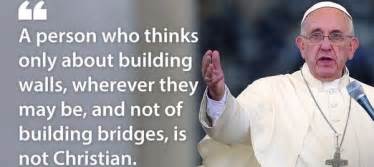
With last week’s passage of Trumpcare in the House of Representatives, one wonders what a “devout Catholic” like Paul Ryan is thinking. After all, Mr. Ryan’s health plan removes coverage from 24 million Americans while offering huge tax cuts to our country’s wealthiest. What God does he worship? What concept of Jesus’ Way does he have?

The question is pertinent because today’s liturgy of the word presents Jesus as identifying himself and his “Way” with knowledge of a God who would never support the House Speaker’s plan. Jesus says “I and the Father are one. Whoever has seen me has seen the father.”

Perhaps Mr. Ryan interprets that to mean that Jesus is God.

He shouldn’t. I mean, saying that Jesus is God presumes that we all know who God is. Actually, we don’t.

Oh, we can speculate. And theologians and philosophers throughout the world have done so interminably. Think of the Greeks and their descriptions of God as a supreme being who is all-knowing, omnipotent, and perfect. Such thinking leads to a concept of Jesus that is totally abstract and removed from life as we live it from day to day. That God is removed not only from the problems of healthcare, but from those of hunger and homelessness addressed in today’s readings.

Those selections do not say that Jesus is God, but that God is Jesus. It’s not that in seeing God one understands Jesus. It is that in seeing Jesus, one understands God. Jesus says, “He who sees me, sees the Father.”

The distinction is important. It literally brings us (and God) down to earth. It means that Jesus embodies God – inserts God into a human physique that we all can see and touch and be touched by.

If we take that revelation seriously, our gaze is directed away from abstract philosophical concepts that enable us to ignore life and the needs of the poor. We’re directed away from “heaven,” away from churches, synagogues, and mosques. Our focus instead becomes a God found on the street where Jesus lived among the imperialized, and the despised – the decidedly imperfect. In Jesus, we find God revealed in the offspring of an unwed teenage mother, among the homeless and immigrants (as Jesus was in Egypt), among Jesus’ friends, the prostitutes and untouchables, and on death row with the tortured and victims of capital punishment. That’s the God revealed in the person of Jesus.

Following the way and truth of that Jesus leads to the fullness of life the Master promises in today’s gospel reading. That fullness involved provision of food and shelter here and now. In fact, that’s been a recurrent theme in our liturgies of the word since Easter Sunday. Take, for instance, today’s first reading from the Acts of the Apostles. It shows us a faith community focused on providing food for single moms and their children. The first Christians worship a God who (as today’s responsorial puts it) is merciful before all else. That God, like Jesus, is trustworthy, kind, and committed to justice.

So we sang our response, “Lord, let your mercy be on us, as we place our trust in you.” In doing so, our thoughts should have been directed towards the corporal works of mercy which the church has hallowed through the ages. Do you remember them?  Feed the hungry, they tell us; give drink to the thirsty; clothe the naked; visit the sick and imprisoned, bury the dead, and shelter the homeless.

In fact, providing shelter – homes for the homeless – was so central for early Christians that it became a fundamental metaphor for the human relationship to God. (Remember those descriptions of early church life in ACTS 2:35 and 4:34, where homes and all property were shared in the primitive church.) So, today’s reading from First Peter describes the early community as a single house whose cornerstone is Jesus himself. Then in today’s gospel, John refers to Jesus’ Father as the one who provides a vast dwelling with many luxurious apartments. You can imagine how such images spoke to impoverished early Christians who would have been out on the street without the sharing of homes that was so important to early church life.

So don’t be fooled by the upside-down version of Christianity that allows politicians and those they trick to turn Jesus and his Way into some abstract after-life doctrine – that allows Jesus’ followers to turn their backs on the sick. That’s the comfortable ersatz faith that believes that Jesus is God. He is not.

Rather, God is Jesus. God is the one reflected in the lives and needs of the poor, the ill, and despised. With Jesus, the emphasis is on this world – on eating together, feeding the hungry, sheltering the homeless, on elimination of poverty, and sharing all things in common. That was Jesus authentic Way – the one followed so faithfully by the early church focused on God’s mercy and the merciful acts it inspires. It should be our Way as well.

It is definitely not Paul Ryan’s way. Don’t allow him to claim that it is.

Peggy & I Study with Franz Hinkelammert in Costa Rica (12th in Series on Critical Thinking)

Franz & Peggy

The next stop on the critical thinking odyssey I’m outlining here was Costa Rica. There I finally met Franz Hinkelammert, whose Global South approach to critical thinking provided the theory I sought to make everything I had learned in Brazil come together. Recall that I had encountered his latest work while in Brazil. (Franz is pictured above with Peggy and me in 1992.)

Franz Hinkelammert is a German economist and theologian. After coming to Latin America in 1976, he lived and worked mostly in Chile. But then the 1973 U.S.-sponsored coup removed the democratically-elected Socialist president of the country (Salvador Allende). The subsequent installation of a brutal dictatorship under General Augusto Pinochet, made Chile extremely dangerous for people like Hinkelammert. So he fled to Costa Rica, where he, liberation theologian giant, Hugo Assmann and biblical scholar, Pablo Richard founded the Department of Ecumenical Research (DEI), a liberation theology think tank. The DEI specialized in preparing grassroots organizers to work for social change throughout Latin America. However, its emphasis was not on “training” for activism, but specifically on analysis and critical thought.

My opportunity to study with Franz came with my second sabbatical in 1992. Peggy and I applied and were accepted as the first North American participants in the DEI’s annual Workshop for Invited Researchers. The eight-week course hosted about 20 scholars from across Latin America. Each of us had a research project whose goal was publication in the DEI’s quarterly, Pasos. Not surprisingly, mine was on critical thinking.

During the workshop, Franz, Pablo Richard, and fellow Chilean, Helio Gallardo were the principal presenters and discussion leaders. In his own lectures, Franz emphasized what is for him an enduring key idea about critical thinking. It is expressed most clearly in his Critique of Utopic Reason and also in his Critique of Mythic Reason. In both, he highlighted the essentially utopian nature of critical thought. Its point, he says, is not simply to analyze arguments for logical fallacies. Instead, it is political. It is essentially utopian – to create a better world by imagining the best possible world. Hinkelammert’s argument runs as follows:

  1. If politics is the art of the possible,
  2. Then a utopian idea of the impossible, but at the same time desirable, is required
  3. Not necessarily as a goal to be implemented
  4. But as a “North Star”
  5. Guiding critical thought and action towards what indeed can be practically accomplished.
  6. No such goal can be arrived at without utopian ideas towards which critical thinking gestures.
  7. Utopian thought comes naturally to human beings.
  8. In fact, critical thought without utopian concepts is itself unconsciously utopian.

Franz illustrates his idea by pointing out that utopias are not at all merely the province of starry-eyed idealists. They are essential for any critical thought intent on beneficial social change. In that sense, Franz’s own North Star for critical thought is the simple idea later articulated by the Zapatista rebels in Mexico as a world with room for everyone. Meanwhile, the capitalist utopian ideal is of a completely free market governed only by Adam Smith’s “Invisible Hand.” That is the guiding constellation under whose direction all mainstream economic theory is fabricated.

Hinkelammert’s argument highlights the difference I’ve been trying to describe between critical thinking as taught in the United States and what I discovered in the Global South. In the Global South, critical thinking is concerned with the big picture – with entire systems, with social analysis of economic and political structures. As explained by Franz and others, it is by no means a matter ferreting out what is now called “alternative facts” or “fake news.” Such concern glosses over the lies embedded in the very parameters of perception which act as blinders for both students and their teachers. In that sense, the critical thinking I had become used to had been literally partial in its ignorance and denial of the experience of the world’s majority who live in the former colonies. From that viewpoint concentrating on logical inconsistencies or falsehoods in arguments divorced from the unexamined socio-economic matrix of capitalism only serves to normalize what should be completely unacceptable to human beings.

For Hinkelammert, that was the insight of Hegel, Feuerbach, and Marx. Marx in particular was a humanist who saw critical thought as focusing on human emancipation from the chains imposed by capitalism and the colonialism on which it depended. Critical thinking, in Marx’s estimation, involved identifying those chains and the steps necessary to humanize all relationships between persons and with nature itself. In theological terms, the mandate is: “Do what God did; become a human being!” That is the project of the type of critical thinking I was now encountering.

That, in fact, became what I subsequently attempted to communicate my students. And I began right there in San Jose. There, by mere coincidence and chance, I began teaching in a Latin American Studies Program (LASP). It was a term abroad for Evangelical students from the United States whose institutions were affiliated with the Council for Christian Colleges and Universities (CCCU). Teaching fundamentalist Evangelicals about colonialism, U.S. intervention in the Third World, and the history of capitalism was a wonderful challenge. Even more so was helping them understand liberation theology.

We clashed, especially at the beginning of our semester-long encounters. And (in terms of the topic at hand) that was because I was coming from the world-centric perspective of liberation theology, while their standpoint was almost exclusively ethnocentric. For them, the United States could do no wrong, and the Bible was to be taken at face value. To criticize the U.S. or to interpret parts of the Bible as myth, legend, or poetry was simply unacceptable.

I, on the other hand, owned the world-centric approach I’m describing here. I took to heart international polls that consistently identified the United States as the greatest threat to world peace.[1] Moreover, my approach to the Bible was informed by the historical critical methodology of modern scripture scholarship.[2]

Such challenges however were mitigated by the reality check the LASP program provided each semester’s cadre of students. I’m referring to four days among the descendants of African slaves in Limon on Costa Rica’s Caribbean coast, as well as two weeks each in Nicaragua, Guatemala, and Cuba. In each of those cases, we more or less followed the practice I had experienced in Nicaragua. In the midst of their studies, students lived with local families and received on-site presentations from indigenous tribal leaders, union organizers, politicians, historians, and church officials – most of whom were not ethno-centrists. Students uniformly described it all as life-transforming. And I’m sure that direct contact with the victims of what bell hooks calls “white-supremacist imperialist capitalist patriarchy” made them more thoughtful about their reactions to world-centric perspectives.

Additionally, at least for me, those LASP trips – especially to Cuba – provided opportunities to observe and judge attempts to implement what Hinkelammert would call critical utopian theory.

(Next week: My learnings in Cuba)

[1] Bennett-Smith, Meredith. “Womp! This Country Was Named the Greatest Threat to World Peace.” The Huffington Post. TheHuffingtonPost.com, 02 Jan. 2014. Web. 16 Feb. 2017.

[2] “What Is the Historical-Critical Method?” The Historical-Critical Method. N.p., n.d. Web. 16 Feb. 2017.

(Sunday Homily) My Granddaughter’s First Communion: What Then Must We Do?

Eva

Readings for the Fourth Sunday of Easter: ACTs 2: 14A, 36-41; PS 23 1-6; I PT 2: 20-25; JN 10: 1-10.

I’m here for the weekend in Westport, CT, at my daughter’s and son-in-law’s beautiful home. The occasion is the First Holy Communion of our 8-year-old granddaughter, Eva Kathryn, whom we all adore. I couldn’t be happier for her.

The event, along with the readings in today’s liturgy of the word, are causing me to remember my own first communion. I’m recalling how my faith has developed since that momentous occasion. It’s making me reflect both on the beauty of childhood faith, and on the challenge of its adult version. If the human race is to survive, I realize, that adult version must prevail.

The difference between early faith and later developments is underscored in today’s readings. They call us as adults to abandon childish understandings of God, to grow up and work for non-violence in a world threatened by the deceit, murder, and general destruction of “a corrupt generation.”

Do you remember your First Holy Communion? I remember mine quite vividly, even though it happened about 70 years ago. I can still picture all of us third-graders at St. Viator’s school on Chicago’s Northwest Side, lining up for procession to the church across the parish campus. The girls, of course were in white dresses with traditional sheer veils. We boys were wearing dark blue “Eton Suits” with short pants. The water fountains in the school hallway where our procession formed were covered with white sheets to prevent any of us from drinking. In those days before Vatican II, even that would have broken our fast and disqualified us from participating in the event we had prepared for so intensely.

I so looked forward to receiving Jesus into my heart. Didn’t you? I firmly believed (as Eva, no doubt, does) that Jesus was actually contained in that snow white wafer. He would enter my mouth and reside in my body until the “appearances of bread” dissolved. Later I would frequently “visit” Jesus in the Blessed Sacrament. I became a “Knight of the Altar” and on occasions like the feast of Corpus Christi, would spend an hour in adoration before the parish’s golden, bejeweled monstrance. As I knelt there, I firmly believed that I was looking right at Jesus as I stared at the white Host encased in the glass “pyx.” One day, during my assigned “holy hour,” I had something like a mystical experience. I felt a special unity with Jesus residing there. I don’t know how to describe it. But I was, for a few moments, transported by a sense of oneness with God. Obviously, I never forgot it. I’ll bet you’ve had experiences like that too.

I wish all of that for Eva Kathryn. My heart went out to her this morning as she spoke of her upcoming First Confession. In some ways, I wish her beautiful faith would never change. But, of course, that’s like wishing she would never grow up. Her faith will inevitably change. Doubts will come. And if she’s like most, she’ll probably eventually throw her faith in Jesus’ “Real Presence” into the same waste basket with Santa Claus, the Easter Bunny, and the Tooth Fairy. It’s all part of growing up.

Too bad. And I don’t mean it’s too bad that Eva’s childhood understanding will someday prove inadequate to the challenges of adult life. As I said, that’s inevitable and good. What I mean is: it’s too bad that she’ll predictably probably stop growing in her understanding of the Christian faith she’s trying to learn about in her Sunday School classes, just as she’s trying so hard to learn her multiplication tables in Montessori school.

I mean, isn’t it shocking that the faith dimension of life – arguably the most important, since deals with life’s meaning –  turns out to be the only one where our 8-year-old understanding is supposed never to change?

That would be like letting Eva say: “I’m satisfied with addition and subtraction; don’t tell me about multiplication or division. And I never want to hear the words ‘algebra,’ ‘trigonometry,’ ‘calculus” or ‘computer science’ even mentioned. That would be shocking and unforgivably childish in itself.

Even more importantly, it would describe exactly what’s wrong with our world. There we’ve been carefully schooled not to think about life’s meaning, especially as it touches questions of social justice, economics, politics, war, peace, and adult spirituality. That’s meant ignoring the world’s most powerful teachers: the ancient priestesses of the Great Mother God, Krishna, the Buddha, Jesus, Gandhi, King, Dorothy Day . . .

The Donald Trumps of the world (and there are a lot of them) are quite content with our ignorance. They’re happy with our refusal to grow up – with our retaining childish understandings of life – especially if growing up would cause us mobilize for social change. They somehow realize that the Jesus story and others I’ve mentioned have revolutionary power. It scares the hell out of them.

Today’s readings remind us of all that. They summon us to answer the question addressed to Peter and his ten colleagues in today’s opening selection from the Acts of the Apostles. It’s what Tolstoy asked in 1888, “What then must we do?” Peter’s answer was the same as Tolstoy’s: “Repent! In the name of the crucified Jesus, save yourselves from this corrupt generation!”

Those words are profound, but so familiar that their challenge can easily be overlooked. They mean: change your consciousness – the way you think; the way you look at the world. Reject everything “this corrupt generation” tells you. Instead, follow the example of Jesus whom, by the way, you’ve just crucified as a terrorist. Reject imperial authority. It’s not Jesus’ Way. (None of that is a stretch. Peter’s reference to “crucifixion” is central. It reminds us that the cross was the method of execution reserved for rebels against imperial Rome.)

To repeat: all of that is pivotal to this day’s readings. However, in the light of Eva’s first communion, there’s a lot more about the way faith changes and develops in adults.

Listen again to Peter’s description of Jesus in the opening reading from Acts. He says, “God has made Lord and Christ this Jesus whom you crucified.” When you think of it, that’s a pretty elementary understanding of Jesus. It clearly distinguishes God on the one hand and Jesus on the other. God elevates Jesus’ status from a crucified rebel to “Lord” and “Christ,” but only (according to this formulation) after Jesus’ execution. Again, that’s a very primitive “Christology,” probably the earliest we have. Scholars say it was formulated around the year 35 and retained in Luke’s Acts of the Apostles which was written much later – probably about the year 70. Here Jesus is a human being later elevated in status.

Contrast that with John’s Christology reflected in today’s gospel selection, written 30 or 40 years later. By that time (as we learn from the prologue to John’s gospel), Jesus has been fully identified as present from the beginning of time with God the Creator: “In the beginning was the Word,” John says, “and the Word was with God, and the Word was God . . .” That seems to mean that by the time John wrote, believers were making no distinction between God himself and Jesus. Quite a change.

There’s still more to unpack here. In today’s reading, John has Jesus identifying with “the Good Shepherd” whom the author of the familiar Psalm 23 (today’s responsorial) had much earlier identified with Israel’s God, Yahweh. Think of the psalmist’s description. God is the original ecologist providing everyone with verdant pastures and clear waters. He gives everyone rest, refreshment, long life, abundant tables and cups overflowing with rich wines. God and (by John’s extension, Jesus) ends poverty (want); he provides shelter for all; he is good and kind. Those words are nothing short of revolutionary. Think of the world we’d create if the planet’s 2.5 billion Christians accepted that Jesus as our Lord and Savior!

Then in today’s second reading from First Peter, the author gets more specific. He identifies Jesus as a champion of justice (“He handed himself over to the one who judges justly”). Jesus (in contrast with John’s “false Christs” and our political “shepherds” today) is truthful. He doesn’t insult or threaten anyone.

And finally, in today’s third reading Jesus identifies himself specifically as non-violent. The false Christs, like the childish ersatz versions the world finds so comfortable, are warlike. In Jesus’ words, they are liars and thieves who slaughter and destroy. On the other hand, the Christ of adult faith is non-violent; he gives abundant life, rather than taking it away.

My prayer is that Eva Kathryn will one day discover that Jesus and accept him into her heart. That she and her post-millennial class of first-communicants will eventually do so, may be our world’s only hope.

My Experience in Nicaragua (11th in a Series on Critical Thinking)

Ortega

Nicaragua taught me so much about the world and critical thinking. All during the 1980s it was the center of news reports every day. President Reagan was obsessed with the country and its president, Daniel Ortega (pictured above). Reagan continually referred to the Sandinista government there as a “Marxist, Leninist, repressive totalitarian regime.” However, he neglected to apply his lofty standards to what preceded it, viz. the Somoza dynasty of three dictators who governed the country brutally with the full support of the United States.

Reagan’s obsession took the form of support for an equally brutal counter-revolutionary force of terrorists called “the Contras” – whose base was the exiled National Guard of the Somoza regime. Reagan famously referred to those killers and drug runners as “the moral equivalent of our Founding Fathers.”

My experience in Brazil along with careful reading of the press and some history had convinced me that the Reagan administration was disseminating what a Great Man would later term “fake news.”  But I wanted to find out for myself.

So in 1985 I found myself in Managua for six weeks. My specific purpose in going was twofold. The first was fact-finding; I wanted to experience life in a revolutionary situation. I also needed to learn Spanish, which was increasingly necessary for my work in liberation theology. That was my second aim. Languages, by the way, are nearly universally recognized as powerful aids to critical thinking. They expand awareness of other cultures, different points of view and ways of expression.

Along those lines, one of the strengths of my training for the priesthood had been language study. In high school it began with Latin my freshman year. Then came French and Greek. All of those studies continued through my sophomore year in college. Next, of course, I had to learn Italian for my years in Rome. Just before that I needed a semester of Hebrew to qualify for theological studies there; so I took a summer course at Harvard. Once in Rome, it became apparent that German would be essential for my doctoral thesis on Jurgen Moltmann and his Theology of Hope. That led to two summers’ study at the University of Vienna. Then I needed Portuguese for my sabbatical in Brazil. And finally, in ’85 it was Spanish in Managua.

For two summers, I studied at Casa Nicaraguense de Español. It had students living with Nicaraguan families, leaving for Spanish class every morning and then studying the Revolution every afternoon. We visited prisons, farming co-ops, and offices of both the Sandinistas and their political opponents. We attended political rallies and demonstrations. The experience was difficult, but invaluable in terms of expanding my horizons and acquainting me with revolutionary thought and practice. Over the next 20 years I would return to the country a dozen or more times. In 1990 I would do so as an Official Observer of the election that defeated the Sandinistas, replacing them with a U.S.-supported party. I edited a book on the topic.

On that first visit, however, I was amazed by the range of books available in Managua that I would never have otherwise encountered. They covered all aspects of Marxism, socialism, history, education, liberation theology – and critical thinking. It was a treasure trove for me. Reading those books acquainted me with a line of thinking “forbidden” to most Americans.

As I said, this first experience in Central America made an extremely important contribution to my political education. It brought me into further contact with the living conditions of working-class people on the receiving end of extremely destructive US Third World policy. The contrast between what I observed in Nicaragua and what our government said about the country was astounding. It pointed to the fundamentally dishonest character of our national leadership. In addition, those books I mentioned underscored the one-sided bias of our mainstream press, scholarship and teaching.

What I learned from all this, along with the other experiences I’ve outlined here so far, has made me terribly suspicious of our government. Revelations connected with the Iran-Contra scandal heightened the suspicion exponentially. I saw clearly that the lies told about the Sandinistas were only the latest in a long string of misleading stories, cover-ups, and paper-overs foisted upon the North American public. Contra-gate, Vietnam and Watergate were the rule, not the exception. Sad to say, they represent the way our government does business.

In the end, I concluded that the burden of proof will always rest with our officials, rather than with our country’s designated Third enemies, including those currently identified as “terrorists.”

(Next Week: Costa Rica and Franz Hinkelammert)

My Study of Liberation Theology in Brazil (10th in a series on critical thinking)

Dom Helder

My study in Brazil initiated a profound change in my understanding of critical thinking. It led me to see that liberation theology itself amounted to a Global South version of that discipline. However, the critical thinking I encountered in Brazil didn’t concern itself with abstract dilemmas and logical fallacies. Instead the Brazilian version addressed problems confronted in the very lives of its protagonists – hunger, poverty, dictatorships, imprisonment, torture, police raids, and the reasons for widespread hunger in an extremely rich and rather thinly populated country.

Neither did critical thinking in Brazil worry about neutrality and balance or with giving equal time to capitalists and their working class opponents. In the minds of its teachers, those problems had long since been settled. After all, in 1964, defenders of capitalism had overthrown Brazil’s democratically elected government. In the 1960s that had been the case throughout the region. In Brazil it meant that by 1984 the country had completed its second decade of a military dictatorship fully supported by the United States. Over those years, vast numbers of priests and nuns, union organizers, university professors, social workers, lawyers, and simple peasants had been routinely imprisoned, tortured and often murdered. Their crimes?  They had demanded land reform, higher wages, health care, education, freedom of speech, and ability to speak freely and organize. No, capitalism in Brazil and elsewhere in Latin America had clearly shown itself to be the enemy of the people.

All of that became very clear for me when, to begin with, I connected with the legendary Brazilian educator, Paulo Freire. Freire’s methodology for teaching literacy had exercised strong influence on liberation theology, and especially on “Base Christian Communities” (BCCs) which following the Second Vatican Council (1962-’65) proliferated throughout the country. My intention was to research those communities as part of my sabbatical assignment.

At the same time, my wife, Peggy was working on her doctoral dissertation on Freire’s work. So she worked in his center every day and every week with literacy teachers implementing his method in Sao Paulo’s favelas. On our fifth wedding anniversary, we had supper with Paulo and his wife, Elsa, in their apartment. Afterwards, he read aloud Peggy’s latest dissertation chapter. I remember him pausing at one point after reading a quotation from his own Education for Critical Consciousness; he said, “Right now I am loving these words!” He was wonderful.

While in Recife, our whole family twice visited Dom Helder Camara, the famous “Red Archbishop” of that huge city in the northern part of the country. I phoned his office to set up the appointment. He answered the phone himself!

Considered a saint even before his death in 1999, Dom Helder was also called the “Archbishop of the Poor.” He once famously observed “When I give food to the poor, they call me a saint. When I ask why the poor have no food, they call me a communist.” With those words, this patron of liberation theology expressed the central question of critical thinking in the Global South: Why are people so poor in the midst of so much abundance?

I informed Dom Helder of my intention to experience liberation theology’s BCCs in Recife. That was during our first visit in his office, while he held our four-year-old daughter, Maggie, in his lap. (I later told her she had been embraced by a saint!) I asked the archbishop to share his thoughts about those communities. He told me, “It would be better for me not to say anything at this point. Why don’t you do your research first? Experience those communities, and then at the end of your visit come back and tell me what you found. Then I might tell you what I think.”

So I followed the saint’s advice. During our family’s weeks in Recife, I participated in several BCC meetings. There I witnessed the kind of critical thinking referenced above. It was the same process that had been prescribed for teaching literacy years earlier by Paulo Freire in his famous Pedagogy of the Oppressed, which I had read while still in Rome.

I consistently found all of that inspiring. Here were absolute giants in the field of critical thought, centralizing their fundamental identities as spiritual beings in order to address in practical terms genuine problems of politics, economy, and personal life. I found such embrace of human political spirituality absent not only in the standard approach to critical thinking familiar to me, but even in the churches of my own experience.

I wanted to know more about the underpinnings of that approach to critical thinking.

To that end, I enrolled in a semester-long seminar taught by liberation theologians, philosophers and scripture scholars I had been reading for years – figures like Argentina’s Enrique Dussel, Chile’s Pablo Richard, Belgium’s Francois Houtart and Brazil’s own Frei Gilberto Gorgulho and Ana Flora Anderson. In the course of the experience, I was also introduced to the work of Chilean economist and theologian, Franz Hinkelammert, who would become for me an extremely important mentor. Significantly, Franz was to later found the international Grupo de Pensamiento Critico (the Critical Thinking Group).

As I listened to these scholars describe history in ways I never had confidence enough to seriously entertain, I found myself wondering, “What is the key to all of this?” I mean, Enrique Dussel described World War II as the “Second Inter-Capitalist War.” What is he talking about? I wondered. Was Hitler really a capitalist? It was a completely foreign thought.

Meanwhile, Frei Gorgulho spoke of Cuba as “the envy of the Third World.” Pablo Richard had just returned from a trip to revolutionary Nicaragua and was full of stories about Anastasio Somoza, the history of U.S. oppression in the country, the Sandinistas, land reform, and the U.S.-supported counter-revolutionary Contras. The positive evaluation of Cuba and the Nicaraguan revolution stood contrary to everything reported in the U.S.

Even more disturbingly, everyone constantly and negatively referenced highly destructive American military interventions in its “backyard” and throughout the world to defend colonialism and what was termed “neo-colonialism.” The whole seminar was scandalized by a picture in the Folha do Sao Paulo of President Reagan and Pope John Paul II sitting together in Rome – both of them smiling broadly. “That photo,” all agreed “will cost thousands of lives in Nicaragua, El Salvador, and Guatemala.” (It was because it implied that the pope endorsed Reagan’s genocidal wars in Central America.)

None of these thoughts would ever be expressed in the United States. But here they were bandied about by these teachers of pensamiento critical as though they were perfectly obvious. And there was no objection from my classmates – most of them priests, nuns and lay theologians.

Again, I wondered, what is the analytic key to this sort of thought.

I later found it was the dependency theory of the German-American sociologist and historian, Andre Gunder Frank. Gunder Frank traced everything back to the history and structures of colonialism and neo-colonialism. I resolved to find out more about that; it seemed essential to this kind of critical thought. I asked for sources. Other than Gunder Frank’s works themselves, my seminar colleagues told me to read Eduardo Galeano’s The Open Veins of Latin America. For perspective on Africa, they recommended Walter Rodney’s How Europe Underdeveloped Africa. I immediately purchased the books and my education in critical thinking took another giant step forward.

To repeat: this was not the type of critical thinking I had become used to. Unlike its U.S. version, what I found in Brazil was politically committed, historically grounded, and deeply spiritual. In the United States, everything familiar to me was apolitical, historically uninformed, and entirely secular. That caused me to reflect once again on my own historical ignorance. I also wondered about neutrality and the stories about Nicaragua routinely disseminated back home. I could already see that those tales amounted to one-sided propaganda. As one of my Ten Rules would later express it, I was beginning to suspect that truly critical thought involved rejecting pretense of neutrality.

I resolved to visit Nicaragua as soon as possible. I did the following year.

(Next week: Nicaragua!)

Bernie Reminds Us that Christianity Is Communism & Jesus Was a Communist!

Bernie

Readings for the 1st Sunday after Easter: Acts 2:42-47; PS 118:2-4, 13-15, 22-29; I PT 1:3-9; JN 20:19-31

Recently, Mother Jones reported that self-identified socialist, Bernie Sanders, is the most popular politician in America. Almost 60 percent of Americans view the Vermont senator favorably.

Bernie’s even more popular among Democratic voters, blacks, and Hispanics. Eighty percent of Democrats, 73 percent of registered black voters, and 68 percent of registered Hispanic voters have favorable opinions of the 75 year old politician.

All of this signals an unbelievable achievement for an economic system we’ve been taught to hate. Long before the Second Inter-Capitalist War (1939-’45), and especially since then, Americans have been subjected to unrelenting anti-socialist propaganda from every side – school, church, media, politicians . . . And following the 1989 fall of the Soviet Union no one wanted to be even remotely associated with socialism, much less with communism.

But things have changed. Fifty-three percent of millennials now have a favorable view of socialism. Sixty-nine percent would cast their ballot for a socialist in a presidential election.

Again: in the light of all that negative indoctrination, that’s incredible. Even if poll-respondents are fuzzy about their understanding of socialism, the phenomena indicate that Americans are profoundly dissatisfied with socialism’s opposite, the reigning capitalist order.

All of that is relevant to today’s liturgy of the word, where the first reading reminds us that (as Mexico’s Jose Miranda says directly) socialism and even communism originated in Christianity. It doesn’t come from Marx and Engels.

In fact, Miranda goes further. He says Christianity is communism. And I think he’s right. Just look at today’s description of life among Jesus’ first followers after the experience they called his “resurrection”:

“All who believed were together and had all things in common; they would sell their property and possessions and divide them among all according to each one’s need.”

Luke the evangelist repeats that refrain later in his “Acts of the Apostles” when he writes:
“Now the whole group of those who believed were of one heart and soul, and no one claimed private ownership of any possessions, but everything they owned was held in common . . . There was not a needy person among them, for as many as owned lands or houses sold them and brought the proceeds of what was sold. They laid it at the apostles’ feet, and it was distributed to any as had need.” (Acts 4:32-36).

There you have it. The early Christians:

* Lived communally

* Rejected private property
* Including land and houses
* Instead held everything in common
* Pooling all their resources
* And distributing them “from each according to ability to each according to need.”
* As a result, they eliminated poverty from their midst.

Did you catch the operative words: they divided their property “among all according to each one’s needs?” To repeat, those are the words of the Bible not of Marx or Engels. In other words the formula “from each according to his ability to each according to his need” comes straight from the Acts of the Apostles. They have nothing to do with atheism. On the contrary, they have everything to do with faith.

They have everything to do with following Jesus who himself was a communist. He’s the one who said, “Every one of you who does not renounce all he has cannot be my disciple” (Luke 14:3).

Jesus, not Marx, is the one who set concern for those in need as the final criterion for judging the authenticity of one’s life. He said, “I was hungry and you gave me to eat; I was thirsty and you gave me to drink, was a stranger and you took me in, was stripped naked and you clothed me; sick and you visited me, imprisoned and you came to see me” (MT 25: 35-36). Everything, Jesus insists, depends on recognizing his presence in the poor and oppressed and responding accordingly.

Of course it’s often pointed out that the Christian experiment in communism was short-lived. Jesus’ followers soon backed off from their early idealism. That observation is supposed to invalidate their communistic lifestyle as impossibly utopian and therefore no longer applicable as Christians’ guiding North Star. In fact, this objection is taken as justifying the persecution of the communism the text idealizes and recommends!

But the same argument, of course, would apply to the Ten Commandments in general or to the Sermon on the Mount – or to the U.S. Constitution for that matter. In our day (and in the course of their histories) all of those statements of ideals have only sporadically been lived out in practice. Should we throw them out then? Should we persecute those espousing the Sermon on the Mount ideals or observance, for instance, of the Fourth Amendment? Few in the Christian community or in the U.S. political world would make that argument.

Others anxious to distance themselves from the communistic ideals of early Christianity would point out that the communal life adopted by Jesus’ first followers was voluntary not imposed from above. In doing so, they point to another passage in Luke’s Acts of the Apostles. That’s the one involving Ananias and Saphira – a couple whose life is exacted for claiming to have sold their property while actually keeping some of it back for themselves.

Referring to their property, Peter says to Ananias, “Was it not still yours if you kept it, and once you sold it was it not yours to dispose of?” (Acts 5:4) But (again as Miranda points out) what was optional was not selling their property – Christianity’s indispensable condition. What was optional was the choice to become a disciple of Christ. Choosing the latter option required practicing communism – and that under pain of death!

As for economic systems imposed from above. . .  Can you name one that isn’t?

How many of us have really chosen to live under capitalism? “None of us” is the answer. That’s because to make an informed choice, one must know the alternative. However, our families, schools, churches and civic organizations, our films and novels and news programs mostly conspire together to vilify alternatives and keep them hidden.

Besides that, our government and military have made sure that experiments in alternatives [like the one implemented in Cuba (1959) or Nicaragua (1979)] fail or are portrayed as failures – lest their “bad example” undermine capitalist claims to be the only viable system.

Even worse, our church leaders (who should know better) jump on the anti-communist band wagon and present Jesus as a champion of a system he would despise. Church people speak and act as if Luke’s passage from Acts had read:

“Now the whole group of those who believed lived in fierce competition with one another, and made sure that the rights of private property were respected. They expelled from their midst any who practiced communalism. As a consequence, God’s ‘invisible hand’ brought great prosperity to some. Many however found themselves in need. The Christians responded with ‘tough love’ demanding that the lazy either work or starve. Many of the unfit, especially the children, the elderly and those who cared for them did in fact starve. Others however raised themselves by their own bootstraps, and became stronger as a result. In this way, the industrious increased their land holdings and banked the profits. The rich got richer and the poor, poorer. Of course, all of this was seen as God’s will and a positive response to the teaching of Jesus.”

When are we going to stop this bastardization of Christianity?

First of all, we must face it: Jesus was a communist; so were his earliest followers after his death!

What then should are would-be followers of Yeshua the Christ to do? At least this:

* Read Jose Miranda’s manifesto, Communism in the Bible.

* If we can’t bring ourselves to sell what we have, give it to the poor, and live communally, at least conspire with like-minded people to share tools, automobiles, gardens – and perhaps even jobs and homes in an effort to reduce poverty and our planetary footprints.
* “Out” the “devout Catholic,” Paul Ryan and other congressional “Christians” whose budgets attempt to balance federal accounts by increasing the ranks of the poor whose poverty the communism of the early Christian community successfully eliminated.
* Pressure our government to get off Cuba’s back and allow it to experiment in prophetic ways of living that can save our planet.

I’m sure you can add to this list. Please do so below.

My Journey towards World-Centric Consciousness Continues (9th in a series on critical thinking)

Berea College

 (In this series, I’ve been trying to explain my approach to “critical thinking” in a world of “fake news” and “alternative facts.” I addressed the fake news first, showing how it’s really an old problem well-addressed by Chomsky in the mid-80s in his “Necessary Illusions.” The question of alternative facts was suggested even longer ago by Plato in his “Allegory of the Cave.” Currently, I’m tracing my own experience with alternative facts, showing how my own set of convictions has changed from childhood, through my education in preparation for entry into the priesthood, and later during my graduate studies in Rome. This week, let me tell you about changes in consciousness that took place after I left the priesthood, working first for the Christian Appalachian Project, then teaching my first few years at Berea College, and via my first sabbatical in Brazil in 1984.The changes, I’m alleging, brought me through development stages identified by Ken Wilber as egocentrism, ethnocentrism, and world-centrism. This week I continue my description of my evolving world-centric understanding. The hope is that my story might help you reflect on your own similar development as a critical thinker.)

After returning to the United States, with my doctoral degree in hand, I spent a “year of discernment” to decide whether or not to remain a Columban priest. Working as a priest for The Christian Appalachian Project in the foothills of Kentucky’s Cumberland mountains gave me first-hand experience of the poverty I had read about in Michael Harrington’s The Other America. It also introduced me to Berea College, where I would eventually spend the next 40 years teaching. Berea had been founded by Christian abolitionists in 1855. It retained its commitment to inter-racial justice, to the Appalachian region, and gradually accepted a revised and remarkably open understanding of Christian faith.

Those commitments required me to teach a first-year General Studies course called “Issues and Values.” And that meant learning about black history, women’s liberation, world religions, the environmental crisis, and the issue of world hunger. Faculty development seminars helped prepare us to teach texts including The Autobiography of Malcolm X, “The Seneca Falls Resolutions,” the Club of Rome’s Limits to Growth, The World’s Religions by Huston Smith, and Food First by Frances Moore Lappe and Joseph Collins. The course was life-changing for my students – and for me.

Even more so was a two semester Great Books course, “Religious and Historical Perspectives” (RH&P) which I began teaching my third year at Berea. Required of all sophomores, the course had a dozen or so sections staffed by professors recruited from across the curriculum. The unspoken rule among them seemed to be “Never admit that you don’t know everything.” This put me at a considerable disadvantage. For the truth is, though I had taken innumerable courses in (mostly Church) history, I still didn’t really understand it. I couldn’t see the pattern. To me, history was quite boring; it seemed like one damn thing after another – most of which I couldn’t remember.

All of that changed with RH&P. Like “Issues and Values,” the course centralized faculty development seminars in which colleagues from the fields of history, English, sociology, economics, biology, physics, religion, and political science spent the first three weeks of our summer vacations reading, studying, and discussing topics like the medieval period, the scientific revolution, Marxism, apocalyptic literature, and evolution. That prepared us to teach our students primary sources including the Bible and authors like Hesiod, Homer, Tacitus, Cicero, Augustine, Luther, Calvin, Dante, Copernicus, Galileo, Newton, Locke, Jefferson, Kant, Adam Smith, Ricardo, Marx, Swift, Mary Shelly, Einstein, and Dietrich Bonhoeffer. It was the best educational experience of my life. For the first time, I found myself understanding history and its patterns. In particular, my study of Marx and “The Communist Manifesto” made even clearer to me the ethnocentrism of my previous education. I began to realize that I had spent my life studying the rationalizers and defenders of the elite capitalist establishment. I had been taught to despise the philosophers and historians of the working class like Marx himself. My long years in the classroom had given me an understanding of the world alien to my own class roots.

I was gaining distance from my ethnocentrism. As I later would put it in my Ten Rules of Critical Thinking, I finally saw the value of respecting history. I was already nearly 30.

Brazil

My insights from R&HP were deepened when in 1983-84 (at the age of 43) I took my first sabbatical and traveled to Brazil. My studies there did wonders for my personal growth and unfolding understanding of facts, truth and critical thinking as essentially relative to one’s stage of personal development.

My chosen task in Brazil had been to pursue post-doctoral studies in the field of liberation theology, which had become a central interest of mine. In Rome I had been introduced to the topic. It was part of what had begun broadening my horizons there.  I discovered it to be a strain of discourse about God as imagined by impoverished Christians in the former European colonies especially in Latin America, but also in Africa and South Asia. Liberation theology emerged from peasants, factory workers, students and housewives who found in the Bible a reflection of their own lives and an inspiration to work for social change. In the stories of the ancient Hebrews they saw people enslaved and colonized as they had been. They discovered in the Book of Exodus a God whose concern was to liberate such slaves and install them in a land “flowing with milk and honey.”

Similarly, in Jesus the exploited found a champion who promised them a place in this-worldly Kingdom of God, where everything would be turned upside-down. The poor would become solvent, while the rich would be dethroned; the first would be last, while the last would be first. For liberation theologians, the Kingdom of God is what the world would be like if God were king instead of Caesar. Moreover, in Jesus Latin America’s beggars, street people, women, peasants, factory workers, and students recognized a kindred spirit. Like them, he was poor and born under a cruel colonizing power. He was the son of an unwed teenage mother, brown-skinned and a friend of prostitutes and sinners. He was homeless at birth and an immigrant in Egypt in his early years. Later he became an enemy of the state. He experienced constant surveillance, and was considered a terrorist. Jesus finished, like so many of Brazil’s poor during the ‘60s, ‘70s and ‘80s, a victim of torture and capital punishment.

As we’ll see next week, liberation theology profoundly changed the “facts” of my spirituality. Joined with what I had learned about Appalachia and western history, it readied for even more profound transformations in consciousness that yet awaited me. My Third World travels had just begun. They would provide the catalyst.

(Next week: I sit at the feet of the liberation theologians I had been reading for years.)

(Sunday Homily) As Our Bombs Fly, I Can’t Say “Happy Easter!” Can You?

MOAB

It’s Easter. But I can hardly bring myself to say “Happy Easter.” That’s because the world is once again rushing towards war – the antithesis of the holiday’s celebration of life. And it’s being led in that direction by a nation where 70-75% claim somehow to follow the risen Christ.

[BTW did you notice that just last Thursday Christian fundamentalists dropped (on Afghanistan tribal lands) the largest Weapon of Mass Destruction (WMD) since Hiroshima and Nagasaki?]

What hypocrisy!

But why the bombing in Syria? Get ready . . .  It’s because of our “enemy’s” deployment of weapons of mass destruction! In Syria, it’s about chemical weapons! It’s about a leader who absolutely must be removed from office because he so resembles Adolph Hitler.

Sound familiar?

What’s his name again?

Wrong if you say Saddam Hussein or Slobodan Milosevic, or Manuel Noriega. This time it’s Bashar al-Assad. What a beast! He’s killed so many children!

But what about the victims of their WMDs, you ask – the children poisoned?

What about the poisoned children in Flint Michigan, I might ask? We stand by silent as they’re allowed to drink water contaminated by lead. Oh, but I forgot; those are American children – and they’re mostly black. And as we all know, black lives don’t matter. They’re on their own. We obviously have greater responsibility for poisoned Syrian kids. (Imagine the unborn fetuses that were killed!) We simply must protect them all from death at the hands of the dictator du jour.

Apparently we’ve forgotten about the 500,000 children our sanctions killed in Iraq during the 1990s. That was o.k. It must have been. Madeleine Albright said so.

Apparently we’ve forgotten about the millions (!) of children in Yemen currently threatened by famine directly induced by the U.S.-Saudi coalition which has been bombing that country non-stop for more than two years. We do nothing for them except continue the mayhem.

But that’s o.k. too. After all, our leaders tell us bombing is the solution to any problem you might care to name. It’s all justified. And besides Yemen is the poorest country in the Middle East. Poor people (especially so far away) don’t really matter either. It’s the arms manufacturers Raytheon, Motorola, Boeing, and their billionaire owners who really count. They’re our neighbors – on Wall Street.

Have you noticed; the stock market is soaring?

And, of course, the record shows that our leaders have been right – in Iraq, Afghanistan, Libya, Somalia. Aren’t we proud of the freedom, democracy, and peace our own WMDs have brought those benighted lands?

And (once again!) the press is cheerleading it all. Check the newspapers. Look at CNN. Hardly a single editorial has criticized the rush to war. Brian Williams finds our Cruise Missiles “beautiful.”

On Easter Sunday, doesn’t all of this seem ironic – and infuriating?

That’s because everything I’ve just described is terribly out-of-sync with the Christian faith so many Americans claim as their own. Jesus was non-violent. He refused to take up arms to defend himself or his friends. He had no fear of death. Or rather, he overcame his fear and endured torture and death on behalf of others. Protecting himself by sacrificing others was not Jesus’ Way. Quite the opposite.

Imagine if 70-75% of U.S. citizens refused to succumb to today’s war fever because of our faith in Jesus’ Way. Imagine if we called upon that faith to demand that President Trump sober up, stop the bombing, and abjure permanent war that is the cause (not the solution) of the Mid-East’s problems.

A faith like that would be worth embracing; it would make a difference. It might allow Jesus’ followers to say (and truly mean) “Happy Easter!”

My Personal Journey from Ethnocentrism towards World Centrism (8th in series on critical thinking)


worldcentrism

[In this series, I’ve been describing my personal development as a critical thinker. I’ve been using the matrix supplied by Ken Wilber who understands human growth as advance through the stages of egocentrism to ethnocentrism and (for some) to world centrism and even cosmic centrism. Each one of these stages, I’ve been arguing, recognizes its own set of “alternative facts.”]

My ethnocentrism grew alongside the first stage in personal development described here last week as “egocentrism.” Ethnocentrism meant that I was fiercely Catholic. For me, that was my primary group identification, my tribe. At this stage, in terms of critical thinking, no other denomination, and certainly no other religion had anything to do with truth that really mattered. All Protestants were simply wrong and destined for hell. For me, that was a fact.

Such conviction stuck with me and grew after I entered St. Columban’s Minor Seminary in Silver Creek, New York (40 miles west of Buffalo) at the age of 14. The seminary belonged to the Society of St. Columban – a missionary group founded in Ireland in 1918 as the Maynooth Mission to China. Its calling involved converting Chinese “pagans” who without our ministries, we all believed, would themselves be bound for hell – another fact.

At this stage, my second ethnocentric form of allegiance was to my country. I remember being confused during a “day of recollection” that our entire seminary (about 100 students) attended at a corresponding institution run by the Passionist Fathers in nearby Dunkirk, New York. That was around 1955, only 10 years after the conclusion of World War II. A rather elderly priest from the host seminary gave some kind of keynote talk. In its course, he described the dropping of atomic bombs on Hiroshima and Nagasaki as “the most immoral acts in history.” I was shocked and entirely confused. Was this man a communist or what?

My suspicions were aroused by the fact that missionaries on leave from assignments in the “Far East” often regaled us with stories of the evil communists who had by then driven our men and other foreigners from China following Mao Tse-Tung’s revolution in 1949. Communist Marxists hated the Blessed Virgin, we were told. That was enough for me. Communists were evil incarnate.

Similarly, those who opposed them at home were correspondingly virtuous. One evening in 1957 during study hall, one of my most admired professors who was proctoring the session, passed by my desk and whispered, “A great man died today.” He was referring to Senator Joseph McCarthy who died on May 2nd of that year.

In 1964, at the age of 24 I cast my first ballot for president. I voted for Barry Goldwater. That shows how ethnocentric I was. In terms of critical thinking, my proud and sincere guideline was “My country right or wrong.” My facts were those of Mr. Goldwater, the Catholic Church, Joseph McCarthy, and J. Edgar Hoover.

World Centrism Emerges

My horizons started broadening in 1962. It was then that I began accepting “alternative facts” soon after Pope John XXIII convened the Second Vatican Council (1962-’65).  

That represented the thin end of a wedge that would gradually change forever what I considered true. The Second Vatican Council seemed to call my most cherished beliefs into question. It recognized that Protestants were “Separated Brethren” rather than enemies surely destined for hell. The notion of priesthood was widened to include their notion of priesthood of the faithful. Council theologians also problematized conceptions of church as the “perfect society” as well as papal infallibility. That in turn led to conclusions about an “ecclesia semper reformanda” (i.e. a church in need of continual reformation). Mandatory celibacy was criticized as an impediment to personal growth among the clergy. Seminary curricula like the one I was following in St. Columban’s Major Seminary were disparaged for their narrowness and tendencies to indoctrinate rather than educate.

Initially I resisted all of that in the name of my faith and tradition. But my ethnocentrism was under assault.

Rome

My resistance though couldn’t last. Following ordination, I was sent to Rome to secure my doctoral degree in moral theology. So I left the seminary hot house, where I had spent my formative teen age and early adult years. Suddenly, I found myself in an international atmosphere that in every dimension was so much more sophisticated than anything I had previously experienced. Rome’s context was still electric in the immediate aftermath of Vatican II. And the Council’s spirit was reflected in the courses I took at the Athenaeum Anselmianum and Academia Alfonsiana. In their light, my secure notions of theological truth underwent continual challenge.

Gradually I found it all quite liberating.

However, on the political front, it was shocking and embarrassing. Remember, these were the late ‘60s. The anti-war movement was in full swing, along with the struggle for Civil Rights and women’s liberation. It was the era of “Troubles” in Ireland. Martin Luther King and Bobby Kennedy were both assassinated in 1968. My last year in Rome (1972), George Wallace was shot, and the Palestinian group, Black September, terrorized the Olympic games in Munich.

Meanwhile, I was living in the Columban residence on Corso Trieste with about 15 other young priests all pursuing graduate work. Two of us were American. The others came from Ireland, England, Scotland, and Australia. Our conversations over meals revealed to me my narrowness of perspective. All my colleagues were better informed than me. They even had a superior grasp of U.S. history.

I resolved to remedy that and gave myself a crash course in current events courtesy of Time Magazine. I even ended up winning our small community’s annual political literacy contest. However, that sort of knowledge turned out to be quite superficial.

Gradually, especially because of my theological studies, I was drifting more and more leftward.  In the field of theology, I frequently challenged my colleagues about the humanity of Jesus, the faults of the church, and the whole idea of trying to convert “pagans” from Buddhism, Hinduism and Islam to Christianity.

None of that sat well with superiors in the Society of St. Columban. Towards the end of my stay in Rome, I was informed that plans had changed. Whereas the whole purpose of sending me to Rome had been to prepare me to teach in our major seminary, I was now considered too “dangerous” for that. I would be sent to Mindanao in the Philippines instead.

For the first time, I considered leaving the priesthood.

Politically, I became similarly alienated. It stemmed from my thought that if what I had been taught about God, the Church and even Jesus were untrue, if I could question the pope, whom I had always considered infallible, why not the U.S. government? Daniel Ellsberg’s publication of The Pentagon Papers in 1971 sealed the deal. Now I strongly opposed the War in Vietnam. I became a McGovern Democrat.

My journey towards world-centrism advanced. In terms of my evolving criteria for critical thought, I could already see that leaving ethnocentrism behind would mean expecting challenge.