(Sunday Homily) The Peace of the Risen Lord is Not Merely Interior; It Is about Absence of War! Refuse to Pay Military Taxes!

War Tax Resistance

Readings for Third Sunday of Easter: Acts 3: 15, 17-18; PS 4: 2, 4, 7-9; I JN 2: 1-5A; LK 34: 24-32; LK 24: 35-48

On April 4th, 1967, Martin Luther King infamously called the United States “the greatest purveyor of violence in the world.” That was in his “Beyond Vietnam: a Time to Break Silence.” Delivered at New York’s Riverside Church, it was perhaps his greatest, most courageous speech.  King’s words are worth reading again.

Time Magazine denounced him for it.

Despite the fact that U.S. soldiers had killed more than two million Vietnamese, (and would kill another million before the war’s end), King was excoriated as a traitor. Even the African-American community quickly distanced itself from their champion because of his strong words.

To this day, King’s speech is largely ignored as the daring truth-teller has been successfully transformed into a harmless dreamer – an achievement beyond the wildest dreams of the prophet’s arch-enemy, the FBI’s J. Edgar Hoover who considered King a communist.

One wonders what Rev. King would say about the U.S. today. For despite what the mainstream media tells us about ISIS, the U.S. remains exactly what Dr. King called it. It’s still the greatest purveyor of violence in the world – even more so. By comparison, ISIS is small potatoes.

Face it: absent the United States, the world would surely be a much better place. Even our sitting President has identified the rise of ISIS (our contemporary bete noire) as the direct result of the unlawful and mendacious invasion of Iraq in 2003. That act of supreme aggression (in the U.N.’s terms) is alone responsible for the deaths of well more than one million people.

And this is not even to mention the fact that our country is fighting poor people throughout the world – in Iraq, Afghanistan, Pakistan, Yemen, Bahrain, Somalia, Libya, Syria, and who knows where else?  “Americans” claim the right to assassinate without trial anyone anywhere – even U.S. citizens – simply on suspicion of falling into the amorphous category of “terrorist.”

Can you imagine the terror any of us would experience if enemy drones constantly hovered overhead poised to strike family members or friends because some “pilot” six thousand miles away might judge one of our weddings to be a terrorist gathering? Can you imagine picking up the severed heads and scorched bodies of little children and their mothers for purposes of identification following such terrorist attacks? This is the reality of our day. Again by comparison ISIS beheadings are completely overshadowed.

I bring all of this up because of the Risen Lord’s insistence on peace in today’s gospel reading.  As in last week‘s episode about Doubting Thomas, the Risen Christ’s first words to his disciples breathless from their meeting with him on the Road to Emmaus are “Peace be with you.”

Last week in their own homilies about that greeting, I’m sure that pastors everywhere throughout our Great Country were quick to point out that the peace of Christ is not merely absence of war; it is about the interior peace that passes understanding.

Their observation was, of course, correct. However, reality in the belly of the beast – the world’s greatest purveyor of violence – suggests that such comfort is out-of-place. We need to be reminded that inner tranquility is impossible for citizens of a terrorist nation. Rather than giving us comfort, pastors should be telling us that the peace of the risen Christ is not merely about peace of mind and spirit; IT IS ABOUT ABSENCE OF WAR.

So instead of comforting us, Jesus’ words of greeting should cut us to the heart. They should remind us of our obligation in faith to own our identity as the Peace Church Jesus’ words suggest. More specifically, as Christian tax payers (having performed the annual IRS ritual last week) we should be organizing a nation-wide tax resistance effort that refuses to pay the 40% of IRS levies that go to the military. While it is absolutely heroic for individuals to refuse, there is safety and strength in numbers.

So an ecumenical movement to transform Christian churches into a unified peace movement of tax resistance should start today. All of us need to write letters to Pope Francis begging him on this eve of his visit to the United State (with anticipated speeches to the U.N. and our Congress) to call his constituency to tax resistance – to call the UN and the U.S. Congress to stop the aggression.

Once again: there can be no interior peace for terrorists. And Dr. King was right: Americans remain the world’s greatest terrorists. We are traitors to the Risen Christ!

Focusing on a utopian interior peace while butchering children across the globe is simply obscene.

(Sunday Homily) Doubting Thomas: Our Twin (Jesus’ Twin!) in Denial

doubting thomas

Readings for 1st Sunday after Easter: Acts 5:12-16; Ps. 118: 2-4, 13-15, 22-24; Rev. 1: 9-11A, 12-13, 17-19; Jn. 20: 19-31.

The picture painted in today’s gospel story should be familiar to all of us. I say that not only because we have heard it again and again, but because it’s our story. It’s about a man in denial, the original doubting Thomas. Thomas’ nickname was “the twin.”

Whatever that meant originally, Thomas is undoubtedly our fraternal double in that he depicts our condition as would-be followers of Yeshua. Like Thomas we live in practical denial concerning the reality of Yeshua’s resurrection – about the possibility of a radically transformed life. Recall our twin’s story. Pray that it can be ours as well.

The disciples are there in the Upper Room where they had so recently broken bread with Yeshua the night before he died.  And they are all afraid. John says they are afraid of “the Jews.” However it seems they fear death more than anything else. They dread it because they are convinced that death spells the end of everything they hold dear – their ego-selves, families, friends, culture, and their small pleasures. Besides that, they are afraid of the pain that will accompany arrest – the isolation cells, the beatings, torture, the unending pain, and the final blow that will bring it all to a close. Surely they were questioning their stupidity in following that failed radical from Galilee.

So they lock the doors, huddle together and turn in on themselves.

Nevertheless, the very fears of the disciples and recent experience make them rehearse the events of their past few days. They recall the details: how Yeshua so bravely faced up to death and refused to divulge their names even after undergoing “the third degree” – beatings followed by the dreaded thorn crown, and finally by crucifixion. All the while, he remained silent refusing to name the names his Roman interrogators were looking for. He died protecting his friends. Yeshua was brave and loyal.

His students are overwhelmingly grateful for such a Teacher. . . .

Then suddenly, the tortured one materializes there in their midst. Locks and fears were powerless to keep him out. They all see him. They speak with him. He addresses their fears directly. “Peace be with you,” he repeats three times. Yeshua eats with them just as he had the previous week. Suddenly his friends realize that death was not the end for the Teacher. He makes them understand that it is not the end for them either – nor for anyone else who risks life and limb for the kingdom of God. No doubt everyone present is overwhelmed with relief and intense joy.

“Too bad Thomas is missing this,” they must have said to one another.

Later on, Thomas arrives – our fraternal double in unfaith. His absence remains unexplained. Something had evidently called him away when the others evoked Jesus’ presence by their prayer, recollections, and sharing of bread and wine. Like us he hasn’t met the risen Lord.

“Jesus is alive,” they tell the Twin. “He’s alive in the realm of God. He took us all with him to that space for just a moment, and it was wonderful. Too bad you missed it, Thomas. None of the rules of this world apply where Yeshua took us. It was just like it was before he died. Don’t you remember? Yeshua brought us to a realm full of life and joy. Fear no longer seems as reasonable as it once did. He was here with us!”

However, Thomas remains unmoved. Like so many of us, he’s is a literalist, a downer. He’s an empiricist looking for the certainty of physical proof. Thomas is also a fatalist; he evidently believes that what you see is what you get. And for him there has been no indication that life can be any different from what his senses have always told him. Life is tragic. Death is stronger than life; it ends everything. And that means that Yeshua is gone forever. Who could be so naïve as to deny that?

Our twin in unfaith protests, “In the absence of physical proof to the contrary, I simply cannot bring myself to share your faith that another life is possible. And make no mistake: Yeshua’s enemies haven’t yet completed their bloody work. They’re after us too.”

Can’t you see Thomas glancing nervously behind him? “Are you sure those doors are locked?”

Then lightning strikes again. Yeshua suddenly materializes a second time in the same place. Locks and bolts, fear and terror – death itself – again prove powerless before him.

Yeshua is smiling. “Thomas, I missed you,” he says. “Look at my wounds. It’s me!”

Thomas’ face is bright red. Everyone’s looking at him. “My God, it is you,” he blurts out. “I’m so sorry I doubted.”

“Don’t worry about it,” Yeshua assures. “You’re only human, and I know what that’s like, believe me. I too knew overwhelming doubt. Faith is hard. On death row, my senses told me that my Abba had abandoned me too. I almost gave up hope. It’s like I’m your twin.

“But then I decided to surrender. And I’m happy I did. My heart goes out to you, Thomas. My heart goes out to all doubters. I’ve been there.

“However, it’s those who can commit themselves to God’s promised future in the absence of physical proof that truly amaze and delight me. Imagine trusting life’s goodness and an unseen future with room for everyone when all the evidence tells you you’re wrong! Imagine trusting my word that much, when I almost caved in myself? That’s what I really admire!

“My prayer for you, Thomas, and for everyone else is that you’ll someday experience the joy that kind of faith brings.

Working for God’s Kingdom – for fullness of life for everyone – even in the face of contrary evidence – that’s what faith is all about. May it be yours.”

May it be ours!

A Zapatista Prophet Comes to Berea Pointing the Way to a New World

Gustavo

Last month Peggy and I had a prophet in our home: Gustavo Esteva.

No doubt, the seer would be shocked by my characterization. After all, Gustavo says he’s an atheist. He’s a harsh critic of the Catholic Church — and all religions for that matter.

Gustavo was once an IBM executive, and an official high-up in the Mexican government. At one time he was also a revolutionary guerrilla. Now he calls himself a de-professionalized intellectual and itinerant story-teller. He’s the founder of an alternative university (Unitierra). He has authored more than 30 books, among them Grassroots Postmodernism and Escaping Education.

But I stick with my assertion: he’s a prophet.

In the presence of someone like that, you can imagine the transcendent conversations we had around our dinner table each evening during his ten-day stopover in our home. Sometimes dear friends were there with us. At others, it was just Peggy and I.  We talked of almost nothing else but politics, literature, spirituality and the direction of history.

Gustavo is from Oaxaca in Mexico.

Among his outstanding qualifications is his position as advisor to the Zapatista revolutionaries. Perhaps you remember them. They’re the Native Americans who on January 1, 1994 captured the imagination of Mexico (and many of us outside) when their lightly armed military forces occupied five Mexican towns around San Cristobal in the state of Chiapas.

They were protesting the implementation of the North American Free Trade Agreement (NAFTA), which they said spelled the death of their culture and way of life. Their courageous Indian Uprising made them instant international heroes. So did their eventual abandonment of armed struggle in favor of non-violent resistance.

On more than one occasion, Peggy and I have led students into Zapatista communities to experience their radically counter-cultural lives first hand.

According to the Zapatistas, women are leading the way they have embarked upon.  In fact, 60% of their army commanders are women.

The importance of women’s leadership was the heart of the extraordinary convocation Gustavo gave at the beginning of his “scholar-in-residence” stint at Berea College. It was a theme to which he returned often during his many classes and lectures there. Women are leading the way, he said, into the “other world” that is not only possible but required if our planet is to survive.

Our threatened survival is where Gustavo started. He said our world stands in a position of unprecedented danger. It is threatened by climate chaos, oligarchical governments, tremendous wealth disparities, an economic system that simply doesn’t work, schools and communications media that propagandize rather than inform, and by an emerging and universal police state with its system of perpetual war that (suicidally) defends the status quo. Under the present world order, the line between governments, the military, the police and the judiciary on the one hand and the criminals and thugs on the other has completely disappeared. Not a pretty picture.

During his general convocation, Gustavo held us all spell-bound as he outlined the seven principles to guide us out of the morass just described. They represent the North Star that guides the Zapatista movement as Native Americans once again mark out the path to planetary survival. The Zapatista principles call into question our entire way of life.

Here they are as Gustavo explained them:

    1. To serve others, not self. For Zapatistas, the goal of life is the common good, not the accumulation of money or power.
    2. To represent, not supplant. The Zapatista model of revolution is not the seizure of power (supplanting one government with its mirror image), but the representation of the majority without reproducing old relationships of domination.
    3. To construct, not destroy. The new order cannot be built upon violence.
    4. To obey, not command. However, the Zapatista model of obedience is not that of servant to master or of soldier to comandante, but of mother to her infant child.
    5. To convince, not to win. The Zapatista way centralizes respectful dialog based not primarily on logical argument, but supplementing logic with intuition derived from the experience of life.
    6. To propose, not impose. Imposition represents the violence rejected by Zapatismo.
    7. To go down, not up. For Zapatistas the geography of social discourse and action has changed. Old categories of left and right, conservative and liberal are no longer applicable. The new more relevant topography directs our gaze up and down, north and south – to recognize the gap between the one-percent and the rest of us.

Not surprisingly, not everyone welcomed that message of coöperation, non-violence, care and acceptance. During the Q&A following Gustavo’s principal address, a particularly articulate young man posed a question that must have been on the minds of many “exceptionalist Americans” in the audience.

“You’ve described a rather bleak world, Gustavo,” the young man said. “But surely you’re talking about a reality outside the United States. After all, here we enjoy extraordinary freedom and prosperity. That’s shown by the fact that so many foreigners are anxious to come here. Isn’t that true?”

Gustavo responded, “I have bad news for you, my friend. The United States you describe is fast disappearing, and is harder and harder to find. Your country with its pot-holed highways, homeless beggars, and falling bridges increasingly resembles what you call the Third World.

“And that’s the purpose of your politicians’ New World Order – to create a reality where we’re all racing to the bottom, while they enjoy the cream on top. Unfortunately, that cream is also fast evaporating. Soon the system benefitting the 1% will collapse entirely. (In fact it’s happening before our eyes.)  There is simply no exception to the collapse I’ve described. To save ourselves we have no alternative to a complete change of guiding principles. The Zapatista principles I’ve just described and which centralize women’s ways of knowing show us the way.”

That’s the way real prophets talk. They’re usually right. This time however the warning is planetary and universal.

Will we listen and adopt the Zapatista way?

(Easter Homily) Pope Francis: Of Course Jesus Arose; Resurrection Is A Law of the Universe!

Francis Easter

Readings for Easter Sunday: ACTS 10: 34A, 37-43; PS 118 1-2, 16-17, 22-23, COL 3L 1-4; JN 20: 1-9. http://usccb.org/bible/readings/042014.cfm

On this Easter Sunday, it’s appropriate to address the reality of Jesus’ resurrection. Did he really rise from the dead? Or is that doctrine simply a remnant of childhood like belief in the Easter Bunny or Santa Claus? And for those of us concerned with social justice, what can the Bible’s resurrection stories possibly mean?

This reflection tries to address those questions.

In response to the one about the factuality of Jesus’ resurrection, let’s look at what the Christian tradition itself tells us. It indicates that the resurrection accounts are not based on the physical resuscitation of a corpse. The experiences portrayed in tradition were more visionary and likely metaphorical.

As for the sociopolitical meaning of Jesus’ rising from the dead, Pope Francis addresses that question quite meaningfully in his Apostolic Exhortation, Evangelii Gaudium.  Life is stronger than death, he reminds us. Despite appearances, vital forces will always triumph in the end. But we’ll get to that presently.

First however consider the nature of the resurrection traditions themselves. They were inspired by women and emerged from the bleakest depths of despair not unlike what many progressives might be feeling today as our fondest hopes appear further than ever from fulfillment – as a rogue U.S. empire wreaks havoc and its savage economy destroys the planet.

Think about it.

Following Jesus’ death, his disciples returned to business as usual – fishing most prominently. It was their darkest hour. Yeshua, the one on whom they had pinned their hopes for the liberation of Israel from Roman domination was dead. Their world had ended.

But then unexpectedly, women among them reported an experience which effectively raised Jesus back to life (MT 28:1-10; MK 16: 1-8; LK 24:1-11). He was more intensely present, they said, than before his execution. Their tales changed everything.

But what was the exact nature of the resurrection? Did it involve a resuscitated corpse? Or was it something more spiritual, visionary and prophetic?

In Paul (the only 1st person report we have – written around 50 C.E.) the experience of resurrection is clearly visionary. Paul sees a light and hears a voice, but for him there is no embodiment of the risen Jesus. When Paul reports his experience (I COR 15: 3-8) he equates his vision with the resurrection manifestations to others claiming to have encountered the risen Christ. Paul writes “Last of all, as to one untimely born, he appeared also to me.” In fact, even though Paul never met the historical Jesus, he claims that he too is an “apostle” specifically because he shared the same resurrection experience as the companions of Jesus who were known by that name. This implies that at best the other resurrection appearances might also be accurately described as visionary rather than as physical.

The earliest Gospel account of a “resurrection” is found in Mark, Ch. 16. There a “young man” (not an angel) announces Jesus’ resurrection to a group of women (!) who had come to Jesus’ tomb to anoint his body (16: 5-8). But there is no encounter with the risen Jesus. In fact, Mark’s account actually ends without any narrations of resurrection appearances at all. (According to virtually all scholarly analysis, the “appearances” found in chapter 16 were added by a later editor.)

In Mark’s original ending, the women are told by the young man to go back to Jerusalem and tell Peter and the others. But they fail to do so, because of their great fear (16: 8). This means that in Mark not only are there no resurrection appearances, but the resurrection itself goes un-proclaimed. This in turn indicates either that Mark didn’t know about such appearances or did not think them important enough to include!

Resurrection appearances make their own appearance in Matthew (writing about 80) and in Luke (about 85) with increasing detail. But always there is some initial difficulty in recognizing Jesus. For instance Matthew 28: 11-20 says, “Now the eleven disciples went to Galilee, to the mountain to which Jesus had directed them. And when they saw him they worshipped him; but some doubted.” So the disciples saw Jesus, but not everyone present was sure they did. In Luke 24: 13-53, two disciples walk seven miles with the risen Jesus without recognizing him until the three break bread together.

Even in John’s gospel (published about 90) Mary Magdalene (the woman with the most intimate relationship to Jesus) thinks she’s talking to a gardener when the risen Jesus appears to her (20: 11-18). In the same gospel, the apostle Thomas does not recognize the risen Jesus until he touches the wounds on Jesus’ body (JN 26-29). When Jesus appears to disciples at the Sea of Tiberius, they at first think he is a fishing kibitzer giving them instructions about where to find the most fish (JN 21: 4-8).

All of this raises questions about the nature of the “resurrection.” Once again, it doesn’t seem to have been resuscitation of a corpse. What then was it? Was it the community coming to realize the truth of Jesus’ words, “Whatever you do to the least of my brethren, you do to me” (MT 25:45) or “Wherever two or three are gathered together in my name, I am there in their midst” (MT 18:20)? Do the resurrection stories reveal a Lord’s Supper phenomenon where Jesus’ early followers experienced his intense presence “in the breaking of the bread” (LK 24:30-32)?

Regardless of whether one believes in resurrection as resuscitation of Jesus’ dead body or as a metaphor about the spiritual presence of God in communities resisting empire and serving the poor, the question must be answered, “What does resurrection mean?”

It’s here that Pope Francis helps us. In The Joy of the Gospel (JG), he relates the resurrection accounts, (whatever their factual basis) to our own despair – just as real and hopeless as that of Jesus’ bereft disciples. Francis writes to encourage us who might be worn down and hopeless in the face of a world:

  • Pervaded by consumerism and pleasure-seeking without conscience (JG 2)
  • Governed by merciless competition and social Darwinism (53)
  • Economically organized by failed “trickle-down” ideologies that idolize money (54, 55)
  • Controlled by murderers (53) and thieves (57, 189)
  • Torn apart by wars and violence (99)
  • Rooted in growing income inequality which is the root of all social ills (202), including destruction of the environment and its defenseless non-human animate life (215)

In the face of all that, here’s what Francis says:

“Christ’s resurrection is not an event of the past; it contains a vital power which has permeated this world. Where all seems to be dead, signs of the resurrection suddenly spring up. It is an irresistible force. Often it seems that God does not exist: all around us we see persistent injustice, evil, indifference and cruelty. But it is also true that in the midst of darkness something new always springs to life and sooner or later produces fruit. On razed land life breaks through, stubbornly yet invincibly. However dark things are, goodness always re-emerges and spreads. Each day in our world beauty is born anew, it rises transformed through the storms of history. Values always tend to reappear under new guises, and human beings have arisen time after time from situations that seemed doomed . . Christ’s resurrection everywhere calls forth seeds of that new world; even if they are cut back, they grow again, for the resurrection is already secretly woven into the fabric of this history . . . May we never remain on the sidelines of this march of living hope! (276, 277)

Here the pope says that the power and meaning of Jesus’ resurrection is not found in the past. Neither is there reference here to the resuscitation of the Lord’s body. Instead, the pope explains the resurrection in terms of a story that calls attention to the persistent power of Life itself:

* Of nature and spring after a long cold winter

* Of goodness in a world that seems governed by evil

* Of light where darkness reigns unabated

* Of justice where injustice is simply taken for granted

* Of beauty where ugliness is worshipped as its opposite

* Of hope over despair

* And of activists who refuse to stand on the sidelines

No need for despondency, the pope says. Despite appearances, Life and its irresistible forces are on our side! They will not – they cannot – be controlled even by imperial agents of death as powerful as the Rome that assassinated Jesus or the United States whose economic and military policies are butchering the planet.

Even post moderns, skeptics and agnostics can embrace a story with a message like that.

After all, it’s spring! Life goes on! Jesus has indeed risen!

Palm Sunday Homily: Parish Renewal Inspired by Pope Francis

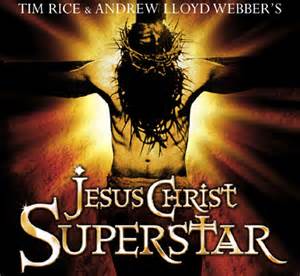
J.C. Superstar

Holy Week begins today with Palm Sunday.  Fittingly, last evening my wife and I listened again (as we do every year) to Webber and Rice’s “Jesus Christ Superstar.”  (You can listen to the 1970 version here; last year we attended the actual play.) The familiar score and story always have me tearing from the overture on.

Of course, “Jesus Christ Superstar” is a brilliant musical that captures the final events in Jesus’ life.  As in today’s liturgical readings, the play takes us from Jesus’ triumphant entry into Jerusalem, to his cleansing of the city’s Temple, his betrayal by Judas, his trials before the Sanhedrin, Pilate and Herod. It finishes with his death on the cross and a reprise of Judas’ questions about Jesus’ place in history and among the world’s other spiritual geniuses.

Through it all we agonize with Judas about accepting blood money and with Mary Magdalene about her unrequited love. We shake our heads at Jesus’ uncomprehending, self-interested and cowardly disciples. We’re amazed at the fickleness of the crowd and by Jesus’ compassion, indecision, fear of death, and forgiveness of his executioners.

The rock musical score is haunting. The lyrics are hip and inspiring. I find it amazing that the story though repeated so often retains the power to move its audiences. I feel grateful to Lloyd Webber and Tim Rice for their audacity in making the tale so accessible and meaningful to contemporaries.

Similar feelings have been evoked last year by Pope Francis’ Apostolic Exhortation, “The Joy of the Gospel.” That too was on my mind as I listened to “Jesus Christ Superstar” this year. That’s because during this year’s Lent, members of my parish community have been studying (for the second year in a row) the pope’s publication.

Through it, I think Pope Francis is calling us to do something like what Webber and Rice have done – make Jesus and the church once again relevant to a world that has long since dismissed them as quaint and detached from daily life.

As we’ve studied “The Joy of the Gospel,” all of us have marveled at Francis’ own courage, boldness and audacity. Almost from the beginning, our group has asked each other, “But what should we do in this parish in response to the pope’s general directions?” That same question surfaced last Lent, when I put forth a proposal published here.

Then it was well-received, but there was virtually no follow-through. Virtually nothing has changed in our church as a result of the pope’s exhortation. For us it’s still a question of “business as usual.” And our numbers of aging parishioners are dwindling as a result.

This year, things are different. Pope Francis’ planned visit to the United States next September has inspired our parish Peace and Social Justice Committee to reformulate the proposal in a way that honors his visit. And this time the formulation has legs. We’re actually might implement it.

Here’s a shortened summary of our revised plan (all parenthetical references are to sections in Francis’ exhortation) :

 “The Joy of the Gospel:” St. Clare Moving Forward

A Proposal for Parish Renewal Guided by the Pope’s Apostolic Exhortation

Rationale: The visit of Pope Francis to the United States provides St. Clare Parish with a unique opportunity to highlight and appropriate the pope’s directions for church renewal offered in his Apostolic Exhortation, The Joy of the Gospel (JG). Those directions called on the church to embark on a new chapter in its history and a new path, where things cannot be left as they presently are (25). Pope Francis urged Catholics to adopt new ways of relating to God, new narratives and new paradigms (74), along with new customs, ways of doing things, times, schedules, and language (27). Parishes were instructed to act boldly, and without inhibition or fear (33), in implementing processes of reform (30) adapted to particular churches (82).

With the above empowering directives and guidelines in mind, the Parish Peace and Social Justice Committee suggests adoption of the following plan towards beginning implementation of the renewal processes suggested by JG:

  • In preparation for the pope’s visit to the United States (September 22-27, 2015), the parish will be invited to read his forthcoming encyclical which is expected to be published this June. (Reading the encyclical is intended as a vehicle for revisiting and applying the pope’s vision found in “The Joy of the Gospel.”)
  • Copies of the encyclical will be purchased for each member of the parish over the age of 16 who wishes to receive a copy.
  • CCD teachers will be encouraged to develop study guides for younger children.
  • The encyclical will be discussed on the two Sundays preceding the pope’s visit, viz., September 13th and 20th.
  • To maximize participation and to experiment with on-going adult education (or “Sunday School”) discussions will be held from 9:00 to 10:00 on those Sundays and also on October 4th (see below).
  • Sunday School sessions will be followed by a half hour for coffee and snacks in the Friendship Hall and then by Mass in the church at 10:30.
  • On those days, (to highlight the unity of our parish) the 10:30 Mass will be the only Mass at St. Clare’s (“inconveniencing” everyone.) The 10:30 celebration will be bi-lingual incorporating both the Anglo and Hispanic communities and concelebrated by Fr. Michael and Padre Eulices (the clerical leader of our parish’s Hispanic community).
  • On Sunday, September 27th, there will be a viewing of the pope’s addresses to the U.S. Congress (9/24), and to the United Nations (9/25), as well as his homily delivered at the papal Mass concluding his U.S. visit.
  • The viewing of the pope’s addresses will take place in the parish Friendship Hall at 6:00 p.m. and will be preceded or accompanied by a special spaghetti dinner..
  • On their return from attendance at the papal visit, members of the St. Clare delegation will give formal reports during the “Sunday School” session of October 4th.

Follow Up

Following these events, an ad hoc committee (including the pastor) will review the entire experience outlined above.  It will formulate a strategic plan for the parish for later discussion. The plan will address issues such as:

  • Improved community outreach.
  • Closer relations between the Anglo and Hispanic communities.
  • Specifically how to better integrate the Saturday night and Sunday morning communities.
  • Prospects for institutionalizing adult education “Sunday School.”
  • Ways of improving Sunday liturgies taking advantage of the unique resources in our parish.
  • Revising the St. Clare Mission Statement to make its expression more inclusive.
  • Expanding roles for women (103, 104).
  • Specific plans for drawing young people back into the worshipping community.

So what do you think? Are we in tune with Jesus, Pope Francis, and Webber & Rice? Is this pointing the way to Easter Resurrection? What else might we do?

Discussion follows.

Wapo Errs in Retracting ‘Hands-up Don’t Shoot’ Support

hands upto

On Sunday the Lexington Herald Leader here in Kentucky published an apology by Washington Post blogger and MSNBC commentator, Jonathan CapehartThe article was entitled “Ferguson policing concerns valid, but ‘Hands-Up’ not based on truth.”

Capehart’s retraction of initial support for the “Hands-Up” movement was based on his reading of the Department of Justice (DOJ) investigation that “filled in the blanks, corrected the record and brought sunlight to dark places.” The report forced Capehart (an African-American) “to deal with uncomfortable truths: Brown never surrendered with his hands up, and Wilson was justified in shooting.”

According to the Wapo journalist, his conclusion was based on the DOJ’s “exhaustive interviews with witnesses, cross-checking their statements . . . ballistics, DNA evidence and results from three autopsies.” All of these showed that officer Wilson “knew about the theft of cigarillos from the convenience store and had a description of the suspects . . . Brown fought with the officer and tried to take his gun.”

Capehart’s general conclusion: “. . . we must never allow ourselves to march under the banner of a false narrative on behalf of someone who would otherwise offend our sense of right and wrong.”

Capehart’s conclusion is disturbing on at least three counts. It first of all ingenuously accepts the Department of Justice as a disinterested arbitrator.  Secondly, it simply accepts the false conclusion that Officer Wilson had no alternative but to kill Michael Brown, shooting him six times.  And thirdly, both Capehart’s article and the DOJ report reinforce the erroneous impression that police officers are under constant threat and so can be excused for their over-reactions.

Is the DOJ disinterested? Hardly – at least not if we keep the big picture in mind. Remember, there is an encroaching police state in our country defending the interests of the 1% against the rest of us. Under the aegis of the DOJ, increasingly militarized police forces have gradually assumed the role of occupying armies, especially in communities of color.

Moreover, in representing the elite, government agencies routinely lie to us. At what point do we conclude that they have lost credibility as disinterested investigators, and discard out of hand any claims that support the forces of DOJ-sponsored occupation?

However, even if we accept the Department’s report as endorsed by Jonathan Capehart, the question remains, did Officer Wilson have no alternative but to use deadly force on Michael Brown? Clearly the answer is no.

Wilson’s alternatives were at least three. He could have (1) stayed in his car and called for backup, (2) allowed Brown to “escape” and later arrest him (with suitable reinforcement) at Brown’s home which was known to the police, or (3) in the worst of circumstances, shot the unarmed Brown in the legs to wound rather than kill.

The fact that such alternatives did not occur to Wilson underscores the poor training of police in our country. Clearly all of them are instructed on how to use their deadly force weapons. Evidently however, they are not sufficiently trained on how and when not to use them.

As for the hazards of policing, it doesn’t even rank among our country’s ten most dangerous jobs. Those belong to loggers, fishermen, pilots, roofers, steel workers, garbage collectors, electricians, truck drivers, farmers, and construction workers.

That list puts into perspective the “I feared for my life” defense inevitably invoked by police allegedly mistaking wallets, pens, candy bars, and sandwiches for lethal weapons.

As retired NYPD detective, Graham Witherspoon puts it: if policemen are that afraid to put their lives in danger, they’ve chosen the wrong profession.  It would be better, he said, to “go home to mommy,” and find some other line of work.

Ironically, Darren Wilson and his defenders are correct in their claim that he was “just doing his job.”

That’s exactly the problem: the job of the law enforcement in our emerging police state is now to intimidate, control, and kill with impunity rather than to “serve and protect.”

In uncritically endorsing the DOJ’s “occupying army” model of policing, Capehart leads us to support (in the blogger’s words) a force that “would otherwise offend our sense of right and wrong.”

“Joy of the Gospel” Sparks Lively Discussion (and Resistance)

change

Last night, a small group of us meeting Sunday evenings during Lent to discuss Pope Francis’ “Joy of the Gospel” found the discussion more lively than usual. That’s because as Lent draws to a close, our group had decided to actually entertain minor changes in parish life as a result of the pope’s injunction to do so.

Resistance from our pastor and pastoral associate was evident. Nonetheless, while neither (perhaps understandably) was willing to exert leadership in this case, both showed faint signs of willingness to be led.

The mild suggestion sparking discussion was the following:

  • To celebrate the upcoming beatification of Oscar Romero (Saturday, May 23rd) with a special evening Mass and fiesta (featuring a mariachi band, salsa dancing, and food catered by our local Mexican restaurant).
  • To precede the Mass with an hour-long “adult education” session featuring a 15 minute talk on Oscar Romero and liberation theology along with a half-hour documentary on the Salvadoran martyr, and a 15 minute discussion.
  • To have the Mass concelebrated with the main celebrant and homilist being Padre Eulices, the clerical leader of our local Hispanic community.

According to the pastor and his associate, the suggestion was highly problematic. After all:

  • Didn’t we know that May 23rd is the Vigil of Pentecost? “And I, for one,” the pastor said, “am not willing to substitute something like this for the celebration of Pentecost, one of the greatest feasts of the liturgical year.”
  • On top of that, “I have Mass in Mt. Vernon (a congregation of fewer than 30 people btw) at 5:00, and I could never get back to Berea by the 6:00 starting time you have here on your schedule.”
  • And what about McKee (a congregation of perhaps 15-20 people)? “They surely wouldn’t show up for something like this. They’re very stuck in their ways.”
  • “And then there’s the Saturday night crowd! They expect Mass at 7:00. Changes like this would upset them.” (It turned out that the suggested event had taken this into account and had Mass beginning @ the usual 7:00 time).
  • “And what about the Hispanic group? They always celebrate Mass at 11:00 on Sunday morning. I’m sure they would resist coming to Mass Saturday evening as this change suggests.”
  • “And do you mean to say that there’d be no Sunday Mass at 9:00 – the way we’ve done it all these years?”
  • “And why would we spend all that money on a mariachi band? Our Sunday choir along with that of the Hispanic community would be better and would cost no money.”
  • “And wouldn’t it be better to have someone from the chancery come to speak to us about Oscar Romero rather than someone from the parish?”
  • “So let’s: (1) move the program to Sunday at the usual time, (2) shorten up the presentation about Romero, (3) forget the mariachi band, (4) emphasize Pentecost, and (5) see if we can get some speaker from Lexington to speak about Romero.”

Naturally, the lay group had responses to those clerical objections:

  • The themes of Pentecost and Romero’s beatification can quite easily be integrated. They actually complement one another.
  • If the pastor could not get back from Mt. Vernon at 6:00, we could move the event’s starting time to 6:30. Or maybe we could (this one time!) just have a single Mass instead of 5 (!) inviting the Mt. Vernon folks to come to this fun party. If they choose not to come, well, it’s a free country.
  • Same goes for the McKee community.
  • As previously noted, nothing would be changed for the Saturday night crowd in terms of the starting time for their evening Mass.
  • The Hispanic community is the most flexible of all. Its members are anxious to integrate with the Anglo community. And Romero is one of them! Surely it wouldn’t be hard to persuade them to come to a party a mariachi band, salsa dancing, and Mexican food.
  • If we must have a Sunday morning Mass at 9:00, no problem. On this particular Sunday, the congregation will, no doubt, be smaller (with most having satisfied their “Sunday obligation” the previous night). But is that a problem? In fact, nothing would be hurt by cancelling that Mass as well. (But, of course, cancelling the 9:00 Sunday Mass is not part of the plan.)
  • As for the mariachi band . . . We’re talking about a fiesta and illustrating “the joy of the Gospel!” For something worthwhile like that, people are willing to pony up. We could easily raise $1000 to cover an event like this. At least we could float the idea to see.
  • In this college community with so many professors and theologians, do we really need someone from the chancery to speak about Romero and liberation theology?
  • And why Saturday night instead of Sunday? Because Saturday night is a party night! And (again) we’re talking about the joy of the Gospel.

As you can see, it’s not easy for some to make even minor changes in “what we’ve always done.” For others, change is easy. For instance, Padre Eulices was unfazed when asked to consider altering his schedule for the Romero celebration. “Well,” he said, “I normally have Mass in Richmond at 6:00. But I’ll try to get a substitute. I’ll get back to you. Thanks for asking.”

However, the changes implied in this whole event go much deeper than resistance to a one-off Mass-and-fiesta. It all raises serious questions about parish organizations and the way priests in the new pope’s church spend their time. Among the questions to be addressed in our own community, the following seem most obvious:

  • Given the fact that we now have only one pastor (and not the 3 or 4 priests we had when our 3 parishes were founded about 50 years ago), does it really make sense to have 5 Masses (!) each weekend?
  • If we must maintain the dubious practice of “servicing” three parishes, why doesn’t our church sponsor the training and ordination of one or more deacons to provide more meaningful communion services (and preaching) at the churches in question? Our community could easily identify and invite good candidates (male & female) with a gift for preaching and pastoral work.
  • In fact, for some (the 3 or 4 ex-priests among us) additional training would not be necessary. They could start preaching and presiding over a communion service next Sunday!
  • In view of such considerations, shouldn’t we sit down with our pastor and help him brainstorm about less stressful use of his time?
  • Hasn’t the moment arrived for constructing a serious strategic plan for the parish involving input from all its members and taking advantage of their much-needed gifts?

As you can see, it’s been a productive Lenten discussion.

(Sunday Homily) “Citizenfour”: Keeping God’s Law through Civil Disobedience

Citizenfour

Readings for 5th Sunday of Lent: JER 31: 31-34; PS 51: 3-4, 12-15; JN 12: 20-33 http://usccb.org/bible/readings/032215-fifth-sunday-lent.cfm

I saw “Citizenfour” today. You can see it too. For your own good, please do. The film is live-streamed free here:  https://thoughtmaybe.com/citizenfour/

“Citizenfour” won this year’s Academy Award for best documentary. Its director is Laura Poitras. The film is about whistleblower, Edward Snowden – the 31 year old CIA employee who two years ago leaked classified information from the National Security Agency (NSA).

The information revealed “America’s” massive world-wide spy system that Snowden saw as absolutely eviscerating U.S. constitutional protections against “unreasonable search and seizure.”

In case you’ve forgotten, the 4th Amendment of the Constitution reads as follows:

“The right of the people to be secure in their persons, houses, papers, and effects, against unreasonable searches and seizures, shall not be violated, and no warrants shall issue, but upon probable cause, supported by oath or affirmation, and particularly describing the place to be searched, and the persons or things to be seized.”

In contradiction to those words, Snowden’s revelations show that indeed “Big Brother” is watching us at all times. We are under constant surveillance. None of our e-mails or phone calls is secure.  Telephones normally found in hotel rooms are routinely used as listening devices. All of our e-mail searches are monitored and recorded.

This means that citizens expressing disapproval of government policies are easily identified. So are our constitutionally protected efforts to organize against such policies. All of us are subject to blackmail and prosecution based on stories manufactured from “metadata” and texts gathered by our watchers.

Knowing full well that he would be hunted down and prosecuted (and possibly executed) for his leaks, Edward Snowden shared his information with Laura Poitras and with Guardian reporter, Glen Greenwald. Snowden fled to Russia where he was given temporary political asylum. “Citizenfour” is the upshot.

Of course, Snowden’s opponents say his revelations have endangered national security and that he is guilty of treasonous acts of espionage. In response, the former CIA contractor says the whole matter of government secrecy and surveillance needs full debate. So do extra-judicial killings in the world-wide drone assassination program. Security, Snowden implies, is less important than freedom, privacy, and the lives of innocents arbitrarily killed on mere suspicion of possibly one day harming U.S. citizens. Then there are those disturbing words in the Fourth Amendment. . . .

All of that made me think about today’s liturgy of the word. It’s all about obeying conscience rather than the written law. It’s all about another 30 something law-breaker who rejected absolute security in favor of opposing the authorities of his time.  Think about the readings one-by-one.

The first (from the prophet Jeremiah) reminds us that God’s law is not primarily found on tablets of stone. It is inscribed on our hearts. Without invoking “God,” that’s the law Edward Snowden claims to follow – a law much higher than the 1917 Espionage Act invoked against him.

According to today’s responsorial psalm, a heart shaped by God’s law is good and merciful; it is compassionate, forgiving, and guilt-free. Laura Poitras’ film shows Snowden exhibiting all of those qualities. There is not a trace of self-seeking in any of his actions or statements – only concern for others victimized by the state.

It is that heart sensitive to God’s internal law that Jesus manifested. But, like Ed Snowden, it took him great pain to get to that place. Today’s second reading specifically mentions Jesus’ “loud cries and tears,” his anguished prayers and supplications.

Finally, today’s selection from the Gospel of John reiterates the call to follow Jesus, even as Snowden has without any specific reference to Jesus.  Our reading has the Master say that “serving” him means walking the way of the cross. In other words, we must learn his same lessons about rejection that always follows hard upon adoption of Jesus’ counter-cultural “Way.”

A seed has to die before it can bear fruit, Jesus explains. That’s our Teacher’s metaphor about exchanging what the world calls “life,” for what John’s gospel calls “eternal life.”

As in contemporary “America,” the world’s utopian ideal enshrines perfect security – saving our lives at all costs, even if it means wholesale killing of others, even if it means surrendering the God-given freedom that makes us specifically human.

By contrast, Jesus’ Way enshrines compassion, service and forgiveness, even if it costs us our lives.

Ironically, Jesus explains, if we expend our resources on saving our lives, we will lose them. But if we reject security as our guiding principle, we’ll gain access to “eternal life” – access to God’s Kingdom, where God is King, not Caesar.

Mysteriously, today’s final reading instructs us against loving our lives. It actually says we should hate our life in this world. Edward Snowden shows what that injunction means. His courageous example calls us to oppose Big Brother, and to support Snowden’s own return to the United States – as a hero.

Be sure to see “Citizenfour.” It exemplifies today’s readings. It’s about opposing the values of “the world,” and about losing one’s life in favor of life’s fullness. It provides an example of a young man following the Law of God inscribed deep in our hearts. That’s our vocation.

Lexington’s New Bishop Channels Pope Francis

Stowe

“A Jesuit pope by the name of Francis sends you a Franciscan bishop trained by the Jesuits.”

Those were the words of Lexington, Kentucky’s new bishop, John Stowe, as he introduced himself at his first press conference last week.

The words came as a breath of fresh air to progressive Catholics in the Lexington Diocese. As a resident of that diocese, they came as a refreshing breeze to me.

In his opening statement, there was not a word about abortion, contraception, or gay marriage – the dreary, unvarying drum beat of doctrinal rigidity that has (in the pope’s words) turned the lives of Catholics into an endless “Lent without Easter.”

Instead, bishop-elect Stowe follows the lead of his boss who emphasizes the “Good News” of the Christian faith, and not right-wing doom and gloom. While not ignoring those other matters, Pope Francis (and, it seems, bishop-elect Stowe) would have Catholics engage the big issues such as the failure of corporate capitalism and its resulting wealth inequalities, wars, climate chaos, and particularly exclusion of those conservatives consider “outsiders.”

In his progressive stances, however, Lexington’s new appointee is not merely a disciple of Pope Francis. He also has a long personal history social activism, community organization, and inter-faith cooperation.

In his earlier posts in Ohio and Texas, the bishop-elect has been a consistent peace and social justice leader, and a critic of reactionary politics – especially as they affect immigrants.

Father Stowe recognizes, for instance, the parallels between the experience of today’s undocumented workers and that of his Italian grandmother who along with her compatriots were routinely called “WOPS,” or immigrants without papers.

More specifically, in 2006, when Fr. Stowe addressed the Mayor’s Congress on Immigration Reform in El Paso, Texas, he rejected the “Minuteman” and vigilante approach to border security. He criticized the U.S. Congress saying, “We shudder to imagine what the inscription on the Statue of Liberty might read if it had been erected by the current U.S. Congress.”

The bishop-elect is fluent in Spanish. His introductory conference featured a long paragraph in perfectly delivered in that language. I’m sure that gladdened the hearts of the growing Hispanic community in the Lexington diocese. Hispanics, Stowe says, (along with his Franciscan emphasis on service to the poor) have formed him as a priest and pastor.

In summarizing his priorities and agenda, Rev. Stowe said he will focus on worship and the service that inevitably flows, he said, out of meaningful liturgy. But like his papal mentor, he would do lots of listening before acting.

In all things, he would take Pope Francis as his inspiration and guide, and would follow his example. “I love Pope Francis,” he said, and will do whatever he asks.“

That augurs well for progressive Catholics, for the Lexington diocese, and for the Commonwealth in general.

(Sunday Homily) A Wife-Husband Lenten Discipline: A Course in Miracles

ACIM 2

Readings for the 4th Sunday of Lent: 2 CHR 36: 14-16, 19-28; PS 137: 1-6; EPH 2: 4-10; JN 3: 14-21; http://usccb.org/bible/readings/031515-fourth-sunday-lent.cfm

This year for Valentine’s Day, my bride of nearly 40 years, Peggy, gave me a wonderful gift. Or I should say, she gave us a wonderful gift. She enrolled us in a live-streaming seminar led by Marianne Williamson, the great spiritual teacher, peace activist, and author of many books, including Return to Love, which both Peggy and I had read with great profit several years ago.

What Williamson presented turns out to be intimately connected with today’s liturgy of the word.  It presents us with a rich catechism of some of the most-powerful images and metaphors belonging to the Judeo-Christian tradition. They include a whole list of choices humans (and married couples) must make between:  (1) exile and liberation, (2) Babylon and Jerusalem, (3) death and life, (4) worldly values and Christ’s values, and (5) works without faith or works with faith. In their esoteric senses, keeping those choices in mind proves helpful in pursuing our Lenten disciplines, especially as they affect our most intimate relationships.

You see, Marianne Williamson is a student and teacher of religious metaphor like the ones I just referenced. As a Jewish counselor and teacher, she honors all those biblical memes. And yet, her main spiritual reference point isn’t the Tanakh, but A Course in Miracles (ACIM). That’s an esoteric spiritual classic based on a series of “revelations” received by Helen Schucman, a research psychologist and one-time aggressive atheist.  Over a period of seven years she took dictation from the Spirit of Jesus about how to experience all of life as a Miracle – as an unending series of joyful wonders.

That whole idea might be off-putting to some. As a matter of fact, that’s what I experienced when I first picked up ACIM, maybe thirty years ago. Some have described it as New Age psychobabble. I’m afraid I jumped to that conclusion.  I also found its entire premise somehow disconcerting – I mean: actual dictation from Jesus?  It just wasn’t my cup of tea. And I still have some reservations.

Yet, the book’s basic claim resonated with me. That claim is that at their summits, all the world’s great spiritual traditions converge in the basic mystical realization that ALL LIFE IS ONE. In our depths, our real Self is divine. There is very little difference between us humans. In a real sense, both you and I are one.

More than that, we share unity with the trees, mountains, rivers, oceans, animals, and insects.  Only the misplaced importance we give to our individual egoic selves prevents us from recognizing that mystical insight. That’s a truth I’ve encountered not only in the Christian mystics like John of the Cross and Theresa of Avila, but also in my study of Buddhism and Hinduism. It’s also something that accords with my own experience over the last 18 years of committed meditation twice a day. The meditation teacher I follow, Eknath Easwaran, would find very little strange in A Course in Miracles.

In any case, Williamson’s teachings from ACIM, as well as her interactions with her audience of about 50 couples were astounding. She was incredibly fluent, funny, self-disclosing, and honest in her presentations. She was also unbelievably wise and helpful in dealing with the problems audience-participants presented during question and answer periods that often turned into full-blown counseling sessions. These had couples generously divulging problems of achieving intimacy, of heartbreaking infidelity, inability to communicate, and basic misunderstandings between women and men – yin and yang.

And then there was Williamson’s unflinching insistence on prayer and meditation. To begin with, she held that there can be no spiritual growth for anyone without putting God first and without the daily practice of meditation.  From a leftist peace activist, I found that refreshing and challenging.

According to Williamson, anyone interested in personal or couple transformation needs to meditate every day. Ideally, couples should do it together every morning. But even more impressive to me was Williamson’s ability to pray herself. She concluded most interactions with couples by inviting them to pray with her. And it all seemed perfectly natural and invariably quite beautiful.

In fact, Peggy and I were so impressed, and our conversations following Williamson’s sessions were so helpful that we resolved to work through A Course on Miracles as our Lenten discipline. And that’s what we’ve been doing since the Ash Wednesday which followed so closely this year’s Valentine’s Day.

In connection with this morning’s liturgy of the word, here’s what we discovered:

  • Most of us married people are living in exile – in Babylon like the Jews in the 6th century BCE described in today’s first reading.
  • Perhaps without even realizing it, we long for “Jerusalem,” – for return to our true home, the “container” of love, safety, trust and intimacy we embraced on our wedding day.
  • But like the exiles in today’s responsorial psalm, many of us have stopped singing the love songs that came so naturally then. We’ve hung up our harps and refuse to sing to our intimate partner.
  • Too often we’ve become like the walking dead – rejecting the precious fullness of life together that’s available for the asking.
  • As Paul puts it in today’s second reading, our lives together have become “works without faith.” Work in our lives has replaced faith – in God and in each other.
  • With our loss of faith, the superficial values of the world (rejected by Jesus in today’s gospel selection) have replaced his Kingdom values of unconditional acceptance, service and forgiveness.

Forgive me if all of that sounds bromidic and hackneyed.  This Lent Peggy and I are finding that Marianne Williamson’s advice about praying and studying together brings them to life.  We’ve come to realize she’s right.

For us, there’s just no other way.