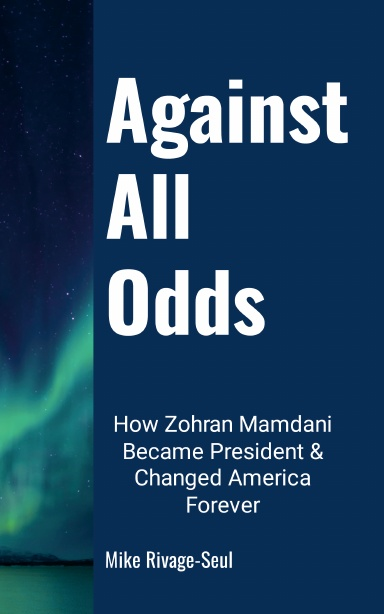
The Mamdani Lesson: Break Completely with the Billionaire Model

Over the past few months, I’ve found myself sitting at a rather surprising table — the Arc of Justice Alliance (AJA) planning committee. We’re charged with two enormous tasks: first, to craft a meaningful progressive response to the Right’s authoritarian blueprint, Project 2025. Second we’re to draft a counter-vision called Project 2029. It’s to be a path toward a People’s Republic grounded not in domination, but in justice, compassion, and democratic renewal.

For months now, we’ve been wrestling with the same dilemma: If the Republican establishment built a sprawling ecosystem of think tanks, media outlets, university programs, and religious platforms—funded by billionaires and designed to engineer public consciousness—shouldn’t we build a progressive version of the same? At one meeting after another, we even floated ideas about recruiting famous people to our cause and even of courting “friendly” billionaires like George Soros to bankroll a left-liberal infrastructure capable of matching the Right blow-for-blow.

But then something happened that, for me at least, broke the spell: Zohran Mamdani won the New York City mayoral race.

Let me underline what his victory represents. Here was a young candidate with 1% name recognition only a year ago. He faced opponents backed by unlimited money — super PACs, corporate donors, real-estate tycoons, the whole constellation of elite power determined to smother anything resembling a genuine democracy. And yet, he didn’t just challenge them; he defeated them. How? By mobilizing more than 100,000 volunteers, by conducting leadership trainings in living rooms and union halls, by knocking on one million doors, and by rallying ordinary New Yorkers around the elemental theme of affordability — the right of human beings to live with dignity in the communities they love.

Nothing flashy. Nothing overly intellectualized. No backroom deals.
Just democracy in its most radical, ancient sense: people talking to people.

His victory provided me with a moral awakening of sorts.

Because suddenly the entire strategy we’ve been discussing — building our own version of the Powell Memo machine — began to look not simply inadequate but morally compromised. If the way forward is through people, why would we imitate a model designed to sideline them? Why mimic the very structure that has delivered us a national government increasingly controlled by ignorant, degenerate, mafia types whose only qualifications seem to be cruelty, ignorance, and a willingness to auction off the country to the highest bidder?

If the fruit of the Right’s model is authoritarianism, why would we plant the same tree?

No. The Mamdani movement reveals the deeper truth:
Power does not flow down from billionaires or elites. It flows up from human beings who discover their own agency. As OpEdNews editor Rob Kall would say, “It’s Bottom-up.”

And so, I find myself convinced that Project 2029 cannot — must not — follow anything resembling the Republican strategy. We cannot organize a progressive future by begging for crumbs from oligarchs. Even “friendly” billionaires are not our allies; their worldview is too shaped by wealth to understand the soul of a democratic movement. Instead, what we need is a politics that speaks directly to the pain and hope of ordinary people:

  • Affordability
  • Green New Deal
  • Free college
  • Downsizing the military
  • Nuclear disarmament
  • Closing foreign military bases
  • High-speed rail
  • Universal healthcare

And this, not as technocratic bullet points, but as expressions of a moral vision rooted in the human right to live, learn, breathe, rest, and dream.

But this raises a practical question, the one our committee keeps circling back to: How do we build a movement capable of achieving such sweeping change without billionaire patrons? Here’s the blueprint that for me emerges when we take Mamdani’s victory seriously:

1. The Movement Must Be Member-Funded — Not Billionaire-Funded

If our goal is democratic empowerment, then our funding must come from the demos.
We need a dues-paying membership, millions strong, each giving what they can — $3, $5, $27. This is not naïve idealism. It is what built the civil rights movement, what sustained labor unions at their peak, and what fueled Bernie Sanders’ campaigns. Money raised from below transforms supporters into co-owners of the movement.

2. Build Leadership Schools, Not Think Tanks

The Right built think tanks to create obedient foot soldiers for oligarchy.
We need leadership academies to create authors of democracy.

Neighborhood leadership circles, online organizing schools, campus institutes for justice work, training hubs in churches and mosques — if Mamdani could train 100,000 volunteers in a single city, imagine what a nationwide network could accomplish.

3. Replace Media Propaganda with Relational Organizing

Fox News and right-wing radio work by isolating individuals and filling the void with fear.
Mamdani’s movement worked by connecting individuals — neighbor to neighbor.

Project 2029 should build a national relational organizing platform that links:

  • congregations,
  • tenant unions,
  • mutual aid groups,
  • environmental coalitions,
  • arts collectives,
  • campuses,
  • worker centers.

Democracy spreads best not through algorithms but through relationships.

4. Tell One Simple, Moral Story

Republicans have mastered messaging not because they are clever but because they are consistent. Mamdani was consistent too. His message didn’t wander through policy white papers; it hit the heart: “Everyone deserves to live here.”

Our message must be equally direct:
A nation where every person can live, learn, heal, and thrive without fear or exploitation.
Every program — healthcare, demilitarization, free college — reinforces that story.

5. The Ten-Thousand-Door Strategy, Scaled Nationally

If the Mamdani campaign knocked on a million doors in one city, Project 2029 should commit to knocking on fifty million nationwide. But these should not be transactional campaign knocks; they should be ongoing democratic conversations about housing, work, health, and climate.

Block by block, precinct by precinct, the country’s political imagination changes one kitchen-table talk at a time.

6. Activate the Spiritual and Artistic Imagination

As a theologian, teacher and former priest, I’ve spent my whole life insisting that politics has a spiritual dimension. The Right weaponized faith to defend hierarchy. We must reclaim it to defend justice. And we must bring artists into the center of our movement. The imagination is political terrain.

If we want new possibilities, we need new parables, new hymns, new murals, new metaphors of liberation.

7. Build Institutions That Answer to the Grassroots

To accomplish all this, we’ll need training centers, media platforms, and policy shops — but they must be governed by the movement itself, not by plutocratic trustees. Our institutions must function like worker cooperatives: democratic, transparent, and accountable to the base.

Conclusion: The Republic Is Waiting for Us

Zohran Mamdani’s victory is not an isolated event. It is a sign — a living reminder that ordinary people, organized, can defeat moneyed power. In that sense, his mayoral race is more than a political upset. It is a prophetic warning: if we cling to billionaire strategies, we will lose not only elections but our moral compass. But if we follow the path of radical democracy, we may yet redeem the American experiment.

Project 2029 must not be a mirror of Project 2025; it must be its antidote.

The future will not be built by oligarchs. It will be built by us — the many — knocking on doors, telling the truth, and refusing to surrender the idea that another world is possible. If 100,000 volunteers can change New York City, then millions can surely change America. And that is the real beginning of Project 2029.

A Day in the Life of Americans Observing the UN Declaration of Human Rights


Recently, at our Arc of Justice Alliance (AJA) meeting, the Planning Committee discussed what daily life in the U.S. would look like if the AJA vision were implemented and the United States actually lived up to the UN Universal Declaration of Human Rights (UDHR)? Here’s an answer provided by ChatGPT.


Morning Light

The sun rises over Dayton, Ohio, and the Thompson family’s house wakes up with it — lights brightening automatically, powered by rooftop solar panels. The air is fresh, the street is quiet, and not a single car rumbles by. Most people bike or hop the community tram these days.

Maria Thompson rolls out of bed around seven. She’s a nurse practitioner at a neighborhood health co-op. Her hours are flexible; her paycheck is guaranteed. No side hustles, no “gig economy,” no hustling just to survive.

She remembers her mom, back in the 2020s, juggling three part-time jobs with no health insurance and no savings. That world — the world of burnout and precarity — is gone. Work now comes with dignity, fair pay, and time to rest.

“No one should have to earn the right to live with dignity.”

Downstairs, her husband Daniel sips coffee and scrolls through the Public Knowledge Network. It’s news without ads or algorithms — funded by the community, not corporations. Since media reform followed Article 19 of the Universal Declaration of Human Rights, journalism stopped being a ratings game and started being a public service.

At the table, their kids, Lila (16) and Jordan (11), eat fruit and cereal from their weekly co-op basket. There are no food deserts anymore — local farms supply every community with fresh produce. Healthy food is a right, not a luxury.


Midday Work, Human Style

Maria bikes to the clinic along quiet, tree-lined streets. Fossil fuels are long gone; the city runs on clean energy owned by its residents. The air smells like rain and lilacs, not gasoline.

At work, Maria greets patients by name. No billing forms, no deductibles, no endless phone calls with insurance companies. Health care isn’t a privilege anymore — it’s a right.

She spends real time with people. One of her patients, an older man with diabetes, used to ration his meds before universal care took hold. Now he’s thriving. He thanks her — but it’s not the thank-you of desperation. It’s gratitude born of mutual respect.

Meanwhile, Daniel’s high school history class is buzzing. The topic today: Why did it take so long for America to treat human rights as real?

A student asks, “If the Declaration was written in 1948, why didn’t people just do it?”
Daniel smiles. “Because first,” he says, “we had to believe we deserved it.”

“The biggest revolution wasn’t political — it was psychological.”


Afternoon: The Culture of Care

At lunch, Daniel joins other teachers in the school garden, munching on sandwiches and talking about the next community project. Teachers work six-hour days now, and every job comes with paid time for family, creativity, or civic engagement.

Across town, Lila is at her art studio internship, painting a mural about climate recovery. Her school believes in learning through doing — part of Article 27’s promise that everyone has the right to participate in cultural life.

At the community center, Jordan and his friends build solar robots in the after-school program. When the seniors arrive for tea, the kids pause their project to help set up tables. It’s normal now — generations sharing space, stories, and laughter. Loneliness has dropped, community ties have grown, and life feels… connected.


Evening: Democracy in Real Life

Dinner at the Thompson home is simple but joyful: vegetable paella, salad, fresh bread. No one eats in a rush. They talk, laugh, argue a little — about the next Community Assembly.

The Assemblies happen every month. People from every neighborhood vote on local issues through secure digital platforms. It’s democracy that actually feels like participation, not just voting every four years.

“Democracy isn’t an event. It’s a daily habit.”

After dinner, they stream a short documentary about how the world came together to rebuild after the climate crisis. The voiceover reminds them: “The Universal Declaration of Human Rights was always a blueprint. It just took humanity seventy-five years to start building.”

Maria looks over at her family — fed, healthy, safe — and smiles. The dream didn’t die; it just took time to grow up.


Night: A Quiet Confidence

Later, Maria steps outside. The neighborhood glows softly under solar lamps. From the park, she hears music and laughter. She breathes deeply. The air is clean, the stars visible again.

Upstairs, Lila writes in her journal about becoming an environmental architect. She knows college will be free and open to everyone. Jordan’s reading a bedtime story about the first moon colony signing the Earth Charter.

Maria crawls into bed beside Daniel.
“Can you believe our grandparents lived without all this?” she whispers.
He grins. “They didn’t give up,” he says. “That’s why we have it.”

Outside, the world hums — steady, hopeful, human.

“When every person matters, everything changes.”


A New Normal

This isn’t a perfect world. Storms still come, people still disagree, and life still surprises. But the old fear — of losing your home, your job, your health, your future — is gone.

Now, human rights aren’t slogans. They’re the structure of everyday life.

Housing is guaranteed.
Healthcare is free.
Education is also free and lifts everyone.
Work supports, not consumes.
News informs, not divides.
Democracy belongs to all.

In this America, the extraordinary has become ordinary: breakfast with family, work with meaning, art without debt, democracy without despair.

The Thompsons aren’t special. They’re just people living in a country that finally remembered what the Declaration promised back in 1948:

“All human beings are born free and equal in dignity and rights.”

And this time, we meant it.