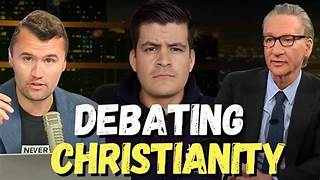
Liberation Theology as Critical Thinking: Why God Talk Still Matters

I recently found myself in conversation with a young activist—brilliant, earnest, morally serious—who made a claim that was both understandable and unsettling. Young people, he said, simply don’t want to hear from old people like me, especially old white men. We’ve had our turn. We made a mess. And whatever we call “wisdom,” grounded in our long lives and accumulated experience, feels to them less like insight and more like obstruction.

I understood immediately why he would feel that way. My generation was born during the Great Depression and its aftermath; the boomers who followed presided over imperial wars, environmental devastation, runaway capitalism, and the hollowing out of democratic institutions. Zoomers have every reason to be suspicious of elders who lecture them about patience, realism, or incremental change. The house is on fire. Who wants to hear a sermon about proper etiquette?

And yet, something about the conversation troubled me—not because I felt personally dismissed, but because of the assumptions beneath the dismissal. In particular, the identification of “young people” with young Americans struck me as dangerously parochial. Outside the United States, especially in the Global South, students and young intellectuals are often strikingly comprehensive in their critical thinking. They do not imagine that wisdom expires with age, nor that critique began with TikTok.

Across Latin America, Africa, and parts of Europe, young activists routinely engage figures who are not only old, but long dead: Marx, Engels, Gramsci; Frantz Fanon, Simone de Beauvoir, W.E.B. Du Bois, Mary Daly, and Malcolm X. They read these thinkers not out of antiquarian curiosity, but because the structures those thinkers analyzed—capital, empire, race, class—remain very much alive. Ideas endure because oppression endures.

Nowhere is this more evident than in the tradition known as liberation theology.

Liberation Theology

Liberation theology is often caricatured in the United States as a quaint Latin American experiment, a left-wing theological fad that peaked in the 1980s and was later disciplined by Rome. That caricature misses the point entirely. Liberation theology is not primarily a set of doctrines; it is a method. More precisely, it is a disciplined form of critical thinking rooted in the lived experience of the poor. (In this connection, see my book, The Magic Glasses of Critical Thinking: seeing through alternative fact and fake news.)

At its core lies a deceptively simple question: From whose point of view are we interpreting reality? Classical theology asked what God is like. Liberation theology asks where God is to be found. And its answer—radical then, still radical now—is among the poor, the exploited, the colonized, and the discarded.

This shift has enormous epistemological consequences. It means that theology is not done from the armchair, nor from the pulpit alone, but from within history’s conflicts. Truth is not neutral. Knowledge is not innocent. Every analysis reflects interests, whether acknowledged or denied.

This is why liberation theologians insist on what they call praxis: reflection and action in constant dialogue. Ideas are tested not by elegance but by their consequences. Do they liberate, or do they legitimate domination?

That is critical thinking in its most rigorous form.

Beyond the American Youth Bubble

In Latin America, thinkers such as Gustavo Gutiérrez, Elsa Tamez, Leonardo Boff, Jon Sobrino, and figures like Franz Hinkelammert, Enrique Dussel, Paulo Freire, and Helio Gallardo pushed this method far beyond church walls. They integrated history, economics, philosophy, pedagogy, and political theory into theological reflection. They read the Bible alongside dependency theory and Marxist political economy, not because Marx was a prophet (he was!), but because capitalism is a religion—and a deadly one.

Freire’s Pedagogy of the Oppressed remains one of the most influential works of critical pedagogy worldwide. Its central insight—that education is never neutral, that it either domesticates or liberates—could easily be applied to theology, media, or political discourse. What Freire called “conscientization” is nothing other than the awakening of class consciousness.

Contrast this with much of American youth culture, where “critical thinking” is often reduced to identity signaling or stylistic rebellion, easily co-opted by market logic. The phenomenon of Charlie Kirk and similar figures is instructive here. Kirk’s appeal to college students is not an aberration; it is a symptom. Young people are starving for meaning, for narrative coherence, for moral seriousness. Into that vacuum rush slick, biblically uninformed ideologues like Kirk who weaponize Scripture in service of hierarchy and exclusion.

The Bible as Popular Philosophy

For millions of Americans, the Bible remains the primary source of moral reasoning—and often of historical understanding as well. This is frequently mocked by secular intellectuals, but mockery is a luxury we can no longer afford. The Bible functions in the United States as a form of popular philosophy. People may know little about economics, geopolitics, or climate science, but they believe they know what the Bible says.

And what they believe it says shapes their views on Israel and Palestine, abortion, feminism, sexuality, immigration, and race.

The tragedy is not that the Bible matters, but that it has been systematically stripped of its prophetic core and repackaged as an ideological weapon. White, patriarchal, misogynistic, anti-gay, xenophobic, and racist forces have successfully co-opted a tradition that is, at its heart, a sustained critique of empire, wealth accumulation, and religious hypocrisy.

This is not accidental. Empires have always sought divine sanction.

Yeshua of Nazareth & Class Consciousness

What liberation theology insists upon—and what American Christianity has largely forgotten—is that the Judeo-Christian tradition is saturated with class consciousness. From the Exodus narrative to the prophets, from the Magnificat to the Beatitudes, the Bible relentlessly sides with the poor against the powerful.

Yeshua of Nazareth did not preach generic love or abstract spirituality. He announced “good news to the poor,” warned the rich, overturned tables, and was executed by the state as a political threat. His message was not “be nice,” but “another world is possible—and this one is under judgment.”

Liberation theology takes that judgment seriously. It refuses to spiritualize away material suffering or postpone justice to the afterlife. Salvation is not escape from history but transformation of it.

To say this today is not to indulge in nostalgia. It is to recover a critical tradition capable of resisting the authoritarian, nationalist, and theocratic currents now surging globally.

The Need for More God Talk, Not Less

Here is where my disagreement with my young interlocutor becomes sharpest. The problem is not that there is too much God talk. The problem is that there is too little serious God talk.

When theology abdicates the public square, it leaves moral language to demagogues. When progressives abandon religious discourse, they surrender one of the most powerful symbolic systems shaping mass consciousness. You cannot defeat biblical nationalism by ignoring the Bible.

Liberation theology offers an alternative: God talk grounded in history, class analysis, and the lived experience of the oppressed. It exposes false universals. It unmasks ideology. It insists that faith, like reason, must answer to reality.

This is not theology for clerics alone. It is a way of thinking—rigorous, suspicious of power, attentive to suffering—that belongs at the heart of any emancipatory project.

Old Voices, Living Questions

Perhaps young Americans are right to be wary of elders who speak as if experience itself confers authority. It does not. But it is equally short-sighted to assume that age disqualifies insight, or that the past has nothing left to teach us.

Outside the United States, young people know better. They read old texts because the structures those texts analyze persist. They mine ancient traditions because myths and stories carry truths that statistics alone cannot.

Liberation theology stands at precisely this intersection: ancient scripture and modern critique, myth and materialism, faith and class struggle. It reminds us that critical thinking did not begin with social media, and that wisdom does not belong to any generation.

If we are serious about liberation—real liberation, not branding—then we must reclaim every tool that helps us see clearly. Theology, done rightly, is one of them.

Not because God solves our problems.

But because the question of God forces us to ask, relentlessly: Who benefits? Who suffers? And whose side are we on?

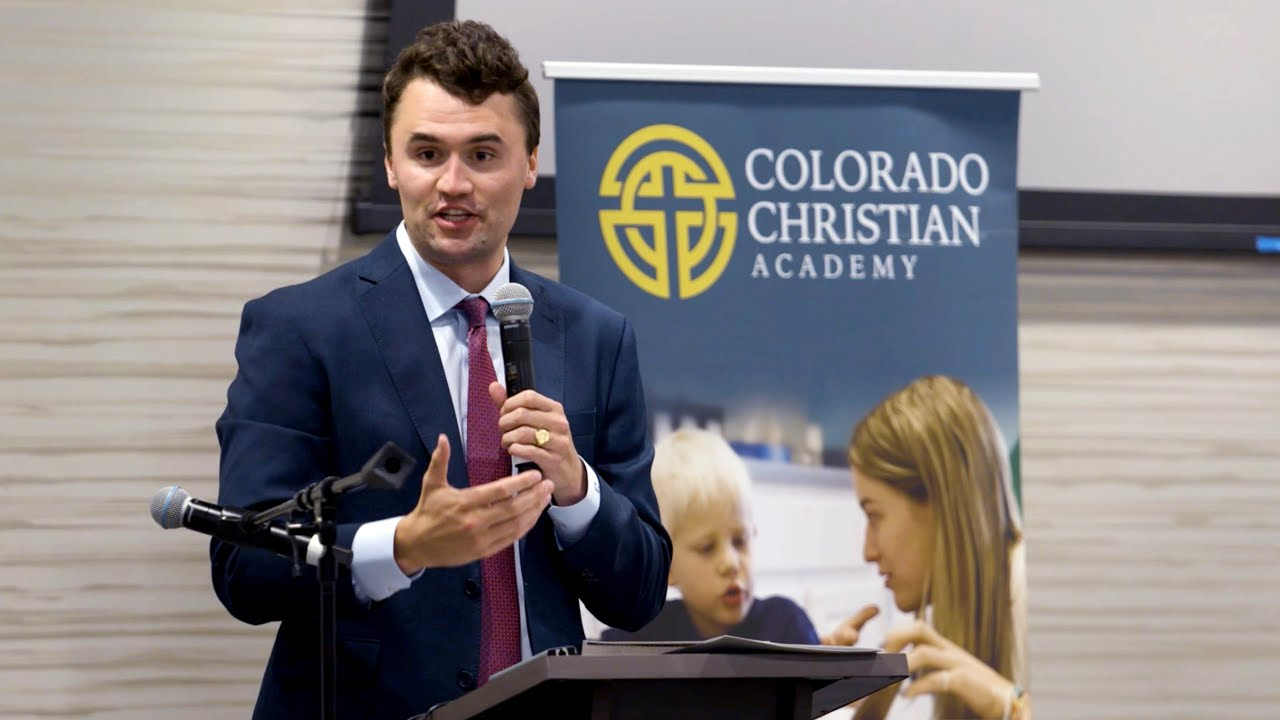
Me and Charlie Kirk

The more I watch Charlie Kirk’s “debates” with college students, the more compassion I feel for him. He strikes me as a brilliant but frightened young man—haunted, as I once was, by a God of fear and judgment. Like Charlie, I once believed in that God until I reached roughly the same age he was when he died at just thirty-one.

That “biblical” God, as I was taught, was the almighty creator, lawgiver, judge, and punisher—the terrifying being who condemned sinners to eternal torment for disobedience. Who wouldn’t be afraid of such a deity? Certainly not me. Like Charlie, I accepted it all.

My education—spanning from kindergarten in 1945 to my doctoral studies in Rome in 1972—was entirely within the Catholic Church. Nuns and priests trained me in one of the most traditional, patriarchal institutions in the world. They taught that there was “no salvation outside the Church.” It was our duty to convert the “pagans.”

So I spent thirteen years in seminaries preparing to be a missionary in Asia—China, Korea, Burma, Japan. Then came five more years of doctoral study in theology. The indoctrination could hardly have been deeper.

Like Charlie Kirk’s brand of fundamentalism, my Catholic formation fostered a deep suspicion of science and “secular” knowledge. Pope Pius IX’s Syllabus of Errors (1864) had warned against modern thought. From it emerged the apologetic mindset that shaped both of us—a defensive “us versus them” posture toward the modern world. Apologetics gave us tidy answers to every challenge: “If they say this, you say that.” Charlie mastered it. So did I. We both found it airtight, logical, and comforting.

Our politics flowed from the same worldview. My Catholic mentors, like Charlie’s conservative allies, saw communism as evil incarnate. When Senator Joseph McCarthy died, one of my seminary teachers told me, “A great man died today.” At twenty-two, I cast my first vote for Barry Goldwater.

And yet, even in that enclosed world, the “bad ideas” we feared had a way of slipping in. Despite my resistance, studying Latin and Greek classics, French and English literature, and Church history began to unsettle my certainty. Questions emerged about morality, colonialism, the Crusades, and the value of other faiths. I fought those doubts—but they persisted.

When the Second Vatican Council (1962–65) finally opened the Church to modernity, I was among the last to let go of my conservative instincts. I loved the Latin Mass, the vestments, and the comforting clarity of dogma. Like Charlie, I thought the Bible was literally dictated by God through chosen “transcribers”—Moses, David, Solomon, Matthew, Mark, Luke, and John.

But my four years of pre-ordination Scripture study shattered that illusion. Doctoral work confirmed it: The Bible isn’t a single book. It’s a diverse library written by many flawed human beings over a thousand years. They used different names for God and often disagreed about divine commands.

The Bible contains myth, legend, poetry, law, prophecy, fiction, and coded “apocalyptic” literature—resistance writings against empire, not predictions of the end of the world. I still remember my shock learning that Matthew’s “three wise men” story was midrash, not history. To treat all of it as literal fact is to miss its deeper truth.

Even so, like Charlie, I continue to believe the Bible is true—not in every detail, but in its moral and spiritual essence. As one of my friends says, “The Bible is true, and some of it even happened.” Its central story is not Adam and Eve’s fall, but the Exodus—the liberation of slaves. That story reveals the Bible’s real heart: what scholars call “God’s preferential option for the poor.”

The Bible sides with the enslaved, the widow, the orphan, the immigrant—the victims of empire. In fact, it may be the only ancient text written almost entirely by people conquered by Egyptians, Assyrians, Persians, Greeks, and Romans. Its truth is that followers of Jesus are called to stand with the oppressed.

I wish Charlie Kirk had lived long enough to encounter that truth. I believe his integrity might have led him toward it. But he dropped out of college after one semester, calling higher education a scam and a waste of time. He thought it was too expensive and too slow—a mere credentialing machine for good jobs.

To him, studying literature, history, or biblical scholarship in college was pointless. Worse, he saw such studies as dangerous, because they exposed students to the “bad ideas” that challenge inherited faith.

That, I think, is the crux of the problem. For both Charlie and my younger self, religion was the one realm where childhood knowledge was considered complete and unchangeable. Questioning it was betrayal. It’s as if a student of arithmetic said, “I know all about addition and subtraction—don’t confuse me with algebra or calculus.”

But algebra and calculus exist. They expand mathematical truth. And in the same way, modern biblical scholarship and scientific discovery expand our understanding of faith. History, psychology, sociology, and biology all reveal new dimensions of reality. Dismissing them out of fear is not faith—it’s denial.

I know, because I lived that denial for years. So when I watch Charlie Kirk confronting the questions of college students, I feel compassion. I see a man of goodwill trapped in a theology of fear. My heart goes out to him—and to all conservative Christians whose terror of change and of God narrows their vision to biblical literalism and political reaction.

Faith can be so much larger than that.
It can liberate, not confine.
It can open hearts instead of closing them.

That’s the lesson Charlie Kirk never got the chance to learn.

When Bible Readers Like Charlie Kirk Ignore Its Class-Consciousness

The recent assassination of Charlie Kirk provoked a flurry of commentary about God, faith, and politics. Among the more thoughtful responses was David BrooksNew York Times column, “We Need to Think Straight About God and Politics.” His essay reminded me once again how central theology remains for understanding today’s world—and how dangerous it is for progressives to ignore it.

But despite Brooks’ good intentions, his article was fundamentally flawed. He missed the Bible’s class-consciousness, a theme that runs through its central narratives and prophetic voices. In doing so, he overlooked the way modern biblical scholarship interprets scripture: as a profoundly political document that consistently sides with the poor and oppressed against the wealthy and powerful. Without acknowledging this, Brooks failed to resolve the very problem he set out to explore: how God and politics relate.

Ironically, Charlie Kirk—whose white Christian nationalism has been condemned by many—grasped something Brooks did not: that the Bible is not politically neutral. But Kirk twisted that insight. Rather than recognizing God’s solidarity with the marginalized, Kirk placed the divine firmly on the side of the dominant white, patriarchal class. His theology inverted the teachings of the Jewish prophet Jesus of Nazareth, who identified God with the poor, the dispossessed, and the oppressed.

In what follows, I want to clarify this point by (1) summarizing Brooks’ argument, (2) contrasting it with Kirk’s theological vision, and (3) comparing both with the insights of modern biblical scholarship, which I’ll describe as “critical faith theory.” My thesis is simple: without acknowledging the achievements of such theory with its implied class-consciousness, we cannot understand either the Bible’s meaning or its challenge to today’s politics.


Brooks’ Confusion

Brooks began by observing that Kirk’s funeral blurred the lines between religion and politics. Speakers portrayed Kirk as a kind of martyr, invoking Jesus’ example of forgiveness, while Donald Trump and his allies used the occasion to unleash vengeance and hatred. Brooks admitted he was disturbed and confused: why such a volatile mix of faith and politics? Shouldn’t religion stay in the private sphere, separate from political life?

To make sense of it, Brooks reached for the old notion of complementarity. Religion and politics, he suggested, are distinct but mutually supportive. Politics deals with power; religion provides the moral compass reminding us that everyone, regardless of ideology, is a sinner in need of grace. On this view, the Bible does not offer a political program. It simply sets the stage for moral reflection.

In short, Brooks tried to preserve a moderate middle ground. Faith should shape moral values but not dictate political programs.

The problem is that this neat separation has little to do with the Bible itself.


Kirk’s Fundamentalist Class-Consciousness

Kirk, unlike Brooks, made no such distinction. He declared openly: “I want to talk about spiritual things, and in order to do that, I have to enter the political arena.”

Brooks responded with incredulity, but Kirk’s reasoning is clear. His fundamentalist reading of scripture led him to embrace a particular worldview that has always been political. He believed the Bible is the literal word of God, with Moses, David, Solomon, and the gospel writers transcribing divine dictation. He accepted the traditional Christian narrative—codified since the fourth century—that humanity is fallen through Adam and Eve’s sin, redeemed by Jesus’ sacrificial death, and destined for heaven or hell depending on baptism and personal acceptance of Christ.

This theology, which became the official religion of the Roman Empire in the fourth century, was weaponized to support conquest, colonization, and oppression. From the Crusades to the slave trade to European colonialism, Christian rulers used this story to justify domination of Muslims, Jews, Indigenous peoples, Africans, and other non-white, non-Christian populations. Christianity, in its imperial form, became the religion of empire.

Kirk, then, was not wrong to insist that “spiritual talk” inevitably enters politics. But he saw Christianity as legitimizing the rule of a largely white, patriarchal elite. His class-consciousness was real—but inverted.


Critical Faith Theory: A Different Story

Modern biblical scholarship tells a very different story. Beginning in the late 18th and 19th centuries, historians, linguists, archaeologists, and literary critics began examining scripture using the tools of critical analysis. They discovered that the Bible is not a single book with one author but a library of texts written and edited over centuries. These texts include myth, poetry, law codes, prophecy, letters, gospels, and apocalypses. They contain conflicting theologies: some justifying empire, others resisting it.

What emerges from this scholarship is not the story of Adam’s sin and Jesus’ death reopening heaven’s gates. Rather, it is the story of liberation from slavery and God’s solidarity with the poor.

The central narrative begins with the Exodus, the liberation of enslaved people from Egypt. Israel’s God revealed himself as a liberator, entering into a covenant with the freed slaves to form a just society where widows, orphans, foreigners, and the poor would be protected. When Israel’s leaders violated that covenant, prophets arose to denounce them and call the nation back to justice.

Over centuries, Israel itself was conquered by empires—Assyria, Babylon, Persia, Greece, Rome. Prophets promised deliverance from oppression, not heavenly rewards in a distant afterlife.

Jesus of Nazareth stood squarely in this prophetic tradition. A poor construction worker from Galilee, he proclaimed the arrival of God’s kingdom—a radically new order of justice and peace. He challenged religious elites, preached solidarity with outcasts, and raised the hopes of the oppressed. Rome executed him as a rebel through crucifixion, a punishment reserved for political insurgents.

His followers, convinced he was raised from the dead, created communities that practiced what today might be called Christian communism. The Book of Acts records that believers shared possessions in common and distributed resources “as any had need.”

This was not an abstract spirituality but a concrete economic alternative. As I’ve pointed out elsewhere, it might be called “communism with Christian characteristics.” As Luke the evangelist put it in his Book of Acts 2:44-45, “All who believed were together and had all things in common; they would sell their possessions and goods and distribute the proceeds to all, as any had need.” In Acts 4:32, the same author writes: “Now the whole group of those who believed were of one heart and soul, and no one claimed private ownership of any possessions, but everything they owned was held in common.”

This approach to scripture—often called liberation theology—describes God as having a “preferential option for the poor.” Far from being neutral, the Bible takes sides. It consistently identifies God with the marginalized, not the powerful.


Jesus as the Rejected One

The class-consciousness of the Bible is perhaps most powerfully expressed in the figure of Jesus himself who, remember, is considered the fullest revelation of God.

Think about who he was: the son of an unwed teenage mother, raised by a working-class father, living under imperial occupation. As a child he was a political refugee in Egypt. As an adult he befriended prostitutes, tax collectors, and drunkards. He clashed with religious authorities and was executed as a political criminal. His death—torture and crucifixion—was reserved for those considered dangerous to empire.

This is not the profile of someone embraced by elites. It is the life of someone MAGA nationalists like Kirk would reject as unworthy, threatening, or “vermin.” Yet Christians confess this despised and rejected man as the revelation of God.

Jesus himself underlined this identification when he said in Matthew 25:40, “Whatever you do to the least of my brothers and sisters—the hungry, the thirsty, the stranger, the prisoner—you do to me.” The divine is encountered not in palaces, temples, or megachurches, but among the poor and excluded.

That is the class-conscious heart of the Bible.


Why It Matters

The contrast between Brooks, Kirk, and liberation theology highlights three very different approaches to God and politics.

  • Brooks wants to keep religion in the realm of private morality, supplementing politics but never shaping it directly. The problem is that the Bible itself refuses to be apolitical.
  • Kirk recognizes the political dimension but twists it to sanctify empire, patriarchy, and white supremacy. His theology reflects the imperial Christianity that oppressed much of the world.
  • Critical faith theory insists that the Bible sides with the oppressed. Its story begins not with sin and guilt but with liberation from slavery, continues with prophetic denunciations of injustice, and culminates in Jesus’ solidarity with the poor.

For progressives, this matters enormously. Too often the left cedes the Bible to the right, assuming it is inherently conservative. But modern scholarship shows the opposite: the Bible is a revolutionary text. It challenges systems of exploitation and offers resources for building communities of justice, equality, and care.


Conclusion

The assassination of Charlie Kirk has sparked renewed debate about God and politics. Moderates like David Brooks remain confused, trying to maintain a polite separation between religion and politics. Kirk, by contrast, embraced a political theology but aligned God with the ruling class.

The Bible itself, however, tells a different story. Through the lens of critical faith theory, we see its central theme: God’s preferential option for the poor. From the Exodus to the prophets to Jesus and the early church, scripture consistently sides with the oppressed.

Progressives ignore this at their peril. To cede the Bible to the right is to abandon one of the most powerful sources of hope, resistance, and liberation in human history. If read with eyes open to its class-consciousness, the Bible remains what it has always been: not the book of empire, but the book of revolution.

Spare me the Crocodile Tears: Assassination Is the American Way

Please spare me the handwringing over the political assassination of Charlie Kirk. Like you, I’ve heard our politicians say there’s no place for political violence in America. Others have said such atrocities are the province of the right or alternatively of the left

All of that is false. It’s complete B.S. Face it, America itself and its CIA (often in cooperation with organized crime) are assassination experts. It’s not a Republican thing or a Democrat thing. It’s not a question of “left” (as if there were a real “left” in America) or “right.”

No, it’s the American way. It’s what “we” do in the world. And to stop domestic assassinations, that’s what must change.

As Martin Luther King told us long ago, the U.S. (along with Israel, and NATO I would add) is the greatest purveyor of violence in the world. (Vijay Prashad calls NATO “the machine that destroys humanity.”) Our government and those allies commit targeted and random assassinations all the time.

Think of the extrajudicial bombing of that Venezuelan fishing boat just last week. Without advancing any evidence whatsoever, those in the boat were blown up because of “suspicions” that they were drug dealers. No proof, no arrests, no trial. No handwringing or tears. Just killed remorselessly “on suspicion.”  All the victims had (now severely traumatized) families.

Then think of Israeli threats to “take out” (decapitation, they call it) the elected leaders of Iran – or of their attempts a week ago to kill Hamas leaders as they participated in peace talks in Qatar. Think of the way Israel recently killed Yemen’s prime minister Ahmed al Rahawi and other Yemeni political leaders. And need we say the names Allende, Lumumba, Kaddafi, Guevara, or of a whole host of other political leaders routinely offed by the United States? Or all those attempts to murder Fidel Castro. Now they’re talking about taking out Nicolas Maduro of Venezuela

But Kirk was different you might say. Though liberals don’t agree with most of his positions, he was a journalist, a debater, an organizer. His assassination was an attack on free speech, on the first amendment. Killing him threatens the very concept of press freedom.

And the way he was killed was especially brutal. On “Breaking Points,” Krystal Ball even urged her viewers not to watch the video. “It will haunt you for the rest of your life,” she warned.

But all of that is B.S. too. “Our” assassins don’t care about free speech, free press, the first amendment or the assassinations’ brutality. For instance, “we” and Israel kill famous journalists virtually every day. And it’s all done in the most horrendous ways imaginable. More journalists (many of them award-winning) have been killed by U.S.-supported Zionists than all those killed in WWI, WWII, Vietnam, Iraq, and Afghanistan combined.

AND IT HAPPENS VIRTUALLY EVERY DAY!!

Those routine atrocities occur in Palestine, where many of the victims have their heads blown completely off. And it’s not just the journalists and other public figures. In many cases it’s their families too – wives, children, infants, parents, grandparents, and great grandparents — who are killed along with them.

So, again, please spare me the crocodile tears! You can’t routinely assassinate innocents, political leaders, and journalists across the planet and not expect it to come home.

Yes, with the political murder of Charlie Kirk assassination’s homecoming is undeniable and horrific. The chickens have indeed come here to roost.

And it’s not something that can be cured by stricter gun laws or by left and right singing Kumbaya together.

What must change is U.S. policy. “We” and Israel and NATO must stop being the world’s foremost political assassins!