Today is Good Friday. This morning’s New York Times (NYT) correctly identified the day as “part of the holiest week in the Christian calendar.”
It also recalled President Trump’s campaign promise to “bring back Christianity.” According to him and his first lady that means following “the living Son of God who conquered death, freed us from sin, and unlocked the gates of Heaven for all of humanity.” The pair wants this to be “one of the great Easters ever.”
The article went on to recall how Mr. Trump’s aspirations were following and expanding the lead of George W. Bush who established the first White House Office of Faith Based and Community Initiatives in the early 2000s.
Mr. Trump’s “personal pastor,” Paula White-Cain who heads the Office affirms its ability “to weigh in on any issue it deems appropriate.” Chief among them, she said, were the desire to “eradicate anti-Christian bias” including deviation from the position that there are two sexes, male and female. Such concerns have afforded the Faith Office “unprecedented access” for faith leaders to “officials in intelligence, domestic policy and national security.”
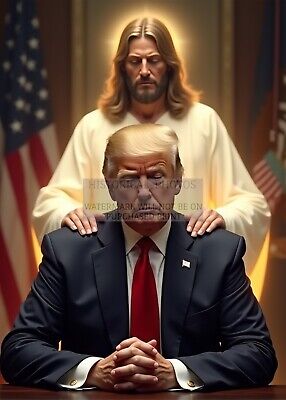
Accordingly, Mr. Trump has often met with pastors from states like Colorado and Pennsylvania. On returning home, those reverends have shared photos taken with the president sometimes with heads bowed in prayer, imposing hands of blessing on the president’s head, or with Mr. Trump joining them in singing hymns.
All of this led the NYT article and accompanying video to identify the White House as “one of the safest places in the world to be a Christian.” In fact, one of the Christian pastors interviewed for the piece said that “he doesn’t see any rails on the limits of the faith office.”
Good Friday Perspective
As a Jesus scholar and theologian, I found all this quite ironic, false, and heretical. In my view it is reminiscent of Germany of the 1930s, when Christian pastors and Catholic bishops routinely endorsed the leader of the Third Reich, who also affirmed allegiance to the Jesus reflected in Mr. and Ms. Trump’s profession of faith.
The reality was, however, that Hitler’s Germany and the policies supported by Trump’s MAGA crowd reveal an actual hatred for Jesus mourned and celebrated this Good Friday. After all he was the son of an impoverished unwed teenage mother who was houseless at birth. He was an immigrant in Egypt. He was an unemployed construction worker. He was a harsh critic of the Jewish political and religious establishment, of the Roman Empire, and of the rich in general. He said that the future belonged to the poor, the non-violent, and those persecuted for justice sake. He ended his life as a victim of imperial torture and capital punishment.
Conclusion
So, if there are no rails, no limits, on Mr. Trump’s faith office how about lowering them for pastors like Episcopal Bishop Mariann Edgar Budde? (Remember how she infuriated Donald Trump and JD Vance at Trump’s inaugural prayer service at the National Cathedral in Washington. She did so merely by pleading with Mr. Trump to “have mercy” on LGBTQ people and immigrants targeted by his policies.)
If there are no rails, how about lowering them for rabbis, ministers, priests, and faithful demanding that Mr. Trump stop the Hitlerian genocide he’s committing in Zionist Israel?
If there are no rails, how about implementing policies that recognize and honor Jesus in the children of poor unwed teenage mothers, in the houseless, in immigrants, in the working class, in opponents of the rich and powerful, in those protesting the hypocrisy of Jewish Zionists, in U.S.-supported torture facilities, and on death row.
Only changes like those can convince followers of the historical Jesus that the White House is “one of the safest places in the world to be a Christian.” Only changes like those can make this “one of the great Easters ever.”
Readings for the Sixth Sunday in Ordinary Time: Jeremiah 19:5-8; Psalm 1:1-6; 1 Corinthians 15: 12, 16-20; Luke 6: 17, 20-26
This Sunday’s readings reject the anti-DEI, anti-Wokeness memes of what Marianne Williamson calls the Trump/Musk power couple.
The selected texts remind us that the natural order is one of diversity, universal love, and complete inclusion (DEI) that prioritizes the needs of women, children, immigrants, and former slaves. As we’ll see, the tradition is outspokenly anti-rich and demands reparations.
The readings also suggest the truth recognized in all major faith traditions that awakening to such reality (rather than remaining asleep) is the whole point of the human project aimed at transcending childish egocentrism and ethnocentrism. The point is what our black brothers and sisters call being “woke.” Even more, it’s to achieve world centrism and ultimately cosmic centrism that understand and respect the unity of all creation.
By contrast, putting oneself first, putting one’s country first, idolizing wealth and the power it brings are all condemned in the teachings of Yeshua.
In other words, the Judeo-Christian tradition represented in today’s readings roundly rejects the villainizing of DEI and wokeness. Even more, they call Yeshua’s followers to a class consciousness and a fundamental option for the world’s poor and oppressed against the rich whom Yeshua condemns in no uncertain terms.
Let me show you what I mean in terms of class consciousness and the warfare of the rich against the poor.
Class Warfare
Whereas in the past it might have been possible to argue that we live in a classless society, that is no longer the case. The accession of Donald Trump to the office of president has rendered such argument moot. The man has declared war on the poor.
Think about the brazenness of it all.
I mean, after the display at Trump’s inauguration, it is now impossible for anyone to deny that Elon Musk and other billionaires play powerful roles in calling the shots. The shot callers include Donald Trump himself, Musk, Mark Zukerberg, Jeff Bezos, Tim Cook of Apple, and Sundar Pichai of Google. All of them were there occupying prominent seats the day that Trump took office. At times it even appears that Elon Musk, the world’s richest man, rather than Mr. Trump is our country’s president. Our system is undeniably plutocratic.
And what is the basic argument of these people? Simply put, it is that THE RICH DON’T HAVE ENOUGH MONEY, WHILE THE UNDESERVING POOR AND MIDDLE CLASS HAVE TOO MUCH MONEY.
They’re convinced that the world’s and our country’s problems are caused by the poorest people on the planet. Accordingly, we’re expected to believe that:
In a country of 320 million people, 12 to 15 million impoverished, undocumented, hardworking, tax-paying refugees are “invaders” and bringing us all down.
The U.S. with 4.5% of the world’s population (along with its European fellow colonialists) has a God-given right to control the entire planet.
Those formerly colonized in Latin America, Africa, and Asia should be sanctioned for uniting (e,g,, in BRICS+) to seek non-violent rectification of the colonial system that has impoverished them for more than 500 years.
The wealthy South African cohorts of their erstwhile countryman, Elon Musk, are now victims of black South Africans who must be sanctioned for treating them unfairly.
Uniformity, inequity, and exclusion are American and Christian values as opposed to diversity, equity, and inclusion.
It’s ludicrous to awaken (become woke) to the absurdity of it all.
Let me say that again: All of this (and so much more) provides unmistakable evidence of the wealthy’s conviction that THE RICH DON’T HAVE ENOUGH MONEY, WHILE THE POOR HAVE TOO MUCH MONEY.
Think about it a bit further. To increase their money supply, the billionaires want lower taxes, less government regulation of their businesses, and continued subsidies to their corporations maintained or increased. Correspondingly, they want “wasteful” programs like those funding Medicaid, HeadStart, food stamps, and public schooling curtailed or eliminated. Even Social Security is questioned. For the rich, minimum wages are an abomination as are unions and the so-called “right” to collective bargaining. The rich see all such government programs and organizing as wasteful, i.e., as excessively enriching the lives of the undeserving poor.
Yes: For the upper class, THE RICH DON’T HAVE ENOUGH MONEY, WHILE THE POOR HAVE TOO MUCH MONEY. That’s what they believe! It can’t be said often enough.
It’s all a declaration of class warfare.
Today’s Readings
Today’s readings contradict all that. Look at my “translations” and summaries immediately below. Compare them with the originals here to see if I got them right.
Jeremiah 17:5-8: In the early 6th century BCE, the great prophet Jeremiah foretold the defeat of his people by the Babylonians (modern day Iraq) because of Judah’s social injustices and moral decay. Of course, his message of doom brought him death threats and cancellation. In today’s reading he says: We who pretend to be God’s People are cursed because we’ve prioritized the wisdom of the world (flesh) over the insights of the heart. Our failure to recognize the rhythms of history makes us like a dried-up bush in a parched desert. Only our hearts’ return to the Divine Mother-Father and to the Mosaic Covenant (that prioritizes the needs of the poor, widows, orphans, and immigrants) will restore our identity as a mighty tree planted near clear running water.
Psalm 1: 1-6: Yes, God’s law commands care for the poor, the widows, the orphans and immigrants. These are God’s “Chosen People” just as Israel once was when it too was poor and enslaved in Egypt. Then their hope was in the Great I Am rather than in the wisdom of Egyptian slavers with their wicked, sinful, and insolent oppression of Yahweh’s chosen. Never forget that. Such mindfulness will insure prosperity for all. Be encouraged too by the fact that the rich and powerful oppressors will inevitably be blown away like chaff in the wind. Blessed be the hope of the poor!
1 Corinthians 15: 12, 16-20: Yeshua’s return from the realm of the dead cannot be denied without destroying the faith and hope of the poor. He is the quintessential avatar of the poor and oppressed brought back to life from “death” that is no more than a temporary slumber. Alleluia!!
Luke 6: 17, 20-26: In the Gospel of Luke, Matthew’s “Sermon on the Mount” is delivered “on a stretch level ground.” Also, Matthew’s “Blessed are the poor in spirit” becomes a more down-to-earth “Blessed are you who are poor.” In both cases however, the penniless Yeshua promised ultimate political triumph, abundant food, joy, and heaven on earth to the poor, the hungry, the tearful, despised, excluded, insulted, and demonized. (He promises reparations!) Moreover, he cursed the overfed, apparently joyful rich and famous. In Yeshua’s Great Reversal, the rich are destined to be hungry, disconsolate, in tears, and disgraced. (Take that Messrs. Pilate, Herod, and Revs. Anas and Caiaphas! Take that Messrs. Musk and Trump and Rev. Huckabee!)
Conclusion
In an interview with NPR, Evangelical Christian leader Russell Moore said that several pastors had told him disturbing stories about their congregants being upset when the ministers read from the “Sermon on the Mount ” where as we’ve just seen (in Luke’s “Sermon on the Plain”) Yeshua favors the poor over the rich.
“Multiple pastors tell me, essentially, the same story about quoting Jesus in the Sermon on the Mount – [and] to have someone come up after to say, ‘Where did you get those liberal talking points?”
Moore added: “And what was alarming to me is that in most of these scenarios, when the pastor would say, ‘I’m literally quoting Jesus Christ, the response would be, ‘Yes, but that doesn’t work anymore. That’s weak.”
But here are Yeshua’s words:
“Blessed are you who are poor, for the kingdom of God is yours. Blessed are you who are now hungry, for you will be satisfied. Blessed are you who are now weeping, for you will laugh. Blessed are you when people hate you, and when they exclude and insult you, and denounce your name as evil on account of the Son of Man. Rejoice and leap for joy on that day! Behold, your reward will be great in heaven. For their ancestors treated the prophets in the same way. But woe to you who are rich, for you have received your consolation. Woe to you who are filled now, for you will be hungry. Woe to you who laugh now, for you will grieve and weep. Woe to you when all speak well of you, for their ancestors treated the false prophets in this way.”
Readings for the Third Sunday in Ordinary Time:Nehemiah 8:2-4a, 5-6, 8-10; Psalm 19: 8,9, 10, 15; I Corinthians 12: 12-14, 27; Luke 1: 1-4, 4: 14-21
Last Tuesday Episcopal Bishop Mariann Edgar Budde infuriated Donald Trump and JD Vance at Trump’s inaugural prayer service at the National Cathedral in Washington. She did so by echoing in her sermon the Spirit of Yeshua of Nazareth whom this Sunday’s Gospel reading depicts as delivering his own inaugural address to his former neighbors in his hometown of Nazareth.
Bishop Budde’s words asked Mr. Trump “in the name of our God” to “have mercy” on LGBTQ people and immigrants targeted by his policies. Her words chimed with those of her Master who in his programmatic words proclaimed his work as directed towards outsiders – the poor, the blind, the imprisoned, oppressed, and indebted.
Evidently, Messrs. Trump and Vance prefer their version of God and a Jesus who puts America first. They seem to consider Americans (and Zionists) as somehow “chosen” by a God who joins them in despising those with non-binary sexual orientations. Instead of welcoming strangers (as Bishop Budde put it in tune with oft-repeated biblical injunctions) their God would build walls and evict them from our midst.
Ironically, the Trump/Vance position is not far from that articulated by Ezra, Israel’s 6th century BCE priest and scribe who invented the concept of a genocidal Israel as God’s chosen one. (You can read a summary of Ezra’s words immediately below.)
So, predictably, Mr. Trump and his followers (like Yeshua’s contemporaries rejecting him) wasted no time in vilifying Bishop Budde.
Instead, she deserves our admiration and imitation as a woman of vast integrity and courage. Let me show you what I mean.
Today’s Readings
Nehemiah 8:2-4a, 5-6, 8-10
Following the Jews’ return from the Babylonian exile (586-538), the Jewish priest and scribe, Ezra rewrote the Hebrew’s largely oral traditions that eventually became their Bible. He unified those narratives about mysterious beings called “Elohim.” These were human or perhaps extraterrestrial “Powerful Ones,” some good-willed, some malevolent, who had never been universally considered divine. In Hebrew oral tradition, they had variously been called by names such as “Elohim,” “El,” “El Shaddai,” “Ruach,” Baal, and Yahweh. Ezra unified and rewrote those traditions as if all of them were about Israel’s now “divine” Powerful One (Yahweh). The tales included divinely authorized genocides of Palestinians (identified in biblical texts as Canaanites, Hittites, Amorites, Perizzites, Hivites, Jebusites, Geshurites, Maacaathites, and Philistines). All of them had lived in the “Holy Land” long before the arrival of the ex-slave invaders from Egypt who ruthlessly decimated their numbers in the name of their Powerful One. In Nehemiah chapter 8, Ezra is depicted as spending half a day reading his conflated narrative [now called “The Law” (Torah)] to Israel’s “men, women, and those children old enough to understand.” The new narrative brings everyone to tears as a nationalistic and exclusive consciousness dawns that Yahweh-God had chosen them as his special people.
Psalm 19: 8,9, 10, 15
Despite the genocides, the people praised Yahweh’s words as simple, perfect, refreshing, trustworthy, wise, illuminating, pure, eternal, true, and completely just. They identified Ezra’s words as Spirit and Life.
I Corinthians 12: 12-14, 27
Yeshua, however, never called his Heavenly Father “Yahweh.” Instead, he (and his principal prophet Paul) understood God as a Divine Parent, the Creator of all things, the “One in whom we live and move and have our being” (Acts 17:28). Yeshua (and Paul) rejected the idea of “Special People” in favor of all humanity as comprising One Human Body. For both men, no part of that Body (even the least presentable) was better or more important than any other. For Paul and Yeshua, Jews and non-Jews were the same. So were slaves and free persons. In fact, for Yeshua’s followers, those the world considers less honorable should be treated “with greater propriety.”
Luke 1: 1-4, 4: 14-21
In the first sermon of his public life, Yeshua addressed his former neighbors. He was asked to read from the scroll of the prophet Isaiah (a contemporary of Ezra) who dissented from genocides and mistreatment of captives. Here’s what Yeshua read:
“The Spirit of the Lord is upon me, because he has anointed me to bring glad tidings to the poor. He has sent me to proclaim liberty to captives and recovery of sight to the blind, to let the oppressed go free, and to proclaim a year acceptable to the Lord.“ Rolling up the scroll, he handed it back to the attendant and sat down, and the eyes of all in the synagogue looked intently at him. He said to them, “Today this Scripture passage is fulfilled in your hearing.”
When his neighbors heard his words, they wanted to kill him. Who did he think he was?! Everyone knows God favors the rich, not the poor. Just look at the Great Ones’ gaudy lifestyles and possessions. And those people in prison deserved to be there. Once freed, they’d threaten us all. And besides, the blind were sightless because of some sin they or their parents had committed. They deserved their lot in life. As for “the oppressed . . . There are no “victims.” Everyone knows that. Victimology is a hoax. Who did this Yeshua think he was?! Let’s kill him.
Conclusion
Yes, Yeshua, like Bishop Budde confronted his contemporaries to champion the One in whom we live and move and have our being.” For Yeshua that Divine One considers all humankind a single indivisible body. For him this meant incorporating those his world wanted to amputate as outsiders, invaders, criminals, and as official enemies like Samaritans, tax collectors, street walkers, the poor, imprisoned, the sightless, oppressed and indebted.
In Yeshua’s spirit, Bishop Budde urges incorporation of immigrants, LGBT outcasts, and official enemies such as the Palestinians, Russians, Chinese, Iranians, North Koreans, Venezuelans, Nicaraguans, Cubans, Syrians, Iraqis, Afghans, Somalis, Sudanese, Libyans, etc. etc. None of them is our enemy. All of them, she says with Yeshua and Paul, are closer to us than our brothers and sisters. They are parts of our own bodies. None can be amputated.
Such universalism, such wakefulness always infuriates those who would divide and rule over us. It angers as well ordinary people (like Yeshua’s neighbors) who have been brainwashed into accepting prevailing nationalistic understandings of the Bible’s often genocidal “God.”
Today’s readings call us to wake up! Bishop Budde’s got it right. Trump and Vance are heretics.
It’s Christmas again. And Jesus is still under the rubble In Gaza (Just like last year).
He’s on an operating table There Having his infant arms and legs Sawed off Without anesthesia. Screaming for his Already dismembered mother Who’s been blown away By the U.S. and Israel. He’ll never kiss her again Or feel her warm embrace.
All but forgotten By holiday revelers With mindless “Merry Christmases!!”
Meanwhile Zionists weaponize the Bible So the slaughter might continue. Christians do the same Singing maudlin carols They don’t understand And buying silly trinkets In Wal-Mart. As if God were Santa Claus, A billionaire, Or a racist killer.
Worse still: As if God were A genocidal Amerikan!
It’s as if Yeshua were not Piss poor And homeless at birth Considered by imperialists As no more than an “animal” Among stable asses and oxen, The son of a disgraced Unwed teenage mother, An underpaid construction worker, A drunken friend of prostitutes Houseless as an adult The sworn enemy Of the Jewish power establishment And the rich That wanted that child From nowheresville Slaughtered.
(Good Christians don't like people like that)
As if Yeshua were just another Palestinian street rat, And not An unwelcome refugee in Egypt, A terrorist in Roman eyes, Their inmate on death row, A victim of torture And capital punishment.
“Good riddance,” The Romans said Just like us.
And the whole world Wasn’t watching then either. Few noticed Or cared.
But should we open our eyes We’d see a Yeshua So much more Than that.
He came to serve the poor. He said. God’s kingdom would be theirs So would the entire earth. Not Elon’s or Gates’ (Luke 6:24) Or Amerika’s Who’s blindness and arrogance Deserves eternal damnation Rather than the accolades The world bestows on Such fools Along with Herod and Pilate Anas and Caiaphas.
______
The pastor of Bethlehem’s Christmas Church said Something like that In his own Christmas sermon This year Just like the one Few noticed When he said it Last year.
Here’s his Xmas creche
Here’s Pope Francis with his Jesus In a keffiyeh-lined crib:
This year Listen To these holy men And to Yeshua’s silenced voice In the Sacred Land Of Palestine.
Once again, The real Christmas Story Is unfolding There Before our very eyes.
The Great Gustavo Gutierrez died this week. He transitioned as a 96-year-old giant whose A Theology of Liberation: History, Politics, and Salvation (1971) popularized and spurred the most important theological movement of the last 1700 years (i.e. since Constantine in the 4th century). In fact, liberation theology (LT) might well be described as responsible for the West’s most influential intellectual and social developments of the last 175 years (i.e. since the publication of the Communist Manifesto in 1848). United States and Vatican fierce opposition to LT testifies to its impact.
Think about it. Without liberation theology it is impossible to account for Salvador Allende’s rise to power in 1973 or the triumph of Nicaragua’s Sandinistas in 1979, or the power the FMLN in El Salvador had and continues to enjoy today. The Zapatista movement in Mexico is also intimately connected with liberation theology. Even more, without reference to liberation theology, it’s impossible to fully understand the rise of new left governments throughout Latin America. All of them are indebted to liberation theology and its power to motivate the grassroots.
Perhaps more surprisingly: apart from LT, one cannot fully understand the prominence of conservative evangelicals in the United States. That’s because (as we’ll see below) political support for their movement was part of the Reagan administration’s strategy to defeat liberation theology which the White House and the Pentagon termed a national security threat. Their fear of LT mirrored that of the Vatican which ended up cooperating with Washington’s war against it.
Many are convinced that Washington’s and Rome’s anti-LT war was successful. That’s because the U.S. systematically assassinated its prophets along with hundreds of thousands of its adherents in a massive conflict that Noam Chomsky called “the first religious war of the 21st century.” The sheer terrorism of the U.S. response plus an equally systematic offensive against LT within the Catholic Church itself deprived liberation theology of its best leaders, misinformed and intimidated the grassroots, and silenced many more. Nonetheless LT has changed the world. It has changed the church and Christianity in general.
But what is liberation theology? And why was it so threatening to the powers-that-be, both political and ecclesiastical? What steps were taken to defeat it? And why should believers be so grateful to theologians like Gustavo Gutierrez?
Liberation Theology Defined
Simply put, liberation theology is reflection on the following of Jesus of Nazareth from the viewpoint of the poor and oppressed. More accurately, it is reflection on the following of Jesus the Christ from the viewpoint of those among the poor who are committed to their own liberation. That is, LT begins from a place of commitment – to a world with room for everyone. In itself, it represents a popular movement, a solidarity movement for social justice.
Liberation from what? In a word, from colonialism and from the neo-colonialism represented today by the forces of corporate globalization. Those forces have nearly half the world living on $2 a day or less. They’ve concentrated the world’s wealth in the hands of a sliver of 1% of the world’s population. According to UN statistics, eight billionaires own as much as 50% or humanity. As a result, at least 25,000 people including 10,000 children die of preventable starvation each day. In the eyes of liberation theology’s protagonists, that’s sinful and runs entirely contrary to the teachings of Jesus of Nazareth.
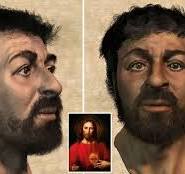
And what were those teachings? (This is the heart of liberation theology.) They were first of all those of a man recognized by the impoverished protagonists of liberation theology as someone like themselves. He looked like them. According to experts in the field of forensic archeology, he resembled poor mestizos everywhere in Latin America. He probably stood about 5’1’’ and weighed about 110 pounds. His skin was brown. He was a laborer, not a scholar; his hands were calloused.
Ironically, Jesus also possessed characteristics that mainstream Christians often find repulsive and ungodly. He was the son of an unwed teenage mother (Mt. 118-22; Lk. 1:26-38). He was homeless at birth (Lk.2:7). If we are to believe Matthew’s account, Jesus became an immigrant in Egypt (Mt. 2:13-15). The good people of his day called him a drunkard and the companion of prostitutes. They expelled him from his synagogue because he didn’t seem to care about the 10 Commandments, especially the most important one – the Sabbath law. (For a Jew such excommunication and the shunning it entailed were like a death sentence.) The religious authorities said he was a heretic and possessed by the devil. The occupying Roman authorities identified him as a terrorist. They arrested him. And he ended up a victim of torture and of capital punishment carried out by crucifixion – a means of execution the Romans reserved specifically for insurgents. He was not the kind of person mainstream Christians usually admire. He was far too liberal to merit their approval.
Jesus was clearly a feminist. Many of his disciples were women. He spoke with them in isolated places. He actually forgave a woman caught in adultery, while implicitly criticizing the hypocrisy of patriarchal law which punished women for adultery and not men. And Jesus refused to recognize his contemporaries’ taboos around segregations. He crossed boundaries not only dividing men from women, but Jew from gentile, lepers from non-lepers, and rich from poor.
He couldn’t have been more liberal. In a sense he was an anarchist. He honored no law that failed to represent the loving thing to do. His attitude towards the law is best summarized in his pronouncement about the Sabbath. “The Sabbath was instituted for human beings,” he said, “human beings weren’t made for the Sabbath.” This was pure humanism placing human beings above even God’s holiest law. Again, it was anarchistic.
Jesus’ teachings were politically radical as well. They centered on what today is called social justice. As such they infuriated his opponents but were wildly inspiring to the poor and oppressed. His proclamation was not about himself, but about what he called “The Kingdom of God.” That was the highly charged political image he used to refer to what the world would be like if God were king instead of Caesar. In that kingdom everything would be turned upside-down. The first would be last; the last would be first. The rich would be poor; the poor would be rich.
Subsequent reflection by followers of Jesus in the Book of Revelation teased all of that out and drew the conclusion that with the dawning of God’s kingdom, the Roman Empire would be destroyed and replaced by a new heaven and a new earth entirely unlike empire. There (as indicated in the Acts of the Apostles) wealth would be distributed from each according to his ability to each according to his need. There would be room for everyone. If that sounds like communism, it’s because, as the Mexican exegete Jose Miranda points out, the idea of communism originated with Christians, not with Marx and Engels.
U.S. Opposition to LT
Those connections with Marxist analysis go a long way towards explaining resistance to LT by the U.S. government as well as within the Catholic Church.
That liberation theology dared to enter the mythological arena the right had long dominated virtually without rival astounded and infuriated the empire. Peasants throughout the subjugated world found the new explanations of God, Jesus and the gospels entirely empowering. Everywhere throughout Latin America they formed biblical circles, and those circles issued in social movements for justice.
In response, the Rockefeller Report of 1969 already identified liberation theology as a threat to the national security of the United States. By 1987, the Latin American Military Chiefs of Staff meeting in conference in Mar del Plata, Argentina, devoted several pages of their final report to liberation theology and the threat it posed to regional stability. In between, in 1979 the first Santa Fe Document advised the incoming Reagan administration that it had to do something decisive about the threat posed by liberation theology. The administration heeded the advice, and responded both militarily and ideologically.
Reagan’s military strategy against liberation theology issued in a bloody war pitting the United States against the Catholic Church in Latin America whose bishops meeting in conference in Medellin Colombia had together dared to affirm a “preferential option for the poor” as their official position. To combat that commitment, the U.S. did exactly what Rome had done in the first three centuries of our era – and for the same reason: faithfully following Jesus who called empire into question and motivated the poor to assert their rights in this world as children of the God of life.
And both the Roman response and the U.S. response to Jesus and his followers resulted in blood baths. Many of us are well acquainted with the best-known martyrs: Camilo Torres, Archbishop Romero, the Salvadoran team of liberation theologians killed at San Salvador’s Central American University in 1989, the U.S. women religious murdered years earlier in that same country, and Che Guevara. (Yes, Che. His spirituality was secular, but it was no less spiritual or liberationist than any of the others.) And then the unending list of martyrs in this war against the Catholic Church – 200,000 in Guatemala, more than 100,000 in Nicaragua, 90,000 in El Salvador, and literally untold killings and disappearances in Honduras.
In every case, the carnage was a response to social movements inspired by liberation theology. Again, as Chomsky points out, official U.S. military documents show that liberation theology was a major target of those wars. In fact within those same official documents, the Army boasts specifically about defeating LT.
As for Reagan’s ideological response to liberation theology . . . . On his accession to power, CIA psyops began funding conservative alternatives to liberation theology in Latin America and in the U.S. So did business concerns that saw the leftward drift of Latin America as a threat to their presence there. Domino’s Pizza and Coors Brewery were prominent among the cases in point. As a result, evangelicals throughout the region grew rapidly in number, and the recipients of those funds in the United States increasingly identified with Republicans, the “hand that fed them.”
So, the television programs of Jerry Falwell, Pat Robertson, Jim and Tammy Baker, Jimmy Swaggart, and others were beamed into every poor barrio,población, and favela. Right wing churches sprang up everywhere feeding and expanding an already robust evangelical presence in areas once completely dominated by the Catholic Church. The reactionary message was always the same – a depoliticized version of Christianity whose central commitment involved accepting Jesus as one’s personal savior and rejecting communism including the type allegedly represented by the theology of liberation.
All this points up the extreme importance of LT. including being indirectly responsible for the rise of the religious right in the United States.
On the other hand however, and on the other side of the aisle, so to speak, the Obama presidency represented the first U.S. president directly influenced by liberation theology. For 20 years, Barack Obama was part of the congregation of Jeremiah Wright – identified by James Cone, the father of black liberation theology, as the latter’s foremost contemporary embodiment.
Nevertheless, Reagan’s two-front strategy (military and ideological) worked. Revolutionary gains in El Salvador, Guatemala, and most prominently, in Nicaragua were halted and reversed. Militarily, the “Guatemala Solution” was the template. It entailed using military and paramilitary death squads to kill everyone remotely connected with guerrilla movements. According to the Reagan strategy, that included priests, nuns, lay catechists and ministers of the word influenced by liberation theology. The theological strategy worked as well. The slogan promulgated by the Salvadoran military said it all, “Be a patriot; kill a priest.”
Our Debt to Gustavo Gutierrez
Gustavo Gutierrez was by no means the founder of liberation theology. However, he is said to have coined the term in 1968 after the bishops of Latin America adopted as their own LT’s understanding of the Christ event as expressing God’s “preferential option for the poor.” The poor are God’s chosen people, liberationists explained, as testified by the divine choice to incarnate as the poor peasant earlier described.
In a sense then, Gutierrez and the movement he popularized represents a kind of “Critical Faith Theory” comparable to contemporary academia’s “Critical Race Theory.” Like the latter in relation to race, liberation theology seeks to reverse the traditional employment of religion and the Judeo-Christian tradition as tools of oppression meant to drug, pacify, infantilize, and depoliticize their adherents.
In that sense, LT is a kind of anti-theology.
Thank you Saint Gustavo Gutierrez for your life and work.
Apologies for not attending to my blog for so long.
I’ve been busy getting ready for this two-month trip as well as rehabbing from my knee operations and another unexpected surgery. I’ve also been preoccupied with Tarot readings for an increasing number of clients – not to mention readings for my immediate family.
All six of us (including my son-in-law) have birthdays in the span of a single month – from September 6th to October 5th. And this year I’ve decided to give each family member a 10-card Tarot reading. It’s been a lot of fun, but has taken time, since each reading (including visual representations of each card) runs to about a dozen pages.
With that behind me, I can now return to blogging.
So, again, greetings from the Eternal City.
Peggy and I are here visiting our son Brendan, his wife Erin, and their three children, Genevieve (4), Madeleine (2), and Sophie (8 months). We want to get to know those kids.
You may recall that Brendan works for the State Department. He operates out of the embassy in Rome and is doing quite well following previous postings in Mexico, Afghanistan, and Pakistan.
You might also realize that in a sense, this visit represents my “return to the scene of the crime.” I mean, as a newly ordained priest, my first assignment was to get my doctorate in moral theology here in Rome. So, between the years 1967 and 1972, I obtained my licentiate in systematic theology at the Atheneum Anselmianum and that doctorate at the Academia Alfonsiana.
Those five years changed my life.
Having educated me for 12 years (from a callow high school freshman in Silver Creek, New York to an ordained priest in Milton, Massachusetts) the intent of the Society of St. Columban (my sponsoring organization) was for me to return from Rome and teach moral theology in its major seminary.
However, studying post-Vatican II theology and living abroad for five years radically changed my world vision and understandings of God, Jesus, church, priesthood, politics, etc. Consequently, without my knowing it, the rector of our Rome house eventually wrote to the Columbans’ Superior General that I was “too dangerous” to teach in the organization’s major seminary.
So much for that.
In any case, I’ve written about all that elsewhere in these pages behind the “personal” button in my blog’s table of contents.
I won’t bore you with repetition.
So let me do so instead by simply noting that:
We’re here.
We’ve been generously received by our hosts.
The grandkids are a lot of fun.
I’ve forgotten most of my Italian (confusing it with similar languages I’ve learned in the meantime, viz., Portuguese and Spanish).
At this very moment, Peggy and I find ourselves aboard a high-speed train heading from Rome to Turin, where we’ll attend a conference on the world’s food system.
Afterwards, we’ll spend three nights in Venice.
Then we’ll return to Rome and the adventures that await us there and elsewhere in the country.
And oh (by the way) around Thanksgiving and our planned trip home, the two of us will return to Spain’s Granada for a week. That’s where we spent about a year in 2022-23. It will be great to reconnect with friends there.
Readings for 13th Sunday in Ordinary Time: Wisdom 1:13-16, 2:23-24; Ps. 30:2, 4-6, 11-13; 2Cor. 8:7, 9, 13-16; Mk. 5:21-43
Last month my brilliant 15-year-old granddaughter shocked students in her high school freshman class by giving a speech about menstruation. Yes, menstruation! She called her talk “Bleeding in Silence: The Hidden Epidemic of Period Poverty.” (For those interested, I’ve pasted Eva’s words to the bottom of this posting.)
Eva’s speech was about how the patriarchal system fundamentally misunderstands how women’s bodies function. And in our man’s world, it’s women who pay the price for such ignorance. For instance, it influences the cost of “feminine hygiene products” and their availability while imposing unspoken prohibitions about even mentioning menstrual periods much less openly discussing and coping with them.
Eva’s presentation began with a video of interviews of male family members during a party over her school’s Easter break. On camera, she simply asked us “What do you understand by the word ‘menstruation?” It was surprising how quickly inarticulate, seemingly embarrassed, and (let’s face it) ignorant our responses were, even by those who (like me) should know better.
A principal conclusion of Eva’s speech was that lamentably, men know very little about how female bodies work. Women, of course know much more. Moreover, this disparity has major social repercussions when overwhelmingly male state administrators in a completely patriarchal system impose legislation about what they barely understand. e.g., about abortion, contraception sex education, and easy and cheap access to those hygiene products.
For instance, relative to abortion, the legislation ignores the fact that 70-75% of fertilized eggs end up aborting spontaneously. They’re unceremoniously flushed down toilets across the world in the menstrual period immediately following fertilization. Yet, a recent decision by the Alabama Supreme Court holds that all those unknown and unrecognized embryos are somehow “children.” At least that’s the implication of the court’s determination that frozen embryos are babies. How offensive to common sense is that? How contrary to what every woman implicitly knows.
I bring all of that up on this Thirteenth Sunday in Ordinary Time because today’s selection from the Gospel of Mark centralizes a woman with a menstrual problem. It implies criticism of ignorant patriarchal laws regulating it, while strongly affirming a particular woman’s courageous decision to transgress those restrictions in favor of her own faith and common sense.
Jesus & Menstruation
In short, today’s reading uses the issue of menstruation to show how Jesus favored women who spoke for themselves and courageously exercised their own initiative even in the face of specific patriarchal legislation forbidding such agency. It has him even curing and praising a woman who disobeys precisely misogynistic laws. He ends up prioritizing her needs over those of a young female who was a passive captive to the religious patriarchy.
To make those points, Mark the evangelist creates what might be termed a “literary sandwich” – a “story within a story.” The device focuses on two kinds of females within the Jewish faith of Jesus’ day. In fact, Mark’s gospel is liberally sprinkled with doublets like the one just described. When they appear, both stories are meant to play off one another and illuminate each other.
In today’s doublet, we find two women. One is just entering puberty at the age of 12; the other has had a menstrual problem for the entire life span of the adolescent girl. (Today we’d call her condition a kind of menorrhagia.)
So, to begin with the number 12 is centralized. It’s a literary “marker” suggesting that the narrative has something to do with the twelve tribes of Israel – and in the early church, with the apostolic leadership of “the twelve.” The connection with Israel is confirmed by the fact that the 12-year-old in the story is the daughter of a synagogue official. As a man in a patriarchal culture, he can approach Jesus directly and speak for his daughter.
The other woman in the doublet has no man to speak for her; she must approach Jesus covertly and on her own. She comes from the opposite end of the socio-economic spectrum from the 12-year- old daughter of the synagogue leader.
The older woman is without honor. She is poor and penniless. Her menstrual problem has rendered her sterile, and so she’s considered technically dead by her faith community. Her condition has also excluded her from the synagogue. In the eyes of community leaders like Jairus (the petitioning father in the story) she is “unclean.” (Remember that according to Jewish law, all women were considered unclean during their monthly period. So, the woman in today’s drama is exceedingly unclean. She and all menstruating women were not to be touched.)
All that means that Jairus as a synagogue leader is in effect the oppressor of the second woman. On top of that the older woman in the story has been humiliated and exploited by the male medical profession which has been ineffective in addressing her condition. In other words, the second woman is the victim of a misogynist religious system which saw the sacrificial blood of animals as valuable and pleasing in God’s eyes, but the blood of women as repulsively unclean.
Nonetheless, it is the bleeding woman who turns out to be the hero of the story. Her confidence in Jesus is so strong that she believes a mere touch of his garment will suffice to restore her to health, and that her action won’t even be noticed.
So, she reaches out and touches the Master. Doing so was extremely bold and highly disobedient to Jewish law, since her touch would have rendered Jesus himself unclean. She refuses to believe that.
So instead of being made unclean by the woman’s touch, Jesus’ being responds by exuding healing power, apparently without his even being aware. The woman is cured. Jesus asks, “Who touched me?” The disciples object, “What do you mean? Everybody’s touching you,” they say.
Finally, the unclean woman is identified. Jesus praises her faith and (significantly!) calls her “daughter.” So, what we end up finding in this literary doublet are two Jewish “daughters” – yet another point of comparison.
While Jesus is attending to the bleeding woman, the first daughter in the story apparently dies. Jesus insists on seeing her anyhow. When he observes that she is merely asleep, the bystanders laugh him to scorn. But Jesus is right. When he speaks to her in Aramaic, the girl awakens and is hungry. Everyone is astonished, and Jesus must remind them to feed her.
Mark’s Message for Us
What does all the comparison mean? The doublet represented in today’s Gospel addresses issues that couldn’t be more female – more feminist. The message here is that bold and active women unafraid of disobeying the religious or civil patriarchy in matters that women understand better than men. “Prioritize and act like the bleeding woman” is the message of today’s Gospel.
Could today’s gospel be telling us that bold and specifically feminist faith that sides with the poor and oppressed (like the hero of today’s Gospel) will be the salvation of us all who are moribund? Are women precisely as women today’s real faith leaders, rather than the elderly, white, out-of-touch men who overwhelmingly claim to lead in every sphere even those where women know far more.
Conclusion
Today’s Gospel suggests that it’s time for men to stop telling women how to be women – to stop pronouncing on issues of female sexuality whether it be menstruation, abortion, contraception, same-sex attractions, or whether women are called by God to the priesthood. Correspondingly, it’s time for women to disobey such male pronouncements, and to exercise leadership in accord with their common sense – in accord with women’s ways of knowing. Only that will save our national community which is currently sick unto death.
_______
Bleeding in Silence: The Hidden Epidemic of Period Poverty
By Eva Lehnerd Reilly
Whether they know the term or not, all women are necessarily aware of the realities of “Period Poverty.” Nonetheless, the concept remains completely foreign and even incomprehensible to most men. As a result, little is done to eliminate the problems the phrase represents. The phrase “Period Poverty” is defined as the lack of access to safe and hygienic menstrual products during monthly periods and accessibility to basic sanitation services or facilities as well as menstrual hygiene education.
Additionally, period poverty has social dimensions that include the stigmas surrounding this natural female process. To explain the problem, what follows will explore international dimensions of this issue, connect the phrase with patriarchy, misogyny and human rights and make recommendations for its elimination. This essay is arguing “Period Poverty” is a world health issue thus by refusing to acknowledge it we are proving that we still live in a society that is patriarchal, misogynist, and locked in an aggressive denial of the rights of women.
An International Problem
This issue affects billions of people worldwide in ways including stigma, dependence on transnational companies producing the necessary hygienic products, and the lack of understanding and acknowledgement of the problem. Stigma is one of the largest problems surrounding period poverty. Many countries and people believe wildly untrue period-related information. According to the Korean Journal of Family Medicine, Nepal “continues to believe in dangerous, incorrect ideas, for example, using tampons causes women to lose their virginity, or handling food while menstruating causes it to spoil the food.
Social stigma on menstruation remains even in more advanced nations: in the United States, 58% of women are ashamed of having a period, and 51% of men believe that it is improper to discuss periods at work.” (Jaafar, Hafiz, et al., 2023). The fact that stigma is so present in all different circles around the world shows how grand an issue this is and how many people are affected by it.
This is also an economic issue because women are dependent on transnational companies. Global Research and Consulting Group Insights explains that: “Multiple countries in the world impose the ‘tampon tax’ on menstrual products, frequently targeted as ‘luxury goods.’ This categorization enhances the chances that economic disparities, limit access to period products, and perpetuates the view that they are not a ‘necessity.’”(Ricardo da Costa, 2023). This tax is implemented often in particularly lower-income, less developed countries but it is far from unique to developing countries. In fact, GRC found that the elimination of the “tampon tax” in California would likely reduce government revenue by 55 million dollars. This shows how women’s reliance on companies to provide basic hygiene products is problematic because the government is trying to make financial gains by providing resources that should never be charged for in the first place.
Probably the largest problem of them all is the lack of awareness and understanding surrounding period poverty and the menstrual cycle in general. A Plan International study found that one in five boys and young men think that periods should be kept a secret. Furthermore, they associate this term with words like ‘messy,’ ‘gross,’ and ‘embarrassing.’ This tells us that the taboos set in place by society are greatly affecting young people and discouraging them from learning and understanding this issue. This is leading to the rise of a new wave of sexism.
Periods and Patriarchy
The term “patriarchy” refers to social conditions ruled by fathers–or more generally by men. In
The Creation of Patriarchy, Gerda Lerner determines that this comes from lessons taught in childhood. She says that the “absolute authority of a father over his children provided men with a conceptual dominance of dependency, due to the helplessness of youth.” (Lerner, 90). Relative to period poverty, this fundamental condition has led some women to joke that if male biology included menstruation, they would likely be excused from work days before and during the entire menses process, plus they would be given a week off to recover. Additionally, menstrual hygiene products would be low or no cost, not subject to taxation, and as available as toilet paper and paper hand towels in every washroom.
In our patriarchal society no such accommodations are available for more than half our nation’s population. That’s period poverty. However, this goes farther than just the patriarchy. The issue is also affected greatly by misogyny, a term meaning hatred of women. This is revealed in attitudes surrounding mood swings, jokes about periods and even dates back to religious texts calling women ‘unclean’ during this time.
Particularly, in the third Book of the Pentateuch or Torah, known as Leviticus, it states that a woman undergoing menstruation is perceived as unclean for seven days and whoever touches her shall be unclean until evening (Leviticus 15:19). This is simply outrageous and goes to show how our society is so deeply rooted in these feelings of hatred towards women and disgust towards natural occurrences.
Finally, access to period products is a human right. A human right is what belongs to human beings simply because of being human; it does not have to be earned, it is an entitlement. All women, simply because of being women, have menstrual periods. They therefore have rights connected with their inevitable circumstances. These include rights to free or very low-cost feminine hygiene products, widespread availability of such products and freedom from blame, ridicule, or penalty for time off for personal care during their periods. Now that we have established this, how can we fix this?
Practical Recommendations
The Journal of Global Health Reports found that 500 million people lack access to menstrual products and hygiene facilities and since half the population is female and over half of university students are female, this issue can no longer be ignored. Men need to be part of the solution. We need to all work together to ensure a positive and supportive environment that allows menstruating people to participate in all aspects of life (e.g., going to school/work, and sport). In a Plan International study of over 300 men, 49% said their education on periods was poor or non-existent and just under one third (32%) said that talking about periods made them feel uncomfortable, increasing to 53% in the youngest respondents aged 16-18 years. This shows that many people (men in particular) are not receiving adequate education leading to misinformation and increased stigma associated with menstruation.
The takeaway is that we are in desperate need of a far greater and earlier education about periods in schools. There are three things to note surrounding this being a world health issue: 1) Poor menstrual hygiene often causes physical health risks, 2) globally, 1.7 billion people live without basic sanitation services, 3) girls with disabilities disproportionately do not have access to the facilities and resources they need for proper menstrual hygiene. The former Chief of Water, Sanitation and Hygiene at UNICEF said it best: “Meeting the hygiene needs of all adolescent girls is a fundamental issue of human rights, dignity, and public health.” (Rodriguez, Global Citizen). With all that in mind, allow me to conclude my argument.
Readings for Palm Sunday: John 12: 12-16; Isaiah 50: 4-7; Psalm 22: 17-24; Philippians 2: 6-11; Mark 14: 15-47
Today is Palm Sunday. For Christians, it begins “Holy Week” which recalls Jesus’ triumphant entry into Jerusalem (Palm Sunday), his Last Supper (Holy Thursday), his torture and execution (Good Friday), and his resurrection from the dead as the culmination of a long history that began with the liberation of Hebrew slaves from Egypt (Holy Saturday).
As just noted, the saga begins today by recalling what the Christian Testament remembers as the day when Jesus was greeted by chanting throngs as he entered the city seated on a donkey while the crowds waved palm branches and shouted “Hosanna.” They spread their cloaks before the animal that bore him to the temple precincts where he famously evicted money changers and vendors of sacrificial animals.
The event is full of political significance for those of us whose government has proudly inherited the mantle of the Roman Empire. That’s because the supposed events of Palm Sunday were probably part of a much larger general demonstration of faithful Jews including Jesus against the oppression that is part and parcel of all imperial systems including our own. As such, today’s narrative calls us to resistance of U.S. Empire as Rome’s contemporary successor.
To understand what I mean, consider (1) the significance of the Jerusalem demonstration itself and the role that palms played in its unfolding, (2) the demonstration’s chant “Hosanna, Son of David” and (3) the meaning of all this for our own lives.
Jerusalem Direct Action
For starters, think about what actually happened in Jerusalem during that first Demonstration of Palms.
Note at the outset that if the event wasn’t a whole-cloth invention of the early church, it’s highly unlikely that Jesus would have entered Jerusalem as a universally acclaimed figure. That’s because the gospels make it clear that all during his “public life,” Jesus confined his activities of healing and speaking to small villages where his audiences were poor illiterate peasants.
Given their small numbers, poverty and the expenses of travel and lodging, their massive presence in Jerusalem would have been highly unlikely. This meant that Jesus’ profile would have remained exceedingly low in larger cities and nearly non-existent in his nation’s capital city, Jerusalem. He would have been largely unknown there.
Again, if the event happened at all, it is more likely that the part Jesus and his disciples played in it was marginal and supportive of a larger parade and demonstration supported by well-organized revolutionaries such as Judah’s Zealot cadres whose raison d’etre was the expulsion of the occupying forces from Rome.
This also means that the demonstration’s climax with its “cleansing of the temple” would probably have represented a much larger assault on the sacred precincts where only large numbers of protestors would have stood any hope of impact rather than an individual construction worker supported by 12 fishermen.
(Remember, the residence of the Roman procurator, Pontius Pilate, was actually attached to the temple itself. So were the barracks of Jerusalem’s occupying force. The annex was called the Fortress Antonia. During the Passover holidays, everyone there would have been on high alert rendering any small demonstration – and probably any large one — virtually impossible. If the temple itself were not crawling with Roman soldiers, they would have been surveilling the whole scene.)
But even if Jesus were welcomed by the frantic crowds as depicted in the gospels, the event would have been precisely intended to be seen by the Romans as highly political and perhaps even decisive in defeating their hated occupation and bringing on in its place what Jesus described as the Kingdom of God.
(Jesus’ high hopes surrounding the incidents of this final week in his life are suggested by the words Mark records at the Last Supper in today’s gospel reading: “I shall not drink again the fruit of the vine until the day when I drink it new in the kingdom of God.” In other words, Jesus evidently thought that the events of this first “holy week” would signify a political turning point for Jews in their struggle against Rome. Their uprising would finally bring in God’s kingdom.)
Jesus’ Anti-Imperialism
In any case and whatever its historical merits, Jesus’ entry into Jerusalem is presented as anti-imperial. The waving of palms, the chanting of the crowd, and Jesus’ mount all tell us that. In Jesus’ time, the waving palms on patriotic occasions (like Passover) was like waving a national or revolutionary flag. That had been the case ever since the successful rebellion led by the Jewish revolutionary Maccabee family against the Seleucid tyranny of Antiochus IV Epiphanes 150 years earlier.
So, crowds greeting Jesus with palms raised high while chanting “Hosanna, Son of David” (save us!) would have meant “Hail to the Son of David, who will lead us to regain our freedom from the Romans, the way the Maccabees led the revolution against the Seleucid tyrant!” Jesus’ choice of a traditionally royal donkey as his mount would only have underscored that message. Only kings rode donkeys in processions.
All of this means that the story of “Palm Sunday” as presented in today’s reading depicts an overt threat to the imperial system of Rome supported by Jerusalem’s Temple establishment.
Anti-Imperialism Today
So, what’s my point in emphasizing the political dimensions of Palm Sunday? Simply put, it’s to call attention to the fact that followers of Jesus must be anti-imperial too.
That’s because imperialism as such runs contrary to the Hebrew covenant that protected the poor and oppressed, the widows, orphans, and resident non-Jews from the depredations of local elites and outside military powers.
And that’s what empire represents in every case. It’s a system of robbery by which militarily powerful nations victimize the less powerful for purposes of resource transfer from the poor to the already wealthy.
Such upward redistribution of wealth runs absolutely contrary to the profound social reform promised in Jesus’ notion of the Kingdom of God. There, everything would be reversed downward. The first would be last; the last would be first (Matthew 20:16). The hungry would be fed and the rich would suffer famine (Luke 1: 53). The rich would become poor, and the poor would be rich. The joyful would be saddened and those in tears would laugh (Luke 6: 24-25).
Contradicting those grassroots aspirations is the very purpose of U.S. empire today with its endless wars, nuclear arms, bloated Pentagon budgets, and glorification of the military. All of that is about supporting the status quo and preventing Jesus’ Great Reversal.
That’s why American armed forces maintain more than 800 military bases throughout the world. All of them are engines of stability in a world of huge inequalities. (Btw, do you know how many foreign bases China maintains? One!!) Maintaining stability in a world crying out for change is why the U.S. is currently fighting seven wars (Afghanistan, Iraq, Libya, Syria, Somalia, Yemen, Niger – and who knows where else) with no end in sight. (Today’s designated enemy, China, is fond of pointing out that it hasn’t dropped a single bomb on foreign soil for 40 years.)
Conclusion
Recently, a conservative church friend of mine told me that his primary identity is as a follower of Jesus. I found that wonderfully inspiring.
On second thought however, I wondered which Jesus he was referring to. Was it to the revolutionary Jesus of Palm Sunday? Or did his Jesus support U.S. empire? Did he promise individualized prosperity as the result of following him? Was his Jesus politically involved? Or did he simply ignore politics in favor of internal peace and a promised heaven after death?
The questions are crucial. There are so many Jesuses of faith. And, of course, we’re all free to choose our favorite. By the same token however, we have to explain how an “other-worldly” Jesus would have appealed to his impoverished audiences like those depicted in today’s gospel. My guess is that an other-worldly guru would have had zero appeal to them.
Why would such a Jesus have been seen as threatening to Rome? Again, he would not have been.
Yes, there are many Jesuses of faith. However, there was only one historical Jesus. And it seems logical to me that the historical Jesus must be the criterion for judging which Jesus of faith we accept — if any.
Today’s recollection of the parade down Jerusalem’s main street, with crowds waving revolutionary symbols, and its assault on the sacred temple precincts (including Roman barracks) remind us that the historical Jesus stood against empire. Like every good Jew of his time, Jesus not only hoped for empire’s overthrow, but worked to that end with its promised Great Reversal.
No wonder Jesus was so popular with his poor and oppressed neighbors. No wonder Rome executed him as an insurgent. No wonder that particular Jesus seems so foreign to us who now live in the belly of empire’s beast. No wonder he remains so despicable to our religious and political mainstream.
Readings for Epiphany Sunday: Is. 60:1-6; Ps. 72: 1-2, 7-8, 10-11, 12-13; Eph. 3:2-3a, 5-6; Mt. 2: 1-12
Just last night, I found myself in a ZOOM conversation with colleagues at OpEdNews, where I’m a senior editor. The name of Cornel West came up. His discussion with Norman Finkelstein was referenced.
West, of course, is the great theologian and former Harvard professor who is running this year as an independent candidate to replace Joe Biden as president of the United States. Finkelstein is a widely published social scientist and descendent of Holocaust victims.
In their conversation, both men condemned Israel’s ongoing genocidal attacks on Palestinians in Gaza. Finkelstein found them unforgivable. In the latter’s opinion, Benjamin Netanyahu and by extension, Joe Biden are beyond any absolution for their crimes. Calling them and their supporters “brother” or “sister” is an abomination.
For his part however, West refused to give up even on Netanyahu. While the latter, he said, deserved removal from office and a lengthy prison sentence for his obvious war crimes, West still considered Israel’s prime minister a “brother” loved by God.
As a theologian myself, I found myself agreeing with both men. Netanyahu’s cynical religious pretensions are despicable. His invocations of the Bible to justify his slaughter of innocents represents the worst and most blasphemous form of religion I can imagine.
I must confess that in my heart, I wish upon him the pain that Gazan babies and their mothers must endure as their limbs are amputated without anesthesia, because of the prime minister’s refusal to allow medical supplies into the concentration camp he’s mercilessly carpet-bombing. I have the same feelings towards Netanyahu’s sponsor, Joe Biden. He fully deserves the epithet “Genocide Joe.”
And yet, biblical readings for this Epiphany Sunday tell me that Cornel West is right. Despite shockingly primitive and cruel understandings of God found in the books of Genesis and Exodus, the Divine One of the Judeo-Christian tradition ultimately reveals God’s Self as the loving Mother/Father of EVERYONE regardless of our crimes, and especially (in today’s particular readings) – regardless of ethnic identification. To all of them, Yeshua’s final words apply. “Father, forgive them, for they know not what they do” (Luke 23:34).
More specifically, the Divine One’s universal and unfailing love is the very theme of today’s readings.
Epiphany Sunday
Remember: the word “epiphany” means the appearance or manifestation of God – a revelation of who God really is.
On this Epiphany Sunday, Christians recall the tale of astrologers from “the East” who followed a miraculous star leading to the birthplace of Yeshua of Nazareth.
Epiphany recalls the time when such seekers recognized in Yeshua the long-awaited manifestation of the Universal God announced in today’s selection from the prophet Isaiah. Isaiah and today’s responsorial Psalm 72 tell us clearly that God is not what ethnocentric believers expected or even wanted. S/he loves everyone equally, not just Jews, much less Americans.
That’s part of why Herod “and all Jerusalem with him” were “troubled” when they unexpectedly met the travelers who were seeking the world-centric and cosmic-centered manifestation of God that Isaiah had foreseen.
The God Herod and the Jerusalem establishment knew was like the one worshipped by Jewish Zionists today. He exclusively loved and favored Jews, the Hebrew language, and the Holy Land. He was pleased by Jewish customs and worship marked by animal sacrifice and lots of blood.
So, Herod and Jerusalem were “troubled” when the foreigners came seeking the Palestinian address of a newborn divine avatar. The astrologers claimed that the very cosmos (the Star!) had revealed God’s Self to them even though they were not Jews. Evidently, the wise men possessed (or were possessed by) cosmic consciousness. They realized Life’s Great Source not only transcended themselves and their countries, but planet earth itself. All creation somehow spoke of its divine Source.
Today’s selections from the prophet Isaiah, Psalm 72, and Paul’s letter to the Ephesians agree with the Wise Men. All of them speak of a Divine Being who is universal, not belonging to a particular nation or religion. This God is recognizable and intelligible to everyone regardless of language or culture.
That Divine One brings light to the thick darkness which causes us to limit God to privileged nations, races, and classes. The universal God brings peace and justice and champions of the poor, oppressed, lowly and afflicted. The newly manifested deity leads the rich (like the three astronomers) to redistribute their wealth to the poor (like Jesus and his peasant parents). This God wants all to have their fair share.
Matthew’s story says that the Jewish Yeshua manifested such a God. Yeshua was the complete revelation of the God of peace and social justice – a world-centered, a cosmic-centered God who loves everyone.
Herod’s and Jerusalem’s response? Kill him!
A universal God like that threatened Jerusalem’s Temple and priesthood. The Epiphany meant that such a God was not to be found there exclusively. If this God could not be tied down to time or place, then what would become of priestly status, temple treasure, the Jerusalem tourism industry?
Epiphany also threatened Herod’s position. Recognizing a divinity who led the rich to transfer their treasure to the poor threatened class divisions. A God on the side of the poor would embolden the lazy and unclean to rebel against those who used religion to keep the under-classes in line and resigned to their lot in life.
No, there could only be one solution: ignore the Star’s cosmic message, present a friendly face to these stupid foreigners, derive the crucial information from them, and then kill off as many impoverished babies as possible hoping in the process to stop God’s threatening, unacceptable Self-disclosure.
Today’s Readings
All of this is expressed in this Sunday’s readings. What follows are my “translations.” The originals can be found here
Isaiah 60: 1-6: Yes, God’s revelation has enlightened you, Jerusalem! It has been like a bright sun piercing dark clouds. But also know that same light has graced other nations making their inhabitants your own brothers and sisters. Please, embrace that disclosure of God’s immensity! The resulting collapse of national barriers will enrich you beyond your wildest dreams as all the earth’s treasures are shared among members of a Single Human Family.
Psalm 72: 1-2, 7-8, 10-13: Thankfully (though very gradually) humanity is coming to realize that there is but a single God whose overriding concern is social justice as it affects the poor and oppressed. In fact, God’s will is the redistribution of wealth across geographical boundaries that are meaningless to Life’s Source.
Ephesians 3: 2-3a,5-6: Jesus himself taught that lesson as if for the first time: All of us, Jews and Gentiles are members of a single body. Living by that teaching (he said) will bring a New Order where God reigns instead of earth’s Caesars.
Matthew 2: 1-12: Recognizing God’s immensity manifested in the very cosmos, Arab astrologers accepted Yeshua’s universal revelation not only before his own people, but despite the plot of religious leaders to deny and annihilate its Messenger. Ironically, Arabs were more open to God’s Self disclosure than those who considered themselves God’s people! (Doesn’t the same seem true today?)
Conclusion
Regretfully, and despite my own theological pretensions, and even with these readings fresh on my mind, I could not bring myself to voice the scriptural insights I’ve just shared, nor my agreement with Dr. West in last night’s OpEdNews conversation. I remained silent. To my small mind, Finkelstein is right: Biden and Netanyahu are beyond absolution.
But today’s Good News is that God is bigger than that. As Ken Wilber would put it, “Everyone’s right and is doing the best they can.” That applies to Netanyahu and to Biden as well. They might deserve our opprobrium and jail time, but they’re still somehow our brothers and sisters.
Dr. West’s candidacy reminds us that only such largesse can save our degenerating country — our disintegrating world.
With King Herod and “all Jerusalem with him,” I still find that “troubling.” At the same time, it’s salvific, and encourages me to support Cornel West’s candidacy.
It’s an epiphany (revelation) of the Divine One’s true forgiving nature. Nothing less can save us now.
Readings for the Third Sunday of Advent:Isaiah 61: 1-2A, 10-11; Luke 1: 46-48, 49-50, 53-54; 1 Thessalonians 5: 16-24; John 1: 6-8, 19-28.
Last week, Americans were treated to a high-level display of hypocrisy, double standards, and pure ignorance regarding higher learning. The spectacle occurred during a House Education Committee hearing about on-campus demonstrations supporting Palestinians in Gaza.
The procedure raised questions not only about alleged anti-Semitism and Islamophobia, but also about the very purpose of higher education.
For me in the context of biblical readings for this third Sunday of Advent, the hearing also touched issues of faith and its dictates regarding the conflict in Gaza. As we’ll see, today’s readings suggest that Christians should stand with Palestinians in their conflict with an Apartheid state turned genocidal – and against the United States now unquestionably revealed (in the words of Scott Ritter) as “the world’s bad guy.”
Let me deal with each of those points successively.
The Hearing & Anti-Semitism
During the hearing just referenced, rightwing congress member Elise Stefanik (R NY) grilled Harvard president Claudine Gay, her MIT counterpart Sally Kornbluth, and University of Pennsylvania president Liz Magill about allowing pro-Palestinian demonstrations on their campuses.
According to Ms. Stefanik, the demonstrations ran the danger of threatening pro-Zionist students.
Ignoring her own history of alleged anti-Semitic positions as well as her votes funding the Zionist genocide of Gazans, the congresswoman’s questioning deceptively linked the term “intifada” to advocacy of extermination of Jews.
Similarly ignoring Zionist claims to “Greater Israel” extending from the Jordan River to the Mediterranean Sea, the congresswoman’s questioning implied that any use of the phrase “from the River to the Sea” uniquely threatened Jewish students. Clearly, Congresswoman Stefanik, along with many Democrats, was anxious to restrict pro-Palestinian speech on Campus.
For their part, the university presidents at last week’s hearing were correspondingly anxious to protect first amendment guarantees on their campuses in today’s context where any talk of Palestinian rights is interpreted as anti-Semitic.
The whole affair had commentators like Omer Bartov, a professor of Holocaust and genocide studies at Brown University, viewing the presidents’ grilling and its fallout as an attempt by champions of Zionism to distract from actual genocide (of Palestinians in Gaza) while centralizing highly marginal hypothetical speech about repeating Hitler’s horrendous genocide of Jews.
Meanwhile, right-wing commentators on Fox News offered outright condemnation of the three women presidents’ unwillingness to give a simple “yes” or “no” answer to loaded questions about a complex constitutional issue of free speech.
According to Bill Bennett, the former Secretary of Education under Ronald Reagan, the whole affair illustrated, how American education at all levels has declined into what some have called “cesspools of liberal propaganda.”
Education’s Purpose
All this raises questions about the purpose of education in general and of higher education in particular. What is it for?
What do you think?
The relatively new prevailing answer equates the university’s function with pre-professional training. If courses don’t directly prepare students for “the world of work,” they’re a waste of time.
That approach, of course, discards traditional approaches to learning in general as preparation for living meaningful lives that transcend considerations of jobs and income in favor of free discussion and representation of all points of view – even those advocating genocide.
This more traditional approach unabashedly believes that free speech and debate will broaden students’ horizons. And doing so will inevitably challenge students to move from positions of egocentrism and ethnocentrism, from narrow tribalism and patriotism to something like world-centrism and even to cosmic consciousness.
In fact, many educators (like me) would say that’s the whole purpose of education – to help students and professors grow beyond egocentrism and ethnocentrism towards world centrism (where all humans are seen as brothers and sisters) and even to the mystical viewpoint that concludes “there is really only one of us here.”
In fact, reaching that cosmic vision is arguably the whole purpose of life. At least that seemed to be the position of all the world’s great religious traditions including their Judeo-Christian branch. Reaching that point of course would automatically exclude wars of any kind on the grounds that they are all suicidal.
Today’s Readings
And that brings me to the biblical selections for this third Sunday of Advent. Transcending even academic “objectivity,” today’s passages call us to take sides. They call us to side with the Palestinians against their apartheid colonial butchers.
For the readings reveal what scripture scholars call our Great Mother-Father God’s “preferential option for the poor.” They reveal that the Great Spirits themselves take sides. They demand justice for the poor (like the children of Gaza and their mothers) in their struggle against the rich [like the Apartheid Zionists and their genocidal IDF with its (U.S.-supplied) planes, bombs, missiles, and tanks].
Let me show you what I mean by “translating” today’s liturgical selections. Please read the originals here to see if I got them right.
Isaiah 61: 1-2A, 10-11
If you’re possessed by the Holy Spirit, if you have Christ consciousness, you must imitate the Great Mother herself. You must make a “preferential option for the poor.” It prioritizes healing hearts broken by imperial powers. Begin by recognizing the fact that poverty and debt render the poor hostages and prisoners of the rich. However, just like the wealthy, poor husbands and their brides deserve their own sparkling jewels. Put otherwise, wealth redistribution is a simple matter of divine justice which imitates the abundance and generosity of Nature herself.
Luke 1: 46-48, 49-50, 53-54
Yeshua’s mother recognized all this. Myriam was a poor peasant herself. And yet she, rather than some rich woman, was chosen as the mother of the long-awaited Messiah. So, she militantly praised the Divine One for feeding the hungry while specifically rejecting the rich. She glorified the Great Source for standing with Myriam’s people when they were unjustly occupied by imperial Rome.
1 Thessalonians 5: 16-24
Paul of Tarsus experienced Myriam’s consciousness as well. It expressed, he said, the Spirit of Yeshua himself whose prophetic program was identical with Isaiah’s (Luke 4:18). Yes, Paul said, Yeshua’s “preferential option for the poor” represents the criterion separating authentic interpretations of the Lord’s message from those of deceptive charlatans. The latter “solve” problems by war, rather than by peace which respects soul, body, spirit, and the absolute integrity of human community.
Isaiah 61:1
Lest you forget, we repeat: Christ’s Good News is addressed primarily to the poor, not the rich.
John 1: 6-8, 19-28
That’s what John the Baptizer recognized too. He was poor people’s alternative High Priest. His Temple was the Jordan’s wilderness, not Herod’s urban Temple. Yet, neither John, nor Elijah before him, nor any of the great prophets was anywhere near as radical as Yeshua. John merely baptized with water; Yeshua, his disciple, would administer a baptism that conferred the very Spirit of God – the fiery Spirit that preferred the poor to the rich.
Conclusion
Like secular universities, religious people within the Judeo-Christian tradition should never censor free speech. That’s because good-willed people hold all kinds of opinions. Even advocates of genocide deserve places at the table, in congressional hearings, at teach-ins, discussion groups, and bull sessions. Our Constitution’s First Amendment (every bit as important as the Second) demands that.
But today’s readings invite subscribers to the Judeo-Christian tradition to go further still. They summon followers of Isaiah, Myriam, Paul, and Yeshua to stand with the poor and powerless – with victims of empire and colonialism. The readings urge adoption of the divine “preferential option for the poor” by imagining what today is impossible, but as our aspirational North Star. And that means standing with Gazans against their genocidal oppressors.
To me at least, that further means:
Getting informed about the tragedy unfolding before our eyes.
Recognizing and naming the crime of genocide even when its perpetrators were once victims of genocide themselves.
Denouncing all violations of international law as such including indiscriminate attacks upon and wholesale slaughter of children, women, and the elderly.
Also including policies of collective punishment, carpet bombing, destructions of medical facilities, use of chemical weapons (such as white phosphorous) and assassinations of teachers, doctors, and members of the press.
Identifying “national leaders” like Israel’s Netanyahu and U.S. “Genocide Joe Biden” as international criminals.
Calling for the latter’s arrest and trial by the international court. (If that can be done for Russia’s President Putin for much lesser crimes, why not for Netanyahu and “Genocide Joe?”)
Similarly identifying Apartheid Israel and its enabler the United States of America as criminal nations.
Calling for their expulsion from a restructured United Nations that strips a nation representing 4.2% of the world’s population from overriding the will of the overwhelming majority of the U.N.’s membership.