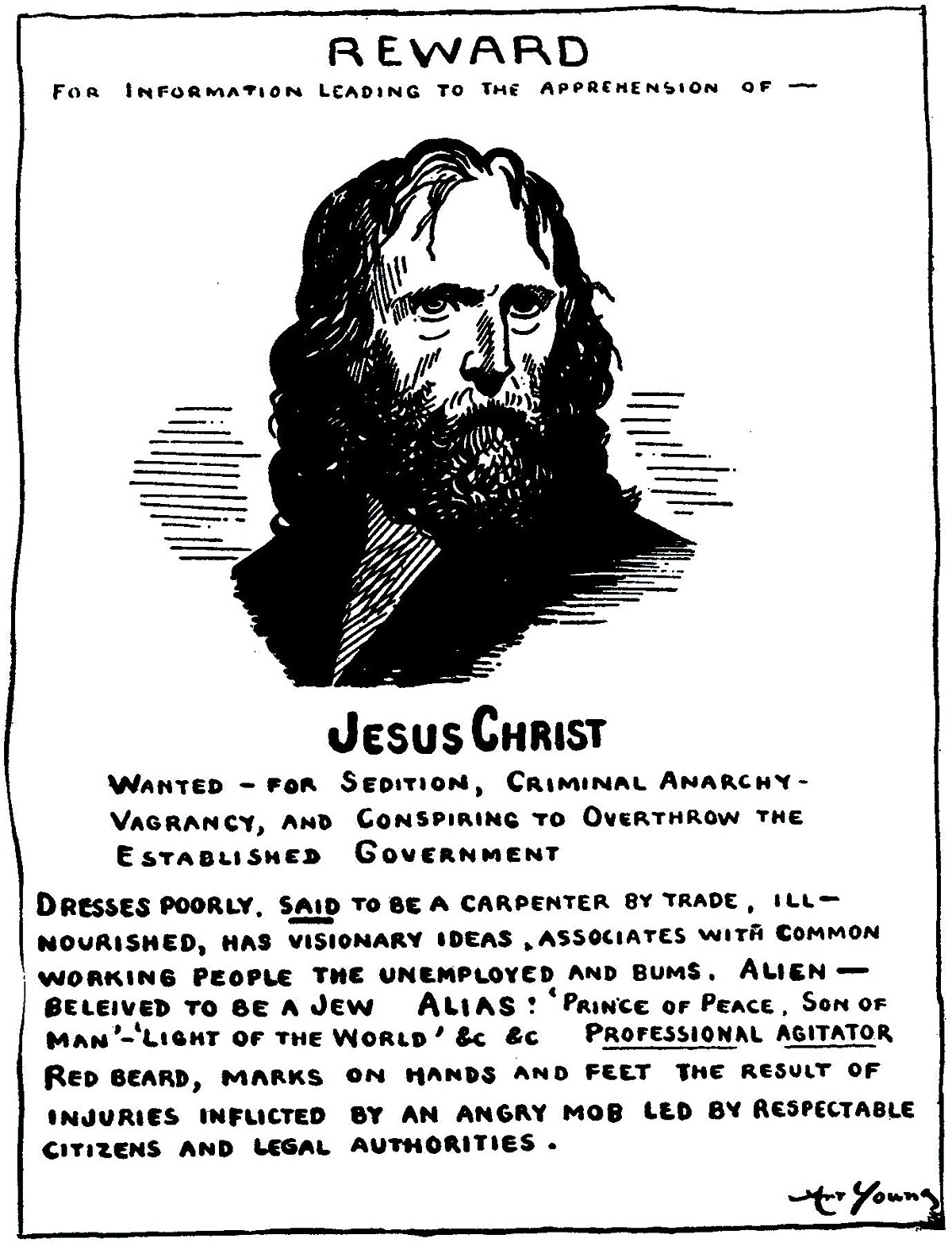
Summary and Conclusions about the Historical Jesus (Part Two)

(This is the fourteenth in a series of “mini-classes” on the historical Jesus. Together the pieces are intended to assist those who wish to “dig deeper” into the scholarly foundations of postmodern faith and to understand the methodology behind the postings on the blog site. Today’s post is the last of a two-part conclusion of the series.)

In searching for the historical Jesus, it helps to remember that we know much more about the object of our quest than ever before. Mid-twentieth century discoveries at the Palestinian locations Qum Ran and Nag Hamadi have yielded manuscripts that have acquainted scholars with previously unknown sources about Jesus. Just as importantly, developments in the fields of history, linguistics, and archeology have made us more knowledgeable about Jesus’ historical context than any previous generation. Acquaintance with such context constitutes actual knowledge about Jesus and the people with whom he interacted.

Similarly, the disciplines like sociology, economics, psychology, and political science have developed principles that describe how individuals within given networks typically act in particular circumstances. One such standard might be termed the “principle of analogy. It holds that: We should ordinarily expect to have happened in the past what routinely happens in the present as described by the social sciences.  For instance, we know that Jesus grew up under Roman oppression. About the time of his birth, the recently unearthed capital of Galilee (Sepphoris – just six miles from Nazareth) was destroyed by Roman soldiers trying to wipe out insurgent patriots. Sociologists tell us (and imperial armies act upon this knowledge) that such wars of resistance end up involving virtually the entire local population. This means that Jesus and his family were likely involved as well. All such extra-biblical information helps us better understand the historical Jesus.

Such determinations also coincide with two interpretative guidelines that have emerged from third world scholarship over the last forty years or so. One standard is called the “preferential option for the poor.” The other is “the hermeneutical privilege of the poor.” Both signal a source of knowledge of the historical Jesus that is often neglected and even denigrated by mainstream biblical scholarship.

The option for the poor highlights the biblical fact that the God of the Bible in general and of the Christian Testament in particular takes sides with the poor in their ongoing struggle with the rich. In the Jewish Testament this taking sides is evident in two of what Jesus scholar, Marcus Borg, terms the tradition’s three “macro-stories.” These are the Bible’s primary stories that fired the imaginations of Jewish people and early Christians. They are the tales that gave coherence to their interpretations of life, their relationships with God, and of sacred scripture itself. The first two of these macro-stories tell of the Exodus and the Exile. The third is what Borg refers to as the Priestly Story.

Both the Exodus and Exile stories reveal God’s preference for the poor – 13 century slaves in Egypt and 6th century exiles in Babylon. They show God’s preference for slaves over their slave-masters and for prisoners of war over their captors. For its part, the priestly story prioritizes temple worship and the priesthood. It is a narrative of sin, guilt and forgiveness mediated by an ordained priesthood. The priestly story was the object of criticism by the prophets of the Jewish Tradition including Jesus of Nazareth.

Above all, the New Testament’s Jesus story is one of God’s preferential option for the poor. In that story God is understood as literally siding with the under-classes. First and foremost, it is no accident that the Divine chooses as its site of revelation a poor person rather than a figure of royalty or priesthood. Theologically and sociologically speaking, this point of incarnation represents God’s fundamental disclosure about divine commitment. Such commitment is underlined by the words and practice of Jesus as described in all the sources of the Christian Testament. In the gospel traditions, Jesus’ program consists in bringing Good News to the poor (Lk. 4: 16-21). The Kingdom of God, he insists, belongs to the poor and persecuted (Mt. 5: 3& 10). Moreover, the beneficiaries of Jesus’ acts of healing and exorcism are overwhelmingly the poor and outcast (Mk. 1: 41; 6:34; 8:2; Mt. 9:36; 14:14 15:21-28; 15:32; 17:14-29; 20:29-34; Lk. 7: 13-14, 17: 11-19 . . .). The Final Judgment will be based on one’s attitude and actions to relieve the sufferings of the hungry, thirsty, naked, sick, and imprisoned (Mt. 25: 31-46).

All of this means that God’s Chosen People are the poor. (Hebrew slaves in Egypt are merely the paradigmatic example of such divine preference.) What we know more than anything about the historical Jesus is his embodiment of God’s choice. Jesus is the symbol par excellence of the divine one’s preferential option for the poor.  For our purposes here, this divine fundamental option provides an interpretative principle for locating the authentic words and deeds of the historical Jesus.  Words and deeds attributed to Jesus’ favoring the poor over the rich are probably authentically his. Words and deeds placing the rich or privileged classes favorably must be interpreted in the light of their impact on the poor who are the primary beneficiaries of Jesus proclamation and practice.

God’s preferential option for the poor leads us to the second important tool of discernment. It is helpful not so much for locating the authentic words and deeds of Jesus but for interpreting them in his spirit – for getting at the underlying ideas and values of his words and actions. This is the principle of the hermeneutical privilege of the poor. This principle recognizes that the poor (i.e. our contemporaries closest in sociological position to the primary intended recipients of Jesus’ Good News) find themselves in a better position to interpret the words and deeds of Jesus than do the non-poor.

For example, when the well-to-do read Jesus’ words, “Blessed are you poor, for yours is the Kingdom of God” (Lk. 6:20), they are likely to unconsciously substitute Matthew’s less radical version (and therefore less likely to have come from the historical Jesus), “Blessed are the poor in spirit, for theirs is the kingdom of heaven” (Mt. 5:3). As a result, the well-off are prone to spiritualize even the surprising Lucan text. For them Jesus’ words become a promise of an after-life heaven for those who though rich are not attached to their wealth.  However, when the poor read Luke’s words, they take it as a divine pledge that God is on their side in their struggles with the rich.  Luke’s Jesus assures them that the future belongs to them precisely because they are poor, and that God’s kingdom will bring happiness to them and their children on this side of the grave.

Summary and Conclusions about the Historical Jesus (Part One)

(This is the thirteenth in a series of “mini-classes” on the historical Jesus. Together the pieces are intended to assist those who wish to “dig deeper” into the scholarly foundations of postmodern faith and to understand the methodology behind the postings on the blog site. Today’s post is the first of a two-part conclusion of the series.)

In the early first century BCE, a prophet called Jesus of Nazareth is said to have lived in Palestine. We find record of his existence not only in the 4 canonical gospels of Mark, Matthew, Luke, and John, but also in as many as 200 other “gospels” that were rejected as “heretical” by early church authorities. Additionally, there are references to Jesus’ existence and execution in sources outside the Bible including the Jewish historian Josephus, and the Roman historian, Tacitus.

All of this is quite remarkable, since Jesus was not a member of the ruling classes, but a common working man from a very remote village in a remote province of the Roman Empire. The ancients (and even our contemporaries) did not usually keep records of such people. Moreover, Jesus’ contemporaries were mostly illiterate and not able to leave documentary records themselves. In fact, far from being a member of the literate royal or priestly classes, the Jesus of the gospels is presented as alienated from such groups. He was excommunicated by the religious authorities of his community and finally condemned and executed by the civil and imperial powers of his day. Given Jesus’ social insignificance on the one hand and the abundance of record about him on the other, there can be little question about the actual existence of the historical person, Jesus of Nazareth.

However, the historical details of Jesus’ life are another matter. Strictly speaking, we have no historical records of Jesus’ life. What we have instead are “gospels” which are faith documents highly colored by the beliefs of their authors. In fact, the purpose behind the gospels is not primarily to convey biographical detail, but to present the figure of Jesus as seen in a light that was not apparent to most of the people who witnessed his life – the light of faith. Additionally, evidence shows that the authors of the gospels were not above inventing words and deeds they attribute to Jesus in order to make their point about his being the Son of God.

In chronological perspective, what we have in the gospels is a kind of layered “onion” based on an historical event (the life of Jesus) but subsequently enhanced by a “resurrection” experience, by an overwhelming infusion of a “Holy Spirit” (on Pentecost), by an initial proclamation (called “kerygma”), by a long oral tradition of nearly 50 years, and by the eventual writing down of that tradition adapted for communities in vastly different historical circumstances.

In addition those traditions were melded with   “pagan” elements provided by contact with the Greco-Roman world. (This is not even to mention other elements that were eventually syncretized with Christianity. These came, for example, from Germanic nature religions after the 5th century fall of the Roman Empire. They came as well from sources as distant as Egypt, India, and China as Christianity blended its own spiritualities with religious traditions from those geographical locations.)

After peeling that onion, the question remains, “Are the peels all we have left?” Is it impossible to know anything at all of the historical Jesus? The question is important for believers since what Jesus really said and did and not the later interpretative traditions determines the content of the actual revelation embodied and communicated in Jesus of Nazareth. Jesus words and deeds are the final court of appeal when discrepancies or contradictions arise concerning the doctrinal or moral content of Christian faith.

For instance, did the God Jesus revealed favor the poor over the rich? Was the Kingdom of God Jesus preached more open to the values of socialism or of capitalism? Must followers of Jesus espouse non-violence or are the teachings of Jesus compatible with modern warfare or violence of any kind? Should taxes be paid to the state? Is divorce permitted or not? Did Jesus really claim to be God’s unique son? Is he the “only way” to the Father? And what about the virgin birth and infancy narratives; did the events allegedly behind them actually happen?

To answer such questions and in general to “get at” the historical Jesus, scholars have developed those “tools of discernment” described earlier in this series. The criteria include multiple attestation, embarrassment, discontinuity, rejection and execution, and coherence. “Multiple attestation” refers to traditions about Jesus’ words and deeds found in two or more of the canonical gospels and/or in several non-canonical sources. The criterion of “embarrassment” applies to elements the Jesus tradition includes even though such inclusion runs counter to the apparent intention of the author.(For instance, presenting Jesus as baptized by John gives the impression that Jesus was subordinate to the Baptist.) “Discontinuity” refers to words or deeds of Jesus that cannot be derived from either the teachings of Judaism or from the early church. [An example of discontinuity would be Jesus’ rejection of voluntary fasting for his disciples (Mk. 2: 18-22).] The standard of “rejection and execution” is based on the historical fact of Jesus’ crucifixion (established by the criteria of embarrassment and multiple attestation).  It authenticates words and acts of Jesus that alienated, infuriated and outraged the religious and political authorities of his day – that led to his execution. (A Jesus who does not alienate people, especially the powerful, cannot be the historical Jesus.) The standard of “coherence” applies to gospel inclusions that agree with the previously described criteria.

(Series Conclusion on Wednesday)

Homily for the Fourth Sunday of Advent Based on Lk. 1:24-39 (?)

(For this week’s homily, I’ve invited my good friend and resigned priest, John Capillo to share his thoughts. In his formal priestly days John worked in the archdiocese of Brooklyn in New York, and in El Salvador. A prophet and  father of  four grown children, John has spent his informal priestly days in public service — most notably working for the Kentucky Environmental Foundation. He is a wonderful teacher, and has often visited my classes and those of my bride, Peggy. I know you will love his words below.)

Mary set out
and traveled to the hill country in haste
to a town of Judah,
where she entered the house of Zechariah
and greeted Elizabeth.

Recall the previous scene in Luke.  Who is this Mary who sets off?  What is her state of mind?

She has been greeted by the angel Gabriel

who tells her that she is favored,

and that the LORD is with her.

She is troubled.

Let’s let her talk.


“What does it mean that the LORD is with  me?

I do not understand the greeting,

What do you mean I am favored?”

And the angel’s lines:

“Don’t be afraid,

you are not alone,

you are loved.

And I want to tell you something,

Sit down.

Breathe deeply,

Stay calm

Remember.   You are loved.”


And then the bomb shell,

blowing up all plans and status and expectations:

“You are to conceive and give birth to a son who will be great,

the Son of the Most High

A king like David,

who will reign forever.”


“Whoa.  Back up a bit. Let me think this through.

You are saying that I am favored and I am going to become pregnant?

But I am only betrothed to Joseph and if I am judged to be pregnant out of wedlock I can be stoned.

Am I hearing you correctly?

And I am to have a son who will be a king like David, complete with sword and shield, going off to war?

And he will reign over the House of Judah which is now reigned over by the Romans, and contested by the Zealots?

And who did you say you were, a messenger from God?

Maybe I am nuts, seeing visions, hearing voices.”


And in an understatement that lives with lack of understanding, she says,

“How can this be?

You gotta be kidding?

Do you know who you are talking to?

I am a young girl who does not even have a husband, and in this world that is no small potatoes.”


But the story goes on.

The angel says,

“Oh, I did not tell you how this is going to work, how you are going to explain this to

to your mother who raised you to be a good girl

to your father, who has this betrothal deal with Joseph,

to Joseph, who is expecting a wife who is a virgin,

to the priests who will be ready to stone you,

to the governor, who will see your son as a pretender to the throne,

and to the Empire, that now rules and with an iron fist.

Just tell them that the Holy Spirit has come upon you, and the power of the MOST high will over shadowed you, and your son will be the Son of GOD.’


And Mary’s response?

‘Wow! You are not kidding around.  This is the whole enchilada.  And you think that I can pull this off.

And the only explanation that I get is that the Holy Spirit will come upon me and the power of the most high will overshadow me.

And you are waiting for an answer?

OK,

I accept.

I hope my mother understands that I made this decision because I had a vision and heard voices

I will hope my father is not ripping mad.

I hope that Joseph will still have me,

God knows what I will do about the governor and the Empire

and I will deal with this kingship thing and swords and overthrowing when the time comes.

Are you sure that you understand that you are dealing with a little poor kid from the wrong side of the tracks of a runt of a city in no-where’s-ville. I am not trying to give you any lip about this, but just to let you know.

But if you are for real, I am game.  I suppose you will get back to me about the details.

Oh and you say Elizabeth is pregnant, old barren Elizabeth. And that because nothing is impossible with God,

I gotta get up there and talk to her about all this.”


And so we start today’s episode.


Mary goes right away to Elizabeth’s.  It is a woman thing.

And Elizabeth is all excited,

filled with the Holy Spirit.

And her baby is jumping up and down,

gleefully,

in her womb.

And Elizabeth says,

all excited,

full of anima,

speaking like one possessed,

“Blessed are you who believed,

you who took the promptings as real,

who trusted her intuition,

who trusted her muse, her logos, her inner voice.

What a joy it is to know that you are willing to take what you heard out for a spin;

willing to step off the edge

to go with the flow

to glide in the air

to dance in the back room,

to put aside the fearfulness that her mother has,

to defy the anger that her father has ,

to test the love that Joseph has,

to stand up to the priests, the governor, the Empire

all because you saw a vision and heard voices.

You are one special person, and one great friend.

Give me a hug, squirt.”


That’s the miracle.  That’s the call. We are up to it, aren’t we?

How Empire Eliminated the Historical Jesus for Good

(This is the twelfth in a series of “mini-classes” on the historical Jesus. Together the pieces are intended to assist those who wish to “dig deeper” into the scholarly foundations of postmodern faith and to understand the methodology behind the postings on the blog site.)

According to the biblical scholarship we’ve been reviewing over the last dozen weeks or so, Jesus of Nazareth stood with the poor, and announced a future of justice for them. Jesus also resisted the empire which, as we’ll see presently, eventually dramatically diminished the importance of the Jesus of history. Examination of Jesus’ resistance to empire and empire’s co-opting of the Nazarene’s life and words is the point of this posting on the historical Jesus.

That Jesus stood with the poor and favored them is obvious. He was a simple worker, the son of an unwed teenage mother, and theologized as an immigrant in Egypt. He healed sick people, fed the hungry, and cast out evil spirits. He announced and embodied a new reality for the poor. In the “reign of God” justice would replace exploitation; the positions of rich and poor would be reversed, and a sharing ethic would take the place of competition and oppression. To put it in terms of faith: a poor person was the site God chose to reveal God’s Self to the rest of us. That in itself constitutes a stupendous revelation.

Being a poor person in Palestine, and especially coming from the revolutionary Galilee district, Jesus himself was understandably anti-empire. The best illustration of Jesus’ resistance is in the famous story of his temptations in the desert. We all know the story with its rich blend of historical fact, symbolism, and explicit and implied scriptural references. Jesus has just been baptized by John. A voice has told him that he is somehow the “Son of God.” He goes out to the desert to discover what that might mean. On this vision quest, he prays and fasts for 40 days. The visions come. He is tempted by Satan. In Matthew’s account, the culminating vision is imperial (4:8-9). Satan takes Jesus to a high mountain. He shows Jesus all the kingdoms of the earth – an empire much vaster than Rome’s. Satan says, “All of this can be yours, if only you bow down and worship me. Jesus, of course, refuses. He says, “Be gone, Satan! It is written, the Lord God only shall you adore; him only shall you serve.” In other words, Jesus rejected empire in no uncertain terms.

Jesus’ opposition to empire is extremely important to understanding how Christianity lost contact with the historical Jesus over 1500 years ago, when it became pro-rich and pro-empire. That’s what happened to the faith of Jesus under Constantine when Christian “orthodoxy” emerged. Christianity lost its soul. Or to put it more starkly: it actually began worshipping Satan at that point.

Here’s what I mean. Jesus rejected the temptation to empire as we’ve just seen. But in the 4th century, circumstances made it necessary for the emperor Constantine and his successors to repeat unwittingly Satan’s temptation – this time to the leadership of the Christian church. They could allow Christianity to become the official religion of the Roman Empire. All they had to do was to accept empire, give it religious legitimacy – become the state religion. Jesus had said “No!” to a similar temptation back there in the desert. Fourth century church leadership said “Yes!” and in doing so, in effect said “yes” to Satan worship – the necessary precondition of accepting empire. They also abandoned the Jesus of history and his this-worldly message. In the process, they reduced Jesus to a mythological figure and Christianity to a Roman mystery cult. Let me explain.

Think about the historical circumstances that led Constantine to be concerned with Christianity at all. Like all oppressors, he realized that religion represented an incomparable tool for controlling people. If an emperor can convince people that in obeying him they are obeying God, the emperor has won the day. In fact it is the job of any state religion to make people believe that God’s interests and the state’s interests are the same.

What Constantine saw in the 4th century was that as Rome expanded and incorporated more and more Peoples with their own religions, Rome’s own state religion was losing power. At the same time, Christianity was spreading like wildfire. And it was politically dangerous.  The message of Jesus was particularly attractive to the lower classes. It affirmed their dignity in the clearest of terms. Often the message incited slaves and others to rebel rather than obey. Rome’s knee-jerk response was repression and persecution. But by Constantine’s day, Rome’s repression had proved ineffective. Despite Rome’s throwing Christians to the lions for decade after decade, the faith of Jesus was more popular than ever.

Constantine decided that if he couldn’t beat the Christians, he had to join them. And he evidently determined to do so by robbing Christianity of its revolutionary potential. That meant converting the faith of Jesus into a typical Roman “mystery cult.”

Now mystery cults had been extremely popular in Rome. They were “salvation religions” that worshipped gods with names like Isis, Osiris, and Mithra. Mithra was particularly popular. He was the Sun God, whose feast day and birth was celebrated on December 25th.  Typically the “story” celebrated in mystery cults was of a god who descended from heaven, lived on earth for a while, died, rose from the dead, ascended back to heaven, and from there offered worshippers “eternal life,” if they joined in the cults where the god’s body was eaten under the form of bread, and the god’s blood was drunk under the form of wine.

To convert Christianity into a mystery cult, Constantine (who wasn’t even a Christian at the time) convoked a church council – the Council of Nicaea in 325. There the question of the day became who was Jesus of Nazareth. Was he just a human being? Was he a God and not human at all? Was he some combination of God and man? Did he have to eat? Did he have to defecate or urinate? Actually those were the questions. For Constantine’s purposes, the more divine and otherworldly Jesus was the better. That would make him less a threat to the emperor’s very this-worldly dominion.

The result of all the deliberations was codified in what became known as the Nicene Creed. Maybe you know it by heart. It runs like this:

We believe in one God,

the Father, the Almighty

maker of heaven and earth,

of all that is, seen and unseen.

We believe in one Lord, Jesus Christ,

the only Son of God,

eternally begotten of the Father,

God from God, Light from Light,

true God from true God,

begotten, not made,

of one Being with the Father.

Through him all things were made.

For us and for our salvation

he came down from heaven:

by the power of the Holy Spirit

he became incarnate from the Virgin Mary, and was made man.

For our sake he was crucified under Pontius Pilate;

he suffered death and was buried.

On the third day he rose again

in accordance with the Scriptures;

he ascended into heaven

and is seated at the right hand of the Father.

He will come again in glory to judge the living and the dead,

and his kingdom will have no end.

We believe in the Holy Spirit, the Lord, the giver of Life,

who proceeds from the Father and the Son.

With the Father and the Son he is worshipped and glorified.

He has spoken through the Prophets.

We believe in one holy catholic and apostolic Church.

We acknowledge one baptism for the forgiveness of sins.

We look for the resurrection of the dead,

and the life of the world to come. Amen.[

The Nicene Creed can be so familiar to us that we don’t notice what it does. In the part italicized above, it jumps from the conception and birth of Jesus to his death and resurrection. It leaves out entirely any reference to what Jesus said and did. For all practical purposes it ignores the historical Jesus and pays attention only to a God who comes down from heaven, dies, rises, ascends back to heaven and offers eternal life to those who believe. It’s a nearly perfect reflection of “mystery cult” belief. In effect Jesus becomes a harmless Mithra. The revolutionary potential of Jesus’ words and actions relative to justice, wealth and poverty are lost. Not only that, but subsequent to Nicaea, anyone connecting Jesus to a struggle for justice, sharing and communal life is classified as heretical. That is, mystery cult becomes “orthodoxy.” Eventually, the example and teaching of Jesus becomes heresy – especially later on when “communism” becomes a threat to Rome’s modern imperial successors.

Please think about that.

Next week: Series Conclusion

What Really Happens after Death? (Conclusion of a two-part series)

Last week I raised the question of what really happens after death. My jumping off point was last Easter’s Time Magazine article by Jon Meacham called “Rethinking Heaven.” There the author contrasted what he called a “Blue Sky” approach to heaven (a kind of Disneyland up above) with a “God’s Space” understanding (bringing God’s Kingdom to earth). I remarked that the “God’s Space” approach seemed more believable and adult than the “Disneyland” heaven. However, the alternative to Disneyland didn’t really help us understand what happens after we breathe our last.

Tony Equale’s blog (http://tonyequale.wordpress.com/) does help. For Equale (a Roman Catholic ex-priest) heaven has little to do with the pearly gates. At the same time he explains more starkly what entering God’s space after death might really entail.

To begin with, Equale says, we must admit our ignorance. We have little idea about heaven or what happens after death. It’s all speculation. Even Jesus himself said precious little about the afterlife, much less about the specifics of a heaven. In any case, anything the Bible might have to say about the afterlife is expressed in religious language which is of necessity highly metaphorical.  It gestures towards something else.

What we do know about Jesus is that his own understanding of death was shaped by his belief in God’s universal love. He had absolute trust in God as a loving Father. Jesus believed that God’s unfailing trustworthiness took away the “sting” of death, so that dying became irrelevant; whatever was to happen could be trusted as the best outcome possible. As a result, death had no dominion over him.

Moreover the heroism of Jesus’ witness was to actually “prove” his claims about God by staking everything on them. Here we’re not talking about a rationalistic proof, but about something existential. In effect Jesus said, “Do you want me to prove I’m right? O.K. then, I will.” So he courted death by doing the things God’s love demands (siding with the poor and oppressed) – a choice that usually brings assassination to any prophet. That was his proof. “You see,” he insisted, “God can be trusted; death is irrelevant in the face of God’s love.” A way of putting that metaphorically is to say that Jesus rose from the dead.

According to Equale, belief in resurrection in those terms — in terms of real flesh and blood people choosing to risk their lives because they trust God’s love – mostly unraveled within a few generations of Jesus’ execution.  Its place was taken by a mixture of Roman and Egyptian ideas about disembodied souls in a “Blue Sky” heaven familiar to three year olds, to Dante, Raphael, and Michelangelo.

According to Equale, where does that leave us? With one choice only, he says – either to trust or not to trust the source of our existence, which Jesus claimed is absolutely loving.  However, even if we make the choice to trust, the reality of God’s love might not be as we want it to be. Tony writes:

“But what if the reality is …that at death we are dissolved back into the elements from which we were formed, to be reused over and over until the whole meets … another implosion to singularity and another big bang — a new universe. What if our little heads and our little hearts are not equal to the unfathomable magnanimity of a “Father” who, more like a “Mother,” wishes to share, and share, and share Herself (and us as part of Herself) endlessly, … we might even add, purposelessly … for the sheer joy of it … to share being-here with ever new things and new “people” with a generosity and self-donation beyond our capacity to imagine … or endure? . . . Do we want to go to that heaven? Are we really as convinced that “God is Love” if it would mean that much love? . . . Do we love our existential source and the universe it has made, as it is — or only as we want it to be?”

These words are reminiscent of the insights of Eckhart Tolle. Tolle says there is no doubt that life continues after death. One has only to enter an untended forest to see that live trees are surrounded by dead leaves, branches, and fallen and decaying trees.  However, closer examination of the dead matter reveals that in every case, the distinction between “dead” and “alive” is misleading. The fallen leaves, branches, and trees are teeming with life. In biblical terms, their lives have been changed not taken away. Of course, it will be the same with our bodies as they decay and molder in their graves. Life will continue in our bodies too. And who knows where that life will end up – in what communities or “people?” Death is always followed by rebirth – and perhaps by rebirth in the cosmic sense of passing again through an entire evolutionary process.

As for our consciousness . . .  That too will persist – insofar as it achieved unity with the source of the profound intelligence that pervades the universe. (The reference here is, for example, to the intelligence manifest in a single human cell. The information contained in that unit is enough to fill one hundred books of six hundred pages each.) That such Source Consciousness is present is evident from the fact of our own awareness. Ours comes from somewhere. As scholastic philosophers put it “nihil ex nilhilo fit” (nothing comes from nothing).  In as much as we have achieved unity with the Consciousness that pervades the universe, “our” consciousness will surely continue. All other consciousness passes away – most of it, experience shows, even before we die.

So the ultimate question about heaven is not whether it is up in the blue sky or in “God’s space” here on earth. It’s not even a question of our attitudes towards climate change, HIV/AIDS or world hunger.  Rather, it’s a question of death and surrender.

In confronting death, in explaining it to our children, are we willing to admit our absolute ignorance?  And if we claim Christian commitment, are we prepared to think of Jesus’ resurrection as a call to complete trust in God come what may? Are we disposed to surrender our very lives, as Jesus did despite threats from those who routinely kill prophets, because of our conviction that death is irrelevant in the face of God’s love and promise? And are we ready to do that even if God’s love is so great that we find it incomprehensible, purposeless, confusing, and even disappointing to the ideas of a three year old like Eva?

Finally, are we willing to make our own the prayer of the medieval mystic, Rabia al-Basri [a woman and Muslim (717-801)]?

“Lord, if I love you because I desire the joys of heaven,

Close its gates to me.

And if I love you, because I fear the pains of hell,

Bury me in its depths.

But if I love you for the sake of loving you,

Hide not your face from me.”

Give Up Church for Lent!

Readings for 2nd Sunday in Advent: Bar. 5: 1-9; Ps. 126: 1-6; Phil. 1: 4-6, 8-12; Lk. 3: 1-6 http://www.usccb.org/bible/readings/120912.cfm

In my town of Berea, Kentucky, a kind of religious revival is taking place. A spirited group of people across denominational lines meets once a month to experiment with and “Ecumenical Table Fellowship.” It’s a community of Christians without benefit of clerical leadership meeting to reflect on our common biblical tradition in the light of what Vatican II called “the signs of the times.” The group breaks bread liturgically in the spirit of Jesus’ Last Supper and of the early church. Roman Catholics are prominent in the group. They are discouraged by today’s conservative pre-Vatican II “restorationism” that emphasizes the power of the church hierarchy and ordained priesthood at the expense of Vatican II’s emphasis on the priesthood of the faithful.

Some in the group agree with spiritual theologian, Matthew Fox that their church leadership is in schism against the spirit of the Second Vatican Council, which remains the official teaching of the Catholic Church. Pope John Paul II, Benedict XVI, and the conservative bishops they have appointed are the culprits in schism. These clerics are defensive of hierarchy and the power of an exclusively male priesthood. They devalue lay leadership and the prominent biblical stories of Exodus and Return from Exile that are highlighted in today’s liturgy of the word where they are contrasted with “the priestly story” that currently plagues the Catholic Church.

The great Jesus scholar, Marcus Borg, reminds us that amid the literally hundreds of stories in the Bible, there are three “macro-stories” that give coherence to the Jewish Testament and its Christian counterpart. The first and most important is the story of Exodus. Its’ a tale of liberation from slavery and journey to a “Promised Land.” For the ancient Hebrews, the Exodus was grounded in an actual historical event, the release of slaves from their oppression under the pharaohs of Egypt perhaps 1200 years before the birth of Jesus.  It was the Exodus that provided the ancient Hebrews with their first experience of their God, Yahweh.  For them, Yahweh’s fundamental identity was the One Who Liberates from Oppression. In our day, the macro-story of Exodus has become central for third world people living under the harsh realities of U.S. imperialism.

The second Old Testament macro-story is Exile and Return. It too was grounded in history. In the year 587 BCE, the Hebrews were conquered by Babylon (modern Iraq). The Babylonians transported the Hebrew elite to Iraq till the Persian King Cyrus released them after conquering Babylon in 539.The story of exile and return shaped the ancient Israelites almost as much as the Exodus story. Like oppression and slavery, that narrative represents a human archetype that all of us can relate to it in one way or another.  The archetype evokes the feelings of grief, sadness and displacement reflected in one of the psalms of exile, “By the rivers of Babylon, there we sat down and wept when we remembered Zion.” The Advent Hymn “O Come Emanuel” expresses the same feelings in its own reference to the Babylonian Exile: “O Come O Come, Emanuel, and ransom captive Israel, that mourns in lonely exile here.”  For one reason or another, all of us feel somehow exiled, sad, and displaced.

The third macro-story of the Jewish Testament comes from priestly sources. It is not grounded in a particular historical event, but in temple ritual and worship. It is the story of sin, guilt and of forgiveness mediated by the priestly class, their sacrifices, rules, rituals and prayers. Judging from the attitudes of Israel’s prophets and especially of Jesus, the priestly narrative is far less important than either Exodus or Exile. In fact, along with many other prophets, Jesus expressed harsh criticism and even hostility towards priestly pretensions and business-as-usual within the temple precincts. And yet, the priestly narrative has carried the day in terms of dominant Judeo-Christian spirituality. “Jewish guilt” and “Catholic guilt” are legendary. Jesus is primarily understood as the one who “died for our sins.” God’s wrath and the threat of hell are staples of Sunday sermons and of Christian neuroses.

The focus of today’s liturgy of the word is Exile and Return in sharp contrast to the Priestly Story of sin, guilt, sacrifice and forgiveness. The first reading from the Book of Baruch was probably written about 150 BCE when Israel was under the sway of the Seleucid Greeks. However the book is presented as though it were written 400 years earlier during the Babylonian Exile – as if it were addressed to the exiles then. Baruch’s real audience however was the Jews at war with the Greeks. His real intention was to encourage his contemporaries in their resistance to Greece – promising them that the rough road they were then traveling would soon be made smooth by Yahweh –   the one who frees the oppressed and brings exiles back from captivity.

In today’s gospel, Luke presents John the Baptist in terms of both Exile and Return and Exodus. Luke sees John as fulfilling the words of the prophet Isaiah nearly 600 years earlier. By anchoring John’s appearance in Isaiah, Luke is implying that John represents a continuation of Isaiah’s work of announcing the end of exile. This was a bold claim for Luke, since many Jews of his day believed that prophetic voices – nearly always lay people – had forever fallen silent. But here is John presented as fulfilling Isaiah’s words. He is making the rough way smooth. He’s leveling mountains and filling in valleys.  At the same time, John’s proclamation as presented by Luke has overtones of the priestly story. Luke shows John proclaiming a baptism of repentance for forgiveness of sin.

But here it is important to note the Exodus dimensions of John’s work. He is presented as preaching and baptizing specifically outside the temple and sphere of the priests. In fact, John appears in the wilderness – in the desert. For Jews, this would not only have evoked overtones of the Exodus macro-story, it would also have signaled a subversive significance in John’s work. After all, the “desert” or “wilderness” was the place where contemporary resistance movements were spawned. As scripture scholar, Ched Myers points out, Luke could not have picked a narrative “coordinate” further removed from the temple. For Luke the regeneration of prophecy was happening not in Baruch’s Zion but at the margins of Jewish society – in the desert where it all began with the Exodus. In other words, Luke presents John’s ministry as a complete break with the priestly establishment which controlled the mechanisms of social redemption from their power base in Jerusalem.

All of this raises questions for thoughtful Christians in the context of our own exilic sadness as we face the contemporary irrelevance of what happens in our own “temples.”  Is it time to move out of that realm now dominated by schismatic popes, bishops and priests and to relocate where our worship tradition began – in homes with Eucharists led by lay people?

Perhaps we’re not yet ready to substitute an Ecumenical Table experience for weekly Mass. But we could supplement Sunday Mass with such fellowship once a month. Alternatively, what if an Ecumenical Table were offered each Sunday at the very time of our parish Mass (9:00 am at St. Clare’s in Berea)?  That would give parishioners a choice. At least on occasion they could attend the Ecumenical Table and compare it with “business as usual.”

Another idea: Lent is fast approaching (Ash Wednesday is Feb. 13th). Might Lent not be a good time to “give up” church, and for six weeks and experiment with this alternative form of worship?

In today’s excerpt from his letter to Philemon, Paul prays that the church meeting at Philemon’s house might be given discernment to distinguish what is really important. Today’s liturgy of the word suggests that Exodus from business as usual and return from the Exile of pre-Vatican II Restorationism might be more important than honoring the priestly order that has dominated Catholic consciousness for too long.

Let’s consider trying to recapture Philemon’s home church experience and see what happens – if only for Lent’s six weeks. At the very least, the absence of people at Sunday Mass might get the attention of our bishop and pastor. It might help them realize that something’s amiss!

(Discussion follows)

What Happens after We Die? Rethinking Heaven

(Recently a friend asked me to post something on death and the afterlife. That’s a topic I think about very often. Here’s the first in a two-part blog on life-after-death.)

“We’re all going to die some day, Eva. Mommy will die. Daddy will die. Gaga and Baba will die too.”

“Baba’s going to die?”

“Yes, Baba will die too one day.”

“No, not Baba. Baba will never die. No!”

That touching conversation took place recently between my daughter, Maggie, and her daughter (our granddaughter) Eva. Eva was three then. She calls me “Baba.” She calls her grandma “Gaga.” And Eva was trying to come to grips with death – its inevitability, and the way it touches the ones we love. In that she’s like the rest of us. Death and what happens afterwards is and has always been a great mystery, something of a threat, and an object of denial. We don’t even want to think about it.

Earlier this year, Time Magazine’s Easter edition confronted all of that head-on. So did a friend of mine, Tony Equale, a former priest who blogs at http://tonyequale.wordpress.com/. Tony’s Easter blog was called “We Say That ‘God’ Is Love . . .” The Time article opened the question of heaven in a nicely popular way. However, it successfully avoided shedding light on the question of what really happens after we die. Tony Equale’s piece involved no such evasion. Its answer was clear, extremely thoughtful and challenging.  But it also left me undeniably uncomfortable. I’m not sure I liked the heaven Tony suggested awaits us.

The Time Magazine cover story was a piece by Jon Meacham called “Rethinking Heaven.” Basically, it compared two approaches to the afterlife. The one Meacham termed the “Blue Sky” approach would be familiar enough even to three-year-old Eva and to most Christians for that matter. After death, good people go up in the sky to “heaven,” where they live with God, Jesus, and all the people they love happily ever after.

The other approach favored by Meacham himself and attractive to what he sees as the “younger generation, teens, college aged who are motivated . . . to make a positive difference in the world” is a metaphor for “how you live your life.” “What if,” Meacham asks, “Christianity is not about enduring this sinful, fallen world in search of a reward of eternal rest? What if the authors of the New Testament were actually talking about a bodily resurrection in which God brings together the heavens and the earth in a wholly new, wholly redeemed creation?”  In the words of N.T. Wright, a New Testament scholar, and the former Anglican Bishop of Durham, England, “’heaven isn’t a place where people go when they die.’ In the Bible, heaven is God’s space, while earth (or if you like, ‘the cosmos’ or ‘creation’) is our space. And the Bible makes it clear that the two overlap and interlock.”

A person of faith, the Time Magazine author adds, must decide which “heaven” to believe in. The decision makes a difference. The “Blue Sky” approach makes life on earth and issues such as climate change and HIV/AIDS less important. The alternative makes stewardship imperative. The alternative makes it important to follow “Jesus’ commandment in Matthew 25 to feed the hungry, welcome the stranger and clothe the naked as though they had found Jesus himself hungry, homeless or bereft.”

Like Meacham, I find the “God’s space” approach to heaven on earth more believable and adult than the “Disneyland in the Sky” understanding. Just as I’m convinced that some people endure hell here on earth (the victims of Abu Ghraib come to mind), so also there are people in “heaven” (like Mother Theresa or the Dali Lama). But still, what about death? What happens afterwards? If it’s not Disneyland, what can we expect or hope for? That’s where my friend Tony Equale comes in.

(Next Wednesday: Our Fate after Death)

A Long Oral Tradition: Step four in the development of early Christian faith

(This is the tenth in a series of “mini-classes” on the historical Jesus. Together the pieces are intended to assist those who wish to “dig deeper” into the scholarly foundations of postmodern faith and to understand the methodology behind the postings on the blog site.)

The first three stages in the early development of the Christian tradition – Jesus’ life, the primitive Christian community’s resurrection experience, and the initial proclamation (kerygma) – were followed by a period of about 40 years of oral tradition. During that time, stories about what Jesus said and did were spoken and not written down. This nearly half-century of oral tradition represents the fourth of the five stages in the development of early Christian faith that this series of weekly “mini-classes” is attempting to address. (Find the previous nine postings under the “Historical Jesus” category below the masthead of my blog.)

It is inevitable, of course, that oral tradition varies considerably. Even a group of ten or so people consecutively whispering a single message to their neighbors, can end up changing that message beyond recognition by the time it reaches the last message-recipient. Despite the fact that surviving eyewitnesses surely provided a degree of reality-check, imagine what happened to Jesus’ words and deeds over a half-century as his Aramaic words were translated into Greek, Latin and other languages by people working purely by memory. Imagine what happened to memories of his deeds when they were narrated outside of Palestine by storytellers who were not eyewitnesses, had no knowledge of Jesus’ language, and who possessed little acquaintance with Palestinian geography, Jewish customs, or of Hebrew Scriptures. Imagine what happened to Jesus’ message as Christian storytellers tried to make it relevant to “pagans” who had no knowledge of Judaism. The storytellers would have exploited perceived similarities between Jesus preaching and what the storytellers’ audiences already believed in their own religious traditions. [The Acts of the Apostles provides an example of Paul attempting such cross-cultural explanation (17: 16-34).] Soon Jesus would be explained to Romans in terms of their “mystery cults” with their “dying and rising gods.” As a result, Jesus would be perceived like the sun god, Mithra, whose birthday was December 25th. All such dynamics would have (and did) introduce variations from what the historical Jesus actually said and did.

In the case of Christianity, the obvious confusions of oral tradition were further complicated by the “resurrection factor.” By this I mean that Christians’ belief in Jesus’ resurrection and in the living presence of his Spirit was powerful enough to convince them that the risen Lord continued speaking through community members endowed with the gift of “prophecy.”  They thought that Jesus was still addressing their problems even years after his death. Problems in question had to do with worship, community leadership, resolution of disputes, and everyday matters such as paying taxes, marriage and divorce. So the words of Jesus dealing with such issues and spoken through prophets found their way into the oral tradition about Jesus’ words. Understandably, it soon became impossible to remember which were the words of the historical Jesus and which the words of the risen Christ. Evidently, that distinction wasn’t of much importance to the early Christians. They placed both types of utterance in the same category. All of that further complicates the work of those trying to discern the actual words and deeds of the historical Jesus.

Next week: Step Five: writing down the tradition

The Environmental Cliff: Who’s Responsible? (Share this blog w/ your kids)

Readings for 1st Sunday of Advent: Jer. 33:14-16; Ps. 25:4-5, 8-9, 10, 14; 1 Thes. 3: 12-4:2; Lk. 21: 25-28, 34-35 (http://www.usccb.org/bible/readings/120212.cfm)

You probably know that we’re standing on the brink of a “fiscal cliff.” At least that’s what our politicians are saying. They insist that we’re heading for apocalyptic disaster. For them “fiscal cliff” means that if Democrats and Republicans can’t come to an agreement about taxes and deficit reductions before the end of the year, automatic tax increases and cuts in social spending will occur. And according to the Congressional Budget Office (CBO), that combination of tax increases and spending reductions is likely to plunge us into another deep recession. The politicians want us to think the sky is about to fall. Apocalypse is about to happen unless we stop spending on seniors and children, on our nation’s infrastructure, green technology and public transportation.

______

The annual United Nations Conference on Climate Change began last Monday [Nov. 26] in Doha, Qatar. In preparation for the meeting, the World Bank published an 84 page document on climate change. It’s called “Turn Down the Heat: Why a 4 Degrees C Warmer World Must Be Avoided.” According to the report, a four degree rise in planet’s temperature will produce disastrous heat waves and droughts, along with severe floods.  Hundreds of millions of people will be forced to abandon their homes in coastal areas and on islands that will be submerged as the sea rises. The Amazon rainforest will disappear, and monstrous storms will destroy whole cities and communities.  Health and emergency systems will collapse. Mass chaos will ensue, and the worst medical disaster since the Black Plague will strike the human race. (The Black Plague, you’ll recall killed 30-40% of Europe’s population.)  According to “Turn Down the Heat,” radical measures are required to deal with this impending crisis. These include immediate and unprecedented investment in green technologies and mass transportation systems.  And yet our politicians do nothing; they actually want to cut back on such expenditures! In the recent presidential debates, the phrase “climate change” was not even mentioned, much less debated. Quite the opposite: the two candidates strove to one-up each other in swearing allegiance to coal, oil, uranium and other dirty fuels that will only make the global warming worse.

______

This is the third week in a row that the lectionary has given us readings from apocalyptic literature. As I mentioned a couple of weeks ago, apocalypse was not about the end of the world. Instead, it was resistance literature, written in code during times of extreme persecution by powerful imperial forces like Greece and Rome. The code was understandable to “insiders” familiar with Jewish scripture. It was impenetrable to “outsiders” like the persecutors and their police against whom apocalypse was written.

Apocalypse differs from ordinary prophecy in that it addresses periods of deep crisis, when the whole world appears to be falling apart. Neither prophets nor apocalyptics were fortune tellers. Instead, they were their days’ social critics. They warned of the disastrous consequences that inevitably follow from national policies that deviate from God’s will – i.e. from policies that harm God’s favorites: widows, orphans, immigrants, the poor – and (we might add) the planet itself.

Perhaps the best example of apocalypse in our own history is what happened to the indigenous populations of North and South Americans when the Europeans arrived. The coming of white people signaled the end of the “Indian” world. Everything changed for the Mayans, Aztecs, Cherokee, Iroquois, and so many other Original Peoples in our hemisphere. For them the times were apocalyptic. The indigenous world would never be the same. And our ancestors were the agents of its destruction.

Something similar had happened for the Jews when Luke was writing his gospel around the year 85 of the Common Era. Jerusalem had been completely destroyed by the Romans in the Jewish War (64-70 CE). The Romans had brutally razed the city and the temple that had been rebuilt after the Babylonian Exile. For Jews that was something like the Death of God, for the Holy City and its Temple were considered God’s dwelling place. The event was apocalyptic.

In today’s gospel, Luke has Jesus predicting that destruction using specifically apocalyptic language. Luke’s Jesus says “There will be signs in the sun, the moon, and the stars, and on the earth distress among nations confused by the roaring of the sea and the waves. People will faint from fear and foreboding of what is coming upon the world, for the powers of the heavens will be shaken.

What can such apocalyptic message mean in our own day faced as we are with false “fiscal cliffs” distracting us from the fact that we’re standing on the brink of an unfathomable environmental cliff?

Yes, the fiscal cliff is a mere distraction – a completely human and remediable fabrication. And dealing with it by reducing the government’s ability to spend on green technology and public transportation succeeds only in bringing us closer by the minute to the exceedingly real environmental precipice.

I mean, no law of nature is at work in the budget crisis. The Bush tax cuts, which the Republicans are desperately trying to preserve, were advertised as temporary from the outset. In fact, they are the chief cause of the federal deficit, and are scheduled to disappear automatically at the end of 2012 – with or without agreement by the two parties. Social Security is completely off budget. It’s not paid for by income taxes, but by payroll taxes. So tinkering with Social Security will have no impact at all on the federal deficit. Meanwhile the CBO assures us that reductions in Medicare and/or Medicaid expenses will have minimal effect on the federal deficit.

And yet we’re all supposed to be waiting for “apocalypse” to happen, as if the federal deficit wouldn’t be ameliorated by simply letting the Bush tax cuts for the wealthy expire as originally intended, and by closing the tax loopholes that allow the rich to shelter their capital gains offshore in places like the Cayman Islands, and that permit huge multi-national corporations to pay no U.S. taxes at all.  As for Social Security; according to the CBO, it will remain solvent till at least 2035 if nothing at all is done about its reformation. And any problems that develop thereafter can be easily solved by having the rich pay like the rest of us on their entire incomes  even after their first $100,000. (Presently, they pay Social Security taxes only to that point, and then are let off the hook.)

Meanwhile, the real threat to our planet is the environmental cliff that our “leaders” refuse to address. And who’s responsible for that crisis? Prominent religious leaders would have us believe it’s God. He (sic) is punishing us for Roe v. Wade, for legalizing same sex marriages, or for allowing women access to contraception. Let’s face it: that’s nonsense. It turns Jesus’ embodiment of the God of love on its head. It turns God into a pathological killer – a cruel punishing father like too many of our own dads.

Others would say the culprit preventing us from addressing climate change is government. Now that’s closer to the truth. Our elected politicians are truly in the pockets of Big Oil, the Banksters, and other fiscal behemoths whose eyes are fixed firmly on short-term gains, even if it means their own children and grandchildren will experience environmental apocalypse.

But we can’t simply blame government. We elected these people. We have to organize to make sure they take seriously the mandate they’ve received. That mandate is to make the economic system work for all of us not just for the 1%. To make it work, we must first recognize that an economic system that destroys the planet is a complete failure. The Doha Conference is fairly shouting that message.  Our economic model is not working! In the long run, we have to organize to make our elected officials obey us, the People, rather than the business giants.

In the short run, we ourselves have to change our consumption habits. The Christmas season represents the perfect time to do that. What if this Christmas – three weeks from now – we supported each other in refusing to exchange all that plastic crap and those colorful pieces of cloth sewed together by slave labor and shipped at great environmental expense from the other side of the planet? What if we gave all that “gift” money to Greenpeace instead – or to the Heifer Project, or to Costa Rica’s Casa del Sol?

Our families and friends – even our children – would understand. I promise they would if we discussed it with them. They really don’t want or need that plastic junk either.  This is a wonderfully teachable moment. And it allows us to actually be the change we would all like to see in the world – at this apocalyptic moment when we stand on the brink of an Environmental Cliff. As would-be followers of Jesus, do we really have a choice?

(Discussion follows)

Kerygma: Step Three in the Development of Early Christian Belief

(This is the ninth in a series of “mini-classes” on the historical Jesus. Together the pieces are intended to assist those who wish to “dig deeper” into the scholarly foundations of postmodern faith and to understand the methodology behind the postings on the blog site.)

As we’ve seen in previous postings in this series, there were five basic steps in the development of early Christian belief. First there was the life of the historical Jesus. Second came the “resurrection experience” which fundamentally changed his followers’ perception of his identity.  Third was the earliest Christian proclamation of belief – called “kerygma,” the Greek word for proclamation. That third step is the focus of today’s study.

How was Jesus originally presented to unbelievers by his followers? Scholars have isolated specific texts that answer that question. That is, such texts represent the earliest faith-forms of the primitive church. This means that the fragments antedated the letters of St. Paul, whose earliest entries in the Christian Testament date from about the year 50 just fifteen years or so after Jesus’ death. As already indicated, Paul’s letters are themselves the earliest of the New Testament texts – coming well before the gospels of Mark, Matthew and Luke. By way of contrast, the kerygmatic texts date perhaps from the same year as Jesus’ death – or very close to it. They are therefore especially revealing and insightful in terms of what the earliest Christians believed. Let’s consider two of those texts today.

According to scholarly perception, one of the first kerygmatic texts is found in Luke’s Acts of the Apostles, Chapter 2, verses 22-24, 32-33, and 38. There Peter fresh from an extraordinary Pentecost experience in the Upper Room, addresses Jerusalem pilgrims gathered in the Holy City for the Jewish feast fifty days after Passover. The essence of Peter’s proclamation about Jesus runs as follows:

Men of Israel, hear me: I am speaking of Jesus of Nazareth, singled out by God and made known to you through miracles, portents, and signs, which God worked among you through him, as you well know. By the deliberate will and plan of God he was given into your power, and you killed him using heathen men to crucify him. But God raised him to life again, seeing him free from the pangs of death, because it could not be that death should keep him in its grip . . . Now Jesus has been raised by God, and we are all witnesses. Exalted at God’s right hand he received from the Father the promised Holy Spirit, and all that you now see and hear flows from him.  . . . Repent . . . and be baptized, every one of you, in the name of Jesus the Messiah; then your sins will be forgiven and you will receive the gift of the Holy Spirit.

Here we find the proclamation of a human miracle worker who had been given his miraculous powers by God who seems to be Jesus’ superior rather than Jesus being his equal. Jesus was the agent through whom God worked miracles and signs. He carried out God’s plans which included assassination by the Jews in collaboration with the Romans. As God’s anointed, Jesus was raised to life by God. God exalted him, and gave the Holy Spirit to him – after his death and resurrection. Now restored to life Jesus has communicated to his followers the Holy Spirit he himself has just received.  Those who believe should change their ways and be baptized, joining the community of believers.

Later on that community is described as faith-filled, highly egalitarian and holding all things in common. Note the specifics in the following two texts also from Acts. They are relevant to the question of the earliest perceptions of Jesus by his followers:

All the believers agreed to hold everything in common: they began to sell their property and possessions and distribute to everyone according to his need. One and all they kept up their daily attendance at the temple, and, breaking bread in their homes, they shared their meals with unaffected joy, and they praised God and enjoyed the favor of the whole people. And day by day the Lord added new converts to their number. (Acts 2:44-47)

Now the whole company of believers was united in heart and soul. Not one of them claimed any of his possessions as his own; everything was held in common. With great power the apostles bore witness to the resurrection of the Lord Jesus, and all were held in high esteem. There was never a needy person among them, because those who had property in land or houses would sell it, bring the proceeds of the sale, and lay them at the feet of the apostles to be distributed to any who were in need. (Acts 4: 32-35)

In other words, a type of primitive communism or communalism was the practical response of earliest Christians to their experience of the risen Lord and the gift of his Holy Spirit. Put otherwise, it doesn’t seem an exaggeration to say that early Christians saw Jesus and his teachings as communistic. Certainly their response is miles from the spirit of capitalism, private ownership, and competition.

Another version of Christian Kerygma is found in the letter of Paul to the Christian community in Philippi. More specifically, in Philippians 2: 6-11 scholars find what they identify as a hymn fragment evidently sung by Christians in that community. It goes like this:

He was in the form of God; yet he laid no claim to equality with God,

But made himself nothing, assuming the form of a slave.

Bearing the human likeness sharing the human lot

He humbled himself, and was obedient, even to the point of death, death on a cross.

Therefore God raised him to the heights and bestowed on him the name above all names,

That at the name of Jesus every knee should bow – in heaven, on earth, and in the depths –

And every tongue acclaim, “Jesus Christ is Lord,” to the glory of God the Father.

This hymn fragment insists on the humanity of Jesus and on the identification of God in Jesus with the dregs of human nature – with slaves and victims of state execution.  Ironically, the hymn says, such identification led to the highest exaltation and to the establishment of Jesus as Lord in a cultural situation where lordship was claimed by the Roman emperor. In that sense, the earliest Christians proclamation was simply “Jesus is Lord.” The implication here is that the emperor is not Lord.

Where does all of this leave us in terms of understanding “the dogma of Christ?” It helps us see that Jesus was understood to be a man who became divine following his death and resurrection, whatever might have been the historical content of “resurrection.” He identified with the least of all humans (slaves) and was obedient to God. Following his resurrection, Jesus was given God’s Holy Spirit and was “exalted” by God. In other words, Jesus was fully human before his death, and was worshipped as divine only afterwards.

This is the way the earliest Christians perceived Jesus.

Next Week: Step four: a long oral tradition.