Why China Governs—and America Can’t


Democracy isn’t about elections every four years. It’s about serving the majority—and by that standard, the U.S. is failing while China succeeds.

The ongoing dismantling of the American state under the Trump regime and the Republican blueprint known as Project 2025 does not represent an aberration or a temporary descent into madness. It represents the logical fruition of a political system structurally incapable of governing itself for the long term.

Trump merely makes visible what has long been true: the United States lacks the institutional continuity, political discipline, and moral orientation required to compete with societies capable of sustained planning. In that sense, America is not “falling behind.” It is revealing its nature and vulnerabilities . And that identity increasingly resembles what we once condescendingly labeled the Third World.

To grasp why, we must abandon the illusion that the United States is governed by a coherent state. It is not. It is governed by a revolving door of factions, donors, ideologues, lobbyists, and media spectacles that swing wildly every four to eight years, undoing whatever fragile policy coherence preceded them. Distrust of government is elevated to a civic virtue; sabotage is rebranded as freedom; long-term planning is treated as a threat rather than a necessity.

China operates on the opposite principle. It is governed by a permanent coordinating institution—the Chinese Communist Party—that does not dissolve after elections or permit private plutocrats to hollow out the state when their profits are threatened. One may object to its ideology or criticize its methods, but one cannot deny its structural advantage: it governs continuously. It plans in ten-, fifteen-, and twenty-five-year increments. It treats infrastructure, education, energy, and industrial policy as matters of national survival, not ideological fashion.

That single fact—the presence or absence of a permanent governing authority capable of subordinating private wealth to public purpose—explains nearly everything that follows.

Project 2025 throws the American contrast into stark relief. Its animating impulse is not reform but eradication. Get rid of government. Gut regulatory agencies. Purge the civil service. Replace professional competence with ideological loyalty. Distrust science. Abandon climate research. Defund education and public health. Criminalize critical thought—especially Black, feminist, Indigenous, or Hispanic history—on the grounds that such inquiry undermines patriotism. Schools, in this vision, are meant to produce obedience, not understanding.

Energy policy under this regime borders on parody. Halt solar and wind development. Dismiss climate science as a hoax. Revive “beautiful clean coal,” as if atmospheric chemistry were a branding exercise. Withdraw from international climate agreements.

Meanwhile, China dominates global solar manufacturing, battery technology, rare-earth processing, and electric transportation—not because it is morally superior, but because it decided decades ago that energy transition was inevitable and acted accordingly.

The same pattern appears elsewhere. Arms-control treaties painstakingly negotiated over generations are abandoned on impulse. Nuclear safeguards are weakened. Diplomacy gives way to bullying. Alliances are treated as protection rackets. Institutions created after World War II to stabilize a fragile global order are mocked, hollowed out, or discarded.

Then the pendulum swings. Democrats return to power and timidly attempt to repair the damage. Agencies are restaffed. Climate policy is resurrected. Treaties are reentered. Education funding is restored.

But everyone knows the clock is already ticking. In four or eight years, the reversal will be reversed again. Businesses hesitate. Allies hedge. Long-term investment stalls. Why plan for a future that may be ideologically illegal after the next election?

This is paralysis disguised as democracy.

The only policies that survive these oscillations are those serving the rich and powerful: permanent war, regime change abroad, an ever-expanding military budget, corporate bailouts, and surveillance systems untouched by austerity. On these matters there is bipartisan consensus, because these are the interests of the class that actually governs the United States.

China, meanwhile, continues to move forward—not because it is benevolent, but because it is coherent. High-speed rail networks span the country. Ports, airports, and logistics hubs are built in record time. Universities expand. Technical education is prioritized. Poverty is treated as a social problem to be solved, not a moral failing to be punished.

The results are not theoretical. China has earned repeated recognition from the United Nations for lifting roughly 800 million people out of extreme poverty since the late 1970s—an achievement without historical precedent. This figure appears consistently in UN Development Programme and World Bank assessments. No amount of ideological hostility can erase that record.

Equally striking is the question of legitimacy. Contrary to Western assumptions, governance in China does not rely solely on repression. Long-running surveys conducted by Harvard University’s Ash Center for Democratic Governance—tracking Chinese public opinion over more than a decade—show consistently high and rising levels of public satisfaction with the national government, often exceeding 90 percent approval.

Compare this with the United States. Pew Research Center and Gallup polling over the past two decades reveal historic lows in trust toward the federal government, with confidence often hovering below 25 percent. Majorities of Americans report believing that elected officials do not care what people like them think, that government serves special interests, and that the political system is fundamentally broken. Decreasing numbers of Americans vote regularly, yet feel powerless. Chinese citizens vote for local officials and report that the permanent national system works.

This forces an uncomfortable question: what do we actually mean by democracy?

If democracy is reduced to the ritual of elections every two to four years—elections dominated by money, media manipulation, and structural exclusion—then the United States qualifies. But if democracy is understood more substantively, as governance that serves the material needs and long-term well-being of the majority, then the American claim collapses. By the testimony of citizens themselves—the people most closely involved—the United States fails at this task. China, by the same measure, succeeds.

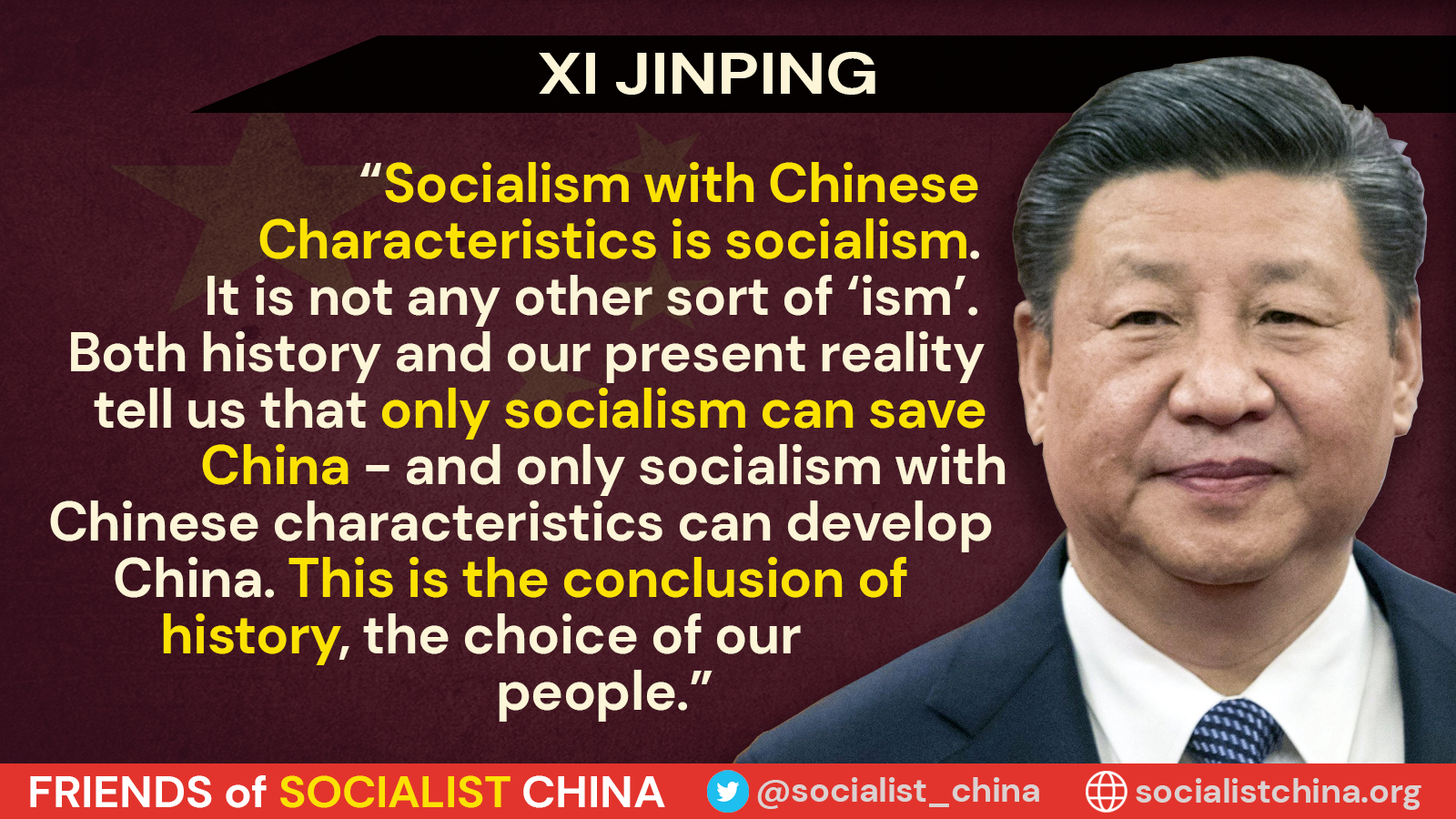
This does not mean China is socialist in any classical sense. “Socialism with Chinese characteristics” might more accurately be described as capitalism with Chinese characteristics: a hybrid system that tolerates markets while refusing to surrender political authority to them. The crucial word is authority. The Chinese state asserts the right to govern. The American state apologizes for its existence.

Ironically, the United States would need something like its own version of “socialism with American characteristics” to survive: a system that subordinates finance to production, treats health care and education as public goods, plans energy transitions over decades, and insulates core institutions from electoral whiplash. But such a transformation would require exactly what the American system cannot produce: permanent and irreversible investments in national health care, education, climate measures, nuclear disarmament, rent control, day care, labor unions, and wages that keep up with inflation.

Project 2025 is not the cause of American decline. It is the confession. It openly declares that the American right no longer believes in governing—only in dismantling. And because the system permits such nihilism to recur endlessly, because it contains no mechanism for enforcing continuity in the public interest, decline is not merely possible. It is inevitable.

The tragedy is not that China may surpass the United States. Civilizations rise and fall. That is history. The tragedy is that America is choosing decline in the name of freedom while hollowing out the very capacities that make freedom meaningful. A society that cannot plan, cannot remember, and cannot serve its people is not free.

It is merely ungoverned.

And ungoverned societies, no matter how wealthy they once were, eventually come to resemble the Third World they once presumed to lecture.

The Mamdani Lesson: Break Completely with the Billionaire Model

Over the past few months, I’ve found myself sitting at a rather surprising table — the Arc of Justice Alliance (AJA) planning committee. We’re charged with two enormous tasks: first, to craft a meaningful progressive response to the Right’s authoritarian blueprint, Project 2025. Second we’re to draft a counter-vision called Project 2029. It’s to be a path toward a People’s Republic grounded not in domination, but in justice, compassion, and democratic renewal.

For months now, we’ve been wrestling with the same dilemma: If the Republican establishment built a sprawling ecosystem of think tanks, media outlets, university programs, and religious platforms—funded by billionaires and designed to engineer public consciousness—shouldn’t we build a progressive version of the same? At one meeting after another, we even floated ideas about recruiting famous people to our cause and even of courting “friendly” billionaires like George Soros to bankroll a left-liberal infrastructure capable of matching the Right blow-for-blow.

But then something happened that, for me at least, broke the spell: Zohran Mamdani won the New York City mayoral race.

Let me underline what his victory represents. Here was a young candidate with 1% name recognition only a year ago. He faced opponents backed by unlimited money — super PACs, corporate donors, real-estate tycoons, the whole constellation of elite power determined to smother anything resembling a genuine democracy. And yet, he didn’t just challenge them; he defeated them. How? By mobilizing more than 100,000 volunteers, by conducting leadership trainings in living rooms and union halls, by knocking on one million doors, and by rallying ordinary New Yorkers around the elemental theme of affordability — the right of human beings to live with dignity in the communities they love.

Nothing flashy. Nothing overly intellectualized. No backroom deals.
Just democracy in its most radical, ancient sense: people talking to people.

His victory provided me with a moral awakening of sorts.

Because suddenly the entire strategy we’ve been discussing — building our own version of the Powell Memo machine — began to look not simply inadequate but morally compromised. If the way forward is through people, why would we imitate a model designed to sideline them? Why mimic the very structure that has delivered us a national government increasingly controlled by ignorant, degenerate, mafia types whose only qualifications seem to be cruelty, ignorance, and a willingness to auction off the country to the highest bidder?

If the fruit of the Right’s model is authoritarianism, why would we plant the same tree?

No. The Mamdani movement reveals the deeper truth:
Power does not flow down from billionaires or elites. It flows up from human beings who discover their own agency. As OpEdNews editor Rob Kall would say, “It’s Bottom-up.”

And so, I find myself convinced that Project 2029 cannot — must not — follow anything resembling the Republican strategy. We cannot organize a progressive future by begging for crumbs from oligarchs. Even “friendly” billionaires are not our allies; their worldview is too shaped by wealth to understand the soul of a democratic movement. Instead, what we need is a politics that speaks directly to the pain and hope of ordinary people:

  • Affordability
  • Green New Deal
  • Free college
  • Downsizing the military
  • Nuclear disarmament
  • Closing foreign military bases
  • High-speed rail
  • Universal healthcare

And this, not as technocratic bullet points, but as expressions of a moral vision rooted in the human right to live, learn, breathe, rest, and dream.

But this raises a practical question, the one our committee keeps circling back to: How do we build a movement capable of achieving such sweeping change without billionaire patrons? Here’s the blueprint that for me emerges when we take Mamdani’s victory seriously:

1. The Movement Must Be Member-Funded — Not Billionaire-Funded

If our goal is democratic empowerment, then our funding must come from the demos.
We need a dues-paying membership, millions strong, each giving what they can — $3, $5, $27. This is not naïve idealism. It is what built the civil rights movement, what sustained labor unions at their peak, and what fueled Bernie Sanders’ campaigns. Money raised from below transforms supporters into co-owners of the movement.

2. Build Leadership Schools, Not Think Tanks

The Right built think tanks to create obedient foot soldiers for oligarchy.
We need leadership academies to create authors of democracy.

Neighborhood leadership circles, online organizing schools, campus institutes for justice work, training hubs in churches and mosques — if Mamdani could train 100,000 volunteers in a single city, imagine what a nationwide network could accomplish.

3. Replace Media Propaganda with Relational Organizing

Fox News and right-wing radio work by isolating individuals and filling the void with fear.
Mamdani’s movement worked by connecting individuals — neighbor to neighbor.

Project 2029 should build a national relational organizing platform that links:

  • congregations,
  • tenant unions,
  • mutual aid groups,
  • environmental coalitions,
  • arts collectives,
  • campuses,
  • worker centers.

Democracy spreads best not through algorithms but through relationships.

4. Tell One Simple, Moral Story

Republicans have mastered messaging not because they are clever but because they are consistent. Mamdani was consistent too. His message didn’t wander through policy white papers; it hit the heart: “Everyone deserves to live here.”

Our message must be equally direct:
A nation where every person can live, learn, heal, and thrive without fear or exploitation.
Every program — healthcare, demilitarization, free college — reinforces that story.

5. The Ten-Thousand-Door Strategy, Scaled Nationally

If the Mamdani campaign knocked on a million doors in one city, Project 2029 should commit to knocking on fifty million nationwide. But these should not be transactional campaign knocks; they should be ongoing democratic conversations about housing, work, health, and climate.

Block by block, precinct by precinct, the country’s political imagination changes one kitchen-table talk at a time.

6. Activate the Spiritual and Artistic Imagination

As a theologian, teacher and former priest, I’ve spent my whole life insisting that politics has a spiritual dimension. The Right weaponized faith to defend hierarchy. We must reclaim it to defend justice. And we must bring artists into the center of our movement. The imagination is political terrain.

If we want new possibilities, we need new parables, new hymns, new murals, new metaphors of liberation.

7. Build Institutions That Answer to the Grassroots

To accomplish all this, we’ll need training centers, media platforms, and policy shops — but they must be governed by the movement itself, not by plutocratic trustees. Our institutions must function like worker cooperatives: democratic, transparent, and accountable to the base.

Conclusion: The Republic Is Waiting for Us

Zohran Mamdani’s victory is not an isolated event. It is a sign — a living reminder that ordinary people, organized, can defeat moneyed power. In that sense, his mayoral race is more than a political upset. It is a prophetic warning: if we cling to billionaire strategies, we will lose not only elections but our moral compass. But if we follow the path of radical democracy, we may yet redeem the American experiment.

Project 2029 must not be a mirror of Project 2025; it must be its antidote.

The future will not be built by oligarchs. It will be built by us — the many — knocking on doors, telling the truth, and refusing to surrender the idea that another world is possible. If 100,000 volunteers can change New York City, then millions can surely change America. And that is the real beginning of Project 2029.

A Day in the Life of Americans Observing the UN Declaration of Human Rights


Recently, at our Arc of Justice Alliance (AJA) meeting, the Planning Committee discussed what daily life in the U.S. would look like if the AJA vision were implemented and the United States actually lived up to the UN Universal Declaration of Human Rights (UDHR)? Here’s an answer provided by ChatGPT.


Morning Light

The sun rises over Dayton, Ohio, and the Thompson family’s house wakes up with it — lights brightening automatically, powered by rooftop solar panels. The air is fresh, the street is quiet, and not a single car rumbles by. Most people bike or hop the community tram these days.

Maria Thompson rolls out of bed around seven. She’s a nurse practitioner at a neighborhood health co-op. Her hours are flexible; her paycheck is guaranteed. No side hustles, no “gig economy,” no hustling just to survive.

She remembers her mom, back in the 2020s, juggling three part-time jobs with no health insurance and no savings. That world — the world of burnout and precarity — is gone. Work now comes with dignity, fair pay, and time to rest.

“No one should have to earn the right to live with dignity.”

Downstairs, her husband Daniel sips coffee and scrolls through the Public Knowledge Network. It’s news without ads or algorithms — funded by the community, not corporations. Since media reform followed Article 19 of the Universal Declaration of Human Rights, journalism stopped being a ratings game and started being a public service.

At the table, their kids, Lila (16) and Jordan (11), eat fruit and cereal from their weekly co-op basket. There are no food deserts anymore — local farms supply every community with fresh produce. Healthy food is a right, not a luxury.


Midday Work, Human Style

Maria bikes to the clinic along quiet, tree-lined streets. Fossil fuels are long gone; the city runs on clean energy owned by its residents. The air smells like rain and lilacs, not gasoline.

At work, Maria greets patients by name. No billing forms, no deductibles, no endless phone calls with insurance companies. Health care isn’t a privilege anymore — it’s a right.

She spends real time with people. One of her patients, an older man with diabetes, used to ration his meds before universal care took hold. Now he’s thriving. He thanks her — but it’s not the thank-you of desperation. It’s gratitude born of mutual respect.

Meanwhile, Daniel’s high school history class is buzzing. The topic today: Why did it take so long for America to treat human rights as real?

A student asks, “If the Declaration was written in 1948, why didn’t people just do it?”
Daniel smiles. “Because first,” he says, “we had to believe we deserved it.”

“The biggest revolution wasn’t political — it was psychological.”


Afternoon: The Culture of Care

At lunch, Daniel joins other teachers in the school garden, munching on sandwiches and talking about the next community project. Teachers work six-hour days now, and every job comes with paid time for family, creativity, or civic engagement.

Across town, Lila is at her art studio internship, painting a mural about climate recovery. Her school believes in learning through doing — part of Article 27’s promise that everyone has the right to participate in cultural life.

At the community center, Jordan and his friends build solar robots in the after-school program. When the seniors arrive for tea, the kids pause their project to help set up tables. It’s normal now — generations sharing space, stories, and laughter. Loneliness has dropped, community ties have grown, and life feels… connected.


Evening: Democracy in Real Life

Dinner at the Thompson home is simple but joyful: vegetable paella, salad, fresh bread. No one eats in a rush. They talk, laugh, argue a little — about the next Community Assembly.

The Assemblies happen every month. People from every neighborhood vote on local issues through secure digital platforms. It’s democracy that actually feels like participation, not just voting every four years.

“Democracy isn’t an event. It’s a daily habit.”

After dinner, they stream a short documentary about how the world came together to rebuild after the climate crisis. The voiceover reminds them: “The Universal Declaration of Human Rights was always a blueprint. It just took humanity seventy-five years to start building.”

Maria looks over at her family — fed, healthy, safe — and smiles. The dream didn’t die; it just took time to grow up.


Night: A Quiet Confidence

Later, Maria steps outside. The neighborhood glows softly under solar lamps. From the park, she hears music and laughter. She breathes deeply. The air is clean, the stars visible again.

Upstairs, Lila writes in her journal about becoming an environmental architect. She knows college will be free and open to everyone. Jordan’s reading a bedtime story about the first moon colony signing the Earth Charter.

Maria crawls into bed beside Daniel.
“Can you believe our grandparents lived without all this?” she whispers.
He grins. “They didn’t give up,” he says. “That’s why we have it.”

Outside, the world hums — steady, hopeful, human.

“When every person matters, everything changes.”


A New Normal

This isn’t a perfect world. Storms still come, people still disagree, and life still surprises. But the old fear — of losing your home, your job, your health, your future — is gone.

Now, human rights aren’t slogans. They’re the structure of everyday life.

Housing is guaranteed.
Healthcare is free.
Education is also free and lifts everyone.
Work supports, not consumes.
News informs, not divides.
Democracy belongs to all.

In this America, the extraordinary has become ordinary: breakfast with family, work with meaning, art without debt, democracy without despair.

The Thompsons aren’t special. They’re just people living in a country that finally remembered what the Declaration promised back in 1948:

“All human beings are born free and equal in dignity and rights.”

And this time, we meant it.

Spare me the Crocodile Tears: Assassination Is the American Way

Please spare me the handwringing over the political assassination of Charlie Kirk. Like you, I’ve heard our politicians say there’s no place for political violence in America. Others have said such atrocities are the province of the right or alternatively of the left

All of that is false. It’s complete B.S. Face it, America itself and its CIA (often in cooperation with organized crime) are assassination experts. It’s not a Republican thing or a Democrat thing. It’s not a question of “left” (as if there were a real “left” in America) or “right.”

No, it’s the American way. It’s what “we” do in the world. And to stop domestic assassinations, that’s what must change.

As Martin Luther King told us long ago, the U.S. (along with Israel, and NATO I would add) is the greatest purveyor of violence in the world. (Vijay Prashad calls NATO “the machine that destroys humanity.”) Our government and those allies commit targeted and random assassinations all the time.

Think of the extrajudicial bombing of that Venezuelan fishing boat just last week. Without advancing any evidence whatsoever, those in the boat were blown up because of “suspicions” that they were drug dealers. No proof, no arrests, no trial. No handwringing or tears. Just killed remorselessly “on suspicion.”  All the victims had (now severely traumatized) families.

Then think of Israeli threats to “take out” (decapitation, they call it) the elected leaders of Iran – or of their attempts a week ago to kill Hamas leaders as they participated in peace talks in Qatar. Think of the way Israel recently killed Yemen’s prime minister Ahmed al Rahawi and other Yemeni political leaders. And need we say the names Allende, Lumumba, Kaddafi, Guevara, or of a whole host of other political leaders routinely offed by the United States? Or all those attempts to murder Fidel Castro. Now they’re talking about taking out Nicolas Maduro of Venezuela

But Kirk was different you might say. Though liberals don’t agree with most of his positions, he was a journalist, a debater, an organizer. His assassination was an attack on free speech, on the first amendment. Killing him threatens the very concept of press freedom.

And the way he was killed was especially brutal. On “Breaking Points,” Krystal Ball even urged her viewers not to watch the video. “It will haunt you for the rest of your life,” she warned.

But all of that is B.S. too. “Our” assassins don’t care about free speech, free press, the first amendment or the assassinations’ brutality. For instance, “we” and Israel kill famous journalists virtually every day. And it’s all done in the most horrendous ways imaginable. More journalists (many of them award-winning) have been killed by U.S.-supported Zionists than all those killed in WWI, WWII, Vietnam, Iraq, and Afghanistan combined.

AND IT HAPPENS VIRTUALLY EVERY DAY!!

Those routine atrocities occur in Palestine, where many of the victims have their heads blown completely off. And it’s not just the journalists and other public figures. In many cases it’s their families too – wives, children, infants, parents, grandparents, and great grandparents — who are killed along with them.

So, again, please spare me the crocodile tears! You can’t routinely assassinate innocents, political leaders, and journalists across the planet and not expect it to come home.

Yes, with the political murder of Charlie Kirk assassination’s homecoming is undeniable and horrific. The chickens have indeed come here to roost.

And it’s not something that can be cured by stricter gun laws or by left and right singing Kumbaya together.

What must change is U.S. policy. “We” and Israel and NATO must stop being the world’s foremost political assassins!

“Where’s My Roy Cohn?”: A U.S. Coup D’état by Nihilists, Mobsters, Pedophiles and Blackmailers

This is a reposting of a second article I wrote about the Epstein affair. I published this one in 2020. I repost it here because of its extreme relevance to the reemergence of the whole scandal in the national consciousness. The review of “Where’s My Roy Cohn?” points out the centrality of pedophilia and related blackmail in our nation’s (and the world’s) governance. It touches our political system at the highest levels.

“Where’s My Roy Cohn?”: A U.S. Coup D’état by Nihilists, Mobsters, Pedophiles and Blackmailers

Recently, I spent two weeks in Tijuana working with Al Otro Lado (AOL). I’ve written about that experience herehere, and here.

AOL is a legal defense service for refugees seeking asylum mostly from gang-rule in Mexico and Central America. The emigrants want escape from countries whose police forces and allied power holders are controlled by ruthless drug rings whose only goal is accumulation of money and social dominance.

As I did my work helping clients fill out endless forms concocted by those who would illegally exclude them, everything seemed so hopeless. I wondered how those gangs achieved such power? Isn’t it a shame, I thought, that entire countries are now controlled by criminal mobs with names like “MS 13,” “Nueva Generacion,” and “18?” How sad for these people!

Then, during my flight home to Connecticut, I happened to watch the documentary “Where’s My Roy Cohn?” (WMRC).  It introduced viewers to the dark and criminal mentor of Donald Trump. (See film trailer above.)

On its face, the film illustrated the absolute corruption of the U.S. government as the unwavering servant of the elite as the only people who count. But in the light of my experience in Tijuana, it made me realize that our country too is literally controlled by shadowy gangs to an extent even worse than what’s happening south of our border. I mean, the United States of America now has the most prominent protege of Roy Cohn, an unabashed mafioso, actually sitting in the Oval Office! Both Cohn and, of course, his disciple turn out to be absolute nihilists without principle or any regard for truth.  

The film made clear how both men tapped into a similar nihilist strain within huge numbers of Americans who identify with the Republican Party and ironically with the Catholic faith and Christian fundamentalism.  Nonetheless, WMRC wasn’t explicit enough in probing either Cohn’s corruption, that of Donald Trump or of our reigning system’s complex of government, education, church and mainstream media.

It failed to show how the phenomena of Roy Cohn and Donald Trump represent mere surface indications of a profoundly anti-democratic coup d’état that has gradually unfolded in our country over the last 40 years. The actuality of this takeover was revealed most clearly in the recent impeachment proceedings. They provided a kind of last straw undeniably exhibiting how nihilist “Christians” have seized power in perhaps irreversible ways.    

The Film  

To see what I mean, begin by watching “Where’s my Roy Cohn?” for yourself. It not only details Cohn’s life as an infamous New York mafia consigliere. It also shows how he started his career in crime as the 23-year-old advisor of the equally villainous Senator Joseph McCarthy of Wisconsin. (McCarthy, of course was the force behind the nation-wide communist scare of the early 1950s.)

However, most importantly WMRC describes the film’s subject as the mentor of Donald Trump. By both their admissions, each recognized in the other a kindred spirit. Each used mafia and friends in high places (from Ronald Reagan to New York’s Cardinal Spellman) to enrich himself in terms of power and money. In the end, the alliance brought Trump to “the highest office in the land.”

To that point, here’s the way the film’s (highly accurate) preview-teaser reads: “Roy Cohn, a ruthless and unscrupulous lawyer and political power broker, found his 28-year career ranged from acting as chief counsel to Senator Joseph McCarthy’s Communist-hunting subcommittee to molding the career of a young Queens real estate developer named Donald Trump.”

In the course of the film, witnesses testify that Cohn taught Trump his basic approach to life. To wit: here are Cohn’s (and by extension, Donald Trump’s) implicit Ten Commandments. They also summarize the guiding principles of perhaps the majority of the most prominent politicians in the U.S. and across the world:

  1. Value money as the highest good.
  2. Manipulate the law to enhance personal wealth and privilege
  3. Put your own interests above everyone else’s
  4. Bully opponents mercilessly
  5. Wrap yourself in the flag while you do so
  6. Never admit wrong-doing or failure
  7. When accused change the subject and make vigorous counteraccusation
  8. Lie unceasingly with great confidence and bluster
  9. Declare even the worst defeat a victory
  10. Win at all costs

All of that was actually Cohn’s personal ethos. It worked for him throughout his life. It is reaping at least short-term benefits for Donald Trump as well. In fact, with Cohn as his mentor and as the man’s protege, Donald Trump would seem to merit all the adjectives on the film’s cover envelope: ruthless, unscrupulous, powerful, flamboyant, notorious, despicable . . .

Deeper Corruption

Unmentioned however in the film is Cohn’s connection with the very way our country (and the world) is run. It’s largely a blackmail game connected not merely with money and power, but with sex, pedophilia, blackmail and complete disregard for truth or moral principle. In fact, Whitney Webb’s four-part study of pedophile-racketeer, Jeffrey Epstein is called just that: “Government by Blackmail.”

And right at its heart, we find Trump mentor, Roy Cohn, listed prominently among figures like the Mafia kingpin Myer Lansky, and Lew Rosenstiel (of Schenley distilleries). For decades following World War II, they were real powers behind mayors, governors, congressmen, senators, presidents, and (yes) behind the world’s remaining kings and potentates, along with assorted church officials.

In fact, according to Webb, all during the ’70s and ’80s, Rosenstiel, Lansky’s close friend, regularly threw what his fourth wife (of five) called “blackmail parties.” The photos and recordings gathered there long kept Lansky out of trouble from the federal government. They also delivered entire cities to Mafia control in the post WWII era. In the end, Lansky blackmailed numerous top politicians, army officers, diplomats and police officials. He had photos of FBI director, J. Edgar Hoover in drag and performing homosexual acts.

Again, according to Webb’s research, Rosenstiel’s protegee and successor as blackmailer-in-chief was Roy Cohn himself who was closely associated with the Mafia bosses referenced prominently in “Where’s My Roy Cohn,” as well as with J. Edgar Hoover and the Reagan White House. (Nancy Reagan even phoned Cohn to thank him for enabling the election of her husband.)

Simultaneously, Cohn took on the central role in the blackmail pedophile hustle Lansky and Rosenstiel had started. As usual, its main targets were politicians often interacting with child “prostitutes.”

That was the real source of Cohn’s power. So were his dear friends in high places including (besides Clinton, the Reagans and Trump) Barbara Walters, Rupert Murdoch, Alan Dershowitz, Andy Warhol, Calvin Klein, Chuck Schumer, William Safire, William Buckley, William Casey, and top figures in the Catholic Church.

It’s those latter figures that connect Cohn’s pedophile ring as inherited by Jeffery Epstein even with the Church’s child abuse scandal. It directly involved the aforementioned “American pope,” Francis Cardinal “Mary” Spellman of New York, and Cardinal Theodore “Uncle Teddy” McCarrick of Washington D.C. Father Bruce Ritter’s Covenant House (a multi-million-dollar charity for homeless and run-away boys and girls) was also deeply implicated. In fact, when Ritter’s involvement in sex acts with his underage wards came to light, it was secular powers more than ecclesiastical forces that rallied to his defense.

Right-Wing Coup and Presidential Impeachment

All of that leads me back to where I started – to the right-wing coup d’état whose final straw debunked any pretense of democracy that may have been persuasive to some before impeachment proceedings put them completely to rest. “Where’s My Roy Cohn” showed the profound extent of the take-over in question – never far distanced from predominantly male sexual perversion.

Yes, we all know about such depravity within the Catholic Church – all the way up the chain of command. But the Cohn film along with the ancillary Epstein revelations it ignores reveal the centrality of that debauchery to standard operating procedure among government officials in the United States and across the world. It’s evidently what they do.

Am I exaggerating? Go back to the above list of Cohn’s and Epstein’s “friends.” See for yourself: they include presidents, princes, prelates, professors, pundits, pushers, and publishers.  All of them have always had a lot to fear from the tapes and videos made by Cohn. But the same holds true for the ones confiscated from Epstein’s special safe, and from the still unpublished manifestoes of passengers on Epstein’s “Lolita Express” to the man’s “Orgy Island.” Additionally, there’s remains a lot to learn from the testimony of Epstein’s procurer, Ghislaine Maxwell. Inexplicably the latter remains at large and allegedly unlocatable by international agencies possessing the world’s most sophisticated technology.

In other words, what we know about connections between Cohn, Epstein, the Mafia, CIA, DOJ, White House, and church officials represent the mere tip of an iceberg whose continued submersion seems assiduously assured by the agencies involved, by Britain’s royals, and other powerful entities — all aided and abetted by an entirely cooperative MSM.

[And no: it’s not baseless “conspiracy reasoning” to implicate the deep state officials just mentioned – not in the face of Jeffrey Epstein’s mysterious “suicide” whose suspicious circumstances (within a specifically federal prison) include transgression of standard protocols for prisoners on suicide watch, missing surveillance tapes, sleeping guards, unexplained screams reported by fellow inmates as coming from Epstein’s cell, and lack of follow-up by the MSM.] 

In other words, it’s not just that our country has been taken over by right-wing mobsters. No, it’s much more than that: our very world is run by gangsters, pedophiles, blackmailers, and their enablers – with Donald Trump its most recent and blatant evidentiary manifestation of anti-democratic policies.

Ignoring the rest of the world for a moment, consider what we’ve learned from the impeachment process about the extent of America’s de facto coup under Donald Trump whose criminal actions have gutted the Constitution of the United States at its core. Thus:

  • There no longer remains a separation of powers.
  • An indicted executive can control his own trial.
  • Subpoenas mean nothing to the reigning executive. By his decree alone, he can override summonses, forbidding those receiving them from appearing in court.
  • Impeachment “jurors” can embrace unmitigated bias with impunity announcing their judgment well before the trial’s commencement.
  • The presiding judge – even as he acknowledges the appearance of his court’s politicization – can with straight face permit a “trial” without evidence or witnesses.
  • Thus, prosecutors (i.e. the very House of Representatives) are left entirely impotent.

The hell of it is that these are all merely the latest developments in a criminal, unconstitutional, and anti-democratic process that has been in motion for nearly half a century. It has attacked the very pillars of democracy including the Supreme Court, Public Education, the mainstream media (MSM), and the Catholic Church – not to mention the Christian fundamentalists who constitute the heart of the Republican Party. It’s no wonder that Noam Chomsky has identified the latter as the most dangerous organization in the history of the world.

To be more specific, its “Christian” base hold firmly to tenets like the following that can only be described as “Cohnistic,” Trumpian, nihilistic, or (in religious terms) heretical:

  • There are no basic ethical principles (except that abortion is immoral).
  • Human life has no value except in its fetal stages.
  • The concept of truth is completely meaningless. This is because the public’s attention span and memory are so limited that repeated deceits make no lasting impression and will soon be forgotten.
  • The U.S. Constitution (except for the Second Amendment) is entirely insignificant.
  • There are two sets of laws, one for the elite and another for the rest of us.
  • As legal persons, corporations have more rights than living human beings.
  • International law applies only to U.S. enemies, never to the United States or its allies.
  • While the United States has the right to assassinate, bomb, drone, invade and occupy wherever it wishes, defense or retaliation against such aggression is criminal and liable to maximum punishment.

Conclusion

Do you see what I mean in describing our situation here in “America” as worse than our neighbors to the south?  

It’s a truism to observe that whatever imperial governments – from Rome to Great Britain to our own – do abroad eventually returns to haunt them at home. My experience in Tijuana coupled with watching “Where’s My Roy Cohn” underlined the veracity of that terrible axiom. It all made me realize that our government has been taken over by cynical nihilists – and more than that by mobsters, pedophiles, blackmailers and heretical religious fanatics.  

So, my take-away from border work in Tijuana is not only dismay, sadness, and despair for refugees at or border. It’s the same sentiments for ourselves.

With elections on the horizon, it’s also the question, what are we going to do about it? We have to determine which available candidate is freest from the sick contagion I’ve just described.

In Memoriam: Tom Shea (1938-2024)

I lost a dear friend last week. His passing made me cry. 

His name was Tom Shea and I knew him for 70 years – ever since I entered St. Columban’s high school seminary in 1954 at the age of 14. Tom was 16 then, a junior while I was a freshman. Even in such a small school of only about 100 students, juniors didn’t have much to do with freshmen.

Still however, I admired him greatly. Everybody did. He was so smart and such a great athlete. He was a strong-armed quarterback, a terrific basketball guard, a hard-throwing pitcher, excellent at any racket sport, especially good at ice hockey, a super golfer, and even (I was told) a respectable Irish hurler. He was also a crafty poker and bridge player. With all that, he never took himself that seriously and had a great sense of humor.

However, I didn’t really get to know Tom till I got to the major seminary years after high school. Even there it took a while. At the age of 21, I arrived still working on my bachelor’s philosophy degree. Meanwhile, at 23 Tom had already begun his 4 years of graduate theology work. By the time I began my theological studies, he was almost ready for ordination. That happened for him in 1964. He was ordained on December 22nd of that year – 60 years (almost to the day) before his final transition.

Besides playing with and against him on various athletic fields, the only time I remember speaking seriously with Tom in the major seminary was during the Second Vatican Council (1962-1965). I asked him for advice on what to read to catch up with the drastic changes occurring because of that historic event. I forget what he told me. But I remember following his instructions.

Because Tom was so smart, our missionary group, the Society of St. Columban, had singled him out for professorship in the seminary. They wanted him to teach Sacred Scripture. So, after his ordination, they sent him off to Catholic University in Washington, DC to get a preliminary master’s degree in theology. After two years there, he’d go on to Rome (and Jerusalem) for his terminal degree in biblical studies.

That’s when Tom and I really connected.

I was ordained in 1966. And as with Tom, the Columbans wanted me to teach in the major seminary. My field would be moral theology instead of biblical studies. But Tom and I would go off to Rome together to study – he for 3 years, and I for 5.

And oh, what a ride that would be! In Europe, we’d vacation together, ski many of Europe’s great resorts, and as brothers and colleagues sort out the details of our personal and political lives.

It began with both of us living at St. Columban’s major seminary in Milton, MA the summer before we left for the Eternal City. That was in 1967. I forget what Tom was doing in Milton. I was completing a summer course in Hebrew at Harvard. But every night the two of us drove over to Boston’s West Roxbury to play basketball with “the brothers.” We were the white boys who could ball with any of them. (I remember one night the Celtics’ Satch Sanders was there watching.)

The basketball connections continued in Rome. Both of us ended up playing in something like a G League there for a team affiliated with Rome’s professional club, Stella Azzurra. We scrimmaged against them a time or two. And it was all great fun — a great way to learn Italian culture and make Italian friends. Our Stella Azzurra team was coached by Altero Felice who later had a basketball arena named after him. We considered Altero a good friend and father figure.

While in Rome, Tom and I were also invited by Giulio Glorioso [the Italian equivalent (we were told) of Babe Ruth] to play baseball for the Rome team. (We had worked out with them one spring.) I remember the Saturday afternoon Giulio came to the Columban residence to try to persuade us to play ball that summer.

For better or worse, we passed up that offer in favor of studying German two of our summers in Europe at the University of Vienna. (German at that time was still considered essential for any serious theologian or scripture scholar.)

In a sense, both Tom and I grew up in Rome. Following Vatican II, everything was called into question. Over Pasta e Faggioli and salsiccia dinners in the Columban house at Corso Trieste 57, the 20 or so of us graduate students (all ordained priests from Ireland, Great Britain, Australia, New Zealand, Scotland, Tasmania – and we two Yanks) debated fundamental topics never open to question before Vatican II: God (Is there such a being?), Jesus (Was he somehow God? But how?), the nature of the church (Was Luther a heretic or a saint?), the priesthood (Was it necessary?). And what about mandatory celibacy? The discussions were unforgettable and life-changing.

Our friendship continued and deepened to eventually include our wives, Dee (Tom’s bride) and Peggy (mine). We spent several year-end celebrations together. And once we got together in Costa Rica for a long weekend at an all-inclusive resort. Peggy and I attended the wedding of their eldest son, Tommy in Chicago. Tom and Dee came to our daughter Maggie’s wedding in 2007 in Kentucky. Peggy and Dee remain fast friends.

The four of us got together for the last time a year-and-a-half ago in Florida. By then Tom had already been slowed by heart and lung problems. But his sense of humor never faded. Neither did his life-long interest in and commitment to spiritual growth.

Yes, Tom Shea was a close friend of mine. We grew up together for nearly three-quarters of a century, often acting as each other’s counsellor, advisor and confessor — every minute accompanied by stories and laughter.  As Peggy recently pointed out to me, his down-to-earth wisdom and example saved  me  in effect from a closed system and lonely life that otherwise would have throttled me.

So, thank you, Tom Shea for being such a good fellow traveler. You were wise, generous, humble, and always brilliant. I’m grateful for the gift of your impactful life. We’ll see each other again soon, I know.

Gustavo Gutierrez and Liberation Theology’s Critical Faith Theory

The Great Gustavo Gutierrez died this week. He transitioned as a 96-year-old giant whose A Theology of Liberation: History, Politics, and Salvation (1971) popularized and spurred the most important theological movement of the last 1700 years (i.e. since Constantine in the 4th century). In fact, liberation theology (LT) might well be described as responsible for the West’s most influential intellectual and social developments of the last 175 years (i.e. since the publication of the Communist Manifesto in 1848). United States and Vatican fierce opposition to LT testifies to its impact.

Think about it. Without liberation theology it is impossible to account for Salvador Allende’s rise to power in 1973 or the triumph of Nicaragua’s Sandinistas in 1979, or the power the FMLN in El Salvador had and continues to enjoy today. The Zapatista movement in Mexico is also intimately connected with liberation theology. Even more, without reference to liberation theology, it’s impossible to fully understand the rise of new left governments throughout Latin America. All of them are indebted to liberation theology and its power to motivate the grassroots.

Perhaps more surprisingly: apart from LT, one cannot fully understand the prominence of conservative evangelicals in the United States. That’s because (as we’ll see below) political support for their movement was part of the Reagan administration’s strategy to defeat liberation theology which the White House and the Pentagon termed a national security threat. Their fear of LT mirrored that of the Vatican which ended up cooperating with Washington’s war against it.

Many are convinced that Washington’s and Rome’s anti-LT war was successful. That’s because the U.S. systematically assassinated its prophets along with hundreds of thousands of its adherents in a massive conflict that Noam Chomsky called “the first religious war of the 21st century.”  The sheer terrorism of the U.S. response plus an equally systematic offensive against LT within the Catholic Church itself deprived liberation theology of its best leaders, misinformed and intimidated the grassroots, and silenced many more. Nonetheless LT has changed the world. It has changed the church and Christianity in general.

But what is liberation theology? And why was it so threatening to the powers-that-be, both political and ecclesiastical? What steps were taken to defeat it? And why should believers be so grateful to theologians like Gustavo Gutierrez?   

 Liberation Theology Defined

Simply put, liberation theology is reflection on the following of Jesus of Nazareth from the viewpoint of the poor and oppressed. More accurately, it is reflection on the following of Jesus the Christ from the viewpoint of those among the poor who are committed to their own liberation. That is, LT begins from a place of commitment – to a world with room for everyone. In itself, it represents a popular movement, a solidarity movement for social justice.

Liberation from what? In a word, from colonialism and from the neo-colonialism represented today by the forces of corporate globalization. Those forces have nearly half the world living on $2 a day or less. They’ve concentrated the world’s wealth in the hands of a sliver of 1% of the world’s population. According to UN statistics, eight billionaires own as much as 50% or humanity. As a result, at least 25,000 people including 10,000 children die of preventable starvation each day. In the eyes of liberation theology’s protagonists, that’s sinful and runs entirely contrary to the teachings of Jesus of Nazareth.

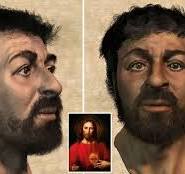
And what were those teachings? (This is the heart of liberation theology.) They were first of all those of a man recognized by the impoverished protagonists of liberation theology as someone like themselves. He looked like them. According to experts in the field of forensic archeology, he resembled poor mestizos everywhere in Latin America. He probably stood about 5’1’’ and weighed about 110 pounds. His skin was brown. He was a laborer, not a scholar; his hands were calloused.

Ironically, Jesus also possessed characteristics that mainstream Christians often find repulsive and ungodly. He was the son of an unwed teenage mother (Mt. 118-22; Lk. 1:26-38). He was homeless at birth (Lk.2:7).  If we are to believe Matthew’s account, Jesus became an immigrant in Egypt (Mt. 2:13-15). The good people of his day called him a drunkard and the companion of prostitutes. They expelled him from his synagogue because he didn’t seem to care about the 10 Commandments, especially the most important one – the Sabbath law. (For a Jew such excommunication and the shunning it entailed were like a death sentence.) The religious authorities said he was a heretic and possessed by the devil. The occupying Roman authorities identified him as a terrorist. They arrested him. And he ended up a victim of torture and of capital punishment carried out by crucifixion – a means of execution the Romans reserved specifically for insurgents. He was not the kind of person mainstream Christians usually admire. He was far too liberal to merit their approval.

Jesus was clearly a feminist. Many of his disciples were women. He spoke with them in isolated places. He actually forgave a woman caught in adultery, while implicitly criticizing the hypocrisy of patriarchal law which punished women for adultery and not men. And Jesus refused to recognize his contemporaries’ taboos around segregations. He crossed boundaries not only dividing men from women, but Jew from gentile, lepers from non-lepers, and rich from poor.     

He couldn’t have been more liberal. In a sense he was an anarchist. He honored no law that failed to represent the loving thing to do. His attitude towards the law is best summarized in his pronouncement about the Sabbath. “The Sabbath was instituted for human beings,” he said, “human beings weren’t made for the Sabbath.” This was pure humanism placing human beings above even God’s holiest law. Again, it was anarchistic.

Jesus’ teachings were politically radical as well. They centered on what today is called social justice. As such they infuriated his opponents but were wildly inspiring to the poor and oppressed. His proclamation was not about himself, but about what he called “The Kingdom of God.” That was the highly charged political image he used to refer to what the world would be like if God were king instead of Caesar. In that kingdom everything would be turned upside-down. The first would be last; the last would be first. The rich would be poor; the poor would be rich.

Subsequent reflection by followers of Jesus in the Book of Revelation teased all of that out and drew the conclusion that with the dawning of God’s kingdom, the Roman Empire would be destroyed and replaced by a new heaven and a new earth entirely unlike empire. There (as indicated in the Acts of the Apostles) wealth would be distributed from each according to his ability to each according to his need. There would be room for everyone. If that sounds like communism, it’s because, as the Mexican exegete Jose Miranda points out, the idea of communism originated with Christians, not with Marx and Engels.  

U.S. Opposition to LT

Those connections with Marxist analysis go a long way towards explaining resistance to LT by the U.S. government as well as within the Catholic Church.

That liberation theology dared to enter the mythological arena the right had long dominated virtually without rival astounded and infuriated the empire. Peasants throughout the subjugated world found the new explanations of God, Jesus and the gospels entirely empowering. Everywhere throughout Latin America they formed biblical circles, and those circles issued in social movements for justice.

In response, the Rockefeller Report of 1969 already identified liberation theology as a threat to the national security of the United States. By 1987, the Latin American Military Chiefs of Staff meeting in conference in Mar del Plata, Argentina, devoted several pages of their final report to liberation theology and the threat it posed to regional stability.  In between, in 1979 the first Santa Fe Document advised the incoming Reagan administration that it had to do something decisive about the threat posed by liberation theology. The administration heeded the advice, and responded both militarily and ideologically.

Reagan’s military strategy against liberation theology issued in a bloody war pitting the United States against the Catholic Church in Latin America whose bishops meeting in conference in Medellin Colombia had together dared to affirm a “preferential option for the poor” as their official position. To combat that commitment, the U.S. did exactly what Rome had done in the first three centuries of our era – and for the same reason: faithfully following Jesus who called empire into question and motivated the poor to assert their rights in this world as children of the God of life.

And both the Roman response and the U.S. response to Jesus and his followers resulted in blood baths. Many of us are well acquainted with the best-known martyrs: Camilo Torres, Archbishop Romero, the Salvadoran team of liberation theologians killed at San Salvador’s Central American University in 1989, the U.S. women religious murdered years earlier in that same country, and Che Guevara. (Yes, Che. His spirituality was secular, but it was no less spiritual or liberationist than any of the others.) And then the unending list of martyrs in this war against the Catholic Church – 200,000 in Guatemala, more than 100,000 in Nicaragua, 90,000 in El Salvador, and literally untold killings and disappearances in Honduras.

In every case, the carnage was a response to social movements inspired by liberation theology. Again, as Chomsky points out, official U.S. military documents show that liberation theology was a major target of those wars. In fact within those same official documents, the Army boasts specifically about defeating LT.

As for Reagan’s ideological response to liberation theology . . . .  On his accession to power, CIA psyops began funding conservative alternatives to liberation theology in Latin America and in the U.S. So did business concerns that saw the leftward drift of Latin America as a threat to their presence there. Domino’s Pizza and Coors Brewery were prominent among the cases in point. As a result, evangelicals throughout the region grew rapidly in number, and the recipients of those funds in the United States increasingly identified with Republicans, the “hand that fed them.”

So, the television programs of Jerry Falwell, Pat Robertson, Jim and Tammy Baker, Jimmy Swaggart, and others were beamed into every poor barrio, población, and favela. Right wing churches sprang up everywhere feeding and expanding an already robust evangelical presence in areas once completely dominated by the Catholic Church. The reactionary message was always the same – a depoliticized version of Christianity whose central commitment involved accepting Jesus as one’s personal savior and rejecting communism including the type allegedly represented by the theology of liberation.

All this points up the extreme importance of LT. including being indirectly responsible for the rise of the religious right in the United States.

On the other hand however, and on the other side of the aisle, so to speak, the Obama presidency represented the first U.S. president directly influenced by liberation theology. For 20 years, Barack Obama was part of the congregation of Jeremiah Wright – identified by James Cone, the father of black liberation theology, as the latter’s foremost contemporary embodiment.   

Nevertheless, Reagan’s two-front strategy (military and ideological) worked. Revolutionary gains in El Salvador, Guatemala, and most prominently, in Nicaragua were halted and reversed. Militarily, the “Guatemala Solution” was the template. It entailed using military and paramilitary death squads to kill everyone remotely connected with guerrilla movements. According to the Reagan strategy, that included priests, nuns, lay catechists and ministers of the word influenced by liberation theology. The theological strategy worked as well. The slogan promulgated by the Salvadoran military said it all, “Be a patriot; kill a priest.”

Our Debt to Gustavo Gutierrez 

Gustavo Gutierrez was by no means the founder of liberation theology. However, he is said to have coined the term in 1968 after the bishops of Latin America adopted as their own LT’s understanding of the Christ event as expressing God’s “preferential option for the poor.” The poor are God’s chosen people, liberationists explained, as testified by the divine choice to incarnate as the poor peasant earlier described.

In a sense then, Gutierrez and the movement he popularized represents a kind of “Critical Faith Theory” comparable to contemporary academia’s “Critical Race Theory.” Like the latter in relation to race, liberation theology seeks to reverse the traditional employment of religion and the Judeo-Christian tradition as tools of oppression meant to drug, pacify, infantilize, and depoliticize their adherents.

In that sense, LT is a kind of anti-theology.  

Thank you Saint Gustavo Gutierrez for your life and work.

The Coming Election: I’m Sitting This One Out

Just this morning I received an appeal from a colleague of mine at OpEdNews where I’m a senior editor. He begged those on his mailing list to please vote for Kamala Harris. He said that allowing Donald Trump to be elected would be disastrous not only for the United States, but for the world. So, please, please vote for the sitting Vice President.

Believe me, I completely understand where my friend is coming from. I too dread the thought of four more years of yet another Trump presidency. For that reason, I’d never vote for him. Neither would I ever vote for a Republican. They’re just too much in the pockets of our country’s richest 1%.

However, I’ve come to realize that the same has become true for the Democrats. They too serve the interests of that same 1%. They’re just Republican Lite. With their colleagues across the aisle, they’ve formed a kind of Uni-Party.  

I mean, like the Republicans, the Democrats have shown that they don’t really care about working people, except at election time. The Blues like the Reds care only about their donors.

Think about it: neither party gives a damn about what you or I think concerning Palestinians, raising the minimum wage, fairly taxing the rich and corporations, universal health care, free college tuition, homelessness, cancellation of debt for college graduates, gun legislation, nuclear arms control, closing federal lands to oil interests, a green New Deal, repairing our country’s collapsing infrastructure, high-speed rail, or solving the root problems of immigration. The list goes on. Yes, Democrats sometimes pay lip service to such issues. But that’s about as far as it goes.

Moreover, Democratic foreign policy is indistinguishable from the Republicans. There’s hardly a sliver of difference between them on Israel, Ukraine, or China. Nothing about diplomacy and its inherent need for compromise. Instead, for both parties, foreign policy has been reduced to three elements. Everyone must follow U.S. directives or face bombing, sanctions, and/or regime change. That’s it! Bombing, sanctions, and regime change.

(To give him his due however, at least Donald Trump has promised to end the Ukraine nonsense – the issue that has overridden everything else for the Biden presidency since 2022. Since that time, the U.S. has spent more than $175 billion on Ukraine. $175 billion!!  That’s enough to solve all the problems listed above. But all the while Democrats have joined Republicans in claiming that there’s not enough money for addressing those issues  – not even for FEMA in the wake of Helene and Milton.)

What I’m saying is America has become a failed state. Its system is not worth participating in. Bent on having our 4.5% of the world’s population controlling the entire thing, it’s completely corrupt. Moreover, completely controlled by money and the military industrial complex, it can’t be reformed. Even if Democrats wanted to address the problems listed above, the Republicans would never let them. Realizing this, instead of owning their working-class identity, the former have decided to become more like the latter. Republican Lite! The result is a completely frozen irreformable system.

And don’t tell me that we can vote ourselves out of this mess. Again, the system won’t let us. I mean, no one’s even talking about eliminating the Electoral College, are they? So, we keep getting “leaders” unsupported by the country’s majority. Seven “swing states” determine the whole thing reducing the rest of us to mere spectators. We’re left wondering which sock puppet the voters in Ohio, Michigan, Nevada, Arizona, Georgia, North Carolina, and Pennsylvania will choose. I live in Connecticut, a solidly blue state. Why should I vote? It’s all a charade.

But here let me slow down. None of what I’ve written so far represents my decisive reason for sitting out this election. It’s simply this: I CAN’T VOTE FOR GENOCIDERS.

Can you?

For me it’s a moral issue. I just can’t do it anymore than I could have voted for that mustached man in Germany nearly a century ago.

For me, apartheid is non-negotiable. Settler colonialism is non-negotiable. But above all, GENOCIDE IS NON-NEGOTIABLE. I can’t support any government committing genocide. And that’s what a Harris presidency promises to continue. So will a Trump presidency.

End of discussion.

But who knows? Perhaps a Trump victory will at last cause Democrats to ask themselves why. It might drive them to realize that Republican Lite doesn’t cut it for working people. It might lead Democrats to unabashedly become the party of Roosevelt’s New Deal, of election reform, higher wages, universal health care, a Green New Deal, just taxation, loan forgiveness, defunding Israel’s genocide, nuclear disarmament, and enlightened immigration policy (that connects asylum seekers with failed U.S. policies such as the War on Drugs and the North American Free Trade Agreement).

Don’t hold your breath though. And buckle up. It’s going to be a rough ride.

Immigrants Are Everywhere And They’re Demanding Reparations; They’ll Replace Us; And They Should!

Last week my wife and I spent three days in Venice. For me it was a return visit.

Fifty-two years ago, I traveled there twice with a very dear friend. So, this time round brought back a flood of happy memories.

My 2024 visit was highlighted by hours spent at the Biennale art exhibition in and near the city’s Arsenale Gardens. It’s theme was “Stranieri Ovunque” (Foreigners Everywhere).

The displayed sculptures, paintings, films, fabrics, and other objets d’art celebrated rather than lamented the planet-wide population exchanges we’re all witnessing. The displays elicited deep reflections on contemporary debate about immigrants, borders, and attempts to keep “foreigners” out of Europe and the United States.

It all made me think not only about immigration, but about colonialism and reparations.

On the one hand, across the entire world we’re witnessing seemingly irresistible waves of immigrants traveling from the global south to Europe and the United States. On the other hand, those former colonial powers are contesting such movements in the name of preserving their (predominantly white) cultures and economies from foreign invaders.

The colonial powers are worried about being “replaced” in their own countries.

Attempts at preservation evoke restrictive measures such as laws, walls and increased militarization of borders. They also involve propaganda campaigns that villainize immigrants from the former colonies as invaders, criminals, and agents of economic destruction bent on taking jobs from their working-class victims.

More specifically, the propaganda would have e.g., “Americans” believe that immigrants cause their economic problems such as unemployment, job loss, and lower wages. Such reasoning has it that in our 2024 population of 350 million people, U.S. economic problems are created by 12 million of the poorest people in the world seeking refuge across “our” sacred borders. 12 million is about 3.4% of 350 million. Economically speaking, that’s an insignificant percentage – especially when those involved have virtually zero political power.

So, the concern immigration raises is not only absurd, it also misdirects public attention from the real causes not only of our economic problems and of immigration itself. Those causes include colonialism and capitalism with its practice of offshoring the very jobs that once created a prospering middle class in Europe and the United States. In other words, current economic problems are and have always been caused by the richest people among us rather than by the poorest.

More precisely, it’s all associated with colonialism – i.e. with the centuries’ long practice of western Europeans invading and plundering the homelands of those now seen as threatening Europe and the United States.

Recall that the last 500 years have seen “westerners” migrating to the Global South (Africa, Latin America, and South Asia), stealing its land and treasures, and enslaving its peoples while often taking up residence and in the process destroying economies, cultures, indigenous art, and languages.

The further result has been the creation of “underdeveloped” countries whose purloined wealth fueled the economic development of Europeans inhabiting lands (like England) that are by comparison small, resource poor and sparsely populated.

Additionally, the industrial “development” supported by the colonial system has caused an unprecedented warming of the environment that has taken its worst toll in the Global South. There formerly productive agricultural land has been robbed of its fertility by the resultant changes in temperature and rainfall as well as by forest fires.

The very existence of entire island nations is threatened by rising sea levels caused by global warming.

Likewise, invading capitalists drove peasants from their subsistence milpas and small farms through colonial practices that precisely ignored property lines and borders while often redrawing them altogether.

Additionally, “foreign aid” in the form of food giveaways and subsidies to giant agricultural firms consistently made it impossible for small indigenous farmers to compete with their invaders from the north. How can a local farmer sell her crops in the face of “foreign aid” (dumping) whose very purpose is to drive her out of business?

And when local populations tried to remedy such problems by electing governments to meet their own needs rather than those of their exploiters, the latter either initiated regime change or directly fought wars against them — all to reverse people-centered programs in the name of fighting socialism and communism.

So now the shoe’s on the other foot. Floods of people from Latin America, Africa, and South Asia are returning the favor. Whether they’re conscious of it or not, they’re voting with their feet to demand reparations for the wealth the colonialists stole from them.

In other words, whether to give reparations for the plunder of colonialism is not up to the colonizers to decide. The exploited are at our doorstep to take back what was unjustly stolen. They are the deciders.

And there’s no stopping them. You can pass all the laws you want. You can build your walls.

You can militarize your borders.

But those we’ve wronged are still going to come. And they’ll bring their languages, clothing, foods, religions, music, art, and large families.

The Great Replacement is inevitable. The Great Replacement is just. It’s karma. The chickens are coming home to roost.

What goes around comes around.

The earth belongs to everyone!