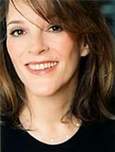
Announcing: A New Series on Presidential Candidate, Marianne Williamson

[The quadrennial election-season is upon us. Accordingly, today’s posting is the first in a series on Marianne Williamson and her candidacy for President of the United States. The series will explore parallels between her platform (as articulated in her 20th anniversary edition of “Healing the Soul of America”) on the one hand and “A Course in Miracles” (ACIM) on the other. Postings to follow will also connect ACIM and Williamson’s policies with liberation theology – the most important theological development of the last 1500 years, and the inspiration for the Global South’s most effective social movement since the middle of the 19th century. The thesis here will be that Marianne Williamson is actually a U.S. liberation theologian, but in the tradition of 19th century abolitionists, as well as that of women suffragists, Martin Luther King, and Mohandas Gandhi. As such, her candidacy promises our country the revolutionary impetus that liberation theology provided for the profound socio-political changes Latin America has experienced over the last six decades.  Apart from more formal explanations of this thesis, the latter’s point will be made in the form of weekly Sunday homilies reflecting on the narratives of Jesus’ words and deeds as presented in each week’s liturgical readings.]

Marianne Williamson for President! She’s a Liberation Theologian

On Monday, January 28th, Marianne Williamson declared herself a candidate for President of the United States. In making her declaration, this great spiritual leader, who has a larger social media following than any Democratic candidate declared so far, implicitly proposed addressing in 21st century, non-religious ways the spiritual hunger that Williamson and others in the “higher consciousness community” consider endemic to the human condition, whether that hunger is recognized or not.

However, the difference between Williamson and others in that community is that she consistently applies her spiritual insights to the public sphere. And as we shall see shortly, she does so in a manner that completely respects the convictions of Christians, Jews, Muslims, Sikhs – and atheists, along with those who describe themselves as “spiritual but not religious.”

Because of its inclusive approach, Ms. Williamson’s candidacy promises to build on the accomplishments of 19th century abolitionists, and on those of 20th century women suffragists, and participants in the American civil rights movement. The abolitionists and many suffragists were highly committed Quakers. And, of course, King was a Baptist minister.  Following in their footsteps, Williamson promises to at last offer progressives (and the country at large) entry into a sphere that conservatives – Christian fundamentalists to be exact – have controlled at least since the 1980s. It’s the essential realm of faith and spirituality.

Failure to enter that sphere has hamstrung the left whose “enlightened” tendency has been to reject and ridicule rather than embrace what many consider the deepest dimension of being human. That tendency has not simply cost progressives votes on election day. Even more fundamentally, it has incapacitated them by its implied blindness to the spiritual hunger shared even by humans in general. Put otherwise, Williamson is confronting the right on its own turf.

In daring to do so, she is boldly following in the footsteps of Martin Luther King who demonstrated the ability of faith to awaken critical thinking capacities belonging to ordinary people. King as well as Malcolm X, and the abolitionists that preceded them all tapped into the undeniable power that religious language, symbols and metaphors possess to actually motivate ordinary people to work for social justice and profound political change. The same, of course, is true of Mahatma Gandhi and the liberation theologians of the Global South. In fact, I’ll argue in future postings that Marianne Williamson could easily be classified as a liberation theologian.

Before I get to that however, please recognize that during her campaign Williamson does not plan to wear her identity as spiritual teacher on her sleeve. And that’s her strength too. Instead, she’ll employ her spiritual consciousness and conviction fostered by years of spiritual discipline to guide her campaign in the right direction which will inevitably call for deep psychological – not to say – spiritual – transformation for all of us.

Recently, she described that transformational direction in an extended interview with CNN’s John Berman. Williamson said her most prominent issues would be:

  • Medicare for All
  • A permanent tax cut for the middle class
  • Free education for all children (including tuition for public colleges)
  • Government support for children’s services
  • A Green New Deal

Those, of course, are proposals similar to what have been proposed by Elizabeth Warren and Bernie Sanders, whom Williamson supported in 2016.

Why then run, Berman asked, before Sanders and Warren have officially announced? Won’t her campaign be somewhat redundant in the face of two veteran politicians who, he intimated, have a much better chance of getting elected?

Williamson’s response was significant in that it clearly underlined not so much her competitive edge even over candidates like those just mentioned, but the added value her candidacy represents. Ms. Williamson wants to expand the conversation, she said, to address the psychological and spiritual issues underlying what she sees as the severe disease that mortally threatens the American body politic. As long as those remain unaddressed, conversation and policy proposals, however excellent and whatever their sources, will remain at less-helpful superficial levels. It will be like watering the leaves of a plant, when its roots remain dry and shriveling.

And what root causes is Williamson referring to? Basically, she says, it’s an amoral economic system. It is capitalism-as-we-know-it that has focused on short term gains while allowing market forces instead of common-sense spiritual principles (as elementary as the Golden Rule and democracy) to assume their irreplaceable and decisive roles in the organization of our country’s politics.

Such assumption now has millions of children living in chronic despair and trauma. (Williamson always begins with child welfare.) The system has also created layers of racism and fostered wars across the planet. It has made our country destructively expert at waging wars but unwilling to wage peace.

Williamson reminded her interviewer that Franklin Roosevelt considered the administrative aspects of the presidency as secondary to the moral leadership the position affords. She pointed out that her 35 years of naming and addressing such moral dimensions of public policy is what qualifies her to exercise the moral leadership F.D.R. referenced. That’s Williamson’s competitive edge. It’s her added value. It’s what no other Democratic candidate offers so clearly.

When asked about paying for her program, Williamson chuckled. She asked: Isn’t it interesting that interviewers always raise that tired canard? When it comes to giving a $2 trillion tax break to billionaires, very few, she said, will ask, “Where will the money come from?” Even less do they raise that question when it comes to fighting wars – not even wars like the one against Saddam Hussein in Iraq that was entirely illegal and based on lies.

Marianne Williamson had a similar response when asked about the reparations she advocates for African-American descendants of slaves. She’s proposing a fund of $100 billion for the purpose. It would be paid out over a period of 10 years to finance economic and educational projects to benefit the community in question.

There are precedents for this she added. After World War II, Germany paid out $89 billion in reparations to Jewish organizations in the country. President Reagan signed into law the American Civil Liberties Act to similarly repair harm done to every survivor of the internment camps set up for the Japanese-Americans during the same World War. Moreover, following our nation’s Civil War, General Tecumseh Sherman proposed giving every freed slave 40 acres and a mule. Instead, former slaves were given the Black Code Laws that plagued them till the mid-1960s. It’s time, Ms. Williams said, to make good on Sherman’s reparational promise which was never kept.

From all of this, you can see that Marianne Williamson with her huge social media following is a serious candidate. For people of faith and advocates of social justice without a shred of religious faith, she presents a strong antidote to the religious right that has cornered the field of language, symbols, and metaphors by which most people in the world make sense of the world.

Williams knows that field inside-out. She recognizes that surrendering that field to reactionary forces is what renders progressives relatively weak before the 75% of Americans who identify as Christians. In the spirit of the abolitionists, women suffragists, and civil rights activists – in the spirit of Gandhi and liberation theologians – she wants to reclaim that turf and the specifically moral influence missing in the Democratic White House since the FDR era.

(Next week: My Meeting with Marianne Williamson. )

My Interview on Rob Kall’s “Bottom-Up” Podcast/Radio Program

Two weeks ago, Rob Kall posted an interview with me on OpEdNews. It centered on my book, The Magic Glasses of Critical Thinking: seeing through alternative fact & fake news. I had great fun doing the show. Here it is.

My Meeting with Marianne Williamson

Marianne

[This is my second blog entry in a series on the relation between liberation theology and A Course in Miracles (ACIM).]

More than a year ago, I met Marianne Williamson directly for the first time. I say “directly” because at the time I felt I already knew her. I had read her book, A Return to Love, which Marianne herself describes as ACIM Cliff Notes. And every Tuesday evening from 7:30-9:30, my wife, Peggy, and I watched Marianne’s livestream lectures from the Marble Collegiate Church in New York City. On top of that, I had been a student of A Course in Miracles for more than a year. (I’ll say more about that presently.)

In any case, at Peggy’s invitation, the great spiritual teacher and eloquent interpreter of A Course in Miracles came to Berea College as a convocation speaker. As expected, she charmed and inspired us all with her insightful connections between ACIM and the crisis of leadership and truth discernment in the age of Donald Trump whose presidency had begun just two months earlier. Her message emphasized that spirituality and higher consciousness have political consequences.

The evening of Marianne’s presentation, Peggy had arranged a lovely dinner at Berea’s Boone Tavern Hotel. In a group of fifteen or so Berea faculty, the president of Berea college and I were the only males present. Conversation was light and filled with small-talk until Marianne asked us all to introduce ourselves with some brief words about our personal spiritual journeys.

When it came my turn, I shared my background as a former Catholic priest. I spoke of my training in meditation as part of my seminary experience. I confessed that I had eventually abandoned meditation’s practice, but how a Christmas gift from Peggy in 1997 had renewed my commitment to its twice-daily practice.

The gift, I said, was a book by Eknath Easwaran called Passage Meditation. It explained how to meditate and recommended Easwaran’s “Eight Point Program” that changed my life. His eight points included meditation, spiritual reading, selection and use of a personal mantram, slowing down, one-pointed attention, training of the senses, putting the needs of others first, and practicing community with similarly committed friends.

I also mentioned that professionally I considered myself a liberation theologian. Marianne asked what I meant by that. I answered as I always do in a single sentence. I said: Liberation theology is reflection on the following of Christ from the viewpoint of the poor and oppressed who are socially aware in the sense of knowing who their oppressors are and of being willing to work for oppression’s end. Its emergence since the Second Vatican Council (1962-’65) represents, I claimed, the most important theological development of the past 1500 years. It is the most significant social movement of poor people since the publication of the Communist Manifesto in 1848.

That evening Peggy and I drove Marianne and her secretary, Wendy, from Berea to the Cincinnati airport two hours distant from Berea. The whole time, the four of us discussed A Course in Miracles and liberation theology. Marianne expressed interest in the latter and as we parted for the evening mentioned that perhaps the two of us might collaborate in writing a downloadable web series she was planning specifically about Jesus and connections between his person and the gospels on one hand and A Course in Miracles on the other. I was thrilled by the prospect.

At that point, I had been working with A Course in Miracles for almost a year. And it was profoundly changing my understanding of everything – of God, the world, truth, Jesus, the spiritual life in general – and myself and my life’s purpose. In that sense, the book was an answer to my prayers, for I had long experienced a burning desire to deepen my spiritual life and practice. I was surprised by ACIM’s impact.

(Next week: ACIM: Its Content)

“A Course in Miracles” Meets Liberation Theology: A New Series on This Blog

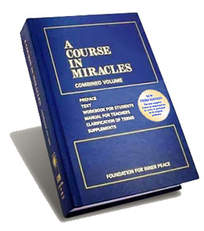
ACIM Image

Introduction

Today I begin a series on the spiritual classic, A Course in Miracles (ACIM). I feel the need to share these thoughts, because the book has exercised such a strong and beneficial influence on my life since, under the tutelage of Marianne Williamson, I began studying it a couple of years ago.

My hope is that these blog entries will acquaint readers with the richness of A Course in Miracles, which Williamson describes as “basically Christian mysticism.” After all, according to the great Catholic theologian, Karl Rahner, such spirituality remains the last best hope for saving Christianity. Rahner, said “The Christian of the future will be a mystic or will not exist at all.”

The same might be said for the world in general: either it will attain mystical consciousness of creation’s basic unity, or the world itself will cease to exist. That is, far from being irrelevant, mysticism as understood by all the world’s Great Religions as well as by serious human beings who consider themselves “spiritual but not religious” is the only thing that can save us now.

My hope in writing these pieces is also that the articles to follow might lay the foundation for a book I intend to write. It will connect ACIM with liberation theology, which I consider the most important theological development of the last 1500 years, and the most significant social movement since the publication of The Communist Manifesto in 1848.

The connection, I believe, is necessary, since without it, the Christian mysticism presented in A Course in Miracles – despite Marianne Williamson’s brave efforts – runs the risk of skimming over the most pressing socio-economic problems facing our contemporary world. I’m referring to the so-called war on terrorism, the threat of nuclear war, and the omnicide represented by human-induced climate chaos. I want this series to centralize those problems directly in the light of liberation theology’s historical Jesus.

Put otherwise, what I will recommend here is an engaged mysticism based on the magnificent insights of ACIM. But I intend to link them directly to the even more magnificent teachings and practices of Christian mysticism’s inspiration, Jesus, the prophet from Nazareth as understood by those he addressed historically during his brief life on earth – his poor and oppressed neighbors in imperialized Palestine more than 2000 years ago.

Jesus’ neighbors were like their counterparts in today’s Global South – brown and black people, impoverished by colonialism, considered terrorists by their imperial masters, and tricked by religious leaders who lay in bed with the rich and powerful.

It was to these nobodies that Jesus of Nazareth spoke when he announced the program he called the Kingdom of God. He said, “The Spirit of the Lord is on me, because he has anointed me to proclaim good news to the poor. He has sent me to proclaim freedom for the prisoners and recovery of sight for the blind, to set the oppressed free.” (LK 4:18). Notice the people addressed here: the poor, the imprisoned, the oppressed and blind.

To repeat: the problem with Christian mysticism even as presented in ACIM is that it too quickly spiritualizes those categories. In doing so, it forgets the actual condition of those listening to Jesus for the first time. They were illiterate peasants seated before one of their own who articulated their fondest hopes.

Those hopes centered not on abstract spiritual enlightenment, but on a homeland free from imperial invaders who raped their mothers, wives, sisters and daughters and who tortured and crucified their insurgent fathers, husbands, sons and brothers. That was Jesus’ audience. And when his words are interpreted with them in mind, they take on a meaning that is revolutionary in every sense. They turn everything upside-down.

The same is true of A Course in Miracles. When its words are interpreted with the historical Jesus and his Jewish audience in mind, they take on a revolutionary meaning that inverts the world’s “truth” that (the course reminds us) stands 180 degrees opposite the truth of God. For starters, consider what that means relative to the practice of Jesus:

• The religious world tells us that God is neutral and loves everyone the same. The Judeo-Christian tradition itself along with God’s choice to incarnate as a poor person, and the programmatic words of Jesus quoted above, all express God’s “preferential option for the poor.” The poor and oppressed are God’s chosen people. They are special in God’s eyes.
• The world says that capitalism and private property represent the height of human economic development. In contrast, Jesus appearing in the Jewish prophetic tradition, held that the earth belongs to everyone. Private property as understood by capital’s apologists is a distortion of God’s plan.
• Similarly, the world maintains that market mechanisms of supply and demand will solve every problem. Jesus, on the other hand, proclaimed a Jubilee Year. As explained in the Bible, its intention was to reverse market distortions by having property lost to creditors and bankers revert back to its original (poor) owners. That was Good News for landless farmers.
• The world claims that the poor are guilty and deserve their lot in life. Jesus’ incarnation as a poor person directly contradicts such conviction. As noted above, the incarnation itself says the poor are God’s special people.
• The world lionizes the history of emperors, kings, generals, popes and bankers. Jesus had harsh words for all such oppressors. The historical memory guiding his life was that of a God whose first revelatory act in history was the liberation of slaves from bondage in Egypt.
• The world claims the right to use violence (even nuclear) against the insurgents it deems “terrorists.” Meanwhile, Jesus himself showed sympathy towards those Rome considered terrorists. In fact, he himself was executed as a terrorist by the Romans. He incorporated into his inner circle at least one Zealot insurrectionist and advocated a social program that paralleled in many ways (such as land reform) the program of the Zealot Party.
• The world (at least in the Global North) interprets religion as a mind-centered collection of beliefs compatible with nationalism and war. Jesus transcended all of that. He was a genuine mystic who crossed boundaries in the name of universal divine love and human brotherhood.

My hope is that this series will highlight contradictions like those and will embody the intersection between two splendid revolutionary sources – A Course in Miracles on the one hand, and liberation theology on the other.

So, let me get on with my project. In my next posting, I’ll begin by sharing my remarkable encounter with Marianne Williamson. Then I’ll move on to explanations of A Course in Miracles as explained by Marianne and to liberation theology as understood in the Global South. All of that will prepare for entries that will connect specific parts of ACIM with Jesus the Christ.

The Truth Behind Mr. Trump’s Crude Metaphor

Shithole

President Trump’s done it again. He’s snatched away the patina of political correctness that normally conceals the brutal realities of a U.S. policy. His recent words about “shithole countries” say more than most imagine, not only about Haiti and Africa, but about history, colonialism, immigrants in general, and (surprisingly) about faith-inspired anti-colonial resistance. In other words, the offensive imagery is profoundly revealing and worth probing for its subconscious meaning and implications for immigration policy.

Begin by considering the operative words themselves. They were pronounced in the context of a White House meeting about immigration policy. There Mr. Trump wondered “Why do we want all these people from ‘shithole countries’ coming here?”

Such poetic metaphor suggests two meanings. On the one hand, it might imply that Haiti and Africa are somehow anal sphincters. They are orifices from which excrement exits a body. In other words, Haitians and Africans are nothing but human waste.

Alternatively, the geographical locations themselves would be places of defecation. They are toilets or outhouses. They exist to receive excrement – presumably from the likes of Mr. Trump and the country he represents. Accordingly, the countries he referenced are thereby reduced to wastelands.

Either comparison (sphincters or toilets) distorts the brutal history of colonialism. In every case that process has impoverished previously prosperous populations of countries and whole continents characterized not by poverty, but by a wealth that far outstrips that of the colonizers.

In fact, the colonial world’s wealth (three growing seasons, lavish biodiversity, rich rain forests, herds of exotic fauna, expansive acreage, abundant mineral deposits, and, in many cases, oil) are the very reasons why European and American colonists invaded them in the first place. They forced their ways in to transfer the colonies’ wealth to the “Mother Country” to feed her voracious bestial, but resource-starved industries.

In other words, rather than receptacles for receiving waste, the colonies’ function became the enrichment of the much poorer imperial centers whose conquistadors invaded and plundered them. In that sense, Europe was the shithole. As sphincter, it exuded sickly white marauders who plundered the lavish wealth of thriving black and brown indigenous peoples.

And in every case, after the Second Inter-Capitalist War (aka World War II), when the colonized rebelled to reclaim their own abundance, the colonizers intervened repeatedly to keep the stolen resources flowing to the shitholes up north – to keep in poverty those they had impoverished.

Ironically, Haiti represents a case in point. There attempts at re-appropriating stolen land and other resources have repeatedly been repulsed by foreign invaders.

Haiti’s rebellion began in 1791 shortly after the French Revolution. It was then that Toussaint Louverture led the first successful black slave rebellion – against the country’s French imperialists. Such effrontery to white supremacists has never been forgiven.

The unacceptability of blacks and browns in rebellion explains the U.S. support of the brutal Tonton Macoute under the Duvaliers (“Papa Doc” and “Baby Doc”). Their death squads were responsible for the assassinations, torture, and disappearances of thousands of Haitians from 1957 to 1986. The CIA supported them at every step.

The threat of Haitians struggling for liberation from foreign control also explains U.S. opposition to former priest and liberation theologian, Jean Bertrand Aristide. (And it’s here that the previously-mentioned connection to faith enters in.) In 1993 Aristide was elected with 67% of the vote. Aristide’s popularity and the reason for CIA opposition to his presidency is suggested by the connections the former priest made between his faith and his rejection of the U.S. rape of his homeland under the Duvaliers. In a January 1988 interview, he said “The solution is revolution, first in the spirit of the Gospel; Jesus could not accept people going hungry. It is a conflict between classes, rich and poor. My role is to preach and organize….”

Even before the 2010 earthquake (which killed 300,000 Haitians!!), Haiti’s infrastructure and social fabric were devastated by reactionary outrages against faith-inspired struggles for national control of the country’s own resources. Haitian society still reels from the policies of American clients concerned only with preserving their own wealth and cooperating fully with the foreign agendas of their D.C. puppeteers.

None of this is acknowledged by the Trump Administration, the mainstream media, our TV talking heads, or even by the leadership of the Catholic Church. Instead, everything has disappeared down the shitholes (Again, please excuse the crudeness of Mr. Trump’s metaphor) residing between the ears of those concerned.

The fact is that all colonized countries particularly in Africa have rich histories like Haiti’s.

This means that the poverty and desperation of immigrants from those places is explainable by a combination of colonialism, counter-revolution, and (very often) religious persecution.

The president’s crudeness has afforded valuable opportunity to recover all of that hidden history. It provides occasion for appropriating the memory so important to denizens of the Global South in general.

Their people are not human waste. Their countries are extraordinarily rich, not poor. Instead, both have been systematically plundered and impoverished. Our lavish lifestyles are the direct result.

Put otherwise, all of us can benefit from Mr. Trump’s vulgarity. It can lead us to flush the toilets our brains have become.

Such cleansing can reveal the real reasons that the United States must accept immigrants not only from Haiti and Africa, but from other Global South countries its policies have devastated repeatedly for so long. The immigration question is one of justice and reparation.

Flush away!

(Sunday Homily) Jesus’ Anti-Imperial Parables: How to Resist (State) Terrorism

ISIS & Jesus

Readings for the 16th Sunday in Ordinary Time.

Despite what you might hear in church today, this Sunday’s liturgy of the word is not about the end of the world and the condemned spending eternity in endless fire.

No, it’s much more relevant than that. It’s actually about non-violent resistance in a context of imperial aggression and war. It summons all of us to withdraw our support for the U.S. military and from Washington’s policy of state terrorism against impoverished Muslims in the Middle East.

More specifically, today’s gospel reading, on the one hand, calls those living in the belly of the beast to stop approving of our imperialist overlords who currently sow their weeds of destruction throughout the Middle East. This means actively opposing their wars of choice in Afghanistan, Iraq, Syria, Yemen, Somalia and elsewhere.

On the other hand, the three parables attributed to Jesus also suggest a message for Middle Eastern followers of Mohammed. The parables address them precisely as victims of imperialism and hence the closest analogue to what the Bible calls “the people of God.”

I mean: in today’s world, the situation of Muslims closely tracks that of Jesus’ audience in first century Palestine.  As such, all three of today’s readings call followers of Mohammed [who recognize Isa (Jesus) as the second greatest of the prophets (after Mohammed and before Abraham)] to lay down their arms in favor of Jesus’ own non-violent resistance.

To get my meaning, begin by considering our liturgy’s first selection from the Jewish Testament’s Book of Wisdom. It is particularly relevant to “Americans,” identified by Dr. King as the world’s “greatest purveyor of violence.” The reading says explicitly that God’s power is not expressed in violence but in leniency to all.

That theme is repeated in today’s responsorial psalm with equal relevance to USians. There God is described as belonging to all nations.

Similarly, in the second reading, St. Paul insists that the divine Spirit dwells within all humans regardless of nationality. It is slow to anger, good, forgiving, abounding in kindness.

From this, Jewish wisdom insists that believers must in turn be kind, lenient and forgiving to all – even (Jesus says elsewhere) to their worst enemies. This is directly pertinent for the U.S. described by Noam Chomsky as the one of the most extreme religious fundamentalist countries in the world. Those who claim to follow Christ (as 83% of Americans do) must be as pacifist as their Master.

The second theme of today’s liturgy is less easy for an outsider to comment upon. It implicitly addresses the victims of American aggression – most prominently the Muslim community and whether or not (as people of The Book) they should resist with violence.

I mean that Jesus’ parable of the weeds planted by an enemy in a landlord’s field can be read as addressing the Roman occupation forces encumbering Israel during Jesus’ lifetime. [According to John Dominic Crossan, Matthew’s allegorizing of Jesus’ parable – making it about the end of the world – is more reflective of the situation of the Jewish diaspora (following the destruction of Jerusalem in 70 CE) than of the actual revolutionary situation of Jesus’ own day.]

In Jesus’ occupied Israel, the suffocating Roman presence (like our own country’s in the Middle East) was as unwelcome, alien, and destructive as weeds in a garden or field.

The question was how to deal with such odious foreign occupation. Like ISIS and others today, Zealot revolutionaries had their answer: Uproot the weeds here and now. Take up arms; assassinate Romans and their collaborators; drive them out mercilessly. Be as cruel and vicious as the Romans.

Jesus’ response was different. As a non-violent revolutionary, he could surely understand such apocalyptic energy. After all, much of his teaching expressed sympathy to the Zealot cause which included land reform, debt forgiveness, and expulsion of the hated Roman occupation forces. Many scripture scholars even identify possibly five members of Jesus’ inner circle as Zealots themselves.

But Jesus’ Parable of the Weeds is more prudent and sensitive to civilian casualties than the strategy of the impatient Zealots – or that of ISIS.

When the landlord’s workers ask, “Should we uproot the weeds?” Jesus’ landlord answers: “No, if you pull up the weeds you might uproot the wheat along with them.”

In other words, Jesus agrees with El Salvador’s Oscar Romero and with Brazil’s Dom Helder Camara that revolutionary violence, though understandable (and justifiable on the grounds of just war theory), is imprudent at the very least.

This is because when faced with a vicious, overwhelmingly armed oppressor (like the United States) resistance inevitably leads to state terrorism – to the war crime of collective punishment impacting women, children, the elderly and disabled. At the very least, that’s why Jesus eschews Zealot violence.

How then respond to increasing American domination of the Middle East since the dissolution of the Ottoman Empire?

Jesus’ response? Be like mustard plant, he says. Be like yeast in flour. Both puzzling recommendations are relevant not just to Muslim victims of United States imperialism, but to Christians in our country who wish to dissent from their government’s policies of endless war.

First of all think of the puzzlement that must have struck Jesus’ listeners. Jews didn’t have much use for yeast. They preferred unleavened bread. Neither would any farmer sow mustard seeds in her field or garden. The mustard plant was like kudzu – itself a kind of weed that eventually can take over entire fields and mountainsides while choking out other plants weeds or not. The mustard plant was unstoppable.

So Jesus is saying:

* The Romans are enemy weeds in your garden.
* Don’t try to uproot them by force.
* That will only lead to slaughter of the innocent.
* Rather, become weeds yourselves – like the mustard plant which is much more powerful than simple Roman (or U.S.) weeds.
* Resist the Romans by embodying the Spirit of God that is slow to anger, good, forgiving, abounding in kindness.
* Only imitation of Wisdom’s God can defeat the evil of imperialism – or any evil for that matter.

What does that mean for Christians wishing to express solidarity with our Muslim brothers and sisters against their cruel “Christian” oppressors? At least the following:

* Reject U.S. militarism in general as counterproductive, since fully 90% of the casualties it inflicts in war are civilians.
* Be instead like the yeast a homemaker puts into 60 pounds of flour, “infecting” the greater culture by non-violent resistance rather than “supporting our troops.”
* Recognize and take sides with the real victims of terrorism – those plagued by U.S. policies of aggressive wars and regime-change – i.e. of state terrorism.
* Lobby against absurd proposals to increase U.S. military spending, when already “our” country spends more on “defense” than the next ten countries combined.

* Refuse to honor the military, and dissuade your children and grandchildren from entering that corrupt and corrupting gang of outlaws.

Surely Jesus’ Way of non-violent resistance, forgiveness and love of enemies will strike many (non-believers and believers alike) as unrealistic. But according to the faith we Christians (and Muslims) pretend to embrace, Jesus’ Way is God’s way.

But then perhaps we Christians think we’re smarter and more realistic than Jesus — or God?

What do you think?

Aging Miraculously: Life’s too Short to Give Up on Faith & Activism!

Aging

I’m currently enrolled in an extremely thoughtful on-line course about aging led by the great spiritual teacher, Marianne Williamson. The course is called “Aging Miraculously.”

As I approach my 77th birthday, Marianne is stimulating me to rethink this Third Act of my life. Her course is making me less willing to “retire” from it all as one mistakenly identified with this rapidly changing body. I’m more anxious to “re-fire” the spirit I truly am – the Self that never ages. I’m realizing that the time I have left on earth is far too short for me to surrender to the life of an elderly spectator.

Such awareness was reinforced last night during a conversation with five dear friends of mine. The youngest pair among us were in their mid-60s; the rest of us were in our late 70s and early 80s. (Even writing those words frightens me!)

In any case, there we were reviewing the ills of the world:

  • Trump
  • The gradual disappearance of democracy
  • Its replacement with plutocracy and authoritarianism
  • Class warfare: the unending wars of the world’s richest (the U.S. the E.U., Israel, Saudi Arabia) against the planet’s most impoverished (e.g. in Palestine, Somalia, Yemen, Afghanistan, Iraq, Syria. . .)
  • Terrorism

The question of faith came up and its power to change all of that.

Now, mind you, all of us in the conversation identified ourselves as followers of Jesus of Nazareth. Nevertheless, my friends (none of them taking Marianne’s course) seemed convinced that faith has no power to alter the problems we were busy rehearsing.

Selfish human nature reigns supreme, one friend insisted. It’s unredeemable. So nothing can ever really change – except for the worse. What we do in church is meaningless as far as engagement with the world is concerned. No one really understands any of it anyway. But that’s the best we can do. It’s naïve and a waste of time and energy to think otherwise. We must settle for the mediocre.

And, in any case, we’re all old! So all that’s left for us is to finish out the few years we have left with our low expectations intact – just enjoying the moment and (cocktails in hand) being happy. Our work is over. God expects no more from us. The world’s problems are no longer ours. They belong to our children. And good luck to them with that!

With Marianne’s instruction in mind, I wanted to shout: “Stop, stop! Cancel! I don’t want to hear that! Precisely because I’m a community elder, I have no time left for such small-time thinking and pessimism.

“In fact, it’s all an insult to God. We’re talking about faith here. – about the power of God and of God’s Word to change the world and its consciousness that condemns us, our children, our grandchildren, and the very planet to destruction. Don’t you see that despite the faith we claim, we’re denying that power? We’re arrogantly claiming that we and the world’s thinking and technology somehow have more clout than God himself – that the Almighty stands impotent before the likes of The Donald, Mad Dog Mattis, our computers, robots – and desperate fears!

“I refuse to believe that. Please stop! Cancel!

“And besides: the power of faith to change the world has been undeniably demonstrated. It’s just that as successfully propagandized, relatively comfortable white “Americans” we’ve bought into the “official story” as narrated on Fox News.  It wants us to believe that it’s all hopeless.

“We’ve fallen into their trap!

“However, the fact is that the world has already been changed dramatically by faith-in-action. And for more than 60 years, it’s scared the hell out of the fearful little people at the top. Since the Civil Rights Movement (beginning with Brown in 1954), they’ve been desperate to cram that genie of faith-inspired human liberation back into its bottle. But it simply won’t fit.

“Since Vatican II (1962-’65) and the emergence of liberation theology at Medellin (1968), backward church authorities (like Paul II and Benedict XVI) have been doing the same thing – with the same result. The genie is loose forever. Thank God.

“I’m referring to the undeniable fact that the Civil Rights Movement and liberation theology have changed the world. Without them, you can’t explain Black Lives Matter or the pink tide that has swept Latin America in the past 20 years. You can’t explain the Zapatistas in Mexico, the Bolivarian Revolution of Hugo Chavez, Standing Rock in the Dakotas, the revival of the women’s liberation movement, or LGBTQ activism.

“Without recognizing the power of faith to change the world, you can’t explain movements for independence in Palestine and throughout the Islamic world. Face it: what’s happening there is intimately involved with faith!

“And it is precisely those movements that have given birth to a counter-revolution waged by the fearful little people who pretend to lead us. Don’t be misled: the right wing co-optation of faith has not arisen spontaneously from selfish human nature. Instead, it was part of the well-funded Nixon Southern Strategy to distort Christian faith to counter a growing black power that faith itself had inspired among African Americans everywhere. All of that eventually resulted in the Tea Party and the control of the GOP by Christian conservatives.

“Moreover, fostering and bankrolling evangelicals throughout Latin America (and here at home) was part of Reagan’s response to liberation theology. Already in 1969, Nelson Rockefeller had identified it as a danger to national security. Similarly, the rise of ISIS and Islamic fundamentalism has been nourished by counter-revolutionary forces in Saudi Arabia and the United States. It was Zbigniew Brzezinski who originally assured fighters in Afghanistan that their resistance to Russia had Allah on their side.

“As community elders, we should know all of that. We’ve lived through it. We are products of the hope-filled ‘60s. More importantly, the Catholics among us are products of Vatican II and liberation theology and of the unlimited horizons of faith those movements opened. As a result, we have experience, knowledge, and (hopefully) wisdom unavailable to our children, grandchildren, and to the young in general.

“Keeping those memories and hopes alive represent our specific contributions to saving the world. But time is running out.  To retire now without passionately sharing what we’ve learned is not just irresponsible. It deprives us of the joy that comes from fulfilling our very life’s purpose.

“What’s left of this particular incarnation is too short for wasting it on despair and surrender. It’s too short to live as though we are primarily aged bodies rather than the ever-youthful, experienced, informed, and wise Selves that God has created.

“It’s time to get on with Act Three and to finish the performance with a flourish and deep bow.”

Peggy & I Study with Franz Hinkelammert in Costa Rica (12th in Series on Critical Thinking)

Franz & Peggy

The next stop on the critical thinking odyssey I’m outlining here was Costa Rica. There I finally met Franz Hinkelammert, whose Global South approach to critical thinking provided the theory I sought to make everything I had learned in Brazil come together. Recall that I had encountered his latest work while in Brazil. (Franz is pictured above with Peggy and me in 1992.)

Franz Hinkelammert is a German economist and theologian. After coming to Latin America in 1976, he lived and worked mostly in Chile. But then the 1973 U.S.-sponsored coup removed the democratically-elected Socialist president of the country (Salvador Allende). The subsequent installation of a brutal dictatorship under General Augusto Pinochet, made Chile extremely dangerous for people like Hinkelammert. So he fled to Costa Rica, where he, liberation theologian giant, Hugo Assmann and biblical scholar, Pablo Richard founded the Department of Ecumenical Research (DEI), a liberation theology think tank. The DEI specialized in preparing grassroots organizers to work for social change throughout Latin America. However, its emphasis was not on “training” for activism, but specifically on analysis and critical thought.

My opportunity to study with Franz came with my second sabbatical in 1992. Peggy and I applied and were accepted as the first North American participants in the DEI’s annual Workshop for Invited Researchers. The eight-week course hosted about 20 scholars from across Latin America. Each of us had a research project whose goal was publication in the DEI’s quarterly, Pasos. Not surprisingly, mine was on critical thinking.

During the workshop, Franz, Pablo Richard, and fellow Chilean, Helio Gallardo were the principal presenters and discussion leaders. In his own lectures, Franz emphasized what is for him an enduring key idea about critical thinking. It is expressed most clearly in his Critique of Utopic Reason and also in his Critique of Mythic Reason. In both, he highlighted the essentially utopian nature of critical thought. Its point, he says, is not simply to analyze arguments for logical fallacies. Instead, it is political. It is essentially utopian – to create a better world by imagining the best possible world. Hinkelammert’s argument runs as follows:

  1. If politics is the art of the possible,
  2. Then a utopian idea of the impossible, but at the same time desirable, is required
  3. Not necessarily as a goal to be implemented
  4. But as a “North Star”
  5. Guiding critical thought and action towards what indeed can be practically accomplished.
  6. No such goal can be arrived at without utopian ideas towards which critical thinking gestures.
  7. Utopian thought comes naturally to human beings.
  8. In fact, critical thought without utopian concepts is itself unconsciously utopian.

Franz illustrates his idea by pointing out that utopias are not at all merely the province of starry-eyed idealists. They are essential for any critical thought intent on beneficial social change. In that sense, Franz’s own North Star for critical thought is the simple idea later articulated by the Zapatista rebels in Mexico as a world with room for everyone. Meanwhile, the capitalist utopian ideal is of a completely free market governed only by Adam Smith’s “Invisible Hand.” That is the guiding constellation under whose direction all mainstream economic theory is fabricated.

Hinkelammert’s argument highlights the difference I’ve been trying to describe between critical thinking as taught in the United States and what I discovered in the Global South. In the Global South, critical thinking is concerned with the big picture – with entire systems, with social analysis of economic and political structures. As explained by Franz and others, it is by no means a matter ferreting out what is now called “alternative facts” or “fake news.” Such concern glosses over the lies embedded in the very parameters of perception which act as blinders for both students and their teachers. In that sense, the critical thinking I had become used to had been literally partial in its ignorance and denial of the experience of the world’s majority who live in the former colonies. From that viewpoint concentrating on logical inconsistencies or falsehoods in arguments divorced from the unexamined socio-economic matrix of capitalism only serves to normalize what should be completely unacceptable to human beings.

For Hinkelammert, that was the insight of Hegel, Feuerbach, and Marx. Marx in particular was a humanist who saw critical thought as focusing on human emancipation from the chains imposed by capitalism and the colonialism on which it depended. Critical thinking, in Marx’s estimation, involved identifying those chains and the steps necessary to humanize all relationships between persons and with nature itself. In theological terms, the mandate is: “Do what God did; become a human being!” That is the project of the type of critical thinking I was now encountering.

That, in fact, became what I subsequently attempted to communicate my students. And I began right there in San Jose. There, by mere coincidence and chance, I began teaching in a Latin American Studies Program (LASP). It was a term abroad for Evangelical students from the United States whose institutions were affiliated with the Council for Christian Colleges and Universities (CCCU). Teaching fundamentalist Evangelicals about colonialism, U.S. intervention in the Third World, and the history of capitalism was a wonderful challenge. Even more so was helping them understand liberation theology.

We clashed, especially at the beginning of our semester-long encounters. And (in terms of the topic at hand) that was because I was coming from the world-centric perspective of liberation theology, while their standpoint was almost exclusively ethnocentric. For them, the United States could do no wrong, and the Bible was to be taken at face value. To criticize the U.S. or to interpret parts of the Bible as myth, legend, or poetry was simply unacceptable.

I, on the other hand, owned the world-centric approach I’m describing here. I took to heart international polls that consistently identified the United States as the greatest threat to world peace.[1] Moreover, my approach to the Bible was informed by the historical critical methodology of modern scripture scholarship.[2]

Such challenges however were mitigated by the reality check the LASP program provided each semester’s cadre of students. I’m referring to four days among the descendants of African slaves in Limon on Costa Rica’s Caribbean coast, as well as two weeks each in Nicaragua, Guatemala, and Cuba. In each of those cases, we more or less followed the practice I had experienced in Nicaragua. In the midst of their studies, students lived with local families and received on-site presentations from indigenous tribal leaders, union organizers, politicians, historians, and church officials – most of whom were not ethno-centrists. Students uniformly described it all as life-transforming. And I’m sure that direct contact with the victims of what bell hooks calls “white-supremacist imperialist capitalist patriarchy” made them more thoughtful about their reactions to world-centric perspectives.

Additionally, at least for me, those LASP trips – especially to Cuba – provided opportunities to observe and judge attempts to implement what Hinkelammert would call critical utopian theory.

(Next week: My learnings in Cuba)

[1] Bennett-Smith, Meredith. “Womp! This Country Was Named the Greatest Threat to World Peace.” The Huffington Post. TheHuffingtonPost.com, 02 Jan. 2014. Web. 16 Feb. 2017.

[2] “What Is the Historical-Critical Method?” The Historical-Critical Method. N.p., n.d. Web. 16 Feb. 2017.

My Experience in Nicaragua (11th in a Series on Critical Thinking)

Ortega

Nicaragua taught me so much about the world and critical thinking. All during the 1980s it was the center of news reports every day. President Reagan was obsessed with the country and its president, Daniel Ortega (pictured above). Reagan continually referred to the Sandinista government there as a “Marxist, Leninist, repressive totalitarian regime.” However, he neglected to apply his lofty standards to what preceded it, viz. the Somoza dynasty of three dictators who governed the country brutally with the full support of the United States.

Reagan’s obsession took the form of support for an equally brutal counter-revolutionary force of terrorists called “the Contras” – whose base was the exiled National Guard of the Somoza regime. Reagan famously referred to those killers and drug runners as “the moral equivalent of our Founding Fathers.”

My experience in Brazil along with careful reading of the press and some history had convinced me that the Reagan administration was disseminating what a Great Man would later term “fake news.”  But I wanted to find out for myself.

So in 1985 I found myself in Managua for six weeks. My specific purpose in going was twofold. The first was fact-finding; I wanted to experience life in a revolutionary situation. I also needed to learn Spanish, which was increasingly necessary for my work in liberation theology. That was my second aim. Languages, by the way, are nearly universally recognized as powerful aids to critical thinking. They expand awareness of other cultures, different points of view and ways of expression.

Along those lines, one of the strengths of my training for the priesthood had been language study. In high school it began with Latin my freshman year. Then came French and Greek. All of those studies continued through my sophomore year in college. Next, of course, I had to learn Italian for my years in Rome. Just before that I needed a semester of Hebrew to qualify for theological studies there; so I took a summer course at Harvard. Once in Rome, it became apparent that German would be essential for my doctoral thesis on Jurgen Moltmann and his Theology of Hope. That led to two summers’ study at the University of Vienna. Then I needed Portuguese for my sabbatical in Brazil. And finally, in ’85 it was Spanish in Managua.

For two summers, I studied at Casa Nicaraguense de Español. It had students living with Nicaraguan families, leaving for Spanish class every morning and then studying the Revolution every afternoon. We visited prisons, farming co-ops, and offices of both the Sandinistas and their political opponents. We attended political rallies and demonstrations. The experience was difficult, but invaluable in terms of expanding my horizons and acquainting me with revolutionary thought and practice. Over the next 20 years I would return to the country a dozen or more times. In 1990 I would do so as an Official Observer of the election that defeated the Sandinistas, replacing them with a U.S.-supported party. I edited a book on the topic.

On that first visit, however, I was amazed by the range of books available in Managua that I would never have otherwise encountered. They covered all aspects of Marxism, socialism, history, education, liberation theology – and critical thinking. It was a treasure trove for me. Reading those books acquainted me with a line of thinking “forbidden” to most Americans.

As I said, this first experience in Central America made an extremely important contribution to my political education. It brought me into further contact with the living conditions of working-class people on the receiving end of extremely destructive US Third World policy. The contrast between what I observed in Nicaragua and what our government said about the country was astounding. It pointed to the fundamentally dishonest character of our national leadership. In addition, those books I mentioned underscored the one-sided bias of our mainstream press, scholarship and teaching.

What I learned from all this, along with the other experiences I’ve outlined here so far, has made me terribly suspicious of our government. Revelations connected with the Iran-Contra scandal heightened the suspicion exponentially. I saw clearly that the lies told about the Sandinistas were only the latest in a long string of misleading stories, cover-ups, and paper-overs foisted upon the North American public. Contra-gate, Vietnam and Watergate were the rule, not the exception. Sad to say, they represent the way our government does business.

In the end, I concluded that the burden of proof will always rest with our officials, rather than with our country’s designated Third enemies, including those currently identified as “terrorists.”

(Next Week: Costa Rica and Franz Hinkelammert)

My Study of Liberation Theology in Brazil (10th in a series on critical thinking)

Dom Helder

My study in Brazil initiated a profound change in my understanding of critical thinking. It led me to see that liberation theology itself amounted to a Global South version of that discipline. However, the critical thinking I encountered in Brazil didn’t concern itself with abstract dilemmas and logical fallacies. Instead the Brazilian version addressed problems confronted in the very lives of its protagonists – hunger, poverty, dictatorships, imprisonment, torture, police raids, and the reasons for widespread hunger in an extremely rich and rather thinly populated country.

Neither did critical thinking in Brazil worry about neutrality and balance or with giving equal time to capitalists and their working class opponents. In the minds of its teachers, those problems had long since been settled. After all, in 1964, defenders of capitalism had overthrown Brazil’s democratically elected government. In the 1960s that had been the case throughout the region. In Brazil it meant that by 1984 the country had completed its second decade of a military dictatorship fully supported by the United States. Over those years, vast numbers of priests and nuns, union organizers, university professors, social workers, lawyers, and simple peasants had been routinely imprisoned, tortured and often murdered. Their crimes?  They had demanded land reform, higher wages, health care, education, freedom of speech, and ability to speak freely and organize. No, capitalism in Brazil and elsewhere in Latin America had clearly shown itself to be the enemy of the people.

All of that became very clear for me when, to begin with, I connected with the legendary Brazilian educator, Paulo Freire. Freire’s methodology for teaching literacy had exercised strong influence on liberation theology, and especially on “Base Christian Communities” (BCCs) which following the Second Vatican Council (1962-’65) proliferated throughout the country. My intention was to research those communities as part of my sabbatical assignment.

At the same time, my wife, Peggy was working on her doctoral dissertation on Freire’s work. So she worked in his center every day and every week with literacy teachers implementing his method in Sao Paulo’s favelas. On our fifth wedding anniversary, we had supper with Paulo and his wife, Elsa, in their apartment. Afterwards, he read aloud Peggy’s latest dissertation chapter. I remember him pausing at one point after reading a quotation from his own Education for Critical Consciousness; he said, “Right now I am loving these words!” He was wonderful.

While in Recife, our whole family twice visited Dom Helder Camara, the famous “Red Archbishop” of that huge city in the northern part of the country. I phoned his office to set up the appointment. He answered the phone himself!

Considered a saint even before his death in 1999, Dom Helder was also called the “Archbishop of the Poor.” He once famously observed “When I give food to the poor, they call me a saint. When I ask why the poor have no food, they call me a communist.” With those words, this patron of liberation theology expressed the central question of critical thinking in the Global South: Why are people so poor in the midst of so much abundance?

I informed Dom Helder of my intention to experience liberation theology’s BCCs in Recife. That was during our first visit in his office, while he held our four-year-old daughter, Maggie, in his lap. (I later told her she had been embraced by a saint!) I asked the archbishop to share his thoughts about those communities. He told me, “It would be better for me not to say anything at this point. Why don’t you do your research first? Experience those communities, and then at the end of your visit come back and tell me what you found. Then I might tell you what I think.”

So I followed the saint’s advice. During our family’s weeks in Recife, I participated in several BCC meetings. There I witnessed the kind of critical thinking referenced above. It was the same process that had been prescribed for teaching literacy years earlier by Paulo Freire in his famous Pedagogy of the Oppressed, which I had read while still in Rome.

I consistently found all of that inspiring. Here were absolute giants in the field of critical thought, centralizing their fundamental identities as spiritual beings in order to address in practical terms genuine problems of politics, economy, and personal life. I found such embrace of human political spirituality absent not only in the standard approach to critical thinking familiar to me, but even in the churches of my own experience.

I wanted to know more about the underpinnings of that approach to critical thinking.

To that end, I enrolled in a semester-long seminar taught by liberation theologians, philosophers and scripture scholars I had been reading for years – figures like Argentina’s Enrique Dussel, Chile’s Pablo Richard, Belgium’s Francois Houtart and Brazil’s own Frei Gilberto Gorgulho and Ana Flora Anderson. In the course of the experience, I was also introduced to the work of Chilean economist and theologian, Franz Hinkelammert, who would become for me an extremely important mentor. Significantly, Franz was to later found the international Grupo de Pensamiento Critico (the Critical Thinking Group).

As I listened to these scholars describe history in ways I never had confidence enough to seriously entertain, I found myself wondering, “What is the key to all of this?” I mean, Enrique Dussel described World War II as the “Second Inter-Capitalist War.” What is he talking about? I wondered. Was Hitler really a capitalist? It was a completely foreign thought.

Meanwhile, Frei Gorgulho spoke of Cuba as “the envy of the Third World.” Pablo Richard had just returned from a trip to revolutionary Nicaragua and was full of stories about Anastasio Somoza, the history of U.S. oppression in the country, the Sandinistas, land reform, and the U.S.-supported counter-revolutionary Contras. The positive evaluation of Cuba and the Nicaraguan revolution stood contrary to everything reported in the U.S.

Even more disturbingly, everyone constantly and negatively referenced highly destructive American military interventions in its “backyard” and throughout the world to defend colonialism and what was termed “neo-colonialism.” The whole seminar was scandalized by a picture in the Folha do Sao Paulo of President Reagan and Pope John Paul II sitting together in Rome – both of them smiling broadly. “That photo,” all agreed “will cost thousands of lives in Nicaragua, El Salvador, and Guatemala.” (It was because it implied that the pope endorsed Reagan’s genocidal wars in Central America.)

None of these thoughts would ever be expressed in the United States. But here they were bandied about by these teachers of pensamiento critical as though they were perfectly obvious. And there was no objection from my classmates – most of them priests, nuns and lay theologians.

Again, I wondered, what is the analytic key to this sort of thought.

I later found it was the dependency theory of the German-American sociologist and historian, Andre Gunder Frank. Gunder Frank traced everything back to the history and structures of colonialism and neo-colonialism. I resolved to find out more about that; it seemed essential to this kind of critical thought. I asked for sources. Other than Gunder Frank’s works themselves, my seminar colleagues told me to read Eduardo Galeano’s The Open Veins of Latin America. For perspective on Africa, they recommended Walter Rodney’s How Europe Underdeveloped Africa. I immediately purchased the books and my education in critical thinking took another giant step forward.

To repeat: this was not the type of critical thinking I had become used to. Unlike its U.S. version, what I found in Brazil was politically committed, historically grounded, and deeply spiritual. In the United States, everything familiar to me was apolitical, historically uninformed, and entirely secular. That caused me to reflect once again on my own historical ignorance. I also wondered about neutrality and the stories about Nicaragua routinely disseminated back home. I could already see that those tales amounted to one-sided propaganda. As one of my Ten Rules would later express it, I was beginning to suspect that truly critical thought involved rejecting pretense of neutrality.

I resolved to visit Nicaragua as soon as possible. I did the following year.

(Next week: Nicaragua!)