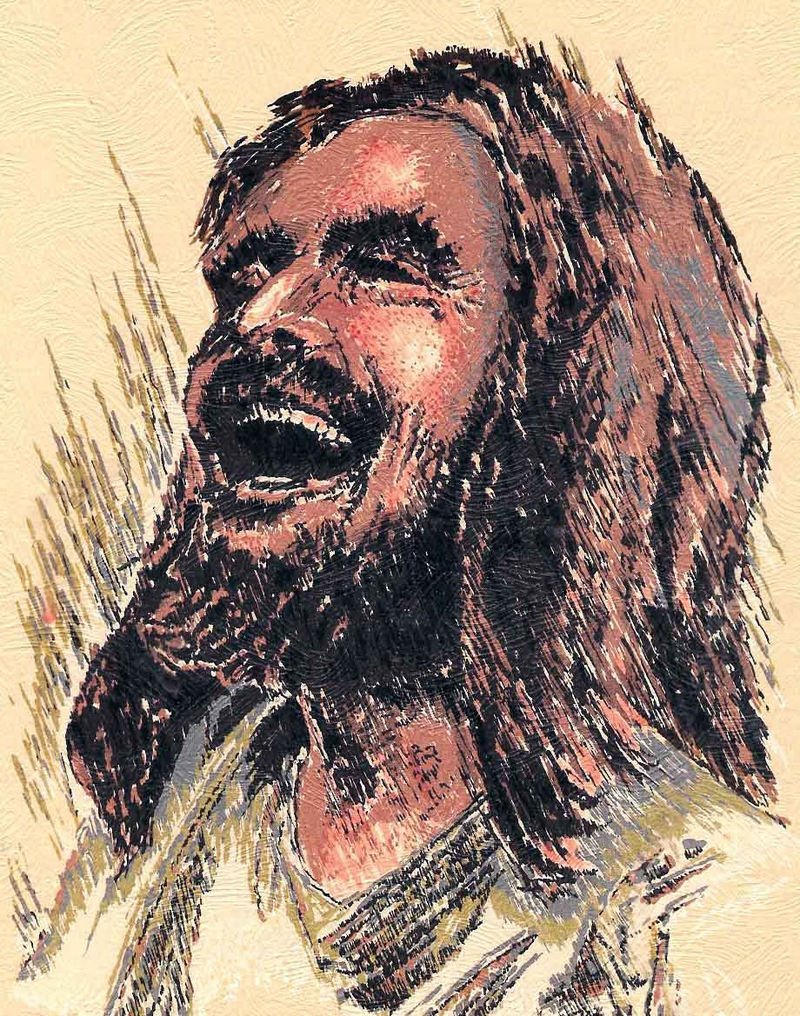
It’s Time To Post Luke’s Beatitudes in Front of the White House (Sunday Homily)

davidic-covenant

Readings for Fourth Sunday in Ordinary Time (Second in the Extraordinary Time of Donald Trump) ZEP 2:3, 3:12-15; PS 146:6-7, 8-10; ICOR 1: 25-31; MT 5: 1-12A.

So we’re a Christian nation, right? At least that’s what right wingers would have us believe, despite the presence of millions of Jews, Muslims, Hindus, Buddhists – and atheists – among us.

Well, if we’re so Christian, here’s an idea for you. How about posting the Beatitudes in front of U.S. courthouses instead of the Ten Commandments? How about posting them on the walls of our schools, and in front of the White House? Doesn’t that seem more appropriate? I mean the Beatitudes come from the specifically Christian Testament. The Ten Commandments, on the other hand, come from the Jewish Testament.

I predict that will never happen. In fact, I’ll bet dollars to donuts, there’d be a hue and cry (on the part of Christians, mind you) that would prevent the move. And do you know why? Because the Beatitudes centralized in today’s liturgy of the word are too radical and un-American for the “Christian” right. They make sweeping judgments about classes. They indicate that the rich (evidently no matter how they got their money) are at odds with God’s plan, while the poor (regardless of why they’re poor) are his favorites.

No, I’m not so much talking about the version of the Beatitudes found in the Gospel of Matthew which were read in today’s Gospel excerpt. In Matthew, Jesus’ words are already softened. Instead, my reference is to Luke’s probably earlier version that expresses harsher judgments.

Here’s the way, Luke phrases Jesus’ words in Chapter 6 of his Gospel:

20 And he lifted up his eyes on his disciples, and said:

“Blessed are you who are poor, for yours is the kingdom of God.

21 “Blessed are you who are hungry now, for you shall be satisfied.

“Blessed are you who weep now, for you shall laugh. . .

24 “But woe to you who are rich, for you have received your consolation.

25 “Woe to you who are full now, for you shall be hungry.

“Woe to you who laugh now, for you shall mourn and weep.

26 “Woe to you, when all people speak well of you, for so their fathers did to the false prophets.

Do you see what I mean? Luke’s version doesn’t spiritualize poverty the way Matthew does. Matthew changes Jesus’ second-person statement about poverty (“Blessed are you who are poor”) to a third-person generalized and spiritualized “Blessed are the poor in spirit.” Similarly, Luke’s “Blessed are you who are hungry now” becomes “Blessed are those who hunger and thirst for justice” in Matthew.  In this way physical hunger is turned into something spiritual or psychological. Obviously, Matthew’s community was not as poor as Luke’s – or as the people Jesus habitually addressed.

In fact, the entire Judeo-Christian tradition is so valuable exactly because – unlike most of ancient literature – it represents the lore of poor people about their relationship with God.

Granted, that tradition became the object of class struggle about 1000 years before Jesus’ time, with the contested emergence of a royal class.

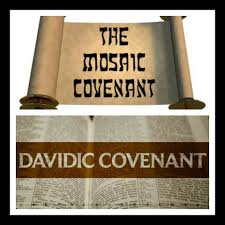
That is, starting with King Saul, the royalty of Judah and Israel tried mightily to turn a poor people’s faith into an ideology supporting the country’s elite. More particularly, under King David, palace oligarchs distorted the divine promise to slaves escaped from Egypt. That promise had been “I will be your God and you will be my people.” David turned it into a promise of a permanent dynasty for himself and his descendants. In other words, the country’s royalty transformed the Mosaic Covenant into a Davidic Covenant serving the elite rather than the poor.

However, the people’s prophets resisted them at every step. We find examples of that in all of today’s readings. For instance, in our first selection, the seventh century (BCE) prophet, Zephaniah, addresses the world’s (not simply Israel’s) poor. With his country’s aristocrats and priests in mind, he denounces their lies and “deceitful tongues” and urges them to treat the “humble and lowly” with justice as was prescribed by Moses.

Then with the responsorial Psalm 146 (probably written in the late sixth century) we all found ourselves chanting the words Matthew attributes to Jesus: “Blessed are the poor in spirit; the Kingdom of God is theirs.” The “Kingdom of God,” of course, is shorthand for what the world would be like if God were king instead of those corrupt royal classes. The psalmist says that change would bring justice for the oppressed, hungry, imprisoned, physically handicapped, the fatherless, the widow, and the resident alien. All of these were specific beneficiaries of the Mosaic Covenant.

Today’s third reading from I Corinthians promises a Great Reversal. There Paul of Tarsus (in modern day Turkey) identifies Jesus’ earliest followers as those who “count for nothing” in the eyes of the world. (Do you see the return to the Mosaic Covenant?)  Jesus followers are riffraff. Paul identifies them as unwise, foolish, and weak. They are lowly and despised. Yet in reality, Paul assures his audience, the despised will finally be proven wise and holy. Ominously for their betters, Paul promises that those who count for nothing will reduce to zero those who in the world’s eyes are considered something.

Jesus, of course, appears in Zephaniah’s and Paul’s prophetic tradition as defender of the poor and the Mosaic Covenant. Matthew makes that point unmistakably by changing the location of Luke’s parallel discourse. In Luke, Jesus announces the Beatitudes “on a level place” (LK 6:17). Matthew puts Jesus “on a mount” for the same sermon. His point is that Jesus is the New Moses who also received the Old Covenant on a mount (Sinai). Put otherwise: the so-called Beatitudes represent the New Law of God.

That’s why it makes more sense to place the Beatitudes on a plaque in front of our courthouses, on the walls of our schools, and in front of the White House.

But as I said, don’t hold your breath. Can you imagine Donald Trump and his super-wealthy cabinet members (and their constituents) having to read Luke’s words every day?

“Woe to you who are rich, for you have received your consolation.

25 “Woe to you who are full now, for you shall be hungry.

“Woe to you who laugh now, for you shall mourn and weep.

26 “Woe to you, when all people speak well of you, for so their fathers did to the false prophets.

No, in its essence, the Judeo-Christian tradition belongs precisely to poor people. It belongs to those whom the Trump administration (and perhaps Americans in general) think “count for nothing.” As Paul intimates, those are the very ones who will rise up and reduce to zero those who in the world’s eyes are considered something.

That message is no more welcome today than it was 2000 years ago.

To Make a Nation Great Again: Trump’s Cabinet vs. Jesus’ (Sunday Homily)

fishermen

Readings for 3rd Sunday in Ordinary Time: IS 8: 23-9:3; PS 27: 1, 4, 13-14; I COR 1: 10-13, 17; MT 4: 12=23

Well, it’s happened. Donald Trump is our new president. We saw the know-nothing real estate magnate, casino king, reality show star, and unrepentant assailant of women sworn in last Friday at noon. Many of us are still in shock.

As everyone knows, the new president’s announced program is to make America great again. His cabinet picks evidence his strategy. It’s to run the country “like a business.”

Look at them all. Every one sitting around the table where decisions will be made about our lives and the fate of the planet comes from the 1%. They are all billionaires, multi-millionaires, generals and Christian fundamentalists. (One of them boasts that killing is fun.) Ironically, they claim to prefer biblical science to what our world’s finest minds (including Pope Francis) tell us about the errors of “the American Way.” Evidently, for Mr. Trump the best and the brightest are the richest, most venal, and violent.

The new president’s cabinet picks reveal his underlying philosophy. It’s austerity for the poor (and the planet) complemented by welfare for the rich. They want to defund public schools, Medicare, Medicaid, and the EPA. They oppose raising the minimum wage. Meanwhile, they want to drastically lower tax rates for themselves. It’s the tired old “trickle-down” theory revisited with a vengeance, even though it’s been completely discredited. In his apostolic exhortation, “The Joy of the Gospel,” Pope Francis called the ideology homicidal (53), ineffective (54), and unjust at its root (59).

Yet many Christians (even Catholics) voted for Trump and see him as somehow the instrument of God!

Providentially, all of that is extremely relevant to the readings for this Third Sunday in Ordinary Time (and first in the Extraordinary Time of the Donald).  That’s because today’s Gospel reading in effect records Jesus’ selection of his own “cabinet picks” as he begins his campaign to make his country great again. Today’s reading from Matthew records his selection of the first of his twelve apostles – the successors to the great patriarchs of Israel.

It’s no stretch to say that Jesus’ program was to “Make Israel Great Again.” In his day, the country could have no such pretensions. (In fact, it probably never was great.) It was a poor backwater – an obscure province of the Roman Empire.

Yet its prophets remembered days of prosperity, when God seemed to be on Israel’s side.

Those were all times of liberation from oppression specifically by the rich and powerful – the ancient analogs of Mr. Trump’s cabinet. The first glorious period followed after Yahweh freed slaves from Egypt under the leadership of Moses and Joshua. Another came in the 6th century, when the Persian monarch, Cyrus the Great, released captives from the long Babylonian Captivity of 70 years.

A third time of liberation and joy is the one Isaiah references in today’s first reading. The ecstasy he describes came in the 8th century BCE, when leaders from Israel’s Northern Kingdom returned home after a captivity (under Assyria) of some 20 years. Then, he says, bitterness and sorrow were turned to joy – specifically, for orphans, widows and resident aliens.

The bitterness began, Isaiah notes, in the regions where the tribes of Zebulun and Naphtali lived.  That was in the region that by Jesus’ time became known as Capernaum – the city in the Galilee that Jesus adopted as his own (MT 9:1). Significantly, in today’s Gospel excerpt, Matthew has Jesus beginning his public career in the very place where Israel had first become oppressed – in that region of Zebulun and Naphtali.

Matthew’s point is hard to miss: Jesus has come to end all (especially foreign) forms of oppression with his announcement of the advent of God’s Kingdom. It would be a reality mirroring what the world would be like if God were king instead of Caesar. Prostitutes and beggars, n’er do wells, the halt and the lame would enter that kingdom, Jesus promised, before the rich and professionally holy (MT 21:31).

The Kingdom would represent a system that favored workers rather than rich landlords, bankers, and oligarchs. “Blessed are you poor,” Jesus would say, “for yours is the Kingdom of God” (LK 6:20). “Woe to you rich, you have had your reward” (LK 6:24). “How hard it is for the rich to enter the kingdom of God” (MT 19: 16-24). All of these statements betray an approach that might be described as “percolate-up” rather than “trickle-down.”

So does Jesus’ selection of the New Israel’s 12 patriarchs. From the viewpoint of the world, it’s almost comic. In today’s reading, Jesus chooses ignorant, illiterate working men as successors to Old Testament saints like Joseph and Benjamin, Zebulun, Naphtali, and their eight revered brothers. In their place, Jesus installs smelly fishermen Peter, James, and John. Later he’ll add a reformed tax collector, and at least one insurgent against the Roman occupiers. Women who had no political power at all would be central in his band of followers.

All of that gives us a God’s eye view of how to make Israel, America – the world – great. Apparently, according to the divine order, it’s not by making the rich richer. To repeat: unlike Donald Trump, Jesus doesn’t begin by enlisting the services of his country’s great landlords, its generals, or its bankers. (As a poor peasant himself, the carpenter from Nazareth didn’t even have that option!) Instead, he starts from below, where all truly effective social change must start.

All such reflections give direction to those attempting to follow the Master from Capernaum today. Our readings call us to join Pope Francis and other critical thinkers in rejecting all forms of trickle-down theory. As the pope reminds us, history and common sense lead to that rejection.

Today’s Gospel supplies a more profound reason for doing so: trickle-down is not the way of the Jesus’ God whose universe is not run like a business, but is a gift system. The world itself is an expression of God’s generosity to all of us. And something is drastically wrong when workers and their children go hungry, when people are forced into prostitution to make ends meet, and when beggars cannot find work.

Something is also profoundly out-of-order when would-be followers of Jesus support politicians convinced that the way to make a country great is by giving even more wealth to the obscenely rich, while forcing austerity measures on the poor.

On Joining John the Baptist in Rebellion against the Religious Establishment – and Trumpism (Sunday Homily)

dangerous

Readings for Second Sunday of Advent: IS 11: 1-10; PS 72: 1-2, 7-8, 12-13; ROM 15: 4-9; MT 3: 1-12

“The meaning of the Incarnation is this: In Jesus Christ, God hits the streets. And preparing for that is the meaning of Advent.” (Jim Wallis. “Advent in 2016: Not Normal, Not Now, Not to Come.”)

__________

A few days ago I published a review of James Patterson’s novel, Woman of God. It’s the story of Brigid Fitzgerald, a medical doctor who though female, becomes a priest and candidate for the papacy.

Brigid and her husband (also a dissident priest) decide to form their own Catholic parish. They do so because of the studied irrelevance of the Catholic Church to pressing problems of the real world. The two call their congregation the “Jesus, Mary and Joseph (JMJ) Church.” They insist on remaining Catholics not allowing their opponents to drum them out of the church as just another break-away Protestant sect.

The JMJ Church spreads rapidly, largely because it connects Jesus’ Gospel with issues of peace and social justice. And though vilified by her local bishop and physically threatened by right wing Catholics, Brigid eventually becomes widely celebrated and is summoned to Rome not for condemnation, but papal approval.

I couldn’t help thinking of Woman of God as I read today’s liturgy of the word this Second Sunday of Advent. Like the JMJ Church, the first two readings along with the responsorial psalm emphasize the connection between faith and social justice.

Then in today’s Gospel, the prophet, John the Baptist, like Brigid Fitzgerald, initiates an alternative community of faith far from the temple in the desert wilderness. John’s credibility leads “all Jerusalem and Judea” to see him as a prophet. In fact, (as John Dominic Crossan has pointed out) John becomes for the Jewish grassroots their de facto alternative “High Priest.”

To see what I mean, consider that first selection from the prophet Isaiah. It directly links faith with justice for the poor, oppressed and marginalized. In Isaiah’s day (like our own) they were typically ignored. By way of contrast, Isaiah’s concept of justice consists precisely in judging the poor and oppressed fairly and not according to anti-poor prejudice – in Isaiah’s words, not by “appearance or hearsay.”  (A clearer statement against contemporary police and/or government profiling can hardly be imagined.)

Not only that, but according to the prophet, treating the poor justly is the key to peace between humans and with nature. Centralizing their needs rather than those of the rich produces a utopian wonderland where all of us live in complete harmony with nature and with other human beings. In Isaiah’s poetic reality, lions, lambs, and calves play together. Leopards and goats, cows and bears, little babies and deadly snakes experience no threat from each other. (This is the prophetic vision of the relationship between humans and nature – not exploitation and destruction, but harmony and mutual respect.)

Most surprising of all, even believers (Jews) and non-believers (gentiles) are at peace. Today’s excerpt from Paul’s Letter to the Romans seconds this point. He tells his correspondents to “welcome one another” – including gentiles – i.e. those the Jewish community normally considered enemies. (That would be like telling us today to welcome Muslims as brothers and sisters whom God loves as much as any of us.)

Today’s responsorial psalm reinforces the idea of peace flowing from justice meted out to the “least.” As Psalm 72 was sung, we all responded, “Justice shall flourish in his time, and fullness of peace forever.” And again, the justice in question has the poor as its object. The psalmist praises a God and a government (king) who “rescue the poor and afflicted when they cry out” – who “save the lives of the poor.”

In his own time, the lack of the justice celebrated in today’s first three readings infuriates Jesus’ cousin, John the Baptist. His disgust forces him out of the temple and into the desert. It has him excoriating the religious leaders of his day as a “brood of vipers.”

Unmistakably clothed as a prophet – in garments that absolutely repudiate the “sacred garb” of his effete opponents – John lambasts the Scribal Establishment which had normalized relationships with the brutal occupation forces of Rome. As opposition high priest, John promises a religious renewal that will lead to a new Exodus – this time from the power of Rome and its religious collaborators.

I hope you can see as I do the parallels between the context of John’s preaching and our own. We live in a culture where those in charge contravene our faith by openly slandering the poor and marginalized celebrated in today’s readings as especially dear to God. I mean since November 8th, all the levers of power (the presidency, the Supreme Court, the House and Senate) find themselves in the hands of billionaires and their friends – the 1% that the Occupy Movement identified so accurately five years ago. Ironically that richest 1% has succeeded in scapegoating the country’s poorest 1% (immigrants) as a major cause of our country’s problems. Moreover, they equally vilify other poor and marginalized people: the impoverished in general, brown and black-skinned people, women, the LGBTQ community, environmentalists, protestors and anyone who exposes the crimes of the billionaire class.

As a result, we are about to enter a period of unprecedented national darkness that promises to rival that of Germany, 1933-1945. For at least the next four years our country will be controlled by an organization Noam Chomsky calls “the most dangerous in the history of the world.”

More dangerous than the Nazis? Yes, Chomsky insists. Hitler did not have the power to destroy the planet by nuclear war. Hitler ruled Germany before climate change threatened innumerable species, Mother Earth herself, and continued human existence. And yet the entire Republican Party denies that the problem even exists! Yes, it is the most dangerous organization in the history of the world.

And despite all of that, there’s not a peep about it from the pulpit. People keep going to Mass as though the most important upcoming event is the arrival of St. Nicholas at the parish potluck – or the Christmas bazaar.

So what should we do in the face of such disconnect?

How about following the example of John the Baptist, Brigid Fitzgerald and her husband?

This would entail:

  • Admitting that present forms of church are hopelessly disconnected from the unprecedented tragedy and threat represented by the accession to power of anti-poor climate change deniers.
  • Publicly moving out of our local church building.
  • Perhaps, opening a store front JMJ Catholic church on the Main Street Jim Wallis referred to in his article referenced above.
  • Inviting former Catholics, college students, and other disaffected church members to join.
  • Publishing the invitation in local newspapers.
  • Meeting in the store front for Eucharist each Sunday at the very times the local church celebrates Mass.
  • Empowering faithful women in the JMJ community to preach and celebrate the Eucharist.
  • Gathering in the storefront on Wednesday evenings for prayer and to plan the week’s acts of resistance to Trumpism in all of its manifestations.
  • Using those premises as a sanctuary for the bottom 1% threatened by ICE and police.

Objectors will say:

  • We have no authority to do this.
  • It’s better to continue our reform efforts from within.
  • This will only cause division in our church.
  • The status quo really doesn’t bother me, because I use the quiet provided by Sunday Mass to facilitate my own prayer life.
  • (If, like me, you’re of a certain age) I’m too old for such radical disruption of my life.

To such objections John the Baptist might reply:

  • “I had no official authority to start my desert community of resistance and reform. In fact, I was identified by the authorities as an enemy of the state. Eventually they cut off my head. So don’t expect approval.”
  • Reform from within? “I gave up on that early on. So did my cousin, Jesus. Both of us operated outside the temple system which we criticized harshly.”
  • Division in our faith communities? “That didn’t bother me either. Can you get much more divisive or polarizing than calling religious leaders a ‘brood of vipers’?”
  • Withdrawing into personal prayer? “The spiritual masters in my Essene community convinced me that prayer and meditation are essential elements undergirding prophetic action. However, pietism is useless unless it leads to the kind of witness I gave and risk I took on the banks of the Jordan.”
  • Too old? “Again, my Essene mysticism would not permit me to identify with the physical as if I were primarily a body with a soul. The truth is that we are first of all ageless spirits who happen to inhabit temporary bodies. The imperative for action is no less incumbent on older people than on the young. Hell, the elders criticized me for being too young to oppose them. I was barely 30 when they killed me.”

Again, as Jim Wallis has intimated, the specter of John the Baptist should haunt us this second Sunday of Advent, and drive our faith communities onto Main Street. These unprecedented times call for radical response outside the sacred precincts and independent of the sleepwalkers awaiting the arrival of St. Nicholas.

Trumpocalypse: America Just Voted for the End of the World (Sunday Homily)

trumpocalypse

Readings for 33rd Sunday in Ordinary Time: MAL 3: 19-20A; Ps. 98: 5-9; 2 THES 3: 7-12; LK 21: 5-9.

We’re still reeling from the astounding results of the November 8th U.S. elections, aren’t we?

For many – especially immigrants, people of color, Muslims, progressives and followers of Jesus – what some have called the “Trumpocalypse” nearly seems like the end of the world as we know it.

Even the Republican Establishment is not completely happy. Mr. Trump is not really one of them.  In effect, (like socialist Bernie Sanders for the Democrats) the Donald was a third (Fascist) party candidate. His election shows that both major parties are disintegrating before our eyes. Powerful third and fourth parties are proliferating alongside Greens and Libertarians. In reality six relevant parties contended in the recently concluded election cycle.

At the moment however, it’s the anti-Gospel political right that is enjoying its moment in the sun.

All of that makes today’s readings disturbingly relevant. They appear to centralize “the end of the world.” And on top of that Paul’s dictum from Second Thessalonians seems eerily to confirm right wing tendencies towards “tough love.” There Paul says “. . . if anyone is unwilling to work, neither should that one eat.”

But don’t be misled. There’s not a trace of “tough love” in Jesus’ treatment of the poor. And “apocalypse” is not about the end of the world. It’s about unsustainability. The word apocalypse means “unveiling.” It’s about “revelation” in that sense – making evident what’s hidden about the world and who’s in charge. Apocalypse affirms the unsustainability of empire. Radical change is inevitable.

Apocalypse emerged a few centuries before the birth of Jesus. To convey its message of impending radical change, it employed stock images of natural catastrophe, plagues, wars, earthquakes, and portents involving the sun, moon, and stars. The change would be cosmic.

The audience of this strange literary form was empire’s victims. It was meant to encourage the poor and dispossessed, the unemployed, sick, widowed and orphaned – not the rich and well-off. Apocalypse assured the poor that all systems of oppression end in flames whether they’re Egyptian, Assyrian, Babylonian, Persian, Greek, or Roman. (Those are the global giants that oppressed Israel at one time or another in its history.) Where are they today? They’ve been swept away by the tide of history. And the apologists for “Eternal Rome” find themselves somewhere in antiquity’s dustbin.

So it’s ironic that apocalypse should be embraced by conservatives and their rich patrons – by those who want to keep things as they are. Things do not have to be that way. And “by God,” they won’t be! That’s the message of apocalypse. A new era is dawning, and you’d better be on the right side of history or you’ll lose out. Being “left behind” means supporting the old order that’s doomed.

The problem is that right from the beginning, believers took literally the cosmic and highly poetic symbolism of apocalypse. (We always get in trouble for being too literal.) That’s the attitude that caused Paul to tear his hair out in today’s second reading. Some in the early Christian community took the imminence of this expectation so seriously that they even stopped working.

What was the point of work, they reasoned? Everything was about to change profoundly by God’s intervention. That made human work meaningless. All believers had to do was sit back and wait for Jesus’ triumphant arrival. Eat, drink, be merry, and whistle past the graveyard in the meantime.

Those are the people Paul addresses in this morning’s excerpt from Second Thessalonians. He’s clearly exasperated. He says, “Look I’m working. And I’m the one responsible for your believing in Jesus’ Second Coming! Get real, people. Go back to work. Stop sponging off the community. Instead, be like me and do your part to bring about the new order we all expect. “

Paul’s words bring to mind the people who refuse to work today because they deem apocalyptic expectations divinely ordained or “natural.” And I’m certainly not referring to welfare queens.

Instead, I’m talking about people so committed to the old order that (with Margaret Thatcher) they’re convinced that “There is no alternative,” even though the “inevitable order” they support threatens the very survival of their own grandchildren. So they do what must be done to perpetuate what in God’s eyes is unsustainable.

Such “busy-bodies” refer to their endeavors as “work,” but in reality, their occupations represent a refusal to work. That is, if we identify that term with what contributes to life and the establishment of the Kingdom community Jesus proclaimed.

On this understanding, involvement in the military and the military-industrial complex is certainly not work. Neither is labor in financial market casinos or in the health-insurance and fossil fuel industries and their nuclear power counterparts. Advertising, fashion, professional sports, or much of what we refer to as “education” and journalism might also qualify as anti-work. Such occupations are not only highly questionable in terms of building up human community and protecting the planet. They are often positively destructive. Their purpose is to ward off or distract from the impending Big Change promised by the great unveiling.

Do I mean followers of Jesus should renounce such “work?” Yes I do. Or at least, we need to work to bring about a world where such occupations are not rewarded with pay – i.e. with a ticket to overconsumption even in terms of food and drink. And, to quote St. Paul, if arms manufacturers want to continue their anti-work as inevitable, let them starve! The world will be better off.

What about the unemployment caused by such radical change? It’s simple: share the remaining work. Make sure everyone is working – say for four hours each day, or three days a week, or six months each year. Get everyone to work building or rebuilding infrastructure, paving highways and covering rooftops with solar cells, and cleaning up the dump sites where all our toxic waste has been buried.

Think of the freedom such changes would create for building up God’s kingdom – to play, to garden, write, converse, make love, raise our children, and do all the things that make us human!

“Totally unrealistic” you say? Precisely! Apocalypse is by nature unrealistic. It calls us to work for an entirely different order we can hardly imagine. It calls us to reclaim our humanity from the insanity of destructive anti-work.

So maybe the election of Donald Trump is exactly what we needed. After all, “America” is just another of those oppressive empires God’s People have always suffered from. It is doomed and will soon disintegrate like Babylon, Rome – and the Soviet Union.

Our apocalyptic readings tell us the present order must end. Second Thessalonians helps us discern directions for a new one

The destruction of both the Democratic and Republican Parties portended by Mr. Trump’s election is a very good start.

(Sunday Homily) Zacchaeus, White People, and the Case for Reparations to African Americans

reparations

Readings for the 31st Sunday in Ordinary Time: WIS 11: 22-12: 2; PS 145: 1-2, 8-11, 13-14; 2 THES 1: 11- 2: 2; LK 19: 1-10.

In the June 2014 issue of the Atlantic Monthly, Ta-Nehisi Coates wrote an article called “The Case for Reparations.” There he argued that the United States owes a huge debt to African Americans. It’s a debt compounded by 250 years of slavery, 90 years of Jim Crow, 60 years of separate but equal and 35 years of racist housing policy. Until those debts are paid, Coates wrote, America will never be whole.

Today’s gospel story about Zacchaeus, the tax collector, relates to Coates’ concern.  It addresses the problem of unjustly acquired wealth and reparation. As such the reading opens a question very much on the minds of our country’s African American community as described in Coates’ Atlantic piece.

White people probably disagree. Surveys show that nearly 75% of us oppose reparations. Slavery happened so long ago, the dissenters argue. They deny that slavery constitutes a factor contributing to the contemporary wealth gap between blacks and whites. At any rate, they think reparations are impractical and even impossible. Needless to say, Christians in that group see no connection between their faith and the reparations Coates was writing about.

Today’s Gospel reading calls such convictions into question.

There Jesus invites himself for dinner to the home of Zacchaeus, a tax collector. The latter is so overjoyed by the invitation that his very first reaction is to divest himself of his wealth and to make reparations for his ill-gotten affluence. He exclaims, “Behold, half of my possessions, Lord, I shall give to the poor, and if I have extorted anything from anyone I shall repay it four times over.”

The first part of Zacchaeus’ promise (“Behold, half of my possessions, Lord, I shall give to the poor”) represents recognition on the tax collector’s part that his extorted wealth constitutes a crime against poor people in general. So it calls for general divestment on his part. He’s going to give away half of his property – half to the poor of Jericho where he’s been overseeing tax collection for years!

The second part of Zacchaeus’ promise (“And if I have extorted anything from anyone, I shall repay it four times over”) is directed specifically to identifiable victims of his extortion. He’ll return to them four times what he defrauded – four times!

Luke’s remembering and repeating a story where wealth divestment and reparation are the very first reactions of a rich person to Jesus’ offer of table fellowship is significant. It seems to suggest that such rectifications are not only recommended for those deciding to join “The Way” of Jesus; they constitute a requirement of discipleship.

All of this suggests that in today’s Gospel we find an invitation to open our eyes to the fact that, far from impractical, reparations are not only possible but required from people of faith. In fact, they have already been proven to work. For instance, in 1988, President Reagan signed the Civil Liberties Act that recognized the need to redress the wrongs suffered by Japanese-Americans unjustly interned in World War II concentration camps. Cash payments were made to survivors.

But slavery and its aftermath have been far more hurtful than that particular instance of wrongful imprisonment. Consequently, much more than one-time payments seem due to the descendants of the millions of slaves whose unpaid labor contributed so mightily to the building of America.

Reparations are also due for Jim Crow, low wages, glass ceilings, denial of loans, and segregation’s practices of red-lining. All such measures have prevented the descendants of slaves from participating in the American Way of Life that has remained largely closed to blacks.

As shown by police killings from Ferguson to Baltimore and the resulting Black Lives Matter movement, as shown by the resistance of heroes like Colin Kaepernick, by the brave example of the Black Panthers (whose 50th anniversary we celebrate this year), it’s time for a national conversation on race – for a Peace and Reconciliation Commission to consider the form that long-overdue reparations might take.

Suggestions for spending the estimated $14.2 trillion owed the descendants of slaves include:

  • A federal employment program offering well-paid jobs to all our country’s poor.
  • The provision of state-of-the-art day care centers to help newly-employed parents.
  • A housing program providing decent dwellings for African Americans in urban centers now being gentrified.
  • Major upgrading of public schools attended by black children – to make them equal to those in affluent white suburbs.
  • De-militarization of urban police forces and the introduction of community controlled policing.
  • Release of non-violent offenders from prison and the restoration of their voting rights.
  • Transformation of prisons from places of punishment and degradation to centers of education and personal reform.

All such reparations are clearly possible. They will not happen without the national conversation just mentioned and without a Peace and Reconciliation Commission.

However, as Ta-Nehisi Coates says, absent such measures our country will never be whole.

Today’s Gospel reading seems to endorse his observation. It invites Jesus’ followers to lead the way.

God’s Answer U.S. Imperial Madness: Defeat Is Only a Matter of Time (Sunday Homily)

beware-of-america-1366x768

Readings for 27th Sunday in Ordinary Time: HAB 1:2-3, 2:2-4; PS 95 1-2, 6-7, 8-9; 2TM 1: 6-8, 13-14, LK 17:5-10.

The United States is an imperial country. That’s beyond question. The title is proudly owned by our presidents, military leaders, public intellectuals and academics. Our country is intent on world conquest beyond anything Adolf Hitler imagined. According to the Defense Planning Guidance for the 1994–99 fiscal years, the United States will brook no military rival as it seeks to maintain and expand U.S. control of the entire world. That’s the so-called Wolfowitz Doctrine.

Having fulfilled its expansive intention in countries formerly belonging to the Soviet Union, the U.S. is now concentrating on the Middle East. According to General Wesley Clark, not two weeks after 9/11, the United States decided to invade seven countries over the next five years: Iraq, Syria, Lebanon, Libya, Somalia, Sudan, and Iran.

The goal is resources – especially oil and natural gas – as well as strategic locations for military bases, not to mention the profits from massive arms sales necessary for such conquest. So far, “America” has reduced Iraq and Libya to chaos. It is now working mightily on Syria and is accomplishing the same chaotic results. (In Syria the immediate intent is to secure corridors for natural gas pipelines from Qatar to service the EU.) According to many, ultimate focus for the U.S. is control of Russia and China.

For people of faith, such plans (unfolding before our very eyes) are shocking, especially in view of the wanton destruction of human life and the environmental catastrophe wreaked by such misuse of resources and power. It is enough to make us wonder where is God? Why does he not intervene to destroy this new Evil Empire which happens to be our home? Isn’t God on the side of empire’s victims? Isn’t God on the side of peace and justice?

Today’s liturgy of the word shows that such questions are long standing. The day’s readings are about faith and miracles, and about what we mean by those terms in situations of occupation by predecessors of the United States in the bloody business of empire. More specifically, the readings call us to revise our understandings of God – from the “Man Upstairs” micromanaging the world and intervening to prevent wars and suffering caused by brutal empires like Babylon, Rome – and the United States.

Instead, the readings invite us to see God as the One who empowers us to be miracle workers – to figuratively transplant trees and relocate mountains by simply saying “Move from here to there.” Since miracles are fundamentally changes of perception, the call here might be for us to change our benign perception of the United States. Without that, it will just continue to do what it’s doing – destroying nation after nation and the natural environment with it.

On the other hand, our readings call us to be slow, patient, persevering and trustful in the face of our desires for instant solutions to imperial madness like the insanity I’ve just described.

In today’s first reading, the prophet Habakkuk apparently believes in the Man Upstairs. Faced by imperial hubris, he openly and impatiently questions that God.

Towards the beginning of the 6th century BCE, the prophet was witnessing the rise to power of the Chaldeans (or Babylonians). Like the U.S. today, that particular empire ruled by means of a sickening and genocidal violence.

“Are you blind to their wanton destruction?” Habakkuk cries out to God. “Why don’t you do something?”

And then comes the unexpected divine response: “Don’t worry, Habakkuk; things will get a lot worse before they get better!”

What kind of response was that? God seems to be answering Habakkuk’s challenge with one of his own. Change your idea of God, s/he seems to be saying. “I’m not the Man Upstairs. My modus operandi is not to eliminate the Babylonians according to your time table. Be patient. Change your idea of God.

The reading from Habakkuk is complemented by the discussion of faith in Luke. At the beginning, the apostles say to Jesus, “Increase our faith.” What do you suppose they meant by that? What do we mean when from the bottom of our hearts we echo their request relative to the defeat of Evil Empires close to home?

Is it our desire – was it that of the apostles – to have fewer questions about the virgin birth, Jesus’ divinity, the existence of God, or papal infallibility? Is it our prayer that we become more convinced that God can prevent and stop wars like the slaughter in Syria? Is that what we mean by faith – believing things about God, Jesus, or the doctrines of the church? Does faith mean believing that God will defeat the apparent omnipotence of the rich and powerful who themselves would occupy God’s throne?

Or is faith the power we achieve when, like Jesus, we realize that the divine dwells within us – that we are in effect God? That faith would lead us to act like Jesus and to share in his unshakeable commitment to God’s Kingdom of peace, forgiveness, and reconciliation despite setbacks and complete failure before the might of the Romans who killed him.

Yes, that’s the kind of faith Jesus had. As Paul says today in 2nd Timothy, such faith is synonymous with courage. It is identical with the power of God as revealed in Jesus – a human being who could cure the sick, drive out evil spirits and even raise the dead.

Problem is, Jesus didn’t use that power to dismantle the Roman Empire, block its destruction of Jerusalem, or even prevent his own death by Roman decree. Despite the miraculous powers the gospels attribute to him, he seemed impotent before imperial Rome, even though like the rest of his contemporary Jews he struggled for its replacement with the Kingdom of God. To repeat: in the end, he was empire’s victim and died an apparent failure overwhelmed by realpolitik.

What does that tell us about Jesus-inspired faith? At least the following:

  • Faith is not about believing doctrines or things about God and Jesus.
    • Rather, it’s about commitment to the Kingdom of God – to a world ruled by love, community values, justice, and peace, despite the apparent futility of our best efforts before empire governed by power-lust, greed, and violence.
    • The prayer “Increase our faith” is about deepening commitment to God’s Kingdom in terms of patience with God’s time table without reducing our efforts to thwart imperial ambitions in the here and now.
    • In other words, faith is about the long haul, about God’s time, compared with which our notions of time are laughably brief and insignificant. (In God’s time, empire of Babylon, the Roman Empire, the British Empire, and the American Empire are mere blips on the screen of evolution and eternity.)
    • We should take comfort in realizing that in the divine long haul, God’s law of karma (“We reap what we sow”) is at work to answer our prayers for peace and the defeat of empire.
    • According to that law, the U.S. will ultimately reap the harvest of violence and destruction its policies so consistently disseminate. Beware!
    • The world will see the humiliation of the United States for which its majority so ardently longs.
    • No, for followers of Jesus, God is not impotent before U.S. violence, destruction, brutality and hypocrisy.
    • It’s simply a matter of time.

God’s time. Evolutionary time. Kingdom time.

Jesus again Makes Fun of The Silly Rich (Sunday Homily)

funny-rich-people

Readings for 25th Sunday in Ordinary Time: AM 8:4-7; PS 113: 1-2, 4-8; I TM 2:1-8; LK 16: 1-13

Jesus loved telling stories that made fun of rich people. He’s at it again in this morning’s gospel.

You can imagine the delight such parables brought Jesus’ audiences of poor peasants, fishermen, beggars, prostitutes, and unemployed day laborers. They surely chuckled as he spun tales about “stewards” who couldn’t dig a hole in the ground if their life depended on it or who were mortified at the very thought of begging. They’d laugh about rich landowners storing up grain and dying before they had a chance to enjoy their profits. They knew what Jesus meant when he mocked pathetically avaricious landlords getting angry when their money managers failed to increase their bank accounts while the boss was away attending parties. They’d shake their heads knowingly when Jesus mocked heartless employers who reaped where they didn’t sow.

Jesus’ listeners would have found today’s story especially entertaining. After all it featured an accountant who cheated his wealthy employer. And then the rich guy ends up appreciating the accountant’s dishonesty. Men and women in Jesus’ audience would have nudged each other and smiled knowingly at the tale.

“That’s the way those people are,” they’d laugh. “They’re so dishonest; they can’t help appreciating corruption in others, even when it means they’re getting screwed themselves!

“Yeah, the rich stick together,” the crowds would agree. “Their greed and dishonesty is the glue. They know: today it’s you getting caught with your hand in the till. Tomorrow it might be me. So let’s not be too hard on one another.

“Ha, ha, what a joke they are!”

In today’s first reading, the prophet Amos uses a different tactic to decry the rich. Instead of humor, Amos straight out lambasts them for “trampling on the needy,” and exploiting poor farmers. They’re so eager to make money, Amos charged; they can’t wait till the Sabbath ends so they can resume their dirty work. Then first chance they get, the crooks manipulate currencies and rig scales in their favor and short-change the buyer. They sell shoddy products and underpay workers. God will never forget such crimes, Amos angrily declares.

Our responsorial psalm agrees with the prophet. The psalmist reminds us that God is not on the side of the rich, but of the poor. In fact God so honors the lowly that (S)he considers them royalty. “He seats them with princes” the psalmist says. Yahweh rescues the lowly from their greedy exploiters.

So Jesus ridicules the rich with humor, while Amos wrings his hands over their crimes with righteous indignation. Both approaches highlight the basic truth put so memorably by Jesus when he says in today’s reading from Luke that we have to choose between money and the biblical God who champions the poor. It’s one or the other. We can’t serve two masters.

“So be like the rich guys in today’s story,” Jesus adds with a twinkle in his eye. He searches the crowd for the pickpockets, the “lame” and “blind” beggars. He looks for the hookers and tax collectors.

“Stick together,” he says. Then he winks. “And that dishonest money you depend on . . . Spread it around and help us all out.

“Better yet, give it to the Resistance Movement and you’ll get one of those rich guys’ houses when the Romans are gone and the Kingdom comes.”

Everyone laughs.

Colin Kaepernick as Heretical Prodigal Son (a Sunday Homily)

kaepernick-homily

San Francisco 49ers quarterback, Colin Kaepernick, shocked us all recently by refusing to stand up for the singing of “The Star-Spangled Banner” before football games. His bold action seems intimately connected with Andre Gide’s daring reinterpretation of Jesus’ parable of The Prodigal Son which is centralized in today’s liturgy of the word.

To begin with, think about the reasons for Kaepernick’s action and the response it has evoked. Explaining himself, the Pro Bowl quarterback said, “I am not going to stand up to show pride in a flag for a country that oppresses black people and people of color. To me, this is bigger than football and it would be selfish on my part to look the other way. There are bodies in the street and people getting paid leave and getting away with murder.”

In effect Kaepernick was supporting the Black Lives Matter movement (BLM). He was pointing out the fact that from the African-American point of view we don’t actually live in anything like “the land of the free and the home of the brave.”

Instead our homeland is a place where African-Americans are still not as free as white people, and where most of us are scared out of our wits. White people walk around frightened of terrorists, black men, immigrants, Muslims, and a whole host of ailments whose remedies Big Pharma hawks to us incessantly through our computers and flat screens. Free and Brave? Not so much.

By sitting down during the singing of the National Anthem Kaepernick was symbolically calling attention to that contradiction. He was separating himself from the comfort of his patriarchal home dominated by the false consciousness of American exceptionalism, machismo, militarism, and knee-jerk jingoism.

All of reminds me of the hero of The Prodigal Son story retold in today’s liturgy of the word. (We’ll return to Kaepernick in a moment.) No, I’m not talking about the father of the so-called prodigal. Instead, I’m referring to the central character in Andre Gide’s version of today’s over-familiar tale.

Here’ I’m taking my cue from John Dominic Crossan’s book The Power of Parable: how fiction by Jesus became fiction about JesusThere Crossan suggests challenging Luke’s parable as excessively patriarchal. After all, the story is about a bad boy who realizes the error of his ways and returns home to daddy and daddy’s patriarchy with its familiar rules, prohibitions, and tried and true ways of doing things.

But what if the story were about escaping the confines of a falsely-secure patriarchal reality. What if prodigal left home and never looked back? Would he have been better off? Would we be better off by not following his example as described today by Luke – by instead separating from the patriarchy, its worship of power, violence, and patriotism and never looking back? Would we be freer and braver by following the example of Colin Kaepernick?

The French intellectual Andre Gide actually asked such questions back in 1907 when he wrote “The Return of the Prodigal Son.” In his version, Gide expands the cast of the parable’s characters to five, instead of the usual three. Gide adds the father’s wife and a younger son. The latter, bookish and introspective, becomes the story’s central figure who escapes his father’s walled estate never to return.

According to Crossan, Gide tells his version of Jesus’ parable through a series of dialogs between the returned prodigal and his father, his older brother, his mother, and lastly, his younger brother. In his dialog, the father reveals that the older brother is really in charge of the father’s household. According to daddy, the brother is extremely conservative. He’s convinced that there is no life outside the walls of the family compound. This is the way most people live.

Then the mother comes forward. She tells the prodigal about his younger brother. “He reads too much,” she says, and . . . often perches on the highest tree in the garden from which, you remember, the country can be seen above the walls.” One can’t help detect in the mother’s words a foreboding (or is it a suppressed hope) that her youngest son might go over the wall and never come back.

And that’s exactly what the younger son decides to do. In his own dialog with the returned prodigal, he shares his plan to leave home that very night. But he will do so, he says, penniless – without an inheritance like the one his now-returned brother so famously squandered.

“It’s better that way,” the prodigal tells his younger sibling. “Yes leave. Forget your family, and never come back.” He adds wistfully, “You are taking with you all my hopes.”

Gide’s version of Jesus’ parable returns us to Colin Kaepernick, and how in these pivotal times he has followed the youngest son in Gide’s parable as he goes over the wall into the unfamiliar realm of uncertainty, danger, and creative possibility.

Echoing the younger son’s lack of material concern, Kaepernick has said, “I am not looking for approval. I have to stand up for people that are oppressed. … If they take football away, my endorsements from me, I know that I stood up for what is right.”

In response to Kaepernick’s audacity, patriarchal authority figures came out of the woodwork not only to denounce his point about cops killing unarmed black people, but to connect his protest with patriotism and the military.

“Many have given their lives defending the freedom and justice the flag stands for,” they all repeated. “Kaepernick is slapping all those brave service men and women in the face. If he doesn’t like it here, let him move to Cuba, Venezuela, North Korea or Russia. Then he’ll come to his senses.”

The shrillness of such reaction, suggests that the powers that be might be deathly afraid themselves – afraid that the rest of us might see Kaepernick’s point and start following his example.

What if we all suddenly grasped the BLM message. What if we realized that our military isn’t really defending us from anything, but instead is at the service of international corporations intent on stealing the resources of poor countries especially these days in the Middle East?  What if we started reading and discussing General Smedley Butler’s War Is a Racket? What if we drew obvious conclusions from Fallujah, Haditha, Abu Ghraib, and the fact that the Pentagon can’t account for $6.5 trillion of our tax money?

Such realizations might force many of us to remain seated during the pre-game rituals that reek so much of patriarchal machismo and pure propaganda. And that might lead to political rebellion, refusal to pay taxes, and formation of parties representing alternatives to Democrats and Republicans.

In other words, Colin Kaepernick has taken a small step. But because of his courage we’re all better off, and our country’s false reality is correspondingly weakened.

Imagine football fans all over the country wearing their Kaepernick jerseys and refusing to stand for “The Star-Spangled Banner.” That would be a start towards those other more radical measures I mentioned

Everyone Likes a Good Joke: Jesus Makes Fun of Pharisaical Hypocrites (Sunday Homily)

laughing Jesus

Readings for 22nd Sunday in Ordinary Time: SIR 3: 17-18, 20, 28-29; PS 68: 4-5, 6-7, 10-11; HEB 12: 18-19, 22-24A; LK 14: 1, 7-14.

In this morning’s gospel, Jesus finds himself invited for dinner to the home of a Pharisee. All present, Luke tells us, are watching Jesus closely. No doubt, they’re keeping an eye on his disciples too. And they don’t approve.

After all, like Jesus, his disciples are mere riff-raff. But at least Jesus is the reputed peasant-rabbi. Everyone’s talking about him. And investigating Jesus is the whole reason for this dinner. So for the moment at least, the Pharisees are willing to cut him some slack.

His hangers-on however are a different story. They’re rough. They smell of fish and sweat, and have no manners. And yet, as Jesus’ friends, they’ve been placed towards the head of the table in places of honor. Granted, they feel out of place, but for that very reason they are enjoying themselves tremendously. You can imagine their rough jokes and loud laughter.

Yes, the Pharisees are watching Jesus and his friends. But obviously, Jesus has been watching them as well. He knows they are expecting some words of wisdom. So . . . he tells them a joke. And the joke’s on them. It contains a sharp barb.

“Thanks for inviting us to this banquet,” Jesus begins. “Unaccustomed as we are . . .” He pauses and smiles. “That’s quite generous of you. After all, none of us can repay your kindness. We are homeless people, as you know. We’re unemployed too, so we are in no position to return your kindness.

The best I can do is offer you some wisdom. So let me tell you what I’ve been observing here.

“Evidently,” Jesus goes on, “it’s your custom to adopt the humility recommended in the biblical Book of Sirach. I can’t tell you how impressed I am; I’m edified by your piety. I mean, you have clearly taken to heart the words of the sage, Jesus ben Sirach – what he said about being humble, especially if we are ‘great’ as all of you are here, I’m sure.”

Jesus eyes his listeners. He can tell that they are waiting for the penny to drop. So he drops it.

“I can see that when you come into a place like this, you take the lowest place available.” With this, Jesus stands up bows his head, stoops his shoulders and slumps towards the lowest place at table. He laughs.

“That way,” the Master continues, “our host, of course, is obliged to publically invite you to a more honored position at table. ‘Friend,’ he’ll say, ‘come up higher, and sit in the place you’ve merited not down there with the unwashed and poor.’”

Now Jesus is standing. He throws out his chest and strides towards the seat right next to his pharisaical host. He chuckles again. “That enables you,” Jesus continues,” with great protestations of unworthiness, to take your ‘rightful’ place at table. Your stock has risen in everyone’s eyes.

“So congratulations are in order,” Jesus says. “All of you have learned your lessons well. You’ve just created a show, and have actually exalted yourself by pretending to be humble. In a sense, you’ve received your reward.”

Jesus is seated now and looking intently at everyone. Their mouths are open with shock.

“So here’s my wisdom, friends. . . . Your ‘humility’ is not what Sirach was recommending. In fact, it’s a form of pride and self-promotion.

“Instead, real humility is this: when you throw a party like this one, invite the poor, the lame and the blind, and then serve them. Place them at the head of your table and treat them as honored guests. People like that can’t or won’t repay you. But in fact, YOU OWE THEM.” Jesus fairly shouts those last three words.

“I’m telling you the truth,” he says. And humility is nothing but the truth.”

Jesus pauses, but he hasn’t finished yet. “You see, those belonging to what you consider the Great Unwashed are actually God’s favorite people. Recall what the psalmist said about them in Psalm 68. He said God is the Father of orphans; he’s the defender of widows, of prisoners, of the homeless, and of farmers without land.”

Jesus is quiet now; his smile is broad and friendly. He searches the faces of his table companions one-by-one.

Then he turns to his host and adds.

“To be fair, my friend, you yourself are on the right track. By inviting us today, you’ve shown that you already understand what I’ve been saying. As I say, none of us can repay you, and yet you’ve invited us to this abundant table. We are sincerely grateful.

“But don’t think that you’ve somehow performed an act of charity by your invitation. No, it’s an act of justice – of compensation to make up for what you have stolen from the poor by underpaying them and taxing them heavily. In supporting the poor and even the “lazy,” you are simply imitating our generous God.

“I mean the earth and its produce are all gifts from God. No one has earned them. No one owns them but the creator. If you have food, then, you are obliged to share it with the hungry – even with those unwilling to work. As difficult as it might be to understand, that’s simply the divine dispensation.

“The earth and the life it supports have been freely given to everyone – even to people like me and my friends who refuse to work and live from the alms of friends like you. No one deserves life or food more than anyone else. So in effect, you are obliged to do what you’ve done.

(Homilist’s note) None of this needs commentary from me.

What’s your commentary?

(Sunday Homily) Is God Speaking to Us through Our Muslim Sisters and Brothers?

Islam

Readings for 20th Sunday in Ordinary Time: Is. 66: 18-21; PS. 117: 1-2; HEB. 12: 5-7, 11-13; LK. 13: 22-30.

Messages from God can come from the most unlikely places – even from our enemies and those our culture considers inferior and evil. That’s the teaching I find in today’s liturgy of the word. There God speaks to Babylonians through Jews, and to Romans through Christians. This suggests to me that God might be evangelizing Americans today through Muslims.
_____
Consider our first reading from Isaiah.

Imagine yourself a Babylonian in the 6th century BCE. You belong to an empire – one of the most powerful nations the world has ever seen.

In 586 your people conquered a small insignificant nation called “Israel.” Its leaders have been taken captive, and for more than three generations (586-516) have remained prisoners of your country. They are your enemies. You despise them as inferior, superstitious and violent.

Now towards the end of the 6th century, one of their “holy men,” someone called “Isaiah,” claims that those captives, those refugees, those “fugitives” as Isaiah calls them, are agents of the single God of the Universe. They have been sent specifically to call you away from your polytheistic worship of your Gods, Anshar, Ea and Enlil, and to recognize that there is only one God. They call him Yahweh. This God has special care specifically for refugees, slaves and outcasts in general.

For you, recognizing that entails releasing the prisoners your government has held captive for so long.

Even more, Isaiah says you and your proud people are being called to actually worship that God of refugees, political prisoners, and slaves! That means putting their needs first, while subordinating your own.

As Babylonian, you find all of this incredible and obviously insane.
______
Now to grapple with today’s gospel selection from Luke, imagine that you are a Roman living towards the end of the 1st century CE.

You belong to an empire recognized to this day as the greatest the world has ever known. As with the Babylonians more than 500 years earlier, Palestine and its Jewish people are provincial possessions of the empire; they are your captives. Roman legions continue to occupy Palestine whose haughty people resist their occupiers at every turn.

“Jews are nothing but terrorists, every one of them,” you think.

Among the most infamous of those terrorists was a man called Jesus of Nazareth. You’ve learned that he was a Jewish peasant crucified by Rome about the year 30 CE. You’ve heard that a new kind of religion has formed around that so-called “martyr.” In fact, his followers acclaim him by a title belonging to the Roman emperor alone – Son of God. To you that sounds absolutely seditious.

In any case, this Jesus asserted that the God he called “father” was blind to people’s national origins. He told a parable (in today’s gospel) whose refrain from a thinly veiled God figure was, “I do not know where you are from.” Apparently Jesus meant that in God’s eyes no nation – not even Rome – is superior to any other.

You wonder, was Jesus blind? No nation superior to any other? Did Jesus not have eyes to see Rome’s power, its invincible army, and feats of engineering – the aqueducts, the roads, the splendid buildings and fountains?

According to Jesus, Israel itself is not above other nations in the eyes of God. Nor are his own followers better than anyone else. Even those who drank with him and shared meals with him could not on that account claim special status in God’s eyes.

In fact, the only “superiors” are what Jesus called “the least” – his kind of people: artisans, peasants, the unemployed, beggars, prostitutes, lepers, immigrants, women and children. As in today’s reading from Luke, Jesus calls these people “the last.” In God’s eyes, they are “the first,” he said. Meanwhile those who are first in the eyes of Rome, Israel, and even of his followers end up being outcasts.

Worse still, many Romans, especially slaves and criminals, are embracing this new religion. Some in the Empire’s capital city are already worrying that if not stopped, this worship of an executed criminal from a marginal imperial province might undermine the religion of the Roman Gods, Jupiter, Mithra and of the emperor himself.

How absurd, you think, that Romans could be schooled in matters theological by riff-raff, Jews, and terrorist sympathizers.
_____

Finally, imagine that you are an American today. Many think that your country is the proud successor of Babylon and Rome. In fact, the United States may have surpassed Rome’s greatness. Certainly, it has the most powerful military machine the world has ever known. It has the capacity to destroy the earth itself, should its leaders take that decision.

Some attribute America’s greatness to its embrace of the faith of Jesus of Nazareth and to its partnership with Israel, the biblical People of God. As a result the U.S. has become the light of the world, the “city on a hill that cannot be hidden” (Mt. 5: 14-16). America can do no wrong.

This is not to say that its leaders aren’t fallible. They make their share of mistakes and even commit crimes. Yes, they torture, support dictators across the planet, imprison a higher percentage of their citizens than anyone else, drop atomic bombs, even threaten the extinction of human life as we know it, and have declared a state of permanent war against virtually the entire world.

But as a nation, the United States, you continue to believe, is idealistic; it stands for democracy, freedom and equality. As a result, America continues to enjoy God’s special protection.

Nevertheless, there are those in your midst who say that none of this is true. They are like the descendants of Abraham, Isaac and Jacob living in 6th century Babylon. They are like the first Christians who refused allegiance to Rome. They are the foreigners found in U.S. prisons all around the world – in places like Guantanamo Bay and Abu Ghraib.

By and large, those prisoners, those (in Isaiah’s terms) “fugitives” and exiles share a religious faith (Islam) that is as difficult for most Americans to understand as it was for Babylonians to understand Jews or for Romans to understand Christians. The faith of those held captive by America today is largely the faith of poor people called “terrorists” by your government – just as were the Jews and early followers of Jesus.

However, closer examination shows that Allah is the same as the Jewish God, Yahweh. Moreover Muslims recognize Jesus as the greatest of God’s biblical agents.

With that in mind, you realize that Muslims routinely invoke their faith to resist U.S. imperial rule. And they are critical of the use of Judaism and Christianity to justify oppression of their brothers and sisters in Palestine, Iraq, Afghanistan, Pakistan, Yemen, Bahrain, Somalia, throughout the rest of Africa and elsewhere.

Could it be that these exiles, captives, fugitives, “terrorists,” might be your empire’s equivalents of 6th century Jews in relation to Babylon and of 1st century Christians vis-a-vis Rome? Could they possibly be God’s agents calling us Americans away from heartless imperialism and to the worship of the true God (even if called “Allah”)?

Are our Muslim captives reiterating the words of Jesus in this morning’s gospel: God is oblivious to people’s national origins and to physical ties to Jesus? The Master “does not know where we are from” even if we’ve shared table with him. It makes no difference if we’re Jews or Christians, Babylonians, Romans, Americans, or Muslims.

Only the treatment of “the least” is important in God’s eyes. And for us Americans, those “least,” those “last” happen to be the poor of the Islamic world against whom our government has declared permanent war. And what is their God’s demand? It’s simple: Stop the war on us and our religion!

Is their God – our God – trying to save us – and the planet from the crimes of American Empire?

The fates of Babylon and Rome hang over us all like Damocles’ sword.