The U.S. & Israel: Cancers on the Planet

Let’s face it squarely: the United States and Zionist Israel function today as cancers on the body of our planet. Like malignant growths, they spread violence, exploitation, and environmental destruction far beyond their borders. If the earth is to heal, these cancers must be confronted, contained, and ultimately transformed— perhaps not in some apocalyptic purge, but healed through justice, repentance, and the dismantling of imperial systems that have long held humanity hostage.

That may sound harsh. But look at the evidence. Both nations operate as neo-colonial powers whose survival depends on domination—economic, military, and ideological. They perpetuate a global apartheid that privileges a small minority of largely white elites while oppressing and dispossessing the majority of the world’s people. Their leaders speak the language of democracy and freedom while practicing the politics of theft and genocide.

Israel has become a settler-colonial project rooted in dispossession and sustained by U.S. complicity. It violates international law with impunity, massacres civilians under the guise of “self-defense,” and treats the Palestinian people as less than human. The result is genocide—a twenty-first-century repetition of the very atrocities the world once swore “never again” to allow.

Former CIA analyst Larry Johnson recently observed that Israel’s behavior could easily provoke a war with Iran, a conflict that might finally expose the illegitimacy of Israel’s apartheid state. Though one might pray for peace, it is difficult not to hope for Israel’s utter defeat in its conflict with Iran. The world would be far better off if the Zionist state of Israel did not exist at all.

The same holds true for the United States—Israel’s patron and enabler. The U.S. is guilty of the same imperial arrogance. As economist Jeffrey Sachs reminds us, there is scarcely a conflict anywhere on the globe that cannot be traced back to Washington, London, Paris, Berlin, or Brussels—the old colonial capitals still trying to govern a postcolonial world. Together, they represent barely twelve percent of humanity, yet they presume to dictate the fate of the remaining eighty-eight percent.

Instead of acknowledging their centuries of plunder and offering reparations to the Global South, these powers double down on their arrogance. When formerly colonized nations begin to cooperate for mutual development through alliances such as BRICS or the Shanghai Cooperation Organization, the West responds not with support but with sanctions, propaganda, and threats. The message is clear: independence will not be tolerated; self-determination will be punished. The Global South’s neocolonial status and resulting poverty must continue for the benefit of “the developed world.”

Consider the behavior of U.S. presidents—Republican and Democrat alike—who behave less like diplomats than emperors. Donald Trump exemplified this imperial mentality, issuing demands and threats as if the world were his personal fiefdom. He ordered the execution of alleged drug traffickers in Caribbean waters without trial or evidence. He commanded Vladimir Putin to agree to an unconditional ceasefire in Ukraine, as though Russia were a vassal state. He even demanded that Brazilian President Lula da Silva drop charges against Jair Bolsonaro, the far-right politician accused of attempting a coup.

This is not diplomacy; it is imperial arrogance in its purest form. As Sachs notes, such behavior stems from a toxic blend of stupidity, historical amnesia, and contempt for international law. The U.S., with only 4.2% of the world’s population, continues to imagine it has the divine right to rule the remaining 95.8%. Its military planners openly speak of “full spectrum dominance”—the ambition to control every domain of warfare, from land and sea to air, space, and cyberspace. No other nation on earth — not Russia, not China, not Iran — articulates such a strategy. It is a uniquely American pathology.

Yet history has moved on. The world of 2025 is not the world of 1945. The United States no longer holds uncontested military or economic supremacy. The unipolar moment is over, and multipolar reality has arrived. China has surpassed the U.S. economically and possesses a formidable military that no Western coalition could hope to subdue. Numerous countries now possess nuclear weapons, making large-scale invasions suicidal. Pentagon war games repeatedly reach the same conclusion: in any conventional conflict with China, the United States would lose.

Nor can the U.S. claim superiority in Europe’s proxy war against Russia. The conflict in Ukraine has revealed that the combined military might of NATO—supposedly the greatest alliance in history—cannot defeat Russia on its own borders. Despite unprecedented aid and intelligence sharing, Western powers have been humbled by a nation they long dismissed as backward and fragile. Like David against Goliath, Russia has exposed the limits of Western militarism and the hollowness of its propaganda.

Meanwhile, the rise of digital communication has shattered the West’s monopoly over information. Once, Washington and London could script the global narrative through newspapers, Hollywood, and network television. Today, social media and independent journalism allow the world’s majority to challenge those narratives in real time. The lies that once justified wars and coups are now exposed within hours. The empire’s ideological armor is cracking.

And yet, the rulers of the old order refuse to accept this new reality. They continue to act as though history has not moved on, as though the colonial empires of yesterday still command obedience. They’ve not gotten the memo that humanity has entered a new era—one in which power is shifting toward the Global South, and the earth itself demands a politics rooted in balance rather than domination.

What is at stake is nothing less than planetary survival. The cancers of imperialism and Zionism threaten not only justice but the ecological stability of the planet. Endless war, fossil-fueled militarism, and corporate greed are devouring the biosphere. The U.S. Pentagon is the single largest institutional consumer of oil on earth. Israel’s occupation of Palestine includes the theft of scarce water resources. Together, these systems of domination represent metastasizing tumors that drain the life force of our shared home.

But cancers, as any doctor will tell you, can be treated. The cure begins with truth-telling—with naming the disease for what it is. It continues with radical surgery: dismantling military bases, ending illegal occupations, canceling debts, and redistributing resources to repair centuries of exploitation. And finally, healing requires transformation: the emergence of a new consciousness that recognizes the oneness of humanity and the sacredness of the earth.

These are the issues voters should insist be addressed. These are the issues both Republicans and Democrats avoid.

The era of empire is ending, whether Washington and Tel Aviv acknowledge it or not. The world is awakening to a different vision of civilization—one based on cooperation rather than conquest, on justice rather than greed. If the United States and Israel wish to survive, they must abandon their imperial pretensions and join the human community as equal members, not self-appointed masters.

For the good of the planet—for the sake of life itself—it’s time to stop pretending that the cancers of empire can coexist with the health of the earth. Healing requires courage, repentance, and a willingness to imagine another way of being in the world. The future belongs not to the empires of the past, but to those who choose life, solidarity, and planetary wholeness.

Me and Charlie Kirk

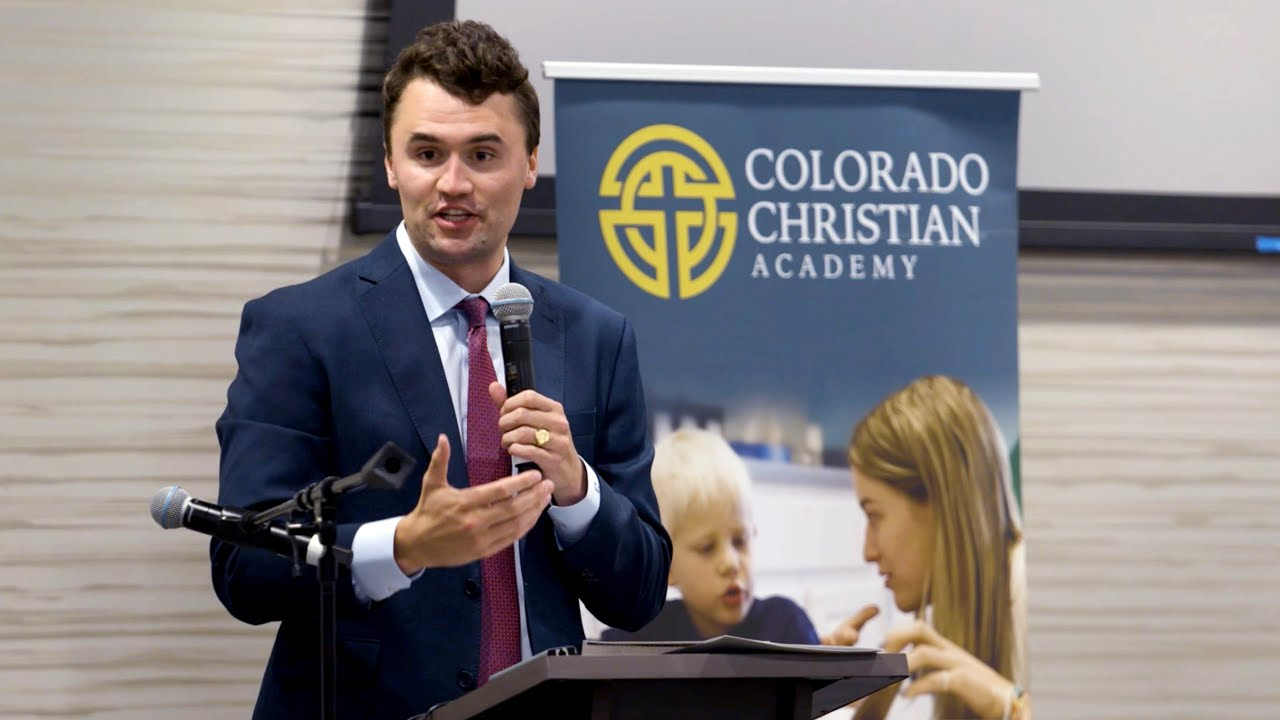
The more I watch Charlie Kirk’s “debates” with college students, the more compassion I feel for him. He strikes me as a brilliant but frightened young man—haunted, as I once was, by a God of fear and judgment. Like Charlie, I once believed in that God until I reached roughly the same age he was when he died at just thirty-one.

That “biblical” God, as I was taught, was the almighty creator, lawgiver, judge, and punisher—the terrifying being who condemned sinners to eternal torment for disobedience. Who wouldn’t be afraid of such a deity? Certainly not me. Like Charlie, I accepted it all.

My education—spanning from kindergarten in 1945 to my doctoral studies in Rome in 1972—was entirely within the Catholic Church. Nuns and priests trained me in one of the most traditional, patriarchal institutions in the world. They taught that there was “no salvation outside the Church.” It was our duty to convert the “pagans.”

So I spent thirteen years in seminaries preparing to be a missionary in Asia—China, Korea, Burma, Japan. Then came five more years of doctoral study in theology. The indoctrination could hardly have been deeper.

Like Charlie Kirk’s brand of fundamentalism, my Catholic formation fostered a deep suspicion of science and “secular” knowledge. Pope Pius IX’s Syllabus of Errors (1864) had warned against modern thought. From it emerged the apologetic mindset that shaped both of us—a defensive “us versus them” posture toward the modern world. Apologetics gave us tidy answers to every challenge: “If they say this, you say that.” Charlie mastered it. So did I. We both found it airtight, logical, and comforting.

Our politics flowed from the same worldview. My Catholic mentors, like Charlie’s conservative allies, saw communism as evil incarnate. When Senator Joseph McCarthy died, one of my seminary teachers told me, “A great man died today.” At twenty-two, I cast my first vote for Barry Goldwater.

And yet, even in that enclosed world, the “bad ideas” we feared had a way of slipping in. Despite my resistance, studying Latin and Greek classics, French and English literature, and Church history began to unsettle my certainty. Questions emerged about morality, colonialism, the Crusades, and the value of other faiths. I fought those doubts—but they persisted.

When the Second Vatican Council (1962–65) finally opened the Church to modernity, I was among the last to let go of my conservative instincts. I loved the Latin Mass, the vestments, and the comforting clarity of dogma. Like Charlie, I thought the Bible was literally dictated by God through chosen “transcribers”—Moses, David, Solomon, Matthew, Mark, Luke, and John.

But my four years of pre-ordination Scripture study shattered that illusion. Doctoral work confirmed it: The Bible isn’t a single book. It’s a diverse library written by many flawed human beings over a thousand years. They used different names for God and often disagreed about divine commands.

The Bible contains myth, legend, poetry, law, prophecy, fiction, and coded “apocalyptic” literature—resistance writings against empire, not predictions of the end of the world. I still remember my shock learning that Matthew’s “three wise men” story was midrash, not history. To treat all of it as literal fact is to miss its deeper truth.

Even so, like Charlie, I continue to believe the Bible is true—not in every detail, but in its moral and spiritual essence. As one of my friends says, “The Bible is true, and some of it even happened.” Its central story is not Adam and Eve’s fall, but the Exodus—the liberation of slaves. That story reveals the Bible’s real heart: what scholars call “God’s preferential option for the poor.”

The Bible sides with the enslaved, the widow, the orphan, the immigrant—the victims of empire. In fact, it may be the only ancient text written almost entirely by people conquered by Egyptians, Assyrians, Persians, Greeks, and Romans. Its truth is that followers of Jesus are called to stand with the oppressed.

I wish Charlie Kirk had lived long enough to encounter that truth. I believe his integrity might have led him toward it. But he dropped out of college after one semester, calling higher education a scam and a waste of time. He thought it was too expensive and too slow—a mere credentialing machine for good jobs.

To him, studying literature, history, or biblical scholarship in college was pointless. Worse, he saw such studies as dangerous, because they exposed students to the “bad ideas” that challenge inherited faith.

That, I think, is the crux of the problem. For both Charlie and my younger self, religion was the one realm where childhood knowledge was considered complete and unchangeable. Questioning it was betrayal. It’s as if a student of arithmetic said, “I know all about addition and subtraction—don’t confuse me with algebra or calculus.”

But algebra and calculus exist. They expand mathematical truth. And in the same way, modern biblical scholarship and scientific discovery expand our understanding of faith. History, psychology, sociology, and biology all reveal new dimensions of reality. Dismissing them out of fear is not faith—it’s denial.

I know, because I lived that denial for years. So when I watch Charlie Kirk confronting the questions of college students, I feel compassion. I see a man of goodwill trapped in a theology of fear. My heart goes out to him—and to all conservative Christians whose terror of change and of God narrows their vision to biblical literalism and political reaction.

Faith can be so much larger than that.
It can liberate, not confine.
It can open hearts instead of closing them.

That’s the lesson Charlie Kirk never got the chance to learn.

When Bible Readers Like Charlie Kirk Ignore Its Class-Consciousness

The recent assassination of Charlie Kirk provoked a flurry of commentary about God, faith, and politics. Among the more thoughtful responses was David BrooksNew York Times column, “We Need to Think Straight About God and Politics.” His essay reminded me once again how central theology remains for understanding today’s world—and how dangerous it is for progressives to ignore it.

But despite Brooks’ good intentions, his article was fundamentally flawed. He missed the Bible’s class-consciousness, a theme that runs through its central narratives and prophetic voices. In doing so, he overlooked the way modern biblical scholarship interprets scripture: as a profoundly political document that consistently sides with the poor and oppressed against the wealthy and powerful. Without acknowledging this, Brooks failed to resolve the very problem he set out to explore: how God and politics relate.

Ironically, Charlie Kirk—whose white Christian nationalism has been condemned by many—grasped something Brooks did not: that the Bible is not politically neutral. But Kirk twisted that insight. Rather than recognizing God’s solidarity with the marginalized, Kirk placed the divine firmly on the side of the dominant white, patriarchal class. His theology inverted the teachings of the Jewish prophet Jesus of Nazareth, who identified God with the poor, the dispossessed, and the oppressed.

In what follows, I want to clarify this point by (1) summarizing Brooks’ argument, (2) contrasting it with Kirk’s theological vision, and (3) comparing both with the insights of modern biblical scholarship, which I’ll describe as “critical faith theory.” My thesis is simple: without acknowledging the achievements of such theory with its implied class-consciousness, we cannot understand either the Bible’s meaning or its challenge to today’s politics.


Brooks’ Confusion

Brooks began by observing that Kirk’s funeral blurred the lines between religion and politics. Speakers portrayed Kirk as a kind of martyr, invoking Jesus’ example of forgiveness, while Donald Trump and his allies used the occasion to unleash vengeance and hatred. Brooks admitted he was disturbed and confused: why such a volatile mix of faith and politics? Shouldn’t religion stay in the private sphere, separate from political life?

To make sense of it, Brooks reached for the old notion of complementarity. Religion and politics, he suggested, are distinct but mutually supportive. Politics deals with power; religion provides the moral compass reminding us that everyone, regardless of ideology, is a sinner in need of grace. On this view, the Bible does not offer a political program. It simply sets the stage for moral reflection.

In short, Brooks tried to preserve a moderate middle ground. Faith should shape moral values but not dictate political programs.

The problem is that this neat separation has little to do with the Bible itself.


Kirk’s Fundamentalist Class-Consciousness

Kirk, unlike Brooks, made no such distinction. He declared openly: “I want to talk about spiritual things, and in order to do that, I have to enter the political arena.”

Brooks responded with incredulity, but Kirk’s reasoning is clear. His fundamentalist reading of scripture led him to embrace a particular worldview that has always been political. He believed the Bible is the literal word of God, with Moses, David, Solomon, and the gospel writers transcribing divine dictation. He accepted the traditional Christian narrative—codified since the fourth century—that humanity is fallen through Adam and Eve’s sin, redeemed by Jesus’ sacrificial death, and destined for heaven or hell depending on baptism and personal acceptance of Christ.

This theology, which became the official religion of the Roman Empire in the fourth century, was weaponized to support conquest, colonization, and oppression. From the Crusades to the slave trade to European colonialism, Christian rulers used this story to justify domination of Muslims, Jews, Indigenous peoples, Africans, and other non-white, non-Christian populations. Christianity, in its imperial form, became the religion of empire.

Kirk, then, was not wrong to insist that “spiritual talk” inevitably enters politics. But he saw Christianity as legitimizing the rule of a largely white, patriarchal elite. His class-consciousness was real—but inverted.


Critical Faith Theory: A Different Story

Modern biblical scholarship tells a very different story. Beginning in the late 18th and 19th centuries, historians, linguists, archaeologists, and literary critics began examining scripture using the tools of critical analysis. They discovered that the Bible is not a single book with one author but a library of texts written and edited over centuries. These texts include myth, poetry, law codes, prophecy, letters, gospels, and apocalypses. They contain conflicting theologies: some justifying empire, others resisting it.

What emerges from this scholarship is not the story of Adam’s sin and Jesus’ death reopening heaven’s gates. Rather, it is the story of liberation from slavery and God’s solidarity with the poor.

The central narrative begins with the Exodus, the liberation of enslaved people from Egypt. Israel’s God revealed himself as a liberator, entering into a covenant with the freed slaves to form a just society where widows, orphans, foreigners, and the poor would be protected. When Israel’s leaders violated that covenant, prophets arose to denounce them and call the nation back to justice.

Over centuries, Israel itself was conquered by empires—Assyria, Babylon, Persia, Greece, Rome. Prophets promised deliverance from oppression, not heavenly rewards in a distant afterlife.

Jesus of Nazareth stood squarely in this prophetic tradition. A poor construction worker from Galilee, he proclaimed the arrival of God’s kingdom—a radically new order of justice and peace. He challenged religious elites, preached solidarity with outcasts, and raised the hopes of the oppressed. Rome executed him as a rebel through crucifixion, a punishment reserved for political insurgents.

His followers, convinced he was raised from the dead, created communities that practiced what today might be called Christian communism. The Book of Acts records that believers shared possessions in common and distributed resources “as any had need.”

This was not an abstract spirituality but a concrete economic alternative. As I’ve pointed out elsewhere, it might be called “communism with Christian characteristics.” As Luke the evangelist put it in his Book of Acts 2:44-45, “All who believed were together and had all things in common; they would sell their possessions and goods and distribute the proceeds to all, as any had need.” In Acts 4:32, the same author writes: “Now the whole group of those who believed were of one heart and soul, and no one claimed private ownership of any possessions, but everything they owned was held in common.”

This approach to scripture—often called liberation theology—describes God as having a “preferential option for the poor.” Far from being neutral, the Bible takes sides. It consistently identifies God with the marginalized, not the powerful.


Jesus as the Rejected One

The class-consciousness of the Bible is perhaps most powerfully expressed in the figure of Jesus himself who, remember, is considered the fullest revelation of God.

Think about who he was: the son of an unwed teenage mother, raised by a working-class father, living under imperial occupation. As a child he was a political refugee in Egypt. As an adult he befriended prostitutes, tax collectors, and drunkards. He clashed with religious authorities and was executed as a political criminal. His death—torture and crucifixion—was reserved for those considered dangerous to empire.

This is not the profile of someone embraced by elites. It is the life of someone MAGA nationalists like Kirk would reject as unworthy, threatening, or “vermin.” Yet Christians confess this despised and rejected man as the revelation of God.

Jesus himself underlined this identification when he said in Matthew 25:40, “Whatever you do to the least of my brothers and sisters—the hungry, the thirsty, the stranger, the prisoner—you do to me.” The divine is encountered not in palaces, temples, or megachurches, but among the poor and excluded.

That is the class-conscious heart of the Bible.


Why It Matters

The contrast between Brooks, Kirk, and liberation theology highlights three very different approaches to God and politics.

  • Brooks wants to keep religion in the realm of private morality, supplementing politics but never shaping it directly. The problem is that the Bible itself refuses to be apolitical.
  • Kirk recognizes the political dimension but twists it to sanctify empire, patriarchy, and white supremacy. His theology reflects the imperial Christianity that oppressed much of the world.
  • Critical faith theory insists that the Bible sides with the oppressed. Its story begins not with sin and guilt but with liberation from slavery, continues with prophetic denunciations of injustice, and culminates in Jesus’ solidarity with the poor.

For progressives, this matters enormously. Too often the left cedes the Bible to the right, assuming it is inherently conservative. But modern scholarship shows the opposite: the Bible is a revolutionary text. It challenges systems of exploitation and offers resources for building communities of justice, equality, and care.


Conclusion

The assassination of Charlie Kirk has sparked renewed debate about God and politics. Moderates like David Brooks remain confused, trying to maintain a polite separation between religion and politics. Kirk, by contrast, embraced a political theology but aligned God with the ruling class.

The Bible itself, however, tells a different story. Through the lens of critical faith theory, we see its central theme: God’s preferential option for the poor. From the Exodus to the prophets to Jesus and the early church, scripture consistently sides with the oppressed.

Progressives ignore this at their peril. To cede the Bible to the right is to abandon one of the most powerful sources of hope, resistance, and liberation in human history. If read with eyes open to its class-consciousness, the Bible remains what it has always been: not the book of empire, but the book of revolution.

Spare me the Crocodile Tears: Assassination Is the American Way

Please spare me the handwringing over the political assassination of Charlie Kirk. Like you, I’ve heard our politicians say there’s no place for political violence in America. Others have said such atrocities are the province of the right or alternatively of the left

All of that is false. It’s complete B.S. Face it, America itself and its CIA (often in cooperation with organized crime) are assassination experts. It’s not a Republican thing or a Democrat thing. It’s not a question of “left” (as if there were a real “left” in America) or “right.”

No, it’s the American way. It’s what “we” do in the world. And to stop domestic assassinations, that’s what must change.

As Martin Luther King told us long ago, the U.S. (along with Israel, and NATO I would add) is the greatest purveyor of violence in the world. (Vijay Prashad calls NATO “the machine that destroys humanity.”) Our government and those allies commit targeted and random assassinations all the time.

Think of the extrajudicial bombing of that Venezuelan fishing boat just last week. Without advancing any evidence whatsoever, those in the boat were blown up because of “suspicions” that they were drug dealers. No proof, no arrests, no trial. No handwringing or tears. Just killed remorselessly “on suspicion.”  All the victims had (now severely traumatized) families.

Then think of Israeli threats to “take out” (decapitation, they call it) the elected leaders of Iran – or of their attempts a week ago to kill Hamas leaders as they participated in peace talks in Qatar. Think of the way Israel recently killed Yemen’s prime minister Ahmed al Rahawi and other Yemeni political leaders. And need we say the names Allende, Lumumba, Kaddafi, Guevara, or of a whole host of other political leaders routinely offed by the United States? Or all those attempts to murder Fidel Castro. Now they’re talking about taking out Nicolas Maduro of Venezuela

But Kirk was different you might say. Though liberals don’t agree with most of his positions, he was a journalist, a debater, an organizer. His assassination was an attack on free speech, on the first amendment. Killing him threatens the very concept of press freedom.

And the way he was killed was especially brutal. On “Breaking Points,” Krystal Ball even urged her viewers not to watch the video. “It will haunt you for the rest of your life,” she warned.

But all of that is B.S. too. “Our” assassins don’t care about free speech, free press, the first amendment or the assassinations’ brutality. For instance, “we” and Israel kill famous journalists virtually every day. And it’s all done in the most horrendous ways imaginable. More journalists (many of them award-winning) have been killed by U.S.-supported Zionists than all those killed in WWI, WWII, Vietnam, Iraq, and Afghanistan combined.

AND IT HAPPENS VIRTUALLY EVERY DAY!!

Those routine atrocities occur in Palestine, where many of the victims have their heads blown completely off. And it’s not just the journalists and other public figures. In many cases it’s their families too – wives, children, infants, parents, grandparents, and great grandparents — who are killed along with them.

So, again, please spare me the crocodile tears! You can’t routinely assassinate innocents, political leaders, and journalists across the planet and not expect it to come home.

Yes, with the political murder of Charlie Kirk assassination’s homecoming is undeniable and horrific. The chickens have indeed come here to roost.

And it’s not something that can be cured by stricter gun laws or by left and right singing Kumbaya together.

What must change is U.S. policy. “We” and Israel and NATO must stop being the world’s foremost political assassins!

The Epstein Case May Bring the Entire System Down: AJA Take Note!

When I tell friends about my involvement with OpEdNews’ Arc of Justice Alliance (AJA), their response often borders on disbelief. They’ll say, “Sure, sounds noble—but for something like that to succeed, the entire U.S. and NATO system would have to collapse first.”

Sometimes I’ve found myself agreeing with them. After all, AJA’s vision is sweeping. It aims to build on the left, the kind of powerful infrastructure that MAGA Republicans have laid out for themselves in their Project 2025 manifesto. Its goal is nothing less than reinventing government to serve ordinary people rather than the rich and powerful.

But here’s the problem: the existing system is so entrenched that genuine change often feels impossible. Unless some catastrophic rupture occurs, the machinery of empire and corporate control looks immovable.

Then came Jeffrey Epstein.

The Epstein affair, I have come to realize, contains the explosive potential to unravel the entire Western system.

Why? Because the case points toward something almost unspeakable: the governments of the United States and Israel are implicated not only in covering up sexual violence against children, but in actively organizing and sponsoring it as a tool of blackmail. If that is true—and the circumstantial evidence strongly suggests it is—then we are not just confronting corruption or incompetence. We are confronting a system so depraved that it has turned pedophilia into a weapon of statecraft.

And once ordinary people grasp that truth, no amount of partisan spin will save the system from collapse.


The Weight of Circumstantial Evidence

To understand the gravity of this possibility, it is important to stress the role of circumstantial evidence in criminal justice.

As I’ve recently pointed out, and contrary to popular belief, most convictions—especially in white-collar cases—do not rely on “smoking gun” documents or direct eyewitnesses. They rely on inference: the accumulation of facts that, taken together, point beyond reasonable doubt. Motive, means, opportunity, DNA traces, fingerprints, destruction of evidence, false statements, suspicious associations—all these can convict without a single direct witness to the act.

That is exactly the kind of evidence accumulating around Epstein. Consider the essentials of what has emerged:

  • The systematic rape of underage girls.
  • Apparently orchestrated by intelligence agencies—the CIA and Mossad—through assets like Epstein, Ghislaine Maxwell, and their associates.
  • Carried out for the purpose of collecting compromising material (kompromat) on powerful men.
  • Deployed to ensure that the world’s elites could be controlled and manipulated to serve U.S. and Israeli interests.

This is not conspiracy fantasy. It is where the trail of evidence leads.


Signs of Cover-Up

The circumstantial evidence is damning:

  • Official deception: U.S. authorities initially promised to release Epstein files in full, later claimed no such files existed, and finally released a mere 33,000 pages—less than 1% of what the FBI possesses.
  • The prison “suicide”: Epstein himself, the most important witness, died under conditions so suspicious that even Ghislaine Maxwell believes he was murdered. Surveillance cameras malfunctioned, guards fell asleep, and evidence was tampered with.
  • Censored names: The FBI redacted Donald Trump’s name, along with those of other high-profile figures, from the released documents. Redaction of such relevance is indistinguishable from destruction of evidence.
  • Intelligence ties: Ghislaine’s father, Robert Maxwell, had well-documented Mossad connections. Based on such ties, respected figures—including economist Jeffrey Sachs and congressman Thomas Massie—have concluded that Epstein was indeed a Mossad asset.
  • The sweetheart deal: Despite overwhelming evidence of sex crimes against minors, Epstein secured an astonishingly lenient plea bargain in 2008. The prosecutor, Alexander Acosta, later testified that he was told Epstein “belonged to intelligence” and that the case was “above his pay grade.”
  • Suspicious leniency for Maxwell: After discussions with Trump’s lawyer Todd Blanche, Ghislaine Maxwell was quietly moved from a maximum-security facility to a minimum-security prison whose policy specifically excludes sex offenders.
  • Unusual bargaining power: Maxwell now conditions any congressional testimony on immunity, advance questions, and testimony outside prison walls. Few convicted felons enjoy that kind of leverage.

Taken together, these facts paint a chilling picture of deliberate obstruction and protection.


Questions of Character

Equally troubling is the character of those who have denied Epstein’s intelligence connections.

Donald Trump insists he barely knew Epstein, despite ample photographic and testimonial evidence to the contrary. Trump’s record of habitual lying is a matter of public record.

Ghislaine Maxwell has twice been indicted for perjury. Her status as a jailhouse informer who stands to personally benefit from exonerating the rich and powerful connected with the case hardly qualifies her as a trustworthy source.

And as for the CIA—its former director Mike Pompeo openly admitted that agency operatives are trained to “lie, cheat, and steal.” To accept denials from such sources at face value is to accept testimony from admitted professional liars.

 Neither President Trump, Ghislaine Maxwell, nor any CIA operative is a credible witness. All of them are compromised actors whose interest lies in suppressing the truth.


A Crisis That Could Change Everything

As the Epstein revelations continue to unfold, the implications are staggering.

This is not about partisan politics. It is not about Republicans versus Democrats, or about conservatives versus liberals. It is about a system in which the ruling class of the United States and its closest ally, Israel, have apparently used the rape of children as a tool of blackmail to maintain global dominance.

No matter where ordinary people stand politically—whether left, right, or center—this is a line too far. Few Americans or Europeans will tolerate their governments being complicit in the systematic violation of schoolgirls.

That is why the Epstein case has revolutionary potential. It exposes rot so deep, depravity so shocking, that once the public fully grasps it, the legitimacy of the system itself could collapse.


The Arc of Justice and the Opportunity Ahead

Here lies the paradox: while many dismiss projects like the Arc of Justice Alliance as quixotic, the Epstein case may provide exactly the systemic rupture that movements for justice have been waiting for.

If the truth about Epstein, the CIA, and Mossad becomes undeniable, a massive crisis of legitimacy will follow. That crisis could open the door to fundamental change—change that AJA and allied movements are preparing to advance.

Far from tilting at windmills, we may soon find ourselves at the forefront of a historic turning point.

The Epstein scandal is not just another corruption story. It may well be the crack in the dam, the event that triggers the collapse of a system too evil to sustain itself.

And if that collapse comes, the task will be to ensure that what rises from the rubble is a system finally dedicated to justice—for the many, not the few

Circumstantial Evidence and the Epstein Affair: What Trump, Maxwell, and Western Intelligence Reveal

Like many Americans who have not yet surrendered their capacity for outrage, I’ve been haunted by the Jeffrey Epstein Affair. It refuses to go away—not because corporate media wish to pursue it (they manifestly do not), but because it cuts to the rotten core of empire itself.

For years now, we’ve been promised the release of the “Epstein files”—thousands of pages of testimony and hours of videotape implicating political leaders, judges, corporate moguls, Hollywood celebrities, and clergy. We’re told they exist. We’re also told—by the very elites most likely ensnared—that there’s “nothing to see here.” The truth, however, seems closer to what insiders have whispered: that those files contain enough evidence to topple governments across the Western world.

What has especially caught my attention is the strange “reluctance” to release those files publicly, and the curious way the story itself has been managed. Instead of honest transparency, we have smoke screens: Epstein dies in custody under suspicious circumstances; Ghislaine Maxwell is shuffled quietly from high-security to minimum-security prison; Donald Trump alternately promises to release Epstein’s files, then dismisses the whole thing as a “hoax.”

Why?

Because the evidence points not only to sexual predation, but to the use of sex, blackmail, and child trafficking as tools of statecraft—involving not just corrupt billionaires, but also the intelligence agencies of the United States, Israel, and the United Kingdom.


Epstein, Maxwell, and Intelligence

Let’s be clear: Jeffrey Epstein was no mere “hedge fund manager.” His wealth was largely unexplained, his client lists opaque. Multiple sources—including Alexander Acosta, the U.S. Attorney who gave Epstein his infamous “sweetheart deal” in Florida—have testified that Epstein “belonged to intelligence.” Acosta was told explicitly: back off, Epstein was “above your pay grade.”

But which intelligence service? All signs point to several.

  • Mossad (Israel): Ghislaine Maxwell’s father, Robert Maxwell, was long known to be a Mossad asset. His daughter continued that role, serving as Epstein’s partner in recruiting, grooming, and trafficking underaged girls. Several credible reports suggest Epstein and Maxwell’s operation doubled as a Mossad “honey trap”—a means of collecting dirt for purposes of blackmail on powerful Western leaders.
  • CIA (United States): Epstein’s New York townhouse was reportedly wired floor to ceiling with hidden cameras. Who collected and stored that footage? Who protected him after each arrest threat? The CIA had both motive and opportunity: control through blackmail has always been central to its toolkit. (BTW, in her recent interview with Deputy Attorney General, Todd Blanch, Ms. Maxwell denied that there were any recording devices in Epstein’s New York mansion — a claim that is easily refuted.)
  • MI6 (Britain): Epstein’s circle overlapped heavily with British aristocracy, including Prince Andrew. The United Kingdom’s intelligence services, like their American and Israeli counterparts, benefited from access to compromising materials and plausible deniability through “private” networks.

In other words, Epstein’s operation was not an aberration. It was systemic—a private-public partnership between elites and intelligence agencies designed to entrap and control.


Trump’s Place in the Web

So where does Donald Trump fit in? The circumstantial evidence is overwhelming:

  1. Friendship with Epstein: Trump himself admitted they were close. Photographs and flight logs confirm this. They partied together in the 1980s and 90s—often in the presence of girls who were clearly underage.
  2. Connections to Organized Crime and Intelligence: Trump’s “mentor,” Roy Cohn, was not just a Mafia lawyer but also a fixer with CIA ties. Trump inherited from Cohn both his ruthlessness and his network.
  3. The Access Hollywood and Carroll Cases: Trump’s own recorded boasts of sexual assault, along with civil judgments against him for sexual abuse, demonstrate a pattern of predation that makes his involvement with Epstein’s underage network plausible, even likely.
  4. Obstruction of Evidence: Trump promised as president to release the Epstein files but instead allowed the FBI to redact his own name from them. His sudden dismissal of the entire affair as a “hoax” is not the language of innocence but of guilt management.
  5. Ghislaine Maxwell’s Treatment: Under Trump, Maxwell was moved to a lower-security facility and treated more like an informant than a convicted trafficker. Why? Perhaps because she knows too much, and her silence needed to be purchased with privileges.

Circumstantial Evidence and the Law

Of course, defenders say all of this is “only circumstantial.” But American courts have long recognized that circumstantial evidence can be just as probative as direct evidence. After all, few crimes of power leave smoking guns. What we have instead are:

  • Patterns of association.
  • Unexplained wealth and protection.
  • Testimonies suppressed.
  • Defendants obstructing evidence.
  • Intelligence agencies circling like vultures.

These, taken together, paint a picture no less damning than a video recording.


The Larger Stakes

What makes this affair explosive is not merely whether Donald Trump is guilty of pedophilia. It is that the entire Western system—Washington, London, Tel Aviv—may be implicated in using sexual blackmail as a governing tool.

Ordinary people may not follow Russiagate, gerrymandering, or campaign finance reform. But they understand rape. They understand pedophilia. They understand that leaders who use children in blackmail operations have crossed a line that should end not only their careers but also the legitimacy of the system they serve.

If the Epstein files are ever released unredacted, the consequences could be revolutionary.

That is precisely why they remain hidden.

And precisely why we must demand their unveiling.

Notes and Sources

  • Alexander Acosta’s statement about Epstein “belonging to intelligence” – The Daily Beast, July 2019.
  • Gordon Thomas, Robert Maxwell: Israel’s Superspy (2003).
  • Whitney Webb, One Nation Under Blackmail, Vols. 1–2 (2022).
  • Vicky Ward, “Jeffrey Epstein’s Sick Story Played Out for Years in Plain Sight,” Vanity Fair, July 2019.
  • BBC, “Prince Andrew and Jeffrey Epstein: What You Need to Know,” November 2021.
  • Flight logs and photos released in U.S. District Court (Southern District of New York) filings, 2019.
  • Wayne Barrett, Trump: The Deals and the Downfall (1992).
  • Access Hollywood tape, October 2016.

Rescuing Faith from Capitalism: A Theological Response to Project 2025

Readings for 18th Sunday in Ordinary Time: Ecclesiastes 1:1-2, 2:21-23; Psalm 90 3-6, 13, 14, 17; Colossians 3: 1-5, 9-11; Luke 12: 13-21

I’ve recently been invited to join the Arc of Justice Alliance (AJA). It’s a new progressive think-and-action movement designed to offer a coordinated, long-term alternative to the far right’s increasingly authoritarian agenda.

No doubt you’ve heard of the Republican Project 2025. Backed by the Heritage Foundation and other major right-wing institutions, it’s a blueprint for seizing executive power, dismantling federal regulatory structures, militarizing domestic politics, and further entrenching white Christian nationalism. It is as serious as it is terrifying.

The Arc of Justice Alliance is our answer. It recognizes a hard truth: for over 50 years, the U.S. right has invested billions into building a machine—media networks, policy mills, judicial pipelines, and ideological training camps for candidates. Progressives, by contrast, have often been merely defensive, scattered and uncoordinated. That’s changing now. AJA is bringing together scholars, activists, spiritual leaders, artists, and organizers to craft a long-term vision for democratic justice, human rights, and environmental sanity.

But here’s something that may surprise you: one of the right’s most potent weapons has been theology.

The Republican machine has spent decades coopting the Judeo-Christian tradition, turning it into a moral fig leaf for capitalism, nationalism, and even genocidal violence. Faith has been hijacked—not just by televangelists, but by policy strategists who know how powerful religion can be in shaping hearts and winning votes.

The results? A public religion that celebrates guns over peace, capitalism over compassion, and settler colonialism— in Palestine and elsewhere—over human dignity.

As a liberation theologian, I’ve been invited by AJA to help reclaim the authentic Judeo-Christian tradition. To rescue the voices of the prophets—from Moses to Jesus to Paul—from those who’ve turned them into champions of empire. We’re done letting Jesus be portrayed as a flag-waving American whose top moral priorities are deregulated markets, gun rights, and misogyny.

This week’s liturgical readings couldn’t be more timely. They mock the cult of wealth accumulation and call for spiritual liberation from materialist obsession. Ecclesiastes calls it “vanity” to work endlessly, lose sleep over your earnings, and die before enjoying anything. Psalm 90 reminds us life is brief—we might not wake up tomorrow. Paul tells us to set our minds on things beyond consumerism, and Jesus, in the Gospel of Luke, outright laughs at the man who builds bigger barns while ignoring his soul.

These aren’t just pious musings. They’re indictments.

They expose what capitalism demands of us: exhaustion, anxiety, competition, disconnection. They also expose what it consistently fails to deliver: peace, community, purpose, or justice.

Here’s the deeper issue: capitalism isn’t just an economy—it’s a theology. It teaches that your worth is your wealth. That you are alone, in competition, in a world of scarcity. That power, not compassion, is what keeps you safe. That “salvation” is financial security.

But the deeper tradition—the one the AJA seeks to reclaim—teaches something radically different.

It teaches that our lives matter not for what we earn, but for how we love. That justice, not greed, is the heartbeat of the universe. That our deepest wealth is found in community. That joy is a collective act of resistance.

And crucially, it teaches that we must name and dismantle the systems—economic, political, and religious—that keep us enslaved to fear and false gods.

That’s why we’re building the Arc of Justice Alliance. Not just as an intellectual exercise, but as a spiritual and moral response to empire. We are building a machine of our own—not to mirror the right’s authoritarianism, but to match its discipline and exceed it in vision.

So let’s stop pretending the Gospel is about prosperity. Let’s stop letting capitalism wear a halo.

Let’s laugh, like Jesus did, at the absurdity of endless accumulation. Let’s build networks of joy, resistance, and solidarity. Let’s speak clearly, act boldly, and remember what freedom really looks like.

This is what the moment demands. And this is what the AJA stands for.

Please join us!

Repost of My 2019 Article on Jeffrey Epstein

Of course everybody’s talking about Jeffrey Epstein. The topic is often presented simply as a tale of his perversion possibly with connections to Donald Trump. But it’s much more than that. As Whitney Webb has pointed out in two 500 page books on Epstein, it’s about “Government by Blackmail.” It’s about Israel’s Mossad and why Zionists can exercise nearly absolute control over the U.S. government, no matter who’s president. With Webb’s help, I saw all that six years ago, when I published the following essay on OpEdNews and when I followed it up by another piece on the use of the phrase “conspiracy theory” to dismiss any deeper probes into Epstein’s identity. So, here’s what I wrote in 2019.

___________

Epstein Was Suicided; That’s How Our CIA Does Business

I could hardly believe my eyes this morning, when I read in Alternet that Jeffery Epstein was found dead in his jail cell of apparent suicide. And I find it hard to believe that he killed himself, especially since he’s been on “suicide watch” since the discovery of apparently self-inflicted marks on his neck ten days ago. Instead, I suspect he was killed by the CIA. My suspicion is based on my close reading for the past few days of muckraker, Whitney Webb‘s three-part expose’, “The Jeffery Epstein Scandal: Too Big to Fail.”

Webb’s series makes the point that the Epstein pedophilia scandal threatened to blow apart the entire U.S. government house of cards. It opened up a potentially devastating window not only on the sordid lives of Epstein and his close friends, Donald Trump and Bill Clinton, but on the profound corruption of the entire U.S. government and of international politics as a whole. Though connected with the pedophilia scandal in the Catholic Church, the scale of the Epstein branch of institutionalized child abuse absolutely dwarfs the shameful hypocrisy of justly vilified ecclesiastical criminals.

Epstein’s federal trial was scheduled to begin next summer. This means that the details of his crimes (and, more importantly, those of his high-placed patrons’) would steal headlines at the height of the general election of 2020. The evidence to be presented there is said to comprise more than one million pages.

In the light of what I’ll detail below, one can only imagine the surprises contained therein and whom those pages implicate. And given Epstein’s close association with Donald Trump and the Clintons (not to mention the other billionaire residents of Palm Beach Island in Florida), the trial and evidence presented at that crucial moment would likely have had an impact of the presidential election. Wayne Madsen for one, speculates that it may have already influenced the resignations of several Republicans from the House of Representatives.

Epstein, of course, is the alleged hedge fund tycoon whose central role in a pedophilia network came to light when he was arrested last July on Federal charges of sex trafficking of minors in Florida and New York. Previously, he had been convicted of molesting an underage girl, but had mysteriously served what’s been described as the most lenient sentence in history for crimes like his — 13 months in a county jail during which he was free to leave during the day.

Alexander Acosta, Donald Trump’s Secretary of Labor was responsible for securing the ludicrous sentence, when Acosta served as Attorney General for the Southern District of Florida. On Epstein’s arrest last July, the FBI found hundreds of photos, videos, and recordings of child molestations some of them allegedly involving prominent public figures.

According to Webb’s expose’, the Epstein story is merely the tip of a dark iceberg much bigger than most of us realize. The darkness below the surface stretches back more than 75 years. It involves not only Epstein, but the CIA, its Israeli counterpart the Mossad, the Mafia as a CIA asset, the mysterious MEGA Group of influential billionaires, many government officials, and other high rollers with familiar names.

Webb’s series unveils what she terms “Government by Blackmail” an all-encompassing political strategy that began at least as far back as the conclusion of the Second Inter-Capitalist War. As the phrase suggests, Government by Blackmail consists in luring heads of state and other powerful world figures into compromising situations (often with underage “prostitutes” of both sexes), filming them in the process, and then using such evidence as leverage to extort huge sums of money, to extract favors and actually shape the world’s political economy. It extended to the Mafia, for instance, a virtual license to kill without legal repercussion.

As an alleged intelligence asset himself (of either the CIA, Mossad, or both) Epstein’s job was to gather the required evidence. To that end, he placed in compromising and seductive situations government officials from across the world. His mansions, private islands, and fleet of jet planes provided the venues. They were the sites of fabulous parties featuring alcohol, drugs, and underage “call boys” and “call girls.” All the locales were equipped with sophisticated recording devices, both audio and video, and two-way mirrors for recording acts of criminal pedophilia and other crimes or embarrassments on the parts of Epstein’s “friends” and acquaintances. Invitees included heads of state from across the planet Donald Trump and Bill Clinton, of course, among them.

But, Webb reveals, Epstein is only the latest iteration of Government by Blackmail. He’s the clone of figures like the Mafia kingpin Myer Lansky, and Lew Rosenstiel (of Schenley distilleries). During the ’70s and ’80s Rosenstiel, Lansky’s close friend, regularly threw what his fourth wife (of five) called “blackmail parties.” According to Webb, the photos and recordings gathered there long kept Lansky out of trouble from the federal government. They also delivered entire cities to Mafia control in the post WWII era. In fact, Lansky entrapped for blackmail purposes, numerous top politicians, army officers, diplomats and police officials. He had photos of FBI director, J. Edgar Hoover in drag and performing homosexual acts.

Rosenstiel’s protegee and successor as blackmailer-in-chief was Roy Cohn, who at the age of 23 was a close adviser of Senator Joseph McCarthy. More importantly, he was also associated with Mafia bosses, J. Edgar Hoover, the Reagan White House and has been described as a mentor of Donald Trump. His mentor!

Simultaneously, Cohn took on the central role in the blackmail pedophile racket Lansky and Rosenstiel had started. As usual, its main targets were politicians often interacting with child prostitutes. That was the source of Cohn’s power. So were his dear friends in high places including (besides Clinton and Trump) Ronald Reagan and his wife Nancy, Barbara Walters, Rupert Murdoch, Alan Dershowitz, Andy Warhol, Calvin Klein, Chuck Schumer, William Safire, William Buckley, William Casey, and top figures in the Catholic Church.

It’s those latter figures that connect Cohn’s pedophile ring as inherited by Jeffery Epstein with the Church’s scandal. It directly involved “the American pope,” Francis Cardinal “Mary” Spellman, and Cardinal Theodore “Uncle Teddy” McCarrick. Father Bruce Ritter’s Covenant House (a multi-million-dollar charity for homeless and run-away boys and girls) was also deeply implicated. In fact, when Ritter’s involvement in sex acts with his underage protegees came to light, it was secular powers more than ecclesiastical forces that rallied to his defense.

Another pre-Epstein blackmail king was Craig Spence, a former ABC News correspondent who became a prominent DC lobbyist and CIA agent. All during the 1980s he provided child prostitutes and cocaine for Washington’s power elite. For purposes of blackmail, Spence used the now-familiar devices of video cameras, tape recordings, and two-way mirrors. His little black book and “favor bank” records have been described as involving a Who’s Who of Washington’s government and journalistic elite, this time including Richard Nixon, William Casey, John Mitchell, Eric Sevareid, John Glenn, and key officials of the Reagan and George H.W. Bush administrations, as well as media celebrities and military officers. According to the Washington Times, during the Bush administration, Spence had permission to enter the White House late at night to supply “call boys” to top level officials there.

Significantly, in the light of Epstein’s demise, just shortly before his death (also quickly ruled a suicide) Spence expressed fears that the CIA might kill him — apparently for knowing too much about connections between Nicaragua’s Contras and CIA cocaine smuggling to support them. But according to Spence himself, his knowledge went much deeper. Shortly before his similarly alleged suicide, he told Washington Times reporters: “All this stuff you’ve uncovered (involving call boys, bribery and the White House tours), to be honest with you, is insignificant compared to other things I’ve done. But I’m not going to tell you those things, and somehow the world will carry on.”

The Contra connection shows how in all of this, the Great Enemy of the hidden powers described here (involving the White House, CIA, FBI, Mafia, Mossad, powerful lobbyists, “fixers,” and billionaire political donors) was socialism and communism. The latter’s world project was 180 degrees opposed to governance by the moneyed elite as represented by the blackmail project of Epstein and his predecessors.

And so, it was important for blackmailers to support the prosecution of Ethel and Julius Rosenberg, back McCarthyism and J. Edgar Hoover, to undermine the Soviet Union, attack Cuba and Fidel Castro, protect organized crime bosses, and to make sure that projects like the Sandinista Revolution of 1979-90 failed. To those ends, it was even more important to inveigle left-wing politicians and officials from socialist countries into the international blackmail dynamic described here.

As for Epstein himself, following Cohn’s death (from AIDS) in 1986, he quickly took up his mentor’s mantle. As described earlier, Epstein became an FBI informant in 2008 yet more evidence of the agency’s long-standing involvement with and protection of pedophile rings for purposes of blackmail.

In summary, the Epstein scandal has finally made public a decades-long pedophilic blackmail operation at the highest level. Ultimately run by the FBI and CIA, (i.e. with the knowledge, approval and participation of law enforcement), it has involved prominent politicians, businessmen, police and military officials, celebrities, and ecclesiastical officials. The scandal has touched the current U.S. president and may still bring him down.

In the meantime, it has left behind a trail of broken lives in the persons of the children exploited for the pleasure of old white men whose debauched proclivities have been parlayed into economic and political power. On Epstein’s watch, the operation has spread to Central America and beyond, becoming truly international in the process.During the 2016 presidential campaign, Pizzagate fascinated right-wing conspiracy theorists. It alleged that the Clintons were somehow involved in a child prostitution operation run out of the Comet Ping Pong restaurant and pizzeria in Washington, D.C.

If a debunked Pizzagate theory caused such stir, and if pedophilia expose’s within the Catholic Church have brought it to its knees, one can only imagine the revolutionary potential of the documented disclosures that would inevitably come to light in a Jeffrey Epstein trial. It would reveal pedophilic involvement by public figures far surpassing the scandal in the Roman Catholic Church. It could bring down not only the Trump administration, but the whole international House of Cards.

One can only hope . . .

3rd Report From Rome: Some Reservations about Leo XIV’s Papal Inauguration

[What follows is the 3rd installment describing a wonderfully synchronic event that coincided with my wife Peggy’s and my visit to Rome to spend three weeks with my son and his family there. The visit just happened to coincide with the elevation of fellow Chicagoan Robert (Fr. Bob) Prevost to the papal throne. Today’s account is about Pope Leo’s inauguration. You can find the other two installments here and here.]  

Peggy and I got up early this morning – 5:00. Our intention was to get to St. Peter’s Square in time to secure seats for Pope Leo’s inauguration which would begin at 10:00.

However, our ride to the basilica was half an hour late. That meant we didn’t get seats.

And though we were able to situate ourselves much closer to the center of action than we did a week ago for the introduction of the new pope, our late arrival left us standing in the increasingly hot sun from 7:00 till noon.

It was worth it though. It gave me plenty of time to observe and reflect on the thousands upon thousands of faithful and simply curious who filled the Square and about a mile of the Via Conciliazione – the broad avenue that extends from the basilica’s piazza towards the Castel Sant’ Angelo.)

The Ceremony

In the meantime, all of us were inspired by the St. Peter’s Basilica choir and their transcendent renditions of Catholic choral classics like “Christus Vincit” and “Salve Regina.” We also ended up praying the five Glorious Mysteries of the rosary in Latin (viz., (1) the Resurrection, (2) the Ascension, (3) the Descent of the Holy Spirit on the Apostles, (4) the Assumption of the Blessed Virgin into Heaven, and (5) Her Crowning as Queen of Heaven and Earth). I was surprised how easily the Latin came back to me.

The whole thing and what followed was made visible for everyone on perhaps 20 huge jumbotrons located strategically throughout the entire venue.

Then about 9:30 Pope Leo arrived. He was standing in the back of his popemobile smiling and giving his blessing to the adoring crowds as the vehicle drove around St. Peter’s square and down the length of the Via Conciliazione.  He passed very close to the place Peggy, our Roman host, and I were standing. The crowd’s enthusiasm, shouts, and applause made it all quite thrilling.

At 10:00 right on the dot, the ceremony began. Everyone in the crowd had been given memorial booklets with the texts of every hymn, litany, and prayer, along with brief descriptions of ceremonies like the bestowal of the papal ring and other signs of papal authority. Texts (including the pope’s homily) were also projected on those large screens. So, it was all quite easy to follow and understand.

The center of it all was the papal Mass, with Leo the celebrant, while various members of the clergy and laity handled the biblical readings and some of the prayers in Latin, Italian, Spanish, English, and Greek.

At communion time, a whole army of priests (perhaps 50 or more) dressed in black cassocks and white surplices processed to various stations throughout the crowd to distribute the “hosts” that Catholics believe are the very body of the risen Christ. I noticed how some recipients received the wafer on their tongues, others in their hands. One priest close to me refused to place the host in extended palms. He repeatedly insisted on laying the host on the recipient’s tongue. The priest who gave me communion placed the wafer reverently in my hand with the traditional words, “The body of Christ.”  

“Amen,” I replied. (I hadn’t received Catholic communion in years.)

All that describes the surface level of my experience this morning. But what did I really see and hear? Let me respond at three levels, one inspirational, one historical, and one political.

Evaluation

At the inspirational level I saw thousands of Catholics and others thirsting for a meaningful spiritual experience of transcendent, invisible dimensions of life. After all, we live in a world rendered increasingly meaningless by materialism, consumerism, war, shifts in global power, and social change almost beyond comprehension. Seeing such people praying the rosary with eyes closed and lips moving was inspiring indeed. So was their reverence in receiving Holy Communion.

At the historical level, I saw something more problematic. I witnessed:

  • An out-of-touch museum performance piece
  • Overwhelmingly led by men in pretentious medieval costume representing the most patriarchal institution in the western world
  • Now led by a nice American priest who actually believes he’s somehow the “Vicar of Christ”
  • Who founded the Catholic Church
  • Despite the evidence of even Catholic scripture scholarship that such conviction remains unsupported by credible evidence. It shows instead that Yeshua of Nazareth remained a good Jew throughout his brief life and had no apparent intention of founding the gentile “church”
  • That emerged definitively in the 4th century when (under Constantine) a powerful faction of the Christian community threw in its lot with the Roman Empire becoming in effect its Department of Religion,
  • Notwithstanding the fact that Yeshua died a victim of Roman torture and capital punishment.

However, most problematic of all were the event’s political dimensions. In that connection I saw a pope who (once again!) during a time of genocide and this time standing before its perpetrators (in the persons of J.D. Vance and Marco Rubio) spoke in generalities and empty platitudes instead of calling attention to their crime. As indicated in yesterday’s piece, I had been hoping for more – perhaps something in the vein of Episcopal Bishop Mariann Edgar Budde’s words to President Trump on behalf of Palestinians and migrants.

Conclusion

When I’ve expressed my concerns to friends and family members, I’m often told that the new pope must be careful and diplomatic. After all, he’s just starting out.

My reply however is that we’re in a state of emergency. The fact of genocide is undeniable in Gaza. Women and children are starving to death. Each morning, it seems, we’re told that as many as 150 Palestinians (mostly those women and children) were killed overnight. Such victims can’t wait.

The pope has potentially more moral power in his voice than anyone else in the world. If he truly believes himself to be the vicar of the prophetic Yeshua, he must use that voice now.

He must forget caution and diplomacy.

2nd Report From Rome: Will Leo Show The Courage of Bishop Budde?

Tomorrow morning at 6:00, Peggy and I will drive to Vatican Square with some new Roman friends to attend the inauguration of Pope Leo XIV. The ceremony will begin at 10:00. That means we’ll be there four hours ahead of time. The attempt to secure good seats promises a long morning.  

As you may recall, what Carl Jung called “synchronicity” has brought us to Rome at this precise time. Our ostensible purpose for being here was simply to spend three weeks with our son, daughter-in-law, and three small granddaughters (ages 5, 3, and 1). We wanted to spend as much time as possible getting to know the girls, whose parents’ foreign employment patterns would otherwise make that far more complicated.

However, my real synchronic purpose for being here, I’m convinced, is to reconnect me with my deep Catholic roots for purposes of final evaluation before transition into Life’s next dimension.

With that process in mind and at the age of 84, I feel overwhelmed by Rome’s beauty – its tree-lined streets, omnipresent sidewalk cafes, its lavish fountains, statuary, Renaissance paintings and churches, its operas and ballets. Today all that seems even more wonderful than it did more than half a century ago when I spent five years here (1967-’72) getting my doctoral degree in moral theology.

Those were magic years for me, when after spending my teenage and early adult years in a seminary hothouse, I finally began waking up to the real world. It all shook me to the core.

And here I’m not just thinking of personal growth experiences, but of the dawning of political awareness about the Vietnam War, the Civil Rights Movement, Women’s Liberation, and of Liberation Theology which I’ve come to understand as “critical faith theory.” (By that last phrase I mean understanding the way Christianity has been used by western colonial powers to enslave, brainwash, and justify repeated exterminations of Muslims, “witches,” Native Americans, kidnapped Africans, and colonized people across the planet.)

Along those lines, being here in Rome during the ongoing holocaust in Gaza makes me think of Pope Pius XII’s virtual silence on the Jewish Holocaust in the 1930s and ‘40s. It has me wondering if Leo XIV will follow in his shameful footsteps.

I mean, the new pope will have a golden opportunity to confront his fellow American Catholics undeniably responsible for the ongoing slaughter in Palestine. I’m referring to J.D. Vance, Marco Rubio, and possibly Joe Biden. It’s as if during the Holocaust, Pius XII had the chance to publicly confront Hitler or Goering.   

Will Leo use this golden opportunity to call them (and the absent Mr. Trump) to task the way the courageous Episcopal bishop Mariann Edgar Budde did when presented with a similar opportunity in the early days of the Trump administration? Recall that as the episcopal leader of 40,000 congregants in the D.C. area, Bishop Budde had Trump and Vance squirming in their seats as she pled for mercy on behalf of the immigrants, refugees, Palestinians, and others whom those key members of her audience show every evidence of despising.

Will the papal leader of 1.2 billion Catholics show similar courage tomorrow? Or will he take refuge in “safe” generalities, “diplomatic” bromides, and empty platitudes about “peace,” justice, and mercy?

My guess is that it will be the latter. But we’ll see.