Ryan Coogler’s 2025 vampire horror film has already shattered box office records for the genre. Coogler, of course, is the acclaimed director of Creed, Black Panther, and its sequel Black Panther: Wakanda Forever.
Under his direction, Sinners has quickly emerged as a contender for Academy Awards. The film unfolds as a startling parable about white supremacy, the Ku Klux Klan, and the transformative power of music—specifically Delta Blues—as a force of resistance and exorcism.
Its allegorical nature is signaled immediately in a brief prologue: “There are legends of people born with a gift of making music so true, it can pierce the veil between life and death conjuring spirits from the past and the future. . ..” From the outset, viewers are alerted that what follows is not merely a story but a mythic enactment, one that reveals hidden and uncomfortable truths alongside enduring strengths.
At the heart of the narrative is Sammie, a gifted young blues musician whose talent verges on the supernatural. The son of a Baptist minister, he is known as “Preacher Boy.” His cousins—identical twin gangsters “Smoke” and “Stack” (both portrayed by Michael B. Jordan)—return to their Mississippi hometown from Chicago in 1932 with plans to open a juke joint. There, however, they encounter a form of evil more insidious than anything they experienced working for Al Capone in the North: a vampire embodiment of the Ku Klux Klan, led by a mysterious Irishman named Remmick.
As a bloodthirsty Klansman driven by racism and greed, Remmick embodies the white supremacist urge to exploit and destroy Black cultural achievements. His Irish music lures listeners, yet his touch alone is enough to infect victims, transforming them into vampires. Their numbers grow at a terrifying pace.
Inside the juke joint, however, Preacher Boy counters with his own magic. His blues conjure ancestral spirits, who appear in traditional African garb, mingling with dancers in an atmosphere charged with sweat, alcohol, and raw sexuality. Recalling the evening years later, Preacher Boy—portrayed in this sequence by blues legend Buddy Guy—reflects, “it was the best day of my life.”
Everything reaches its climax in a violent confrontation: vampires swarm the juke joint, leading to its destruction and a final showdown between Preacher Boy and Remmick. For a time, it seems the Klansmen have prevailed. Yet Preacher Boy ultimately defeats Remmick, while “Smoke” kills the leader of the local Klan chapter. In this way, Preacher Boy’s power as an exorcist is at least partially affirmed.
Still, Sinners resists any one-dimensional reading. Its parable connects the African American struggle against white vampirism with broader histories of oppression and survival, including:
The resistance of Native Americans, who as survivors of genocide developed means to neutralize “white blood-suckers.”
The brutalities of slavery and the cotton economy.
The prison chain gang system and the terror of lynching.
The complex roles of mixed-race women, some of whom could “pass” as white, alongside their Aunt Jemima counterparts, confined to domestic labor yet equally sexual.
Competing spiritual traditions—those of colonial missionaries, Black Baptists, the Klan, Native Americans, Voodoo, and even Satan worship.
The place of Chinese immigrants, often positioned as bridges between Black and white communities.
For those who can stomach its gore, Sinners is both horrifying and revelatory. It insists that horror has been central to the Black historical experience—every bit as present as the beauty and resilience expressed through music. As Coogler himself explains, the Delta blues were created by artists “living under a back-breaking form of American apartheid,” and he describes the genre as “our country’s most important contribution to global popular culture.”
In that light, the film’s brutality is not gratuitous but emblematic. As a vampire horror story, Sinners is gruesome, but African American history has been far bloodier. Compared to that reality, the horror on screen feels restrained.
This is a reposting of a second article I wrote about the Epstein affair. I published this one in 2020. I repost it here because of its extreme relevance to the reemergence of the whole scandal in the national consciousness. The review of “Where’s My Roy Cohn?” points out the centrality of pedophilia and related blackmail in our nation’s (and the world’s) governance. It touches our political system at the highest levels.
“Where’s My Roy Cohn?”: A U.S. Coup D’état by Nihilists, Mobsters, Pedophiles and Blackmailers
Recently, I spent two weeks in Tijuana working with Al Otro Lado (AOL). I’ve written about that experience here, here, and here.
AOL is a legal defense service for refugees seeking asylum mostly from gang-rule in Mexico and Central America. The emigrants want escape from countries whose police forces and allied power holders are controlled by ruthless drug rings whose only goal is accumulation of money and social dominance.
As I did my work helping clients fill out endless forms concocted by those who would illegally exclude them, everything seemed so hopeless. I wondered how those gangs achieved such power? Isn’t it a shame, I thought, that entire countries are now controlled by criminal mobs with names like “MS 13,” “Nueva Generacion,” and “18?” How sad for these people!
Then, during my flight home to Connecticut, I happened to watch the documentary “Where’s My Roy Cohn?” (WMRC). It introduced viewers to the dark and criminal mentor of Donald Trump. (See film trailer above.)
On its face, the film illustrated the absolute corruption of the U.S. government as the unwavering servant of the elite as the only people who count. But in the light of my experience in Tijuana, it made me realize that our country too is literally controlled by shadowy gangs to an extent even worse than what’s happening south of our border. I mean, the United States of America now has the most prominent protege of Roy Cohn, an unabashed mafioso, actually sitting in the Oval Office! Both Cohn and, of course, his disciple turn out to be absolute nihilists without principle or any regard for truth.
The film made clear how both men tapped into a similar nihilist strain within huge numbers of Americans who identify with the Republican Party and ironically with the Catholic faith and Christian fundamentalism. Nonetheless, WMRC wasn’t explicit enough in probing either Cohn’s corruption, that of Donald Trump or of our reigning system’s complex of government, education, church and mainstream media.
It failed to show how the phenomena of Roy Cohn and Donald Trump represent mere surface indications of a profoundly anti-democratic coup d’état that has gradually unfolded in our country over the last 40 years. The actuality of this takeover was revealed most clearly in the recent impeachment proceedings. They provided a kind of last straw undeniably exhibiting how nihilist “Christians” have seized power in perhaps irreversible ways.
The Film
To see what I mean, begin by watching “Where’s my Roy Cohn?” for yourself. It not only details Cohn’s life as an infamous New York mafia consigliere. It also shows how he started his career in crime as the 23-year-old advisor of the equally villainous Senator Joseph McCarthy of Wisconsin. (McCarthy, of course was the force behind the nation-wide communist scare of the early 1950s.)
However, most importantly WMRC describes the film’s subject as the mentor of Donald Trump. By both their admissions, each recognized in the other a kindred spirit. Each used mafia and friends in high places (from Ronald Reagan to New York’s Cardinal Spellman) to enrich himself in terms of power and money. In the end, the alliance brought Trump to “the highest office in the land.”
To that point, here’s the way the film’s (highly accurate) preview-teaser reads: “Roy Cohn, a ruthless and unscrupulous lawyer and political power broker, found his 28-year career ranged from acting as chief counsel to Senator Joseph McCarthy’s Communist-hunting subcommittee to molding the career of a young Queens real estate developer named Donald Trump.”
In the course of the film, witnesses testify that Cohn taught Trump his basic approach to life. To wit: here are Cohn’s (and by extension, Donald Trump’s) implicit Ten Commandments. They also summarize the guiding principles of perhaps the majority of the most prominent politicians in the U.S. and across the world:
Value money as the highest good.
Manipulate the law to enhance personal wealth and privilege
Put your own interests above everyone else’s
Bully opponents mercilessly
Wrap yourself in the flag while you do so
Never admit wrong-doing or failure
When accused change the subject and make vigorous counteraccusation
Lie unceasingly with great confidence and bluster
Declare even the worst defeat a victory
Win at all costs
All of that was actually Cohn’s personal ethos. It worked for him throughout his life. It is reaping at least short-term benefits for Donald Trump as well. In fact, with Cohn as his mentor and as the man’s protege, Donald Trump would seem to merit all the adjectives on the film’s cover envelope: ruthless, unscrupulous, powerful, flamboyant, notorious, despicable . . .
Deeper Corruption
Unmentioned however in the film is Cohn’s connection with the very way our country (and the world) is run. It’s largely a blackmail game connected not merely with money and power, but with sex, pedophilia, blackmail and complete disregard for truth or moral principle. In fact, Whitney Webb’s four-part study of pedophile-racketeer, Jeffrey Epstein is called just that: “Government by Blackmail.”
And right at its heart, we find Trump mentor, Roy Cohn, listed prominently among figures like the Mafia kingpin Myer Lansky, and Lew Rosenstiel (of Schenley distilleries). For decades following World War II, they were real powers behind mayors, governors, congressmen, senators, presidents, and (yes) behind the world’s remaining kings and potentates, along with assorted church officials.
In fact, according to Webb, all during the ’70s and ’80s, Rosenstiel, Lansky’s close friend, regularly threw what his fourth wife (of five) called “blackmail parties.” The photos and recordings gathered there long kept Lansky out of trouble from the federal government. They also delivered entire cities to Mafia control in the post WWII era. In the end, Lansky blackmailed numerous top politicians, army officers, diplomats and police officials. He had photos of FBI director, J. Edgar Hoover in drag and performing homosexual acts.
Again, according to Webb’s research, Rosenstiel’s protegee and successor as blackmailer-in-chief was Roy Cohn himself who was closely associated with the Mafia bosses referenced prominently in “Where’s My Roy Cohn,” as well as with J. Edgar Hoover and the Reagan White House. (Nancy Reagan even phoned Cohn to thank him for enabling the election of her husband.)
Simultaneously, Cohn took on the central role in the blackmail pedophile hustle Lansky and Rosenstiel had started. As usual, its main targets were politicians often interacting with child “prostitutes.”
That was the real source of Cohn’s power. So were his dear friends in high places including (besides Clinton, the Reagans and Trump) Barbara Walters, Rupert Murdoch, Alan Dershowitz, Andy Warhol, Calvin Klein, Chuck Schumer, William Safire, William Buckley, William Casey, and top figures in the Catholic Church.
It’s those latter figures that connect Cohn’s pedophile ring as inherited by Jeffery Epstein even with the Church’s child abuse scandal. It directly involved the aforementioned “American pope,” Francis Cardinal “Mary” Spellman of New York, and Cardinal Theodore “Uncle Teddy” McCarrick of Washington D.C. Father Bruce Ritter’s Covenant House (a multi-million-dollar charity for homeless and run-away boys and girls) was also deeply implicated. In fact, when Ritter’s involvement in sex acts with his underage wards came to light, it was secular powers more than ecclesiastical forces that rallied to his defense.
Right-Wing Coup and Presidential Impeachment
All of that leads me back to where I started – to the right-wing coup d’état whose final straw debunked any pretense of democracy that may have been persuasive to some before impeachment proceedings put them completely to rest. “Where’s My Roy Cohn” showed the profound extent of the take-over in question – never far distanced from predominantly male sexual perversion.
Yes, we all know about such depravity within the Catholic Church – all the way up the chain of command. But the Cohn film along with the ancillary Epstein revelations it ignores reveal the centrality of that debauchery to standard operating procedure among government officials in the United States and across the world. It’s evidently what they do.
Am I exaggerating? Go back to the above list of Cohn’s and Epstein’s “friends.” See for yourself: they include presidents, princes, prelates, professors, pundits, pushers, and publishers. All of them have always had a lot to fear from the tapes and videos made by Cohn. But the same holds true for the ones confiscated from Epstein’s special safe, and from the still unpublished manifestoes of passengers on Epstein’s “Lolita Express” to the man’s “Orgy Island.” Additionally, there’s remains a lot to learn from the testimony of Epstein’s procurer, Ghislaine Maxwell. Inexplicably the latter remains at large and allegedly unlocatable by international agencies possessing the world’s most sophisticated technology.
In other words, what we know about connections between Cohn, Epstein, the Mafia, CIA, DOJ, White House, and church officials represent the mere tip of an iceberg whose continued submersion seems assiduously assured by the agencies involved, by Britain’s royals, and other powerful entities — all aided and abetted by an entirely cooperative MSM.
[And no: it’s not baseless “conspiracy reasoning” to implicate the deep state officials just mentioned – not in the face of Jeffrey Epstein’s mysterious “suicide” whose suspicious circumstances (within a specifically federal prison) include transgression of standard protocols for prisoners on suicide watch, missing surveillance tapes, sleeping guards, unexplained screams reported by fellow inmates as coming from Epstein’s cell, and lack of follow-up by the MSM.]
In other words, it’s not just that our country has been taken over by right-wing mobsters. No, it’s much more than that: our very world is run by gangsters, pedophiles, blackmailers, and their enablers – with Donald Trump its most recent and blatant evidentiary manifestation of anti-democratic policies.
Ignoring the rest of the world for a moment, consider what we’ve learned from the impeachment process about the extent of America’s de facto coup under Donald Trump whose criminal actions have gutted the Constitution of the United States at its core. Thus:
There no longer remains a separation of powers.
An indicted executive can control his own trial.
Subpoenas mean nothing to the reigning executive. By his decree alone, he can override summonses, forbidding those receiving them from appearing in court.
Impeachment “jurors” can embrace unmitigated bias with impunity announcing their judgment well before the trial’s commencement.
The presiding judge – even as he acknowledges the appearance of his court’s politicization – can with straight face permit a “trial” without evidence or witnesses.
Thus, prosecutors (i.e. the very House of Representatives) are left entirely impotent.
The hell of it is that these are all merely the latest developments in a criminal, unconstitutional, and anti-democratic process that has been in motion for nearly half a century. It has attacked the very pillars of democracy including the Supreme Court, Public Education, the mainstream media (MSM), and the Catholic Church – not to mention the Christian fundamentalists who constitute the heart of the Republican Party. It’s no wonder that Noam Chomsky has identified the latter as the most dangerous organization in the history of the world.
To be more specific, its “Christian” base hold firmly to tenets like the following that can only be described as “Cohnistic,” Trumpian, nihilistic, or (in religious terms) heretical:
There are no basic ethical principles (except that abortion is immoral).
Human life has no value except in its fetal stages.
The concept of truth is completely meaningless. This is because the public’s attention span and memory are so limited that repeated deceits make no lasting impression and will soon be forgotten.
The U.S. Constitution (except for the Second Amendment) is entirely insignificant.
There are two sets of laws, one for the elite and another for the rest of us.
As legal persons, corporations have more rights than living human beings.
International law applies only to U.S. enemies, never to the United States or its allies.
While the United States has the right to assassinate, bomb, drone, invade and occupy wherever it wishes, defense or retaliation against such aggression is criminal and liable to maximum punishment.
Conclusion
Do you see what I mean in describing our situation here in “America” as worse than our neighbors to the south?
It’s a truism to observe that whatever imperial governments – from Rome to Great Britain to our own – do abroad eventually returns to haunt them at home. My experience in Tijuana coupled with watching “Where’s My Roy Cohn” underlined the veracity of that terrible axiom. It all made me realize that our government has been taken over by cynical nihilists – and more than that by mobsters, pedophiles, blackmailers and heretical religious fanatics.
So, my take-away from border work in Tijuana is not only dismay, sadness, and despair for refugees at or border. It’s the same sentiments for ourselves.
With elections on the horizon, it’s also the question, what are we going to do about it? We have to determine which available candidate is freest from the sick contagion I’ve just described.
Last week, Peggy and I saw “A Complete Unknown.” It’s that Bob Dylan biopic that everyone’s talking about. Timothee Chalamet deserves an Oscar for his portrayal of Bob Dylan. He captures the man’s spirit – creative, charismatic, moody, mysterious, unpredictable, and quietly headstrong. He even manages to embody Dylan’s distinctive voice, along with his guitar playing and singing style.
I also loved Ed Norton’s saintly Pete Seeger, and Monica Barbaro as the beautiful Joan Baez. However, Elle Fanning’s depiction of Suze Rotolo (fictionalized as Sylvie Russo in the film) was perhaps most moving of all. Her wordless expressions of vulnerability, love, understated jealousy, and disappointment in the face of Dylan’s other love interests were perceptive, touching and sad.
But for me, the film conveyed much more than accurate information about an iconic artist and celebrity. It represented a kind of time travel to an era of deep personal challenge. It made me review my personal experiences of Bob Dylan. It was one of those wonderful trips down memory lane.
I mean, as someone roughly Dylan’s age (he’s 83; I’m 84), the film evoked treasured memories of a Golden Age promise and hope and of an incomparable artist who helped define it like no other.
And then even more importantly for me as one concerned with spiritual growth, freedom, and autonomy, I found the film insightful, instructive and encouraging.
Let me start with a few snapshot memories and then move on to the lessons of “A Complete Unknown.”
Time Travel
My first awareness of Bob Dylan dawned in around 1961 when I was studying for the Catholic priesthood. I was finishing my philosophy degree at St. Columban’s Major Seminary in Milton Massachusetts. That was during the folk music revival that set the scene for the emergence of Dylan along with Baez, Peter Paul and Mary, The Kingston Trio, The Brothers Four and so many other groups and artists. The revival had all of us learning to play the guitar and singing “Blowin’ in the Wind.”
Anyway, I was in the seminary’s community room one evening watching one of the many folk music shows of the time on our group’s 21-inch black and white TV. Maybe it was “Hootenanny; I don’t remember. But suddenly there appeared on screen this skinny kid with a harp rack around his neck (the first time I saw one). His voice and demeanor were like nothing I had seen before. I don’t remember his song, but his voice was unforgettable – unpretentious, and raspy. He mumbled the words in a way that made them almost unintelligible. I had never heard anything like that. Of course, it was Bob Dylan.
That summer I was visiting my brother who said, “Hey Mike, you’ve got to hear this.” He then played for me in its entirety his 33 1/3 vinyl recording of “The Free-Wheelin’ Boy Dylan.” This time I listened to the words and marveled at their strange, captivating beauty along with Dylan’s unique vocalization. I remember hearing for the first time “Girl from the North Country,” “Oxford Town,” “A Hard Rain’s Gonna Fall,” “Masters of War,” and “Talking World War III Blues.” It was then that I realized for the first time what an important artist Bob Dylan is.
My assessment was confirmed, I remember, by a Time Magazine story that appeared shortly afterwards. It said that Bob Dylan was perhaps the greatest American poet of the 20th century – a judgment definitively reiterated years later (2016) when he received the Nobel Prize in literature.
I was hooked – a Bob Dylan fan for life. And this even though (like Pete Seeger) I was disappointed by Dylan’s electrification and somehow even more so by his Jesus period. At the time, Dylan’s going electric appeared to be a sellout. It also signaled the end of the folk era I came to treasure so dearly. I was sad about that.
As for the Jesus period (1978-’81), it too signified a selling out of sorts. And as a Catholic theologian, I’m not sure why I saw it that way. Maybe it too seemed a normalization of someone I admired as creatively offbeat. Nevertheless, I’ve since come to appreciate the artistry, beauty, and sheer rock genius of that phase of Dylan’s life too. “Saved” along with “You Gotta Serve Somebody” are prime examples of all that. (See for yourself. Play the video at the top of this blog entry.)
Then, two years ago during an extended stay in Granada Spain, I formed a friendship with an Italian Bob Dylan scholar, Francesco Adreani. Like me he had integrated himself into a group of cave-dwelling street musicians. Cesco (as we called him) shared a 40-page essay he’d written called “Tutte Le Strade Portanoa Desolation Row” (All Roads Lead to Desolation Row.”) It was a marvelous read. It connected Dylan with Tarot and astrology as well as with the author’s personal experiences. I remember spending my last Granada afternoon with my brilliant friend in the Alhambra garden smoking weed and discussing “Desolation Row” stanza by stanza.
Finally (still in Granada) there was an unforgettable Dylan moment I shared with my sweet 15-year-old granddaughter. It happened that towards the end of our shared year in Spain, Bob Dylan gave a concert in the Alhambra. And my daughter made it possible for her daughter and me to attend. Talk about unforgettable! My granddaughter said I was smiling from ear to ear during the entire event.
As for Dylan that night . . .. No guitar, no harmonica, only piano. Not a word addressed to the audience except something like “Isn’t this a wonderful place to be?” But then song after wonderful song delivered in Dylan’s inimitable way – still raspy with words almost unintelligible. (Afterwards, Cesco asked me what I thought of “Every Grain of Sand.” And I had no response because I didn’t realize Dylan had sung it.) But what an unforgettable experience with my granddaughter and Bob Dylan!
Moral of the Story
Yes, Bob Dylan was an important part of my life.
Yet there’s so much more to say about his impact on the most formative span of my 84 years (my 20s and 30s). Along with Woody Guthrie, Pete Seeger, Joan Baez and the others, he gave language to the hope so many of us experienced during the 1960s and early ‘70s.
That was the time of the Civil Rights Movement, Women’s Liberation, the Native American Freedom Drive, Prisoners’ Rights demonstrations, and Gay Liberation. It was a time of the Second Vatican Council (1962-’65) and hopeful reform in the Catholic Church where I had just been ordained a priest. It was an era of awakening, protest, resistance, and great literature and music. How I miss all of that. How I long for its revival. It was all absolutely formative.
In that context, Bob Dylan helped an entire generation find our voices. Unlike Joan Baez with her quasi-operatic tone and range, his singing voice was ordinary to mediocre to poor. But it was his and he made no apologies for it. It was revolutionary. It was meaningful. And in the end, it was beautiful.
If Bob Dylan could sing like that, anyone could. In fact, soon everyone was singing like that. I’m talking about masters like John Prine and Bruce Springsteen. I’m talking about guitar hacks like me. Bob Dylan encouraged (i.e. gave courage to) us all to discern what was blowin’ in the wind in times that were truly a-changin’.
But Timothee Chalamet’s Dylan is far more even than that. He speaks to our very processes of becoming who we really are. In “A Complete Unknown,” Dylan comes across as a kind of mystic whose authenticity, autonomy, and creativity meant more to him than anyone’s stultifying but seductive adulation. It meant more than the approval of rightfully sanctified pillars of the folk music establishment like Seegar, Baez, and even Woody Guthrie.
All of this was epitomized in the film’s climax at the 1965 Newport Folk Festival, when by going electric, Dylan offended so many of those who fawned over him along with everyone who mattered in his musical world. But he was ahead of his time. He recognized that (as his later Oscar winning song put it) “Things Have Changed.” The folk revival was over. It was time to move on.
And move on he did.
However, his transition was not just the expression of one artist’s commitment to his own creative daimon.
It was a statement about life itself. Change is inevitable, it says, though most find it uncomfortable and resist it mightily. The matrix of public expectation is claustrophobic and takes great courage to escape. It requires endurance in the face of slings and arrows often launched even by pillars of the community, family members, experts, and loved ones.
None of us should forget that.
With all that in mind, don’t miss “A Complete Unknown.” It’s a great movie that recalls an unforgettable era. It’s a teachable moment too.
Over the Thanksgiving holiday, our family watched together one of our favorite films, “Life of Brian.”
It’s the comic story of Brian Cohen, a Jewish man born on the same night as Jesus of Nazareth in an adjoining stable. Like the historical Jesus (described for instance in books like Reza Aslan’sZealot), Brian becomes part of a political resistance movement intent on expelling Roman occupiers from the Jewish homeland.
Setting comedy aside, what struck me this time while watching the film were its undeniable and highly ironic echoes of the current struggle in Palestine between Jewish colonial settlers there and resistance movements such as Hamas, Hezbollah, and al Fatah. That’s because the movie successfully portrays the overbearing nature of Roman imperialism itself, the consequent resistance of Israel’s people, and the power of Rome’s “divide and rule” tactics bolstered by highly effective imperial propaganda.
I find the same techniques employed today in Israel’s struggle with Hamas. Like the Romans in the first century, the settler-colonial regime in Israel seeks to impose its will on indigenous Palestinians by overwhelming force of arms. The Zionists employ imperialism’s traditional “divide and rule” strategy. They also disseminate powerful propaganda that to this day convinces many of the benign nature of colonial robbery and oppression.
Let me show you what I mean.
The Life of Brian
As already indicated, “Life of Brian” portrays a biography that parallels in many ways the life of the prophet, Jesus of Nazareth. Both along with thousands of other Jewish insurgents suffered crucifixion under Rome’s cruel imperialism. (Remember, crucifixion was a form of capital punishment reserved for insurgents, revolutionaries, and related “terrorists.”)
Despite that threat, Brian decides to join one of the many Jewish resistance movements that characterized early first century Israel. Young and naïve, he seems unsure of his exact motivation. But it’s somehow connected with trying to impress a girl in the movement called Judith.
Because of his “success” in covering Jerusalem’s walls with anti-Roman graffiti, Brian soon finds himself gradually moving up in the ranks of The Jewish Resistance Front. He also becomes associated with resistance preachers who, like Jesus, find anti-Roman inspiration in Judaism’s religious traditions. People gradually come to regard him as a prophet.
Somewhat reluctantly fulfilling that role and after many narrow escapes from the pursuing Roman occupiers, Brian is finally arrested. In the end, he’s crucified like Jesus who, of course, found himself identified as a prophet as well.
Divide and Rule
In terms of understanding Roman and today’s Zionist imperialism, “Life of Brian” places high emphasis on Rome’s infamous tactics of “divide and rule.” This means setting resistance groups against one another, so that they end up identifying comrades in arms as enemies rather than their real oppressors, the foreign occupiers themselves. To the bemusement of the Roman occupiers, “The Jewish Resistance Front” finds itself at odds with “The People’s Front of Judea,” “The Front for Jewish Resistance,” and with “Jews against Roman Occupation.”
The effectiveness of “divide and rule” is portrayed in a key scene in “Life of Brian” where members of two opposition movements meet on their way to a kidnapping (a traditional resistance tactic employed even today by Hamas). In any case, the two groups end up fighting each other over whose idea it was to employ the tactic. Meanwhile the Roman military observes the encounter from afar– as if they were unaware of Rome’s deliberate complicity in sowing discord among resistance movements.
Similarly, “Life of Brian” portrays the complete effectiveness of propaganda both in our contemporary world and even among those suffering directly under foreign occupation. In the contemporary world, our schools portray Rome as somehow benign and beneficial to the occupied. In doing so, our teachers forget the telling words of the Briton insurgent, Calgacus (as recorded by Tacitus). Calgacus reportedly said “ubi solitudinem faciunt pacem appellant.” (They create a desert and call it peace.) The Romans were brutal.
According to “Life of Brian,” that propaganda’s effectiveness was accepted even by those directly experiencing the brutality. In one memorable scene, a resistance leader gives a speech whose central question asks, “What have the Romans ever done for us?”
In response the leader’s audience end up listing one after another, benefits such as sanitation, the aqueducts, education, safe streets, wine, and peace. In so doing, they put the leader to shame. He must admit such benefits of the Roman Empire.
Forgotten in all of this is that the benefits listed overwhelmingly belonged to the imperial center, Rome itself, and typically not to remote and “backward” provinces. The Romans weren’t interested in educating Jewish provincials. Any roads they built were meant to ensure quick passage by Roman Legions responding to outbreaks of Jewish rebellion.
Above all, Jews could hardly consider streets patrolled by Roman occupiers as somehow “safe.” Nor could they consider their occupiers as bringers of peace. Again, the Romans had no respect for Jewish life. Recall that in the end (70 CE) the Romans absolutely wiped Jerusalem and its temple off the map. They killed more than a million Jews and enslaved 97,000 more. Safe streets for Jews was not high on their list of priorities. What the Romans called peace was the tranquility of the graveyard.
Imperialism in Contemporary Israel
Figures like the ones just cited remind one of the brutalities of today’s Zionist occupiers of Palestinian territory. In a few short weeks since October 7, 2023, the settler-colonialists have slaughtered more than 14,000 Palestinians – half of them children, women, and the elderly.
At the same time, forgotten in all of this is the history of Israel’s “creation” of Hamas as a force against other Palestinian resistance movements such as Hezbollah and al Fatah. Yes, by all accounts, Hamas is a Zionist product. It represents their implementation of Rome’s infamous “divide and rule” strategy.
Similarly, Zionist propaganda has persuaded many beyond Palestine of the following absurdities, viz., that:
Zionists illegally occupying Palestinian territories have the right to self-defense. As illegal occupiers, they do not.
Meanwhile, those illegally occupied do not have the right to self-defense. UN Charter Article 51 says they do.
We should unquestioningly believe Zionist accounts of Hamas’ attacks on Jewish settlements on October 7th, 2023, even if the only sources of those accounts are Israeli officials who have repeatedly lied to us before.
The alleged brutalities of Hamas attacks nullify the application of international law forbidding population transfer, collective punishment, the bombing of hospitals, schools, and United Nations facilities.
Cutting off food, water, and electricity are legitimate military tactics.
All Palestinians (including babies and children) are somehow legitimate targets of Zionist bombs and artillery fire.
Conclusion
After watching Monty Python’s “Life of Brian,” the conclusion I’ve reached is that imperialism is imperialism. On the one hand, it is a system of robbery intended to transfer resources from resource-rich provinces to a resource-poor imperial centers such as Rome. As such, imperialism has no humanitarian intent.
On the other hand, imperialism (like Zionists in Palestine) establishes location in an area rich in resources (like the Middle East floating on its ocean of oil). In the latter case, the purpose is to protect the resource in question from control by those to whom the resource belongs (viz., the Arab nations).
The imperial tactics that ensure such resource transfer and control are those depicted in “Life of Brian.” They involve setting resistance movements against one another and spreading propaganda that has the rest of us (and even some of the colonized) believing that the oppressors are world benefactors, and that their indigenous opponents are somehow terrorists.
As I see it, “Life of Brian” should awaken viewers to such absurdities.
Simply put, empire is empire. Robbery is robbery. Propaganda is propaganda.
The film warns us: open your eyes; identify your real enemies; don’t believe the lies.
I recently saw “Everything, Everywhere, All At Once.” It merited all the accolades it has received, including its seven Oscars.
The film’s story is about a day in the life of a Chinese immigrant family. It’s about the day the mother of the family, Evelyn Wang (Michelle Yeoh), awakened to her spiritual destiny through the power of kindness.
The awakening is precipitated by Evelyn’s terrible stress. Her laundromat business is being audited by a sadistic IRS agent named Deirdre Beaubeirdre who has it in for members of the Chinese community.
On top of that, Evelyn’s husband, Waymond, is suddenly seeking a divorce. He thinks she doesn’t appreciate him and regards him as weak and ineffective. For instance, instead of opposing and arguing with the IRS agent, he brings her cookies and cheerfully agrees with her outlandish demands. Evelyn can’t understand that.
Meanwhile, her elderly father, Gong-Gong, is demanding and unappreciative of his daughter. He makes no secret of the fact that he sees her as unfocused, underachieving, and afflicted with short attention span. Evelyn is still afraid of her father and waits on him hand and foot.
As for Evelyn’s daughter, Joy, she seems possessed by some kind of alien spirit. Part of it is that Joy is gay. She too is afraid of Gong-Gong and is reluctant to come out to her granddad. Evelyn doesn’t appreciate any of that either.
All of this leads to a huge psychological breakdown. It happens during a session with the IRS agent on the eve of the Chinese New Year. Suddenly, Evelyn loses focus altogether. In a matter of moments, she begins a series of vivid past life regressions. Eventually, she encounters previous incarnations and life on various planets in a multiverse of infinite dimensions. Among other forms, she sees herself as a karate master, a chef, a pizzeria sign-twirler, and a famous singer. In the end, she comes to realize that she has experienced everything in previous lives, so success or failure in her present embodiment doesn’t really matter.
Evelyn also meets an Alfa Male version of Waymond. He’s directive, powerful, resourceful, and gifted with unbelievable savoir-faire. He astonishes his wife as he resolves crisis after crisis involving escapes from a monstrous version of Ms. Beaubeirdre, diabolic apparitions of her possessed daughter, and even a homicidal incarnation of her own father.
Finally, Evelyn puts it all together. She realizes that her real-life version of Waymond possesses the strength of kindness that far surpasses the physical power of his Alfa counterpart. Adopting the attitude of non-Alfa Waymond enables her to reconcile with her daughter Joy just as Joy was about to move off into permanent estrangement from her mother. Waymond’s kindness even moves Gong-Gong to accept not only Joy’s sexuality, but even more importantly to recognize a new soft strength in his own daughter.
In the end, that’s the simple message of “Everything, Everywhere, All At Once:”
The universe is much bigger than we think,
And much more mysterious
All of us have lived many lives,
Filled with success and failure,
On many other planets.
What holds them all together is loving kindness,
Which can overcome any evil, and form of violence.
All of us have access to the simple power of kindness,
In a NOW that enables experience of past, present, and future all at once.
None of our incarnations is that important.
So, we shouldn’t take them too seriously.
In summary, we all need to wake up to such truths. It’s good to be woke in that sense. In fact, such awakening is our common vocation.
This Sunday, I’ll be watching the 95th Oscars Ceremony with special interest. That’s because of my concern about U.S. atrocities abroad and the related fact that the nominee for best international film is “Argentina 1985.”
It tells the gripping story behind Argentina’s “Trial of the Junta,” which in 1985 brought to justice the country’s military dictatorship responsible for the prosecution of its infamous “Dirty War” (1976-1984).
Apart from its artistic merits and my already noted focus, the film interested me personally, because precisely in 1985 while I was studying liberation theology in Brazil, my family and I lived under the related military dictatorship for more than six months. We even passed several nights lodged in Rio’s Clube Militar (Military Club), thanks to my Portuguese language instructor in Boulder Colorado whose father was a general in the Brazilian army.
Knowledge of Brazil’s then-recent history, its 1964 military coup, and its prosecution of liberation theologians made the Clube a scary place. We all knew the days of Brazil’s junta were numbered too. So, what was happening in Argentina sparked deep thoughts about a coming day of reckoning further north.
With all of that in mind, let me recommend “Argentina 1985,” point out a key omission relevant to North Americans, and indicate some of the film’s implicit and salutary political portents for us all. (Spoiler alert!)
Argentina 1985
“Argentina 1985” is dark and gripping. It’s about fascism, government corruption, absolute cruelty, torture, death squads, bomb threats, child abuse, propaganda, and citizen intimidation.
At the same time it’s the cinematically familiar story of a reluctant leader who turns a group of unprepared and unlikely players into an unstoppable team eventually victorious over an invincible foe.
At the film’s outset team members are introduced one after another. We find them naïve, idealistic, practical, wise, funny, focused, and hard working in the extreme. Perhaps its most effective unofficial member is the main character’s pre-teen son who comically demonstrates wisdom and savoir faire far beyond his years.
The film’s real hero though is Julio Cesar Strassera, Brazil’s Chief Prosecutor. He’s aided by his young Assistant Prosecutor, Luis Moreno Ocampo who’s constantly worried about his mother’s opinions. She’s extremely conservative and a loyal supporter of Argentina’s military. She’s Catholic and a co-parishioner of one of the junta’s main defendants.
Together Strassera and Ocampo guide their young team (despite crippling time restraints, death threats, and bomb scares) in fulfilling their superhuman task of gathering an overwhelming number of testimonies from hundreds of Dirty War eyewitnesses, victims, and their family members.
The dramatic result portrayed convincingly in “Argentina 1985” is a whole series of moving accounts of torture, rape, and murder. Responsibility for all those crimes is inexorably laid at the doorstep of the country’s military dictatorship.
Toward the film’s conclusion, after hearing Strassera’s summarizing argument, most audience members, I’m sure, feel (as I did) like joining the packed Argentine courtroom in its ovation of thunderous applause. That feeling of vindication is reinforced when the worst of the accused generals receive severe sentences including life behind bars.
What’s Not Told
Unfortunately for North American audiences, what’s not told in “Argentina 1985” is the key role that the United States government played in that sad country’s Dirty War. That’s unfortunate because the omission allows U.S. viewers to experience the film as exclusively about Argentinians and not about us. Consequently, as we’ll see presently, casual viewers likely miss the salutary lessons the film contains for viewers like us.
Let me be specific.
According to US archives, the United States government aided Argentine generals throughout the dictatorship’s bloody time in office. That means that Henry Kissinger’s hands are red. But so are Jimmy Carter’s and Ronald Reagan’s.
The blood in question belonged to more than 30,000 Argentinians. It was an old U.S. story about supporting fascistic right-wing forces employing a scorched earth policy against leftists. The idea was to kill everyone who might possibly be on “the other side.”
The resulting victims included teachers, student activists, indigenous leaders, union organizers, social workers, radical clergy, and nuns, along with their friends and family members who might have been influenced by their ideas, words, and examples. Most of these were identified as suspected communists, socialists, subversives, guerrillas, and terrorists.
It was all part of Operation Condor, a U.S.-backed anti-leftist campaign that from 1975 to 1989 wreaked havoc throughout Latin America, especially in Argentina, Uruguay, Chile, Paraguay, Bolivia, and Brazil. Conservative estimates say the Operation took 60,000 to 80,000 lives in the Southern Cone. Condor involved a series of military coup d’états within the countries just named.
In those contexts, the U.S. role was to plan the campaigns and coordinate them across national boundaries. The Ford, Carter and Reagan administrations also provided the dictatorships in question with military training, economic assistance, and technical instruction including methods of kidnapping and disappearance, assassination, the use of torture, and the operation of death squads. In Argentina, hundreds of babies were taken from imprisoned and disappeared female victims only to be “adopted” by associates of the ruling generals.
An indispensable element of Operation Condor was near total control of the mass media for purposes of disseminating pro-regime propaganda. The latter consistently described the relevant countries as under siege. It attempted to garner public support by invoking nationalism and patriotism against “criminal” subversives threatening revolt and chaos. Pro-regime media encouraged citizens to report any suspicious activities on the parts of their neighbors.
And yes, “Argentina 1985” is right. All of this came to light in 1983 when democracy was restored in Argentina. It was then that the new government established the National Commission for Forced Disappearances (CONADEP). That commission eventually engaged Chief Prosecutor Strassera and his team of young lawyers and volunteers to collect testimony from hundreds of victims and witnesses. In the process, the investigators were able to identify by name the leaders of the dictatorship’s death squads and torture centers. As well, Strassera’s team documented the existence of hundreds of secret prisons and detention gulags throughout the country.
Eventually, in 1985, enough evidence had been gathered to present a convincing case before the “Trial of the Juntas.” Again, this was correctly depicted in “Argentina 1985.” As described in the film, the trial convicted the dictatorship’s top officers with many of them receiving sentences of life in prison.
All of that was in 1985. However, just four years later, Argentine President Carlos Menem pardoned the powerful convicts in what he described as an act of “healing and reconciliation.”
So much for Strassera’s victory.
Lessons for U.S. Viewers
In the light of the film’s information and omissions, here are just a few of the valuable lessons it contains:
It could happen here! I mean, I’m sure you’ve noticed our country’s creeping fascism. And if you’ve read e.g., Jonathan Katz’s Gangsters of Capitalism, you know that fascism has always been popular among the U.S. elite. In fact, at the moment, they seem on the verge of taking over even formal control.
Atrocities wreaked abroad have their way of returning home to plague those not paying attention to history or foreign policy.
It’s totally dangerous to revere the military. Their job is to kill people and destroy their property – usually quite indiscriminately. They are protectors of the status quo. They are not our friends. It’s not hard to imagine U.S. soldiers or police torturing you or your children tomorrow. Ask Chelsea Manning or Julian Assange.
The laudable ideals of “healing and reconciliation” and even nonviolence are typically weaponized by the powerful to benefit them and override more important democratic values such as justice, equal standing before the law, and legitimate self-defense.
The powerful rarely pay for their crimes. Impunity is their rule.
Since they are owned by the rich and powerful, the mass media (MSM) cannot be depended upon as reliable sources of information. Like the military, MSM presenters are not our friends.
Most often, the young and inexperienced are better servants of truth than the “veteran” old who have been co-opted by the unjust systems that bought-and-paid-for governments represent.
Our government is no better than the ones it arms and supports.
With all of this in mind, be sure to watch “Argentina 1985.” And let it be a lesson about history and U.S. atrocities. Let it also be a forewarning.
I’m probably the last person in “America” to finally watch the fantastically popular video series “Game of Thrones” which concluded in 2019. But that’s what I’ve done over the last month. In a very belated effort (initially at least) to see what all the fuss was about, I watched all 73 episodes.
Like most others, I was hooked from the get-go.
However, because of my peculiar theological background, the whole thing moved my octogenarian self far beyond any superficial desire for cultural literacy. It turned my thought squarely to what many still call “God.”
I mean the behavior of those playing the violent, sadistic game of musical thrones greatly resembled that of the God I and most others in the “Christian” west were taught to believe in. That’s because the dominant understandings of God as king, judge, condemner, and punisher were solidified precisely during the period depicted in the HBO series.
Let me show you what I mean by first briefly recalling what viewers saw on “Game of Thrones,” and then adding what the series revealed about medieval ideas of God. Finally, allow me to describe the alternative suggested by the insights of modern science – of quantum physics in particular.
My hope in doing this is to bring back from the dead a version of the divine that I at least find more worthy of belief, and helpful (if not necessary) to the project of saving the planet. The resurrected belief also holds promise of redeeming the rest of us from our age-old habit of unquestioning acquiescence while our “betters” repeat with impunity the atrocities depicted on HBO.
Game of Thrones
But first some reminders of what most of us witnessed in the series. It treated us all to kings, lords, and ladies beheading, castrating, and inflicting other forms of torture including skinning victims alive.
Then there were the endless swordfights and battlefield massacres – the spectacle of hundreds of thousands of armed men (and a few women) including spectacular giants, armored soldiers, terrifying ghosts, assaulting castles of various descriptions – wildly setting fires, swinging long knives, daggers, hammers, spears, and scythes, or launching flaming cannonballs, and shooting hundreds of arrows in deadly unison. Fire breathing dragons joined the mayhem to devastating effect.
Significantly, it was all, well, “biblical” in scope and carnage.
Even closer to the topic at hand, viewers witnessed supposed spiritual masters, witches, and military hierarchs supporting compulsory celibacy, slavery, shaming of women, and a sometimes-prudish morality also enforced by torture and death, along with solitary confinement to dungeons where prisoners were starved, and subjected to insistent commands to “confess.”
And the reactions of both palace officials and commoners to all of it? Apart from the Wildlings or Free Peoples, the universal response was blind obedience. Everybody but the Wildlings accorded to the royal classes absolute power even if orders given were foolish, cruel, selfish, suicidal, sadistic, genocidal, lustful, or completely demeaning. Everything was justified for the sake of “the realm.” Child sacrifice? “Yes, your grace, as you wish.”
Thrones and God
My point here is that all those medieval practices shaped western ideas of God who ends up being seen primarily as a potentate just like the ones in “Game of Thrones” – or in the Bible. As such he (sic) emerged for western believers primarily as a king, a legislator, judge, condemner, and punisher. God ended up being a torturer too. According to resultant doctrine, he was prepared to commit to an eternal lake of fire (hell) unconfessed sinners who (for Catholics at least) ate meat on Friday, did anything sexual outside of marriage, or even missed Mass on Sunday.
Not only that but, according to the extremely influential Thomas Aquinas (1225-1274), one of the principal delights of those lucky enough to “get to heaven” would be their witnessing the torments of those tortured in hell. They’d take great pleasure in observing the agony of others.
To that point, here’s what Aquinas said: “In order that the happiness of the saints may be more delightful to them and that they may render more copious thanks to God for it, they are allowed to perfectly see the sufferings of the damned …” [Summa Theologica, Third Part, Supplement, Question XCIV, “Of the Relations of the Saints Towards the Damned,” First Article]
It’s no wonder then that so many Christians accept torture on the one hand, but on the other have left aside unacceptable theological convictions straight out of Kings’ Landing, Winterfell, and the Seven Kingdoms depicted in “Game of Thrones.”
Problem is that the removal of such beliefs has confined us to a meaningless world in terms of life’s transcendent dimensions. And it apparently has done little to make us less obedient subjects of the realm.
A Quantum Alternative
Despite everything however, at least according to the Pew Research Center, 90% of Americans retain belief in some sort of Higher Power, though not always in the God of the Bible. But if “God” is neither that deity described by the bloodier passages in the sacred scripture, nor the eternal torturer celebrated by Thomas Aquinas, what is left to believe in?
It’s here that quantum physics might offer some help. I mean, even those only marginally acquainted with the subject know that contemporary physicists see everything in the universe not as ultimately solid objects, but as packages of light waves – of energy.
Such understanding suggests not only that in a very real sense all of us form a single substance united with each other and with everything that exists – with animals, plants, minerals, soil, air, and water. All of it expresses the same energy, including that of consciousness. In some sense then, everything is united and aware. All reality is one.
Scientific insights like those suggest a Ground of Being who might be described simply as the sum of all the energy in the universe and in the universe of universes of which our solar system is an infinitesimal part. That unfathomable quantum would include, of course, the energy of consciousness. It might even be addressed personally as a Thou. It finds incarnation in each of our apparently solid bodies.
Such realizations have salutary consequences. That is, if we are one with each other, with the natural world, and ultimately with the one we used to call “God,” then wars, borders, and us-and-them thinking of any type should find no place among any but the psychopathically insane.
Moreover, the wisdom of one of the world’s great prophets, Jesus of Nazareth, who instructed us to “Love your neighbor as yourself” becomes evident. Our neighbor is everyone. And everyone is our Self. There is no real distinction, no real separation among us. Loving one’s neighbor makes sense because one’s neighbor is in fact oneself.
Conclusion
I suppose what I’m saying is that my binge watching of “Game of Thrones” helped me better understand firstly where our ideas of a sadistic god come from. Secondly, it made clear why so many of us have abandoned belief in that God. We can’t any longer accept a deity who acts as cruelly and arbitrarily as King Robert, Cersei, Joffrey, Ramsey Bolton, or Daenerys.
Thirdly, and even more importantly, such rejection yields practical conclusions that might save us from the insanities of our contemporary political powers whose slaughters, genocides, ecocides – their omnicides – massively eclipse anything depicted in “Game of Thrones.” I’m thinking of modern weapons of war even well below civilization-ending nuclear weapons. So many of them make the fire breathing dragons and “Game of Thrones” massacres look like children’s pets.
And finally, all of this suggests resistance on the part of citizens like us. I mean, when you think about it, we’re not much different from those commoner subjects of the kings and royalty depicted in “Game of Thrones.” “Nuclear war, Mr. President? As you wish, your grace.”
I mean, most of us stand quite ready to turn off our rationality and consciousness and proceed to sacrifice our children and ourselves at the whim of those whose words and actions reveal them to be psychopathic and quite stupid.
It’s time we realize our “kings’” lunatic nature and deny them any authority whatsoever. The revolution against the medieval mindset of “Game of Thrones” is still incomplete.
I just finished watching Raoul Peck’s four-part documentary “Exterminate All the Brutes.” It documented the process and effects of European colonialism in the Americas, Africa, and South Asia.
Peck is a Haitian-born film maker who directed the award-winning film “I Am Not Your Negro.” Time Magazinecalled his latest effort perhaps “the most politically radical and intellectually challenging work of nonfiction ever made for television.”
Peck himself describes the documentary’s topic as nothing less than the deep origins of the ideology of white supremacy. He says his film is intended to “counter the type of lies, the type of propaganda, the type of abuse, that we have been subject to all of these years.”
Whitewashed History
The perpetrators of such falsehoods are not merely right-wingers like Mitch McConnell and Donald Trump. They’re the worst, since they actively advocate whitewashed “Patriotic History” lest white civilization be exposed as basically avaricious, racist, and genocidal.
However, unwitting culprits also include would-be progressives who find it understandably difficult to face up to unquestionable historical fact.
Over the last week or so, the latter were exemplified for me in the reactions of two very smart and well-intentioned friends responding to the topic at hand. One of them felt compelled to leave half-way through the first episode of “Exterminate. . .” He commented as he left the room, “This is just too violent for me. It’s all too gratuitously graphic.”
The second reaction had come a week or so earlier in another context. In my blog, I had lamented the magnitude of what David E. Stannard has called The American Holocaust. It wiped out more than 100 million Native Americans in a single century.
In response, my second friend countered that the deaths were overwhelmingly due to diseases the Europeans introduced. Hence the deaths were mostly inadvertent and unintentional. The colonizers, said my friend, preferred to have the indigenous alive in order to enslave them.
While I could sympathize with my first friend’s feelings, I couldn’t agree with his conclusions and reactions. Peck’s film shows that nothing depicted on screen (or even portrayable there) could possibly equal the actual violence of the historical events the documentary so compellingly recounts. There was nothing gratuitous about it. No matter the blood and gore, it remained inevitably understated.
As for the “inadvertent” slaughter of Native Americans. . . That’s emphatically not the story that Peck tells. Nor is it supported by what we know about the nearly endless list of American Indian wars, and historical events such as the Indian Removal Act, and the “Trail of Tears,” along with the declarations of famous Indian fighters like Andrew Jackson and George Custer.
Peck’s Argument
But Peck’s argument goes far beyond Indian wars and Stannard’s American Holocaust. It recapitulates the whole of European history.
According to Peck, three words summarize that saga.They are civilization, colonization, and extermination.That’s where the film’s title comes from. For Peck, the project of the civilizers and the colonizers is clear.It was to exterminate all the brutes – meaning all the non-whites who inhabited the resource-rich territories lusted after by comparatively resource-poor Europeans.
The natives were considered brutes by Catholic theology, by notions of “progress” and eugenics fostered by Darwin’s evolutionary theory, and by the macabre success of mass-produced guns and canons in crushing the poorly armed pre-industrial opponents of the colonizers. That gory achievement enabled Europeans to complete their circle of theological inference with confident invocations of divinely approved “manifest destiny.”
In rebuttal, Peck reviews more than 1000 years of Europe’s false and misleading ideology and narrative. The West’s official story routinely overlooks the continuity between the mayhem entailed in the continent’s religious wars on the one hand and its denial of the holocaust of New World Native Americans on the other. Europe’s official narrative also conveniently disregards connections between the Jewish holocaust and ruling class support (especially by the U.S.) for genocidal dictators across the planet, particularly in the Global South.
Bottom-Up History
“Exterminate All the Brutes” is unique in that it tells the irrepressible story of western civilization from the bottom-up. It tells us that today’s society emerged pari pasu with the development of capitalism in the 10th and 11th centuries. From its beginning, the new system’s accumulation of riches depended on the looting, murder and exile of Jews and Muslims during the Christian Crusades.
Then, with the Spanish Inquisition, the ideological concept of race became enshrined into law by distinguishing between pureblood Christians contrasted with those same Jews and Moors who could be dispossessed with impunity.
The resulting accumulation of wealth facilitated the financing of Europe’s expeditions eastward and eventually into the New World. There it became possible for Europeans to plant their flags and claim ownership of huge swaths of land regardless of who happened to be living there. Such imperial ideology also justified the enslavement of millions of African tribals. All of it was ratified by continental monarchs and by papal authority.
Next came the West’s idea of progress. Spurred by Enlightenment thought, by Darwin’s evolutionary insights and by emerging eugenics, Europeans came to justify wars against “primitive” peoples by the theory that they were genetically inferior to whites and as such were predestined to disappear from the face of the earth anyhow. Killing and/or enslaving them merely abetted and advanced an entirely natural process.
Conclusion
Yes, by his own account, Raoul Peck’s “Exterminate All the Brutes” provides a condensed matrix of histories usually kept intellectually disparate – the genocide of Native Americans, the enslavement of African tribals, and the extermination story of Jews under Hitler. The matrix shows connections between religion, capitalism, the idea of progress, and the development of weapons of mass destruction all contributing to the planet’s seemingly endemic problems of hunger, poverty, war, wealth disparities — and the ideology of white supremacy.
Concluding with a searching analysis of the Jewish Holocaust, the matrix shows that the Holocaust was no historical aberration contradicting the west’s emphasis on Enlightenment, democracy, humanism and universalism. Instead, the Holocaust was all part of the older “wheel of genocide” that goes back to the emergence of capitalism, and to the Crusades, the Inquisition, Manifest Destiny, Indian Removal, and to more contemporary Regime Change wars.
As for its call to action, Peck’s documentary concludes with a summons to a national dialog on race and white supremacy. The conversation would start with the recognition of the genocide of Native Americans, followed by admission that western accumulation of vast wealth was made possible by the enslavement of Africans. It would then face the fact that after the Revolutionary War, a major purpose of the U.S. military and of police became the murder of Indians, the regulation of slaves, and the control of their freed descendants.
All of this must be faced fearlessly before healing can begin. As Peck puts it, “It is not knowledge we lack. We already know enough. What is missing is the courage to understand what we know.”
Isn’t it ironic that one of the most powerful businesses in the world, the Disney conglomerate, has ended up being one of our nation’s most effective spiritual teachers?
I mean, in Disney you have a typical heartless corporation that controls so much of our deceitful mainstream media and our superficial entertainment industry. Yet that very transnational firm has consistently produced popular art that calls viewers to introspection, identification with wildlife and nature, and to qualities of generosity, selflessness, and love.
I’m thinking of celebrated productions like “The Lion King,” “Beauty and the Beast,” and even “Bambi.” Arguably, such animated films issue more effective calls to spiritual values (especially to the young) than do most churches.
How that’s possible remains a mystery to me. It’s probably because even Disney Productions discerns a deep hunger for meaning in audiences throughout the world. So, in its effort to enhance its bottom line, it acquires scripts authored by spiritually attuned writers. But that’s only a guess.
The Film
Nevertheless, that was probably the case with Disney’s latest issuance, “Soul” whose screenplay was written by Pete Docter, Mike Jones and Kemp Powers. It’s a charming, comedic yet penetrating probe into the meaning of life and death. Its depiction of the afterlife suggests characterization as a poor man’s version of Dante’s Divine Comedy. It has all the ingredients: a guided trip through the great beyond, a painful process of purgation, and finally arrival at peaceful beatitude.
(At this point, some might think it appropriate to give a “spoiler alert,” though that hardly seems necessary for a spiritually themed work like “Soul.” It’s not some cliffhanger. In any case, be forewarned.)
More specifically, as Disney’s first all-black production, “Soul” tells the story of Joe Gardner (Jamie Foxx), a frustrated middle school band teacher obsessed with jazz and landing his dream job of playing piano in a quartet headed by a diva saxophonist named Dorothea Williams.
Joe is himself an unappreciated musical genius as becomes evident every time his riffs transport him into the “Zone” of his prodigious brilliance. In his audition for the Williams quartet, the diva immediately recognizes Joe’s talent and hires him on the spot.
Joe is overjoyed. On his way home, he practically floats and dances down the streets of NYC. In his distracted oblivion he is narrowly missed by busses, cars, motorcycles and bikes. However, Joe himself doesn’t miss an open manhole, which swallows him up and apparently ends his life.
The next thing he knows, he’s is in the afterlife on his way towards the Bright Light invariably reported in the accounts of most near-death experiences (NDE). But possessed by his obsession with finally realizing his dream job, Joe refuses to die.
The Underworld
So, instead of escalating into the world of light, he’s returned to heaven’s underworld – a kind of limbo – a so-called “Youth Seminar” where unborn souls are prepared by the recently departed to enter into bodies on planet earth. There Joe is introduced to a rebellious unborn soul (Tina Fey) called #22 (seemingly because she was the 22nd soul ever created).
Despite its status as a truly “old soul,” #22 has remained unembodied for eons because she finds the prospect of life on earth boring. No mentor, no matter how prestigious – not Copernicus, Marie Antoinette, Abraham Lincoln, Karl Jung, George Orwell, Mother Theresa, or Muhammad Ali – has been able to successfully coax 22 to incarnate on the Milky Way’s “stinky rock,” where she knows that life is inevitably soul crushing.
Despite that history, Joe Gardner accepts the task of mentoring #22 in hopes that if successful, he might be allowed to return to earth and his dream gig. Joe is convinced that if he can help 22 find her passion – her Spark – then her fierce resistance to life on earth will dissolve.
So, acting like Dante’s Virgil, Joe leads 22 through the “Great Before.” She accompanies him as he reviews his own life and identifies jazz as the spark which had given his frustrated existence the modicum of meaning it’s had. From there the two travel through the Hall of Everything where Joe shows 22 her own life’s possibilities as a baker, fire fighter, artist, librarian, mathematician, gymnast, office worker, or astronaut. Not surprisingly, 22 remains unmoved.
However, it’s at this point that roles suddenly reverse as the unborn soul takes pity on Joe. He’s unlike any of her previous mentors, she says, because his life has been so sad and pathetic. Despite the fact that 22 can’t imagine why Joe wants so desperately to return to such pathos, she leads her mentor to the Zone – a state between the physical and spiritual – where he’s made to recall the times his music has induced a state of happiness and bliss.
From there, 22 takes Joe to the Realm of Lost Souls where she introduces him to “a guy I know” – a mad psychedelic captain, a self-described “mystic without borders.” Captain Moonwind (who doubles as a NYC sign spinner on the other side) helps lost souls find their way out of obsessions and anxieties that leave them disconnected from life. For instance, he once helped liberate a soulless hedge funder from his alienated labor. In the aftermath, the frustrated Wall Streeter completely trashes his obsessed, anxious and confining work environment while finally screaming “I’m alive! I’m alive!”
To the tune of Dylan’s “Subterranean Homesick Blues,” Moonwind ferries Joe and 22 across the Sea of Lost Souls. On the way, the captain tellingly instructs Joe that lost souls are not that different from those striving to live constantly in the Zone. In both cases, he warns, “When your joy becomes an obsession, you end up tragically disconnected from life.”
With the warning ringing in his ears, and after entering a deep state of meditation, Joe and 22 suddenly find themselves returned to earth – to the intensive care unit where Joe’s NDE began. He’s not dead after all. However, both Joe and 22 are surprised to find that they remain completely displaced. Joe’s personality is now located in the hospital’s therapy cat, Mr. Mittens. Meanwhile, 22 finds itself animating Joe’s just-revived body.
Desperate and confused, the two narrowly escape from intensive care and emerge onto NYC’s noisy, smelly and dirty streets. It’s in this Purgatorio that Joe resumes his role as 22’s Virgil. Trapped in the cat’s body, he is intent on leading his newly ensouled form to what he imagines as heaven – the Half Note Jazz Club where his platonic Beatrice (Dorothea Williams) awaits him impatiently.
Purgatorio
On the way, 22 learns more about inhabiting Joe’s body. For the first time, she discovers the soul-purging joys of pizza; of simply walking, sky watching, taking a shower, tasting toothpaste, and of fitting into a comfortable old brown suit. She recognizes a kindred spirit in 12-year-old Connie, Joe’s gifted middle school trombonist who finds school stultifying. When Connie expresses her boredom with school, 22 approvingly quotes her former mentor, George Orwell, “State-sponsored education is like the rattling of a stick inside a swill bucket.”
22 even revels in subway rudeness and in the talent of an underground street musician. Above all, 22 likes “jazzing” – spontaneous self-expression or any kind.
Now Mr. Mittens is the one to object. “No,” he insists, jazz is a completely other category. “Music and life,” he says, “operate by very different rules.”
Undeterred, 22 continues jazzing during a visit to Joe’s neighborhood barbershop. There, with Mr. Mittens sitting in her lap, Dez the barber reveals the possibility of finding joy in a second-choice career even when one’s first choice has been frustrated. Despite his genius at cutting hair, Dez explains that he originally wanted to become a vet. However, since barber school was less expensive than training for veterinary medicine, Dez chose the former. But it’s made him “happy as a clam.”
The lesson is not lost on Mr. Mittens. His wide eyes tell that he’s thoughtfully considering his own life in the light of Dez’s revelation. Meanwhile he listens incredulously as 22 philosophizes free form while Dez cuts the hair on the head she’s now thinking with.
Everyone’s enthralled as she pontificates about “existing as a theoretical construct in a hypothetical waystation between life and death. . . left wondering whether all this (obsessed and over-focused) living was really worth dying for.”
Then she responds smartly to Paul, a hip barbershop customer, who rips Joe for falling short of his dreams. 22 fires back, “He’s just criticizing me to make up for the pain of his own failed dreams.” Her barbershop audience laughs at Paul derisively.
Later, 22 ecstatically explains to Joe: Didn’t you see? “I was jazzing.”
22’s jazzing continues through the next stage of Joe’s purgatory – an encounter with his mother who has constantly urged her son to abandon his musical ambitions in favor of steady employment with pension and health care.
Still encased in Joe’s body and tentatively coached by Mr. Mittens, 22 boldly responds on Joe’s behalf, “Mom, I’m just afraid that if I died today, then my life would have amounted to nothing.”
That particular jazz riff opens Mrs. Gardner’s heart. In tears, she embraces her son and tells him how proud she is of him. She adds that his deceased father would have been proud too. She even gives Joe his dad’s handsome wool suit to wear at the anticipated performance that evening. (Joe’s father too had been a musician dependent for support on his wife’s real job as a seamstress. No wonder she was worried about Joe.)
Paradiso
Finally, Joe arrives at the Half Note Jazz Club. By now, with the help of Captain Moonwind and a brief return to the Great Before, the difference between Joe and 22 has been completely overcome. Joe’s come to realize that 22 is the same as his own unappropriated unborn soul.
Whole at last, Joe is now ready for his beatific vision. Imagining that it will happen on the Half-Note’s stage, Joe persuades Dorothea Williams to rehire him despite his late arrival at the jazz club. Reluctantly, she acquiesces.
However, all doubts vanish as Joe gives the performance of his life thrilling everyone present including his mother and Ms. Williams herself. Amid the applause, Joe’s mother is heard shouting proudly, “That’s my son!”
Nonetheless in the aftermath, Joe remains strangely detached. In effect, he wonders aloud, “Is that all there is? I’ve been waiting for this my entire life. I thought it would be different.”
The diva explains, “You’ve been like a fish discontent with his water habitat because he’s been searching for the ocean. You’ve had what you’ve been looking for all your life. It’s what you live in, move in and where you have your being.”
With that, Joe’s penny finally drops. Now his life flashes before him summarized in the symbolic trinkets that awakened the soul of # 22:
A Metro pass
A pizza crust
A piece of a bagel whose other half had been thrown into the tip basket of that subway musician
The lollypop Dez the barber shared during the session in his “magic chair”
A spool of blue thread that Joe’s mother used to refashion his father’s wool suit
A seed from a maple tree brought by a gentle breeze into Joe’s waiting hand
Yes, Dorothea’s version of Beatrice was right: Joe’s had everything he’s needed right from the beginning – in his father’s sharing his passion for jazz, in fireworks over New York City, in the heat blowing from city street grates, in the taste of pecan pie, in the star filled sky . . .
So have we all.
Conclusion
Such “morals of the story” might strike some as typically Hollywood – trite truisms generated algorithmically by pretentious but ultimately soulless corporations interested only in easy pandering to the peasant gallery. However, conclusions of this sort overlook the fact that most preaching and motivational talks contain similar messages. Fact is: we need the reminders.
Nonetheless, the morals of “Soul” go far beyond what’s already been itemized. A more comprehensive catalog might include the following.
Life on planet earth need not be boring or meaningless.
Death is not our enemy, but a portal to profound insight and expanded awareness.
Animals from which we evolved (symbolized in Mr. Mittens) continue to guide us.
So do previous human incarnations (like 22’s George Orwell and Muhammed Ali) who somehow persist as our mentor guardian angels.
When our joys become obsessive, they disconnect us from life’s richness.
Even our “dream jobs” are comparatively insignificant – carried out in the equivalent of a small basement jazz club.
The same holds true for the heroes we idolize (like the self-important diva Dorothea Williams).
In the light of impending death, (if we’re lucky) consciousness of such relativity eventually dawns as we realize that wish fulfillment isn’t all it’s cracked up to be.
Instead, life is about overcoming separations – male from female, black from white, animal from human, body from soul.
It’s important “to jazz” and free flow at every opportunity; music and life both operate by the same rules.
These insights merit not only superficial review, but serious meditation by those whose spiritual hunger evokes them from sensitive writers like Docter, Jones and Powers despite their employment by Disney.
Do yourself a favor and see Pixar’s “Soul.” It will set you on the path of Dante, Virgil, Beatrice — and Joe Gardner.
Lin Manuel Miranda’s musical, “Hamilton,” is back in the news. The day before Independence Day, Disney + made available the filmed version of the acclaimed musical.
This time, however, in the light of Black Lives Matter and its reassessment of our nation’s patriotic statuary, some critics have understandably muted their praise for the play and its unmitigated hagiographic rehab not only of Alexander Hamilton, but of George Washington and Thomas Jefferson.
All of them, of course, were enslavers of Africans and brutal exterminators of Native Americans. (Remember the part of Jefferson’s Declaration of Independence that describes the latter as “the merciless Indian savages, whose known rule of warfare is the undistinguished destruction of all ages, sexes and conditions.”)
The soft-pedaled praise has made me feel cautious vindication. That’s because nearly five years ago, I incurred the wrath of my family by critically reviewing “Hamilton,” a play they all adored.
I’m sure you can understand their reaction. Not only did they adore the play, but my daughter and her husband (at great expense) had brought our entire family to see it in November of 2015. So, in their eyes my commentary demonstrated not only Philistine insensitivity, but an exceptionally high quality of ingratitude by looking a gift horse in the mouth.
In fact, the blog offended everyone to such an extent that all three of my adult children immediately unsubscribed from my blog. (And they haven’t re-subscribed since.) Whenever “Hamilton” is mentioned in our family, the story of my betrayal is enthusiastically rehearsed by everyone including my young grandchildren.
Nonetheless, it’s in that spirit of cautious vindication that I republish my original piece. I do so without change, except for my regret that I didn’t credit Ishmael Reed for the Eichmann line in the piece’s last sentence.
_____
The “Hamilton” Minstrel Show
In the era of Black Lives Matter, how do you get Whites (including the Fox News crowd) to give standing ovations to Blacks and Browns presenting a play about the era of slavery and “Indian” extermination?
Simple: You (1) forget about Black Lives Matter, extermination and slavery and (2) make the play a “reverse” minstrel show where (3) a cast of what Malcolm X called “house Negroes” pretend to be white and celebrate the very people who oppressed and slaughtered their own forebears.
And there you have it: Lin-Manuel Miranda’s feel-good musical “Hamilton,” which is currently setting box office records on Broadway before enthusiastic, overwhelmingly white audiences.
It’s a whiteface minstrel show without the grease paint.
In “Hamilton,” mostly black and Hispanic actors cavort and grin through performances redolent of Stepin Fetchit. Without a hint of conscious irony, they domesticate their communities’ hip-hop resistance medium to celebrate the slave merchant, Alexander Hamilton and the Indian Exterminator, George Washington.
And white people love it. That’s because “Hamilton” is the Horatio Alger story our culture loves and uses against the poor, especially people of color.
“Hamilton’s” about a lowly illegitimate Scotsman from the Caribbean who at the age of 19 comes to New York City bent on making a fortune and achieving immortality. An unabashed social-climber, young Alexander sees himself as the embodiment of “his country.” He is “young, scrappy, and hungry” with plenty of brains but no polish — a real diamond in the rough.
So he joins the revolution, marries into the rich slave-owning Schuyler family, rises to prominence in the Continental Army, fathers a son, authors most of the Federalist Papers, has an affair, becomes Secretary of the Treasury and is killed in a duel with Aaron Burr.
Actually, Hamilton turns out to be a real buffoon. He’s self-centered and arrogant. Though a criminal in the eyes of the slaves and “Indians,” he and his kind are obsessed about his “honor” and are willing to kill and be killed for honor’s sake. Three duels mark the play. One eventually causes Hamilton’s own death; another takes the life of his son. He’s one of the “Founding Fathers,” who routinely crushed slave and “Indian” uprisings without mercy, but then self-righteously took up arms against England. Their issue (as the play puts it): taxes on tea and whisky!
The play overflows with comatose irony.
Lin-Manuel Miranda is the Puerto Rican artist who produced “Hamilton’s” music, lyrics and book. Though his people know plenty about the horrors of colonialism, he doesn’t seem to get it either. Instead, he presents his work as a celebration of post-racial patriotism. He has said “We’re telling the story of old, dead white men but we’re using actors of color, and that makes the story more immediate and more accessible to a contemporary audience.”
Apparently, the actors are just as clueless. They’re doing a minstrel show for the descendants of the Massa.
It’s like their Jewish counterparts cavorting and grinning through a celebration called “Eichmann!”
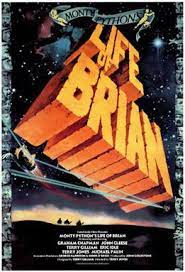


 About Things That Matter