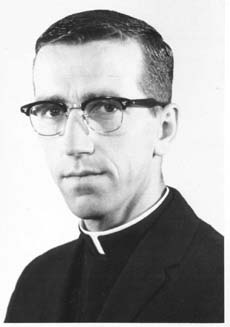
80th Birthday Reflections Part 3: Roman Disorder

The Anselmo, where I studied my 1st 2 years in Rome

I knew NOTHING about politics when I arrived in Rome. I knew little about the world. I knew even less of women. All of that was about to change.

Understand that in all those spheres, I had been cooped up in the seminary hothouse since I was 14. For years, we had no access to newspapers. And it wasn’t till after Vatican II that we were even allowed to watch TV news each night. As a result, I was very uninformed about a world that I was taught to consider not worth caring about. (After all, we were here on this planet to pass a test and prepare for heaven.)

With the Columbans, the saving grace was that we returned home each year for Christmas and summer vacations. So, the divorce from the world wasn’t complete. My family [my loving mother and faithful father (a commercial truck driver), my brother and two sisters] kept me more or less sane and in touch. The six of us lived in a tiny two-bedroom house that had my sisters sleeping in the same room and my brother and me sleeping on a pull-out couch in the living room. (I’m sure life was easier for them all when I wasn’t taking up so much space.)

During summer vacations, I worked for a couple of years in a gas station learning about cars and mechanics. Then, when I was 18, I took a summer job at a golf course not far from my family home now in Warrenville, Illinois. I worked there on the grounds crew every summer till I was ordained – and even a little bit afterwards.

Working at Arrowhead Golf and Country Club was a delight. Sometimes I could hardly believe that I was getting paid for that kind of labor (cutting grass, laying sod, felling trees, changing cup locations on the greens, working on small engines . . .) in such an idyllic setting. The job also allowed me to play golf for free. That was fun, but despite decent athletic ability, I was never able to master that highly frustrating game. (I continue to work on that.)

As for women. . .  They represented completely forbidden territory. “Custody of the eyes” was the order of the day. However, I do remember being fascinated by one of the girls who worked at Arrowhead’s lunch counter. I made sure to order from her during our grounds crew’s lunch half-hours each noon. I recall that she was also to be present at a year-end party I was invited to. But I decided for that reason not to attend.

With that kind of background, I flew off to Rome in 1967 taking up residence in the Columban house on Corso Trieste 57. Suddenly I found myself in a house with about 15 other young student-priests. They came from Ireland, Great Britain, Scotland, Australia, Tasmania, and New Zealand; two of us were from the U.S.

Our house was headed by an Irish Columban rector and his Irish assistant. In residence too was a retired Irish bishop from Vietnam. (Such recollections make me recall that most of my teachers over my 12 seminary years spoke with brogues – quite understandable, since the Society of St. Columban had been founded in Ireland.)

My first impressions of my new community were that its members were much more sophisticated and better-informed in every sphere than I was. These guys were good. Conversations revealed that they even knew more about U.S. history and politics than me.  I found that embarrassing.

So, I started reading – no, I started studying – Time Magazine. I couldn’t wait for each week’s edition. Eventually, I won one of our periodic light-hearted quizzes we all took (and joked about) on current issues.

As for academic life in Rome, I was soon faced with an important decision – which of the Roman theological universities to attend? Ironically, even though seminary education had required four extra years of scriptural and theological study following “graduation” from college (with a bachelor’s degree in philosophy) we had nothing to show for those added four years – no master’s degree, nothing. Instead, I suppose, our degree was ordination itself – something (in the eyes of the church) much more valuable than a mere graduate degree.

In any case, before I could enroll in moral theology courses at the prestigious Academia Alfonsiana, I had to get the equivalent of a master’s degree (a licentiate) in systematic theology. The question was where?

I had two choices. One could get me the degree in one year at a school called the Angelicum. The other option was to study for two years at what I learned was (at that time) the best school in Rome – even better than the gold-standard Gregorian Institute – viz. the Atheneum Anselmianum. I chose the latter, even though in those early Roman days, I wanted to get back to the states as soon as I could. (Little did I know that I’d soon be wanting to extend, rather than shorten my time in Rome. Even my eventual five years there would seem far too short.)

If I thought I was out of my depth when I met my housemates in Rome, imagine my feelings at the Anselmo.  Classes were in Latin. Students were fluent in Greek; they referenced New Testament texts in the original language. And if I was intimidated by the theological, classical, and general knowledge of those on Corso Trieste, that was nothing compared with the international students I was thrown in with there on Rome’s Aventine Hill. They came from all over the world – from every continent. I was especially impressed by the Italians, Spaniards, Africans, Indians, and Latin Americans. In seminars, some were so fluent (in Italian, English, Latin, Greek, and of course their native tongues) that it sounded like they had written down everything they said before speaking. I was really impressed (and frankly intimidated).

And my professors!  Wow. They were so inspiring, even in Latin. Two in particular, both German, impressed me greatly. (I continue to remember them prominently in my prayers each day and I find myself tearing as I write these words.) One was Magnus Lohrer; the other Raphael Schulte.  I’m so indebted to them for the knowledge, passion, interest, and joy in learning that they communicated and transmitted. I decided that I wanted to be like Magnus Lohrer!

Significantly in terms of this account of order and disorder, my licentiate thesis centralized the topic of “Ecclesia Semper Reformanda” – the always necessary reformation of the church.

(More about Rome and its welcome disorder next time.)

80th Birthday Reflections Part 2: Disorder Enters My Highly Ordered Life

In 1962, disorder began to enter my life. Its cause was the Second Vatican Council started by Pope St. John XXIII. Out of the blue, it seemed, he decided to reform the Catholic Church – to “open some windows,” he said to the modern world. And with that decision, my life was changed forever – but not overnight.

As a basically conservative person, I initially resisted Vatican II – or at least some aspects of it. I liked the church the way it was. Everything there was so clear and certain.

But now, they were introducing English to replace the Latin Mass. The priest celebrant was turned around and faced the community. Guitars replaced organs. And the music became folksier and less solemn. All of that was fine and rather exciting.

But then, colleagues of mine became critical of things like our nightly Benediction of the Blessed Sacrament, priestly vestments, and Thomas a Kempis’ The Imitation of Christ. (I loved that book.) The seminary chapel was radically remodeled so that the tabernacle now moved to the side, looked like a huge treasure chest. It had been designed, we were told, by a Jewish artist. I wondered, “How can someone who doesn’t share our faith in the Eucharist create art that reflects centuries of reflection on Jesus’ Real Presence in the eucharistic elements?” I remember writing a long screed in defense of The Imitation of Christ.

That was at the beginning. But gradually, I became persuaded. More progressive and better-read classmates and elders influenced me. One of them prevailed upon the dean of students to have our library subscribe to The National Catholic Reporter (NCR). It was fascinating.

But most influential of all were my classes in Sacred Scripture and theology. Our scripture professor was Eamonn O’Doherty. He was wonderful. He taught us about text criticism, form criticism, redaction criticism and more. For four years and line by line we went through biblical texts that I came to see as richer than my literalist, fundamentalist mind was ever able to imagine. What I had learned about poetry from Fr. Griffin when I was a college freshman and sophomore enabled me not only to understand what the scholars were saying, but to find my own textual meanings as well.

And then there were the theology classes. Their focus changed from preoccupation with bland traditional manuals written in Latin to actual books by controversial authors like Teilhard de Chardin, Bernard Haring, Hans Kung, Ivan Illich and Edward Schillebeeckx. I remember being greatly impacted by the latter’s Christ the Sacrament of the Encounter with God as we studied it under the guidance of another of our great professors, John Marley. Fr. Marley was a liturgist who helped us all develop sensitivity to the history and profound meanings associated with public worship and sacrament.

We were reading non-Catholic authors as well – something completely unheard of before John XXIII. I found Paul Tillich especially powerful.  I actually discovered sympathy with the Great Reformers we had previously been taught to dismiss and even despise. I read everything I could from the psychologists Erich Fromm, Rollo May, and Carl Rogers.

Yes, my ordered, predictable world was coming apart. Along with my seminary colleagues (and professors!!), I was questioning more and more – accepted doctrines such as papal infallibility, moral teachings on contraception, abortion, the uniqueness of the church itself, the role of priests, and, of course, mandatory priestly celibacy.

I remember reading an article in the NCR about “reluctant celibates.” Those were actual and would-be priests who felt called to the priesthood but unenthusiastically accepted the celibacy requirement without having an actual vocation to the celibate state.  

I feared I fell into the reluctant celibate category. Before my ordination to the diaconate, I discussed this with my spiritual director. We agreed that it was probably just a matter of pre-ordination jitters.

So, come December 22, 1966, I was finally ordained along with nine classmates – three of whom I had been with since my first year in the high school seminary. After 12 seemingly interminable years, I had finally reached my goal. However, by now I was a Vatican II product. The new theology and my scripture studies influenced every aspect of my priesthood from my homilies and the way I celebrated the Eucharist. Eventually, it shaped the way I dressed and the length of my hair; I even flirted with a moustache and beard.

I was at last on fire academically. During my final semester in Milton, I was honored with a request to teach an adult education class in a Boston parish. The topic was Vatican II and the Bible. I relayed to my class of 30 adults – some twice my age and more – exactly what I was learning under Eamonn O’Doherty. They loved it. The class was a great success. I was discovering that I could teach. And I loved that too.

So, I was delighted when my first priestly assignment was not to Korea, the Philippines or Japan, but to continue my studies in Rome. My Columban superiors wanted me to get a doctorate in Moral Theology there, so I could come back to Milton and teach in the seminary.

Rome still smoldering from the conflagrations set by Vatican II (’62-’65), held wonderful and unexpected surprises that would continue the disorder that I (and the entire world at the time) was coming to embrace.

[Next installment (still on disorder): Rome challenges me to grow up in every sphere – intellectual, political, and personal.]

My Recent Interview on the Rob Kall “Bottom Up” Radio Show

Here’s an interview posted last week by Rob Kall on OpEdNews, where Rob is the editor in chief and where I’m now serving as a senior editor. The exchange took place at the beginning of the Coronavirus pandemic. As you’ll see, I’m speaking from my basement office in our home in Westport, Connecticut. (I’m thinking that I should do something to make the venue seem less like a basement. . .) Anyway, it’s the third time Rob has had me on his show.

Weaponizing Cuba against Bernie: Childish Thinking and A Family Experience

They’re at it again – red-baiting Bernie Sanders. Because the senator from Vermont has (like President Obama) recognized the educational achievements of the Cuban Revolution, he’s being attacked as an apologist for brutal dictatorships everywhere. The syndrome played out in yesterday’s episode of “The View,” and last night in the South Carolina debate.

It’s all so tiresome – so 20th century, so chauvinistic.

It also contradicts my own personal experience of Cuba over many years of visiting the island, where Fidel Castro remains as revered as George Washington here in the United States. By most on the island, he’s considered the father of his country.  (I remember a U.S. embassy official in Cuba lamenting to my students that if free and fair presidential elections were held there, Castro would win “hands down.”)

However, more recently still, such demonization of Cuba and Fidel Castro flies in the face of an experience my daughter and her husband had of the Cuban healthcare system just two weeks ago. I want to share that story with you. It sheds light not only on Cuba and Castro, but on Medicare for All.

But before I get to it, consider the attacks on Mr. Sanders.

Forbidden Thought

According to the simple-minded received wisdom here in the U.S., no one is allowed to tell the truth about a designated enemy. That is, you can’t say anything good about any government that refuses obedience to U.S. empire. And that’s true even if, like Cuba, the said government provides enviable education and childcare, or if health services are free there for everyone.

Meanwhile, to say anything bad about a “friend” – apartheid Israel for example – is absolutely forbidden. As an international outlaw, Israel can transgress UN resolutions against its illegal occupation of Palestinian territories. It can even kill with abandon peaceful protestors including Palestinian children, the elderly and disabled. However, to criticize it for doing so – to propose boycotting, divesting, or sanctioning Israel’s internationally proscribed occupation of Palestinian territories – is not only unacceptable but actually forbidden by law.

(In case you haven’t noticed: no debate participant has or will ever accuse anyone on stage of supporting a “brutal dictatorship” in Israel – or in Saudi Arabia, Egypt, Brazil, Honduras, Hungary, Turkey . . .)

I mean, instead of thinking critically or just recognizing undeniable facts, U.S. citizens and candidates for public office are virtually commanded to see and describe the world in terms of good/bad, black/white, friends/enemies, vendors/customers. To make even unsubtle distinctions in those regards is beyond the pale. In terms of electability, its’ the kiss of death.

To put it kindly, such thinking is not only simple-minded; it is childish. It’s insulting. It dumbs us all down and makes us stupid pawns of publicists and propagandists supporting reflexive U.S. ideology.

As a result of such stupidity, Bernie Sanders had to limit his “defense” of Fidel Castro to acknowledging the virtues of teaching people to read and write.  He could easily have added points about free education through university level and praise for Cuba’s medical system that provides healthcare for everyone on the island – including visitors from other countries. However, to do so would have opened him to attacks alleging that his free college tuition and Medicare for All programs will inevitably lead to the Cubanization of America.

Not even Bernie Sanders has that much courage.

Healthcare in Cuba: A Recent Experience

And that brings me to the personal story I promised earlier. Just two weeks ago, it involved my daughter, Maggie, and her husband, Kerry as they led a weekend excursion to Cuba.

The junket was the payoff of a fund-raising project for our local Montessori school in Wilton, CT which our daughter’s five children have attended. At an auction held for its benefit, Maggie and Kerry had “sold” the trip to several parental teams. That was last fall.

So come early February, everyone went off to Cuba, even though Maggie was feeling poorly from the outset.

By the time the group arrived in Havana, our daughter was experiencing severe stomach pain that literally brought her to her knees. The next thing she knew, she was being whisked off in a cramped taxi to the Clinica Central Cira Garcia, Havana’s “hospital for tourists.”

There, admissions officials checked very carefully to see that Maggie and Kerry had the required health “insurance” which is included in the purchase price of airline tickets to the island. Then, following an x-ray, our daughter was informed that she was having an appendicitis attack and that an immediate operation was imperative.

The long and short of it is that the laparoscopic appendectomy took place, that hospital care was excellent, and that it cost her and her husband not a dime for the operation or for her five days in the hospital. (They were however charged $50 for each of the two nights Kerry stayed overnight there, and a few dollars for laundry.) In other words, the operation had been paid for by the airline ticket “insurance” which was really a tax on all travelers pooled to meet the cost of health emergencies like the one I just described.

The same procedure in the United States would have cost on average $33,000.

Conclusion

The point here is twofold. The first is that “Americans” need to exit the 20th century once and for all.

Cuba is not our enemy. In fact, it never was until U.S. policy (intolerant of people-friendly socialism) made it so. Moreover, Fidel Castro remains a hero to most Cubans and to most informed people in the Global South. His “repressive” policies were absolutely necessary to protect his country from actual U.S. invasion (e.g. the Bay of Pigs in 1961), from numerous CIA attempts to assassinate him, and from a 60-year long embargo intended to undermine Cuba’s economy, including its health and education programs.

To understand that point, think about our own country’s response to 9/11. Think about the Patriot Act, about resulting restrictions on travel, about Guantanamo, Abu Ghraib, imprisonment without trial, torture of suspected terrorists, and extra-judicial drone killings even of U.S. citizens. Think about the panopticon surveillance systems uncovered by Edward Snowden. Think about encouragement to inform on neighbors and others.

Were those responses to 9/11 brutal and repressive? No doubt, they appeared that way to their victims. But undeniably it’s what governments do under threat from external enemies and their internal agents. In that regard, the U.S. is no different from Cuba. George W. Bush, Trump – or Obama for that matter – are no different from Castro, except in their wider swath of brutality.

The second point is that Cuba’s social system as experienced by our daughter is unprecedented in the impoverished world of former colonies. No other victim of colonialism has been as committed to caring for its people, its children, or its environment as Cuba. But instead of being rewarded for such achievements, it is consistently vilified by U.S. politicians and a mainstream media stuck in Cold War thinking.

Thank God that the Sanders revolution invites us to leave all of that behind. His opponents should follow suit.  

In Memoriam Rev. John Rausch (1945-2020)

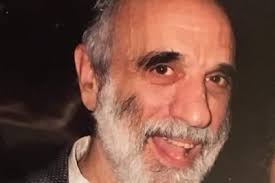
Peggy and I were shocked Sunday night when we received the stunning news that Fr. John Rausch, a very dear friend of ours, had died suddenly earlier in the day. John was a Glenmary priest whom we had known for years. He was 75 years old.

At one point, John lived in a log cabin below our property in Berea, Kentucky. So, we often found ourselves having supper with him there or up at our place. John was a gourmet cook. And part of having meals with him always involved watching his kitchen wizardry while imbibing Manhattans and catching up on news – personal, local, national, and international. Everything was always interspersed with jokes and laughter.

That’s the kind of man John was. He was a citizen of the world, an economist, environmentalist, prolific author, raconteur, and social justice warrior. But above all, John was a great priest and an even better human being full of joy, love, hope, fun, and optimism.

Yes, it was as a priest that John excelled. Everyone who knew him, especially in the progressive wing of the Catholic Church, would agree to that. Ordained in 1972 [just seven years after the closure Vatican II (1962-’65)] John never wavered in his embrace of the Church’s change of direction represented by the Council’s reforms.

According to the spirit of Vatican II, the Church was to open its windows to the world, to adopt a servant’s position, and to recognize Jesus’ preferential option for the poor.  John loved that. He was especially fervent in endorsing Pope Francis’ extension of the option for the poor to include defense of the natural environment as explained in the pope’s eco-encyclical, Laudato Si’. (To get a sense of John’s concept of priesthood and care for the earth, watch this al-Jazeera interview that appeared on cable TV five years ago.)

His progressive theology delighted John’s audiences who accepted the fact that Vatican II remains the official teaching of the Roman Catholic Church. So, as two successive reactionary popes (John Paul II and Benedict XVI) subtly attempted to reverse conciliar reforms, and as the restorationist priests and bishops they cultivated tried mightily to turn back the clock, John’s insistence on the new orthodoxy was entirely refreshing.

I remember greatly admiring the shape of John’s homilies that (in the spirit of Pope Francis’ Evangelii Gaudium) were always well-prepared and followed the same pattern:

  1. He’d begin with two or three seemingly unrelated vignettes involving ordinary people with names and usually living in impoverished Appalachian contexts.
  2. For the moment, he’d leave those word-pictures hanging in the air. (We were left wondering: “What does all that have to do with today’s readings?”)
  3. Then, on their own terms, John would explain the day’s liturgical readings inevitably related to the vignettes, since Jesus always addressed his teachings to the poor like those in John’s little stories.
  4. Finally, John would relieve his audience’s anxiety about connections by perfectly bringing the vignettes and the readings together – always ending with a pointed challenge to everyone present.

The result was invariably riveting, thought-provoking and inspiring. It was always a special day whenever Fr. John Rausch celebrated Mass in our church in Berea, Kentucky.

Nevertheless, John’s social justice orientation often did not resonate with those Catholics out-of-step with official church teaching. These often included the already mentioned restorationist priests and bishops who harkened back to the good old days before the 1960s. Restorationist parishioners sometimes reported Fr. Rausch to church authorities as “too political.”

But Fr. Rausch’s defense was impregnable. He was always able to appeal to what he called “the best-kept secret of the Catholic Church.” That was the way he described the radical social encyclicals of popes from Leo XIII’s Rerum Novarum (1891) through Pius XII’s Quadragesima Anno (1931), Vatican II’s Gaudium et Spes (1965), and Pope Francis’ Laudato Si’ (2015).

John was fond of pointing out that all of those documents plus a host of others were consistently critical of capitalism. They favored the demands of working classes, including living wages, the right to form labor unions, and to go out on strike. Other documents were critical of arms races, nuclear weapons, and modern warfare in general. “You can’t get more political than that!” John would say with his broad smile.

All that perseverance on John’s part finally paid off when his local very conservative bishop was at length replaced by a Franciscan friar whom I’ve described elsewhere as “channeling Pope Francis.” I’m referring to John Stowe whose brown-robe heritage had evidently shielded him from the counter-reforms of the two reactionary popes previously mentioned.

When Bishop Stowe assumed office, he evidently recognized John as a kindred spirit. He respected his knowledge of Appalachia and his desire to connect Church social teachings with that context.  So, the new bishop asked John to take him on an introductory tour of the area. John was delighted to oblige. He gave Bishop Stowe the tour John himself had annually led for years. It included coal mines, the Red River Gorge, local businesses, co-ops, social service agencies, local churches, and much more. John became Bishop Stowe’s go-to man on issues involving those represented by the experience.

But none of that – not John’s firm grounding in church social teaching, not his success as a liturgist and homilist, not his acclaimed workshops on economics and social justice, not his long list of publications, nor his advisory position with Bishop Stowe – went to John’s head.

He never took himself that seriously. He was always quick with the self-deprecating joke or story.

In fact, he loved to tell the one about his short-lived movie career. (I’m not kidding.)  It included what he described as his “bedroom scene” with actress Ashley Judd. It occurred in the film, “Big Stone Gap.” I don’t remember how, but in some way, the film’s director needed a priest for a scene where Ms. Judd was so deathly ill that they needed to summon a member of the clergy. John was somehow handy. So, he fulfilled the cameo role playing himself at the bedside of Ashley Judd. (See for yourself here. You’ll find John credited as playing himself.) Right now, I find myself grinning as I recall John’s telling the tale. It always got a big laugh.

Other recollections of John Rausch include the facts that:

  • For a time, he directed the Catholic Committee on Appalachia.
  • He also worked with Appalachian Ministries Educational Resource Center (AMERC) introducing seminarians to the Appalachian context and its unique culture.
  • He published frequently in Catholic magazines and authored many editorials in the Lexington Herald-Leader. John’s regular syndicated columns reached more than a million people across the country. 
  • He had a strong hand in the authorship of the Appalachian bishops’ pastoral letter “At Home in the Web of Life.”
  • He led annual pilgrimages to what he called “the holy land” of Appalachia as well as similar experiences exploring the culture and history of the Cherokee Nation.
  • He was working on his autobiography when he died. (I was so looking forward to reading it!)

More Personally:

  • He graciously read, advised, and encouraged me on my own book about Pope Francis’ Laudato Si’.
  • I have fond memories of one Sunday afternoon when he invited me to a meeting in his living room with other local writers. We were to read a favorite selection from something each of us was working on.
  • John often came to my social justice related classes at Berea College to speak to students about Appalachia its problems, heroines and heroes. (Of course, to my mind, John ranked prominently among them.)
  • He gave a memorable presentation along those lines in the last class I taught in 2014. John was a splendid engaging teacher.

Peggy and I are still reeling from the unexpected news of this wonderful human being’s death. For the last day we’ve been sharing memories of John that are full of admiration, reverence, sadness – and smiles. It’s all a reminder of our own mortality and of the blessing of a quick, even sudden demise.

Along those lines, one strange thought that, for some reason, keeps recurring to me is that John’s passing (along with that of another dear friend last month) somehow gives me (and John’s other friends) permission to die.

I don’t know what to make of that. It might simply be that the two men in question (like Jesus himself) have gone before us and shown the way leading to a new fuller form of life. Somehow, that very fact makes the prospect of leaving easier. Don’t ask me to explain why or how.

Thank you, John.   

In Memoriam: John Capillo

Last week Peggy and I received the very sad news that our long-time friend, John Capillo, had died suddenly on New Year’s Eve. Mercifully, there was no long illness. Stomach pains brought him to the emergency room. He was diagnosed with pneumonia, suffered septic shock, and suddenly was gone. He was 76 years of age.

For us, it was John’s second death. Years ago, Peggy and I said goodbye to him as he lay in coma in a Lexington (KY) hospital. We laid hands on him as we left his bedside then and thanked him for all his gifts to us and the world. But afterwards the unexpected happened. He was given a reprieve; he came back from the dead to live among us for several more years. It seemed entirely miraculous.

In any case, this time it’s final. And our world won’t be the same without this extraordinary man. He was a priest, a prophet, a teacher, storyteller, and a social justice warrior of astonishing accomplishment.

I first met John Capillo 40 years ago, when he and Terri and their new baby, Maureen, moved to Berea, Kentucky. One Sunday, the three of them showed up for Mass at St. Clare’s Church, where Peggy and I had been parishioners since our own arrival in town 5 years earlier. By then, we had our own daughter, Maggie, who was just about Maureen’s age.

Immediately, I learned that, like me, John had been a priest – ordained in New York’s Brooklyn archdiocese. That did it: we soon became fast friends – as did Maggie and Maureen. Peggy and Terri also shared a deep friendship.

At the beginning, John’s day job was carpentry. He had learned the trade during his first priestly assignment in Puerto Rico (or was it Guatemala? I forget.) John had showed up there to help rebuild after a hurricane or something. However, (as he told me early on) when he declared his do-good intention, an old man took him aside and said, “Padre, we know how to build houses. We need you to be our priest.”

And so, John did just that with the enthusiasm, commitment and insight that characterized his entire life. However, his desire to make the gospel relevant moved him to take chances with liturgy and edgy homilies that rendered him suspect to his superiors. The resulting conflicts with authority eventually drove him from the priesthood and into family life.

Nevertheless, John never did give up carpentry or building. One Sunday shortly after arriving in Berea, he came to Sunday Mass with bandages on his left hand. The previous week, he had cut off a finger with his Skill Saw.

Undeterred, at one point, he built a solar addition onto our house in Buffalo Holler about 5 miles outside Berea’s city limits. The project was designed by Appalachian Science in the Public interest. It caught John’s imagination, because, like Peggy and me, he and Terri were going through a “back to nature” phase. He thrived on environmental harmony, innovation, recycling and simple living.

In fact, years later John built an even more innovative structure for himself. It was made entirely from strong woven-plastic bags filled with dirt. John had done a study on the process and technology. And soon he was filling the required bags and carefully laying out the building’s perimeter. Layer after layer created outside walls, interior divisions, and then a roof.

Everything was laid out carefully to take advantage of the sun, but also to orient the house towards sacred energies John perceived as housed in the east, north, west, and south. He wanted to steep himself deeply in such emanations, even while asleep. The whole project expressed John’s deep and never-abandoned desire for enlightenment and unity with God.

Yes, I saw John as a kind of saint. He was. I’ve met few people like him – always on point, never caught up in trivialities, deeply interested in meaning, and counter-cultural to a fault. That’s the way prophets are.

That’s the way John was. He cared little about externals. His diet was simple; he always ate what was set before him. He didn’t drink liquor. His beard was scruffy, his hair unkempt, his clothes always nondescript. But his soul was absolutely luminescent.  His laugh was raucous and full of joy. His loud Ha-Ha’s punctuated every story he ever told.

And he told many. In fact, he considered storytelling his calling and avocation. He studied its technique. And he always used that skill to talk about things that matter – as explained in the books he devoured as the voracious reader he was. John was an inveterate book clubber. He also read my blog, commented on it often, and frequently had us talking shop at Berea Coffee and Tea. Conversations always revolved around God, politics, philosophy and family.

But John was no armchair philosopher. He was a fierce activist on behalf of El Salvador during Central America’s troubled 1980s. As he put it, he “went to school” there – learning from the people during his frequent visits about the destructive role U.S. policy played not only in Salvador, but throughout the colonial world of Latin America, Africa, and South Asia.

John was a deeply, deeply critical thinker. At one point, he spent a month in El Salvador with Peggy and her class of Berea College students as they worked with local residents struggling to overcome the disastrous effects of U.S. policy.

John’s greatest activist accomplishments came after he joined our mutual friend, Craig Williams’ Kentucky Environmental Foundation (KEF). It was and remains a grassroots organization committed to environmental justice. KEF’s main focus became delivering Berea’s Madison County from arrogant U.S. Army plans to dispose of World War II chemical weapons containing mustard gas and other genocidal poisons. The Army had planned to simply burn it all in a thoughtless incinerator near our homes, schools and local businesses.

However, with John’s help, KEF stopped the planners in their tracks. KEF mobilized the entire county and state to prevent that particular disaster from happening. It actually defeated the U.S. Army! Eventually, KEF linked up with similarly victimized communities throughout the United States and the world to work for and celebrate analogous accomplishments.

It was all truly heroic. And John was a huge part of all that. For years, KEF was his final regular job. And in that capacity, he mentored numerous Berea College students including our own daughter, Maggie, who had the privilege of working closely with him and Craig as a student-volunteer.

Here’s a list of some other ways I experienced John as activist, prophet, teacher, and friend:

  • Any of us organizers and educators could always count on John to attend and participate in meetings of any kind, anywhere if they addressed issues of spirituality, activism, critical thinking and/or critical living.
  • He was an advocate and friend of Berea’s and Madison County’s large Hispanic community often working as a translator for its members in court and in social services offices.
  • He was a frequent guest in my own (and Peggy’s) Berea College classes where he edified and provoked students with his informative stories and explanations about our country’s Central American wars and about the environmental dangers of incineration. He was so effective with students.
  • For years, John was a faithful and active member of the Berea Interfaith Task Force for Peace, which during the ‘80s was organized around nuclear disarmament and opposition to our government’s tragic interventionism in Nicaragua and El Salvador.
  • One January, the two of us taught a month-long Berea College course on environmental justice. The course took place in Alabama, where another U.S. Army incinerator threatened the local mostly African American community. The offering was called “Taking on the Military Industrial Complex.” You can imagine the conversations John and I had in the process.
  • Years later, John joined Peggy and me in Oaxaca for a month-long course with Mexico’s Gustavo Esteva — himself an extraordinary critical thinker – who deeply influenced so many of us through his seminars, lectures, prophetic example and books like Grassroots Postmodernism. John loved Gustavo.
  • John was there for me when I tried to start a home church.
  • He visited me at our lake house in Michigan last summer. We spent the entire afternoon on our back porch talking of our usual things – family, politics, church, theology, books. John was extraordinarily proud of his four children and of his grandchildren. I treasure that memory.

As I said, John Capillo was a saint. He was one of my closest friends. Unfortunately, he won’t be coming back from the dead this time (physically, that is). Peggy, Maggie and I will miss him. The world is poorer for his absence.

Put the Brakes on the 5G Revolution Before It’s Too Late

Over the last year, since we’ve moved to Westport, CT, I’ve been an active member in a group of retired men. It’s somehow associated with the YMCA and is catchily called “The Ys Men.” Most of the members are former CEOs, lawyers, artists, scientists, academicians, small businessmen, local politicians, and otherwise smart people and community leaders. As such, they represent the epitome of community wise men.

The group has a membership of over 400. Over 200 of them show up for weekly Thursday morning meetings, where we enjoy coffee, donuts, time to meet and greet, and invariably have outstanding speakers. The Ys Men also sponsor many activities including golf, a book club, tennis, bocce, pickle ball, sailing, music appreciation (jazz and classical) and outings to restaurants, theaters, museums, and sporting events. It’s great fun.

Since joining, I’ve been part of a Current Events Discussion Group that meets every other Monday from 8:30 a.m. to 9:45. Usually about 50 men show up. We’ve unpacked issues like the war in Syria, China’s Belt and Road initiative, France’s Yellow Vest movement, and developments in India and Turkey. I always try to contribute to the discussion. At the end of each meeting, participants suggest and vote on the topic for the gathering to follow.

Last week, I proposed that for the November 18th meeting, we discuss a film I had recently seen “5G Apocalypse: Extinction Event.” And my motion carried. So, in less than two weeks, we’ll discuss what I consider one of the most disturbing documentaries I’ve ever come across. You can access it here. What follows is the result of viewing the film several times and reading related material. It’s made me skeptical about the 5G rollout.

The Film Itself

“5G Apocalypse: Extinction Event” addresses the advent of the Fifth Generation (5G) of cell phone technology, which it portrays not only as a severe health threat, but as a menace to our freedom as citizens of a constitutional democracy.

The documentary actually makes three arguments. The first is that 5G technology even as presented by industry and government represents a severe threat to human and environmental health. The second is that those same representations are false; 5G technology emits not only supposedly harmless radio waves, but undeniably harmful radar and microwaves far beyond acceptable levels. The documentary’s third argument is that such emissions secretly generated from s.m.a.r.t. products are ultimately weaponized for purposes of crowd-control – to track people’s movements and subdue them in case of insurrection.

In developing those points, “Extinction Event” presents on the one hand the pro-5G testimony of Federal Communications Commission chairperson, Tom Wheeler, his successor, Ajit Pai, as well as other spokespersons from corporations such as Verizon and Motorola. On the other hand, it offers damning critique from a long array of scientists, military personnel, investigative journalists, politicians, and activists calling attention to the extreme dangers of 5G technology.

The Apparent Debate

As presented in the film, the proponents of the new technology stand united in fast tracking its implementation. We are in a race, they argue, with China, India, and the European Union for getting on top of this latest communications phenomenon. If our competitors (especially Chinese) prevail, it will mean we have ceded to foreigners the capacity to dominate the globe not only economically, but politically.

However, if successful with their proposed rush to market, Americans instead of the Chinese, Europeans, Indians or Russians will emerge in the dominant position just referenced. But, according to Wheeler, Pai and industry spokespersons, success hinges on the government suspending its regulatory power and upon cutting through “red tape” that would otherwise hinder the new technology’s rollout. Here “red tape” refers to delays caused by human and environmental impact studies.

In other words, industry leaders’ haste to secure competitive advantage rules out any government oversight as well as public debate about health and surveillance implications of 5G. One advocate even suggests suspension of the Tenth Amendment of the U.S. Constitution, which assigns all (regulatory) powers to the states or people unless expressly delegated to the Federal Government.

In exchange for such laissez-faire measures, industry representatives promise a utopian future of high-speed internet, enhanced global connections – and billions of dollars in profit for the communications giants.

By way of contrast, critics of the new technology warn of an impending apocalypse. Hundreds of peer-reviewed studies, they say, indicate that 5G technology will:

  • Install cell towers and antennas at the rate of 250 per square mile exposing every inch of the earth to harmful radiation 100 times that of current exposure
  • Cause cellular stress, increased risk of cancer, genetic damage, reproductive issues, memory loss, and Alzheimer’s syndrome
  • Threaten to kill pollinators such as bees and to render the earth’s very soil infertile
  • Change the migratory patterns of birds
  • Make weather predictions more difficult
  • Dwarf the threat to human health represented by tobacco and cigarettes

Of course, the cigarette analogy recalls for 5G resisters the power of harmful industries to hire and mobilize scientists, academicians and the mainstream media to advance “alternative facts” contradicting the alleged consensus of their counterparts. In the case of the 5G controversy, critics point out, such dissenting studies generally appear in the mainstream media alongside ads sponsored by Verizon, AT&T, and other phone giants with vested interests not only in this new technology, but in selling it to an unsuspecting public.

For instance, in May of this year, The New York Times published an article by William Broad entitled “Your 5G Phone Won’t Hurt You but Russia Wants You to Think Otherwise.” As its title indicates, the piece advanced a theory that 5G concerns are part of a Russian plot to secure advantage for their version of 5G technology in the global marketplace. Accordingly, Broad attacked RT America, the U.S-based TV news channel funded by the Russian government, as though it were the major source raising concerns about the dangers of 5G.

The Times report goes on to identify critics of 5G as “a few marginal opponents” who mistakenly identify radio waves as “radiations.” According to Broad, opposition criticism does not appear in reputable journals, but in “little-known reports, publications and self-published tracts, at times with copious notes of dubious significance.”

Broad, however, does not mention the contrary position divulged in The Scientific American. Much less does he reference the longest and most thorough study of the question performed by the National Toxicology Program which is run by the U.S. Department of Health and Human Services. After two years of investigation, the latter concluded that there is “some evidence” of adverse health effects caused by 2G and 3G cell phones. Presumably, 5G technology would provide further evidence.

Ignoring all of that, Broad argues that radio waves used in cell phones are relatively harmless. This is because they lie at the end of the electromagnetic spectrum directly opposite the harmful rays, such as ultraviolet and x-rays, which in high doses can indeed damage DNA and cause cancer.

In response, 5G critics argue that Broad’s rationale too easily dismisses not only serious studies, but also the undeniable fact that radio waves do in fact represent “radiation.” And while such emissions do come from radio waves at the more benign end of the electromagnetic spectrum, they are not without negative health effects – as already noted by Rudolf Steiner in 1924. Moreover, as emitted from portable phones and ubiquitous antennae, cell phone radiation takes place very close to phone users and is backed up by powerful micro and macro towers. As a result, there is a lot more cumulative radiation.

In fact, according to “5G Apocalypse,” international standards for acceptable levels of cell phone radiation are already in place. Cell phones need 0.2 billionths of a microwatt per centimeter squared to operate at all. At 0.05 microwatts per centimeter squared, psychologists have noted behavioral problems in children aged 8-17. The level of 0.1 already enters an area of “extreme concern.” At 4.0 billionths of a microwatt, cell phone users exhibit difficulties with memory and learning. Cellular DNA damage occurs at 6.0. Smart meters reach a level of 7.93 billionths of a microwatt per centimeter squared.

With all of this in mind, Switzerland, Luxemburg, and Lichtenstein cap permissible levels at 9.5. The level is 10 in China, Poland, and Russia. Nonetheless, the United States and Canada allow levels of 600-1000 microwatts per centimeter squared – i.e. tens of thousands of times higher than those known to adversely affect human health.      

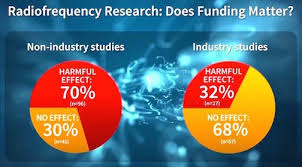
In the end, Broad’s argument seems vulnerable to accusations of having selected its data from those industry studies whose conclusions (as noted in “5G Apocalypse”) differ sharply from non-industry research regarding the harmful effects of radio-frequency emissions. As pictured below, seventy percent of non-industry studies find radio-frequency radiation harmful. In contrast, 68% of industry studies find it harmless.       

/var/folders/h8/h2q627nn53d1t08030blvf140000gn/T/com.microsoft.Word/Content.MSO/3A855E5D.tmp

The Hidden Debate

But that’s not the end of the debate outlined in “5G Apocalypse.” Far from it. Instead, there’s another dimension that is largely ignored in the mainstream media. It involves deliberate falsification of the nature of radiofrequency emissions from the proposed system along with sinister intent on the part of government authorities.

To begin with, the 5G radiations in question do not issue merely from relatively benign radio waves (which, as indicated above have their own problems). They also include radar and intense microwaves expressly intended for military operations against rebellious civilians.   

In fact, the system’s technology is directly modeled on military microwave counterparts originally intended for crowd control and psychological warfare. As portrayed in “Extinction Event,” 5G technology enables all police operations requiring an electromagnetic base to be executed with greatly increased efficiency. This includes constant surveillance and crowd dispersal. The video even goes so far as to describe 5G as a weapons system masquerading as a modern efficiency technology.

As such, the film argues, 5G fits neatly into the military-industrial-complex (MIC) model that Dwight Eisenhower warned against as he left office in 1961. It embodies omnipresent weapon capability available to the MIC minority to control an otherwise unmanageable majority. The technology’s omnipresence promises to send signals from stoves, refrigerators, heating units, microwave ovens, computers and printers. In other words, signals will emanate from any s.m.a.r.t. device. According to “Extinction Event,” the latter acronym should stand for “secret military armament in residence technologies.”

Conclusion

So, how are we to interpret the 5G controversy? Are the opponents of the new technology simply Luddites who reflexively oppose all technological advance? Are they conspiracy theorists in tin foil hats? The telecommunications industry and mainstream media would have us think so.

Despite their efforts however, here’s what we know for certain:

  • U.S. Government proponents of 5G technology (like the Trump administration’s FCC chairperson, Ajit Pai) have deep ties to telecommunications industry.
  • In view of its practice of incessant prevarications, the Trump administration has negative credibility.
  • Similarly, corporate America has been frequently caught in lies and cover-ups that endanger consumers (e.g. in relation to cigarettes and tobacco, climate change, and automobile safety).
  • For the sake of profit, huge corporations such as IBM, Bayer, Ford Motors, and AIG Insurance have shameful records of supporting the most virulent strain of fascism in Nazi Germany. Historically speaking, they routinely support repressive military regimes and place profits ahead of human freedom, democracy, and welfare.
  • Currently they and their counterparts have millions of dollars at their disposal to fund alternative research and sponsor unlimited articles and advertising to advance their agendas and discredit their critics.
  • Those critics have no such resources.

Besides all of that, we also know for certain that:

  • The improvement of the human condition represented by 5G technology is marginal at best. The present speed of our computers is actually quite adequate to meet human need.
  • “We” the people are not in competition with the Chinese for 5G superiority.
  • Instead, it’s the telecommunications giants whose bottom lines and quest for patents make it imperative for them to win the race for 5G control.
  • No matter who wins that race, 5G technology (if proven safe and beneficial) will eventually arrive for everyone on the planet who can afford it.
  • Enough red flags have been raised by credible scientific studies to justify further human and environmental impact studies by qualified independent researchers.
  • A whole array of cautionary scientists, activists, and political leaders are merely calling for slowing down the rush into an unknown future. In the interests of protecting human health, their grandchildren and the environment, they want further study.

Finally, those expressing caution point out that a safe alternative to 5G technology already exists. It takes the form of publicly financed fiber optics. Such alternative:

  • Buries the main source of harmful radiation
  • Requires very little energy per data packet.
  • Goes only where it is needed
  • As a result, offers a high level of privacy and safety as opposed to more hackable, omnipresent 5G arrangements
  • Is ultra-reliable
  • Moreover, a publicly financed fiber-optic alternative eliminates the market-driven “technological imperative” fueled by an imagined race for patents and profit.
  • In the final analysis, that race is the only reason for accelerating a process in dire need of further study and proper oversight.

In summary, advocates of an accelerated, unregulated 5G rollout make it sound like it’s a national imperative for “us” to beat the Chinese in some race into a promising future that will somehow exclude us if they get there first. However, history and the desire of telecommunication giants to bypass environmental and human impact studies show that they are not really concerned about our lives or those of our children and grandchildren, much less of animals and plants. On the contrary, they care principally about profit and are willing to sacrifice all the rest for a healthy bottom line. The rest of us must face the fact that it’s not “us” but multinational corporations like Verizon, Sprint, AT&T, Motorola, and T-Mobile who need to win their race for patents and billions in profits.

Instead of all this great hurry, it’s better to slow down, do the necessary study, take these momentous decisions out of the hands of profiteers, and look before we leap.  

We Baptize Our New Grandson, Sebastian Nels

Last Sunday, we had yet another baptism in our family — this one of our new grandson, Sebastian Nels. And what a beautiful event it was!

Our daughter, Maggie (Sebastian’s mother) was the MC. Sebastian’s godmothers were outstanding. One, Eden Werring, gave a beautifully sung Jewish blessing; the other, Claudine Maidique read the Gibran classic “On Children.” Rob Silvan, the music minister at our new church here in Connecticut (Talmadge Hill Community Church) led us in singing “Down to the River” (from “O, Brother, Where Art Thou”), “Swimming to the Other Side,” “The Prayer of St. Francis, and “This Little Light of Mine.”

Our son, Patrick, was here with his lovely girlfriend, Michelle. And later, we all retired to Maggie’s beautiful home here in Westport for the after-party. It featured a bluegrass band, a hot-dog food truck, and lots of good conversation and laughter. What fun!

As I remarked to Maggie, it was all perfect in its imperfection. The star of the event, however, was little Sebastian Nels. I’ve never seen a more tranquil baby. His quiet demeanor made the remarks I share below (my homily on the occasion) even more relevant. Please allow me share them with you. To begin with here are the readings:

  • LK 3: 21-22: When all the people were being baptized, Jesus was baptized too. And as he was praying, heaven was opened 22 and the Holy Spirit descended on him in bodily form like a dove. And a voice came from heaven: “You are my Son, whom I love; with you I am well pleased.”
  • LK 3:21-22: So, in Christ Jesus you are all children of God through faith, 27 for all of you who were baptized into Christ have clothed yourselves with Christ. 28 There is neither Jew nor Gentile, neither slave nor free, nor is there male and female, for you are all one in Christ Jesus. 29 If you belong to Christ, then you are Abraham’s seed, and heirs according to the promise.
  • MK 10: 13-16: 13 People were bringing little children to Jesus for him to place his hands on them, but the disciples rebuked them. 14 When Jesus saw this, he was indignant. He said to them, “Let the little children come to me, and do not hinder them, for the kingdom of God belongs to such as these. 15 Truly I tell you, anyone who will not receive the kingdom of God like a little child will never enter it.” 16 And he took the children in his arms, placed his hands on them and blessed them.

And here is the homily:

“Sebastian’s First Sermon”

Here we are yet again, gathered for yet another baptism. Having done this with Eva, Oscar, Orlando, and Markandeya, it’s now Sebastian’s turn. These experiences are always so memorable.

Of course, Sebastian knows nothing of why we’re doing this. After all, as my good friend, Guy Patrick (also a former priest), reminds us, religion really isn’t for children, much less for babies. It’s an adult thing. And when children express boredom or rebellion against going to church or religious practice, we should patiently tell them, “Don’t worry, if you’re lucky, you’ll one day ‘get it,’ maybe when you grow up. And if you don’t get it then, perhaps you will in some other life.” (At least, that’s what Guy says. I think he’s right. He usually is about these things.)

So, what’s here for adults to “get”? Today’s readings and that beautiful song, “Swimming to the Other Side,” suggest an answer. Baptism, they tell us, is about personal transformation. It’s about navigating from the world’s way of thinking to God’s way, which lies on the other side of the Jordan, where Jesus himself was baptized. It’s about swimming against the world’s current to what Jesus called the “Kingdom of God.” God’s way of thinking is 180 degrees opposed to that of the world. It’s the very definition of “the other side.”

Think about Jesus’ own baptism. As a 30-something adult, he has evidently reached a decision point about the direction of his life. As a disciple of John, he’s seeking a new course; he wants to “swim to the other side.” So, like so many others (Luke tells us “all the people” were being baptized) he presents himself for a rite of conversion performed by John the Baptist whom Luke describes as completely counter-cultural in his dress, diet, and way of speaking. [Jesus will later describe him as the greatest person who has ever lived (MT 11:11).]

Anyway, Jesus goes down to the Jordan River, is pushed beneath the water, and emerges with a new vocation. He hears a voice that tells him “You are my beloved Son.” Evidently puzzled by that revelation, the next thing he does is to go out into the desert to discover what those words might mean.

He’s on a vision quest. And there, in the desert’s heat and cold, in the company of wild beasts and scorpions, the visions come to him. Fevered from 40 days of starvation and thirst, he sees angels, devils, and fantastic possible futures. He imagines stones as bread. He’s taken to a mountain, and to the pinnacle of the temple. The thought of suicide crosses his mind. He’s shown all the kingdoms of the world. He’s presented with unlimited possibilities.

In all of this, his question is the same as ours. Which will he choose? Will it be the world’s ways of pleasure, power, profit, and prestige? Or will he instead swim against the current and live out his identity as God’s beloved son?

We all know Jesus’ decision. He chose poverty over wealth, non-violence over violence, and identification with the poor, oppressed, tortured and victims of capital punishment. Those were his decisions. They’re what his followers claim commitment to.

What a challenge to us!

Sebastian, quite naturally, understands none of that.

But that doesn’t mean that he’s disconnected from Jesus’ vision quest or that his role here is entirely passive. Quite the contrary. By merely acting like a baby, Sebastian is preaching a sermon – his first one. He’s reminding us of what Jesus discovered in the desert. He’s showing us who we are as we come from the hand of God. He’s reminding us of what’s important in life. And it’s not what the world says. 

It’s not borders or of being American. Sebastian knows nothing of such things – nothing of male privilege, or white privilege, of war, lust, politics, or the power of money.

What he does know is love. He knows that he’s entitled to food and warmth, to the simplest of clothing. He’s aware of his entitlement to care from his mother, father, siblings, grandparents, and from all those strangers who are constantly fawning over him, picking him up, and making all those strange happy sounds. In our adult language, we’d call all of those human rights.

Yes, by simply being a baby, Sebastian is preaching us a sermon. He’s saying, “Be like me.

Set aside what the world values, because those values are categorically opposed to life as those closest to its origins experience it. Swim against the current. Swim to the other side to what Jesus called the God’s Kingdom. At your deepest level, live the consciousness I experience and exemplify.” Become as little children – or as St. Paul puts it: live in a world uncontaminated by race, class, or sexual orientation. In God’s world, Paul says, there is “neither Jew nor Greek, slave nor free, male nor female.”

Of course, we don’t know if any of this will stick for Sebastian. We don’t know if in this lifetime he’ll choose to follow Jesus’ teachings. We pray that he will. But at this moment – before he forgets –  his silence couldn’t be more eloquent in reminding us of the nature of life as it comes from the hands of God! This is his first sermon. Let’s all take it all in, remember it, – and now get on with his baptism.

Unplugged for a Week Along Alaska’s Inside Passage

Just yesterday, our extended family returned from a week in Alaska celebrating a landmark birthday of our daughter. She and our son-in-law observed the occasion by treating us all to a week-long cruise in our country’s northern-most state. Here are my reflections on this never-to-be forgotten experience.
 Unplugged for a week 
In Nature’s wilderness.
We cruised Alaska’s Inside Passage
12 pilgrims (five of them small children)
Finding divine presence
Everywhere
Including games
Of Yahtzee, Go Fish,
Poker, War
And endless rounds of Monopoly.

We started out
In Petersburg’s fishing village
With its canneries
Reeking of halibut and salmon,
Boats of all sorts,
And Alaskan natives
All wearing Levis,
Weathered baseball caps
Padded parkas
And rubber boots
Reaching beyond their calves
In the mid-August rain.
 
Our vessel was a 100-foot yacht
Called “Golden Eagle,”
With its crew of five
All under 30 –
Its captain of 27 years
Eager to talk of God
Justice and Karl Marx,
A wondrously skilled cook,
Two naturalist guides
Wise and competent beyond their years,
And a delightful 20-year-old concierge.
 
With them, we hiked, kayaked, fished
And immersed our selves
In Alaska’s stark wonder
Beyond anything
Previously experienced:
Spruce-covered mountains
Blue calving glaciers
Whales by the score,
Sea lions, seals, otters, bald eagles,
Wild churning waterfalls
And a steaming hot spring
Beside an icy lake,
 
All the while
We read Michener's Alaska
With its tales
Of seductive cave women
12,000 years ago
Of huge mastodons
Saber tooth tigers,
And giant Grizzlies 11 feet tall,
Of sailors, miners, clergymen
Saints and remorseless sinners
Who slaughtered unsuspecting natives
And purposely vitiated them
With rum, racism and rapes
Of native teenage girls
Afterwards kicked and spat upon,
Of heroic Eskimos
With their mighty sled dogs,
And enormous capacity
To endure cold, long journeys
Stupid Russians
And even denser Americans.
 
It was the familiar story
Of imperialist settlers
And their colonial theft
Of native wealth
Arrogant beyond belief
Imagining that white men
Have a Manifest Destiny
To ravish, torture, and kill
Their humble betters
Destroying
Everything in their path
Leaving chaos in their wake
And Mother Nature prostrate,
And bleeding to death.
 
Once we entered
An empty lighthouse
On a tiny island –
A stubborn relic
Of FDR’s New Deal,
A sometime research center
For maritime scholars
And whale-trackers
Who live there like monks
Each summer
And sleep in spartan bunkbeds
Leaving behind crude sketches
Of whales with
Signature painted flukes,
Along with
Flashlights, compasses, charts
And scattered coffee cups –

All proof
Of purposes other
Than ours
And of transcendent life forms
In that vast harsh outpost
Across the well-worn foot path
That became
Captain Bering’s Strait
For millions
Man and beast alike.
 

I Co-Officiate at the Wedding of My Son, Brendan and His Bride, Erin Pearson

The Newly Weds

Our whole family just returned from five days in Paris. We were there for the wedding of my son Brendan. He married Erin Pearson from Waco, Texas — a beautiful and brilliant young woman whom we’ve all grown to love over the last number of years. I co-officiated the ceremony with the Rev. Tom Pearson, Erin’s father. Here are some remarks inspired by the occasion:

Marriage Is a School for Character: Embrace Its Challenges

I’m so proud of this couple. It’s truly a marriage made in heaven. Both Erin and Brendan are hugely qualified public servants. Their shared passion is serving the world and changing it for the better.

Both partners here have studied at Harvard. Erin is a Ph.D. researcher and public health professional. She works across the Global South on women’s reproductive health issues.

Brendan is a career diplomat with our country’s State Department. Currently stationed in Paris, he has previously worked in Mexico, D.C., Afghanistan, and Pakistan.

Knowing just that much about them gives some idea about why I think of them as a truly Dynamic Duo. For them, the sky’s the limit in terms of the impact for good that their union promises to the planet.

Again, I couldn’t be prouder of them or more honored to co-officiate with Erin’s father, Tom, at this wedding ceremony.

But what does a father and father-in-law tell two smart people that might help them in their marriage which begins this momentous day?

There are three things that come to mind – three reminders.

The first is simply that you two deserve heart-felt congratulations. Congratulations for having the courage to take this huge step in your personal growth. You’re both aware that the vows you exchange this day enroll you in what many have called “a school for character.”

The marriage curriculum is daunting. And even though you are both brilliant scholars, you’ll find that what you’ll be taught by married life will be far more challenging than anything you experienced in Cambridge MA. Despite knowing that (as I’m sure you do), it’s wonderful that you’re taking this giant step anyway. Doing so implies that at some level, your desire to join forces to serve others as a couple transcends personal gratification. Again, congratulations for such noble generosity.

Of course, it’s your deep love for each other that impels you to take this step which today seems relatively easy. And that brings me to my second reminder. It’s this: Never forget the vision of each other that you have this moment – the one you had when you first saw each other across a crowded room. Don’t listen to the world’s wisdom about that. The world will eventually try to persuade you that the person you saw across that room was a deceptive illusion and that the trying one you’ll experience in day-to-day living is the truth. However, it’s just the opposite. The one you saw when you first fell in love is the truth. The one you’ll eventually wonder about is the illusion. Your task as a married couple is to work towards that truth about each other you saw years ago and whom you see so lovingly today. Never forget the vision you now share. That’s the truth of this union. Hold on to it; work towards its daily realization. That’s your challenging task.

My third reminder is about dealing with married life’s ups and downs. And here my reminder is best brought out by telling a story. The great spiritual teacher, Eckhart Tolle, tells of a Zen master who communicated to his student the secret of dealing with life’s changes good and bad.

The student was about to leave on a year-long journey. Before going, he asked the master for a practice he might use while on his trip. He complained, “Look, I’ve been here in the monastery for five years. I’ve been a good monk and have done everything according to the book. But I still haven’t achieved enlightenment. Help me.”

“Well,” the master said, “here’s something I’d recommend. . .  No matter what happens to you during the coming year, simply accept it with the words, ‘This is good. It could not be better. Thank you. I have no complaints whatsoever.’”

The student was surprised. “You mean that’s it?” he asked.

“Yes,” the master said. “No matter what happens to you – good, bad, or indifferent, wonderful or tragic – say, ‘This is good; it couldn’t be better. Thank you. I have no complaints whatsoever.’”

With that, the student left on his trip.

A year later, he returned completely frustrated. He said, “Master, I did what you said. No matter what happened to me, pleasant or unpleasant, I always said, ‘This is good; it could not be better; thank you; I have no complaints whatsoever. But nothing has changed.  I haven’t yet achieved enlightenment.’”

The master paused a long time. “Hmm. . .,” he said. “Hmm . . .” Finally, he broke the silence and said, “This is good; it could not be better. Thank you. I have no complaints whatsoever.”

The student heard that . . .  He pondered . . . And at that moment, he achieved enlightenment.

In the light of that story, my recommendation is that you adopt the Zen master’s practice in your married life. No matter what happens to you good, bad, indifferent, tragic or incredibly wonderful, say to yourselves, “This is good; it could not be better. Thank you. I have no complaints whatsoever.” It’s a reminder that simply being alive is a gift. Simply having each other is a gift. Being challenged by the married-life curriculum is a gift.

So, Erin and Brendan, congratulations. Always work towards the vision you had of each other across that crowded room. And always be grateful for everything – even the difficult and painful.

With all of that in mind, we all wish you well. We join you in saying of your marriage, of this wonderful day in Paris, and of life in general “Thank you, Lord. This is incredibly good. It could be no better. We have no complaints whatsoever.”